
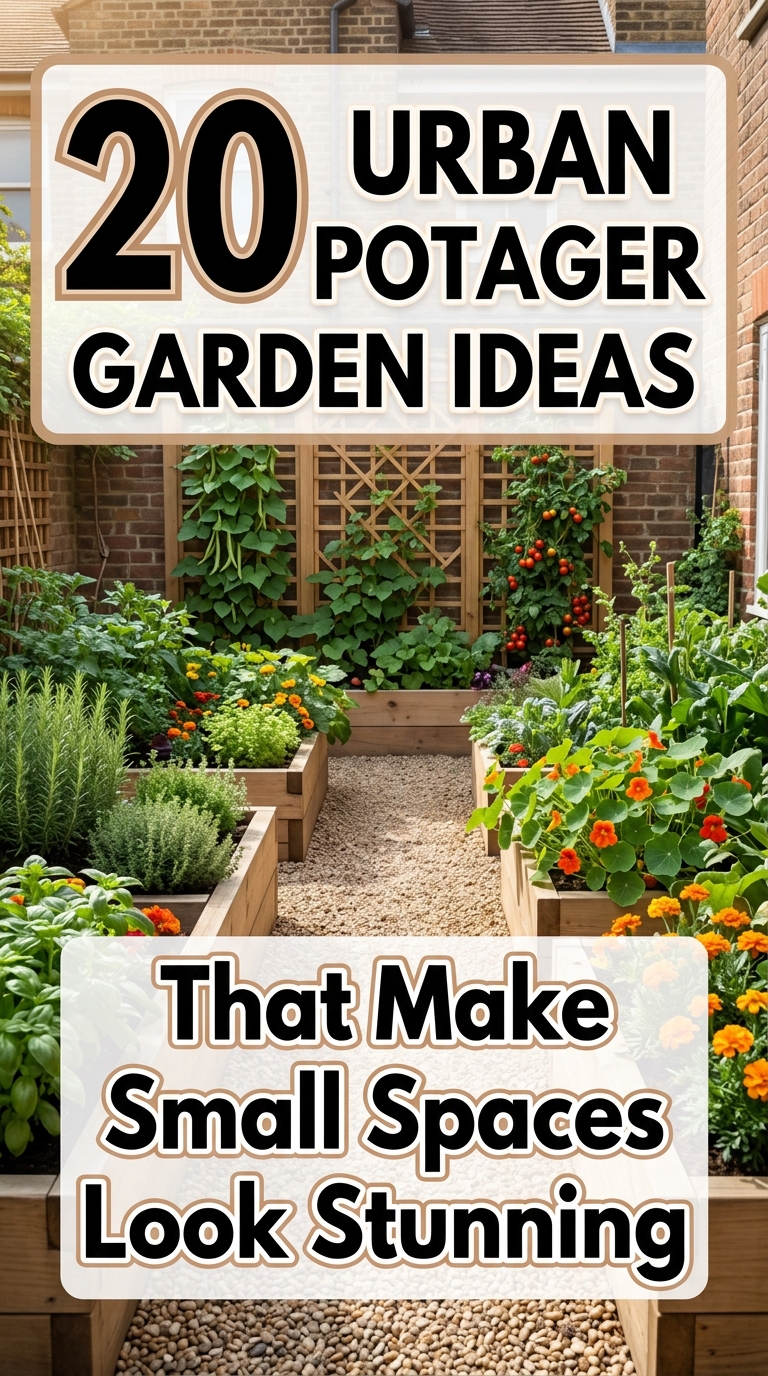
There’s something almost magical about a potager garden. It’s not just a vegetable patch — it’s an entire edible landscape that happens to be beautiful enough to photograph. Rows of purple basil next to ruby lettuce, nasturtiums spilling over the edges, a rustic trellis covered in climbing peas. And the best part? You don’t need a sprawling country estate to pull it off.
Urban potager gardens are having a serious moment right now — and honestly, small spaces might actually be better for this style. The structure, the layers, the intentional planting — it all comes together more easily when you’re working within limits. Whether you’ve got a patio, a balcony, a narrow side yard, or just a few raised beds along a fence, these 20 ideas will show you exactly what’s possible.
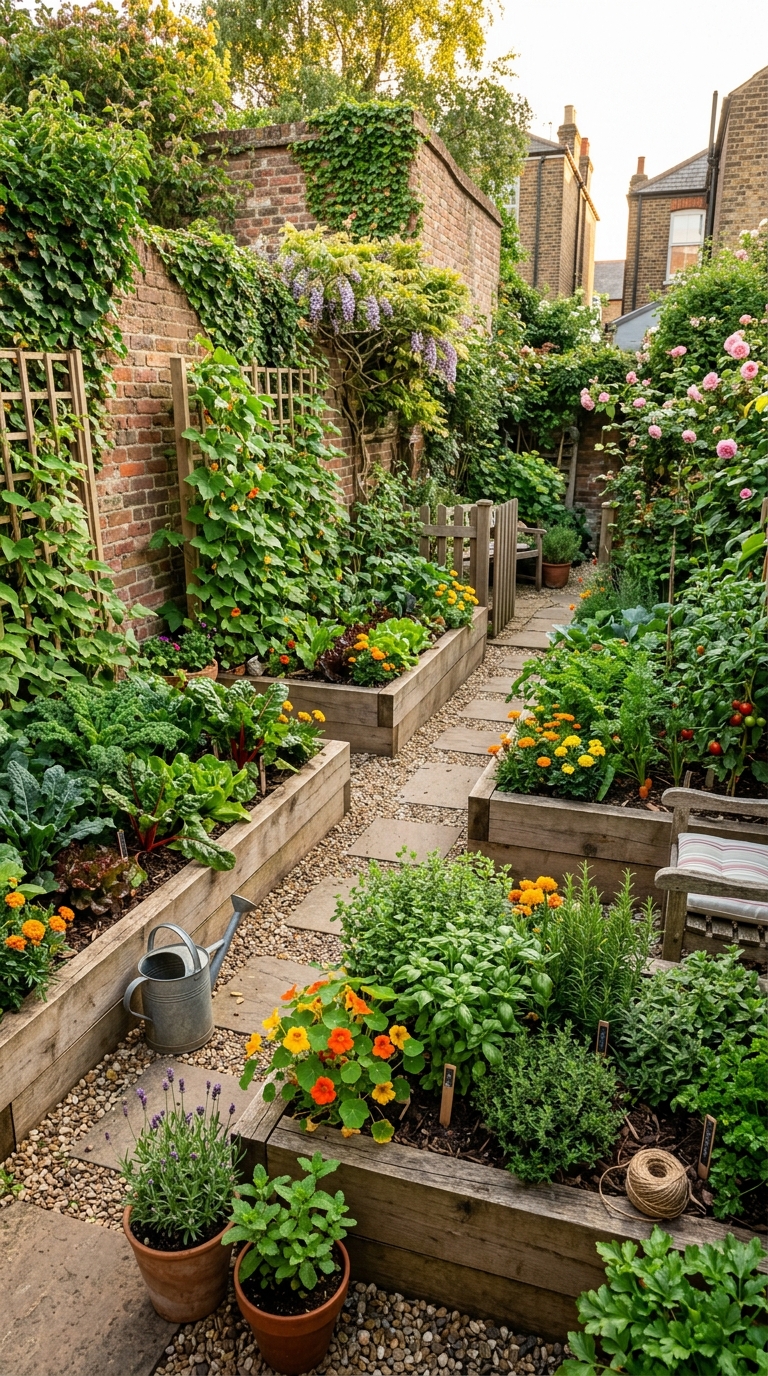
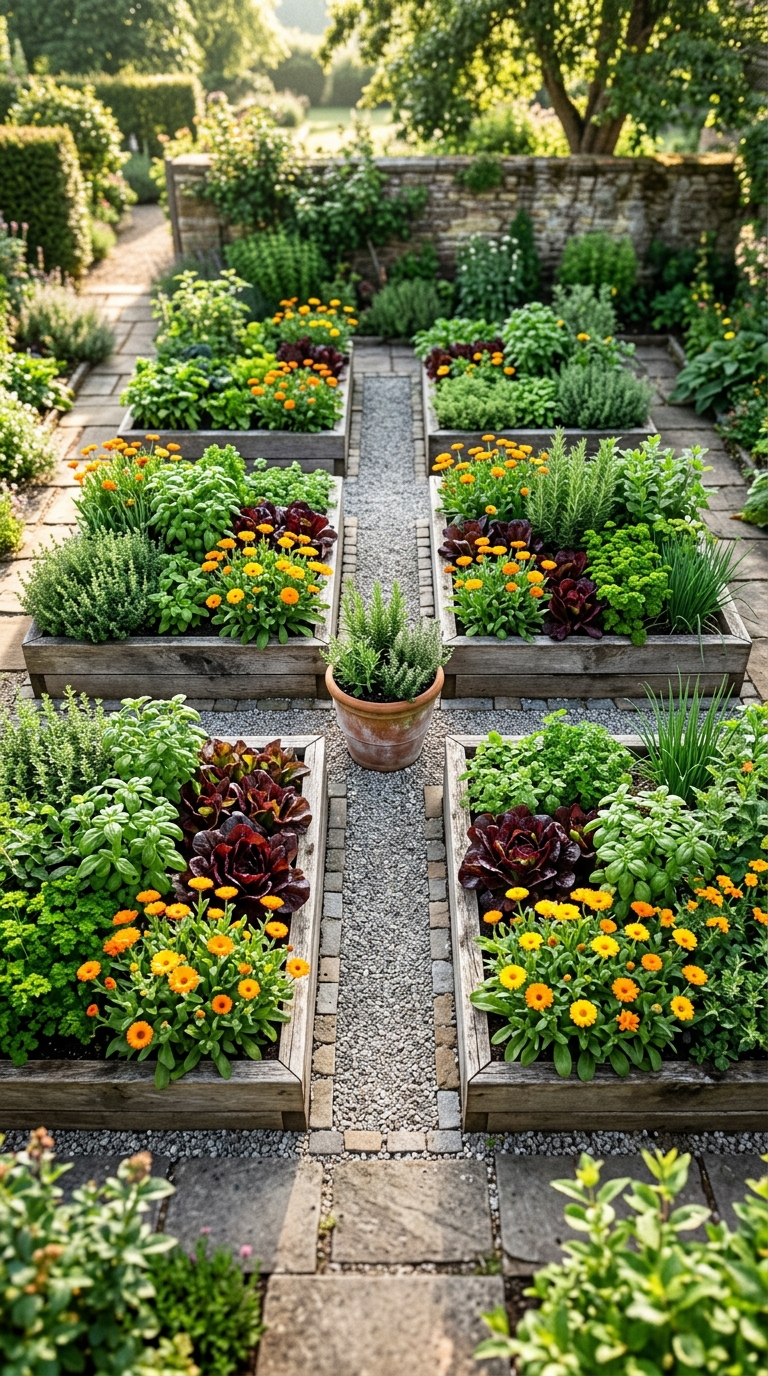
The Classic French Potager Layout in a Raised Bed Grid
The original French kitchen garden was built around symmetry — four equal beds arranged in a square, with a decorative element at the center. Scale that down to four compact raised beds in your backyard, and you’ve got an instantly structured, genuinely elegant food garden. It’s the layout that started it all, and it still works better than almost anything else.
Plant each bed with a different theme: one for salad greens, one for herbs, one for tomatoes and peppers, one for edible flowers like calendula and borage. The visual contrast between beds makes the whole garden feel intentional and curated — like someone actually designed it, not just threw seeds at the soil.
Need solutions for limited space? These creative small potager garden ideas show how to build a thriving edible garden in even the tiniest outdoor areas.
Planting Tip: Keep the center focal point simple — a terracotta pot with a standard bay tree or a small obelisk with climbing sweet peas. It anchors the whole layout without competing with the plants.
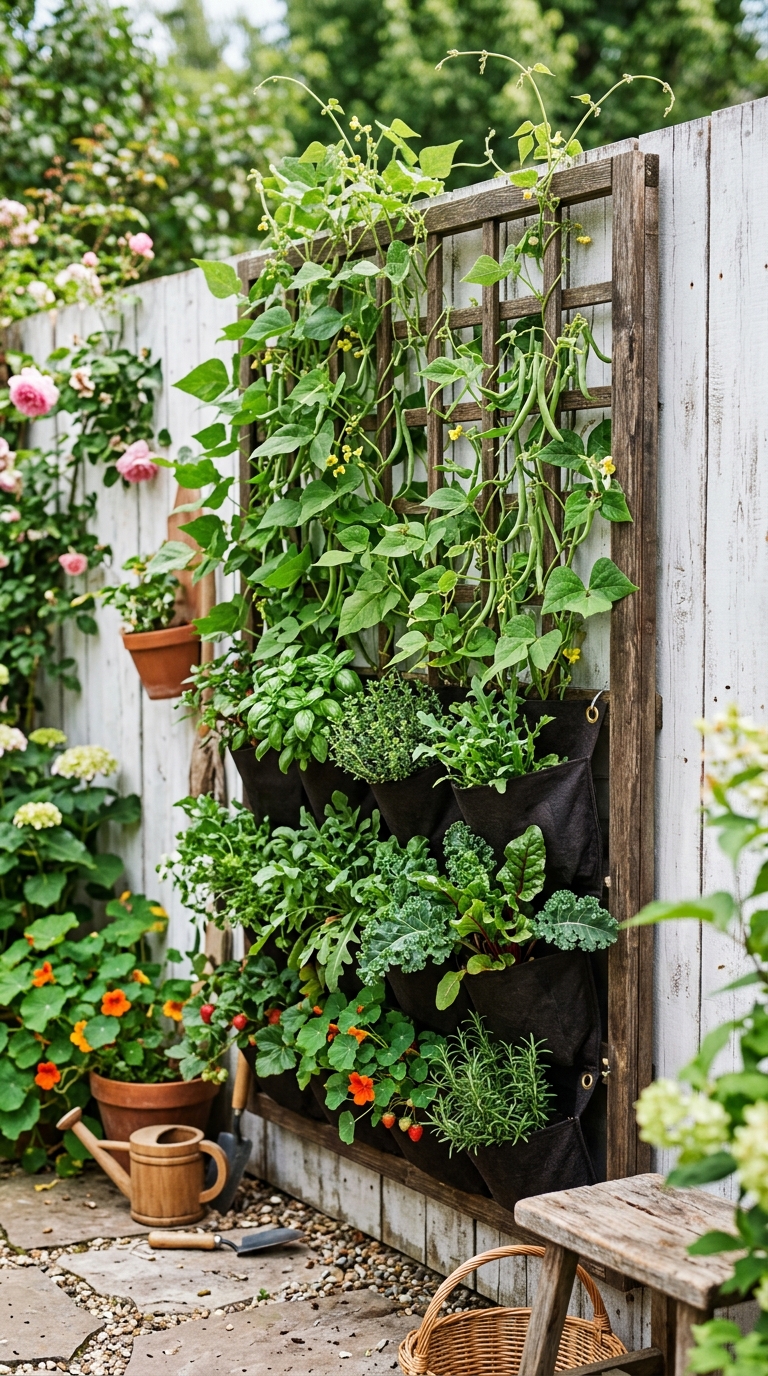
Vertical Potager Wall with Pocket Planters and a Trellis
When floor space is genuinely limited, the only direction left is up. A vertical potager wall — built from a wooden trellis, wall-mounted pocket planters, and a few climbing vegetable varieties — can turn a plain fence or exterior wall into a productive, lush growing surface. It’s one of the most space-efficient urban garden setups you’ll find.
Train cucumbers, runner beans, or cherry tomatoes up the trellis while herbs and lettuces fill the pocket planters below. The layered height creates visual depth that flat garden beds simply can’t match. And when everything is in full growth, it looks genuinely breathtaking — like a living green wall that also feeds you.
Before starting your project, explore these practical potager garden layouts to discover smart ways to organize vegetables, herbs, and flowers.
Planting Tip: Use the top pockets for trailing herbs like thyme and oregano — they’ll cascade downward beautifully and fill gaps naturally as the season progresses.
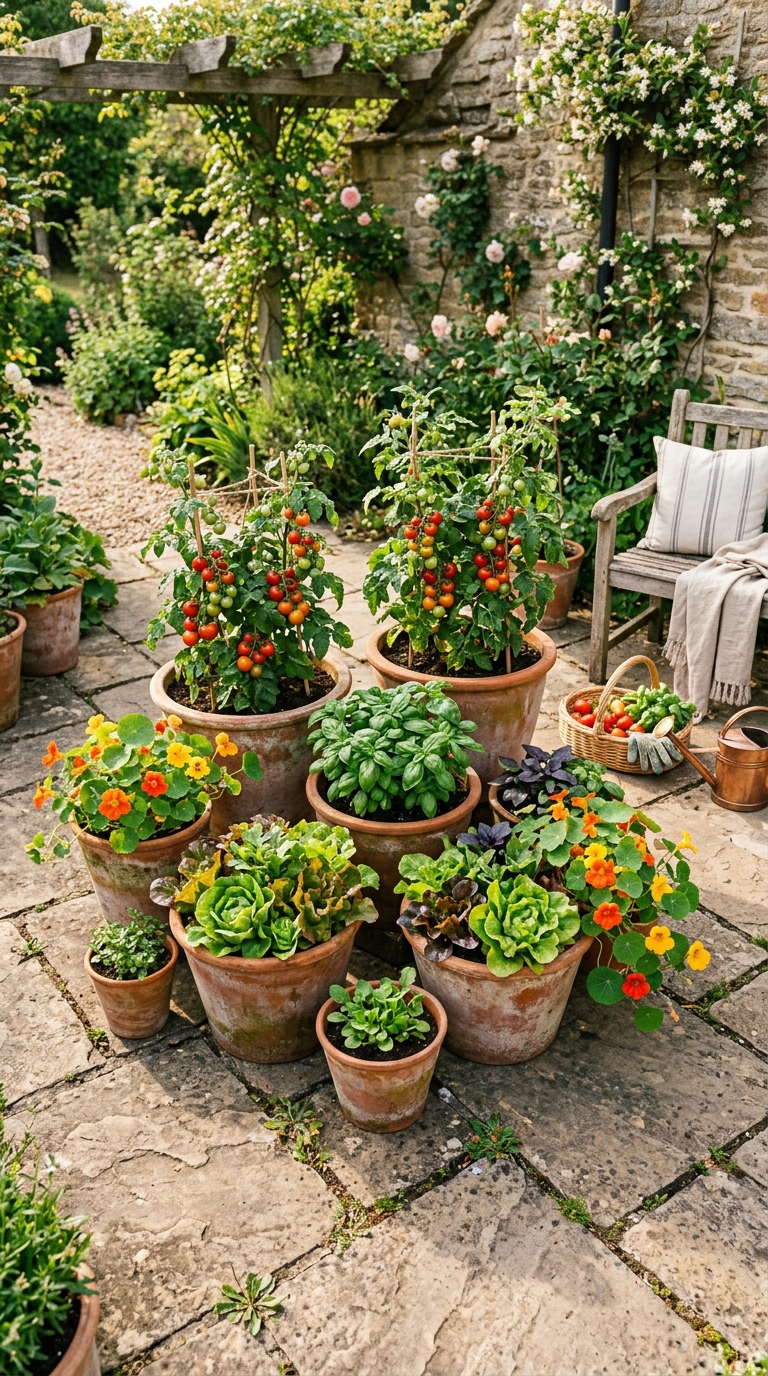
Patio Potager Garden in Matching Terracotta Containers
No raised beds? No problem. A fully container-based potager is just as productive and honestly even more flexible — you can rearrange, move plants to follow the sun, and bring tender herbs indoors when the temperature drops. The key to making it look designed rather than random is using matching containers in a consistent material and color.
Terracotta is the perfect choice for a patio potager. It’s breathable for roots, naturally beautiful, and ages gorgeously over time. Arrange pots in graduated heights — tall tomato plants at the back, medium pepper plants in the middle, shallow lettuce and herb bowls at the front. The layered arrangement reads like a proper garden design, not just a collection of pots.
Add structure and seasonal color to your edible garden with these elegant allium garden ideas, perfect for enhancing urban potager spaces.
Planting Tip: Group pots close together — touching, even. It creates a microclimate of humidity that benefits most vegetables and makes the overall display look lush and full rather than sparse.
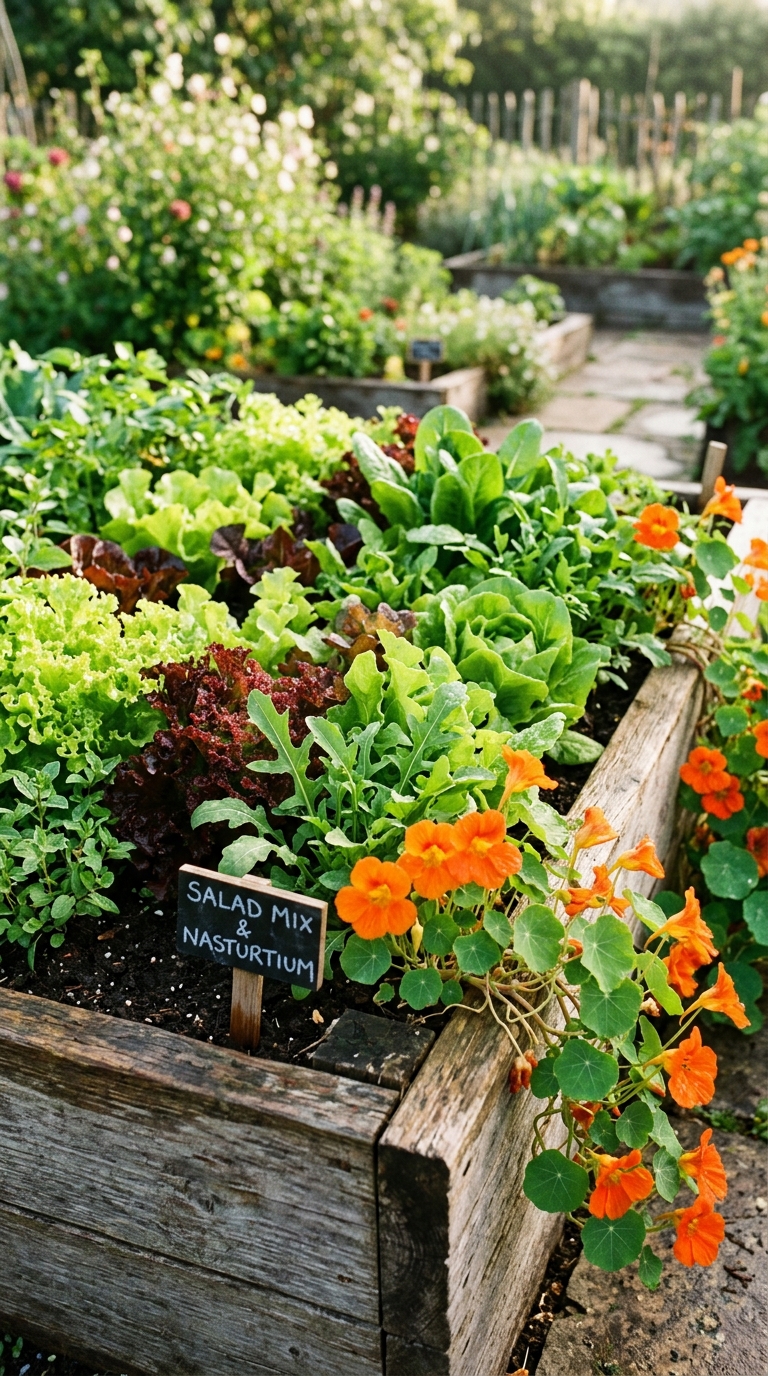
Salad Bowl Potager — Cut-and-Come-Again Garden Design
If you want the most return for the least effort in a small urban space, a dedicated cut-and-come-again salad potager is your answer. Plant a shallow raised bed entirely with loose-leaf lettuces, rocket, spinach, mizuna, and herbs like flat-leaf parsley and chives. Cut what you need, leave the roots, and it regrows within days.
Add a border of nasturtiums around the edge — they’re edible, they repel aphids naturally, and they make the whole bed look like something from a magazine. This setup works beautifully in small backyards, on patios, and even on larger balconies. It’s genuinely one of the most productive things you can grow in a compact space.
For more inspiration on creating a beautiful and productive edible landscape, browse these expert-approved potager garden design ideas that combine style and functionality.
Planting Tip: Sow a new section of seed every three weeks (succession planting) so you’re never waiting for a fresh flush of growth. You’ll have salad leaves ready every single week through the growing season.
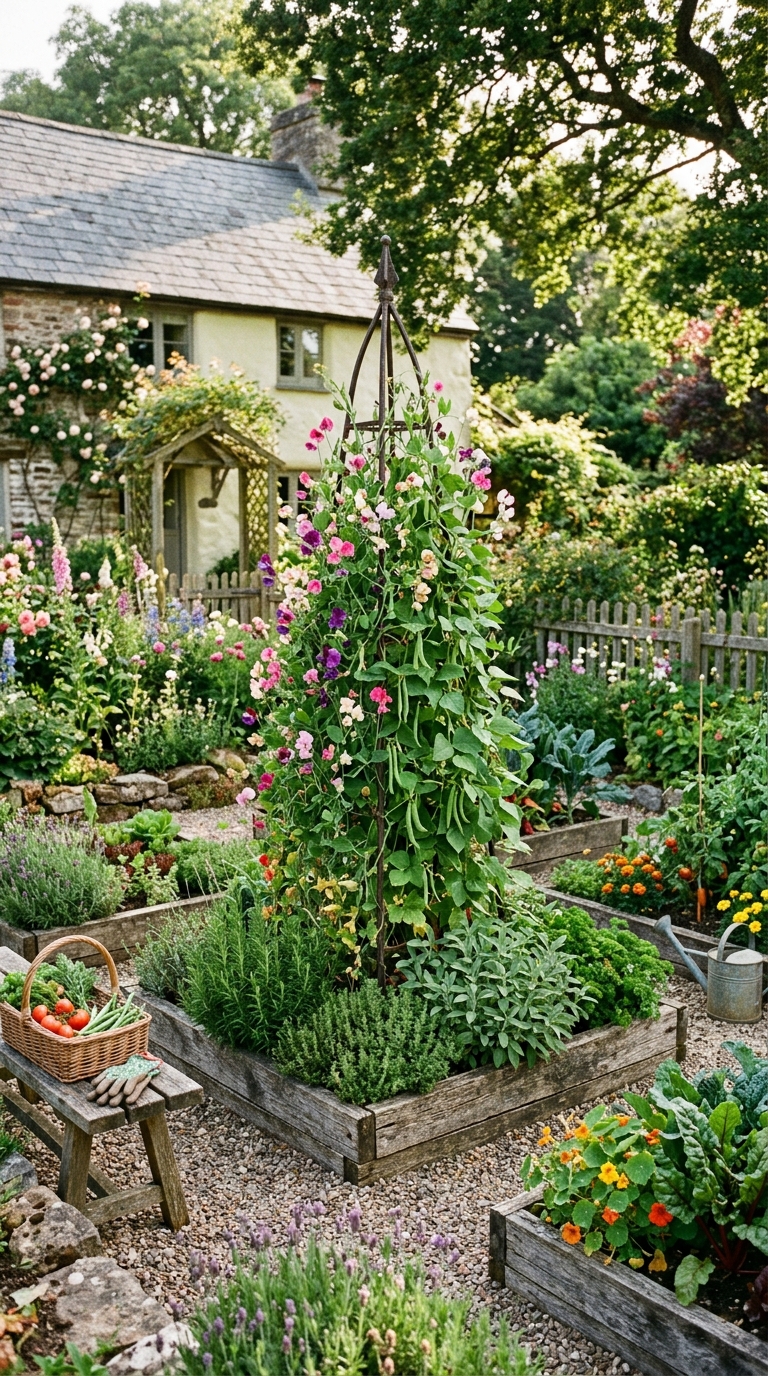
Potager Garden with a Central Obelisk and Climbing Vegetables
A garden obelisk — whether rustic willow, painted metal, or dark wood — does something no other garden feature quite manages. It gives your potager instant height, a clear focal point, and a structure for climbing plants to do what they do best. Even in a tiny garden, a single obelisk makes the whole space feel designed.
Plant sweet peas, climbing beans, or peas at the base and let them spiral upward through the growing season. Surround the obelisk with low-growing herbs and compact vegetables in the beds below. The contrast between the vertical drama of the obelisk and the horizontal fullness of the surrounding beds creates exactly the kind of layered depth that makes a potager look so effortlessly beautiful.
Planting Tip: Paint a metal obelisk in matte black or dark forest green — both colors recede visually against foliage, making the plants the star while the structure adds architectural presence.
Balcony Potager Garden with Window Boxes and Railing Planters
Apartment balconies are genuinely underrated growing spaces. With the right setup — deep window boxes along the railing, wall-mounted planters, and a compact vertical grow rack in one corner — you can build a proper potager garden without a single square foot of ground.
Focus on compact and dwarf varieties specifically bred for container growing: patio tomatoes, mini peppers, dwarf French beans, and all the herbs you could ever need. The trick is choosing deep enough containers (at least 30cm) for anything root-heavy and making sure drainage is good. Style it with matching planter colors — all white, all terracotta, or all dark green — and your balcony potager will look completely intentional.
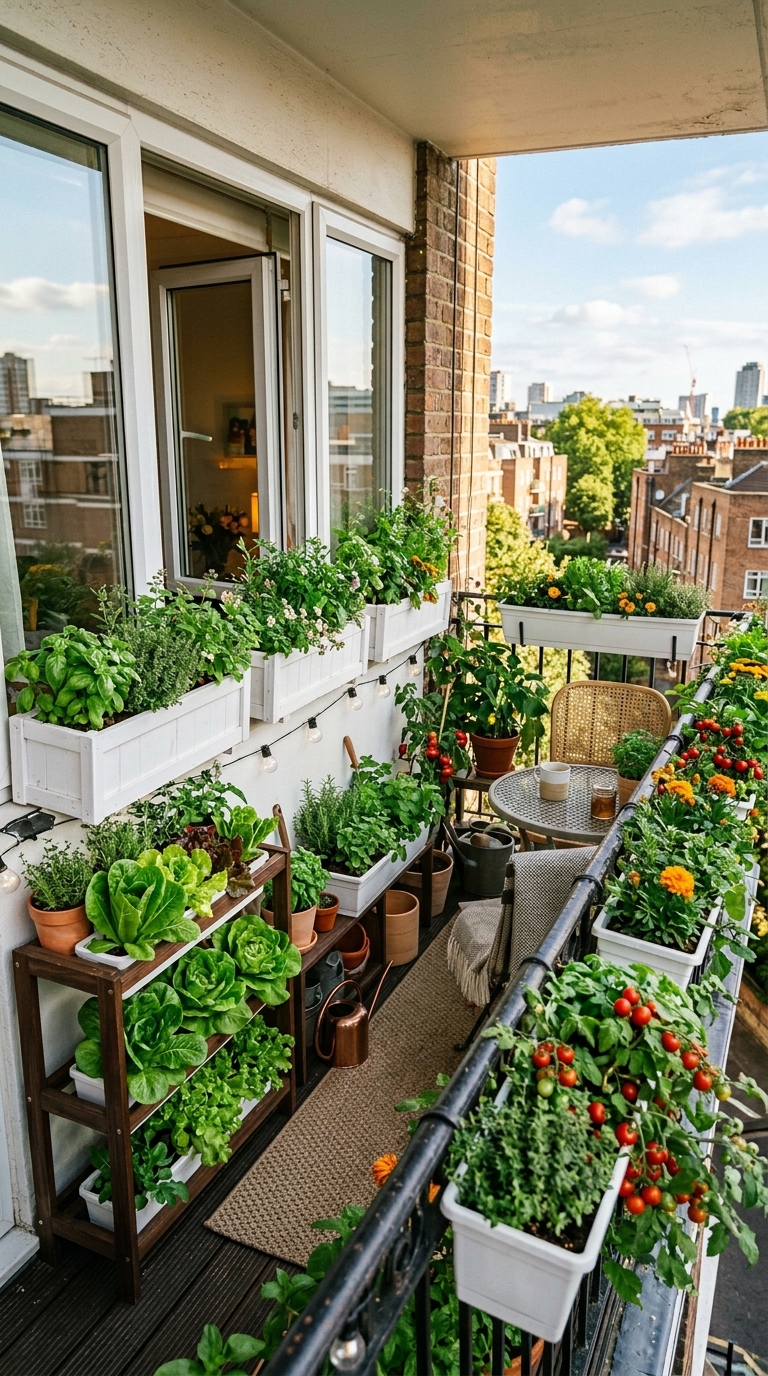
Planting Tip: Add one trailing plant per railing box — cherry tomatoes, trailing nasturtiums, or cascading herbs like oregano. They soften the hard lines of the railing and make the whole balcony feel garden-like rather than just planted.
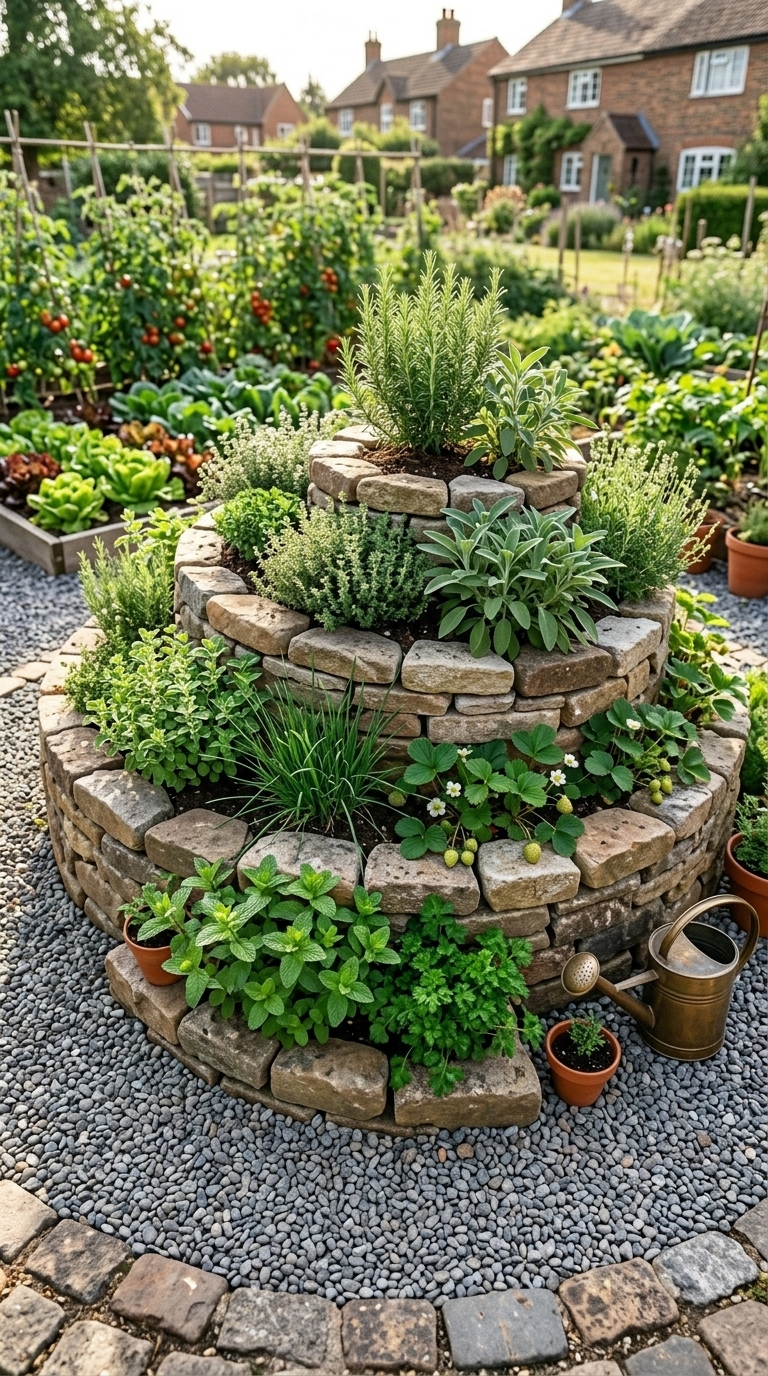
Herb Spiral Potager — The Space-Saving Garden Feature
An herb spiral is one of the cleverest small-space garden designs ever invented. You build a coiled raised bed that rises from ground level to about a meter high, creating multiple different growing zones within just a few square feet of ground space. The top is drier and sunnier — perfect for Mediterranean herbs like rosemary, thyme, and sage. The base retains more moisture, making it ideal for parsley, chives, and mint.
Beyond its practicality, an herb spiral is genuinely beautiful as a garden centerpiece. Build it from reclaimed brick, natural stone, or railway sleepers — each material gives a completely different mood. Tuck small alpine strawberries into gaps between the stones and let chamomile self-seed around the base. It becomes a living, layered feature that looks amazing in every season.
Planting Tip: Place your herb spiral where it gets at least 6 hours of sun — most culinary herbs need it. Orient the opening toward south (or north if you’re in the southern hemisphere) to maximize light exposure across all zones.
Companion Planting Potager — The Three Sisters and Beyond
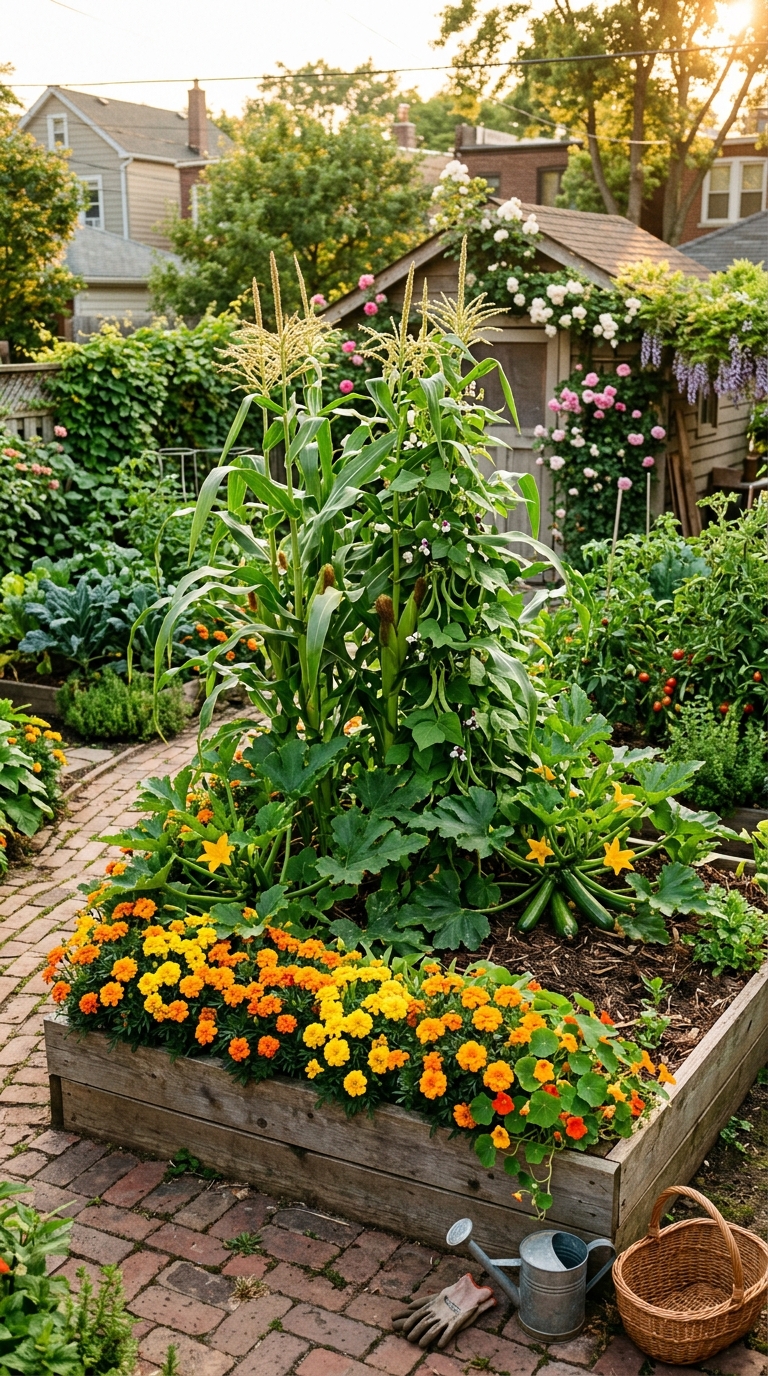
Companion planting turns a regular vegetable garden into something genuinely intelligent. The Three Sisters — corn, climbing beans, and squash — are the most famous example, and for good reason. The corn provides structure for the beans to climb, the beans fix nitrogen into the soil, and the squash’s large leaves shade the ground, retaining moisture and suppressing weeds. Three plants, one bed, zero wasted effort.
Beyond the Three Sisters, a companion planting potager layers in basil near tomatoes (genuinely does improve flavor and deter pests), marigolds at the border for aphid control, and borage to attract pollinators. The result is a garden that works together as an ecosystem — less maintenance, better harvests, and a really interesting planting layout to look at.
Planting Tip: Plant marigolds generously at every bed border — French marigolds in particular are one of the most effective natural pest deterrents available, and they look incredible all season long.
Cottage-Style Potager with Edible Flowers Mixed In
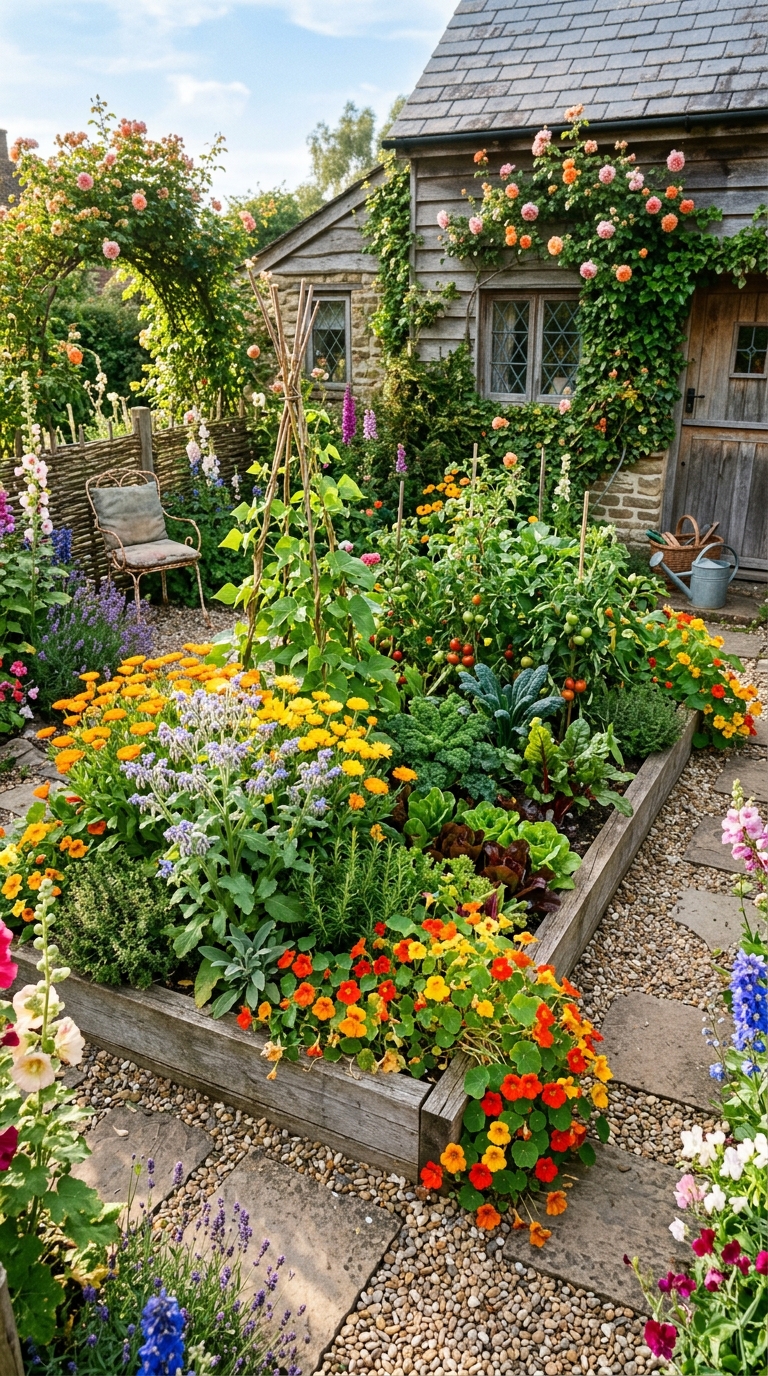
The defining characteristic of a cottage-style potager is that it doesn’t look like a vegetable garden at all — at least not at first glance. Calendula, borage, viola, and nasturtium fill in every gap between the vegetables and herbs, creating a garden that feels wild and abundant and romantic all at once. And every single flower is edible.
The practical benefits are real, too. Edible flowers attract pollinators, which means better fruit set on your tomatoes, beans, and squash. Borage specifically deters tomato hornworm. And nasturtiums act as a sacrificial trap crop for aphids, drawing them away from everything else. It’s a genuinely beautiful garden that also happens to be working hard behind the scenes.
Planting Tip: Let a few calendula and borage plants go to seed at the end of the season — they’ll self-seed prolifically and come back stronger the following year, completely free.
Square Foot Potager Garden for Absolute Beginners
If you’ve never grown food before and the idea of planning a whole garden feels overwhelming, start here. Square foot gardening takes a single 4×4 raised bed, divides it into a grid of 16 squares, and assigns one crop to each square. Sixteen different things growing in four square feet of space — it’s the most efficient beginner layout ever devised.
What makes it a true potager is the planting mix: combine vegetables, herbs, and flowers within the grid rather than separating them. Put a square of cherry tomatoes next to a square of basil. Put calendula in a corner square. Tuck chives between the lettuces. The companion planting happens naturally within the grid, and the result looks far more interesting than a standard row garden.
Planting Tip: Use a piece of wooden lath or bamboo canes to physically mark your grid on the soil surface. It makes planting much easier and keeps the layout looking clean and intentional all season.
Raised Wooden Planter Boxes Along a Fence Line
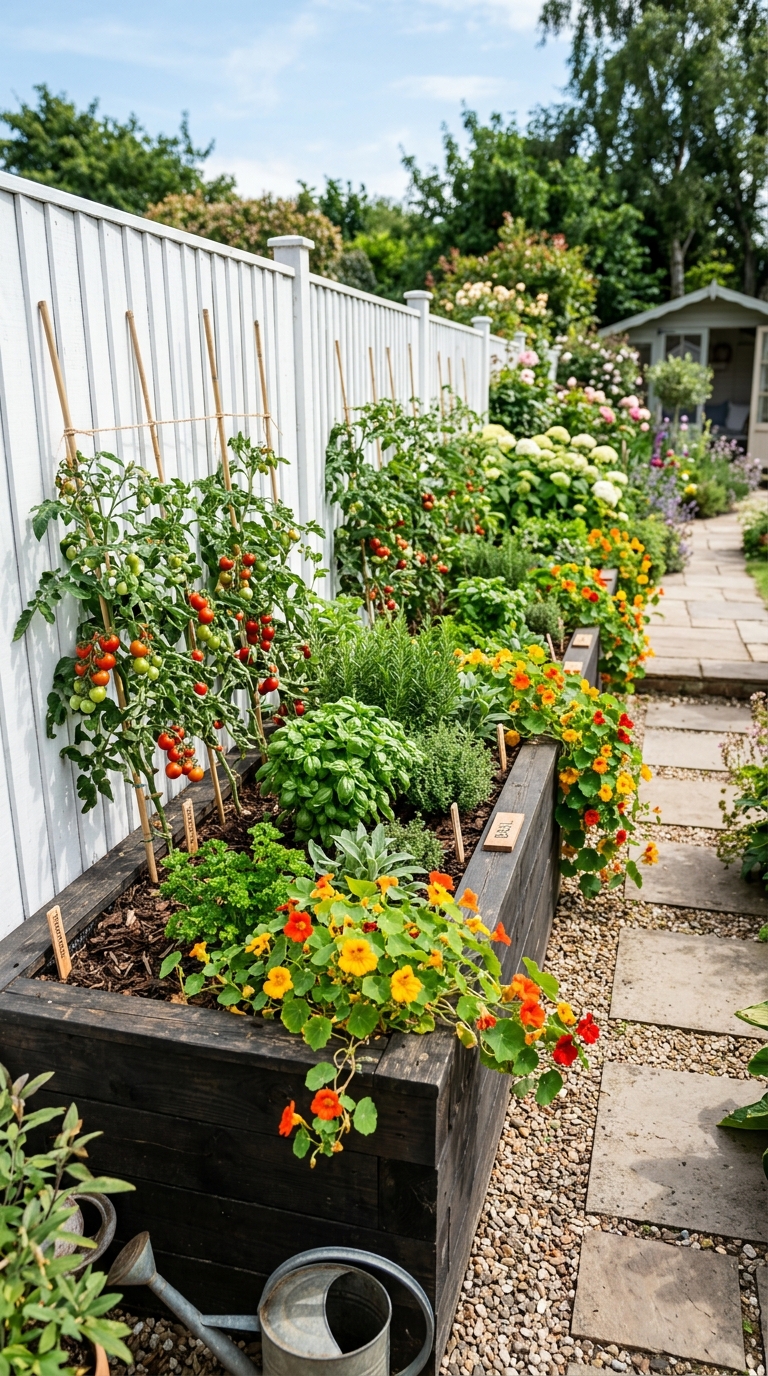
Long, narrow raised planter boxes built along a fence line are one of the most underused urban garden setups — and one of the most effective. They use space that’s usually just dead ground along a boundary, they’re easy to build from basic timber, and when planted well, they transform a plain garden fence into a living, productive feature.
Plant in a repeating pattern along the length of the boxes — herb cluster, vegetable grouping, flower cluster, repeat. This rhythm creates visual order without making the border look rigid or formal. Dark-stained timber planters against a painted fence look particularly sophisticated — especially when the plants spill over the edges in late summer.
Planting Tip: Line the inside of wooden planter boxes with landscape fabric before filling with soil — it extends the life of the timber significantly by preventing constant moisture contact with the wood.
Potager Garden Path Design — Beauty Between the Beds
A garden path between potager beds does something purely practical — it gives you access to every plant without compacting the soil. But the material you choose for that path does something much more powerful: it sets the entire mood of the garden. Reclaimed brick paths feel warm and old-world. Gravel paths feel French and structured. Stepping stones feel cozy and relaxed.
Even a very simple path of bark chips or pea gravel between two raised beds immediately makes the garden feel like a destination rather than just a growing area. Add low-growing thyme or chamomile between stepping stones, and it becomes aromatic underfoot. These details are exactly what separate a beautiful potager garden from a basic vegetable patch.
Planting Tip: Plant creeping thyme between stepping stones — it handles light foot traffic, releases fragrance when brushed, and flowers beautifully in early summer, attracting bees to your food garden at the same time.
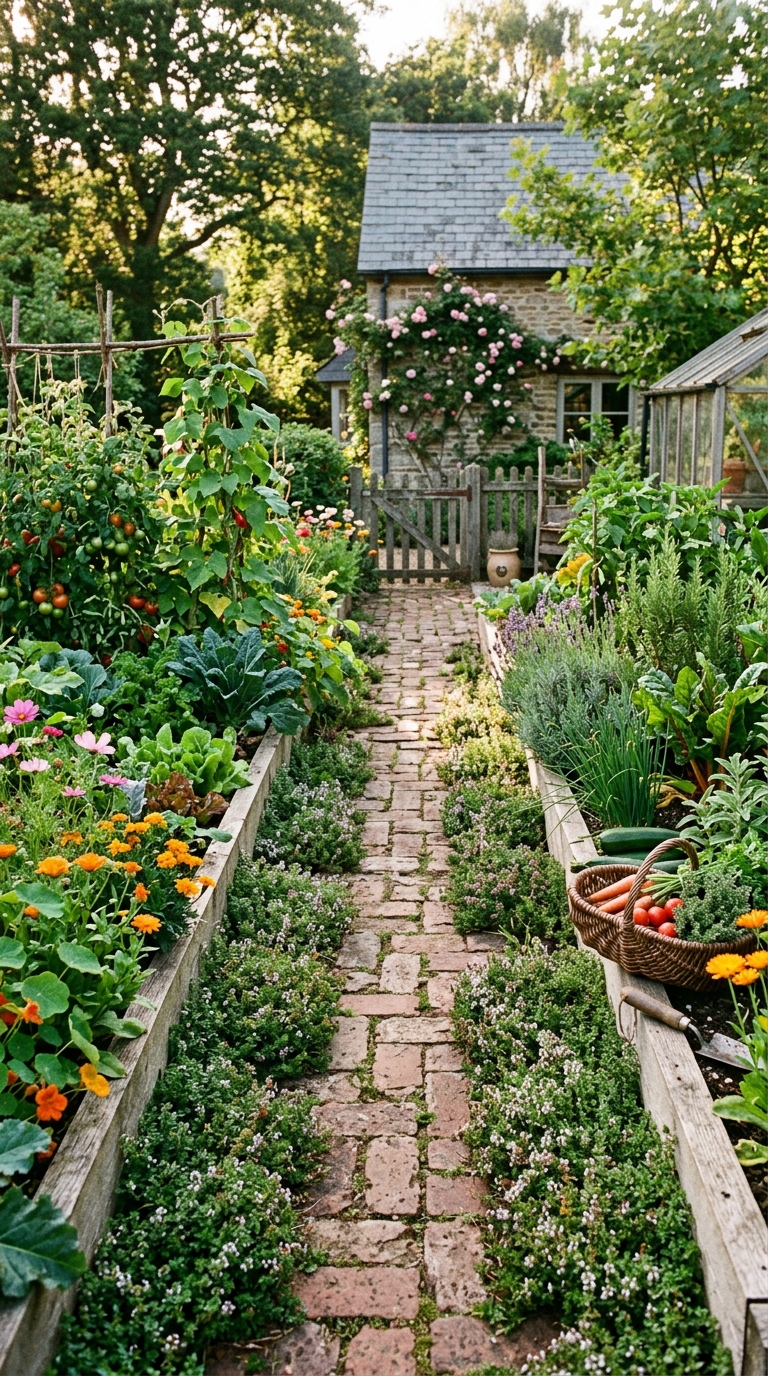
Mini Potager in a Courtyard or Townhouse Garden
Small enclosed courtyards present a unique design challenge — they’re often shaded, hard-surfaced, and surrounded by walls on multiple sides. But those same walls become growing surfaces in a well-designed potager. Wall-mounted planters, trained espalier fruit trees, and container vegetables all work together to fill a courtyard with productive planting without taking up any of the limited floor area.
Keep the container selection consistent — all terracotta, all dark metal, or all painted wood — for a coherent look in a tight space. Add a small bistro table and a couple of chairs in the center, surrounded by your potager containers, and the courtyard becomes both a garden and a dining room. A few strings of warm lights overhead make it magical after dark.
Planting Tip: In shaded courtyards, focus on crops that actually tolerate lower light — leafy greens, herbs like mint and parsley, and climbing plants on the sunniest wall. Don’t fight the shade; work with it.
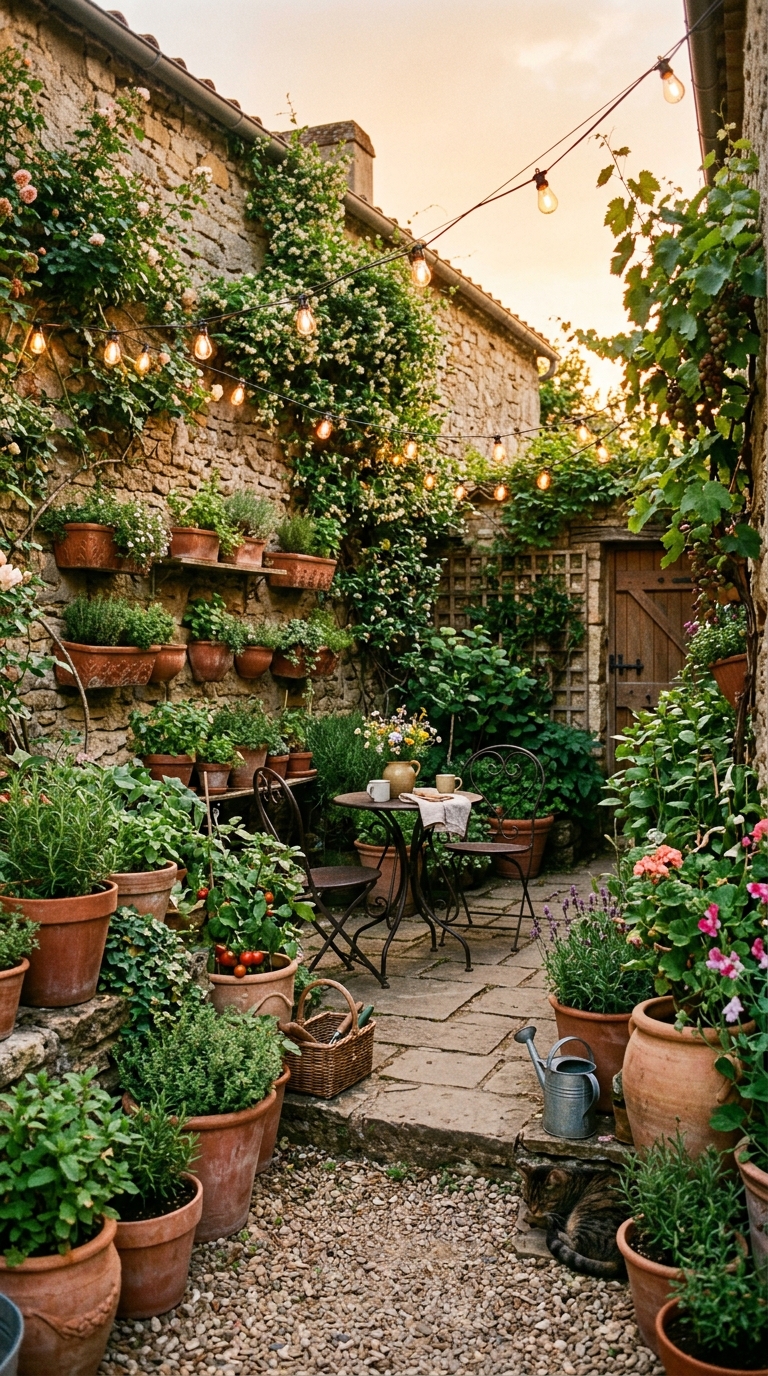
Potager Garden on a Budget — Upcycled Containers and DIY Beds
Some of the most beautiful potager gardens online were built for almost nothing. Reclaimed wooden crates lined with burlap, old galvanized washtubs drilled for drainage, colanders from charity shops, wooden wine crates from restaurants — all of them make genuinely excellent planters when you lean into their character rather than hiding it.
Build raised beds from scrap timber — fence boards, old floorboards, reclaimed pallets broken down into planks. Imperfect, slightly rough-hewn beds have enormous charm in a potager setting. The key to making budget materials look intentional is consistency: pick one aesthetic (rustic farmhouse, industrial galvanized metal, or reclaimed natural wood) and stick to it across all your containers and beds.
Planting Tip: Galvanized metal containers heat up faster than other materials, which can benefit warm-season crops like tomatoes and peppers early in the season — but check moisture more frequently as they also dry out faster.
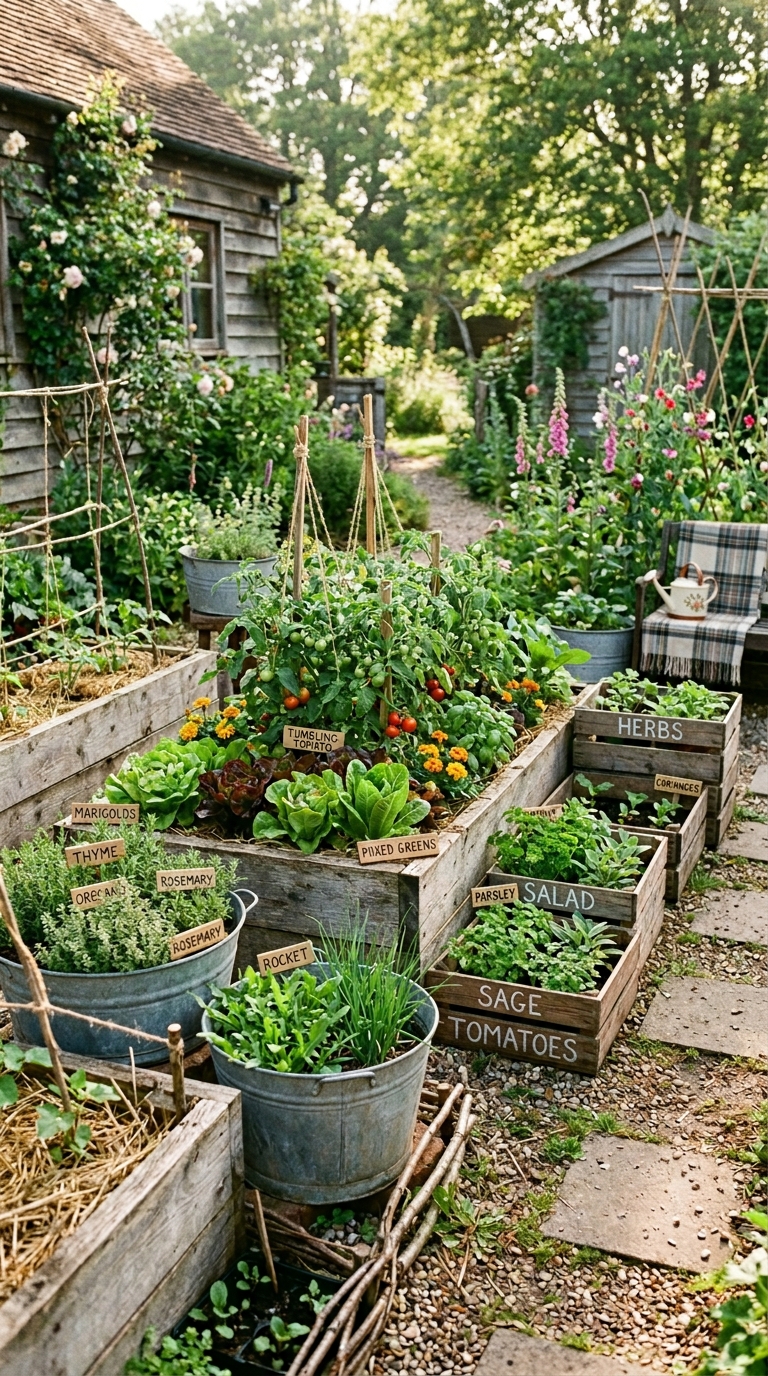
Seasonal Potager Garden — Planting for Year-Round Harvest
Most people think of food gardening as a summer activity. A properly planned potager runs year-round — cool-season crops in early spring and autumn, warm-season crops through summer, and hardy overwintering greens like kale, chard, and spinach, keeping the beds productive right through winter. You just need to plan it in seasonal waves rather than one big annual planting.
The real trick is succession planting — as one crop finishes, another goes in immediately. When your spring lettuce bolts in the summer heat, that bed gets tomato transplants. When tomatoes finish in autumn, it goes to winter kale or garlic for the following summer. The bed is never empty, the garden always looks lush, and you’re harvesting something in every single month of the year.
Planting Tip: Keep a simple seasonal planting calendar pinned near your garden — just a monthly list of what to sow, transplant, and harvest. Five minutes of planning prevents months of empty beds.
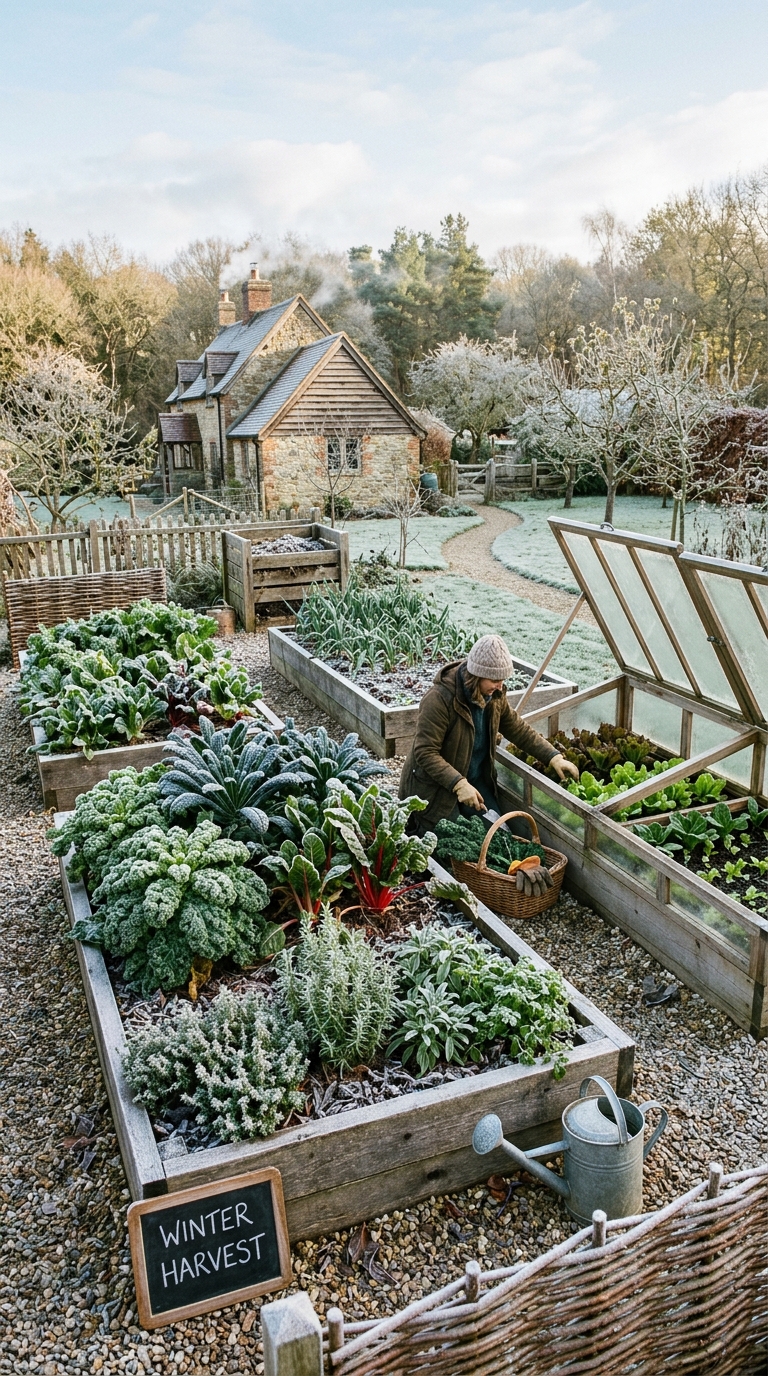
Aesthetic Potager with Color-Coordinated Planting
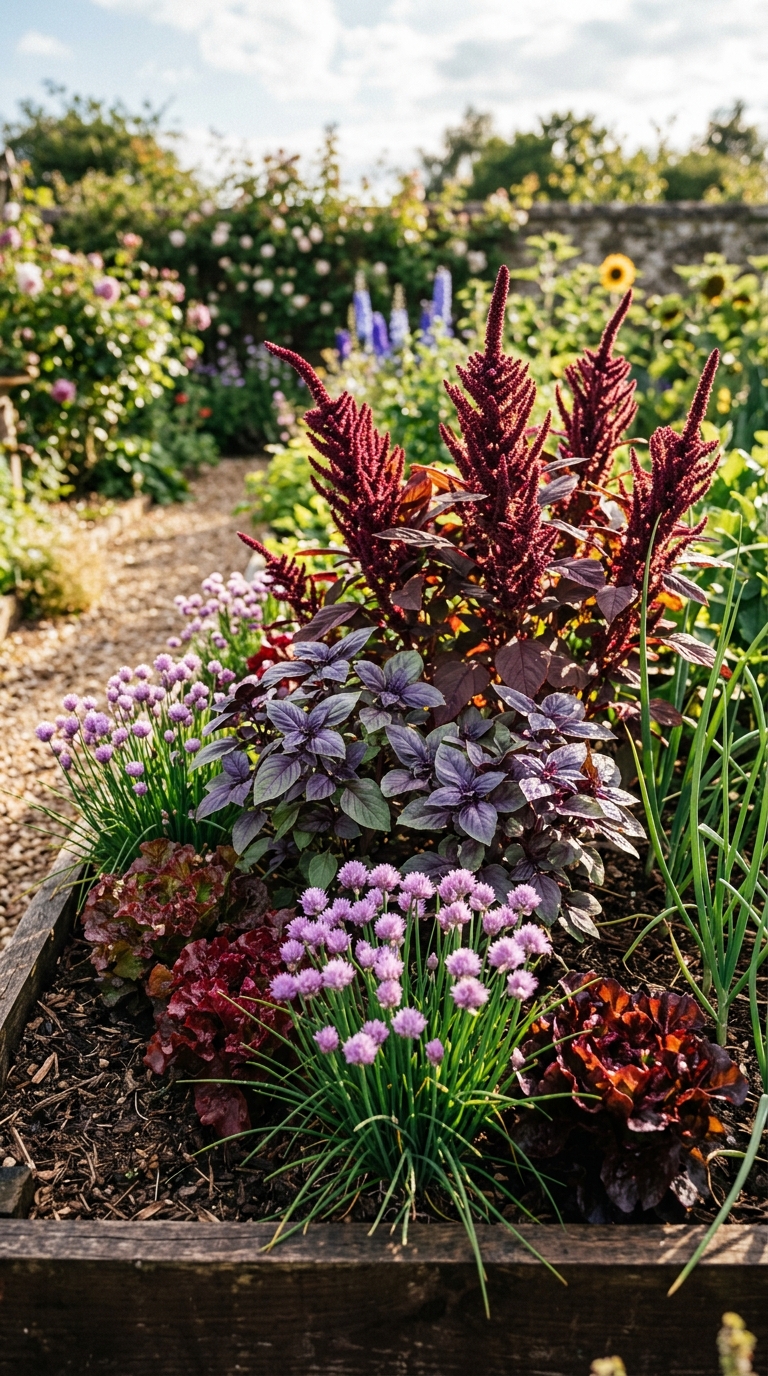
Here’s a genuinely different potager approach — instead of planting purely for productivity, plan your entire potager around a deliberate color palette. Purple basil, red oakleaf lettuce, deep burgundy amaranth, and violet chive flowers all in one bed. Or go warm and sunny: yellow cherry tomatoes, orange calendula, golden nasturtiums, and lime-green lettuce together.
The result is a food garden that looks like a curated floral arrangement — something people genuinely stop and stare at. And color-coordinated planting isn’t just aesthetic; grouping plants by color often means grouping them by growing conditions too, since many warm-colored edibles prefer full sun and many cool-colored plants prefer partial shade. Beauty and practicality work together perfectly.
Planting Tip: Anchor your color scheme with one dominant shade, one complementary accent, and one neutral green. Three colors maximum keeps it looking curated rather than chaotic — the same rule that works in interior design works just as well in the garden.
Potager Garden with Drip Irrigation for Low-Maintenance Growing
Hand-watering a potager garden every day through a hot summer is what makes most people give up on food gardening. A simple drip irrigation system — a timer, a main line, and thin feeder tubes running to each bed or container — eliminates that. Set it, forget it, and come back to thriving plants.
Drip systems are also genuinely better for plants than overhead watering. Water delivered directly to the root zone means less evaporation, no wet foliage (which causes fungal problems), and more consistent moisture for steady growth. You can build a basic system for surprisingly little money and install it in a morning. It’s the single upgrade that makes urban food gardening actually sustainable long-term.
Planting Tip: Add a basic timer to your drip system set to water in the early morning — this gives foliage time to dry during the day and dramatically reduces the risk of mildew and fungal disease through the season.
Front Yard Potager — Curb Appeal Meets Edible Landscape
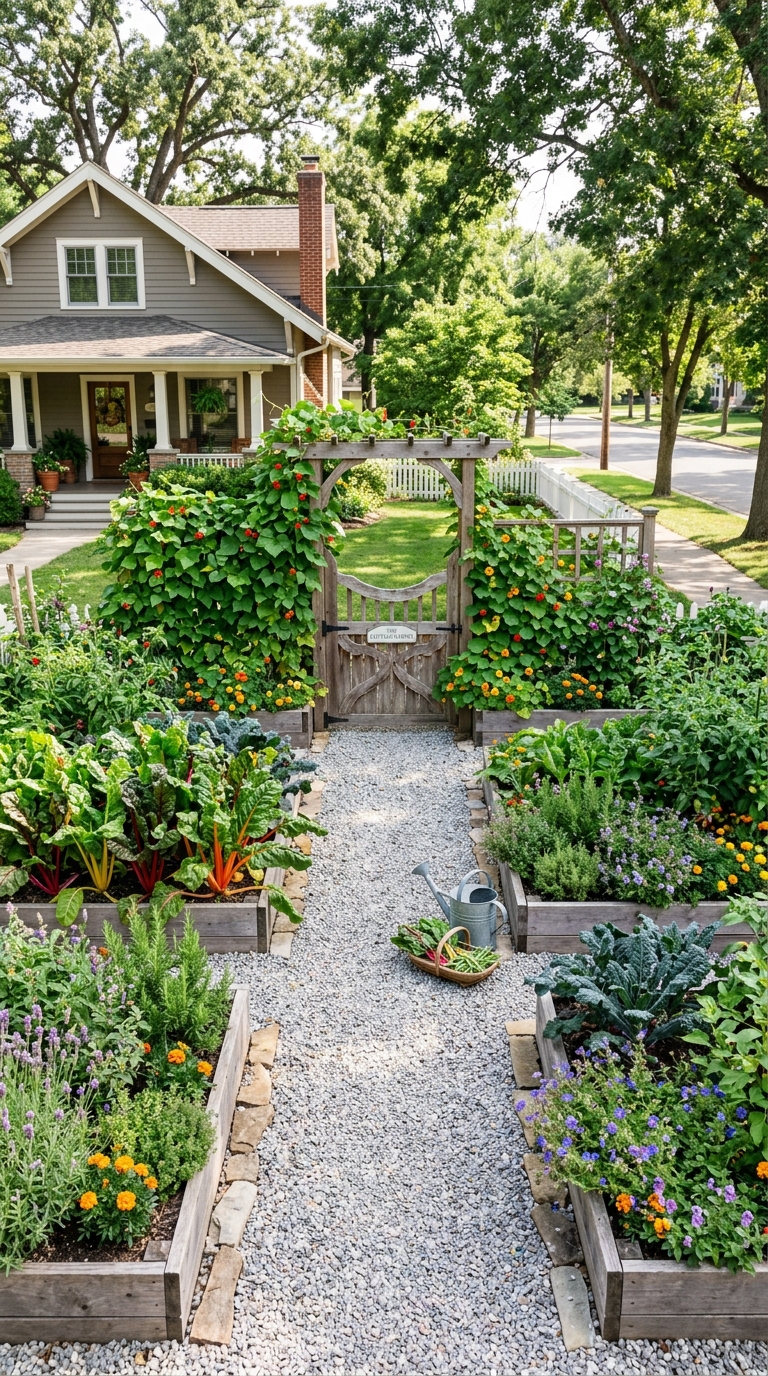
Replacing a traditional front lawn with a structured potager garden is one of the boldest and most rewarding decisions a home gardener can make. Done well, it looks genuinely stunning from the street — raised beds with structured paths, flowering herbs spilling over the edges, climbing vegetables on a decorative trellis, and a proper garden gate framing the whole thing.
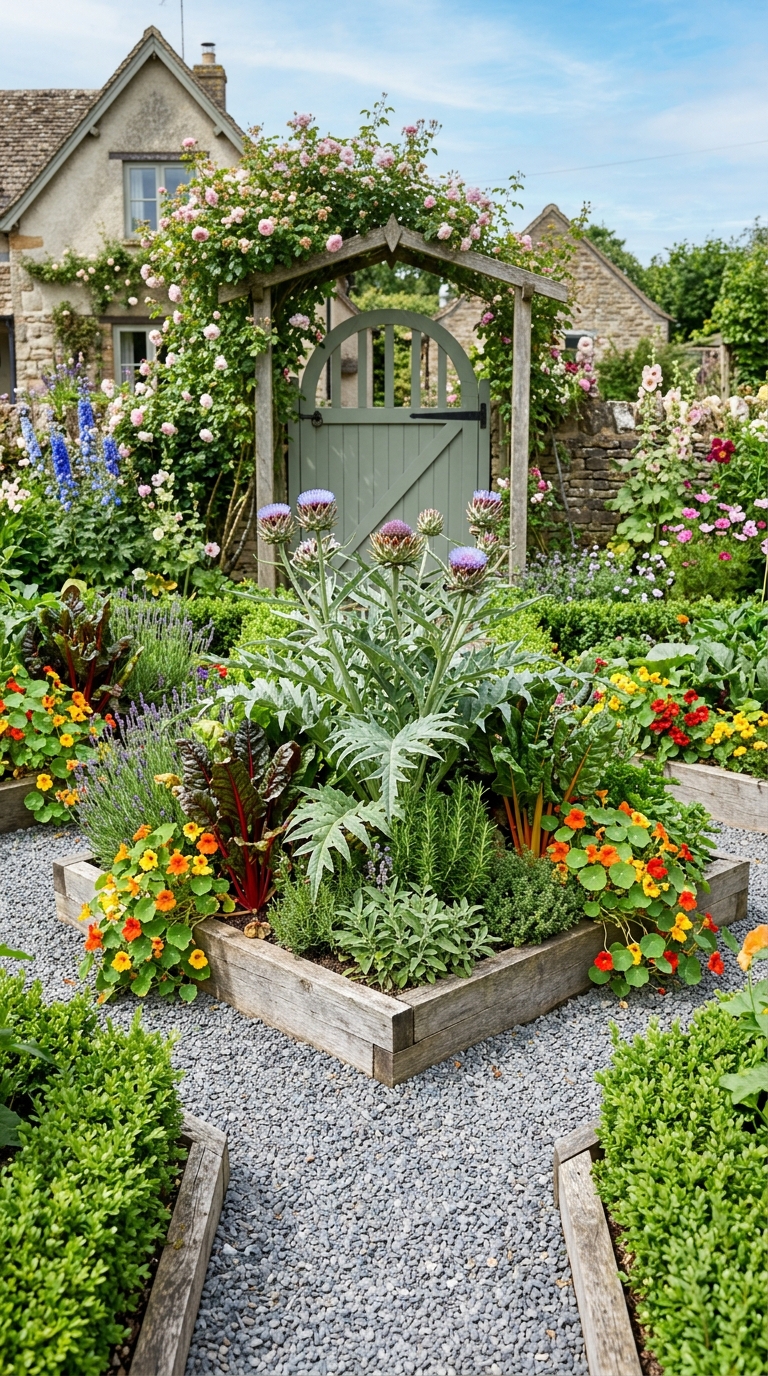
The key to making a front yard potager look intentional rather than chaotic is structure. Symmetrical beds, defined paths, a clear focal point, and a tidy edge between the garden and the pavement. Choose ornamental vegetables — rainbow chard, purple kale, artichokes, fennel — that look as beautiful as any ornamental planting. Your neighbors will be asking for seeds within a season.
Potager Garden with a Cold Frame for Extended Growing
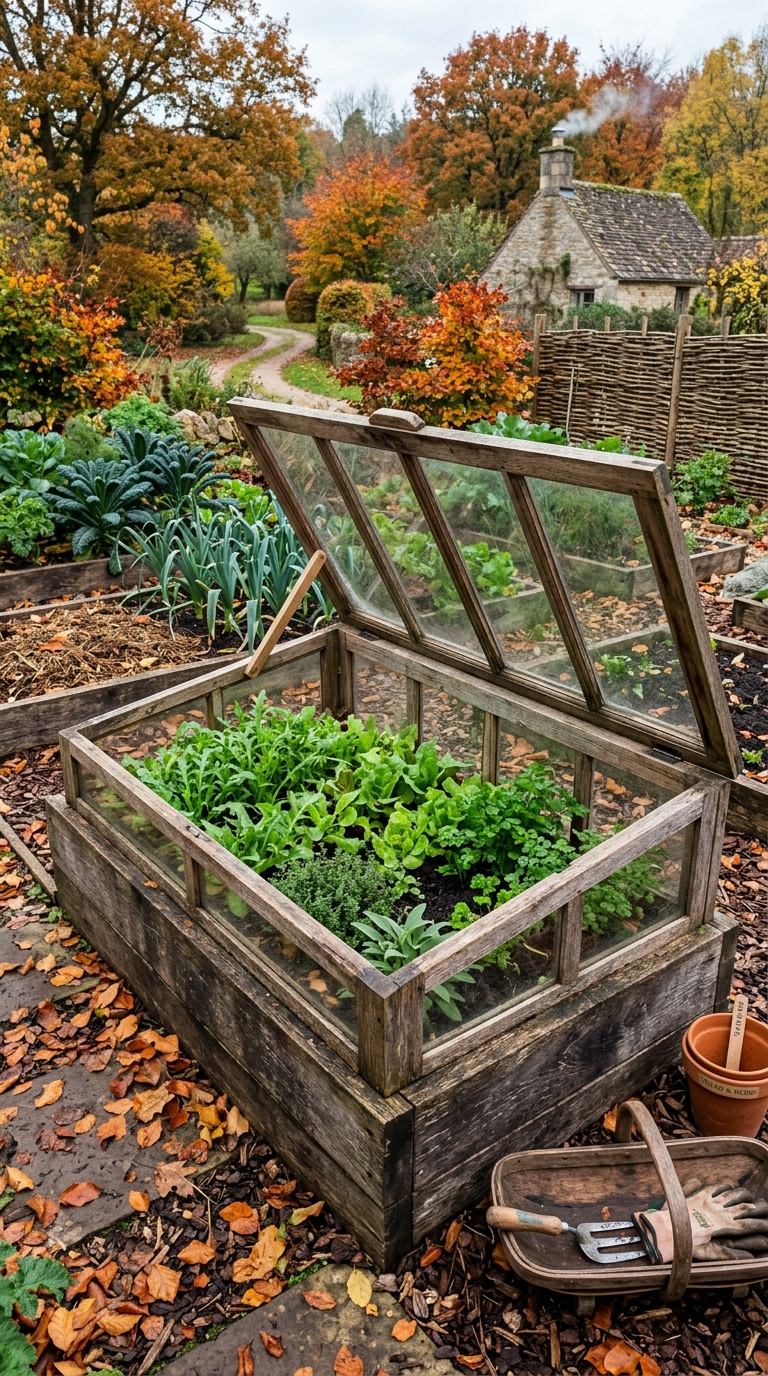
A cold frame is essentially a bottomless box with a transparent lid — and it’s one of the most valuable things you can add to a small potager garden. Place it over one of your raised beds in early spring and late autumn, and you extend your growing season by six to eight weeks on either end. That’s months of extra harvests from the same small space.
Build one from reclaimed timber and an old window frame, or buy a simple polycarbonate version for minimal outlay. In spring, use it to start seeds and harden off transplants. In autumn, use it to keep salad leaves and hardy herbs going well past the first frost. Through winter, it’ll protect overwintering garlic, onion sets, and cold-hardy greens. One cold frame, used year-round, transforms a seasonal potager into a genuinely productive year-round growing space.
Planting Tip: Prop the lid open slightly on warm sunny days — temperatures inside a cold frame can climb surprisingly fast and stress or bolt your plants if it’s not ventilated regularly.
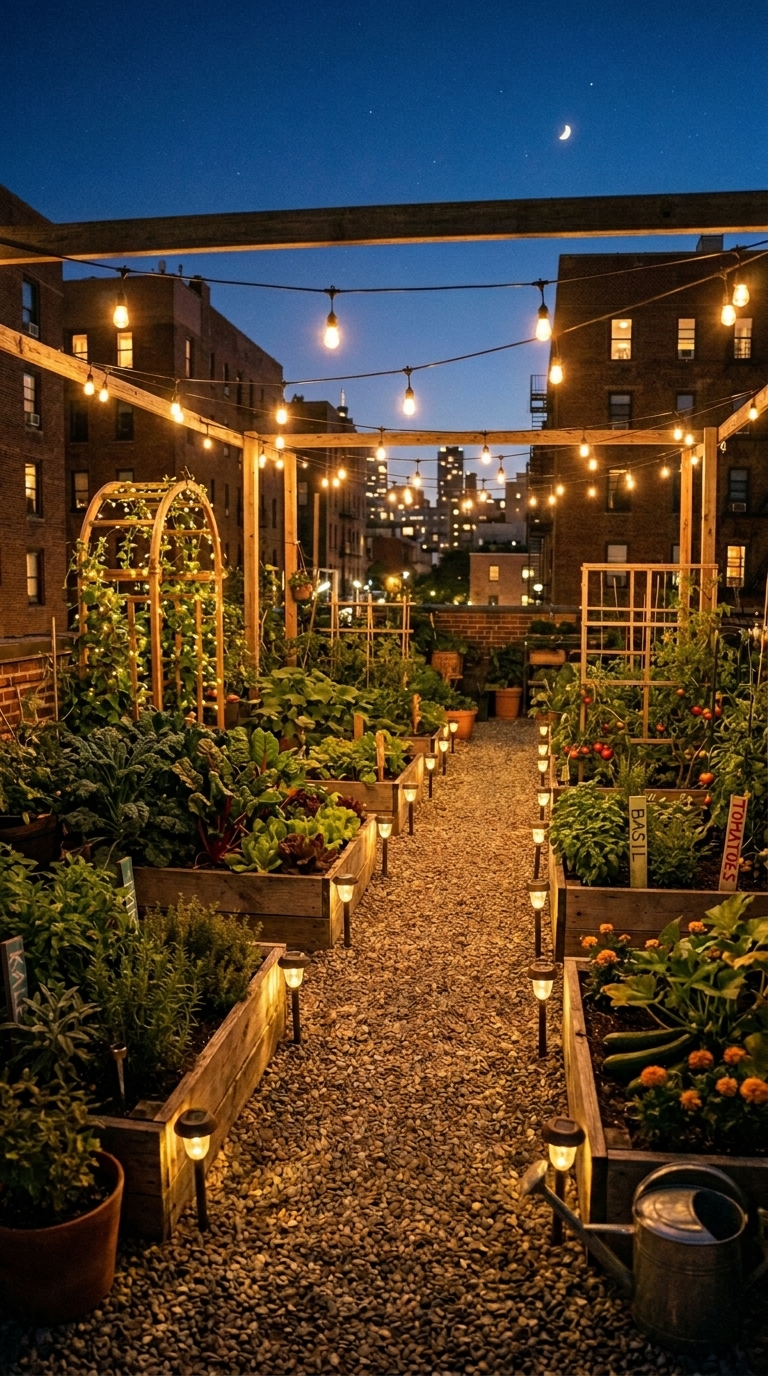
Night-Lit Potager — Solar Lights and Evening Garden Ambiance
Most food gardens look great in daylight and completely disappear after sunset. A night-lit potager flips that — warm solar stake lights along the path between beds, string lights strung overhead between two posts or a pergola frame, and a small lantern or two placed among the containers. Suddenly, your potager is a destination in the evening, not just a growing space.
It’s a simple addition that completely transforms how you use your outdoor space. String lights overhead, with low, warm stake lights at ground level, create two levels of light — the same layered lighting technique used in the best restaurant gardens. And solar means zero running costs. Your potager garden becomes the most beautiful spot in your outdoor space, day and night.
Planting Tip: Choose warm white solar lights (2700K–3000K) rather than cool white or blue — warm light enhances the green of foliage and the warm tones of terracotta and timber, while cool light makes plants look flat and washed out after dark.
Conclusion
A potager garden is one of those rare things that genuinely gets better the smaller your space is. The structure, the layering, the companion planting — it all comes together more beautifully when you’re working within real limits. You’re not just growing food. You’re designing a living space that feeds you, attracts wildlife, looks incredible, and gives you a reason to be outside every single day.
Start with one raised bed. One herb spiral. One container potager on your balcony. Get comfortable with it, expand when you’re ready, and don’t overthink the planning stage. The best potager garden is the one you actually build — imperfect edges, mismatched pots, and all.