
There’s something almost unfair about a potager garden. You go in expecting a vegetable patch and come out with something that looks like it belongs on a French countryside postcard. Honestly, the first time I saw one in real life, I stood there for a full minute just staring — because how is a garden this beautiful AND this useful at the same time?
A potager garden is essentially a French-style kitchen garden where vegetables, herbs, fruit trees, and edible flowers all grow together in a carefully designed, visually stunning layout. It’s not just about growing food. It’s about making your backyard a place you actually want to sit in, photograph, and never leave. If you’ve been dreaming of a garden that’s both productive and gorgeous, you are going to love these ideas.
Classic Four-Bed French Potager Layout
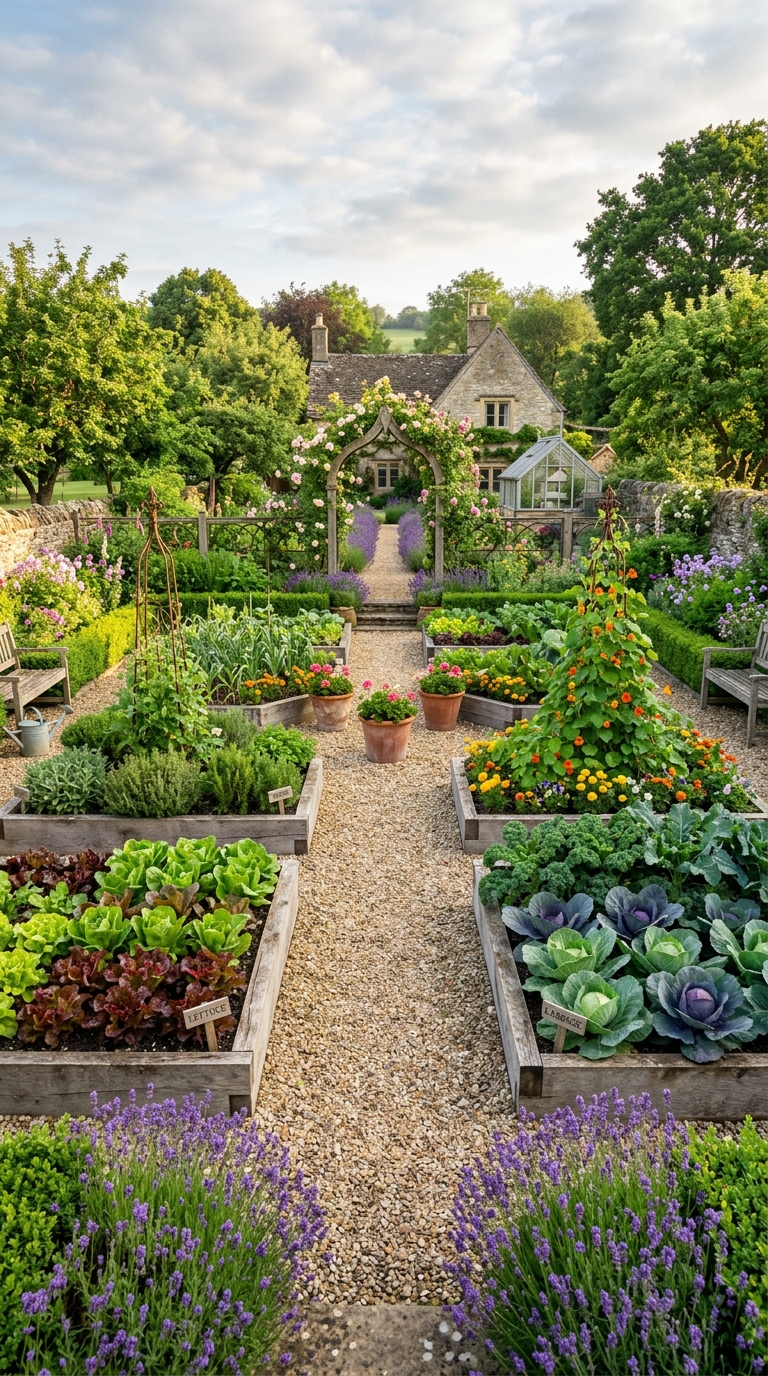
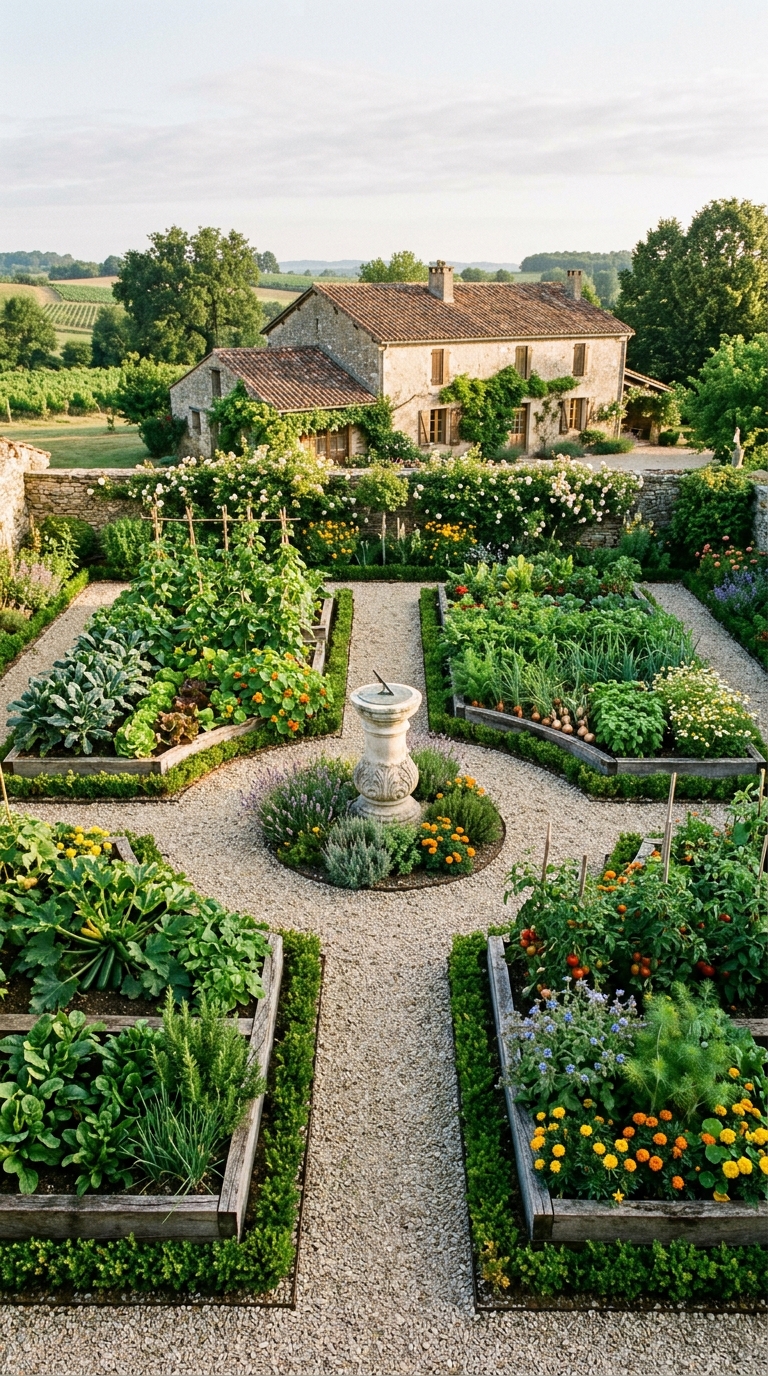
The four-bed layout is the original potager design, and honestly? It’s still the most satisfying to look at. Four symmetrical raised beds arranged around a central focal point — a stone sundial, a terracotta urn, or even a simple birdbath — create a sense of order and calm that makes the whole garden feel intentional. It’s the kind of design that makes visitors ask, “Did you hire a landscape designer?”
What makes this layout work so well is the balance. Every bed mirrors the others, so no matter what season you’re in, the garden looks complete. Add a gravel or brick path between each bed, and you’ve got a space that’s as functional to walk through as it is beautiful to look at.
Complete your edible garden retreat with these inspiring garden wall decor ideas that bring charm, personality, and visual interest to surrounding fences and walls.
Styling Tips:
- Use a stone or cast iron sundial as the central focal point
- Line paths with fine gravel or antique brick for that French countryside feel
- Plant one bed with herbs, one with salads, one with flowers, and one with root vegetables for visual variety
- Edge each bed with low boxwood or lavender for structure
- Add terracotta pots at the corners for extra charm
Raised Bed Potager with Boxwood Edging
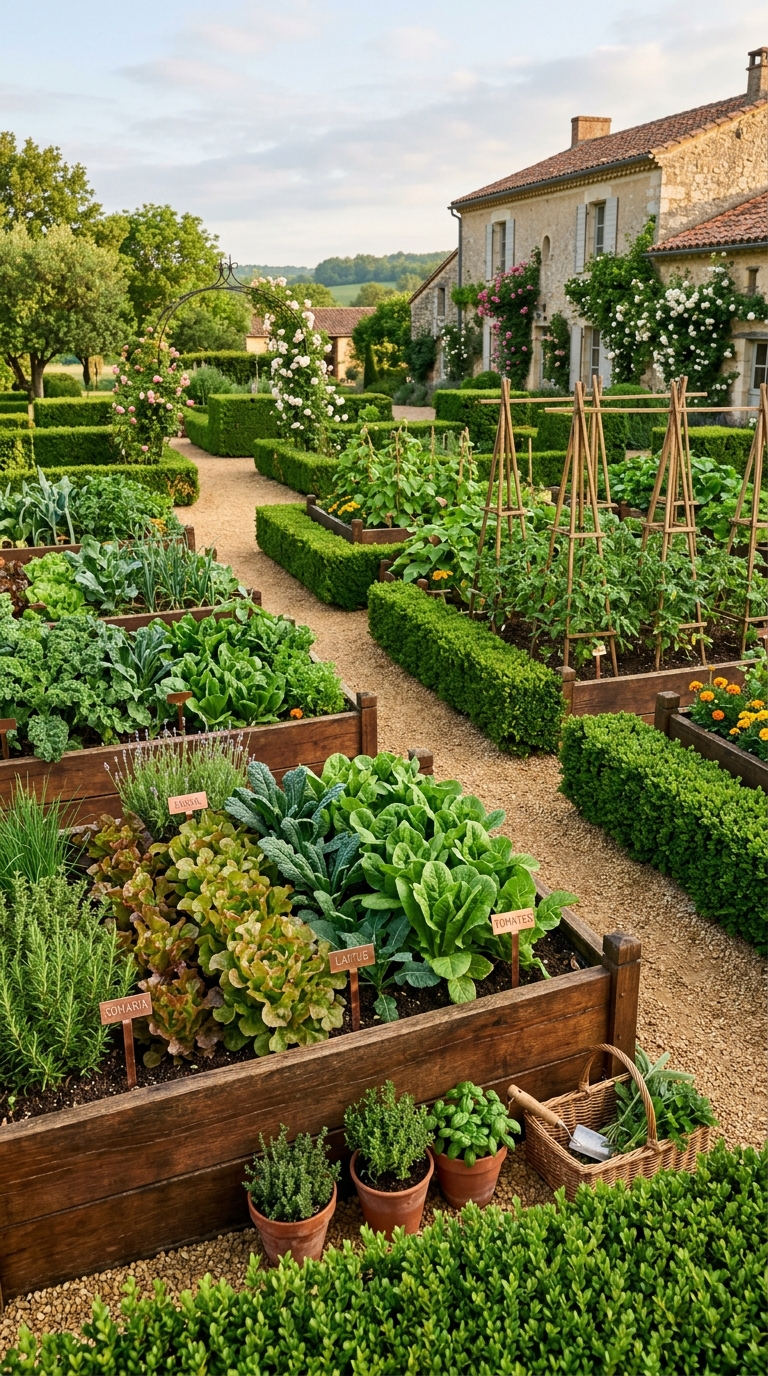
There’s something about a raised bed edged in boxwood that just screams elegant. The dark green structure of the boxwood keeps the garden looking polished even in the middle of winter, when everything inside the beds has gone to sleep. It’s one of those design choices that adds year-round value to your garden.
Cedar or stone raised beds work beautifully here. Keep the beds at a comfortable working height and let the boxwood grow to about knee height around the perimeter. The contrast between the structured green edging and the wild, abundant planting inside is what makes this look so satisfying.
Styling Tips:
- Choose dwarf boxwood varieties for low-maintenance edging that stays compact
- Pair dark wood or stone beds with light-colored gravel paths for contrast
- Let a few tall plants — like artichokes or fennel — rise above the boxwood for drama
- Use matching terracotta pots at bed corners to tie the look together
- Add climbing plants to a small fence behind beds for vertical interest
Cottage-Style Potager with Wildflower Borders
Not every potager needs to be perfectly symmetrical. The cottage-style version is softer, more relaxed — and in a lot of ways, even more beautiful. Think informal raised beds surrounded by clouds of calendula, cosmos, and nasturtiums spilling over the edges. It looks effortless, even though there’s real thought behind every plant placement.
This style works especially well if you already have a cottage garden aesthetic going on in the rest of your yard. The vegetable beds anchor the space while the flowers create that dreamy, romantic mood that Pinterest users absolutely cannot resist saving.
For extra shade and timeless character, explore these beautiful cottage garden pergola ideas that pair perfectly with flowering pathways and elegant potager layouts.
Styling Tips:
- Mix edible flowers like nasturtiums and borage directly into vegetable beds
- Use natural wood or woven willow edging instead of formal boxwood
- Let a few plants self-seed and spill over paths for that lived-in charm
- Add a rustic wooden bench nearby so you can actually sit and enjoy it
- Choose a soft color palette — pale yellows, oranges, and purples — for a romantic feel
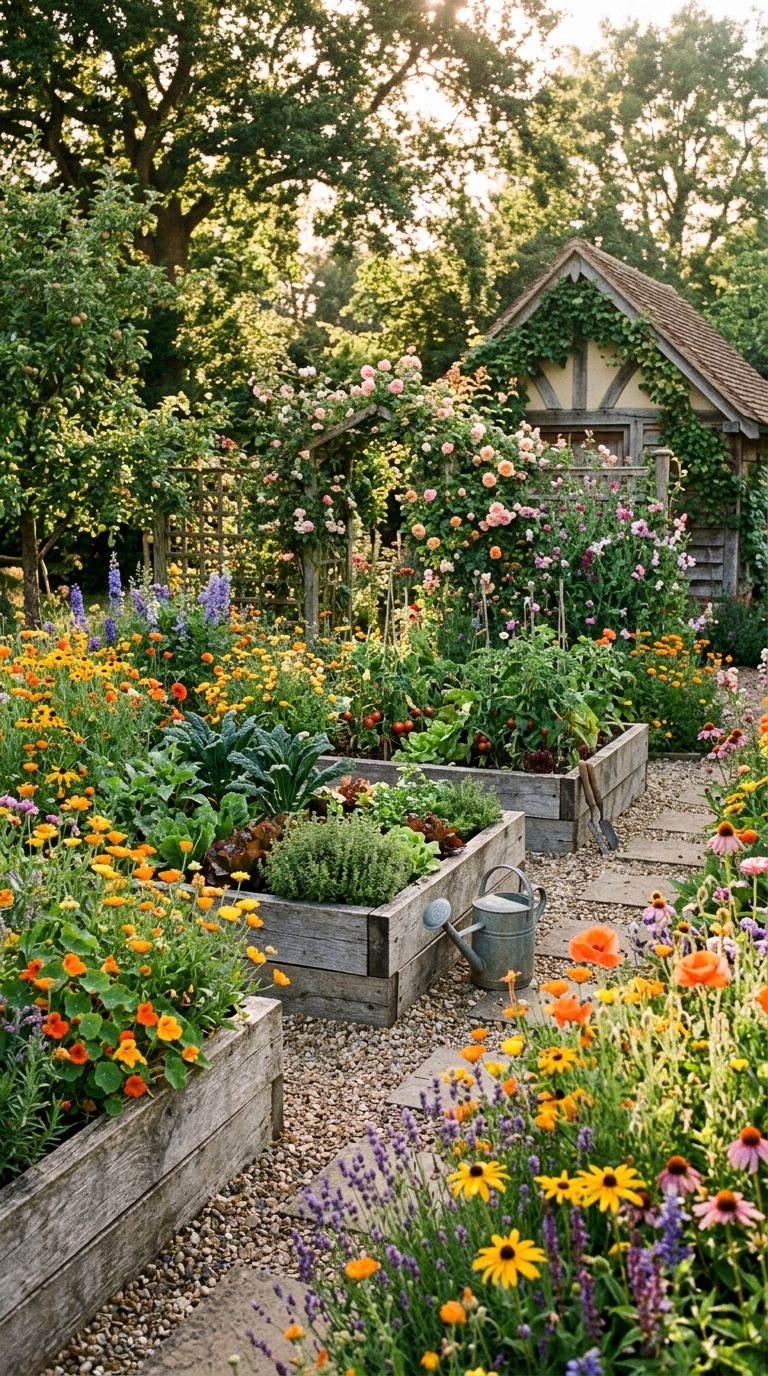
Small Backyard Potager Garden
One of the biggest myths about potager gardens is that you need a huge space. You really don’t. Some of the most charming potager designs I’ve seen were squeezed into the tiniest city backyards — and they worked because of the constraints, not despite them.
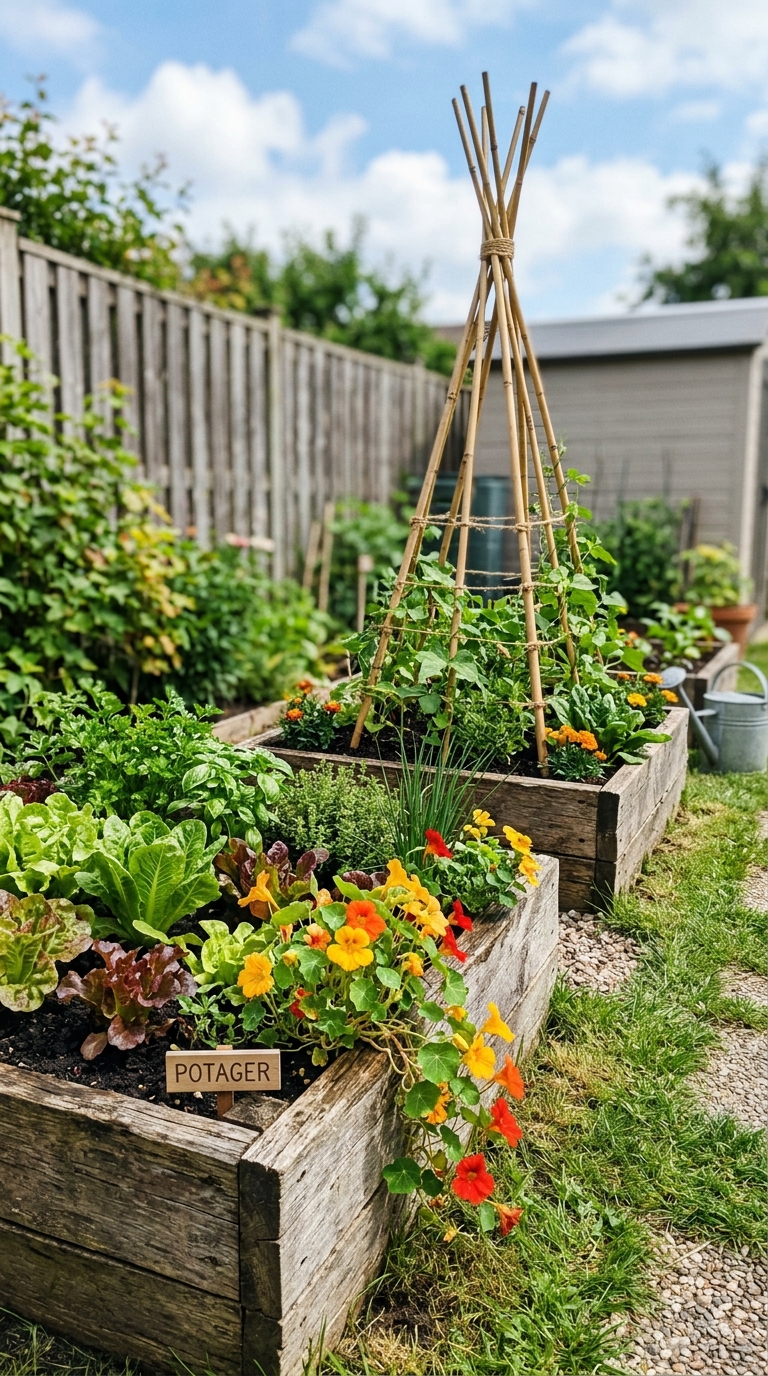
Two or three compact 4×4 raised beds, a simple gravel path between them, and a few vertical elements like a bamboo teepee for beans or a small trellis for cucumbers — that’s genuinely all you need. Keep the planting dense and colorful, and even a small space will feel lush and abundant.
Styling Tips:
- Use vertical growing structures to maximize space without expanding the footprint
- Keep paths narrow (about 18 inches) to leave more room for planting
- Plant in layers — low herbs at the front, mid-height vegetables, tall climbers at the back
- Add a mirror or reflective panel on a fence to make the space feel bigger
- Choose compact varieties of your favorite vegetables for small-bed growing
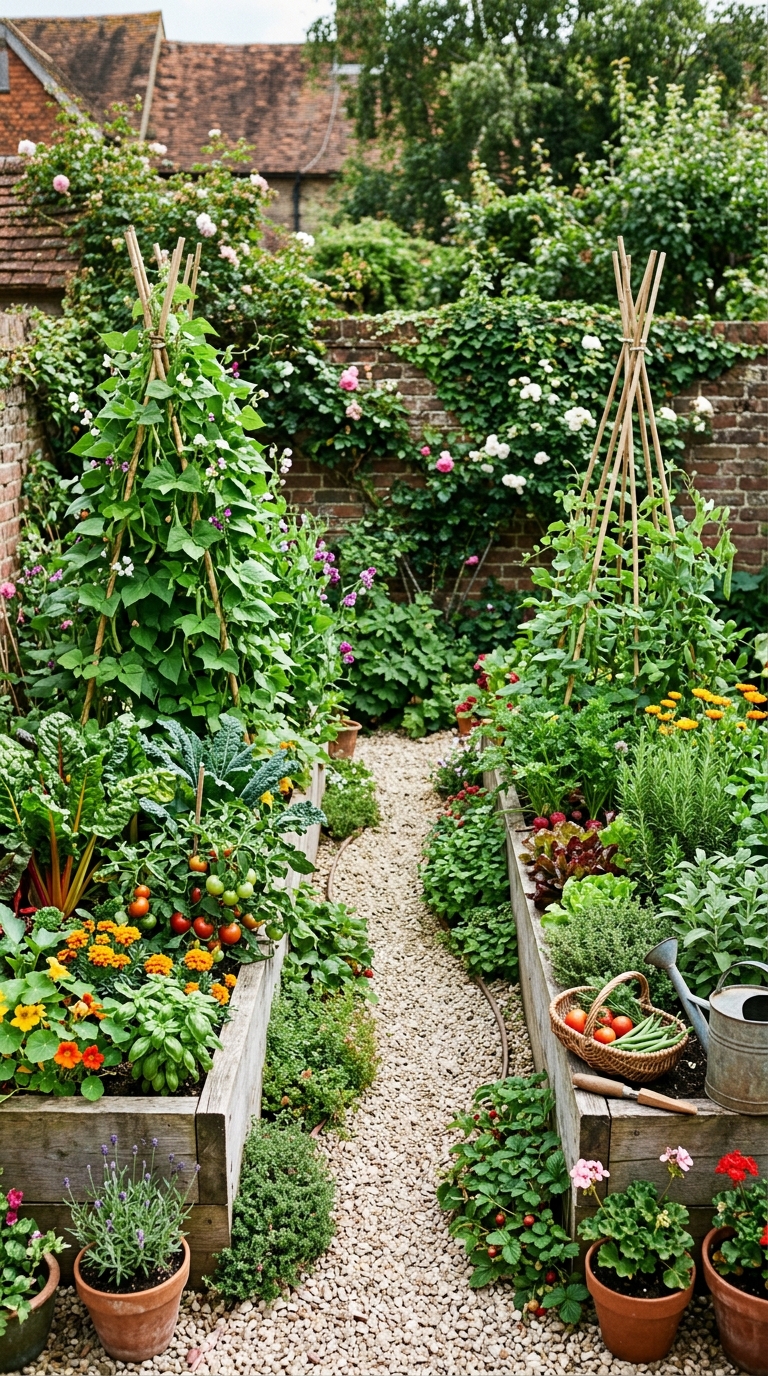
Archway & Climbing Rose Potager Entrance
If you want one design element that makes an immediate, dramatic impact, it’s an arched entrance covered in climbing roses or sweet peas. Walking through a floral arch into a kitchen garden is the kind of moment that makes people stop and reach for their phone camera.
A simple wooden or metal arch doesn’t have to cost a fortune. Train a climbing rose — ‘Zephirine Drouhin’ is a classic thornless choice — or sweet peas up both sides and let them meet overhead. Pair it with gravel underfoot and you’ve created an entrance that looks like it belongs in a garden magazine.
Styling Tips:
- Choose a thornless climbing rose for an arch you can walk through comfortably
- Paint or stain the arch in muted tones — sage green, black, or deep navy
- Flank the arch with matching terracotta pots planted with herbs
- Use the arch to frame the view of the central focal point within the garden
- Add fairy lights woven through the climbing plants for evening magic
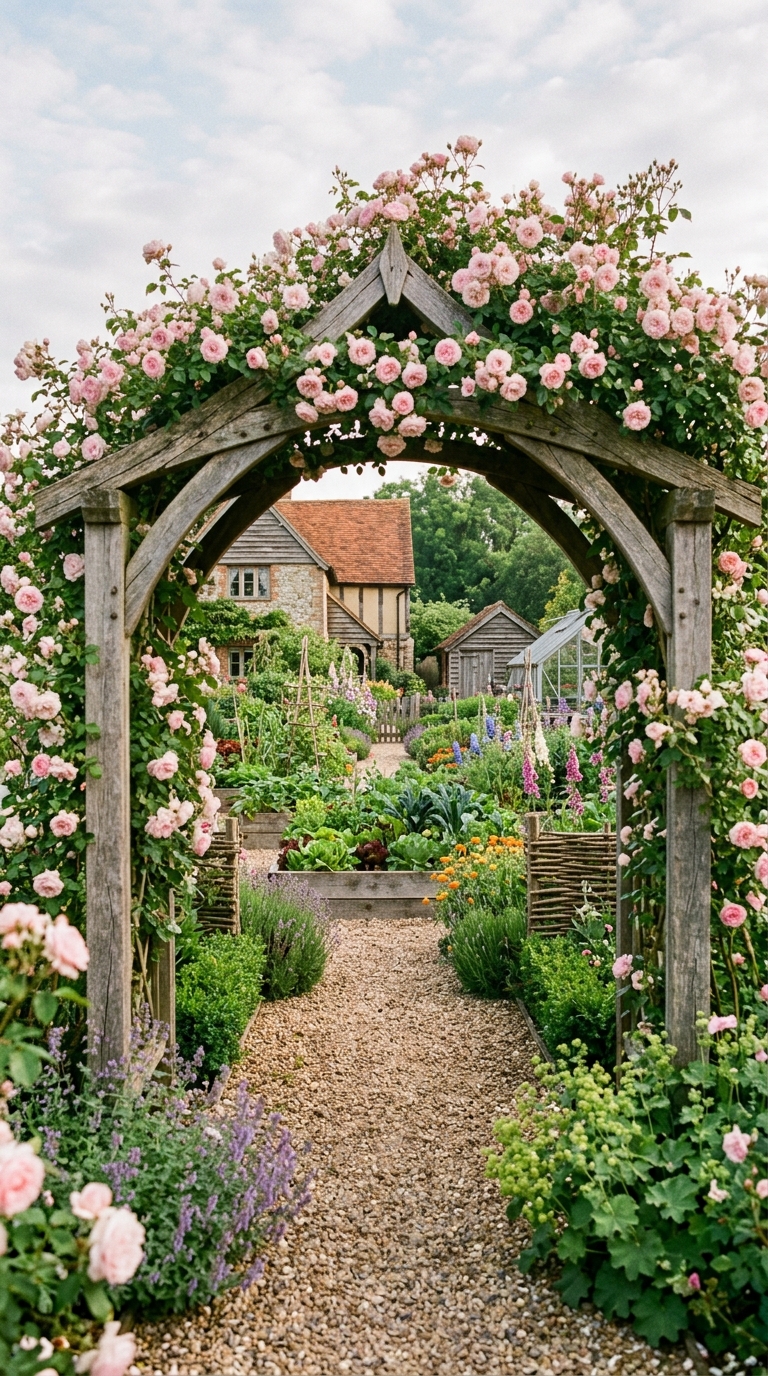
Herb & Vegetable Companion Planting Bed
There’s a quiet genius to companion planting that doesn’t get enough credit. When you grow basil next to tomatoes, marigolds beside peppers, and lavender along the border, you’re not just making things look beautiful — you’re actually helping plants protect each other. It’s functional design at its best.
The visual result is wonderfully layered. Tall tomato plants rising from a sea of bushy basil, edged with golden marigolds — it’s the kind of bed that looks almost painterly. This style works in any size garden and rewards you with better harvests AND a better-looking space.
Looking to add structure and year-round beauty to your kitchen garden? These low-growing shrub ideas can create attractive borders around potager beds while keeping your layout neat and organized.
Styling Tips:
- Pair purple basil with red tomatoes for a striking color contrast
- Use marigolds as both a pest deterrent and a cheerful bright border
- Plant tall fennel or dill at the back as a feathery, elegant backdrop
- Group herbs by scent and purpose — culinary together, medicinal together
- Let a few herb plants flower for added color and pollinator attraction
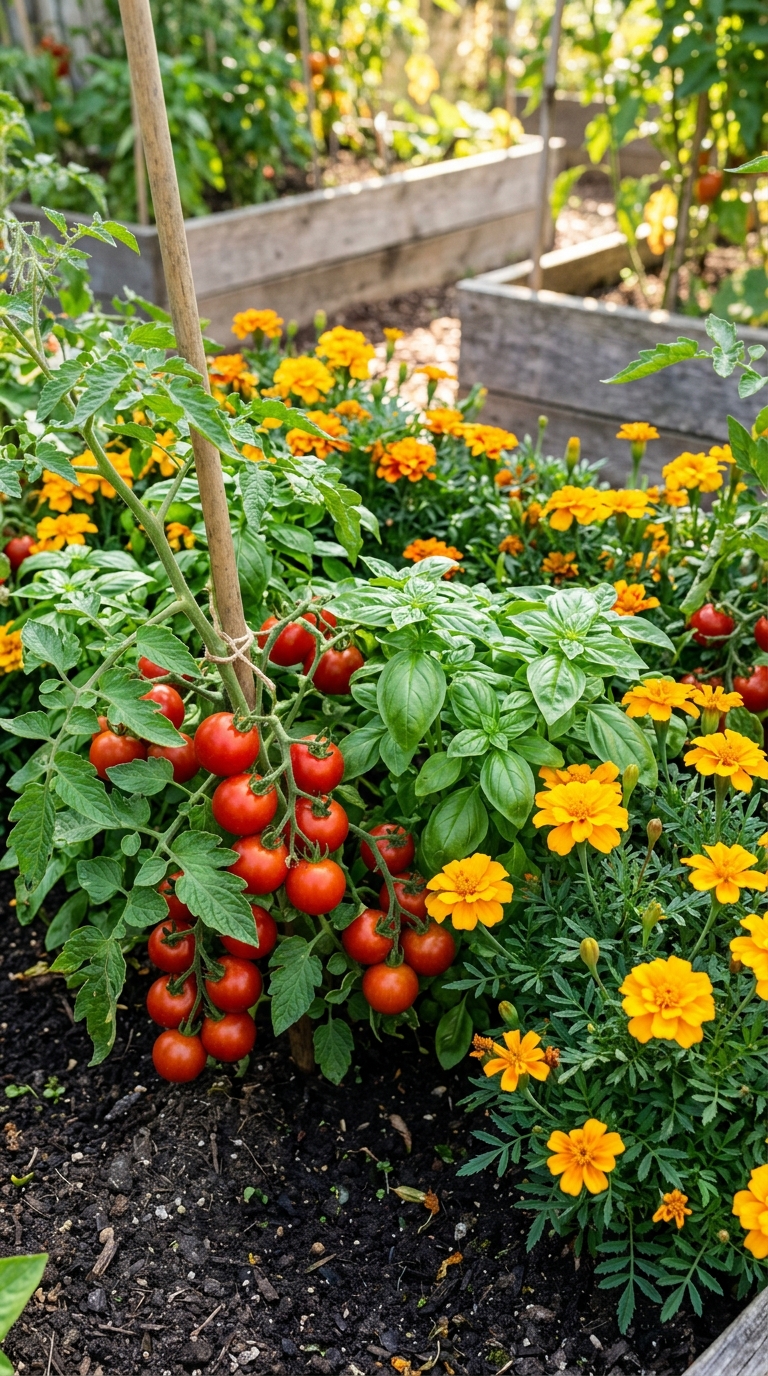
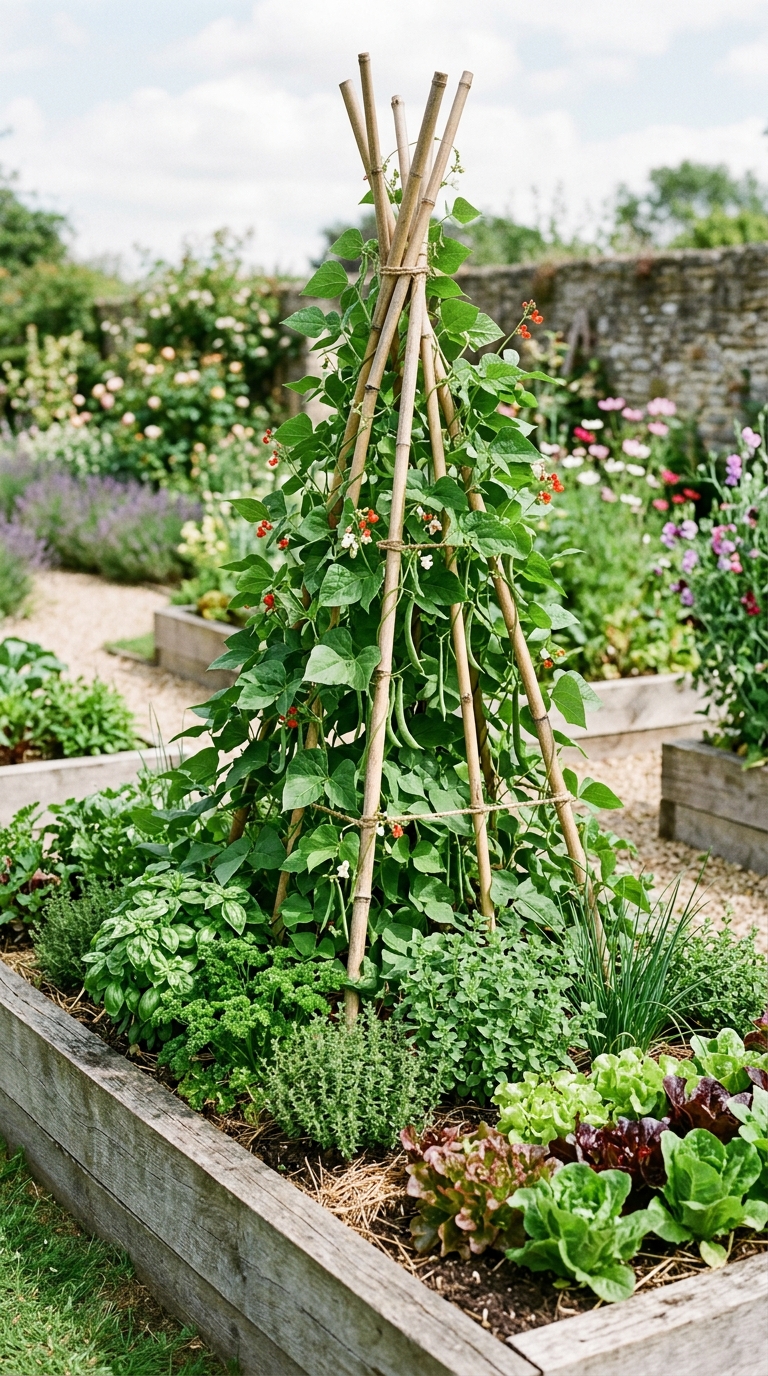
Potager with Teepee Bean Trellis
There’s something almost whimsical about a bamboo teepee rising out of a kitchen garden bed. It draws the eye upward, adds height to an otherwise flat design, and gives climbing plants the vertical support they desperately want. And honestly, it just looks really charming — especially when covered in beans or sweet peas.
The teepee trellis works especially well in the center of a round or square bed. Kids love them too, because you can grow a “bean tent” by planting densely and letting the foliage create a little hideaway. Functional, beautiful, and kind of magical all at once.
Styling Tips:
- Use natural bamboo or painted willow poles for a rustic aesthetic
- Plant climbing beans, sweet peas, or cucumbers for lush coverage
- Surround the base with low-growing herbs or lettuce for a layered look
- Try a painted teepee — sage green or terracotta — for a styled Pinterest look
- Add a small sign or tag to make it feel extra intentional and charming
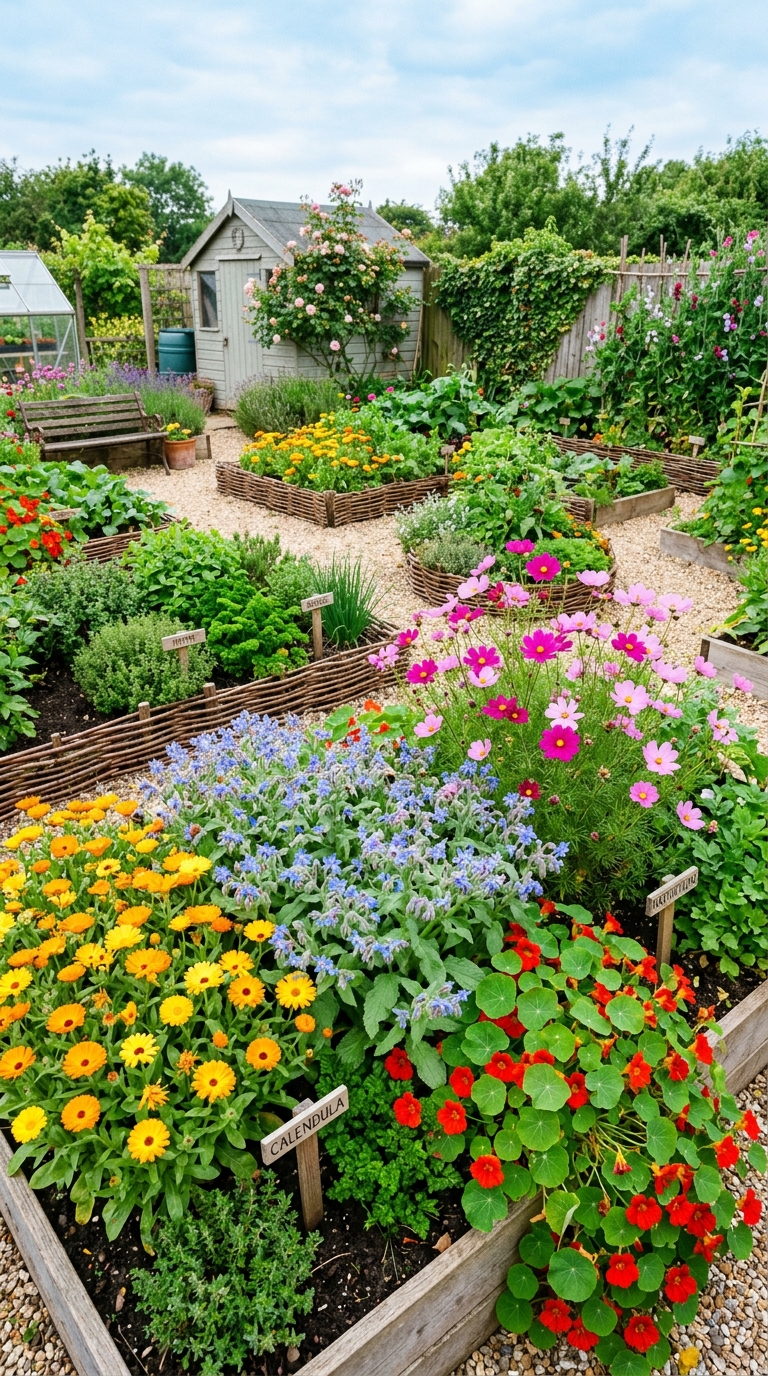
Edible Flower Cutting Garden Potager
Who says you have to choose between a cutting garden and a kitchen garden? An edible flower potager gives you both — beds filled with calendula, nasturtiums, borage, chamomile, and zinnias that you can eat, use as garnishes, or simply cut and bring inside in a vase.
The color combinations here are naturally stunning. Imagine deep orange calendula beside bright blue borage, framed by trailing nasturtiums in yellow and red. It’s one of those gardens that photographs beautifully in every direction, which makes it an absolute winner on Pinterest.
Styling Tips:
- Choose varieties with long stems for cutting — taller zinnias, sunflowers, and cosmos
- Plant edible flowers along the edges of vegetable beds for a colorful border effect
- Use simple glass or terracotta vases to display fresh cuts inside your home
- Deadhead regularly to keep flowers producing all season
- Include herbs like chamomile and lavender for a fragrant cutting garden element
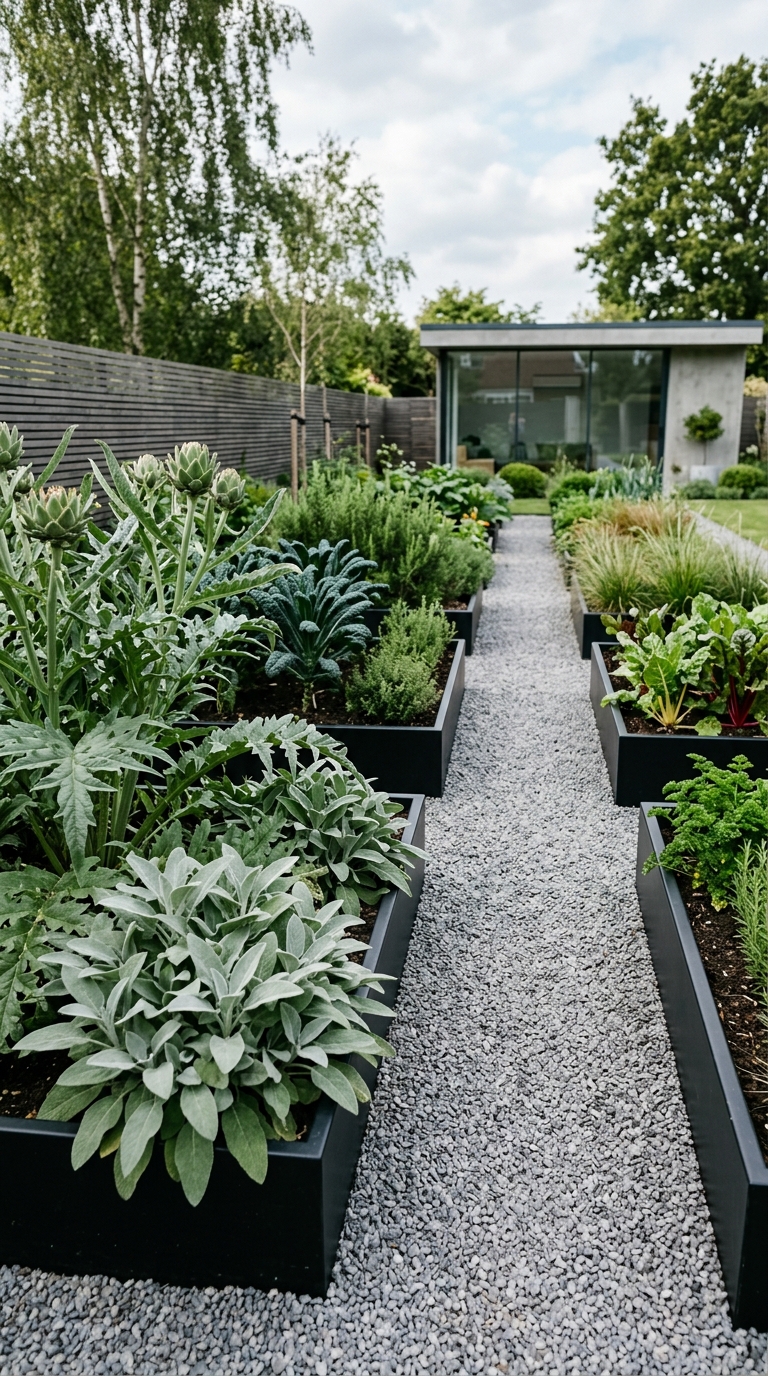
Modern Minimalist Potager
Not everyone wants the full cottage chaos. If your home is clean-lined and contemporary, a minimalist potager might actually suit your style better — and it can be every bit as stunning. Think steel-edged raised beds, a monochrome planting scheme of greens and silvers, and a clean pea gravel path with no clutter.
The restraint is the whole point. A few beautifully selected plants — architectural artichokes, silvery sage, dark-leaved basil, neat rows of lettuces — in a disciplined layout create something that feels more like a living sculpture than a kitchen garden. It’s minimal but never boring.
If you’re short on space, a ladder herb garden idea is a clever way to grow fresh culinary herbs and add vertical interest to your potager garden design.
Styling Tips:
- Use Corten steel or black powder-coated metal for raised bed edging
- Stick to a tight color palette — greens, silvers, and one accent color maximum
- Choose architectural plants with strong shapes: artichokes, cardoons, large-leafed chard
- Keep paths immaculate with pale gravel or smooth stepping stones
- Add a single statement pot or sculpture as the only focal point
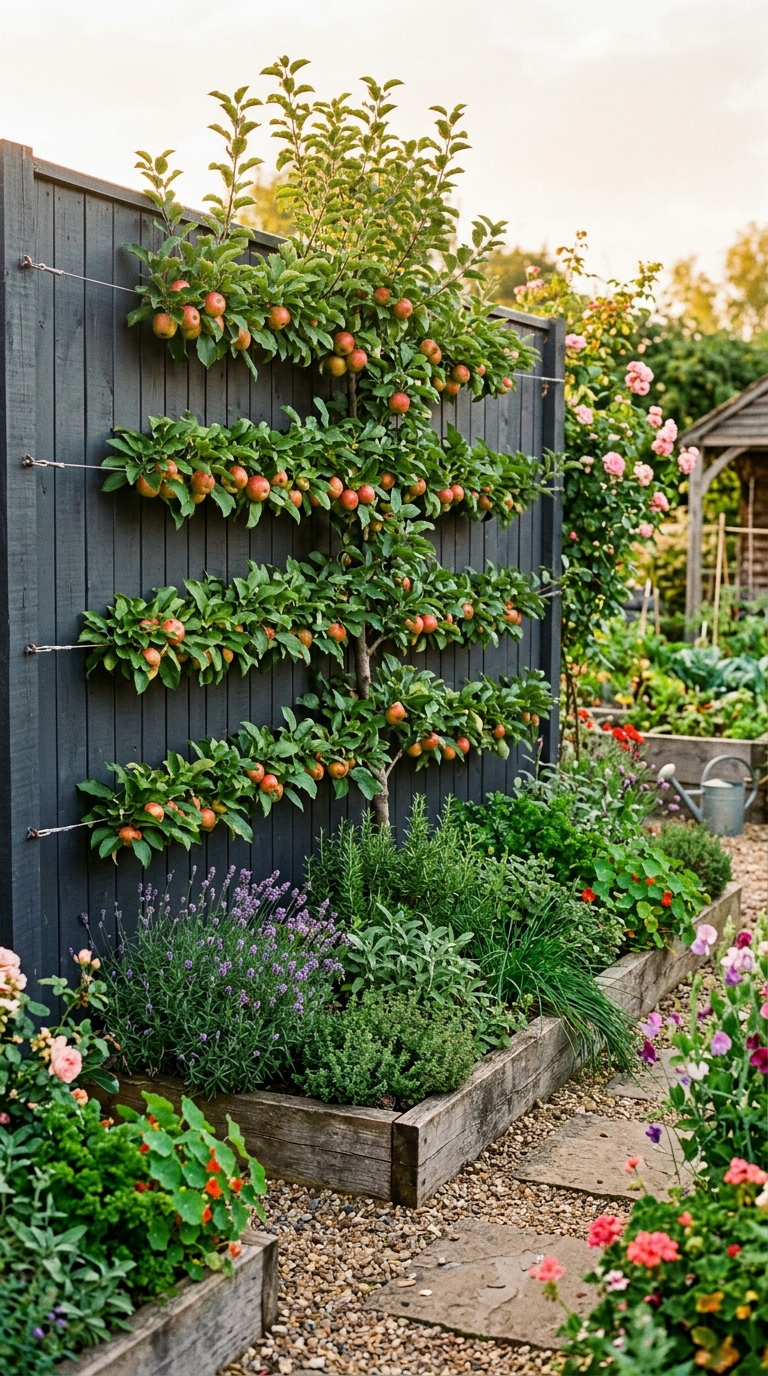
Potager with Espalier Fruit Trees
Espalier sounds fancy, but the idea is simple: train fruit trees flat against a wall or fence, like living artwork. In a potager garden, an espaliered apple or pear tree along the back fence adds incredible vertical drama and delivers an actual harvest — without taking up floor space.
The patterns espalier creates are genuinely beautiful. Horizontal tiers of branches, perfectly spaced, covered in spring blossom and summer fruit — it’s one of those design elements that makes a garden feel cared for and considered. Plant raised beds in front and you’ve got a complete, layered kitchen garden scene.
Styling Tips:
- Choose compact fan or horizontal espalier patterns for the most visual impact
- Train against a south or west-facing fence for maximum sun exposure
- Underplant with low herbs like thyme or chamomile to fill the base space
- Use dark-painted fence panels behind to make the espalier pop visually
- Mix apple and pear trees for a longer fruiting season and visual variety
Potager with Woven Willow Borders
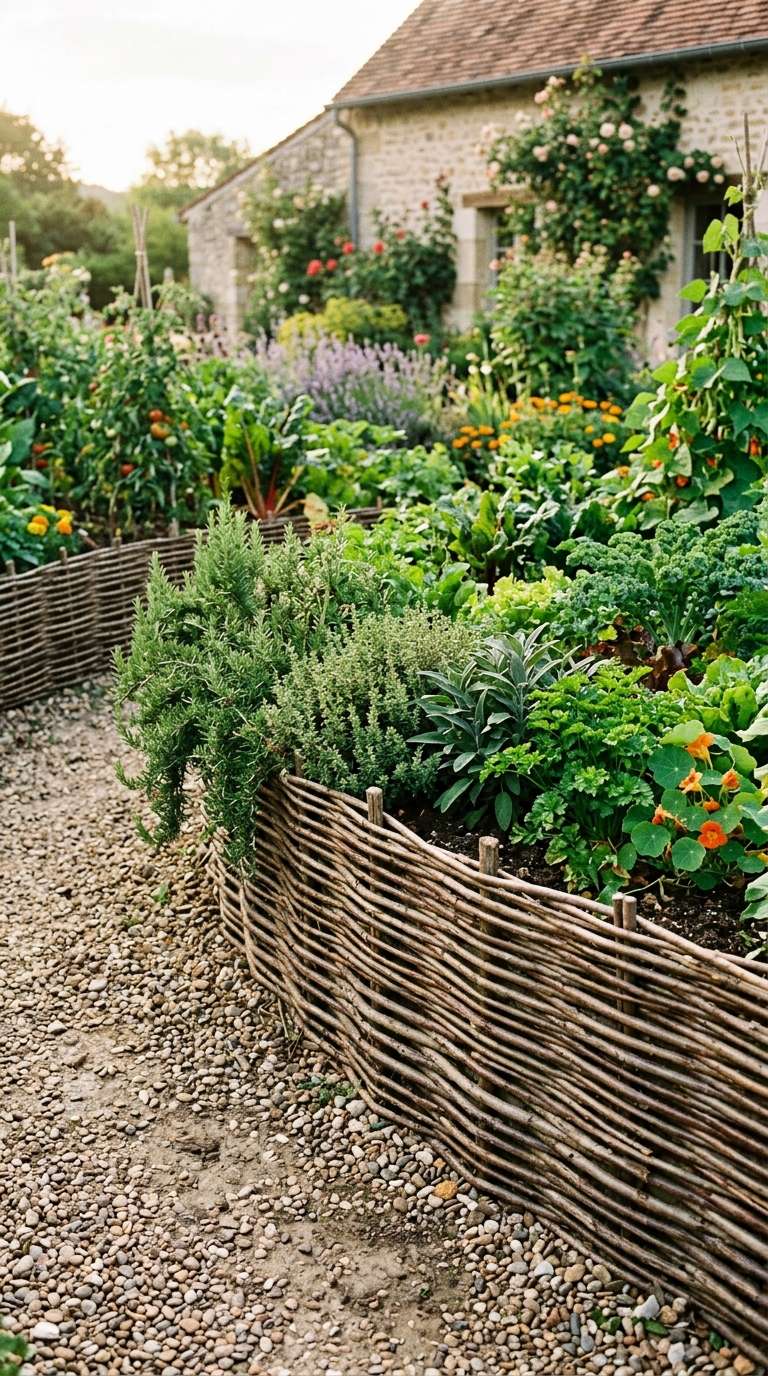
Woven willow edging is one of those details that looks like it took forever but is actually achievable in a weekend. It gives a potager that authentic, old-world French feel that photographs like an absolute dream. The texture of the woven branches against lush green plants is genuinely stunning.
You can buy willow hurdles ready-made or weave your own from harvested branches. Either way, the effect is the same — a natural, warm, handcrafted border that makes your kitchen garden feel like something from the French countryside. It ages beautifully too, developing a lovely silver-grey patina over time.
Styling Tips:
- Use willow hurdles about 12 inches high for a classic, contained look
- Combine with gravel paths for the most authentic French potager aesthetic
- Plant herbs that spill slightly over the edge — thyme, oregano, nasturtiums
- Add wooden plant stakes with handwritten labels inside each bed for charm
- Let a few wildflowers self-seed along the base of the willow for a relaxed feel
Container Potager for Patios and Balconies
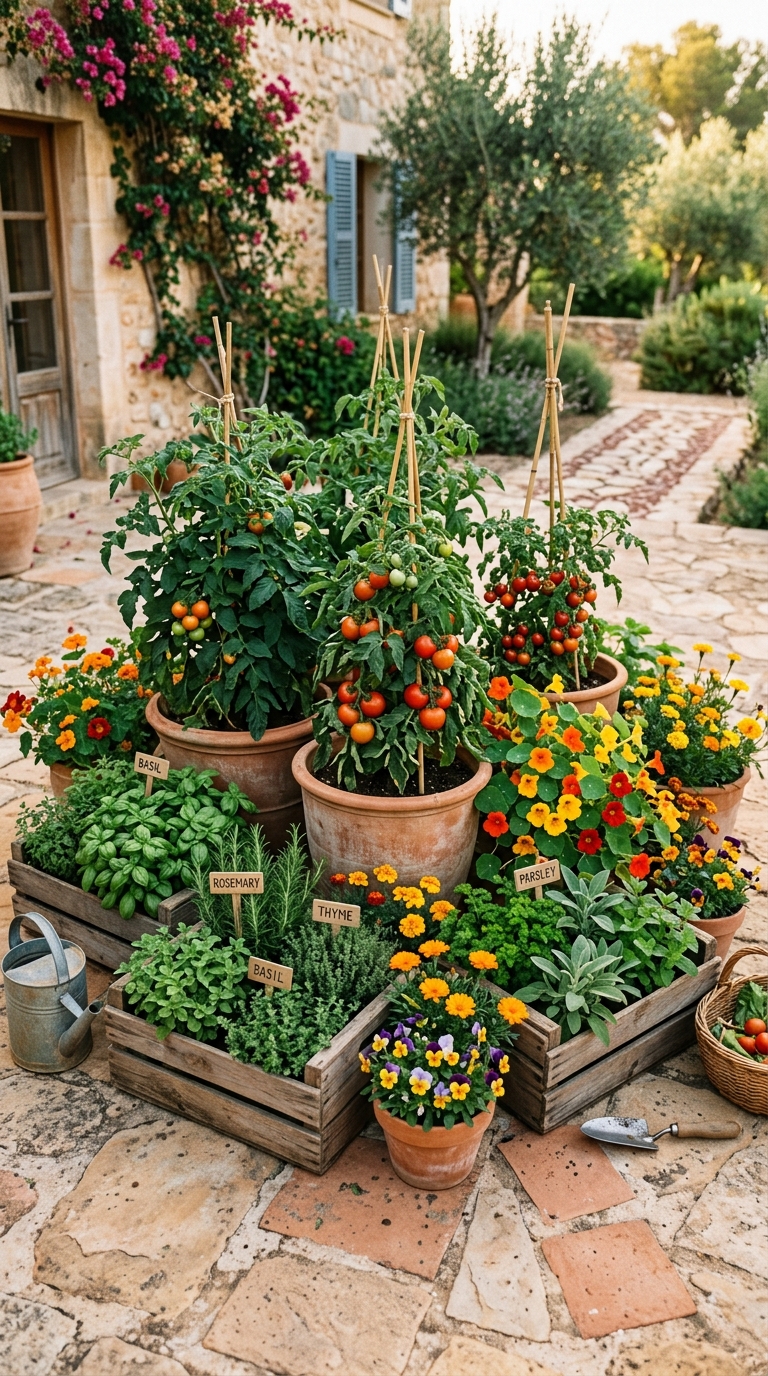
No yard? No problem. A container potager is exactly what it sounds like — a fully functional, genuinely beautiful kitchen garden built entirely in pots and containers. Large terracotta pots, wooden crates, galvanized metal buckets, and ceramic planters grouped on a patio or balcony can create a potager that’s surprisingly lush.
The key is grouping. A single pot of basil looks lonely. But cluster a large terracotta pot of tomatoes with a wooden crate of herbs, a tall planter of edible flowers, and a hanging basket of strawberries — suddenly you have a space that feels intentional, abundant, and beautiful.
Styling Tips:
- Group containers in odd numbers (three or five) for the most visually pleasing arrangement
- Vary heights using pot risers, crates, or stacked bricks for layered interest
- Choose a cohesive container palette — all terracotta, or all weathered wood, for a curated look
- Add a small trellis in a pot for vertical growing without taking up floor space
- Include at least one fragrant herb — basil, lemon thyme, or mint — near where you sit
Four-Season Potager for Year-Round Color
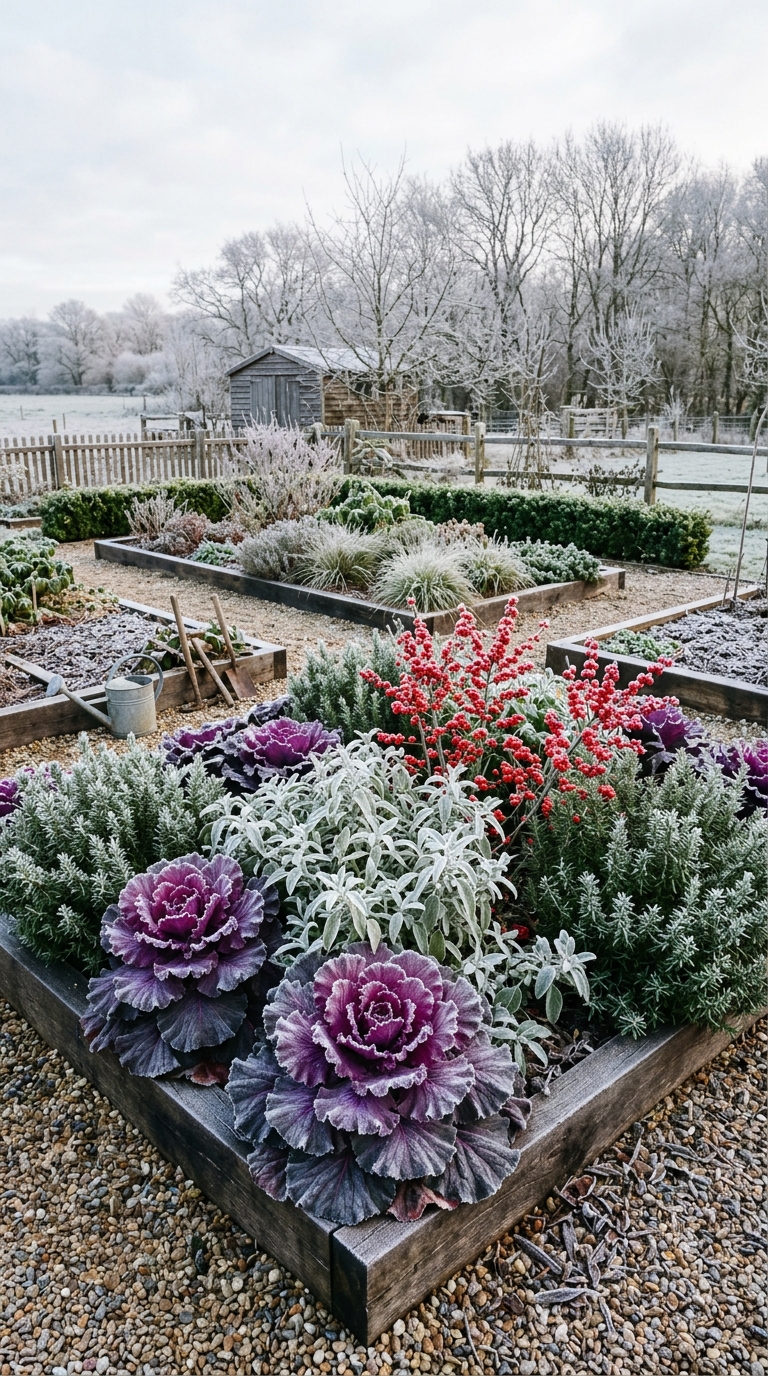
Most kitchen gardens look wonderful in summer and completely bare in winter. A four-season potager changes that by building in plants that carry interest through every month of the year. It takes a little more planning, but the reward is a garden that never looks abandoned.
Winter kale in deep purple and blue, ornamental cabbages in dusty pink, evergreen herbs like rosemary and sage, red-berried shrubs at the border — these are your winter workhorses. Come spring, they’re joined by early salads and bulb flowers. Come summer, the whole thing bursts. It’s a living calendar.
Styling Tips:
- Plant ornamental kale and chard for winter color — they’re genuinely beautiful
- Include evergreen herbs like rosemary, sage, and thyme as permanent structural plants
- Add a berry shrub — redcurrant or gooseberry — for autumn and winter color
- Use spring bulbs under dormant perennials for surprise early color
- Plan beds so that something is always in flower or fruit, rotating through the year
Luxury Potager with Greenhouse Focal Point
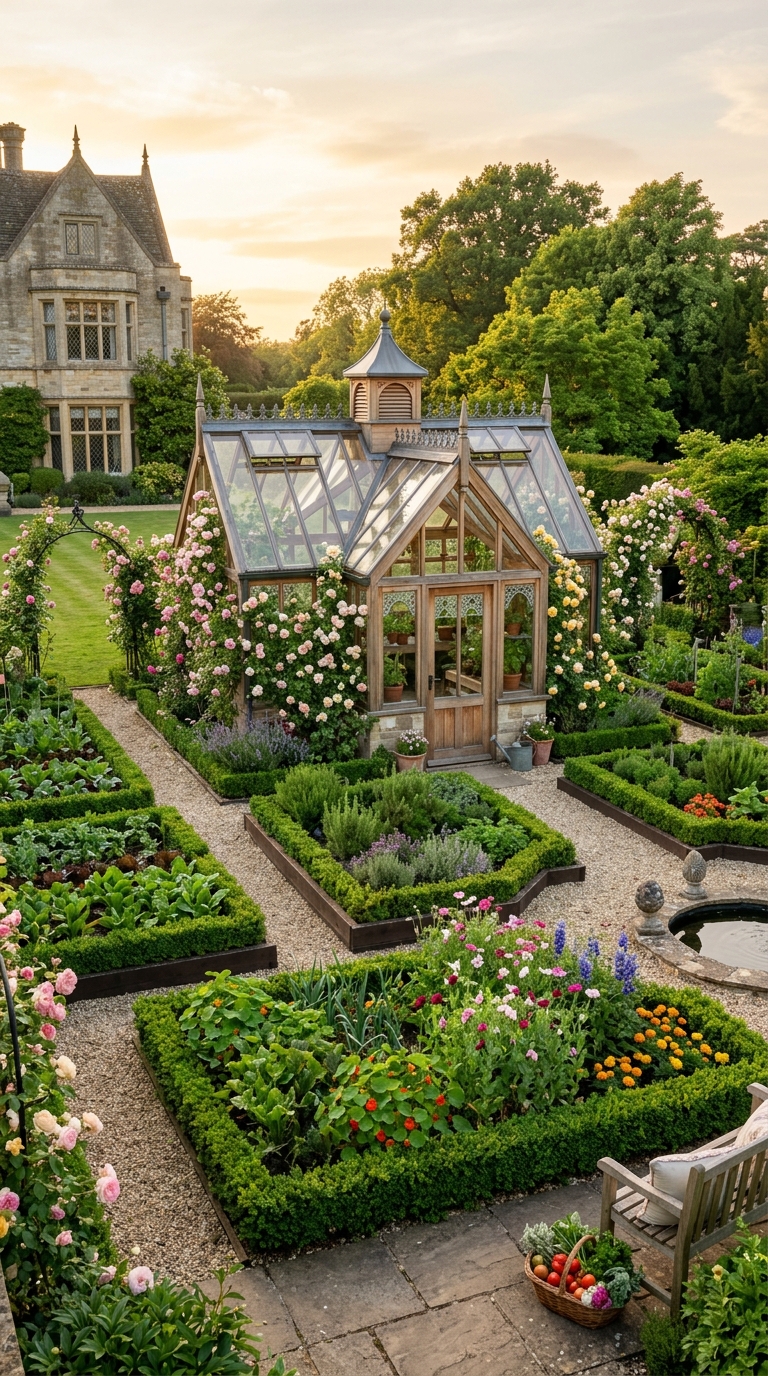
If you’re dreaming big, put a greenhouse at the heart of your potager design. A cedar or glass greenhouse used as a visual anchor — with raised beds radiating outward from it — creates a potager layout that feels genuinely grand. It’s the kind of garden that makes people stop scrolling.
Functionally, the greenhouse extends your growing season and gives you a beautiful structure to look at year-round. Aesthetically, it anchors the whole design and creates a destination within the garden — something to walk toward, to look at from the house, to photograph at every hour of the day.
Styling Tips:
- Choose a Victorian-style glass greenhouse or cedar wood structure for maximum visual impact
- Paint or stain the greenhouse in deep green, black, or sage for a dramatic look
- Surround with formal box hedging or clipped topiary for a sense of grandeur
- Use the interior greenhouse bench as a potting station AND a styling vignette
- Add climbing roses or jasmine on the outside walls for seasonal fragrance and color
Budget Beginner Potager Layout
Starting a potager garden doesn’t have to cost much at all. Two simple raised beds built from reclaimed timber, a bag of compost, and a handful of seed packets — that’s genuinely all you need to get started. The beauty of potager gardening is that it grows with you, one bed at a time.
Start with the easiest crops: salad leaves, herbs, nasturtiums, and climbing beans. They grow fast, look beautiful, and give you quick wins that make you want to keep going. Add a second bed next season, a trellis the season after. Before you know it, you have a real potager garden — built at your own pace.
Styling Tips:
- Use reclaimed wood, old scaffolding planks, or pallets for zero-cost raised beds
- Source seeds instead of plants — they’re a fraction of the cost and just as rewarding
- Choose multi-purpose plants: nasturtiums are edible, beautiful, and completely free to grow
- Add a simple bamboo teepee for climbing beans — it looks great and costs almost nothing
- Focus on one beautiful focal point — a pot, a lantern, a painted crate — to anchor the design
Stone Path Geometric Potager
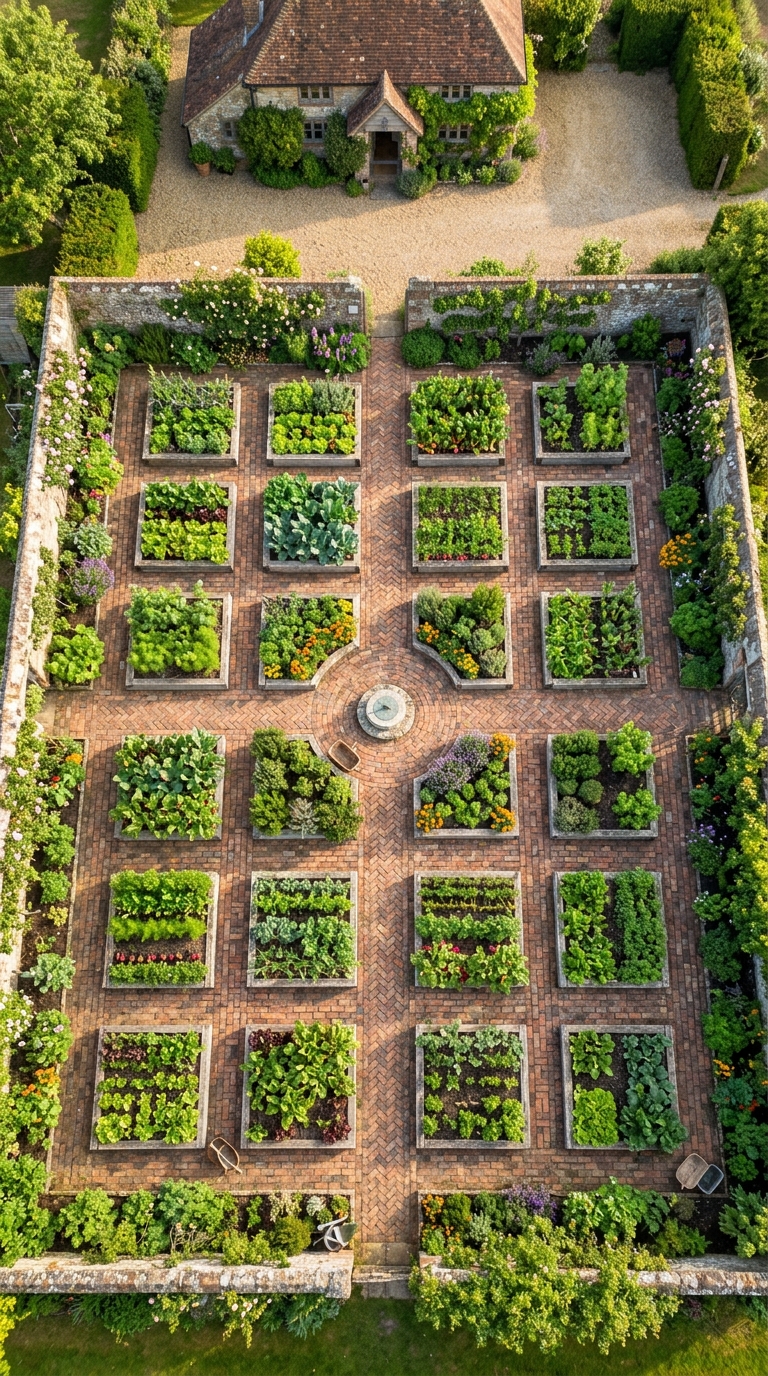
There’s something incredibly satisfying about a potager with proper stone paths. Flagstone, cobblestone, or antique brick — the choice of material completely changes the feel of the garden, but all of them add a sense of permanence and craft that gravel can’t quite match.
Geometric beds divided by stone paths work especially well when photographed from above — the patterns become almost architectural. It’s also genuinely practical: stone paths don’t shift or get muddy, and they warm up in the sun, creating little microclimates that your plants will love.
Styling Tips:
- Use reclaimed or antique brick for the most characterful path surface
- Keep stone paths at least 24 inches wide for comfortable wheelbarrow access
- Edge paths with low chamomile or thyme that releases fragrance when walked on
- Choose irregularly shaped stepping stones for a more relaxed, natural aesthetic
- Add moss between flagstones for an aged, romantic look
Styling Tips for Your Potager Garden
Before you start digging, a little planning goes a long way. Here are some golden rules that will make your potager garden look intentional rather than accidental:
- Choose a focal point first — a sundial, a greenhouse, an archway, or a fountain. Everything radiates from there.
- Plan for year-round structure — include at least a few permanent elements like evergreen herbs or clipped hedges that look good in every season.
- Mix heights intentionally — low herbs at the front, mid-height vegetables in the middle, tall climbers and fruit trees at the back.
- Use one material consistently — one type of raised bed material, one path surface, one edging style. Consistency is what makes a garden look designed.
- Leave room to breathe — don’t overcrowd every inch. Negative space (bare soil, gravel, a simple bench) makes the planted areas look more lush by contrast.
FAQ
What is a potager garden?
A potager garden is a French-style ornamental kitchen garden that combines vegetables, herbs, fruit trees, and edible flowers in a beautifully designed, structured layout. Unlike a traditional vegetable patch, a potager is designed to be as visually appealing as it is productive.
What is the difference between a potager and a kitchen garden?
A kitchen garden grows food. A potager grows food beautifully. The key difference is intentional design — a potager uses formal layouts, companion planting, edible flowers, and decorative elements to make the growing space genuinely ornamental.
How do I plan a potager garden layout?
Start with a focal point at the center — a sundial, urn, or water feature. Arrange beds symmetrically around it with paths between them. Choose four to eight beds depending on your space, and plan each bed for a different crop type — herbs, salads, climbing plants, flowers.
What plants go in a potager garden?
Vegetables like tomatoes, beans, courgettes, and lettuces; herbs like basil, rosemary, sage, and thyme; edible flowers like nasturtiums, calendula, and borage; and fruit trees or berry bushes for height and structure.
Can I make a potager garden in a small backyard?
Absolutely. Even two 4×4 raised beds with a simple path and a teepee trellis can become a proper potager garden. Focus on vertical growing, dense planting, and one strong focal point to make a small space feel complete.
Conclusion
There’s a reason potager gardens keep showing up on every Pinterest board and garden inspiration page — they hit that rare sweet spot between productive and genuinely beautiful. Whether you’re starting with two simple raised beds or going full four-bed formal French layout, the principles are the same: design with intention, mix beauty with purpose, and let the garden grow with you.
Your potager doesn’t have to be perfect from day one. Start with one corner, one bed, one focal point — and let the rest unfold season by season. Some of the most beautiful kitchen gardens in the world started as a few seeds in a reclaimed wooden crate. Yours can too.