
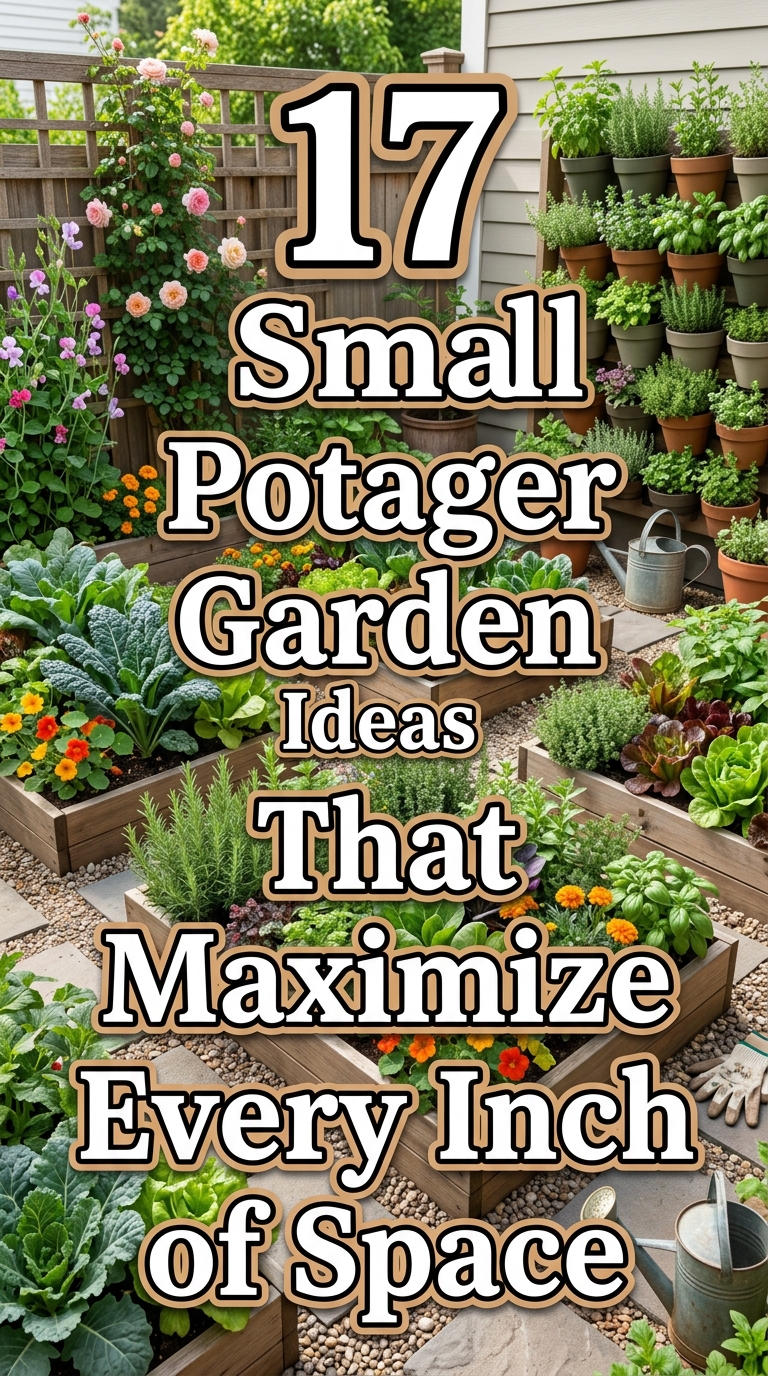
Most “dream garden” inspiration assumes you’ve got a big backyard to work with — and that leaves out a lot of people growing in courtyards, balconies, or one narrow strip beside the driveway. I spent two years gardening on a balcony barely six feet wide, so I get the frustration of scrolling past layouts that don’t translate.
The good news is that a potager garden doesn’t need acres to work. It just needs a smart layout — vertical gardening, container clustering, and a little creative use of corners go a long way. Here are 17 small potager garden ideas built specifically for tight spaces, balconies, and small urban kitchen gardens.
Vertical Layered Planter Stand
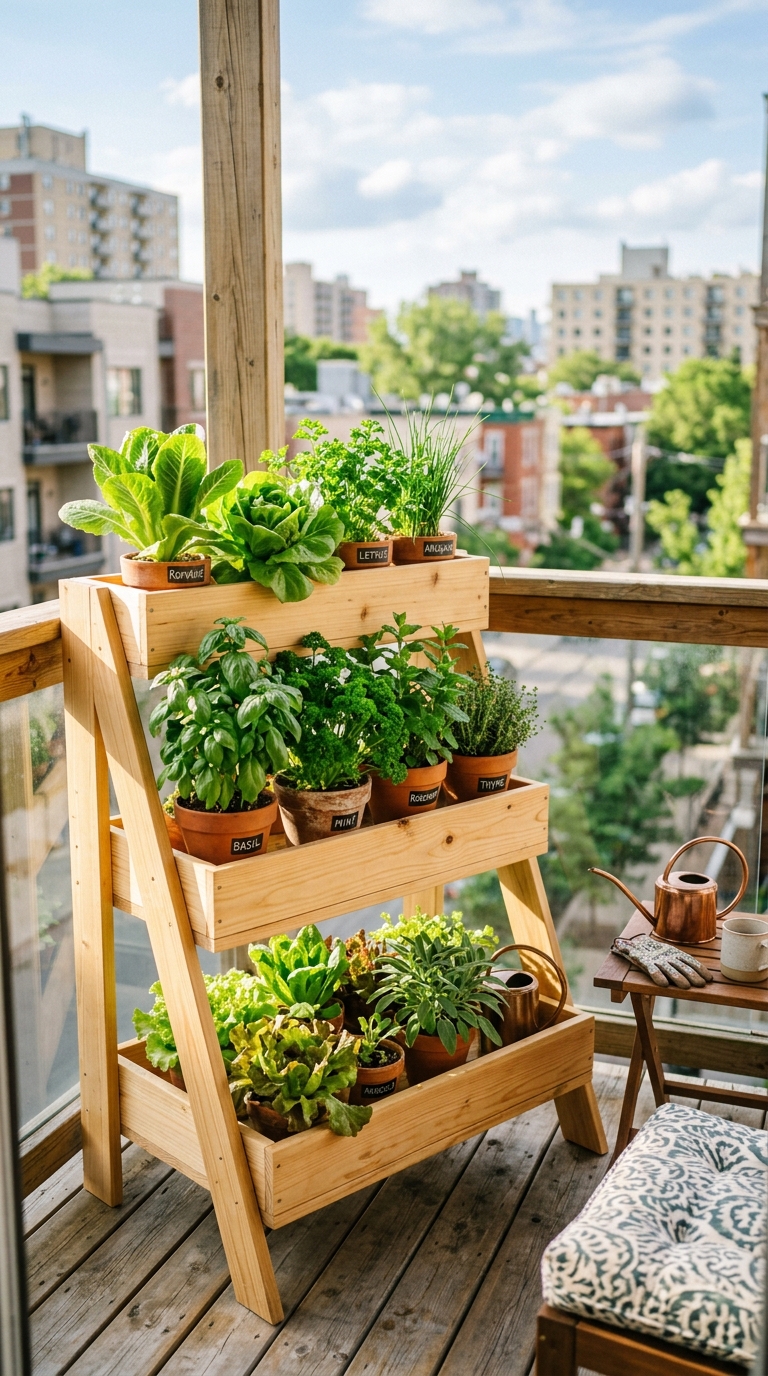
When floor space is the problem, the solution is simple: stop growing outward and start growing up. A tiered planter stand stacks three or four growing levels into the same footprint as a single pot, which makes it one of the most efficient space-saving garden ideas around.
It works especially well for herbs and lettuce, since shallow-rooted plants don’t mind the smaller containers each tier holds. Set it near a sunny wall, and you’ve basically created a mini kitchen garden in the space a single chair would normally take up.
- Stagger plant heights across tiers so lower levels aren’t shaded out
- Vertical stacking multiplies growing space without expanding the footprint
- Choose a stand with adjustable tier heights for flexibility
- Rotate the stand weekly so all sides get even sunlight
Stacked Crate Garden Tower
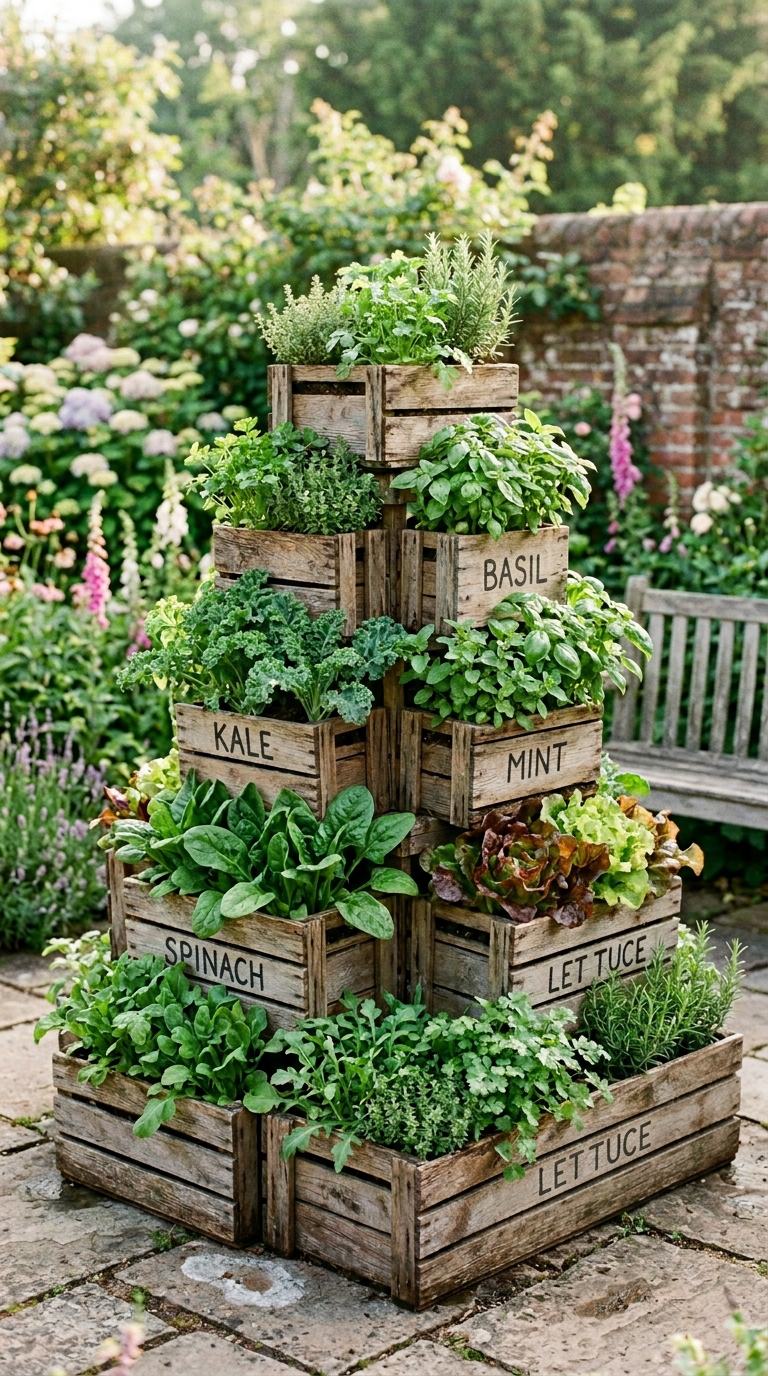
This is the budget-friendly cousin of the planter stand, and honestly, it’s just as effective. Wooden or wire crates stacked in a staggered pyramid create a compact growing tower that turns a narrow corner into real planting space without any complicated building required.
What I like about this one is how forgiving it is — mismatched crates still look intentional once they’re filled with greenery. It’s a great entry point if you’re testing out small-space gardening before committing to a permanent raised bed setup.
- Stagger crate sizes from largest at the bottom to smallest at the top
- Line crates with landscape fabric before adding soil to prevent leakage
- Reused crates turn unused vertical space into productive container gardening
- Mix wood tones for a layered, collected-over-time look
Wall-Mounted Pocket Planters
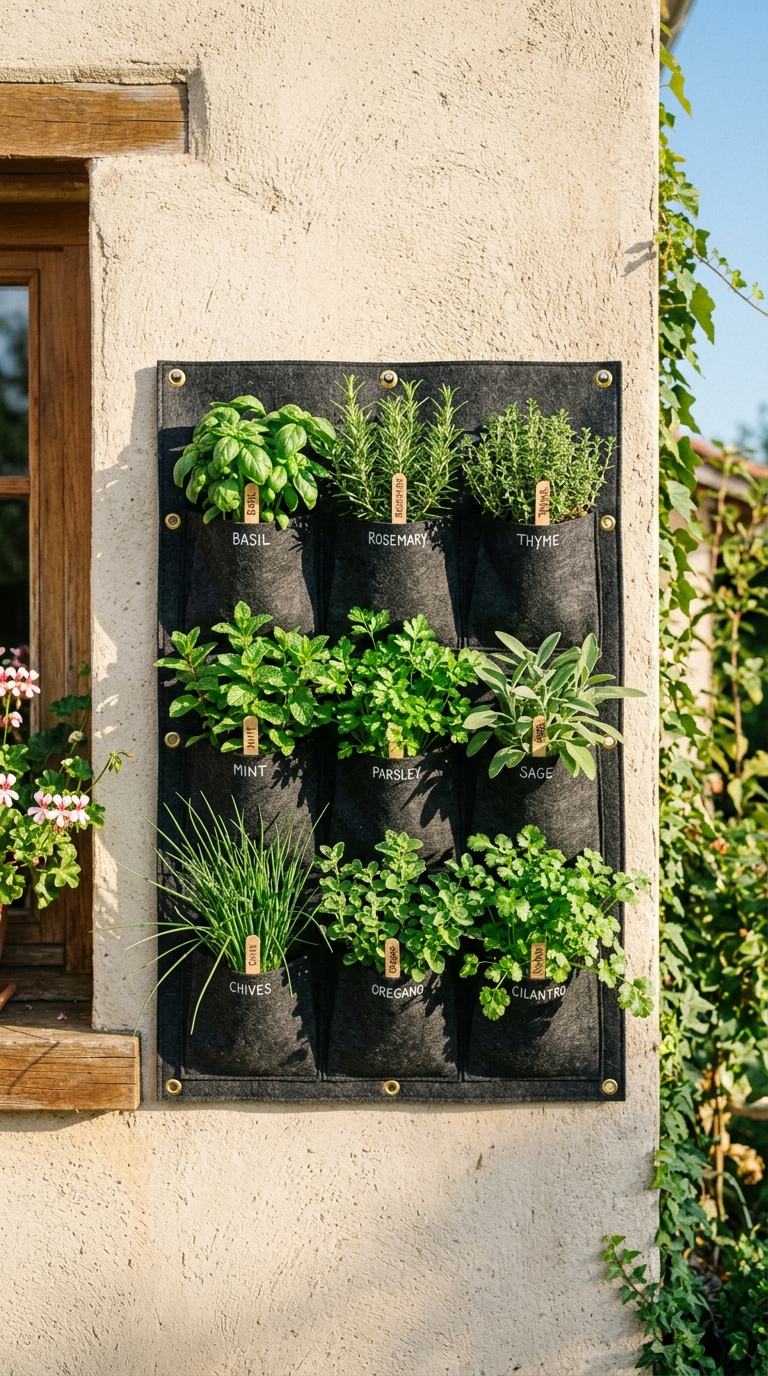
If you’ve got a blank wall and zero ground space, this is the layout that solves both problems at once. Fabric or wood pocket planters mount flat against the surface, holding individual plants in their own little pocket, row after row.
It’s especially good for a small kitchen garden right outside the back door, since you can plant a different herb in each pocket and harvest exactly what you need without disturbing the rest. Vertical gardening really doesn’t get more space-efficient than this.
Decorative flowers can elevate any vegetable garden, and these inspiring Allium Garden Ideas show how to add height, texture, and eye-catching blooms to your potager beds.
- Wall mounting uses zero ground space while still housing dozens of plants
- Choose felt pocket panels in a neutral tone for a clean look
- Water pocket planters more often, since fabric dries out faster than pots
- Group herbs by cooking use for easy grab-and-go harvesting
Mini Four-Square Layout
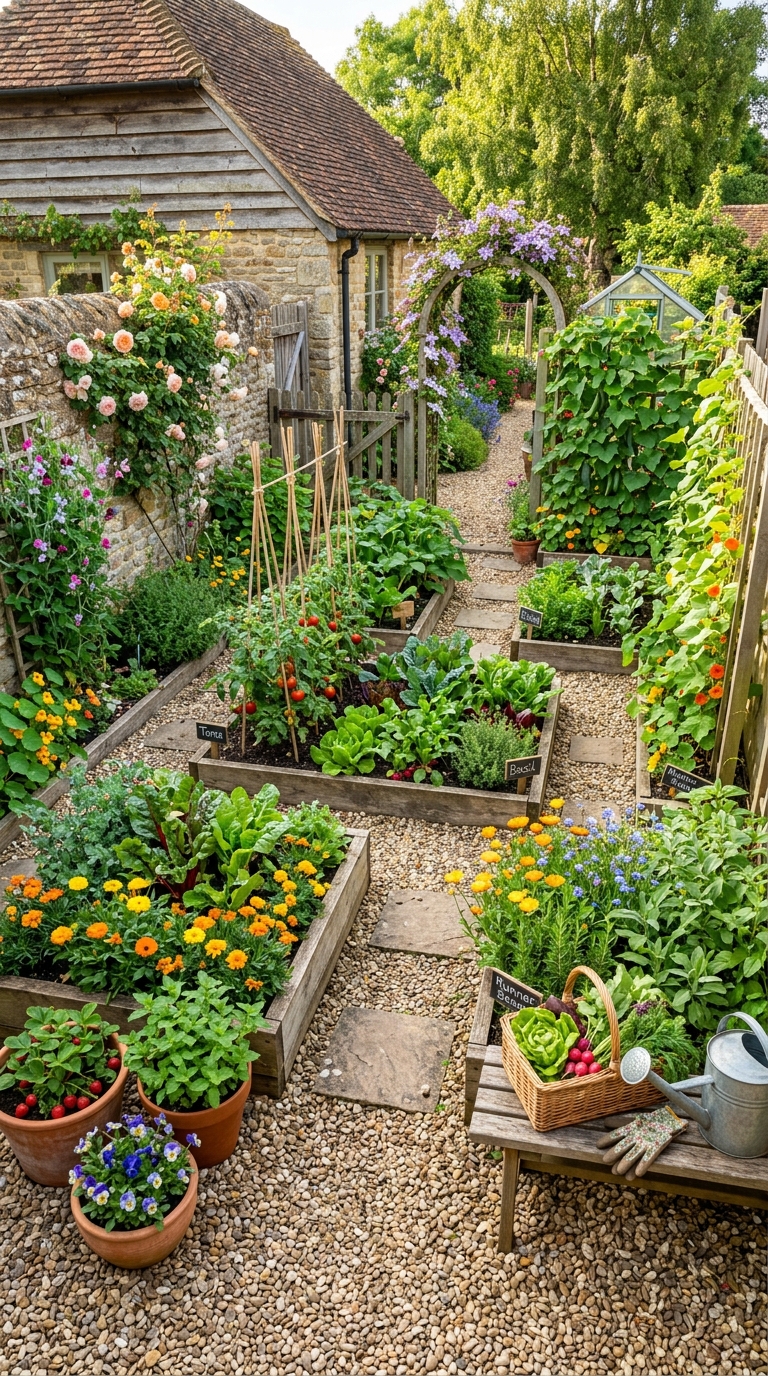
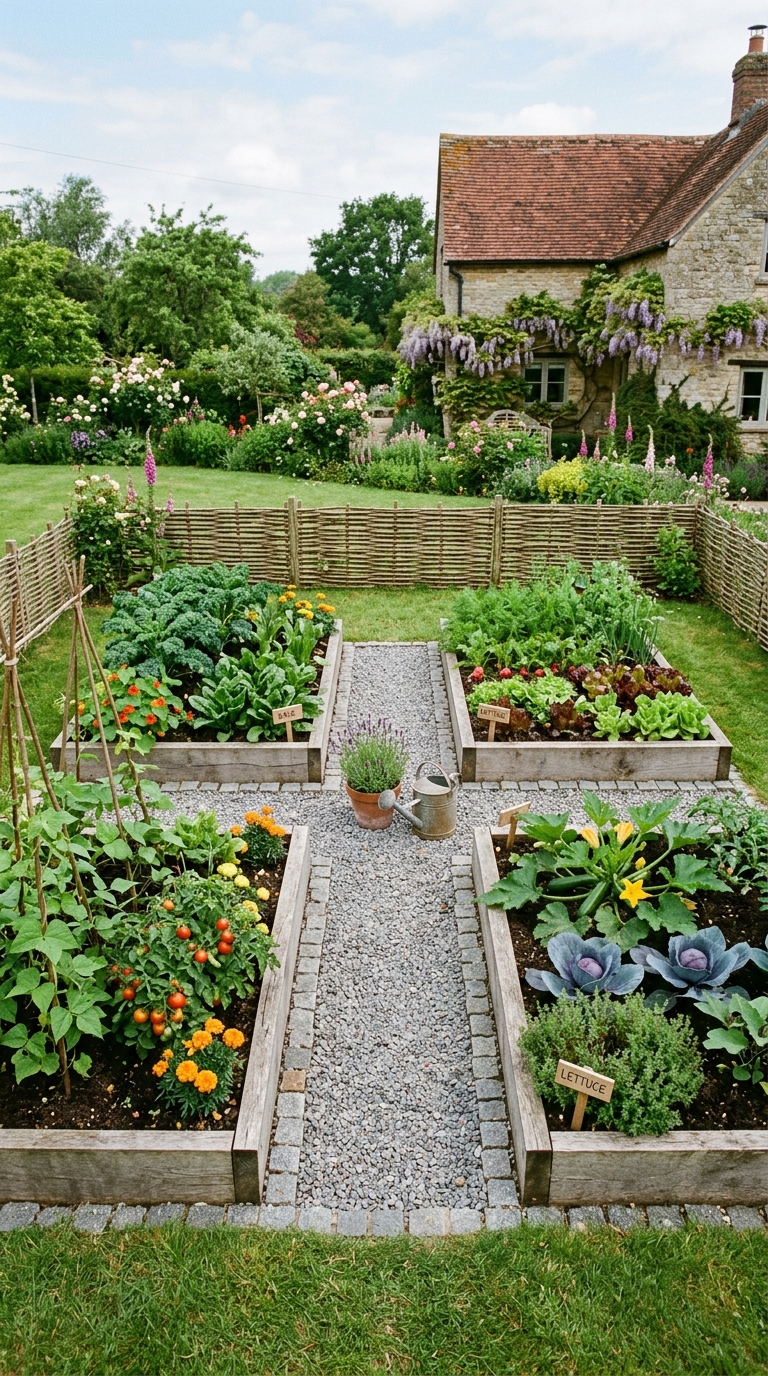
The classic French four-square design isn’t just for big estates — scaled down, it works beautifully in a small yard too. Four small beds divided by a narrow center path keep the layout organized while still giving you that structured, intentional potager garden look.
Even at a fraction of the size, the symmetry does a lot of visual work. It makes a modest space feel planned rather than crammed, and crop rotation between the four sections stays just as manageable as it would in a larger version.
- Keep each square bed to roughly 3×3 feet for small yards
- Use a center stepping stone instead of a full path to save space
- Symmetry creates an organized look even at a small scale
- Edge each square with low thyme or chamomile for definition
Square Foot Gardening Grid
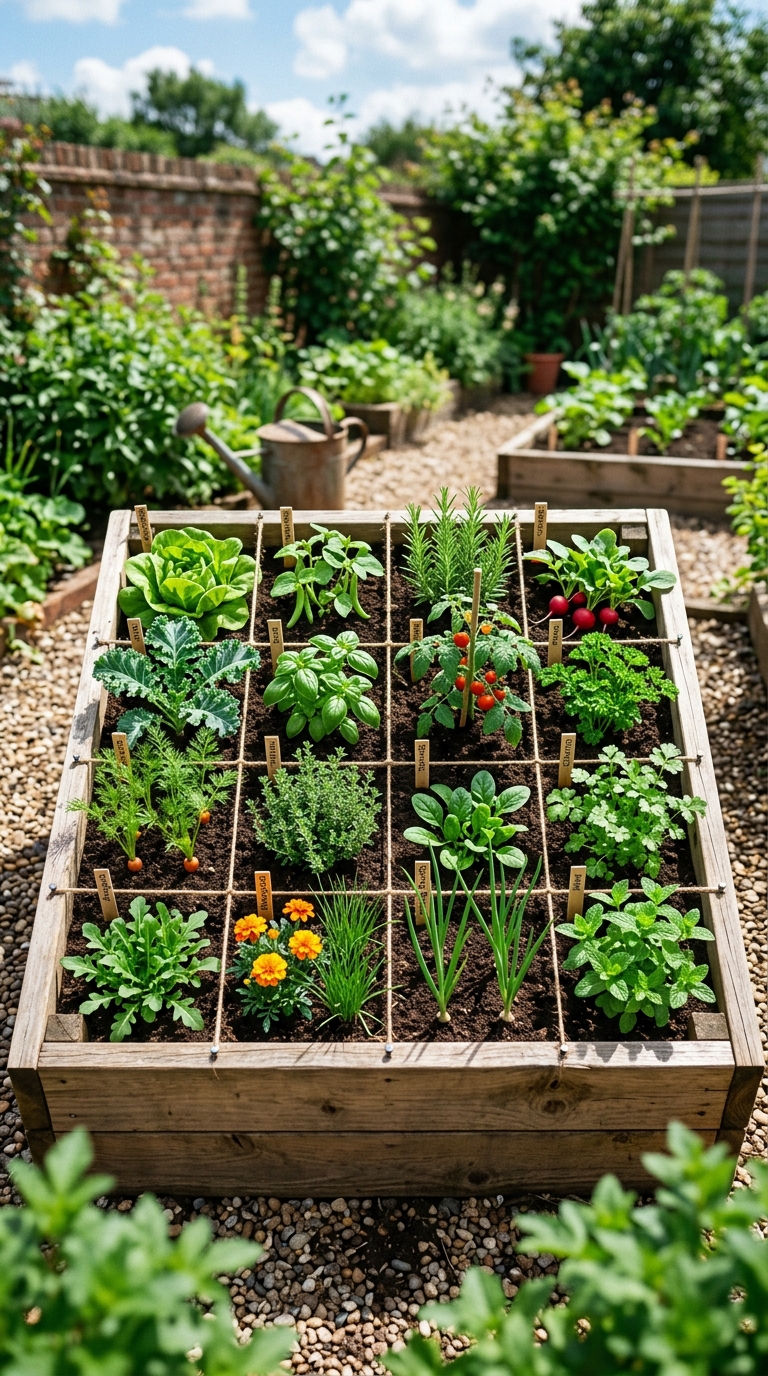
This method has a bit of a cult following among small-space gardeners, and once you try it, it’s easy to see why. A raised bed gets divided into a literal grid of one-foot squares, each planted with a specific crop based on its spacing needs.
It takes a little planning upfront, but it’s one of the most efficient ways to grow a genuinely wide variety of food in a small raised bed. No wasted soil, no guessing how far apart to plant — just a clean, productive grid.
- Grid spacing maximizes yield by eliminating wasted planting space
- Mark grid lines with twine stretched across wooden stakes
- Plant taller crops on the north side so they don’t shade smaller ones
- Keep a small planting key nearby to track what’s growing where
Hanging Basket Herb Wall
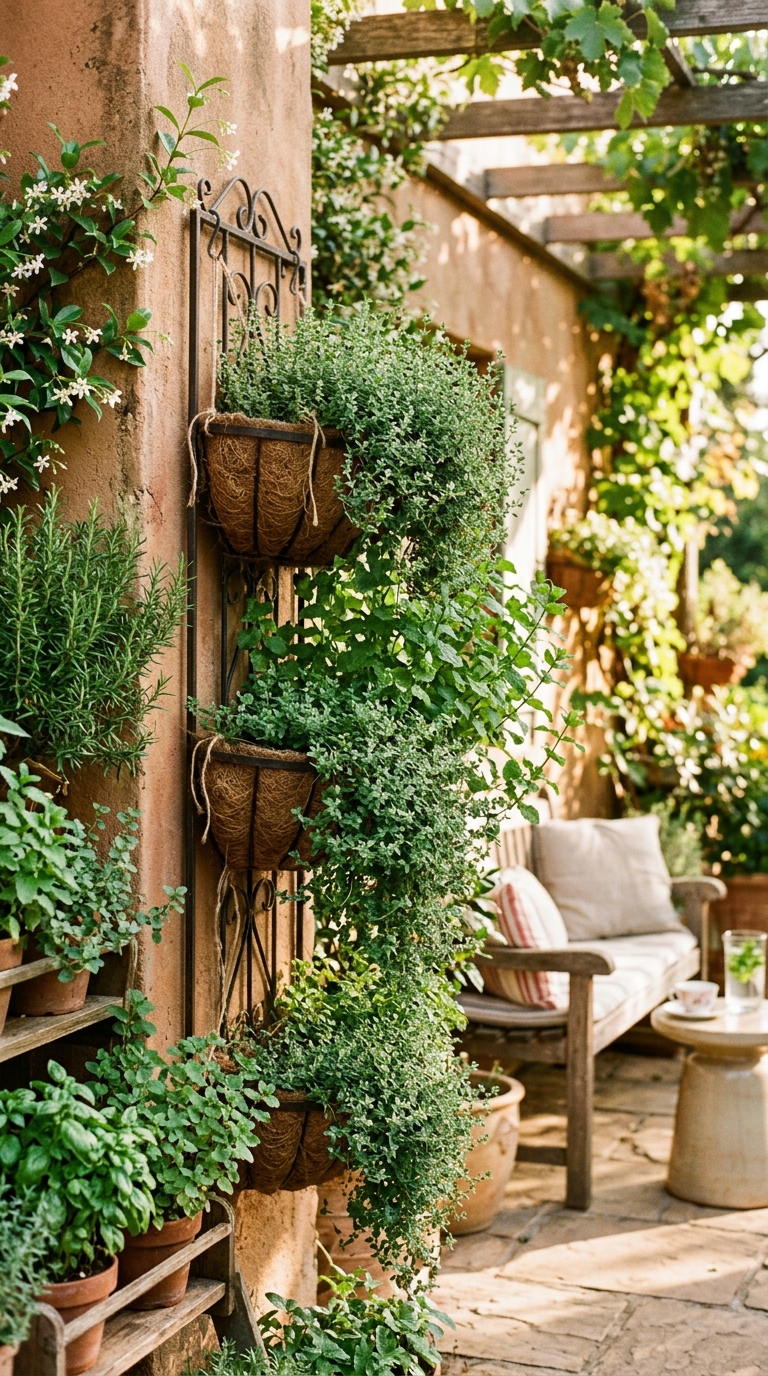
Sometimes the most useful space in a small garden isn’t the ground at all — it’s the air above eye level. A cluster of hanging baskets filled with trailing herbs frees up the actual bed space for larger crops like tomatoes or peppers.
Mint, oregano, and trailing thyme all do well here, cascading nicely over the basket edges. Group several baskets at slightly different heights, and the whole wall starts to feel like a green, fragrant feature instead of just storage for herbs.
- Hang baskets at staggered heights for a fuller, layered look
- Choose self-watering baskets to reduce daily maintenance
- Overhead space gets used without competing for ground-level real estate
- Mix trailing and upright herbs for contrast in each basket
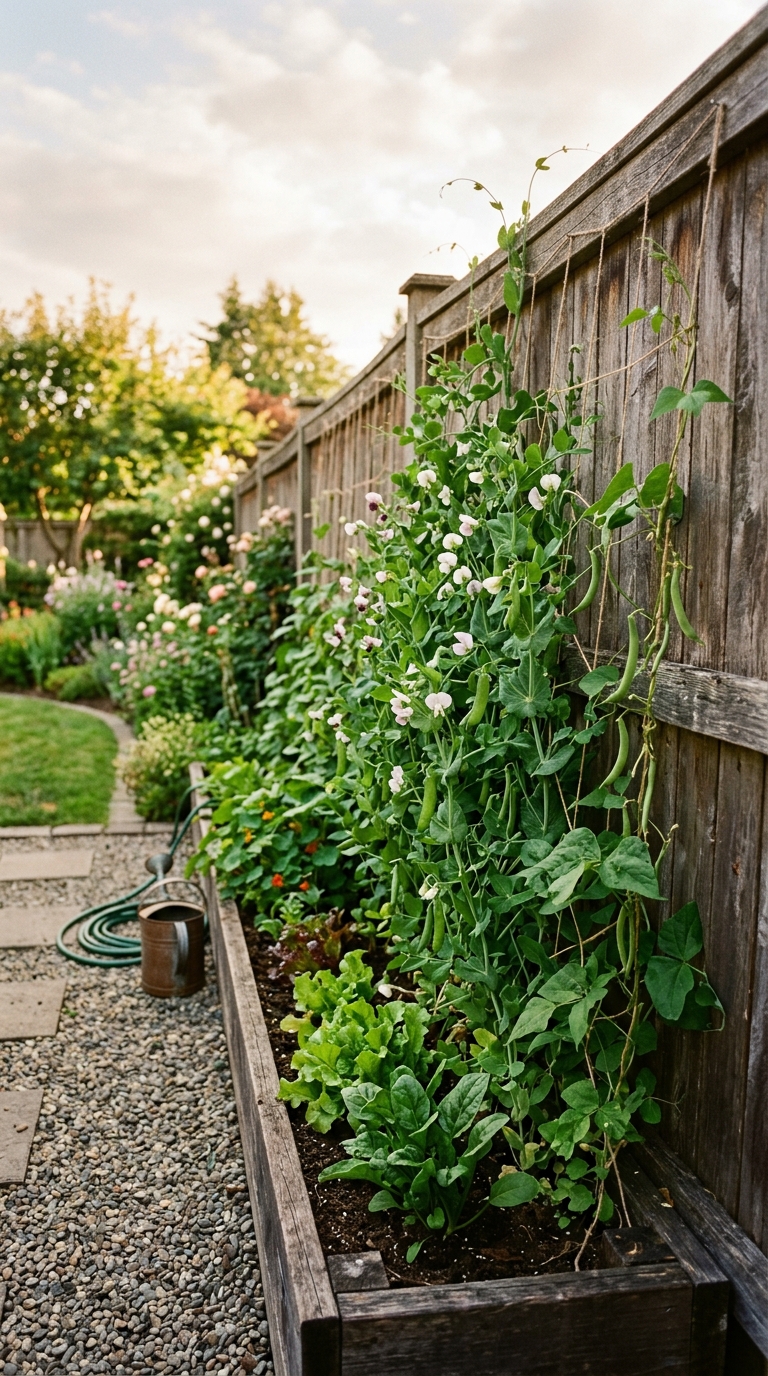
Narrow Strip Bed Along a Fence
That thin strip of dirt running along a fence line usually gets ignored, but it’s actually prime real estate for a small potager garden. A slim raised bed, even just 18 inches wide, can hold a surprising amount once you go with single rows instead of wide blocks.
Climbing crops do especially well here since the fence doubles as a built-in trellis. It’s the kind of layout that quietly maximizes space without demanding much attention to the design itself.
- Uses an existing fence as free vertical support for climbing crops
- Stick to a single planting row to keep the bed easy to reach
- Attach simple wire mesh to the fence for crops that need extra grip
- Plant tallest crops at the back, low herbs along the front edge
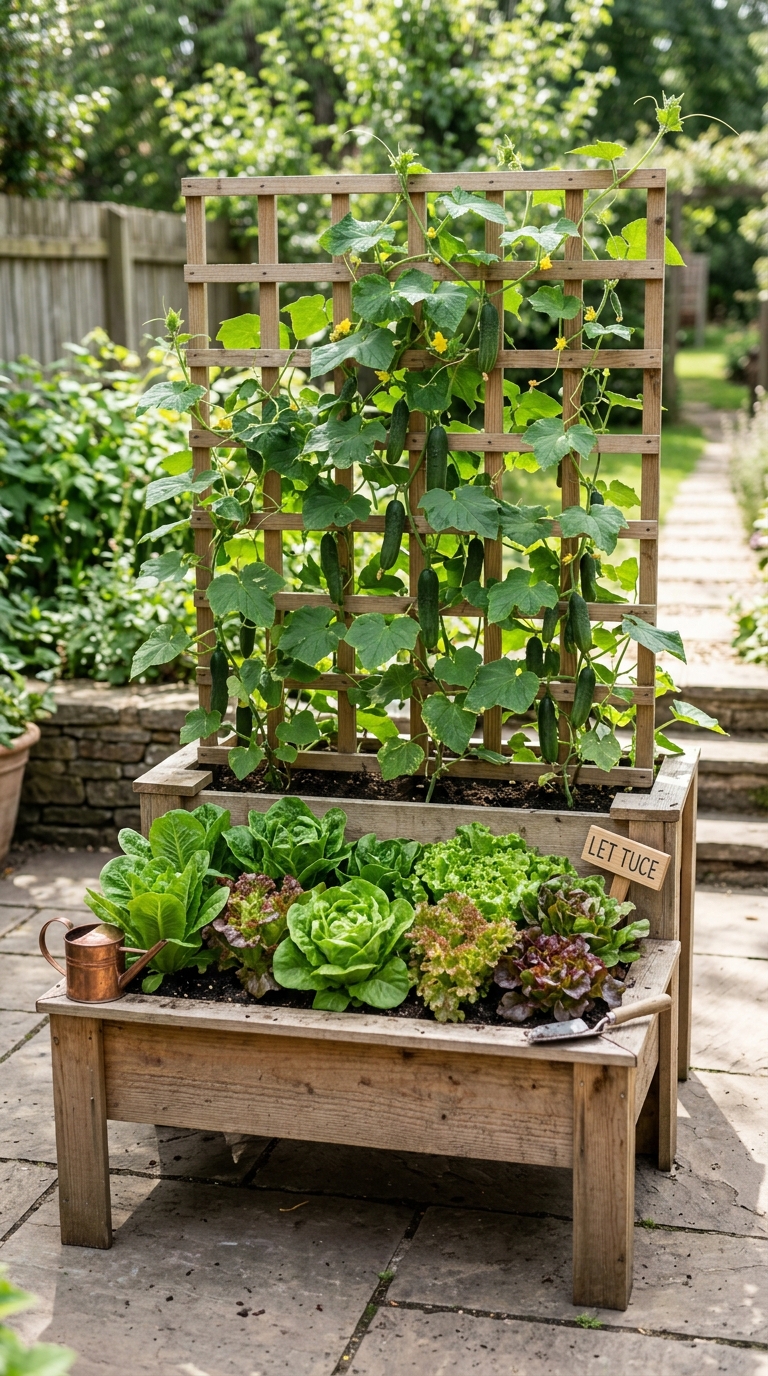
Trellis-Topped Raised Bed Combo
Pairing a raised bed with an attached trellis is one of the smartest combos for small space gardening, since you’re essentially getting two growing zones for the price of one footprint. The bed handles root crops and lettuce below, while the trellis above takes care of anything that climbs.
It’s a setup that rewards a little planning. Position the trellis on the north side of the bed so it doesn’t shade out the shorter plants growing beneath it as the season goes on.
- Attach a simple wood-framed trellis directly to the bed’s back edge
- Position the trellis on the shadiest side to protect lower crops
- Combines two growing zones — vertical and ground level — in one structure
- Train flowering vines on one end for a decorative accent
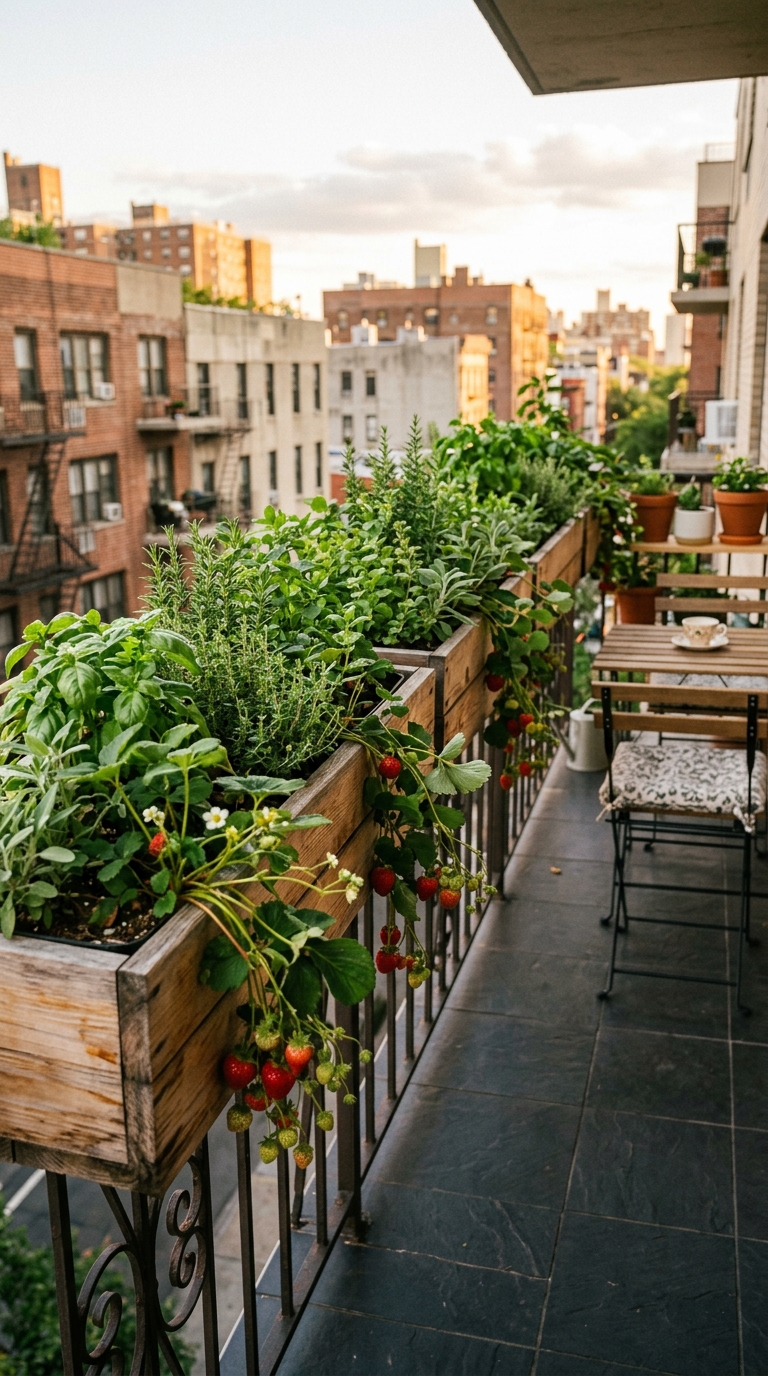
Balcony Railing Planter Line
For anyone gardening purely on a balcony, the railing itself is often the most underused space available. A line of railing-mounted planters runs the full length without taking up a single inch of actual floor space, which matters a lot in small apartments.
Lettuce, strawberries, and compact herbs all do well in this format. Just make sure the brackets are rated for the planter weight once they’re fully watered — a fully soaked railing planter is heavier than it looks.
- Uses railing space that would otherwise go completely unused
- Choose matching planter boxes for a clean, cohesive line
- Check weight limits on brackets before fully loading planters with wet soil
- Vary plant heights along the line so it doesn’t look too uniform
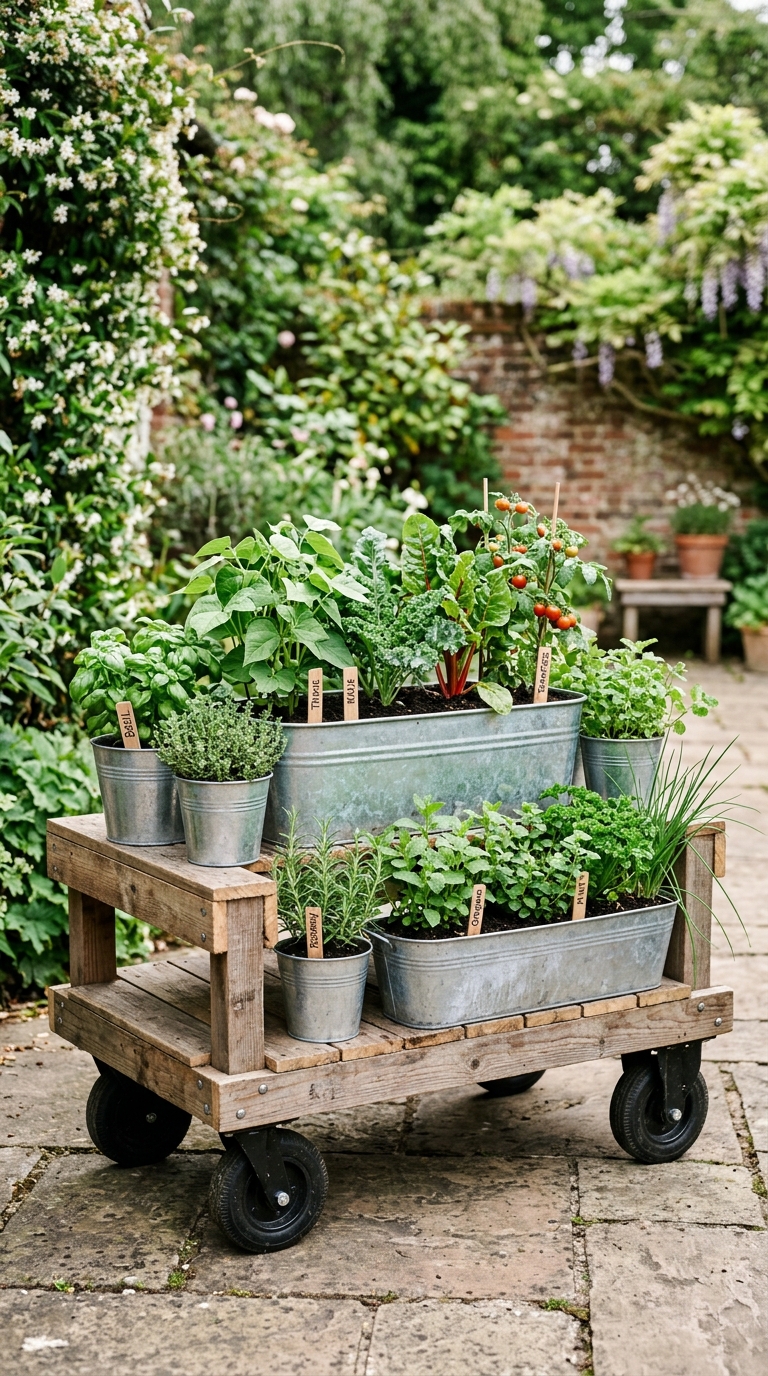
Mobile Container Garden on Wheels
This idea solves a problem most small gardens run into eventually — uneven sunlight. Planters set on wheeled platforms can simply be rolled to wherever the sun actually is, instead of being stuck in a spot that gets shaded out by midafternoon.
It’s also genuinely useful if you’re renting or might move, since the entire garden can travel with you. Nothing about a mobile container setup is permanent, which honestly takes some of the pressure off getting the layout perfect on the first try.
- Use matching galvanized containers on simple wooden wheeled bases
- Group containers by water needs since you’ll be moving them together
- Mobility solves uneven sunlight without redesigning the whole space
- Cluster three to four containers per wheeled base for easier moving
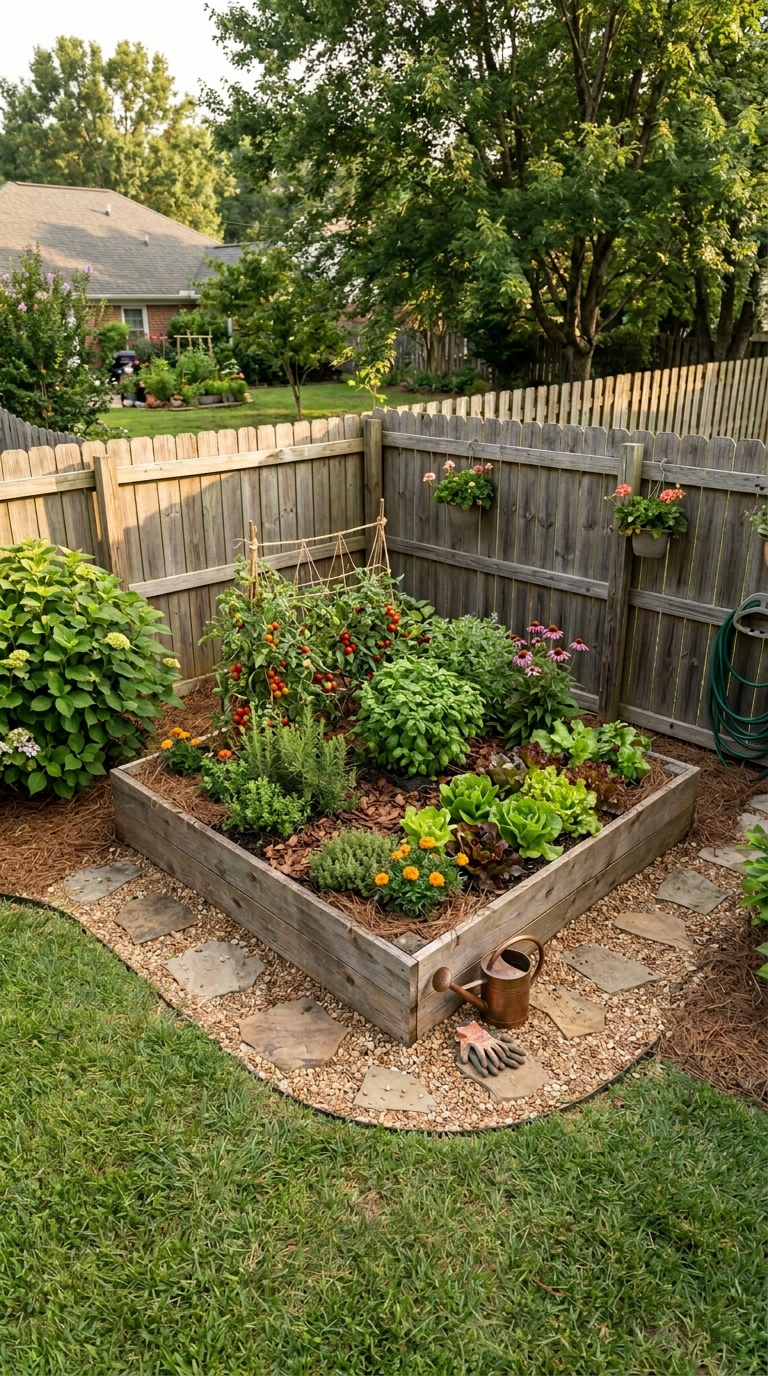
Corner Triangle Raised Bed
Standard rectangular beds waste a surprising amount of space when they’re forced into an oddly shaped yard corner. A triangle-shaped bed, built to match the actual angle of the corner, eliminates that wasted gap.
It takes a bit more planning to build than a standard rectangle, but the payoff is real — that previously dead corner becomes genuine growing space, and the unusual shape actually adds a little visual interest to the overall layout.
- Custom shapes eliminate wasted space that rectangular beds leave behind
- Match the bed’s angle exactly to the existing fence or wall corner
- Plant taller crops at the back point, shorter ones near the open edge
- Edge the angled sides with low-growing herbs for a finished look
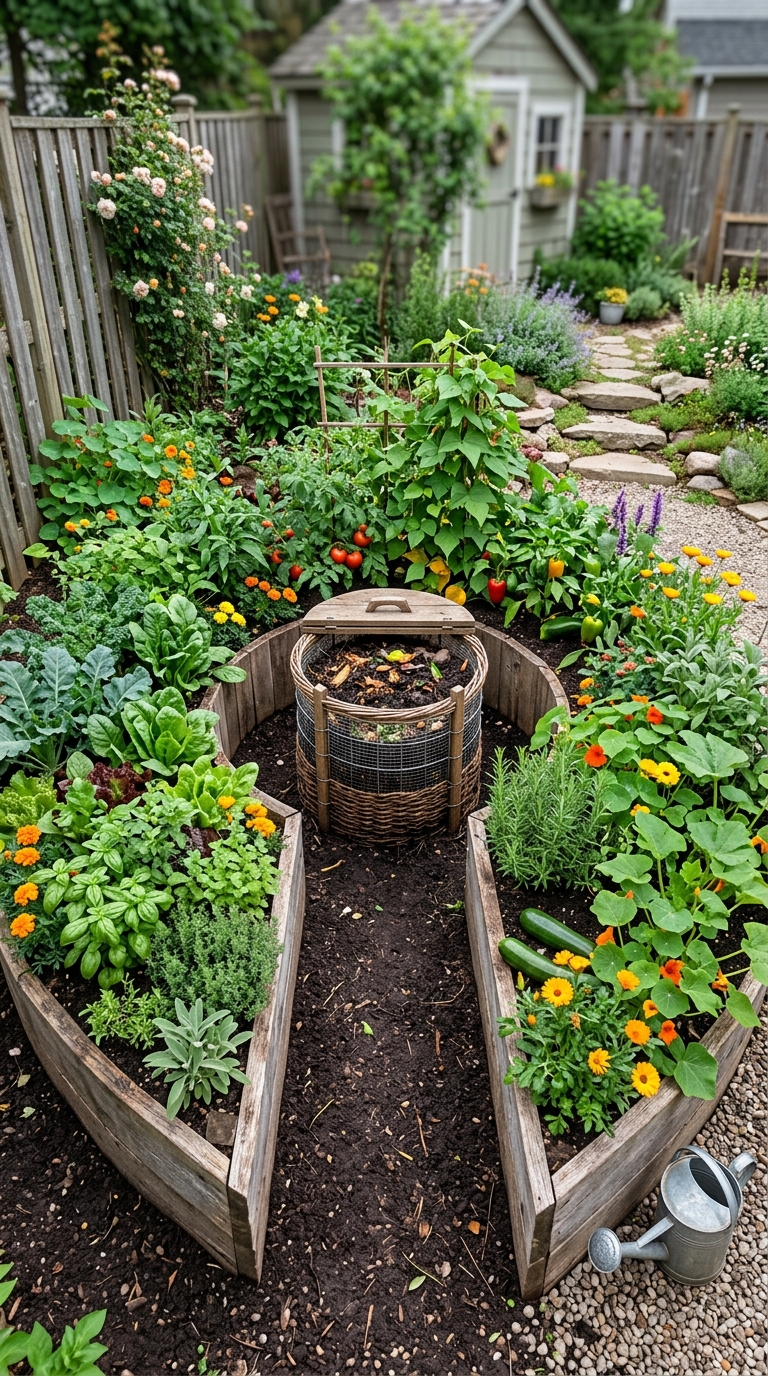
Compact Keyhole Garden Bed
The keyhole design earns its place on nearly every small-space gardening list, and for good reason. A horseshoe-shaped bed wraps around a small center access point, so you can reach every plant without ever stepping into the bed itself.
Scaled down for a small yard, it still holds an impressive amount given its footprint. The center notch is a great spot for a small compost bin too, keeping the whole system efficient and self-contained.
- Keep the bed no more than an arm’s length wide at any point
- Add a small compost basket in the center notch to feed the soil directly
- The horseshoe shape eliminates wasted walking paths around the bed
- Use curved stone or brick edging to soften the horseshoe shape
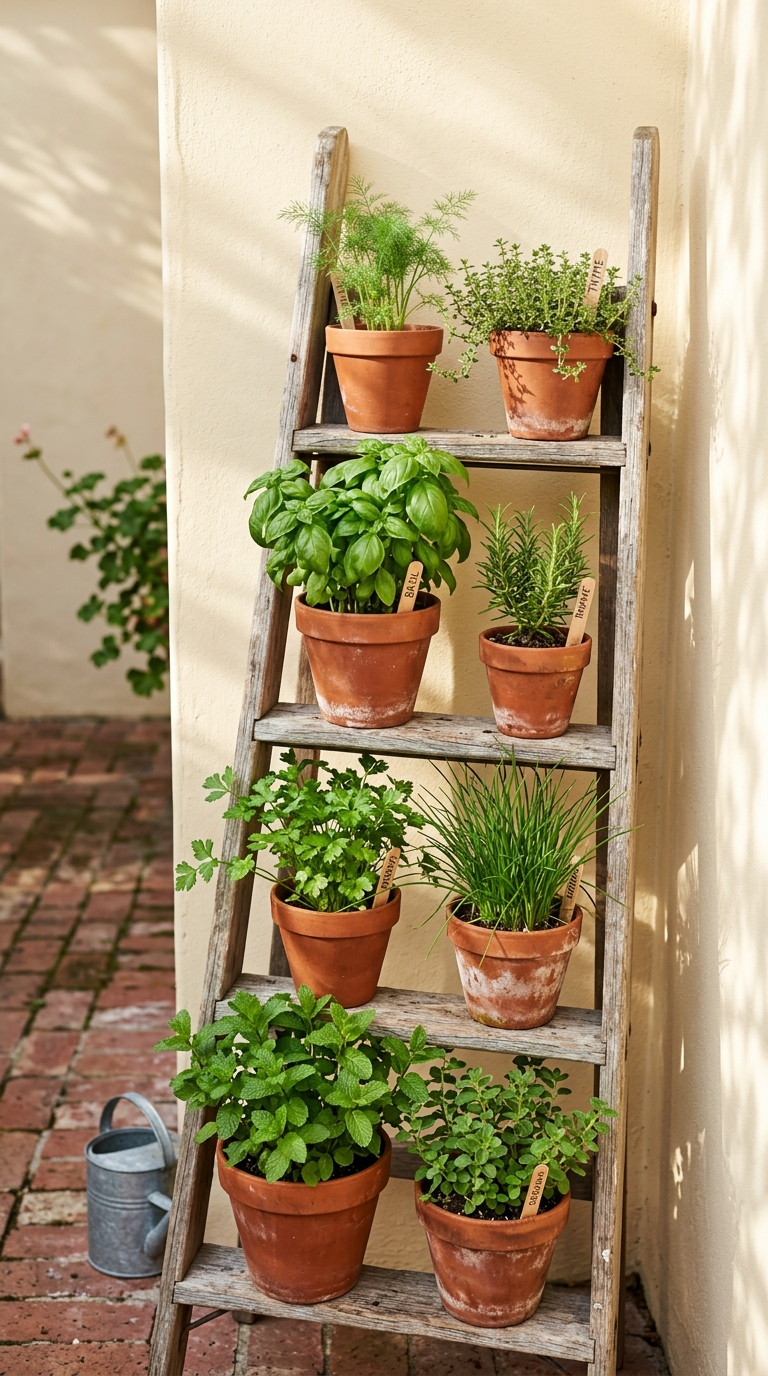
Tiered Ladder Shelf Garden
An old wooden ladder leaned against a wall turns into instant tiered shelving once you add a few pots to each rung. It’s a similar idea to the layered planter stand, but with more rustic charm and usually a lower price tag if you’ve already got a ladder lying around.
Each rung holds a different plant, so you get a nice visual mix without anything competing for the same patch of soil. It’s a small detail, but the staggered height gives even a tiny garden some real visual rhythm.
- Repurposed shelving adds tiered growing space at almost no extra cost
- Use mismatched terracotta pots for a collected, rustic feel
- Secure the ladder to the wall so it can’t tip under the pot’s weight
- Place trailing plants on lower rungs, upright ones higher up
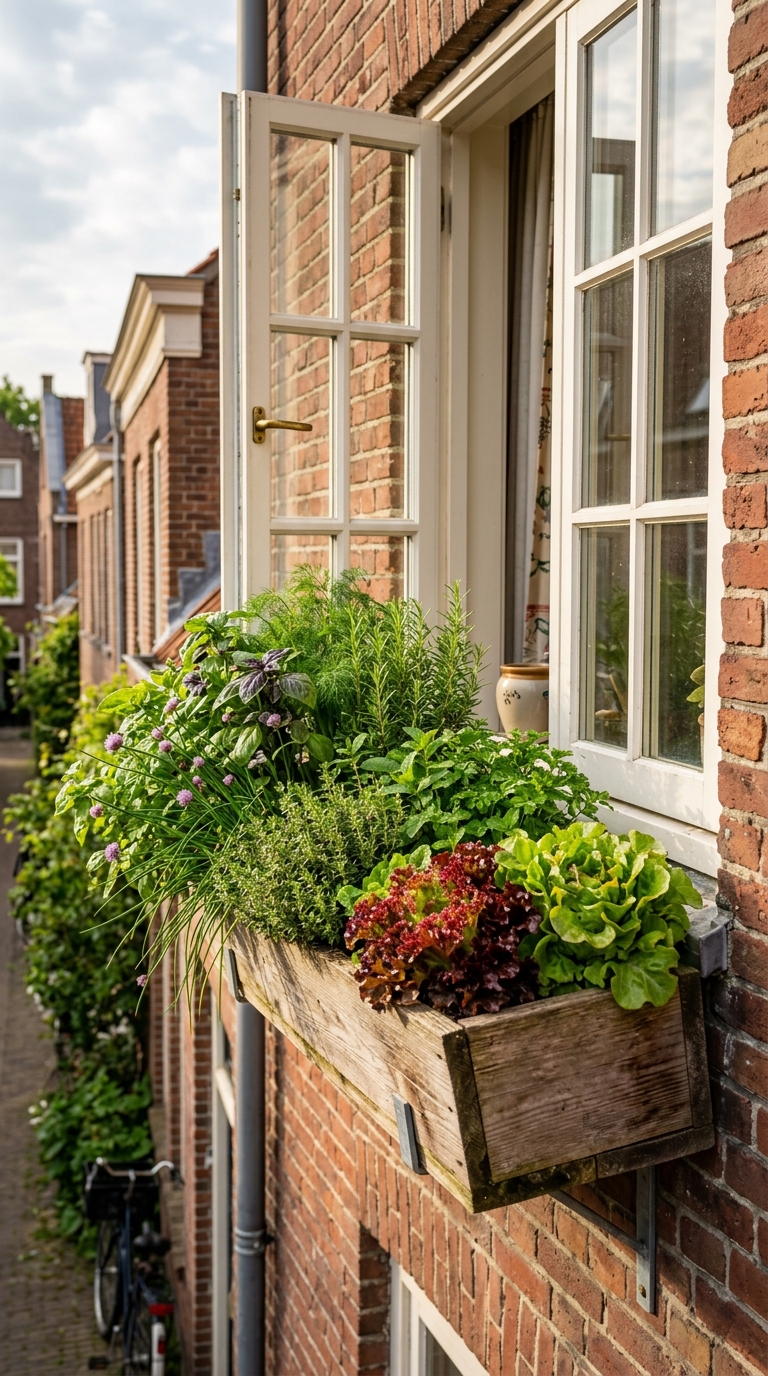
Window Box Potager
For anyone with genuinely no outdoor space at all, a single window box can still count as a real kitchen garden. Packed with a mix of herbs, compact greens, and a trailing edible or two, it puts fresh food within arm’s reach of the kitchen window.
The trick is choosing plants that won’t outgrow the box fast. Stick to things you’ll actually use often — basil, chives, a few lettuce varieties — and treat it like a tiny, high-rotation garden rather than a one-and-done planting.
- Choose a deep window box, at least 8 inches, for healthier root growth
- Succession plant lettuce every two weeks to keep the box productive
- Puts fresh herbs and greens within reach without any outdoor space
- Mix upright basil with trailing thyme for height variation
Interplanting & Succession Layout
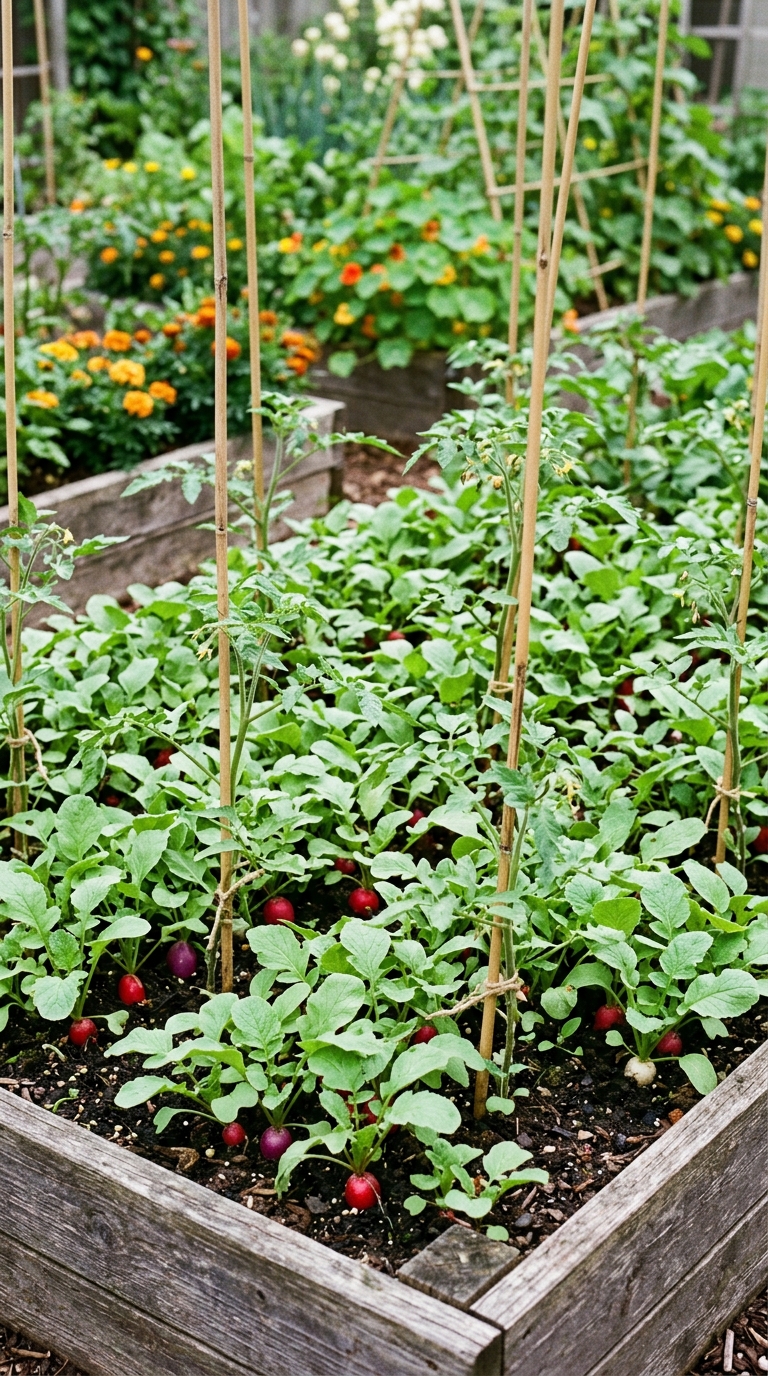
This isn’t a physical structure so much as a planning method, but it might be the single most effective way to fit more harvests into a small bed. Interplant fast-growing crops like radishes between slower ones like tomatoes, using the same soil twice in one season.
Successional planting takes it further, replacing each harvested crop with a new one right away instead of leaving the space empty. Together, the two methods can roughly double what a small bed produces over a full growing season.
- Layering fast and slow crops uses the same soil space twice
- Pair quick radishes or lettuce between slower tomatoes or peppers
- Replant immediately after harvest to avoid leaving soil empty and idle
- Keep a simple planting calendar to track what’s due for replacement
Mini Herb Spiral
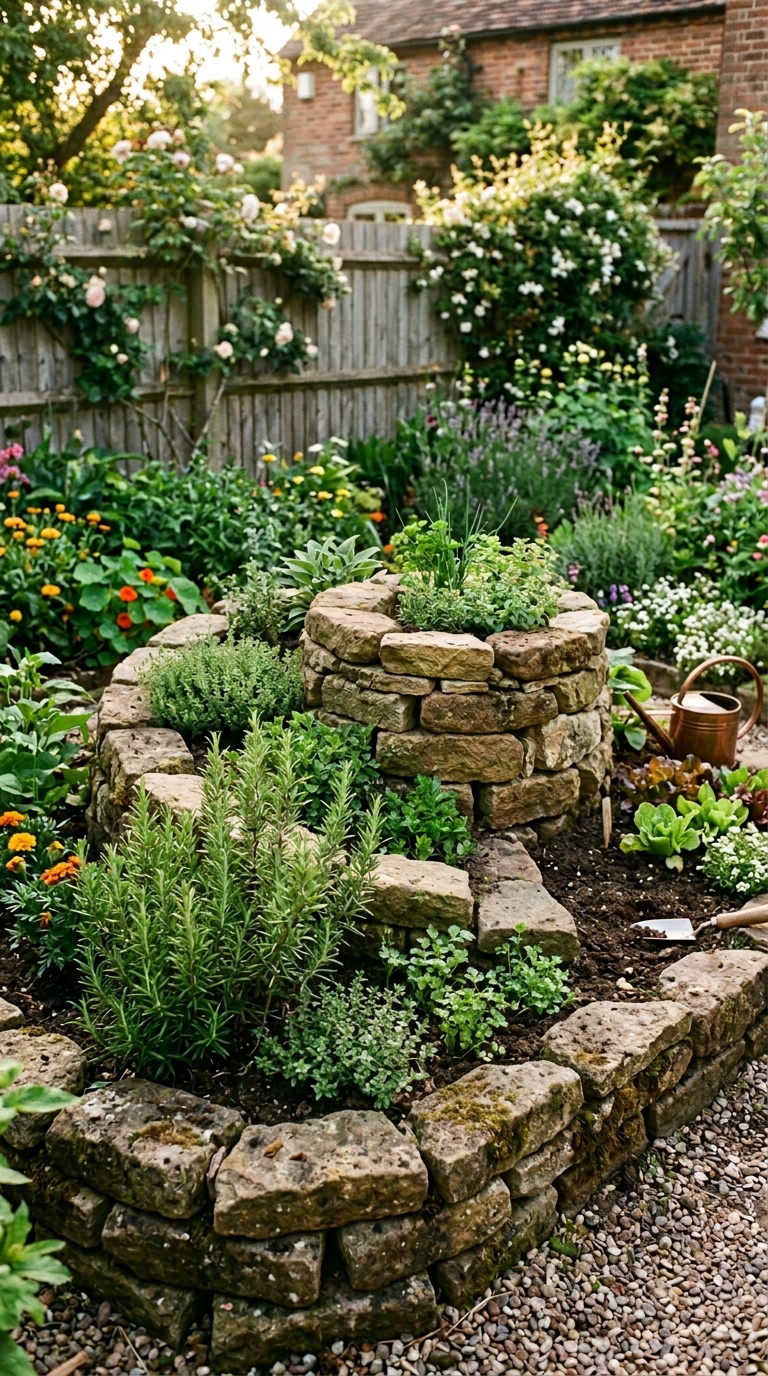
The herb spiral works just as well when shrunk to a small-garden scale, and it might actually be more useful there, since it packs a wide variety of herbs into a footprint smaller than most raised beds.
A spiral mound about two feet tall, built from stacked stone, creates different microclimates from top to bottom — drier and sunnier up top for rosemary, cooler and moister near the base for parsley or mint.
- Build the spiral using flat stacked stones about 2 feet tall
- Plant drought-tolerant herbs near the top, moisture-lovers near the base
- The mounded shape creates multiple microclimates in one small footprint
- Add a small marker stone at the base to label the spiral’s start
Multi-Level Pallet Garden
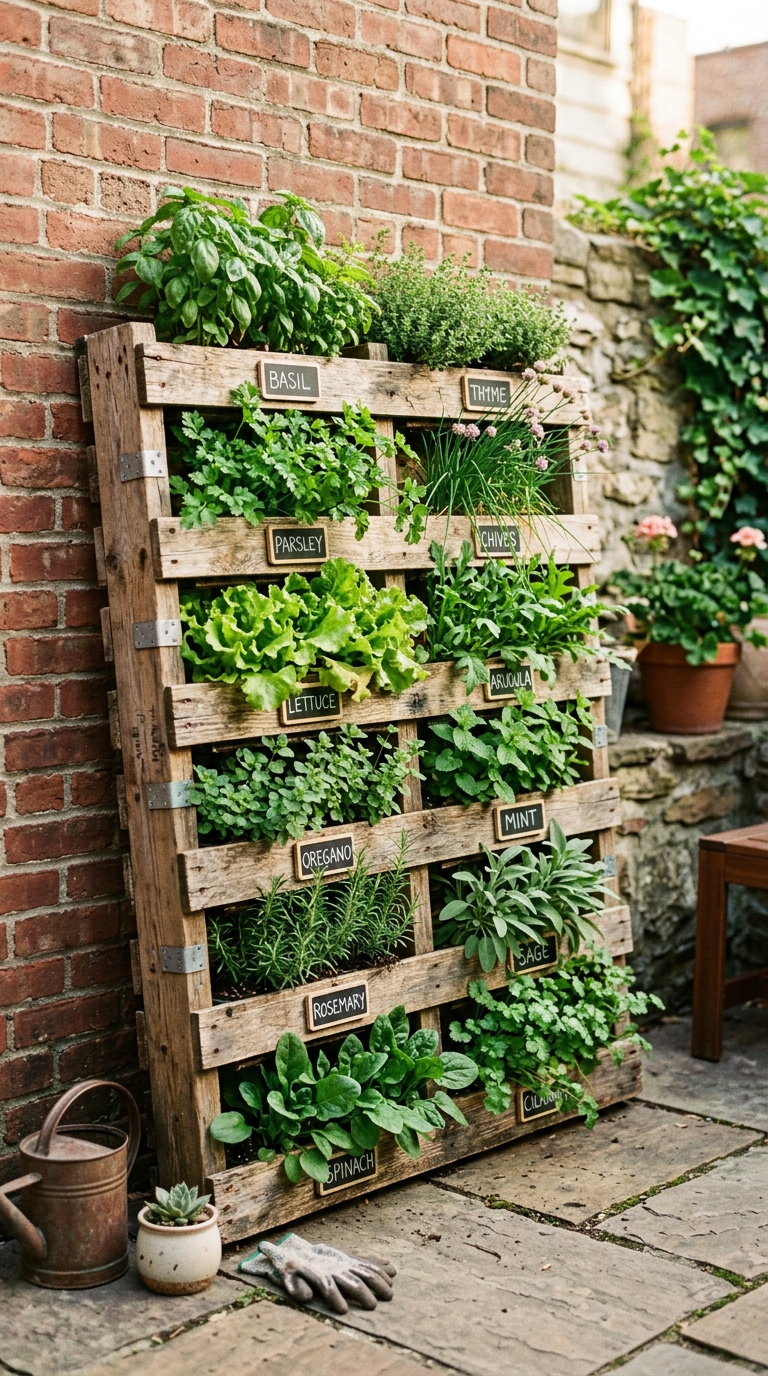
A single upright pallet, divided into a few planting tiers, might be the most space-efficient idea on this entire list. Each slat row holds a separate row of shallow-rooted plants, so one pallet standing against a wall can realistically replace several individual pots.
It’s an especially good fit for renters or anyone working with a truly tiny footprint, since the whole thing can be built, planted, and even moved in a single afternoon without any permanent changes to the space.
- A single vertical structure replaces the footprint of multiple separate pots
- Line each slat tier with landscape fabric before adding soil
- Lean the pallet at a slight angle for better drainage between tiers
- Plant a different herb or green per tier for visual variety
FAQS
Can you grow a potager garden in a small space?
Yes, a potager garden can absolutely work in a small space using methods like vertical gardening, container clusters, and raised beds. Techniques such as square foot gardening and interplanting help maximize yield even in a few square feet.
What is the best layout for a small vegetable garden?
Compact layouts like the mini four-square design, square foot gardening grid, or keyhole bed work especially well for small vegetable gardens, since they reduce wasted walking space and organize crops efficiently within a tight footprint.
How much space do you need for a small potager garden?
A small potager garden can work in as little as 4 to 6 square feet using containers or vertical planters, while a modest in-ground version typically needs around 50 to 100 square feet for a varied mix of vegetables and herbs.
Can you grow vegetables on a balcony?
Yes, balconies are well suited to container gardening using railing planters, hanging baskets, and tiered stands. Compact crops like lettuce, herbs, strawberries, and cherry tomatoes tend to perform especially well in balcony conditions.
What vegetables are best for small-space gardening?
Lettuce, radishes, herbs, peppers, and cherry tomatoes are among the best choices for small space gardening, since they have shallow root systems or compact growth habits that don’t require large amounts of soil or spacing.
Conclusion
A small yard doesn’t mean a small harvest — it just means thinking in layers instead of acres. Whether it’s a tiered planter stand, a fence-mounted strip bed, or just a single window box packed with herbs, every idea on this list proves that a potager garden adapts to whatever space you’ve got, not the other way around. Start with one or two layouts that fit your space, get comfortable with them, and expand from there. Small space gardening rewards patience more than square footage.