
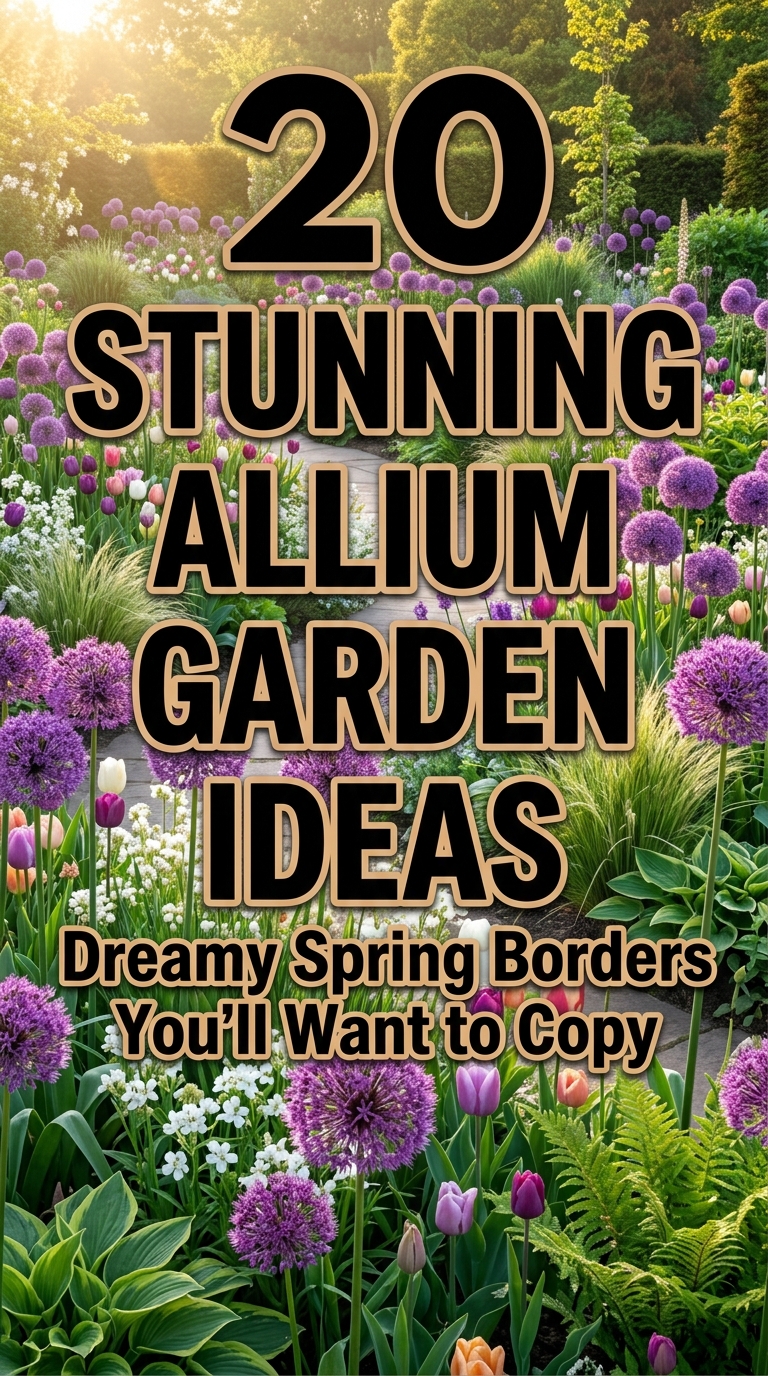
Some plants just stop you in your tracks. That’s exactly what happened the first time a neighbor’s garden caught my eye — these perfect, round purple globes floating above everything else on tall, straight stems. They looked almost architectural. Almost unreal. Turns out, they were alliums. And once you know what they are, you start spotting them everywhere.
Alliums are ornamental onions — part of the same family as garlic, chives, and leeks — but dressed up for a garden party. They bloom in late spring and early summer, they love bees, they require almost zero fuss, and they photograph beautifully in every single direction. If your garden borders have been feeling a little flat lately, alliums are the answer you didn’t know you were looking for. Here are 20 gorgeous ways to use them.
Classic Purple Allium Border Along a Garden Path
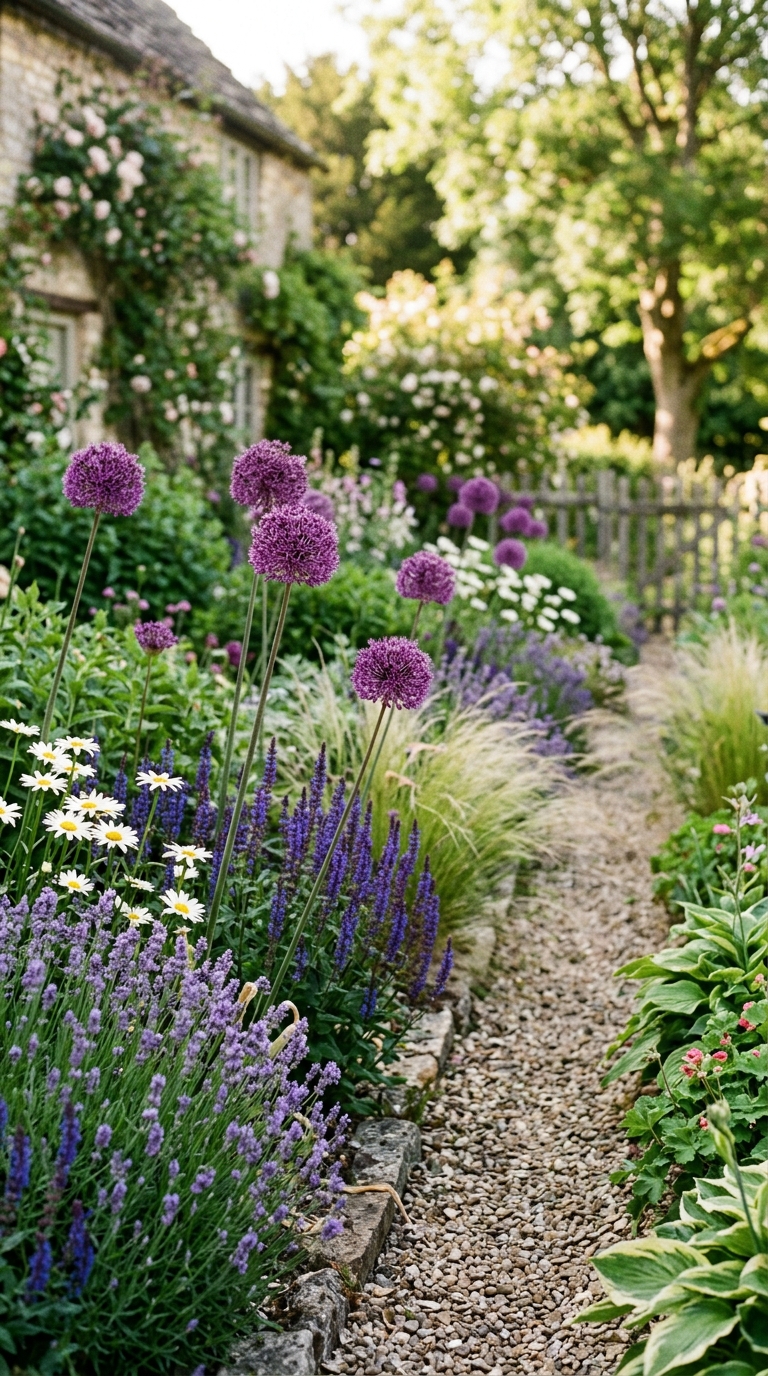
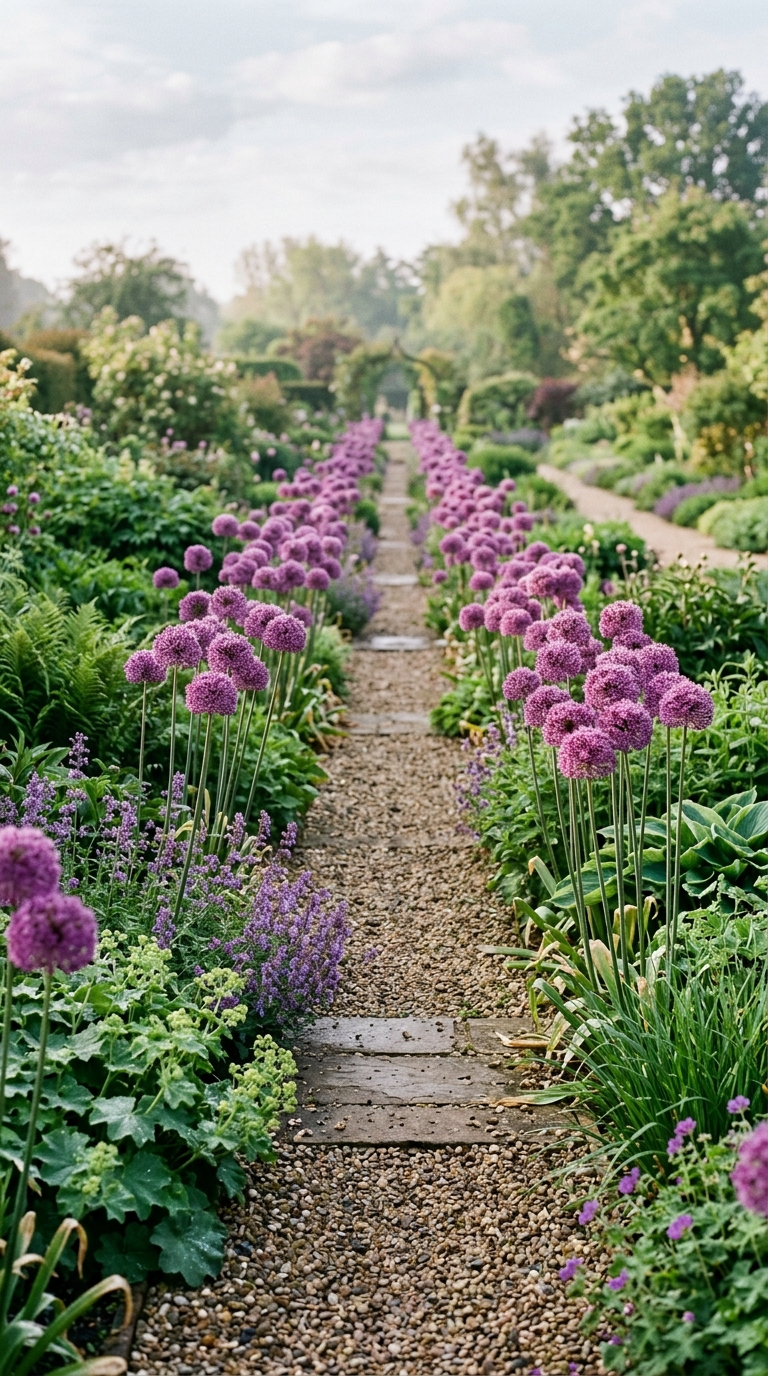
There’s a reason this is the look you see in every dreamy garden photograph. A row of purple alliums lining a garden path — tall, uniform, impossibly photogenic — creates a sense of arrival that makes even a simple garden feel designed. It’s that repetition that does it. One allium is pretty. Twenty in a line is breathtaking.
‘Purple Sensation’ is the go-to variety for this look. Plant bulbs in clusters of five to seven about six inches apart along both sides of the path, and come late spring, you’ll have a tunnel of purple globes that makes walking to your back door feel like a special occasion.
For a garden that blends beauty and function, these potager garden design ideas demonstrate how ornamental flowers like alliums can bring structure and seasonal color to edible garden spaces.
Styling Tips:
- Use ‘Purple Sensation’ or ‘Gladiator’ for tall, bold path borders
- Plant in odd-numbered clusters for a more natural, less regimented feel
- Pair with low catmint or salvia at the base to fill the gap left by dying foliage
- Choose a gravel or stone path surface to complement the purple tones
- Repeat the same variety for rhythm — mixing varieties along one path looks messy
Allium and Rose Companion Planting Bed
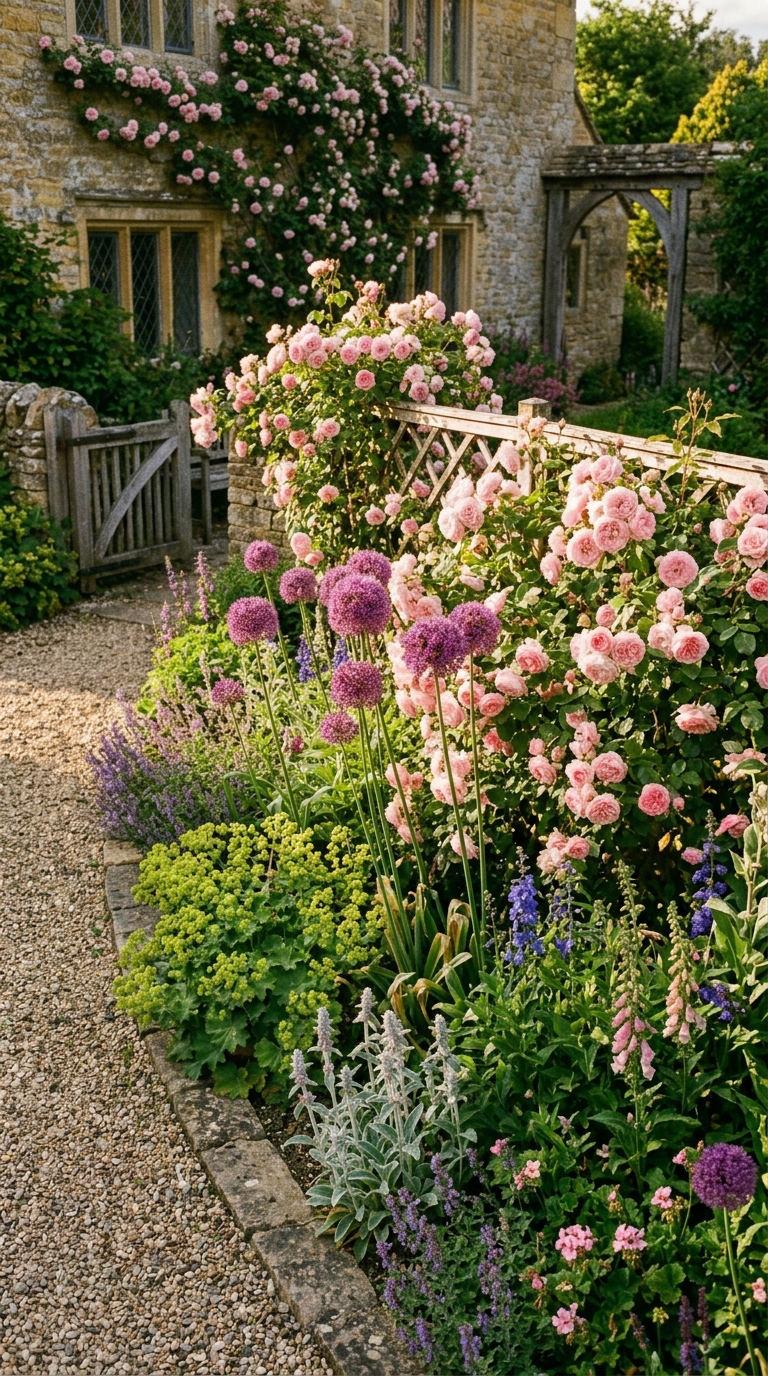
If there’s one plant combination that garden designers keep coming back to, it’s alliums with roses. It sounds simple. It looks extraordinary. The round allium heads rise through the base of rose bushes, adding vertical interest at exactly the moment the roses are putting on their own show. It’s almost unfairly beautiful.
There’s a practical bonus too — alliums are natural pest deterrents. Planting them near roses is thought to help deter aphids, which makes this combination as clever as it is gorgeous. Choose purples and pinks for a romantic, cohesive palette, or go bold with deep burgundy alliums against pale cream roses.
Styling Tips:
- Plant allium bulbs in autumn at the base of established rose bushes
- Choose ‘Purple Sensation’ with pink roses or ‘Nigrum’ with white roses for contrast
- Let a few alliums grow tall enough to peek above the rose foliage for maximum impact
- Add hardy geraniums at the front edge to tie the planting together
- Deadhead roses regularly so the alliums remain the star of the show
Giant Allium Giganteum Statement Planting
Allium giganteum earns its name. These are the ones that make people stop their cars. Stems that reach four to five feet tall, topped with a dense purple globe the size of a softball — they’re genuinely dramatic in a way that very few garden plants manage to pull off without looking try-hard.
The trick is simplicity. Don’t overcrowd them. Plant five to seven bulbs in a bold cluster against a simple backdrop — a dark hedge, a painted fence, or a plain stone wall — and let the scale and structure do all the talking. They don’t need a company to make an impact.
Love whimsical garden aesthetics? These fairy garden terrarium ideas capture the same enchanting charm that makes flowering alliums such a standout feature in spring landscapes.
Styling Tips:
- Plant in groups of five to seven for a bold, sculptural cluster effect
- Place against a dark hedge or painted fence so the purple globes pop visually
- Underplant with low silver foliage like Stachys to highlight the tall stems
- Leave the seedheads after blooming — they’re just as beautiful as the flowers
- Use as a focal point at the back of a border where they can tower over everything else
Naturalistic Allium Meadow Style Garden
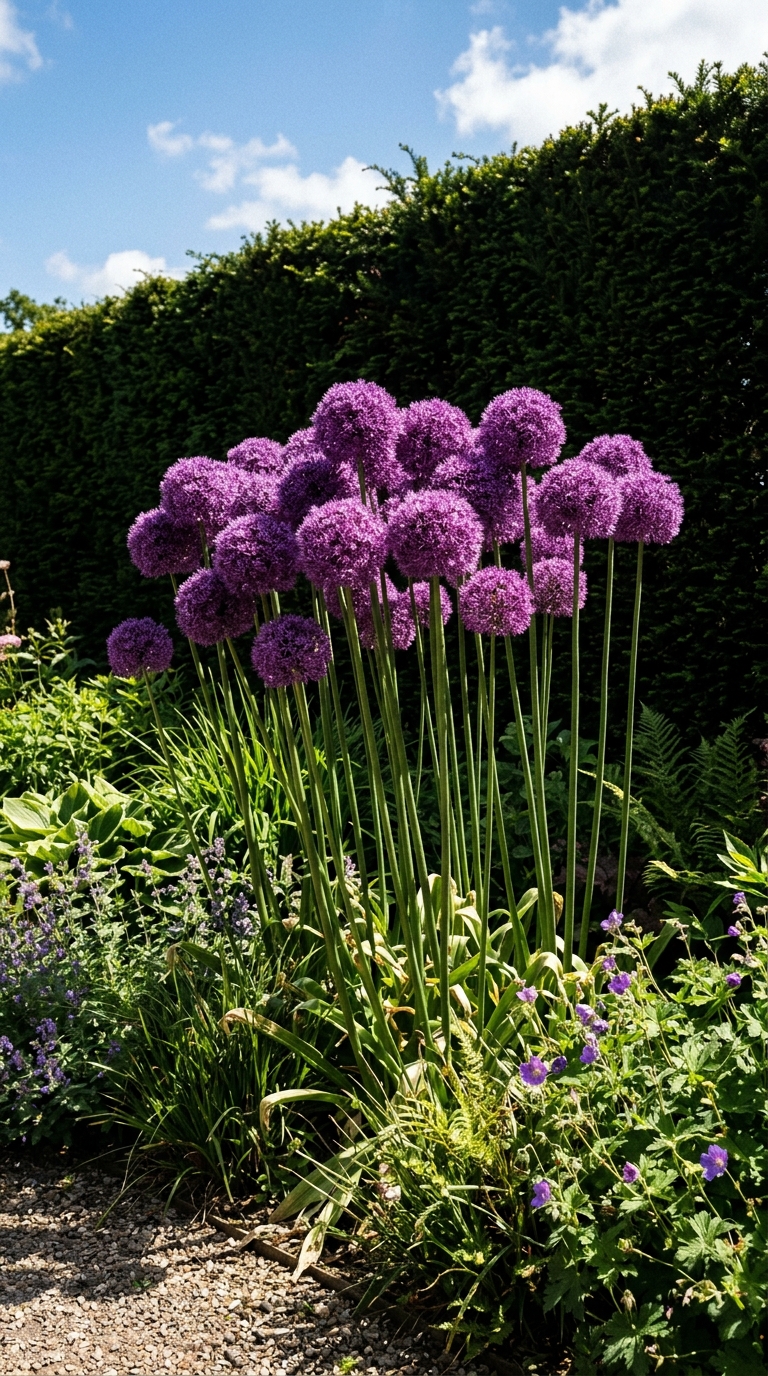
Not all allium gardens need to be formal. Some of the most beautiful I’ve ever seen look almost accidental — alliums scattered through waving grasses and wildflowers as if they simply decided to grow there themselves. This naturalistic style is having a massive moment right now, and alliums are perfectly suited to it.
The key is randomness. Resist the urge to plant in neat rows. Instead, scatter bulbs loosely through an area of ornamental grasses, letting them emerge at varying heights and distances. ‘Purple Sensation’ and ‘Sphaerocephalon’ work beautifully together here, their different shapes and heights creating a tapestry that moves in the breeze.
Styling Tips:
- Mix two or three allium varieties at different heights for a naturalistic layered effect
- Plant through established ornamental grasses like Stipa or Pennisetum
- Allow a few alliums to self-seed naturally over time to increase the relaxed feel
- Include cow parsley, wild carrot, or ammi for that true meadow aesthetic
- Avoid straight lines entirely — the beauty is in the apparent randomness
Allium Bulb Lasagne Planting for Maximum Spring Color
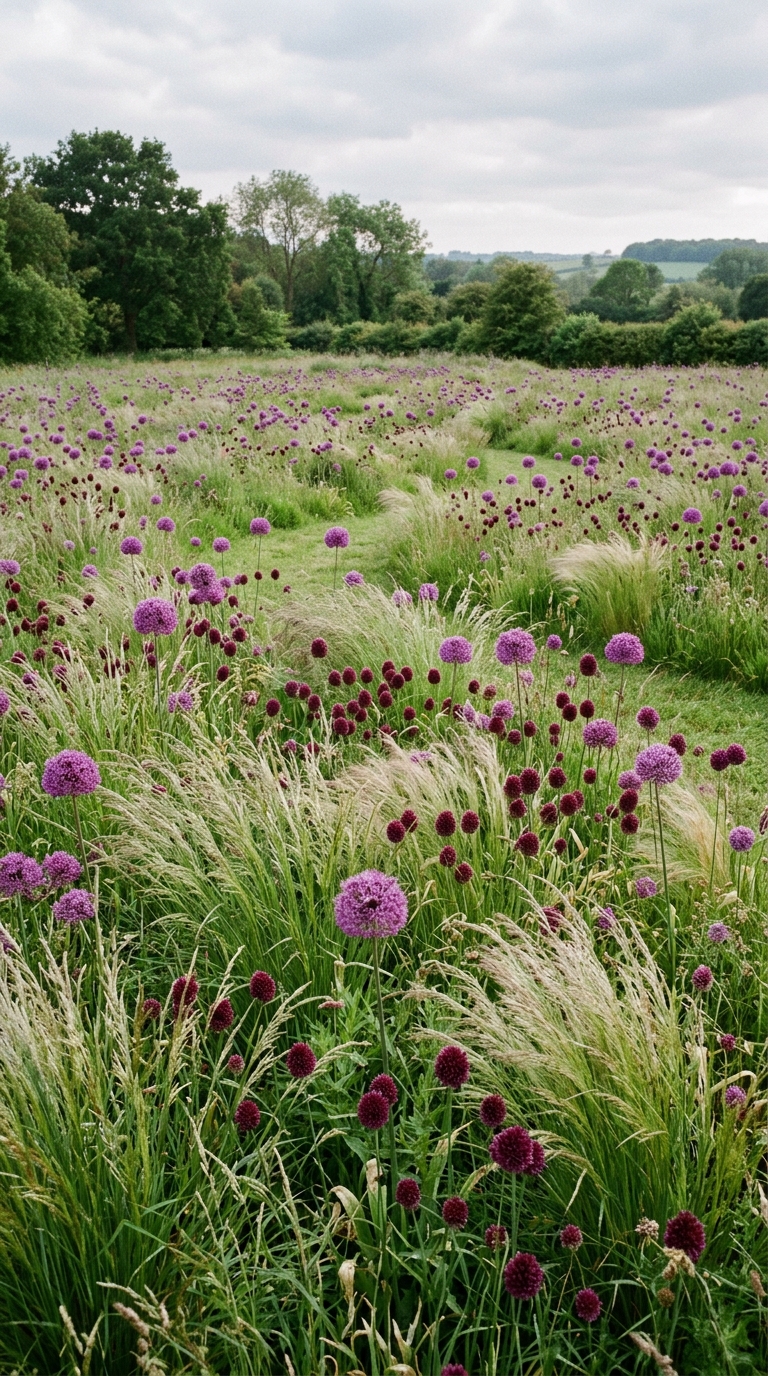
If you haven’t tried lasagne planting, this is your sign. The idea is simple — layer different bulbs at different depths in the same container or bed so they bloom in sequence, giving you flowers from early spring all the way through early summer. Alliums are the perfect top layer because they bloom late, just as the earlier bulbs are fading.
A classic combination is tulips at the bottom, narcissus in the middle, and alliums at the top. Come spring, you get a rolling wave of color that never has a dull moment. In a large container on a patio, this is genuinely one of the most rewarding things you can plant all year.
Alliums pair beautifully with romantic cottage-style plantings, making the cottage pergola ideas a great source of inspiration for creating layered spring blooms around outdoor structures.
Styling Tips:
- Use a large container at least 12 inches deep for a proper three-layer planting
- Plant tulips deepest (8 inches), narcissus in the middle (5 inches), alliums nearest the surface (3–4 inches)
- Choose colors that complement each other — purple alliums look stunning after yellow narcissus
- Top with a thin layer of grit to improve drainage and deter slugs
- Water the well after planting and leave it in a cool spot over winter
Allium Schubertii — The Starburst Display
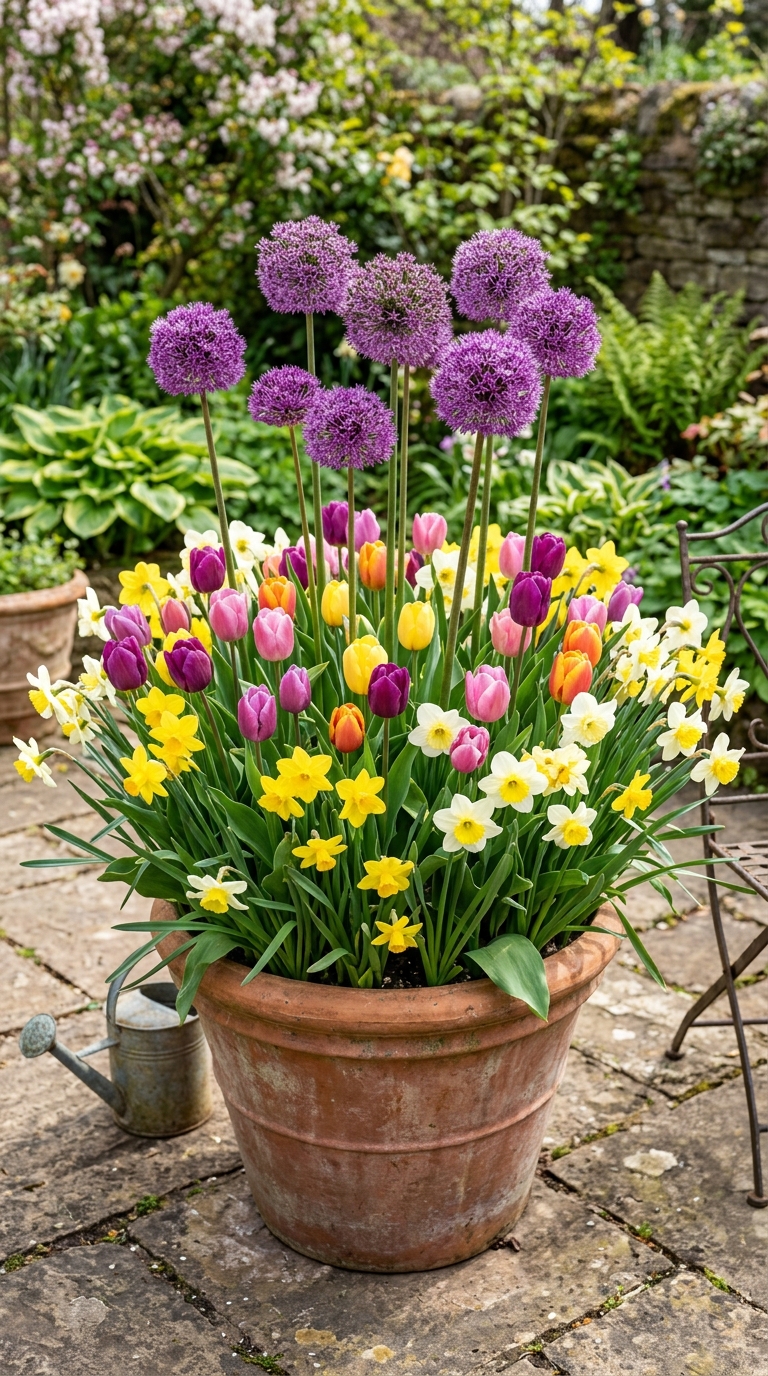
If you want one allium that genuinely makes people gasp, it’s Allium schubertii. The flower head looks like a firework frozen mid-explosion — a loose, spidery starburst of tiny purple florets on stems of wildly varying lengths. It’s unlike anything else in a garden. A little alien. A lot of beautiful things.
Plant it where it can be seen up close, because the detail is everything. A gravel garden, a raised bed, or even a large pot where the starburst shape can be fully appreciated. After the flowers fade, the dried seedhead is just as extraordinary — it looks like a natural sculpture and lasts for months.
Styling Tips:
- Plant in groups of three or five for maximum visual impact
- Use in a gravel or gravel-mulched bed where the starburst shape is clearly visible
- Pair with simpler round alliums nearby so the schubertii’s unusual shape really stands out
- Leave dried seedheads in place — they’re stunning through summer and autumn
- Spray seedheads with metallic paint in winter for a dramatic decorative display indoors
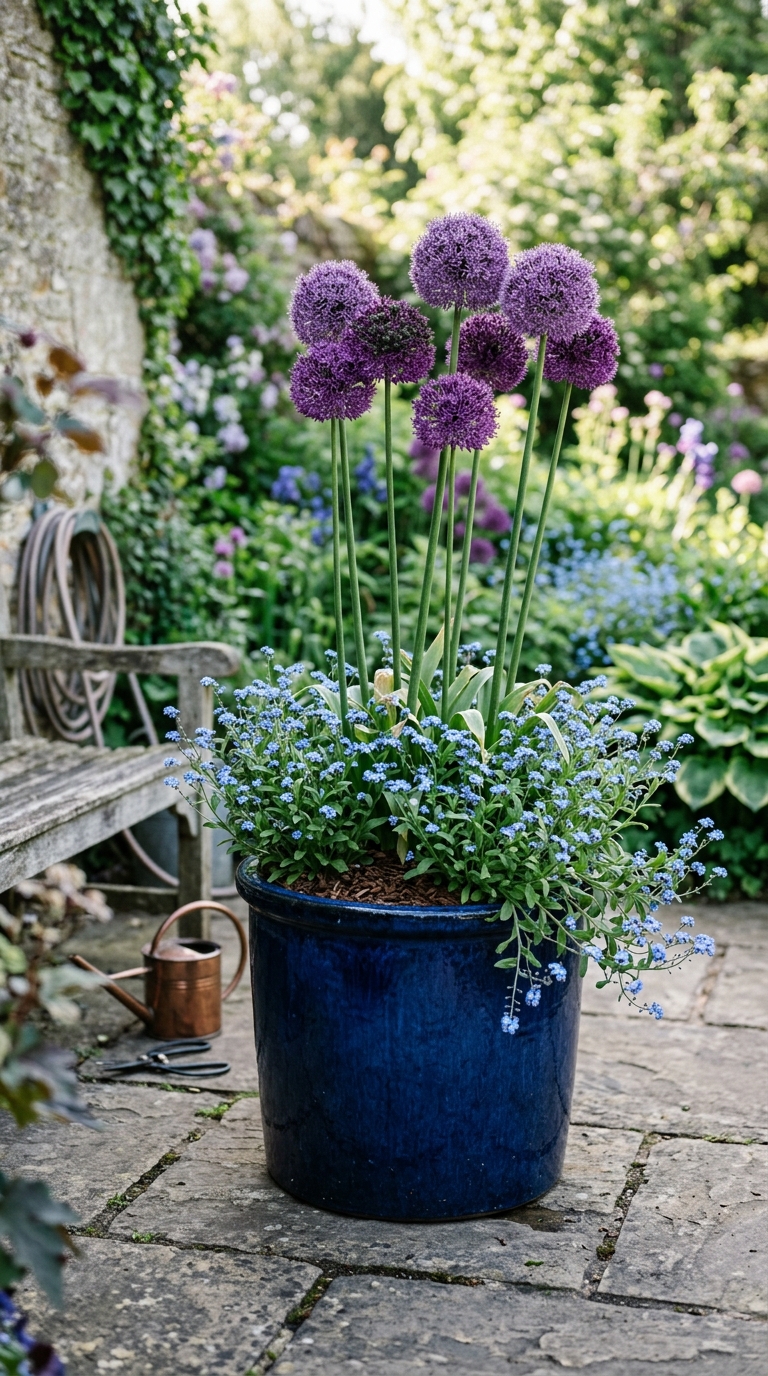
Alliums in a Container or Large Pot
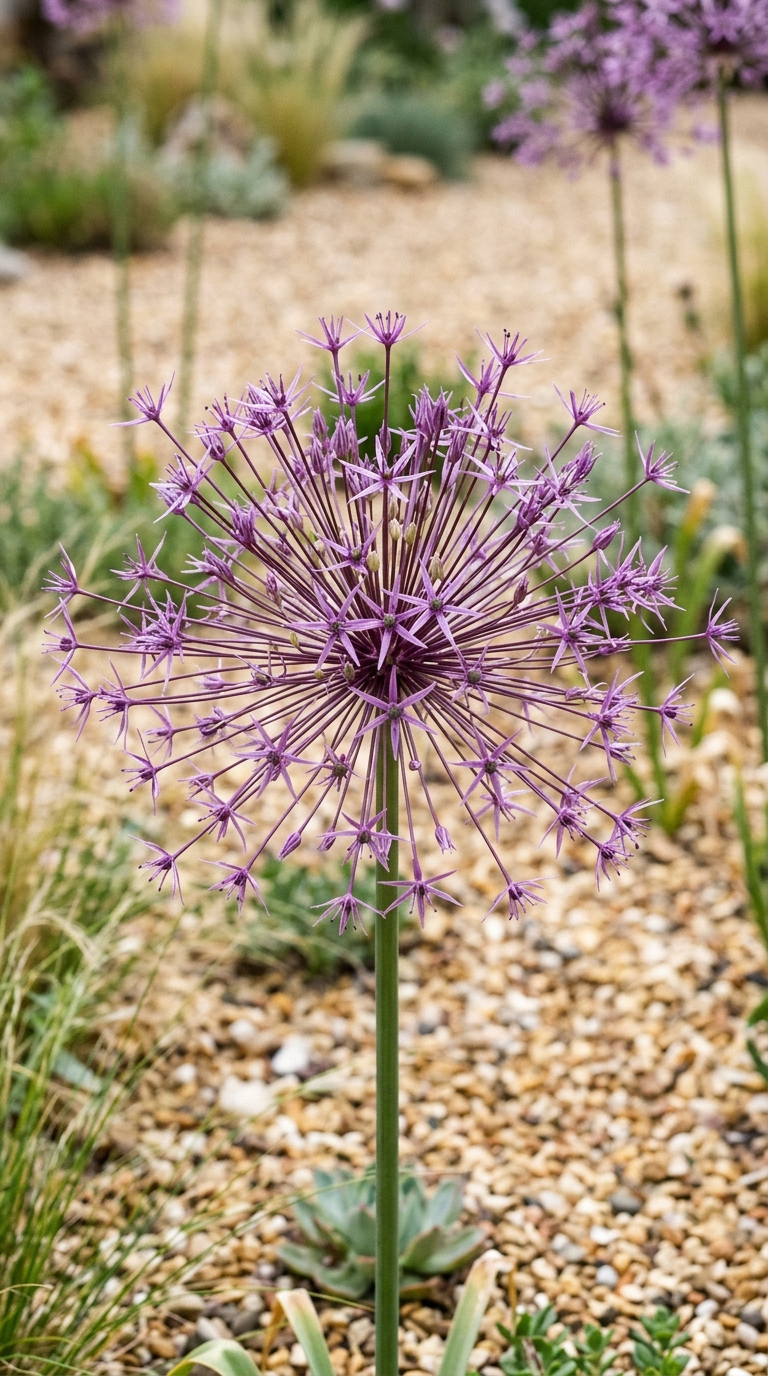
Urban gardeners, this one’s for you. Alliums grow surprisingly well in containers, which means even a balcony or patio can have that gorgeous purple globe moment in late spring. The key is choosing the right pot — big enough to give the bulbs room, deep enough for the roots, and heavy enough not to tip over when the tall stems catch the wind.
A large dark terracotta or glazed navy pot planted with allium giganteum or ‘Purple Sensation’, underplanted with trailing blue lobelia or forget-me-nots, looks genuinely stunning on a doorstep or patio corner. It’s one of those container combinations that photographs beautifully and requires almost no effort once the bulbs are in.
Styling Tips:
- Choose pots at least 30cm deep and wide for allium giganteum varieties
- Underplant with forget-me-nots, trailing lobelia, or low violas for a layered look
- Group three pots of different heights together for a more styled arrangement
- Use a terracotta, slate grey, or deep navy pot to make purple alliums pop
- Add a layer of decorative grit on top for a clean, polished finish
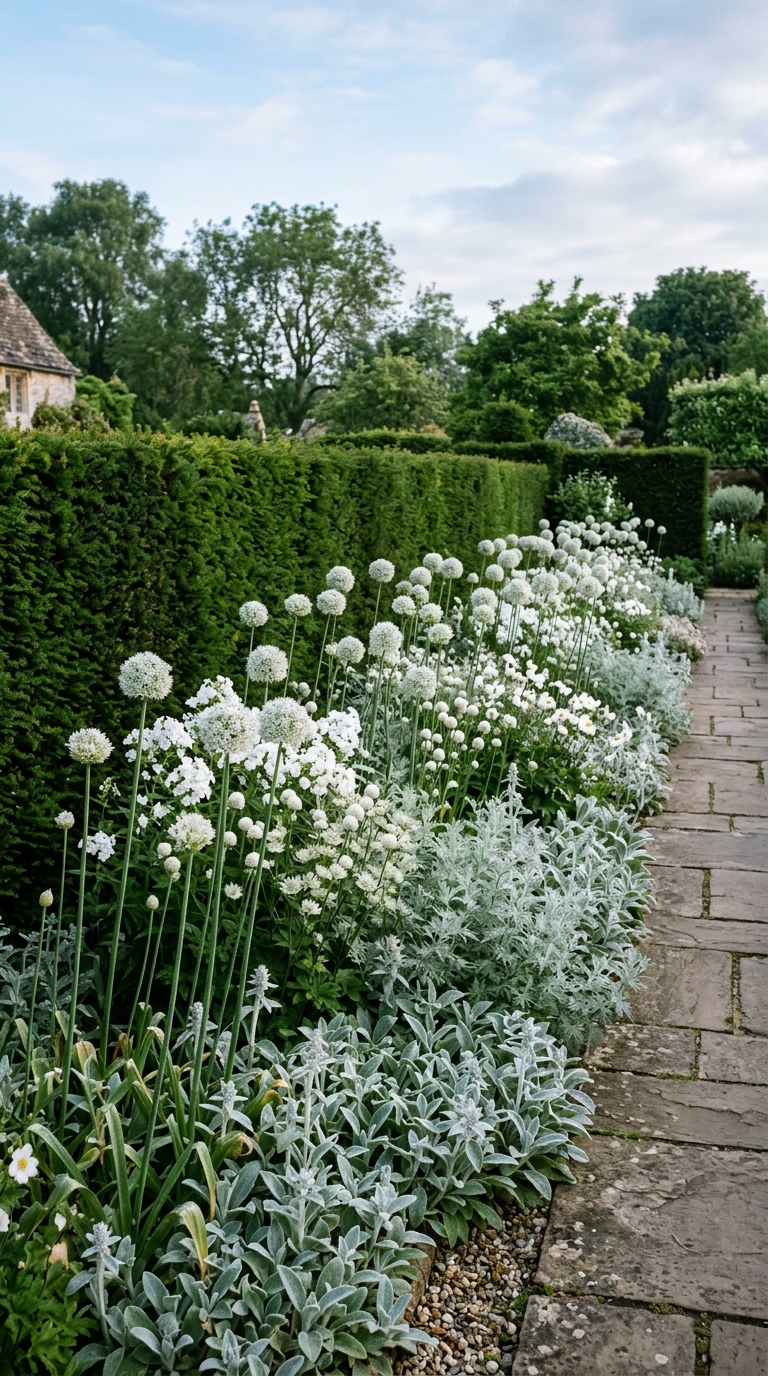
White Allium Garden for an Elegant Monochrome Look
Not everyone wants purple. A white allium garden is one of those quietly elegant choices that looks completely different — cooler, more refined, almost ethereal in the right light. ‘Mont Blanc’ and ‘Graceful’ are the varieties to look for, both producing clean white globes that glow in the evening garden.
Pair white alliums with silver and grey foliage — Stachys byzantina, Artemisia, or dusty miller — and the effect is genuinely stunning. Add a white garden bench or pale stone path, and you have a complete scene. This is the kind of monochrome planting that makes people stop and stare.
If you’re working with limited space, these small front yard landscaping ideas show how ornamental alliums can add height, color, and visual impact without overwhelming the garden.
Styling Tips:
- Choose ‘Mont Blanc’ or ‘Graceful’ for the cleanest white allium globes
- Pair with silver foliage plants — Stachys, Artemisia, or silver sage — for a cool palette
- Plant in front of dark hedging so the white flowers glow against the background
- Add white cosmos or white echinacea nearby to extend the white season
- This combination looks particularly magical in evening light or under garden lanterns
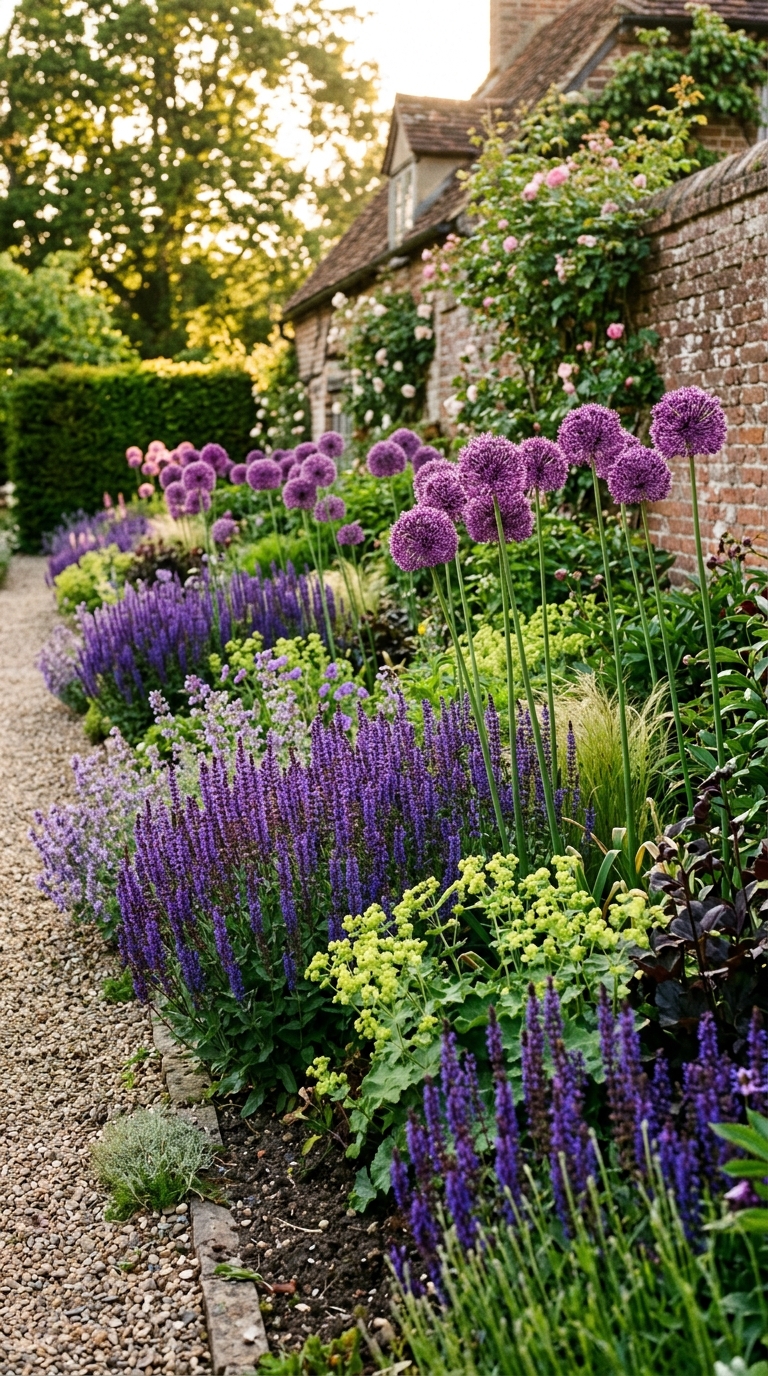
Allium and Salvia Combination Border
This is the combination that garden designers have been quietly obsessing over for the last few years — and once you see it, you’ll understand why. Purple allium globes rising above waves of blue and purple salvia create a border that looks like it’s been painted. The colors deepen and shift through the day as the light changes.
The practical bonus is that this combination has an incredibly long season. Alliums bloom first, then salvia takes over and keeps flowering right through summer. You get four to five months of color from two very low-maintenance plants. It’s genuinely one of the most rewarding borders you can plant.
Styling Tips:
- Choose Salvia nemorosa ‘Caradonna’ or ‘May Night’ for the deepest purple contrast
- Plant allium bulbs between established salvia clumps in autumn
- Deadhead salvia regularly to encourage continuous blooming after alliums fade
- Add catmint (nepeta) at the front for a soft, lavender-colored edge
- This combination also works beautifully in containers for a long-season patio display
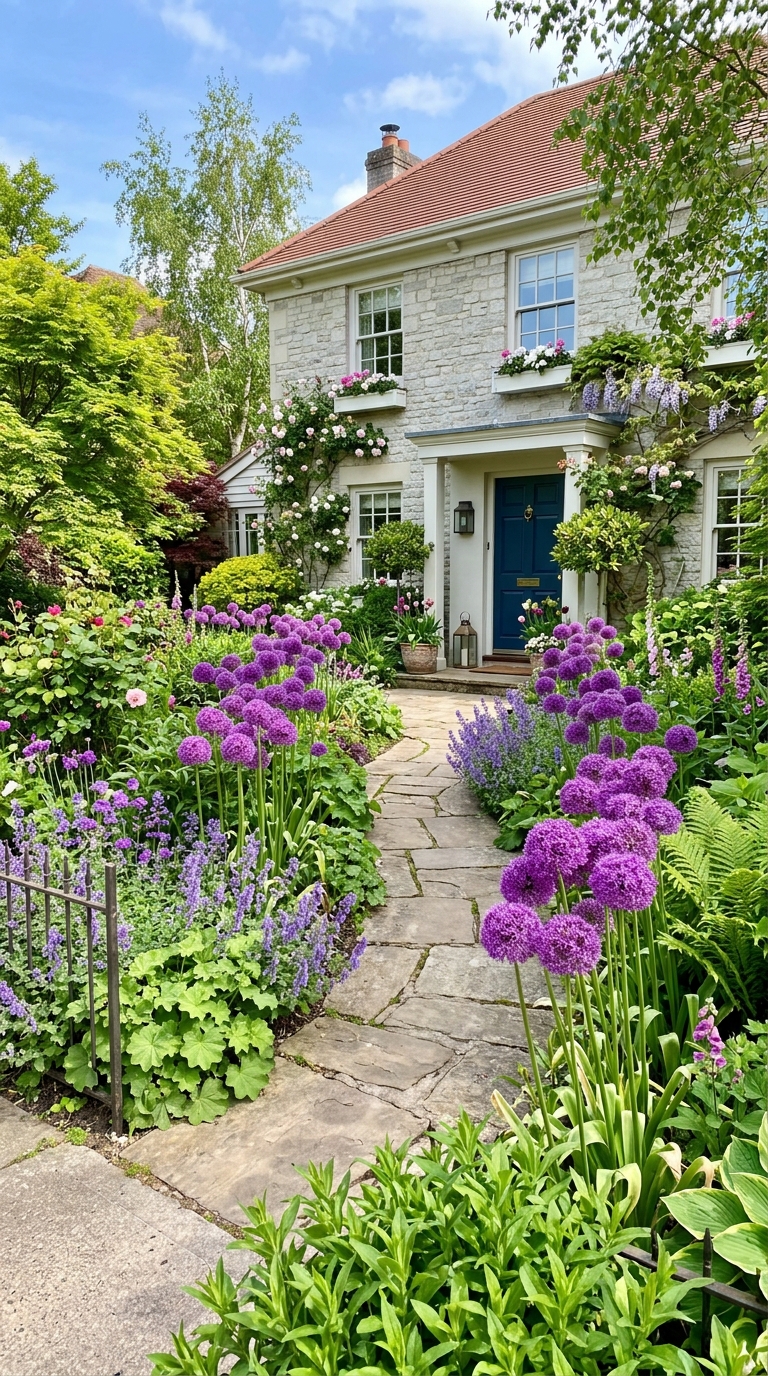
Front Yard Allium Curb Appeal Planting
Want to be the house people slow down to look at in May? Plant alliums in your front garden. Tall, upright, impossibly purple — they create instant curb appeal without requiring any ongoing effort. Plant them in autumn and by late spring, they do everything themselves.
The most effective front yard approach is repetition. Plant the same variety in bold clusters along your front path, driveway border, or in the strip between the pavement and your fence. The repetition creates rhythm and intention, turning a simple planting into something that looks genuinely designed.
Styling Tips:
- Use bold clusters of five to nine bulbs rather than single specimens for maximum impact
- Plant along both sides of a front path for a welcoming, symmetrical entrance
- Choose taller varieties like ‘Globemaster’ or ‘Purple Sensation’ for strong visual impact from the street
- Underplant with low perennials that hide dying allium foliage after blooming
- Combine with evergreen structural plants so the border looks good year-round, not just in spring
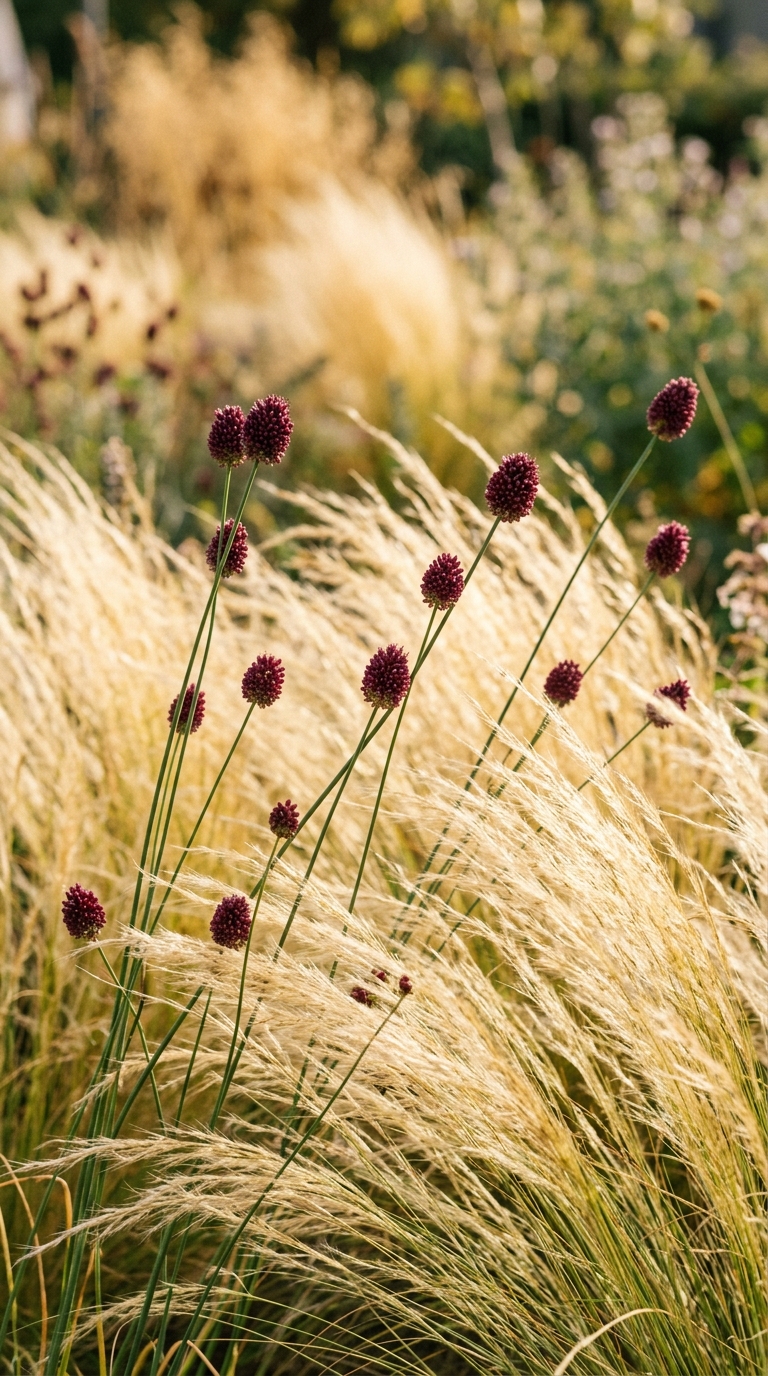
Drumstick Allium Waving Through Ornamental Grasses
Allium sphaerocephalon — the drumstick allium — is different from all the others. Smaller, egg-shaped, and deep burgundy-purple, it blooms later than most alliums, carrying the display into midsummer. And the way it looks rising through ornamental grasses is something genuinely special.
The movement is what makes this combination so captivating. When the wind catches feather grass, and the drumstick alliums sway gently above it, the whole border comes alive. It’s the most naturalistic, contemporary planting combination in this list — and also one of the most photographed on Pinterest right now.
Styling Tips:
- Plant drumstick allium bulbs through established Stipa or Pennisetum grasses
- Allow 10–15 bulbs per square meter for a genuinely lush, immersive effect
- This combination peaks in July — perfect for filling the midsummer gap
- Leave seedheads in place through autumn for extended interest and wildlife value
- Works beautifully in a contemporary garden or as a naturalistic driveway border
Allium Cut Flower Cutting Garden
Here’s something not enough people know — alliums are brilliant cut flowers. The globes last beautifully in a vase, and the dried seedheads are some of the most sought-after elements in modern floral arranging. If you love having fresh flowers in the house, adding a dedicated row or two of alliums to your garden is a genuinely excellent decision.
For cutting, choose varieties with strong, long stems — ‘Gladiator’, ‘Globemaster’, and Allium giganteum are all excellent. Cut when about half the florets have opened, put straight into deep water, and they’ll last one to two weeks. For dried arrangements, wait until the seedheads are fully formed, then hang upside down in a warm, dry spot for a few weeks.
Styling Tips:
- Grow alliums in dedicated cutting rows in a kitchen garden or potager
- Mix varieties for different heights and textures in arrangements
- Cut early in the morning when stems are most hydrated for the longest vase life
- Dry seedheads upside down and use in autumn and winter arrangements
- Spray-dried allium heads with gold or copper paint for a festive seasonal display
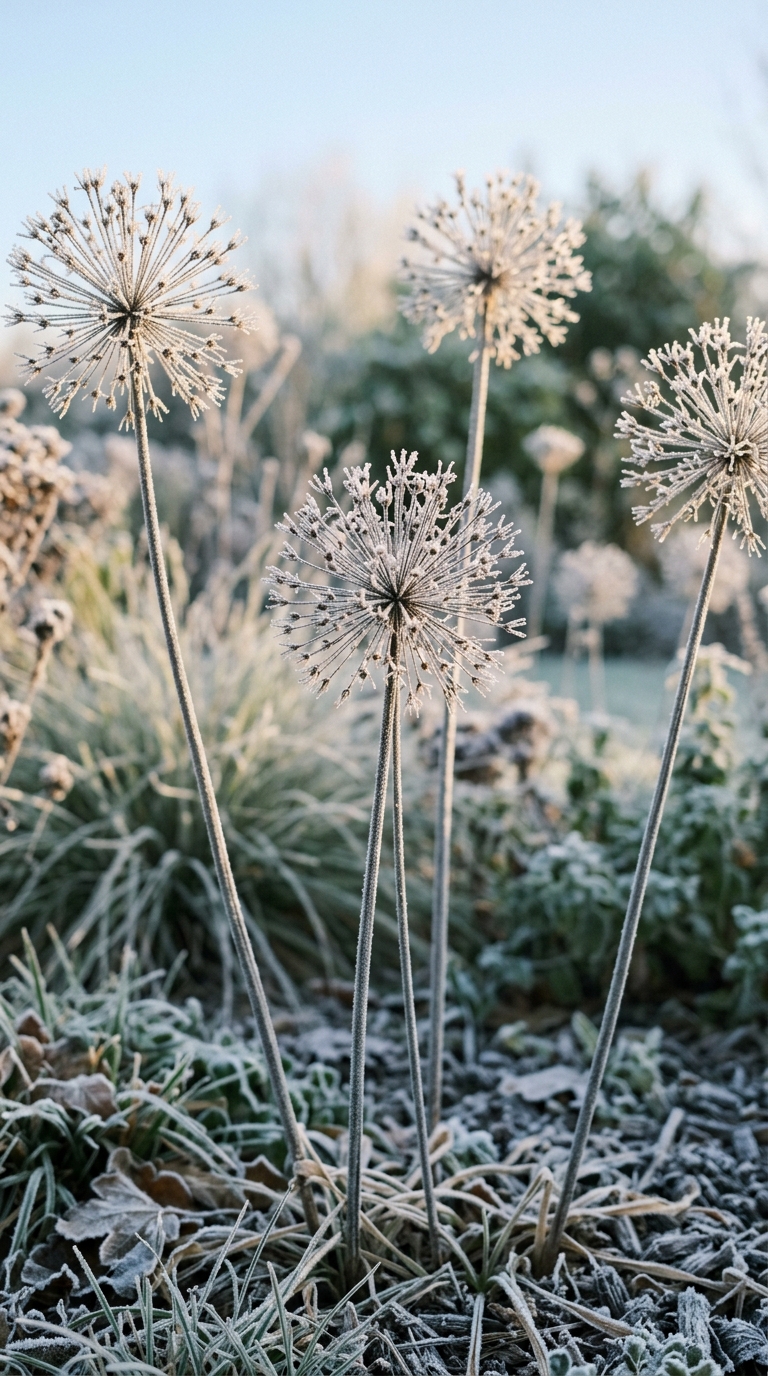
Cottage Garden Allium Border with Foxgloves and Geraniums
If your heart belongs to the cottage garden aesthetic, alliums were practically made for you. Tall foxgloves, soft hardy geraniums, and rising allium globes in purples, pinks, and whites — it’s the most romantic plant combination in the English garden tradition. Nothing else quite captures that overflowing, relaxed beauty.
The layering here is everything. Foxgloves at the back, alliums in the middle, geraniums sprawling at the front and spilling onto the path. Let things lean and overlap a little. The slight untidiness is the point — it creates that lush, abundant look that takes years to achieve in a formal garden but happens almost naturally in a cottage border.
Styling Tips:
- Choose pastel foxgloves — blush pink, cream, or white — to complement purple alliums
- Allow hardy geraniums to sprawl naturally over path edges for that true cottage feel
- Add aquilegia (columbine) and sweet rocket for additional early-summer cottage charm
- Don’t deadhead everything — allow some self-seeding for a more naturalistic display year on year
- A simple painted picket fence or stone wall in the background completes the cottage scene
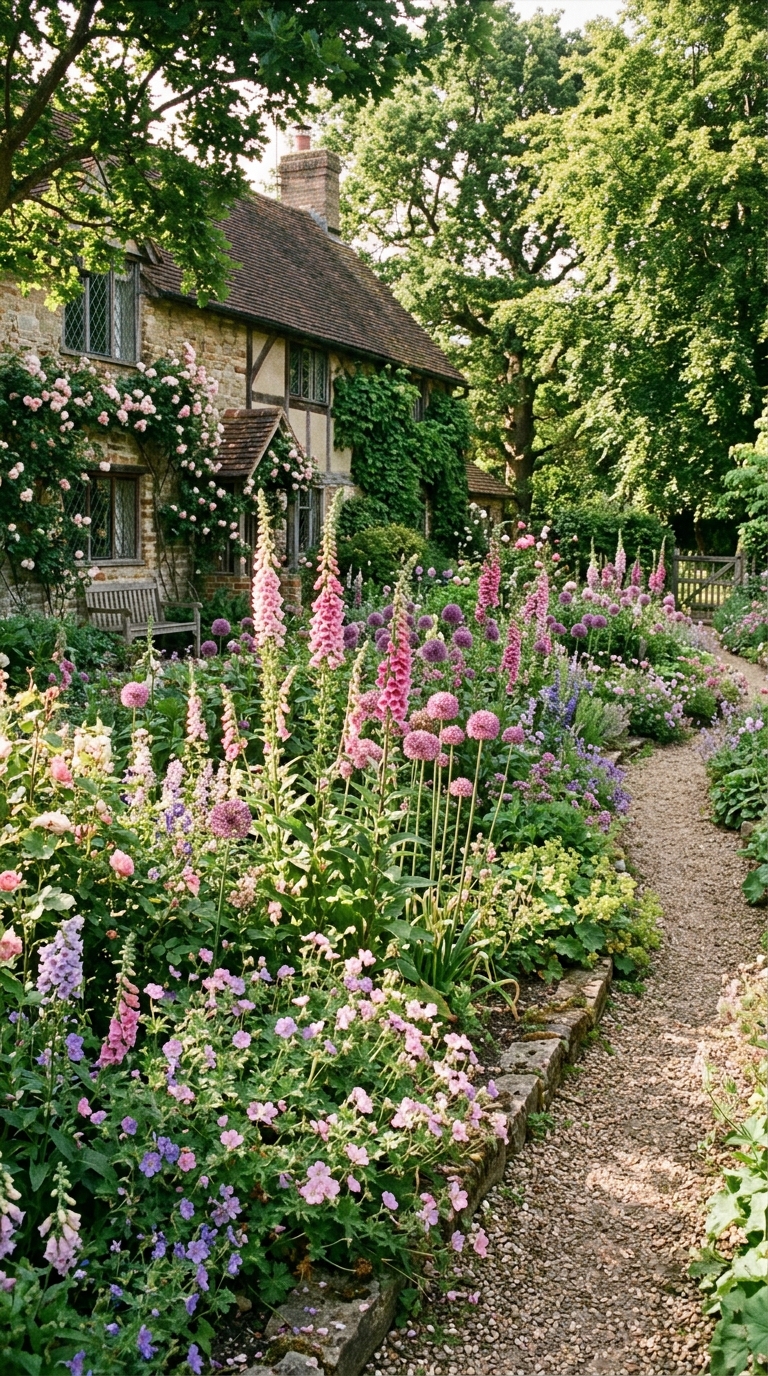
Allium Seedhead Display — Beautiful Even After Blooming
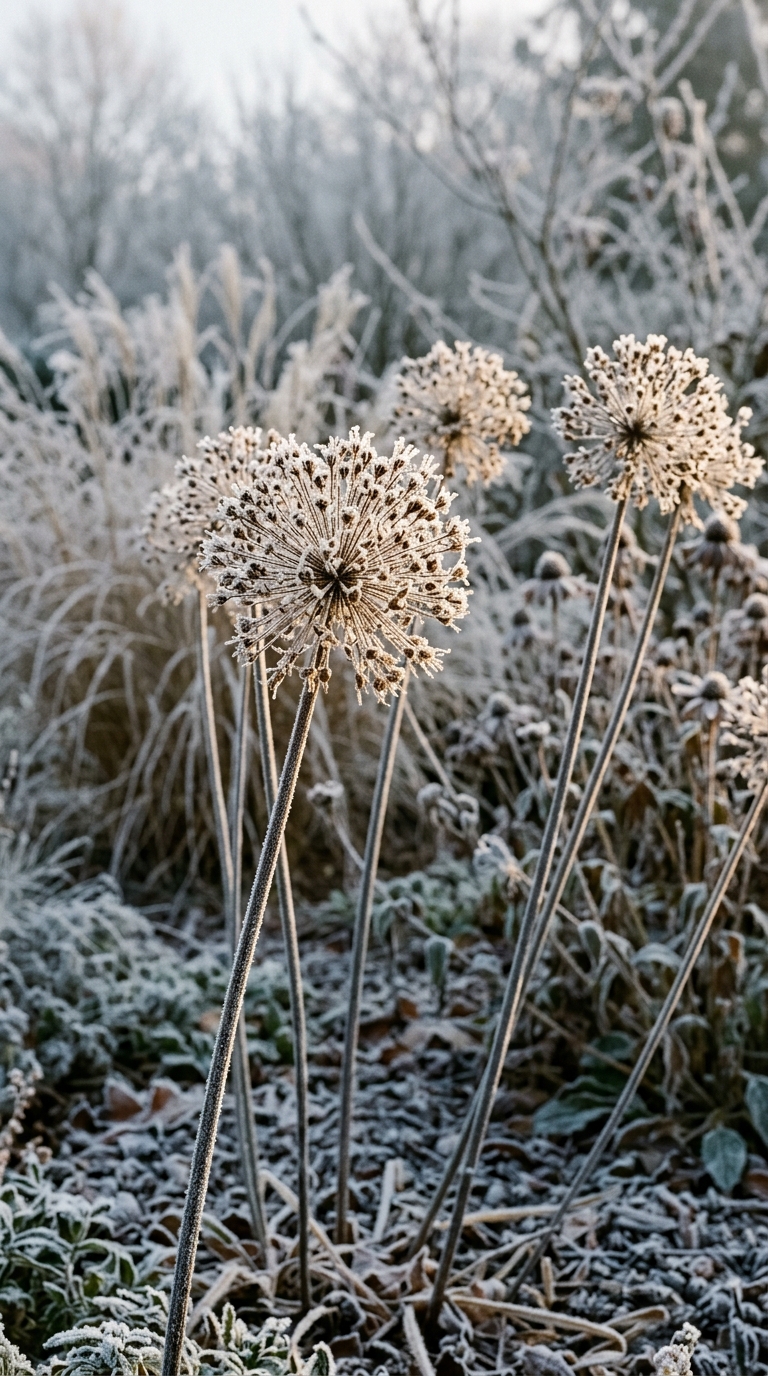
Most people cut their alliums down after flowering. Please don’t. The seedheads that follow are among the most beautiful structural elements a garden can offer throughout summer, autumn, and even into winter. They catch dew. They hold frost. They glow in low winter sunlight in an almost surreal way.
Leave the dried seedheads in place, and your garden gains months of additional interest at absolutely zero extra cost. Frost-covered allium seedheads on a cold January morning are genuinely one of the most beautiful sights a garden can offer. It’s the gift that keeps giving, long after everyone else’s spring display has been cut back and forgotten.
Styling Tips:
- Leave all allium seedheads in place after flowering for summer and autumn interest
- The dried brown seedheads look particularly beautiful against golden autumn grasses
- Frost-covered seedheads in winter create a magical, sculptural garden scene
- Cut and bring dried seedheads inside for use in autumn and winter arrangements
- Spray with a light coat of hairspray to help fragile dried heads last longer indoors
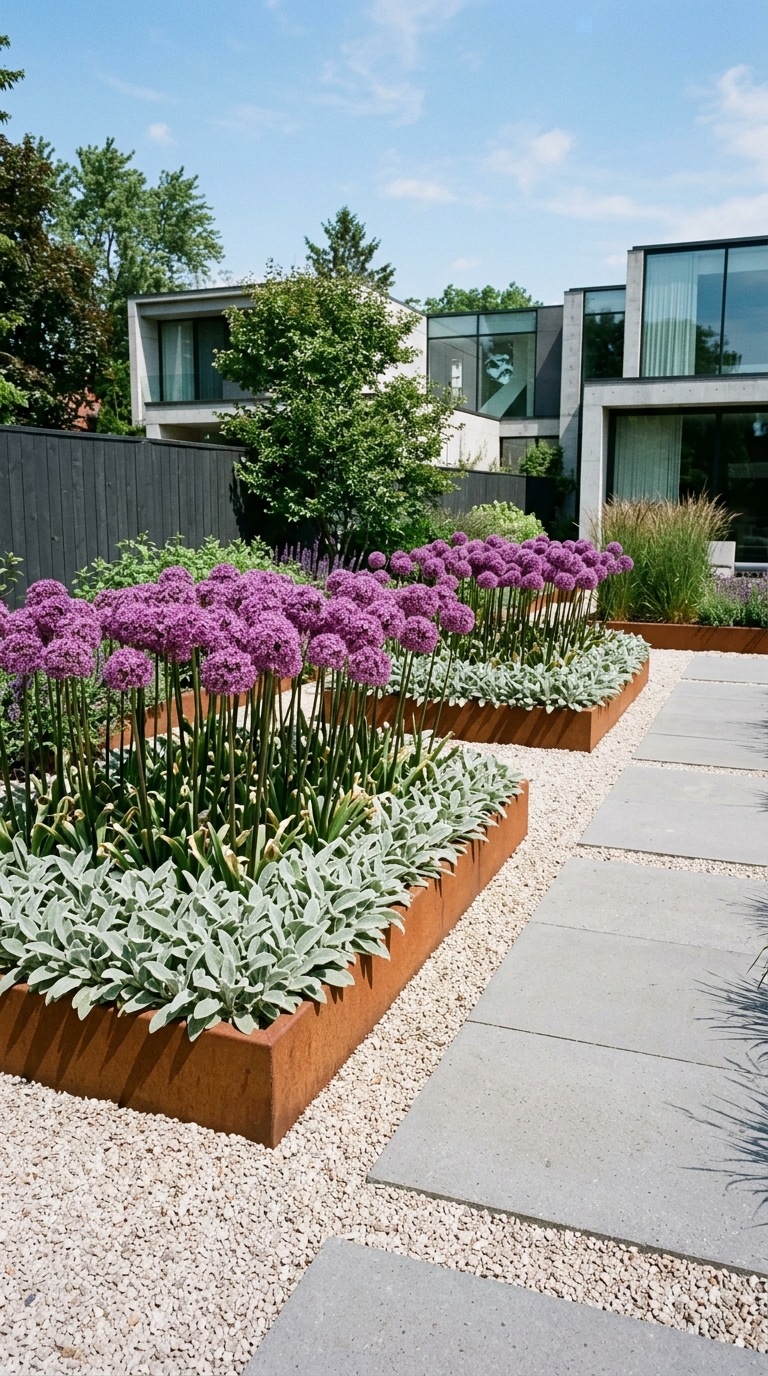
Modern Minimalist Allium Garden with Gravel and Steel
For gardens with a contemporary edge, alliums offer something very few flowering plants can — architectural structure combined with natural beauty. A gravel garden planted with bold clusters of Allium giganteum, edged with Corten steel raised beds and underplanted only with silver-leaved plants, creates a planting scheme that feels genuinely gallery-worthy.
The restraint is what makes it work. Fewer plants, more considered placement, better impact. Three to five bold clusters of alliums in a sea of fine gravel, with nothing else competing for attention, create a scene that’s calm, confident, and completely unforgettable.
Styling Tips:
- Use Corten steel or black powder-coated metal edging for a crisp contemporary finish
- Plant alliums in bold clusters of five to seven, well-spaced across the gravel area
- Choose silver-leaved underplanting only — Stachys, Artemisia, or blue fescue grass
- Keep the gravel surface immaculate — this style lives or dies by its neatness
- Add one statement ceramic pot or sculpture as the only additional focal point
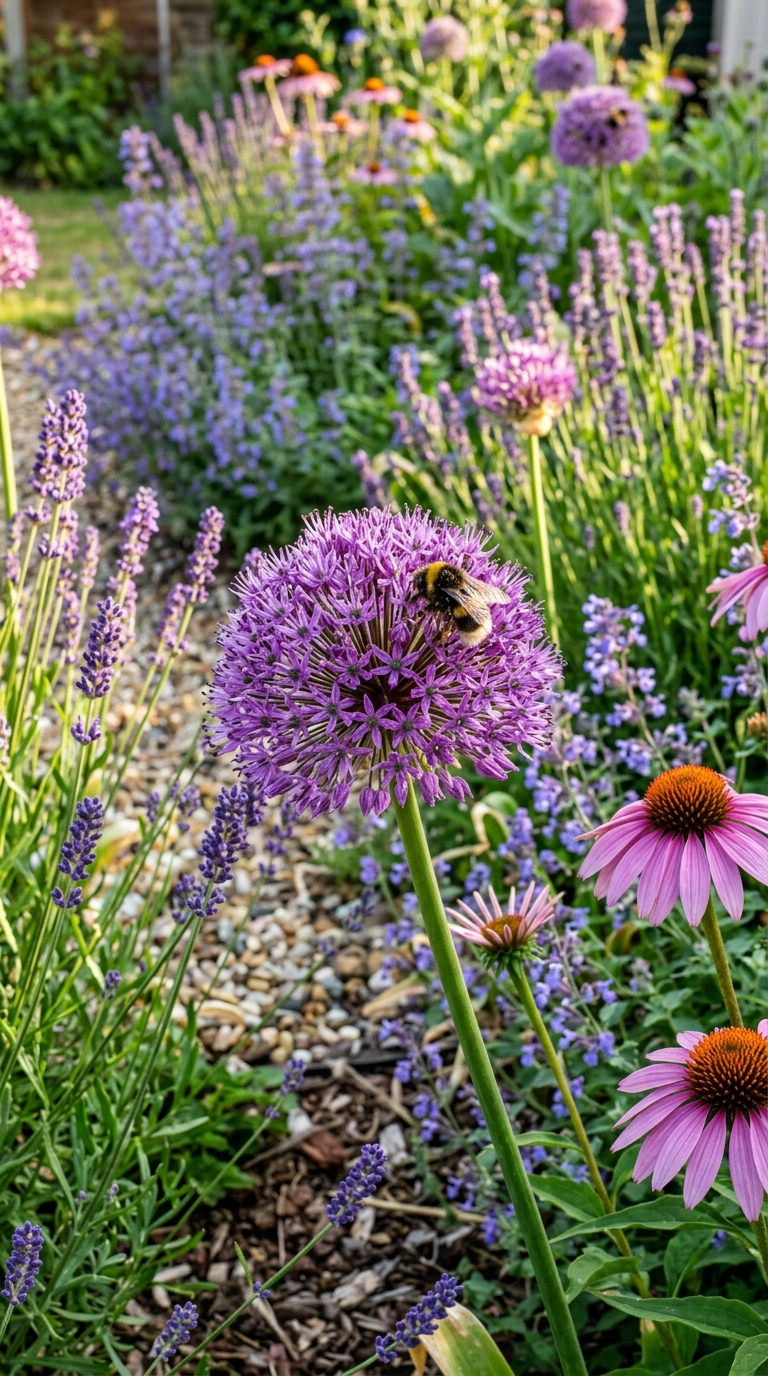
Pollinator Paradise Allium Garden
Every single allium variety is a magnet for bees and butterflies. The moment those globes open, the humming starts. If you care about garden wildlife — and more and more of us do — an allium-rich border is one of the single best things you can plant for pollinators in late spring and early summer.
Combine alliums with catmint, lavender, echinacea, and single-flowered roses for a border that supports wildlife from May right through to September. It’ll look beautiful, smell incredible, and sound alive. That constant quiet buzzing of bees moving from flower to flower is one of the most satisfying sounds a garden can make.
Styling Tips:
- Choose single-flowered allium varieties — pollinators can’t access double flowers as easily
- Combine with catmint, agastache, lavender, and single roses for a full-season pollinator display
- Avoid pesticides entirely in this border — the whole point is supporting beneficial insects
- Add a small bee water dish nearby — a shallow dish with pebbles and fresh water
- Leave seedheads and some stems over winter to provide habitat for overwintering insects
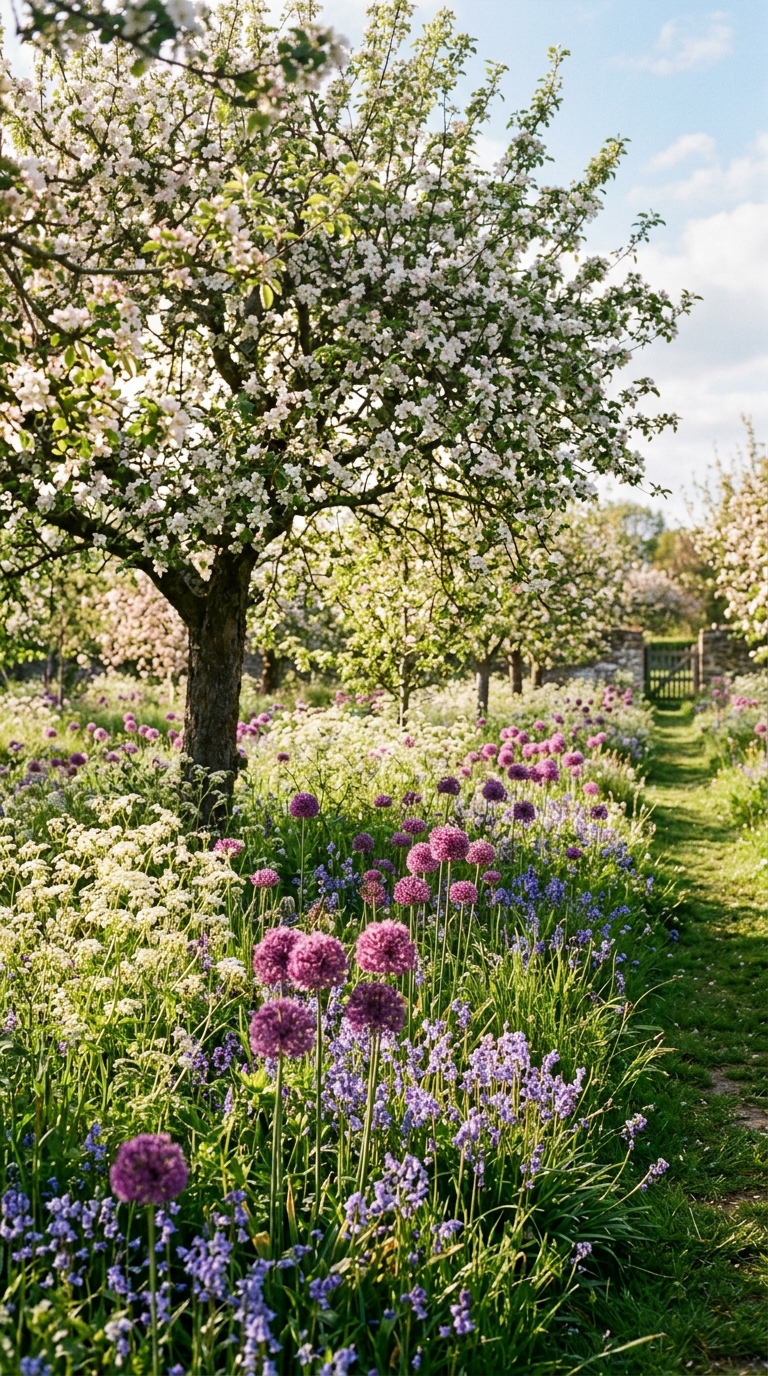
Alliums Under Fruit Trees — Magical Orchard Underplanting
Dappled shade and dry soil under fruit trees are notoriously difficult conditions for planting. Alliums, happily, don’t mind a bit. They naturalize beautifully under apple, pear, and cherry trees, creating a magical spring scene that looks completely effortless — even though it took one afternoon to plant.
Combine alliums with bluebells, cow parsley, or wild garlic for an underplanting that looks like it grew there naturally over decades. In late spring, when the cherry blossom is falling, and the alliums are just opening beneath it, the effect is genuinely breathtaking. It’s one of those garden moments that makes you stop and just stand there.
Styling Tips:
- Plant allium bulbs in drifts of 20–30 under established fruit trees for a naturalized look
- Combine with native bluebells or wild garlic for an authentic woodland garden feel
- Choose smaller allium varieties like ‘Purple Sensation’ rather than giganteum for scale
- Mow around the trees, but leave the underplanting area uncut until foliage dies back
- Add a simple wooden bench nearby so you can actually sit and enjoy the spring display
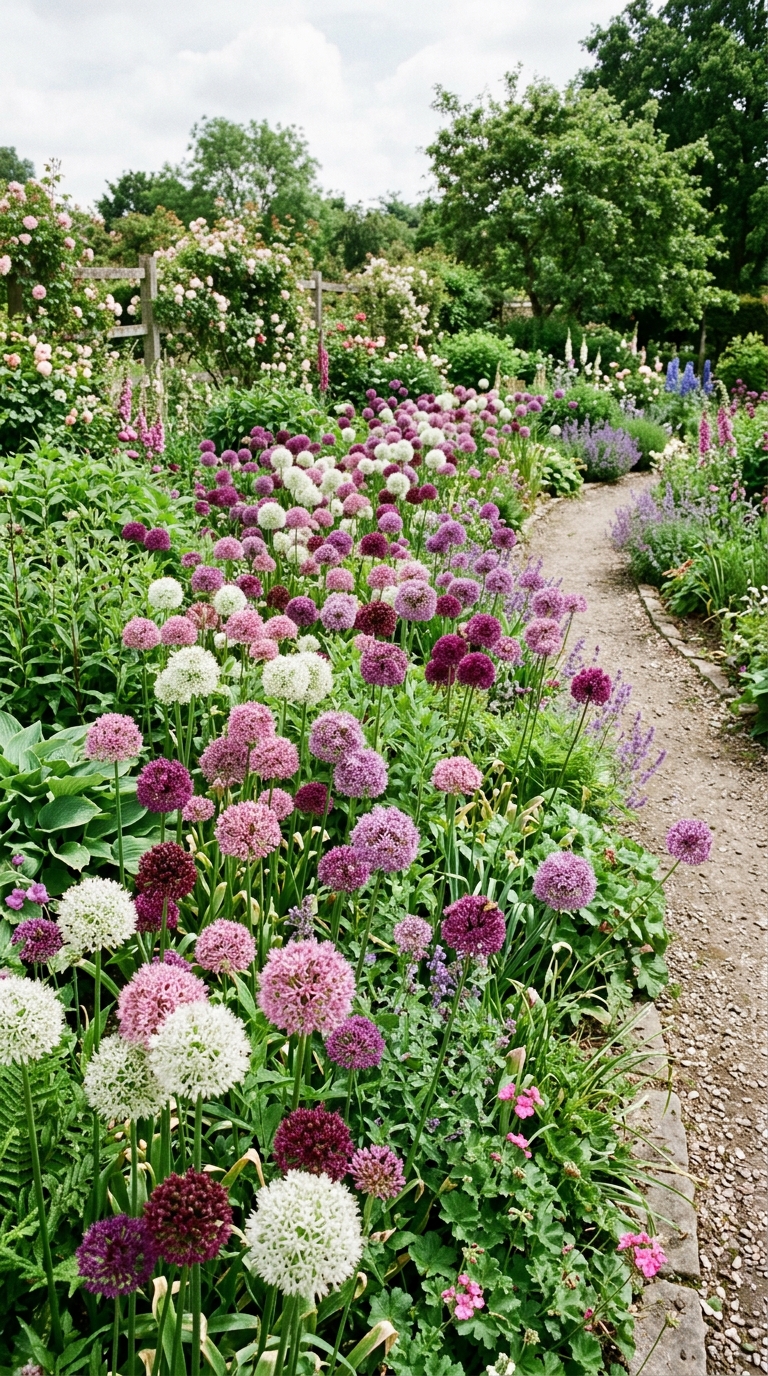
Rainbow Allium Border — Multi-Variety Color Display
Who says an allium garden has to be all purple? A rainbow allium border mixes white, pink, pale lilac, deep purple, and burgundy varieties in a single bed for a tapestry of color that shifts and evolves through the whole flowering season. It’s bold, it’s maximalist, and it’s genuinely one of the most save-worthy garden looks on Pinterest.
The trick is choosing varieties that bloom at slightly different times so the display is staggered rather than all happening at once. Start with early white alliums, bring in the purples at peak season, and finish with dark drumstick alliums in midsummer. One border, months of color.
Styling Tips:
- Plan variety selection by bloom time so color transitions gradually through the season
- Use white or pale pink varieties at the border edges to soften the transition to adjacent plantings
- Plant in irregular drifts rather than separate blocks for a more painterly, natural result
- Photograph the border from different angles at different times of day — it looks different in every light
- Keep a planting map so you know where each variety is when bulbs are dormant
Allium and Iris Combination for Early Summer Drama
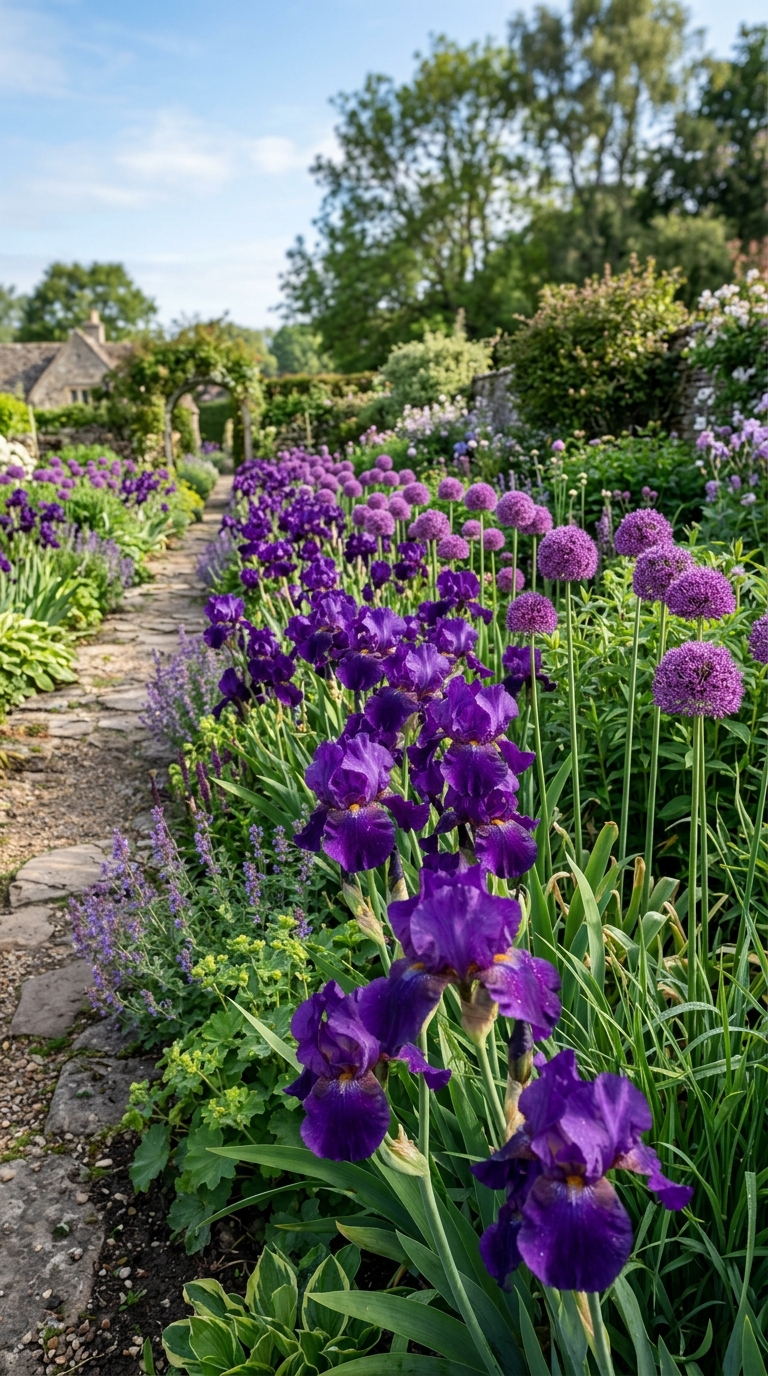
The timing works perfectly. Bearded irises finish just as alliums hit their peak — so if you plant them together, you get a seamless handover of color without a single dull week in between. Deep purple bearded iris in late spring, followed by allium globes in the same purple-blue tones rising above the iris foliage. It’s one of the most cohesive and naturally flowing combinations in the garden.
Choose colors that harmonize rather than clash. Purple irises with purple ‘Purple Sensation’ alliums create a tonal border with real depth. Or try pale blue iris with white alliums for something cooler and more sophisticated. Either way, the seasonal relay is what makes this combination feel genuinely considered.
Styling Tips:
- Plant allium bulbs among established iris rhizomes in autumn for a spring-summer relay
- Match iris and allium colors for a harmonious tonal palette, or contrast them for drama
- Both plants love a sunny, well-drained spot — they’re perfect companions culturally as well as visually
- Add nepeta or salvia at the border front to carry the purple theme after both have finished
- Photograph in the transition week when both are blooming together — it’s spectacular
Budget Beginner Allium Garden — Start With Just 10 Bulbs
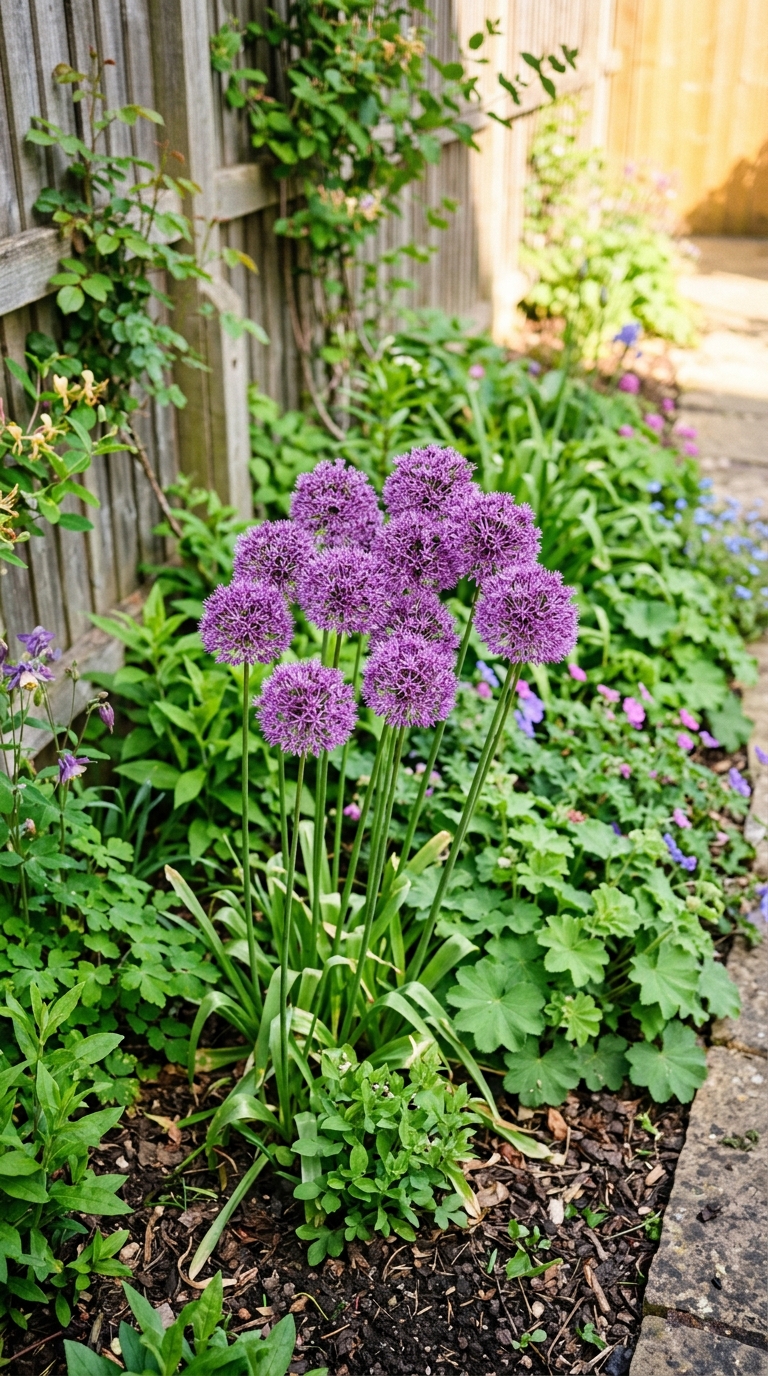
Here’s the best thing about alliums for beginners — you really can start small. Ten bulbs, one good spot in the sun, decent soil, and patience through winter. That’s genuinely all it takes to have a garden moment next May that makes you feel like you know what you’re doing.
Alliums also multiply. Leave them undisturbed, and they’ll slowly naturalize, producing more bulbs each year. What starts as ten bulbs becomes twenty, then forty, then a proper bold drift that looks intentional and established. It’s one of the slowest, most satisfying forms of garden magic there is.
Styling Tips:
- Start with ‘Purple Sensation’ — it’s reliable, affordable, and widely available
- Plant in a cluster of ten in one spot rather than spreading bulbs too thinly
- Choose a sunny, well-drained border position — alliums hate waterlogged soil
- Mark where you plant with a small stick or label so you don’t accidentally dig them up
- Leave undisturbed year after year and the clump will gradually multiply for free
FAQ
What are alliums and why are they so popular in garden design?
Alliums are ornamental onions — members of the same family as garlic, chives, and leeks — grown for their striking globe-shaped flower heads in purple, white, and pink tones. They’re popular because they’re architectural, low-maintenance, pollinator-friendly, and photograph beautifully.
When should I plant allium bulbs?
Plant allium bulbs in autumn, between September and November, before the first hard frost. This gives them time to establish roots before winter, ready for spring and early summer flowering.
How deep do you plant allium bulbs?
Plant allium bulbs at a depth of approximately three times their diameter. For large varieties like Allium giganteum, this means around 15–20cm deep. For smaller varieties, 8–10cm is usually sufficient.
What grows well with alliums?
Alliums pair beautifully with roses, salvia, catmint, hardy geraniums, foxgloves, ornamental grasses, and irises. They also work well underplanted with forget-me-nots, which help conceal the dying foliage as alliums come into bloom.
Do alliums come back every year?
Yes. Most ornamental alliums are perennial and will return each year, often multiplying gradually over time. Leave them undisturbed after flowering, and the clump will slowly naturalize and expand.
CONCLUSION
Alliums are one of those rare plants that reward you far beyond what you put in. You plant a dry, unremarkable bulb in autumn soil. You forget about it through the cold months. And then one morning in May, you walk outside, and there they are — rising above everything else in the border, perfectly round, impossibly purple, making your whole garden look like it belongs in a magazine spread.
That’s the quiet magic of allium gardening. The effort is minimal. The impact is anything but.
Whether you start small with a cluster of ten ‘Purple Sensation’ bulbs tucked into a sunny border, or you go all in with a full cottage planting of alliums, foxgloves, and climbing roses, the result will always be worth it. These plants naturalize over time, multiplying each year quietly and giving you more and more to enjoy without any extra work on your part. A garden that genuinely grows itself — that’s the dream, isn’t it?
So pick the ideas that excite you most from this list, order your bulbs before they sell out, and get them in the ground this autumn. Your spring self will be very, very glad you did.