
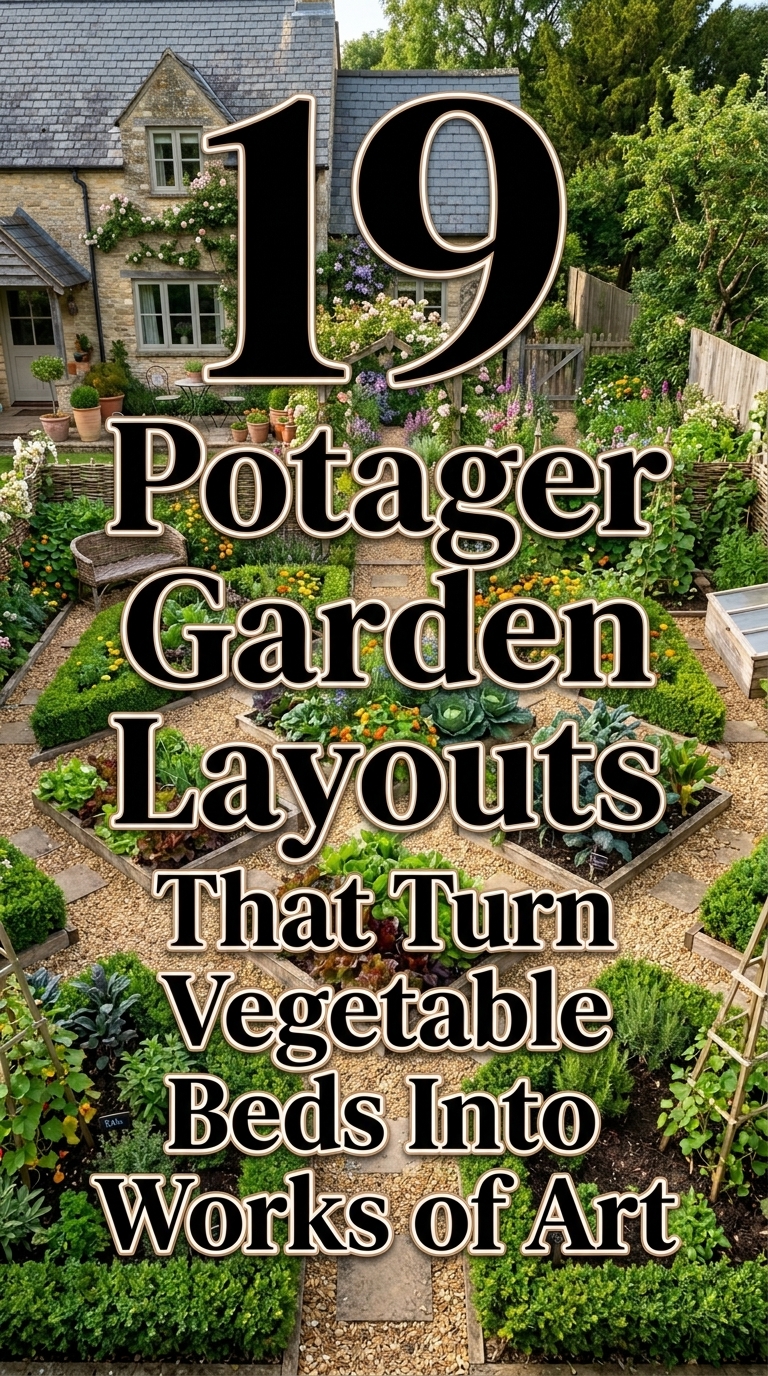
My neighbors probably think I’m a little strange for staring at their vegetable rows the way other people stare at flower beds. But there’s a reason. A well-planned potager garden doesn’t just feed you — it stops you in your tracks. Lettuce growing beside roses, carrots tucked next to marigolds, a gravel path winding between raised beds like something out of a French countryside postcard. If you’ve ever wondered how a vegetable garden could look this good, here are 19 layouts that prove function and beauty were never meant to be separate.
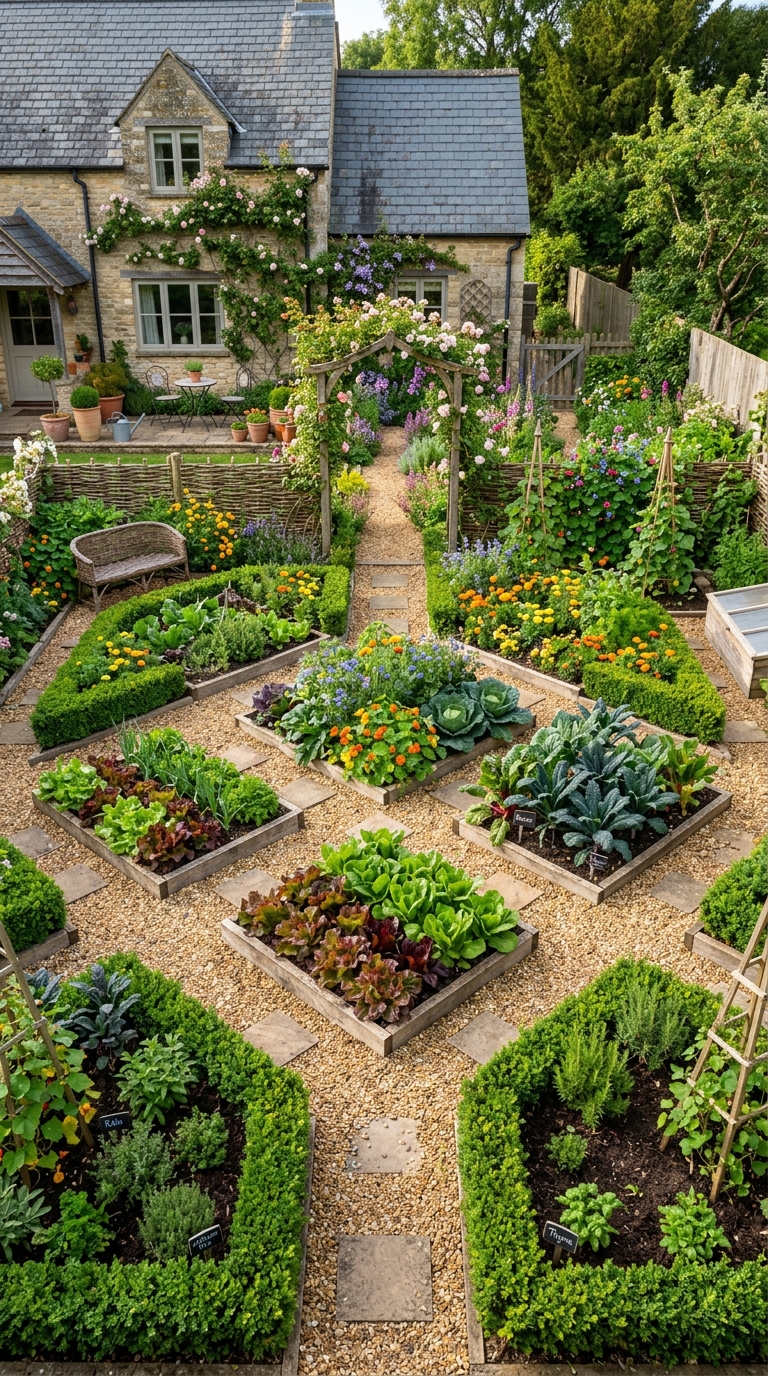
The Classic French Four-Square Potager
This is where the whole potager idea started, and honestly, it still holds up. Four equal beds split by a center path (or a small fountain if you’re feeling fancy) create instant symmetry. It’s the layout that makes a vegetable patch look intentional, not accidental.
What I love about this one is how forgiving it is. You can rotate crops every season without messing up the overall shape, since each quadrant stays its own little world.
Decorative flowers can elevate any vegetable garden, and these inspiring Allium Garden Ideas show how to add height, texture, and eye-catching blooms to your potager beds.
- Styling Notes: Use low boxwood or lavender to outline each square for crisp definition
- Why It Works: Symmetry reads as “designed,” even when the plants inside change constantly
- Get The Look: Center the four beds around a birdbath, sundial, or tall obelisk trellis
- Pro Tips: Keep paths at least 24 inches wide for wheelbarrow access
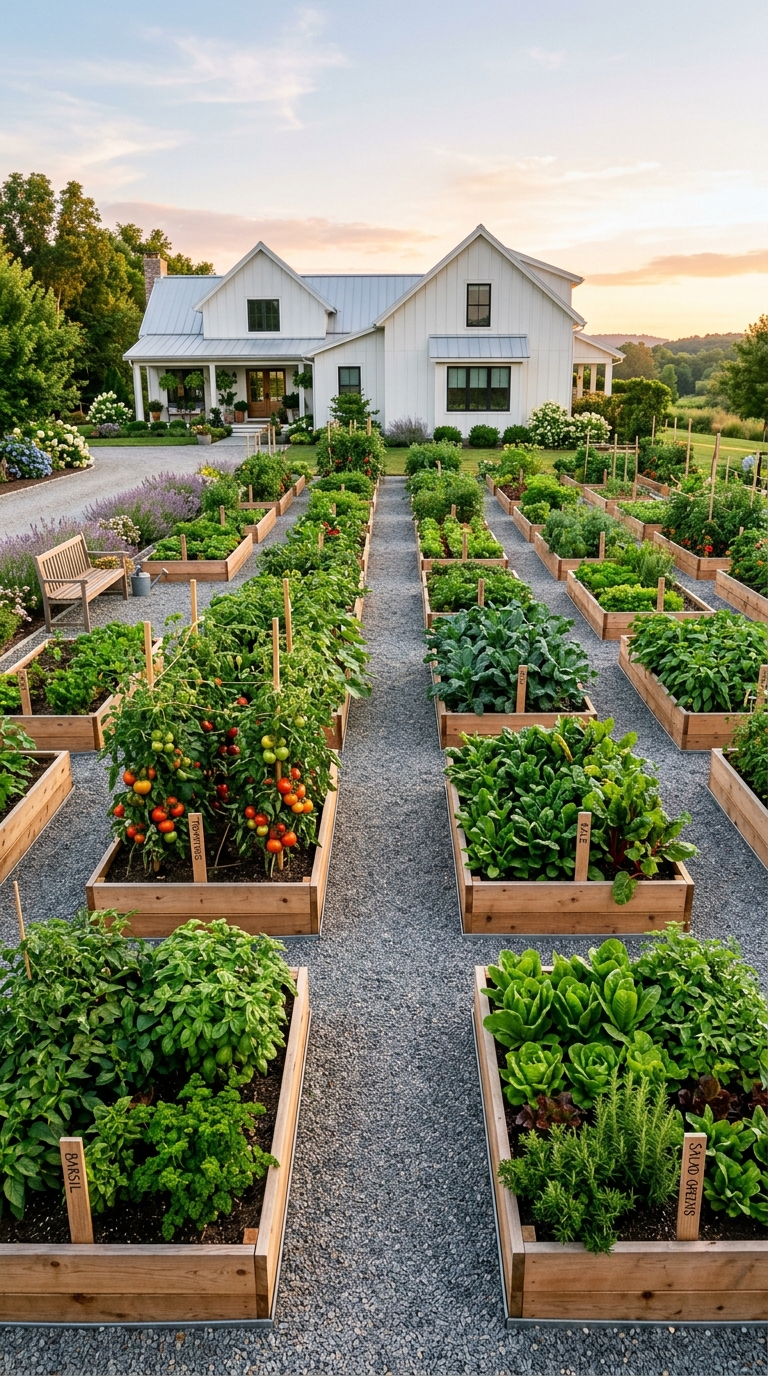
Raised Bed Grid Layout
Sometimes the simplest layout is the one that actually gets used. Rows of rectangular raised beds, evenly spaced, no fuss. It’s the layout I’d recommend to anyone planning their very first kitchen garden.
The beauty here is in the consistency — same bed size, same spacing, same soil depth. It takes the guesswork out of planning and makes weeding feel a lot less overwhelming.
- Styling Notes: Stick to one material (cedar, corten steel, or painted timber) across all beds
- Why It Works: Even spacing keeps the whole garden looking tidy from any angle
- Get The Look: Add a thin gravel strip between rows instead of bare dirt
- Pro Tips: Build beds no wider than 4 feet so you can reach the center from either side
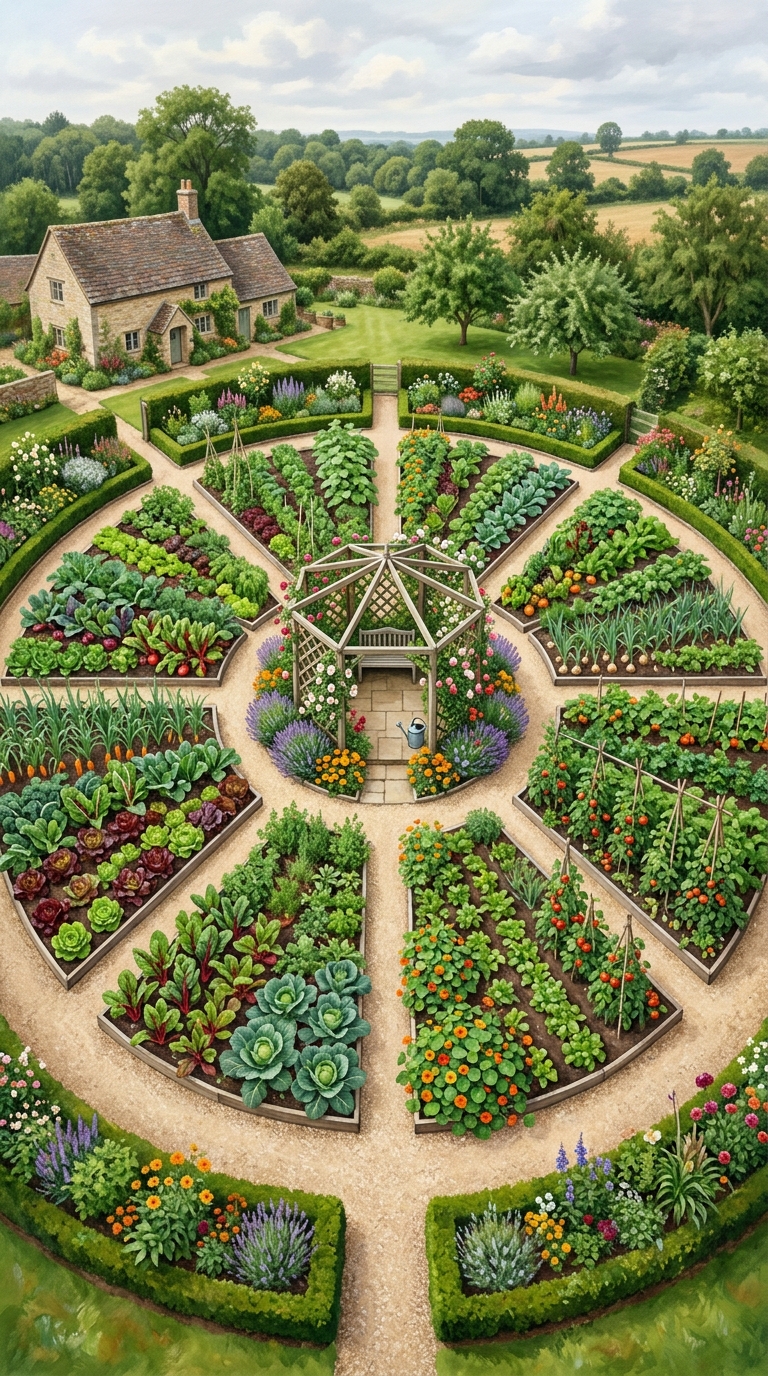
Circular “Wheel” Potager
This one always gets a second look. Wedge-shaped beds radiate out from a center point like spokes on a wheel, usually with a small structure — a birdbath, a tuteur, even just a pot of herbs — anchoring the middle.
It’s more work to build than a straight grid, but the payoff is real. From above, it almost looks like a quilt pattern, which makes it one of the most photogenic layouts on this whole list.
- Why It Works: The radial shape draws the eye naturally to the center feature
- Get The Look: Use contrasting crops in each wedge — purple basil next to bright lettuce
- Pro Tips: Mark the center point with stakes and string before digging any beds
- Design Tip: Keep wedge beds narrow near the center so they stay easy to reach
Cottage-Style Mixed Border Potager
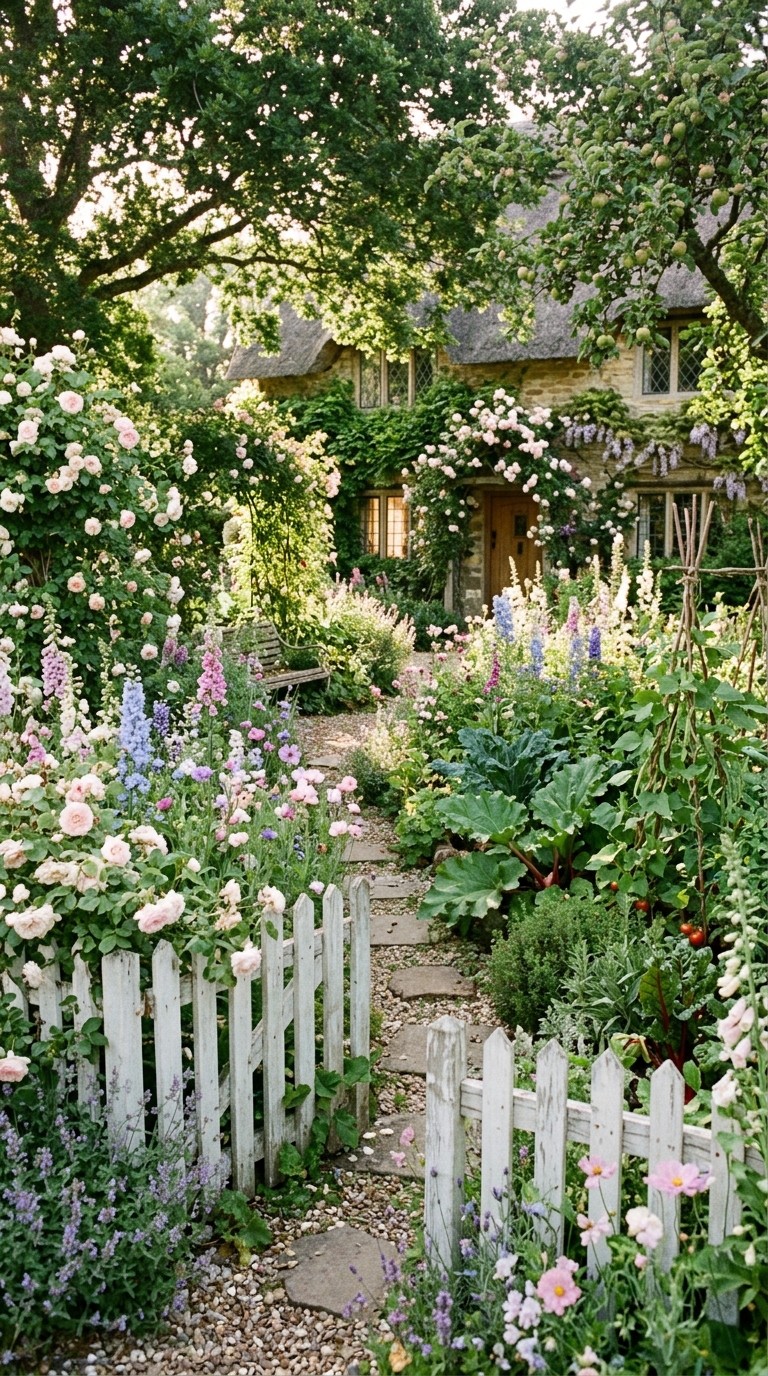
If straight lines stress you out, this layout is the antidote. Vegetables, herbs, and flowers all get tangled together in loose, flowing borders. Nothing here is in a perfect row, and that’s exactly the point.
It feels less like a garden you maintain and more like one that just happens. Zinnias lean over kale, nasturtiums creep along the edges, and somehow it all works together instead of looking messy.
If you’re looking for additional inspiration beyond these layouts, explore these creative Potager Garden Design Ideas to combine beauty, organization, and productivity in your garden.
- Styling Notes: Let taller plants like sunflowers anchor the back of each border
- Why It Works: The informal mix mimics how plants grow in nature, which feels relaxing
- Get The Look: Tuck edible flowers like calendula between vegetable rows for color
- Pro Tips: Leave small gaps for self-seeding annuals to fill in naturally next season
Small-Space Balcony Potager
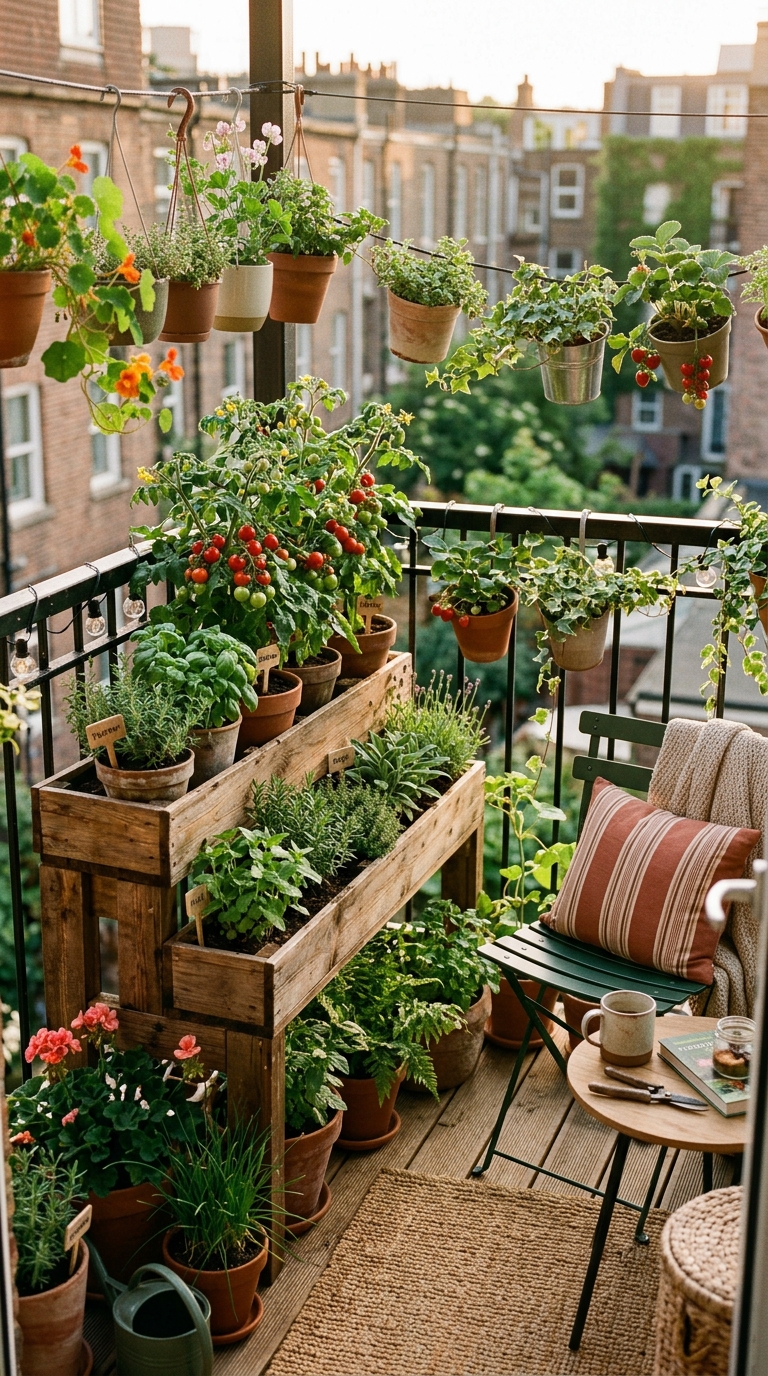
You don’t need a backyard for this one, which is honestly why I think it deserves more attention. Stack a few tiered planters, line a railing with hanging pots, and you’ve got a working potager on a balcony.
The trick is thinking vertically instead of wide. Herbs on the bottom tier, cherry tomatoes climbing a small trellis up top — it’s compact, but it doesn’t feel cramped if you plan it right.
- Get The Look: Choose matching terracotta or concrete pots for a cohesive look
- Pro Tips: Group plants by water needs so you’re not overwatering the herbs
- Styling Notes: Add a small bistro chair so the space still feels like a retreat
- Why It Works: Vertical layering maximizes growing space without crowding the floor area
Boxwood-Edged Formal Potager
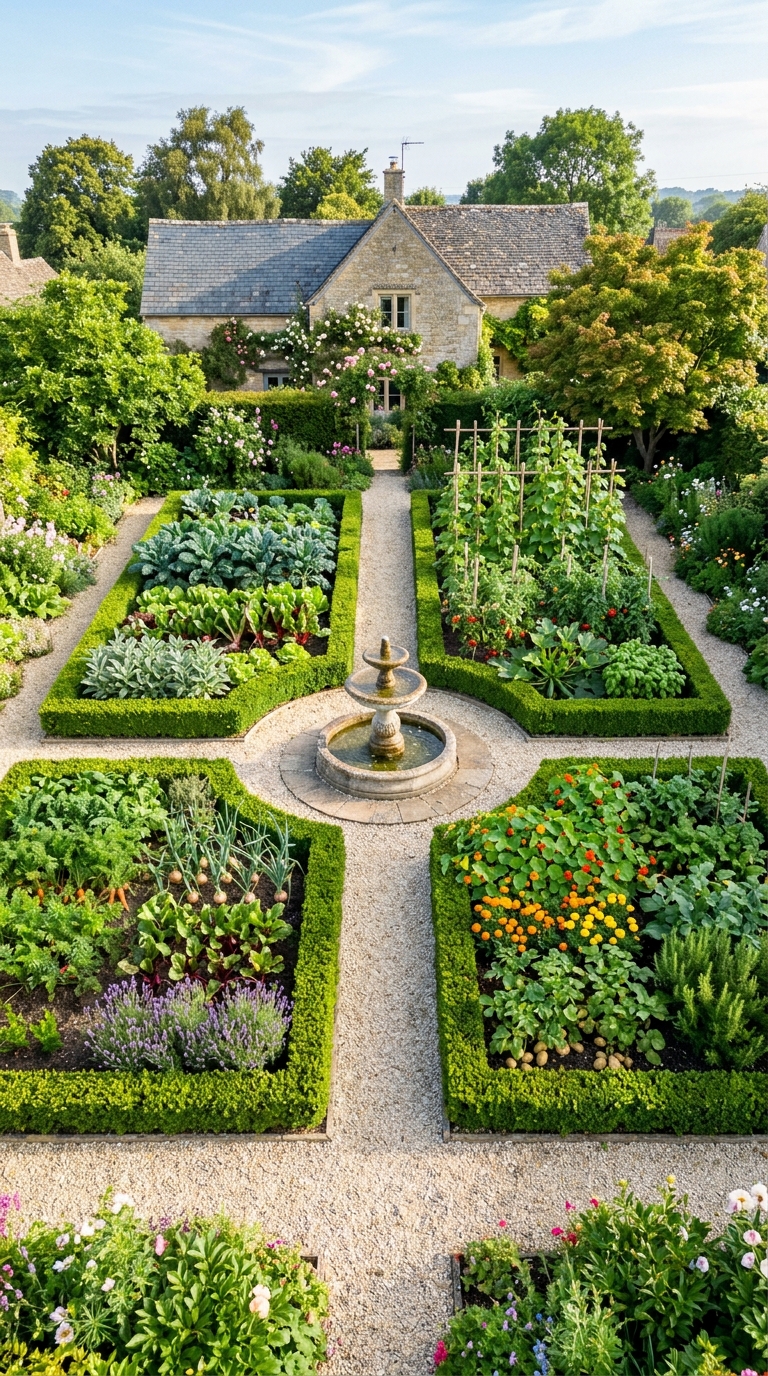
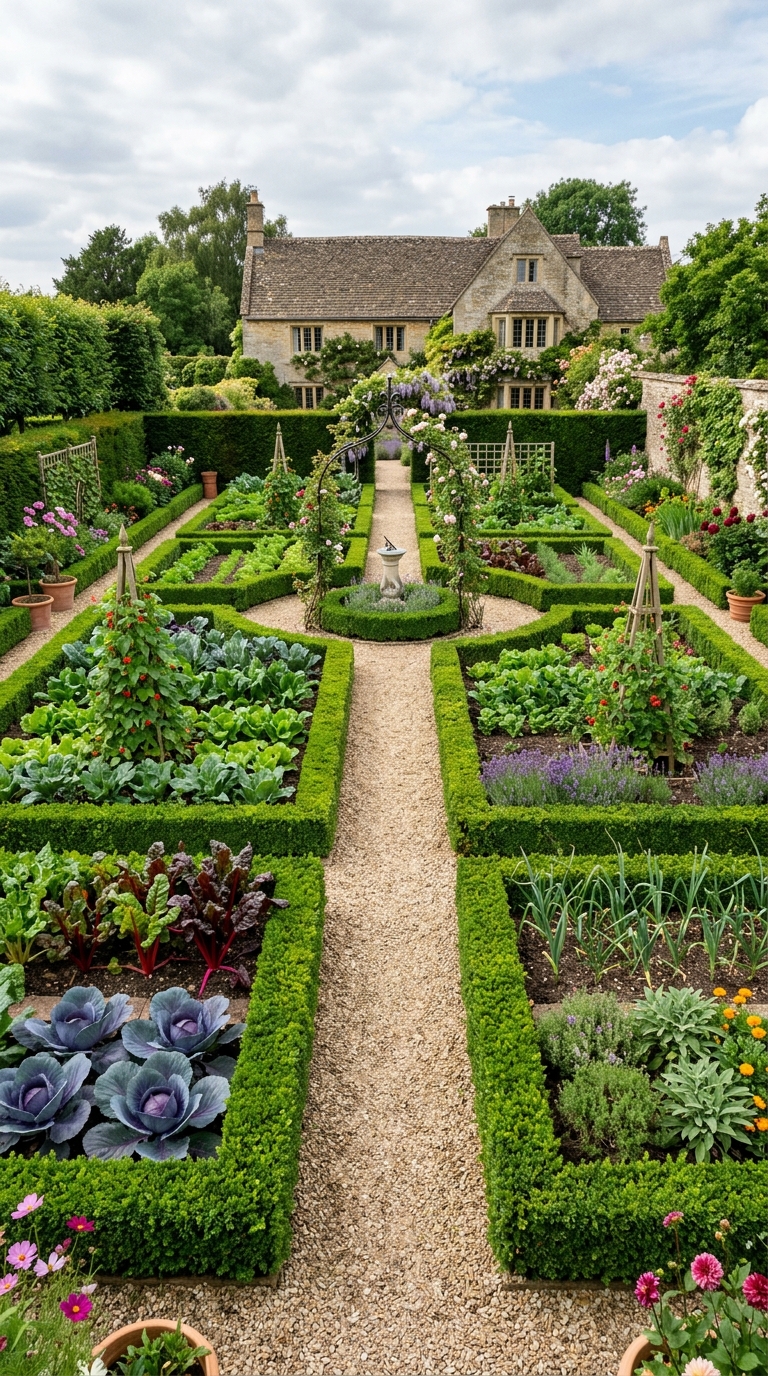
There’s a reason French estates have used this layout for centuries. Low, clipped boxwood hedges frame each bed, turning even simple lettuce rows into something that looks almost ceremonial.
It does take patience — boxwood grows slowly, and the trimming is ongoing. But once it fills in, the structure stays even when the plants inside change with the seasons.
Many of the best potager garden layouts become even more charming when paired with Cottage Garden Pergola Ideas that provide structure, shade, and vertical interest.
- Why It Works: Evergreen hedging gives year-round structure, even in winter
- Get The Look: Trim hedges to a consistent 12–15-inch height for formality
- Pro Tips: Plant boxwood at least 12 inches from bed edges to allow root space
- Design Tip: Use gravel, not mulch, inside the hedge lines for a cleaner finish
Arched Tunnel Centerpiece Layout
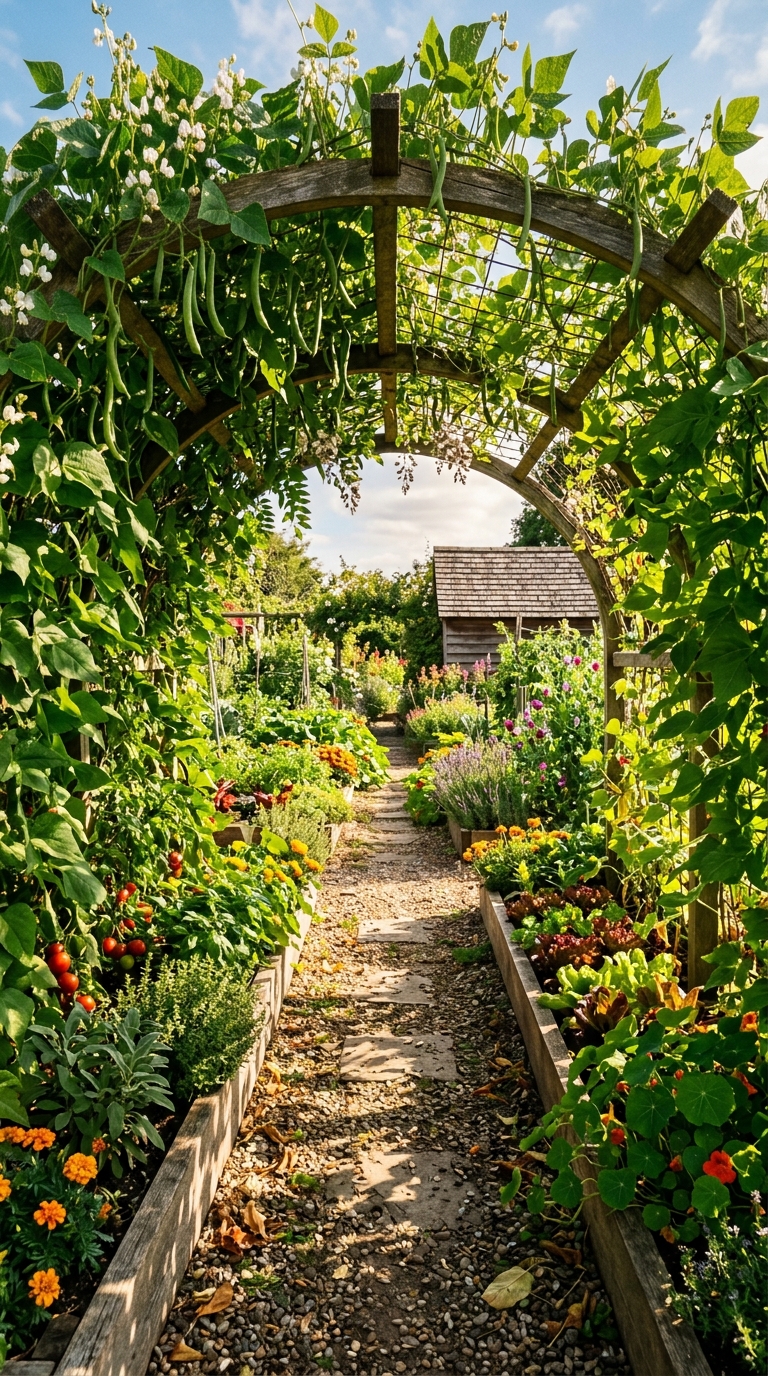
This layout turns a practical need — somewhere for climbing plants to grow — into the prettiest part of the whole garden. A central arched tunnel, covered in beans or cucumbers, splits the space and gives you an actual walkway underneath.
By midsummer, it’s basically a green tunnel you can walk through. It’s one of those layouts that photographs well from every single angle, which says a lot.
- Get The Look: Use cattle panel arches bent into a tunnel shape for a sturdy frame
- Styling Notes: Plant scarlet runner beans for both food and bright red flowers
- Why It Works: The tunnel adds vertical drama in a garden that’s otherwise low and flat
- Pro Tips: Space arch supports every 4 feet so the structure doesn’t sag mid-season
Narrow Side-Yard Potager
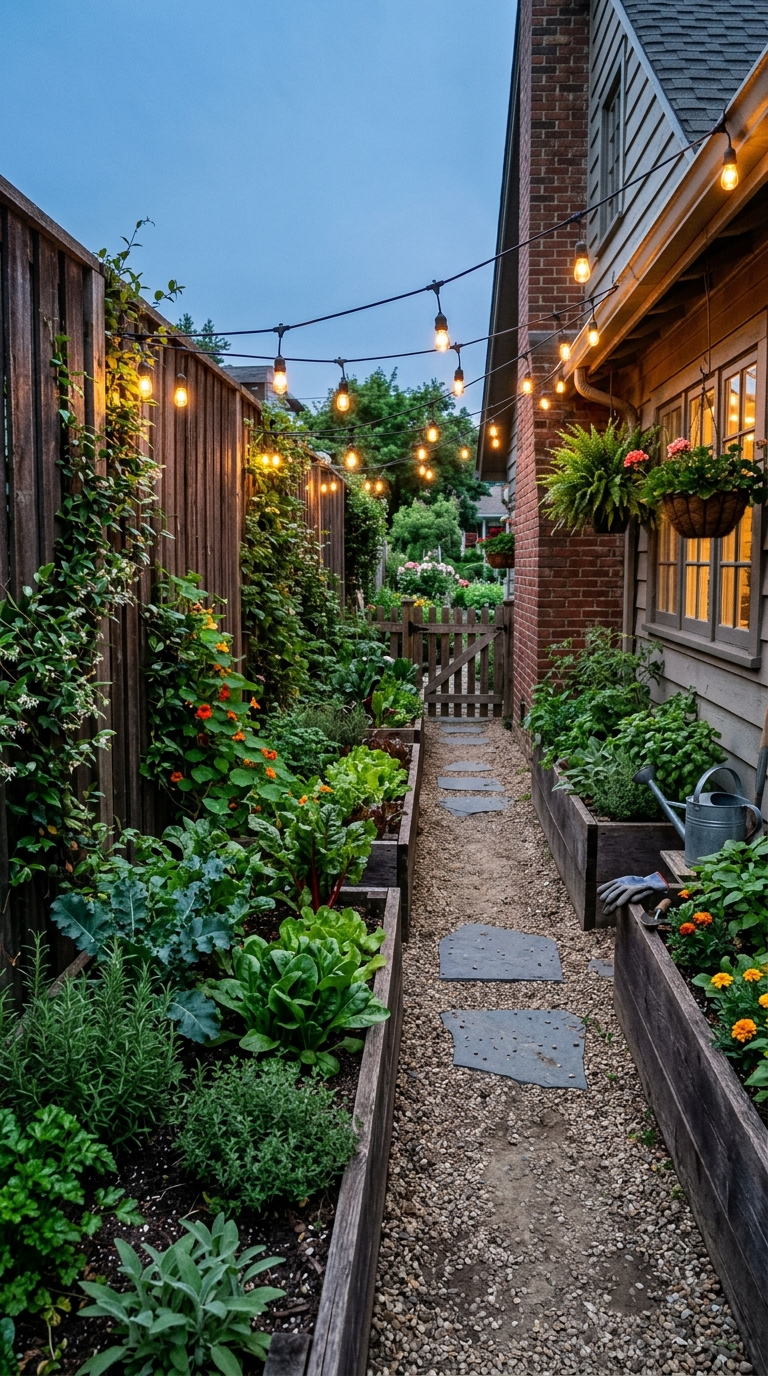
That awkward strip between your house and the fence? It’s actually one of the best spots for a potager, especially if it gets decent sun. Long, slim raised beds run the length of the space instead of fighting it.
I’d skip anything wide here and lean into the narrow shape instead. A single row of beds with a slim path beside it makes the whole area feel purposeful instead of forgotten.
To add even more color and seasonal beauty to your potager garden layout, follow these practical Tips for Growing Peonies in Pot and create stunning focal points among your vegetable beds.
- Why It Works: Narrow beds make use of dead space most people ignore entirely
- Get The Look: Add string lights overhead to soften the tight, vertical feel
- Pro Tips: Choose shade-tolerant herbs if the side yard gets limited afternoon sun
- Styling Notes: Use a single consistent bed material to keep the narrow run cohesive
Herb Spiral Anchor Layout
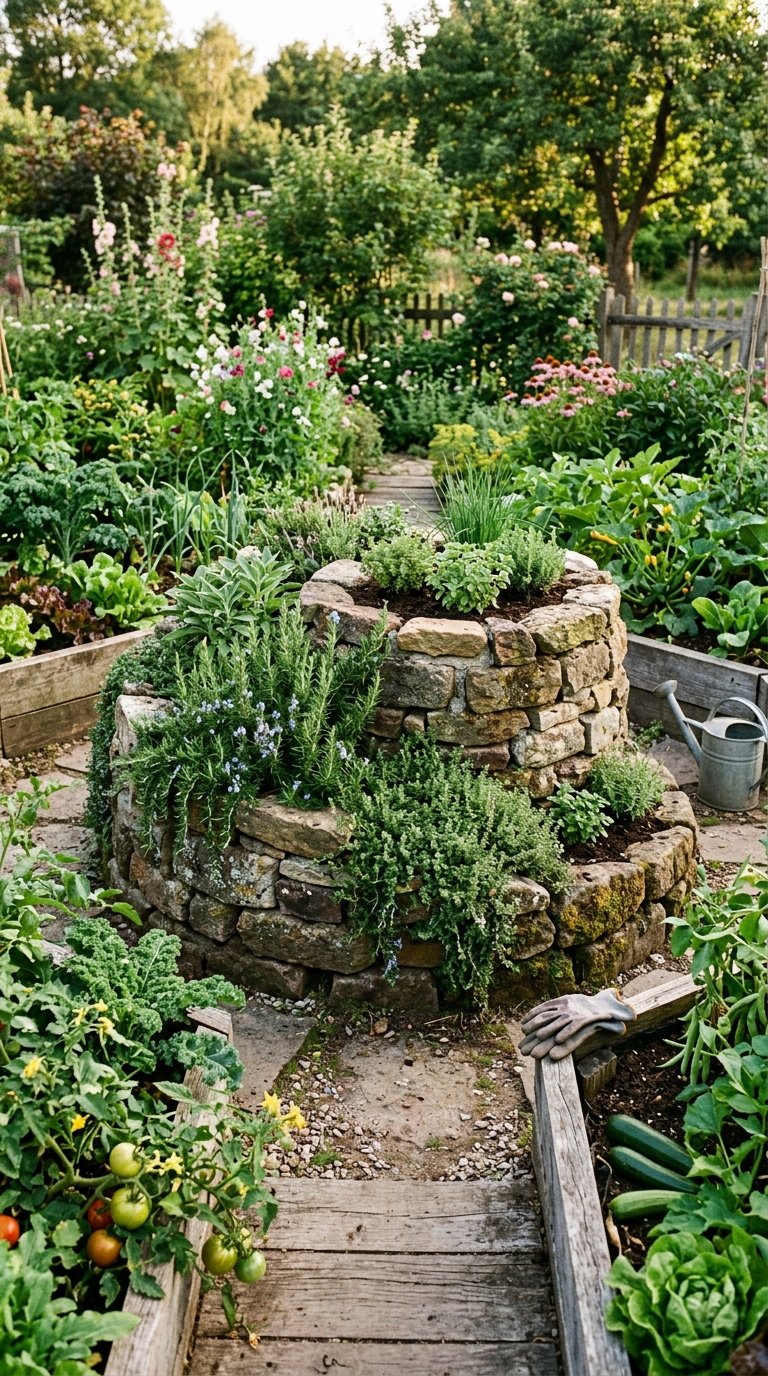
This is one of the more clever layouts on this list, and it’s a favorite with smaller gardens. A spiral mound of stacked stones holds herbs that need different conditions — drought-lovers up top, moisture-lovers near the base.
Around the spiral, vegetable beds fan outward. It turns an herb garden, which can otherwise feel like an afterthought, into the actual focal point of the whole design.
- Get The Look: Build the spiral about 3 feet tall using stacked flat stones
- Pro Tips: Plant rosemary and thyme at the top, mint and parsley near the bottom
- Why It Works: The vertical mound adds height and texture to an otherwise flat layout
- Design Tip: Surround the spiral with a ring of gravel for drainage and definition
Rainbow Harvest Color-Block Layout
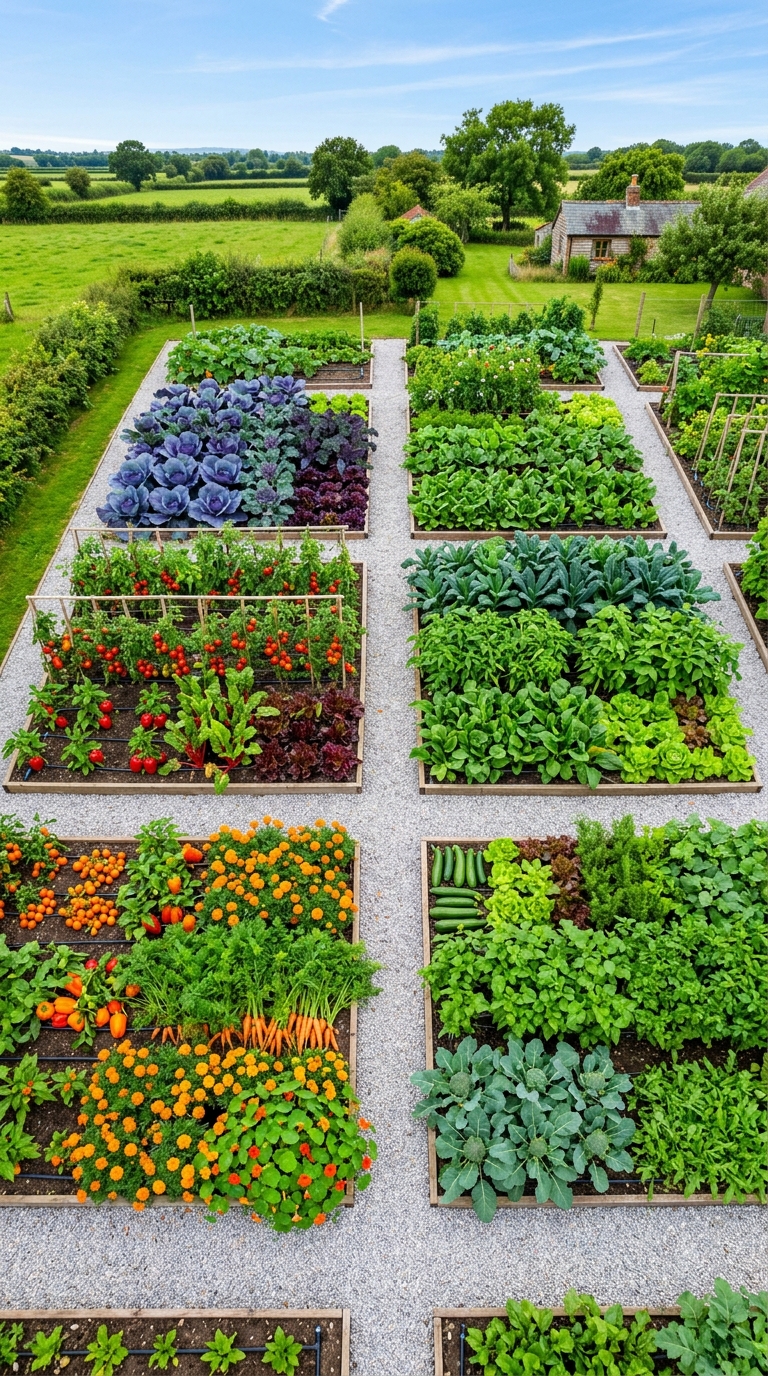
There’s something genuinely satisfying about organizing a garden by color instead of plant type. Purple beds, red beds, orange beds, green beds — it sounds simple, but the visual effect is striking, especially from above.
This layout works best if you’re already growing a wide variety of crops. Purple cabbage next to a green bed, orange carrots leading into a red pepper section — it reads almost like a painted quilt by midsummer.
- Styling Notes: Group crops strictly by color, not by plant family, for the visual effect
- Why It Works: Color blocking creates a graphic, almost artistic layout that photographs beautifully
- Get The Look: Edge each color block with a thin strip of contrasting mulch
- Pro Tips: Rotate color blocks each season to manage soil health long-term
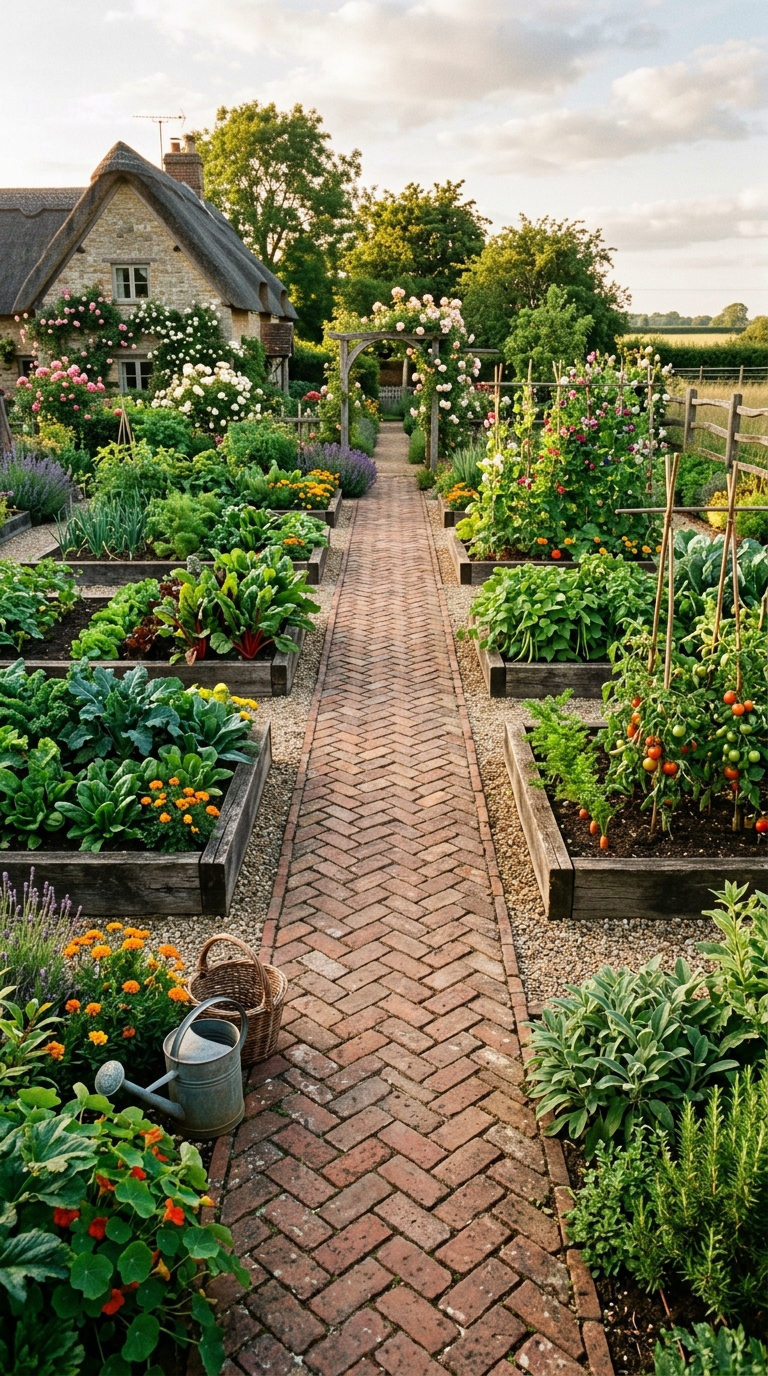
Brick or Gravel Path Grid Potager
Paths matter more than people think, and this layout proves it. A grid of brick or gravel paths divides the garden into neat sections, giving the whole space an old-world, almost institutional charm — in the best way.
It’s the layout I’d pick if low maintenance matters to you. No mowing between beds, no mud after rain, just a clean walkable surface that still looks intentional year-round.
- Why It Works: Hard paths reduce maintenance while adding visual structure
- Get The Look: Lay reclaimed brick in a herringbone pattern for texture
- Pro Tips: Slope paths slightly for drainage so water doesn’t pool after rain
- Styling Notes: Edge path borders with low-growing thyme for fragrance underfoot
Sunken Potager Garden
This layout isn’t talked about enough. Lowering the garden bed area a foot or two below ground level creates a sheltered little microclimate — less wind, more retained heat, and, honestly, a really cozy feel once you’re standing inside it.
Stone or timber retaining walls hold the soil in place, and steps lead down into the space. It feels less like a garden and more like a little outdoor room.
- Get The Look: Use timber retaining walls with a few wide steps leading down
- Pro Tips: Sunken beds work especially well in windy climates or exposed yards
- Why It Works: The lowered design traps warmth, extending the growing season slightly
- Design Tip: Add a small bench at the bottom for a true outdoor-room feel
Espalier Fruit Border Layout
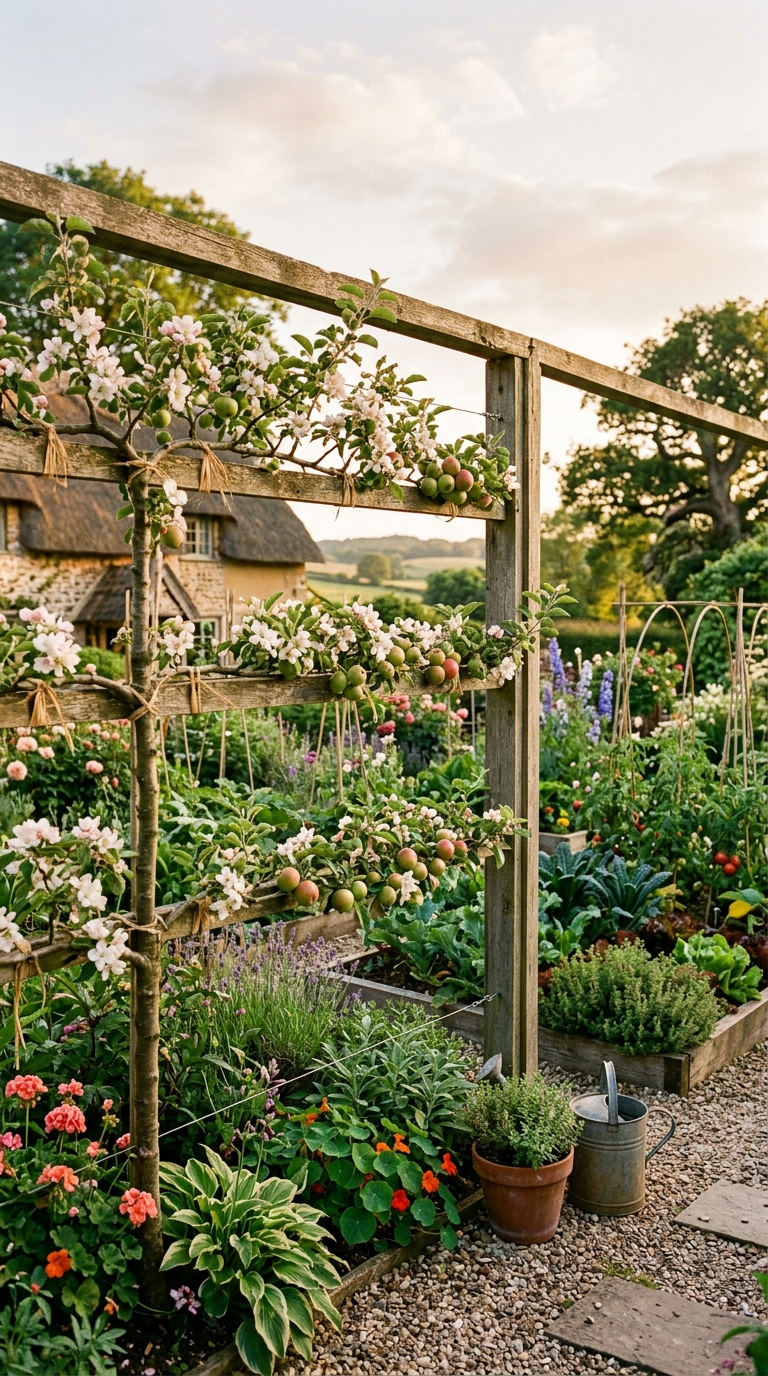
Espalier sounds intimidating, but it just means training fruit trees flat against a frame or wall. Used as a border around a potager, it acts like a living fence — productive, beautiful, and surprisingly space-efficient.
Apple or pear trees work especially well here. By the second or third year, the branches fill in along the wire frame, and the whole border starts to feel like a garden feature on its own.
- Styling Notes: Train branches along horizontal wires spaced about 18 inches apart
- Why It Works: Espalier trees produce fruit without taking up ground space
- Get The Look: Choose dwarf rootstock varieties for easier training and maintenance
- Pro Tips: Prune twice a year to keep the flat shape tight and tidy
Kitchen-Door Potager
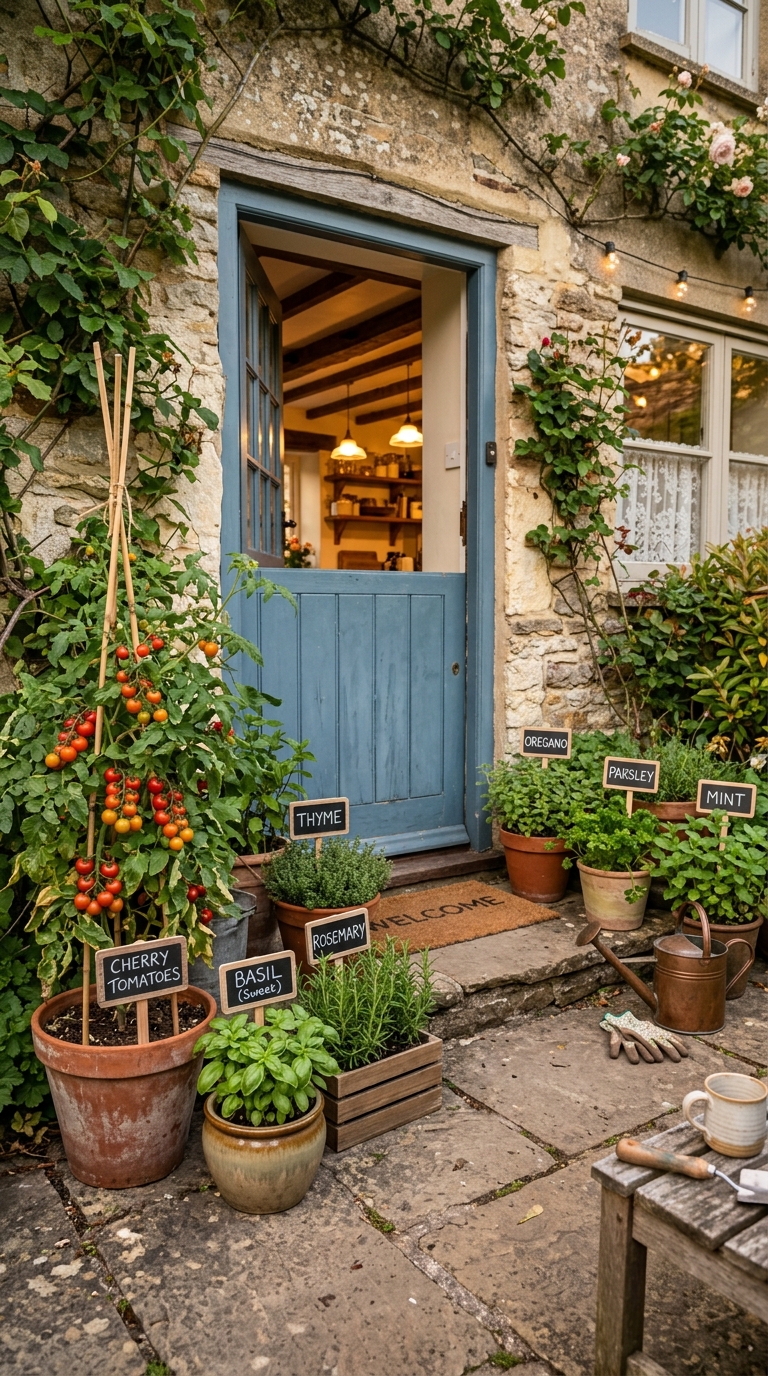
This is the most practical layout on the whole list, and maybe my favorite for that reason. A compact garden right outside the back door, close enough that you can grab basil mid-recipe without putting shoes on.
Keep it small and dense — herbs, salad greens, a few cherry tomato plants. The goal isn’t variety here; it’s convenience and a layout that makes cooking from the garden an actual daily habit instead of a weekend project.
- Get The Look: Use a few large containers near the door instead of full beds
- Pro Tips: Plant the herbs you cook with most often, not the ones you wish you used
- Why It Works: Proximity to the kitchen means the garden actually gets used daily
- Styling Notes: Add a small herb chalkboard label set for an easy, charming touch
Raised Bed Keyhole Garden
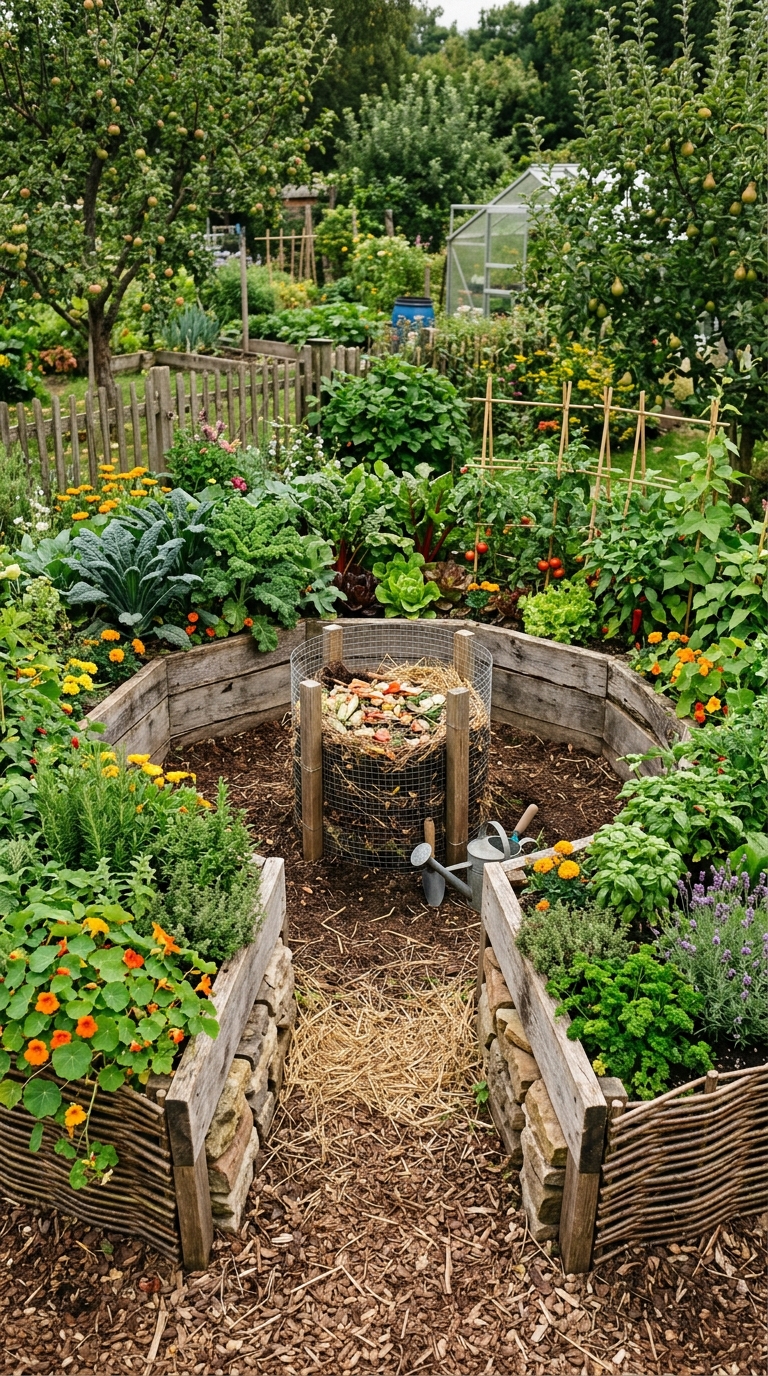
If you want maximum planting space without endless walking, this layout earns its name. A horseshoe-shaped bed wraps around a small center access point, so you can reach almost every plant without stepping off the path.
It’s a layout that started as a permaculture solution for dry climates, but it works just as well anywhere you want to grow a lot in a small footprint without wasted space.
- Why It Works: The horseshoe shape minimizes walking paths while maximizing planting area
- Get The Look: Build a small compost basket in the center notch for easy feeding
- Pro Tips: Keep the bed no more than an arm’s length wide at any point
- Design Tip: Use stone or cinder block for the curved outer wall
Companion Planting Layout
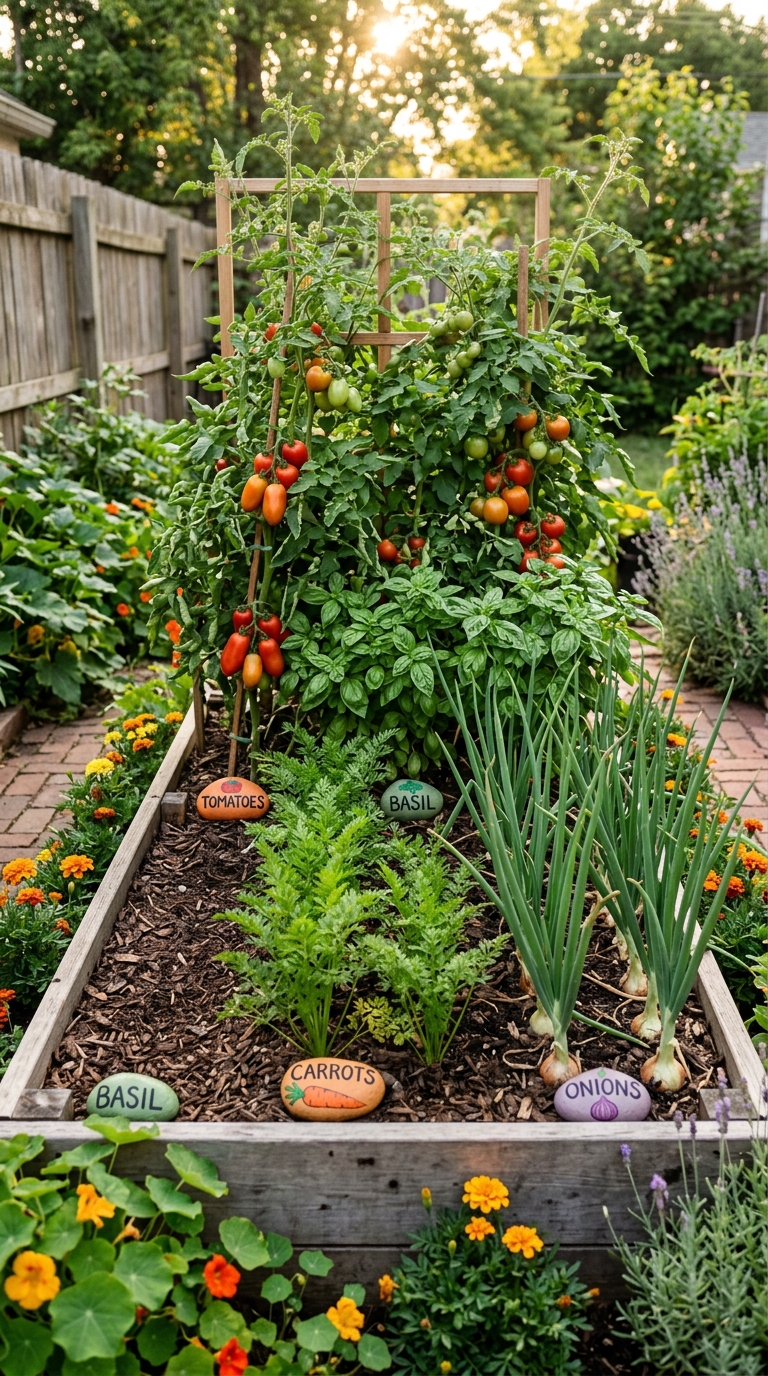
This layout isn’t really about shape at all — it’s about who’s planted next to whom. Tomatoes paired with basil, carrots tucked beside onions, beans climbing near corn. Each grouping helps the other in some way, whether it’s pest control or better growth.
It takes a little research upfront, but once you map it out, the garden almost runs itself. And there’s something satisfying about knowing every plant is doing double duty in its spot.
- Styling Notes: Group companion pairs in blocks of three to four plants together
- Get The Look: Mark each grouping with small painted stones for an organized look
- Why It Works: Companion pairs naturally repel pests or improve soil and growth
- Pro Tips: Avoid planting onions near beans, as they can stunt each other’s growth
Cottage Farmhouse Potager with Picket Border
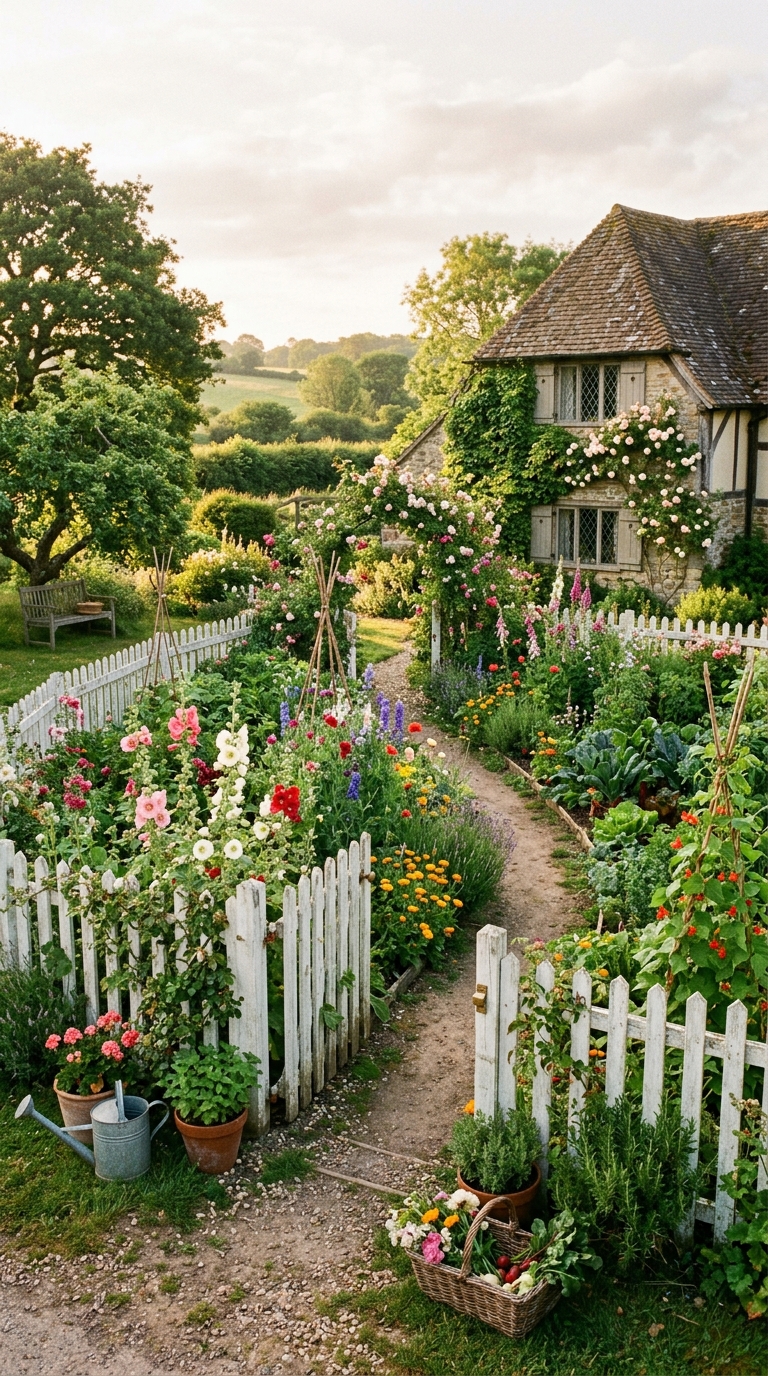
There’s a reason white picket fences never really go out of style. Around a potager, a low picket border gives the garden a soft, storybook edge without blocking the view of what’s growing inside.
Pair it with a slightly relaxed planting style — nothing too rigid — and the whole thing feels like it belongs on a farmhouse property, even if you’re working with a fairly modest backyard.
- Why It Works: Picket fencing adds charm without visually closing off the space
- Get The Look: Paint pickets a soft white or muted sage for a vintage feel
- Pro Tips: Keep picket height around 2 feet so it frames without overpowering
- Styling Notes: Let vining plants like peas climb a few picket sections naturally
Modern Minimalist Potager
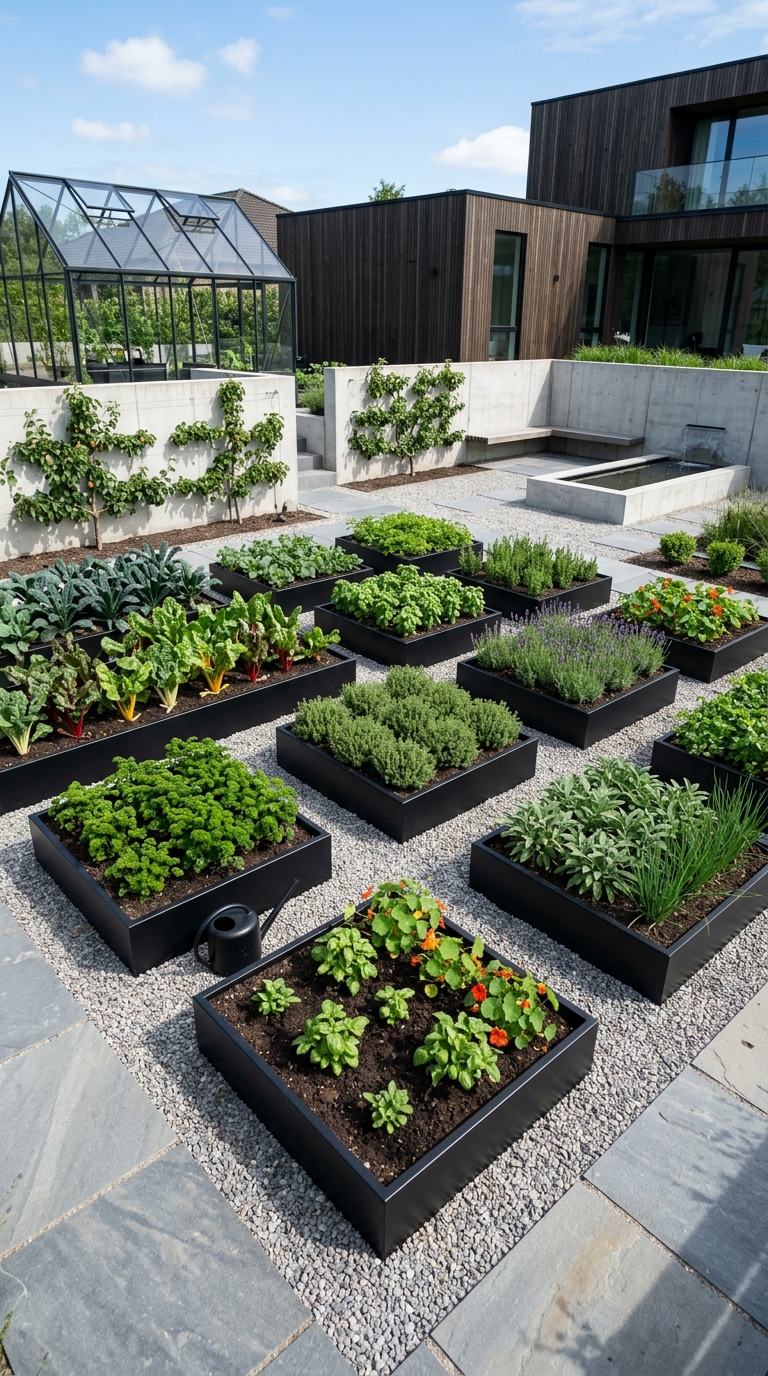
Not every potager needs to look like it stepped out of a storybook. This layout strips things back — clean steel or cedar raised beds, restrained plant choices, and a lot more negative space than usual.
It’s a good option if your style leans more architectural than romantic. Fewer plant varieties, more intentional spacing, and a layout that feels calm rather than busy.
- Get The Look: Use matte black or corten steel beds in simple geometric shapes
- Pro Tips: Limit plant varieties to 4–5 per bed for a clean, curated look
- Why It Works: Restraint and negative space make the design feel intentional, not sparse
- Design Tip: Add one architectural plant, like an artichoke, as a focal accent
Family-Friendly Potager with Play Path
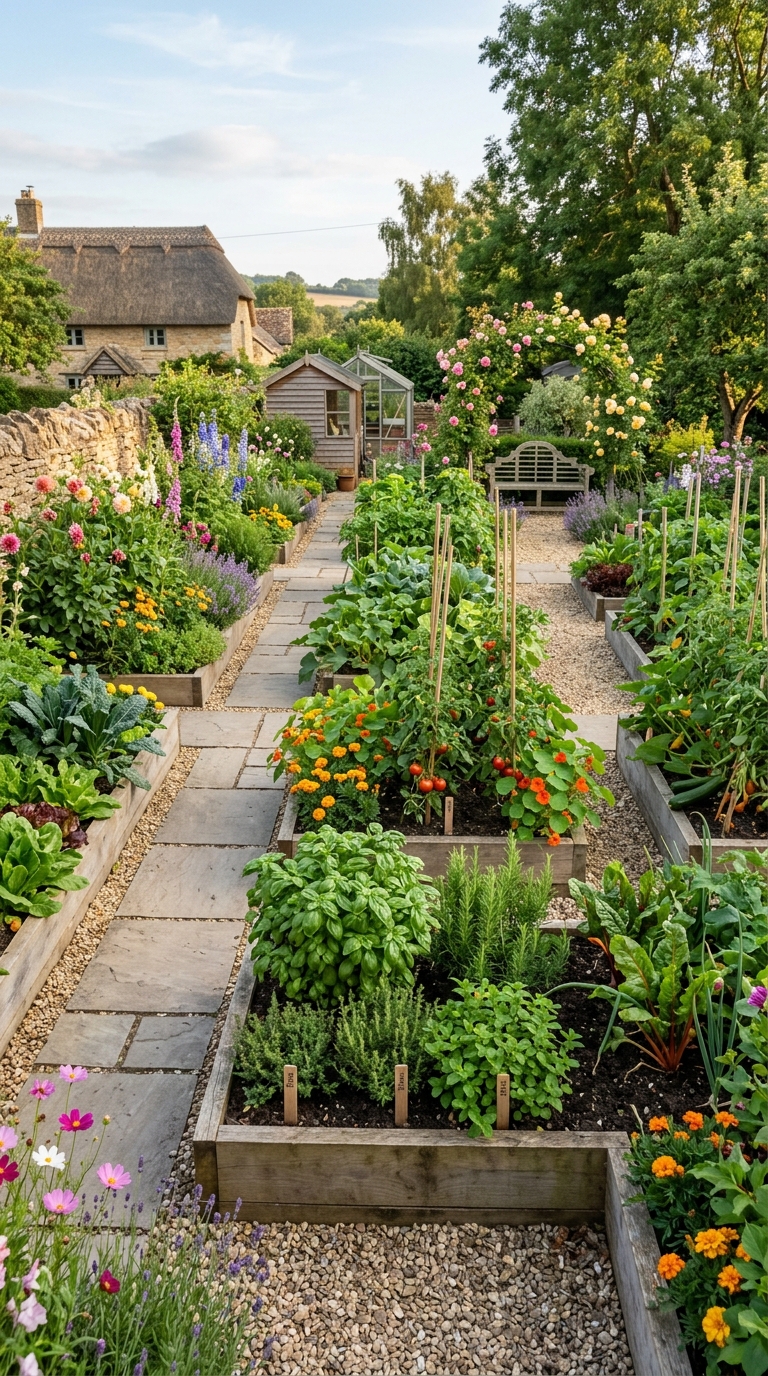
If you’ve got kids, this layout actually gets used instead of just being looked at. Wide, easy paths run between low beds, built specifically so small hands can reach in and help pick tomatoes without trampling anything.
It’s less about precision and more about access. Lower bed heights, sturdy stepping stones, maybe a small watering station kids can manage on their own — the goal is a garden that feels like theirs too, not just yours.
- Why It Works: Wide paths and low beds make the garden genuinely kid-accessible
- Get The Look: Add flat stepping stones spaced for small strides between beds
- Pro Tips: Keep at least one bed dedicated to easy, fast-growing kid favorites like peas
- Styling Notes: Include a low kid-height watering can station near the entrance
Frequently Asked Questions
What is a potager garden?
A potager garden is a French-style kitchen garden that mixes vegetables, herbs, and flowers in one decorative, organized space. Unlike a traditional vegetable patch, it’s designed to look beautiful while still being highly productive and easy to harvest from daily.
How do you lay out a potager garden?
Start by dividing your space into clear sections using paths, raised beds, or low hedging. A simple grid or four-square layout works well for beginners, while circular or keyhole designs suit smaller or more decorative gardens. Group plants by sun and water needs first, then style for visual appeal.
What’s the difference between a potager garden and a vegetable garden?
A vegetable garden is typically planted in straight, functional rows with little focus on appearance. A potager garden blends edibles with ornamental elements like flowers, defined paths, and structured beds, so it doubles as a design feature in the yard.
What size should a potager garden be?
Potager gardens can range from a few containers on a balcony to a full backyard layout. A good starting size for beginners is around 100 to 150 square feet, which is enough for a mix of vegetables and herbs without becoming hard to maintain.
What should I plant in a potager garden?
A mix of vegetables, herbs, and edible or companion flowers works best. Popular choices include tomatoes, lettuce, carrots, basil, marigolds, and nasturtiums, since they grow well together and add both color and natural pest control.
Can you have a potager garden in a small space?
Yes. Small spaces can use raised beds, vertical trellises, or container groupings to create a potager-style layout. Balconies and narrow side yards work especially well when plants are layered vertically instead of spread out horizontally.
Conclusion
A potager garden isn’t about choosing between a tidy vegetable patch and a beautiful backyard — it’s proof you can have both. Whether you go with a formal four-square layout, a relaxed cottage-style border, or a tiny balcony version, the goal stays the same: a garden that feeds you and looks good doing it. Pick the layout that fits your space and your style, start with just one or two beds if you’re new to this, and let the rest grow from there. The best potager garden is the one you’ll actually walk into every day.