
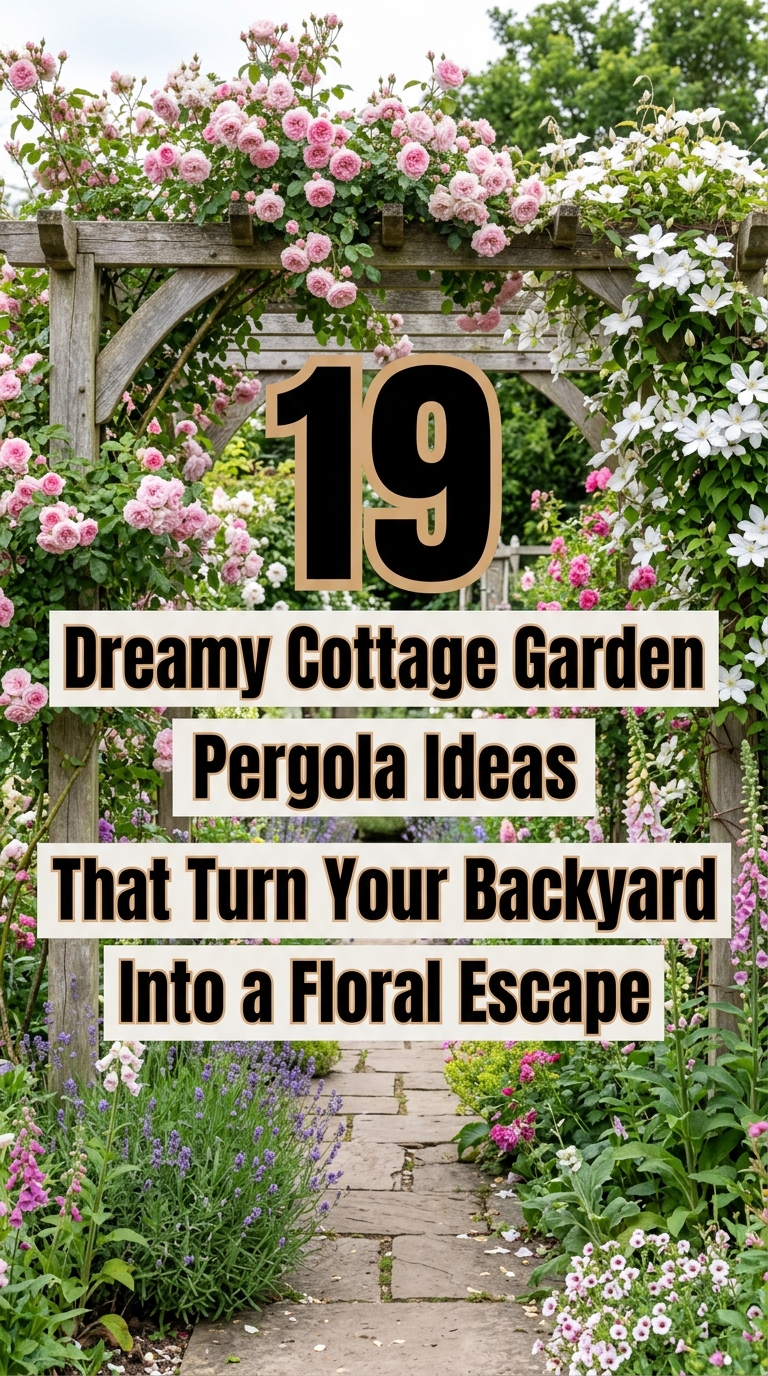
Some backyard spaces just stop you mid-scroll. You know the ones — a wooden pergola wrapped in soft pink roses, fairy lights catching the evening breeze, a little bistro table tucked underneath. It looks like something out of a storybook. And honestly? It doesn’t have to stay on your Pinterest board forever.
Cottage garden pergolas are one of those backyard upgrades that feel both romantic and surprisingly doable. Whether you’ve got a big yard or a tiny corner that needs some love, the right pergola idea can completely change the vibe. We’re talking climbing vines, vintage charm, soft lighting, and that cozy, overgrown-in-the-best-way look that cottage style is known for.
In this post, I’ve put together 19 genuinely beautiful ideas — from wisteria-covered arches to little reading nook pergolas tucked into a garden corner. Let’s find your perfect one.
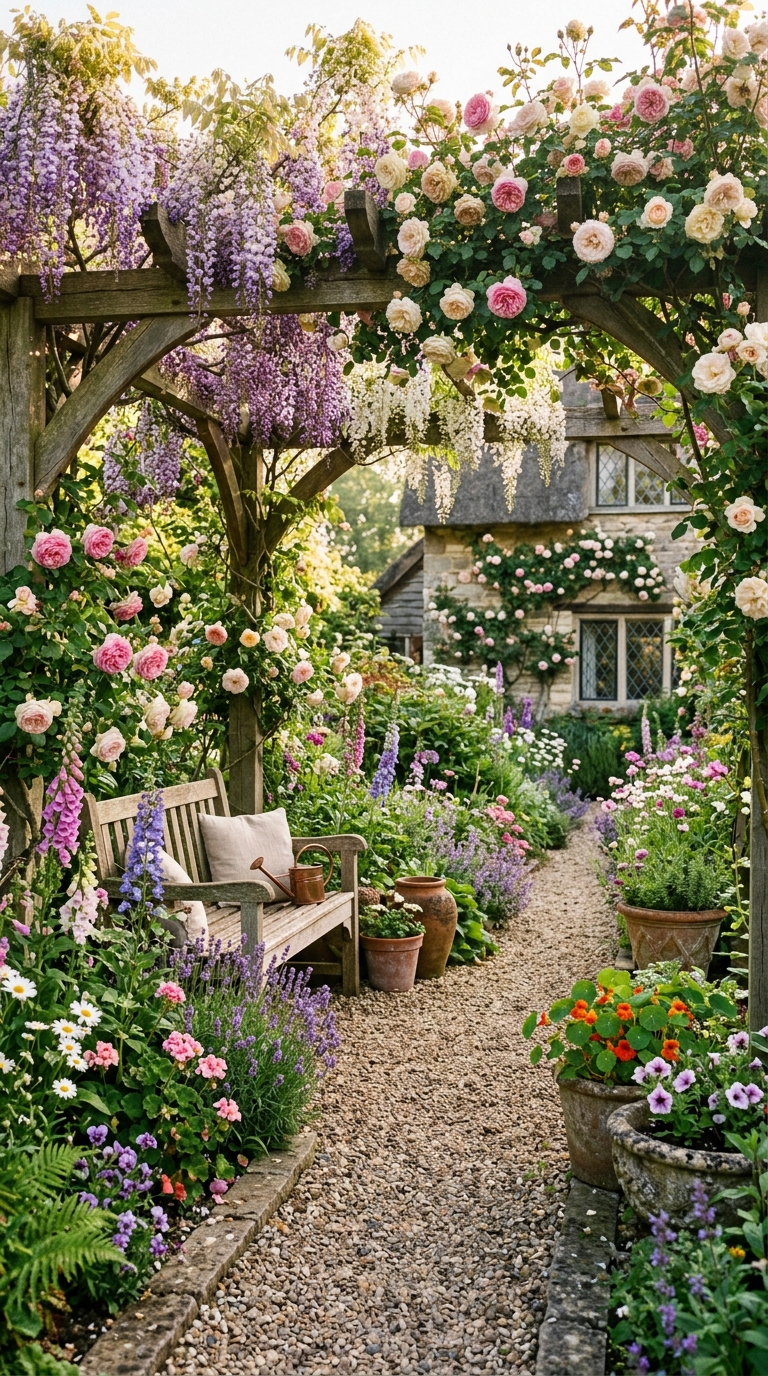
Wisteria-Draped Wooden Pergola With Vintage Bench Seating
There’s honestly nothing more romantic than wisteria in full bloom. Those long purple clusters draping over weathered wooden beams just hit differently. Pair it with a worn wooden bench, maybe a faded cushion in dusty blue or cream, and you’ve got a corner of your yard that feels like it belongs in the English countryside.
The key with wisteria is patience — it takes a season or two to really take over, but once it does, the effect is breathtaking. While it’s growing, add climbing roses or ivy to fill the gaps.
- Choose a rustic, chunky wooden beam pergola for the most authentic cottage feel
- Paint or stain it in muted white, sage, or warm grey
- Add a vintage iron bench or a reclaimed wood seat underneath
- Let wisteria cascade naturally — don’t over-trim it
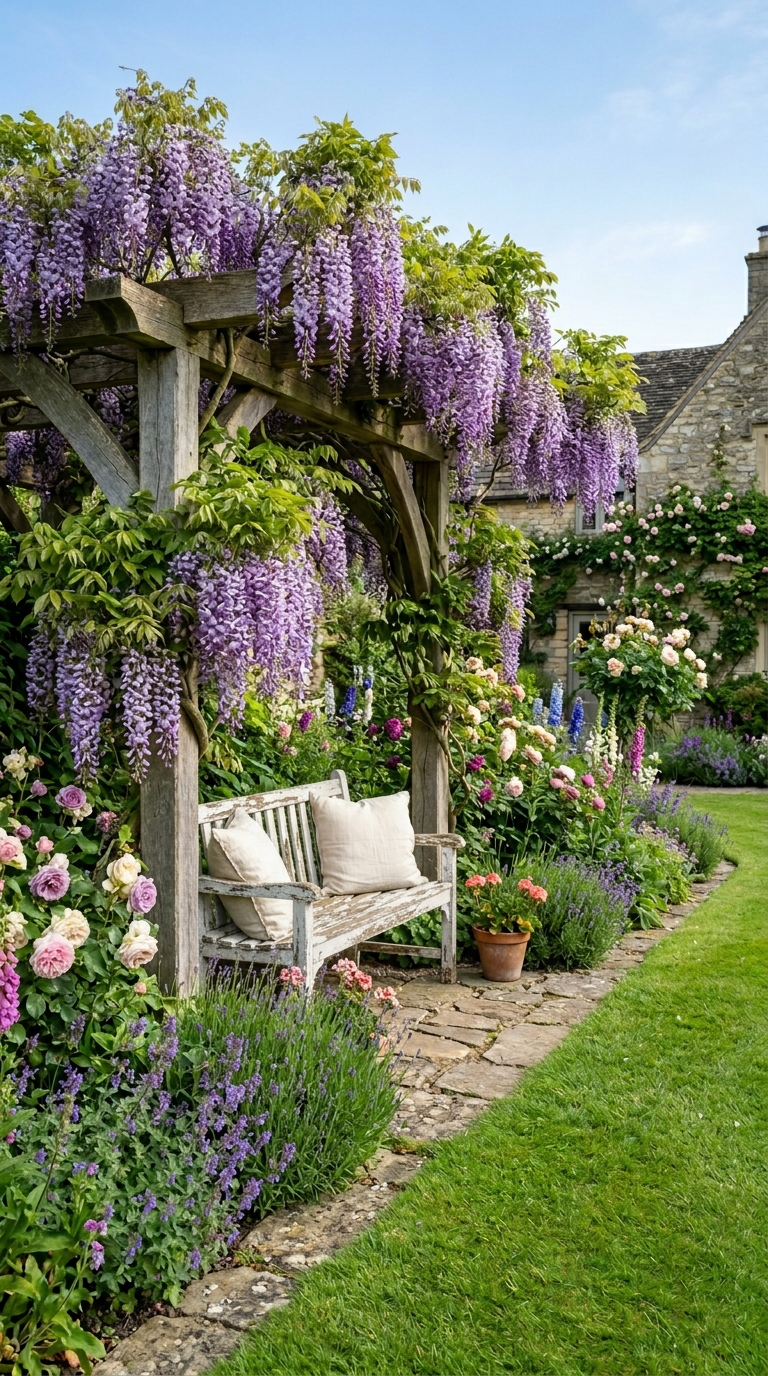
Climbing Rose Pergola in Blush and Cream Tones
Roses and pergolas were basically made for each other. A blush or cream climbing rose variety — like New Dawn or Cecile Brunner — trained up the sides and across the top of a white pergola creates that classic cottage garden look that never gets old.
What makes this especially Pinterest-worthy is the softness of it. The pale pink petals against white-painted wood feels incredibly elegant but still relaxed and natural at the same time.
- Go for blush, peach, or cream rose varieties for a soft romantic palette
- Train stems along horizontal wires or lattice panels across the pergola top
- Add a matching floral tablecloth and mismatched china on a table underneath
- Underplant with lavender or alchemilla for layered texture
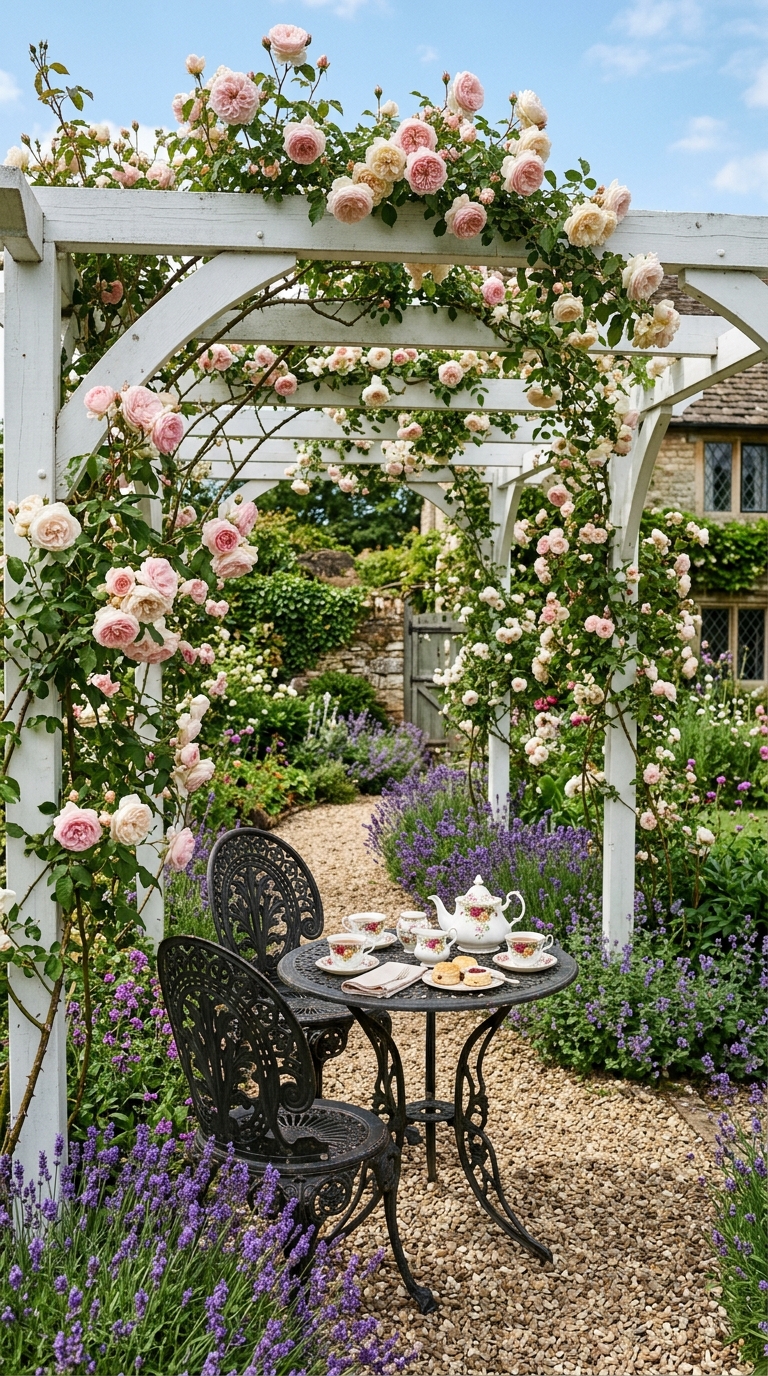
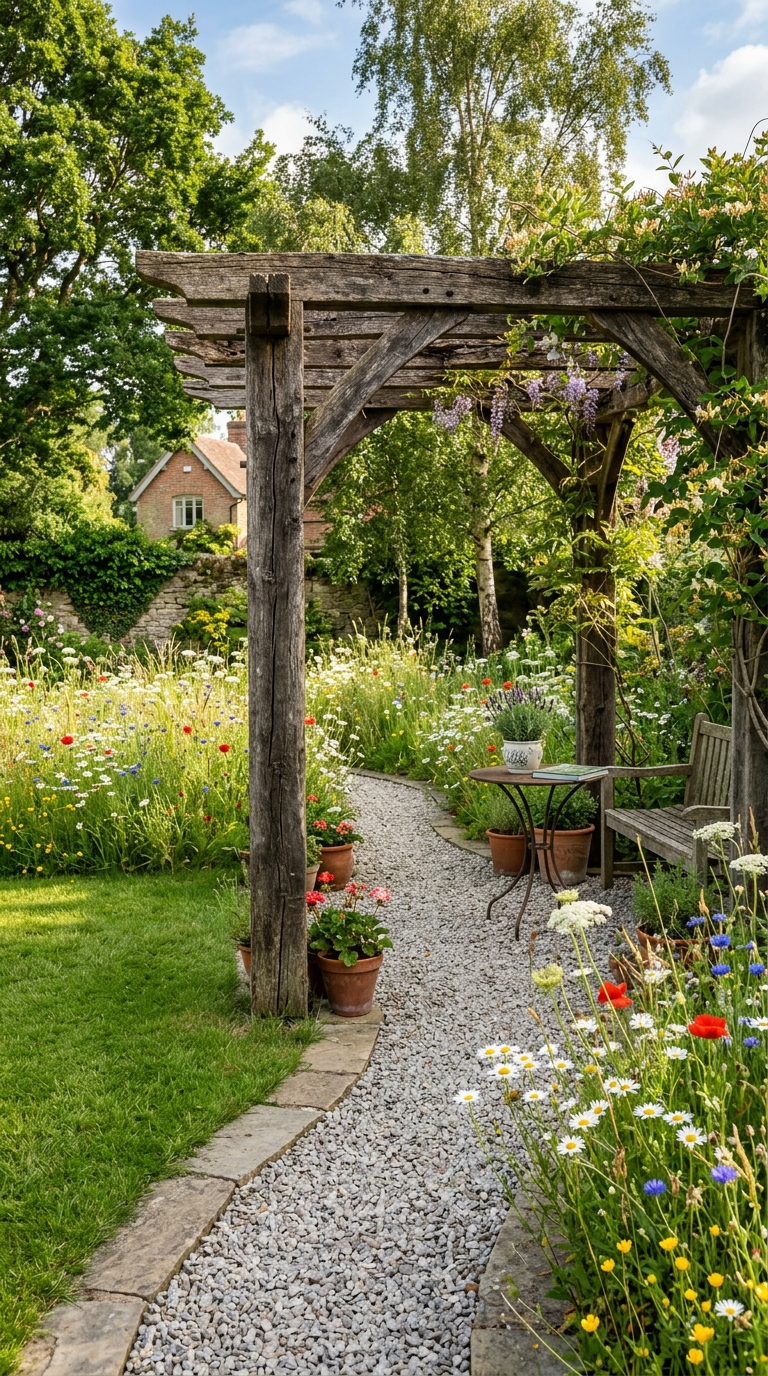
Rustic Reclaimed Wood Pergola With Wildflower Borders
If you love that raw, lived-in, slightly imperfect cottage aesthetic, reclaimed wood is your best friend. A pergola built from salvaged timber already has character — you can see the grain, the knots, maybe a little weathering. That’s the whole point.
Surround it with wildflower planting — poppies, cornflowers, ox-eye daisies — and it starts to look like the garden just grew around the pergola naturally. Which is exactly the vibe.
- Source reclaimed timber from salvage yards or old barns
- Leave it unsealed or lightly oiled to preserve the natural weathered look
- Plant wildflower mixes densely around the base
- Add a gravel floor underneath for a casual, natural feel
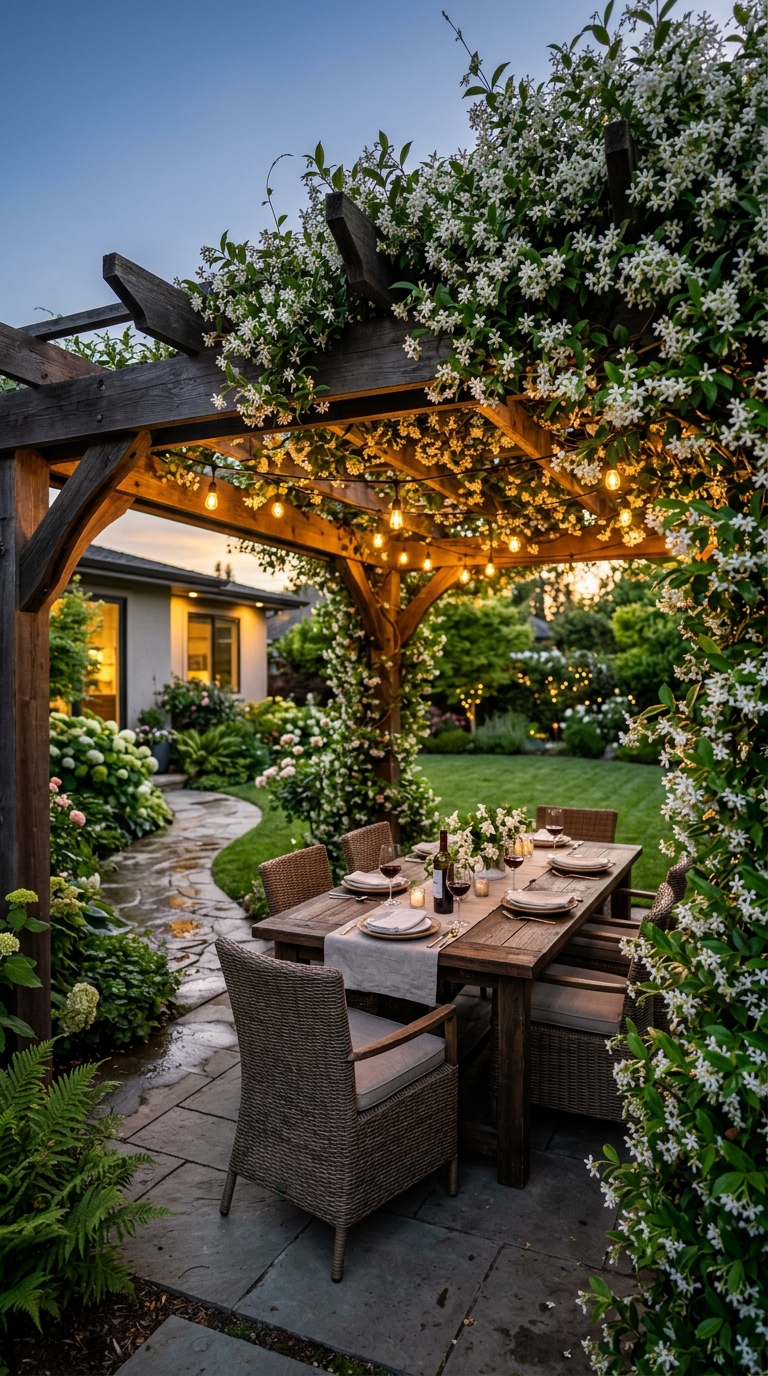
Jasmine-Covered Pergola With String Lights for Evening Ambiance
Jasmine is one of those plants that rewards you twice — first with its lush green growth, then with that incredible scent when it blooms. A jasmine-covered pergola in summer is genuinely one of life’s little luxuries. Add string lights woven through the vines, and you’ve got an outdoor space that feels magical after dark.
This one works especially well for entertaining. Even a simple dinner under a jasmine pergola with warm Edison bulb lights feels like a special occasion.
- Use star jasmine or common jasmine for fast, fragrant coverage
- Weave warm white or Edison bulb string lights through the vines
- Add mismatched candles or lanterns on the table for extra warmth
- Choose lightweight furniture so the space feels open and breezy
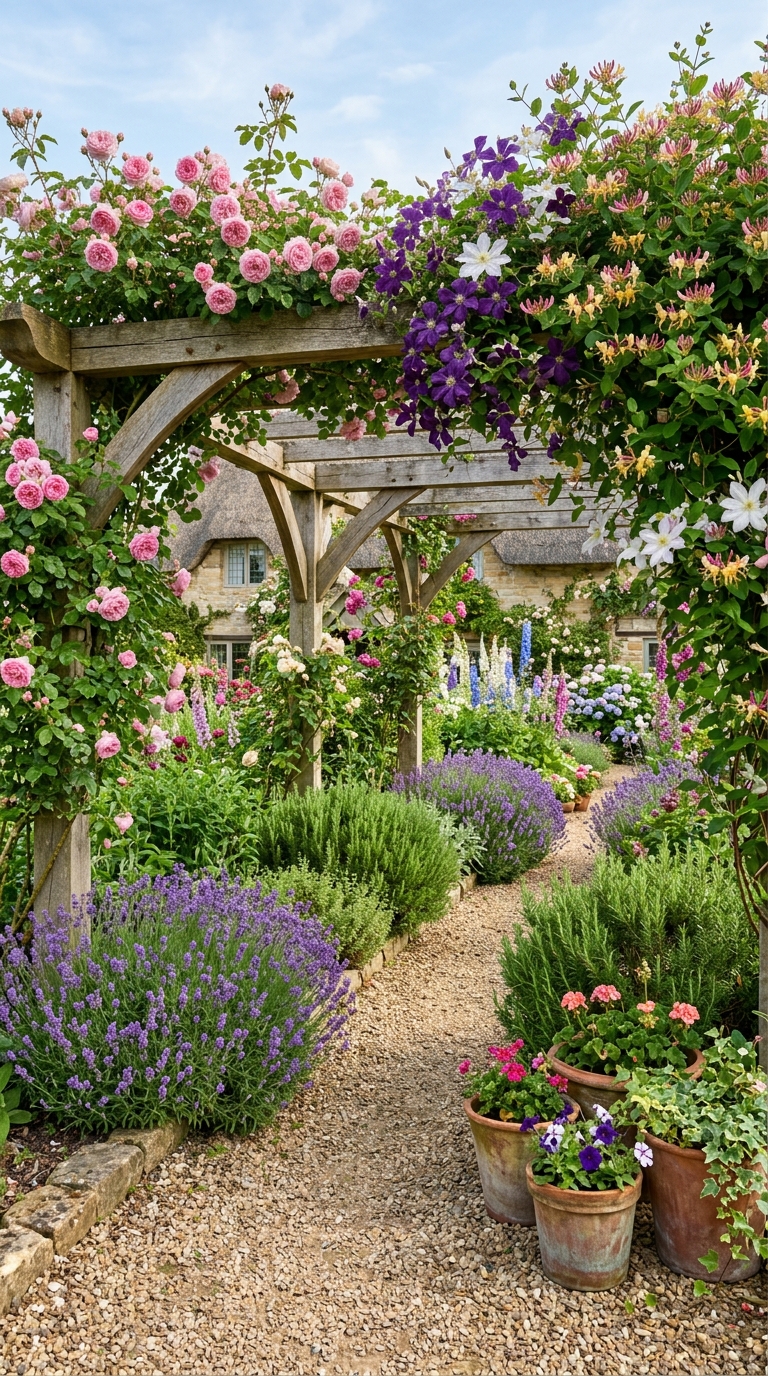
English Cottage Pergola With Mixed Climbing Vines and Herb Garden Below
This idea is all about layering. The pergola structure gets covered with a mix of climbing plants — maybe clematis, a rose or two, and some honeysuckle — while the ground level becomes a working herb garden. Thyme, rosemary, mint, and lavender are growing beneath the climbing vines.
It’s incredibly practical and incredibly beautiful at the same time. The scent alone makes this worth doing.
- Mix 3–4 climbing varieties that bloom at different times for year-round interest
- Plant herbs in terracotta pots or raised beds directly under the pergola
- Add a small potting table or wooden shelf for extra garden charm
- Use natural twine to guide stems — it looks better than wire in a cottage garden
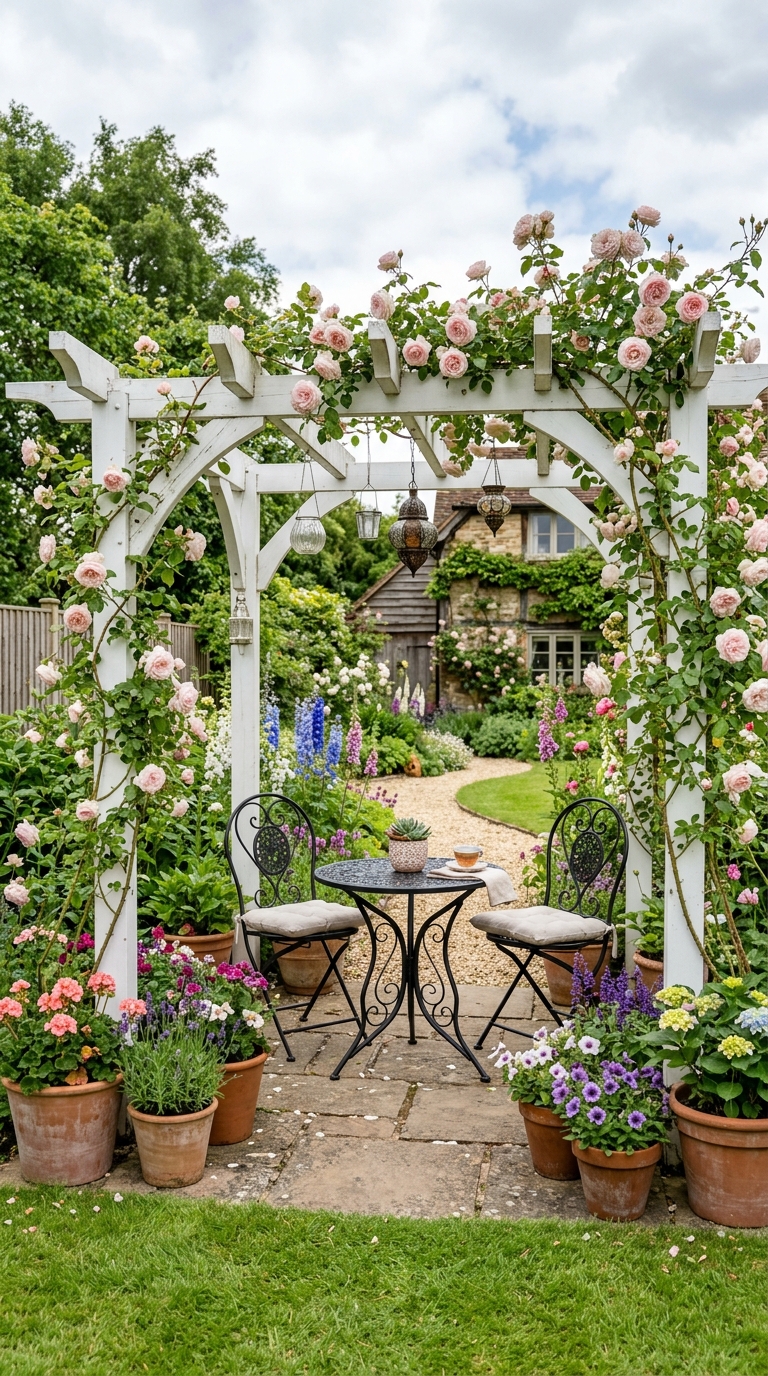
Small Backyard Cottage Pergola With Bistro Table and Lanterns
Don’t have a huge yard? Good news — cottage pergolas actually look better in smaller spaces. The slightly enclosed, intimate feel is part of the charm. A compact pergola with a two-seat bistro set underneath, a couple of hanging lanterns, and climbing plants on the sides creates a little outdoor room that feels cozy rather than cramped.
If you’re working with a narrow outdoor space, these small side yard ideas can help you create the perfect setting for a cottage garden pergola while maximizing every inch of your backyard.
This is the setup I’d go for in a city garden or a small terrace. Simple, beautiful, and totally achievable.
- Choose a freestanding pergola kit in white or natural wood for small spaces
- Add a classic French bistro table and chairs in matte black or sage green
- Hang iron or rattan lanterns from the beams for warm evening light
- Use planter boxes at the base to grow climbing plants upward
Arched Pergola Entrance With Clematis and a Gravel Garden Path
An arched pergola at the entrance to your garden is a statement moment. Walking through an arch covered in deep purple clematis or pale pink roses with a gravel path underfoot — it just sets the whole tone for the garden beyond.
This works beautifully as a standalone feature even if you don’t have a seating area. It’s more of a garden experience than a destination.
If you’re creating a cohesive cottage-style exterior, these inspiring Small Front Yard Landscaping Ideas can complement your favorite cottage garden pergola ideas and boost curb appeal effortlessly.
- Choose a curved arch or tunnel pergola style for maximum drama
- Train clematis in a deep jewel tone — purple, burgundy, or magenta
- Lay pea gravel or crushed limestone along the path below
- Flank the sides with low cottage flowers like foxglove or sweet william
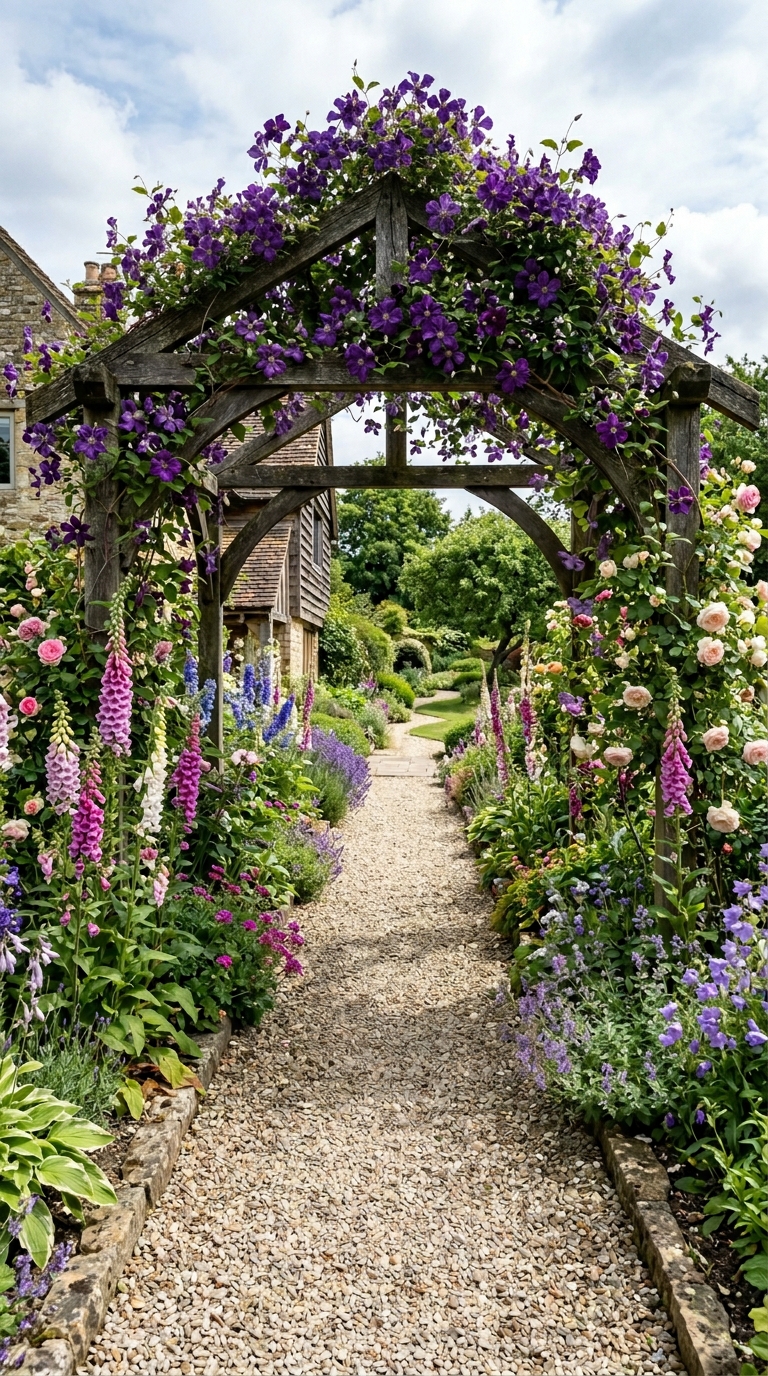
Weathered White Pergola With Honeysuckle and Hanging Baskets
Honeysuckle is one of the most underrated cottage garden climbers. It grows quickly, smells incredible, and has those sweet tubular flowers that bees absolutely love. Trained over a weathered white pergola, it creates a look that feels genuinely timeless.
Add a few hanging baskets overflowing with trailing lobelia, petunias, or ivy, and the whole structure starts to look like it’s been there forever.
- Choose Lonicera periclymenum (common honeysuckle) for best fragrance
- Paint the pergola chalky white and let the paint slightly weather over time
- Hang 3–5 wire baskets from the cross beams at varying heights
- Fill baskets with trailing plants in pink, purple, and white
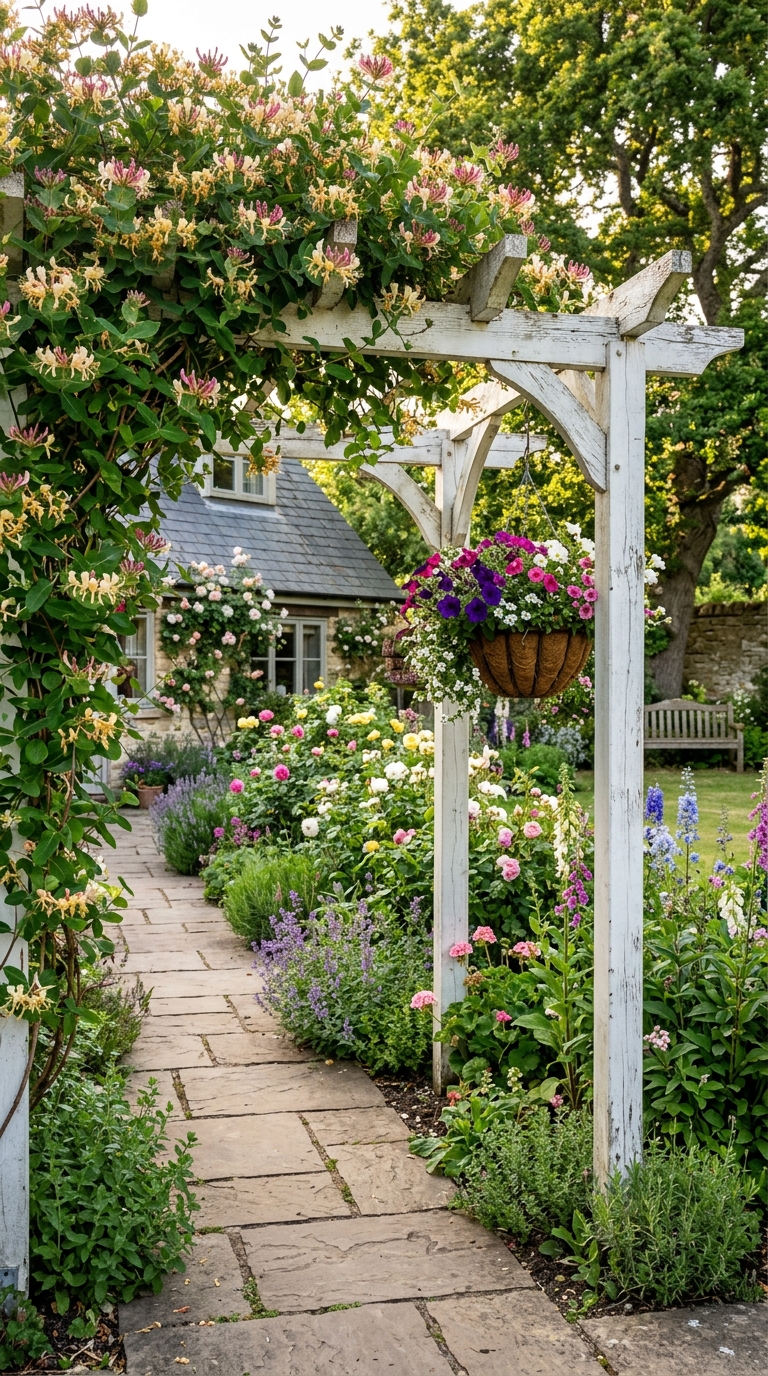
Cottagecore Pergola With Wildflowers, Moss, and a Rustic Swing
This one is pure cottagecore. Think a wooden pergola that’s starting to get a little mossy at the edges — not neglected, just naturally aged. A rope swing hanging from the beams. Wildflowers growing right up to the sides. It has that fairy tale quality that’s everywhere on Pinterest right now.
The swing is the element that really makes this idea. It transforms the pergola from a seating structure into something that feels genuinely magical.
- Allow moss and lichen to grow naturally on the wood (or encourage it with yogurt painting)
- Hang a simple rope and a plank swing from the central beam
- Surround with self-seeding wildflowers — poppies, cornflowers, nigella
- Keep the overall palette very natural — no bright colors here
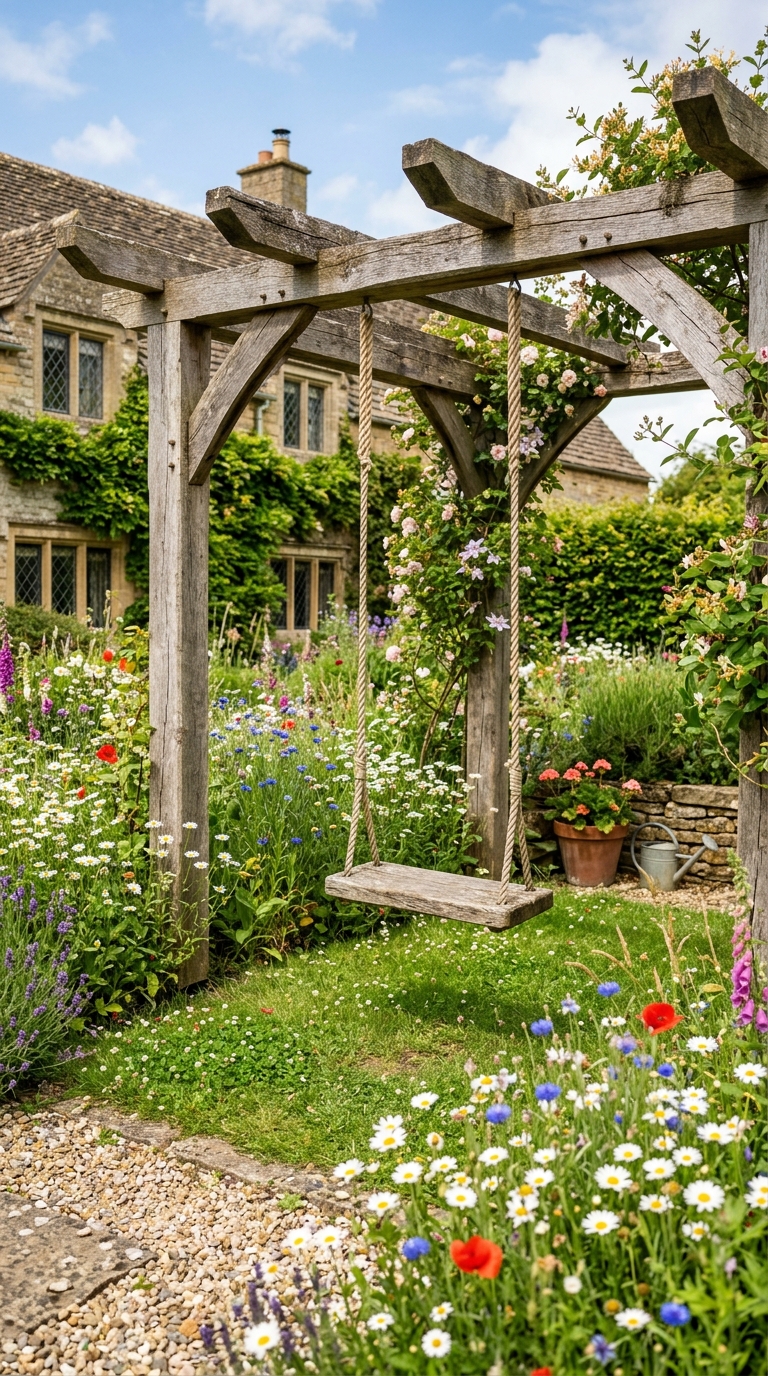
Cedar Pergola With Climbing Hydrangea and Stone Flooring Beneath
Cedar has this gorgeous warm honey tone when it’s new, and it ages beautifully to a silvery grey. A cedar pergola with climbing hydrangea — especially the petiolaris variety, which clings to wood naturally — creates a really textured, organic look.
Stone flooring underneath keeps it grounded. Whether it’s flagstone, slate, or reclaimed brick, the contrast between the warm wood above and the cool stone below is really satisfying.
- Use rot-resistant cedar naturally — it needs minimal treatment
- Plant Hydrangea petiolaris at the base and let it self-cling to the wood
- Lay irregular flagstone or reclaimed brick as the floor underneath
- Add a wooden garden chair and side table to keep it simple and unfussy
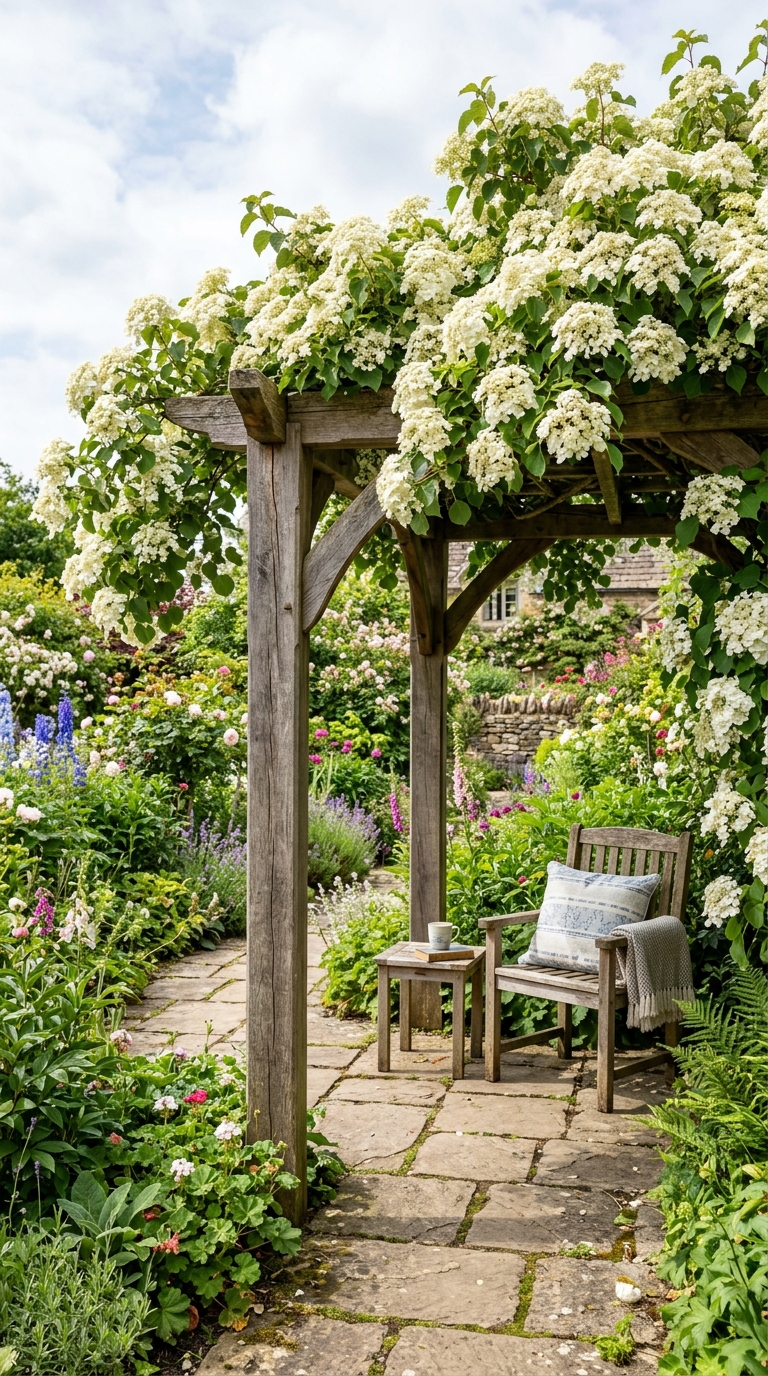
DIY Budget-Friendly Cottage Pergola With Bamboo and Floral Vines
Not every gorgeous pergola needs a big budget. Bamboo poles tied with natural jute rope and trained with fast-growing annual vines — like sweet peas or morning glory — can look absolutely beautiful for very little money. The trick is the plants. The right vines do all the heavy lifting.
This is a brilliant first-year option if you’re still figuring out your garden layout or if you just want to try the look before committing to a permanent structure.
- Use thick bamboo poles (at least 2 inches in diameter) for stability
- Lash together with natural jute or sisal rope — it looks beautiful
- Plant sweet peas, nasturtiums, or morning glory at the base
- Add a vintage rug or mat underneath for an instant cozy feel
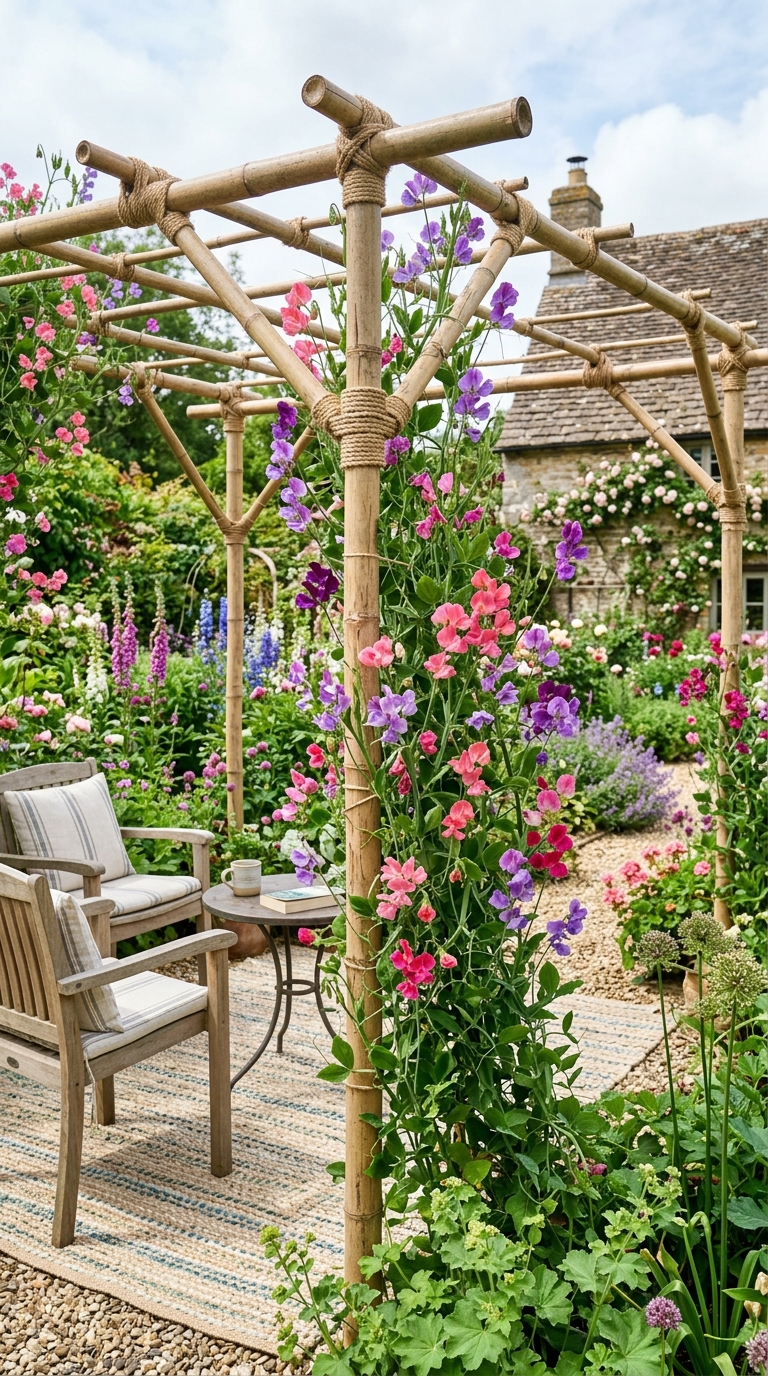
French Country Style Pergola With Lavender Borders and Iron Accents
Take cottage style and add a little French countryside elegance — that’s this idea. A whitewashed or soft grey pergola with iron scrollwork accents, flanked by rows of lavender on both sides. It’s structured but still romantic.
The lavender does a lot here. The scent, the colour, the way it sways in the breeze — it all adds up to something that feels genuinely luxurious without being fussy.
- Use wrought iron accents on the pergola corners or overhead beams
- Paint in soft white, warm cream, or pale grey
- Plant lavender in formal rows on either side of the pergola entrance
- Add a French-style garden chair in faded blue or terracotta
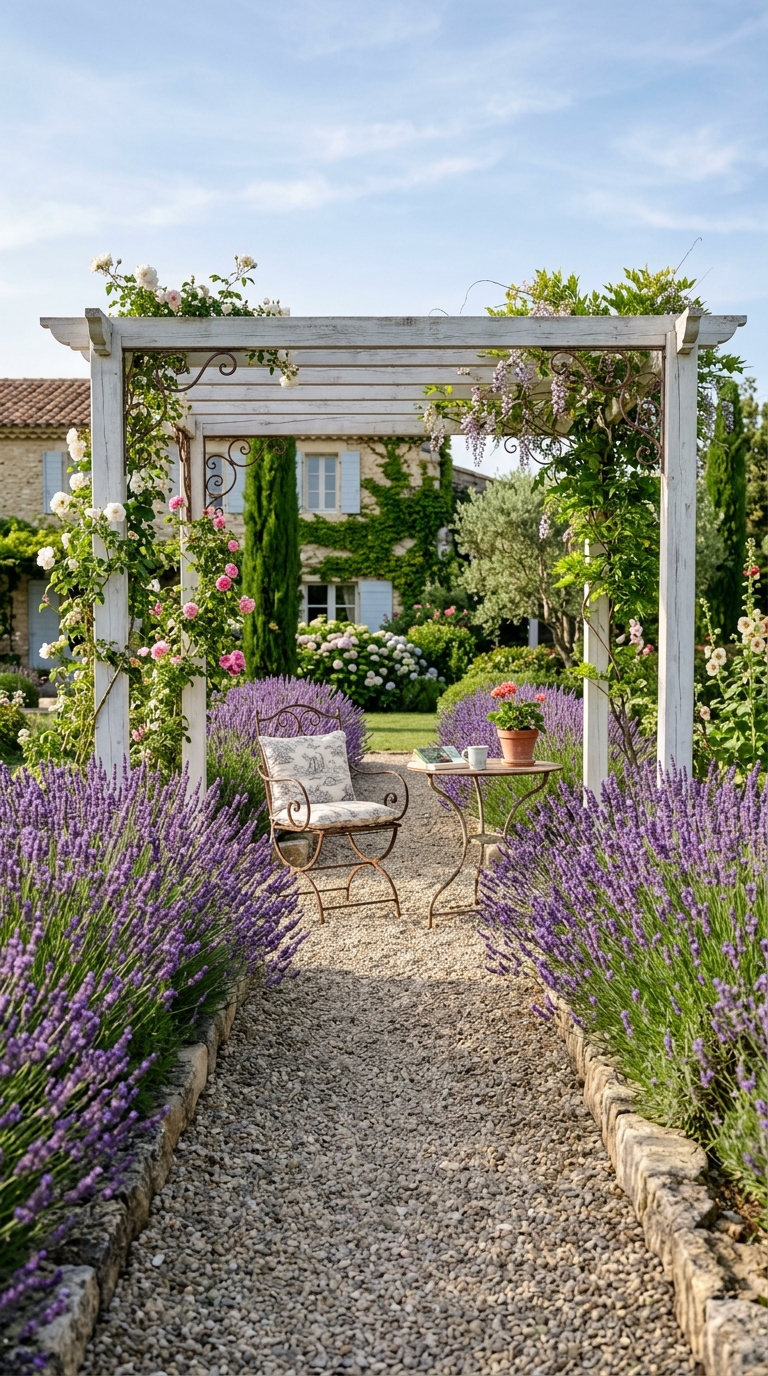
Pergola With Living Roof — Moss and Creeping Thyme on Top
This one is a little more adventurous, but wow does it pay off. Instead of climbing plants going up the sides, you create a living roof by letting creeping thyme, moss, or sedum grow across a flat or gently sloped pergola top. The effect is like a little slice of the hillside over your head.
It’s also brilliant for bees and pollinators. On a warm summer day, you’ll hear the gentle hum from above — which is honestly one of the loveliest garden sounds.
- Build or adapt a pergola with a flat slatted roof to hold a thin growing medium
- Plant creeping thyme, mind-your-own-business, or sedum across the top
- Allow moss to establish naturally in shaded corners
- Underplant the pergola edges with ferns or hostas for a woodland feel
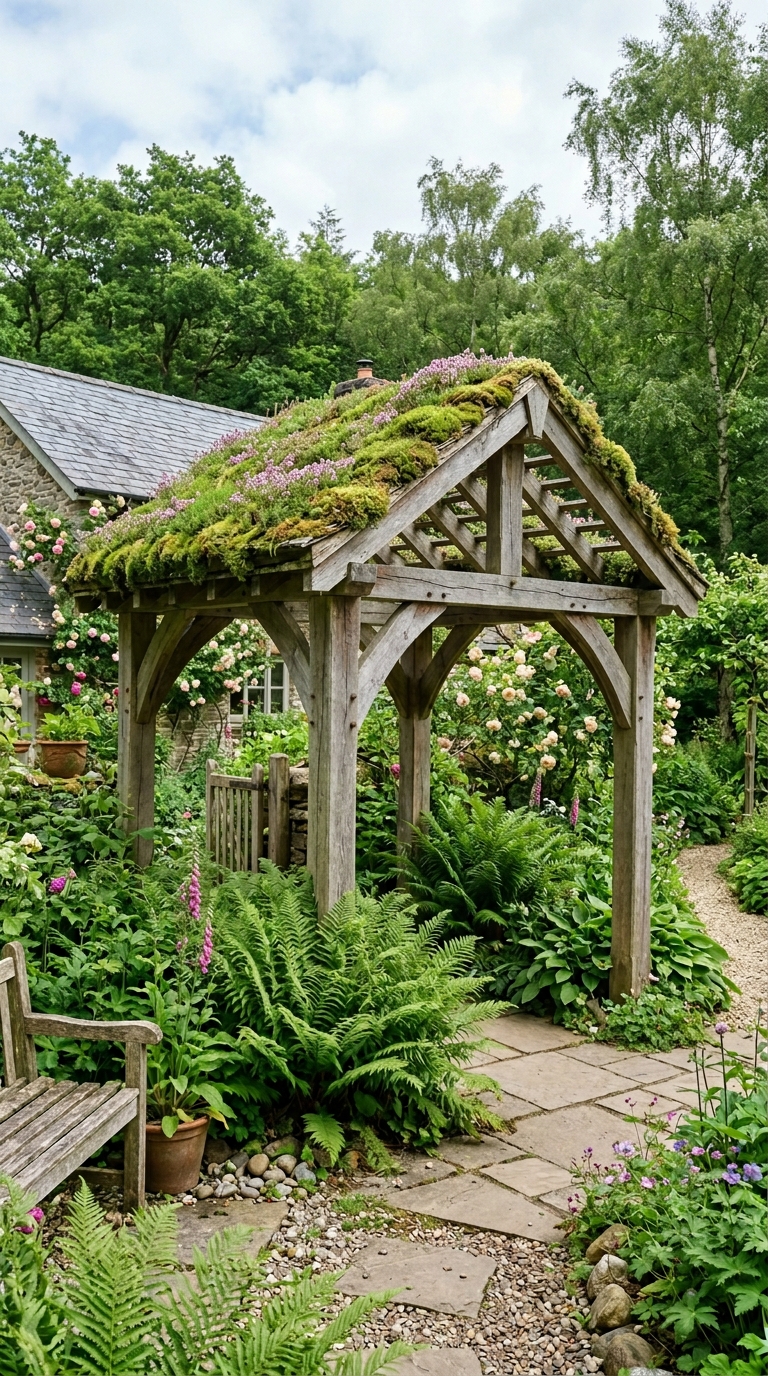
Fairy Light Canopy Pergola With Rose Garlands for a Romantic Feel
Some pergola ideas are practical. This one is purely for romance. Imagine the entire overhead structure covered in warm fairy lights, with rose garlands draped between the beams. At dusk, it glows. It’s the kind of setup you’d see at a gorgeous outdoor wedding — except it’s your backyard, any evening you want.
This works brilliantly for outdoor dining or just sitting outside after dark with a glass of something cold.
- Use warm white micro LED fairy lights and layer them generously
- Drape dried or faux rose garlands between beams for a permanent look
- Add pillar candles in glass hurricanes on the table below
- Keep the surrounding garden fairly simple so the lights are the star
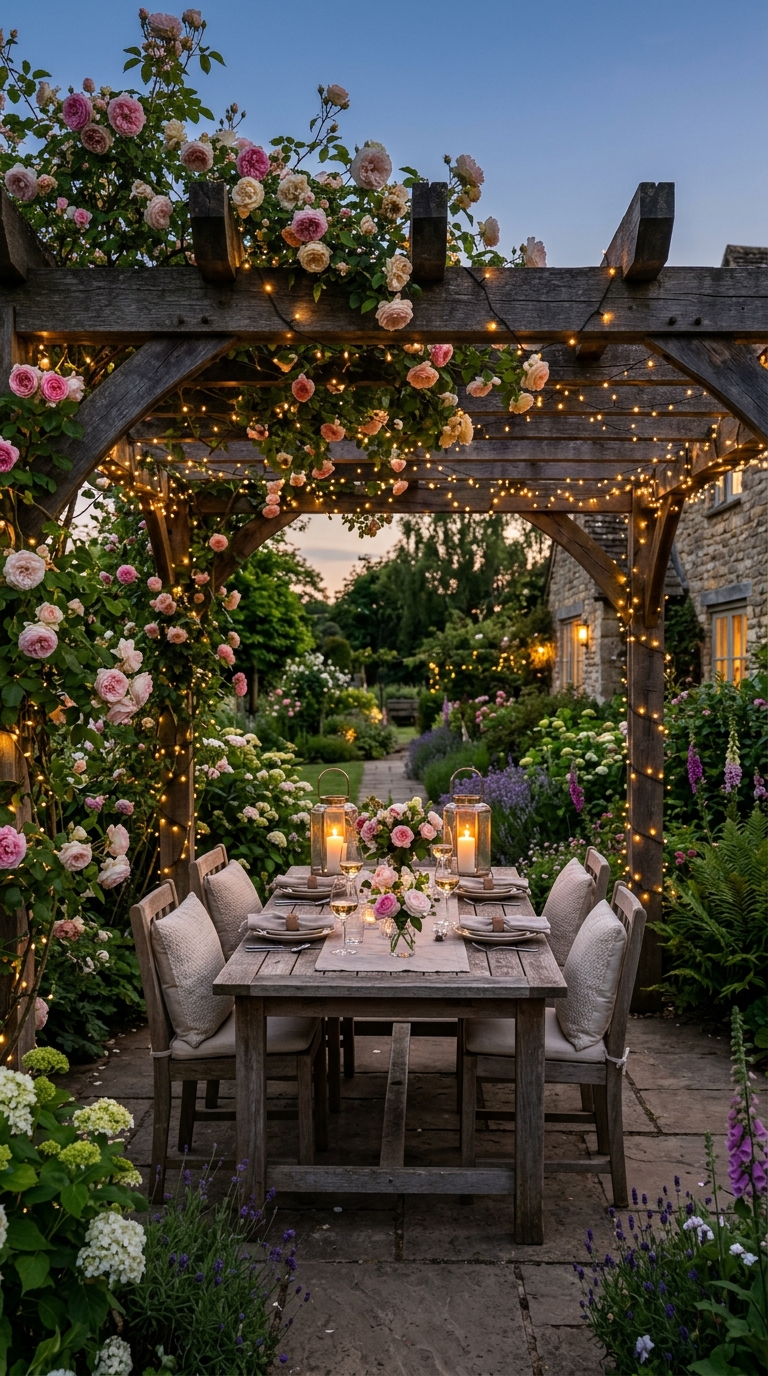
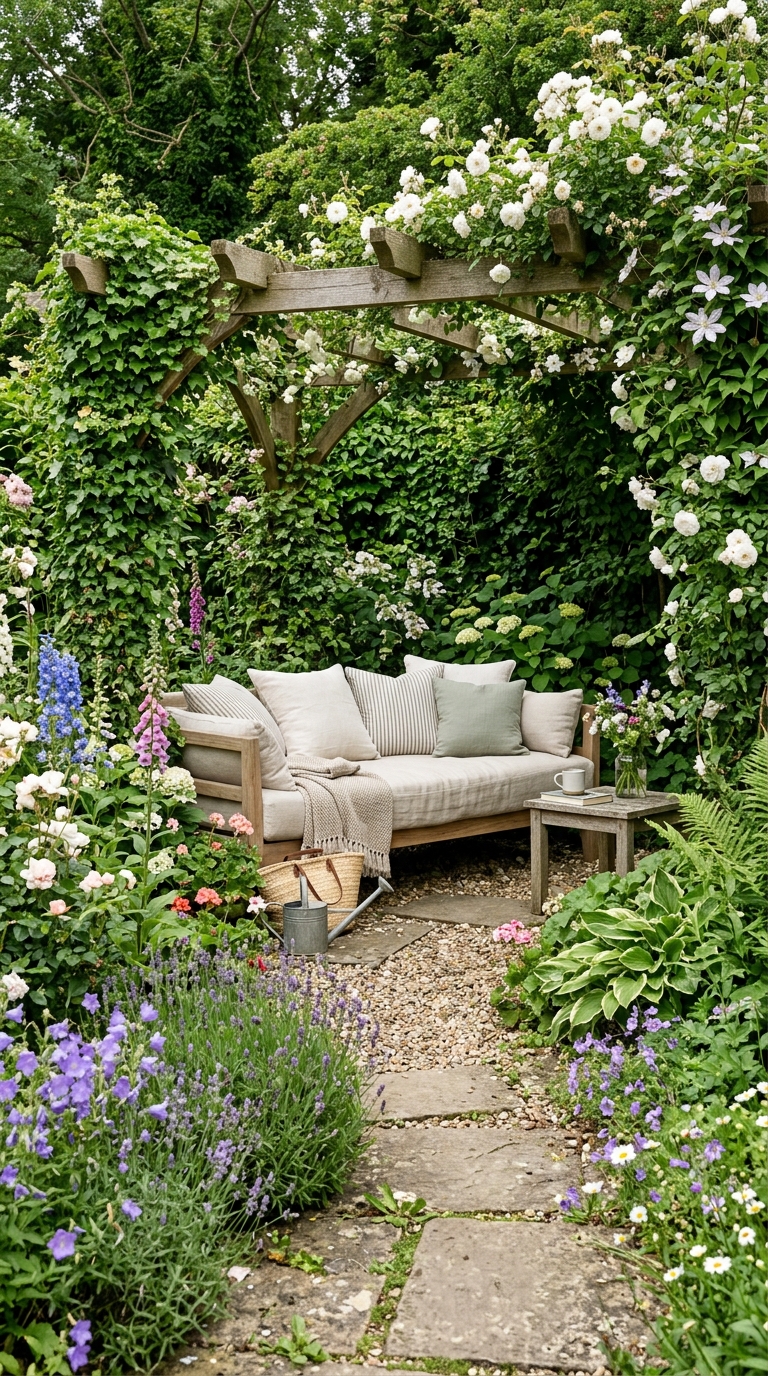
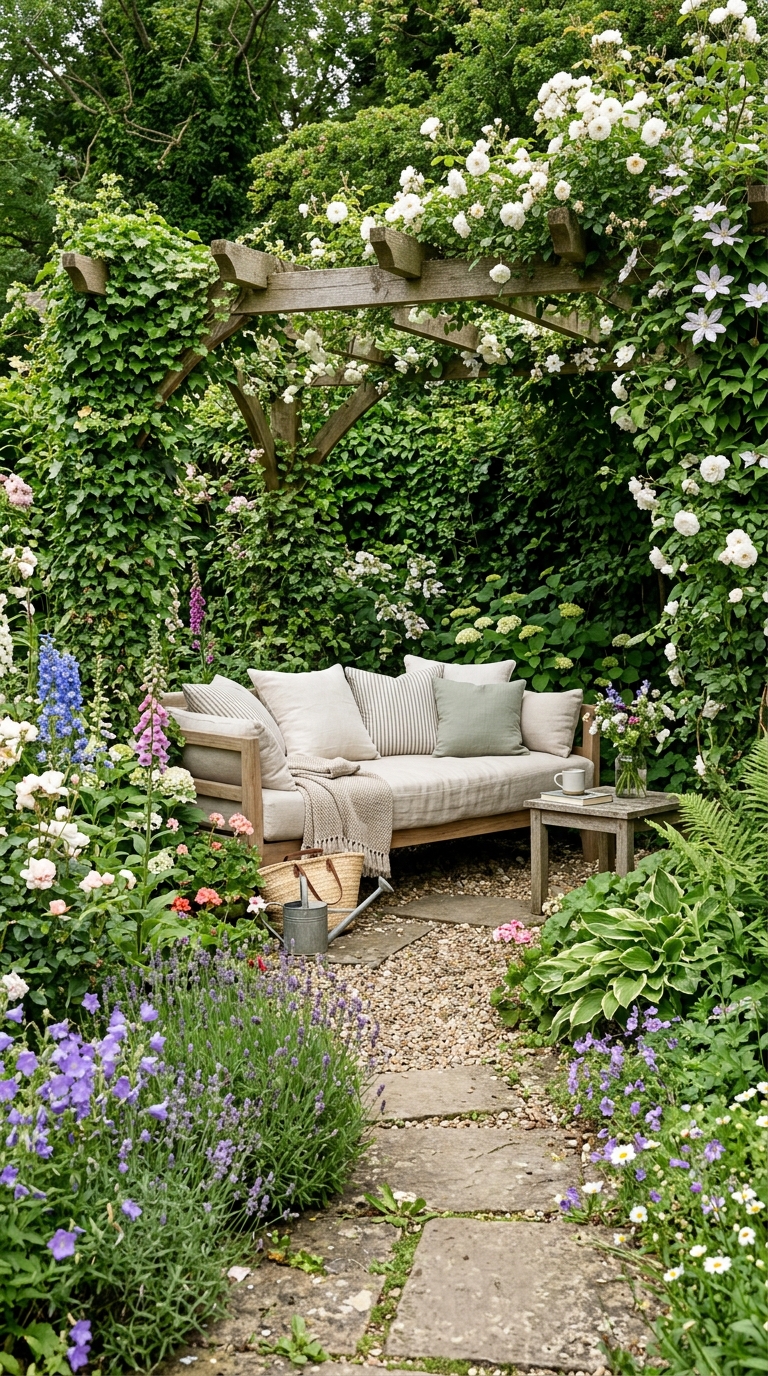
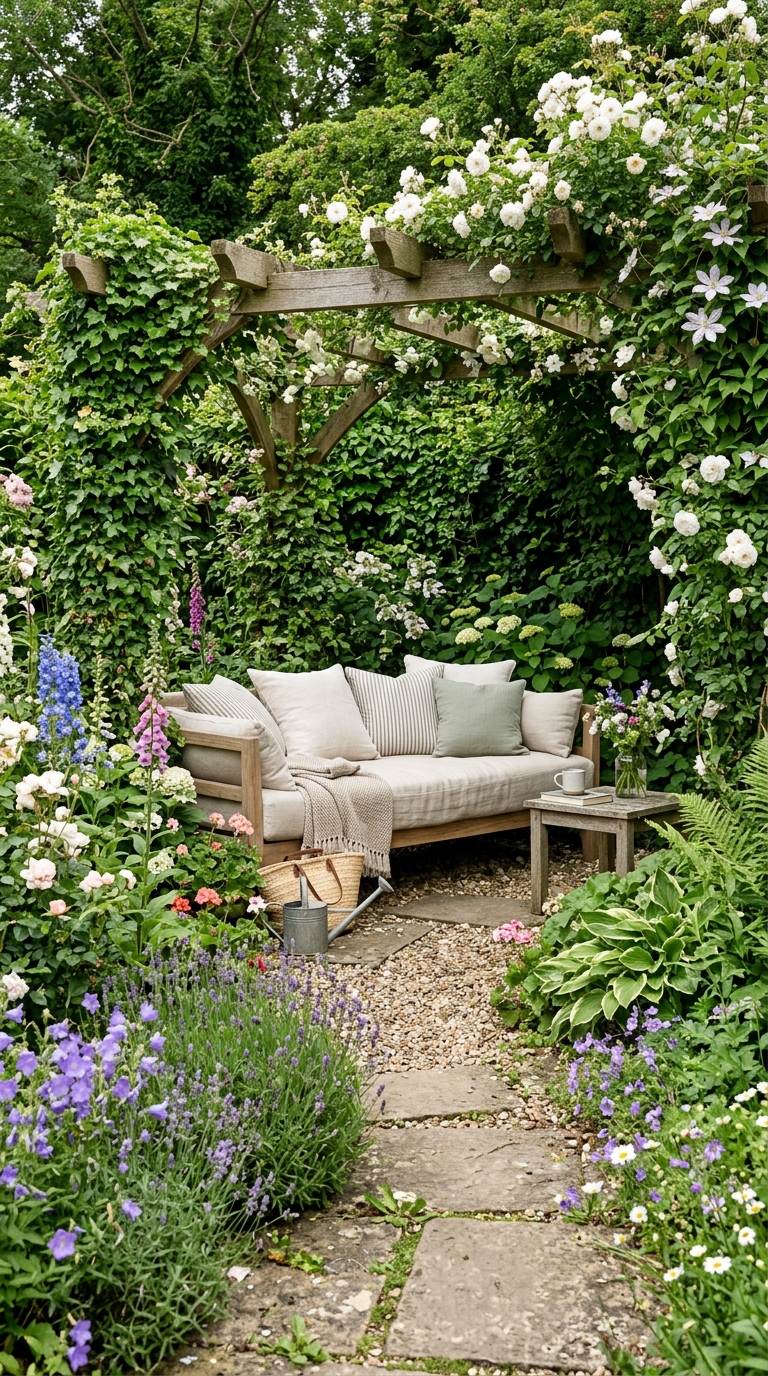
Shaded Reading Nook Pergola Tucked Into a Cottage Garden Corner
This is for the introverts. A small pergola in a quiet corner of the garden, positioned so it catches afternoon shade, with a daybed or a deep armchair, some trailing plants for privacy, and nothing else. Just a place to disappear with a book.
The garden corner placement is key — it creates a sense of enclosure without feeling closed in. You’re still in the garden, surrounded by plants and birdsong, just cocooned slightly from the rest of the world.
- Choose a corner position with natural afternoon shade from trees or a fence
- Add a daybed with linen cushions or a deep rattan armchair
- Use dense climbing plants on two sides for soft privacy screening
- Keep a small side table for a drink and a book — that’s all you need
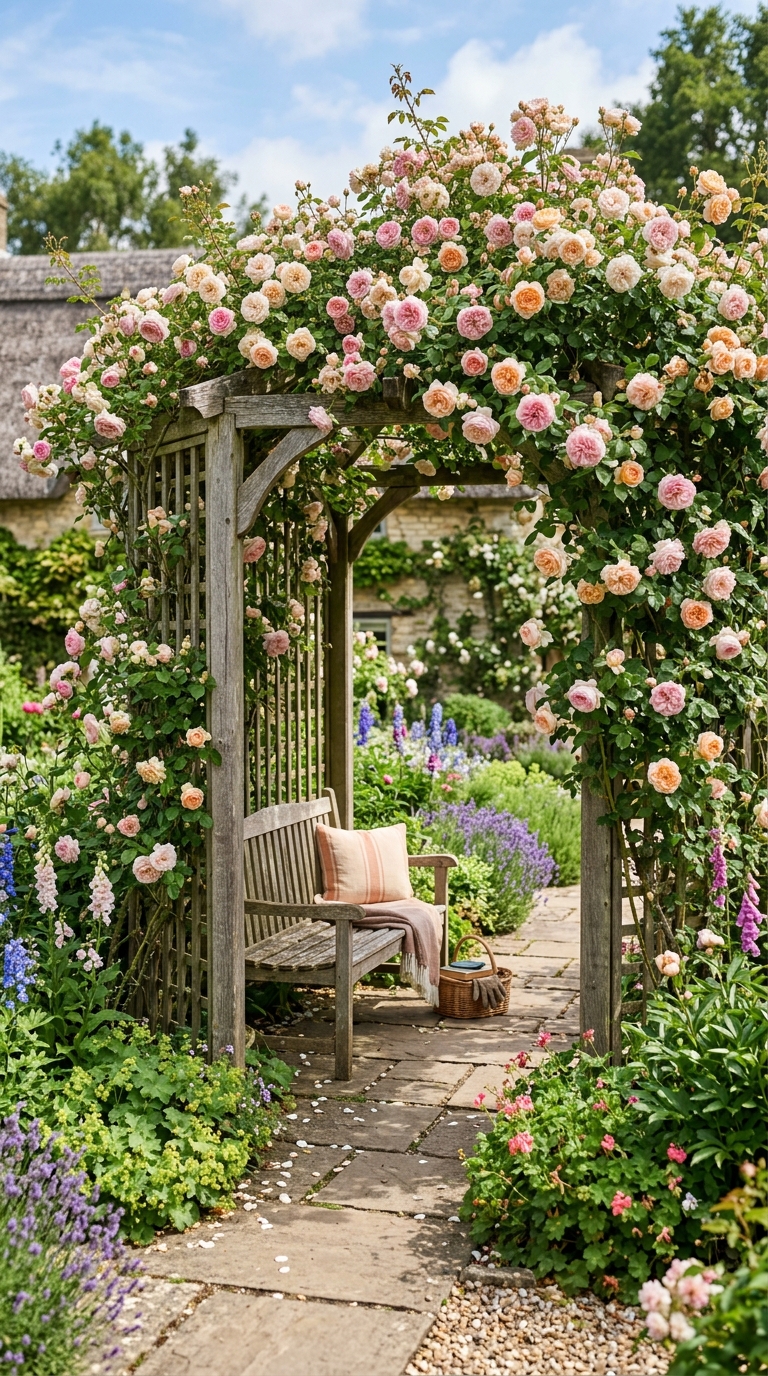
Pergola With Trellis Panels and Pastel Climbing Roses for Privacy
If your garden is a bit overlooked, this idea solves two problems at once — it gives you a beautiful structure and natural privacy screening. Trellis panels attached to the sides of the pergola give climbing roses something to grip, and within a season or two, you’ve got a living screen that’s infinitely better-looking than a fence.
Pastel roses — pale yellow, blush pink, soft apricot — keep the look soft and cottage-appropriate. No harsh reds here.
- Attach wooden or metal trellis panels to two or three sides of the pergola
- Choose pastel climbing roses in yellow, peach, or blush
- Train stems horizontally across the trellis for maximum coverage
- Add underplanting of geraniums or sweet alyssum at the base
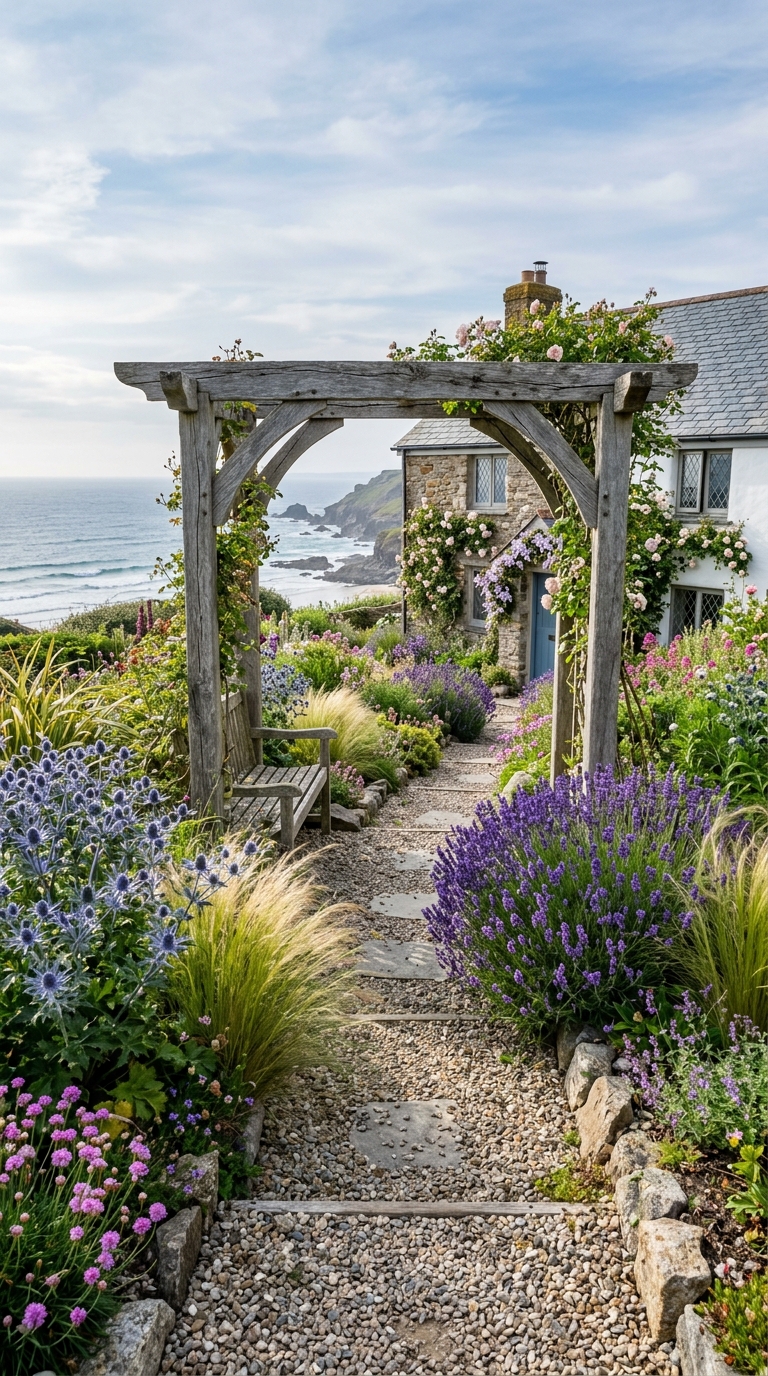
Coastal Cottage Pergola With Driftwood Accents and Sea Holly Plants
This mash-up of coastal and cottage styles is really underrated. A bleached or driftwood-toned pergola, sea holly (eryngium) planted in steel blue borders, maybe some ornamental grasses swaying at the edges. It’s a cottage garden but with a salty, breezy edge to it.
If you live near the coast or just love that combination of natural textures and soft blues and silvers, this one is worth exploring.
- Choose weathered grey or bleached wood for the pergola structure
- Plant sea holly, lavender, and ornamental grasses around the base
- Add driftwood pieces as decorative accents — in pots, on shelves, leaning against posts
- Use natural rope, linen, and sandy-toned textiles in the seating area
Autumn Cottage Pergola With Virginia Creeper and Warm Lantern Lighting
Most cottage garden pergola content focuses on spring and summer. But an autumn pergola? Genuinely stunning. Virginia creeper turns a fiery crimson red in October, and draped over a wooden pergola with warm lanterns lit underneath, it’s one of the most dramatic seasonal garden looks you can achieve.
The bonus is that Virginia creeper is incredibly vigorous — it’ll cover a pergola in a couple of seasons without much help from you.
- Plant Virginia creeper (Parthenocissus quinquefolia) at each post
- Let it grow untrained for a natural, tumbling autumn effect
- Use copper or aged bronze lanterns for the warmest autumn glow
- Lay a thick outdoor rug underneath and add chunky knit cushions
Minimalist Cottage Pergola — Simple Wood Frame, Maximum Floral Drama
Sometimes less structure means more impact. A simple, clean-lined wooden pergola with no extra ornamentation — just four posts and cross beams — lets the plants do absolutely everything. When roses and clematis fill every inch of a minimal frame, the contrast is quietly stunning.
This is also the most versatile option on the list. It suits gardens of every size, fits almost any style, and it’s usually the most affordable to build. The “minimalist” is in the structure — the drama comes entirely from nature.
- Keep the pergola design clean and simple — no decorative extras
- Plant at least 2–3 different climbing varieties for layered texture
- Let plants grow freely and abundantly — resist over-pruning
- Choose one style of seating only so the plants remain the focal point
FAQs
Q1. What is a cottage garden pergola?
A cottage garden pergola is an outdoor structure — usually made from wood or metal — designed to support climbing plants like roses, wisteria, clematis, or jasmine. It creates a shaded, romantic garden feature that fits the relaxed, floral style of a traditional cottage garden.
Q2. What plants are best for a cottage garden pergola?
The best plants for a cottage garden pergola include:
- Climbing roses (especially David Austin varieties)
- Wisteria for dramatic seasonal blooms
- Clematis in purple, pink, or white
- Jasmine for fragrance and fast coverage
- Honeysuckle for a classic English cottage feel
Choose a mix of varieties that bloom at different times for year-round interest.
Q3. How do I make my pergola look cottagecore?
To give your pergola a cottagecore look:
- Use weathered or reclaimed wood for the structure
- Train climbing roses or clematis up the posts
- Add string lights or vintage lanterns for ambiance
- Place a wooden bench or bistro table underneath
- Let plants grow freely and naturally without over-pruning
Q4. Can I build a cottage pergola in a small backyard?
Yes. A compact freestanding pergola with a bistro table, hanging planters, and climbing roses on the sides works beautifully in small spaces. Vertical planting actually makes small gardens feel more lush and enclosed — in the best way.
Conclusion
Your backyard deserves more than just a patch of grass. A cottage garden pergola — whether it’s dripping in wisteria, glowing with fairy lights, or quietly covered in climbing roses — turns an ordinary outdoor space into somewhere you actually want to be.
The best part? You don’t need a huge budget or a massive yard to pull it off. Start small. Pick one idea that feels right for your space, your style, and your season. Plant something that climbs. Add a seat. Let nature do the rest.
Cottage gardens are meant to feel a little wild, a little lived-in, and a lot loved. Your pergola should feel exactly the same way.