
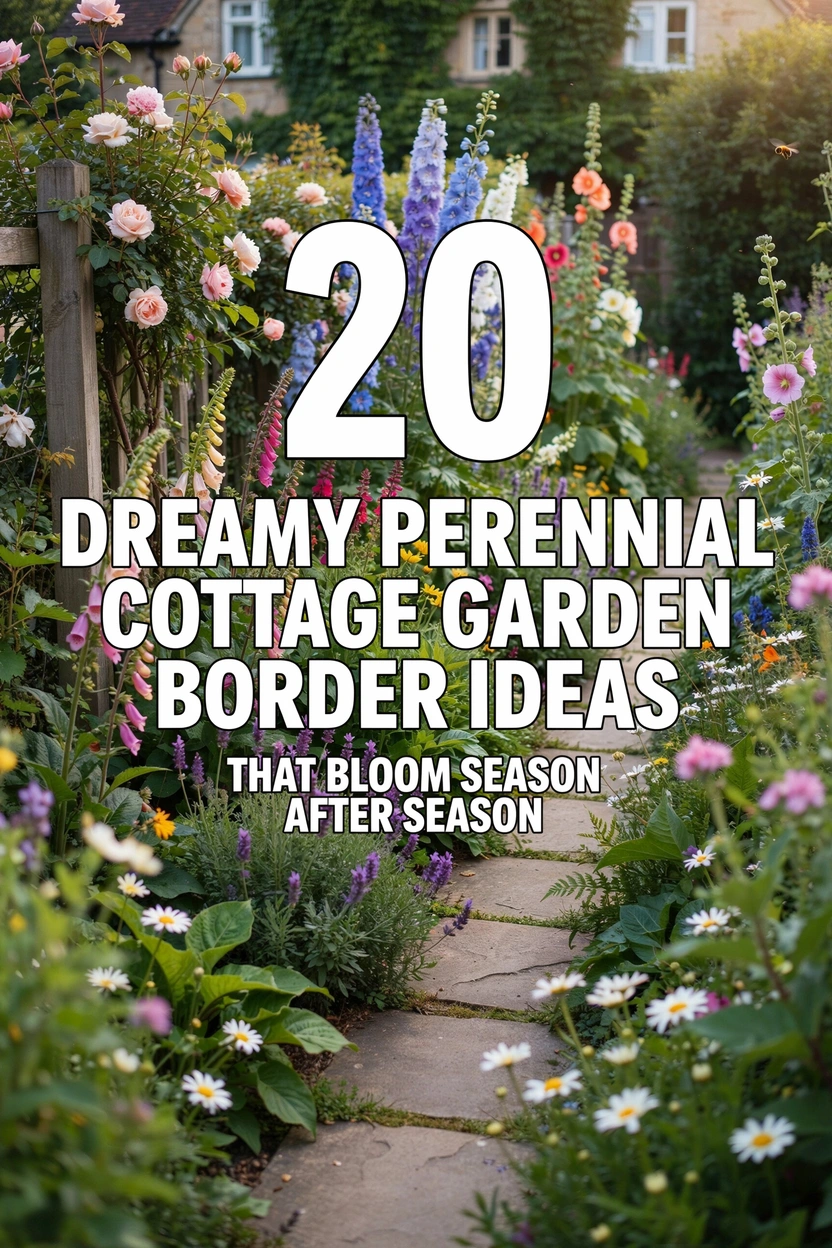
There’s something magical about a cottage garden border. It’s not perfectly trimmed or stiff — it’s alive. Soft petals brushing the path edge, tall spires swaying in the breeze, colors layered like a watercolor painting. And the best part? When you plant the right perennials, that magic comes back every single year — with almost zero effort on your part.
Whether you have a wide backyard bed or a narrow strip along your front path, these 20 cottage garden border ideas will help you design something that looks gorgeous from spring right through to fall. Each one is built around real, easy-to-grow perennials that do the hard work so you don’t have to.
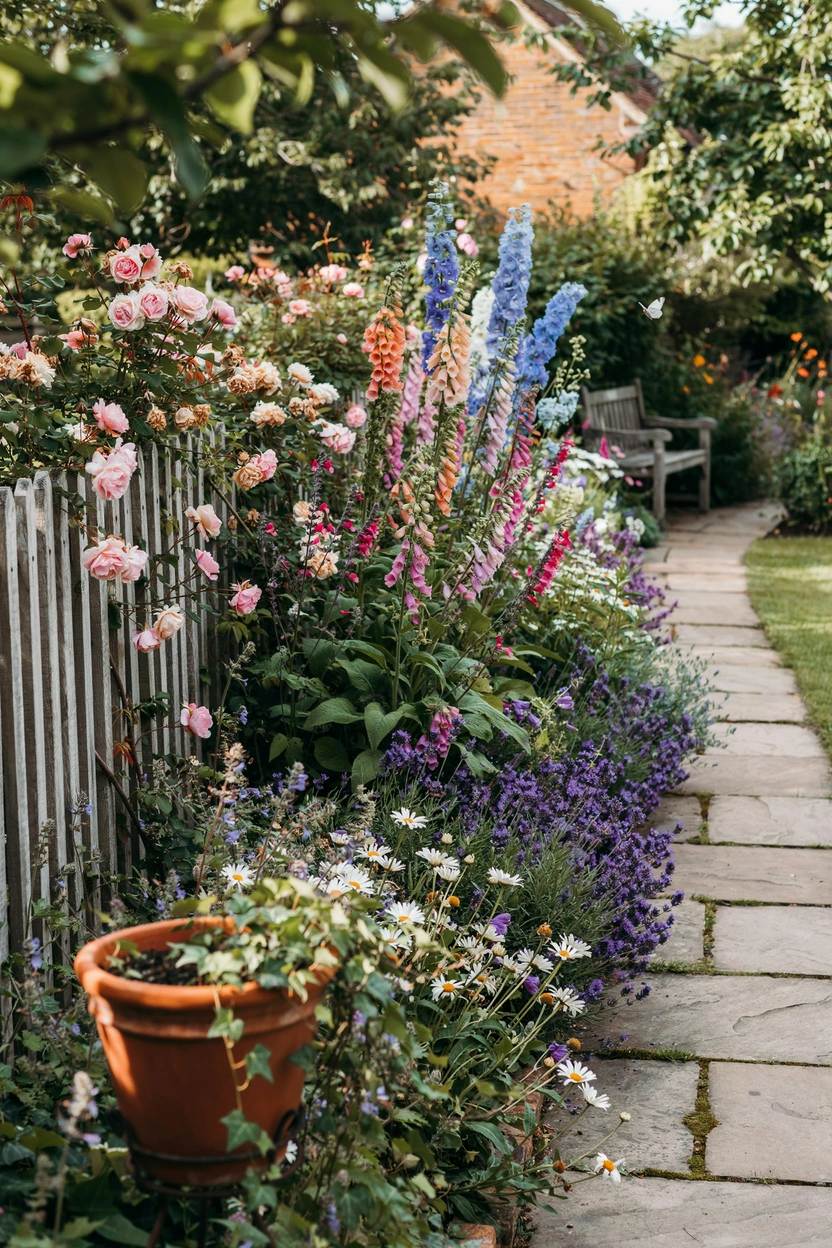
The Lavender and Salvia Blue Wave Border
If you want a cottage garden border that looks effortlessly beautiful and smells incredible every time you walk past, this is exactly where to start. Lavender and ornamental salvia are a match made in garden heaven — both are low-maintenance, long-blooming, and stunning when planted side by side. The soft silver-blue tones drift together like a calm ocean wave, and the bees absolutely love it all summer long.
- Plant lavender at the front edge for a soft, fragrant border spill
- Add deep blue ornamental salvia behind it for height and rich color contrast
- Both are drought-tolerant once established — very little watering is needed
- The silvery foliage stays attractive even when the flowers aren’t in bloom
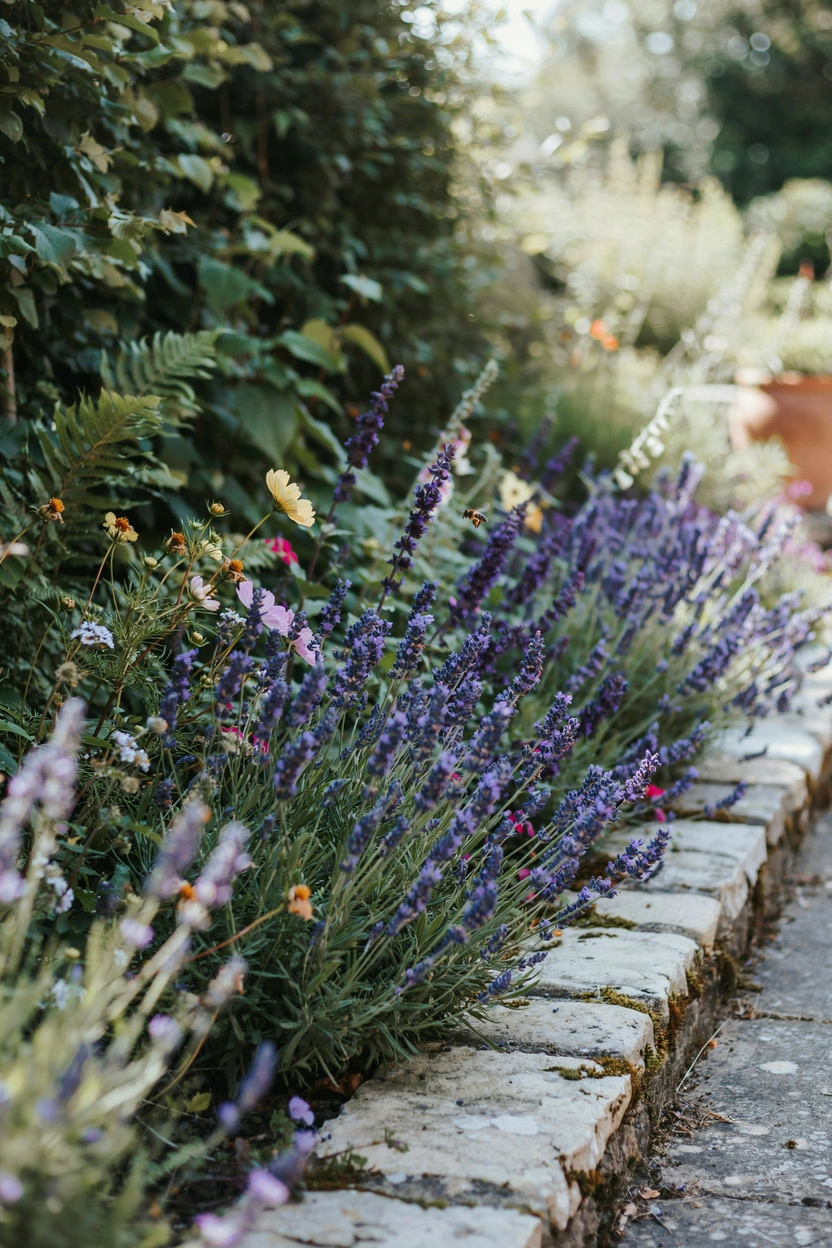
The Hollyhock and Foxglove Tall Dreamer Border
These two plants are the backbone of every classic English cottage garden — and for good reason. Foxgloves with their spotted bell-shaped blooms and hollyhocks in shades of blush, cream, or deep magenta create instant vertical drama at the back of any border. Together, they give you that tall, romantic, slightly wild look that cottage gardens are so famous for. The secret is letting them grow a little untamed — that’s exactly where the beauty comes from.
- Place both at the back of the border for maximum height impact
- Let them self-seed — they spread naturally and come back year after year
- Stake taller stems in windy spots to prevent flopping
- Pair with low catmint at the front to balance the height beautifully
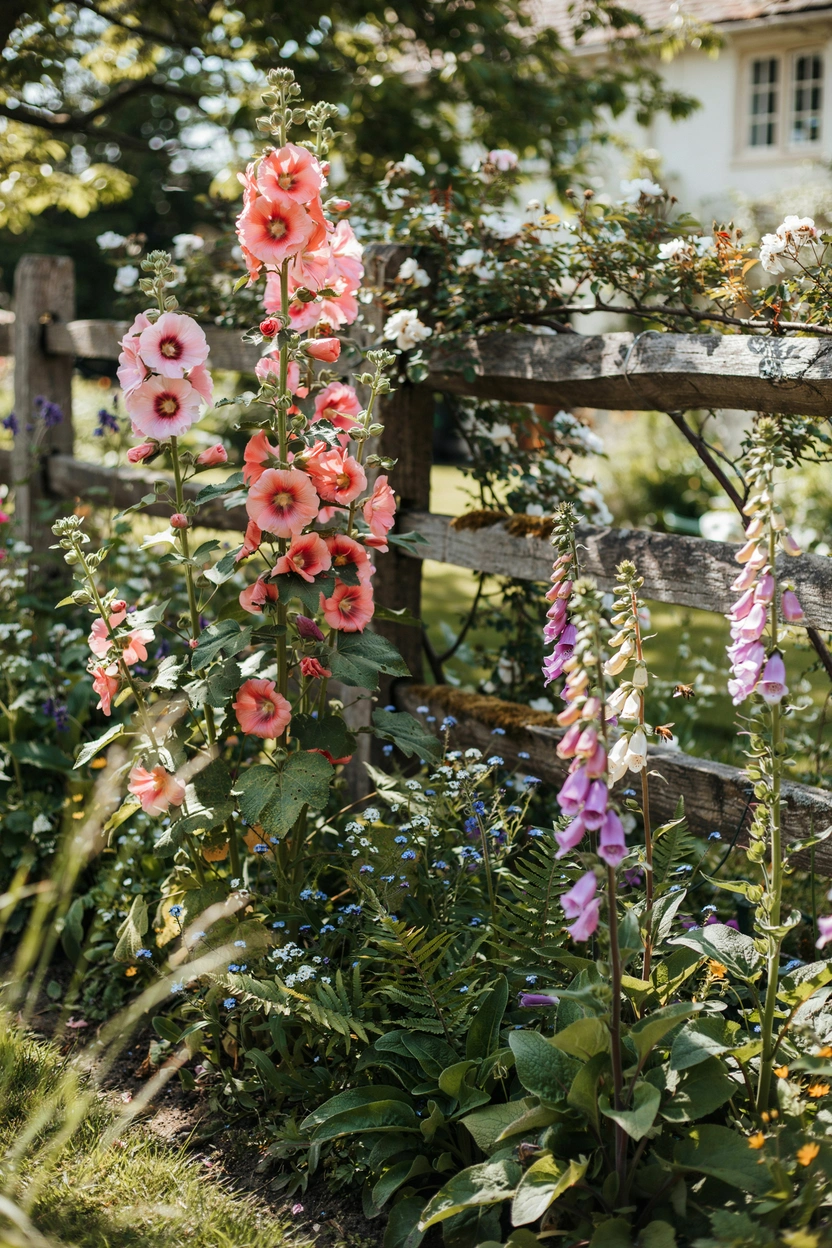
The Peony Anchor Border
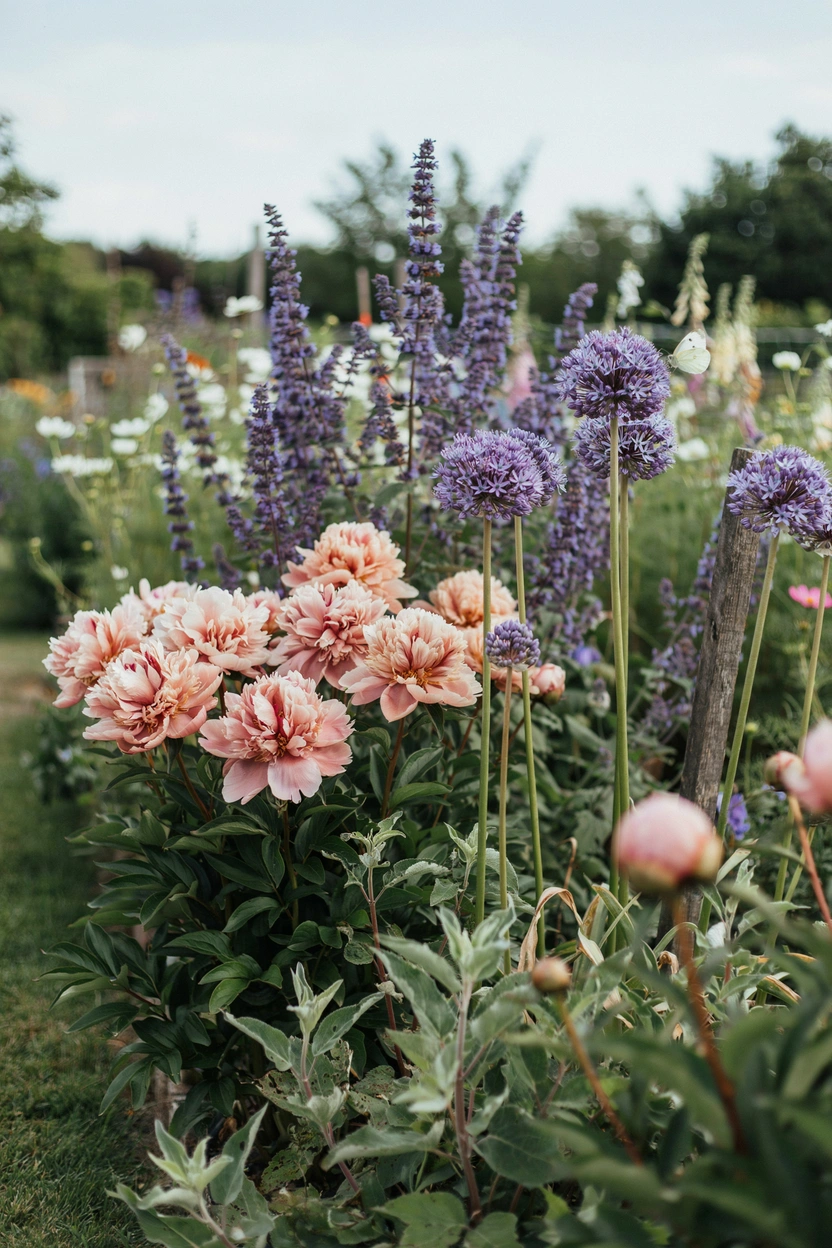
Peonies are absolute showstoppers. One single blooming peony can make an entire garden look luxurious, and when you use them as the centerpiece anchor of your mid-border, the whole planting feels intentional and lush. The trick is building the rest of your border around them — choosing companion plants that fill in beautifully before and after peony season so the bed never looks bare. One important note: peonies don’t like being moved, so take your time choosing the right spot from the start.
- Use catmint to cover the bare peony stems after the blooming season ends
- Add purple allium globes for striking interest in late spring
- Hardy geraniums fill gaps naturally and keep the border looking full
- Peonies can bloom reliably for decades once they’re happy in their spot
The Delphinium Spire Border for Cool Blues
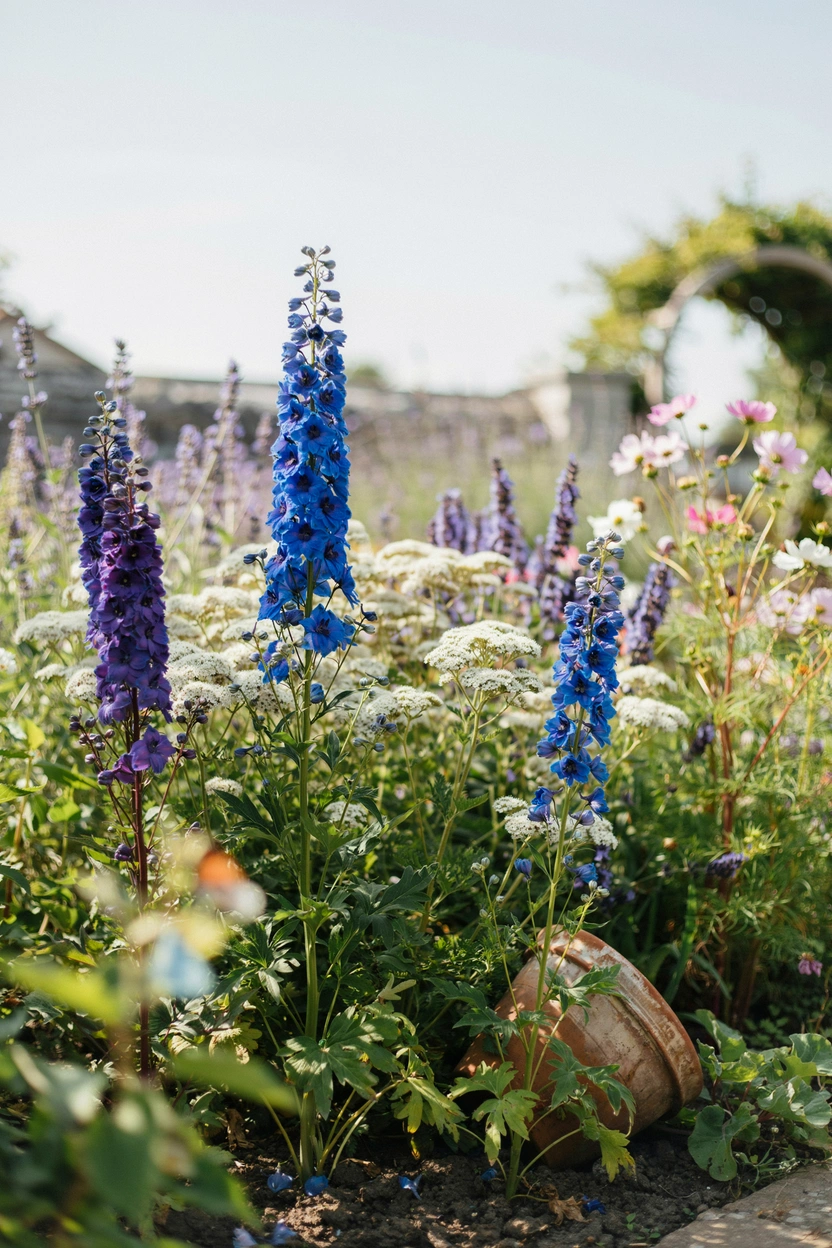
Nothing gives a garden that iconic blue-purple drama quite like delphiniums. They’re a little more high-maintenance than other perennials, but the payoff is absolutely worth it — those tall, elegant spires create a sense of height and coolness that’s hard to achieve with any other flower. The cool tones make the whole border feel airy and sophisticated rather than busy, especially when you pair them with white or pale pink flowers that let the blue really sing.
- Deadhead spent blooms promptly — they’ll often rebloom again in late summer
- Protect from wind by staking or planting against a fence or wall
- Pair with white achillea or pale pink echinacea for a beautiful contrast
- Cool blue tones keep the border feeling calm and elegant, never overwhelming
The No-Fuss Coneflower and Black-Eyed Susan Border
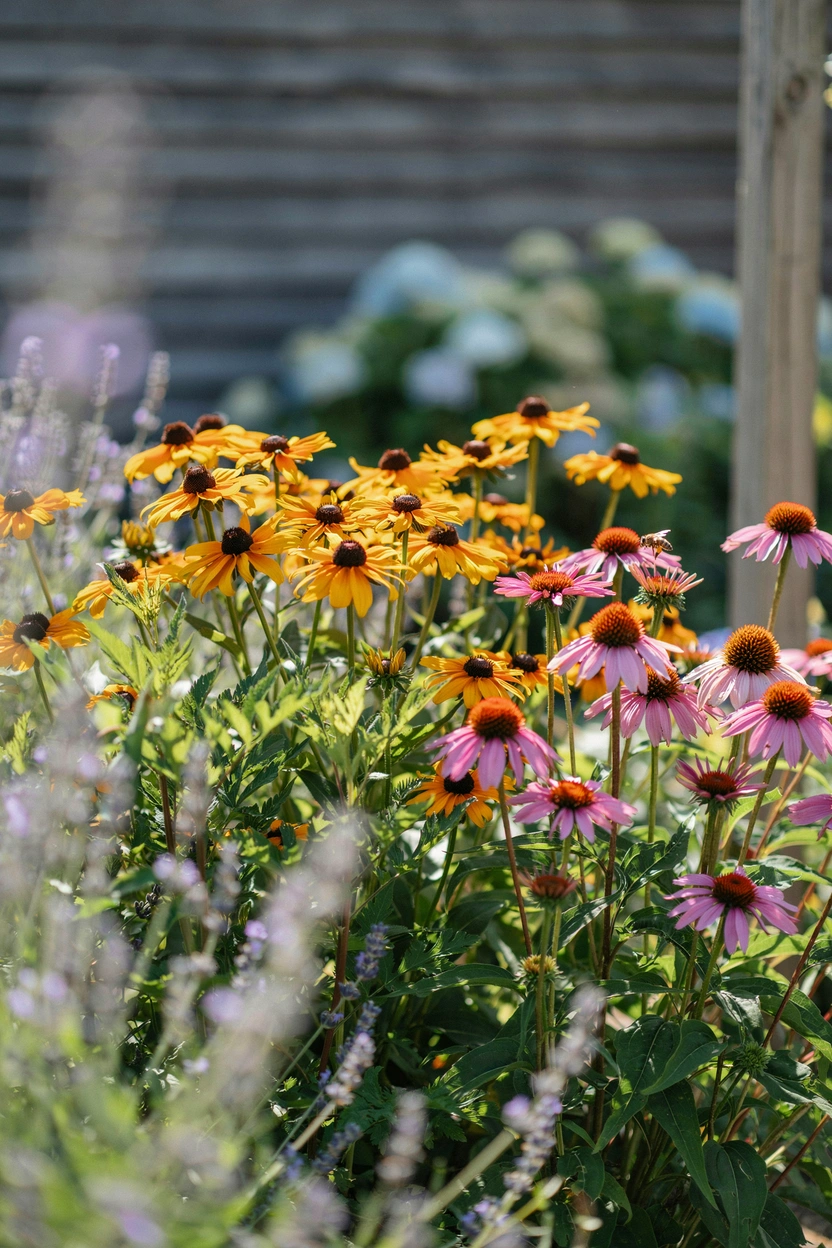
If you want a cottage garden border that practically looks after itself, this is the one to try. Echinacea (coneflower) and Rudbeckia (black-eyed Susan) are two of the most carefree perennials you can grow — and together, they create a warm, golden-orange glow that lights up the garden from midsummer right through to fall. This combination is especially great for sunny spots and anyone who’s just starting with perennial planting.
Pair your favorite pollinator flowers with thesepollinatorperennial flower border ideas for a fuller, more natural cottage garden style.
- Both plants are drought-resistant once established — perfect for hot, sunny spots
- Birds eat the seedheads through winter, making it brilliant for wildlife
- They spread gently over time, naturally filling gaps in your border
- Warm golden and pink tones create a cheerful, welcoming cottage feel
The Catmint Edge — The Border That Fixes Itself
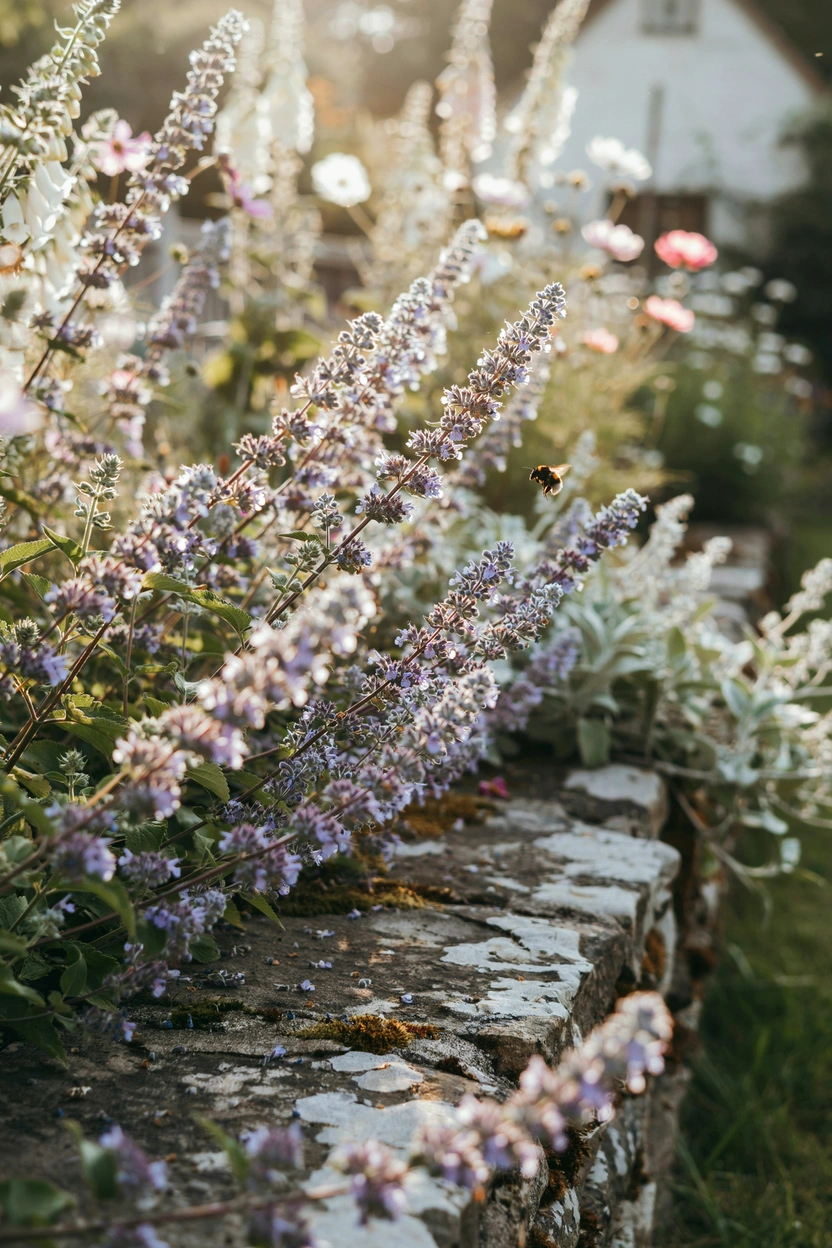
Catmint might honestly be the single most useful perennial you can plant in a cottage garden border. It spills softly over path edges in the most charming way, blooms in lavender-blue for months on end, and if you give it the “Chelsea chop” — cutting it back by half in early June — it rebounds and blooms all over again in late summer. It’s forgiving, beautiful, and basically unstoppable, making it the perfect plant for gardeners who want low effort and high impact.
- Spills naturally over path edges for that classic, effortless cottage look
- Extremely drought-tolerant once established — rarely needs extra watering
- Cut back by half in early June to encourage a fresh flush of late summer blooms
- Acts as a living mulch along the border edge, naturally suppressing weeds
The Astilbe Shade Border for Damp Corners
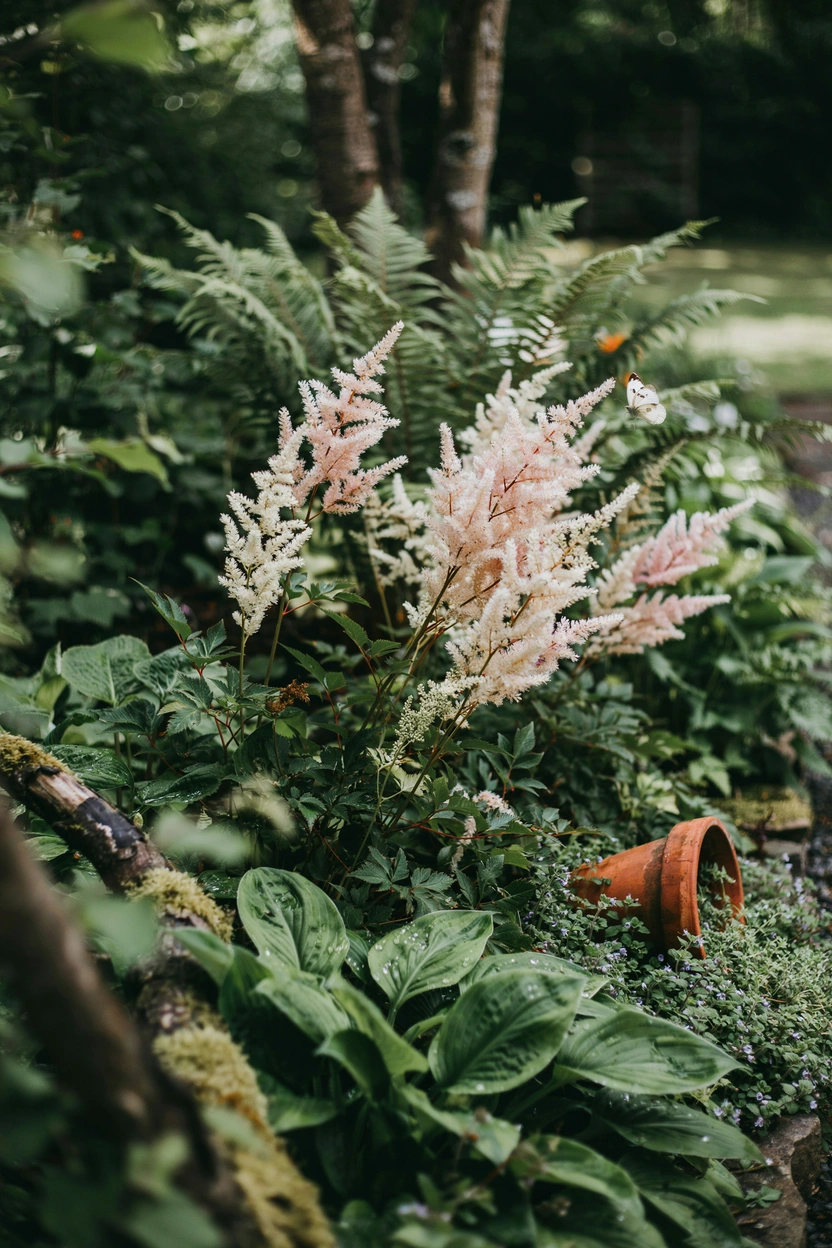
Not every part of your garden gets full sun — and honestly, that’s a good thing. Those slightly damp, partially shaded corners are perfect for astilbe, one of the most beautiful shade-loving perennials you can grow. Its feathery plumes in pink, white, and deep red create a lush, layered look that’s genuinely hard to achieve with other plants in low-light spots. If you’ve been struggling to make a shaded area look good, astilbe is your answer.
- Pair with hostas for bold, contrasting foliage that fills the space beautifully
- Add a bleeding heart for elegant spring blooms before the astilbe peaks
- Include ferns for soft texture and year-round greenery in the shade border
- Choose a mix of pink, white, and red astilbe for a rich, layered color effect
The Hardy Geranium Ground-Cover Border
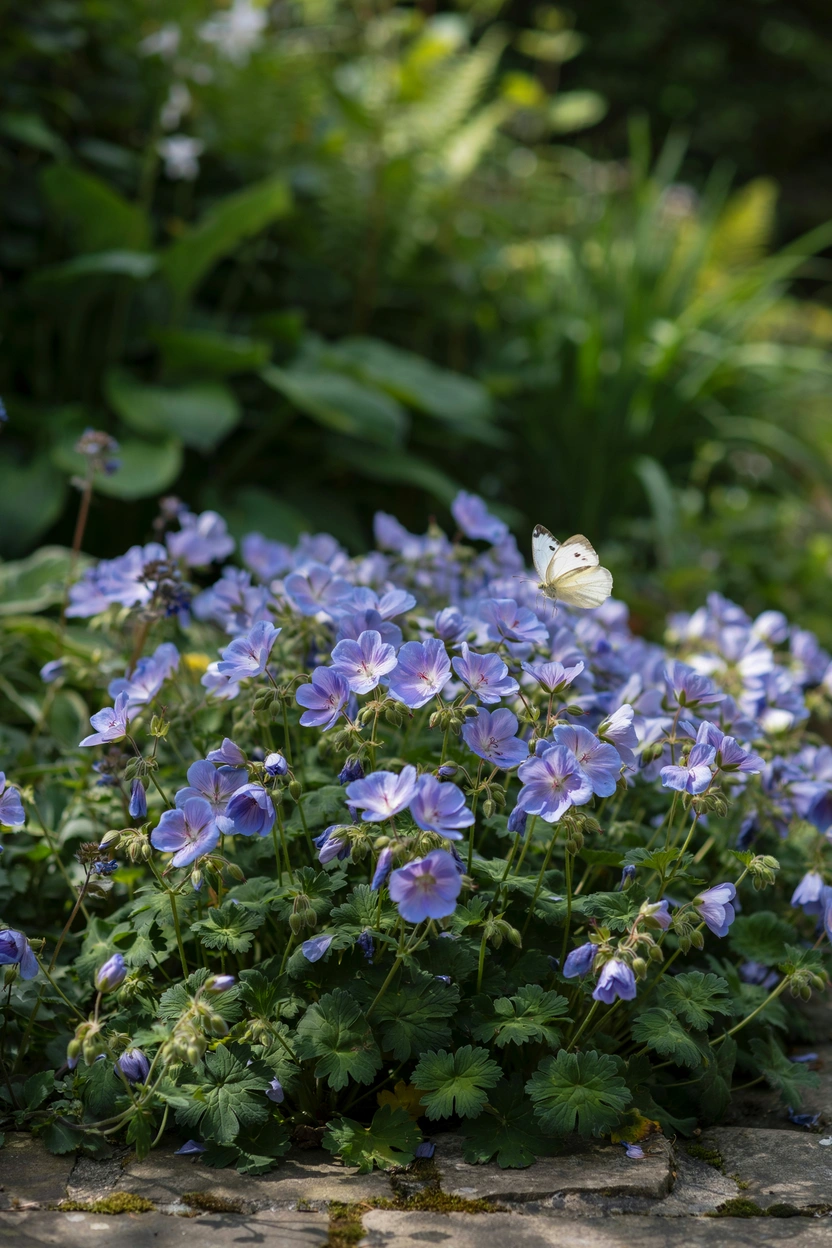
Hardy geraniums — also called cranesbill — are massively underrated in cottage garden planting, and it’s a shame because they’re some of the most hardworking perennials you’ll ever grow. Varieties like Rozanne and Johnson’s Blue bloom for an incredibly long season, spread to fill gaps on their own, and look completely effortless in a cottage-style border. They work best as a low, ground-hugging layer at the front of the border, softening edges and weaving between taller plants beautifully.
- Rozanne and Johnson’s Blue bloom from May through October — one of the longest seasons of any perennial
- Self-repairing — they fill bare patches naturally without any help from you
- Available in soft pinks, purples, and whites to match any color palette
- Use them at the border front to create a soft, flowing ground-level layer
The Three-Tier Layered Cottage Border
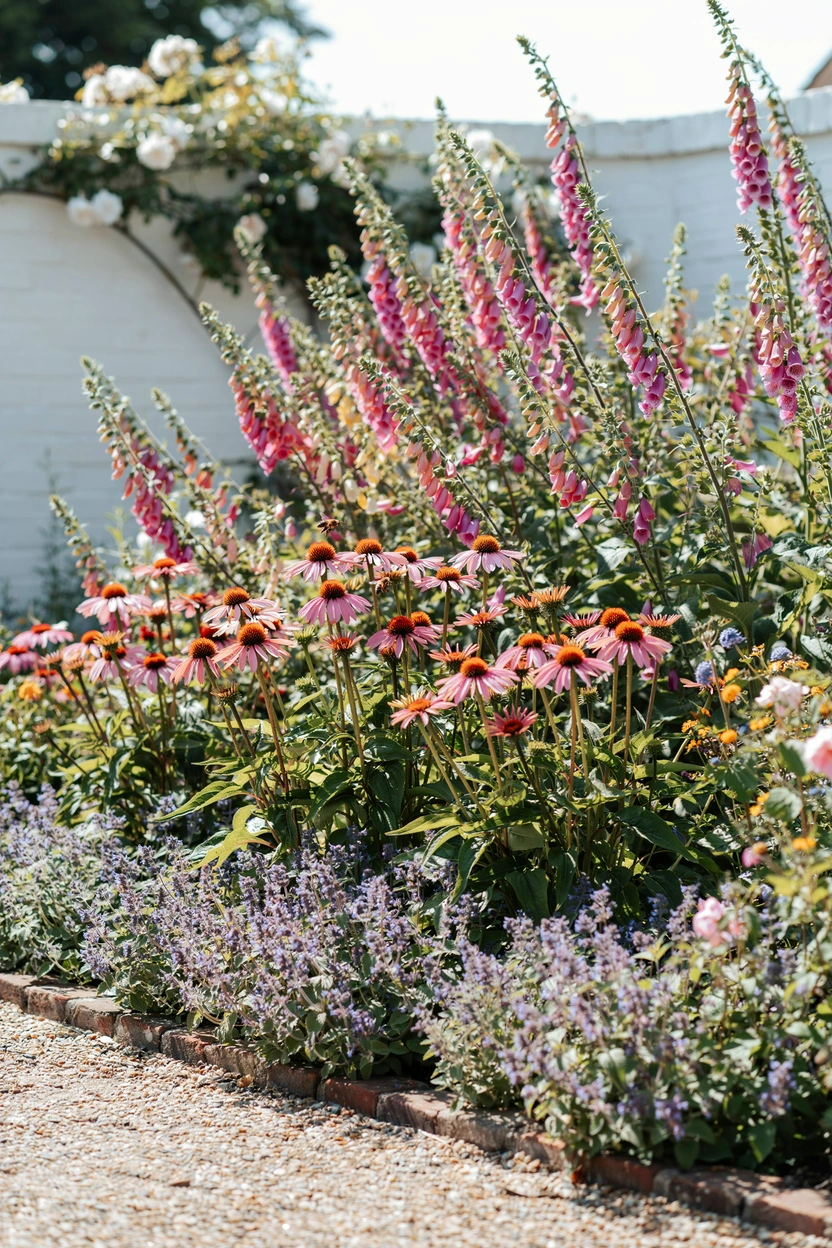
This is one of the most impactful design ideas you can use in any garden border, and it works even in the smallest spaces. The concept is simple: tall plants at the back, medium-height plants in the middle, and low-growing ones at the front. When you layer a border this way, it looks intentional and beautifully wild at the same time — like it’s been growing there naturally for years. Even a three-foot-wide bed looks twice as lush when you apply this approach.
- Back of border (tall): hollyhocks, delphiniums, or tall ornamental grasses
- Middle of border: echinacea, peonies, salvia, or garden phlox
- Front of border (low): catmint, hardy geraniums, or compact lavender
- The layered look creates depth, movement, and a sense of a fully established garden
The Spring-to-Fall Succession Border
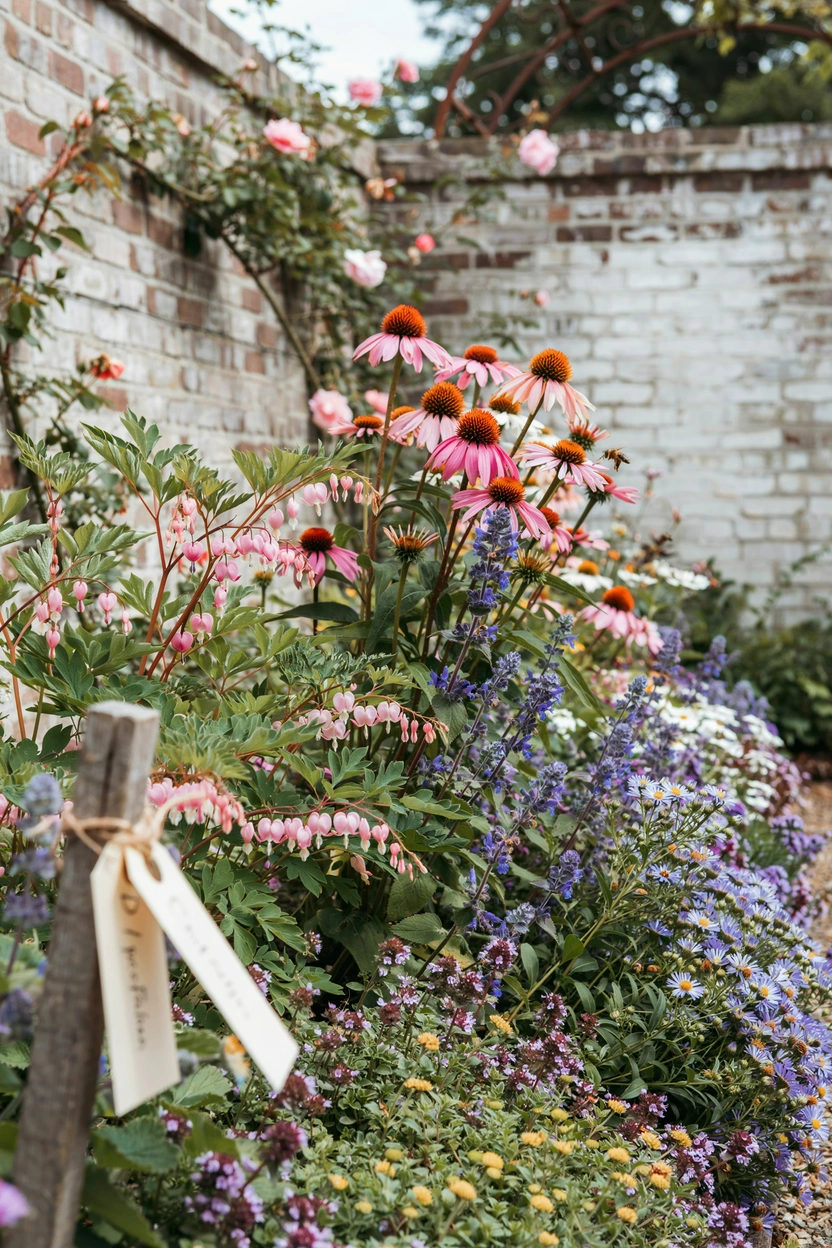
The secret to a cottage garden border that always looks good — no matter what month it is — is staggering your bloom times. If all your plants flower in June, you’ll have a stunning border for a few weeks and a pretty dull one for the rest of the year. The goal is to plan a relay race of color, where one group of plants passes the baton to the next, keeping something in bloom from March all the way through to October or beyond.
- Spring: bleeding heart, aquilegia, and alliums kick things off beautifully
- Early summer: peonies, lupines, and salvia take center stage
- Midsummer: echinacea, garden phlox, and rudbeckia keep the color coming
- Fall: asters, sedum, and ornamental grasses carry the border into autumn
The Soft Pastel Dreamer Border
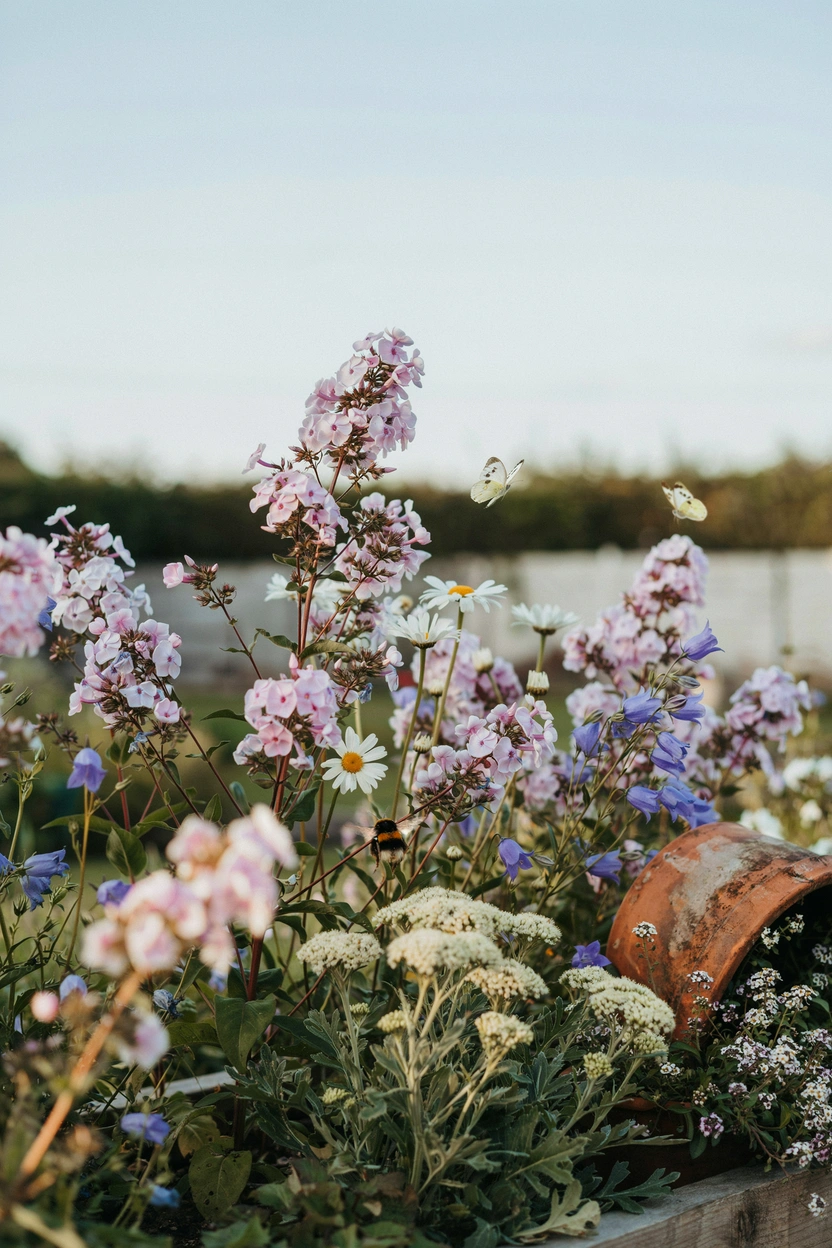
A soft, pastel cottage garden border is one of the most timeless things you can create in your outdoor space. When you build your entire planting around blush pinks, pale lavender, and creamy whites, the result feels romantic and elegant without even trying. There’s no trick to it — just the right plants, kept to a tight color palette of three or four shades, and the border practically styles itself. Gardens like this look beautiful in every season and photograph beautifully in natural light too.
- Pale pink phlox paniculata gives height and a sweet, clove-like fragrance
- Soft blush astilbe adds feathery texture and a dreamy, layered look
- White Shasta daisies bring a clean contrast that makes the pastels pop
- Pale lavender campanula and cream achillea complete the romantic palette
The Bold Hot-Color Cottage Border
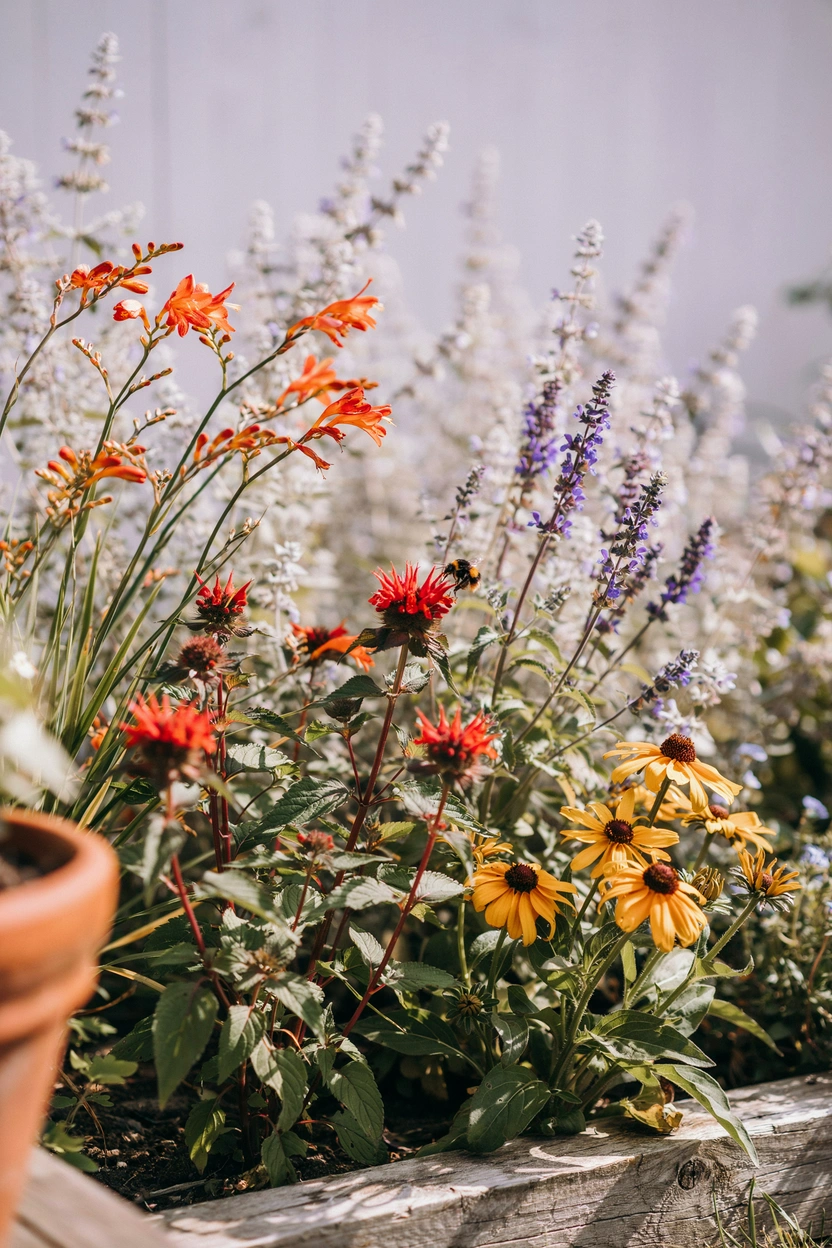
Not every cottage garden has to be soft and pastel — and if you love drama, this border is for you. Deep crimson, burnt orange, golden yellow, and rich purple combine to create a planting that makes a statement you simply can’t ignore. The key to making bold colors work in a cottage border is balancing all that heat with plenty of green foliage in between. Too much color at once can feel overwhelming, but with the right spacing and greenery, the effect is rich, vibrant, and genuinely breathtaking.
- Crocosmia in orange-red paired with deep purple salvia creates a stunning contrast
- Golden rudbeckia with burnt orange helenium gives a warm, sunlit glow
- Rich red monarda with bright yellow achillea is a bold but balanced combination
- Balance the hot tones with generous amounts of green foliage throughout
The Fragrant Cottage Border
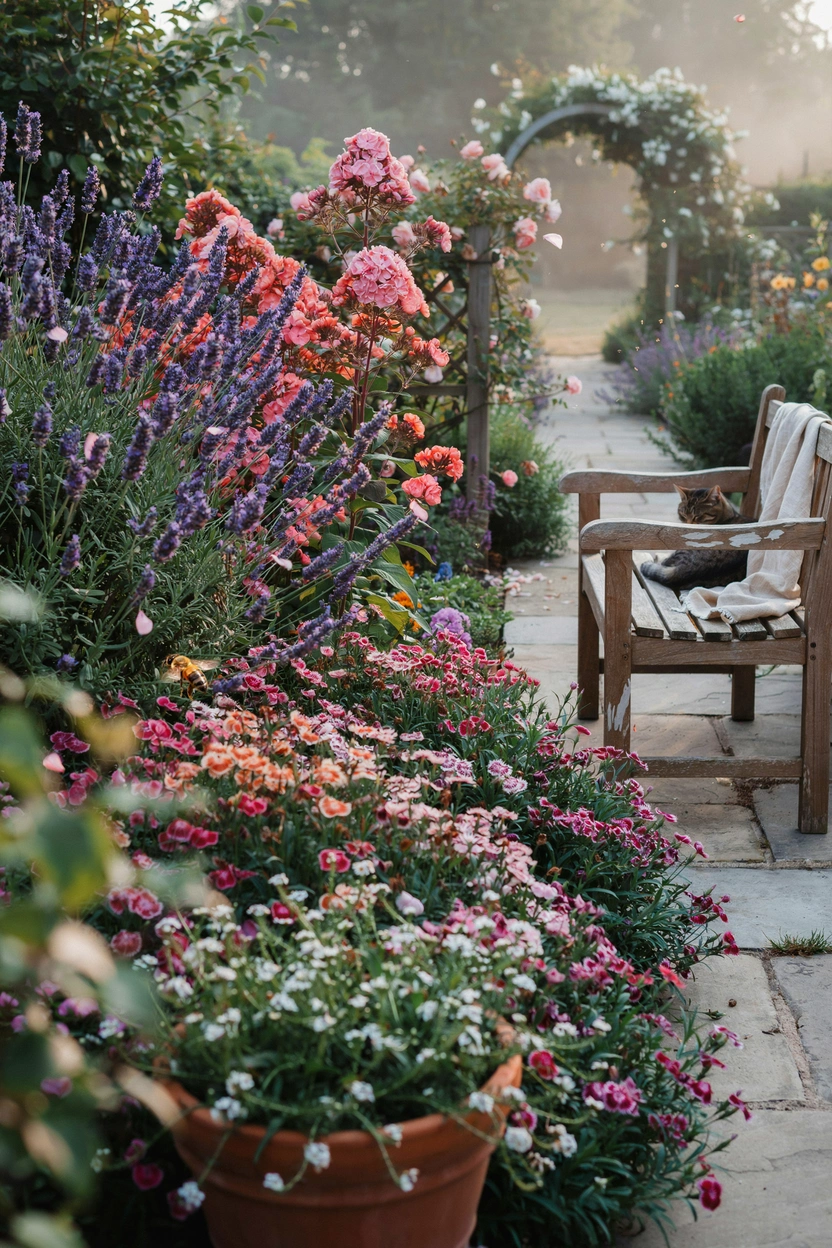
Imagine walking toward your garden and smelling it before you even see it. A fragrant border is one of the most underrated garden pleasures there is, and it’s genuinely easy to create when you choose the right perennials. Scent adds a whole extra dimension to your outdoor space — one that no amount of color alone can replicate. This border is especially magical on warm summer evenings when the fragrance really opens up in the cooling air.
- Lavender is the essential base — long-blooming, fragrant, and beautiful year-round
- Phlox paniculata has a sweet, clove-like scent that carries beautifully in warm air
- Dianthus brings a spicy-sweet carnation fragrance right at nose level
- Sweet rocket (Hesperis) intensifies its scent at dusk — perfect near a seating area
- Place this border near a gate, garden bench, or path for maximum sensory enjoyment
The Pollinator Paradise Border
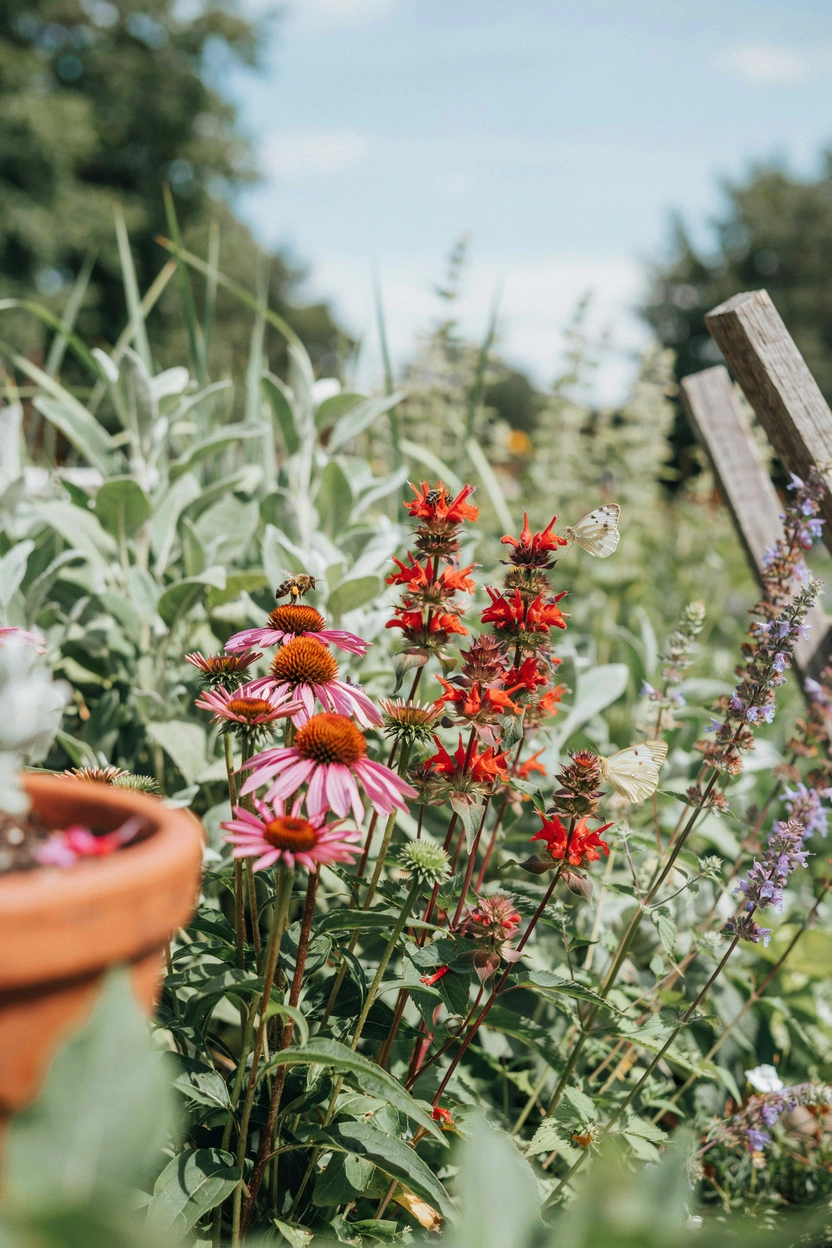
This border is just as beautiful as any other on this list — but it also does something genuinely good for the world around you. Designed specifically to attract bees, butterflies, and hoverflies, it buzzes with life from early summer right through to autumn. Once you start planting for pollinators, you’ll be amazed at how quickly your garden transforms into a living, moving ecosystem. It’s one of those borders that’s just as rewarding to sit and watch as it is to look at.
- Echinacea is an absolute bee magnet — one of the best pollinator perennials you can grow
- Agastache attracts hummingbirds and is incredibly long-blooming
- Monarda (bee balm) does exactly what the name suggests — the bees adore it
- Achillea’s flat-topped flower heads make perfect landing pads for butterflies
- Veronicastrum’s tall blue spires are a favourite for butterflies late in the season
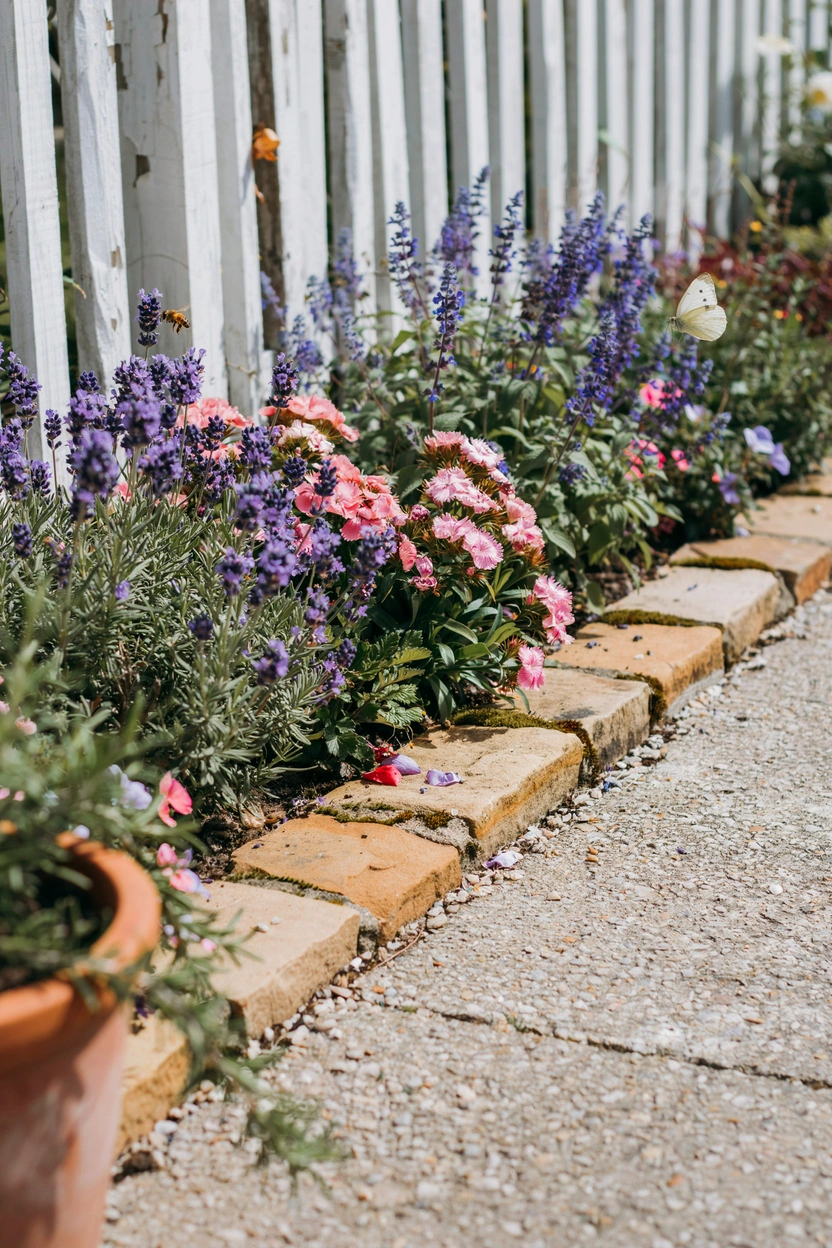
The Narrow Strip Border — Big Impact in a Tiny Space
Don’t have much room? That’s absolutely no reason to miss out on a beautiful cottage garden border. A 12 to 18-inch strip can still look incredible — you just need to be a little more thoughtful about plant choice. The trick is picking compact varieties with long blooming seasons and a mix of textures to keep the eye moving. Add at least one slightly taller element to give the illusion of depth, and even the smallest border suddenly looks designed and intentional.
Want to make your garden feel even more enchanting? These fairy garden ideas with stone houses add magical charm to any outdoor space.
- Dwarf catmint (Nepeta ‘Walker’s Low’) is ideal — compact, long-blooming, and soft
- Compact hardy geraniums fill in beautifully without taking up too much space
- Low-growing salvia nemorosa gives deep purple-blue color in a neat, tidy habit
- Dianthus works brilliantly at path edges with its sweet fragrance and bright blooms
- Add one taller plant like a dwarf agastache to give the border a sense of depth
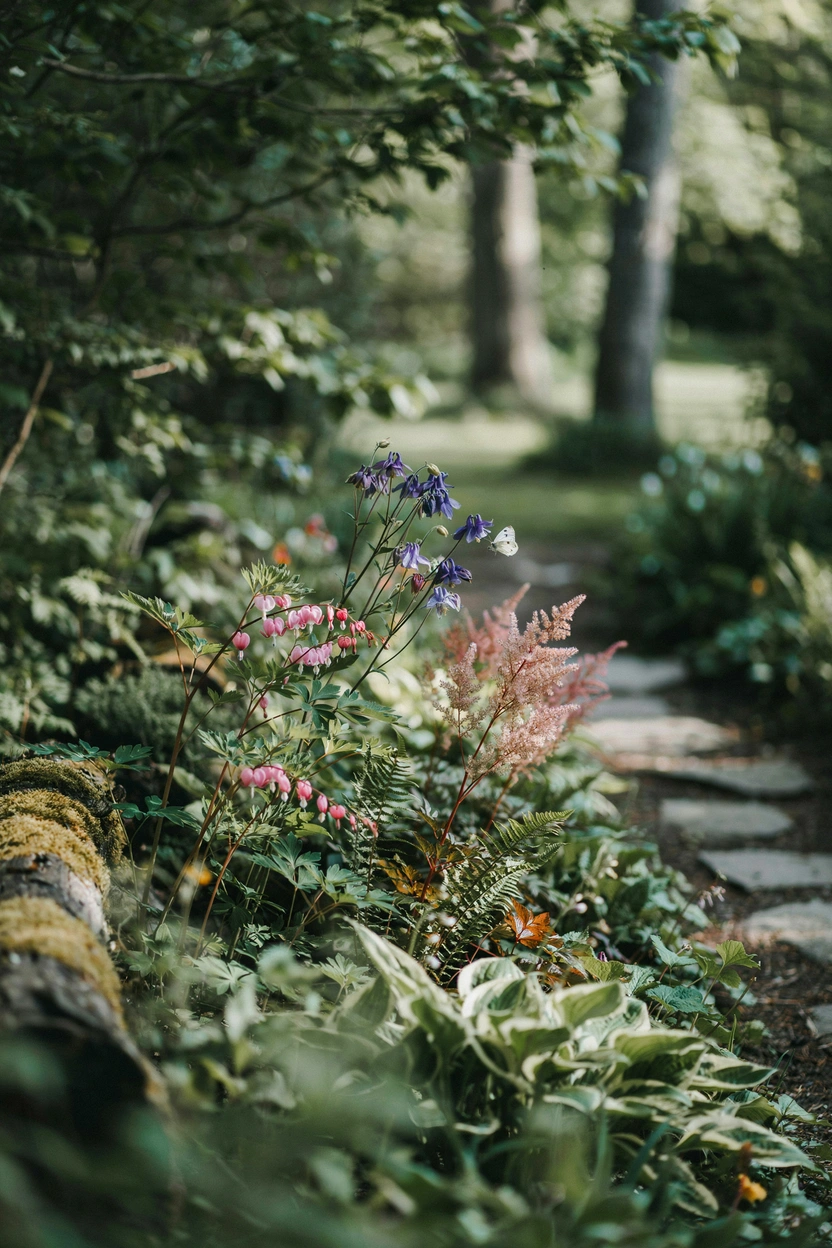
The Shaded Woodland-Edge Border
If you have a fence that faces north or a tree casting shade across part of your garden, don’t fight it — lean into it completely. Some of the most romantic cottage garden plants actually prefer shade, and together they create a lush, woodland-edge atmosphere that feels genuinely magical. This is the kind of border that makes visitors stop in their tracks and ask what that plant is — which is honestly one of the best things a garden can do.
- Aquilegia (columbine) is delicate, self-seeds freely, and comes in beautiful mixed colors
- Astilbe thrives in damp shade and produces stunning feathery plumes in summer
- Pulmonaria offers spotted silver foliage and very early spring flowers
- Bleeding heart has the most elegant arching stems with heart-shaped dangling blooms
- Foxglove tolerates dappled shade and adds essential vertical drama to the border
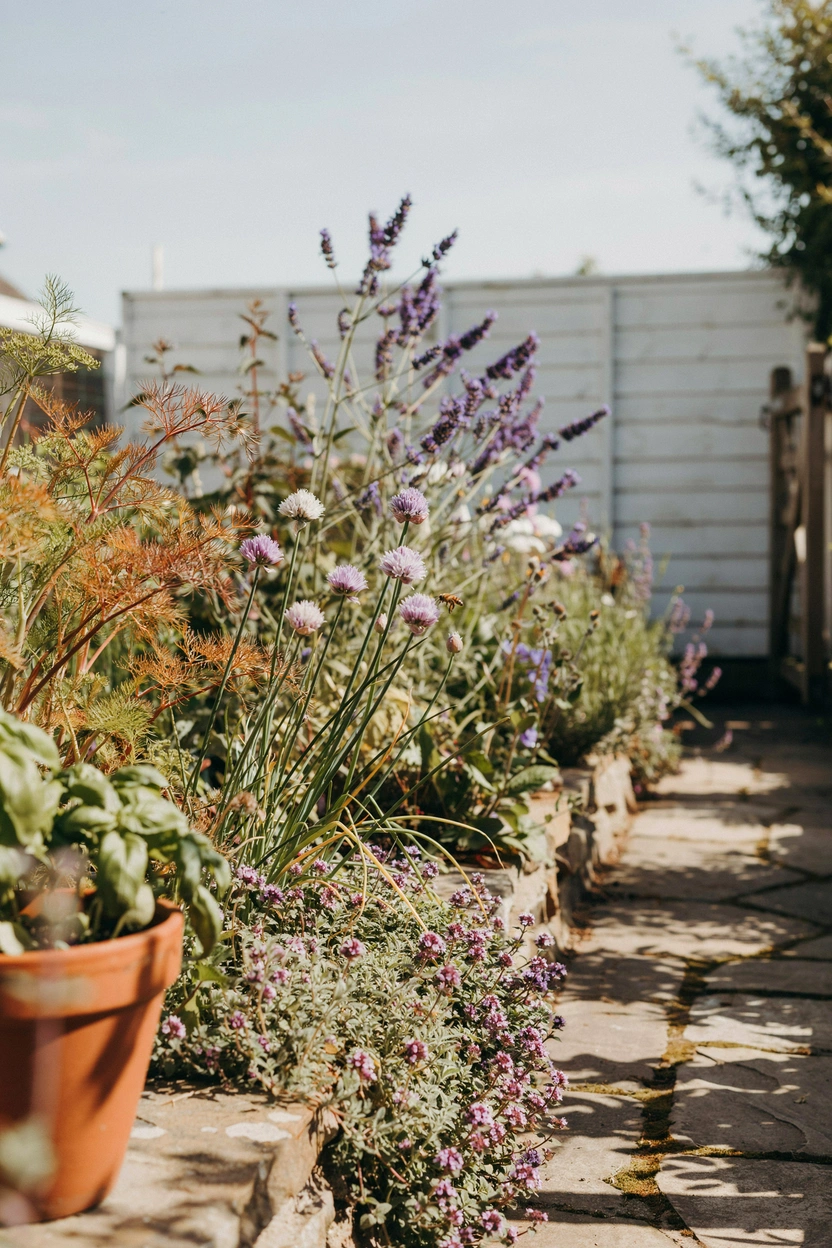
The Edible Cottage Border — Herbs and Flowers Combined
Who says a garden border has to be purely decorative? Some of the most beautiful plants in the cottage garden world are also genuinely useful in the kitchen, and mixing perennial herbs into your flower border adds texture, fragrance, and real everyday function all at once. This is actually the original cottage garden philosophy — beauty and practicality growing side by side, the way gardens were always meant to work. And visually, the mix of leaf shapes and textures creates a richness that flowers alone can’t quite achieve.
- Lavender provides year-round structure, fragrance, and culinary use all in one plant
- Chive flowers are gorgeous purple pompoms in spring — and completely edible
- Bronze fennel adds a wispy, feathery texture that looks elegant behind flowering plants
- Creeping thyme is the perfect path-edge plant — low, fragrant, and incredibly tough
- Sage brings beautiful silver foliage and purple flower spikes in early summer
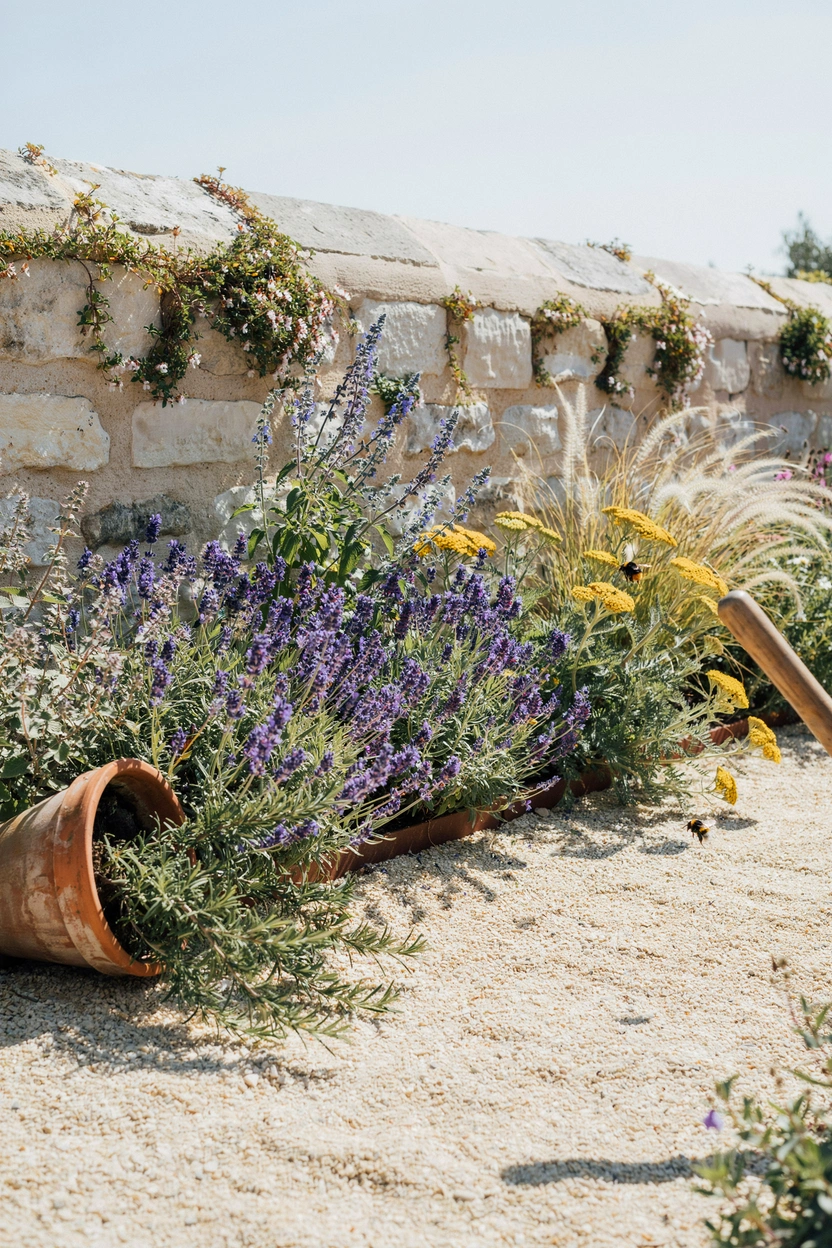
The Gravel Garden Cottage Border
If you live in a dry climate, or you simply want a border that asks very little of you once it’s established, a gravel garden cottage border might be exactly what you’ve been looking for. A pale gravel mulch base with drought-tolerant Mediterranean perennials looks effortlessly stylish — clean, relaxed, and completely in keeping with the cottage aesthetic. The contrast of soft, billowing blooms against pale gravel texture is genuinely beautiful, and this type of border practically looks after itself after the first season.
- Lavender is the classic choice — it thrives in gravel and looks stunning against pale stone
- Salvia nemorosa delivers intense blue-purple color with almost no maintenance needed
- Golden or white achillea adds flat-topped flower heads that last for weeks
- Ornamental grasses bring movement and soft texture that looks beautiful in the breeze
- Sedum keeps its structure right through autumn and into winter for long-lasting interest
The Climbing Rose and Perennial Underplanting Border
This might just be the most beautiful idea on this entire list. When you train a climbing rose against a fence or wall above your perennial border, the whole planting suddenly has twice the height and three times the visual impact. The roses frame everything below them, and the right underplanting keeps the base of the border looking full, colorful, and lush — even hiding the bare lower stems that climbing roses always develop over time. Choose a repeat-blooming variety, and you’ll have flowers from June right through to October.
- Catmint is the classic rose companion — it hides the bare ankles and blooms in perfect harmony
- Hardy geraniums fill gaps at the base with soft, long-lasting color
- Blue campanula bells complement rose pinks and whites in a really stunning way
- Violet salvia spikes against rose blooms create one of the most beautiful combinations in cottage gardening
The Four-Season Interest Border — Yes, Including Winter
Most garden borders go almost completely dormant in winter, leaving you with bare soil and nothing much to look at for months on end. But a well-planned perennial cottage border can offer genuine beauty even in the coldest months — through sculptural seedheads, swaying grasses, and evergreen foliage that holds its ground when everything else has faded. The trick is leaving your stems standing through winter instead of cutting everything back in autumn. Your garden — and the birds — will absolutely thank you for it.
- Rudbeckia seedheads look stunning with frost on them on a cold winter morning
- Globe thistle (echinops) produces dramatic spherical seedheads that hold their shape all winter
- Ornamental grasses like pennisetum and calamagrostis move beautifully in the winter wind
- Sedum keeps its structure through the coldest months and adds soft color to the winter border
- Echinacea seedheads attract goldfinches — leave them standing until late February
FAQS
What are the best perennials for a cottage garden border?
Lavender, catmint, echinacea, hardy geraniums, peonies, foxgloves, and salvia are among the most reliable and beautiful choices for a classic cottage garden border. They’re all easy to grow, come back every year, and look stunning together.
How do I make a cottage garden border look full all season?
Use succession planting — choose plants that bloom at different times from spring through fall so there’s always something in flower. A mix of early, mid, and late-season perennials is all you need.
Can I make a cottage garden border in a small space?
Yes! Even an 18-inch deep border can look stunning with compact plants like dwarf catmint, dianthus, and low salvia varieties. Add one taller element to give the illusion of more depth.
How do I keep a cottage garden border low-maintenance?
Choose self-sufficient perennials like catmint, hardy geraniums, and rudbeckia. Use a good mulch to suppress weeds, and let plants self-seed naturally to fill gaps over time.
What perennials come back every year?
Most of the plants in this list — including lavender, echinacea, catmint, peonies, astilbe, hardy geraniums, and salvia — are true perennials that return reliably every single year without replanting.