
Last week, a friend came over and said something that stayed with me:
“Your home looks nice… but it feels a little empty.”
At first, I brushed it off. The place was clean, organized, and everything was “in its place.” But later that night, I couldn’t stop thinking about it. Was something missing?
A few days later, while scrolling online, I came across a few Mexican-style homes—and instantly, something felt different. The walls carried warm, earthy colors. The spaces felt lived-in, not staged. There were textures, patterns, handmade details… and somehow, every corner told a story. It wasn’t about perfection—it was about personality.
A beautiful home isn’t just about how it looks. It’s about how it feels. And you don’t need a big budget or luxury furniture to create that feeling. Sometimes, all it takes is the right mix of colors, textures, and meaningful pieces that reflect you.
So if your space feels a little “unfinished” or lacking warmth, you’re not alone—and you don’t need to start from scratch.
In this post, I’m sharing 20 simple Mexican home decor ideas you can actually try—whether you’re decorating one corner or transforming your entire home. These ideas are easy, affordable, and full of life—perfect for turning any space into something that truly feels like home.
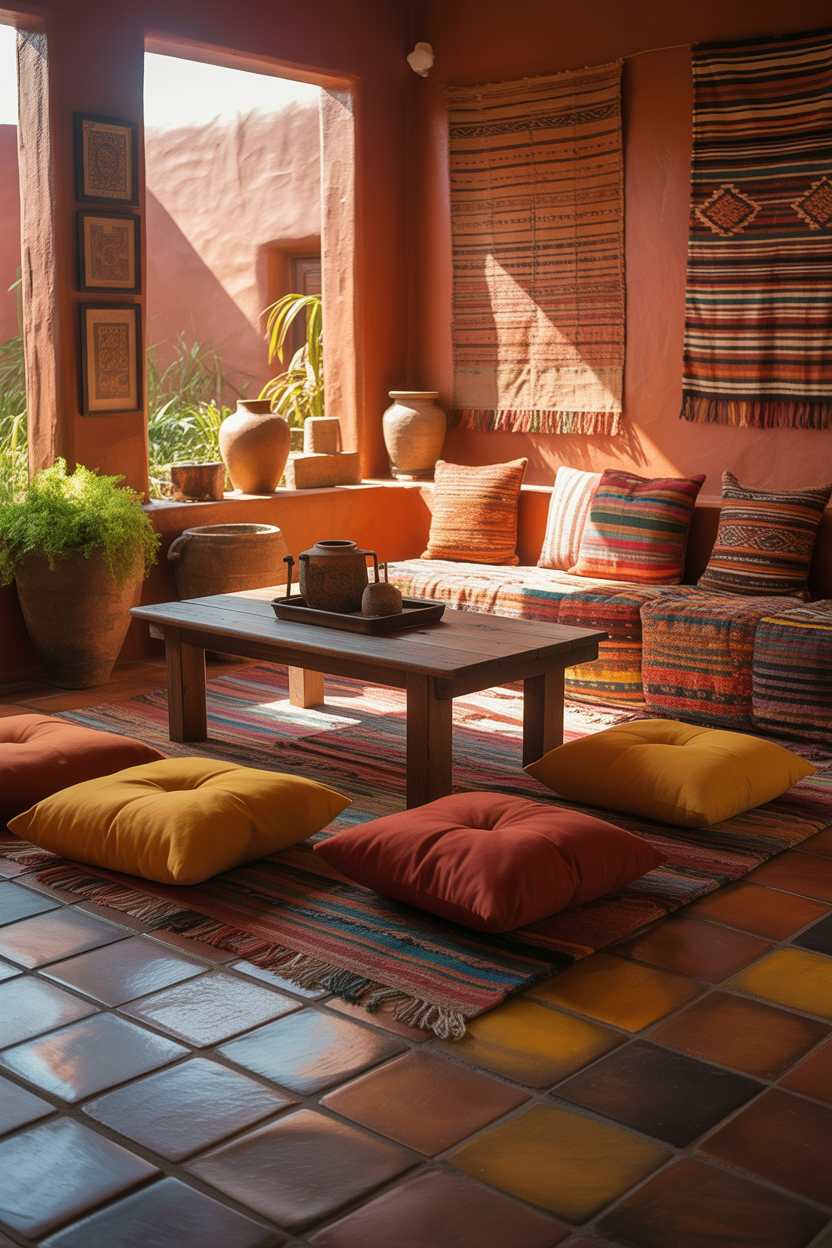
Saltillo Terracotta Floors: The Foundation of Every Authentic Mexican Home
Nothing sets the tone of a Mexican-inspired space faster than terracotta floors. Saltillo tiles — those handmade, sun-dried clay pavers from northern Mexico — bring instant warmth to any room. They’re imperfect by design, and that’s exactly what makes them beautiful.
Tips: Unsealed Saltillo has a matte, earthy look; sealed tiles are more durable and slightly richer in color. If real terracotta feels like too much maintenance, try porcelain alternatives like Marazzi’s hex tiles or Niza Harmony in clay — same warm look, fraction of the upkeep. Pair with dark grout for contrast, and let the floor be the star.
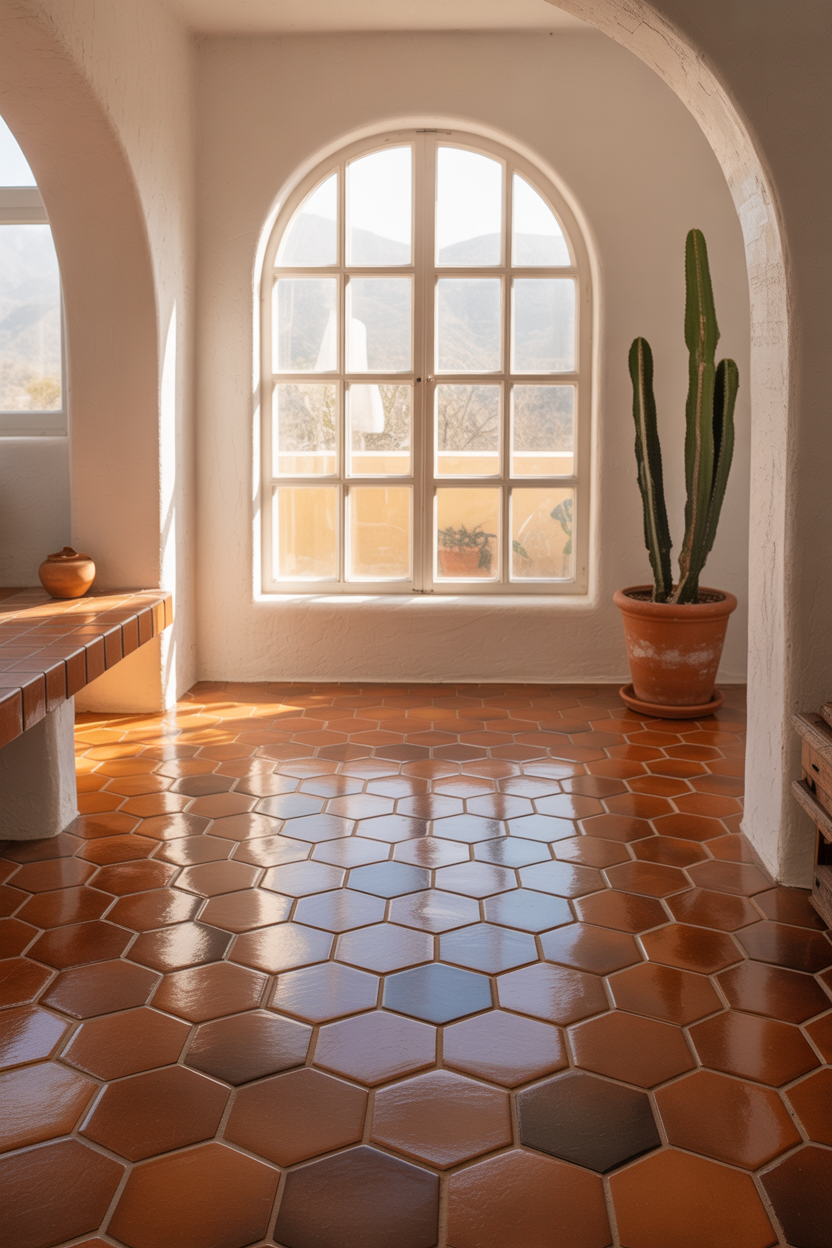
Talavera Tile Backsplashes and Accent Walls That Turn Heads
Talavera tiles come from Puebla, Mexico — and they’ve been hand-painted there since the 16th century. Each one is slightly different, which means your backsplash will never look like anyone else’s. That’s a big deal when everyone else has the same subway tile from Home Depot.
Tips: Use blue-and-white Talavera for a clean, striking look. Go multicolor for a more festive, traditional feel. Don’t limit it to the kitchen — stair risers, bathroom niches, and fireplace surrounds all look incredible with Talavera. Surround with neutral walls so the tiles stay the focal point and don’t compete with everything else.
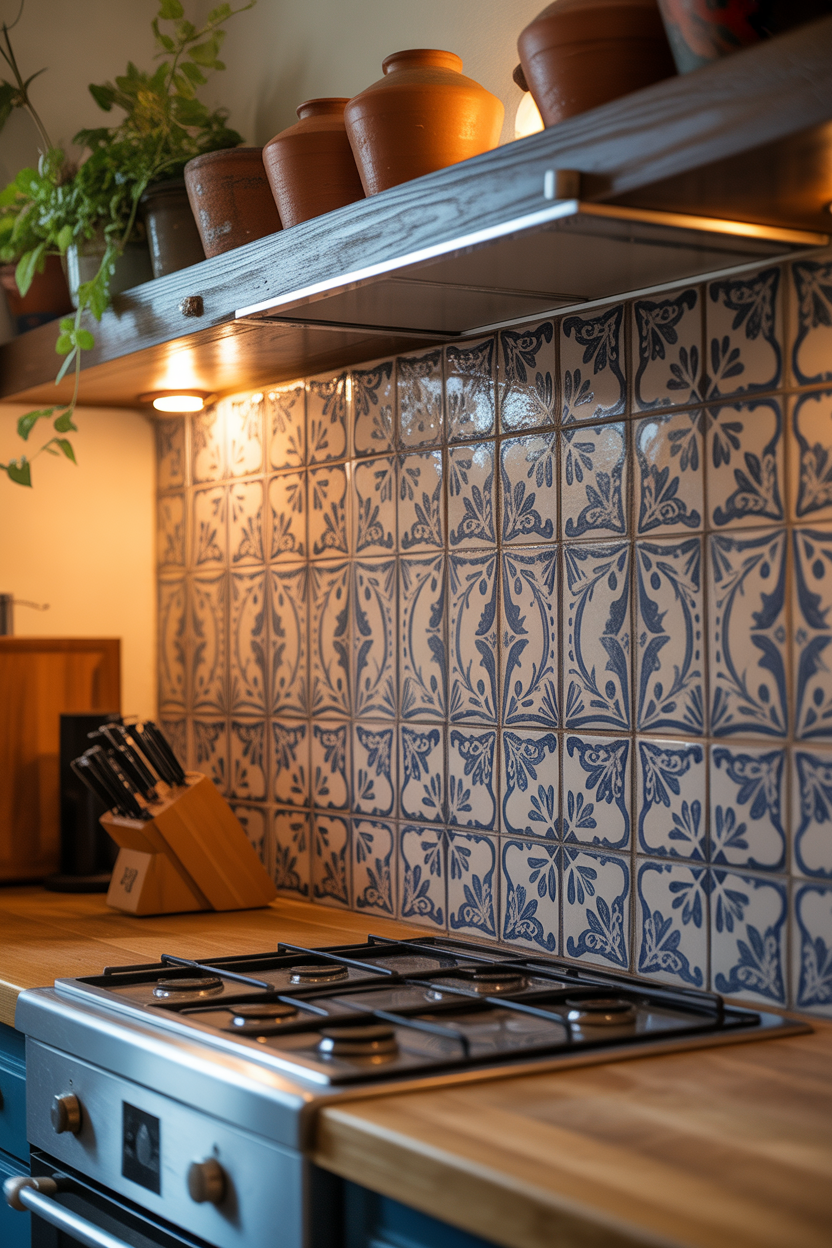
Limewash and Adobe-Finish Walls: Texture That Makes a Room Feel Ancient and Alive
Flat paint is boring. Limewash walls have depth — they shift color depending on the light, looking almost terracotta at noon and deep amber at dusk. This is exactly the kind of texture you see in old haciendas, and it’s now one of the biggest interior trends around.
Tips: Layer two similar earth tones — start with a base of burnt sienna, then drag a lighter ochre over it with a wide brush. Brands like Portola Paints make this DIY-friendly. Keep trim white or cream so the wall breathes. This works especially well behind a sofa, bed, or fireplace as an accent wall.
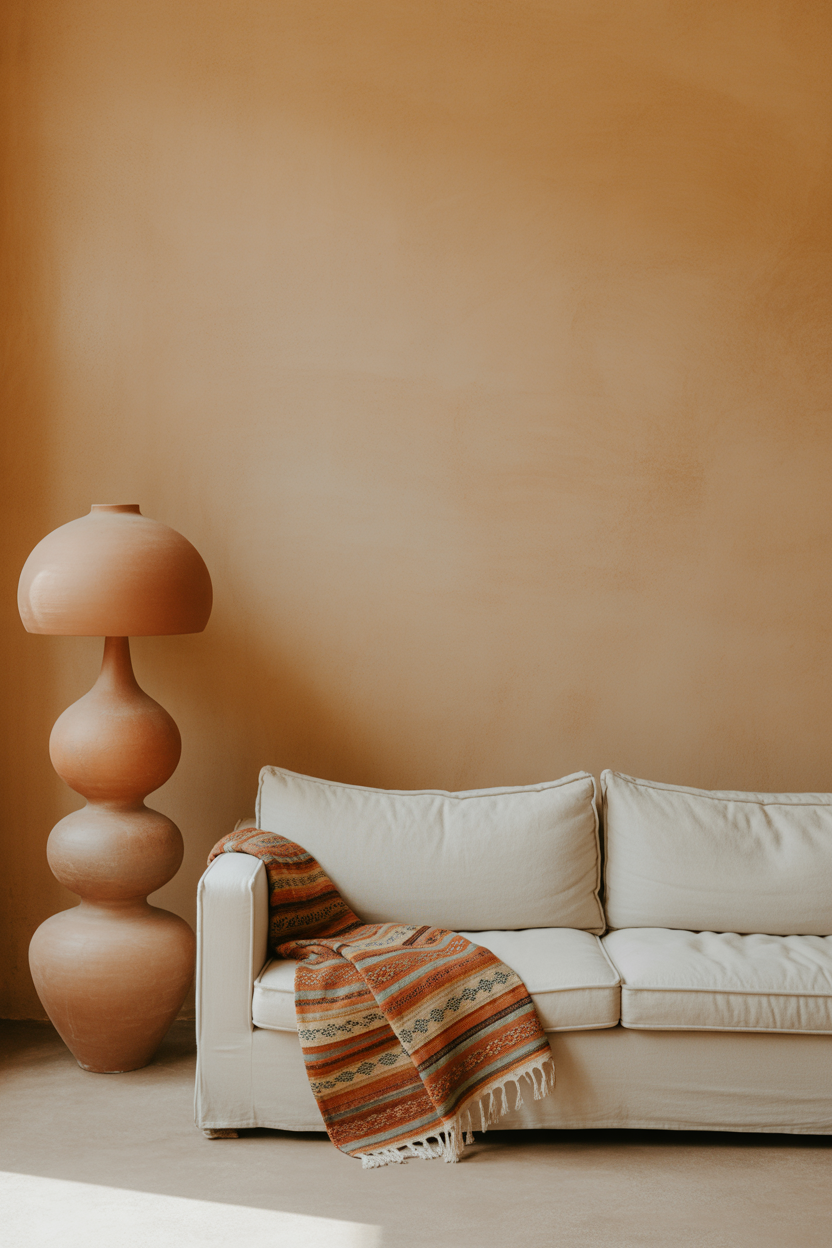
Exposed Wooden Beams: The Architectural Move That Defines the Hacienda Look
You know that feeling when you walk into a room with big wooden ceiling beams and everything just feels grounded? That’s not by accident. Exposed beams are one of the oldest features of Mexican hacienda architecture — and they still look stunning today.
Tips: Real reclaimed timber is the dream, but faux wood beams (lightweight foam or polyurethane) are shockingly realistic and a fraction of the cost. Leave them natural for warmth, or whitewash for a slightly softer look. Hang pendant lights or a wrought iron chandelier directly from the beams — it’s dramatic in the best way.
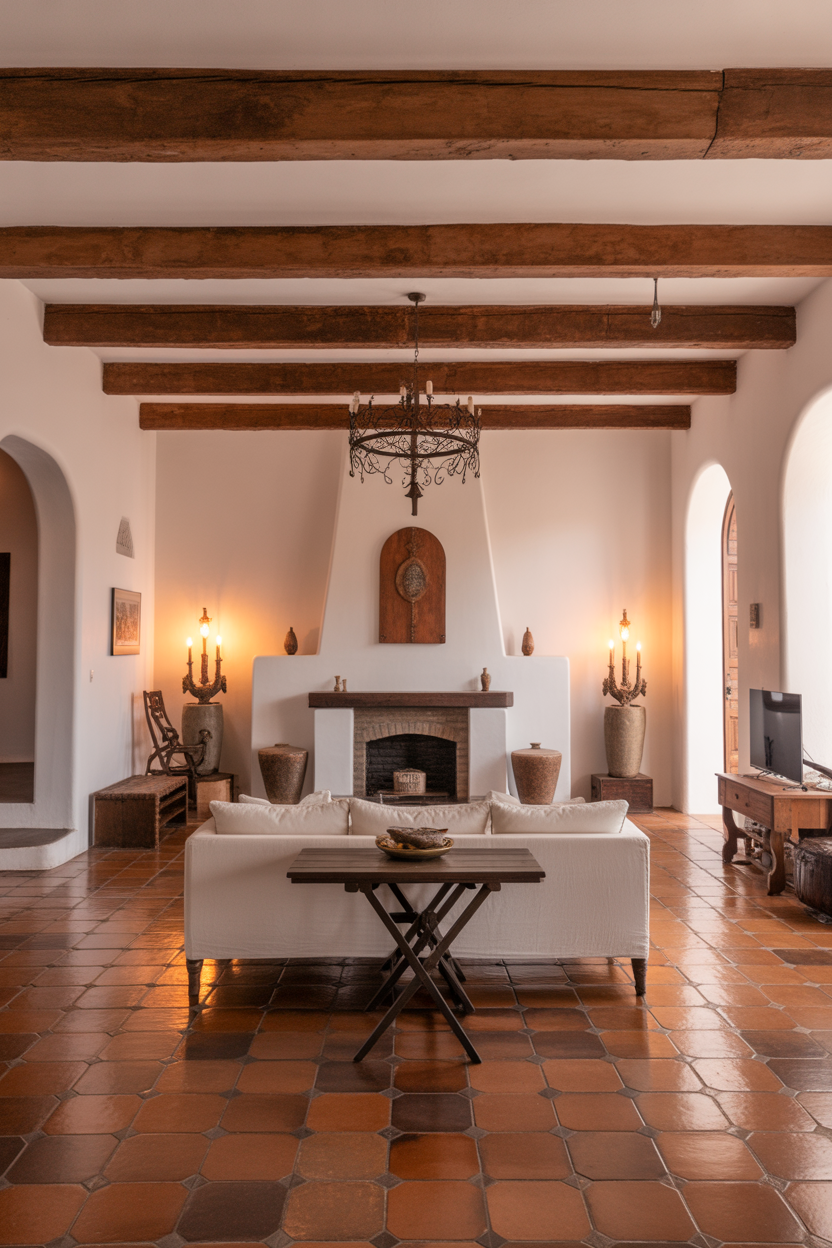
Arched Doorways and Display Niches: The Architectural Soul of Mexican Interior Design
Straight lines are fine. But arches? Arches have personality. In traditional Mexican homes, rounded doorways and built-in wall niches aren’t just structural — they’re part of the design story. They slow you down and make you look.
If you’re styling other overlooked spaces, don’t skip these powder room design ideas that make a lasting impression.
Tips: You can add an arch to an existing doorway with a drywall arch kit — it’s a weekend DIY project that completely transforms a room. For niches, line the inside with mosaic tile or exposed brick and add a warm LED strip light. Style with folk art pieces, a single Talavera vase, or candles. Even a small alcove becomes a moment worth pausing at.
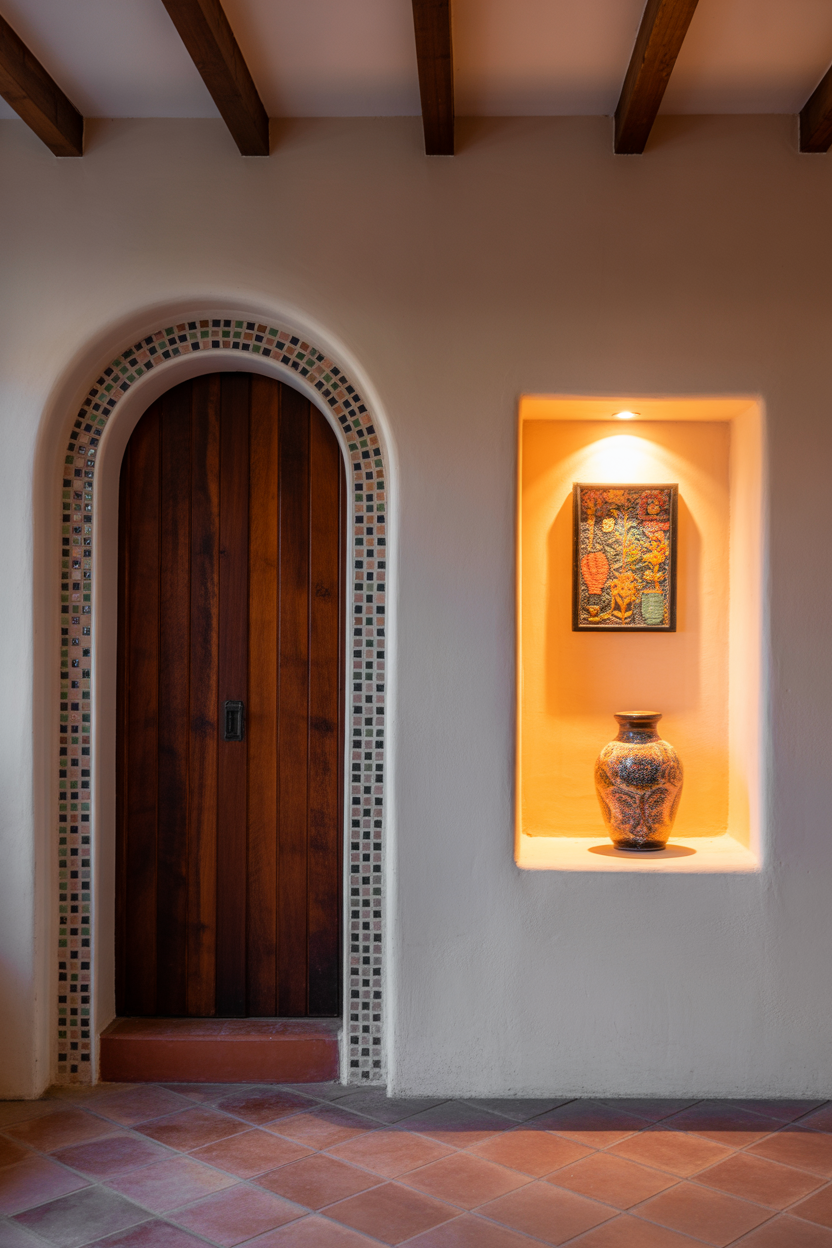
Equipale Furniture: The Rustic Leather-and-Cedar Pieces Your Living Room Is Missing
Equipale chairs are one of those things you don’t know you need until you see them. They’re made from cedar frames wrapped in pigskin leather — handcrafted in Jalisco, Mexico — and they age beautifully. Think barrel-shaped chairs and stools with a look that’s somewhere between rustic and sculptural.
Tips: Condition the leather twice a year and keep it out of direct sunlight to prevent cracking. They work indoors and on covered patios equally well. Mix one or two Equipale chairs with a modern sofa — it breaks up the space and adds an authenticity that no furniture store can replicate.
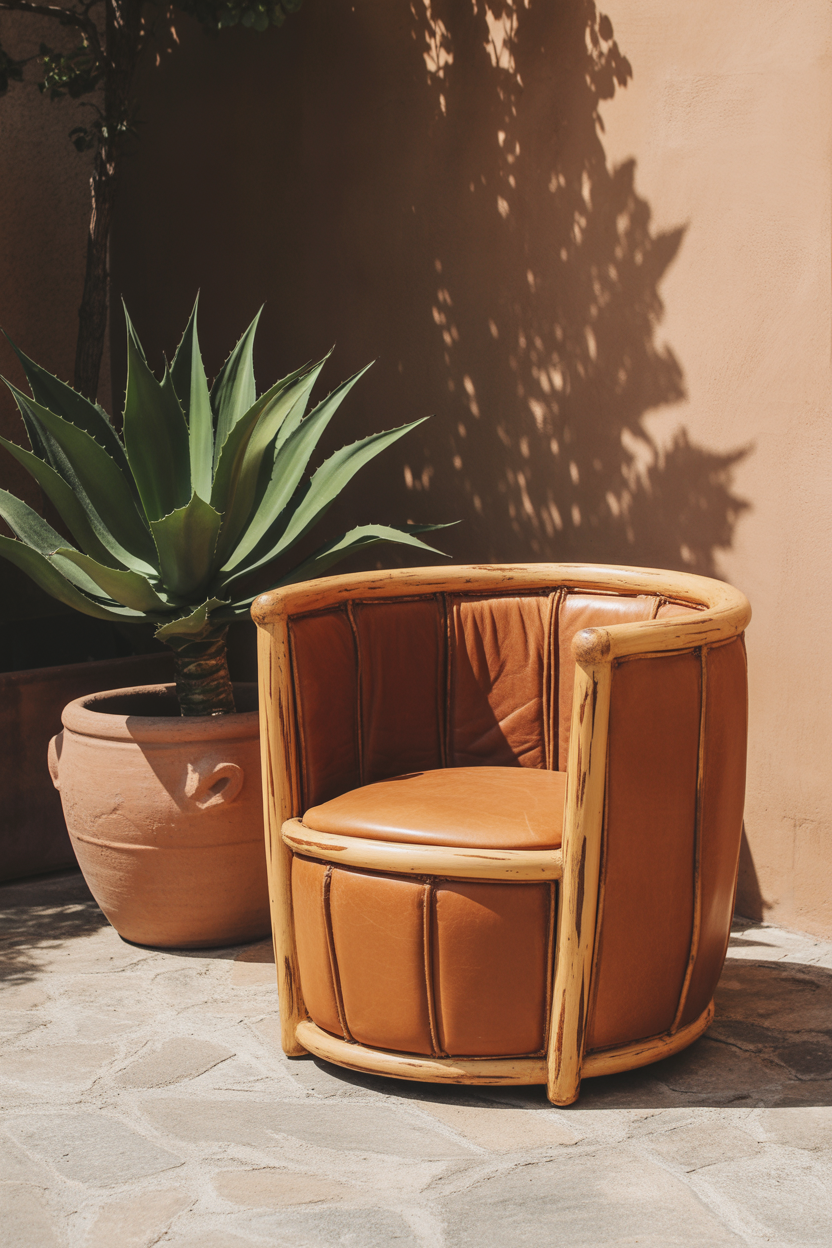
Zapotec Rugs and Serape Throws: How to Layer Textiles the Mexican Way
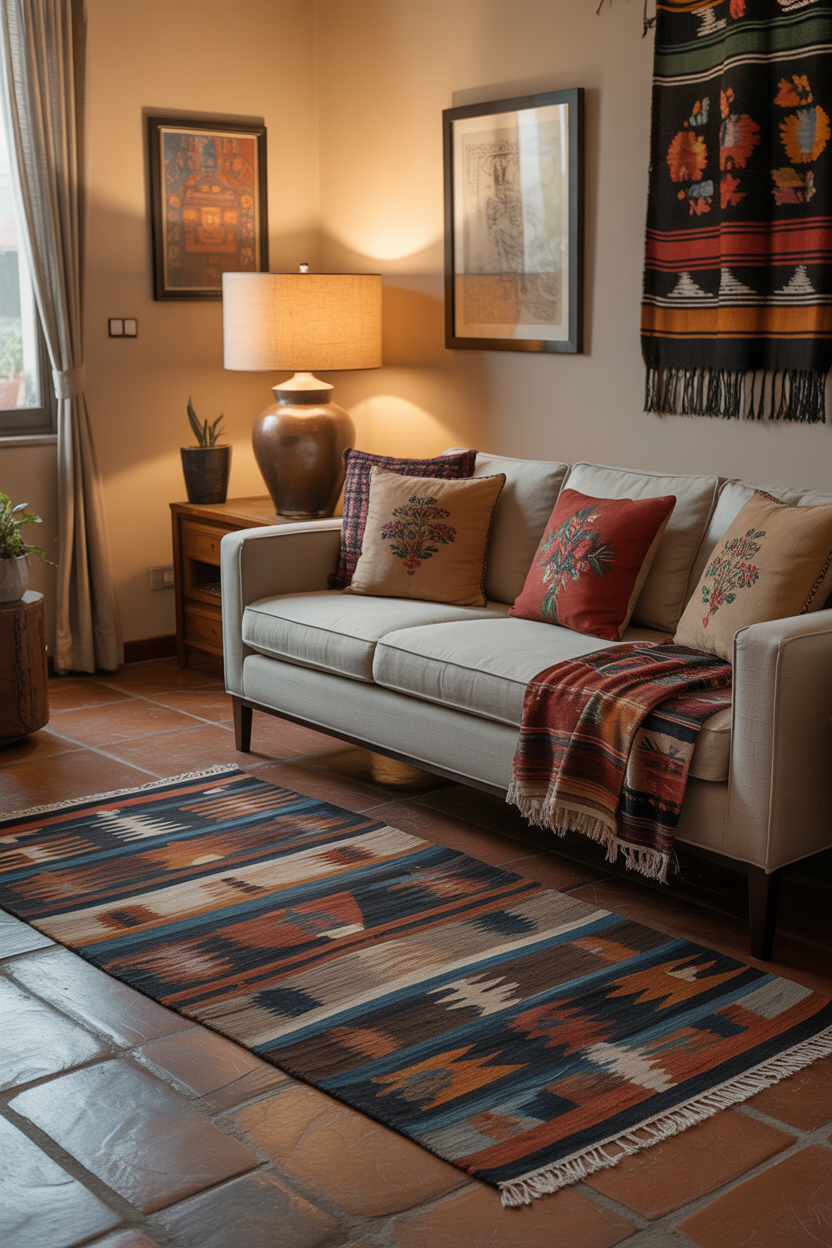
Textiles are one of the easiest ways to add Mexican character to any space — and you don’t need to do a full renovation. A Zapotec rug on the floor, a serape throw over the sofa, embroidered cushions on a chair. Done right, it feels layered and intentional, not chaotic.
Tips: Zapotec rugs (from Oaxaca) feature bold geometric patterns and are hand-woven on foot looms — buy from verified artisan sources to support the real craft. Serapes are the long, striped blankets that look great draped over a sofa arm or the foot of a bed. Mix patterns freely — the more contrast, the more authentic the feel.
Otomi Tapestries and Embroidered Cushions
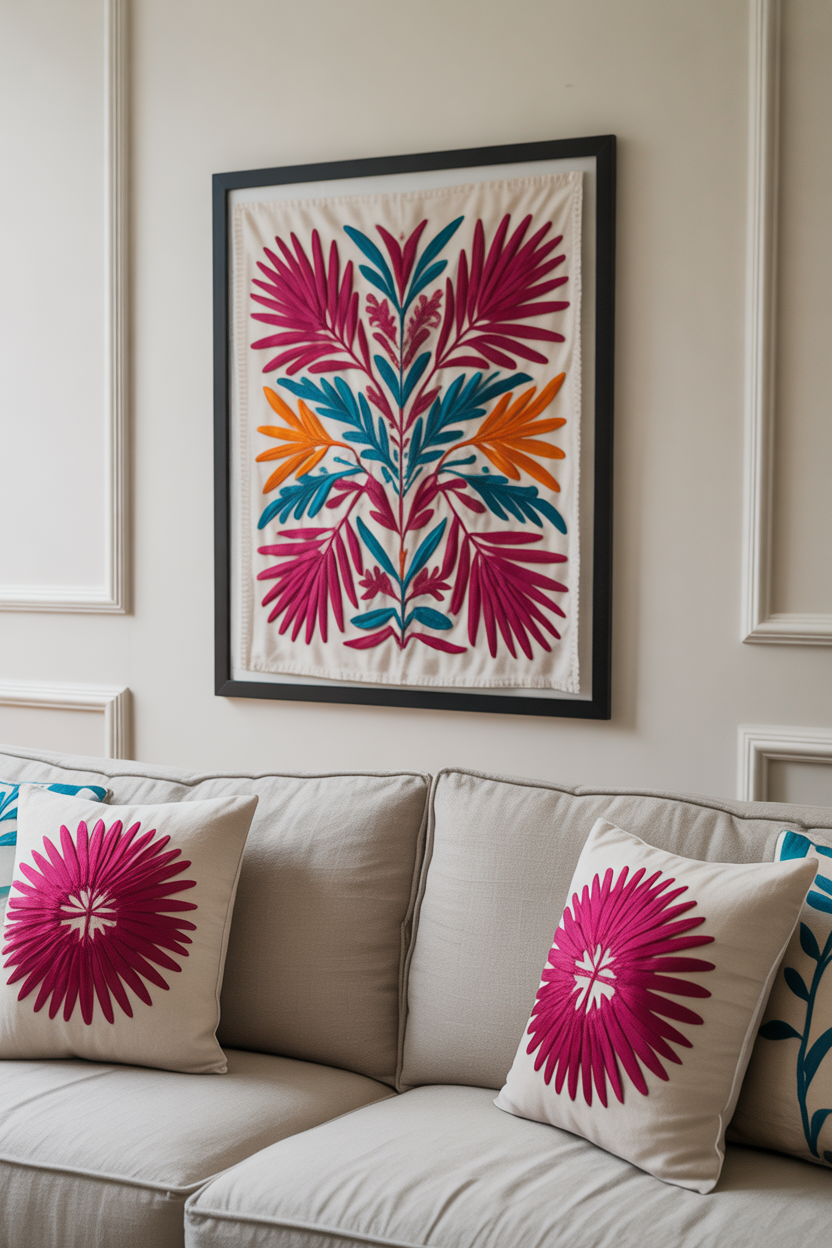
If there’s one thing that’ll make your walls actually interesting, it’s Otomi fabric. This hand-embroidered textile from the Hidalgo region of Mexico features dense, colorful illustrations of animals and flowers — and no two pieces are the same. Framed or stretched on a canvas, it works as wall art that people will genuinely stop and look at.
If you’re decorating a tiny bedroom, you’ll love these DIY indoor gallery wall ideas for a small space that feel bigger and more luxurious—perfect to pair with your gallery wall.
Tips: Look for authentic Otomi fabric on Etsy from Mexican artisan sellers — it’s more affordable than you’d think, especially for smaller pieces. Frame it with a simple white or natural wood frame. For cushions, pair Otomi embroidery on a neutral sofa — the contrast is stunning. One piece can anchor an entire room.
Hand-Carved Wood Doors and Furniture: Colonial Craftsmanship in a Modern Home
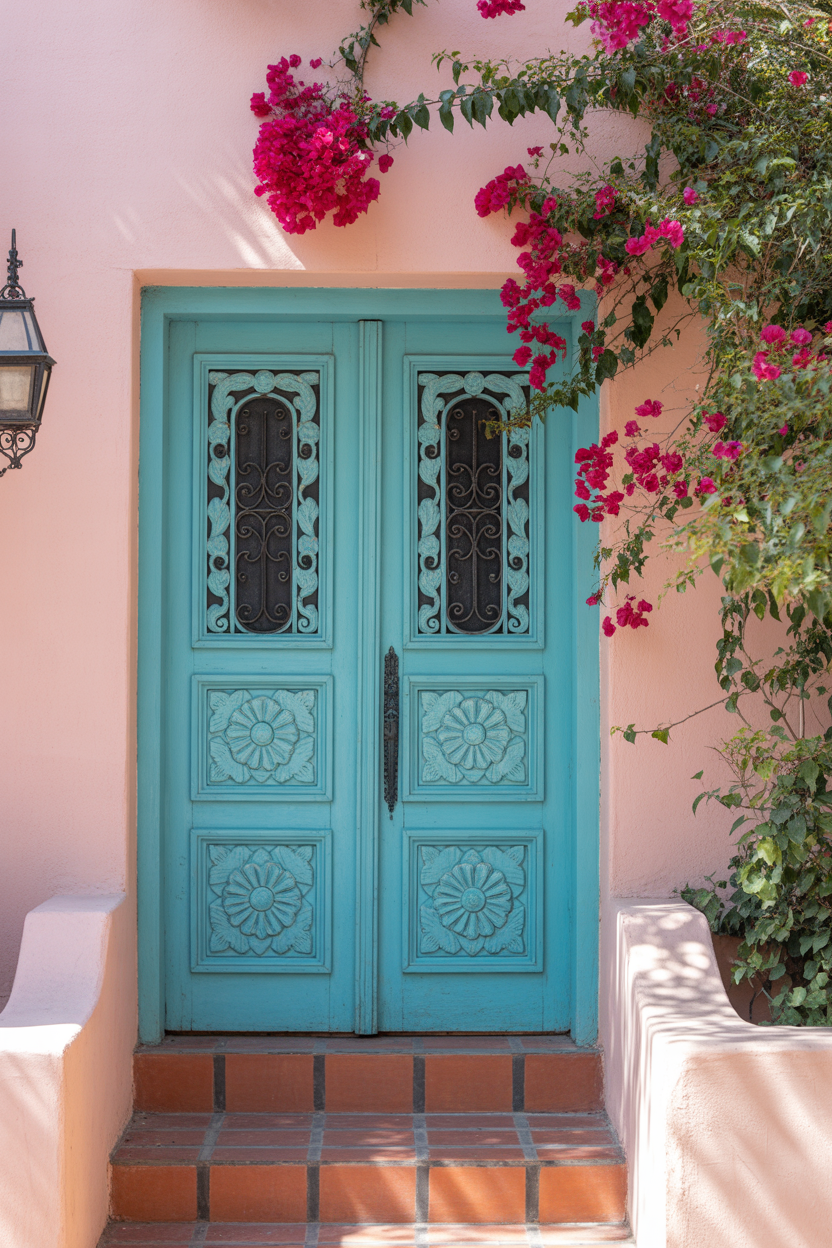
There’s a reason old Mexican doors end up in design magazines. The deep-carved geometric and floral patterns on mesquite or parota wood are the kind of thing you can’t fake with a factory finish. A carved wood statement door or buffet sideboard is instantly the most interesting thing in any room.
Tips: Paint your front door or interior doors in a bold Mexican color — cobalt, turquoise, or deep terracotta — and add iron hardware. For furniture, a hand-carved sideboard or console table works in a hallway or dining room and needs very little styling around it. Let the carving do the talking. Pair with simple, neutral surroundings so the wood stays the hero.
Colorful Painted Doors and Shutters: The Exterior Detail That Stops People Mid-Scroll
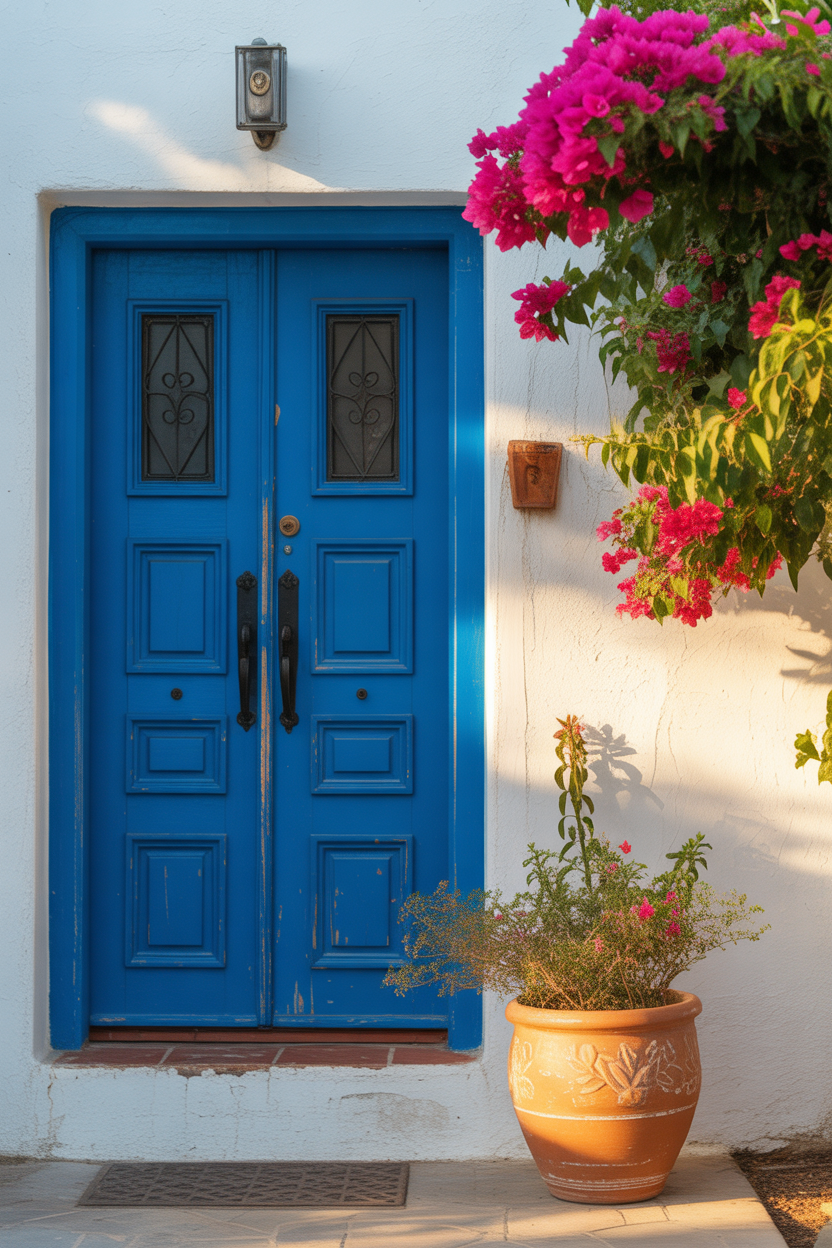
On Pinterest, a boldly painted Mexican door can get tens of thousands of saves. There’s something about that cobalt blue against a white stucco wall, or mustard yellow next to terracotta, that just works. And the best part? This is a $20–$50 change that completely transforms the look of a home.
Tips: Best Mexican door colors: cobalt blue, turquoise, mustard yellow, deep terracotta red, forest green. For shutters, try a distressed paint finish — apply, let dry, then lightly sand edges for a sun-worn look. Add a terracotta pot of bougainvillea beside the door, and you’ve basically recreated a street in Guanajuato.
Wrought Iron Fixtures: The Finishing Touch That Gives Every Room a Colonial Edge
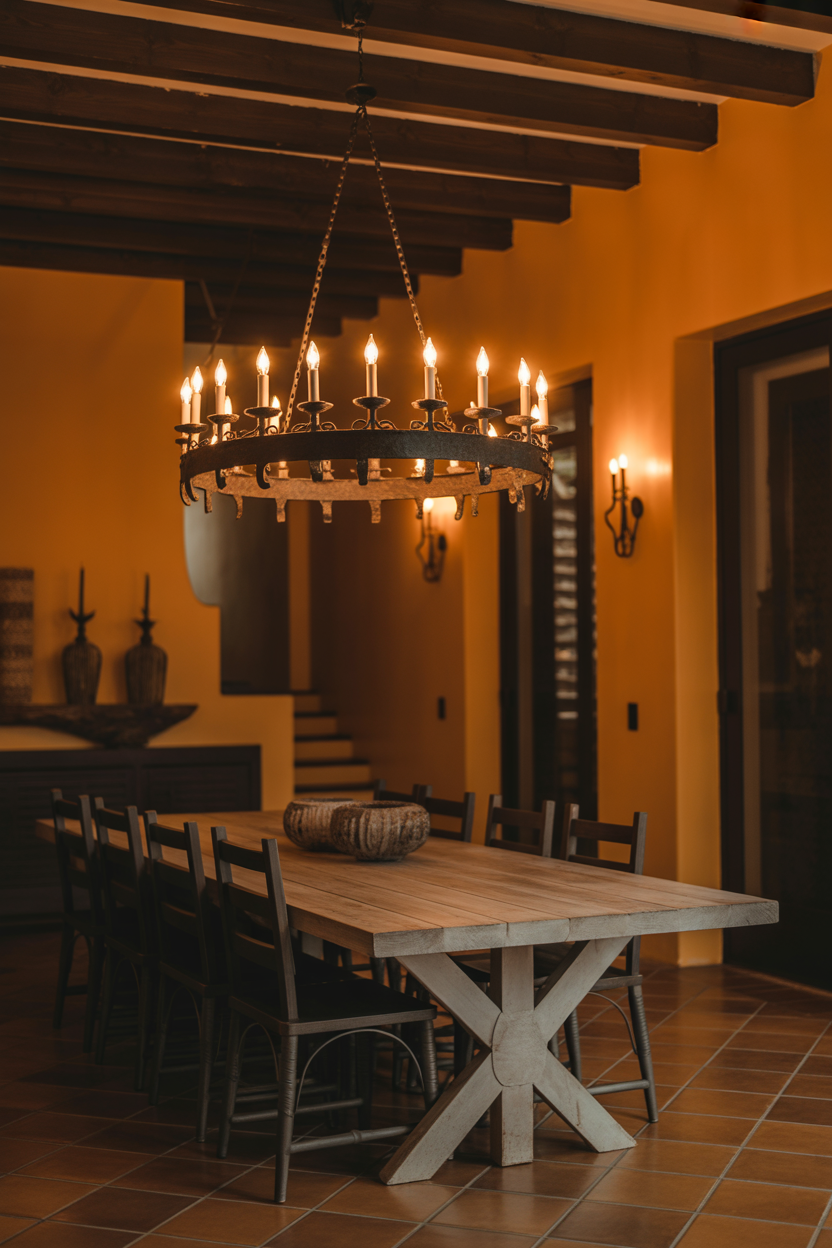
Wrought iron is one of those details that quietly elevates everything around it. A hand-forged chandelier over a dining table, iron candle sconces on a hallway wall, iron curtain rods in the living room — each one adds a layer of texture and historical depth that you simply can’t get from polished chrome or brushed nickel.
Tips: Go matte black or oil-rubbed bronze — shiny iron kills the vibe. Mix iron fixtures with arched doorways and wood-paneled doors for a full hacienda feel. For a modern-Mexican look, pair a dramatic iron chandelier with a white, minimalist room — let the fixture be the single statement piece.
Handmade Clay Pendant Lights and Ceramic Sconces: Lighting That Doubles as Art
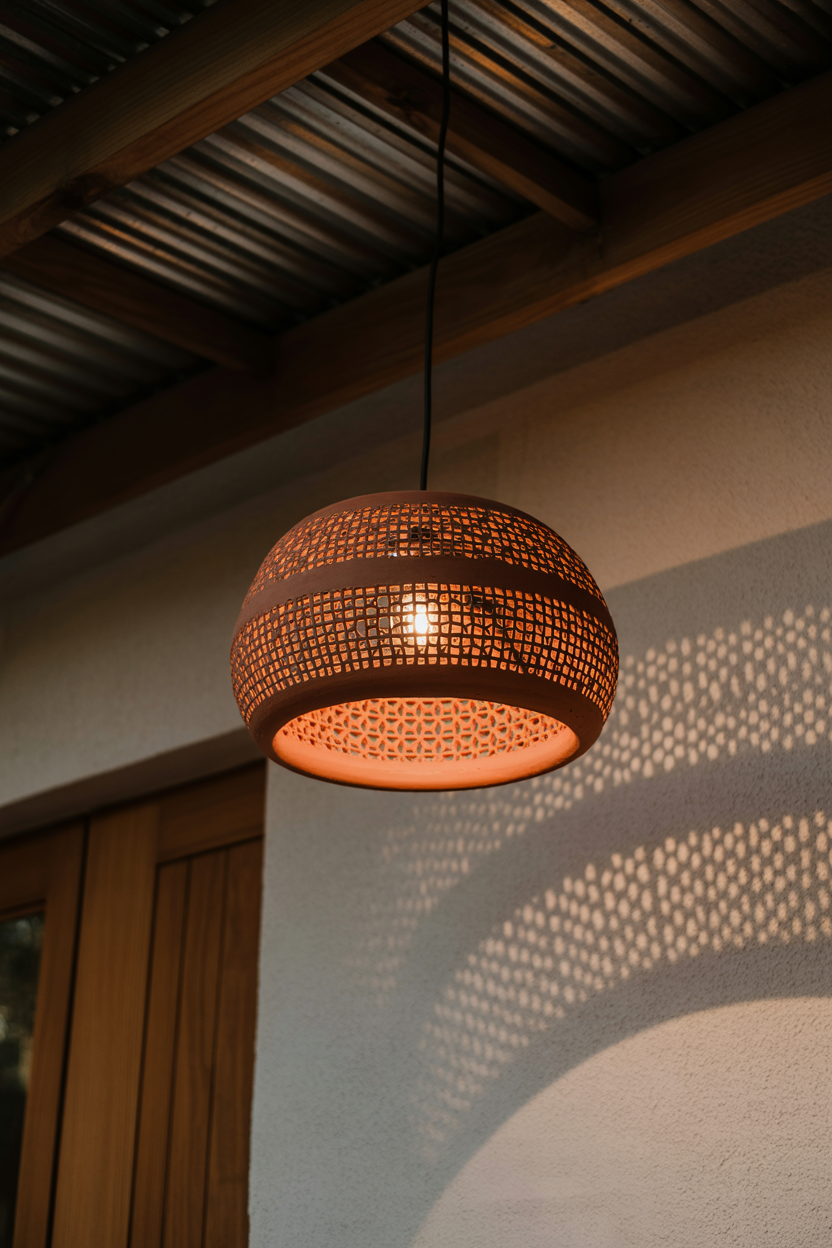
Most people pick their lighting last, like it’s an afterthought. But in Mexican-style interiors, the light fixture is part of the story. Perforated clay pendants cast the most beautiful patterned shadows on walls — you’ll spend more time watching the shadows than watching TV.
Tips: Look for pendants made from red clay or glazed ceramic with perforated geometric patterns. Use Edison bulbs (warm white, low wattage) for that rustic amber glow. Over a kitchen island, they look incredible. In a bedroom, a pair of ceramic wall sconces on either side of the bed is both practical and deeply atmospheric.
Mexican Folk Art and Wall Decor: Curating a Gallery Wall With Soul
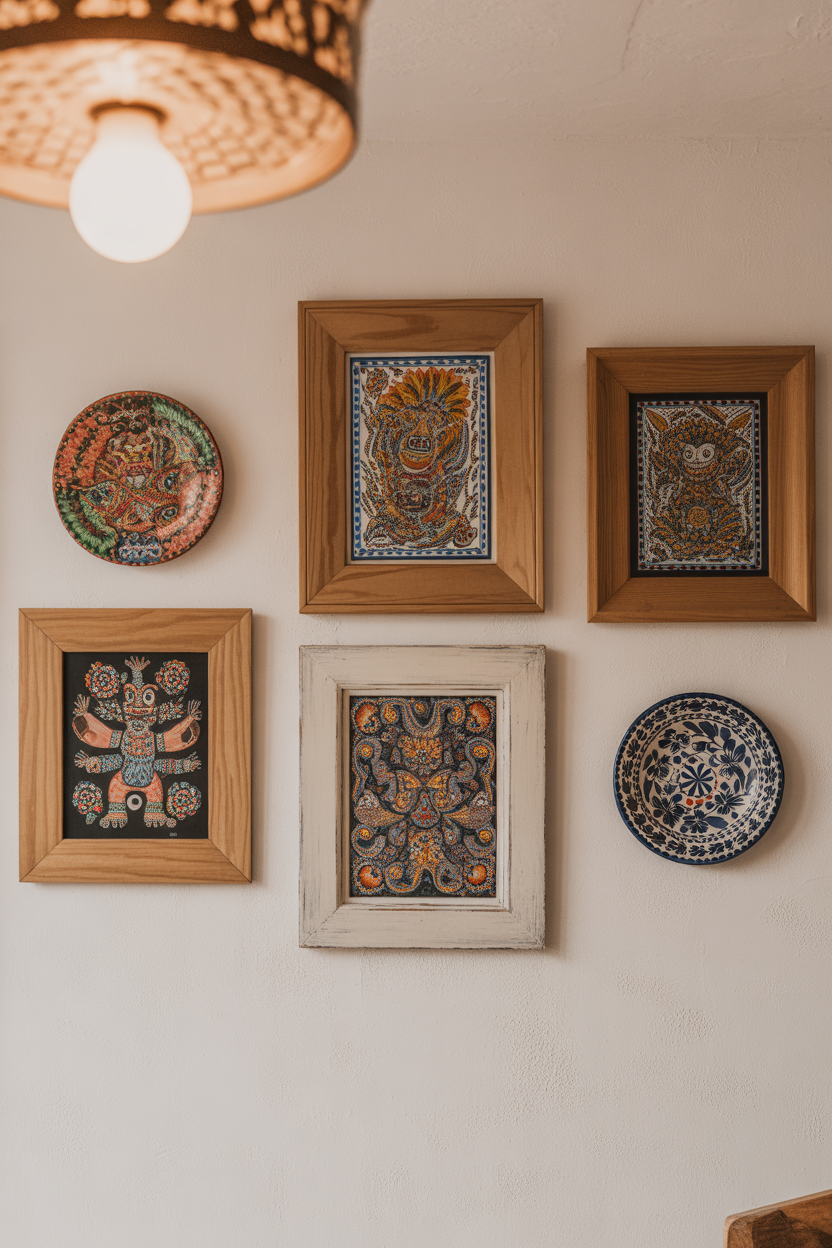
A gallery wall with generic frames and mass-produced prints is forgettable. A gallery wall built around Mexican folk art? Completely different story. Alebrijes (those wildly colorful carved animals), retablos (small religious paintings on tin), huichol yarn art — these aren’t decorations, they’re cultural artifacts that make people want to know more.
Tips: Mix 2D and 3D pieces — hang a retablo next to a small mounted alebrije, add a Dia de los Muertos ceramic skull (works year-round, not just in October), and fill gaps with small Talavera plates. Use mismatched frames in natural wood or black iron. Space pieces 2–3 inches apart. Buy from Mexican artisan sellers whenever possible — it matters.
Talavera Pottery Clusters and Ceramic Displays: More Than Decoration, It’s Storytelling
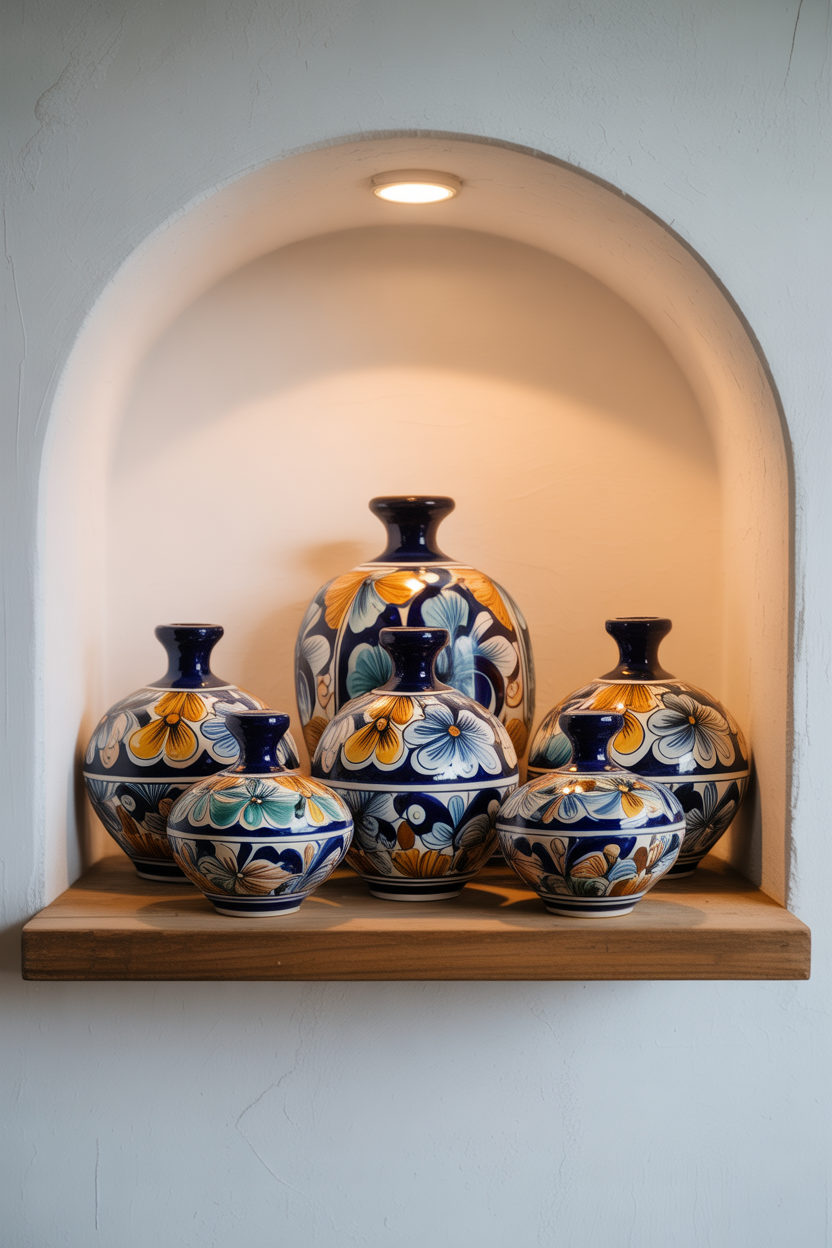
A single Talavera vase is nice. Three together on a windowsill is a moment. Five on an open shelf, mixing heights and patterns, is a whole aesthetic. Talavera pottery has a way of making any surface feel curated and intentional — like the person who lives there actually has taste.
Tips: Group pieces in odd numbers (3 or 5). Vary the height — one tall vase, one wide bowl, one small pot. Mix blue-white with multicolor pieces for balance. Authentic Talavera from Puebla has a slightly uneven glaze and hand-painted imperfections — that’s how you know it’s real. Add a warm LED spotlight above the shelf to make colors pop at night.
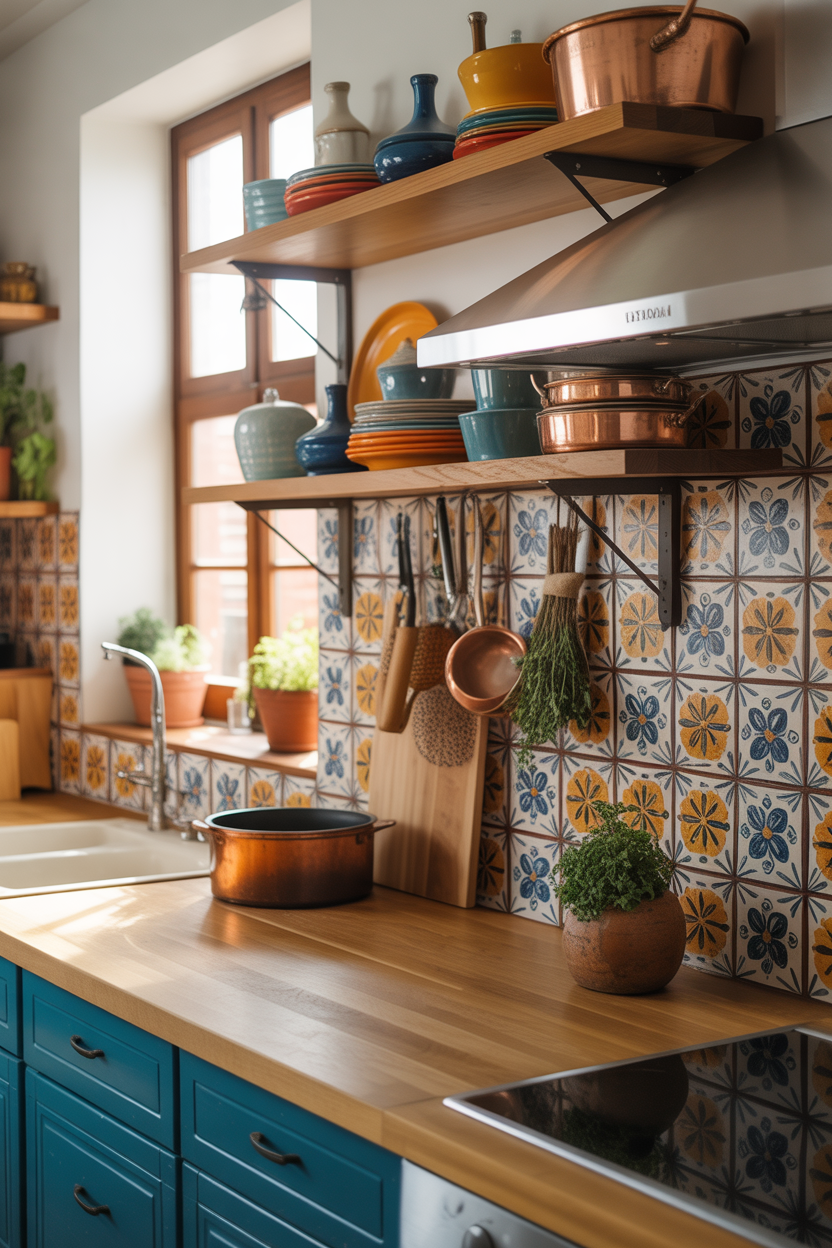
The Color-Drenched Mexican Kitchen: Open Shelving, Tiled Backsplashes, and Zero Boring Moments
Mexican kitchens are the opposite of the all-white minimalist trend. They’re colorful, layered, and full of personality — bright ceramics on open shelves, a tiled backsplash that demands your attention, copper pots hanging from a rail, dried chilis strung from a hook. It’s a kitchen that tells you someone actually cooks and lives in this house.
Tips: Install open wooden shelves and fill them with colorful ceramics, vintage spice jars, and a copper or clay pot or two. For the backsplash, go full Talavera or use a pattern mix — just keep the grout and surrounding walls neutral so it doesn’t get overwhelming. A butcher block countertop with a Talavera-tiled sink surround is an incredibly achievable, high-impact combo.
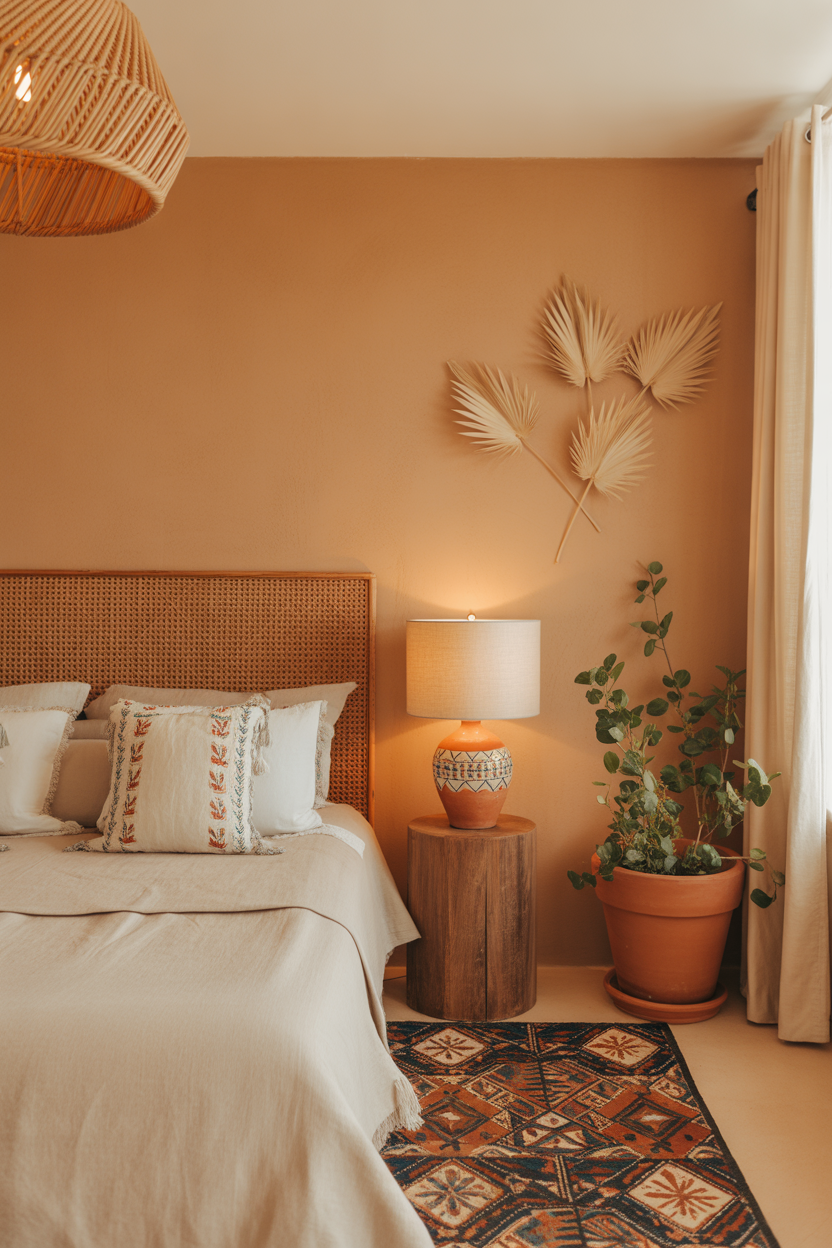
A Warm, Dreamy Mexican-Inspired Bedroom That Feels Like a Boutique Hotel in San Miguel
Ever seen a photo of a boutique hotel room in San Miguel de Allende and thought — I want to sleep there forever? The good news is that this look is very achievable at home. It’s all about layering warm textiles, choosing the right lighting, and adding one or two craft pieces that feel genuinely handmade.
Tips: Start with a limewash accent wall behind the bed in deep clay or warm sand. Add a woven or wooden headboard. Layer the bed with embroidered linens and a Zapotec throw at the foot. Two Talavera ceramic lamps on nightstands, a terracotta pot with a trailing plant in the corner, and a Zapotec rug on the floor. That’s the full look — achievable for under $300 if you shop smart.
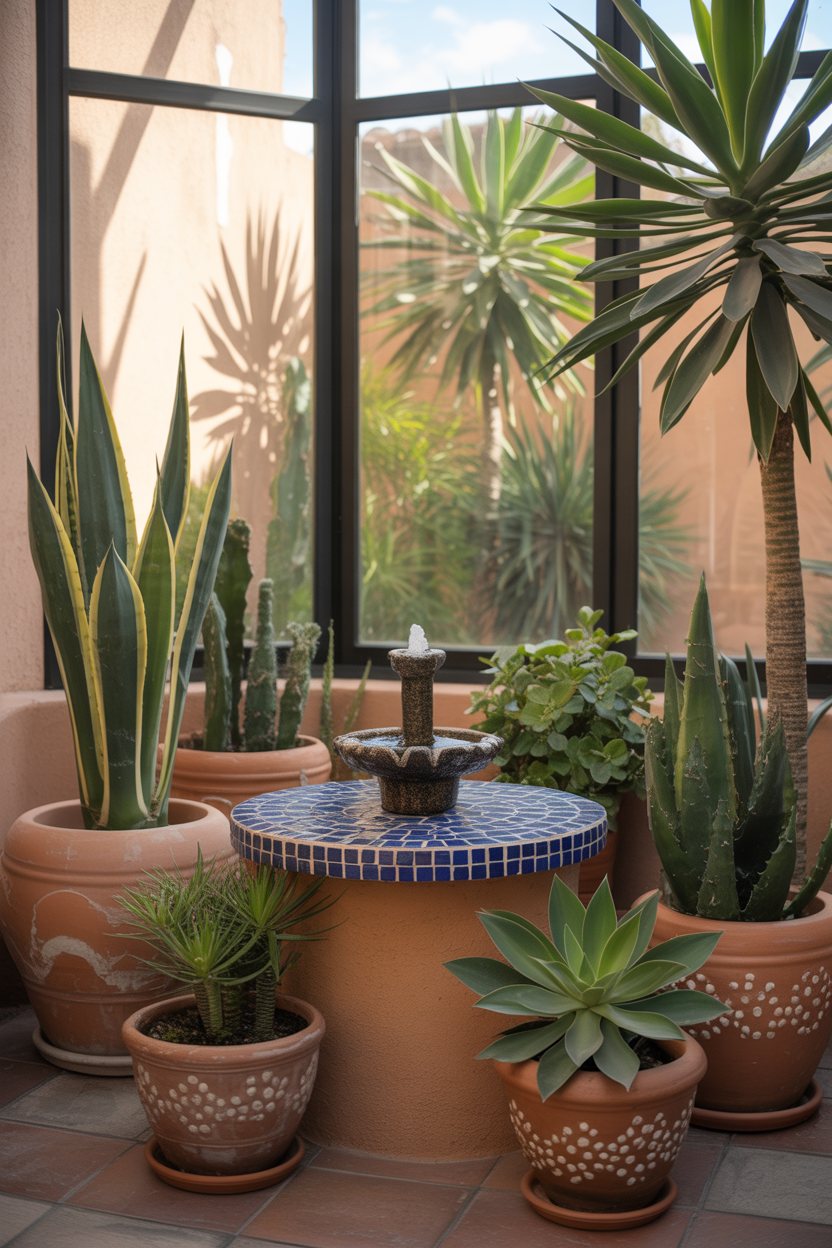
The Courtyard-Inspired Indoor Garden: Bringing the Soul of a Mexican Patio Inside
Traditional Mexican homes are built around a central courtyard — a patio filled with plants, a tiled fountain, and the sound of water. Most of us don’t have that luxury indoors. But you can absolutely recreate the feeling with the right plants, pots, and a bit of intention.
Tips: Group terracotta pots in varying sizes near a sunny window. Best plants for this look: agave, bird of paradise, tall cactus, snake plant, or rubber tree. If you have an apartment balcony, add a small tiled fountain (table-top versions work great). Wall-mounted terracotta planters in a cluster create that stacked, garden-wall feel even in small spaces.
FAQS
What defines Mexican home decor style?
Mexican home decor is defined by warm earthy colors, handcrafted materials, and bold patterns. Common elements include terracotta tiles, Talavera ceramics, woven textiles, rustic wood, and colorful accents inspired by Mexican culture.
What colors are commonly used in Mexican home decor?
Mexican decor uses rich, warm colors like terracotta orange, cobalt blue, turquoise, mustard yellow, adobe red, and deep ochre. These shades reflect natural landscapes and traditional Mexican craftsmanship.
How can I decorate my home in Mexican style on a budget?
Start with small changes like adding a serape throw, painting a door in a bold color, or using terracotta pots. Thrift stores and online marketplaces offer affordable handmade-style decor that creates an authentic look without high cost.
What materials are used in Mexican interior design?
Mexican interiors use natural materials such as clay, wood, wrought iron, stone, and handwoven fabrics. These materials create a warm, rustic, and textured feel in any space.
What is Talavera tile, and where is it used?
Talavera tile is a hand-painted ceramic tile from Puebla, Mexico. It is commonly used for kitchen backsplashes, bathroom walls, stair risers, and decorative accents due to its vibrant patterns.
Conclusion
Mexican home decor is not about following strict rules — it’s about creating a space that feels warm, lived-in, and full of personality. From terracotta floors and colorful tiles to handmade textiles and rustic wood, every detail adds character and tells a story.
The best part? You don’t need a big budget to get this look. Small changes like adding a serape throw, painting a door, or styling a few terracotta pots can instantly transform your space. Start simple, mix textures, and build your style over time.
Whether you prefer a bold traditional look or a modern minimalist touch with Mexican elements, the key is balance and authenticity. Choose pieces you love, support handmade crafts when possible, and create a home that truly feels yours.
If you’re ready to refresh your space, start with just one idea from this list — and let your home evolve naturally.