
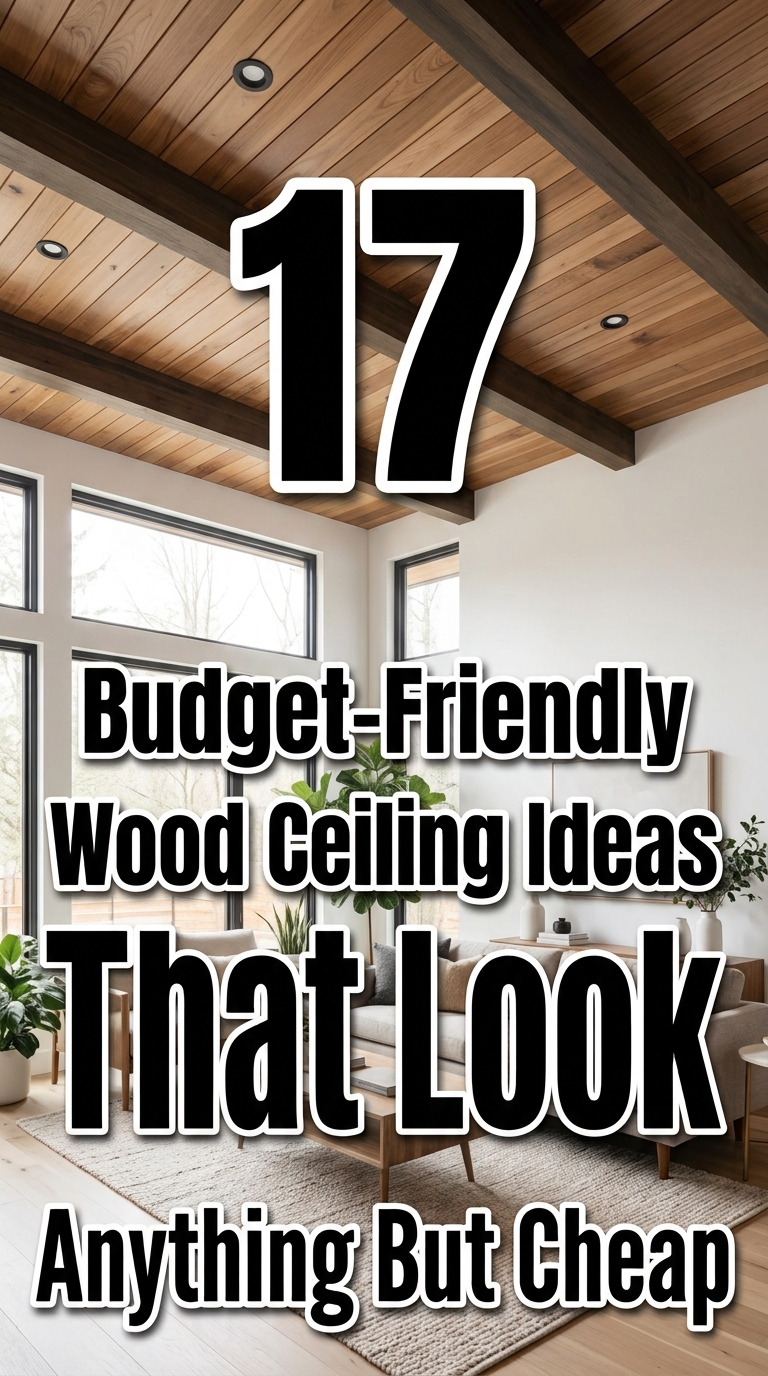
Look up for a second. If all you see is flat, plain drywall, you’re not alone — it’s probably the most overlooked surface in your entire home. We spend so much time picking out paint colors, rugs, and light fixtures that the ceiling ends up as an afterthought. But here’s the thing: a wood ceiling can completely change how a room feels, and you don’t need a five-figure renovation budget to get there.
Most people assume wood ceilings mean hiring a contractor, tearing down drywall, and spending thousands on hardwood planks. That’s simply not true anymore. Between peel-and-stick panels, furring strips, reclaimed wood, and clever paint tricks, there are dozens of ways to bring warmth and texture overhead without draining your savings account.
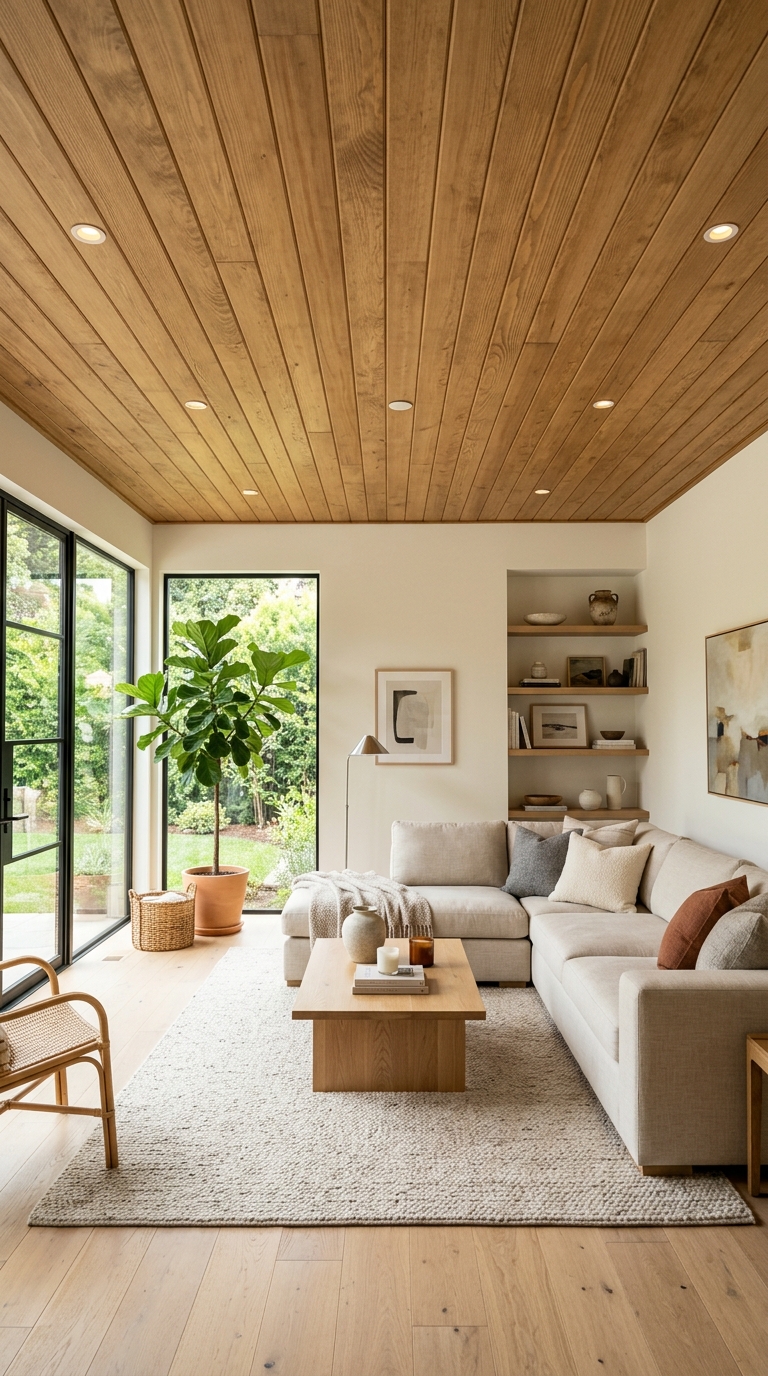
In this guide, you’ll find 17 budget-friendly wood ceiling ideas that range from weekend DIY projects to slightly bigger upgrades — all designed to make your space feel warmer, cozier, and a lot more custom. Whether you’re working with a small apartment or a whole living room, there’s an idea here that fits your style and your wallet.
Peel-and-Stick Wood Panels for an Instant Update
If you rent your home or just don’t want to deal with power tools, peel-and-stick wood panels are honestly the easiest entry point into this whole trend. You just measure your ceiling, cut the panels to size, and press them into place. No nails, no sawdust, no calling in a favor from your handy neighbor.
Ready to try plywood yourself? This step-by-step how to install a plywood ceiling walks you through the entire DIY process from prep to finish.
What makes this option so appealing is how realistic it looks once it’s up. Good quality panels have real wood grain texture, so from a few feet away, nobody can tell it wasn’t professionally installed. It’s a great option for bedrooms, home offices, or even a small nook you want to make feel special without committing to anything permanent.
- Styling detail: Pair the panels with a single statement light fixture so the ceiling texture has something to frame.
- Color palette: Warm White + Honey Oak + Soft Linen
- Why you’ll love it: Zero demolition, renter-friendly, and removable if you change your mind later.
- Best for: Apartments, rentals, small bedrooms
Image prompt: A softly lit bedroom with a warm honey-oak peel-and-stick wood panel ceiling, bright natural window light casting gentle shadows, minimalist furniture below, vertical Pinterest composition, magazine-quality realistic texture. File name: peel-and-stick-wood-panel-ceiling-bedroom.jpg ALT text: Warm honey oak peel-and-stick wood panel ceiling in a bright, minimalist bedroom
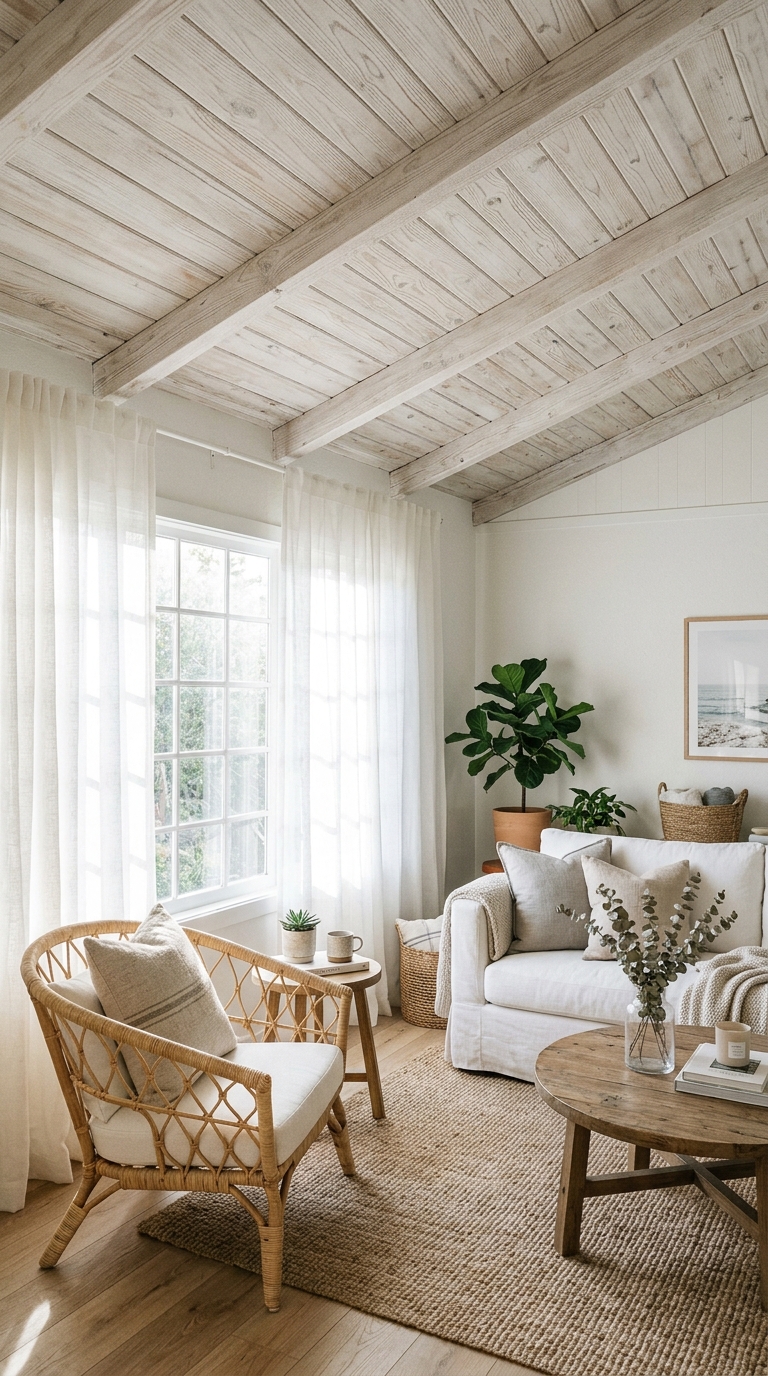
Whitewashed Pine Planks for a Light, Airy Look
There’s a reason whitewashed wood shows up in so many Scandinavian and coastal-style homes — it gives you all the texture of real wood without making a room feel dark or heavy. Pine is one of the cheapest woods available, and once it’s whitewashed, it actually looks more expensive than it is.
This finish works especially well in rooms that don’t get a ton of natural light, since the pale tone bounces light around instead of absorbing it. It’s a soft, calming choice that pairs beautifully with linen textures, rattan furniture, and neutral walls. If you want a room to feel airy and relaxed rather than rustic and heavy, this is your pick.
- Styling detail: Keep the walls a shade lighter than the ceiling so the wood grain still reads as the focal point.
- Color palette: Whitewash + Natural Linen + Dusty Sage
- Why you’ll love it: Budget-friendly pine, brightens small rooms, works with almost any decor style.
- Best for: Small rooms, coastal or Scandinavian interiors
Reclaimed Barn Wood for Character You Can’t Fake
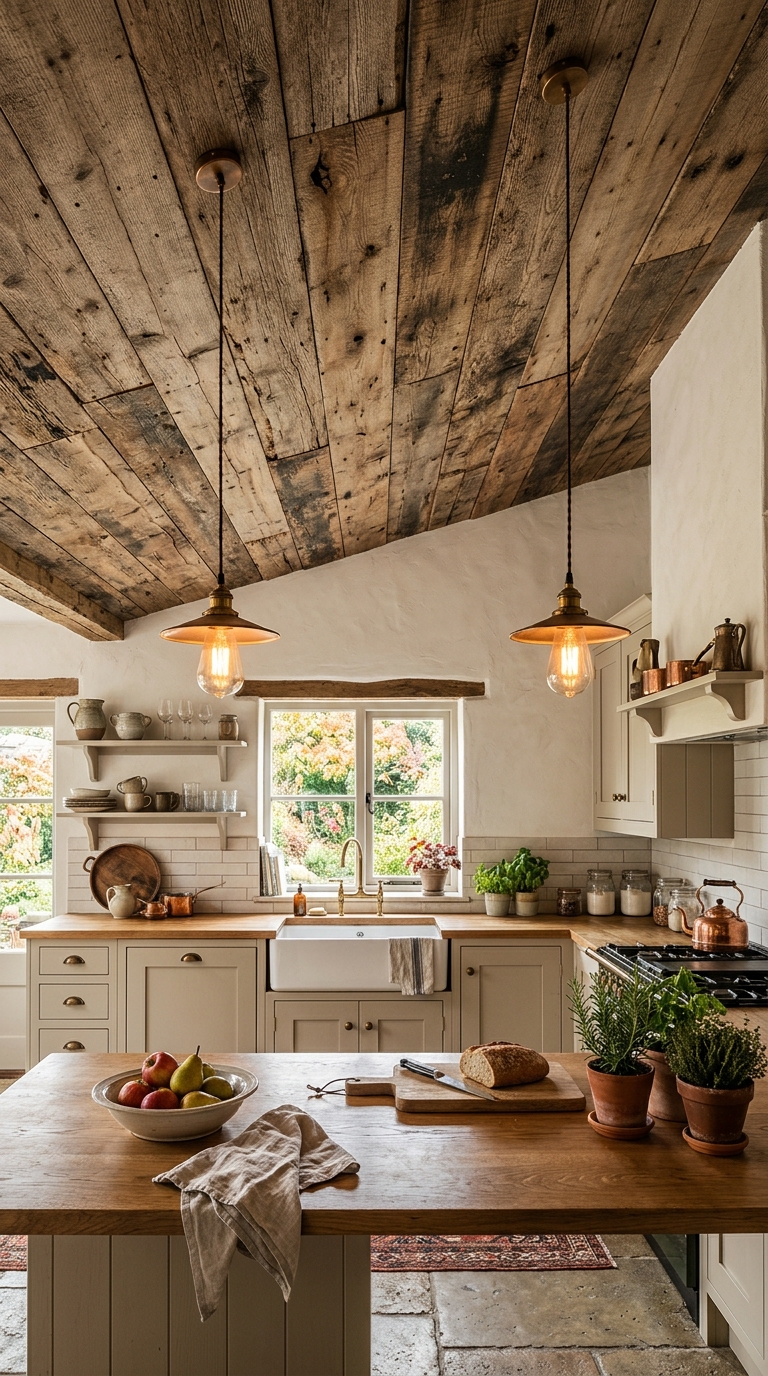
If you want a ceiling with an actual story behind it, reclaimed wood is worth the extra effort. Every plank carries its own knots, nail holes, and weathering, which means no two ceilings ever look the same. It’s the opposite of anything mass-produced, and that’s exactly the appeal.
Not sure which sheet material to pick? This detailed plywood ceiling guide breaks down grades, costs, and finishing options.
You can often source reclaimed wood for next to nothing — old barns, shipping pallets, or even furniture being torn apart. A light sanding and a food-safe sealant is usually all it needs before installation. This idea works best in farmhouse kitchens, dens, or any room where you want that lived-in, collected-over-time feeling.
- Styling detail: Let the imperfections show. Avoid over-sanding, since the rough texture is what sells the look in photos.
- Color palette: Weathered Gray + Warm Walnut + Cream
- Why you’ll love it: Nearly free material, one-of-a-kind texture, adds instant history to a room.
- Best for: Farmhouse kitchens, dens, rustic living rooms
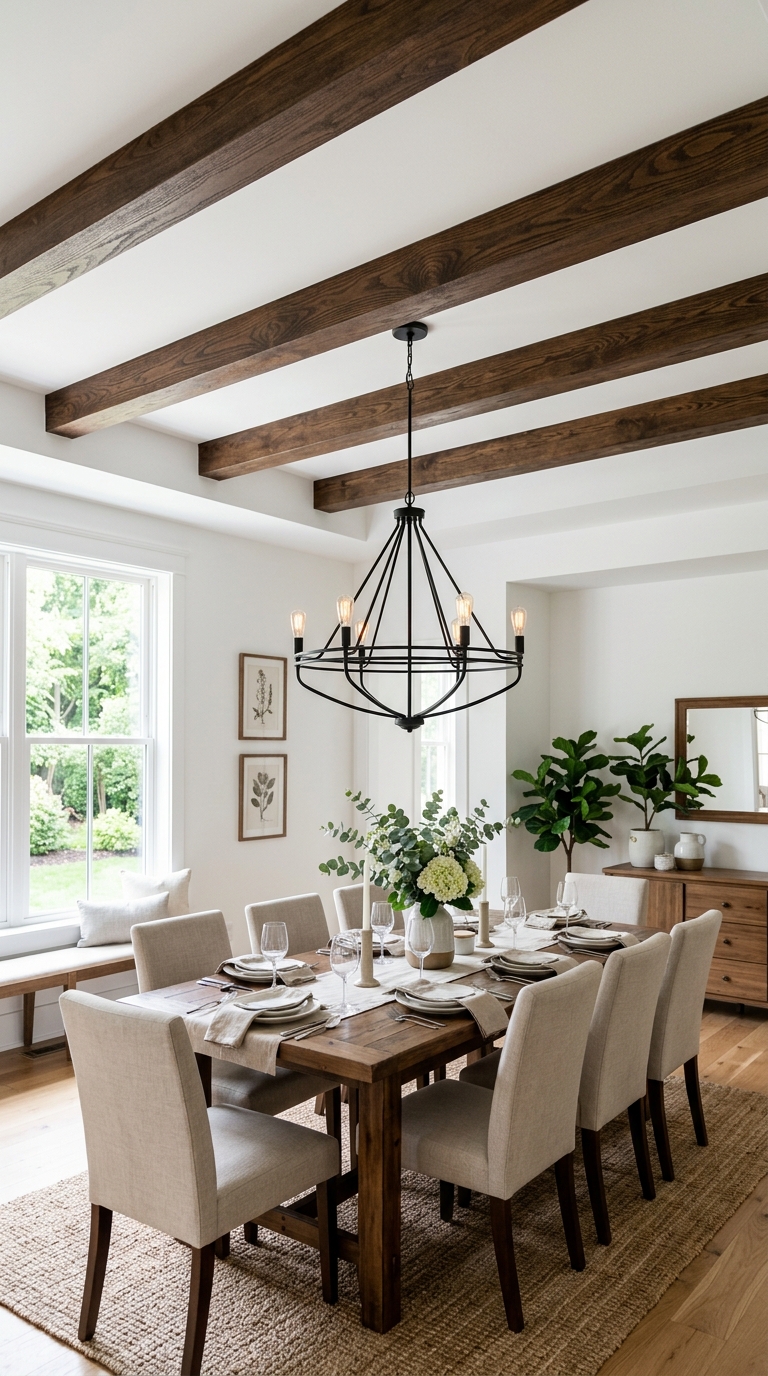
Furring Strips Styled as Faux Wood Beams
Real structural beams can cost a small fortune, but furring strips give you almost the same visual effect for a fraction of the price. These thin wood strips are usually sold at any hardware store, and once stained and mounted, they read as full wood beams from below.
For even more low-cost inspiration, browse these cheap wood ceiling ideas that prove a small budget can still deliver a big design impact.
The trick is spacing them evenly and choosing a stain that contrasts with your ceiling color. Dark walnut strips against a white ceiling create a serious visual impact, especially in rooms with higher ceilings. It’s one of those upgrades that makes a space feel architecturally intentional, even though the materials themselves are inexpensive.
- Styling detail: Space beams slightly wider than you’d expect — it reads as more custom and less like a DIY kit.
- Color palette: White Ceiling + Dark Walnut + Matte Black Fixtures
- Why you’ll love it: Looks like real structural beams, costs a fraction of the price, easy to install.
- Best for: Living rooms, dining rooms, vaulted ceilings
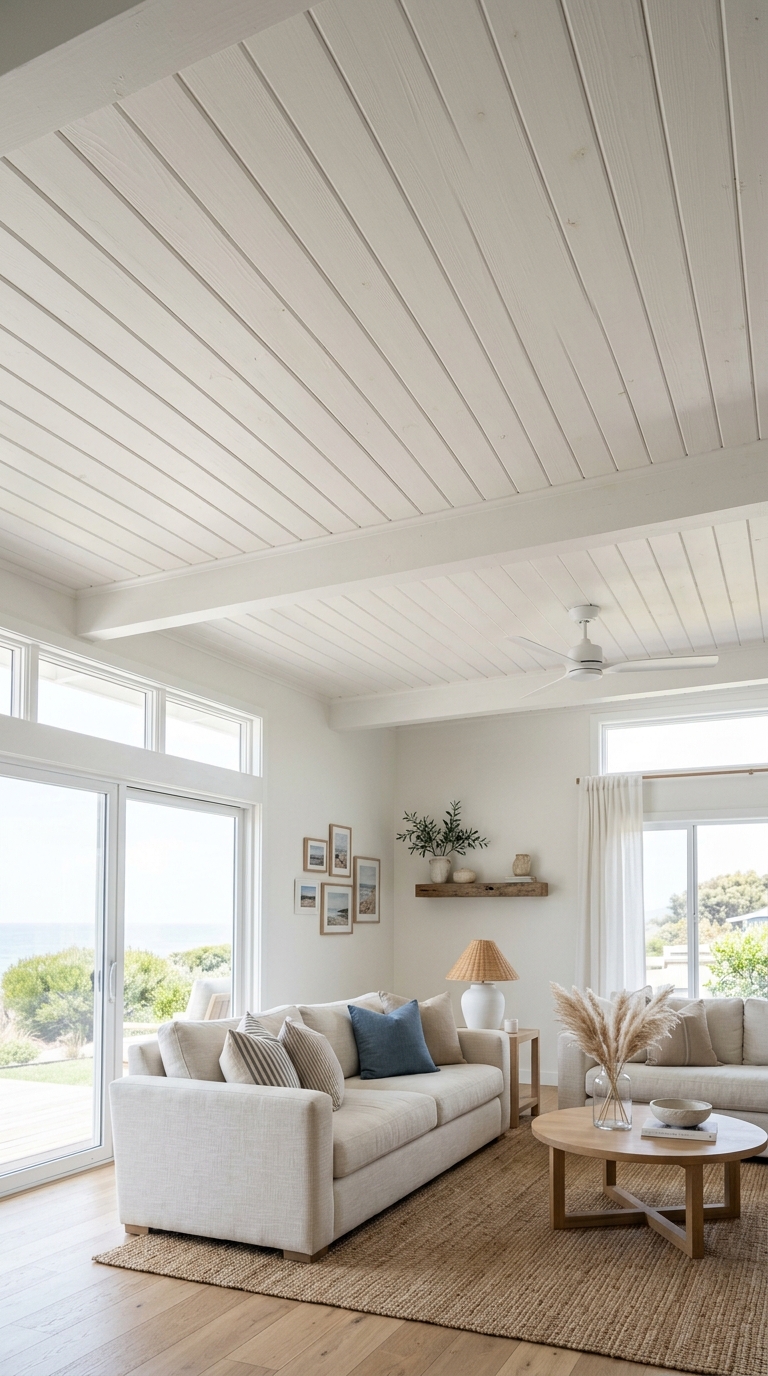
Tongue-and-Groove Pine Painted Crisp White
This is the option that never really goes out of style. Tongue-and-groove planks interlock snugly, hiding fasteners and creating a smooth, finished surface that looks far more polished than basic drywall. Painted a clean white, it adds subtle texture without pulling focus from the rest of the room.
If your room has extra height, a wood treatment really shines — see these vaulted ceiling ideas for ways to make the most of that vertical space.
Because pine is one of the more affordable softwoods, this project is easier on the budget than most people expect. It also happens to be one of the safest choices if you’re thinking about resale value down the road, since white tongue-and-groove ceilings read as a timeless, high-end detail rather than a trend that’ll feel dated in a few years.
- Styling detail: Use a satin or eggshell finish instead of flat white so the grooves catch a little extra light.
- Color palette: Crisp White + Natural Wood Tones + Soft Gray
- Why you’ll love it: Timeless look, budget-friendly pine, adds resale value.
- Best for: Any home style, especially farmhouse and coastal
Quick Designer Tip: When you’re mixing wood tones and paint colors on a ceiling, keep your wall color one or two shades lighter than your darkest wood element. This keeps the room from feeling closed in, especially in spaces with standard 8-foot ceilings.
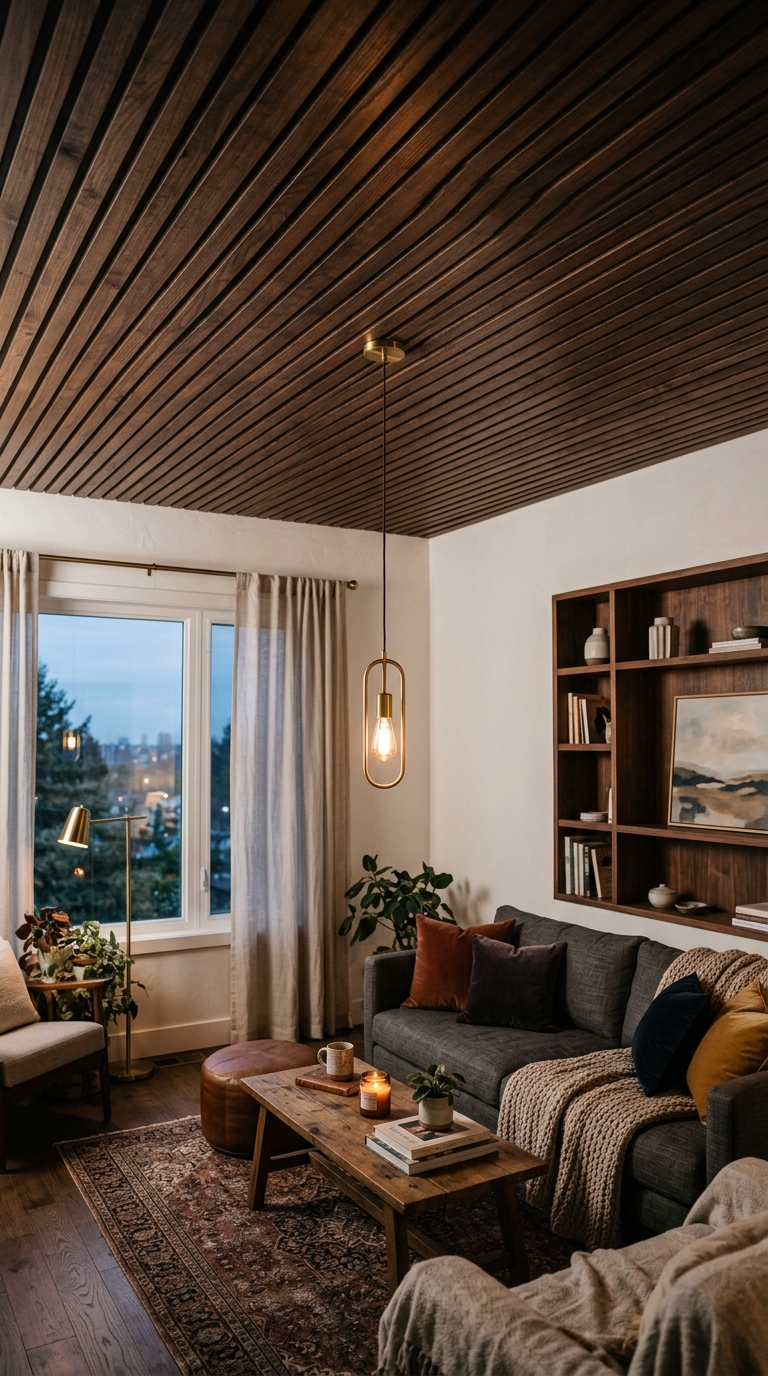
Dark Walnut-Stained Slats for a Moody Accent Ceiling
Sometimes the best move is going darker, not lighter. Deep walnut or ebony-stained slats create an intimate, almost boutique-hotel feel, especially in rooms with taller ceilings where the extra height can otherwise feel a little cold or empty.
The trick to making this work is balance. Pair the dark ceiling with lighter walls and metallic light fixtures so the room doesn’t feel too heavy. This look tends to photograph beautifully at night, when warm lighting reflects off the wood grain and creates a genuinely cozy atmosphere.
Planning a kitchen upgrade? These vaulted-ceiling kitchen ideas show how sloped ceilings and wood pair beautifully together.
- Styling detail: Add a warm brass or gold pendant light — the metal tone against dark wood photographs incredibly well.
- Color palette: Deep Walnut + Warm White Walls + Brushed Brass
- Why you’ll love it: Adds drama, makes tall ceilings feel cozier, photographs beautifully at night.
- Best for: Living rooms, primary bedrooms, vaulted ceilings
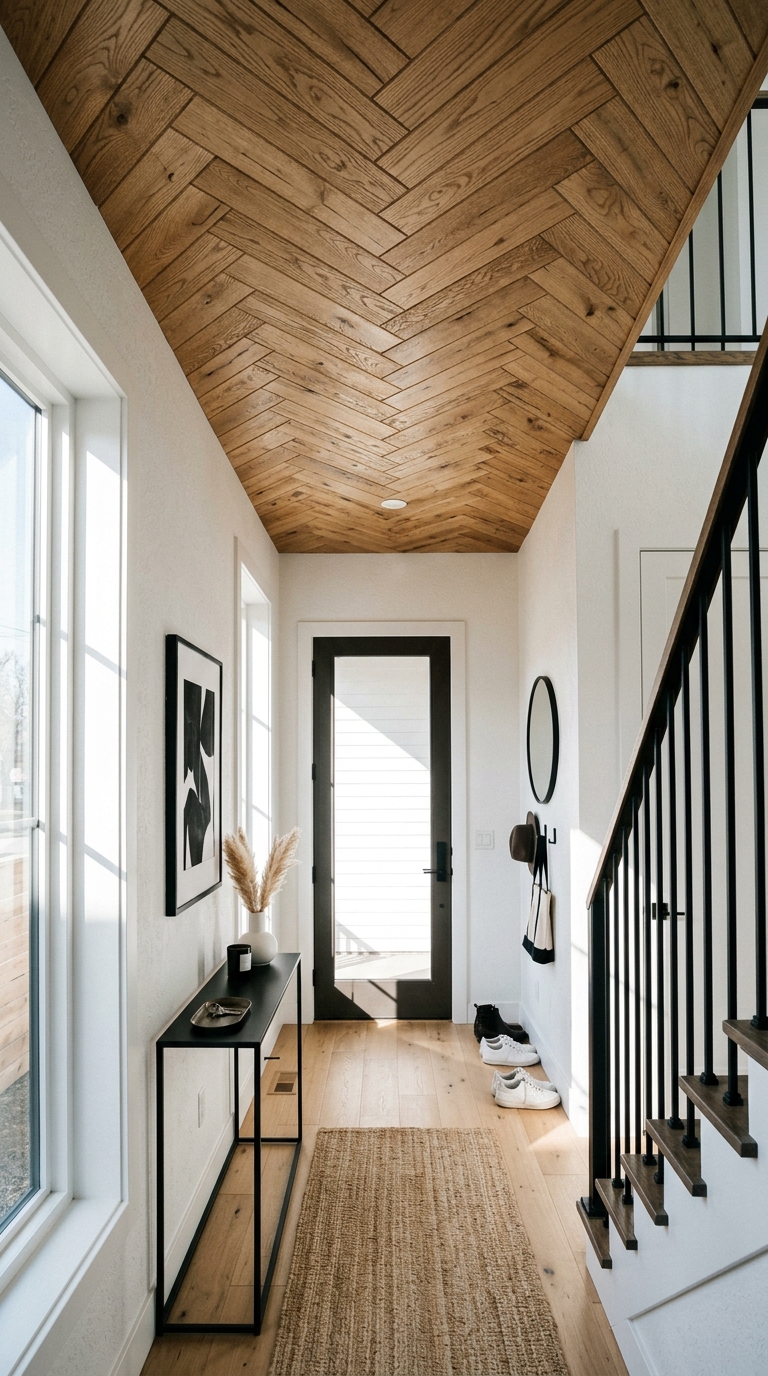
Herringbone Pattern From Leftover Lumber Scraps
If you already have leftover wood from another project, this idea turns scraps into something genuinely striking. A herringbone pattern takes a little more patience to install, but it turns your ceiling into a real design statement rather than just a background detail.
For a cozier sleeping space, check out these vaulted ceiling bedroom ideas that use wood to soften an angled ceiling.
This is a great option for anyone who enjoys a hands-on project and doesn’t mind spending an extra weekend measuring angles. Once it’s up, the zig-zag pattern creates natural shadow lines that shift throughout the day depending on the light, which is part of what makes it feel so custom.
- Styling detail: Keep the walls plain and let the ceiling pattern do all the visual work.
- Color palette: Natural Wood + White Trim + Black Accents
- Why you’ll love it: Uses up leftover materials, creates a genuine statement ceiling, very low material cost.
- Best for: DIYers, home offices, entryways
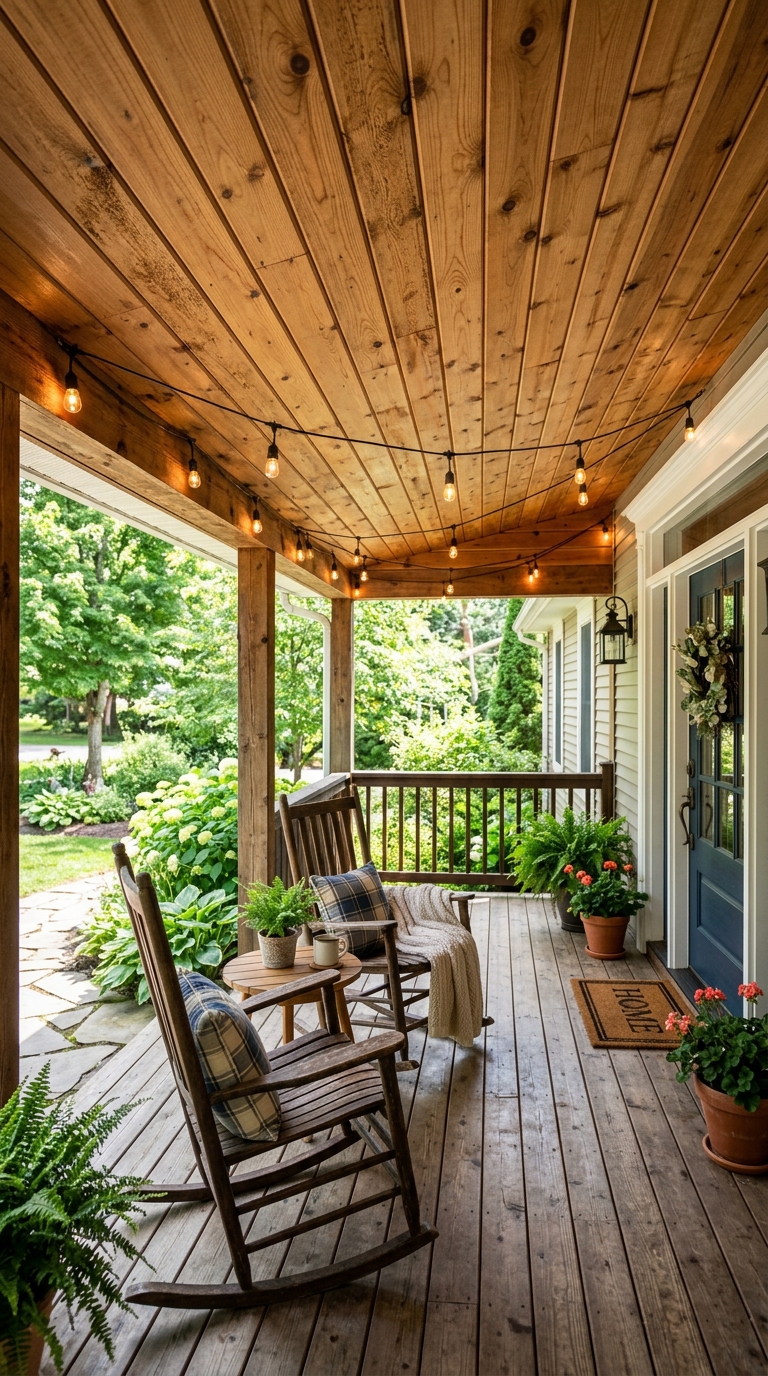
Cedar Planks for Covered Porches and Outdoor Ceilings
Indoor ceilings get most of the attention, but your porch ceiling deserves the same love. Cedar is naturally resistant to moisture and insects, which makes it one of the smartest wood choices for any outdoor or covered space, especially if you live somewhere humid.
Beyond the practical side, cedar has a warm, reddish-brown tone that instantly makes an outdoor sitting area feel more finished. Pair it with simple recessed lighting or a ceiling fan, and your porch stops feeling like an afterthought and starts feeling like an actual extension of your home.
Wood ceilings also work great below ground — explore these basement ceiling ideas for finishes that hold up in lower-light, higher-moisture spaces.
- Styling detail: Stain lightly rather than painting — cedar’s natural color is part of the appeal.
- Color palette: Natural Cedar + White Trim + Charcoal Accents
- Why you’ll love it: Naturally weather-resistant, low maintenance, instantly upgrades curb appeal.
- Best for: Front porches, covered patios, outdoor sitting areas
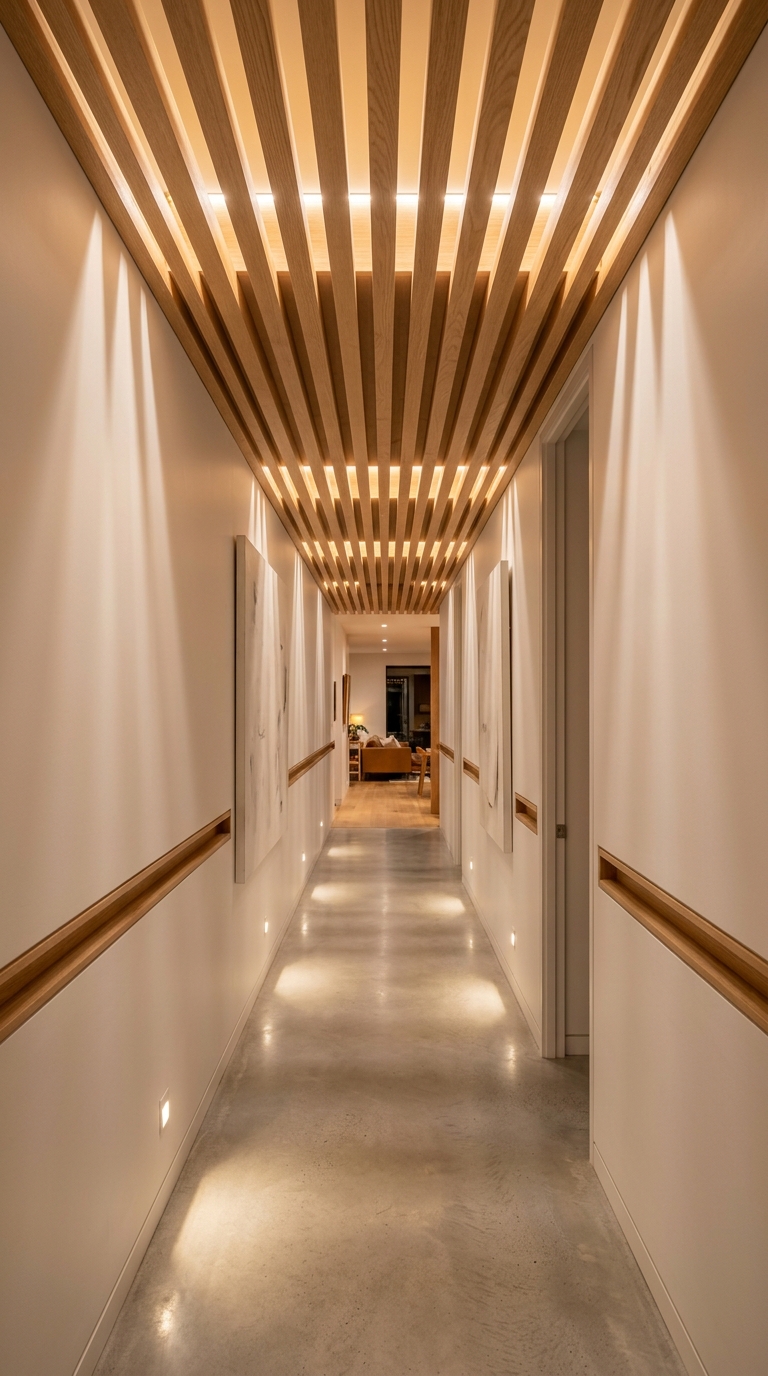
Wood Slats With Visible Gaps for Shadow-Line Texture
Instead of installing planks edge to edge, try spacing them apart on purpose. The small gaps between each slat create shadow lines that shift throughout the day, adding a subtle rhythm to the ceiling that a flat surface just can’t replicate.
This idea works particularly well over hallways or sloped ceilings, where the added texture draws the eye upward and makes the space feel more intentional. It’s a small design decision, but it changes how light moves through the entire room.
- Styling detail: Use warm-toned bulbs directly beneath the slats to exaggerate the shadow effect.
- Color palette: Natural Oak + Warm Amber Lighting + White Walls
- Why you’ll love it: Adds movement and texture, works with sloped or low ceilings, low material cost.
- Best for: Hallways, sloped-ceiling bedrooms, modern homes
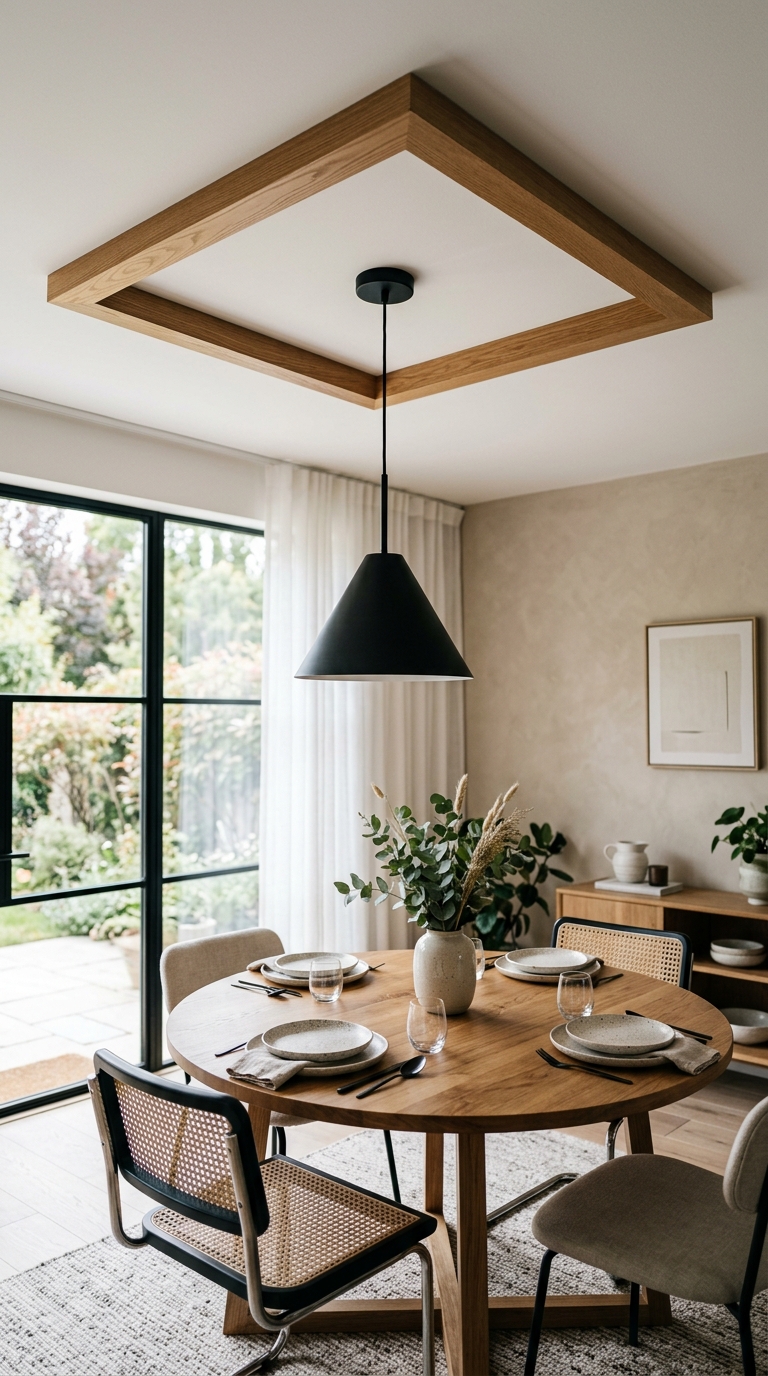
A Single Accent Strip Framing a Light Fixture
Not every project needs to cover the whole ceiling. Sometimes a single wood strip framing a pendant or chandelier is enough to add character without a big commitment. It’s the smallest project on this list, but it makes a real visual difference.
This works especially well over a dining table or kitchen island, where you already have a light fixture as a natural focal point. The wood frame draws the eye up and gives the fixture a more finished, intentional look, almost like a built-in detail rather than something added later.
- Styling detail: Match the wood tone to your dining table for a cohesive, pulled-together look.
- Color palette: Natural Wood + Matte Black Fixture + White Ceiling
- Why you’ll love it: Minimal materials needed, quick weekend project, big visual payoff.
- Best for: Dining rooms, kitchen islands, small budgets
Quick Designer Tip: If you’re nervous about committing to a full ceiling project, start small with one of these accent ideas first. It gives you a low-risk way to test how the wood tone looks in your actual lighting before going bigger.
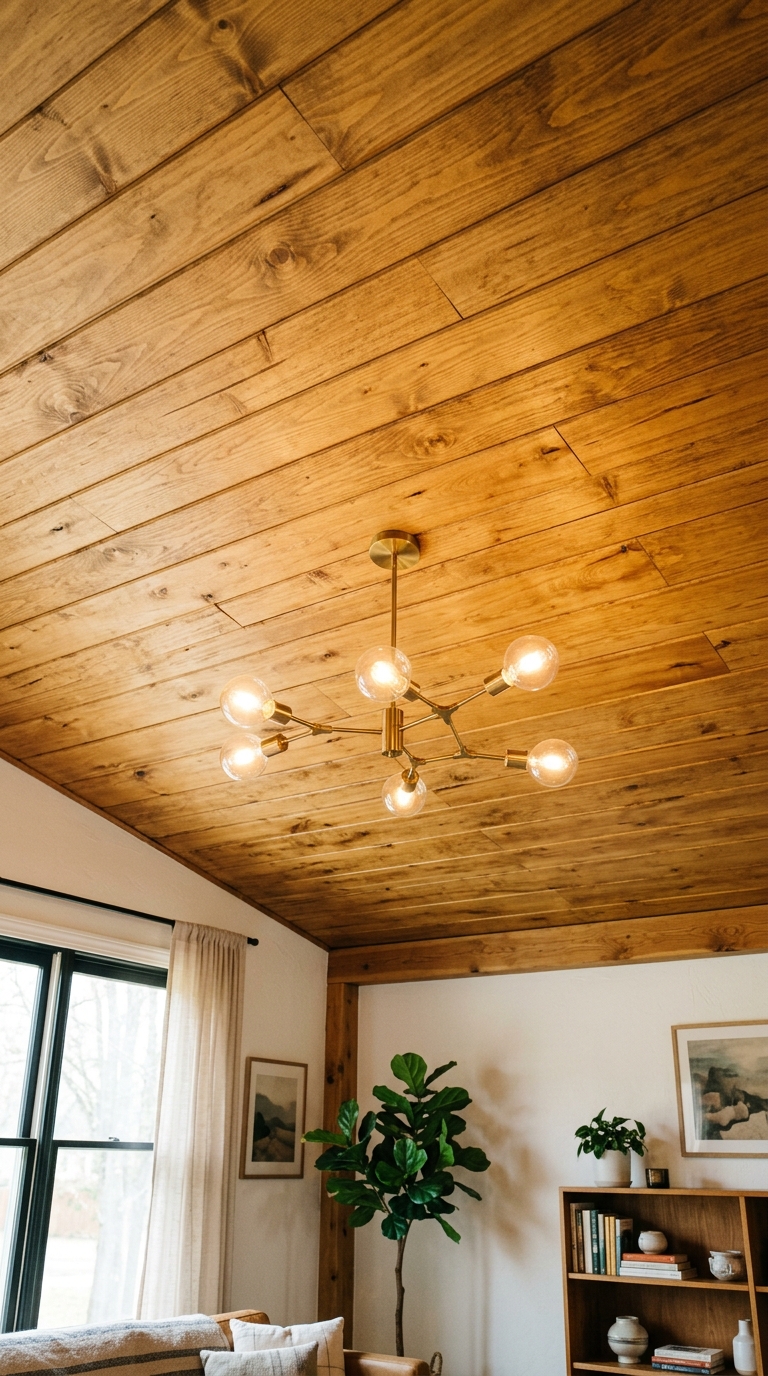
Budget Plywood Cut and Stained to Mimic Hardwood
Plywood doesn’t have the best reputation, but with the right stain and cut, it can pass for a much pricier hardwood. Cutting standard plywood sheets into plank-sized strips and staining them individually gives you a similar look to solid hardwood planks at a much lower material cost.
This is one of those tricks that professional installers use more often than people realize. As long as you sand the edges well and apply a quality stain, the seams blend in and the finished ceiling looks intentional rather than budget.
- Styling detail: Stagger the plank lengths like real hardwood flooring so the pattern doesn’t look uniform or repetitive.
- Color palette: Golden Oak Stain + Cream Walls + Brass Accents
- Why you’ll love it: Major cost savings, realistic wood look, flexible for any room size.
- Best for: Budget renovations, rental flips, large ceilings
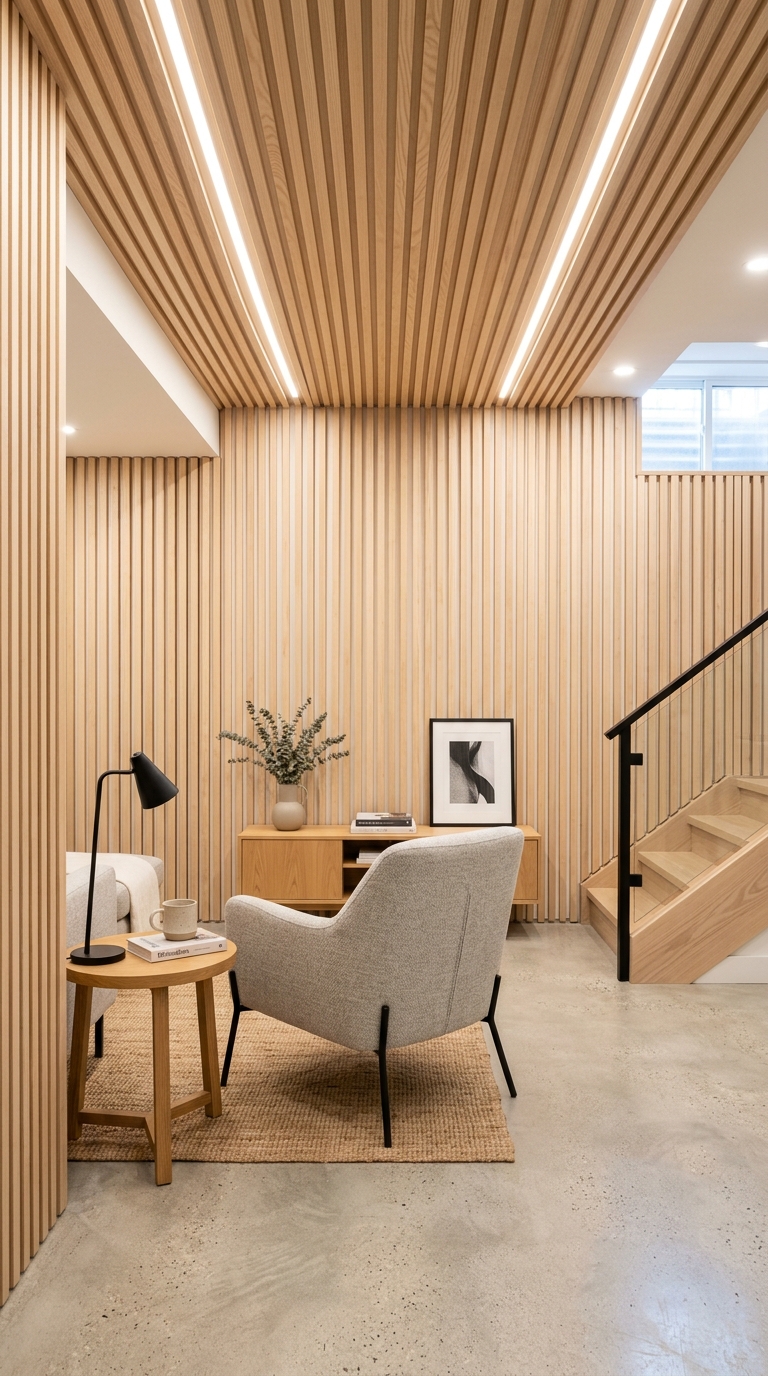
Vertical Wood Slats to Make a Low Ceiling Feel Taller
If your ceiling feels low and boxy, running wood slats vertically up the walls and onto the ceiling can trick the eye into seeing more height. This is one of the most practical ideas on the list because it solves an actual problem a lot of homeowners deal with.
The direction of the wood matters here more than the finish. Keep the stain light and the slats thin, and avoid anything too dark or thick, which can make a low ceiling feel even more closed in. This works especially well in basements or older homes with shorter ceiling heights.
- Styling detail: Run the slats from floor to ceiling in one continuous line to maximize the height illusion.
- Color palette: Light Ash + Soft White + Natural Linen
- Why you’ll love it: Solves low-ceiling problems, adds texture without heaviness, works in basements.
- Best for: Basements, low-ceiling rooms, older homes
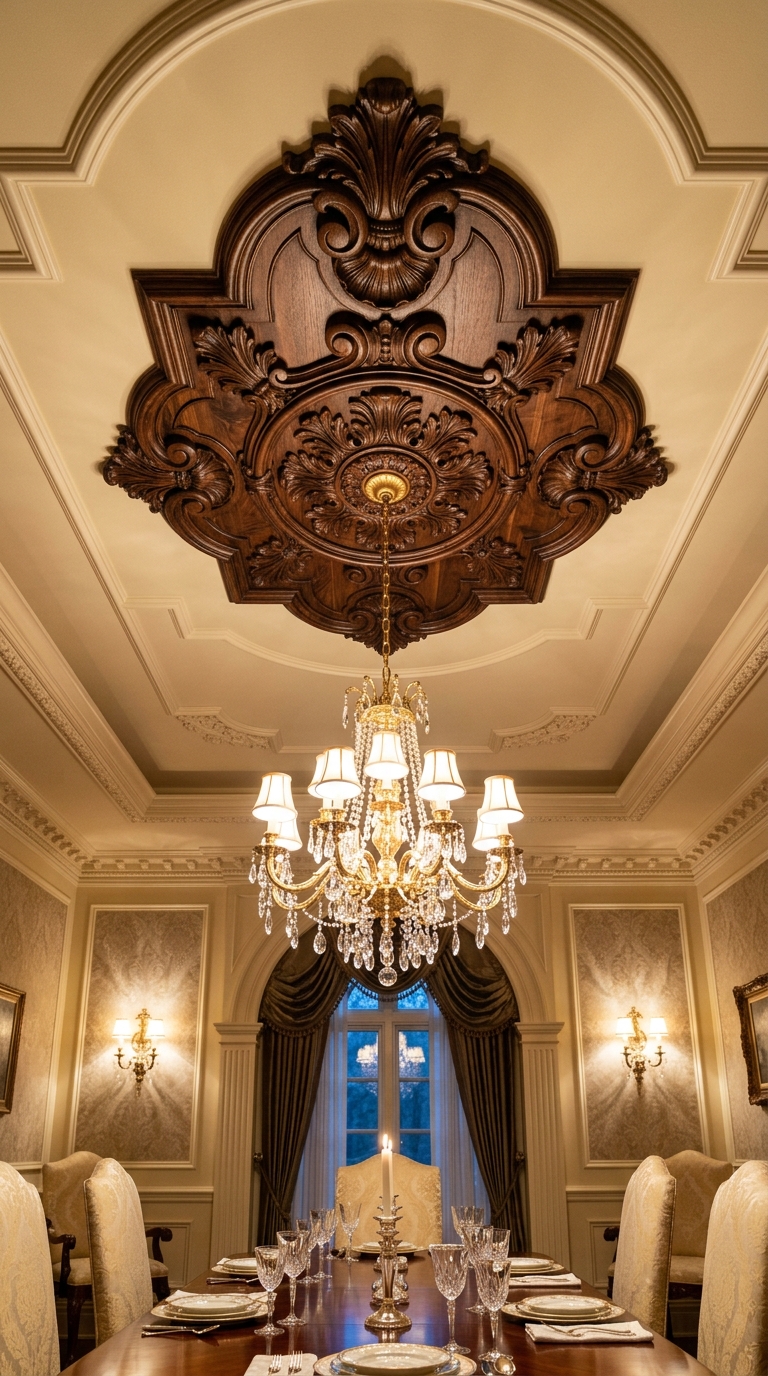
Wood Ceiling Medallion as a Statement Focal Point
Most wood ceiling ideas cover the whole surface, but a single medallion does the opposite. It draws attention to one central point, usually above a light fixture or dining table, and gives an otherwise plain ceiling a genuine “wow” moment.
This idea works particularly well in formal dining rooms or entryways where you want a bit of old-world charm without covering the entire ceiling in wood. It’s also a relatively affordable option since you’re only working with one focal piece rather than an entire surface.
- Styling detail: Choose a medallion with carved detail so it catches the shadow from your light fixture.
- Color palette: Dark Wood Medallion + Cream Ceiling + Gold Fixture
- Why you’ll love it: Unique focal point, affordable since it’s just one piece, adds old-world charm.
- Best for: Formal dining rooms, entryways, traditional homes
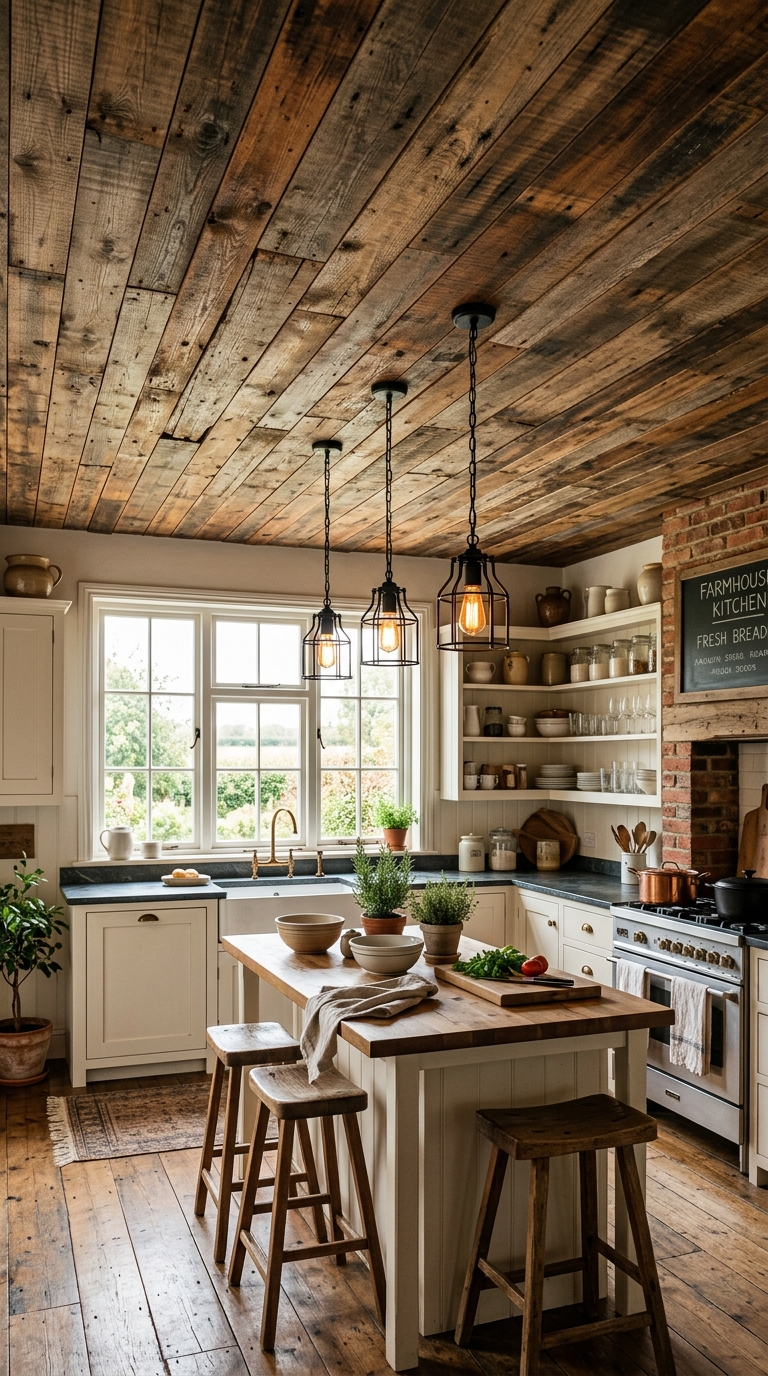
Salvaged Pallet Wood for an Almost-Free Statement
If your budget is basically zero, pallet wood might be your best option. Many hardware stores and warehouses give away old pallets for free, and once you sand off the rough edges and apply a food-safe stain, the wood takes on a genuinely rustic, collected look.
It does take some time, since pallets need to be broken down and cleaned up carefully, but the payoff is a ceiling that costs almost nothing beyond your own labor. It’s ideal for anyone who genuinely enjoys DIY projects and wants a farmhouse feel without spending on materials.
- Styling detail: Mix a few different stain shades across the planks for a more authentic, collected-over-time look.
- Color palette: Weathered Brown + Cream Walls + Black Iron Fixtures
- Why you’ll love it: Costs almost nothing, adds serious rustic character, great weekend project.
- Best for: Farmhouse homes, DIYers, tight budgets
Two-Tone Wood Ceiling With Natural Grain and Painted Trim
For something a little more advanced, try combining a natural wood section with painted trim detail. This two-tone approach gives you the warmth of real wood grain while still keeping part of the ceiling clean and bright, which works well in rooms that need both texture and light.
This idea takes a bit more planning since you’re working with two finishes, but the payoff is a ceiling that looks custom-designed rather than like a single off-the-shelf material. It’s a great choice if you want something that feels a little more unique than a standard all-wood or all-painted ceiling.
- Styling detail: Use the painted trim to frame the room’s perimeter and let the natural wood take center stage.
- Color palette: Natural Oak + Soft White Trim + Warm Gray Walls
- Why you’ll love it: Balances texture and brightness, feels custom, works in both modern and traditional homes.
- Best for: Modern homes, larger rooms, design-forward homeowners
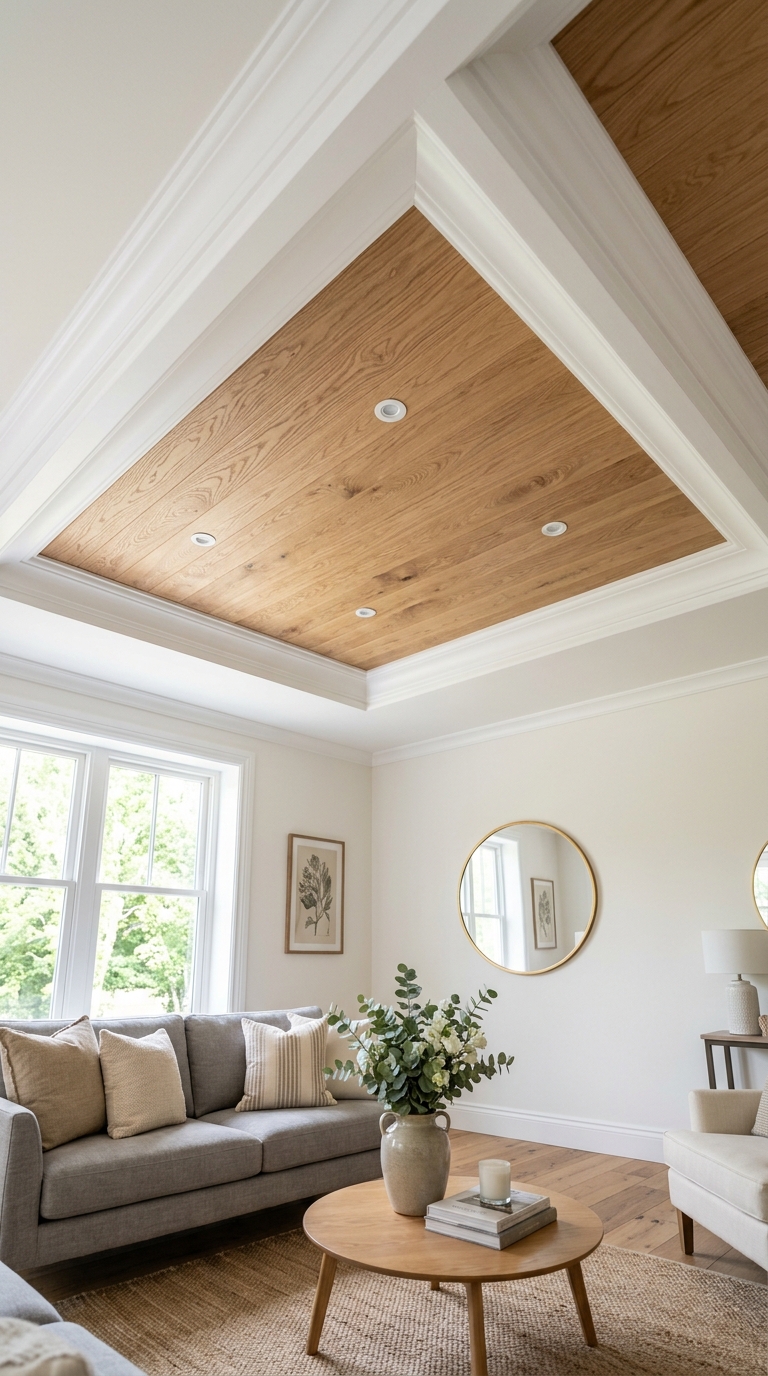
Quick Designer Tip: When combining two finishes on one ceiling, always test your paint and stain samples together under your room’s actual lighting before committing. Undertones can clash more than you’d expect once the sun moves through the day.
Wood Ceiling Paired With One Dramatic Pendant Light
Sometimes the wood ceiling itself is only half the story — the lighting you choose underneath it makes or breaks the final look. A single oversized pendant light against a wood ceiling creates a striking contrast that photographs beautifully and instantly elevates the whole room.
This pairing works with almost any of the wood finishes mentioned earlier, but it looks especially good against natural or whitewashed tones, where the fixture becomes the clear focal point. It’s a simple styling move, but it’s one that ties the whole room together.
- Styling detail: Choose a pendant with a matte black or brushed brass finish to create contrast against lighter wood tones.
- Color palette: Natural Wood + Matte Black Fixture + Warm White Walls
- Why you’ll love it: Instantly elevates any wood ceiling, creates a strong focal point, works with multiple styles.
- Best for: Dining rooms, kitchen islands, modern farmhouse homes
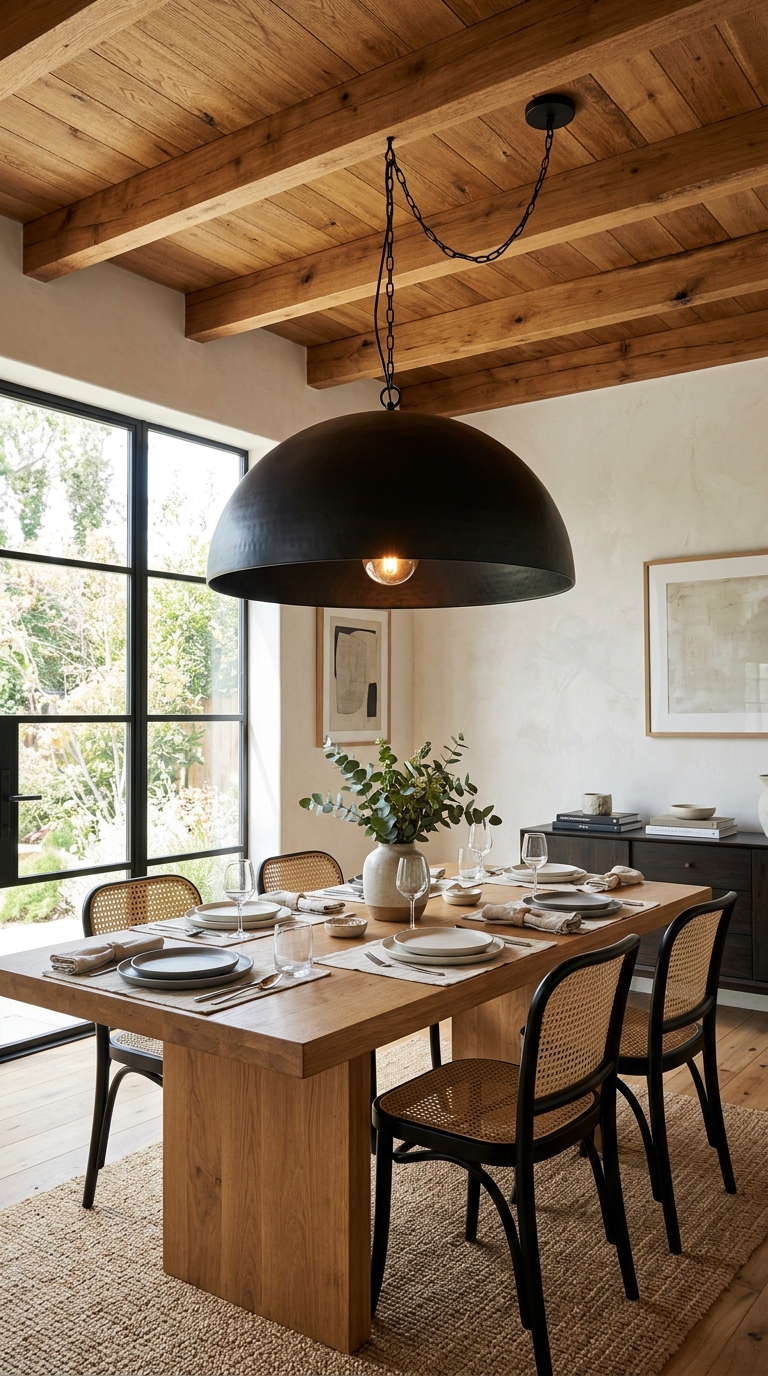
Nickel-Gap Paneling for a Coastal Cottage Finish
To close things out, nickel-gap paneling gives you the clean lines of shiplap with a slightly more refined, tailored finish. The small consistent gap between boards, about the width of a nickel, creates a subtle linear pattern that feels polished without looking overly rustic.
This finish works especially well in coastal or cottage-style homes, where you want texture that still feels clean and put-together. It’s a great note to end on if you’re looking for something that feels current, calming, and easy to live with long-term.
- Styling detail: Paint it a soft, warm white rather than stark white to keep the coastal feel from turning cold.
- Color palette: Soft White + Natural Rattan + Ocean Blue Accents
- Why you’ll love it: Clean and polished, it feels coastal without being themed, a timeless long-term choice.
- Best for: Coastal homes, cottage-style interiors, sunrooms
Quick Designer Tip: Whatever wood ceiling idea you land on, always finish with a matching or complementary trim around the edges. It’s a small detail, but it’s what separates a DIY project from something that looks professionally finished.
FAQ
How much does a budget-friendly wood ceiling cost?
Most budget options range from $50 to $500 for a standard-sized room, depending on the material. Peel-and-stick panels and paint-based finishes sit at the lower end, while pine planks or tongue-and-groove installs cost more but still stay well under premium hardwood pricing.
What is the cheapest wood ceiling material?
Pine is generally the most affordable wood for ceilings, followed closely by plywood cut into planks and stained to mimic hardwood. Reclaimed or pallet wood can cost close to nothing if you’re willing to source and prep it yourself.
Can I install a wood ceiling myself without hiring a contractor?
Yes. Most of the ideas on this list, including peel-and-stick panels, furring strip beams, and tongue-and-groove planks, are beginner-friendly and can be completed in a weekend with basic tools.
Do wood ceilings make a room feel smaller?
Not if you choose the right finish. Light or whitewashed wood tones keep a room feeling open, while darker wood works best in rooms with higher ceilings. Running slats vertically can also help low ceilings feel taller.
Are peel-and-stick wood ceiling panels a good long-term option?
They’re a great option for renters or anyone who wants a quick, non-permanent upgrade. They hold up well indoors and can be removed cleanly if you decide to change the look later.
What’s the best wood ceiling idea for a small budget?
Reclaimed or pallet wood is the most budget-friendly option since the material itself is often free or very cheap. Peel-and-stick panels are a close second if you want something faster and lower effort.
Conclusion
A wood ceiling doesn’t have to mean a full renovation or a huge budget. As you can see from these 17 ideas, there’s an option for nearly every situation — peel-and-stick panels if you’re renting, reclaimed or pallet wood if you want something almost free, faux beams if you want the beam look without the beam price, and paint-and-stain tricks like whitewashing or two-tone finishes if you already have plain wood on hand.
The easiest way to get started is to pick one idea that matches your current ceiling height, your room’s lighting, and your comfort level with DIY work. You don’t need to do the whole ceiling at once either — a single accent strip or a small medallion can be just as effective as a full wood ceiling if you’re testing the look for the first time. Whichever direction you choose, the goal is the same: turn an overlooked surface into one of the best details in the room.
Which idea is your favorite? Save this post on Pinterest so you can come back to it later when you’re ready to start your makeover.