

A plain white ceiling is the most overlooked “fifth wall” in any home, and it’s also the cheapest one to change. Most people assume a wood ceiling means thousands of dollars and a professional crew, but that’s simply not true anymore.
This guide covers 20 real, budget-friendly wood ceiling ideas, from free pallets to clever styling tricks. Each one includes the rough cost, best room fit, and easy tips so you can pick what suits your space and skill level.
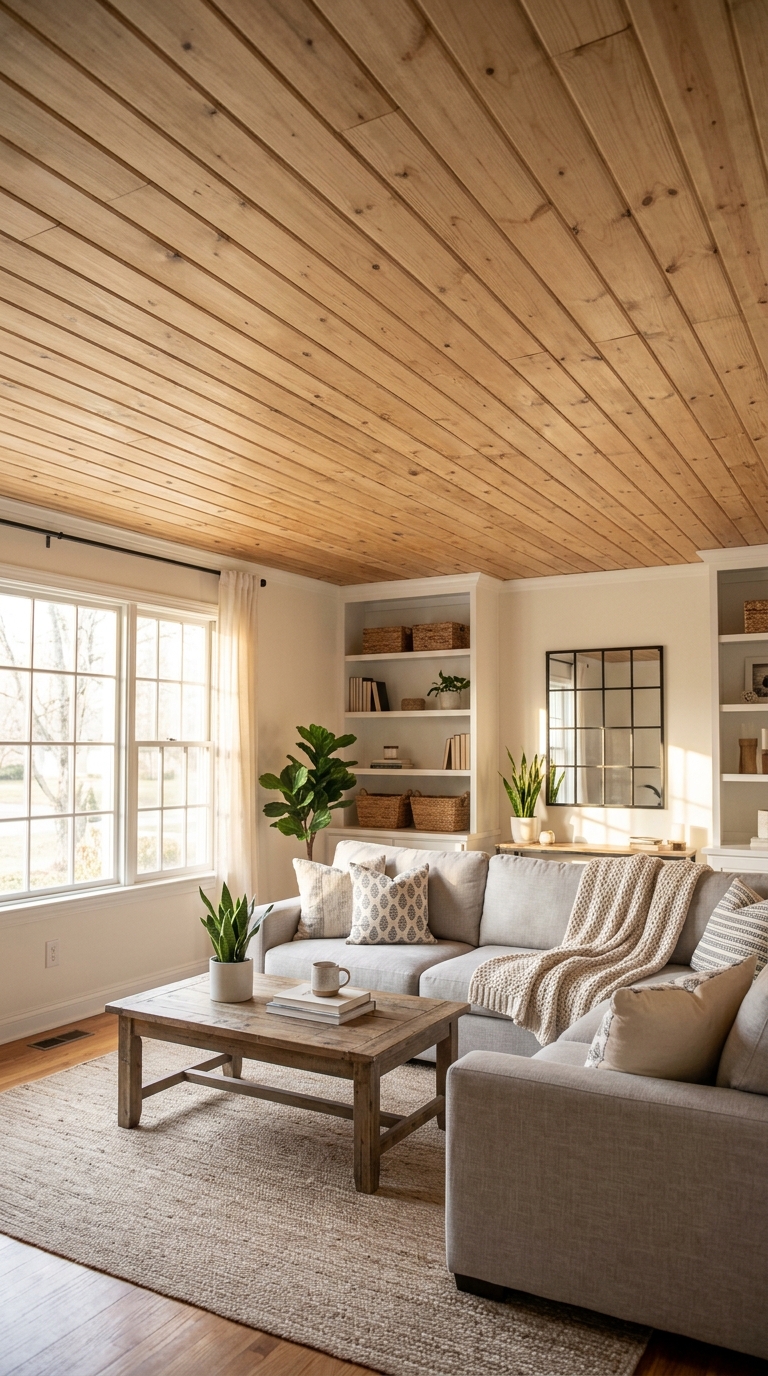
1. Reclaimed Fence Board Ceiling
Old fence boards are one of the cheapest ceiling materials around. People replacing a fence are often happy to give the old boards away for free. Once cleaned and lightly sanded, they already carry beautiful natural weathering.
Once you’ve picked your favorite look from this list, head over to our How to Install a Plywood Ceiling walkthrough to plan out the actual installation.
This look is perfect for farmhouse and cottage interiors, where imperfections add charm instead of taking away from it. Since every board wears differently, no two ceilings ever look quite the same
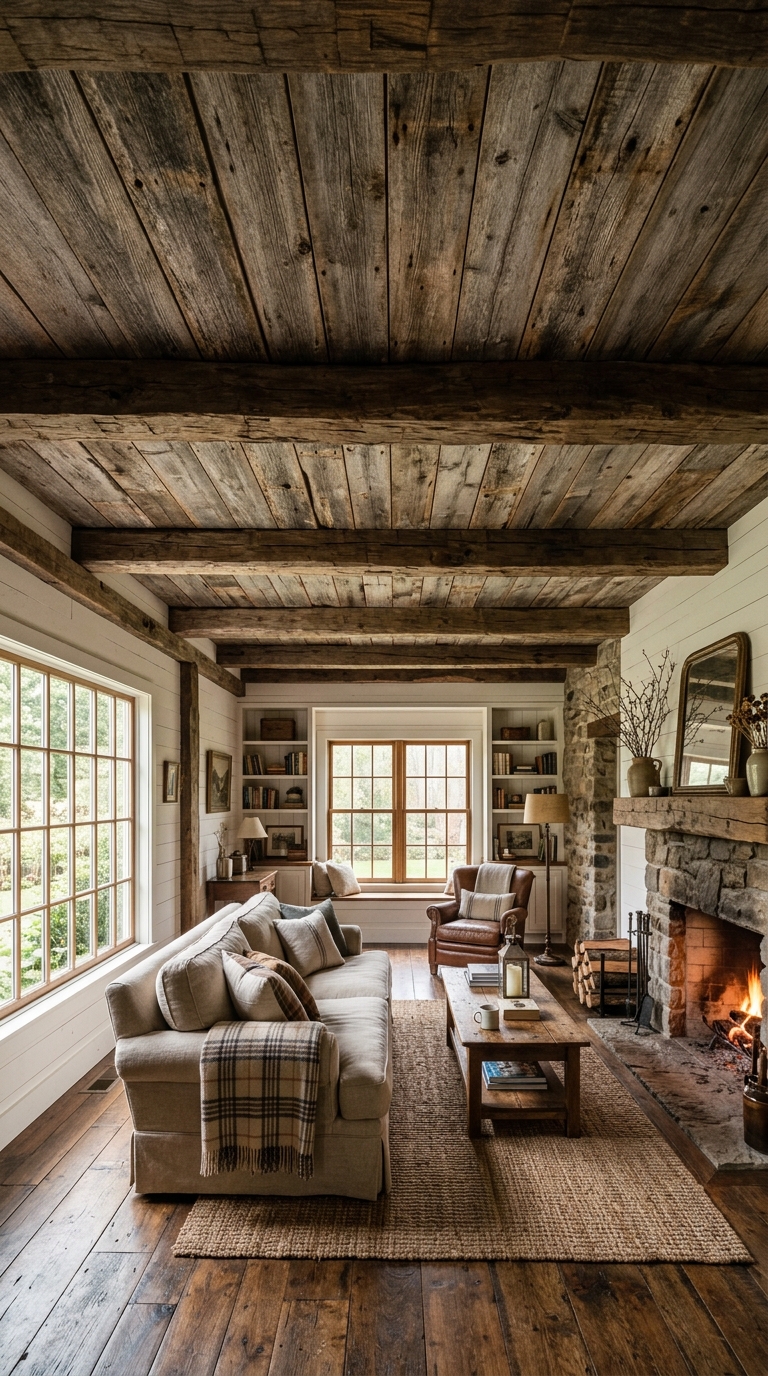
2. Furring Strip Accent Ceiling
Furring strips are thin wood pieces that cost about $2 each. Space them 6 to 12 inches apart, and paint the ceiling behind them a dark color first. The dark background disappears, leaving a clean, designer-style pattern.
This method works great for modern, minimal homes since it adds texture without covering the whole ceiling. It’s also budget-friendly and quick to install, even over slightly uneven surfaces.
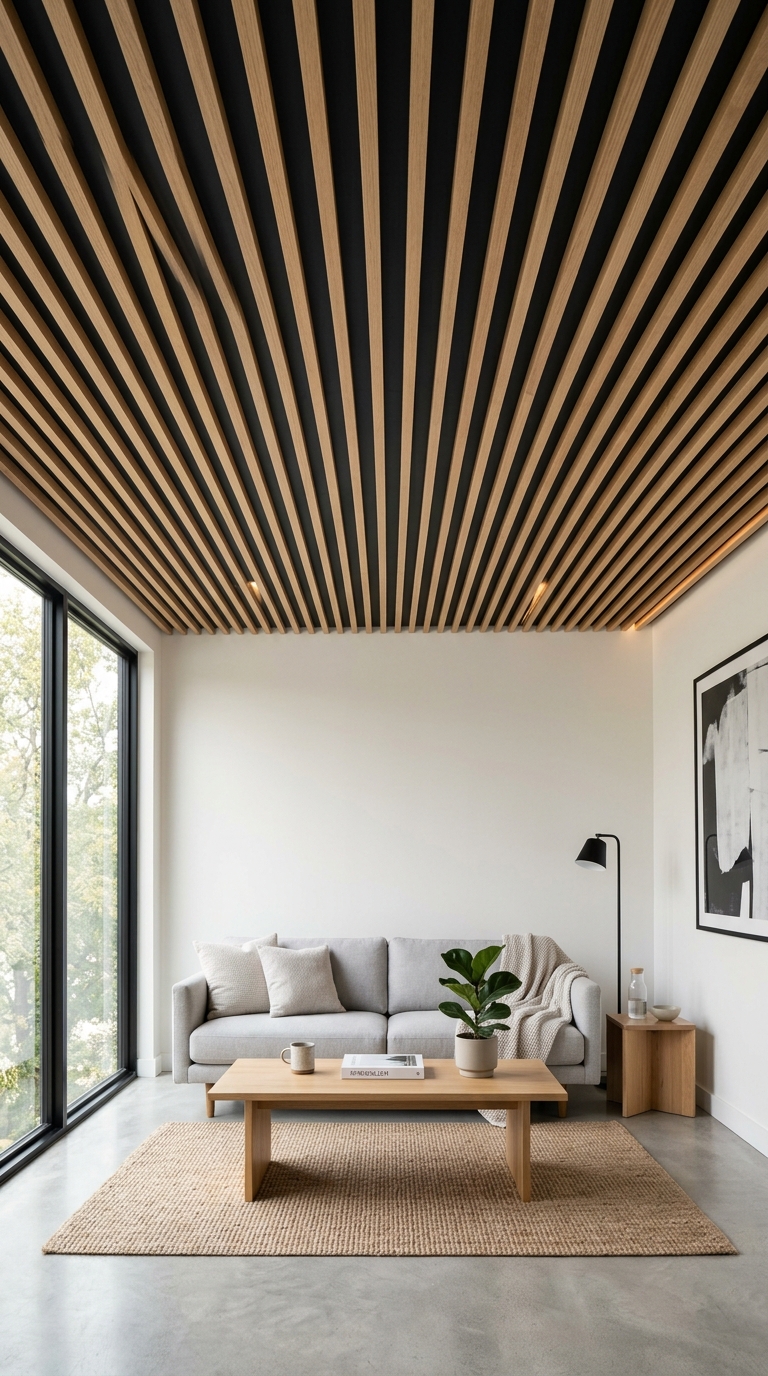
3. Stained Construction-Grade Lumber
Basic hardware-store lumber is much cheaper than “finished” wood. Sand it smooth and add a stain, and it’s hard to tell apart from expensive planks. Prices also stay steady all year, which makes budgeting easier.
These ideas pair well with our roundup of Budget-Friendly Wood Ceiling Ideas if you want a second batch of low-cost options to compare.
This lumber takes almost any finish, from warm honey tones to deep espresso browns, so it fits any style. It’s also easy to replace a board later if needed, unlike harder-to-match reclaimed wood.
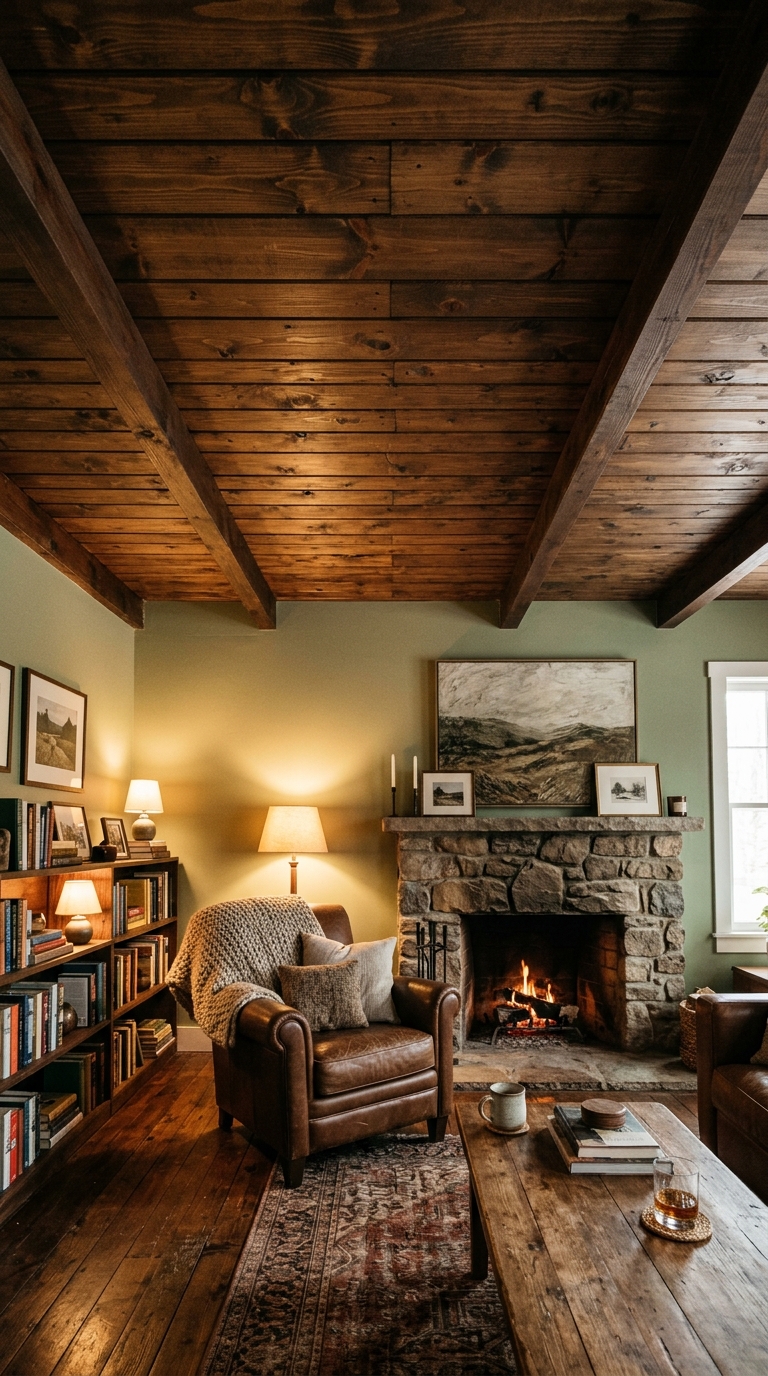
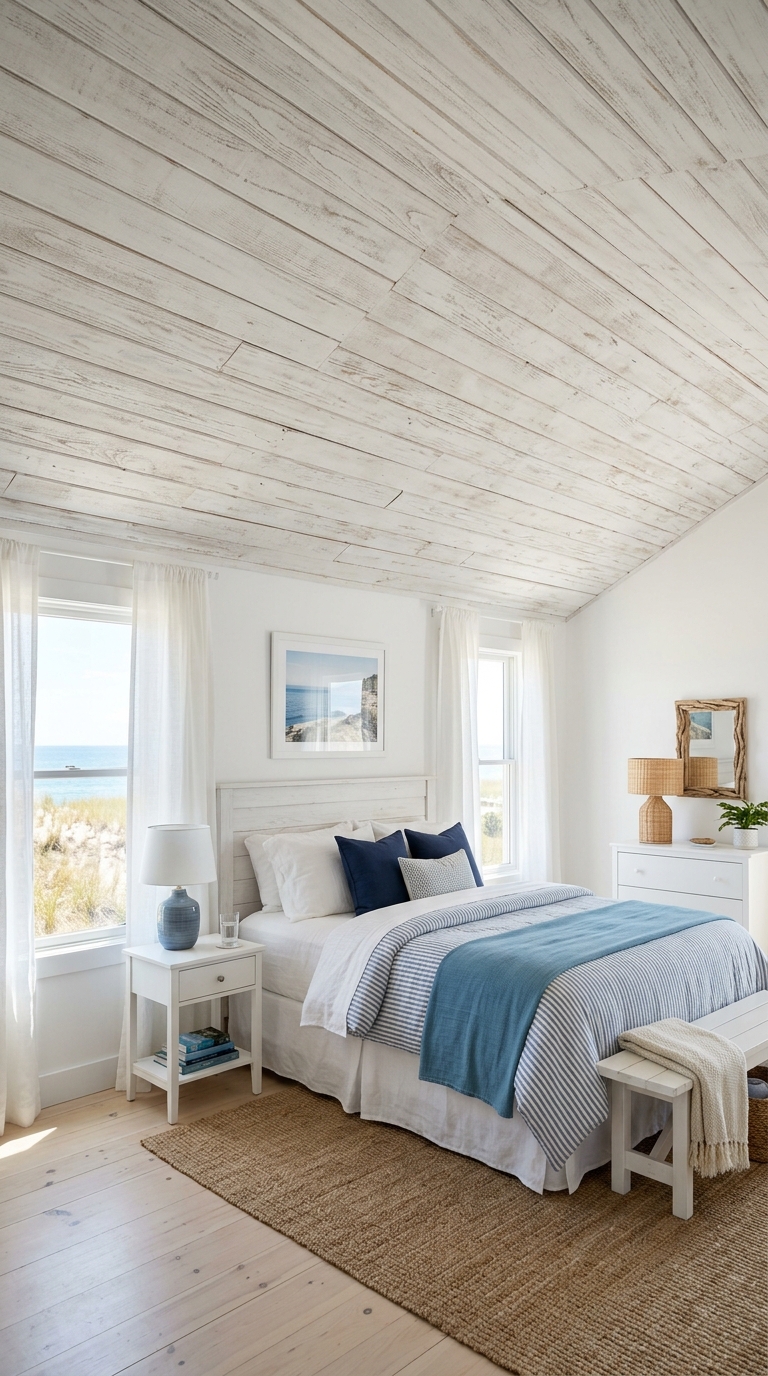
4. Whitewashed Plywood Strips
Cut plywood into strips and whitewash them with diluted paint. This creates a soft, breezy coastal look while hiding plywood’s rougher surface. The grain still peeks through for a natural feel.
Not sure which plywood look fits your room? This full Plywood Ceiling Guide breaks down natural, whitewashed, coffered, and painted options in detail.
It’s a beginner-friendly project since plywood is light and easy to cut. The lighter finish also brightens smaller rooms by bouncing more natural light around the space.
5. Click-Lock Laminate Flooring Ceiling
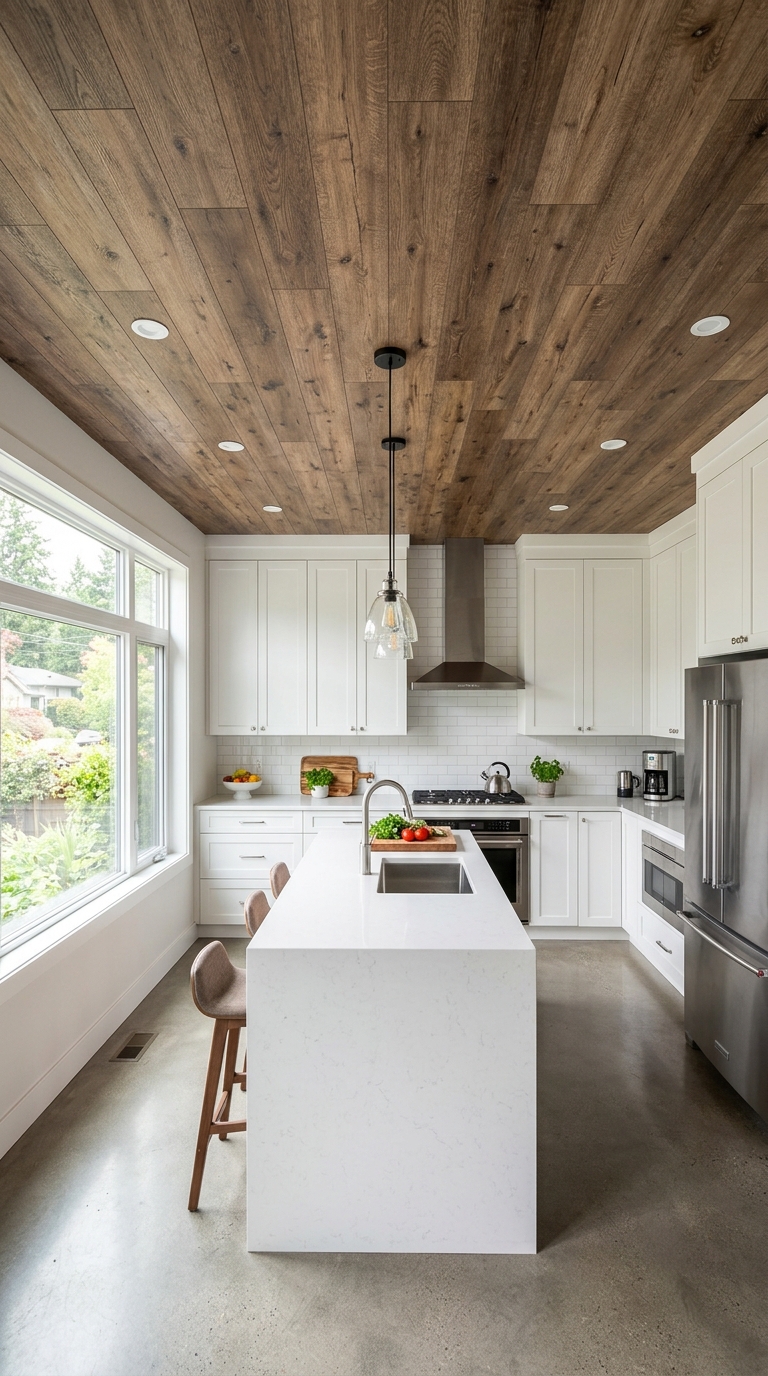
Leftover laminate flooring works just as well on ceilings. It clicks together easily with no glue or nails, and costs about $1 to $2 per square foot. It’s a smart way to use up extra material.
Laminate also resists moisture better than raw wood, making it ideal for kitchens and bathrooms. With so many wood-look finishes available, matching it to your cabinets or floors is simple.
6. Upcycled Wood Crate Panel Ceiling
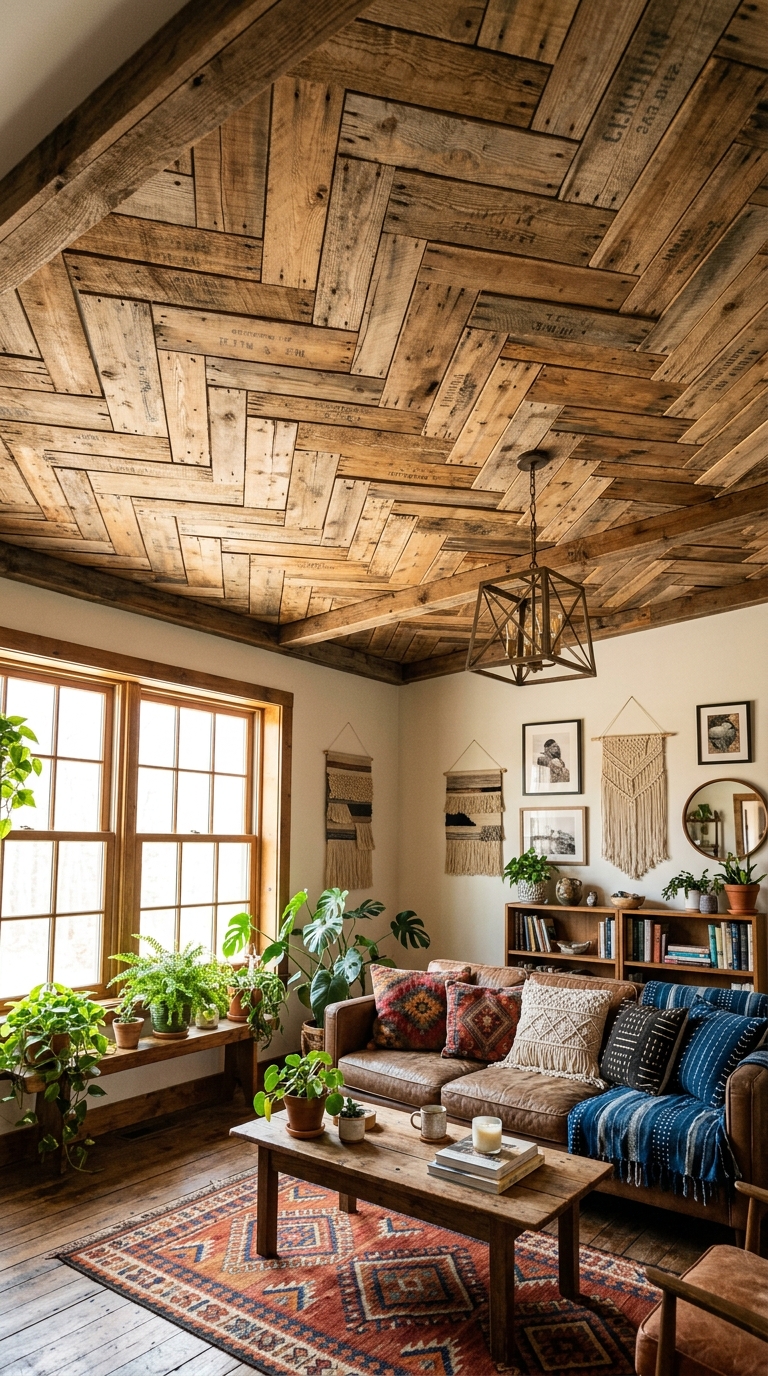
Old wooden crates are often thrown away for free. Take them apart and cut the slats into uniform pieces to arrange in herringbone or diagonal patterns. Each crate’s natural wear adds character.
This project takes a bit more time but costs almost nothing. It’s perfect for creative, eclectic homeowners who enjoy a hands-on upcycling process with a truly one-of-a-kind result.
Want to see this look scaled up? Check out these Vaulted Ceiling Kitchen Ideas for ways to bring warm wood tones into a taller, more dramatic space.
7. Dark-Stained OSB Sheet Ceiling
OSB sheets cost only $15 to $25 each and already have a bold, layered texture. Staining them dark hides the strand pattern and creates a polished, intentional look.
Since OSB comes in full sheets, installation is much faster than plank by plank. It pairs beautifully with industrial and modern farmhouse interiors that already feature raw materials.

8. Painted Particle Board Strip Ceiling
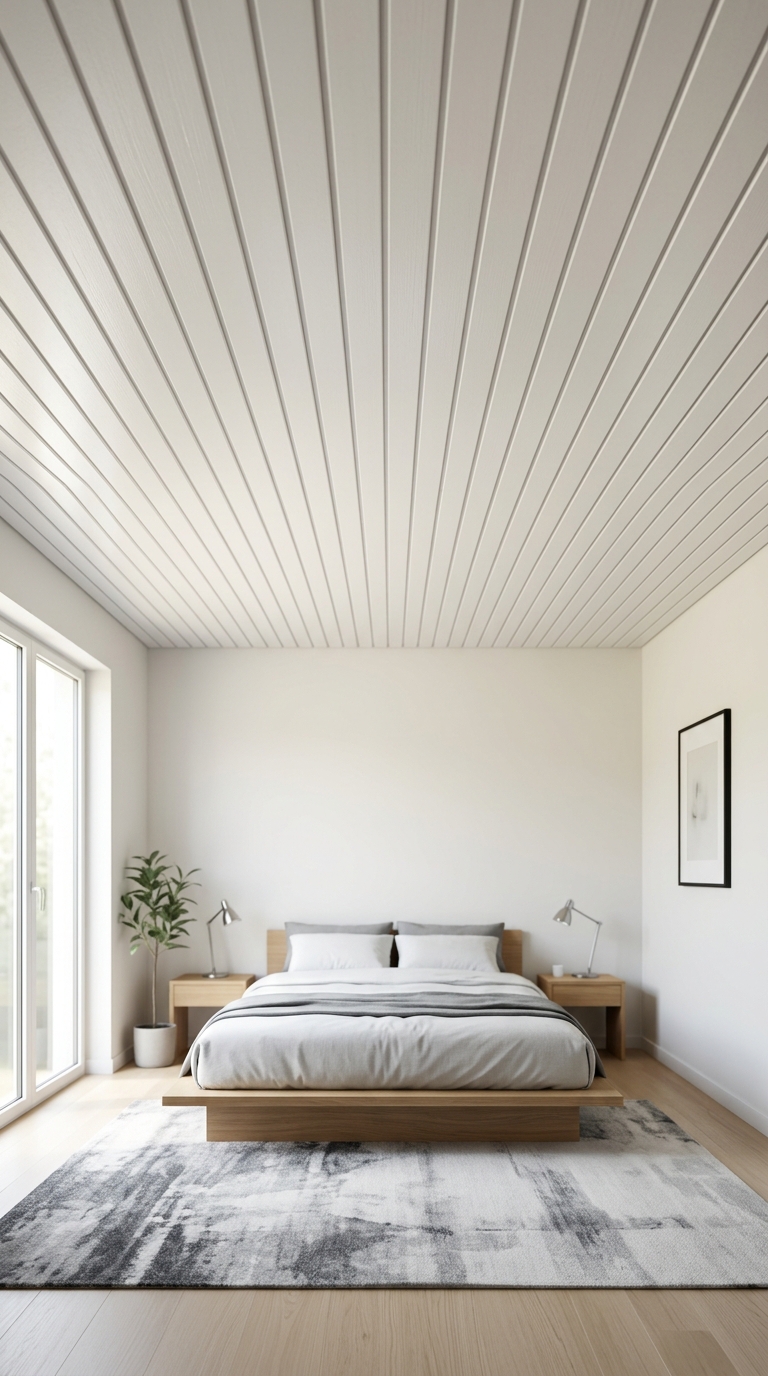
Particle board is the cheapest wood product available. Cut it into 4 to 6-inch strips, prime it, then paint for a smooth, seamless finish. No grain means no streaking after painting.
It’s great for clean, modern rooms and forgiving for beginners since flaws are easy to fill. Just avoid using it in bathrooms or kitchens, since it doesn’t handle moisture well.
9. Free Pallet Wood Ceiling
Shipping pallets are usually free from local businesses or warehouses. Heat-treat them to remove pests, then pull out every nail before sanding. What’s left is authentic, rustic wood at zero material cost.
Each pallet gives a good amount of usable wood, and mixing several adds variety to the color palette. It’s the go-to choice for farmhouse and cabin-style rooms.
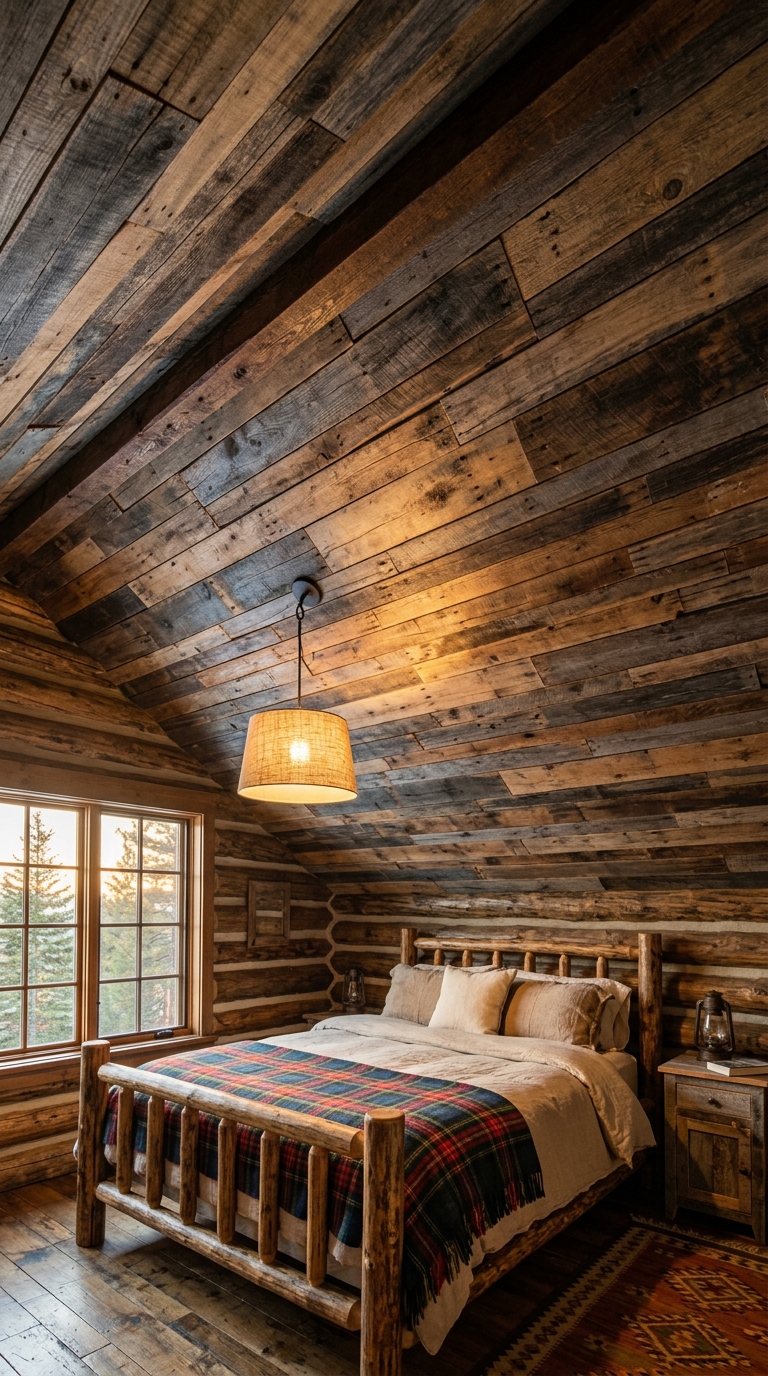
10. Gapped Pine Plank Ceiling
Instead of fitting boards tightly together, leave small gaps between pine planks. This creates natural shadow lines and adds depth, while also hiding minor flaws in cheaper wood grades.
The gaps also mean you need slightly less material, which helps lower overall cost. Adjust the gap size to control the mood, from subtle to bold and textured.
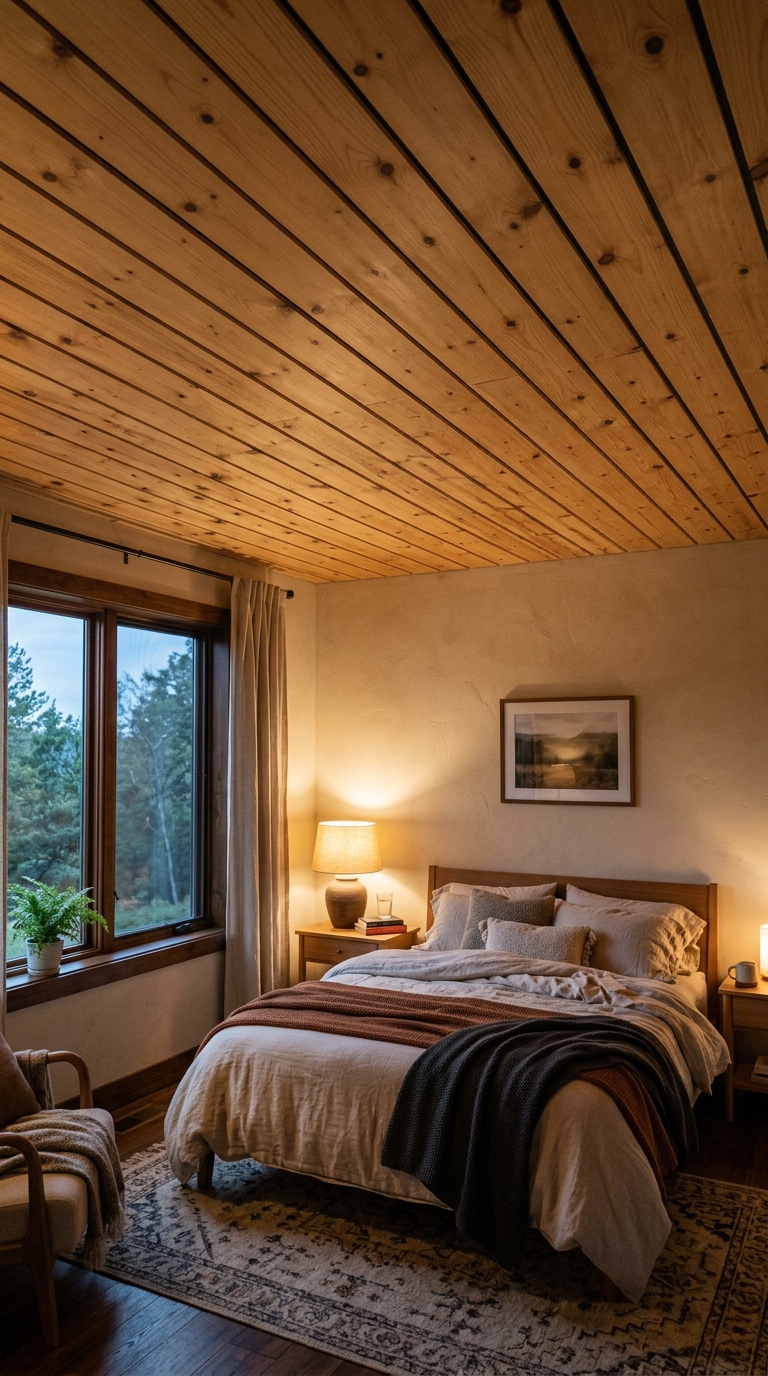
11. Stenciled Plywood Statement Ceiling
Plain plywood sheets install fast, and a stencil with contrasting paint turns them into a real design centerpiece. Geometric shapes or Moroccan-style patterns work especially well.
The cost barely changes from a plain plywood ceiling, yet the visual impact is much higher. It’s also easy to repaint later if you want a completely different look down the road.

12. Salvaged Barn Wood Ceiling
Barns being torn down are a great source of authentic, weathered wood, often free if you help with removal. The silvery, aged patina simply can’t be recreated with new lumber and stain.
Old nail holes, saw marks, and faded paint add real history to the ceiling. This works beautifully in farmhouse kitchens and dining rooms where a warm, lived-in feel is the goal.
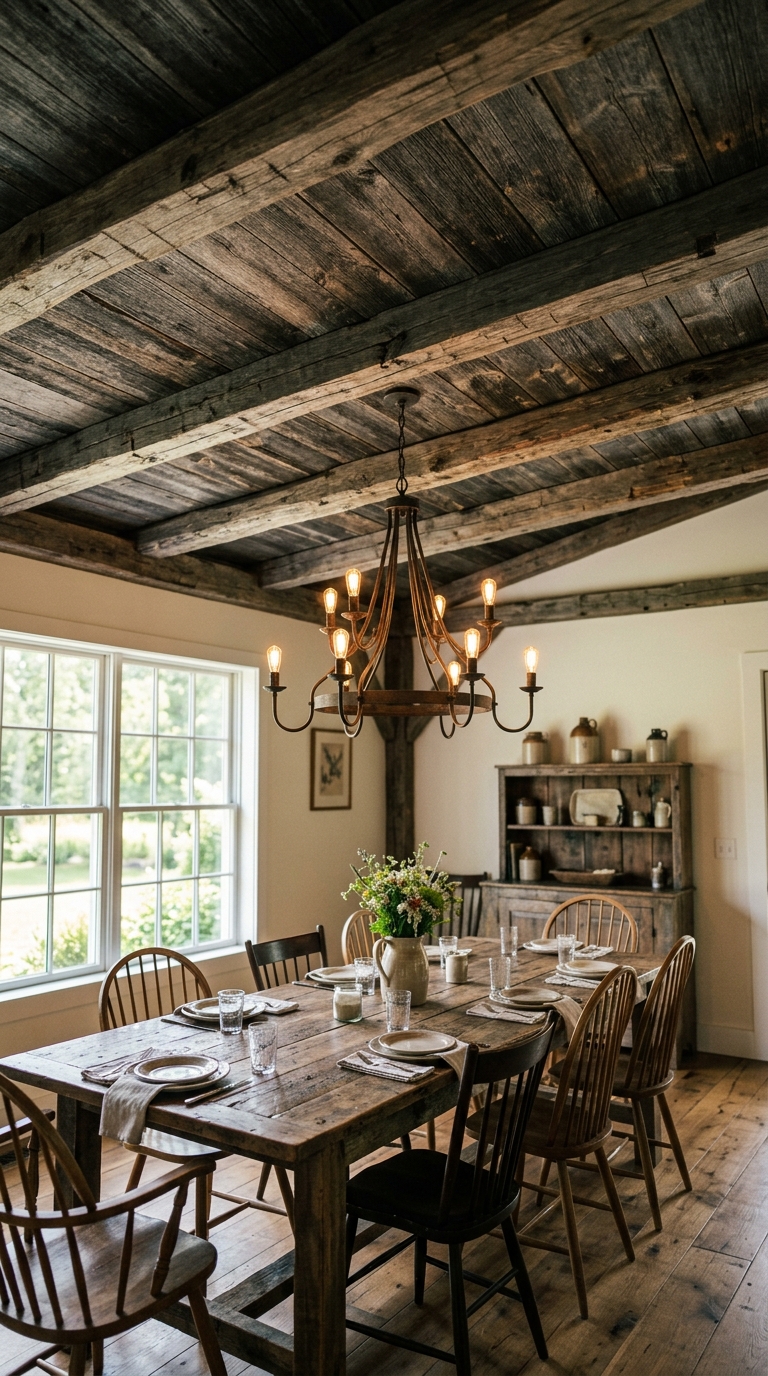
13. Discounted Tongue-and-Groove Remnants
Hardware stores clear out discontinued tongue-and-groove wood at 50 to 70 percent off. The interlocking edges install cleanly even when board lengths vary slightly between bundles.
The wood quality is identical to full-price stock, just a discontinued color or length run. Mixing two or three remnant shades can even become an intentional, boutique-style design choice.
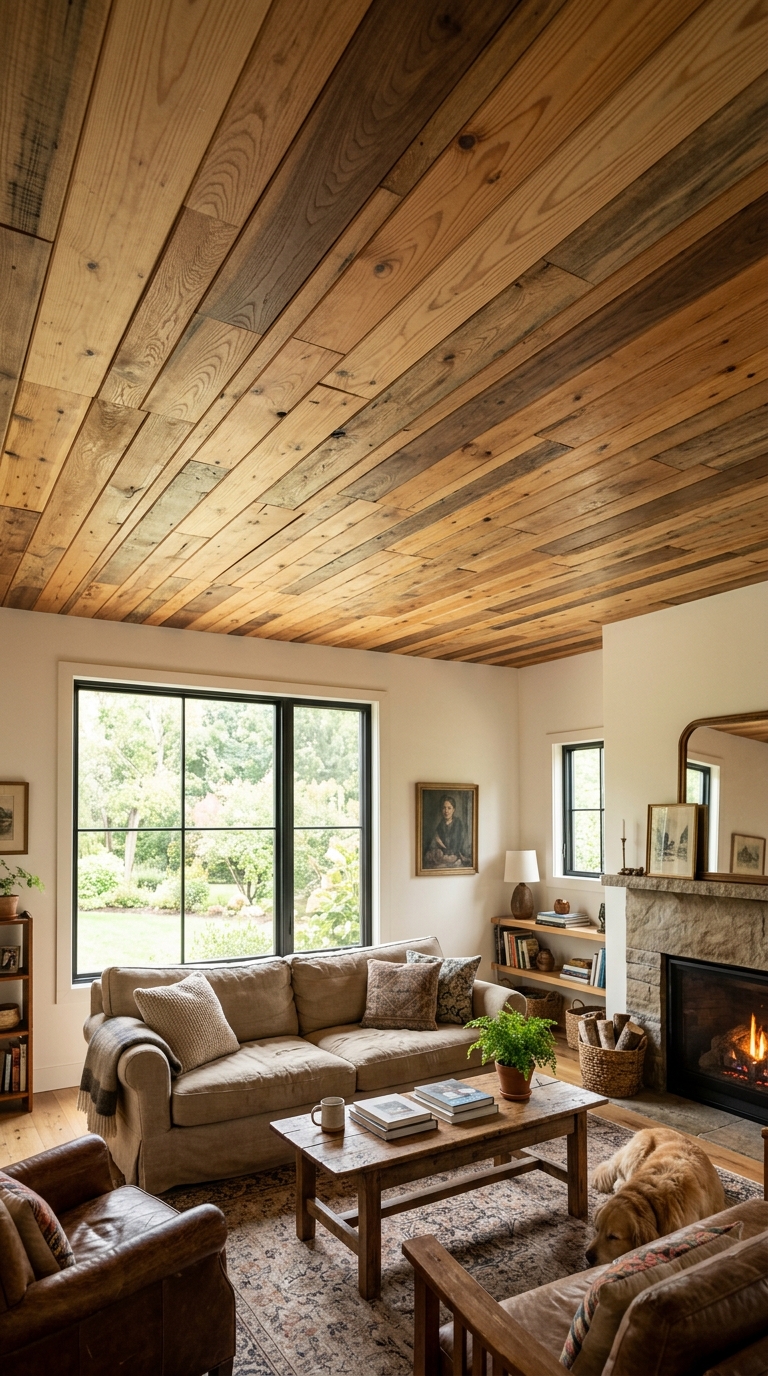
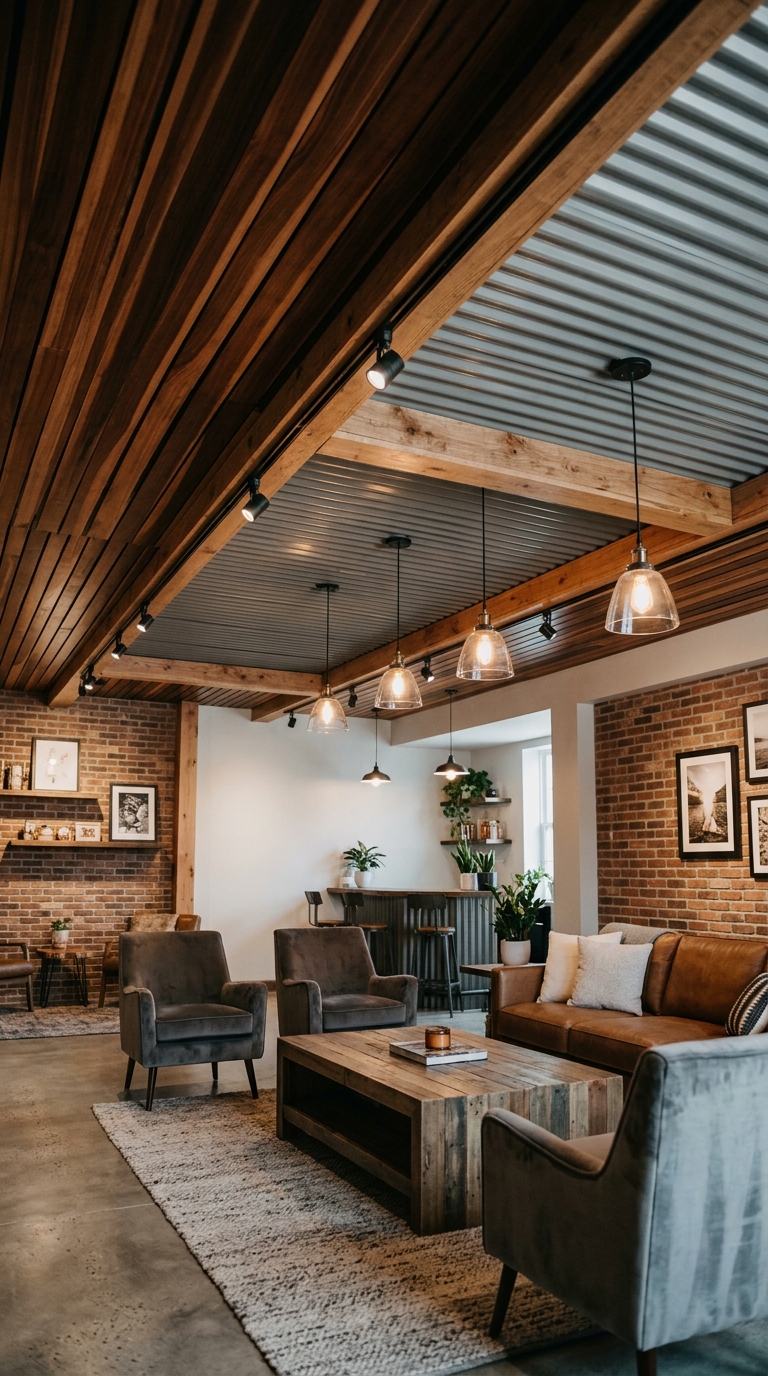
14. Wood + Corrugated Metal Hybrid Ceiling
Mixing wood strips with corrugated metal panels stretches your budget while adding an industrial edge. Less wood is needed overall, which lowers material costs compared to an all-wood ceiling.
This combo works especially well in basements and kitchens with an already industrial feel. Adjusting the wood-to-metal ratio lets you dial the look up or down to match the room.
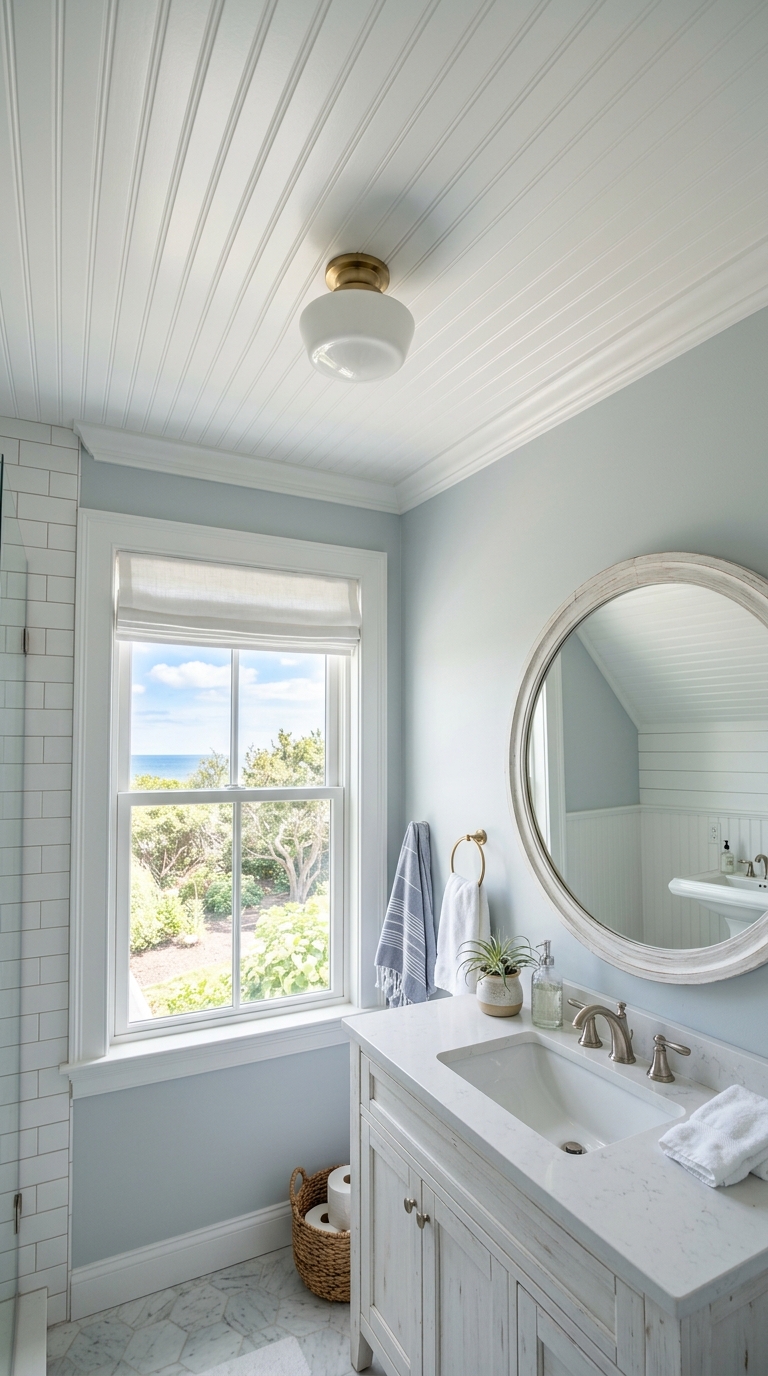
15. Budget PVC Beadboard Ceiling
PVC beadboard delivers the classic cottage grooved look for less than real wood, while handling humidity far better. That makes it ideal for bathrooms, kitchens, and laundry rooms.
Large 4×8 sheets cover a ceiling quickly, and the lightweight panels are easier to install solo. It also takes paint beautifully for a crisp white or soft pastel coastal finish.
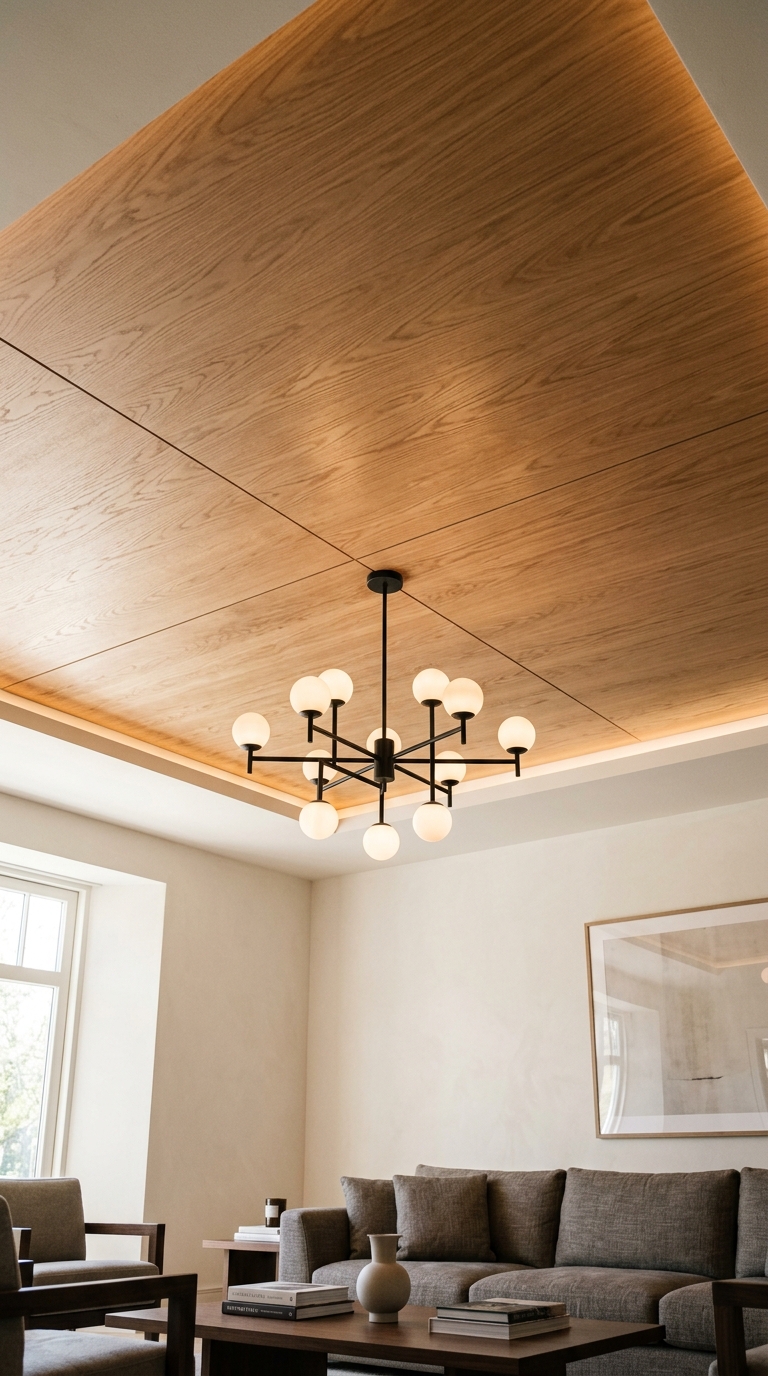
16. Wood Veneer Sheet Ceiling
Veneer is a thin slice of real wood bonded to a backing sheet. Because so little wood is used, it costs less and weighs far less than solid lumber, while still showing genuine grain.
Strong adhesive is usually all that’s needed to install it. Oak, maple, and walnut veneers each bring a different character, making it easy to match existing furniture or flooring.
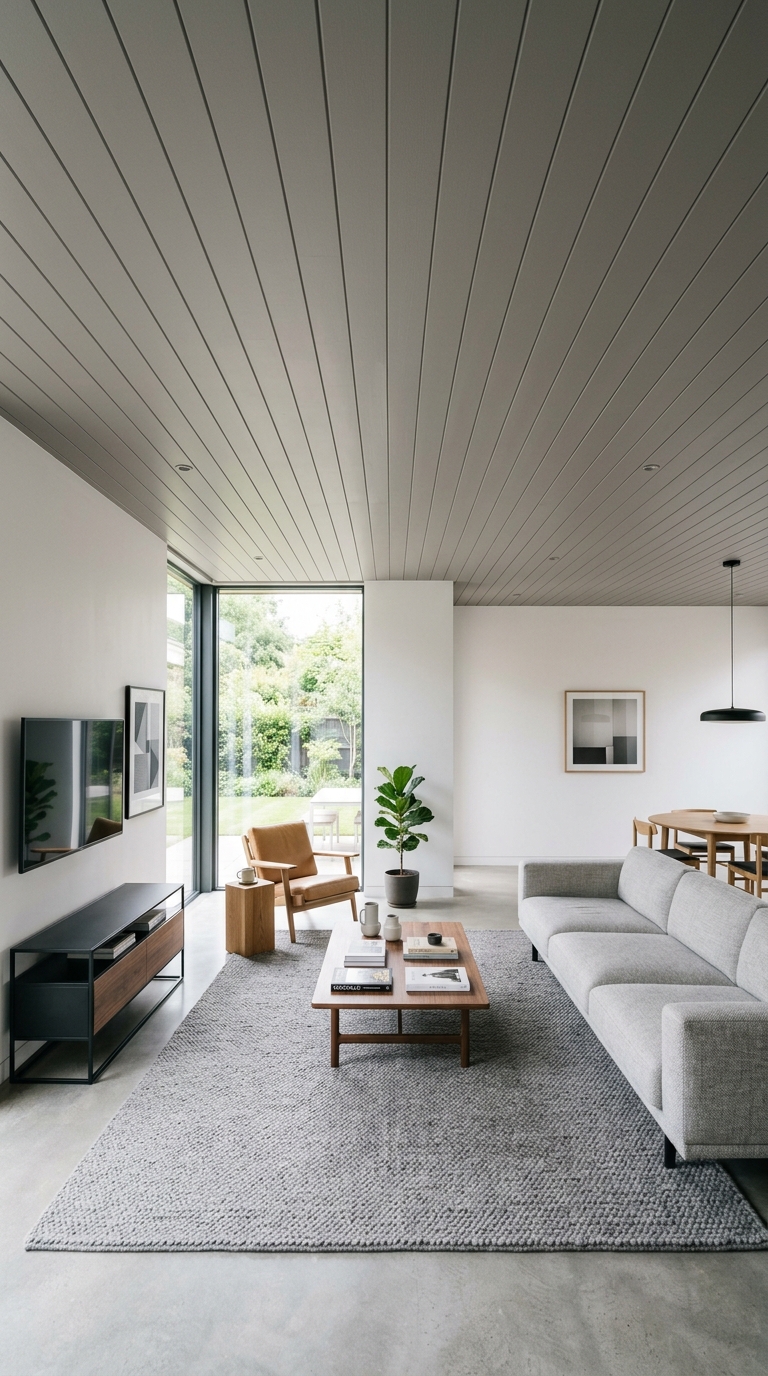
17. Painted MDF Plank Ceiling
MDF has no visible grain, so paint goes on perfectly smooth and even. At 30 to 40 percent less than pine, it’s one of the more affordable choices for a clean, modern ceiling.
It cuts easily and holds paint well, so future touch-ups blend in seamlessly. Just keep it away from bathrooms and kitchens, since MDF can swell if exposed to moisture.
18. Cedar Closet Liner Ceiling Accent
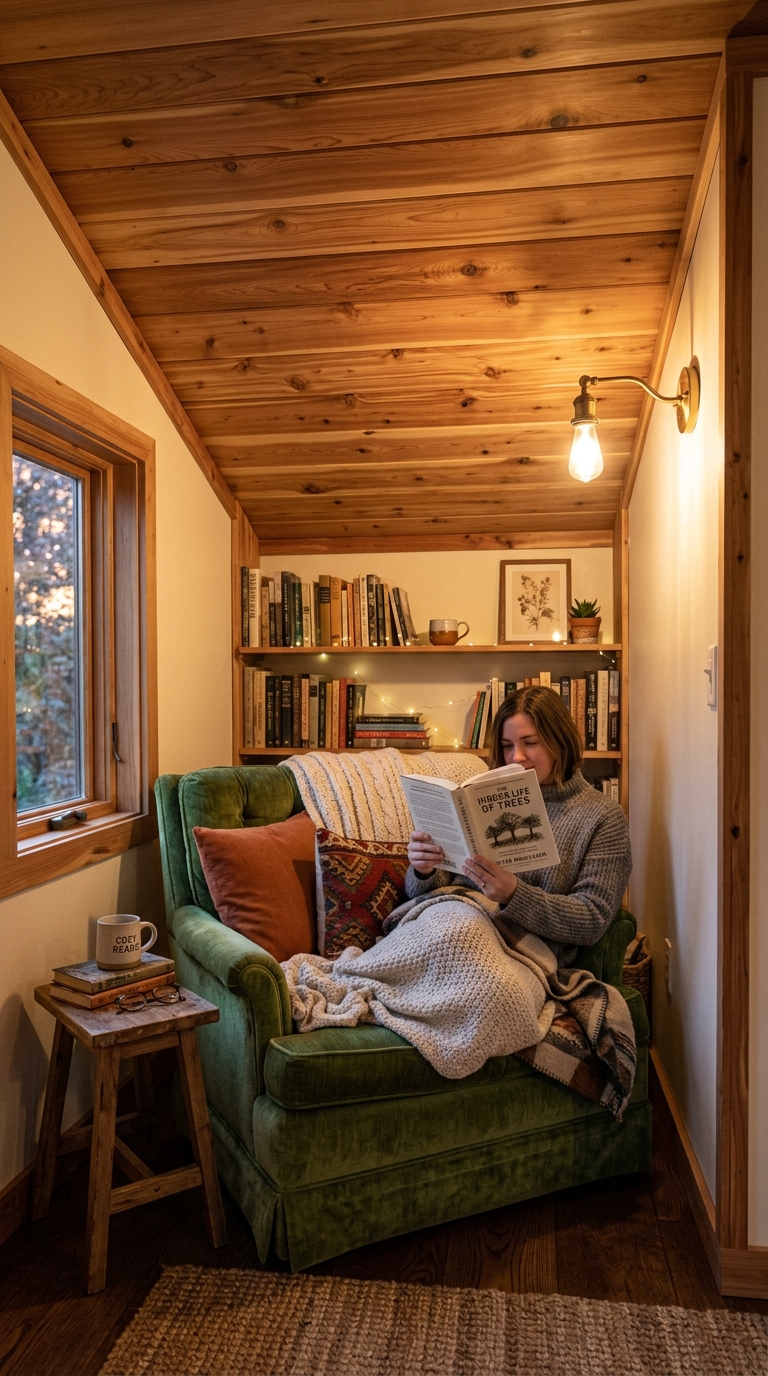
Cedar liner boards are thinner and cheaper than full cedar planks, originally made for lining closets. They’re perfect for small spaces like nooks, closets, or short hallways.
Beyond the low cost, cedar brings a warm honey tone and a natural, pleasant scent. It’s light and easy to install, making it a great first project before tackling a bigger room.
19. Recycled Shipping Crate Ceiling
Large shipping crates are often discarded for free by warehouses and docks. This thicker wood carries stamped labels and faded logos that add real industrial character.
Careful cutting and sanding are needed since these crates were built for durability, not smooth handling. Paired with exposed brick or black metal fixtures, it completes a genuine loft look.

20. Diagonal or Mixed-Width Plank Layout
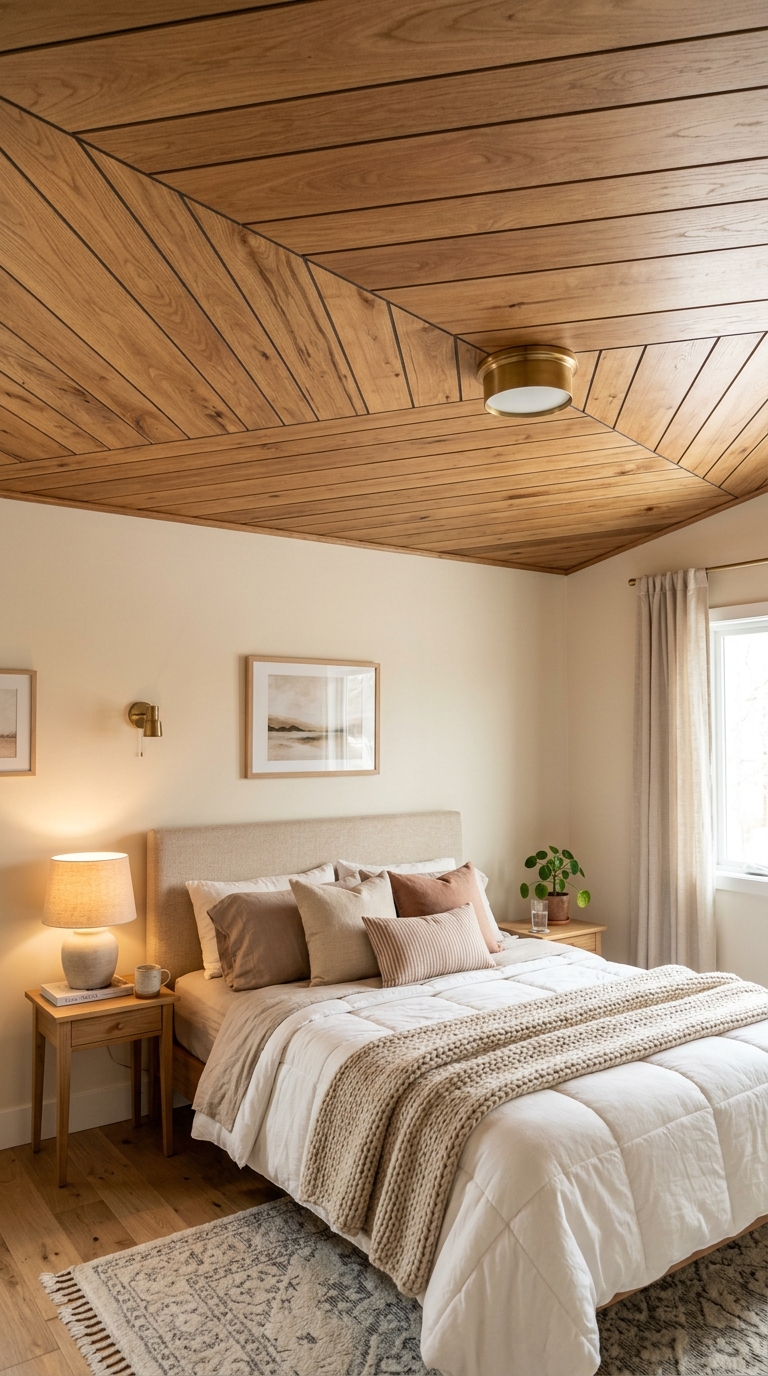
Installing regular boards at a 45-degree angle instantly adds movement and makes a room feel bigger. It uses slightly more material, but the style upgrade is well worth it.
Mixing plank widths is another easy trick, letting you buy whatever’s on sale that week. Both methods prove a rich-looking ceiling often comes from smart installation, not a bigger budget.
How to Choose the Right Wood Ceiling Material for Your Room
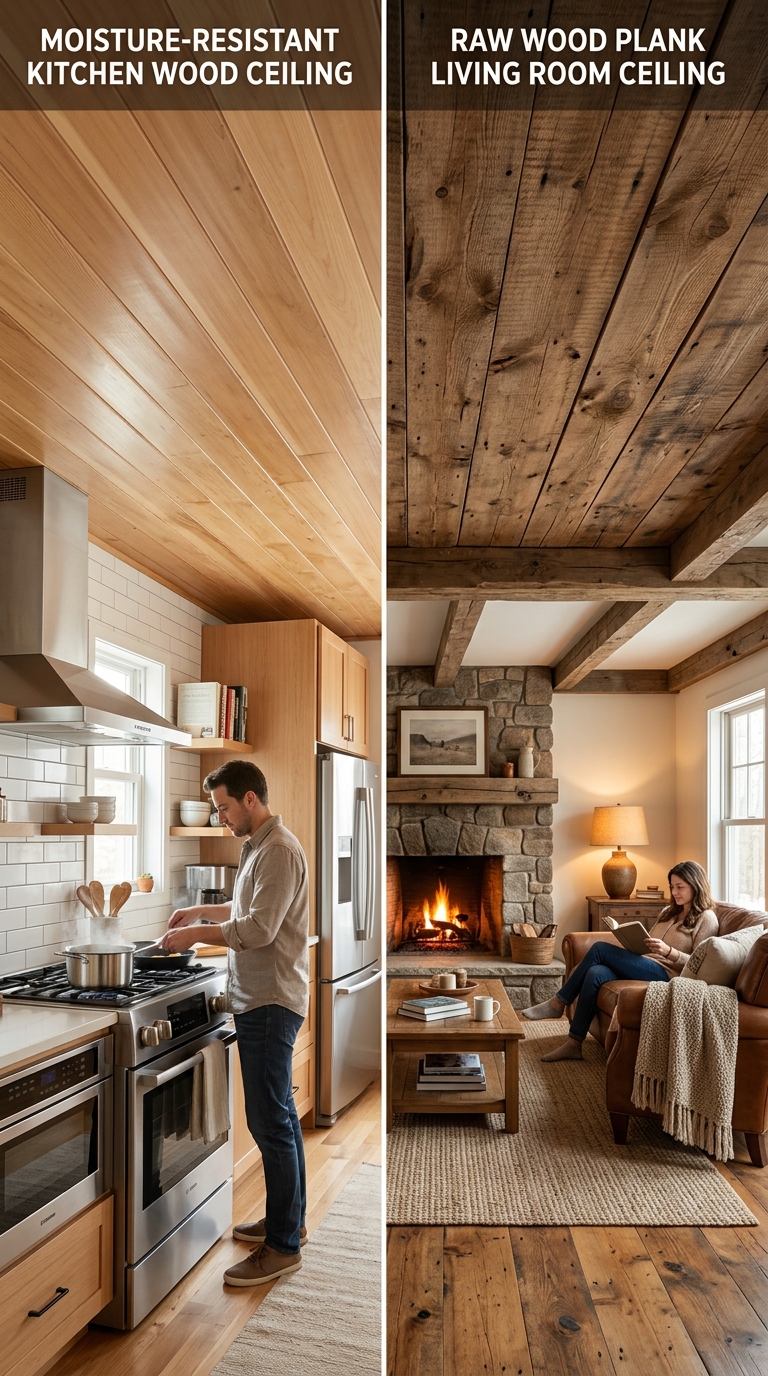
Start by thinking about moisture. Kitchens and bathrooms need water-resistant picks like laminate, PVC beadboard, or composite decking, while bedrooms and living rooms are far more forgiving of raw wood.
Weight matters too, especially if you’re installing solo. Lightweight options like veneer or foam tiles are easier and safer overhead, while solid lumber needs proper joist support to stay secure long-term.
Simple Installation Tips
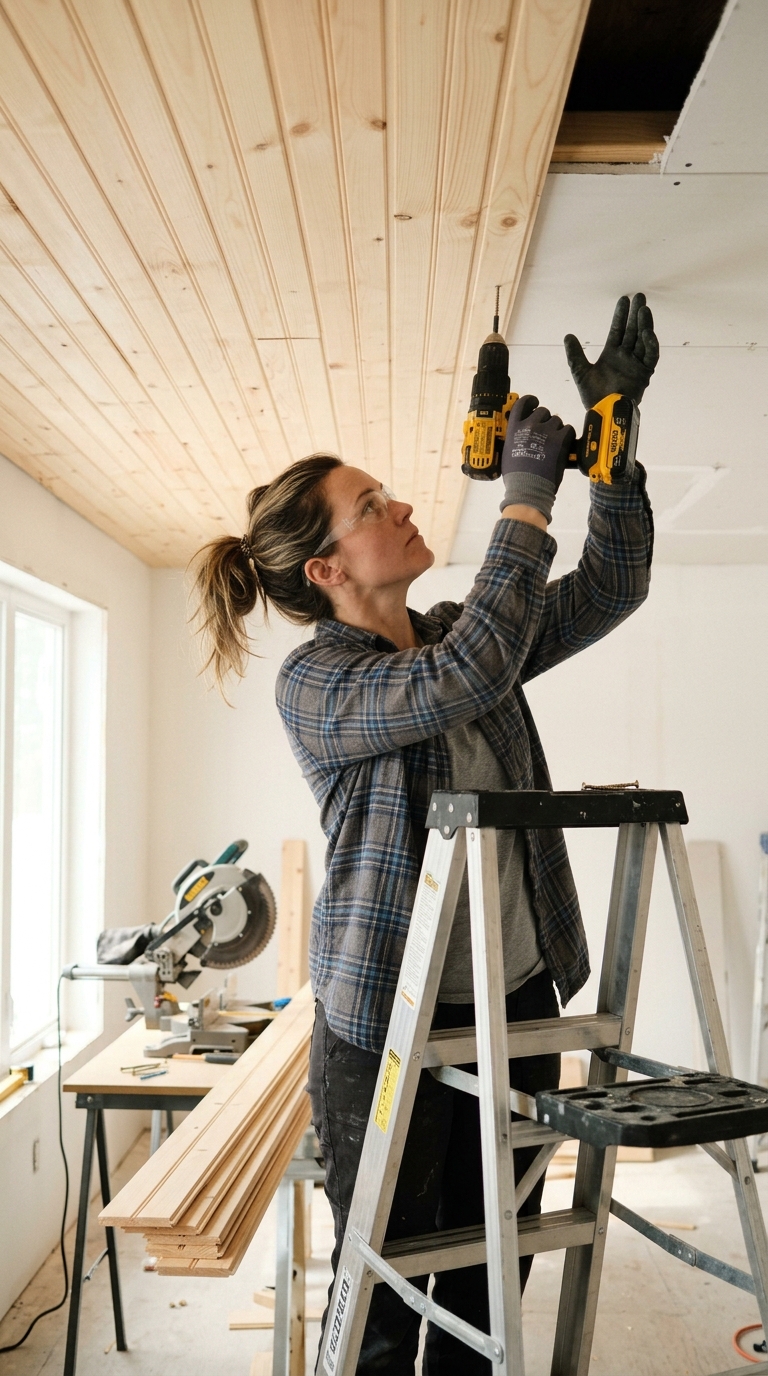
Measure your ceiling carefully and buy 10 to 15 percent extra material to cover cutting mistakes. Use a stud finder first to map out your ceiling joists, since most materials need to anchor there.
Check for level as you go, and work with a helper since overhead installation is safer with two people. Wear safety glasses and a dust mask, and take breaks to avoid fatigue-driven mistakes.
Cost Comparison at a Glance
Comparing costs side by side helps match an idea to your actual budget. Free options like pallet wood need more labor but cost nothing, while veneer sits higher but is still cheaper than solid hardwood.
Difficulty matters just as much as price, since a cheap material can cost more in time or mistakes if it’s too advanced. The table below gives a quick reference for five popular options.
Maintenance and Care
A monthly dusting with a soft, dry cloth keeps a wood ceiling looking fresh. Sealed or painted wood can handle a light damp wipe, but raw wood should only ever be dry-dusted.
Check twice a year for loose boards and tighten them early. Stained wood should be refinished every 5 to 8 years, and painted surfaces benefit from a touch-up every 2 to 3 years.

FAQS
What is the cheapest wood ceiling option available?
Free pallet wood is the cheapest by far, since the material costs nothing beyond your time to clean and sand it. The rustic result is genuinely hard to replicate with bought lumber.
Can I install a wood ceiling over popcorn ceiling?
Yes. Attach furring strips through the popcorn texture into the joists, then mount your wood boards to the strips. It’s faster than scraping and fully hides the old texture.
How long does an inexpensive wood ceiling last?
Most budget wood ceilings last 15 to 25 years with basic care. Sealed or painted wood lasts longer than bare wood, and good installation matters more than material cost for longevity.
Conclusion
A stunning wood ceiling doesn’t need a big budget. Free pallets, low-cost furring strips, and smart styling tricks like diagonal layouts prove that great design and affordability can go hand in hand.
Pick the idea that fits your room’s needs, measure carefully, and don’t be afraid to mix techniques for a custom result. Your ceiling makeover can start today, without breaking the bank.