
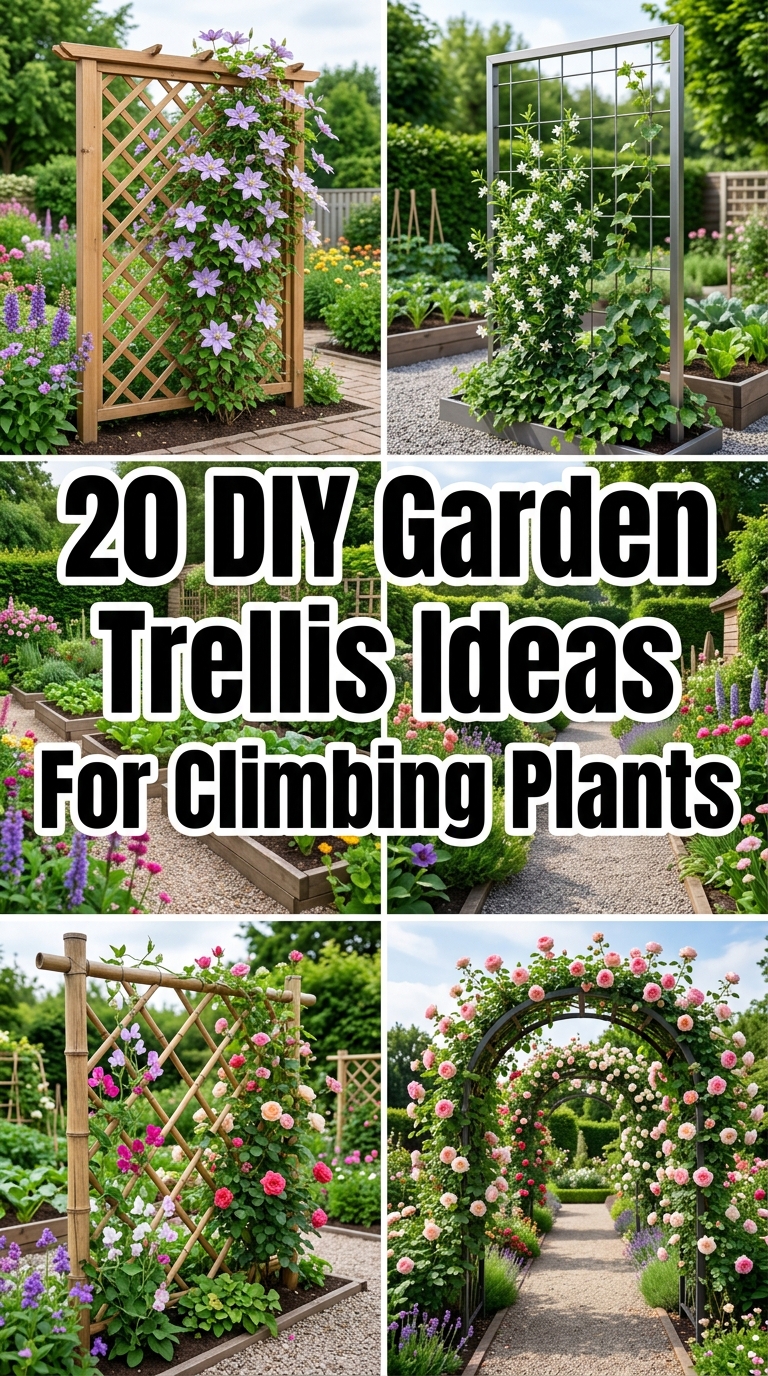
If you’ve ever watched an overloaded tomato plant flop over the night before harvest, you already know why a good trellis matters. Climbing plants like beans, peas, cucumbers, and flowering vines need something sturdy to lean on, and the right trellis does more than just hold weight; it becomes a genuine design feature in your garden.
The best part is you don’t need to spend a fortune on store-bought structures. With a few basic materials and an afternoon of work, you can build a trellis that’s both functional and beautiful, tailored exactly to your garden’s size and style. Here are 20 DIY trellis ideas to get your climbing plants growing up instead of falling over.
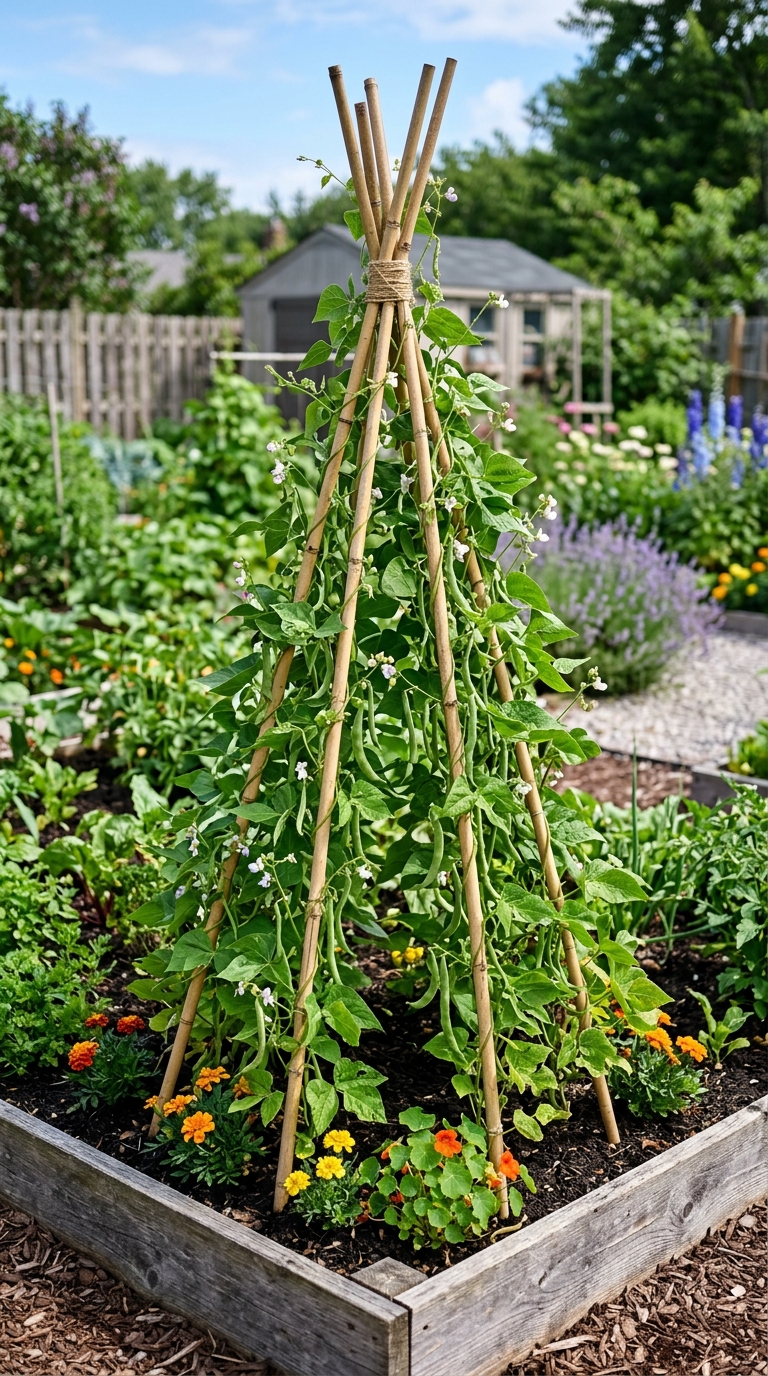
Bamboo Teepee Trellis for Beans and Peas
A bamboo teepee is one of the simplest trellis builds you can attempt, and it remains a favorite for a good reason. Three or four bamboo poles tied together at the top and spread into a circle at the base create an instant vertical structure that beans and peas will climb naturally without much guidance.
This design works especially well in raised beds or small garden plots, since the footprint stays compact even as the plant fills in above.
Space the legs evenly around the base so weight distributes properly once the vines grow heavy, and secure the top joint with sturdy garden twine or a metal ring rather than relying on a single knot.
Want your trellis to anchor a bolder, greener look? These small tropical garden ideas show how to layer big leafy plants around a climbing structure for a lush, jungle-like feel even in compact spaces.
Bamboo is naturally lightweight and breaks down easily at the end of the season, making storage simple if you want to reuse the poles next year. For upkeep, check the top tie point every few weeks during peak growing season, since loose joints are usually the first thing to fail once the vines add real weight to the structure.
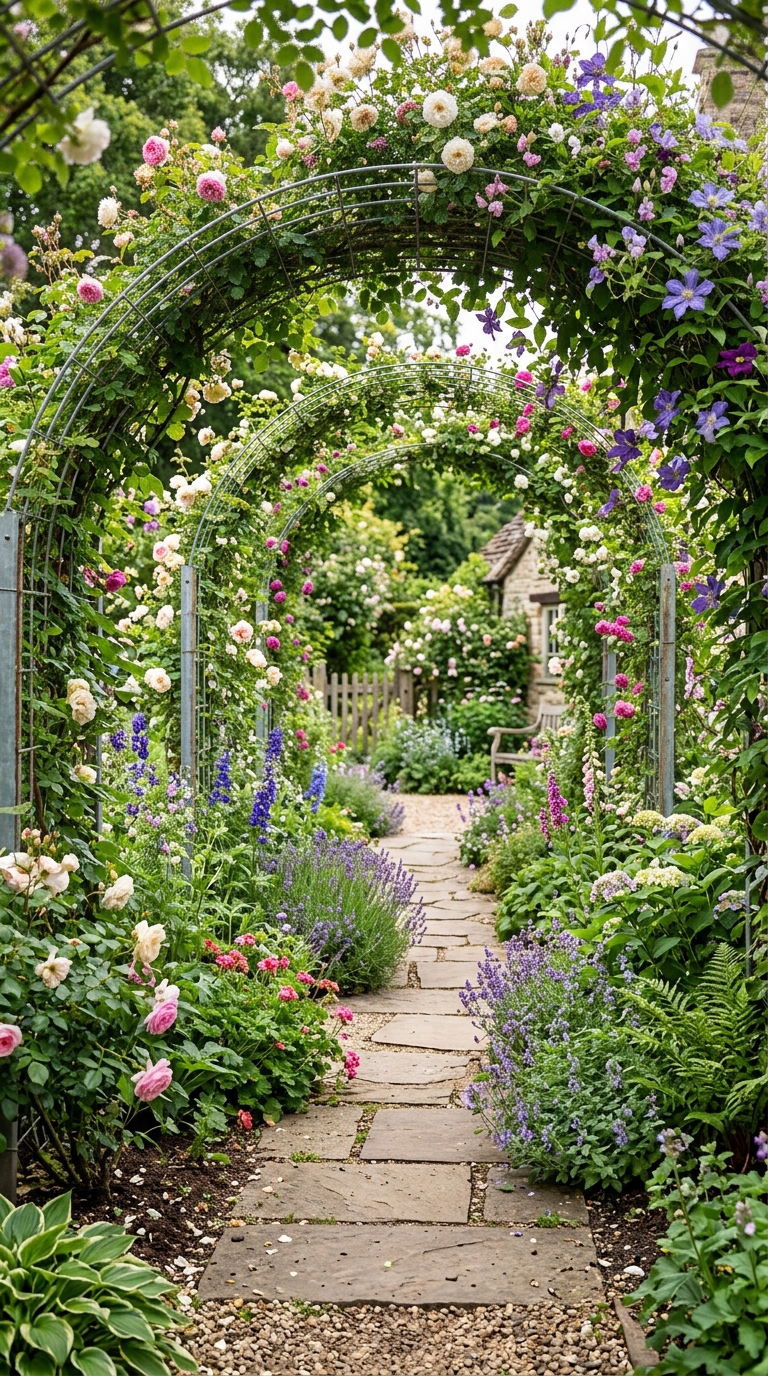
Cattle Panel Arch Trellis for Heavy Vines
Cattle panels are an underrated trellis material, and once you build one arch, you’ll understand why so many gardeners swear by them for heavier climbing plants. Bent into an arch shape and anchored at both ends, a cattle panel trellis can support the weight of melons, squash, and even small pumpkins without bowing or collapsing under the load.
If tomatoes are your main climber, don’t miss this dedicated guide to tomato trellis ideas for every garden for structures built specifically to support heavy fruit and sprawling vines.
The arch shape also doubles as a striking garden feature, creating a walkway or focal point that looks intentional rather than purely practical.
Anchor both ends of the panel deep into the ground with sturdy stakes before you start planting underneath it, since a bare panel is far easier to stabilize than one already covered in established vines.
If you’re growing heavier fruit like melons, add fabric slings to support individual fruits as they grow, preventing the vine itself from bearing all the weight. Check the anchor points at the start of each new season, since ground shifting from freeze-thaw cycles or heavy rain can loosen even a well-installed panel over time.
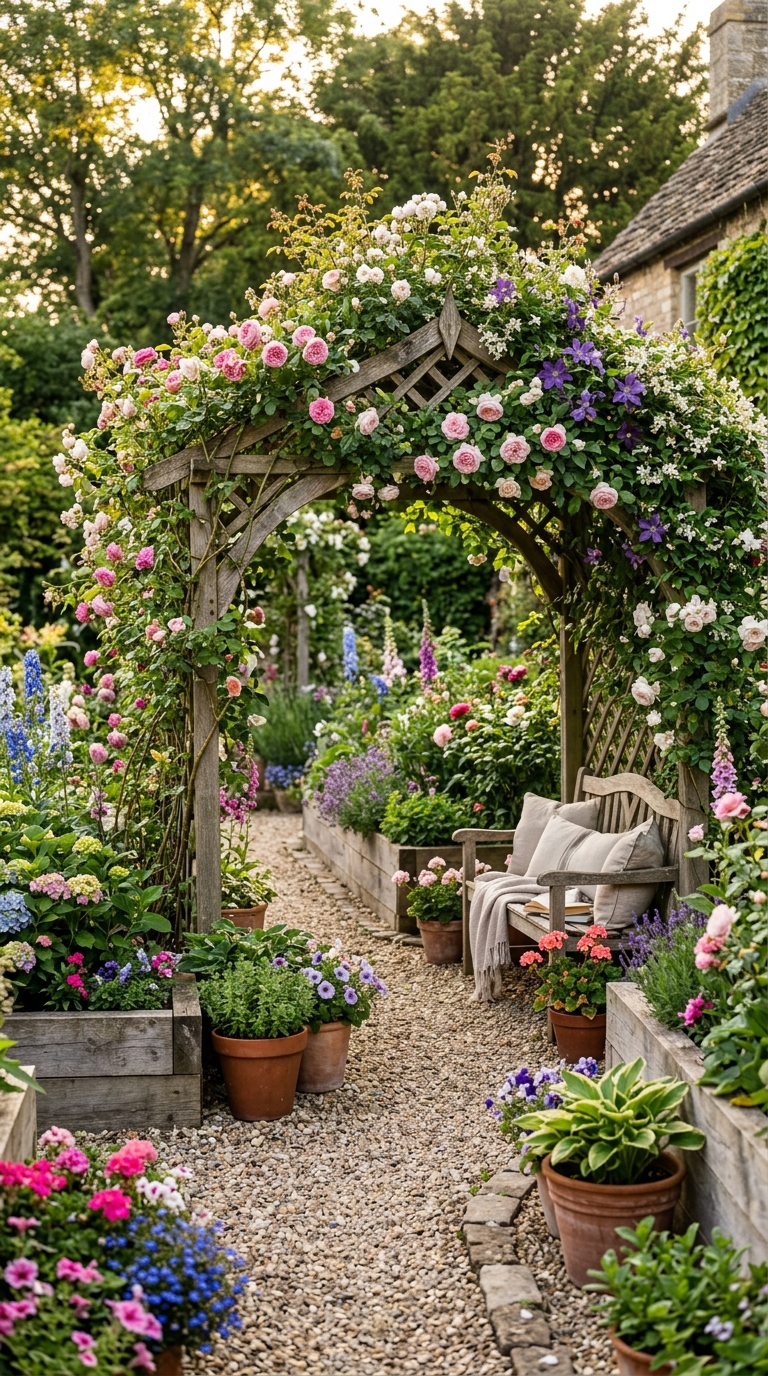
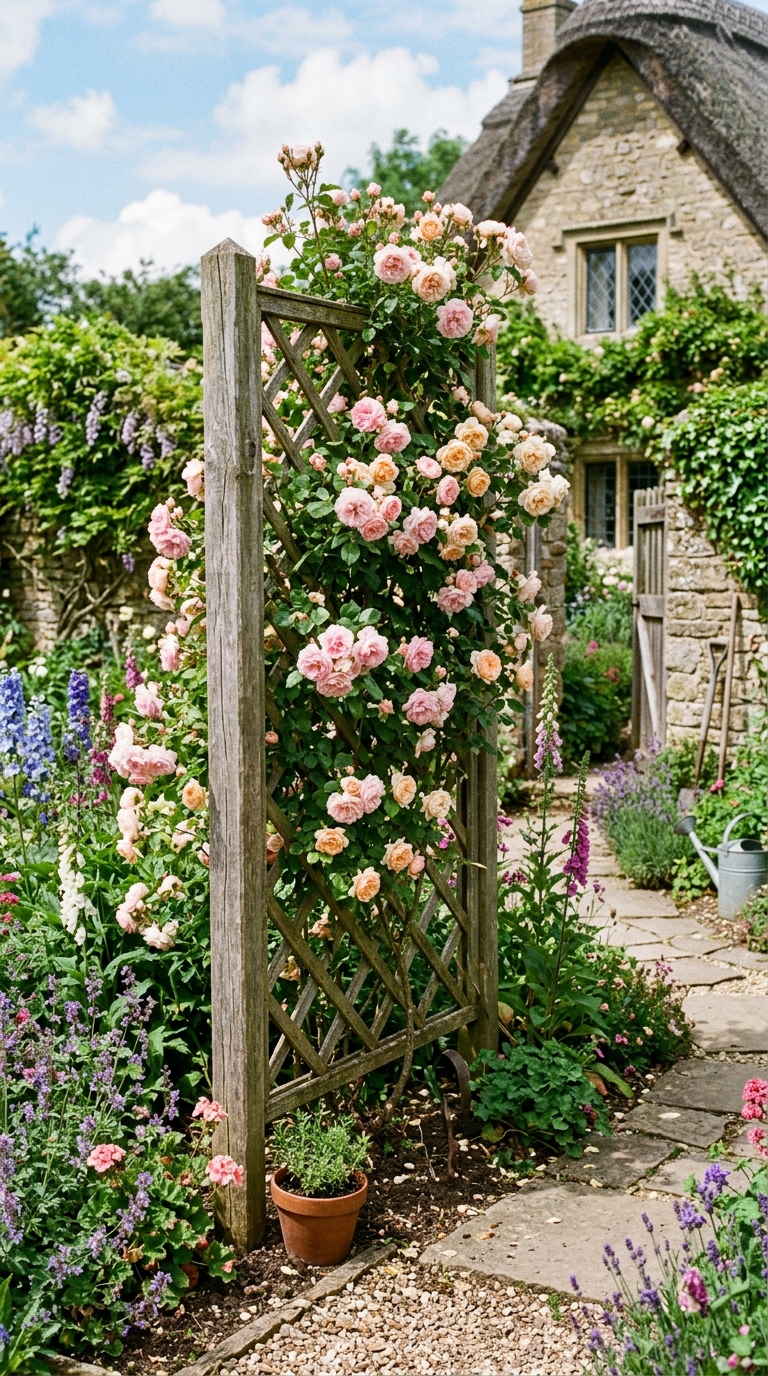
Wooden Lattice Panel for Cottage Gardens
A wooden lattice panel brings classic cottage garden charm to a trellis built in a way few other materials can match. The crisscross pattern gives climbing plants like clematis, morning glories, and roses plenty of grip points to weave through naturally, and the finished look reads as intentional garden architecture rather than a purely functional support.
Lattice panels also work well leaning against a fence or wall, or freestanding with simple wooden legs for a standalone feature.
Choose cedar or pressure-treated wood if you want the panel to last multiple seasons outdoors without significant weathering, and pre-drill screw holes at the joints to avoid splitting the thin lattice strips during assembly. Stain or seal the wood before installing it, particularly at the base where it meets soil, since that’s where moisture damage and warping typically start.
Reapply a protective sealant every year or two, depending on your climate, since sun and rain exposure will gradually break down even a well-sealed finish.
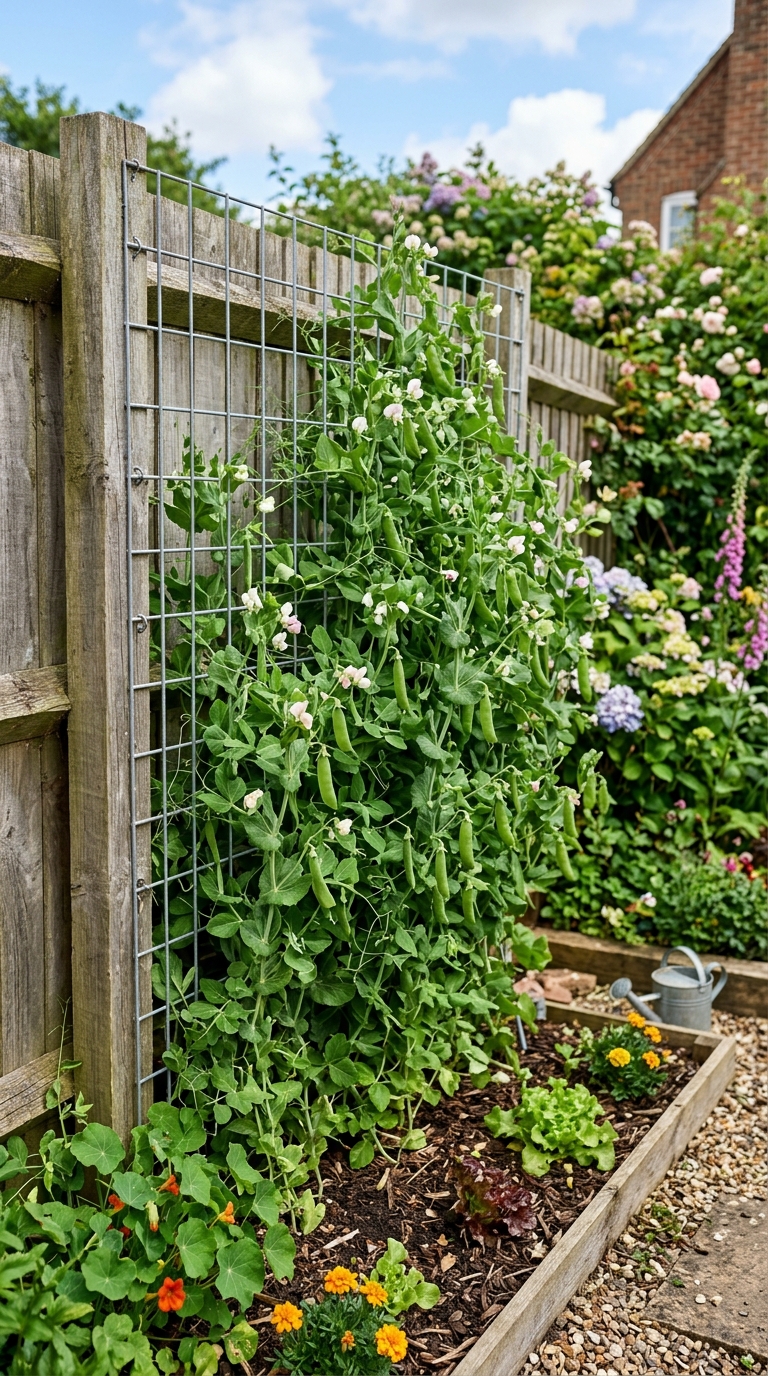
Wire Mesh Trellis for Small Space Gardens
When floor space is limited, a wire mesh trellis gives you vertical growing power without demanding much footprint at all. Mounted flat against a fence, wall, or narrow bed edge, wire mesh provides countless grip points for tendrils and twining vines, making it ideal for cucumbers, peas, or smaller flowering climbers in a tight garden or balcony setup.
The open structure also keeps airflow moving through the plants, which helps reduce the risk of mildew in densely packed small gardens.
Attach the mesh to a simple wooden frame before mounting it, which makes installation easier and gives the structure more rigidity than mesh alone.
Growing your trellis along a shaded border? These hosta gardening tricks are perfect for filling the ground beneath it with lush, low-maintenance foliage.
Choose galvanized wire mesh over plain steel whenever possible, since galvanized coatings resist rust far better after repeated exposure to watering and rain throughout the growing season. Inspect the mesh periodically for any rust spots or weak points, especially near the base where soil moisture contact is highest, and touch up with a rust-resistant spray if needed.
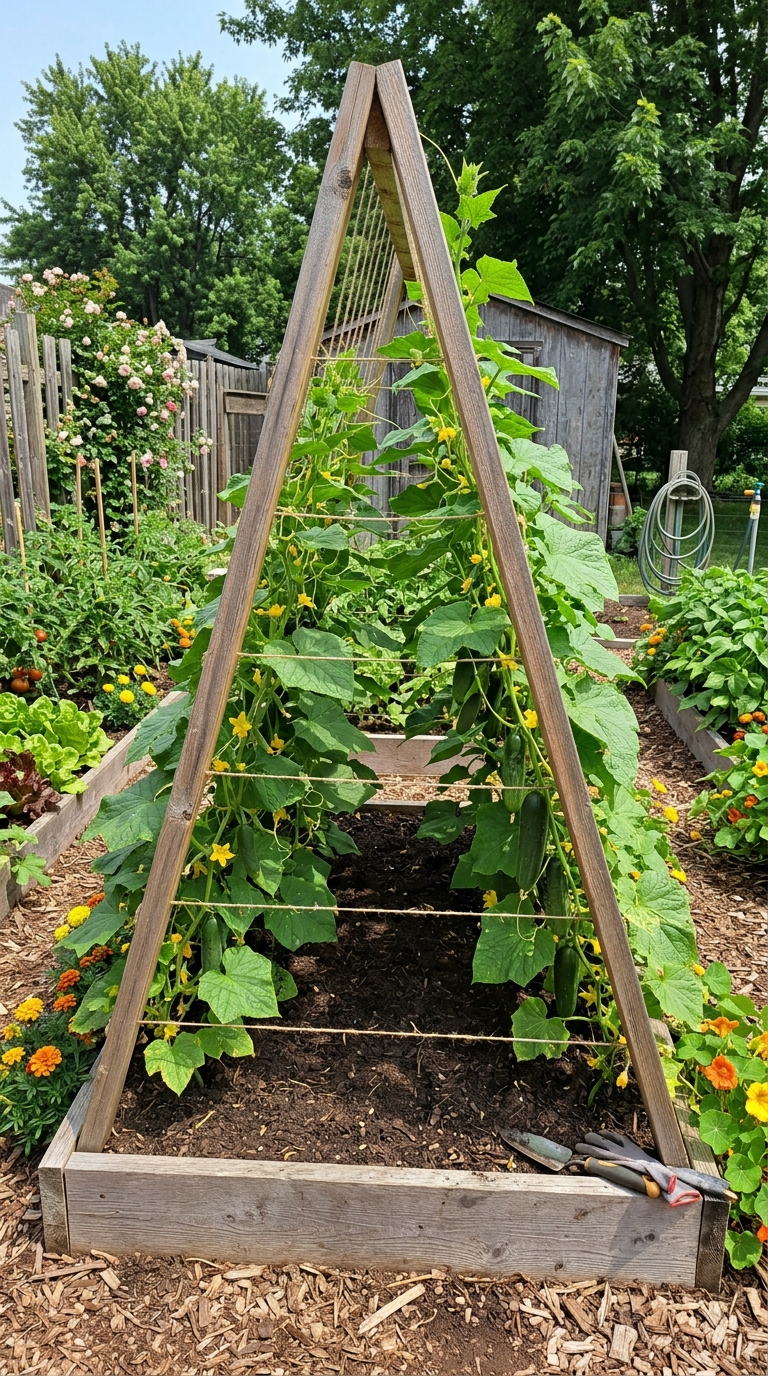
A-Frame Trellis for Cucumbers and Squash
An A-frame trellis is a workhorse design for anyone growing cucumbers, squash, or other heavier vining vegetables that need serious support as they mature. Built from two angled panels hinged together at the top, this structure creates a tent-like shape that plants can climb up both sides, maximizing your growing space while keeping fruit up off the ground and away from pests.
The hinge design also makes an A-frame easy to fold flat for storage once the growing season ends.
Build the frame using sturdy furring strips or 2×2 lumber, and reinforce the hinge point with a metal bracket rather than relying on screws alone, since this joint takes on significant strain once the plants fill in with fruit.
Space the two panels wide enough at the base to create a stable footprint that won’t tip over in the wind, especially once vines add substantial weight to one or both sides. Check the hinge joint every couple of weeks once vines get heavy, since this is typically the first spot to loosen or work its way free under sustained pressure.
Quick Designer Tip: If you’re using an A-frame or teepee trellis, rotate which side faces morning sun each growing season. This prevents one side of the wood or bamboo from weathering and fading faster than the other, keeping the whole structure looking even over time.
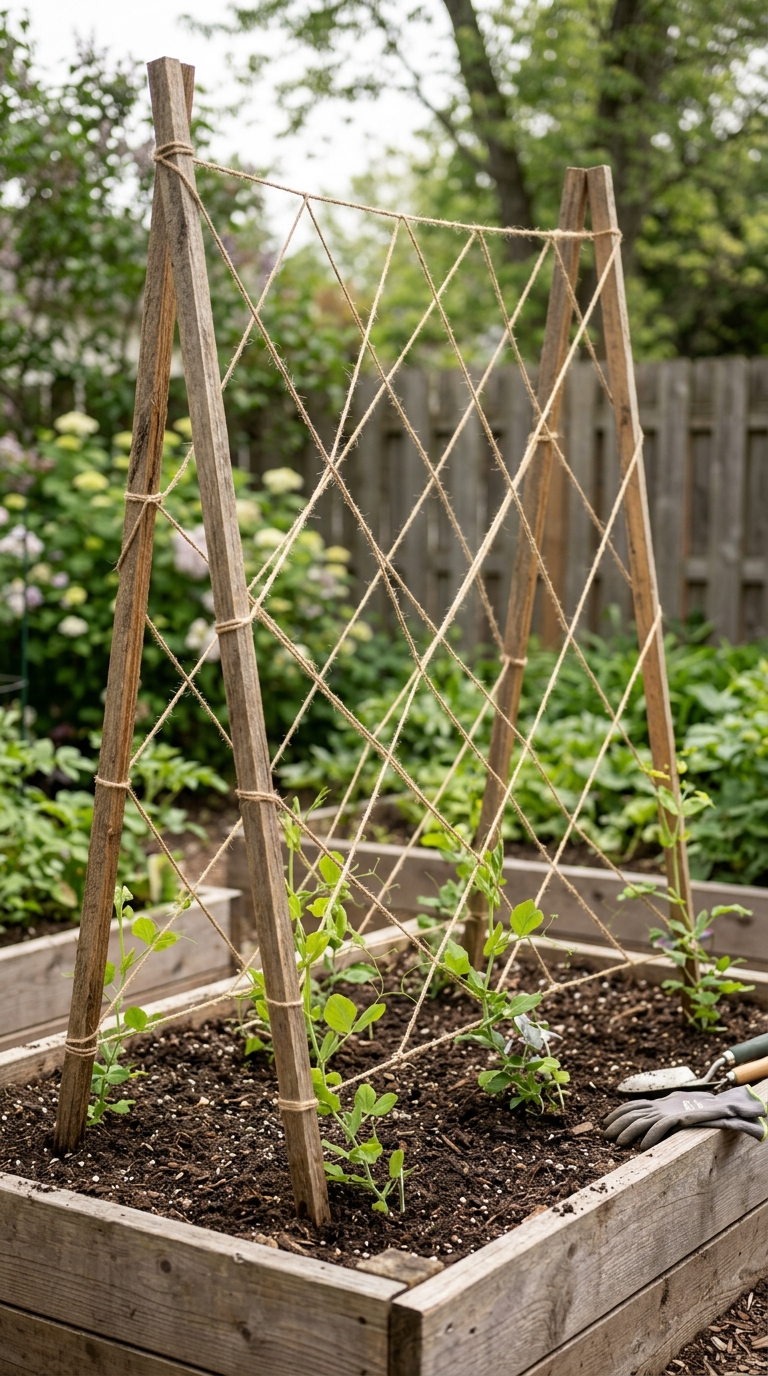
Twine and Stake Grid Trellis for Annual Vines
For gardeners who want a low-cost, temporary solution, a twine and stake grid delivers real functionality without any real material investment. Simple wooden or metal stakes hammered into the ground at each corner, connected with twine woven into a grid pattern, give annual vines like sweet peas or nasturtiums plenty of surface area to climb.
For a calmer, more contemplative garden corner, combine a simple trellis with one of these mini zen garden ideas to balance vertical greenery with quiet, sculptural space.
This design is especially popular with renters or anyone testing out a new garden bed before committing to a permanent structure.
Weave the twine both horizontally and vertically for the strongest grip pattern, spacing the lines close enough together that young tendrils can find a hold quickly without struggling. Because twine naturally stretches and sags under tension, re-tension the grid about halfway through the growing season once you notice any visible slack.
At the end of the season, the entire structure breaks down in minutes, making it one of the easiest trellis options to remove, store, or completely reconfigure for next year’s garden layout.
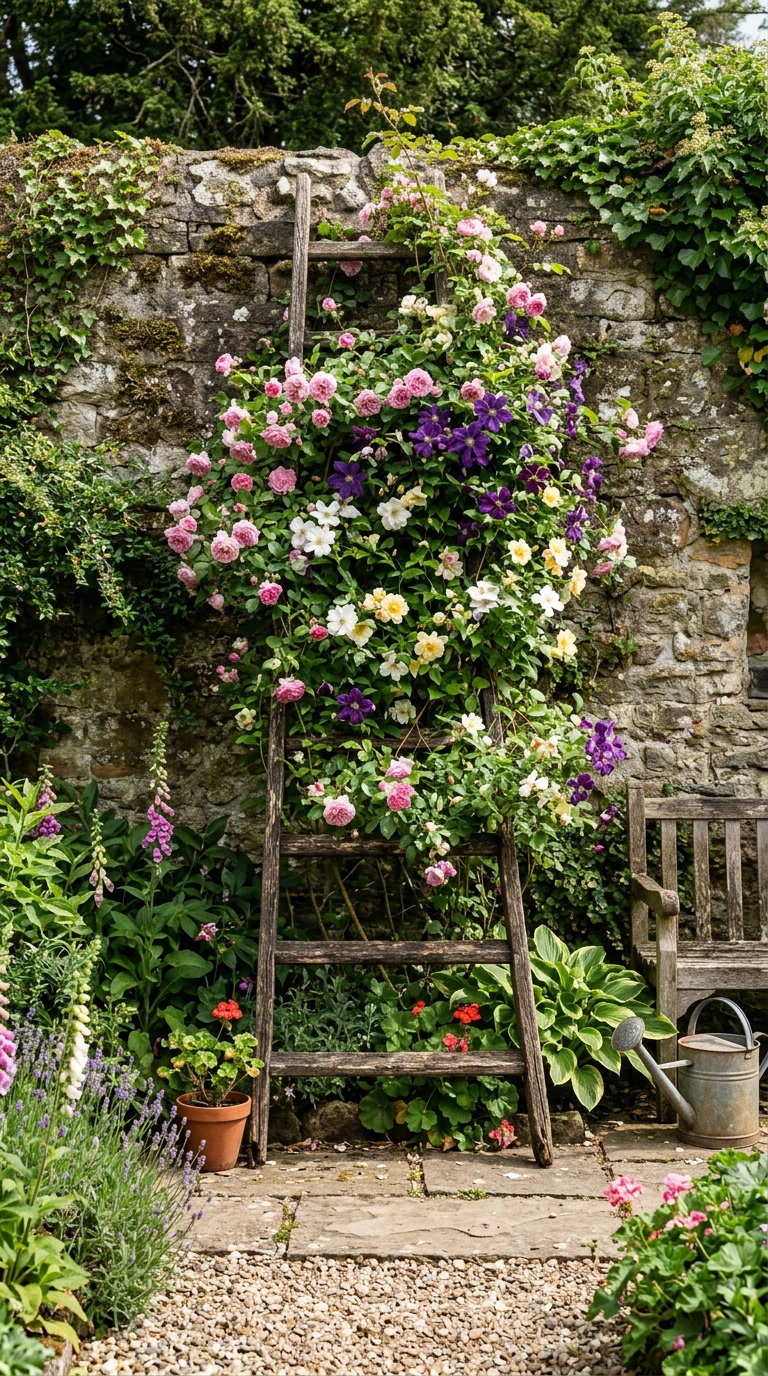
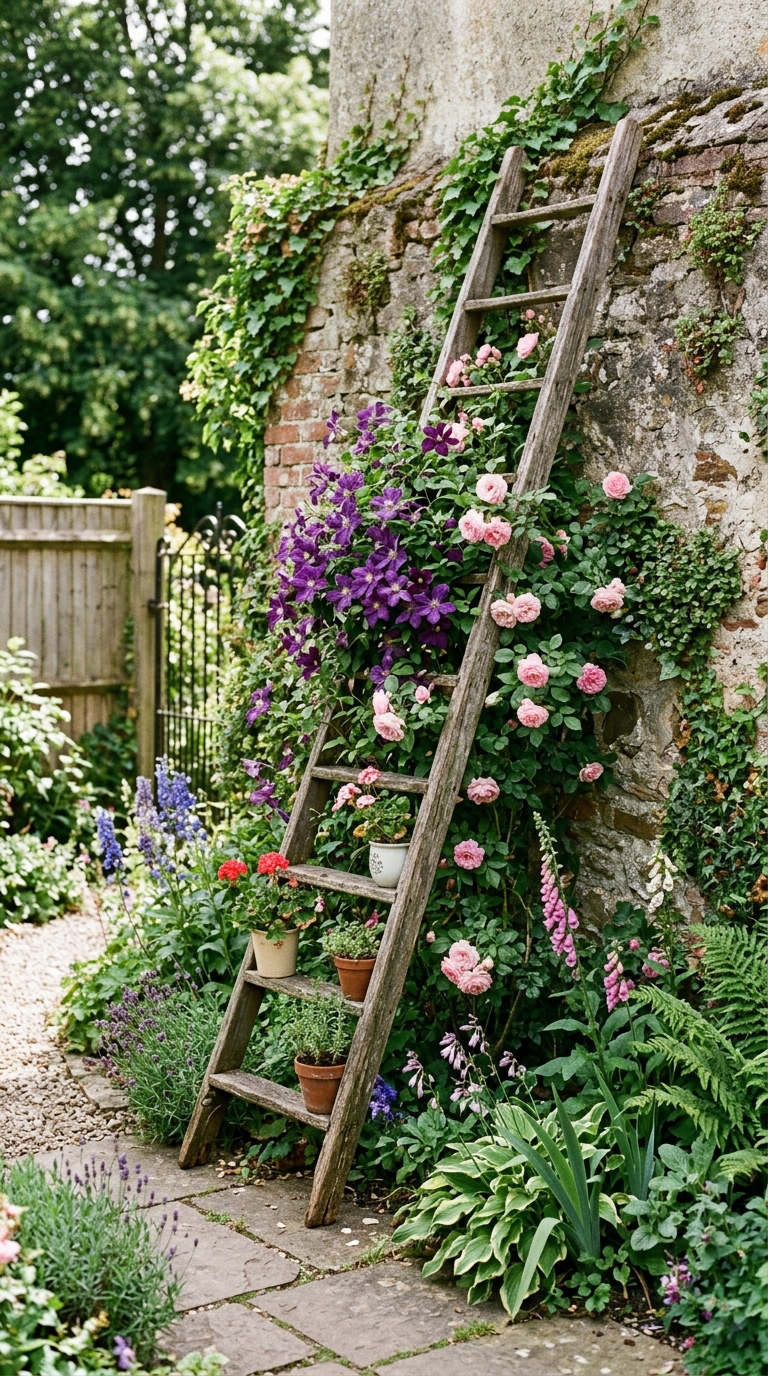
Repurposed Ladder Trellis for Vertical Charm
An old wooden ladder gives you an instant trellis with built-in character that a brand-new structure simply can’t replicate. Leaned against a wall or fence, or even left freestanding as an A-frame, a ladder provides natural rungs for climbing plants to weave through while adding a rustic, collected-over-time look to the garden.
This is also one of the most budget-friendly options on this list if you already have an old ladder sitting unused in a shed or garage.
Choose a ladder that’s still structurally sound, since rungs that flex or crack under light pressure won’t hold up once vines add real weight throughout the season. Sand down any rough, splintered, or peeling areas before use, particularly if the ladder previously lived outdoors and has some existing weather damage.
Position it somewhere stable, ideally leaning against a solid wall or partially anchored into the ground, so wind or a heavy vine load doesn’t tip it over mid-season.
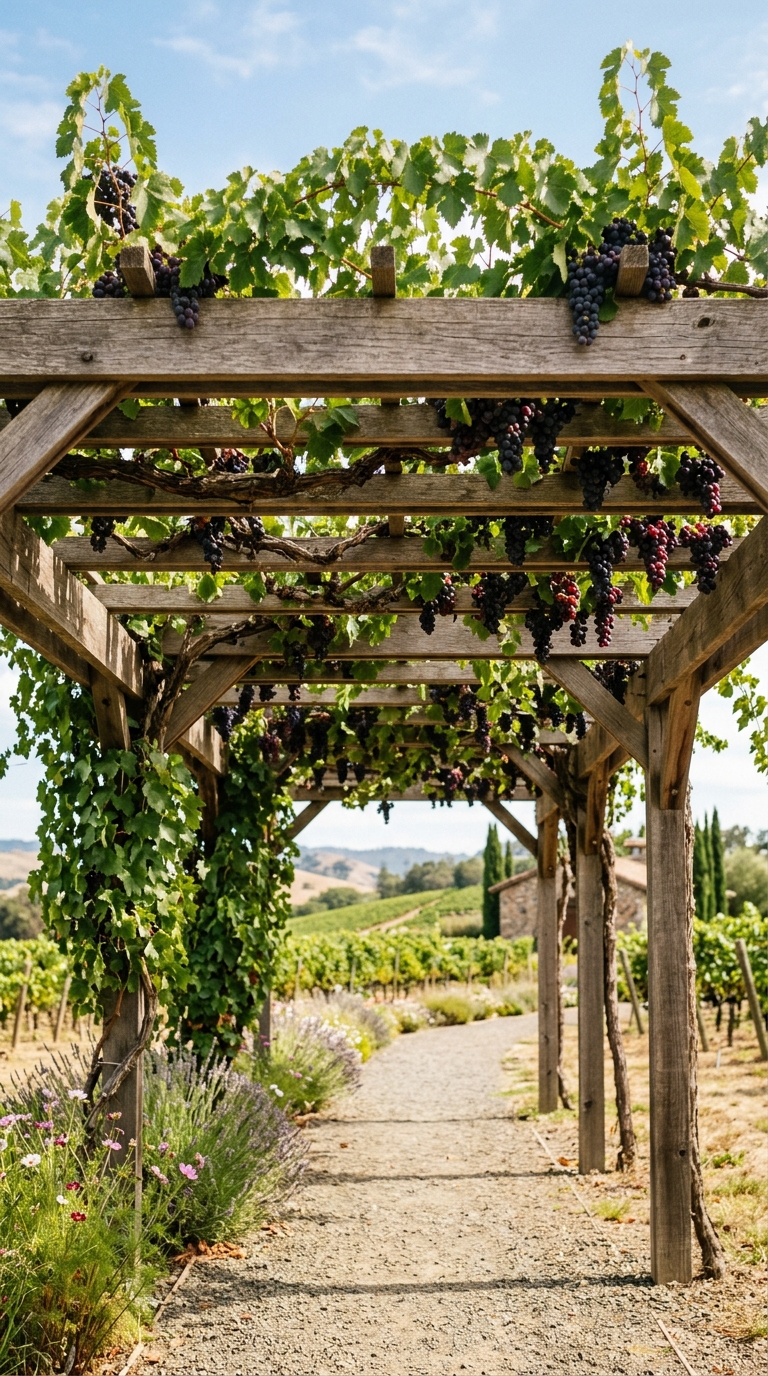
Grape Vine Arbor Trellis for Long-Term Growth
Grapevines need a trellis built for the long haul, since a mature vine can live and produce fruit for decades once properly established. An arbor-style trellis, built with sturdy vertical posts and horizontal crossbeams, gives grapevines the permanent structure they need to spread out and fruit reliably year after year.
This build is more involved than seasonal trellis projects, but the payoff is a genuine garden feature that only gets better looking as the vine matures.
Use pressure-treated posts set at least two feet into the ground for the vertical supports, since this structure needs to handle both the ongoing weight of a mature vine and years of outdoor exposure without shifting. Space horizontal crossbeams far enough apart to let light reach developing fruit clusters, since overcrowded foliage can reduce your grape yield significantly.
If you’re building your trellis as part of a productive edible garden, pair it with these urban potager garden ideas to turn your climbing structure into the centerpiece of a full kitchen garden.
Because this trellis stays in place permanently, inspect the wood joints annually for rot or insect damage, and replace any compromised sections before they compromise the entire structure.
Obelisk Trellis for Flowering Climbers
An obelisk trellis brings a formal, sculptural quality to the garden that few other DIY designs achieve, making it a favorite for showcasing flowering climbers like clematis or morning glories as a true focal point.
Built as a tapered four-sided pyramid, this freestanding structure works beautifully in a flower bed, container, or as a centerpiece surrounded by lower plantings. Its vertical, narrowing shape draws the eye upward, adding height and visual drama to an otherwise flat garden bed.
Build the obelisk with a wider base than top, which not only creates the classic tapered silhouette but also improves wind stability as the plant fills in and adds weight higher up the structure. Use consistent, evenly spaced crosspieces along all four sides so climbing plants have regular support points from base to peak.
Because obelisks are often freestanding rather than anchored to a fence or wall, secure the base firmly in the ground or within a heavy container to prevent tipping once the plant reaches full growth.
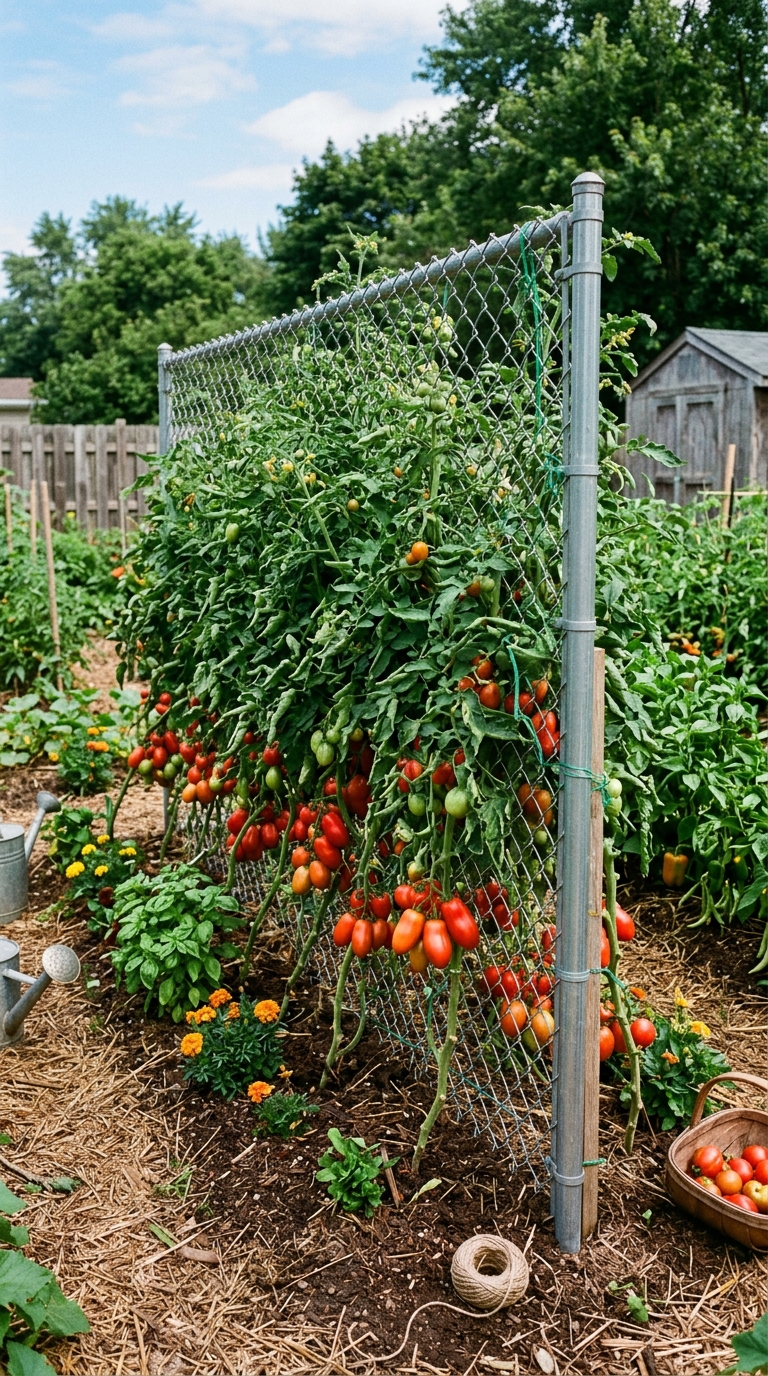
Chain Link Trellis for Budget Tomato Support
Scavenged or leftover chain link fencing is one of the most budget-conscious trellis materials available, and it happens to be particularly well-suited to supporting heavy tomato plants through a full growing season.
The tight grid pattern gives tomato stems plenty of points to loop through or tie against, and the material’s inherent sturdiness holds up well against the weight of a fully loaded plant. This option works especially well for gardeners repurposing old fencing rather than buying new materials.
Frame the chain link with simple wooden or metal posts at either end to keep it taut and upright, since the sagging chain link loses much of its supportive strength. Before installing any scavenged material, check carefully for sharp cut edges along the perimeter, since these can snag vines, gloves, or hands during regular garden maintenance. Once installed, this trellis requires very little upkeep beyond an occasional check for developing rust spots, particularly at the base where it meets damp soil throughout the season.
Quick Designer Tip: Whatever material you choose, inspect all trellis joints and anchor points at the very start of each new growing season. Small repairs made early, like tightening a loose screw or replacing a frayed knot, prevent full structural failures later, once the vines get heavy with foliage and fruit
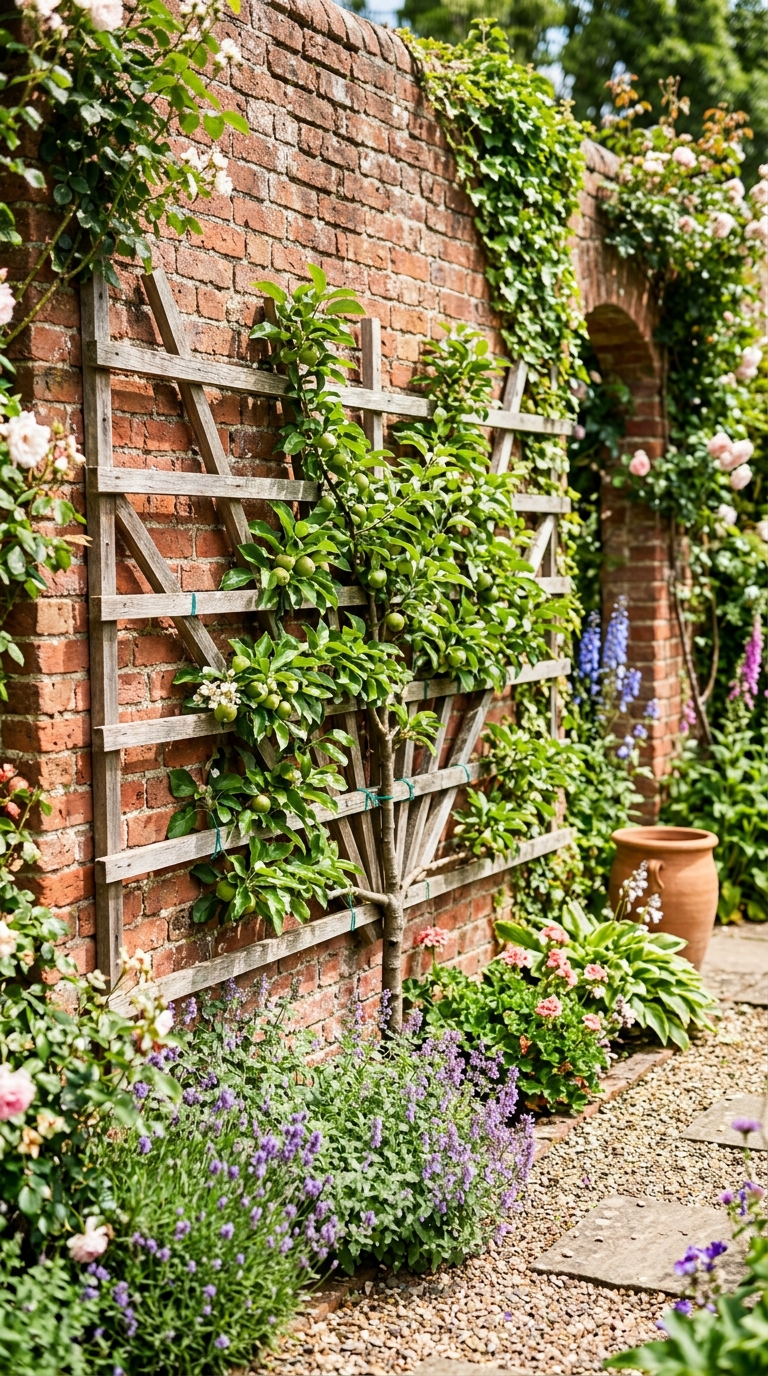
Fan Trellis for Espaliered Fruit Trees
A fan trellis trains fruit trees like apples, pears, or peaches to grow flat against a wall in a spreading fan pattern. This technique saves space while maximizing sun exposure on every branch, making it perfect for small yards that still want a productive fruit tree.
Mount horizontal wires or wooden slats in a fan shape against a south-facing wall, then tie branches as they grow. Over a few seasons, the tree fills into a living wall feature that’s both ornamental and edible.
Styling Tips:
- Mount it against a sun-facing wall for the best fruit ripening results
- Start training branches while the tree is young and flexible
- Space wires 12-15 inches apart for even branch distribution
- Prune competing shoots regularly to maintain the fan shape
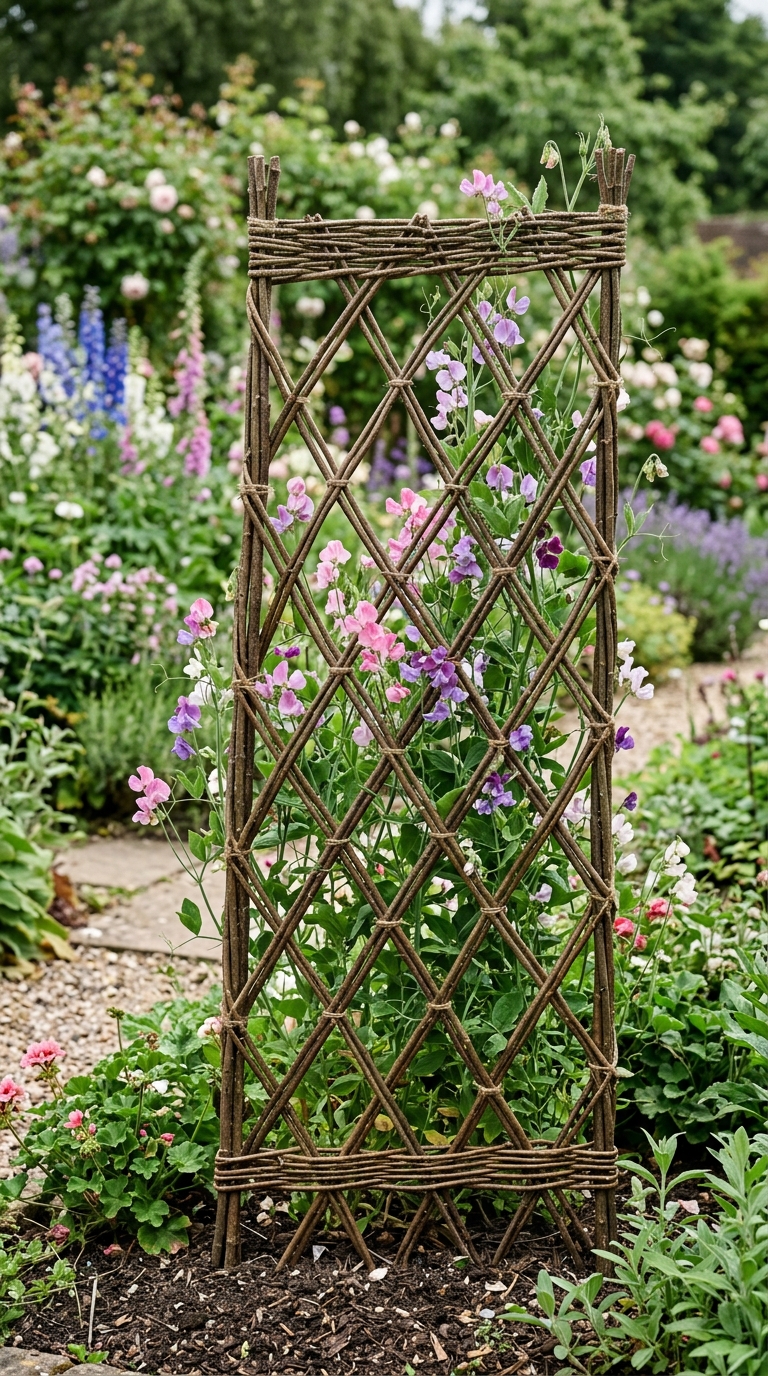
Willow Branch Trellis for a Natural Look
Woven willow branches create one of the most organic, cottage-garden-friendly trellis styles available. The flexible branches bend into arches, domes, or lattice patterns without any hardware, giving your garden a handmade, rustic texture that manufactured materials can’t replicate.
This build works especially well for lighter climbers like sweet peas or clematis. Because willow eventually breaks down, it’s also a fully biodegradable option that blends into naturalistic or wildlife-friendly garden designs.
Styling Tips:
- Soak willow branches before weaving, so they bend without snapping
- Use fresh-cut willow for the most flexibility
- Weave a diamond or basket pattern for extra visual interest
- Expect to replace the structure every 2-3 years as it weathers
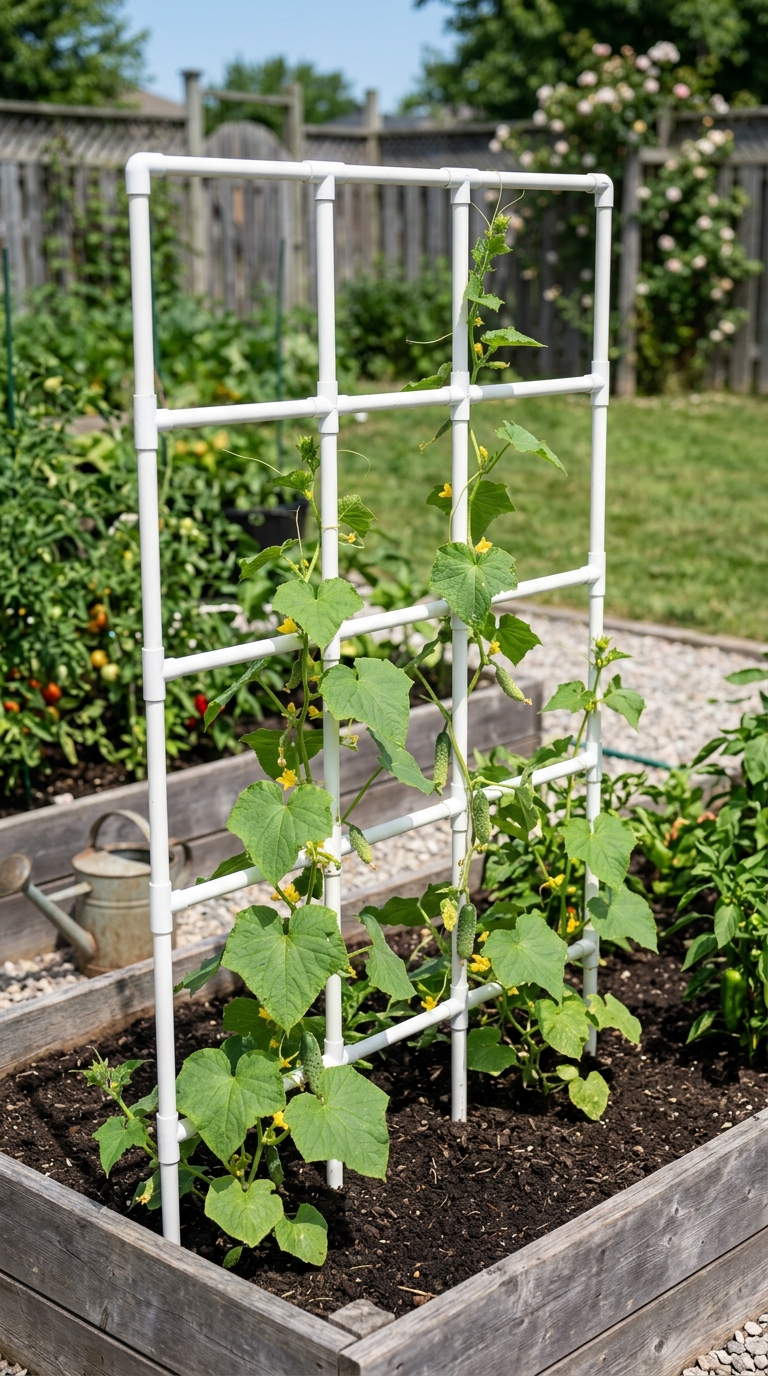
PVC Pipe Trellis for a Lightweight Build
PVC pipe is one of the cheapest and lightest materials for a DIY trellis, and it’s ideal for renters or anyone who wants a structure that’s easy to move or disassemble. Pipes can be glued or fitted into A-frames, grids, or arches in an afternoon.
The smooth surface also makes cleanup simple, and PVC won’t rot or attract pests the way wood can. Paint it to match your garden palette so it doesn’t look purely utilitarian.
Styling Tips:
- Drill small drainage holes in horizontal PVC sections to stop water pooling inside after rain
- Use PVC primer and cement for joints that won’t pull apart
- Spray paint with an outdoor-rated finish for a less plasticky look
- Anchor the base in soil or a weighted planter for stability
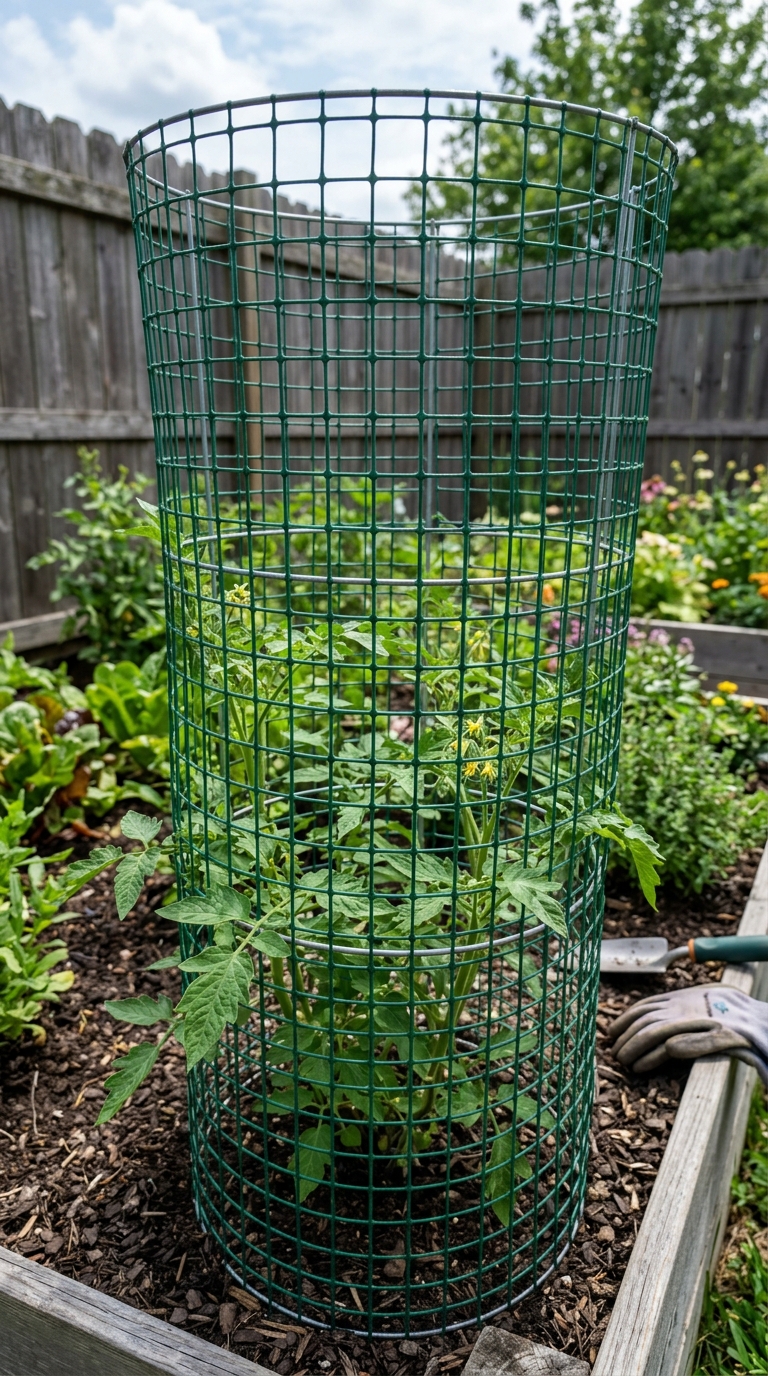
Tomato Cage Upgrade with Trellis Netting
If you already own tomato cages, wrapping them with trellis netting instantly upgrades their support capacity for heavier vines or mixed plantings. This hybrid approach combines the stability of a cage with the flexible climbing surface of netting.
It’s a smart budget move since it repurposes gear you likely already have. The netting gives young tendrils something fine to grip onto right away, rather than waiting for stems to be strong enough to hold onto bare wire.
Styling Tips:
- Attach netting loosely at first, then tighten gradually as the plant grows to avoid snapping stems
- Use UV-resistant netting so it doesn’t degrade by midsummer
- Secure netting edges with zip ties for a clean finish
- Combine two cages side by side for extra-wide plants
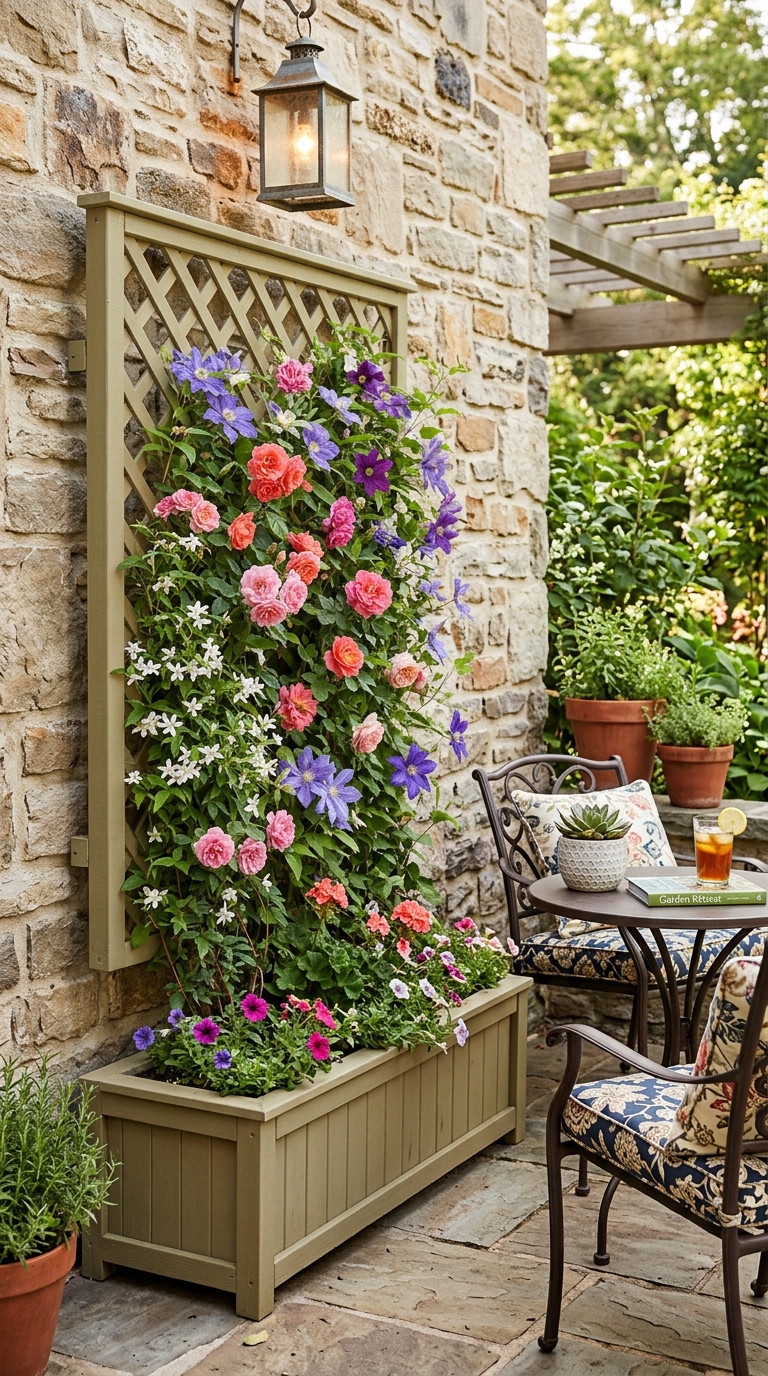
Freestanding Wall-Mounted Trellis for Patios
For patios without garden beds, a wall-mounted trellis in a decorative planter box brings climbing greenery to a hard-surface space. This setup is perfect for renters or anyone wanting a self-contained vertical garden that doesn’t require digging.
Pair it with a lightweight climber like a mandevilla or morning glory for fast, colorful coverage. Because the whole unit is freestanding, it can be repositioned to chase the best sun exposure through the season.
Styling Tips:
- Use anchors rated for outdoor wall weight, since a loaded trellis is heavier than it looks once vines fill in
- Choose a planter with drainage holes to prevent root rot
- Pick a trellis material that contrasts with your patio wall color
- Water more frequently than in-ground plants since containers dry out faster
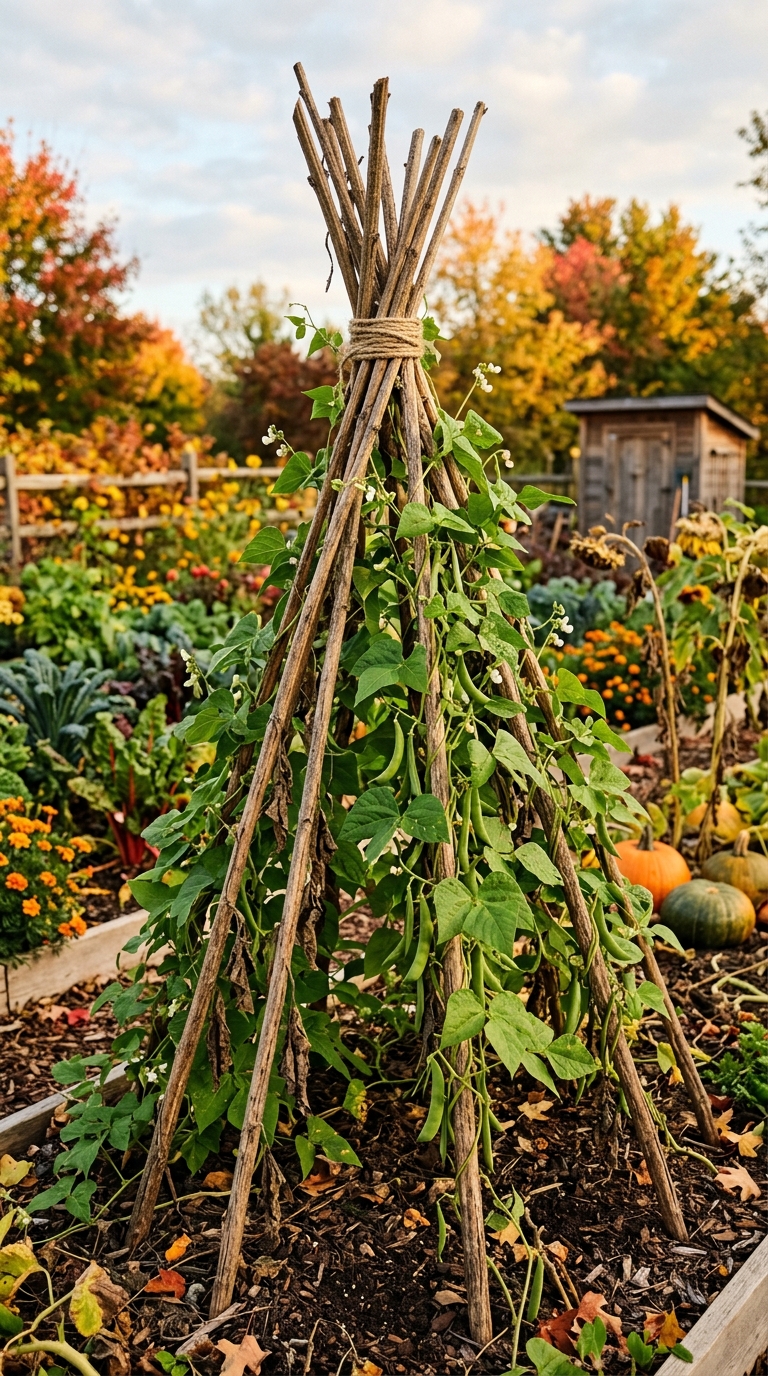
Sunflower Stalk Trellis for a Compostable Build
This is one of the most sustainable trellis ideas available — using dried sunflower stalks from a previous harvest as the structural framework for new climbers. It closes the loop on your garden’s growth cycle and costs nothing beyond what you already grew.
The sturdy, hollow stalks can be bundled into teepees or grids, then composted at season’s end along with whatever climbed them. It’s a favorite for permaculture and zero-waste gardening approaches.
Styling Tips:
- Only use fully dried stalks, since fresh ones are too flexible to hold vine weight
- Bundle several stalks together at stress points for added strength
- Save your strongest stalks each year specifically for trellis-building
- Compost the entire structure at the end of the season
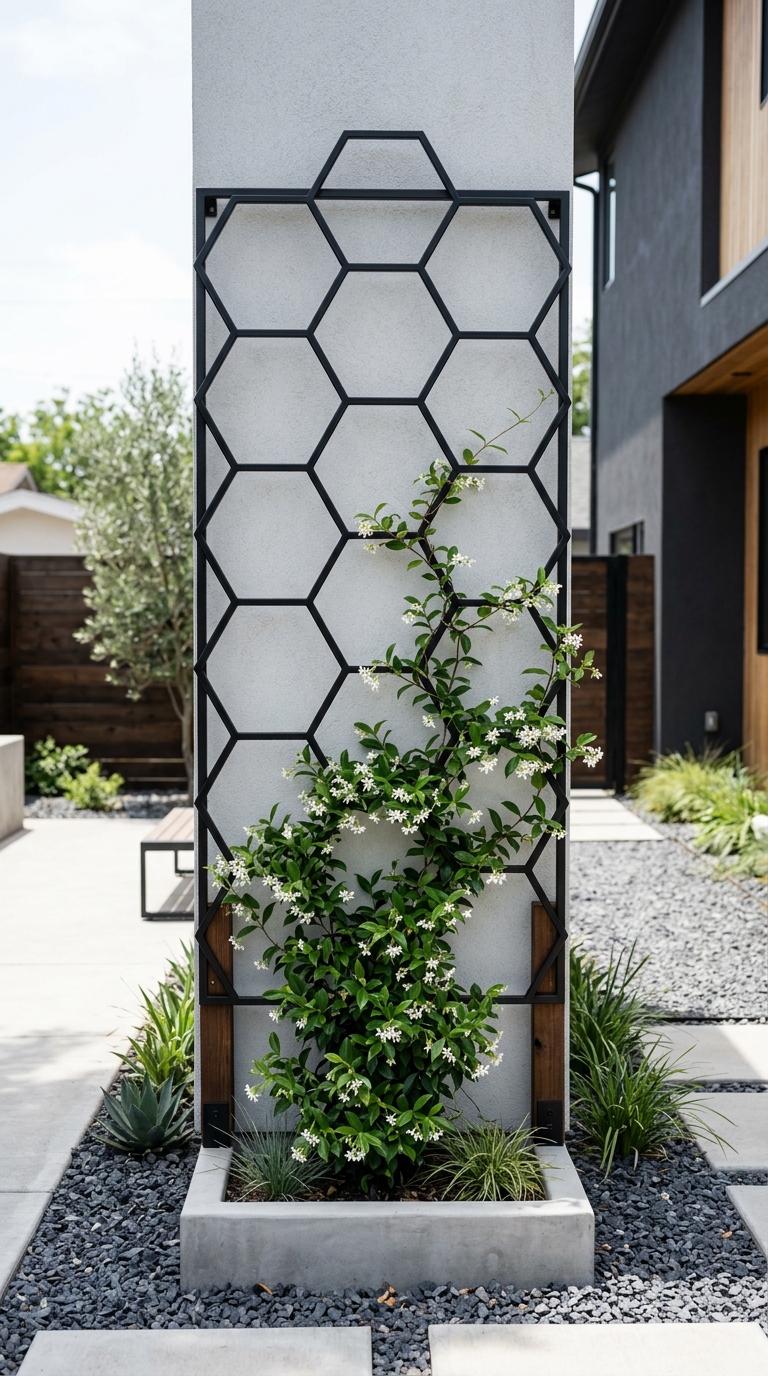
Modern Metal Geometric Trellis
For a sleek, contemporary garden look, geometric metal trellises in hexagon, diamond, or angular patterns make a striking architectural statement even before any plant grows onto them. They pair especially well with modern or minimalist outdoor spaces.
Unlike rustic wood or willow options, this style reads as intentional garden décor year-round, including in winter when the structure stands bare. It’s a strong choice for anyone wanting form and function in equal measure.
Styling Tips:
- Choose powder-coated metal over raw steel to prevent rust streaks running down the wall or fence
- Match the finish to other metal accents in your outdoor space
- Bolt into a concrete footing for permanent stability
- Let the geometric shape stay partially visible even as plants fill in
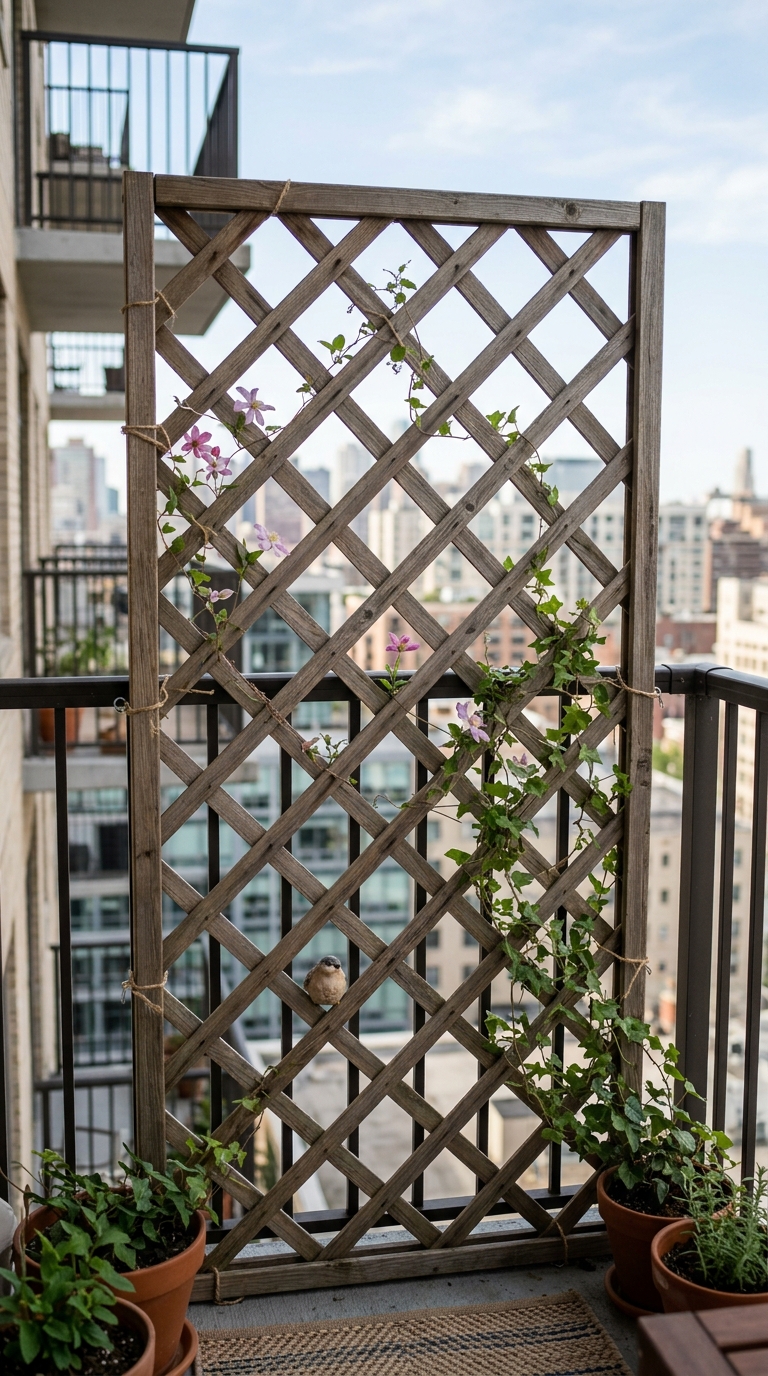
Hanging Trellis Panel for Balcony Gardens
Apartment dwellers and balcony gardeners can still enjoy climbing plants with a hanging trellis panel that mounts directly onto a railing. This vertical solution takes up zero floor space while still giving vines a full surface to climb.
Combine it with rail-mounted planter boxes for a complete self-contained garden system. It’s an especially good fit for small climbers like nasturtiums or dwarf sweet peas that won’t overwhelm the structure’s weight capacity.
Styling Tips:
- Confirm your railing or hook weight limit before hanging a fully planted panel
- Use rust-resistant hooks since balcony trellises face constant weather exposure
- Choose lightweight climbers to avoid overloading the hanging structure
- Rotate the panel occasionally for even plant growth
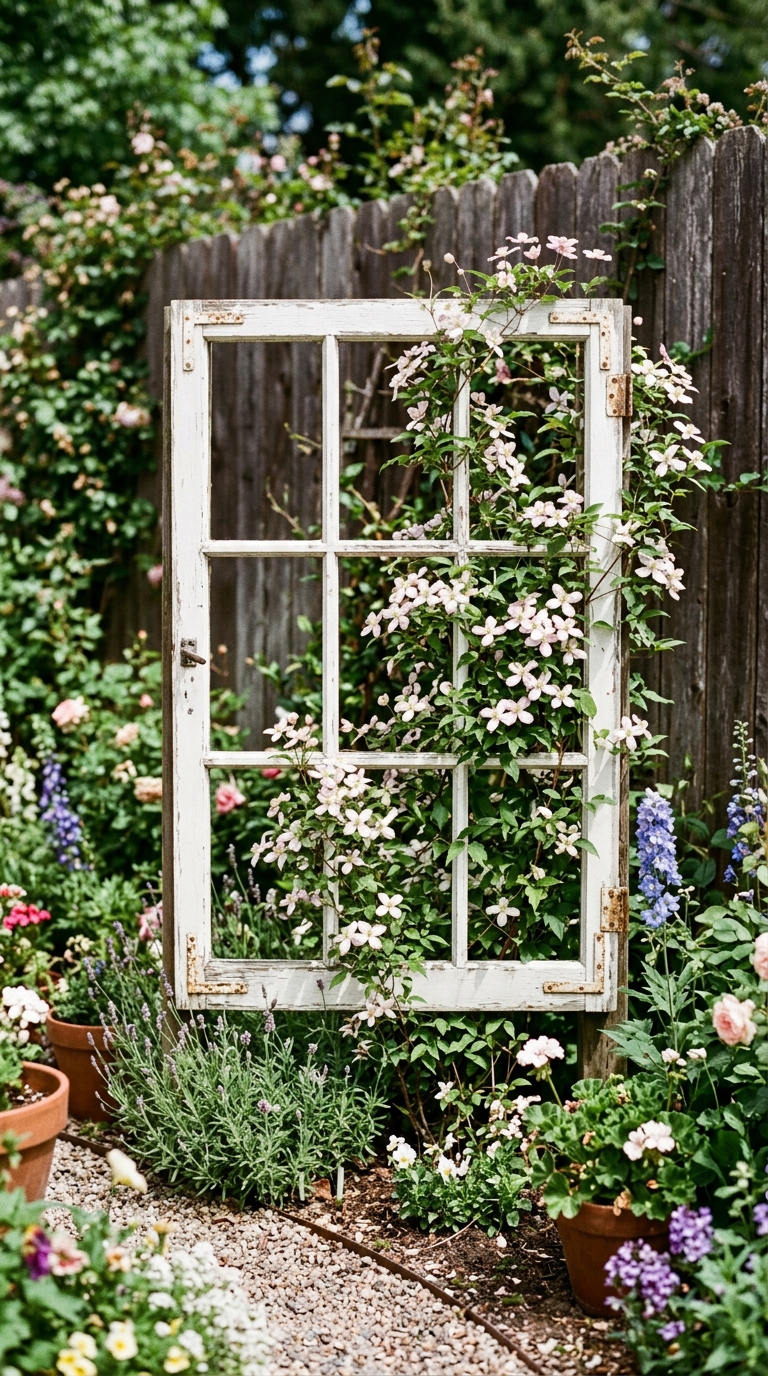
Repurposed Window Frame Trellis
An old window frame, stripped of glass, makes a charming grid-style trellis with built-in vintage character. The existing muntins create a ready-made climbing grid, so there’s minimal building involved beyond a coat of paint and secure mounting.
This upcycled idea works beautifully in cottage or farmhouse-style gardens, especially leaning against a fence or wall as a focal piece. It’s also a good option for anyone wanting to repurpose materials instead of buying new.
Styling Tips:
- Remove any old glass completely and sand down the frame edges before installing outdoors
- Prime and paint the frame to protect it from weather damage
- Lean it against a solid wall or fence for extra support
- Pick a climber with delicate stems that suit the frame’s narrow grid
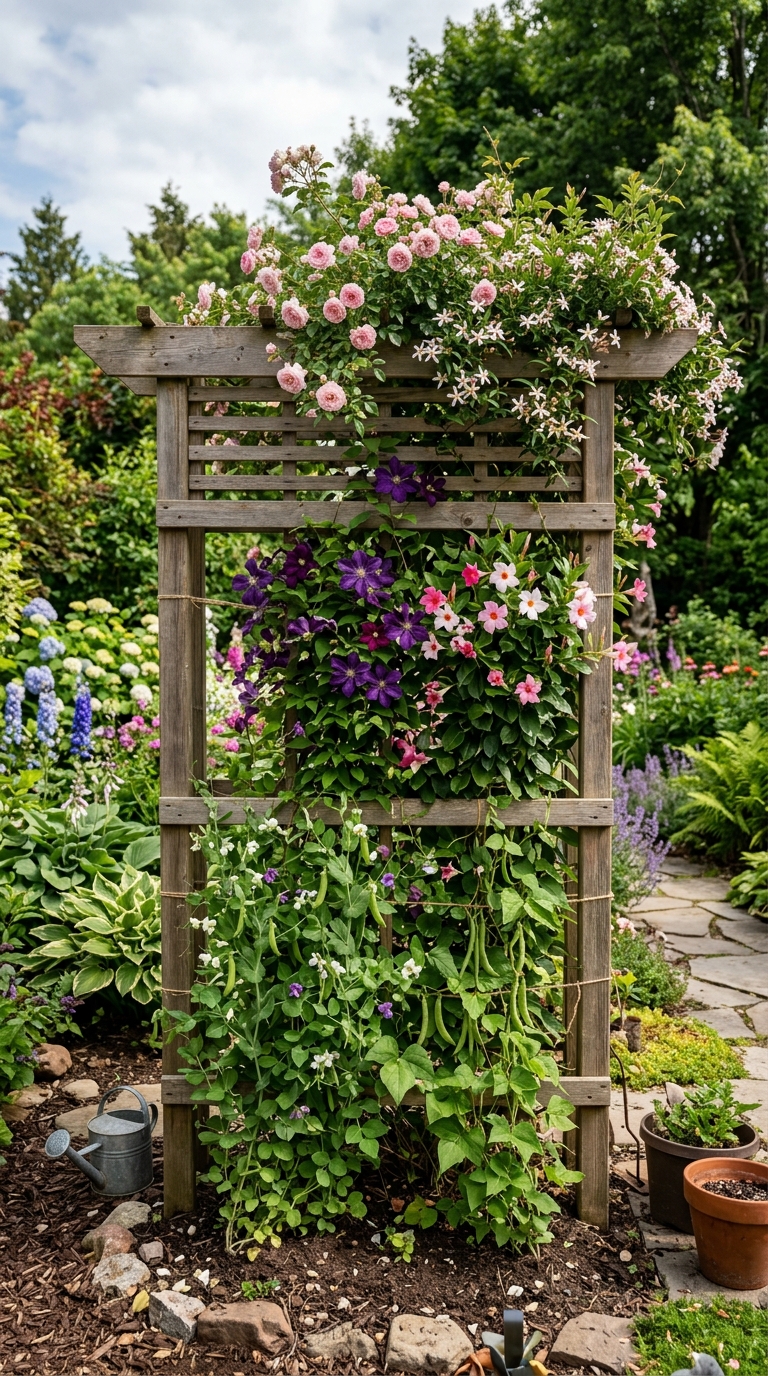
Multi-Tier Trellis for Mixed Climbing Plants
A multi-tier trellis divides one structure into separate climbing zones, letting you grow several plant varieties on the same footprint without them competing for space. This is a smart solution for gardeners short on room who still want plant diversity.
Each tier can support a different climber based on height and vigor, creating a layered, full look as the season progresses. It’s a slightly more advanced build but pays off with a lush, varied vertical garden.
Styling Tips:
- Group plants with similar growth speeds on the same tier so one variety doesn’t shade out another
- Place the fastest-growing climbers on the top tier
- Leave enough gap between tiers for airflow and access
- Use different netting or wire spacing per tier to suit each plant type
Conclusion
A great trellis doesn’t need a big budget or fancy tools — just the right match between structure and plant. Whether you’re weaving willow branches or bolting together a modern metal frame, these 20 ideas prove that garden support can be as beautiful as it is functional. Pick the build that fits your space, your climbers, and your style, and let your garden grow up instead of out.