
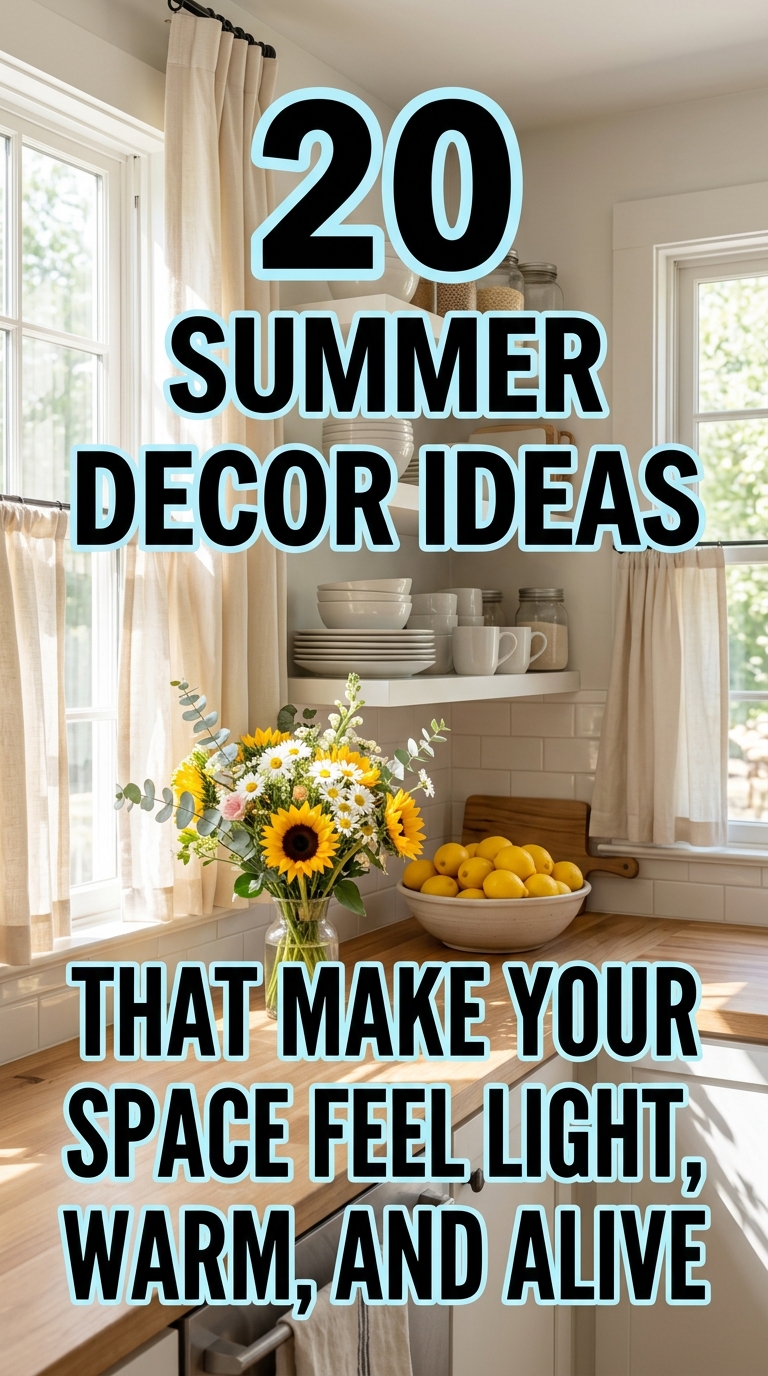
Summer doesn’t always announce itself with a big renovation. Sometimes it’s just a bowl of lemons catching the morning light, or a linen curtain fluttering near an open window. Your kitchen doesn’t need new cabinets or a fresh coat of paint to feel like the season. It needs small, intentional changes — the kind that cost almost nothing but shift everything. Here are 20 summer kitchen decor ideas that actually work, whether your space is tiny, rented, or already halfway there.
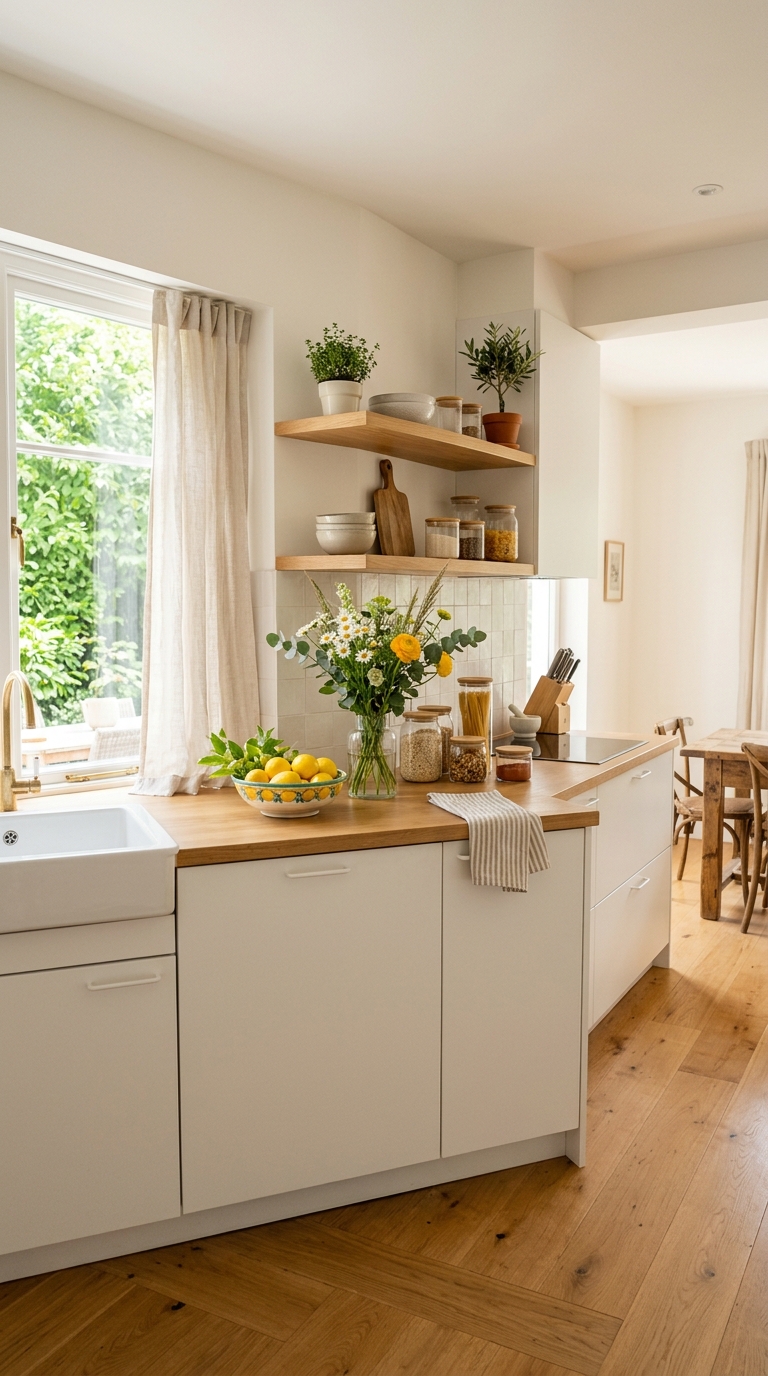
A Marble Pedestal Bowl of Meyer Lemons on an Otherwise Bare Counter
There’s a reason every beautiful kitchen photo has citrus somewhere. A footed marble pedestal lifts a pile of Meyer lemons just enough to make them feel like decor, not groceries. The warm yellow against cool stone pulls the entire counter together without a single extra piece.
The rule here is the “otherwise bare” part. Clear everything within 18 inches of the pedestal. The lemons only work when they have space to breathe. Out of season, swap in limes, blood oranges, or green pears — same height, same logic.
Add a playful seasonal touch with mushroom kitchen decor ideas, which bring earthy colors and whimsical accents into the kitchen.
Styling Tips:
- Use a pedestal at least 8–10 inches tall for the right visual lift
- Keep 10–12 lemons with leaves attached for a fuller, more natural look
- Place one cobalt blue glass nearby to create a cool contrast
- A washed indigo linen towel folded flat beside it ties the palette together
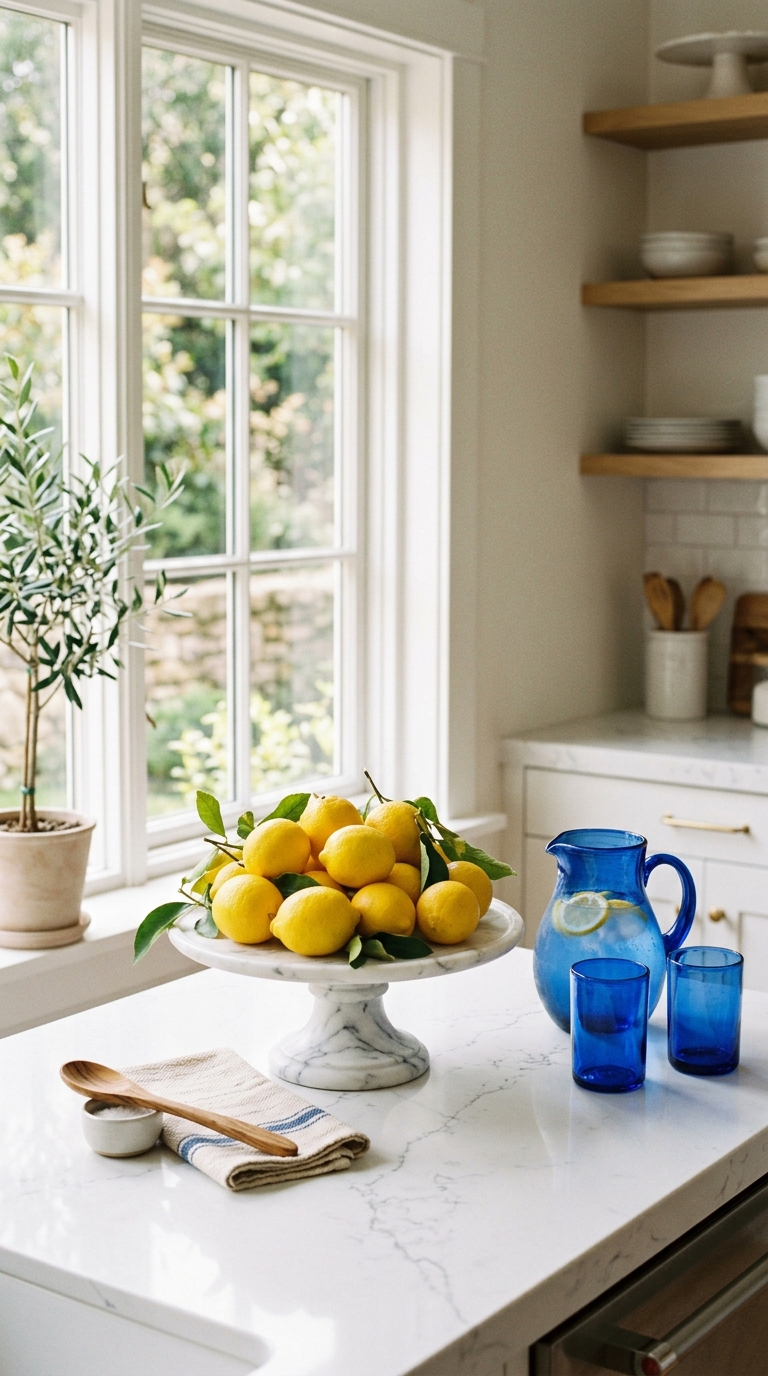
Washed Linen Cafe Curtains in a Sun-Bleached Stripe Over the Kitchen Sink
Cafe curtains are one of the most underrated kitchen updates you can make. They give you privacy at eye level without blocking the upper window light — which means your kitchen stays bright while you’re doing dishes in peace. A sun-bleached stripe in cream and warm sand reads as effortlessly summery without trying too hard.
Washed linen has that slightly rumpled quality that makes a kitchen feel lived in and real. Hang the rod just below the middle of the window and use brass clip rings to make seasonal swaps easy. This whole project takes about an hour and costs less than one cabinet pull.
Styling Tips:
- Choose a rod no wider than 5/8 inch — slim brass reads more refined
- Let the curtain fall just below the sill for the right proportion
- Add three small terracotta herb pots on the windowsill above the curtain
- Iron the curtains lightly — fully wrinkled reads messy, slightly rumpled reads intentional
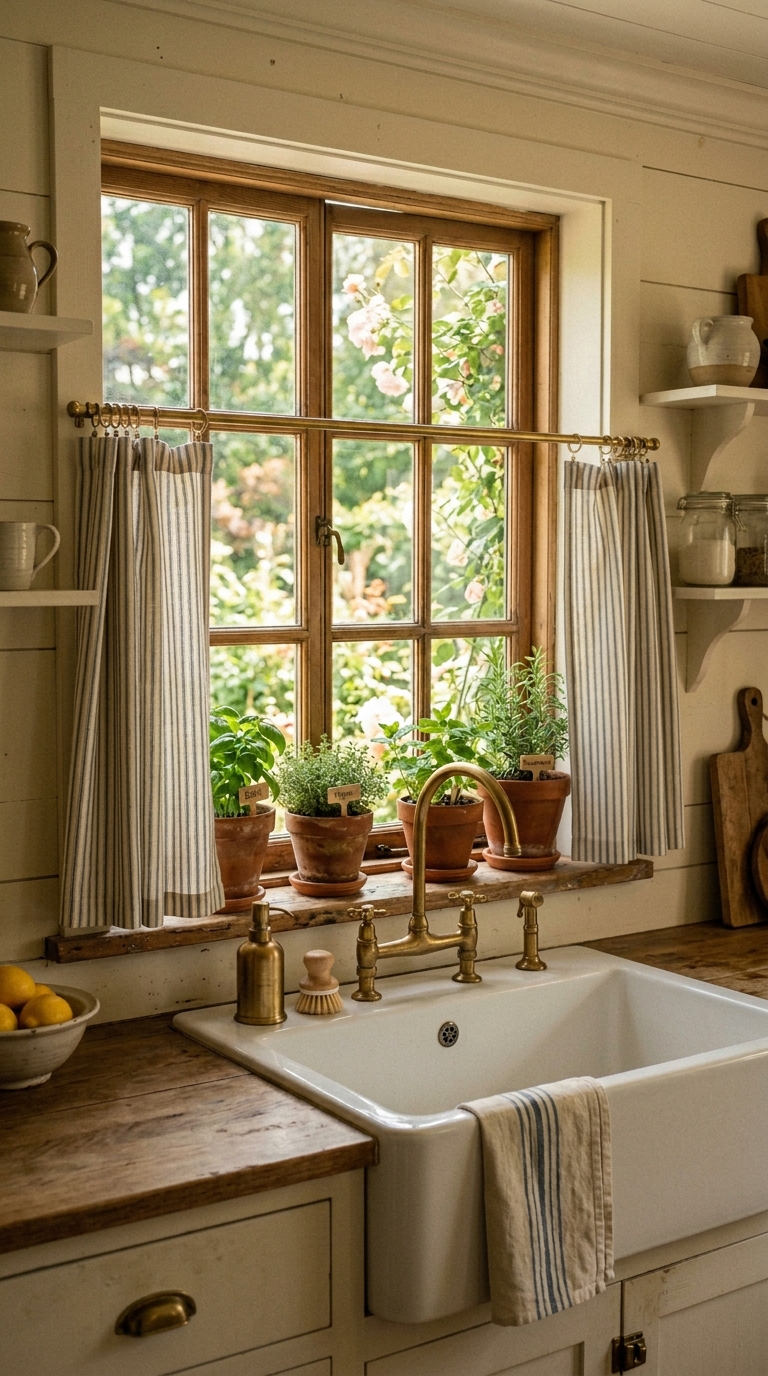
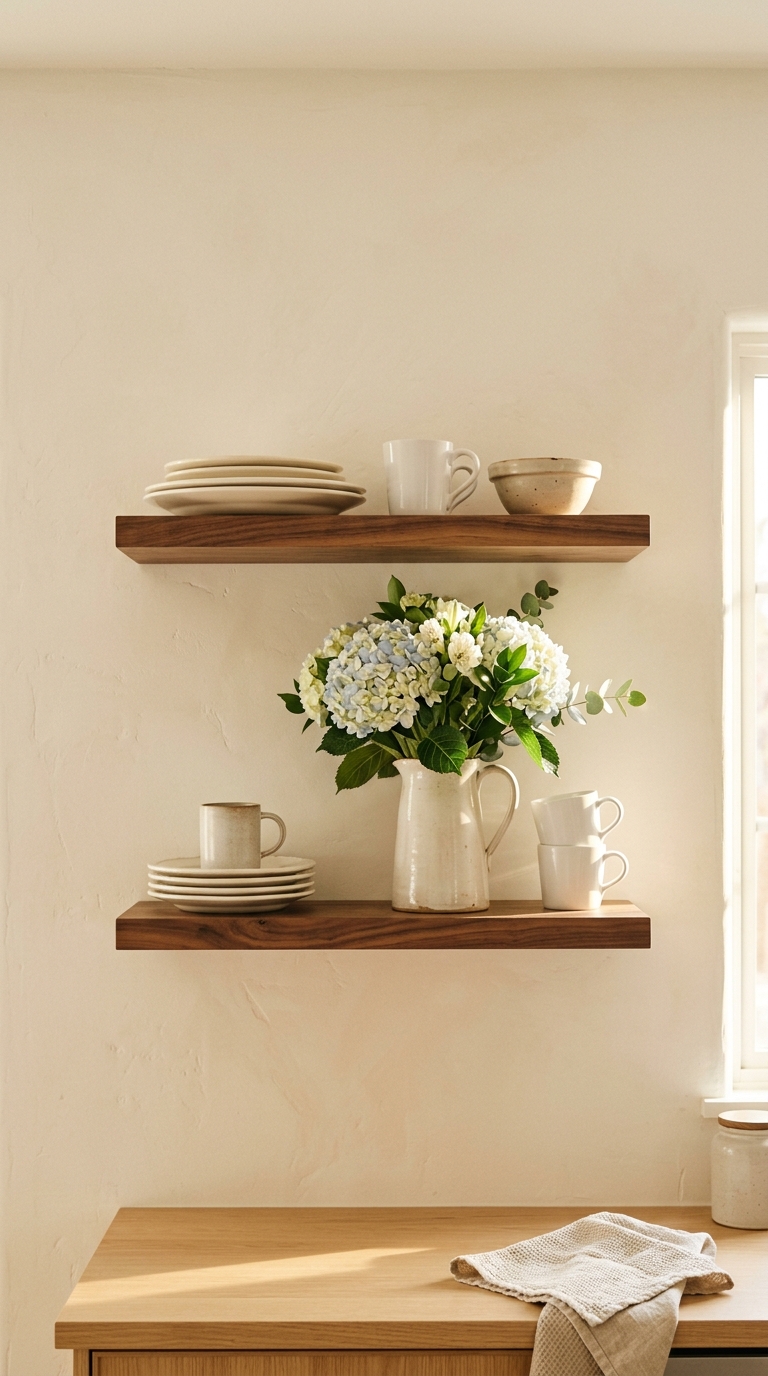
Open Shelves Styled with White Ironstone, One Pitcher of Hydrangea, and Nothing Else
The temptation with open shelves is to fill every inch. Summer styling asks you to do the opposite. Two walnut shelves with a stack of white ironstone, a tall pitcher of pale blue hydrangea, and space on either side is more beautiful than a shelf packed with things that belong somewhere else.
The hydrangea pitcher is the whole point. Everything else is just framing. Keep the ironstone in graduated stacks — largest plate at the back, mugs in a cluster, small bowl in front. Replace the flowers every five to seven days. Brown hydrangea heads undo the whole look.
For a warmer, rustic take on seasonal decorating, farmhouse French country kitchens combine vintage character with timeless comfort.
Styling Tips:
- Leave at least one-third of each shelf bare — space is not wasted space
- Use walnut or warm oak shelving; pale wood makes ironstone disappear
- Limit colors to two: white and one floral tone
- No small trinkets — every object on the shelf should earn its place
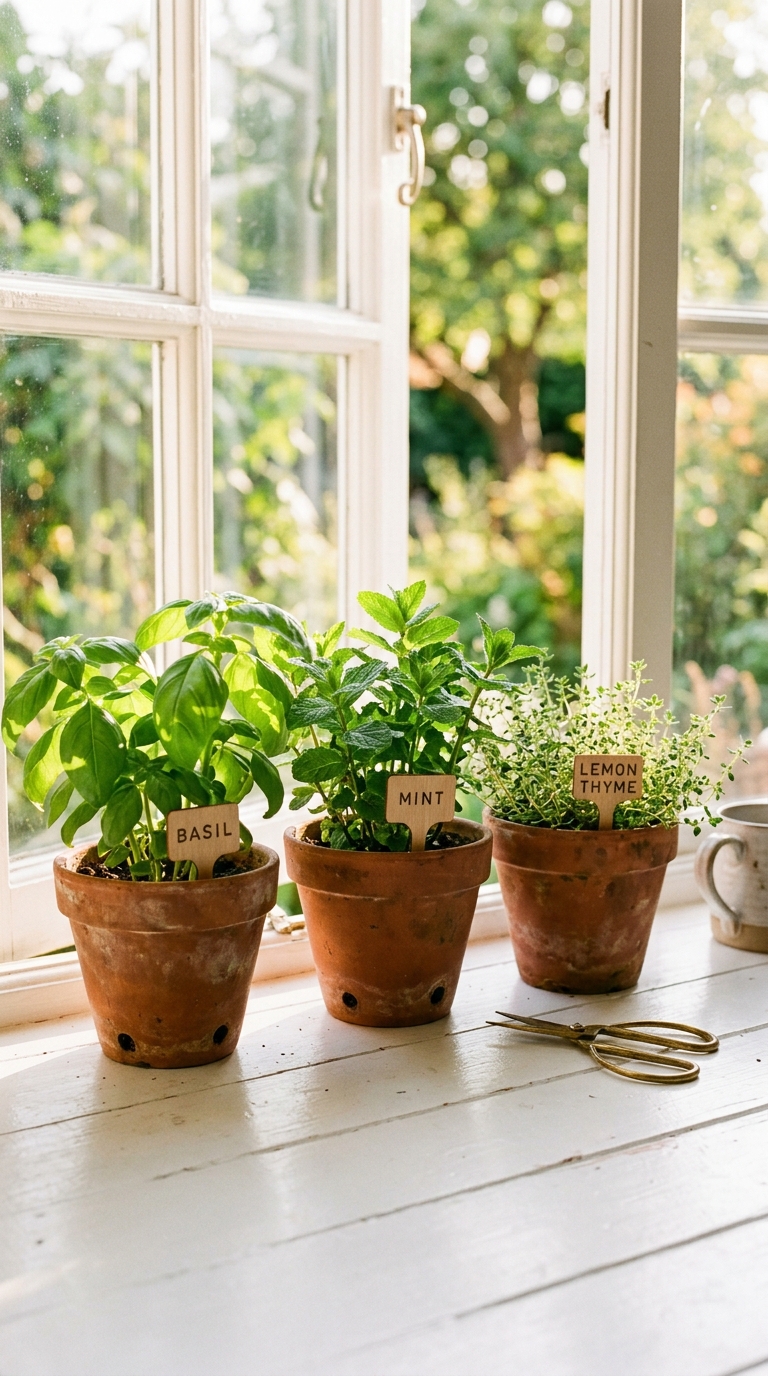
A Trio of Potted Herbs on the Windowsill — Basil, Mint, and Lemon Thyme
Living herbs do something no candle or diffuser can. Their green is a very specific, alive kind of bright — and you smell them before you even see them. Three unglazed terracotta pots in graduated sizes on a sunny sill look like a tiny kitchen garden, which is exactly the summer vibe you’re going for.
Basil loves a south-facing window and needs warmth above 65°F. Mint is nearly impossible to kill and rewards frequent pinching. Lemon thyme stays compact and tidy, adding a soft citrus scent that ties the three together. Keep small brass scissors nearby — they signal the herbs are actively used, which is the difference between a still life and a working kitchen.
Styling Tips:
- Use unglazed terracotta — it breathes and darkens beautifully over time
- Vary pot sizes: 4, 6, and 8 inches, create natural visual rhythm
- Water in the morning, so pots dry by evening, and roots don’t rot
- Pinch basil tops weekly to prevent flowering and keep growth bushy
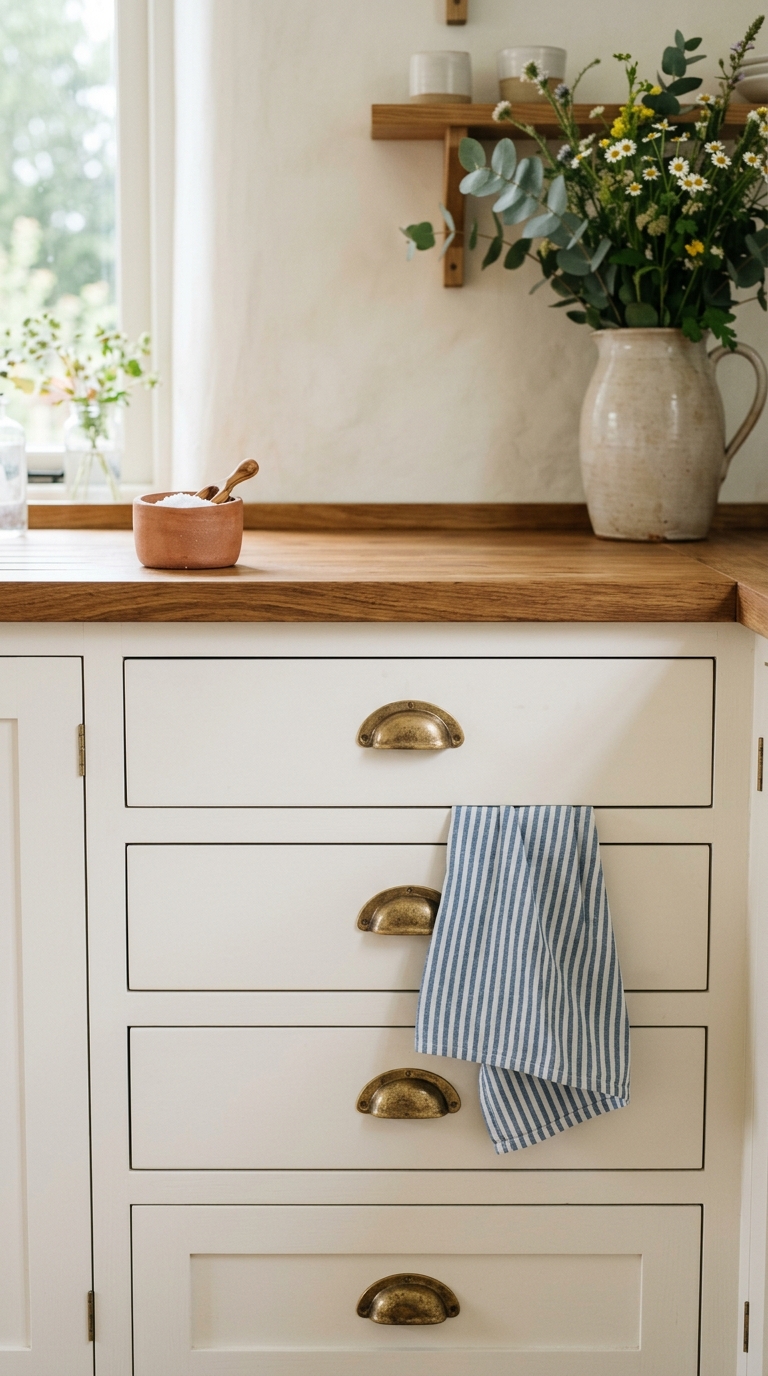
Swapping Chrome Pulls for Unlacquered Brass in a Single Afternoon
Hardware is the most underestimated update in home decor. Swapping a row of cold chrome pulls for unlacquered brass ones takes one afternoon and reads like a different kitchen by the time you’re done. The warm metal carries a whole season’s worth of light on its own.
Unlacquered brass will patina over time — it’ll deepen, mottle, and pick up warmth from daily use. That’s the point. It’s not a flaw. Before you commit to a full set, buy two pulls and live with them for a week against your actual cabinets in your actual light. The test saves you from a mismatch you can’t unsee.
If you’re updating the center of your kitchen for summer, coastal kitchen island decor ideas can add fresh coastal styling and functional charm.
Styling Tips:
- Always buy one extra pull beyond your count — batches can vary in tone
- Unlacquered brass pairs best with white, sage green, or warm cream cabinets
- Avoid mixing brass with stainless appliances in the same eyeline
- A damp cloth (no harsh cleaner) is all brass hardware ever needs
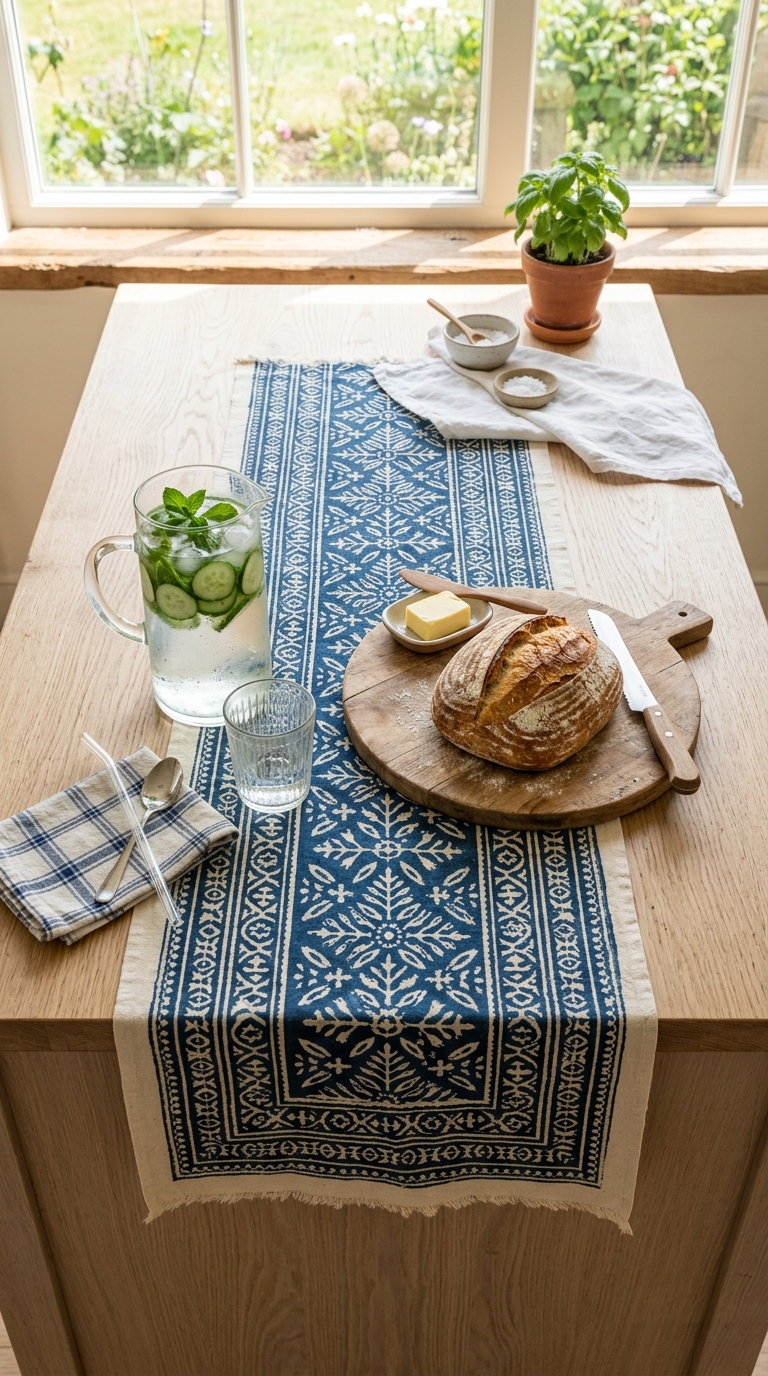
A Block-Printed Cotton Runner Across a Light Wood Island
A runner is the lowest-commitment way to introduce a summer pattern without touching a single wall or cabinet. Block-printed cotton in indigo and bone has the slightly irregular repeat that machine fabric never manages — and that imperfection is exactly what makes it feel handmade and warm. Laid across a pale oak island, it does half the styling work on its own.
Keep everything else on the island minimal. A glass pitcher of cucumber water at one end, a small wooden bread board with a loaf — that’s the whole scene. The runner is the line of color the eye follows across the room, so don’t compete with it.
Styling Tips:
- Size the runner to leave 3–4 inches of island surface visible on each side
- Small pattern scale works better than large checks in most kitchens
- Wash cotton runners before use — pre-washed linen drapes more naturally
- Rotate two or three runners across summer for a fresh look without buying new decor
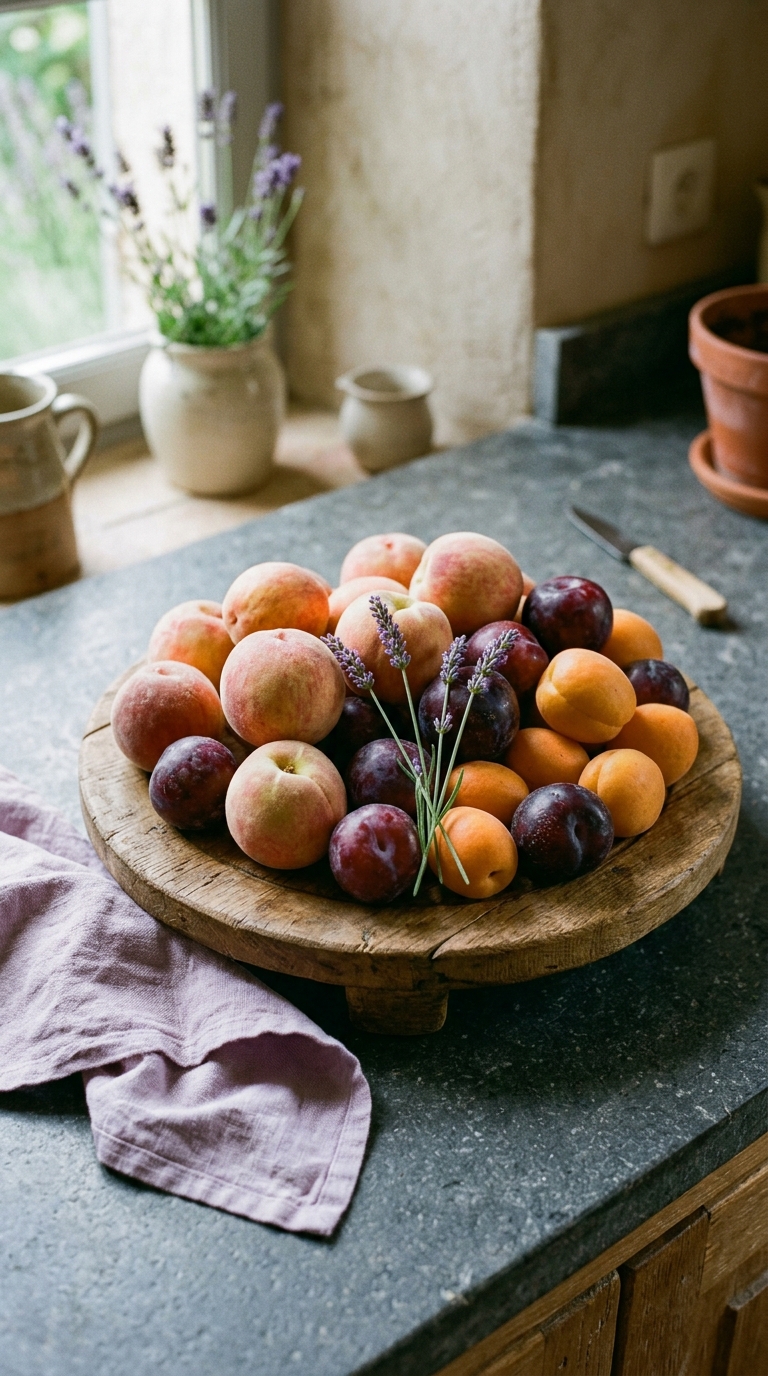
Stone Fruit and Lavender Sprigs on a Footed Wooden Board
This one comes straight from a Provençal farmhouse kitchen, and it works because of color theory, not coincidence. Peaches and plums share warm and deep tones that lavender sits between — the purple bridges the fruit colors in a way that feels composed rather than random. On a footed board, the whole pile reads as a styled object, not just a fruit bowl.
Don’t wash the fruit before displaying it. The natural bloom on plums and the soft fuzz on peaches are what make them look market-fresh. Pile the fruit higher in the center and let pieces fall toward the edges — geometric stacking looks fussy and staged.
Styling Tips:
- Match the floral sprig color to the dominant fruit for a cohesive look
- A footed board 10–14 inches in diameter gives the right visual scale
- A pale purple linen napkin alongside is the only extra styling move needed
- Replace the display every 2–3 days — it doubles as your snack prep
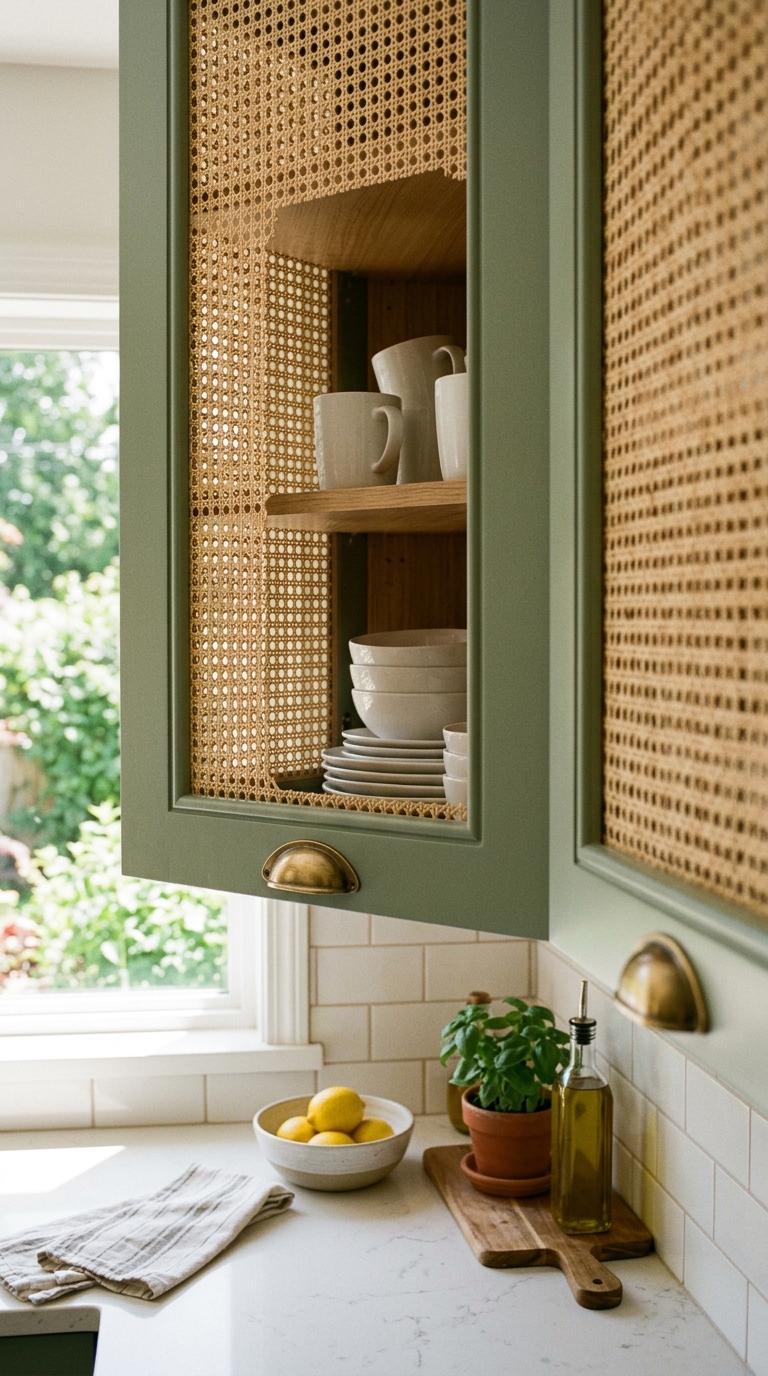
Cane Cabinet Inserts — A Rental-Friendly Way to Reinvent Upper Cabinets
You don’t need new cabinets to get a new kitchen. Pop the center panel out of a flat shaker door, staple a sheet of pre-woven cane behind the opening, and the result looks custom. Sage green paint around natural cane is one of the most flattering combinations in current summer kitchen decor — the green warms the tan cane and pulls the whole room together.
What you keep inside the cabinet matters as much as the insert itself. Load those visible shelves with white dishes or pale cream glassware. The cane weave lets you see through slightly, so the interior becomes part of the styling. Brass cup pulls close the look in one hardware store.
For a breezy summer vibe, coastal kitchen cabinet ideas offer light colors, natural textures, and a relaxed beach-inspired feel that keeps the space bright and airy.
Styling Tips:
- Use hexagonal or open-weave cane for the most light and visual texture
- Paint cabinet exteriors before installing inserts — easier masking, cleaner edges
- Keep visible interior shelves to white or neutral dishware only
- This works on 2–4 upper doors; doing all uppers can feel overwhelming
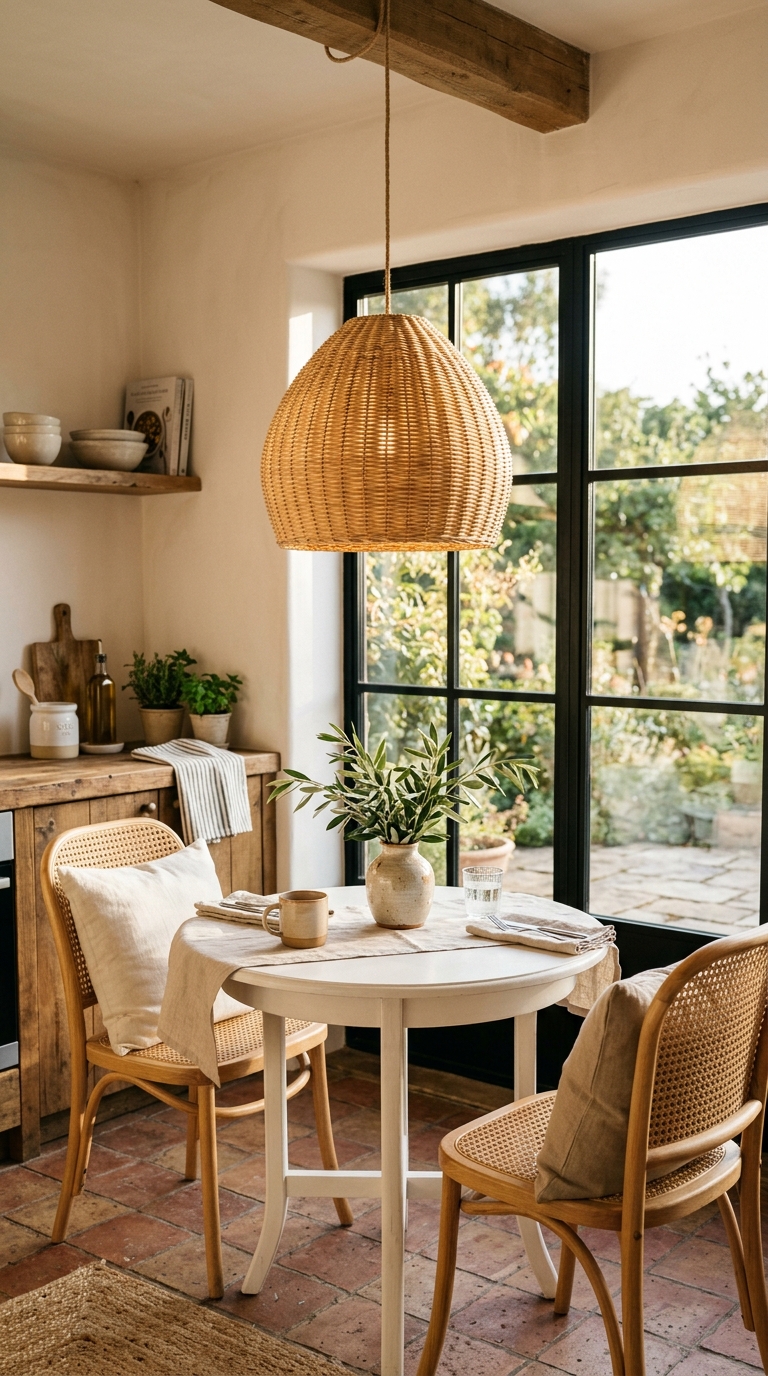
A Rattan Belly-Basket Pendant Over a Small Bistro Corner
A single large pendant does what twenty smaller decisions can’t. It lowers the visual ceiling above a small table, creates a room-within-a-room feeling, and casts patterned light shadows that shift with the time of day. Belly-basket shapes are softer and more informal than tall cylindrical pendants — which is exactly the right tone for a kitchen corner.
Hang it 30–34 inches above the table surface. Cane-back chairs continue the natural fiber story without matching exactly — a set that looks too coordinated reads like a furniture showroom, not a real kitchen. A small vase of olive branches on the table rounds the whole corner out.
Styling Tips:
- 18–24-inch-diameter pendants work best over a 30-inch bistro table
- Use a warm-toned Edison or amber LED bulb inside rattan — it glows like summer
- Don’t center the pendant on the ceiling; center it over the table
- A single pendant here reads better than two — symmetry kills the casual mood
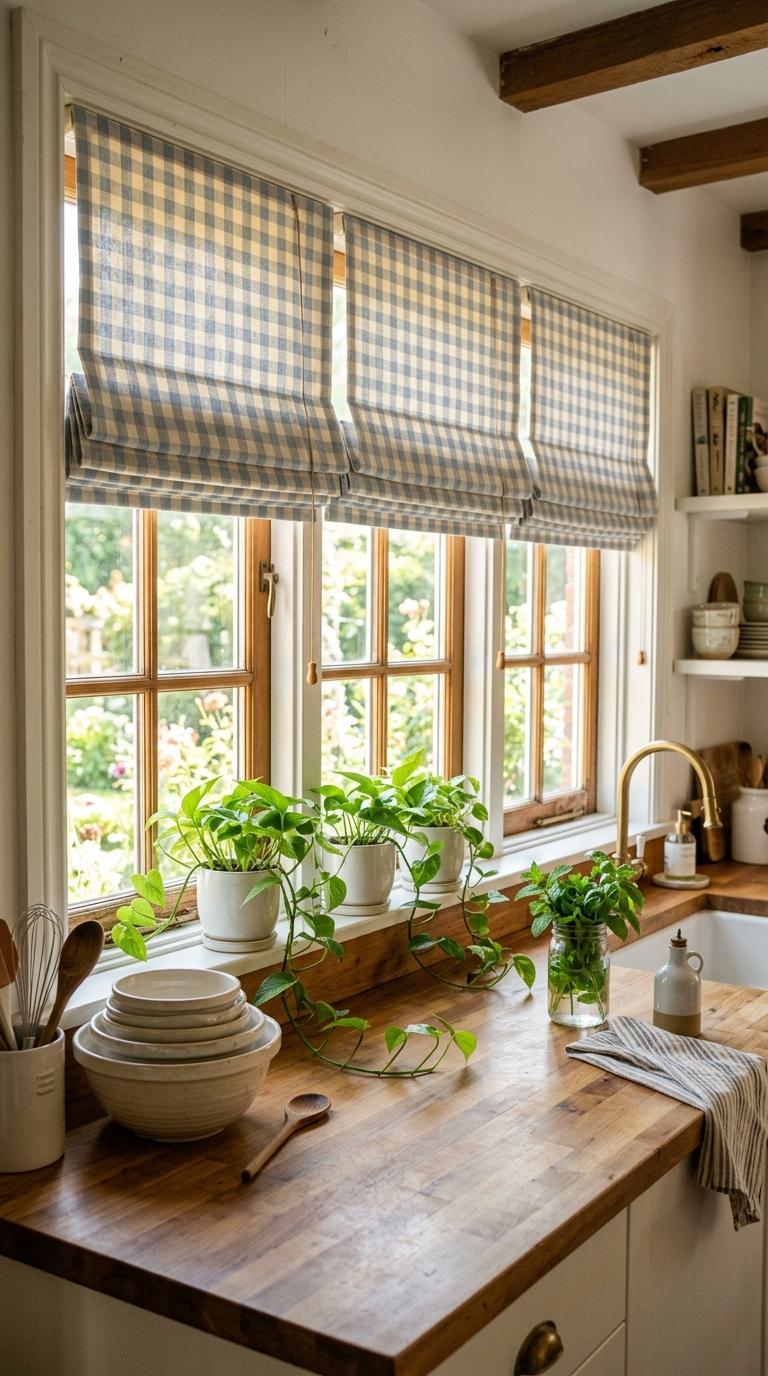
Gingham Roman Shades in Faded Blue and Bone Above the Counter Windows
Gingham makes a kitchen feel like a kitchen — but the wrong gingham makes it feel like a picnic tablecloth. The trick is going to fade. A hydrangea blue and bone ticking stripe in a tight check reads as grown-up and summery without veering into country-craft territory. Roman shades lie flat when raised, which keeps the counter space clean and uncluttered.
Three of these across a bank of windows is a complete seasonal room refresh in one afternoon. Layer in a trailing pothos on the counter below and a stack of cream mixing bowls — the cooler blue from the shades and the warm cream of the bowls need each other.
Styling Tips:
- Tight checks (under 1 inch) scale better to most kitchen windows than large gingham
- Bone white as the second color keeps the palette fresh, not juvenile
- Mount shades inside the window frame for the cleanest look
- Layer with sheer white underneath if you need more light control
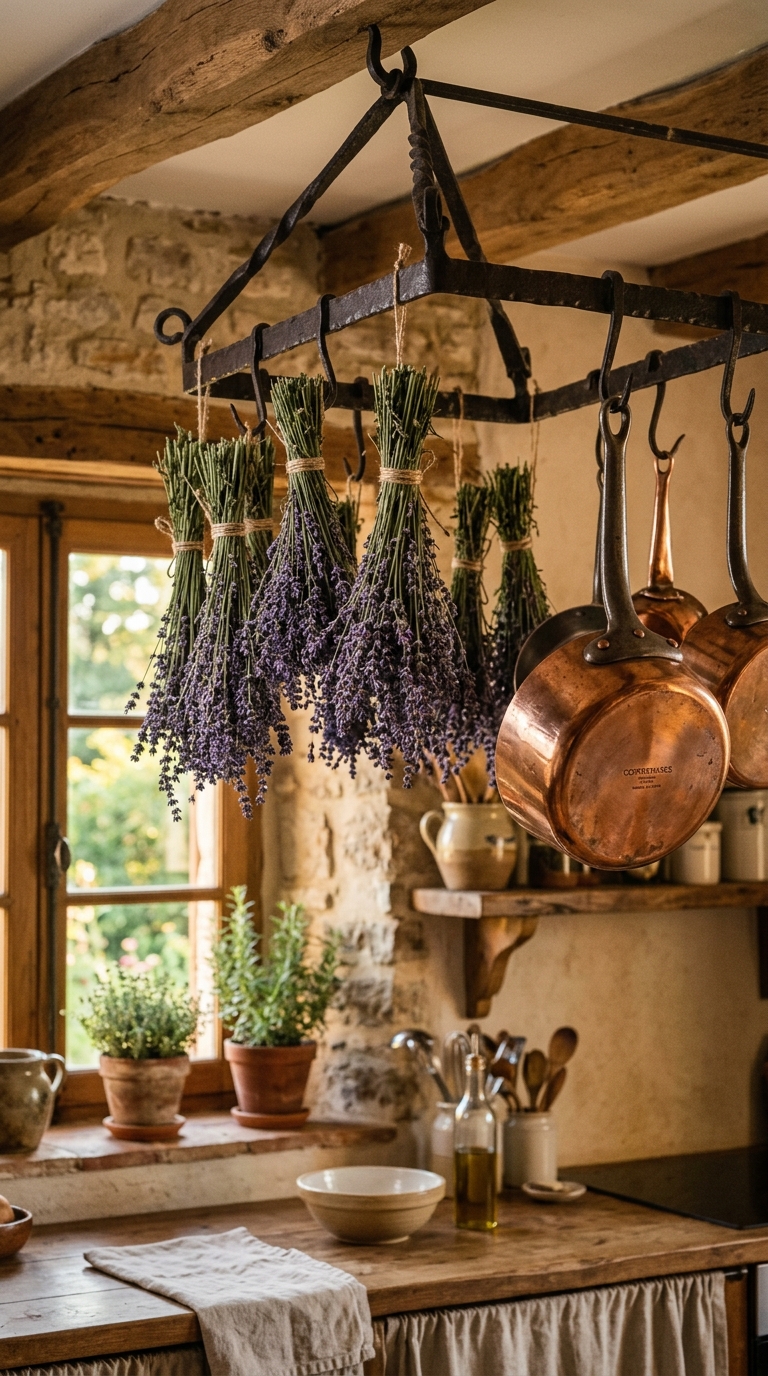
Hanging Bundles of Drying Lavender From a Pot Rack or Ceiling Hook
This is one of the oldest summer kitchen ideas in the book and somehow still one of the most underused. Cut fresh lavender in late June or early July, tie bunches of 7–10 stems with kitchen twine, and hang them upside down from a pot rack or a simple ceiling hook. The scent fills the room for the first few days and softens to a background warmth over the following weeks.
You don’t need a pot rack to make this work — two S-hooks on a ceiling beam or a curtain rod across a window frame does the same job. Once fully dry, the lavender holds its shape for the rest of the season. Move it to small linen sachets in September or leave it hanging as a dried herbal display.
Styling Tips:
- 7–10 stems per bundle is the sweet spot — fewer looks sparse, more looks messy
- Natural jute twine reads warmer than thin white string
- Hang in odd numbers — three or five bundles look more natural than two or four
- Keep lavender away from steam; hang it on the opposite side of the kitchen from the range
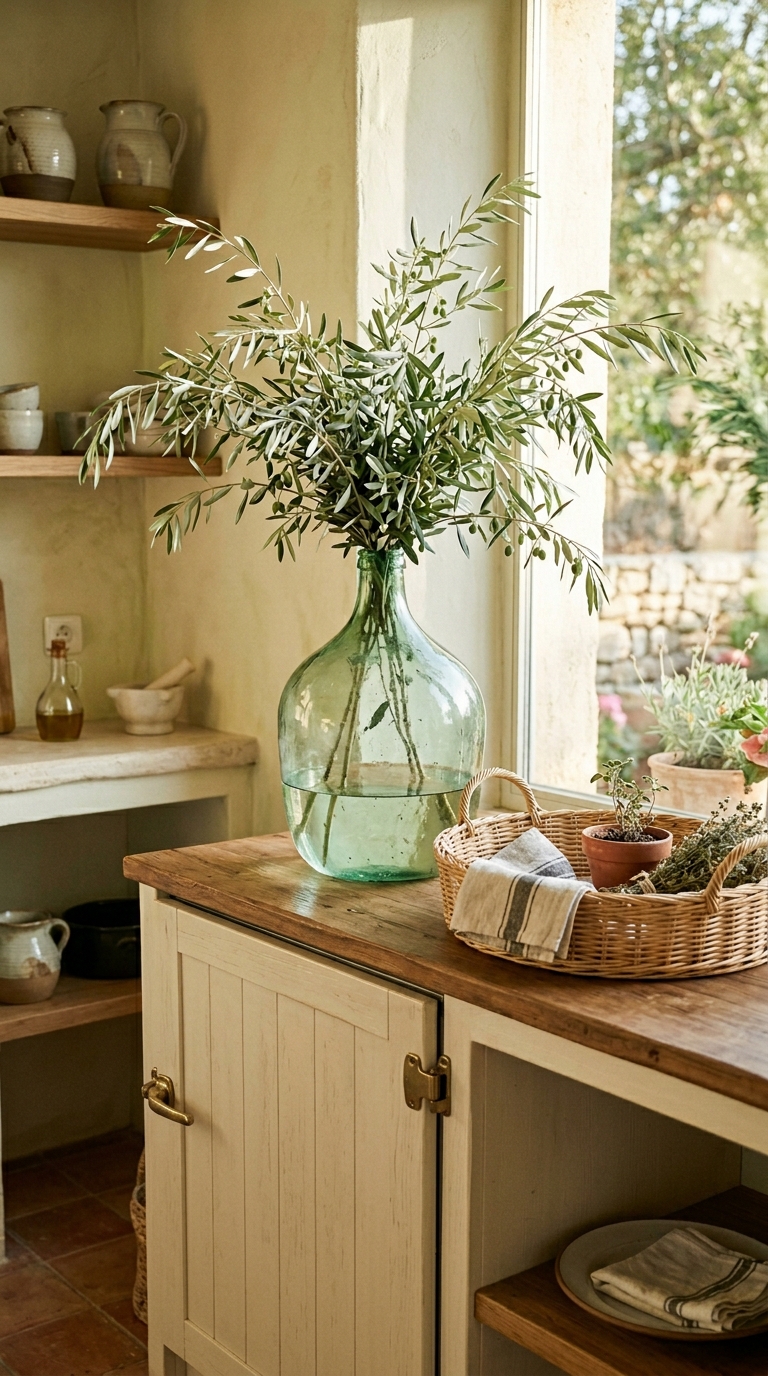
A Vintage Demijohn of Olive Branches on Top of the Refrigerator
The top of the refrigerator is the most ignored surface in most kitchens. Give it one tall object and it answers immediately. A vintage green glass demijohn with long olive branches stretching upward uses that vertical height perfectly — and olive branches need no water, which makes this a set-it-and-forget-it styling move.
The demijohn’s wide, round base holds branches upright without tipping, which is why it works better here than a tall thin vase. A flat woven wicker basket beside it breaks the verticality and gives the eye a resting point. Dust around it weekly while you cook — that’s the only maintenance this move asks of you.
Styling Tips:
- Olive branches 30–40 inches long look proportional above most standard refrigerators
- A 16–24-inch demijohn reads best from across the room
- Soft green glass reflects light beautifully — position near a window if possible
- Swap olive branches for eucalyptus in the fall without changing anything else
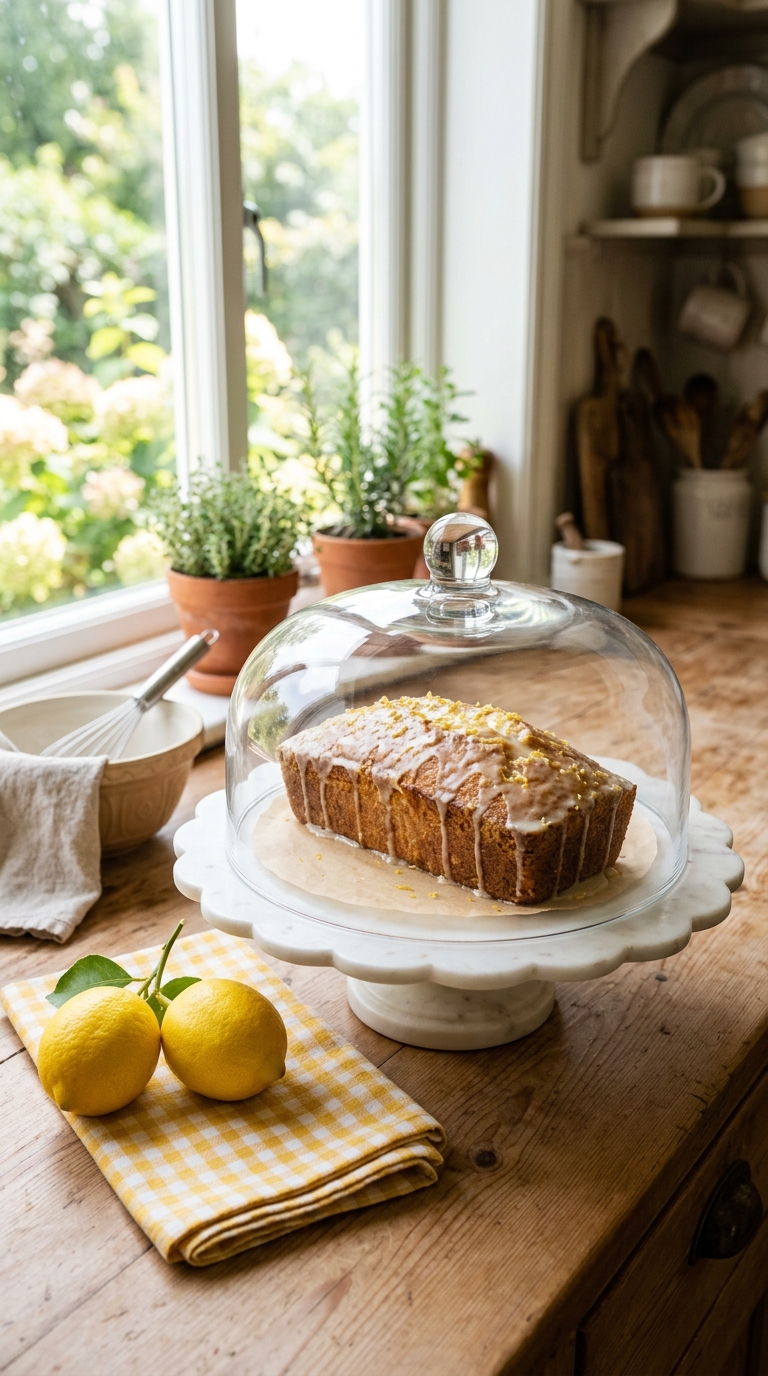
A Glass Cake Dome Over a Glazed Lemon Loaf on a Scalloped Marble Stand
A glass cake dome is permission to leave something beautiful on the counter without it looking cluttered. It protects whatever’s inside and makes an ordinary loaf of bread feel like a bakery display. Paired with a scalloped marble base, the whole thing reads as intentional and styled — not like you just forgot to put the dessert away.
Lemon loaf is the loaf of the season. Its pale yellow glaze catches summer light in a way chocolate never will. Two whole lemons and a small plate of sliced lemon beside the stand is the only additional styling move needed. A folded yellow gingham napkin brings the warmth full circle.
Styling Tips:
- Make sure the dome diameter clears the cake stand edge by at least 1 inch
- A 10–12-inch scalloped marble stand gives the right visual weight
- Keep the surrounding counter completely clear — the dome is the focal point
- This works equally well with a fruit galette or a bundt cake if lemon loaf isn’t your thing
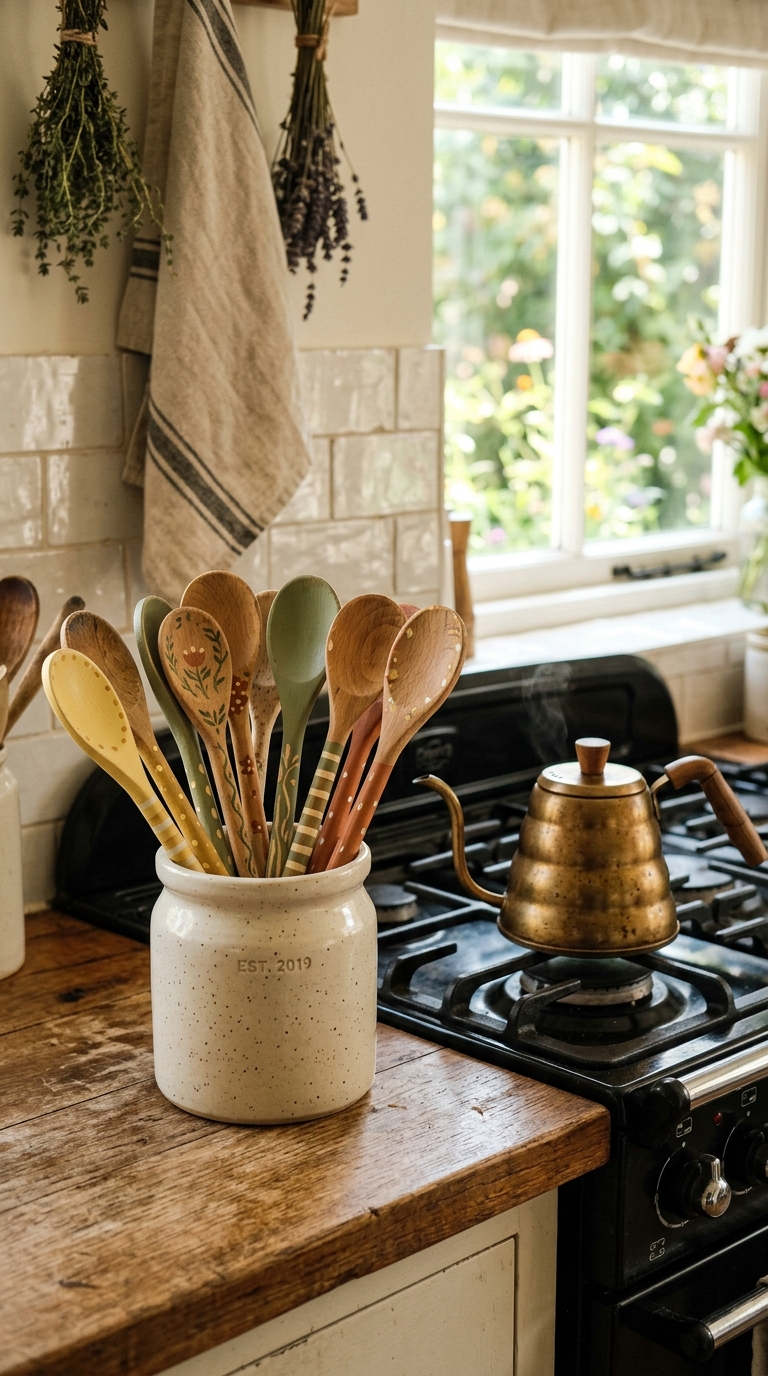
A Stoneware Crock of Hand-Painted Wooden Spoons Beside the Range
Wooden spoons are one of the most forgotten styling objects in a working kitchen. A crock full of them beside the range is genuinely practical — they’re where you need them — and the hand-painted handles add a personal, creative touch that no store-bought set can replicate. It takes one afternoon and a few dollars in craft paint to make.
Paint only the handles in summer tones — butter yellow, sage, terracotta, faded blue — and seal with a thin coat of food-safe mineral oil once dry. The painted portion stays well away from the bowl of the spoon, so it’s safe for cooking. Style the crock with the longest spoons at the back so the painted detail on the shorter ones is fully visible in front.
Styling Tips:
- Acrylic craft paint works fine — it’s food-safe once fully dry and sealed
- Food-grade mineral oil is the only sealant you need; it deepens the paint slightly
- A cream or white stoneware crock recedes and lets the handles do the work
- Five to seven spoons is the ideal count — fewer looks sparse, more looks crowded
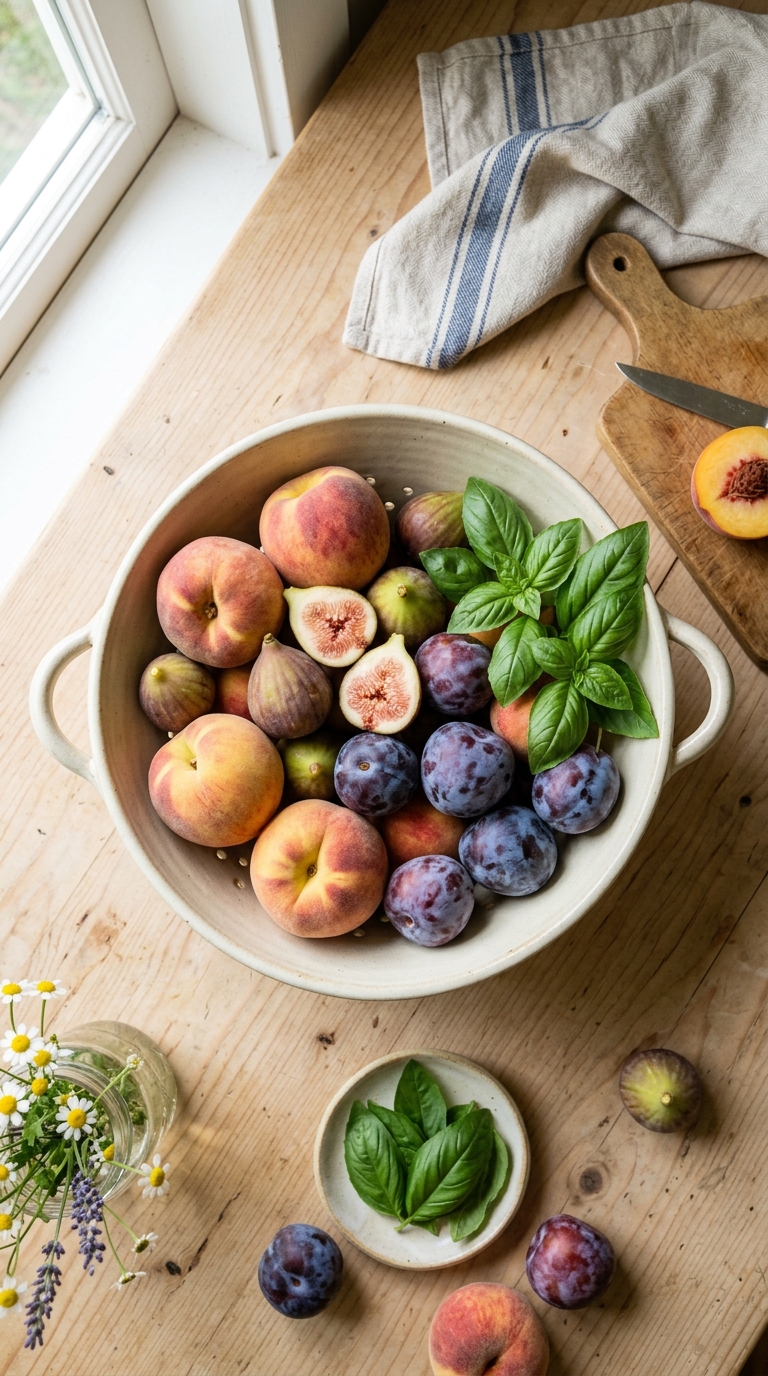
Summer Fruit in a Ceramic Colander as a Permanent Counter Display
A colander full of peaches and figs is one of those styling moves that feels slightly obvious once you see it and completely genius before you do. A wide ceramic colander in cream or matte white sits on the counter, holds fruit at a natural, casual height, and reads as both styled and useful at the same time. That combination is rare.
The key is choosing fruit that holds well at room temperature — peaches, figs, plums, and small nectarines all work. Rotate the display as fruit ripens. The colander never needs to come off the counter because it’s always in use, which makes it the most honest piece of summer kitchen decor you can own.
Styling Tips:
- Choose a wide, low colander (12–14 inches) over a tall, narrow one for better display
- Matte ceramic in cream, white, or soft sage reads most elegant
- Tuck one or two herb sprigs (basil, mint) into the fruit for color and scent
- A small handwritten label card beside it (“from the farmers market”) adds a charming personal touch
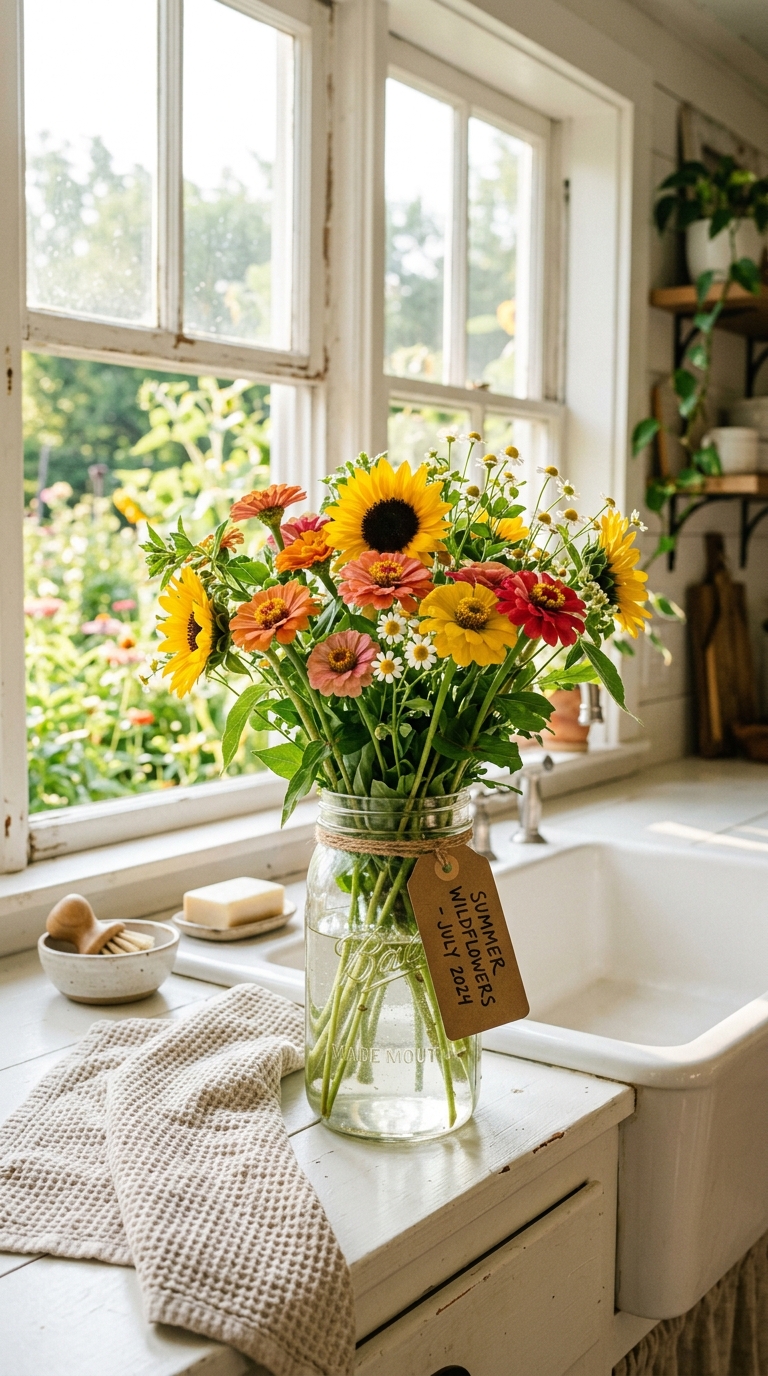
A Fresh Wildflower Arrangement in a Wide-Mouth Mason Jar by the Sink
Farmers’ market wildflowers in a mason jar are the most honest summer kitchen decoration there is. No vase shopping required, no arrangement skills needed — just a jar, some water, and whatever looked good at the market that morning. The informality is the point. Sunflowers, zinnias, black-eyed Susans, and chamomile all work beautifully together.
Set the jar right by the sink where you’ll see it constantly while doing dishes. The wide mouth of the mason jar lets stems spread naturally without arranging. Change the water every two days and trim the stems slightly each time. A simple brown kraft paper label on the jar — handwritten with a summer quote or just the flower names — adds a nice personal layer.
Styling Tips:
- Use a 32-oz wide-mouth mason jar for the best stem support and visual weight
- Cut stems at a 45-degree angle under running water for longer vase life
- Mix tall and short stems — don’t cut everything to the same height
- One color family (all warm tones or all cool tones) looks more composed than a rainbow
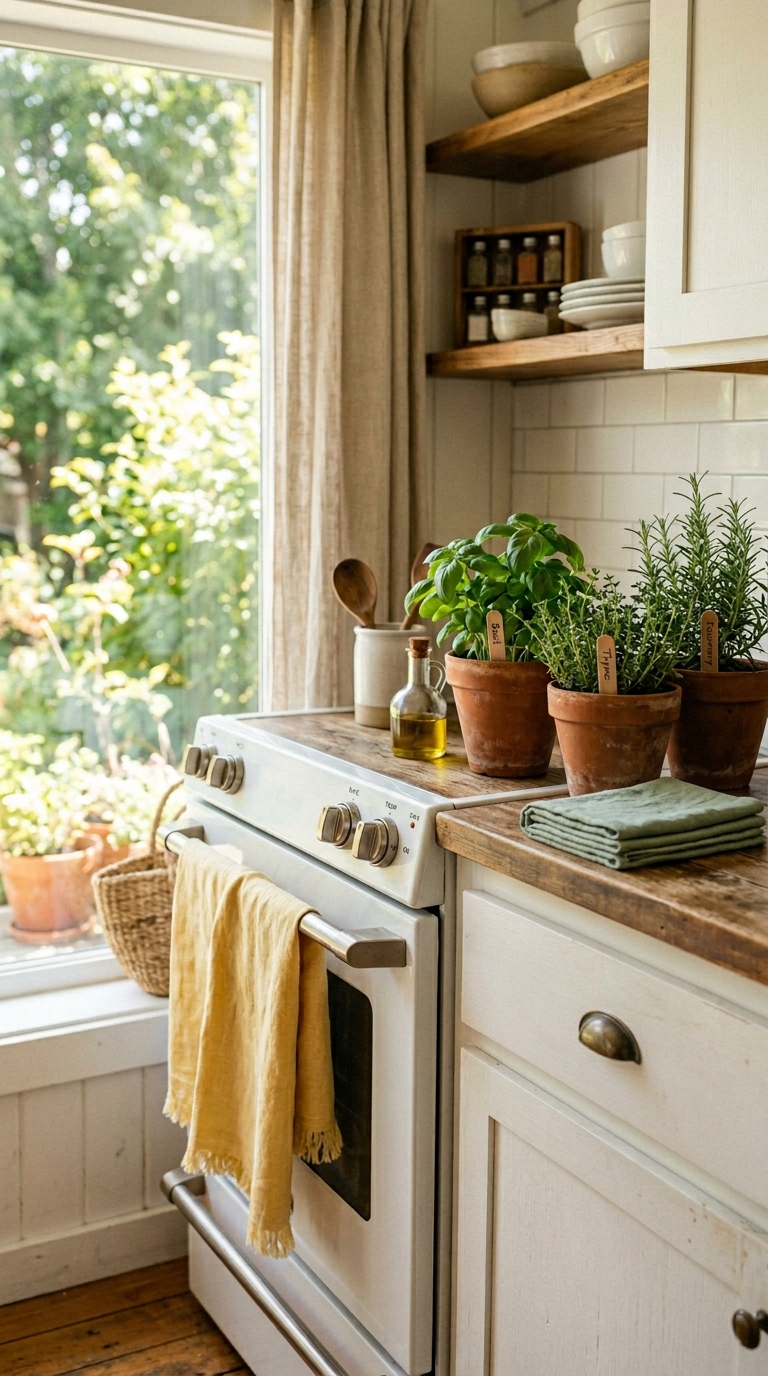
Swapping Dish Towels for Seasonal Linen in Butter Yellow, Sage, or Soft Terracotta
Dish towels are the easiest $10 seasonal refresh that most people completely overlook. A set of washed linen towels in summer tones — butter yellow, soft sage, or warm terracotta — draped over the oven handle or folded on the counter shifts the entire kitchen palette without moving anything else. It sounds small. It isn’t.
Buy three or four different colors and rotate them through the season. Tuck one into a drawer pull, fold one over the sink edge, drape one over the oven. Linen wrinkles slightly, which is fine — it adds texture. A crisp polyester towel in the same color would read completely differently, and not in a good way.
Styling Tips:
- Washed linen, not cotton — linen drapes naturally and improves with every wash
- Limit to two towel colors visible at once for a cohesive look
- Fold in thirds lengthwise before draping over a handle — it shows more of the color
- Look for towels with a subtle border or stripe; plain solid linen can feel too simple
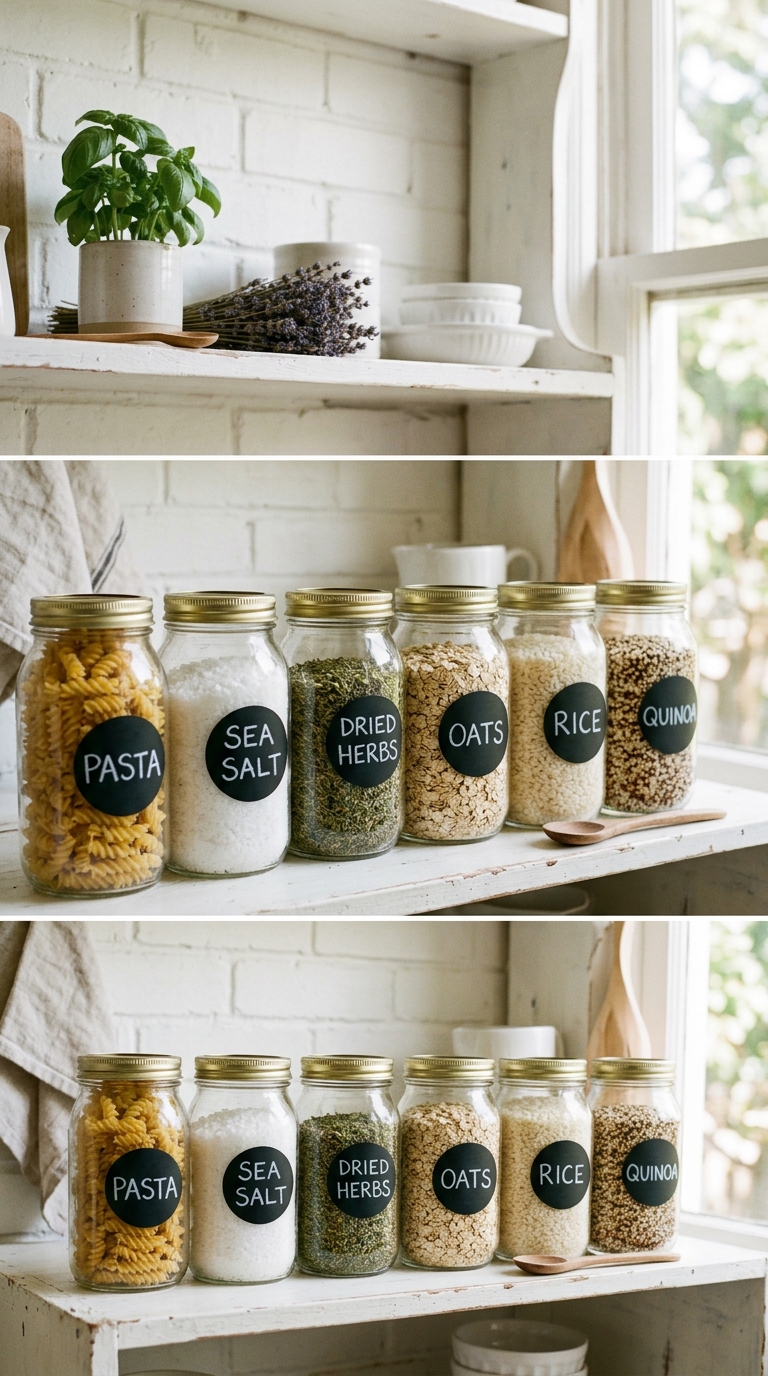
A Chalkboard Label System for Glass Jars on Open Shelves
Glass jars labeled with small round chalkboard tags make an open shelf look like it belongs in a cookbook. It’s an organizational move that doubles as visual decor — and it works because the uniform row of labeled jars gives the eye a clean, satisfying line to follow. Fill them with dry goods you actually use: pasta, sea salt, coffee, oats, dried herbs.
The chalkboard labels do something digital notes can’t — they feel handmade and personal. Write in your natural handwriting, not a practiced calligraphy hand. Real handwriting is warmer. A chalk pen (not chalk) makes the writing crisp and waterproof enough to last through the season.
Styling Tips:
- Use the same jar size and brand for visual consistency — Ball mason jars work perfectly
- Round chalkboard labels in 1.5–2 inch size are the most versatile
- Mix tall and short jars for natural height variation on the shelf
- Group by category: grains together, spices together, baking supplies together
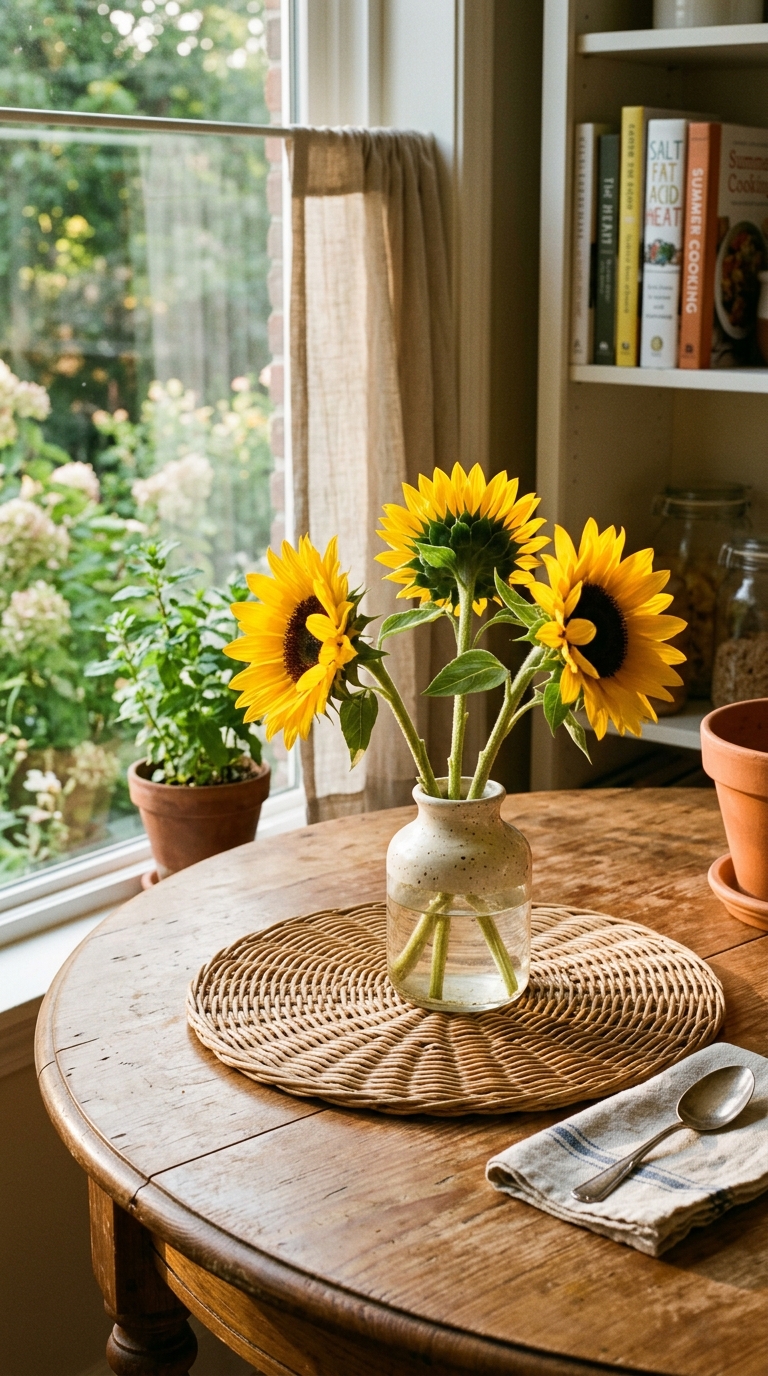
A Small Tabletop Vase of Sunflowers as the Kitchen Table Centerpiece
Sunflowers on a kitchen table are summer distilled into a single gesture. They’re tall, warm, and unambiguously cheerful — the kind of flower that makes a room feel like August even on a cloudy Wednesday. One or three stems in a short, wide-mouthed vase on the kitchen table is enough. You don’t need a full bouquet.
A short vase keeps the sunflower heads at eye level when you’re seated, which is where they do their best work. Ceramic in cream or terracotta works better than glass here — the weight of the vase grounds the tall, top-heavy blooms. Replace them every five to six days, or whenever the petals start to curl at the edges.
Styling Tips:
- Cut sunflower stems to 8–10 inches for a tabletop vase — taller reads better in floor vases
- Add one or two smaller filler flowers (chamomile, yarrow) to soften the arrangement
- A round woven placemat under the vase anchors the centerpiece visually
- Sunflowers are phototropic — rotate the vase daily so they face inward, not toward the window
Declutter the Counter First — Because Less Is the Real Summer Aesthetic
Every idea in this list works better on a counter that isn’t already full. Summer kitchen styling is actually more about removing things than adding them. The bread maker that gets used twice a year, the stack of mail, the extra fruit bowl that no one decided was decorative — those things are what stand between your kitchen and the light, open feeling you’re looking for.
Spend one hour clearing the counters before you try anything else on this list. Put small appliances in cabinets. Relocate anything that doesn’t belong in the kitchen. Then see what you actually have to work with. The empty counter is the real starting point, not the lemon pedestal.
Styling Tips:
- Keep only what you use daily on the counter — everything else earns cabinet space
- The “one in, one out” rule applies to seasonal decor, too
- Clear counters make natural light bounce further and brighter into the room
- If a counter object doesn’t serve a purpose or look beautiful, it shouldn’t be there
FAQS
Q1. What are the easiest summer kitchen decor ideas on a budget?
The easiest budget-friendly updates include swapping dish towels for seasonal linen, adding fresh herbs to the windowsill in terracotta pots, placing a bowl of citrus fruit on a pedestal, and hanging cafe curtains over the sink. These small changes cost under $30 total and make a noticeable visual difference.
Q2. What colors work best for a summer kitchen?
The most effective summer kitchen color palette includes warm whites, butter yellow, soft sage green, faded hydrangea blue, terracotta, and bone cream. These tones reflect light well and feel fresh without requiring cabinet painting or major changes.
Q3. How do I make my kitchen feel bright and airy for summer?
Start by clearing the counters — empty surfaces reflect more light than styled ones. Then add natural textures like linen, rattan, and unglazed terracotta. Swap heavy window treatments for lighter cafe curtains, and bring in one or two living plants or fresh flowers.
Q4. What herbs grow best on a kitchen windowsill in summer?
Basil, mint, and lemon thyme are the top three for a summer kitchen windowsill. Basil needs warmth and direct sunlight. Mint is nearly impossible to kill and grows quickly. Lemon thyme stays compact, smells fresh, and pairs well with the other two visually and in cooking.
Q5. How do I style open kitchen shelves for summer?
Use the rule of unequal thirds — fill about one-third of the shelf with objects and leave the rest open. Stick to two colors maximum: white ironstone or cream dishes paired with one seasonal flower or greenery. Remove anything that doesn’t belong in the kitchen. Less is always more on open shelves in summer.
CONCLUSION
Summer doesn’t wait for a kitchen renovation. It shows up in a bowl of lemons, a linen curtain, a handful of lavender drying in the corner. The truth is, most kitchens are one or two small changes away from feeling completely different — lighter, warmer, more alive.
You don’t have to do all 20 ideas. Pick three that feel doable this weekend. Clear the counter first, add one thing that catches the light, and let the season do the rest. That’s really all a summer kitchen refresh needs to be.