
If you’re staring at a spare bedroom the size of a walk-in closet and wondering how a crib, a dresser, and an actual human baby are all supposed to fit in there, take a breath — you’re not the first parent to face this, and small nursery ideas exist for exactly this reason. A tight footprint doesn’t mean a boring room or a stressful setup. It usually means the opposite. Small nurseries force you to be intentional, which is how you end up with a space that feels curated instead of cluttered.
In this guide, you’ll find real layout strategies, furniture swaps, storage tricks, and style directions that work in rooms under 100 square feet — plus a few ideas for nurseries tucked into closets, guest rooms, and shared bedrooms.
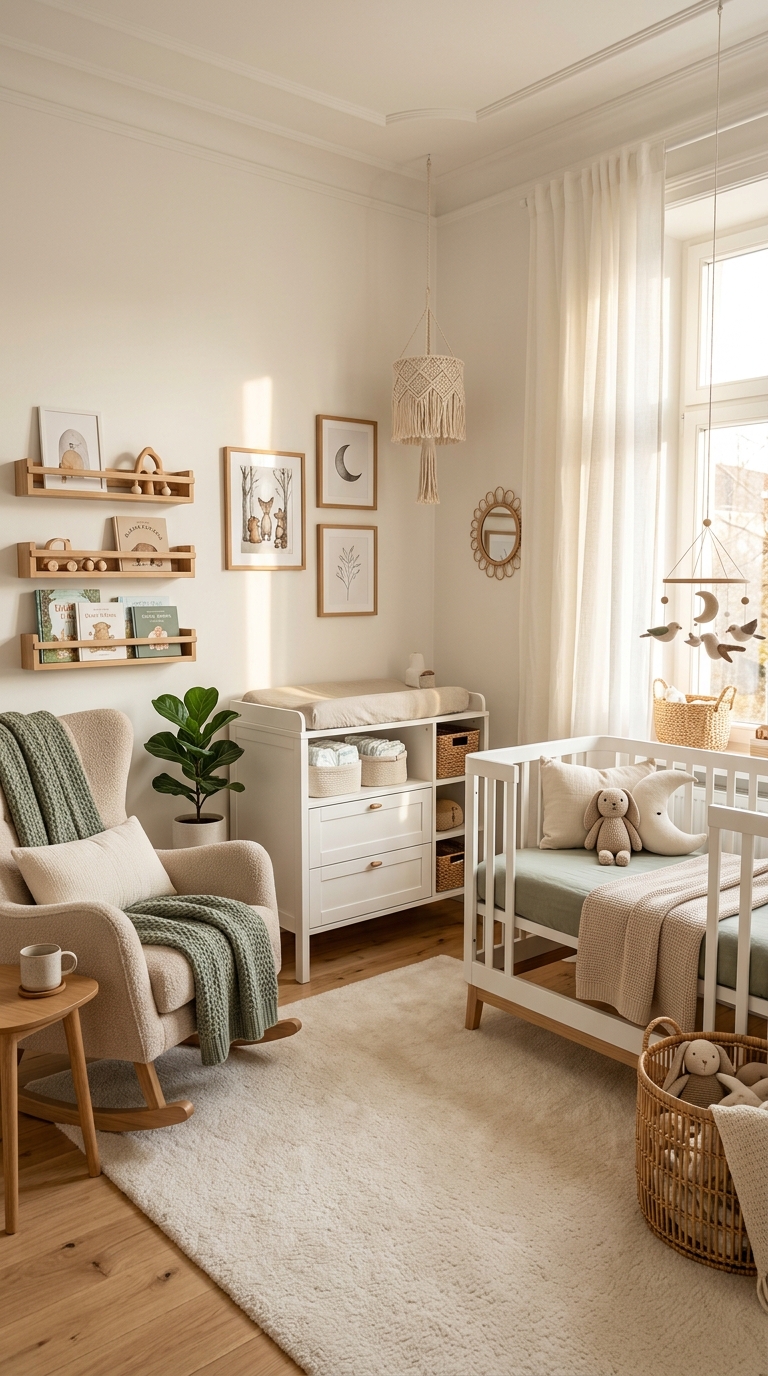
Every idea here is meant to be practical first and beautiful second, because a nursery you can actually function in at 3 a.m. matters more than one that just looks good in photos. Grab a tape measure, pin your favorites, and let’s plan a small nursery that feels anything but small.
Start With the Right Layout (Before You Buy Anything)
Before you buy a single piece of furniture, spend ten minutes with a tape measure. Layout decisions made early save you from returns, wasted floor space, and a room that feels like an obstacle course.
Place the Crib on the Longest Wall First
A cluttered nursery usually starts with one wrong decision: the crib went in first without a plan.
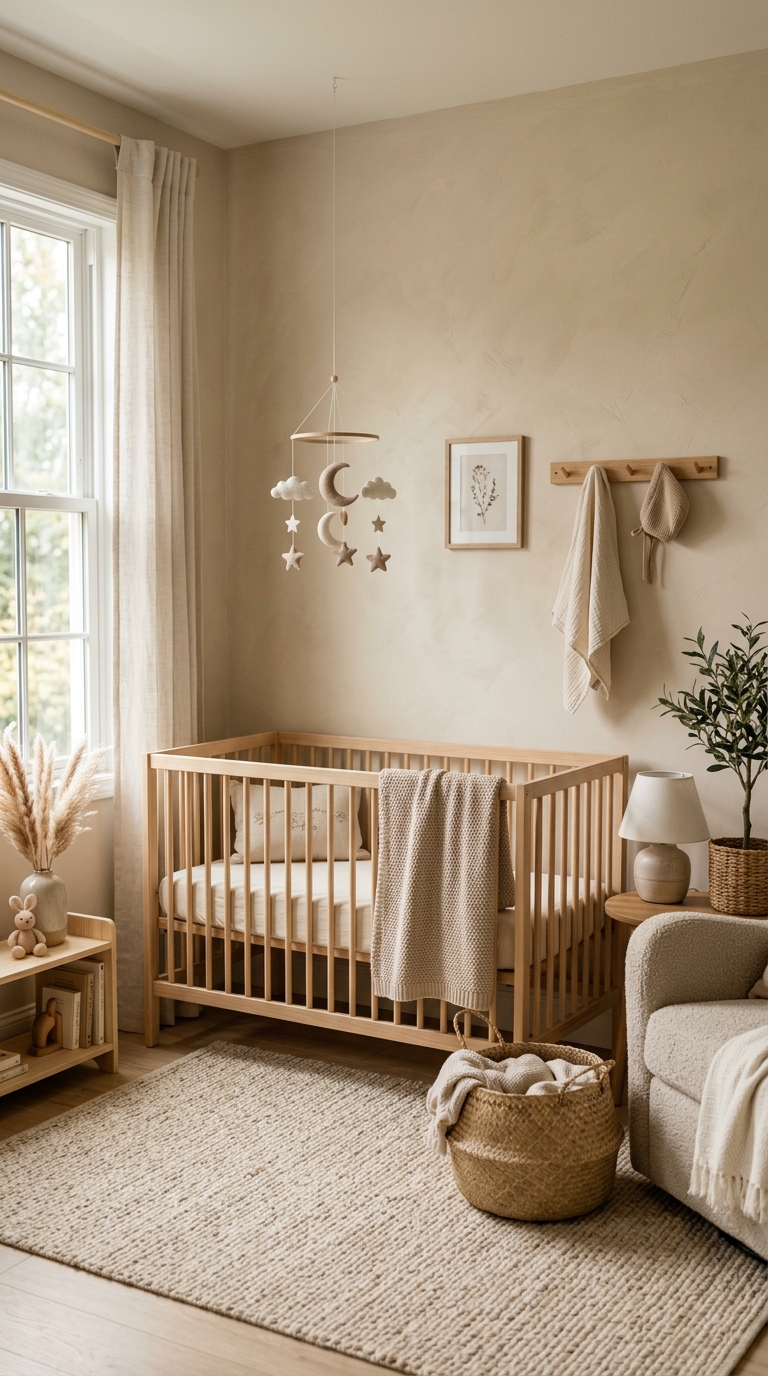
Anchoring the crib against the longest unbroken wall gives you the most flexibility for everything that comes after. It keeps the crib away from windows and heating vents, which matters for both comfort and safety, and it leaves the shorter walls open for a dresser, glider, or shelving. This works especially well in rectangular rooms, and it’s the first move any experienced nursery planner makes before touching a paint swatch or a fabric sample.
Once the crib is in place, measure the walking space around it — aim for at least 2 feet of clearance on the side you’ll use to lift the baby in and out. If the room is oddly shaped, sketch it on paper first; it’s much easier to erase a pencil line than to move a fully assembled crib.
Save the shortest wall for something low-profile, like a slim bookshelf, so it doesn’t visually compete with the crib. Planning a nursery together as a couple? Our Dreamy Bedroom Ideas for Couples post is helpful too.
Expert Tip: Tape the crib’s footprint on the floor with painter’s tape before you buy anything — it shows you exactly how much room is left for everything else.
Tuck the Changing Station Into a Corner or Closet
Not every small nursery has room for a dedicated changing table, and that’s completely fine.
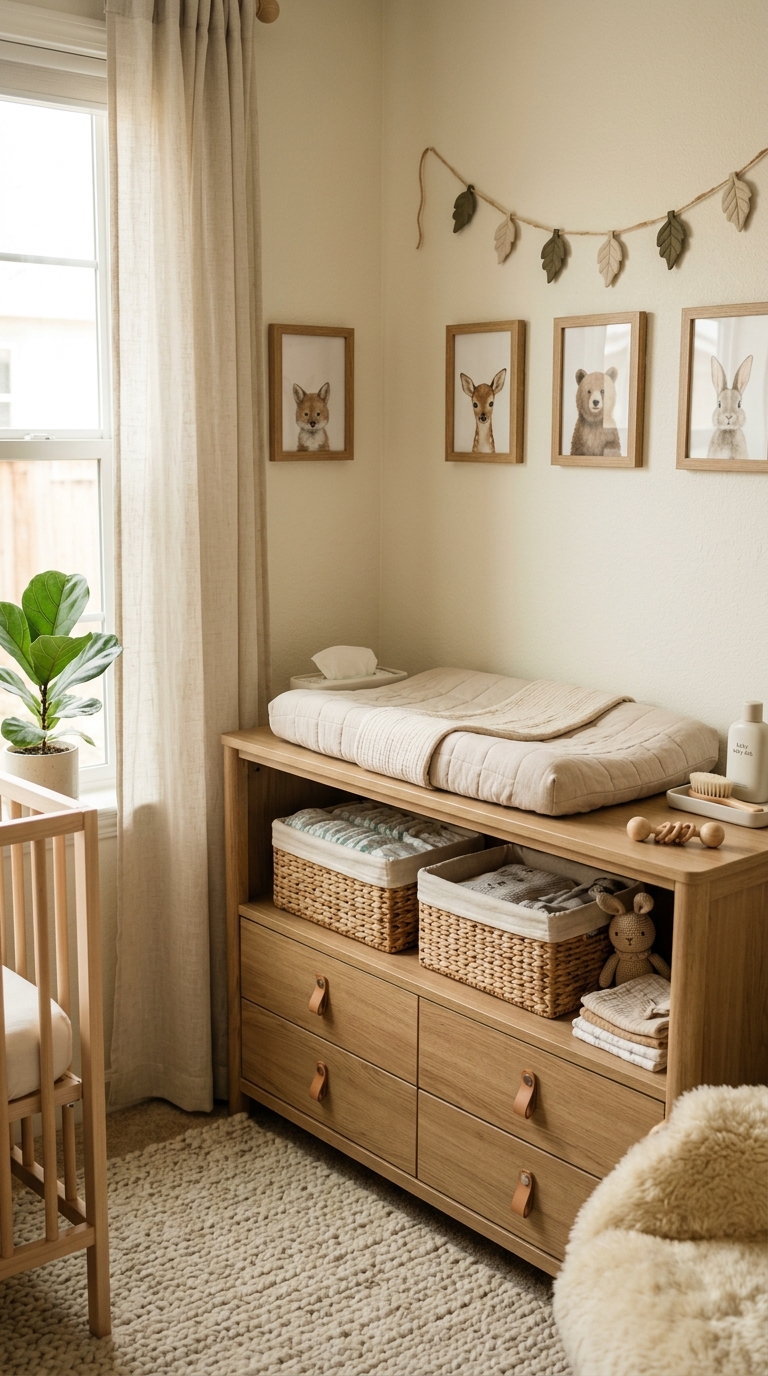
A corner changing station uses dead space that would otherwise sit empty. A simple dresser with a changing pad strapped on top, pushed into an unused corner, gives you the same function as a bulky standalone table without eating into your walking area.
If your nursery has a closet, even better — a shallow shelf or slim cart inside the closet doorway can hold diapers, wipes, and creams within arm’s reach while keeping the main room open. For fall-inspired warm tones, check our Fall Bedroom Decor Ideas guide.
Keep the corner setup simple: one basket for daily essentials, one for backups, and nothing else on the surface. Cluttered changing stations are one of the most common small-nursery mistakes, because every extra item on top makes the whole corner feel chaotic.
A washable rug underneath catches spills and adds a little warmth to what’s otherwise a functional zone.
Expert Tip: Mount a small shelf just above the changing pad for the items you reach for most — it keeps your hands free without adding floor footprint.
Create a Diagonal Crib Placement for Awkward Rooms
Not every nursery is a perfect rectangle, and that’s where diagonal placement becomes a genuinely useful trick.
Angling the crib into a corner instead of flush against a wall can open up surprising amounts of walking space in rooms with odd angles, low ceilings, or an awkwardly placed door. It softens the room’s geometry and often makes a cramped layout feel more intentional than squeezed in.
This approach works particularly well in converted offices or bonus rooms where the door doesn’t sit centered on a wall. Setting up a nursery in a rental? Our Renter-Friendly Bedroom Decorating Ideas post has useful tips.
The trade-off is that diagonal placement uses a bit more total square footage than a flush wall placement, so it’s worth testing with painter’s tape first. Pair it with a small round rug underneath to soften the angle visually, and add a slim wall shelf behind the crib to fill the newly created corner nook without crowding it.
Expert Tip: Diagonal placement works best in rooms 8×10 feet or larger — in tighter spaces, it can eat up too much walking room.
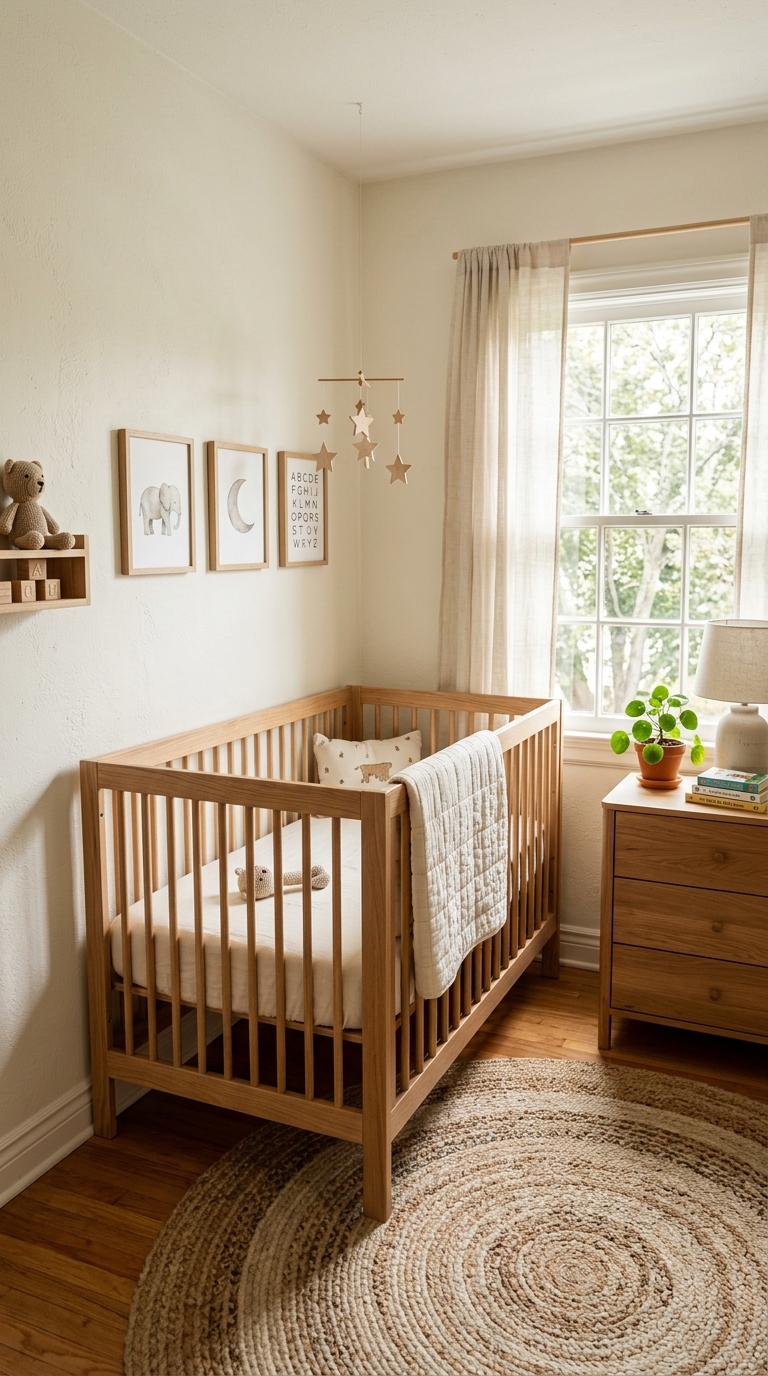
Space-Saving Furniture That Still Feels Designer
The furniture you choose matters more in a small nursery than in almost any other room in the house. Every piece has to earn its footprint.
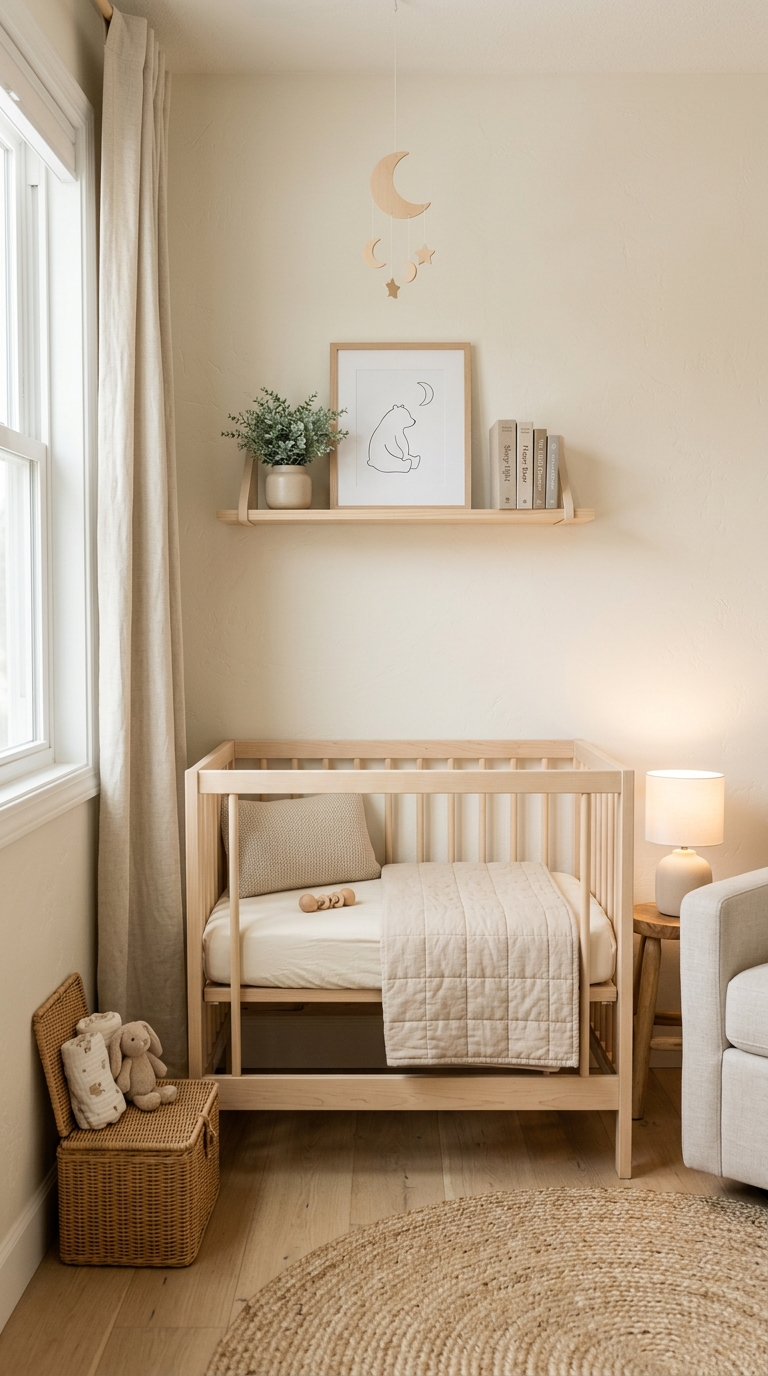
Choose a Mini Crib Instead of a Standard One
A standard crib measures around 52 by 28 inches — in a small room, that’s a significant chunk of your total floor space.
A mini crib, typically closer to 38 by 24 inches, gives your baby the same safe sleeping space while freeing up meaningful room for everything else. This single swap is often the difference between a nursery that feels cramped and one that has actual breathing room. Mini cribs also tend to fit better in awkward layouts, tight corners, and rooms shared with a changing station or glider.
The main consideration is longevity — mini cribs typically work well from newborn through toddler years, but you’ll want to check the specific weight and age limits for the model you choose, since they vary by brand. For a soft coastal nursery palette, see our Coastal Granddaughter Bedroom Ideas guide.
Many mini crib mattresses are sold separately, so budget for that as part of the purchase. Pair a mini crib with simple, unfussy bedding, so the smaller scale doesn’t feel like a compromise.
Expert Tip: Measure your intended crib spot before shopping — mini cribs vary more in exact dimensions than standard cribs do.
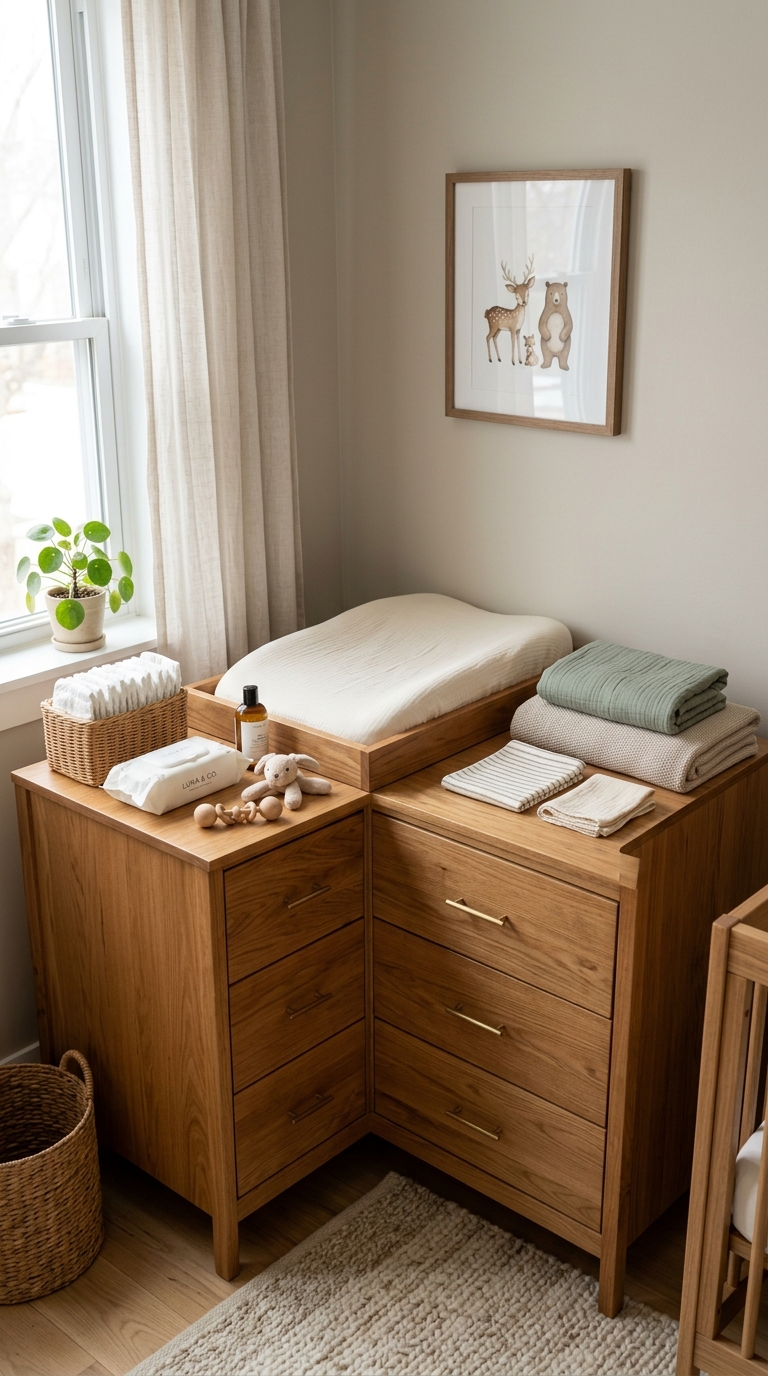
Combine the Dresser and Changing Table Into One Piece
Buying a dresser and a separate changing table is one of the fastest ways to run out of floor space in a small nursery.
A combo piece — usually a wide, low dresser with a changing pad that straps to the top — gives you both functions in a single footprint. It’s a smarter use of square footage than two separate items, and it usually looks more cohesive too, since you’re not trying to visually blend two different furniture styles in a tiny room. When your baby outgrows the changing pad, the piece transitions seamlessly into a regular dresser.
Look for a combo dresser with at least four drawers, so you’re not sacrificing storage for the space savings. Extra-wide dresser tops work best for this combo, since they give you a stable, secure surface for the changing pad plus a little extra room for a basket of essentials.
Avoid combo pieces with open cubbies instead of drawers if you want a tidier look — open storage shows every bit of clutter in a small room. For a dreamy, fairytale nursery, our Whimsical Bedroom Ideas guide is worth a look.
Expert Tip: Anchor the combo dresser to the wall — the added height from the changing pad makes furniture anchoring even more important for safety.
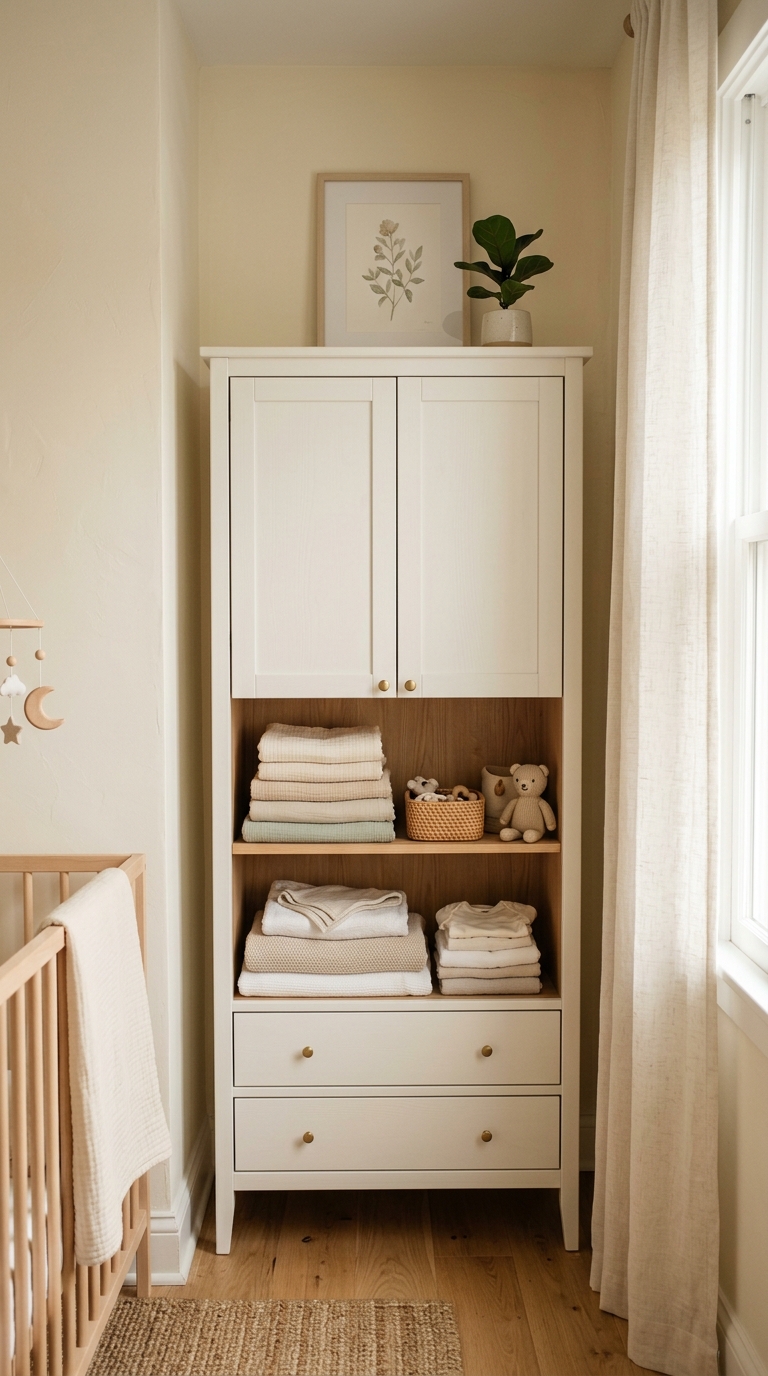
Swap a Dresser for a Slim Armoire
A wide, low dresser eats up a lot of wall space — and in a small nursery, wall space is often more valuable than floor space.
A slim armoire or tall chest solves this by drawing storage upward instead of outward. You get the same clothing capacity, sometimes more, in a fraction of the linear footprint. This is especially useful in narrow rooms or nurseries with an awkward wall segment between a window and a door, where a standard dresser simply won’t fit but a narrow armoire will.
Look for an armoire with a mix of hanging space and shallow drawers or shelves, since baby clothes are mostly small and fold-friendly rather than needing deep drawer space. If the armoire has doors, make sure they don’t swing into the crib or a walking path when fully open.
A lighter wood tone or a painted white finish helps a tall piece feel less heavy in a small room. Planning a nursery in a loft-style room? Take a look at our Loft Bedroom Ideas post.
Expert Tip: Choose an armoire with at least one open shelf near the top for frequently used items like burp cloths, so you’re not opening doors for every small grab.
Visual Tricks That Make a Small Nursery Feel Twice the Size
Furniture and layout solve the function. These next ideas solve how the room feels — and that matters just as much in a nursery you’ll spend hours in during late-night feedings.
Paint Walls in Warm White or Soft Neutral
Dark, moody nurseries photograph beautifully, but in a genuinely small room, they can make the walls feel like they’re closing in.
A warm white or soft neutral — think chalk white, warm greige, or a barely-there sage — bounces light around the room instead of absorbing it. This is one of the simplest, most affordable changes you can make, and it has an outsized effect on how spacious the nursery feels day to day. Warm neutrals also give you more flexibility to change accent colors and themes later without repainting.
Test a few swatches on the actual wall before committing, since lighting shifts color dramatically throughout the day. A true stark white can feel cold and clinical, while a warm white with a hint of cream or beige tends to feel cozier without sacrificing the brightening effect.
If you want a little more personality, keep the color on the walls and save bolder shades for textiles and decor instead.
Expert Tip: Paint the ceiling the same warm white as the walls — it removes the visual “line” where the wall stops, making the room feel taller.
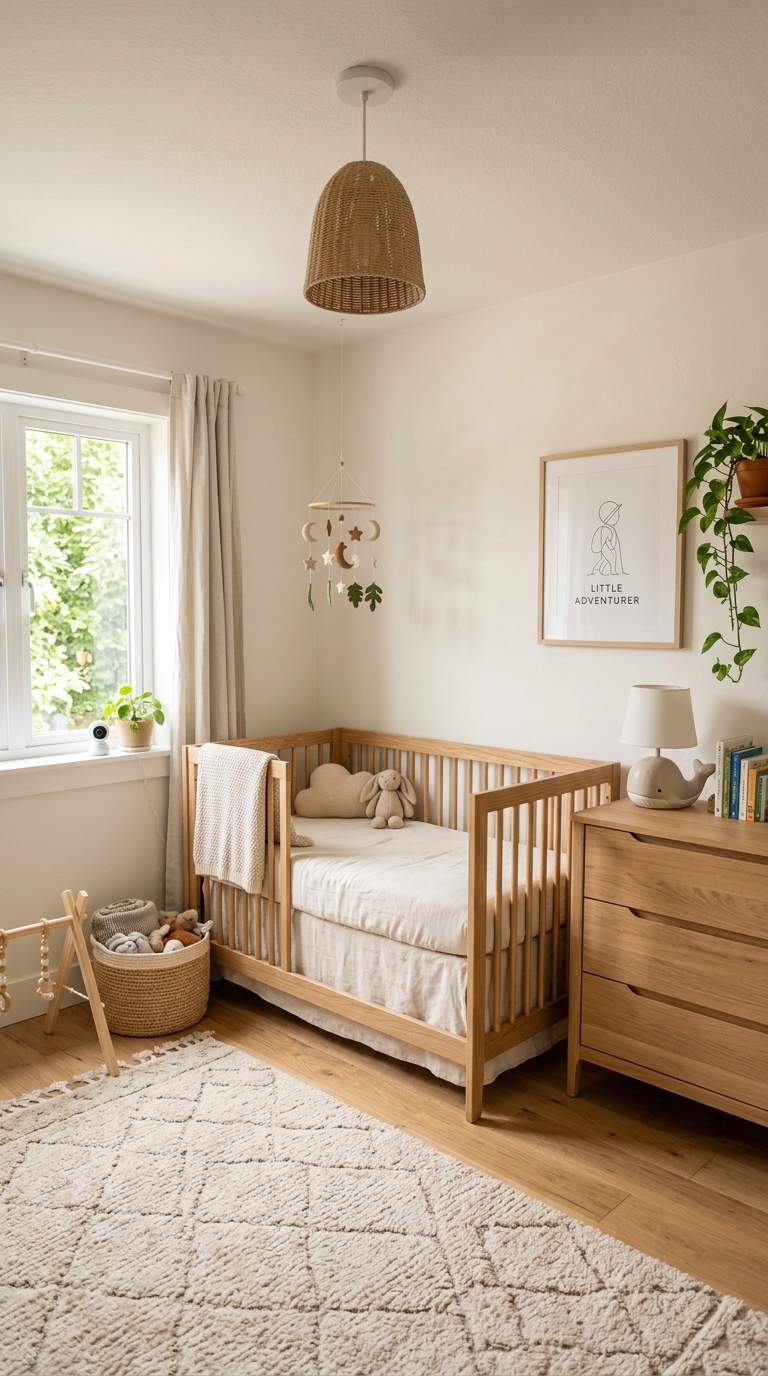
Hang a Statement Mirror Across From the Window
A well-placed mirror is one of the oldest small-space tricks in interior design, and nurseries are no exception.
Hanging a substantial mirror directly across from the window reflects natural light into the room and visually doubles the sense of depth. It’s a particularly good fix for nurseries with only one small window, since it multiplies whatever light you do have instead of leaving the room dim. Beyond the practical benefit, a mirror also gives you a design moment — a rounded or arched frame softens the room in a way that feels intentional rather than purely functional.
Choose a mirror large enough to make an impact, but confirm it’s rated for nursery safety and securely wall-mounted rather than leaning. Avoid placing it directly above the crib for safety reasons — the wall across from the window or beside the dresser usually works better.
A warm wood or brass frame pairs nicely with the neutral palettes common in small nurseries right now.
Expert Tip: Position the mirror at a slight angle, if possible, so it catches light throughout more of the day, not just at one specific time.
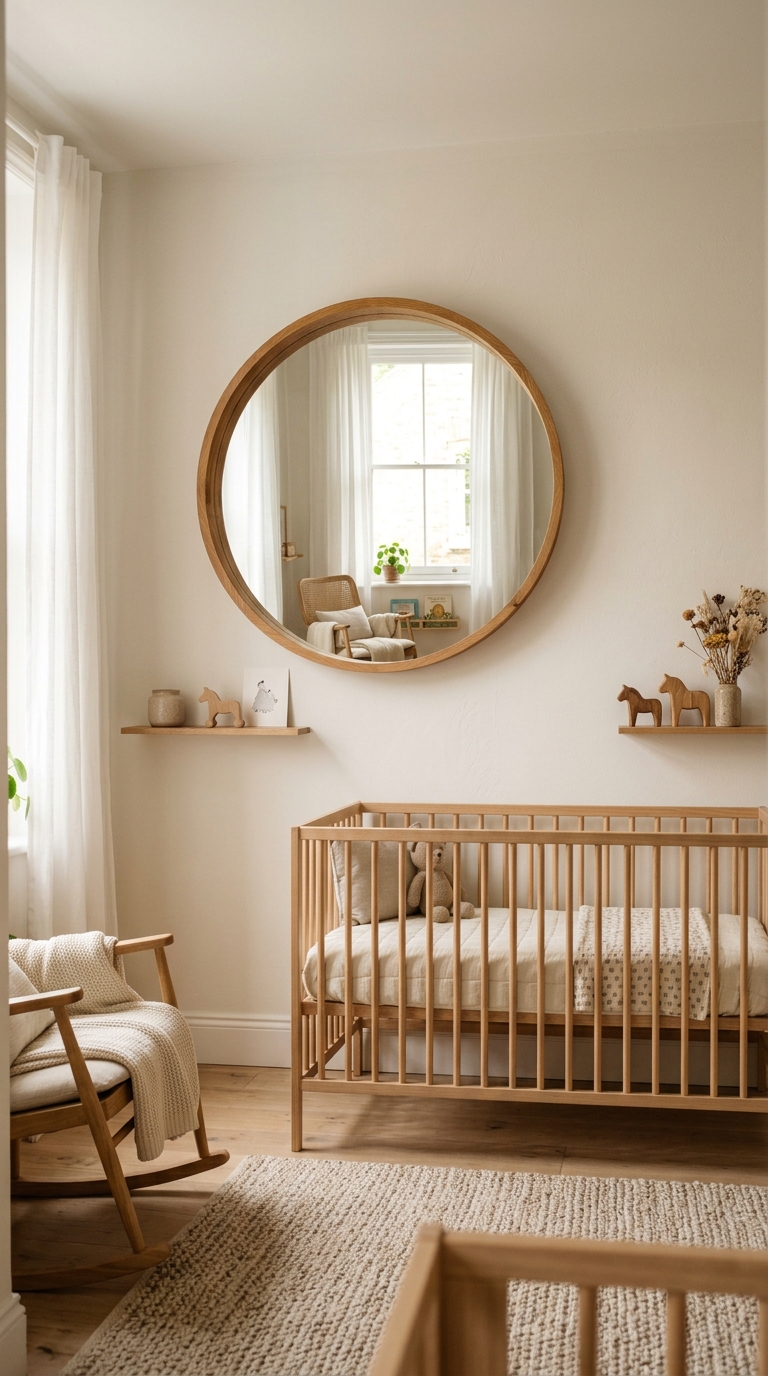
Use Vertical Stripes or Tall Wallpaper Panels
Low ceilings are one of the trickiest challenges in a small nursery, but a clever wall treatment can visually stretch the whole room upward.
Vertical stripes, whether painted or wallpapered, pull the eye up toward the ceiling instead of across the walls. This creates the illusion of extra height, which matters more than most people expect in a compact room. Tall, narrow wallpaper panels behind the crib work similarly, acting almost like an architectural feature without any actual construction involved.
Keep the stripe contrast soft rather than bold if you want a calming nursery feel — two close neutral tones create the height illusion without overwhelming the space.
If a full accent wall feels like too much commitment, a peel-and-stick wallpaper panel behind just the crib gives you the same visual lift on a smaller scale and an easier removal down the road. This is one of the more underused tricks in small nursery design, and it tends to photograph beautifully for Pinterest.
Expert Tip: Stick to one accent wall with vertical stripes rather than all four — too much pattern in a small room can have the opposite effect and feel busier, not bigger.
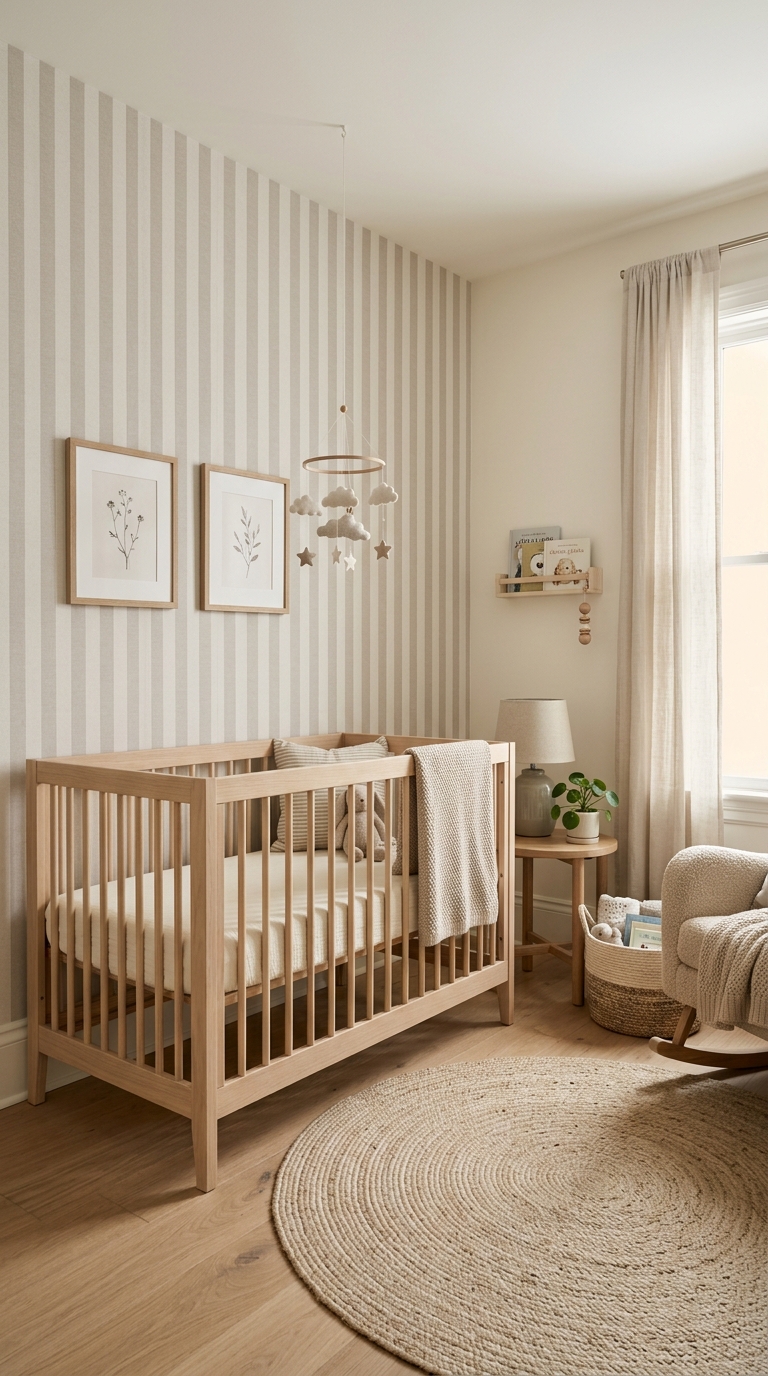
Storage Ideas That Keep Every Inch Working
Babies come with a surprising amount of gear for such small humans. These storage ideas keep everything organized without eating into your already-limited floor space.
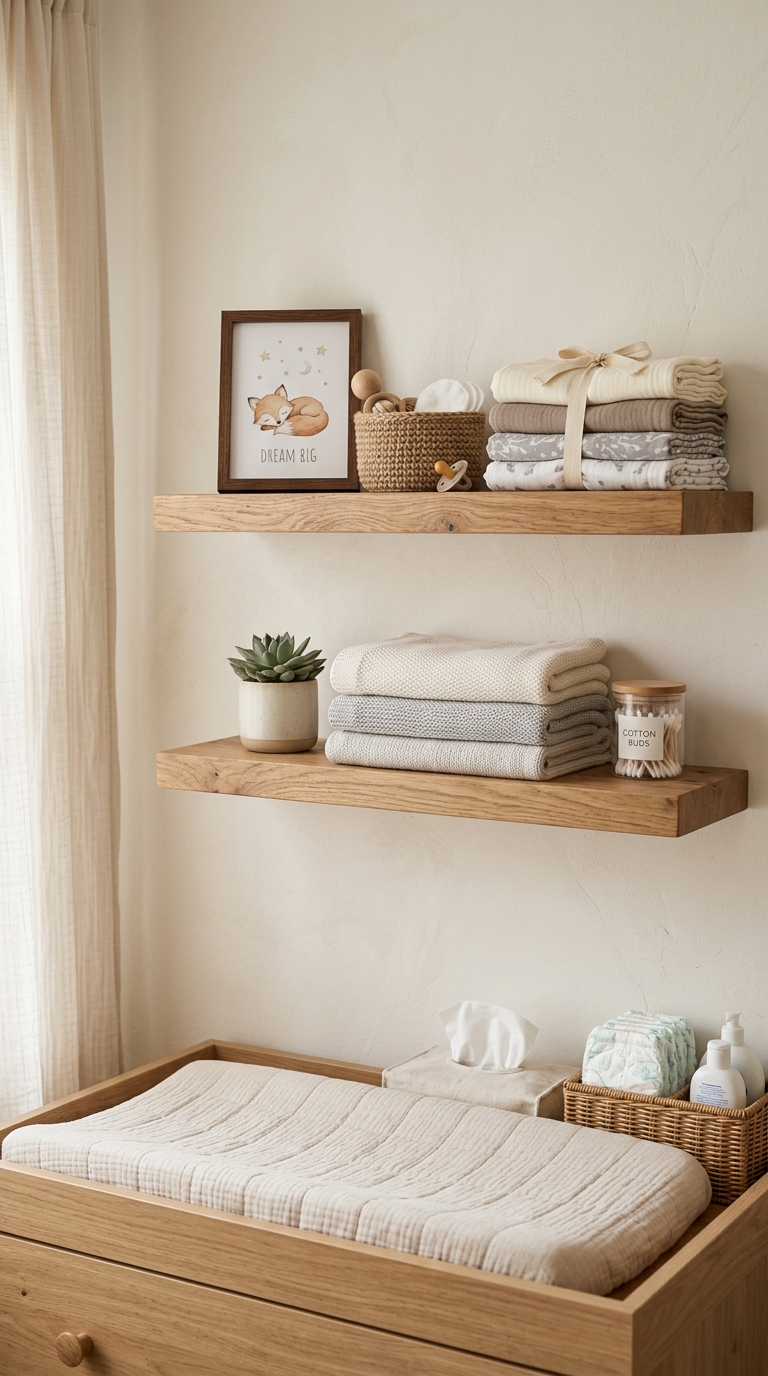
Add Floating Shelves Above the Changing Area
Floor space is precious in a small nursery, which makes floating shelves one of the highest-value additions you can make.
Mounted above the changing area or dresser, floating shelves give you extra storage and display space without touching the floor at all. They’re ideal for items you reach for constantly — diapers, wipes, a small basket of onesies — as well as a few decorative touches like a framed print or a small plant. Because they’re open, floating shelves also keep the room feeling airy rather than boxed in, which matters in a room that’s already working with limited square footage.
Install shelves at a height where you can comfortably reach them while holding a baby, usually just above shoulder height, and keep the styling simple — two to three items per shelf is the sweet spot before it starts to look cluttered.
Pegs added beneath the shelf edge give you a spot to hang small items like a burp cloth or a soft toy, adding function without adding bulk.
Expert Tip: Stagger two shelves at slightly different heights instead of stacking them evenly — it adds visual interest and makes a small wall feel more designed.
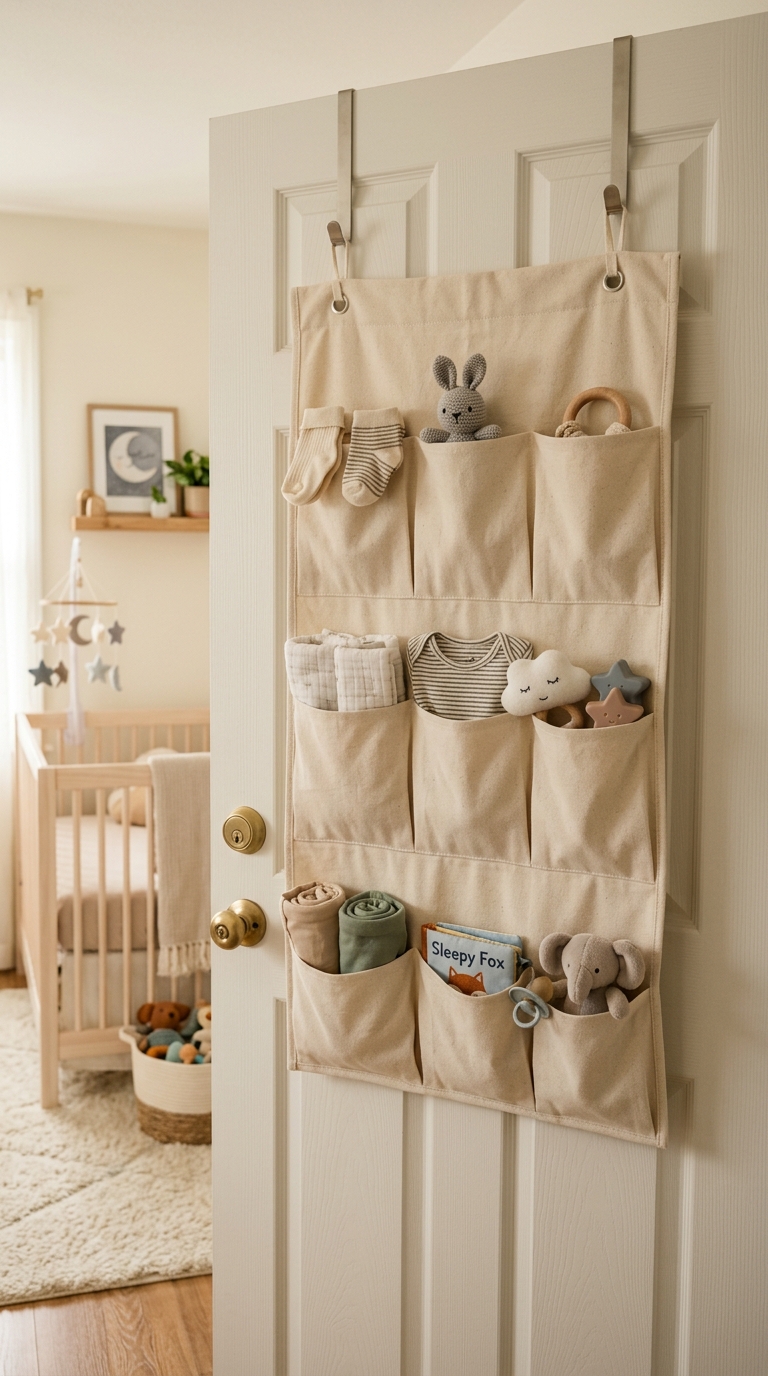
Use an Over-the-Door Organizer for Small Essentials
The back of the nursery door is one of the most overlooked storage opportunities in the entire room.
An over-the-door shoe organizer, or a similar pocket-style caddy, holds an enormous amount of small gear — diaper cream, spare pacifiers, socks, hair bows, teething toys — without requiring a single inch of shelf or drawer space.
It’s an especially useful trick for renters or anyone hesitant to mount permanent shelving, since it requires no tools and no wall damage. The organizer stays hidden whenever the door is closed, which keeps the room looking tidy even when it’s doing a lot of storage work.
Choose clear pockets if you want to see contents at a glance, or fabric pockets in a neutral tone if you’d rather keep things visually calm. Label the pockets, especially if a partner or caregiver will also be using the space, so finding things at 2 a.m. doesn’t require guesswork. This is one of the lowest-cost, highest-impact ideas on this entire list.
Expert Tip: Reserve the bottom two rows for items you restock less often, like backup wipes, so your most-used items stay at eye level.
2026 Small Nursery Aesthetics Worth Copying
Style doesn’t have to take a back seat to function. These are the directions designers and Pinterest boards are leaning into this year, all of which scale down beautifully into small rooms.
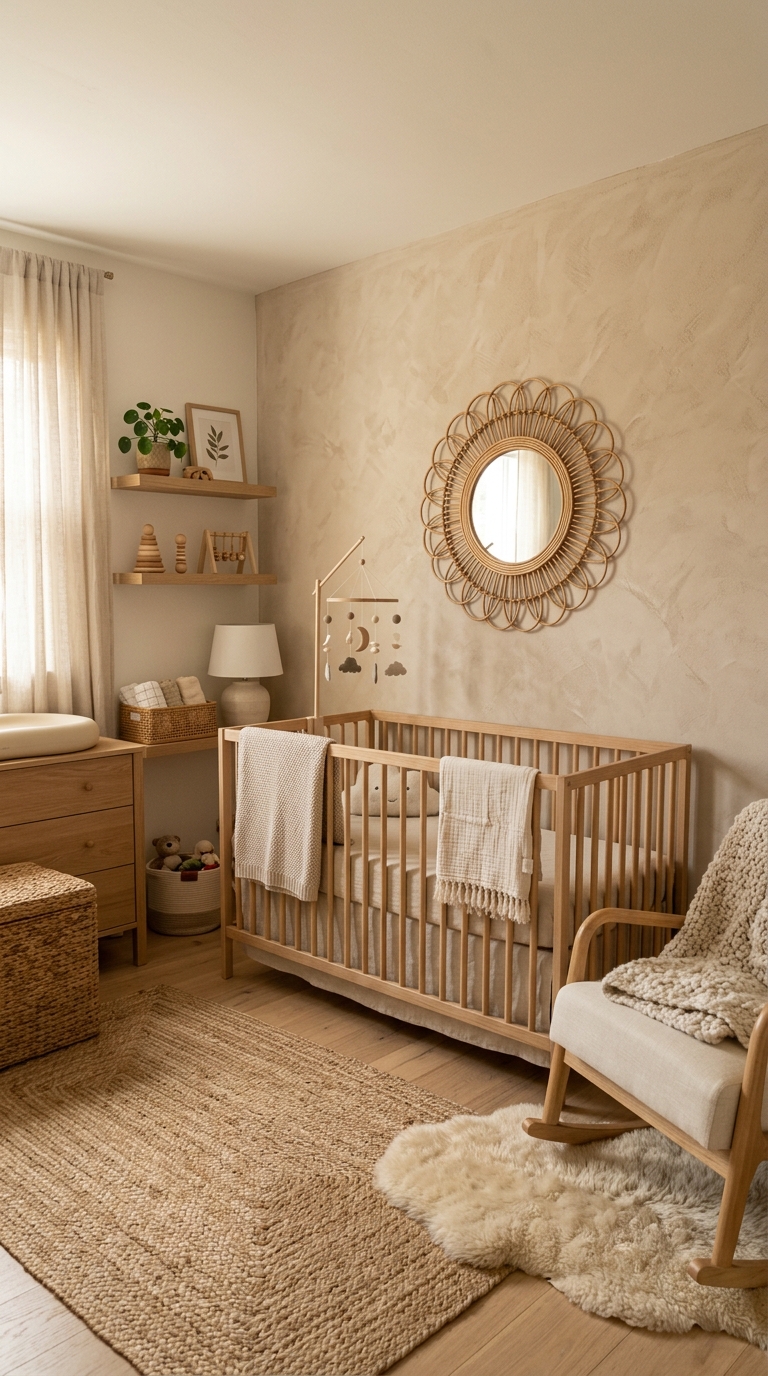
Warm Neutral & Textured Wall Nursery
The overly matchy “themed” nursery is giving way to something softer this year: warm neutrals paired with texture instead of pattern.
Think greige walls, chalk white trim, and a crib in natural wood, layered with texture rather than color — a plaster-look accent wall, wainscoting, or a woven wall hanging.
This approach reads as calm and elevated rather than sparse, and it happens to be one of the most forgiving palettes for a small room, since light neutral tones keep the space feeling open. It’s also a smart long-term choice, since warm neutrals rarely feel dated the way trend-driven color palettes can.
Layer in warmth through materials instead of color: a woven rattan mirror frame, a linen crib skirt, a brass reading lamp. Keep pattern to one or two soft moments — a textured rug or a subtly patterned pillow — rather than spreading it across multiple pieces.
This palette also gives you the most flexibility to shift from “nursery” to “big-kid room” later without a full redesign.
Expert Tip: Add texture through at least three different materials — wood, woven fiber, and soft textile — to keep an all-neutral room from feeling flat.
Vintage-Inspired “Throwback” Nursery
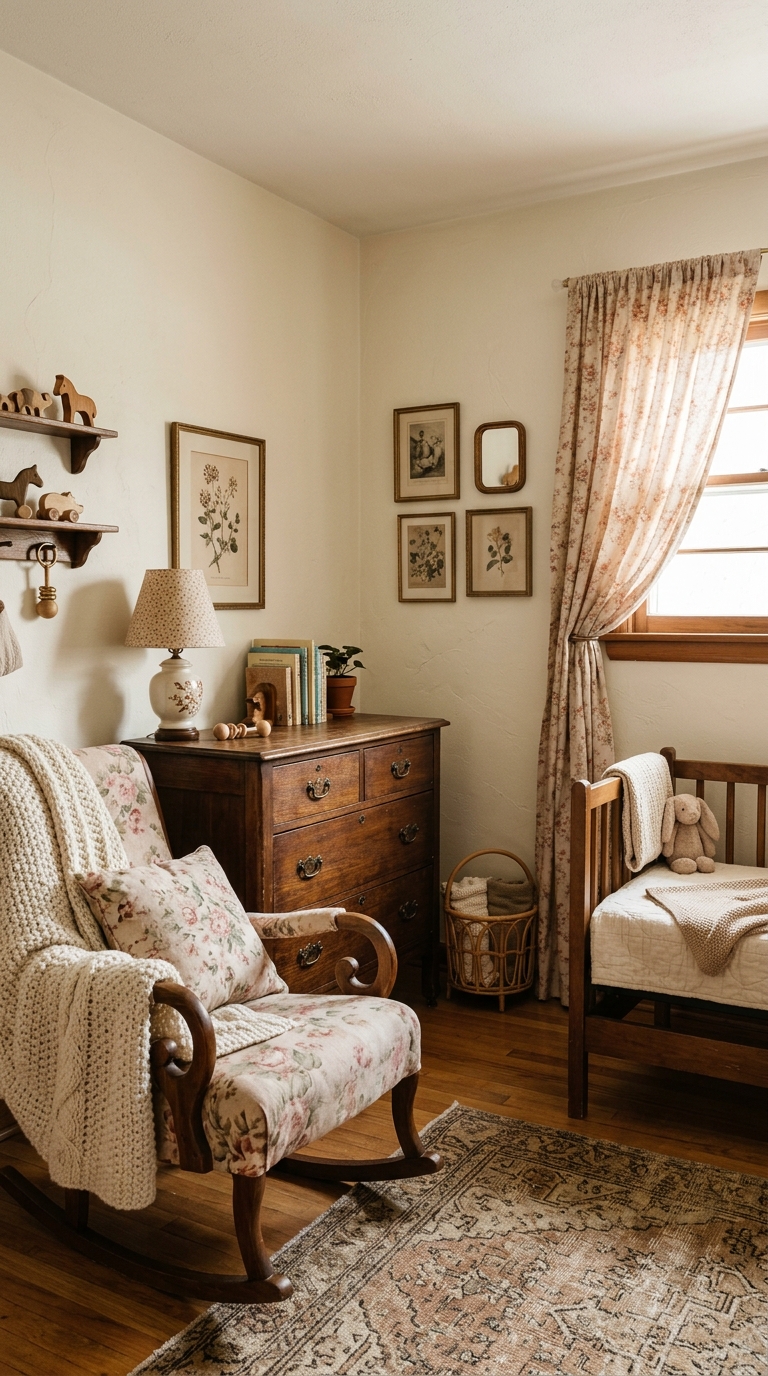
Nostalgic nursery decor has been trending hard, with searches for vintage-inspired kids’ spaces climbing sharply this year.
A throwback nursery leans on secondhand or vintage-style furniture, soft printed fabrics reminiscent of decades past, and warm, slightly worn-in tones instead of anything glossy or brand-new.
In a small room, this style has a practical bonus: vintage furniture, especially smaller-scale pieces from past decades, often takes up less floor space than modern equivalents built for larger homes. It also gives the nursery a collected, personal feel rather than a showroom look.
Source a few real vintage pieces if you can — a small dresser from a thrift store, an antique rocking chair reupholstered in a soft fabric — and mix them with new, safety-certified items like the crib and mattress.
Ground the look with one or two vintage-inspired textiles, like a soft floral curtain or a scalloped crib sheet, rather than trying to make every element match a specific decade. This style photographs beautifully and tends to perform very well on Pinterest boards right now.
Expert Tip: Always buy the crib and mattress new — vintage charm should stay in the decor and furniture accents, not in sleep safety items.
Soft Coastal Small Nursery
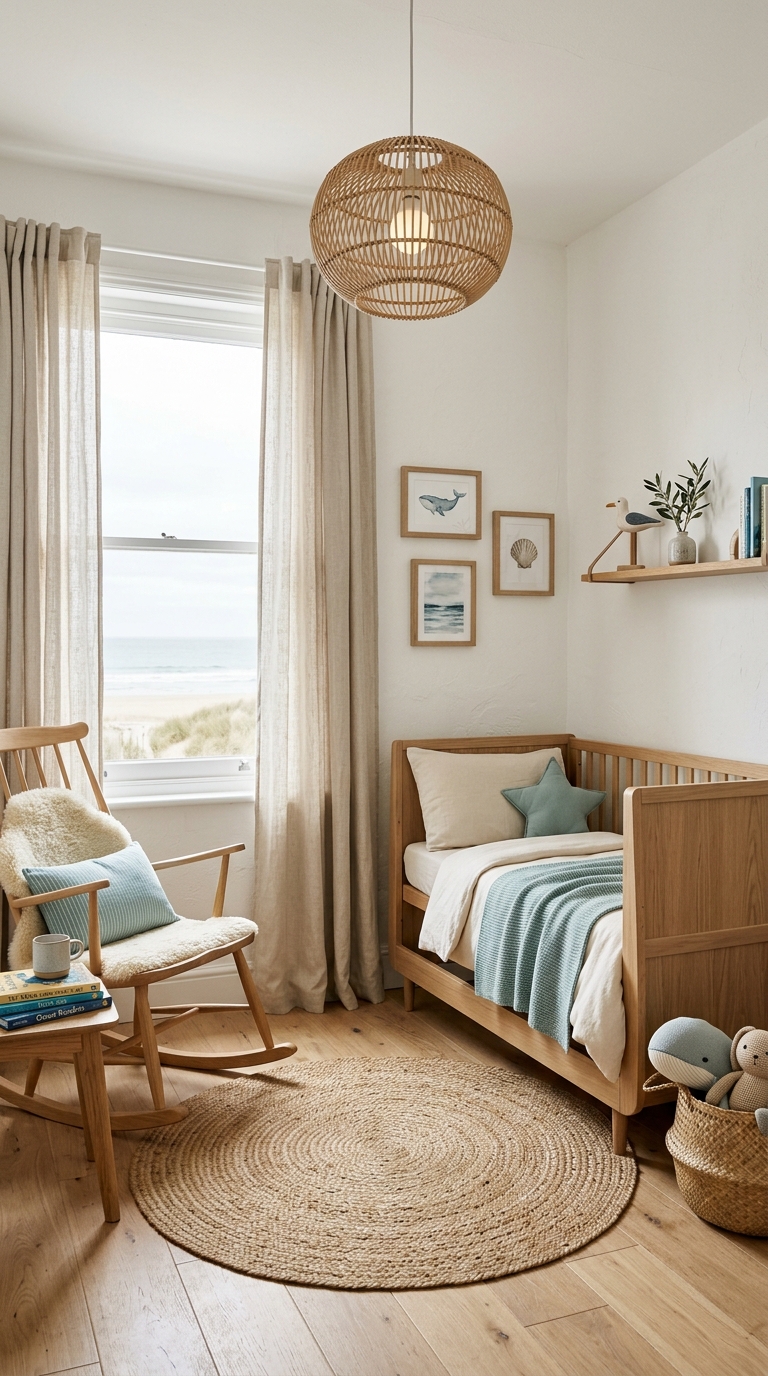
Soft coastal design has moved away from the beachy, nautical clichés of past years toward something quieter and more livable.
This year’s version leans on soft blues, warm whites, and sandy neutrals, with light textures like woven rattan and linen instead of anchors and stripes. It’s a particularly good fit for small nurseries because the palette is naturally light-reflecting, which helps a compact room feel airy rather than closed in.
The look also skews gender-neutral, making it a flexible choice for parents who don’t want to commit to a heavily themed room.
Keep the blue tones muted rather than saturated — a soft seafoam or dusty sky blue works better in a small room than a deep navy, which can visually shrink the space.
Bring in the coastal feel through texture and material rather than obvious motifs: a jute rug, a woven pendant light, linen curtains that let light filter through softly. This approach feels current without leaning into a theme your child will outgrow in a year.
Expert Tip: Choose one soft blue accent — a rug or curtain — rather than painting the walls blue, so the room stays bright and the color reads as a gentle accent, not the whole story.
Budget-Friendly Small Nursery Ideas
A beautiful nursery doesn’t require a big budget — some of the most Pinterest-worthy ideas cost almost nothing.
DIY Wall Art That Costs Almost Nothing
Wall art is one of the fastest ways to make a nursery feel finished, and it’s also one of the easiest places to save money.
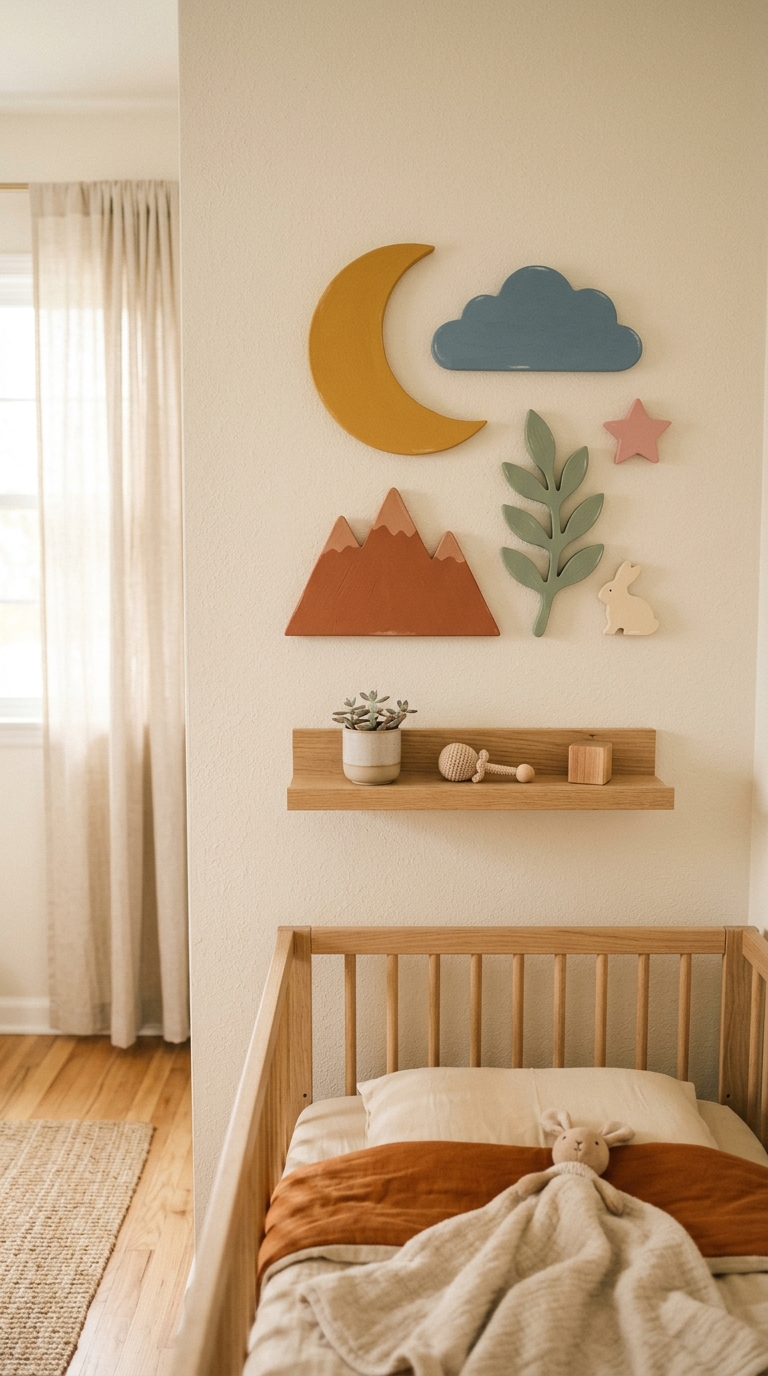
Simple options like painted wooden shapes, a framed page from a children’s book, or a hand-stitched fabric hoop can look just as intentional as an expensive art print, especially in a small room where you only need one or two pieces to make an impact.
Because small nurseries have limited wall space to begin with, you don’t need to fill every surface — one well-chosen piece often does more than a gallery wall would.
Keep the color palette of your DIY art tied to the rest of the room so it feels planned rather than random. Removable options, like adhesive-mounted wooden shapes or washi tape frames, are especially smart for renters or for parents who know the theme might shift as their child grows.
A single oversized piece often reads as more intentional in a small room than several smaller ones scattered across the wall.
Expert Tip: Use heavy-duty removable adhesive strips instead of nails for lightweight DIY pieces — it keeps your options open without damaging rental walls.
Thrift and Repaint Furniture Instead of Buying New
Some of the best nursery furniture never started as nursery furniture at all.
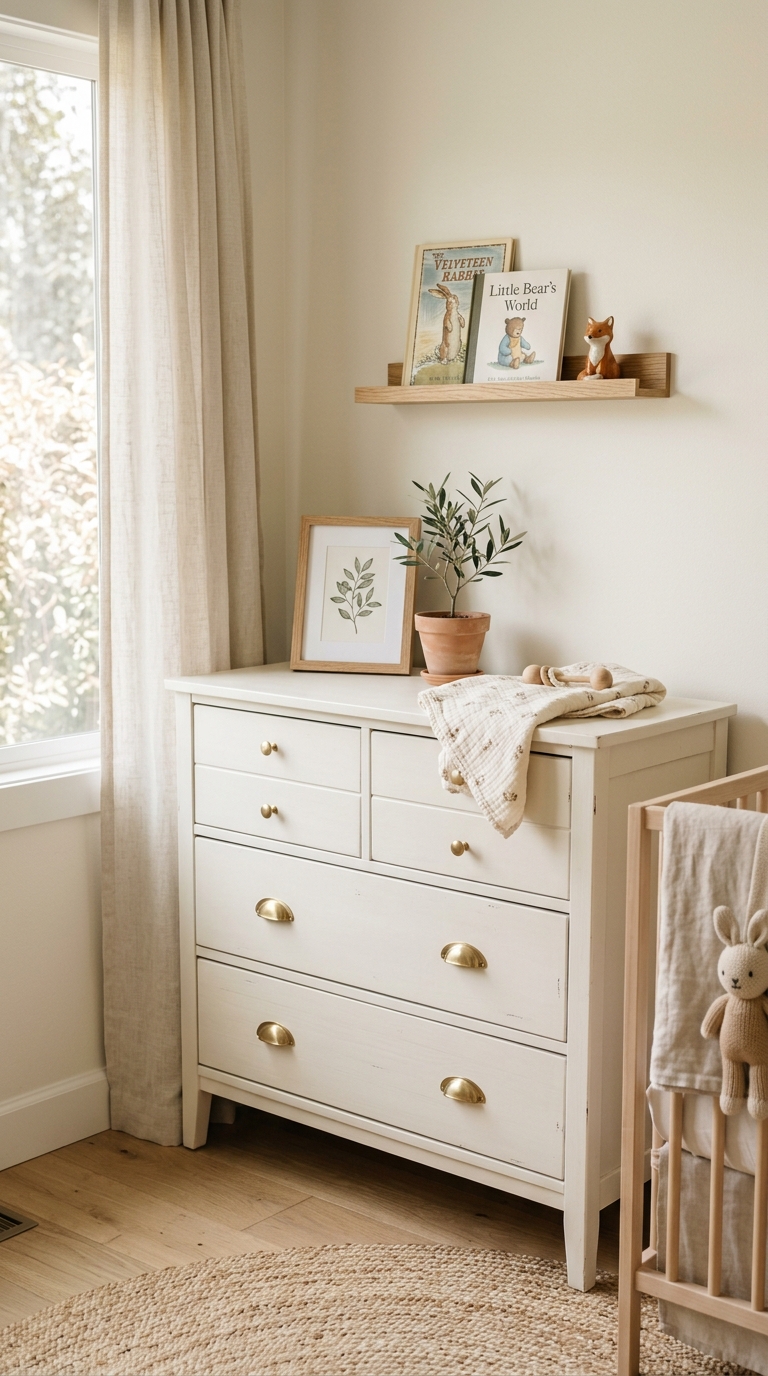
A secondhand dresser, side table, or bookshelf can be repainted and updated with new hardware for a fraction of the cost of buying new, and older furniture is often built from solid wood rather than the pressed materials common in budget new pieces today.
In a small nursery, where you might only need one or two furniture pieces beyond the crib, this approach lets you put your budget toward quality where it counts, like the mattress or a well-made glider.
Sand and prime secondhand pieces before repainting to help the new coat last, and choose a paint labeled low-VOC or zero-VOC given the room’s use.
Swapping dated hardware for simple brass or matte black pulls is a small detail that makes a thrifted piece look intentional rather than obviously secondhand. This is also one of the more sustainable small nursery ideas, since it keeps furniture out of landfills while giving your space real character.
Expert Tip: Check thrift stores and marketplace listings for pieces with good “bones” — solid wood construction — even if the finish looks dated; paint fixes cosmetics, not structure.
FAQS
How small can a nursery actually be?
There’s no official minimum size for a nursery. Many parents successfully set up a functional space in rooms as small as 50 to 70 square feet, as long as there’s room for the crib, safe walking space around it, and a spot for essentials like diapers and clothing. A mini crib and combo furniture pieces make tighter rooms much more workable.
Do you need both a dresser and a changing table?
No. A combo dresser with a changing pad on top covers both functions in one piece of furniture, which is often the better choice for a small nursery. Some parents skip a dedicated changing table entirely and use a portable changing pad on a bed or the floor instead.
Can a nursery go in a closet?
A large walk-in closet can work as a nursery in some homes, especially for the first few months, as long as it has adequate ventilation, light, and safe electrical access. For most standard closets, though, it works better as extra storage or a changing nook that supports a nursery in the adjoining room rather than a full nursery on its own.
Conclusion
A small nursery isn’t a compromise — it’s just a different design puzzle, and now you’ve got two dozen ways to solve it. Start with layout, since that’s the foundation everything else builds on, then choose furniture that pulls double duty before you worry about style. From there, the visual tricks and this year’s warm, textured aesthetics can turn even the tightest room into a space that feels calm, cohesive, and genuinely yours.
You don’t need every idea in this guide. Pick the handful that fits your room’s actual shape, your budget, and the mood you want to create, and let the rest go. A nursery that reflects real thought, even in 60 square feet, will always feel more special than a bigger room filled with things that don’t quite work together.
If a few of these ideas caught your eye, save this guide to your Pinterest board so you can come back to it while you shop and plan — small nurseries come together piece by piece, and it helps to have the full list in one place when you’re ready to start.