
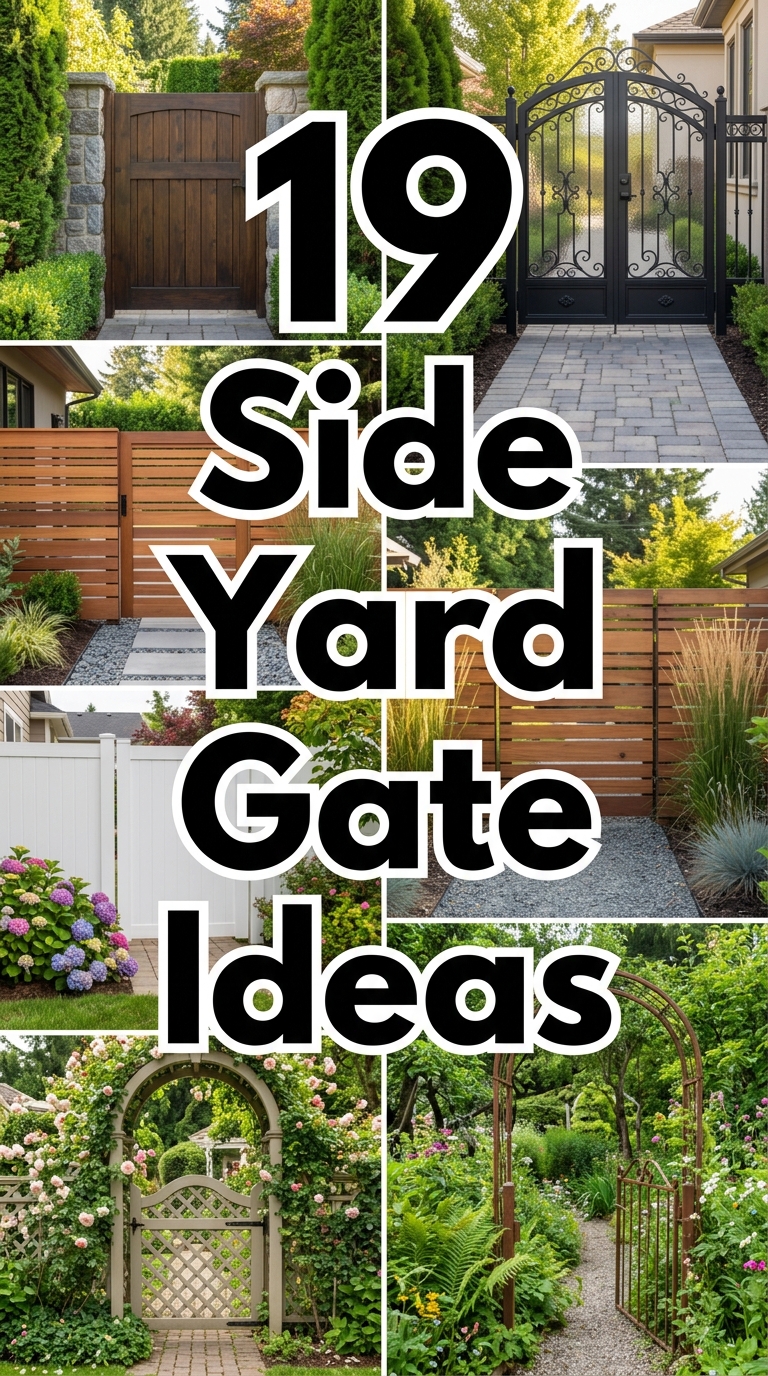
One evening I was taking out the trash, and I noticed my neighbor’s kitchen window looked right down into my side yard. Every single time I walked out there, I felt like someone was watching. It bugged me for months before I finally fixed it.
Maybe your side yard feels the same way. Too open. Too narrow. Or just not private enough. The good news is, you don’t have to tear down your whole fence to fix it. You just need the right gate.
That’s what this guide is for. Not just 19 nice-looking gates, but 19 real problems — nosy neighbors, tight budgets, small spaces, HOA rules — each with a simple fix. Find the one that matches your problem, and let’s dive in.
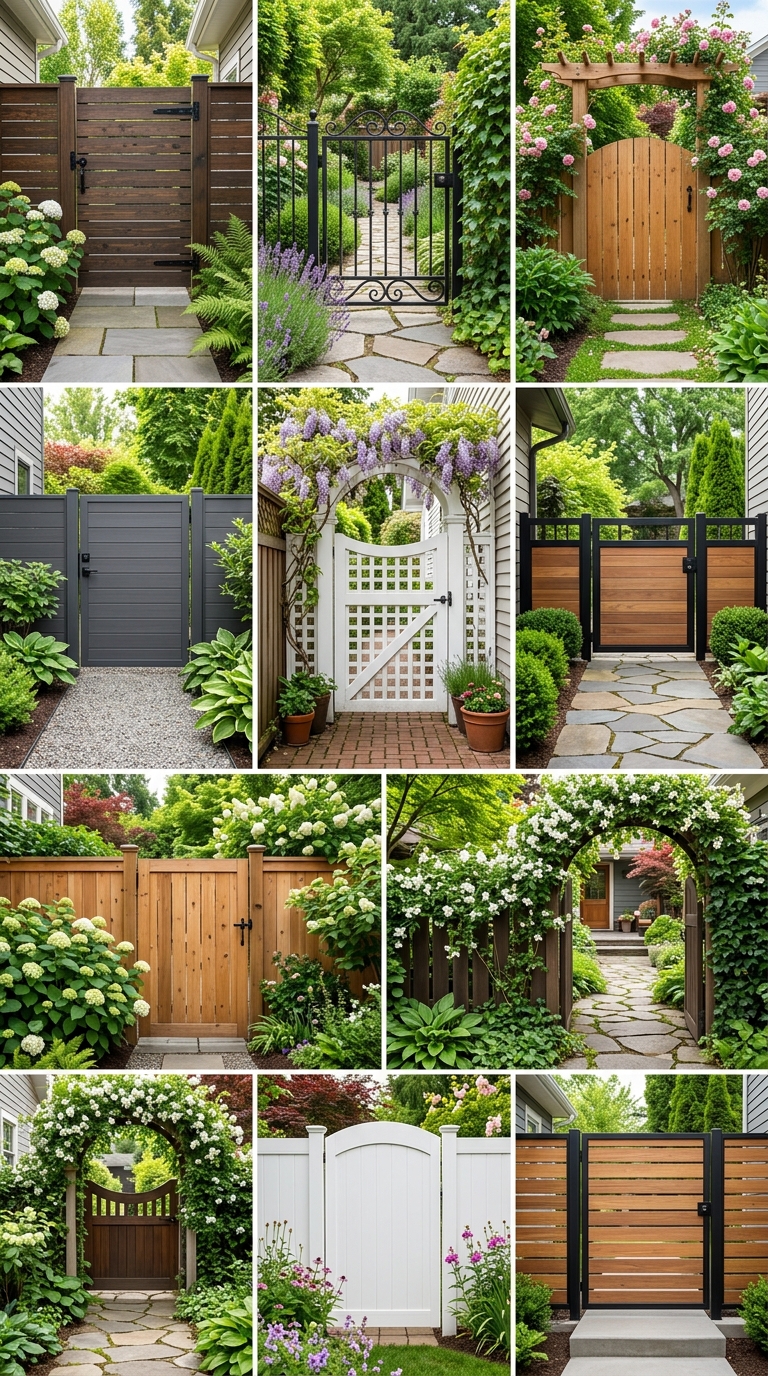
1: “My Neighbor’s Window Looks Right Into My Side Yard” → Solid-Panel Gate With a Raised Sightline
This is the most common complaint I hear, and the fix is usually simpler than people expect. A solid-panel gate, built a foot or two taller than your standard fence line, blocks the direct sightline from a second-story or angled window without needing to raise your entire fence.
You don’t need to go floor-to-ceiling solid either. Even a solid gate with a slightly taller top section handles most sightline issues, since it’s the upper portion that’s usually catching a neighbor’s eye level.
Before you build, actually stand in the spot your neighbor would be looking from (or ask them, if that’s an option) and check the angle.
For a sunnier side yard gate, flanking it with a few daylily companion plants keeps color going well past the gate’s first-bloom moment.
It sounds simple, but a lot of people guess at the height instead of testing it, and end up building a gate that’s either too short to help or taller than it needed to be.
If this is your exact problem, this is genuinely the one to start with — it’s the highest-impact fix on this whole list for direct sightline issues.
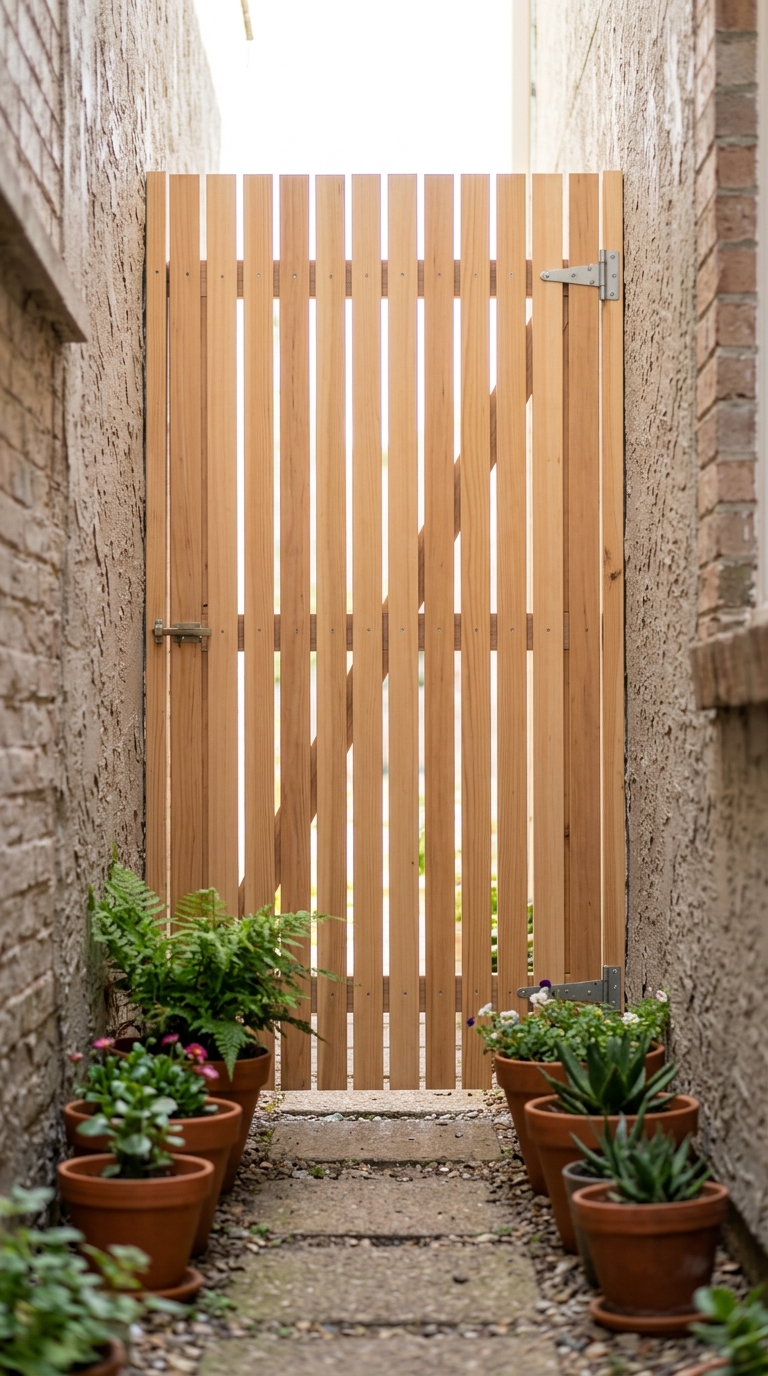
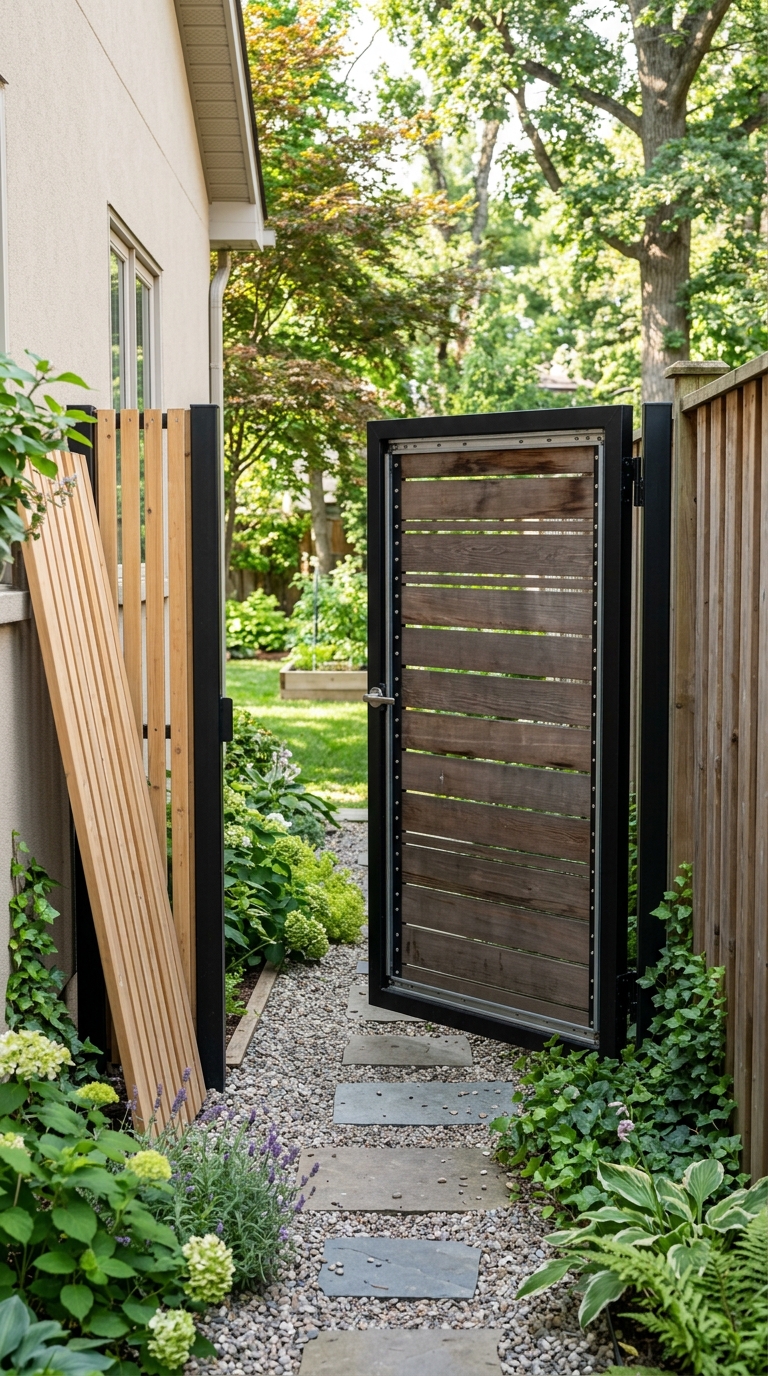
2: “My Side Yard Is Only 3 Feet Wide and Feels Like a Tunnel” → Slim Slat Gate With Light Gaps
Narrow side yards have a specific problem: full privacy panels can make the space feel closed in and dark, almost claustrophobic. A slim vertical slat gate with small gaps between boards solves this differently — you still block a direct view, but light and air get through, so the passage doesn’t feel like a hallway.
The spacing matters more than people think. Gaps around half an inch to an inch are usually tight enough to block a casual glance while still letting light filter through nicely.
Pair this with a light wood tone or pale paint color rather than a dark stain. In a narrow space, dark colors absorb light and make the tunnel feeling worse, while lighter tones bounce light around and open the space up visually.
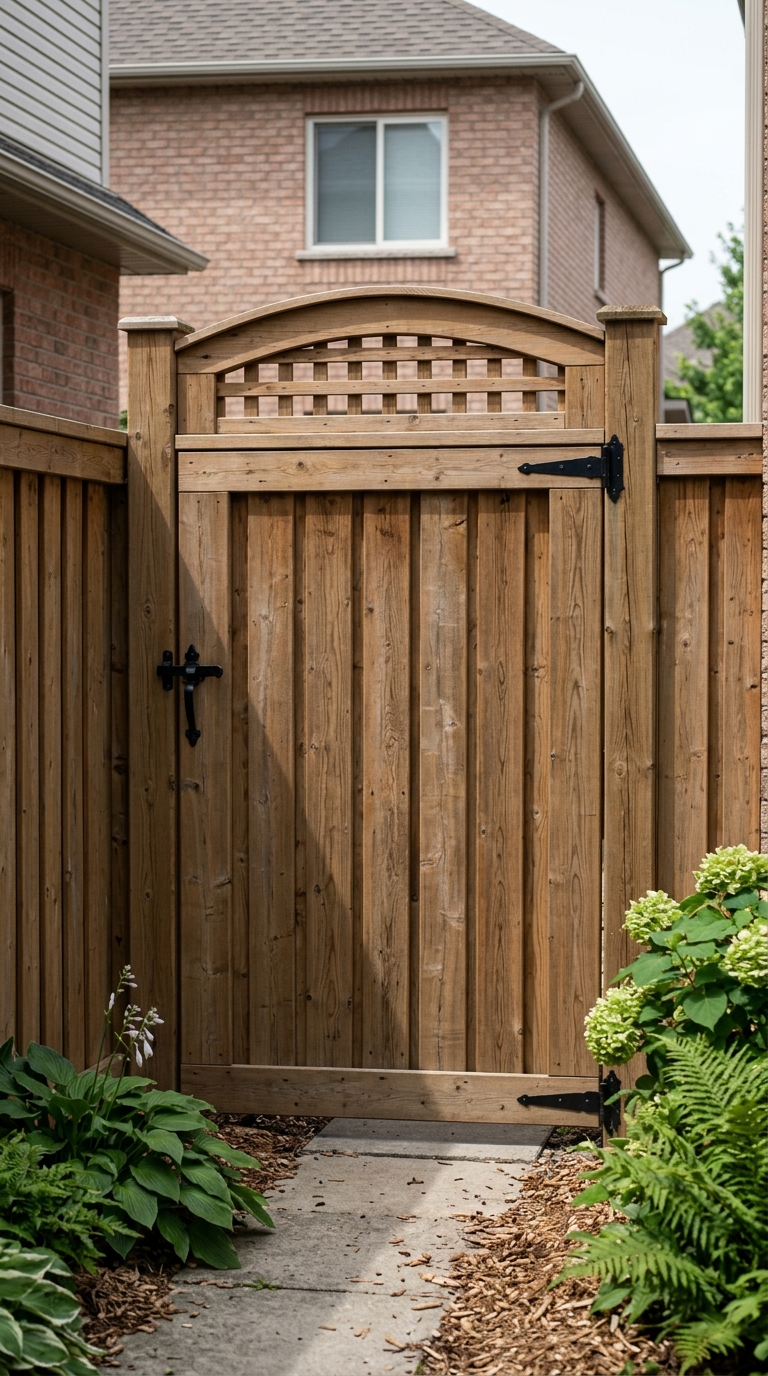
3: “I Want Privacy But My HOA Caps Fence Height at 4 Feet” → Trellis-Topped Gate That Adds Height Legally
A lot of HOAs cap solid fence height around 4 feet, but many allow open lattice or trellis sections above that limit since it’s technically not a solid barrier. A trellis-topped gate takes advantage of this — solid privacy up to code height, then an open trellis section above that you can grow vines on.
It’s worth double-checking your specific HOA’s language before building, since rules vary a lot by community. Some cap total structure height including trellis, others only regulate the solid portion.
Side yards are almost always the shadiest strip of a property — these Hosta Gardening Tricks work well planted right alongside a shaded privacy gate.
Once climbing plants fill in the trellis section, you actually get more effective privacy than a taller solid fence would provide anyway, just achieved a different way. It just takes a season or two to fill in completely.
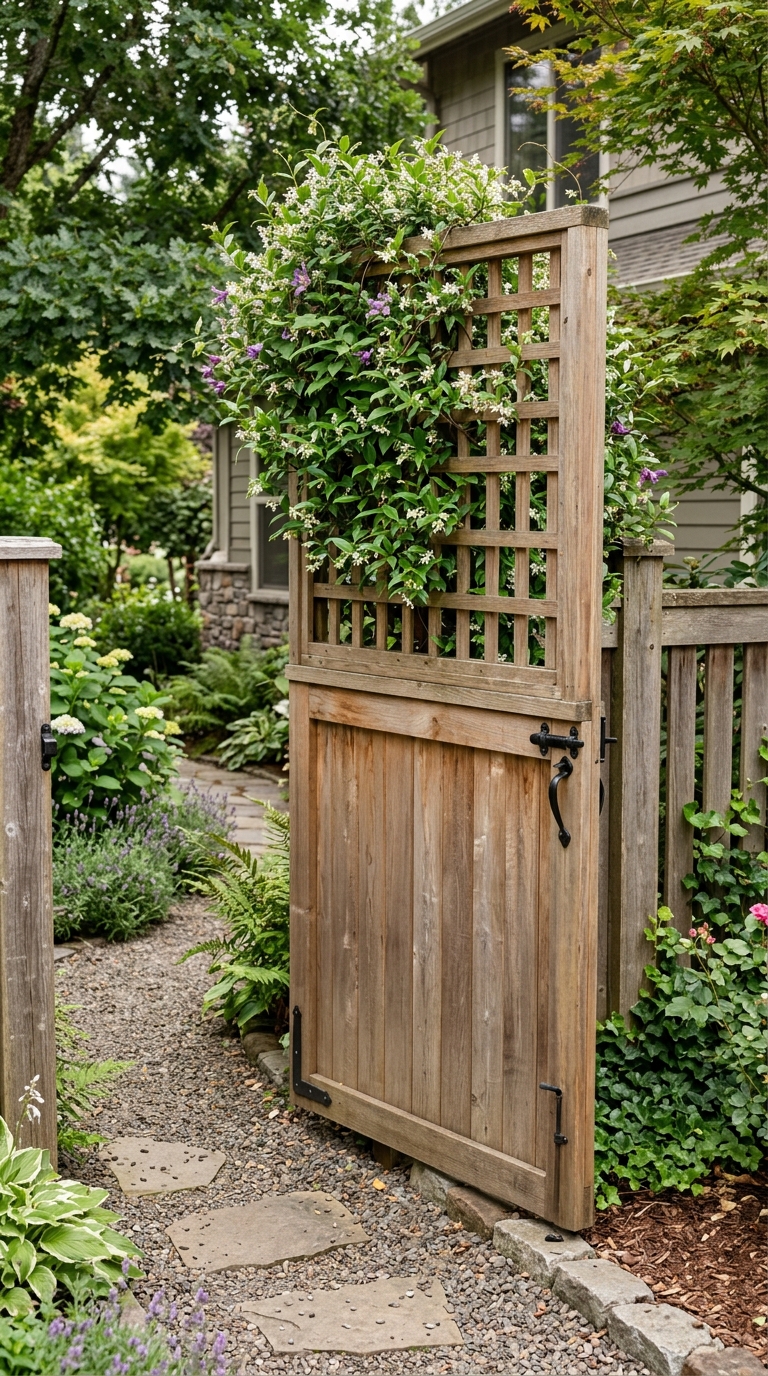
4: “Street Noise Is the Real Problem, Not Just Views” → Dense Wood Panel Gates for Sound Dampening
Sometimes it’s not about who can see you — it’s the traffic noise or a loud neighbor that’s the actual issue. Solid, dense wood panels with no gaps do a noticeably better job dampening sound than slatted or lattice designs, simply because there’s no path for sound to travel through directly.
Thicker boards help more than most people expect. A gate built from 1-inch boards will block noticeably more sound than one built from thin 1/2-inch panels, even though the visual difference is minor.
If noise is a serious ongoing issue, pairing a solid gate with a dense hedge or shrub line on the noisy side adds another layer of sound absorption, since plants actually help scatter sound waves rather than just reflecting them.
If you’re leaning into greenery for privacy instead of solid panels, these Small Tropical Garden Ideas show how columnar plants can turn a narrow side yard gate path into a lush corridor.
Noise problems get overlooked a lot in these lists, but if this is you, a solid gate really is doing double duty here.
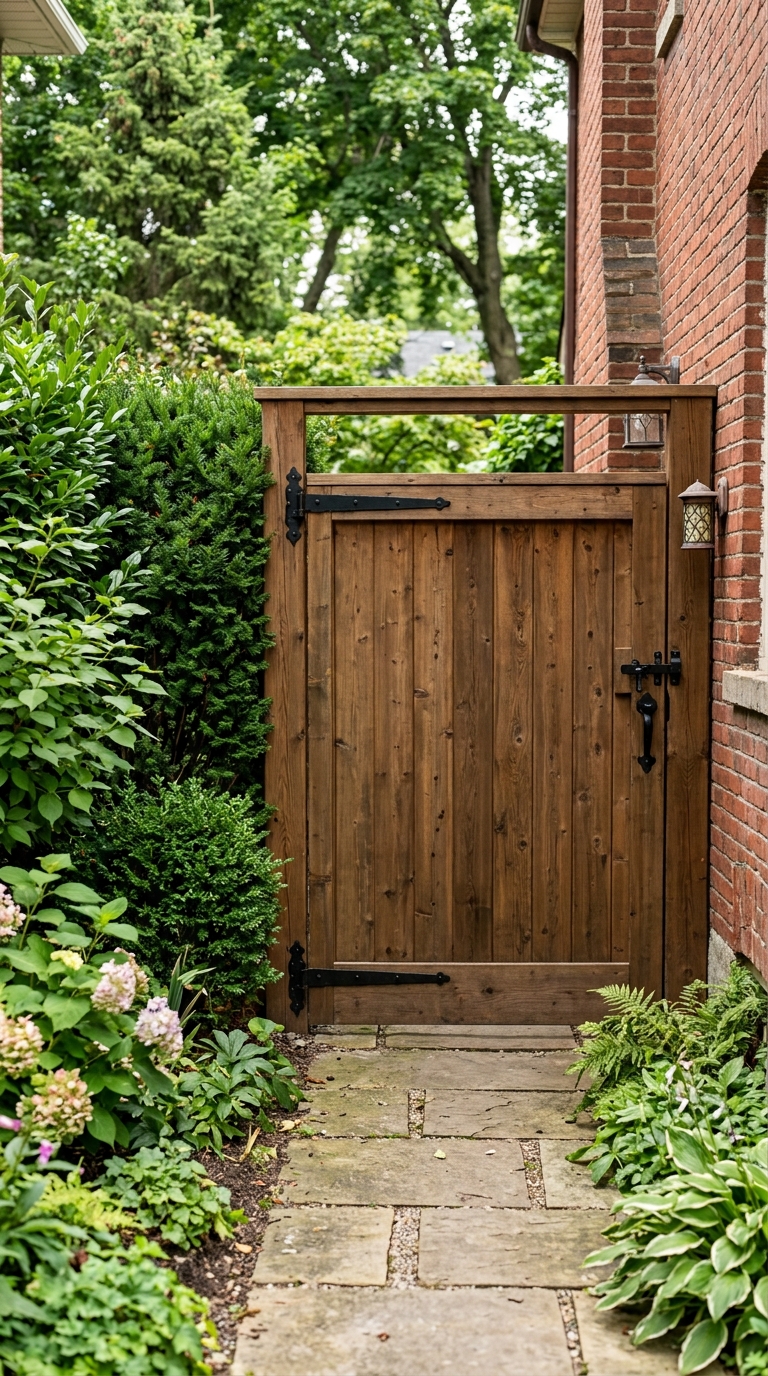
5: “I Rent — I Can’t Install Anything Permanent” → Freestanding Bamboo Screen Gate
Renters face a specific problem: most privacy fixes require drilling into existing structures, and that’s usually against the lease. A freestanding bamboo screen, weighted or braced at the base instead of anchored into the ground, gets around this entirely. You place it, you take it with you when you move.
Look for panels with a weighted or wide-footed base rather than ones that rely purely on being propped against something, since wind can knock over a top-heavy unanchored screen.
This is also one of the more affordable options here, since you’re not paying for permanent installation labor or materials. Most freestanding bamboo panels run noticeably cheaper than a built-in gate solution.
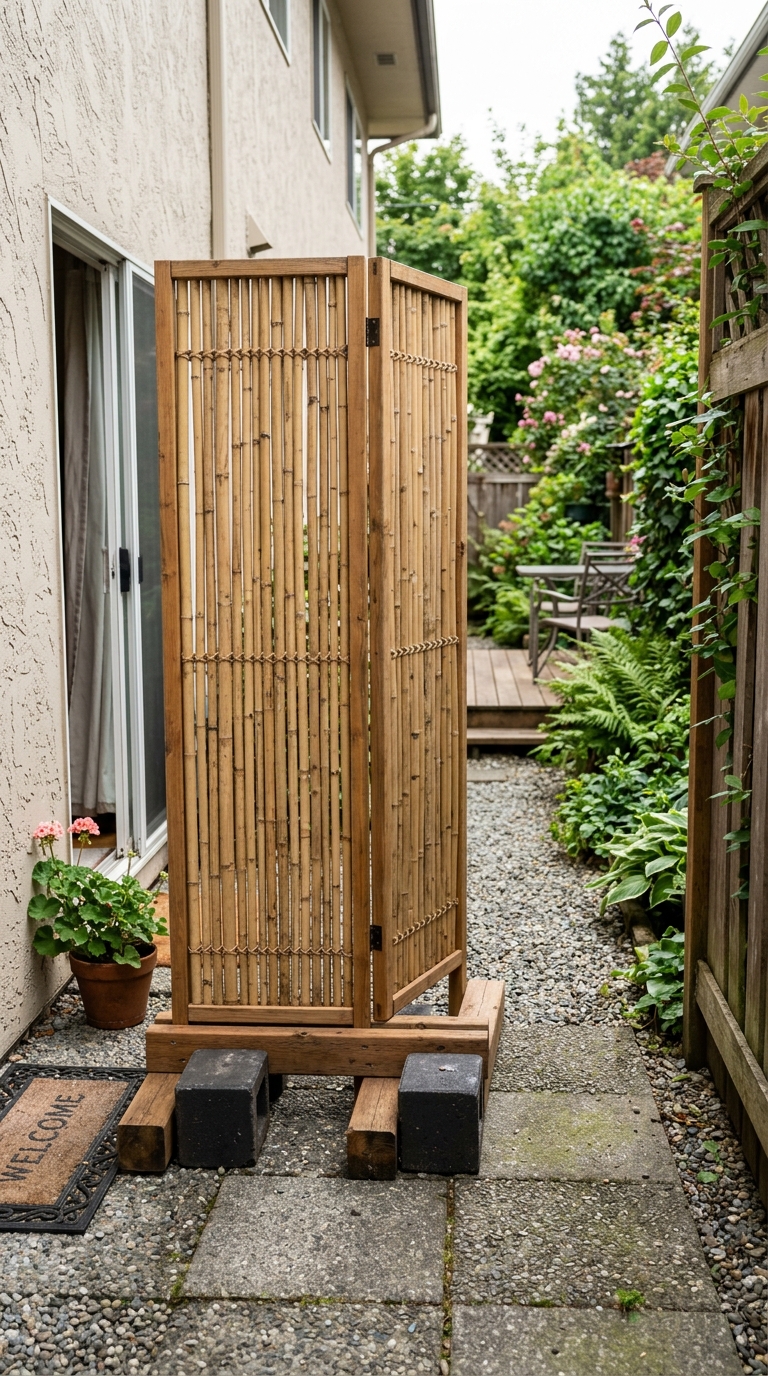
6: “My Side Yard Gets Zero Airflow When It’s Closed Off” → Louvered Privacy Gate for Airflow + Privacy
Fully solid gates block airflow along with the view, which can leave a narrow side yard feeling stuffy and damp, especially in humid climates. A louvered gate — angled slats similar to plantation shutters — solves this by blocking direct sightlines while still letting air move through the angled gaps.
The angle direction actually matters here. Louvers angled downward from the outside block a standing person’s eye-level view from outside while still allowing airflow, which is the whole point.
This style works especially well in hot, humid regions where trapped moisture behind a solid gate can lead to mildew or wood rot over time. The airflow genuinely helps your gate last longer too, not just feel less stuffy.
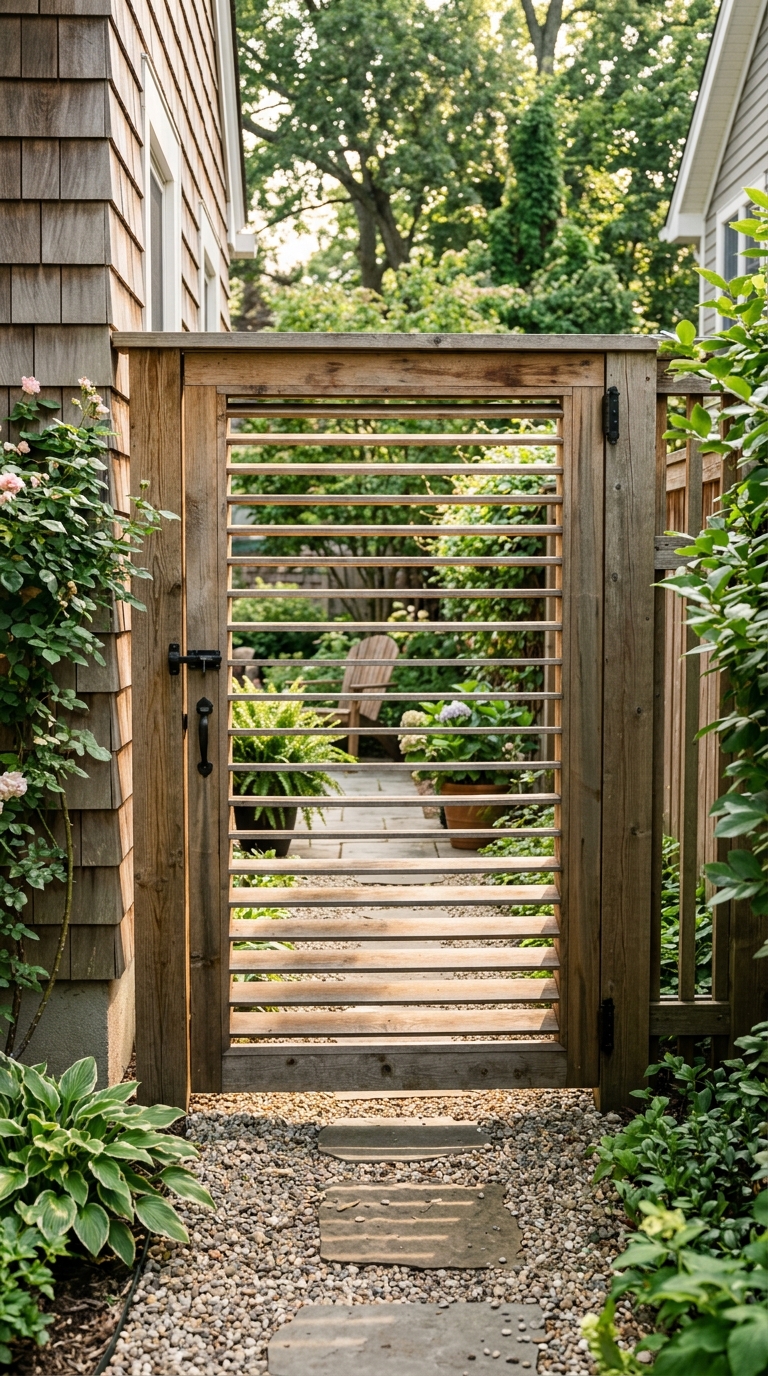
7: “I Want Privacy Without It Looking Like a Fortress” → Living Vine Gate That Fills In Over Time
Solid privacy solutions can sometimes look a little harsh or institutional, especially in a small side yard where a tall solid panel is the dominant visual feature.
A gate frame designed for climbing vines softens that look considerably, since the eventual green coverage reads as garden, not barrier.
Fast-growing options like Boston ivy or climbing hydrangea will fill in within one to two seasons, which is quicker than most people assume. If you want something evergreen for year-round coverage, star jasmine is a solid choice in warmer climates.
Want more coverage than the gate alone provides? These DIY Garden Trellis Ideas show how to extend that same privacy screening along the rest of the side yard fence line.
The frame itself can still provide privacy while you wait for the vines to fill in, since you’re building a slatted or lattice structure underneath, not leaving an open gap. You’re not exposed during that growing period.
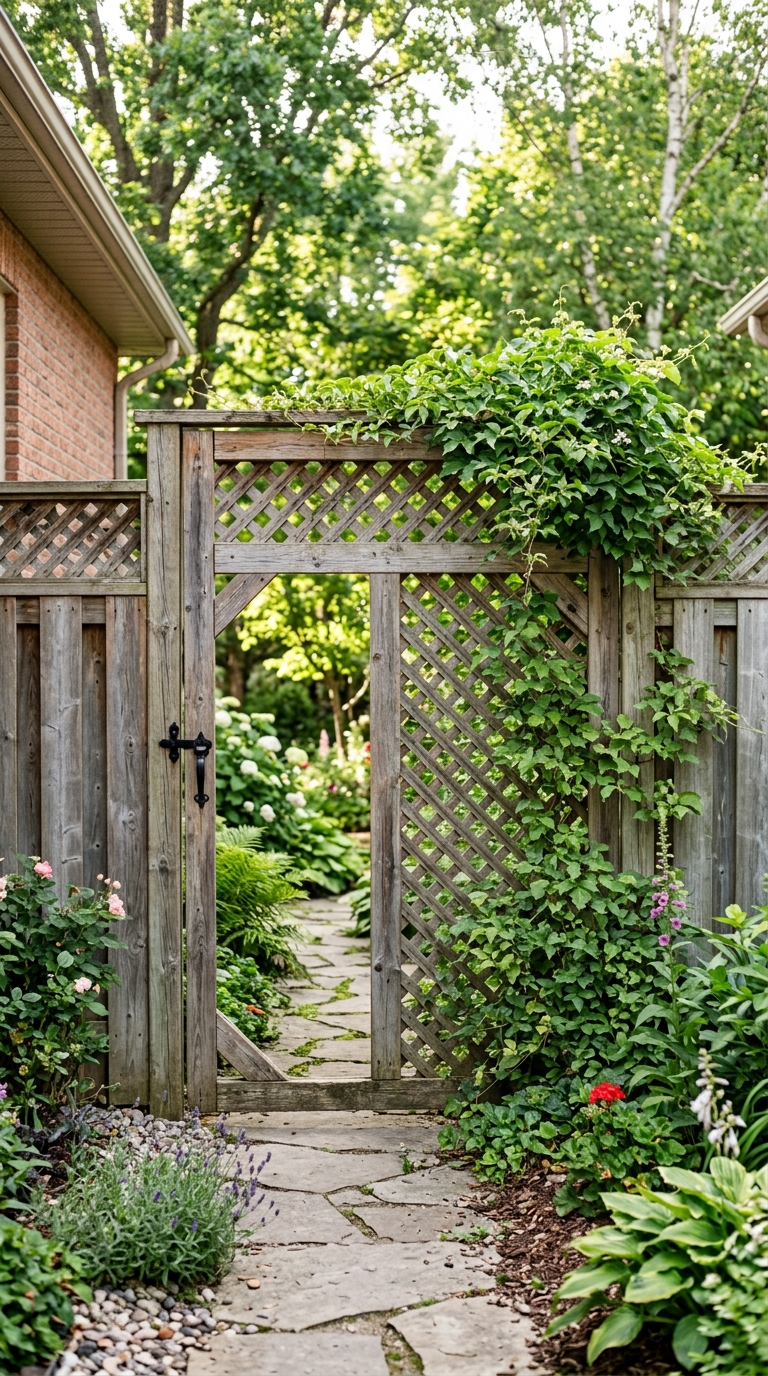
8: “My Gate Area Is Always Dark and Feels Unsafe at Night” → Privacy Gate With Integrated Solar Lighting
A tall privacy gate solves the daytime problem but can create a new one at night — a dark, enclosed passage that feels unsafe to walk through. Built-in solar lighting, either as small cap lights on the gate posts or a strip along the top edge, fixes this without needing an electrician.
Solar post cap lights are genuinely the easiest upgrade here, since they just sit on top of an existing post and charge during the day. No wiring, no permits, done in about five minutes per post.
For a narrow side yard specifically, even one light every 6 to 8 feet makes a noticeable difference in how safe the space feels after dark, without needing to floodlight the whole area.
If your side yard doubles as your main nighttime path (trash, side door access), this fix genuinely matters more than most of the visual ones on this list.
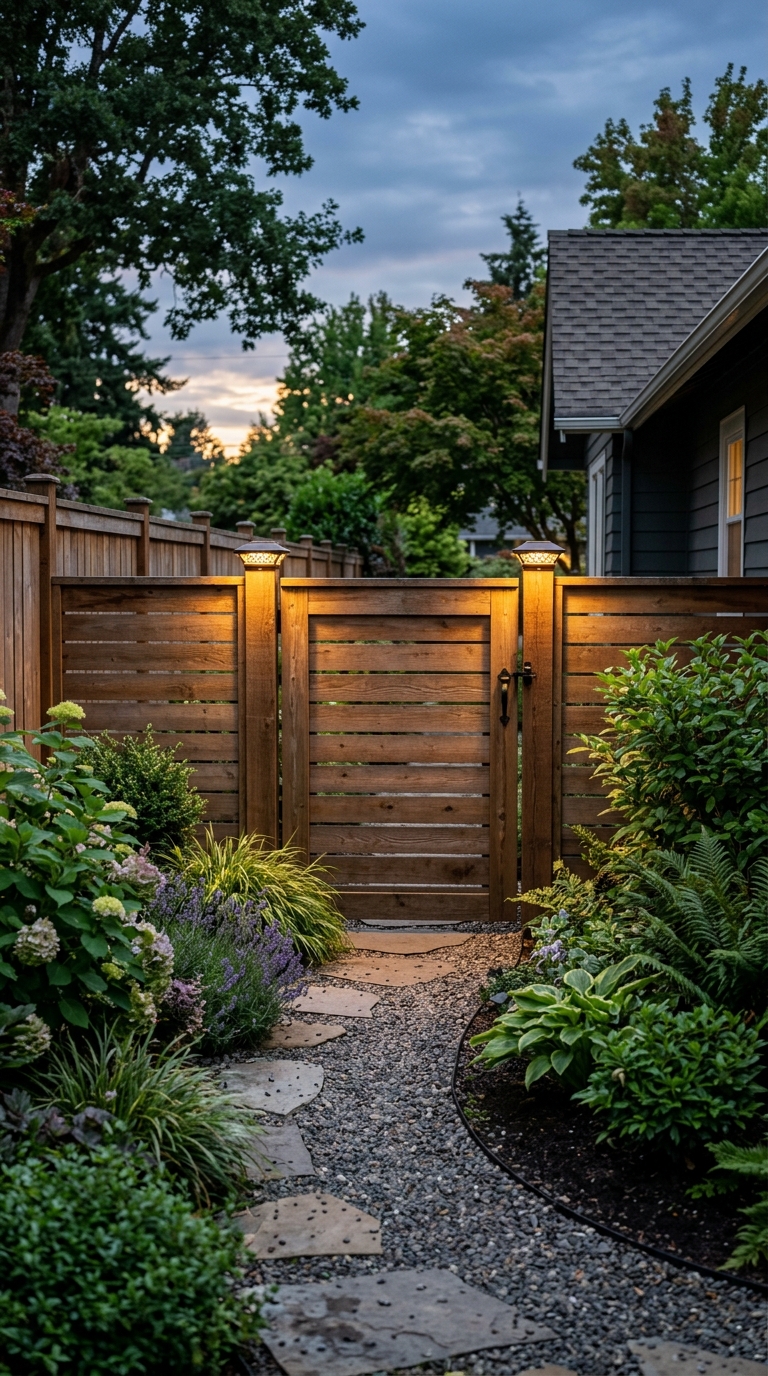
9: “I Have Kids/Pets AND Want Privacy” → Solid Bottom, Open-Slat Top Combo Gate
This is a design conflict a lot of families run into. You want a gate solid enough at the bottom that a small dog or toddler can’t see through and get distracted by something on the other side, but a fully solid gate can feel closed off.
A combo gate — solid panel on the bottom two to three feet, open slats or lattice above — handles both needs at once.
The solid bottom section also serves a practical safety purpose beyond privacy, since it prevents small pets from squeezing through gaps that a fully slatted design might leave at ground level.
This list zeroes in on side yard gate ideas built specifically for privacy — but if you want the fuller range of styles for a front or backyard entrance, our 20 Garden Gate Ideas guide covers wood, iron, bamboo, and budget builds.
Make sure whatever latch you choose is mounted high enough that neither kids nor a determined dog can reach it, regardless of which gate style you go with. This detail gets overlooked more than it should.
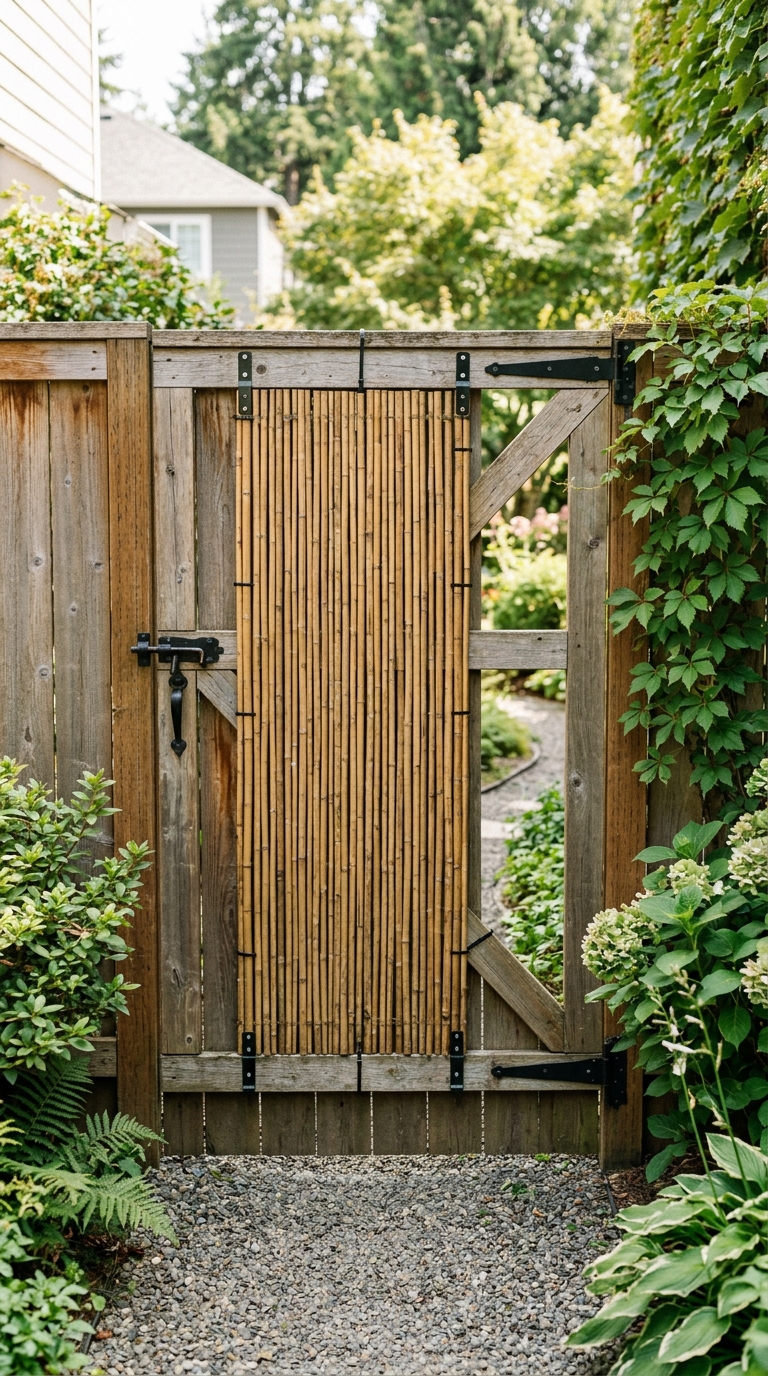
10: “Budget Is Tight, I Can’t Redo the Whole Fence” → Add-On Privacy Panels for Existing Gates
If your gate structure is fine but it just doesn’t block enough of a view, you don’t need to replace the whole thing. Clip-on or screw-mounted privacy panels — bamboo rolls, weave inserts, or slat overlays — attach directly to an existing gate frame for a fraction of the cost of a full rebuild.
Bamboo roll panels are usually the cheapest option here, often costing less than a single new gate panel would. They attach with simple zip ties or small brackets and can be swapped out later if you change your mind.
This is also a good option if you’re not sure yet what level of privacy you actually need. Try an add-on panel first, live with it for a season, and then decide if a full gate replacement is worth the investment.
This is the move if idea 1 sounds right for your problem, but the budget doesn’t match a full rebuild right now.
Want more coverage than the gate alone provides? These DIY Garden Trellis Ideas show how to extend that same privacy screening along the rest of the side yard fence line.
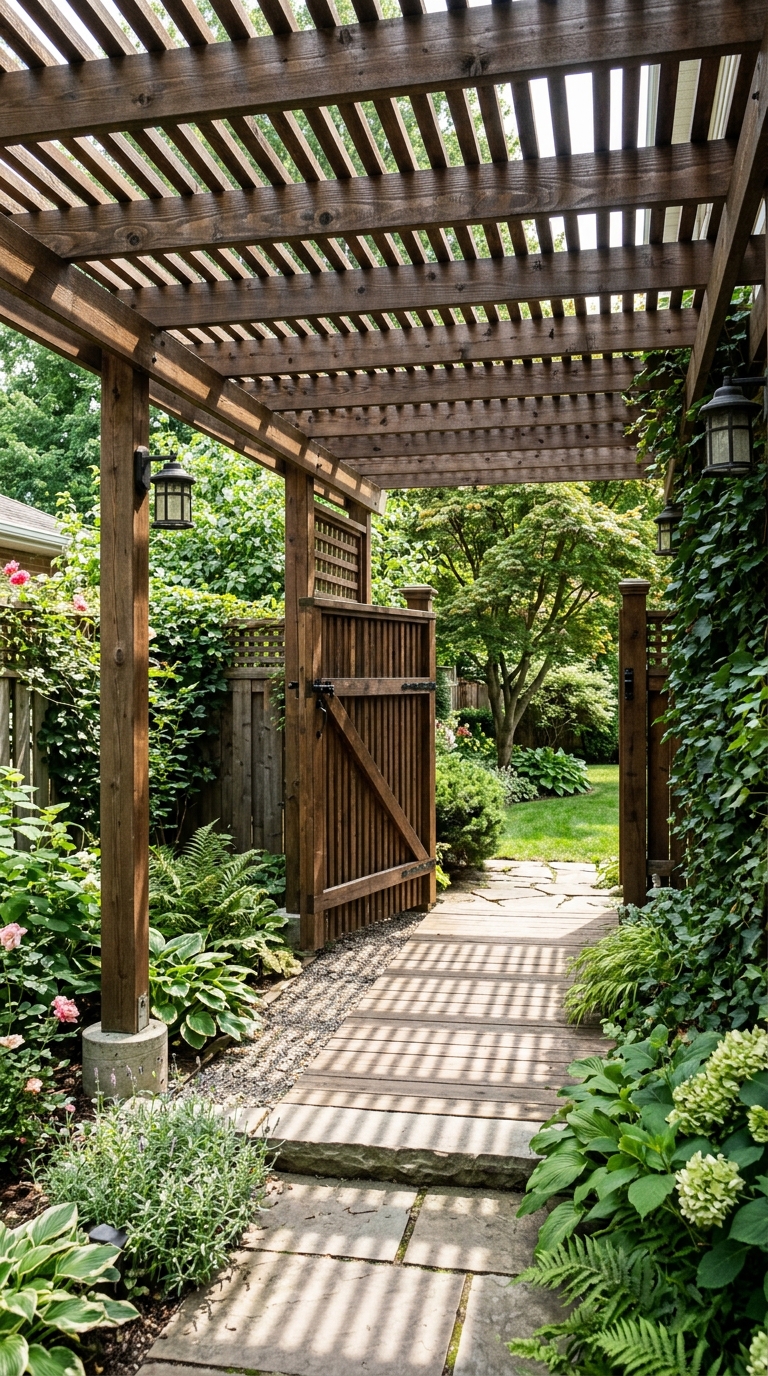
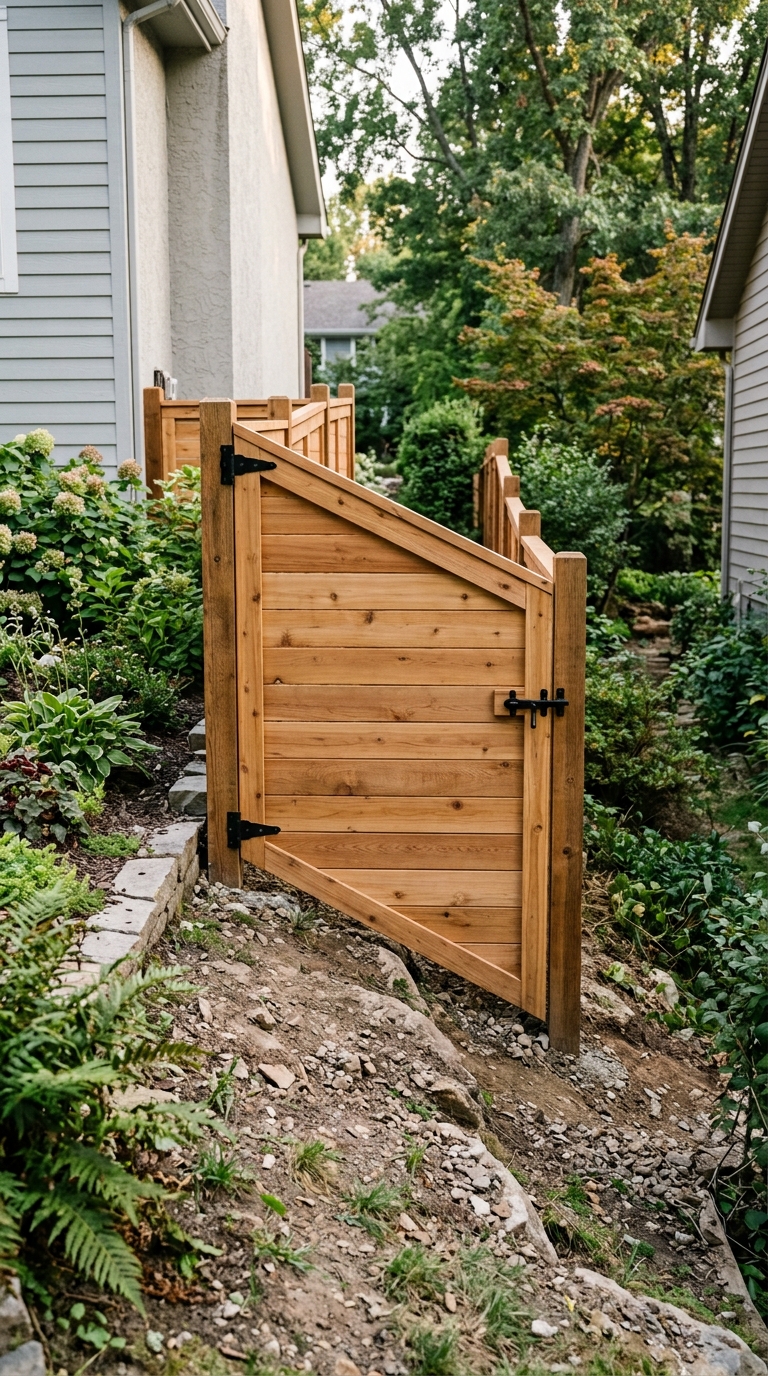
11: “My Yard Slopes and Standard Gates Don’t Fit Right” → Custom-Cut Gate for Sloped Side Yards
A sloped side yard creates an awkward gap under a standard rectangular gate, which defeats the privacy purpose entirely. A custom-cut gate, built with an angled bottom edge that follows your specific slope, closes that gap instead of leaving a triangle of open space at one end.
This usually needs to be built on-site or custom-ordered rather than bought pre-made, since every slope angle is a little different. It costs more than a standard gate, but it’s the only real fix for this specific problem.
An alternative if a full custom build isn’t in the budget: a stepped gate design, built in two or three straight sections at slightly different heights, approximates the slope without needing a single angled cut. It’s not as seamless, but it closes most of the gap.
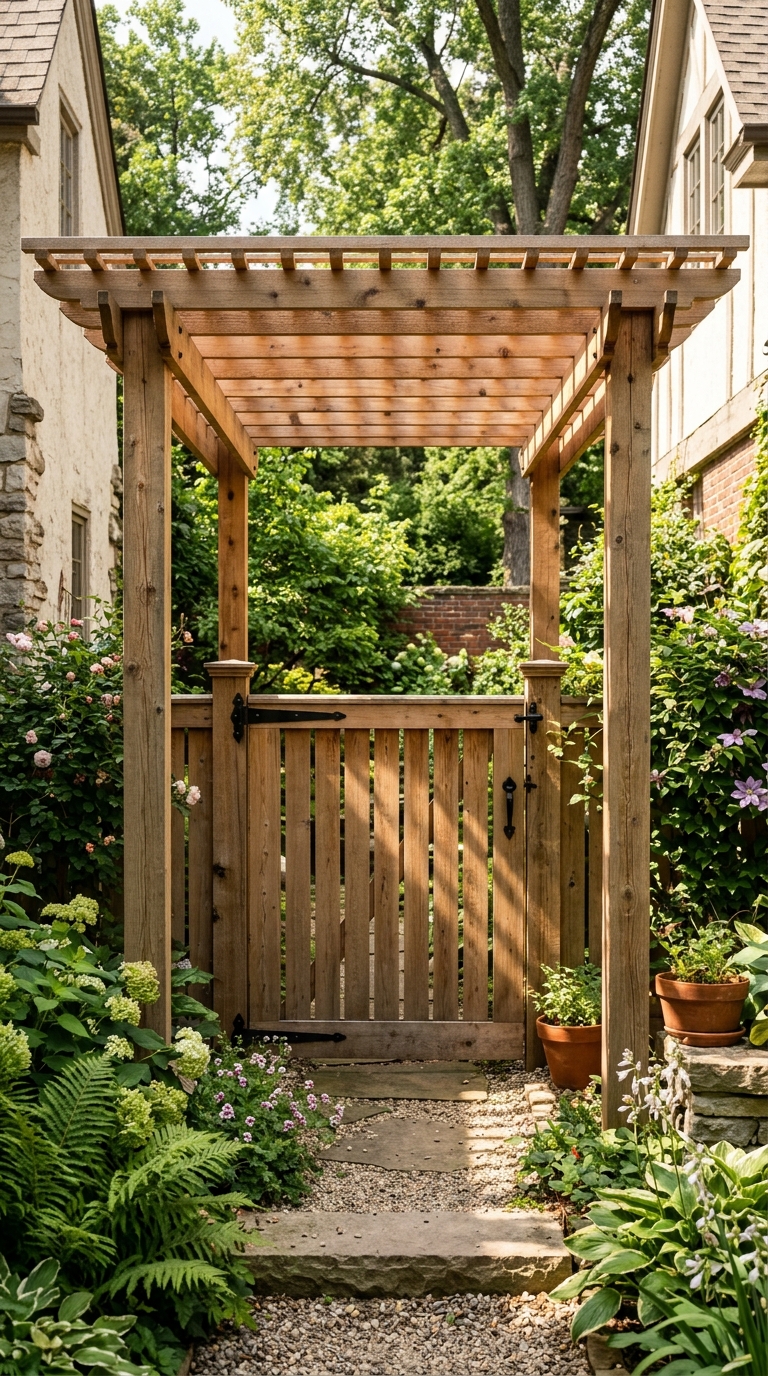
12: “I Want Privacy From Above Too (Two-Story Neighbors)” → Tall Panel Gate With Pergola Extension
Standard privacy gates handle eye-level sightlines fine, but a two-story neighbor looking down changes the problem entirely. Adding a pergola-style extension over the gate area, even a simple slatted overhead structure, blocks that downward view in a way a taller gate alone can’t.
You don’t need to cover your whole side yard. Even a pergola section that extends 6 to 8 feet from the gate covers the area where you’re most exposed, like a walkway or seating spot right at the entrance.
This also creates useful shade as a side benefit, which matters if that side yard gets hit with harsh afternoon sun. It’s solving two problems with one structure.
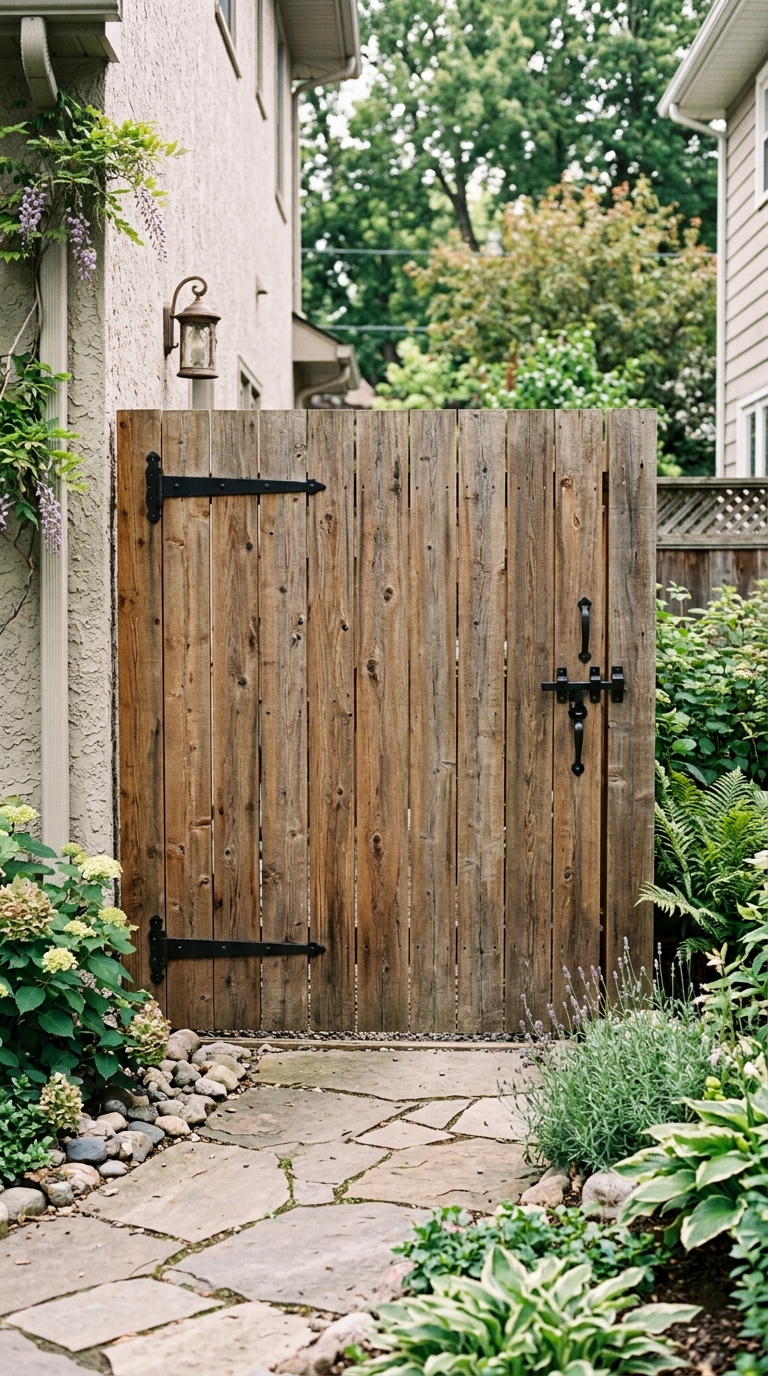
13: “My Side Yard Doubles as Storage/Trash Area I Don’t Want Seen” → Full-Coverage Solid Gate With Discreet Access
If your side yard is where the trash cans, garden tools, or AC unit live, the goal shifts from soft privacy to full concealment. A solid, full-height gate with minimal gaps handles this better than any slatted or louvered design, since the goal here is blocking the view entirely, not just softening it.
A secondary smaller access door built into one panel of the main gate is worth considering if you’re in and out of that area often, so you’re not swinging the whole gate open every time you take out the trash.
Keep the latch functional but simple here. This isn’t a decorative entrance people are walking through regularly, so prioritize durability over style for the hardware specifically.
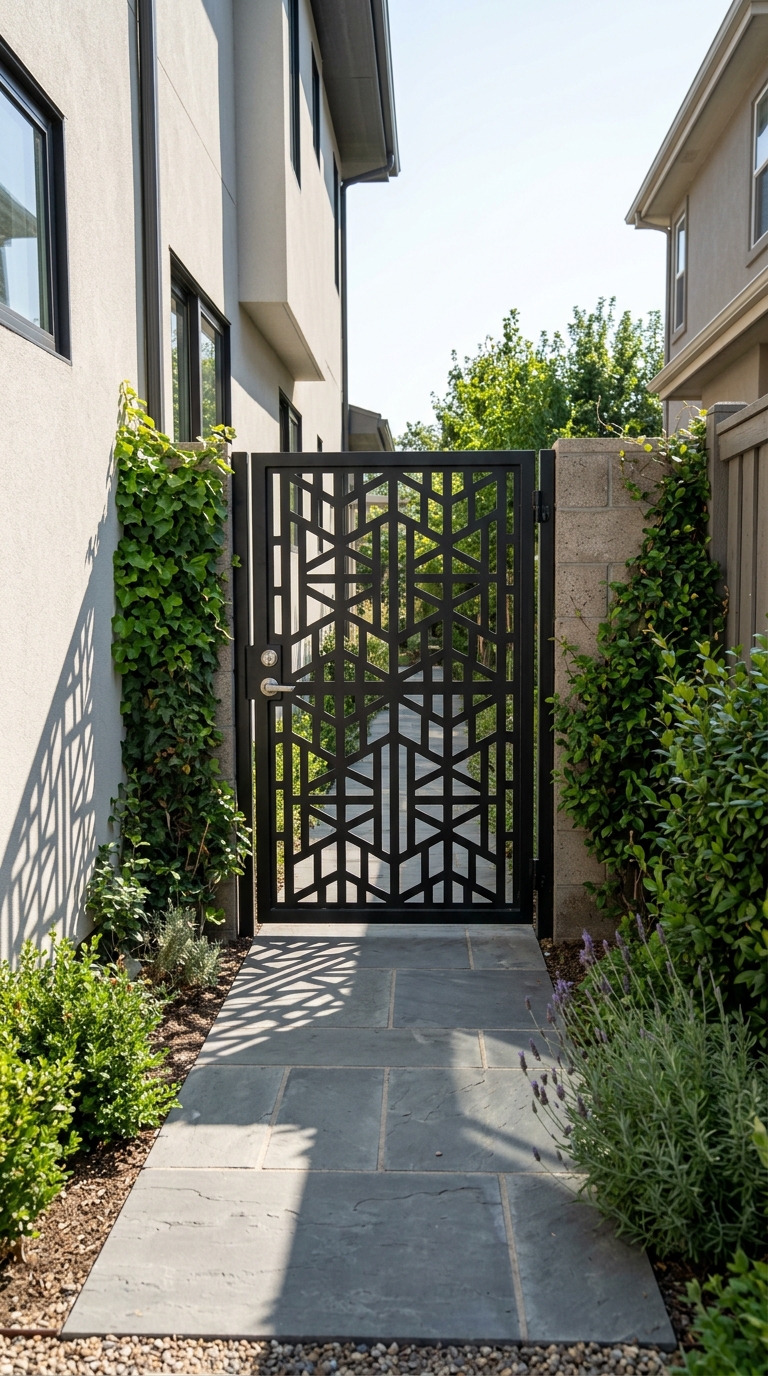
14: “I Don’t Want to Sacrifice Curb Appeal for Privacy” → Decorative Metal Privacy Panels With Pattern Cutouts
Solid privacy solutions can sometimes feel plain from the street-facing side, which matters if your side gate is visible from the front of the house. Decorative metal panels with a cut pattern (geometric shapes, leaf motifs, simple lattice designs) block sightlines while giving the gate an actual design feature instead of just a flat wall.
The cutout size and density control how much privacy you actually get, so this isn’t purely decorative. Smaller, denser cutout patterns block more of a direct view than large, sparse ones, even though both look decorative from a distance.
Powder-coated metal holds up better than raw or painted metal against weather over time, so it’s worth the small extra cost if this gate is going to be a visible, permanent feature.
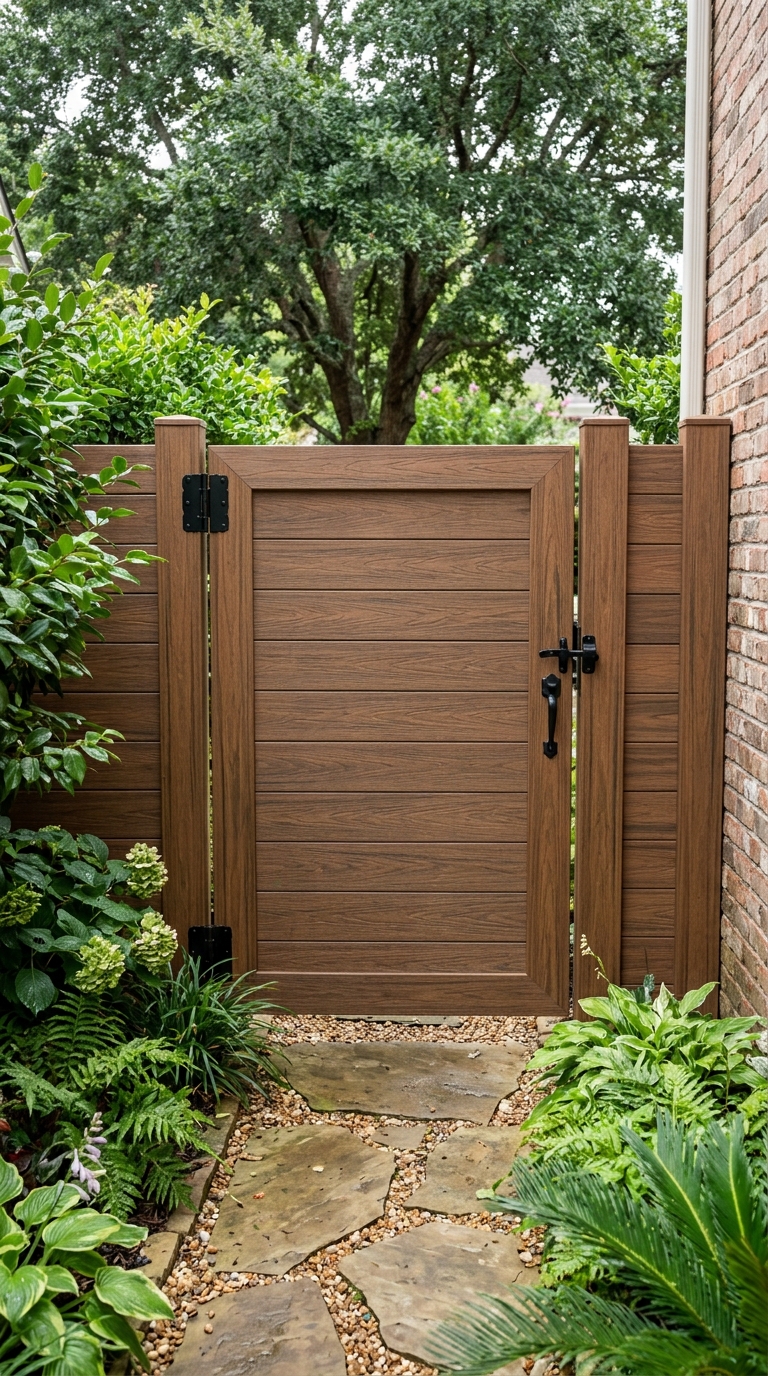
15: “My Gate Warps/Sags After a Year From Weather” → Weather-Resistant Composite Privacy Gate
If you’ve already been through the cycle of building a wood gate that warps, sags, or splits within a year or two, the actual problem might be material choice, not construction. Composite gate materials — a wood-plastic blend — resist moisture-related warping far better than natural wood, especially in humid or rainy climates.
It costs more upfront than standard lumber, generally, but the maintenance savings add up over a few years, since you’re not repainting, resealing, or rebuilding warped sections.
This is also a solid option if your side yard gets heavy shade and stays damp longer after rain, since that combination is exactly what causes wood rot and warping fastest.
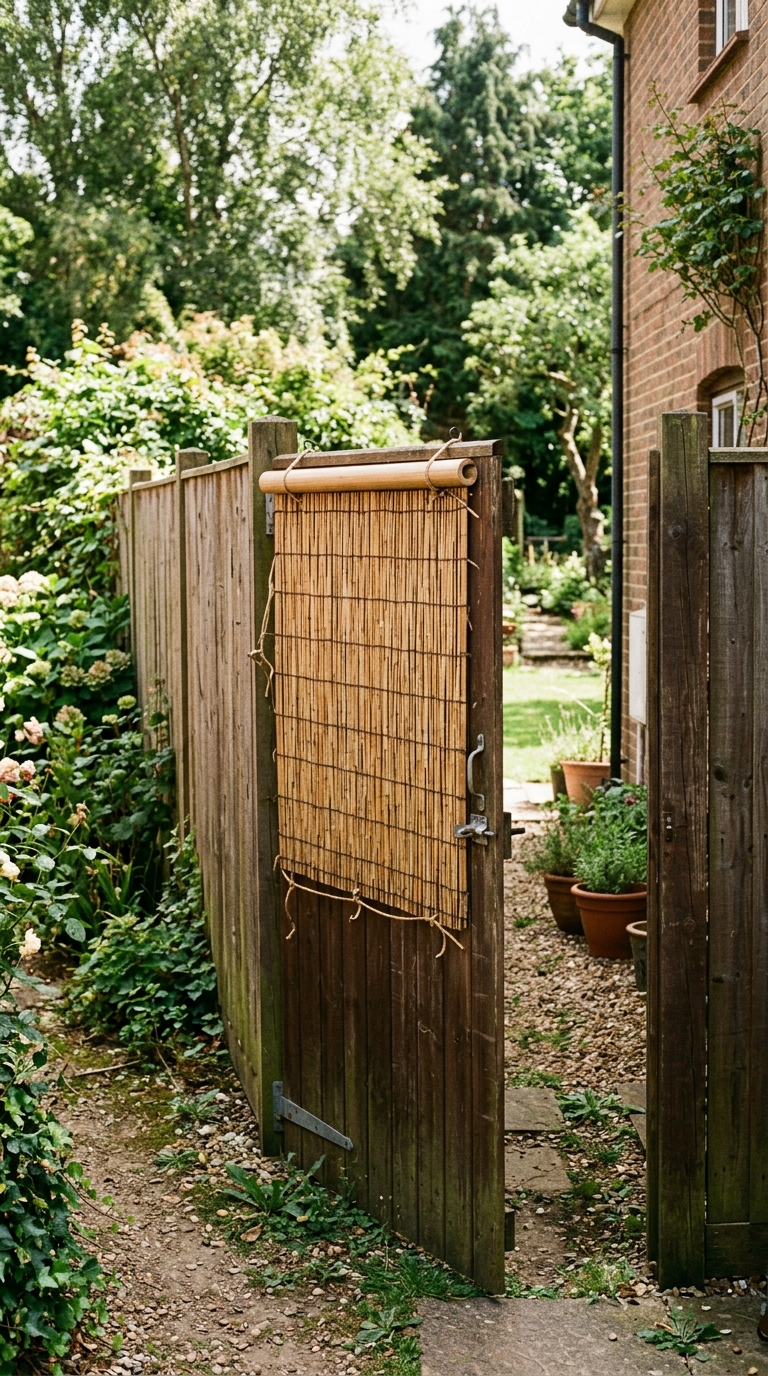
16: “I Need Privacy Fast — No Time to Wait for Plants to Grow” → Instant Roll-Up Privacy Screening
Sometimes you need a fix this weekend, not next season. Roll-up privacy screening — reed, bamboo, or synthetic weave — attaches directly to an existing gate or fence structure in under an hour and provides immediate coverage, no building or waiting required.
This is genuinely a temporary or budget-first solution rather than a long-term one, since these materials typically last a few years before needing replacement. But for an immediate fix, it’s hard to beat the speed and low cost.
If you go this route, look for a UV-resistant version specifically, since standard reed screening can fade and become brittle fast under direct sun exposure.
If your problem needs solving today and not in three weekends, start here.
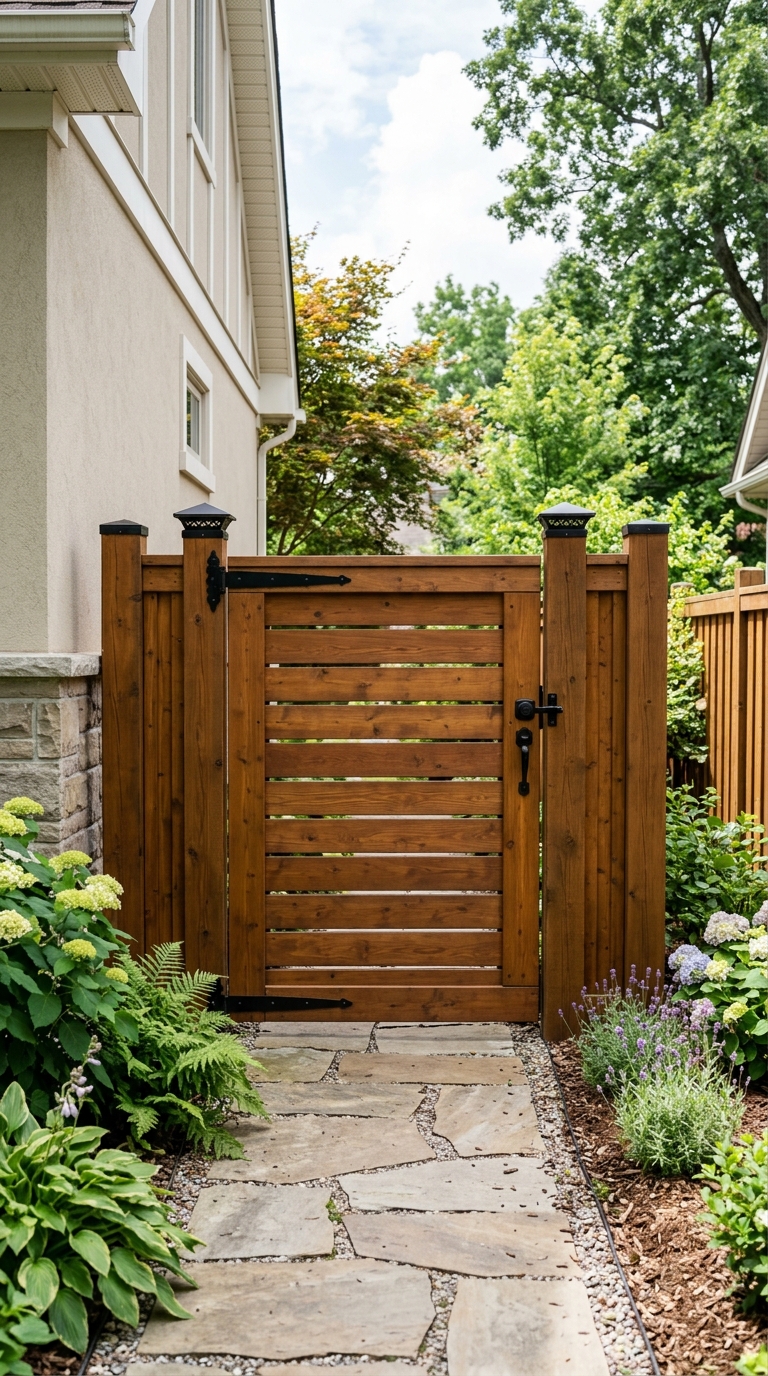
17: “My Side Gate Feels Like an Afterthought, Not an Entrance” → Framed Privacy Gate With Intentional Design Details
A lot of side gates get built purely functionally and end up looking like it — mismatched hardware, no real frame, just boards nailed together. Adding an actual frame structure around a privacy gate, even a simple header beam and side posts, makes it read as a designed entrance instead of a gap that got covered up.
Small details make a bigger difference than people expect here. A single decorative post cap, a consistent stain across the whole structure, or even just symmetrical board spacing changes the entire impression.
This matters most if your side gate is visible from the street or front entry, since it’s essentially part of your home’s first impression, even though it’s easy to treat as an afterthought.
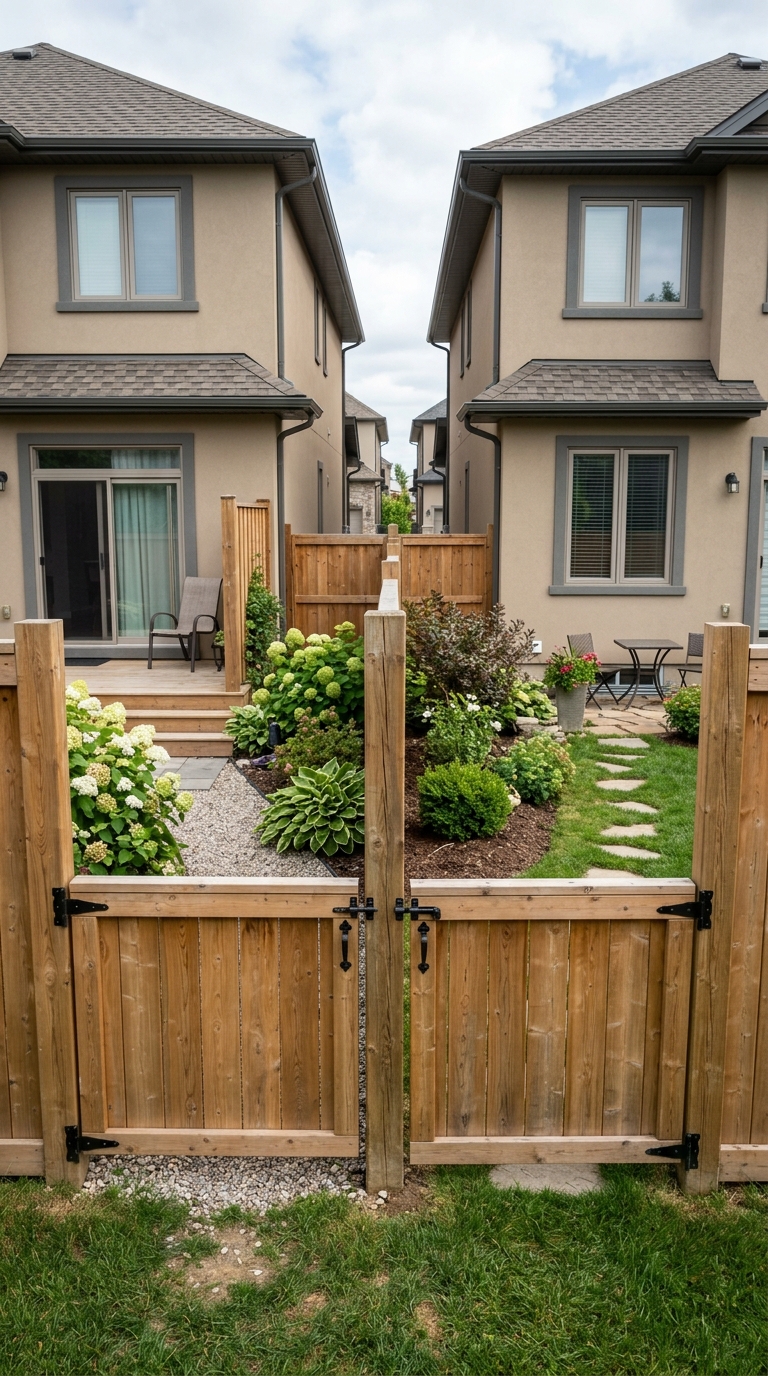
18: “I Share This Side Yard With a Neighbor (Duplex/Townhouse)” → Split-Privacy Gate Design for Shared Spaces
Shared side yards, common in duplexes or close-set townhouses, come with a specific problem: you need privacy from your own neighbor without it turning into an actual dispute over a literal dividing line. A split-privacy gate design, built with matching panels on each side of a shared post, gives both households equal coverage without either side feeling shut out.
Communication genuinely matters more than the gate design itself here. Splitting the cost and agreeing on a style both households are okay with prevents the awkward situation of one side building something the other finds intrusive.
A lattice or slat design tends to work better than fully solid in these shared situations, since it reads as a boundary rather than a wall, which usually feels less confrontational to a shared neighbor relationship.
19: “I Want to Test a Style Before Committing” → Modular/Removable Privacy Panel System
If you’re not sure whether you want full solid privacy, slats, or a lattice design, a modular panel system lets you find out before committing to a permanent build. These systems use a fixed frame with swappable inserts, so you can try one style for a season and switch it out without rebuilding the whole gate.
This is a genuinely underused approach, since most people either commit fully to a design upfront or live with something they’re unhappy with because replacing it feels like starting over. A modular frame removes that pressure.
It costs a bit more initially for the frame system itself, but you save money long-term by not rebuilding an entire gate if your first style choice doesn’t work out the way you pictured it.
If you’ve read through all 19 of these and you’re still torn between two or three options, this is honestly your best move — test before you commit.
FAQS
What’s the fastest way to add privacy to a side yard gate?
Roll-up bamboo or reed screening attached to your existing gate frame is the quickest fix, usually done in under an hour with no building required. It’s a good short-term solution while you decide on something more permanent.
How tall should a privacy gate be?
Most standard privacy gates run between 5 and 6 feet, which blocks a standing adult’s direct eye-level view from outside. If you’re dealing with a two-story neighbor looking down, you’ll need additional height or an overhead structure like a pergola extension to fully address that angle.
Can I add privacy to a side gate without breaking HOA rules?
Often yes, by working within height limits using trellis or lattice sections above the solid portion of your fence, since many HOAs only regulate solid barrier height, not open structures. Always check your specific HOA’s written rules first, since they vary community to community.
What’s the most budget-friendly privacy gate option?
Add-on privacy panels for a gate you already have, like clip-on bamboo rolls or weave inserts, cost far less than replacing the whole gate structure and can be installed in an afternoon.
Conclusion
Most of these problems have a specific fix, not a generic one, which is why “just build a taller fence” doesn’t always actually solve what’s bothering you. Match the idea to your actual complaint — narrow space, HOA rules, noise, budget, whatever it is — and you’ll end up with a gate that actually fixes the problem instead of just looking nice in a photo.
Which problem matches your side yard? Save the idea that fits, and let me know in the comments if you tried one of these — I’d love to hear how it worked out.