
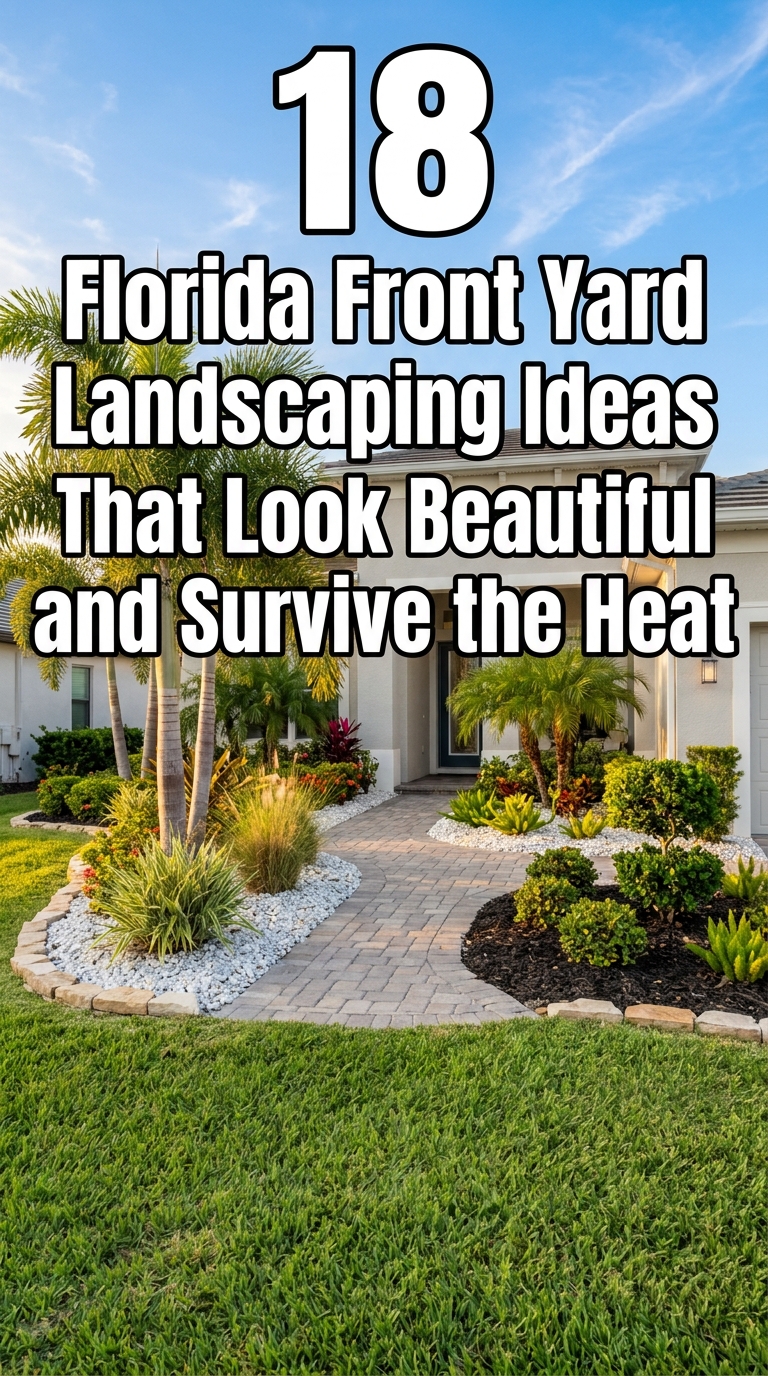
Florida is one of the most beautiful states to live in — until you try to keep a front yard looking good year-round. The heat is relentless, the summer storms are intense, the soil is mostly sand, and the water restrictions make traditional lawn care nearly impossible. Most landscaping advice online is written for people in completely different climates, and it shows.
If you’ve ever planted something gorgeous only to watch it burn out by July, or lost half your mulch to a single afternoon rainstorm, you already know the struggle. Florida front yard landscaping requires a completely different approach — one that works with the climate instead of constantly fighting it.
These 18 Florida front yard landscaping ideas are designed specifically for homes in the Sunshine State. Whether you’re in South Florida’s tropical zone, Central Florida’s mixed climate, or North Florida’s more temperate region, there’s something here that fits your home, your budget, and your yard. Let’s get into it.
heat-tolerant-florida-front-yard.webp
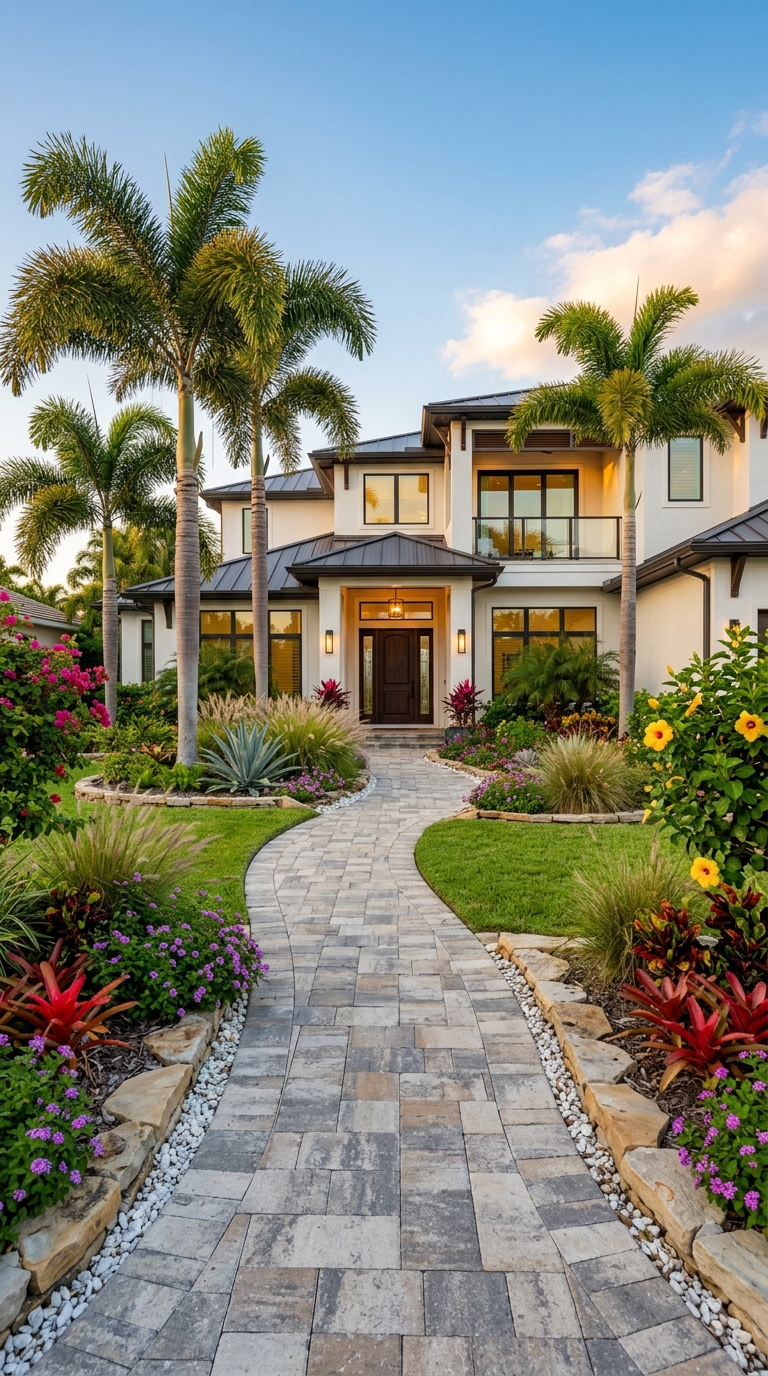
Palm Tree Focal Point With Tropical Understory
Nothing says Florida like a well-placed palm tree at the front of the house. Queen palms, Christmas palms, or Montgomery palms make incredible focal points — tall enough to frame the home, graceful enough to move in the breeze, and tough enough to handle Florida’s summer heat without complaint.
The real magic happens in the planting beneath them. Layer colorful crotons, bromeliads, and bird of paradise around the base of the palms for a lush, tropical understory that fills in the space beautifully. The contrast between the vertical palm trunks and the bold horizontal foliage below creates exactly the kind of layered look that stops people on the street.
Styling Tip: Surround the base of each palm with a ring of Mexican beach pebbles instead of mulch — it’s more durable, stays in place during storms, and photographs much more cleanly.
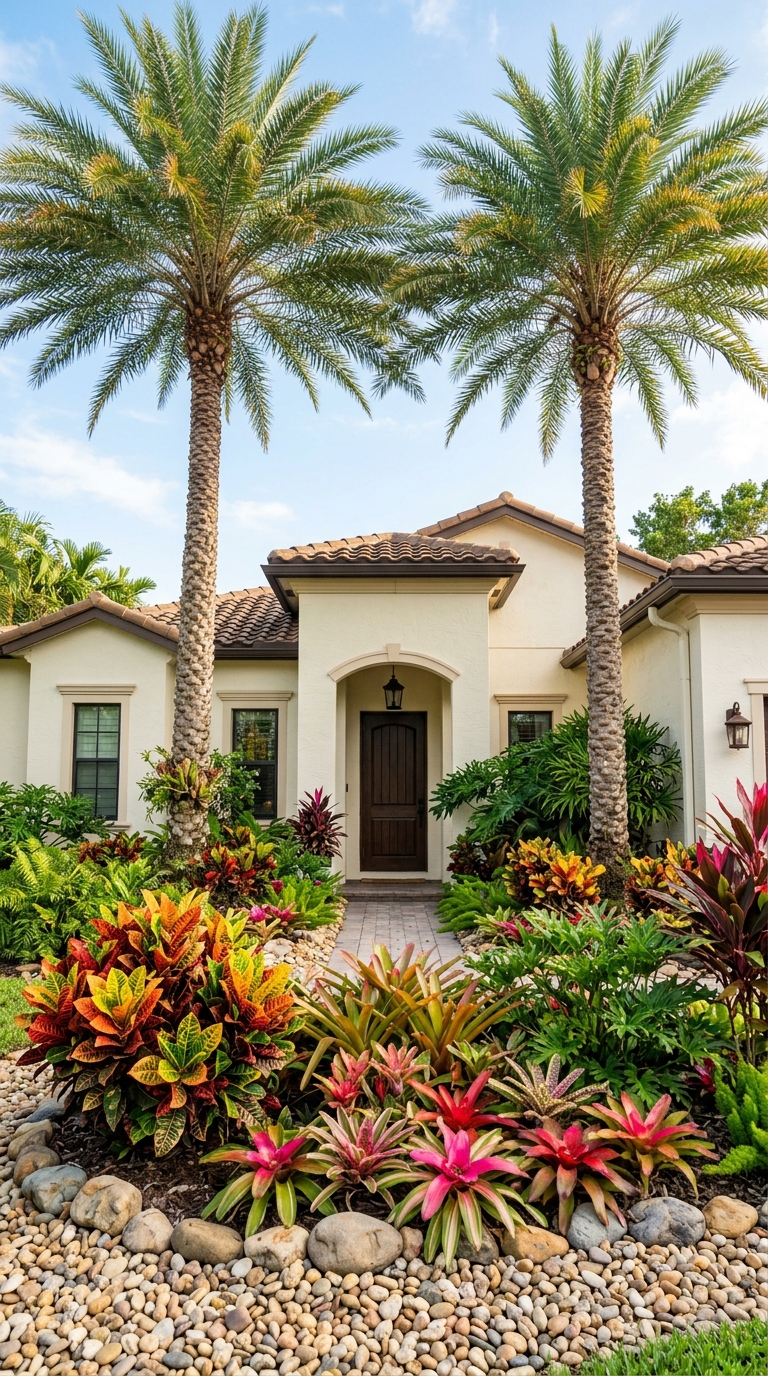
Florida-Native Plant Garden for Zero-Stress Maintenance
If you want a front yard that genuinely takes care of itself, native plants are the answer. Firebush, coontie, muhly grass, blue porterweed, and dwarf palmetto are all native to Florida, which means they evolved specifically to handle the heat, the sandy soil, the dry spells, and the sudden downpours. No babying required.
A well-designed native plant garden looks far from wild or unkempt. When planted in organized groupings with clean mulched edges and a clear pathway to the front door, it looks intentional, lush, and genuinely beautiful. The bonus? Butterflies, hummingbirds, and pollinators absolutely love these plants, which makes the yard feel alive in a way that a plain lawn simply can’t match.
Styling Tip: Group native plants in odd numbers (3 or 5 of the same species) for a more natural, designer look — evenly spaced rows always look a bit too rigid for a garden-style planting.
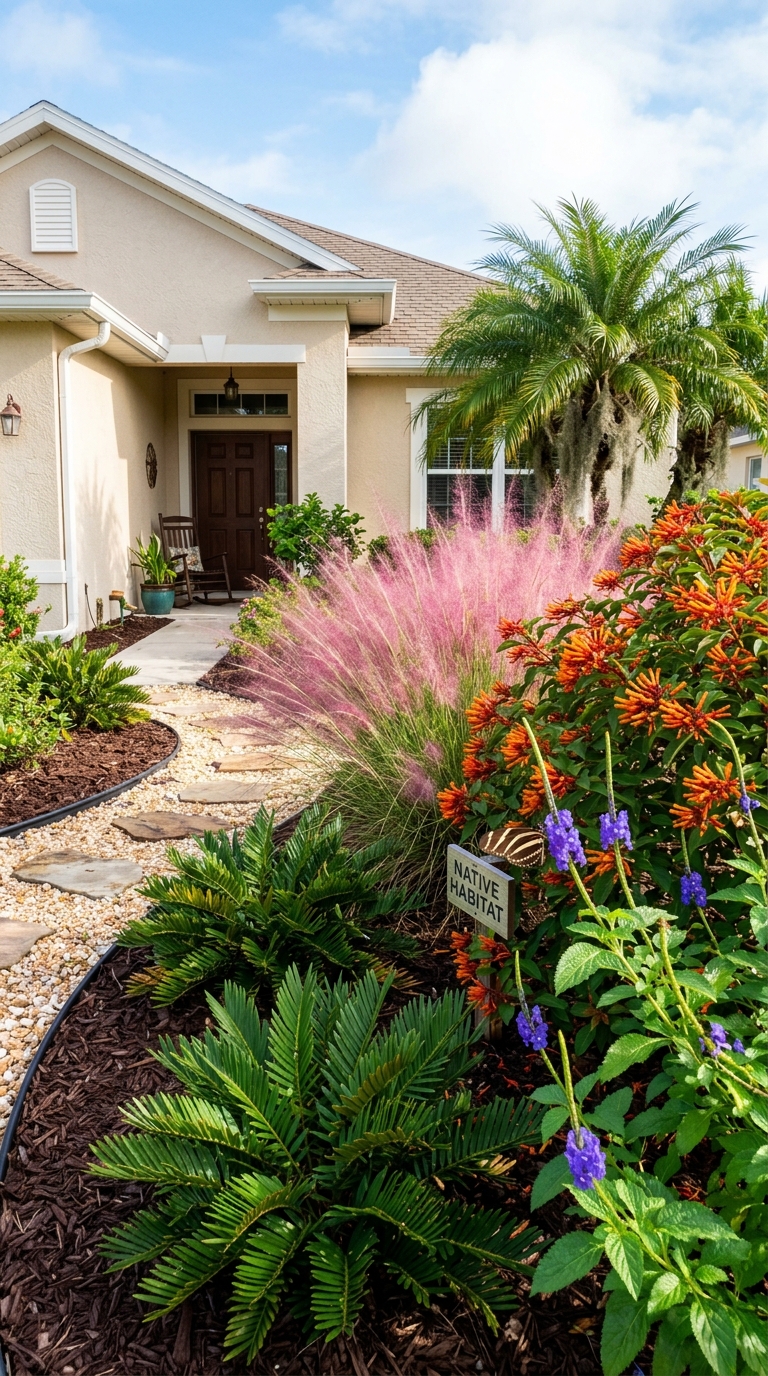
Drought-Tolerant Xeriscape Front Yard
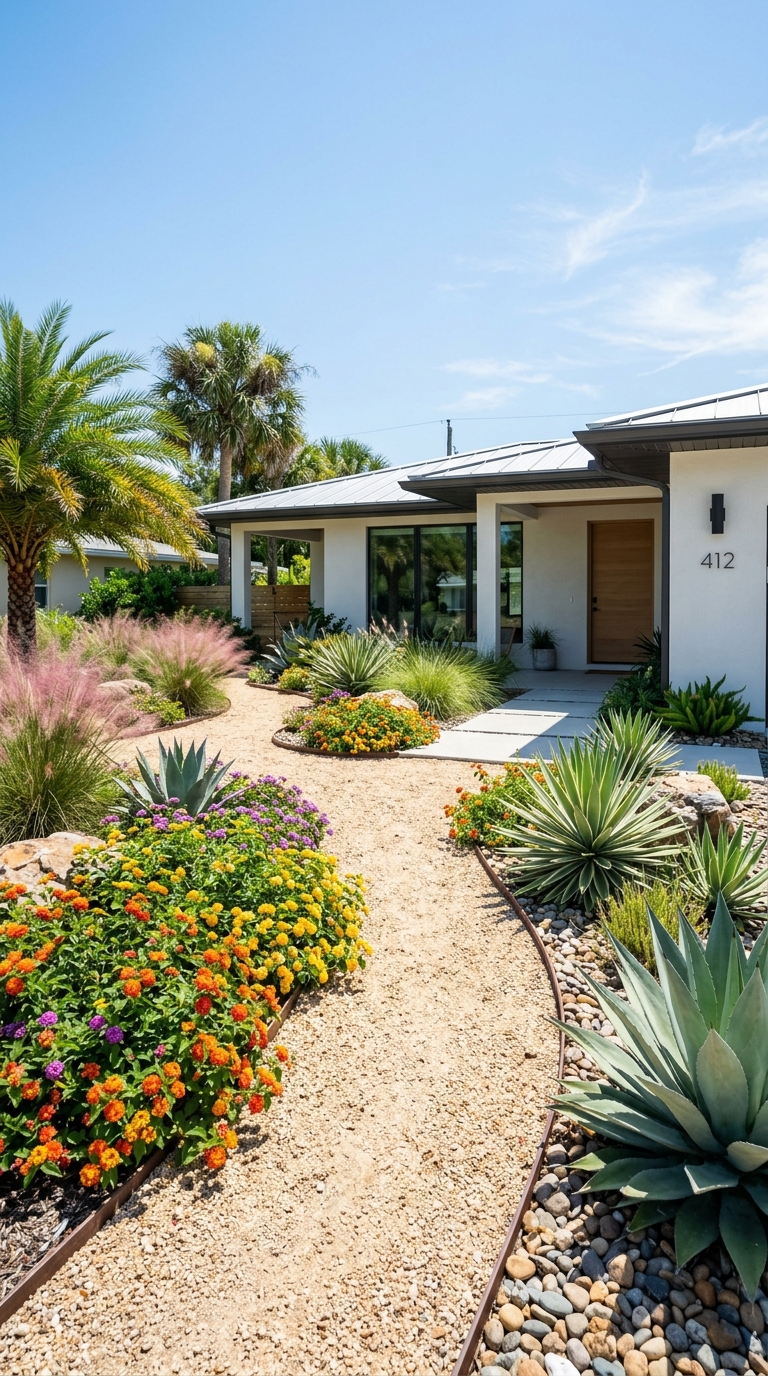
Xeriscaping gets a bad reputation — people hear “drought-tolerant” and picture a sad patch of rocks and cactus. But a well-done xeriscape front yard in Florida is genuinely stunning. Think sweeping beds of lantana and ornamental grasses, decomposed granite pathways, strategically placed agave specimens, and colorful patches of blanket flower — all thriving in full sun without a drop of extra water.
The practical benefits are real, too. No more fighting water restrictions, no more watching the water bill climb every summer, and no more replanting annuals every season. Xeriscape plants establish once and stay beautiful. For Florida homeowners dealing with HOA rules about lawn irrigation, it’s also an increasingly popular and accepted alternative to traditional grass.
Styling Tip: Add a layer of decomposed granite or crushed shell around plants instead of traditional mulch — it stays in place through rain, reflects heat away from plant roots, and gives the yard a polished, finished look.
No-Grass Front Yard With River Rock and Tropical Plants
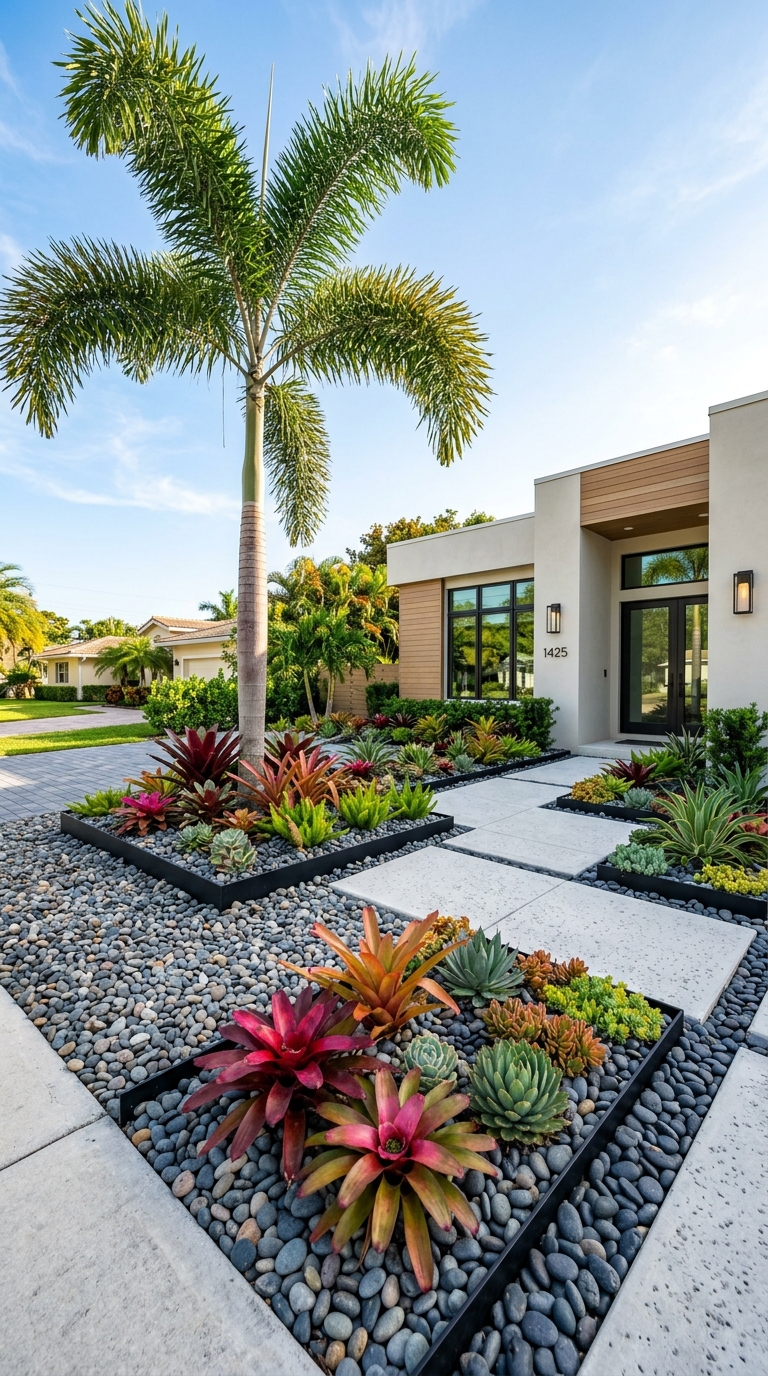
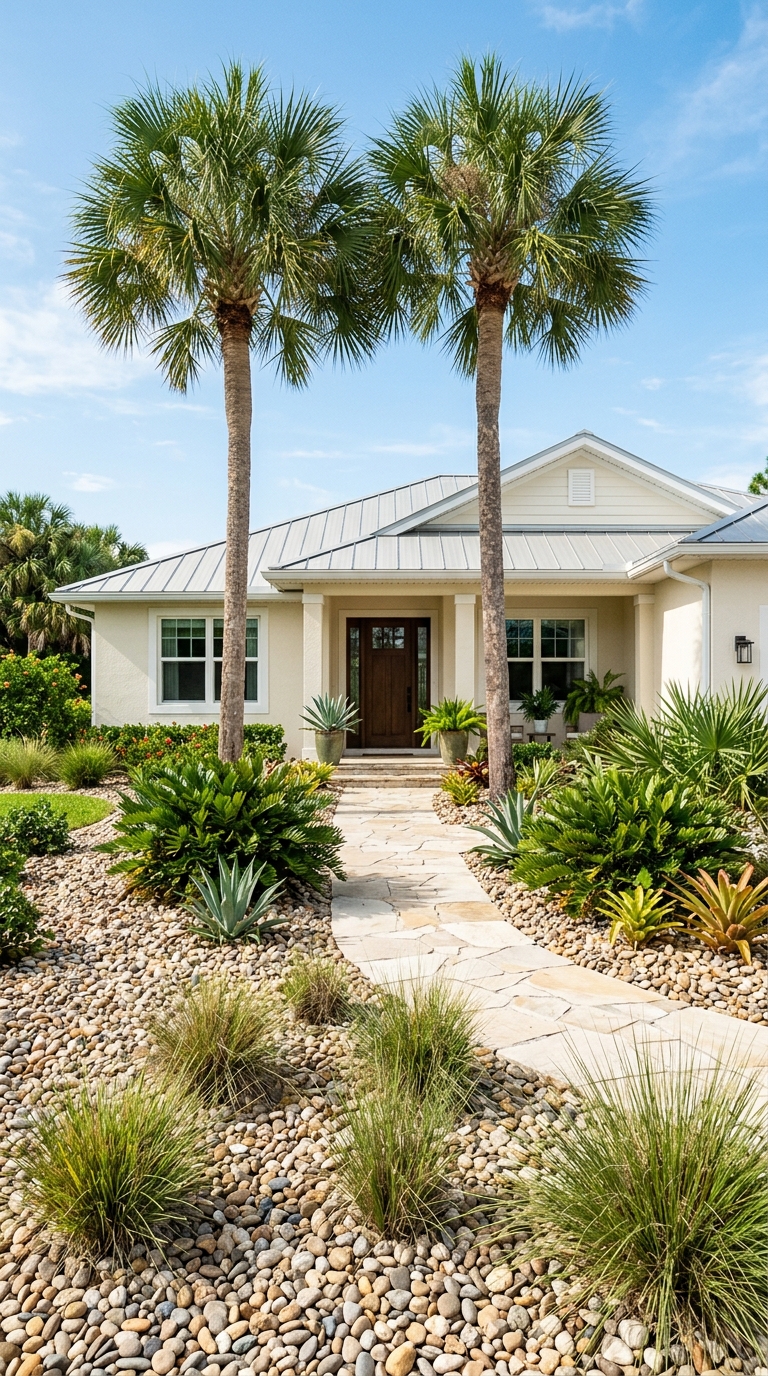
Getting rid of the lawn entirely sounds drastic until you’ve spent a Florida summer trying to keep St. Augustine grass alive through water restrictions. A no-grass front yard with river rock ground cover and strategically planted tropical specimens is one of the most practical and beautiful moves a Florida homeowner can make.
Mexican beach pebbles as the ground cover, palms or ornamental trees as vertical anchors, low-growing succulents and bromeliads filling in between — it creates a lush, layered look that requires almost no upkeep. No mowing, no irrigation headaches, and it holds up perfectly through storm season because there’s nothing to wash away or blow around. Pairing your rock bed edges with low-growing shrubs is a smart way to define each zone without adding maintenance — they stay compact, hold their shape, and look polished year-round.
Styling Tip: Vary the size of your river rocks — use larger statement rocks near plant bases and smaller pebbles to fill the surrounding ground. The texture variation makes the yard look professionally designed.
Bougainvillea Fence or Trellis Entrance
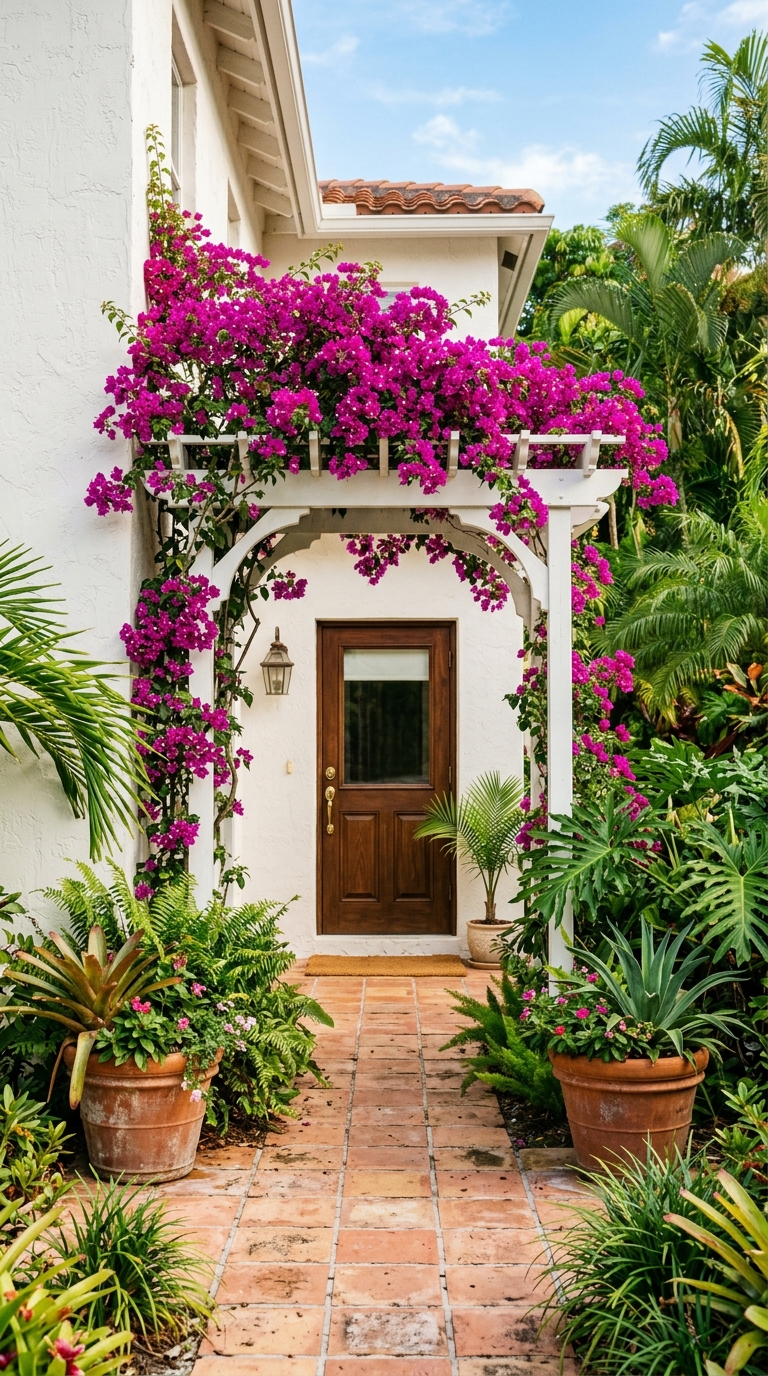
Bougainvillea might be the most dramatic flowering plant in Florida — and it’s one of the toughest. Once established, it handles full sun, dry spells, and even salty coastal air without a complaint. Train it along a fence, up a trellis, or over an entrance arbor at the front of the house, and you get a burst of magenta, coral, or deep red that stops traffic.
The visual impact is enormous relative to the maintenance effort. Bougainvillea blooms most heavily when it’s a little stressed — meaning it actually prefers to be underwatered rather than overwatered. For Florida homeowners looking for high-drama, low-effort color at the front of the house, it doesn’t get better than this. Pair it with white stucco walls, and the contrast is absolutely breathtaking.
Styling Tip: Let bougainvillea spill slightly beyond the edges of the trellis rather than keeping it perfectly trimmed — the loose, flowing look photographs far better and feels more naturally beautiful.
Travertine Paver Walkway With Tropical Borders
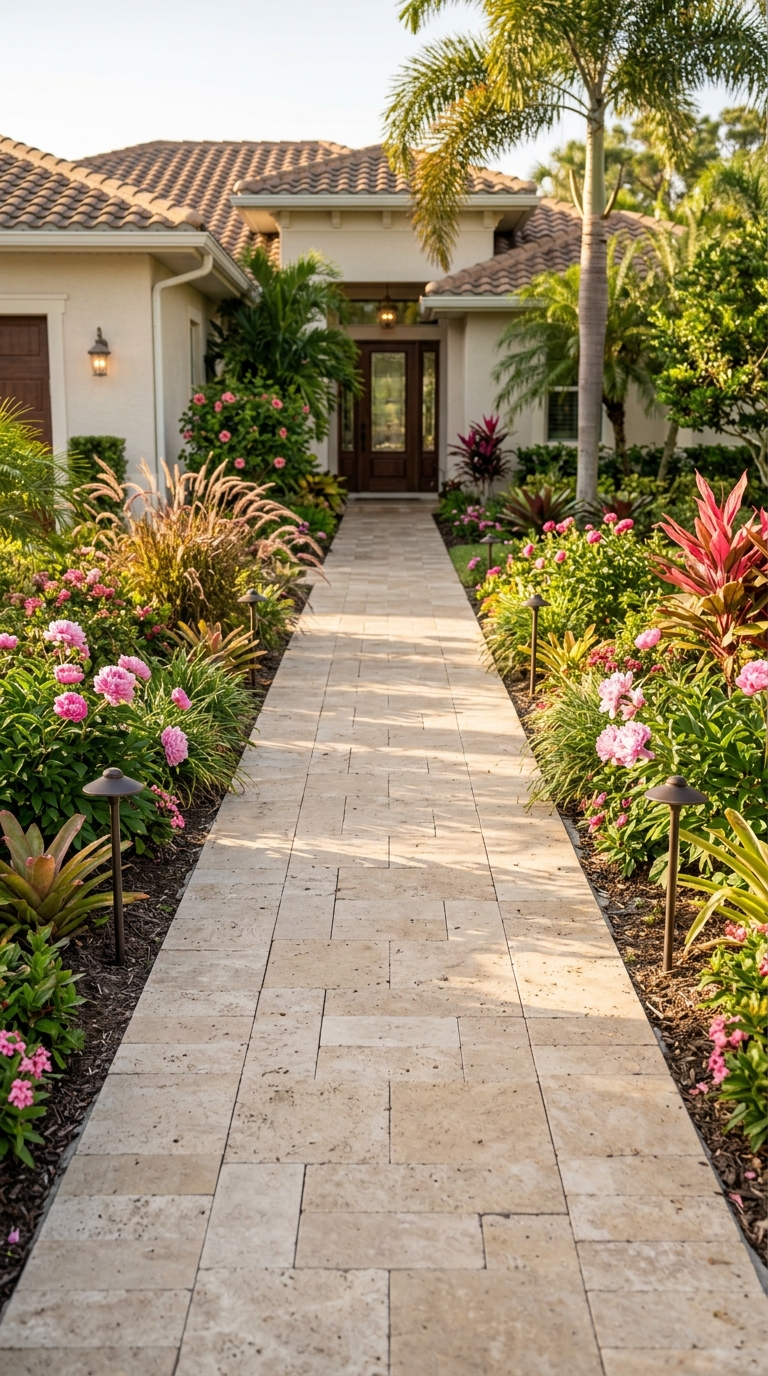
A wide travertine or coral stone paver walkway leading to the front door is one of the most elegant upgrades a Florida home can have. The light-colored stone reflects heat rather than absorbing it (important in Florida’s full sun), stays cool underfoot, and ages beautifully over time rather than cracking or fading the way concrete does.
Border both sides of the walkway with lush tropical plantings — peonies for color, lantana for ground cover, and ornamental grasses for texture — and the pathway becomes a full design feature rather than just a way to get to the door. At night, add low-voltage path lights and the whole entrance glows warmly. It looks expensive. It doesn’t have to be.
Styling Tip: Keep the pathway wider than you think you need — at least 4 feet — so it photographs beautifully and feels generous and welcoming rather than like a narrow garden stepping stone path.
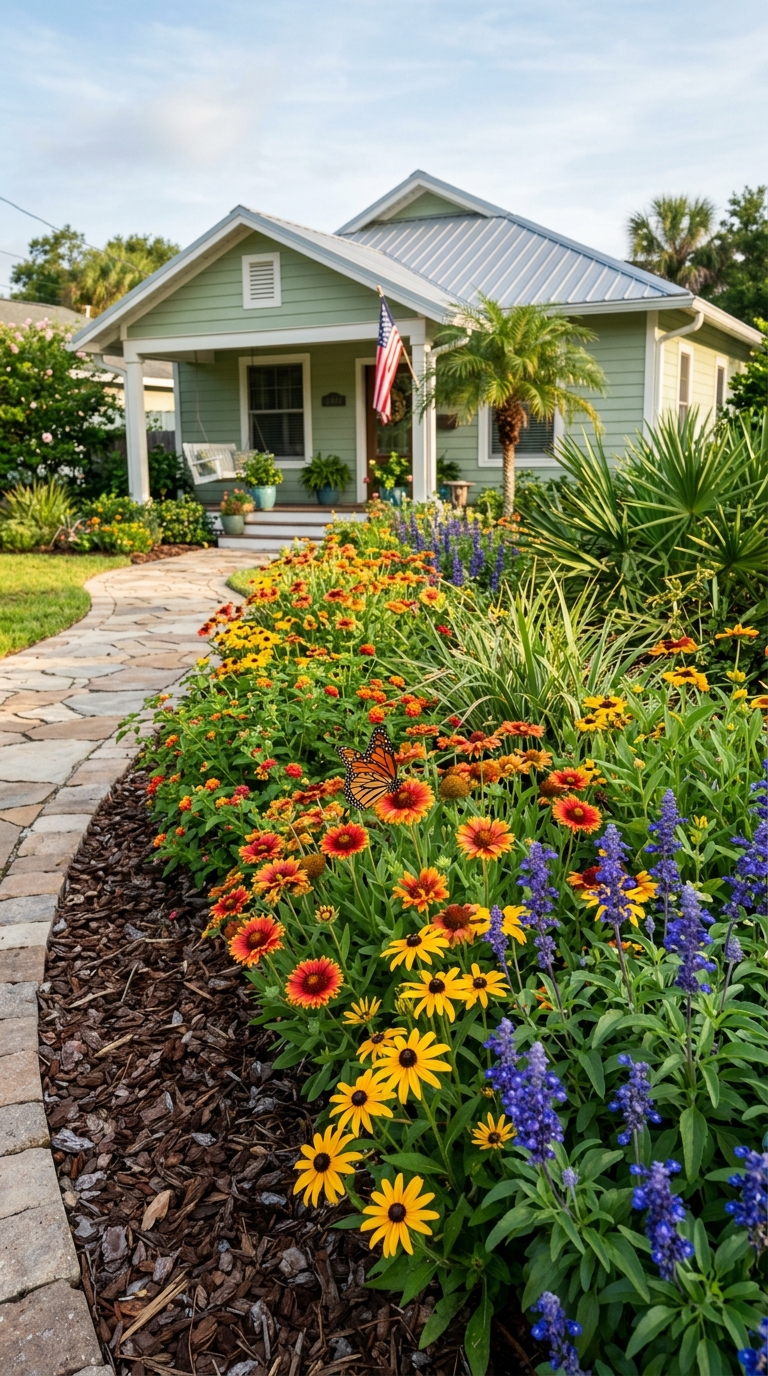
Cottage-Style Florida Flower Bed With Native Wildflowers
Florida native wildflowers are criminally underused in front yard landscaping — and that’s a shame, because blanket flower (coreopsis), black-eyed Susan, and blue salvia put on a show from spring through fall without irrigation, fertilizing, or any special attention. They’re Florida’s state wildflower for a reason: they just work.
A curved cottage-style flower bed planted with these natives, edged with simple stone or steel edging and mulched between plants, looks charming and intentional from the street. Mix heights — taller black-eyed Susans in the back, medium coreopsis in the middle, low-growing blue porterweed at the front — and you get that layered cottage garden effect that looks beautiful in photos and even better in person.
Styling Tip: Let some of the wildflowers self-seed naturally by leaving the spent flower heads on through fall — the bed will fill in more densely each year, looking better and better with almost zero effort.
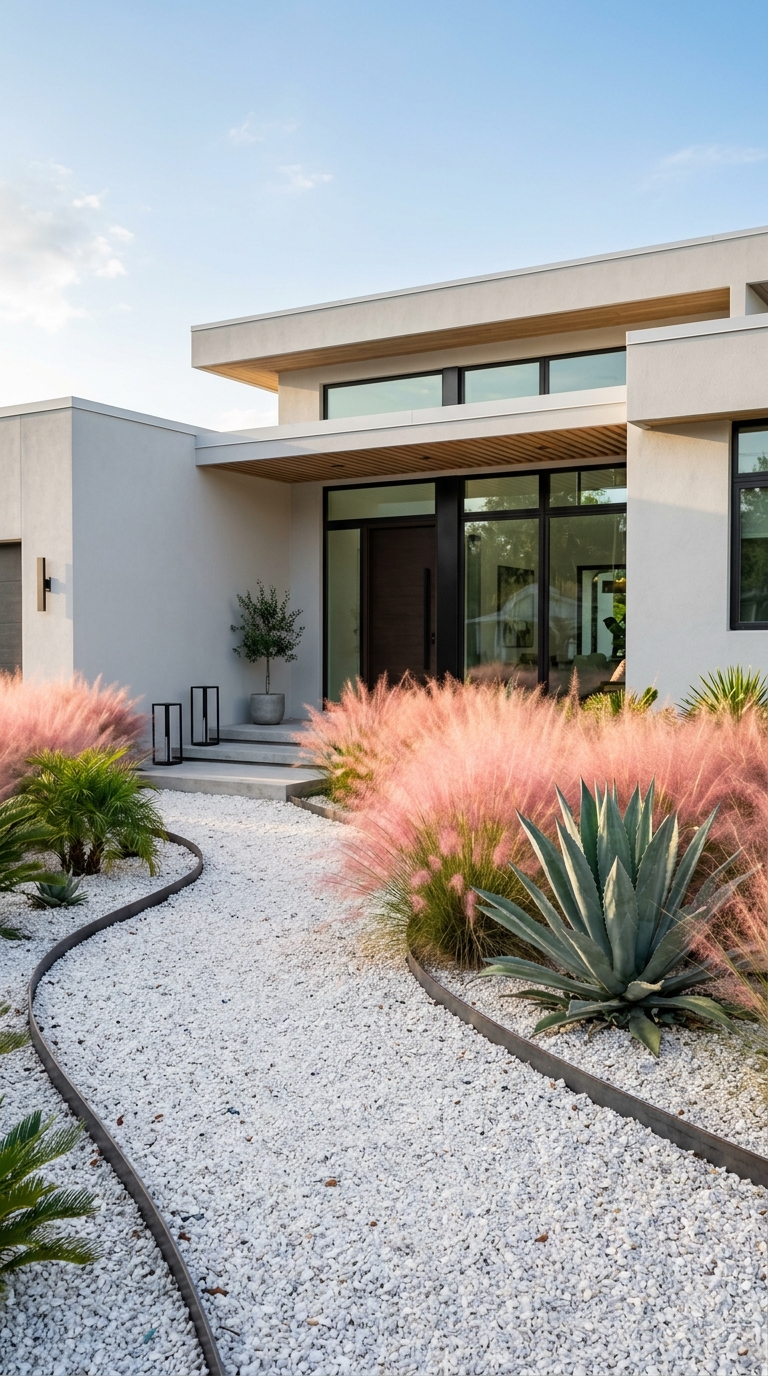
Modern Minimalist Front Yard With Ornamental Grasses
If your taste runs more toward clean lines and architectural simplicity than lush tropical planting, the modern minimalist approach works beautifully in Florida — and it’s one of the most low-maintenance options on this entire list. Sweeping masses of muhly grass planted in large groupings, with a ground cover of decomposed granite or white crushed shell and sharp concrete or steel edging. That’s really all it takes.
Muhly grass is spectacular in the fall when it erupts in soft pink-purple plumes that catch the Florida breeze. The rest of the year, it’s a clean, tidy mound of green that requires almost no attention. Pair it with one or two specimen agaves or a single trained ficus tree for a focal point, and the whole yard reads as intentional, sophisticated, and modern.
Styling Tip: Mass plant the same grass variety in groups of at least five to seven plants — a single muhly grass clump looks lonely, but a sweep of them looks like a designed landscape feature.
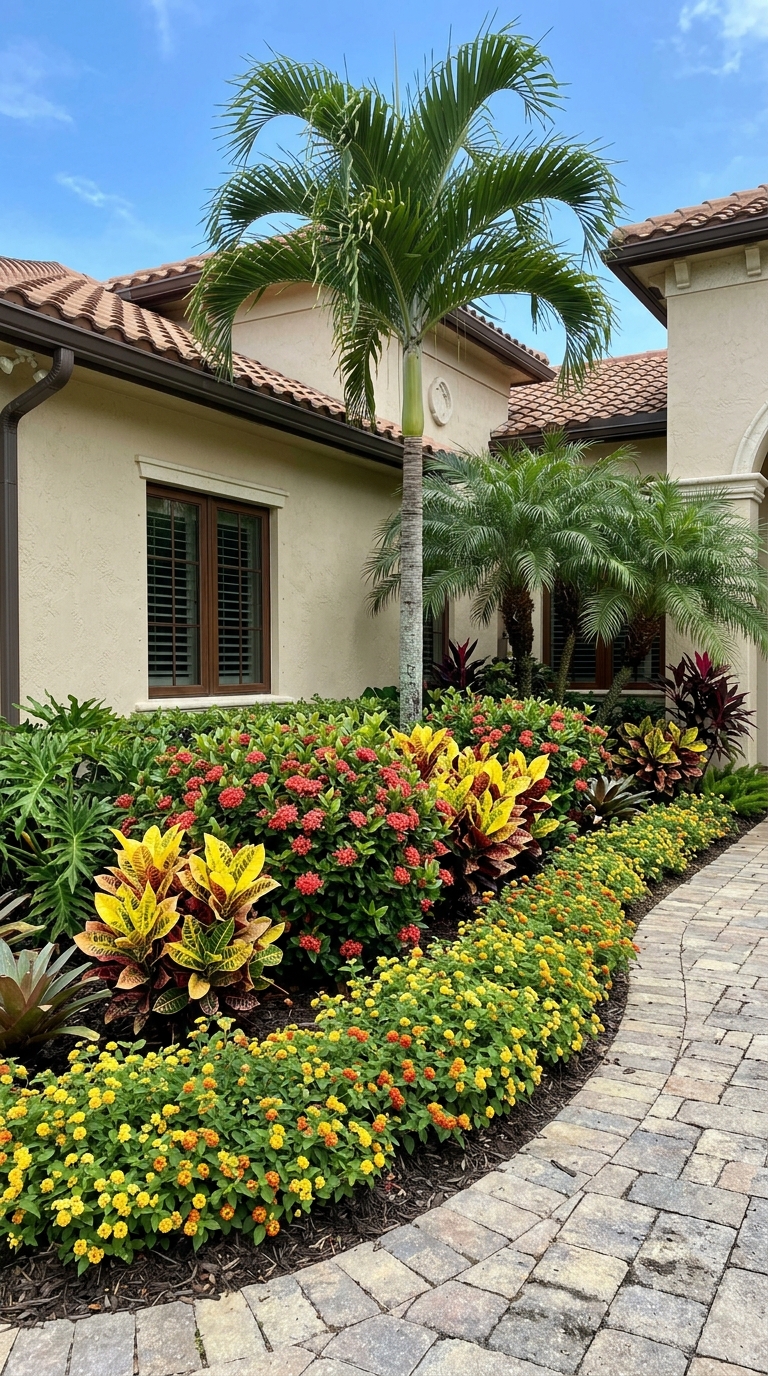
Layered Tropical Foundation Planting
Foundation planting — the beds that run along the base of the house — is where most Florida front yards either make or break their curb appeal. Done poorly, it looks like a row of overgrown shrubs pushed up against the house with no depth or intention. Done well, it frames the home beautifully and makes the whole front yard look designed.
The layered approach is what makes the difference. Tall ornamental palms or podocarpus in the back row, medium-height ixora or croton shrubs in the middle, and low-growing liriope or dwarf lantana at the front edge closest to the lawn or walkway. Each layer is visible from the street, each adds color and texture, and the depth created by the tiering makes the house look larger and more impressive than it actually is.
Styling Tip: Keep foundation plantings at least 18 inches away from the house wall — it improves airflow, reduces pest pressure, and the plants stay healthier and look less crowded as they mature.
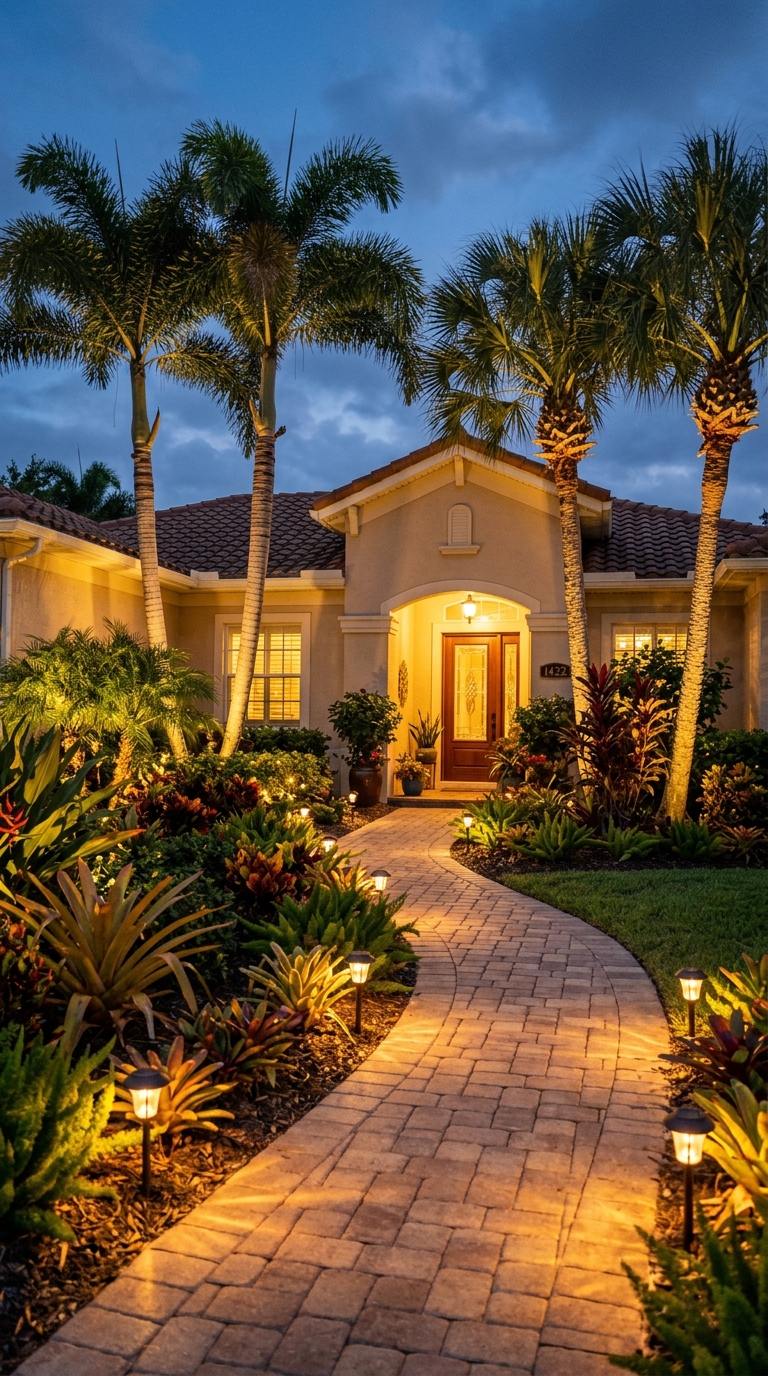
Solar Landscape Lighting Design for Night Curb Appeal
Florida homes look stunning at night when the landscaping is properly lit — and since evenings are warm and comfortable for most of the year, night curb appeal actually matters here in a way it doesn’t in colder climates. Solar landscape lighting requires no wiring, no electrician, and no ongoing electricity cost. It’s one of the highest-impact, lowest-effort upgrades a front yard can get.
Path lights along the walkway, uplights at the base of palm trees or specimen plants, and soft wash lights directed at the home’s facade create three layers of light that make the yard feel professionally designed after dark. Warm white solar lights (not the cool blue ones) give the most flattering, beautiful result — they make tropical foliage glow in a way that genuinely looks stunning from the street.
Styling Tip: Always choose warm white solar lights (2700K–3000K color temperature) rather than cool daylight bulbs — warm white makes tropical greenery and stone look rich and inviting; cool white makes everything look clinical.
Florida Friendly Rock Garden With Succulents and Agave
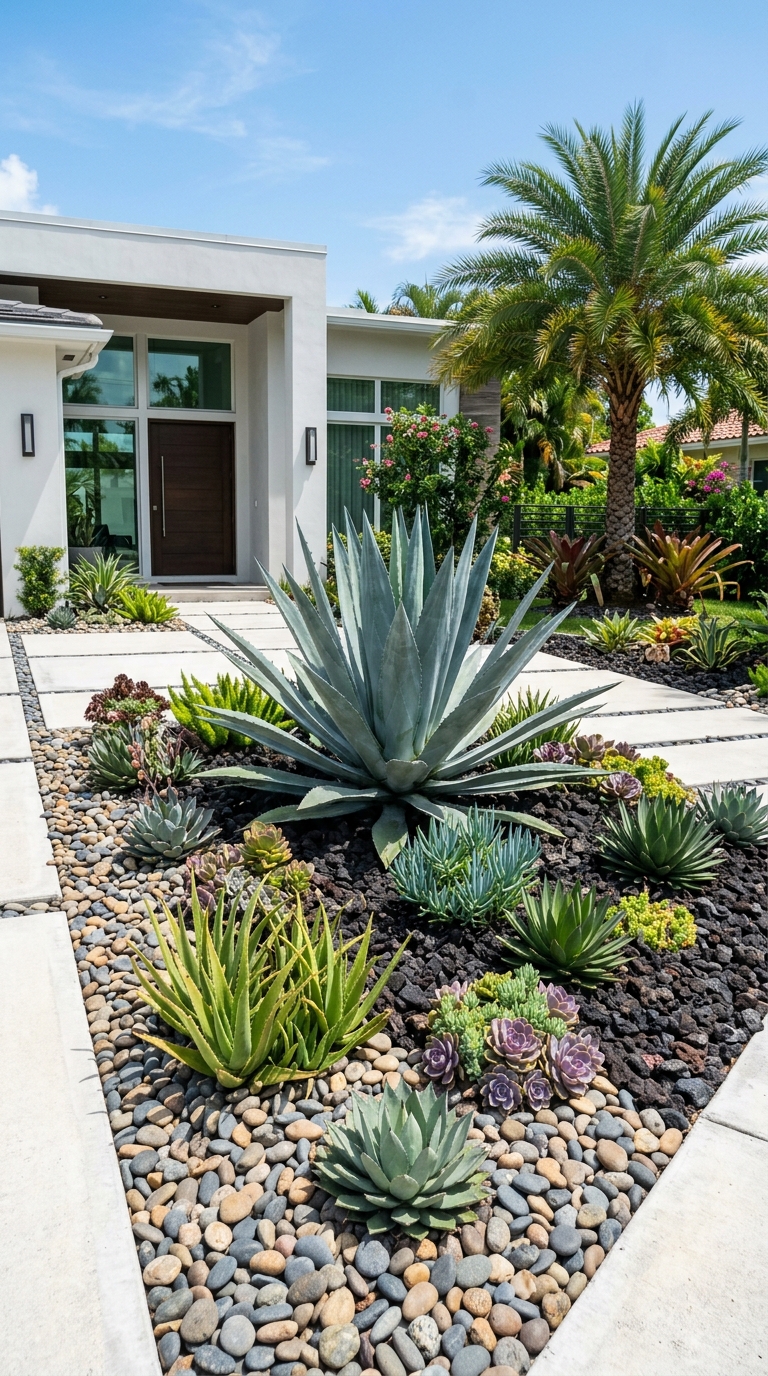
Succulents and agave thrive in Florida’s full sun and sandy soil in a way that surprises a lot of people who assume they’re only for desert climates. A rock garden design built around agave, aloe vera, and mixed succulents in a river rock or lava rock bed is genuinely one of the most striking and modern front yard options available for Florida homeowners.
The plants themselves are architectural — bold shapes, interesting textures, year-round visual interest. Group a large blue agave as a centerpiece specimen, surround it with smaller aloe varieties and mixed succulents, and fill the space between with river rock or black lava rock. It looks like something from a luxury resort landscape in Miami, and it requires almost literally zero maintenance after planting.
Styling Tip: Use a mix of lava rock and smooth river pebbles in the same bed — the texture contrast between rough dark lava rock and smooth light pebbles adds depth and visual interest that single-rock designs miss.
Hurricane-Resistant Landscape Design
Every Florida homeowner knows the anxiety of watching a storm approach and wondering what the front yard will look like on the other side. A hurricane-resistant landscape design isn’t just about safety — it’s about choosing plants and layouts that hold up so well through storms that cleanup afterward is minimal.
Low-profile, flexible plants handle wind far better than tall, rigid ones. Ornamental grasses bend and spring back. Native Florida shrubs are built to weather tropical conditions. Properly spaced palms with cleaned trunks (no dead fronds to become projectiles) are actually quite wind-tolerant. Keep the design low and layered, avoid large potted plants or lightweight decorative structures near the front, and use river rock or pavers instead of mulch that blows everywhere. The result is a yard that looks great before a storm and recovers quickly after one.
Styling Tip: Remove dead fronds from palms before hurricane season — they become dangerous projectiles in high winds and also make the tree less aerodynamic. A clean-trunked palm handles storms dramatically better.
Driveway Border Landscaping With Palms and Color
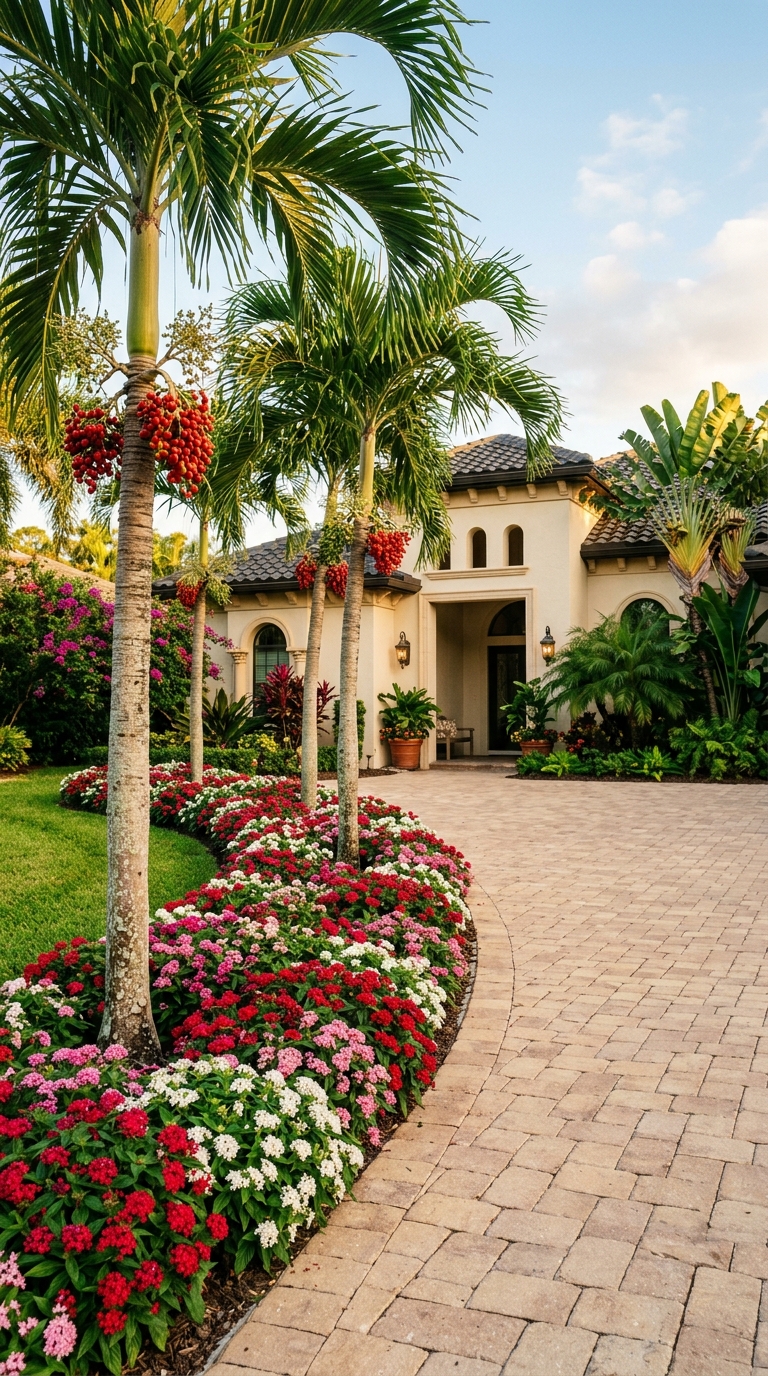
The driveway is often the widest open space in a Florida front yard — and most homeowners leave it completely bare. Bordering the driveway with alternating Christmas palms and low flowering shrubs or ground cover transforms the arrival experience completely. Suddenly, driving home feels like pulling into a resort.
Christmas palms are ideal for driveway borders because they’re slender enough not to overwhelm a residential driveway, they’re neat and self-cleaning, and their red berries add year-round color even when nothing is blooming. Underplant them with pentas, dwarf ixora, or colorful bromeliads, and the whole driveway edge becomes a lush tropical border that looks stunning from the street.
Styling Tip: Space driveway border palms at equal intervals and underplant them with the same species of ground cover repeated along the entire length — consistency and repetition are what make driveway landscaping look formal and elegant.
Cottage Front Porch Landscaping With Tropical Flair
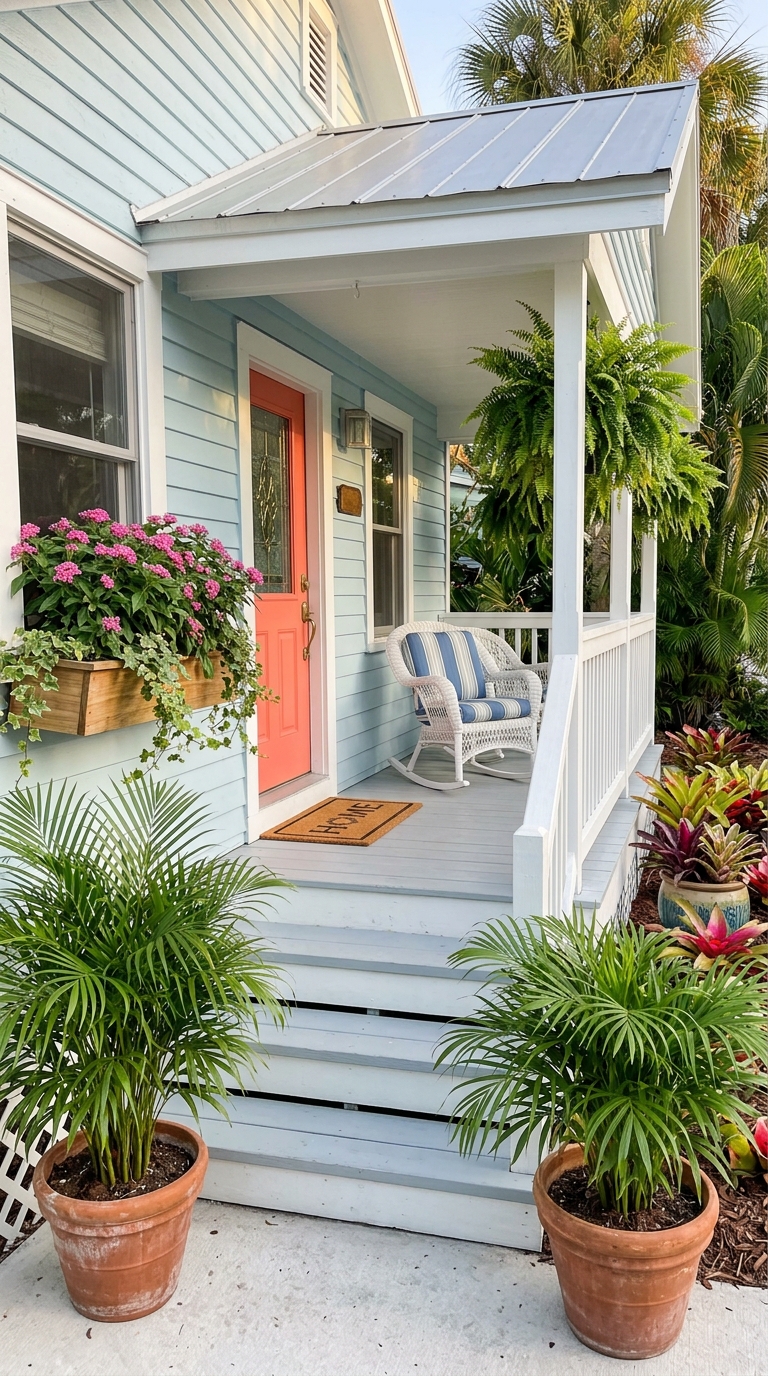
Florida’s cottage and bungalow-style homes have a warmth and charm that’s hard to beat — and the right front porch landscaping amplifies that feeling dramatically. Potted palms flanking the front steps, hanging baskets of tropical ferns swaying in the porch breeze, window boxes overflowing with pentas and calibrachoa, and a low border bed of colorful bromeliads along the porch edge.
It’s a layered, lush, welcoming look that photographs beautifully and feels genuinely lived-in. The key to making it work is repetition — use the same pot style on both sides of the steps, keep the hanging baskets at the same height, and choose a two or three-color plant palette that repeats throughout the whole porch area. The overall effect is charming and intentional rather than random.
Styling Tip: Choose oversized pots rather than small ones for porch plantings — a large statement pot with a single areca palm looks infinitely more elegant than a cluster of small pots competing for attention.
Symmetrical Formal Landscape With Shaped Hedges
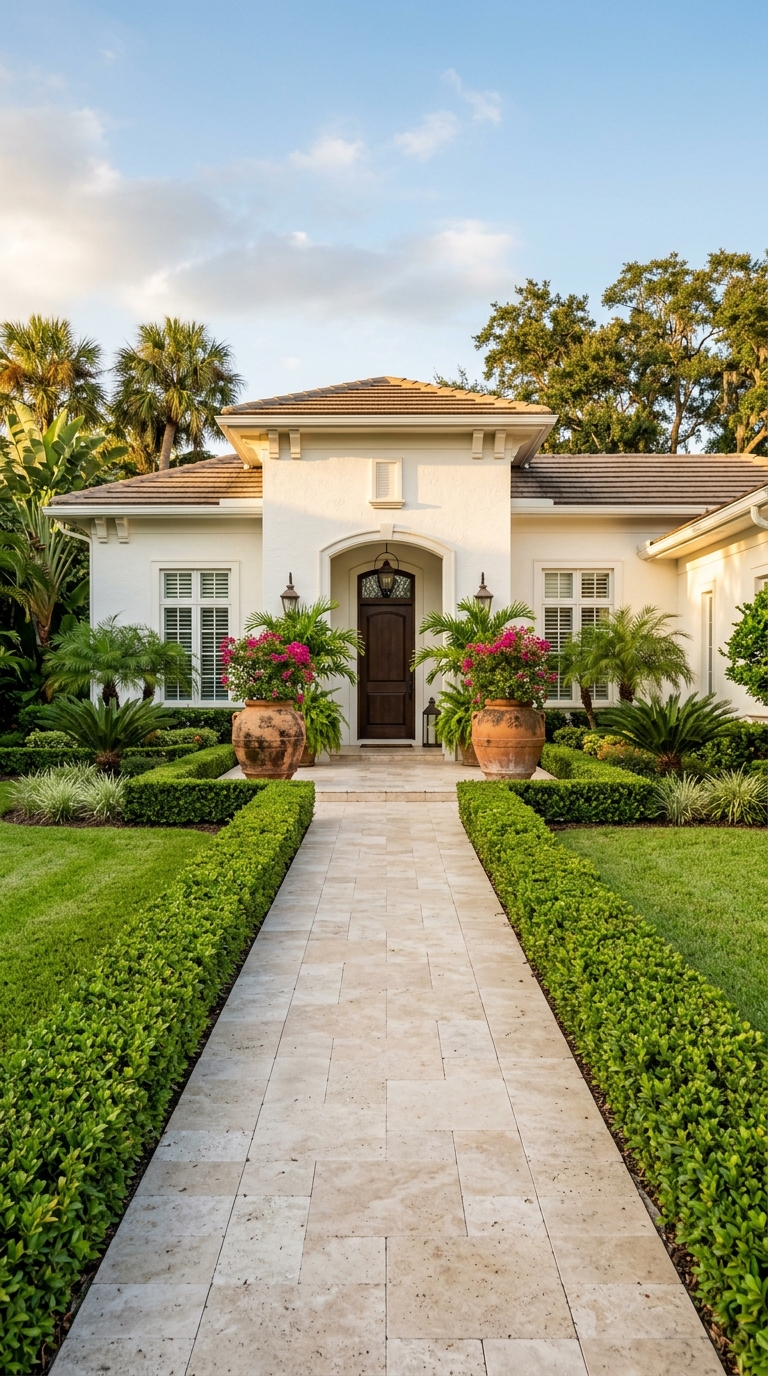
Symmetry in front yard landscaping communicates something specific — that the home is well cared-for, organized, and intentional. A symmetrical formal design with clipped viburnum, podocarpus, or ficus hedges on either side of the front entrance, paired with matching palm placements and a centered stone or paver walkway, gives any Florida home an elevated, polished look.
This style works particularly well for homes in HOA communities where a clean, maintained appearance is required. Once established, clipped hedges in Florida need trimming roughly three to four times per year — manageable for most homeowners — and they hold their shape beautifully in the subtropical climate. Add a pair of matching large pots at the front door filled with colorful seasonal plants, and the whole entrance looks like it belongs in a luxury neighborhood.
Styling Tip: Trim hedges to a very slight taper — wider at the base and slightly narrower at the top — rather than perfectly straight sides. This allows sunlight to reach the lower branches, keeps the hedge full and dense all the way to the ground, and prevents the bare-at-the-bottom problem most homeowners encounter.
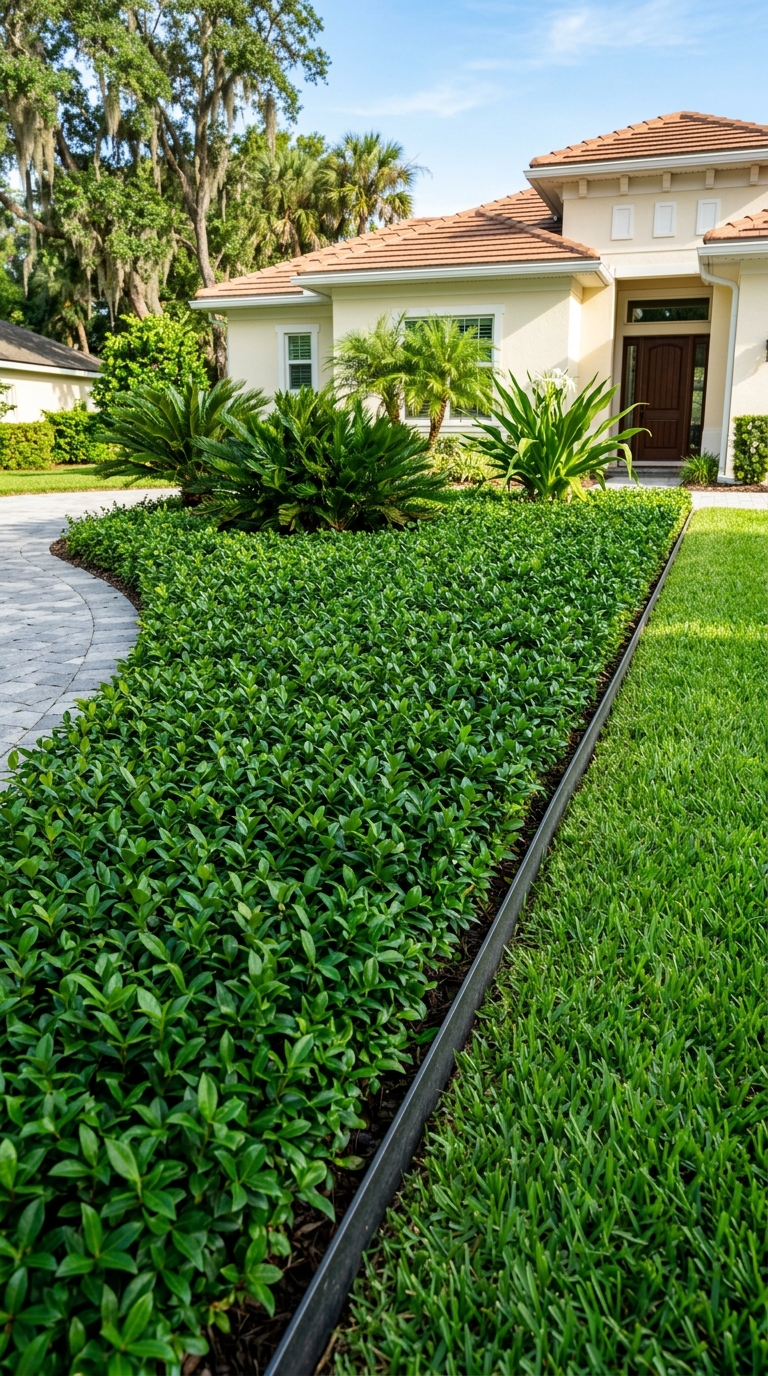
Mulch-Free Ground Cover With Living Plants
Traditional mulch in Florida is a constant battle — it washes away in summer storms, breaks down quickly in the heat and humidity, fades in the sun, and needs replacing every six months. Living ground cover plants solve every one of those problems at once and end up costing less over time.
Asian jasmine, liriope, wedelia, and dwarf oyster plants are all excellent low-growing ground covers that handle Florida’s climate beautifully. They suppress weeds naturally, stay green year-round, require almost no care once established, and never wash away in a downpour. They also look significantly more lush and intentional than mulch from a curb appeal perspective — it’s the difference between a maintained landscape and a truly designed one.
Styling Tip: Edge living ground cover beds with a clean steel or aluminum border to keep them from spreading into the lawn or walkway — it takes five minutes to install and makes the whole bed look sharp and deliberate.
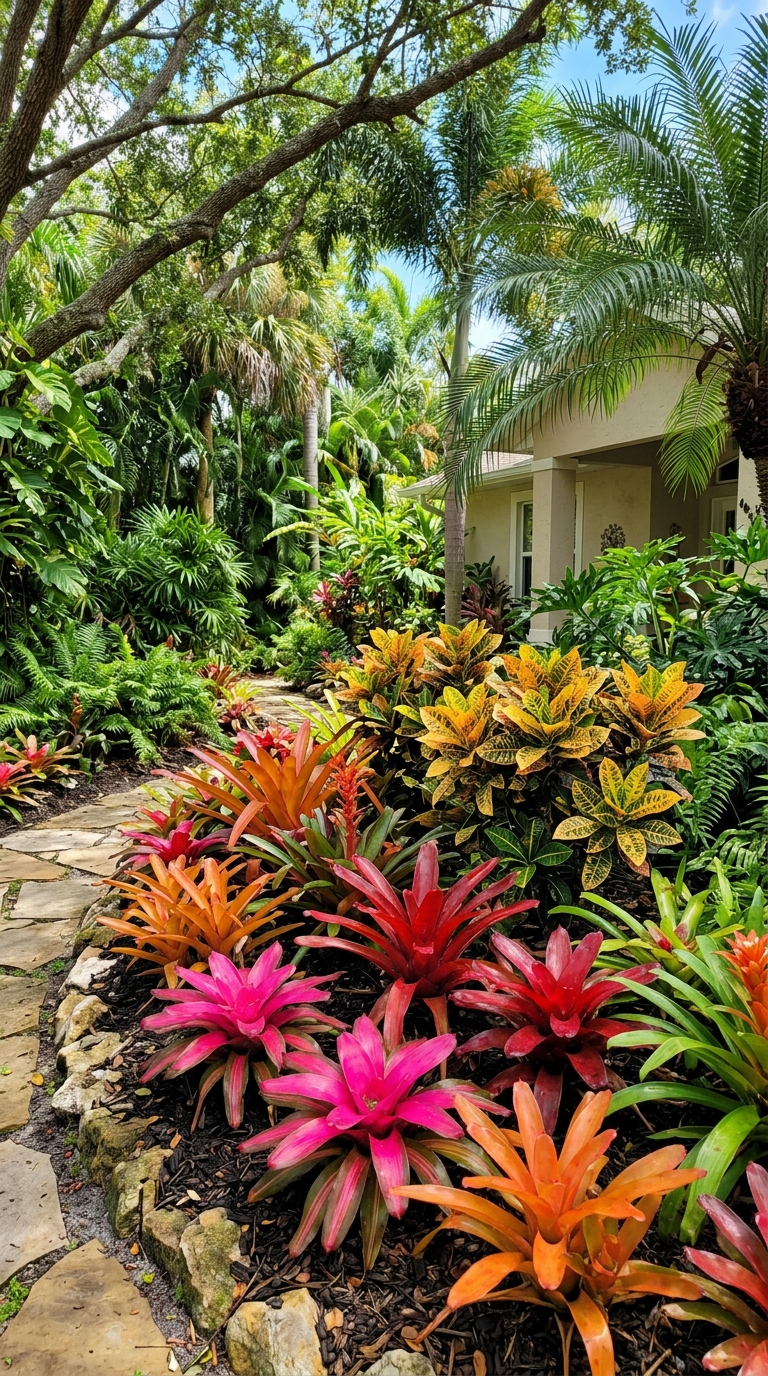
Colorful Bromeliad and Croton Tropical Display
If you want your Florida front yard to genuinely stop people in their tracks, bromeliads and crotons are your secret weapon. Bromeliads come in an almost absurd range of colors — deep red, hot pink, bright orange, electric purple — and they thrive in Florida’s heat and humidity with almost no water. Crotons add bold, multicolored foliage in orange, yellow, red, and green that looks exotic and vibrant year-round.
Plant them together in large groupings under the dappled shade of a tree or along a covered porch edge, and you get a display that looks like it belongs in a botanical garden. The colors are so saturated and so varied that no additional flowers are needed — the foliage alone does the visual work. Group by color family rather than mixing randomly for a more designed, intentional look.
Styling Tip: Plant bromeliads in odd-numbered clusters (3, 5, or 7 together) rather than in rows or pairs — clustered planting always looks more natural and luxurious than evenly spaced individual plants.
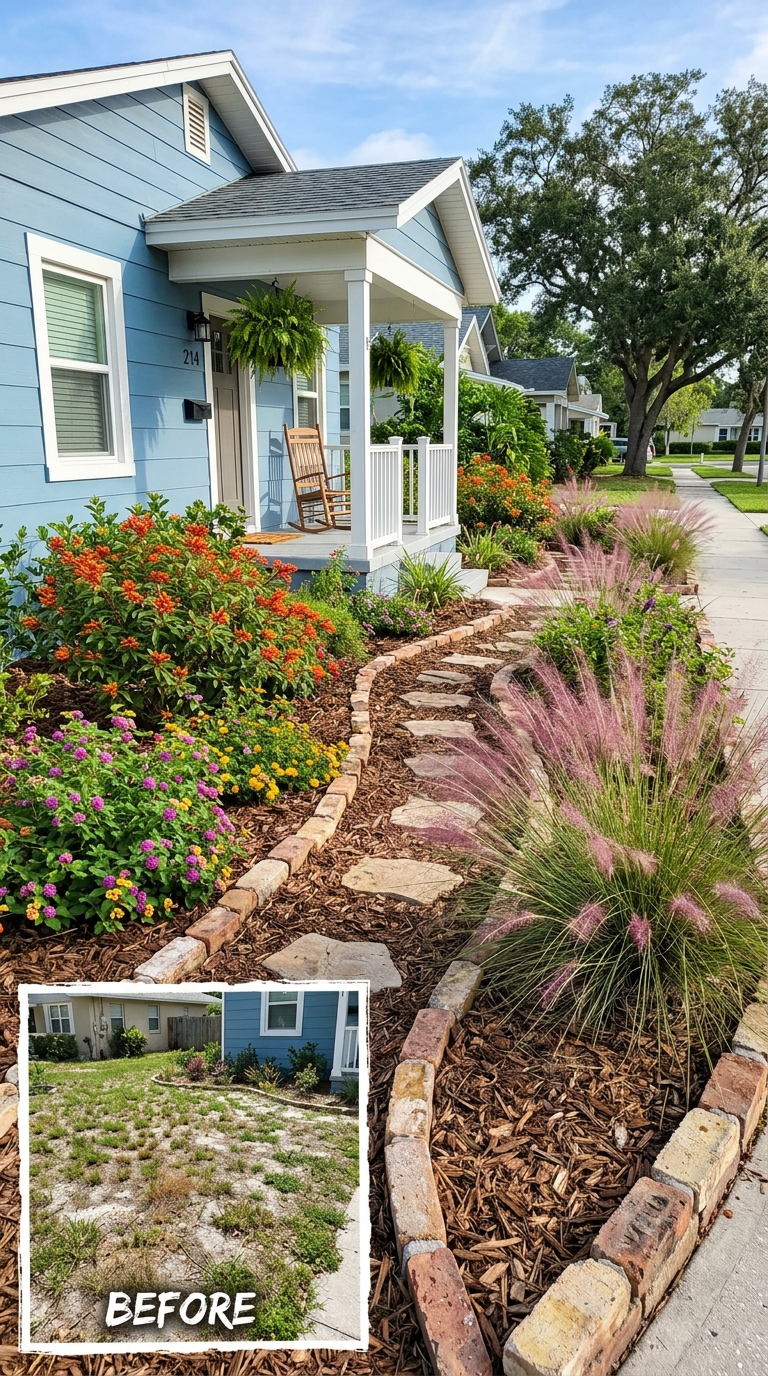
Budget Florida Front Yard Makeover With Native Plants
A complete front yard transformation doesn’t have to cost a fortune — especially in Florida, where native plants are increasingly available through local native plant societies, university extension sales, and even city composting and plant giveaway programs. With a thoughtful plan and a little patience, a genuinely beautiful Florida-friendly front yard is completely achievable on a budget.
Start by removing what isn’t working — dead grass, overgrown shrubs, deteriorating mulch. Then lay a simple design using native plants sourced from local nurseries or native plant sales (where they’re often sold at a fraction of retail prices), free mulch from city programs, and DIY edging from repurposed brick, flat stones, or affordable steel landscape edging. The result isn’t just budget-friendly — it’s genuinely better for Florida’s ecosystem, lower maintenance than almost anything else, and beautiful enough to make the neighbors ask who did your landscaping.
Styling Tip: Before buying a single plant, sketch a simple overhead view of your front yard and mark where the sun hits and where it stays shaded — matching plants to the right light conditions is more important than anything else for budget landscaping success.
Final Thoughts
Florida landscaping doesn’t have to be a constant fight against the heat, the storms, and the water restrictions. The right plants, the right materials, and a design that actually works with your climate — that’s all it takes to have a front yard that looks beautiful all year and doesn’t drain your time or your water bill.
Whether you go for a dramatic bougainvillea entrance, a lush tropical palm display, a modern xeriscape design, or a simple budget makeover with Florida native plants, every idea on this list is built to work in the Florida climate. Pick the one that fits your home, your style, and your lifestyle. Then start small if you need to. Even one well-done planting bed or a solar lighting upgrade makes a real difference from the street.
Your front yard can be genuinely beautiful and genuinely low-maintenance. In Florida, you just have to choose the right approach.