
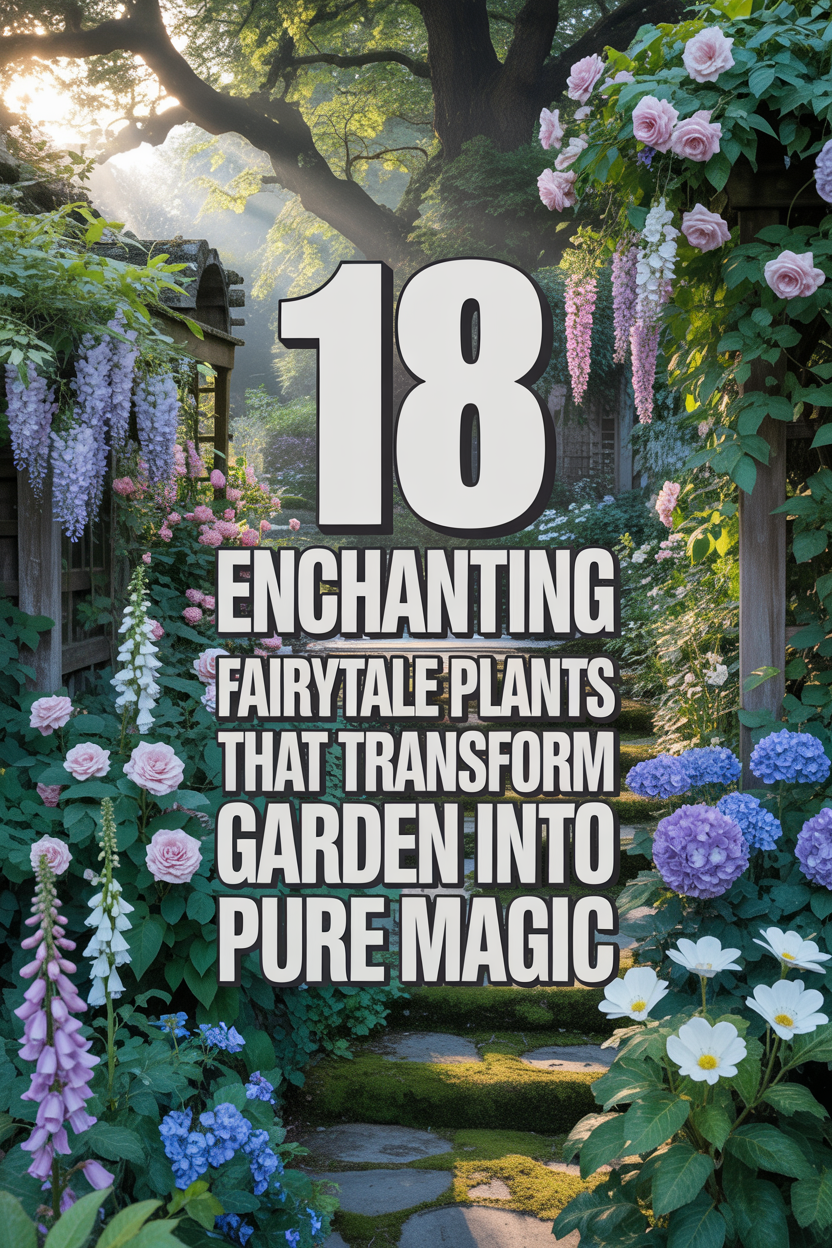
Some gardens just stop you in your tracks. You walk past and suddenly feel like you’ve stepped into a storybook — something about the colors, the layers, the way light falls through the leaves. That feeling isn’t an accident. It comes from choosing plants that carry mood, texture, and a little bit of wonder.
This list brings together 18 of the most enchanting plants you can actually grow yourself — no fancy equipment, no professional landscaper needed. Whether you have a big backyard or just a small corner that needs love, these plants will turn it into something truly magical. Pick one or pick ten — either way, your garden will never look the same.
Climbing & Cascading Plants
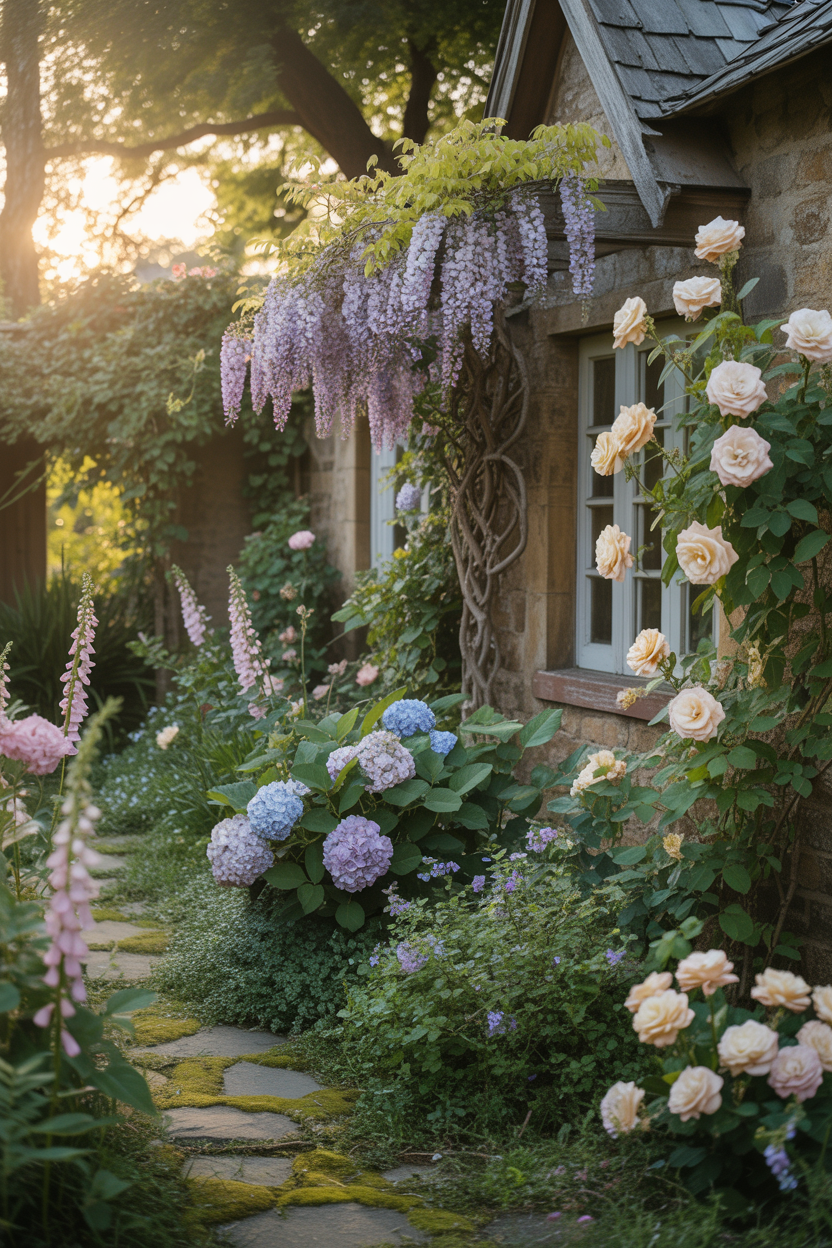
1. Wisteria — Purple Waterfalls You’ll Never Forget
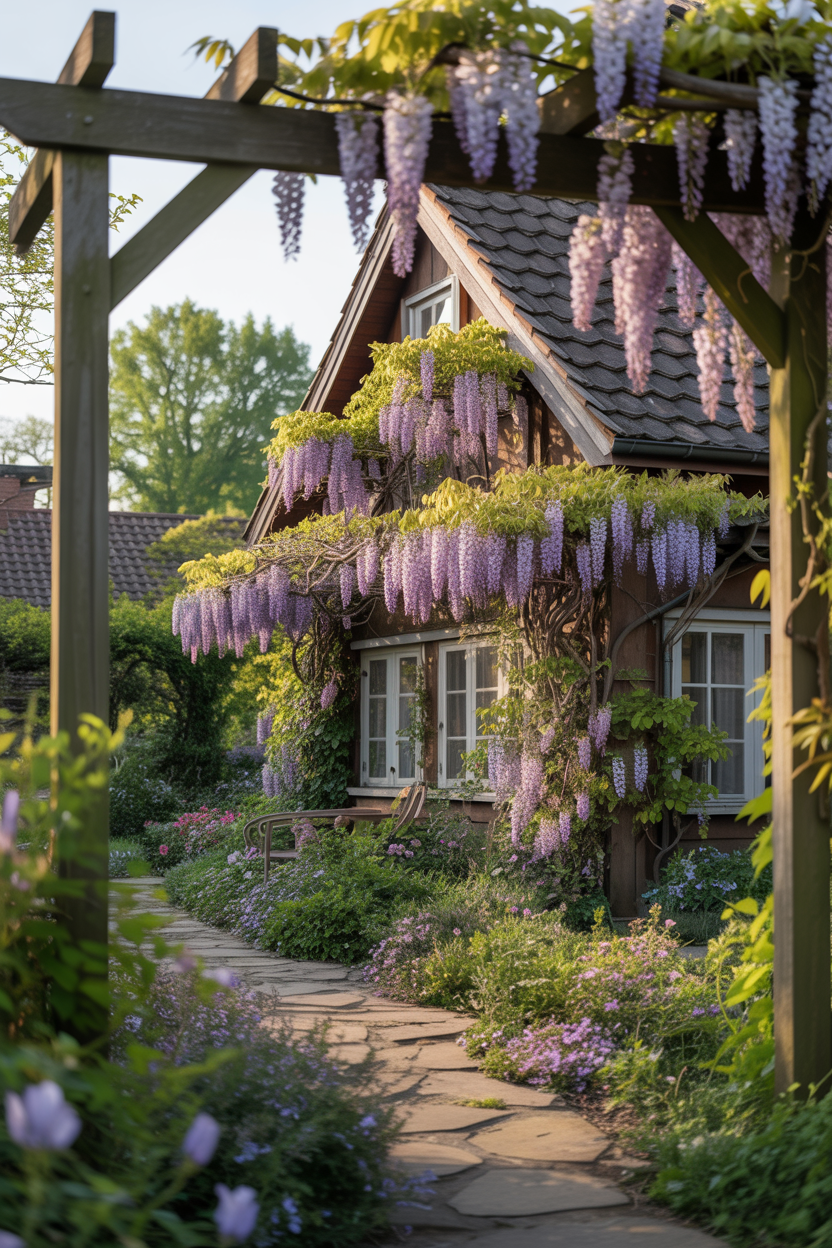
Wisteria is the plant people stop their cars for. Those long, draping clusters of purple flowers create natural curtains that can reach up to 18 inches, and the fragrance is sweet without being heavy — like the garden itself is breathing. Train it over a pergola or arch, and you’ve got a centerpiece that defines the entire space.
It does take patience — wisteria usually needs a couple of years before it really gets going. But once it does, it grows with serious enthusiasm, so regular pruning keeps it in shape. The payoff is completely worth the wait. Nothing else quite replicates that romantic, cascading European cottage effect.
2. Climbing Roses — The Backbone of Every Storybook Garden
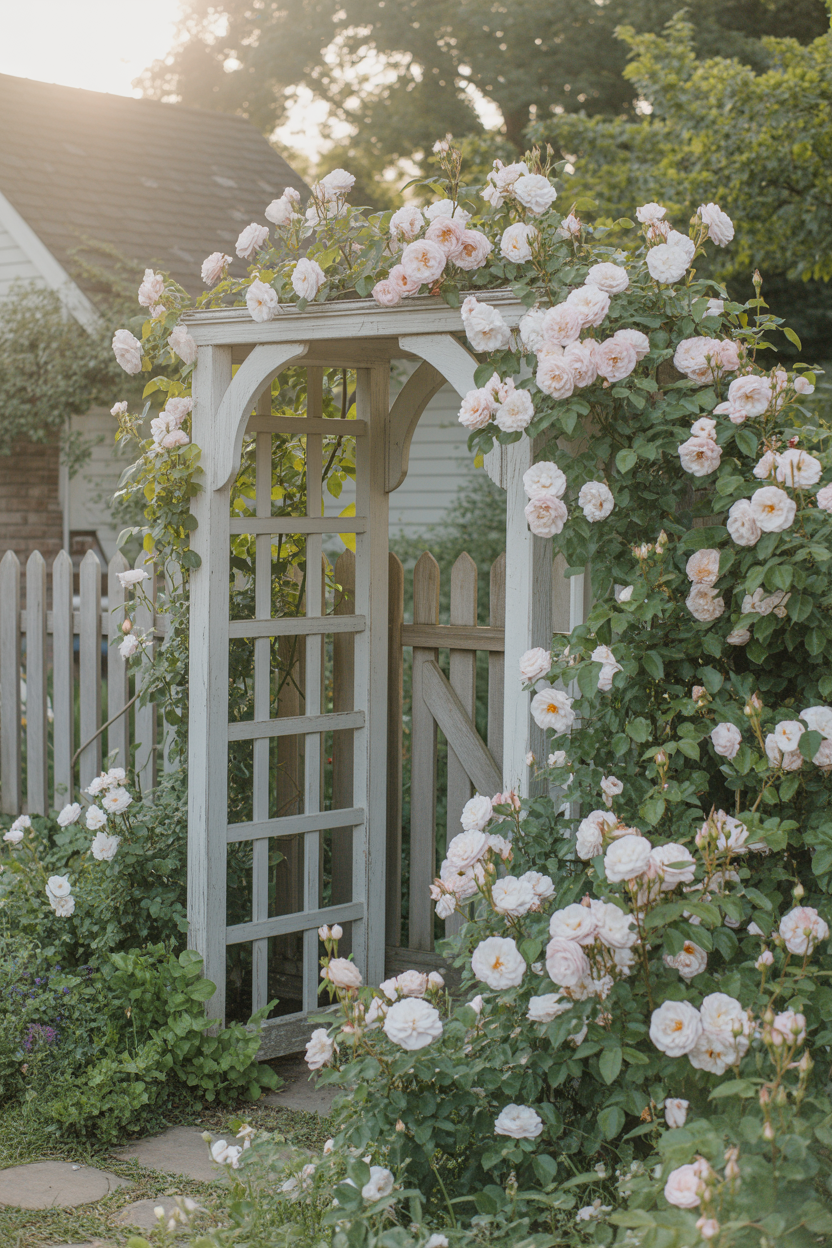
If one plant defines the fairytale garden look, it’s climbing roses. They soften hard walls, wrap around arbors, and fill the air with that classic old-rose fragrance that no candle has ever truly captured. Varieties like ‘New Dawn’ (pale pink, repeat blooming) and ‘Eden’ (soft ruffled blooms) are particularly dreamy choices.
The key trick most beginners miss: train the canes horizontally, not vertically. This simple step dramatically increases how many blooms the plant produces. Give them a sturdy trellis or an old wooden fence, and within a season or two, they’ll completely transform whatever structure they climb.
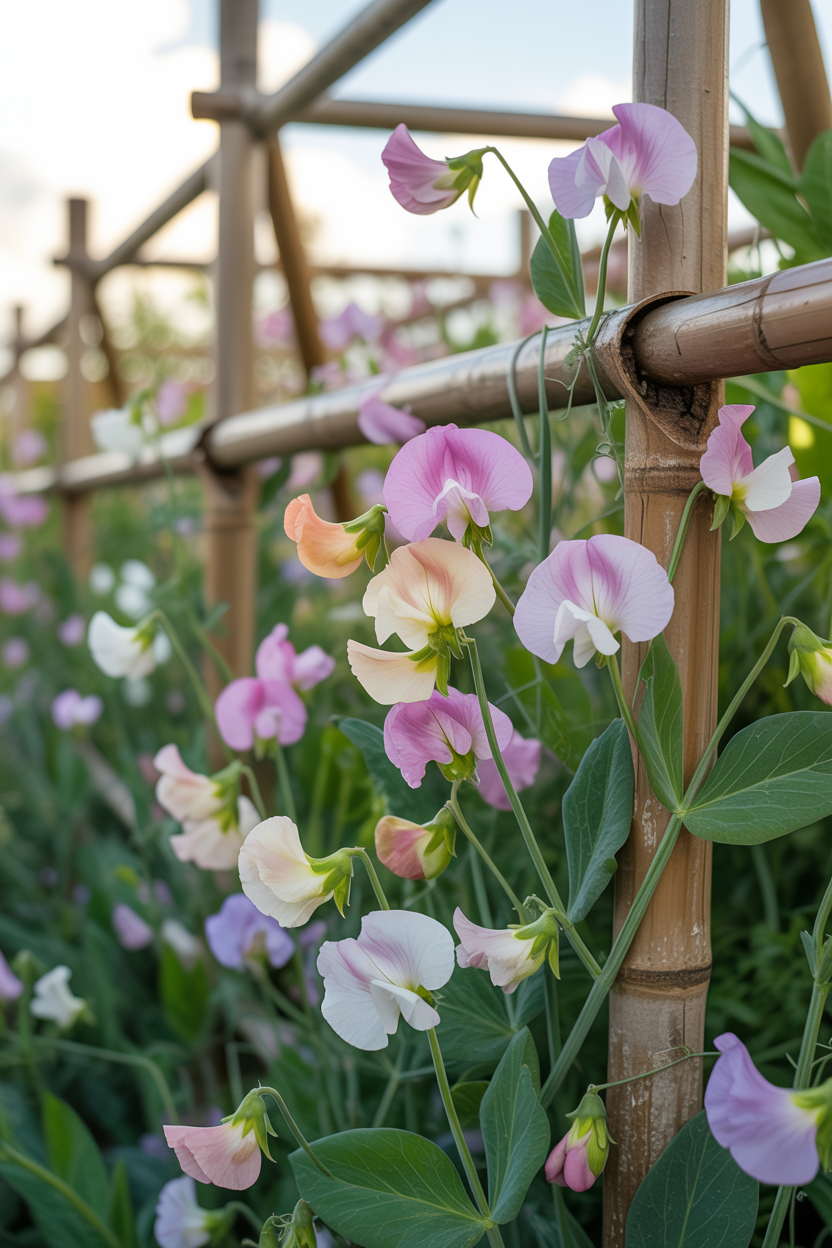
3. Sweet Pea Vines — Watercolor Flowers in Pastel
Sweet peas look like someone painted them with watercolors — soft pinks, lavenders, creamy whites, and coral shades on delicate ruffled blooms. They’re annual climbers with an old-world charm and a fragrance so light and sweet it’s almost nostalgic. Plant them up a bamboo teepee or simple trellis in early spring and watch them climb.
They actually prefer cool weather, which makes them perfect spring plants before summer heat arrives. Growing them from seed is easy — just soak overnight, and they sprout within a week or two. They also make incredible cut flowers for small indoor bouquets that fill a room with scent.
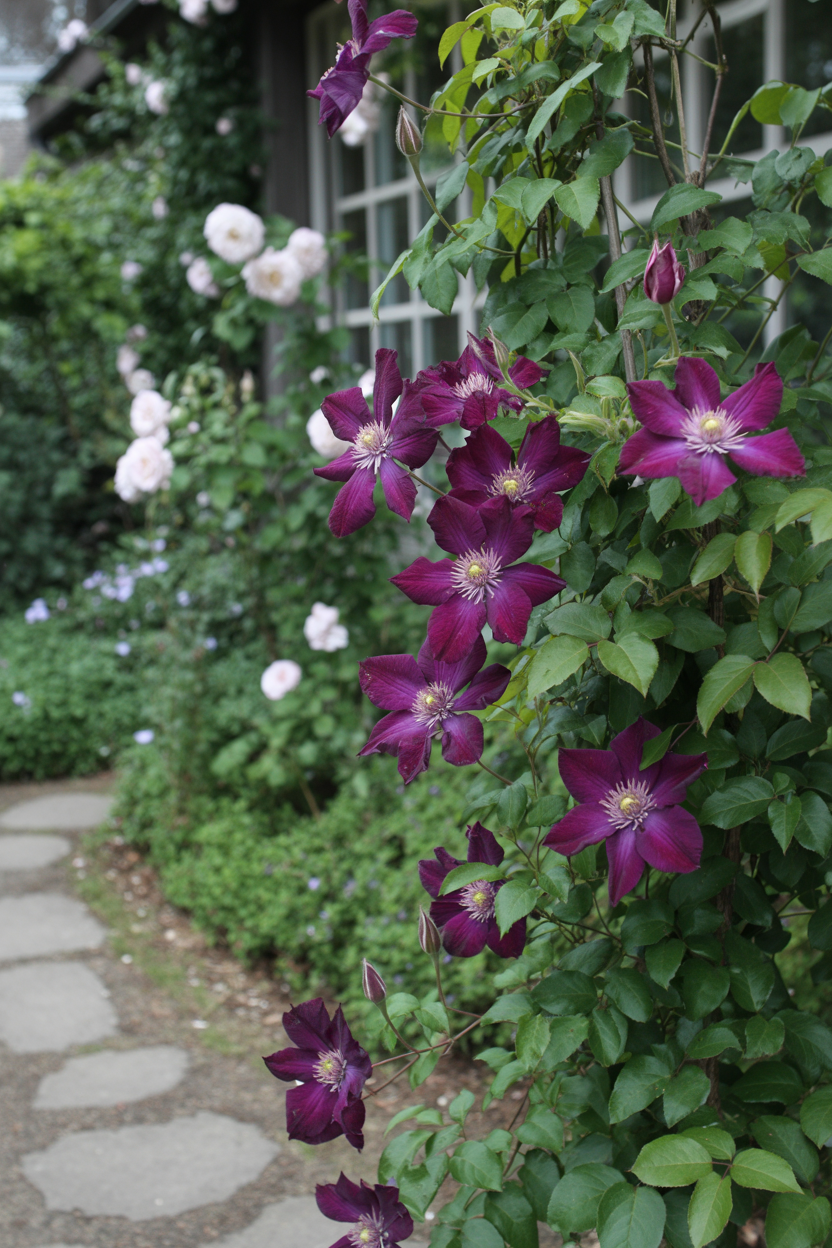
4. Clematis ‘Jackmanii’ — Deep Purple Stars That Float
Clematis produces star-shaped blooms the size of your palm, and the ‘Jackmanii’ variety gives you that rich, saturated deep purple that photographs beautifully. Because it’s a climber, the flowers seem to float above everything else — you can weave it through shrubs or pair it with roses for that coveted layered, secret garden look.
This variety has a simple growing rule: head in the sun, feet in the shade. The plant loves climbing into light, but the roots want to stay cool. Mulch around the base or plant low groundcover nearby to help. It blooms from summer into fall, and even the silvery seed heads that follow are ornamentally interesting.
Storybook Flowers
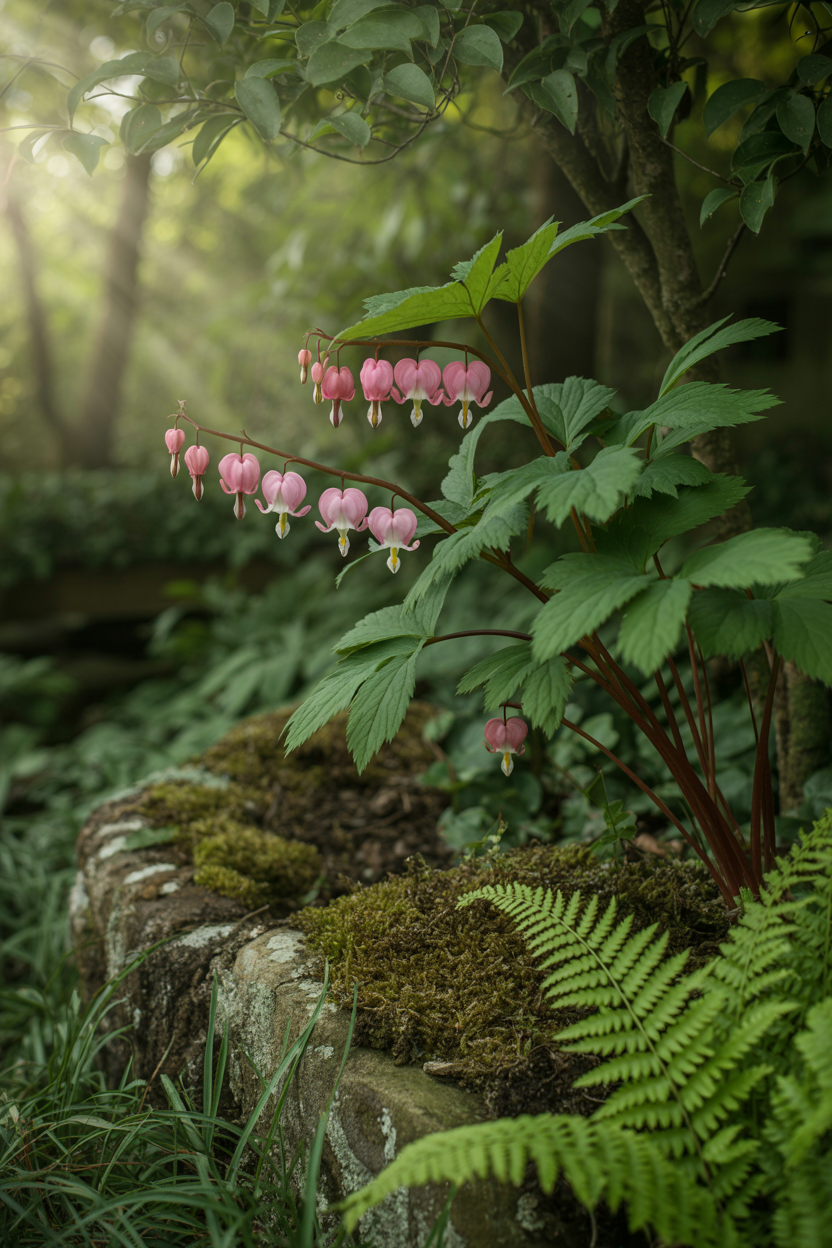
5. Bleeding Heart — Nature’s Most Romantic Flower
Bleeding hearts are exactly what the name promises — perfect little heart-shaped flowers dangling from arching stems like nature’s own love letter. They bloom in mid to late spring and thrive in shady woodland spots where other flowers struggle. The classic variety is pink and white, while ‘Alba’ is pure white and almost ghostly beautiful.
They do go dormant when summer heat kicks in and essentially disappear, which can be startling the first time. But they faithfully return each spring, which makes finding them bloom again feel like discovering something precious. Plant them under trees alongside ferns and hostas for a complete woodland fairy garden look.
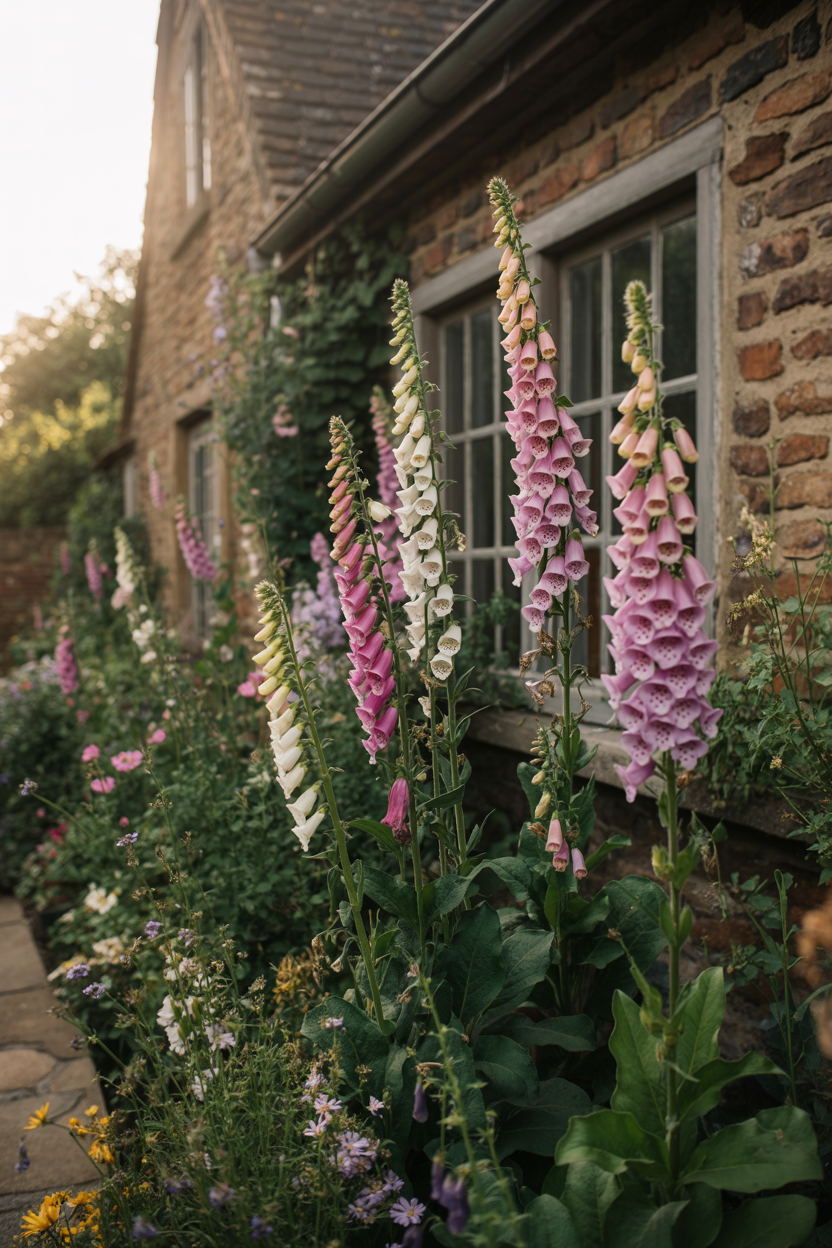
6. Foxglove — The Towering Drama of English Gardens
Foxgloves are the tall, majestic flower spikes that anchor every proper cottage garden photo. Each stalk grows 4 to 6 feet and is covered in tubular blooms — pink, purple, white, peachy apricot — each one spotted inside like it was hand-painted. They create bold vertical interest and fill the background of beds with effortless drama.
They’re biennial, meaning they grow leaves in year one and flower in year two. But once established, they self-seed generously, so new plants keep appearing naturally year after year. One note: all parts are toxic, so keep them away from areas where curious pets or children might nibble. For visual enjoyment, though, they’re completely safe and spectacular.
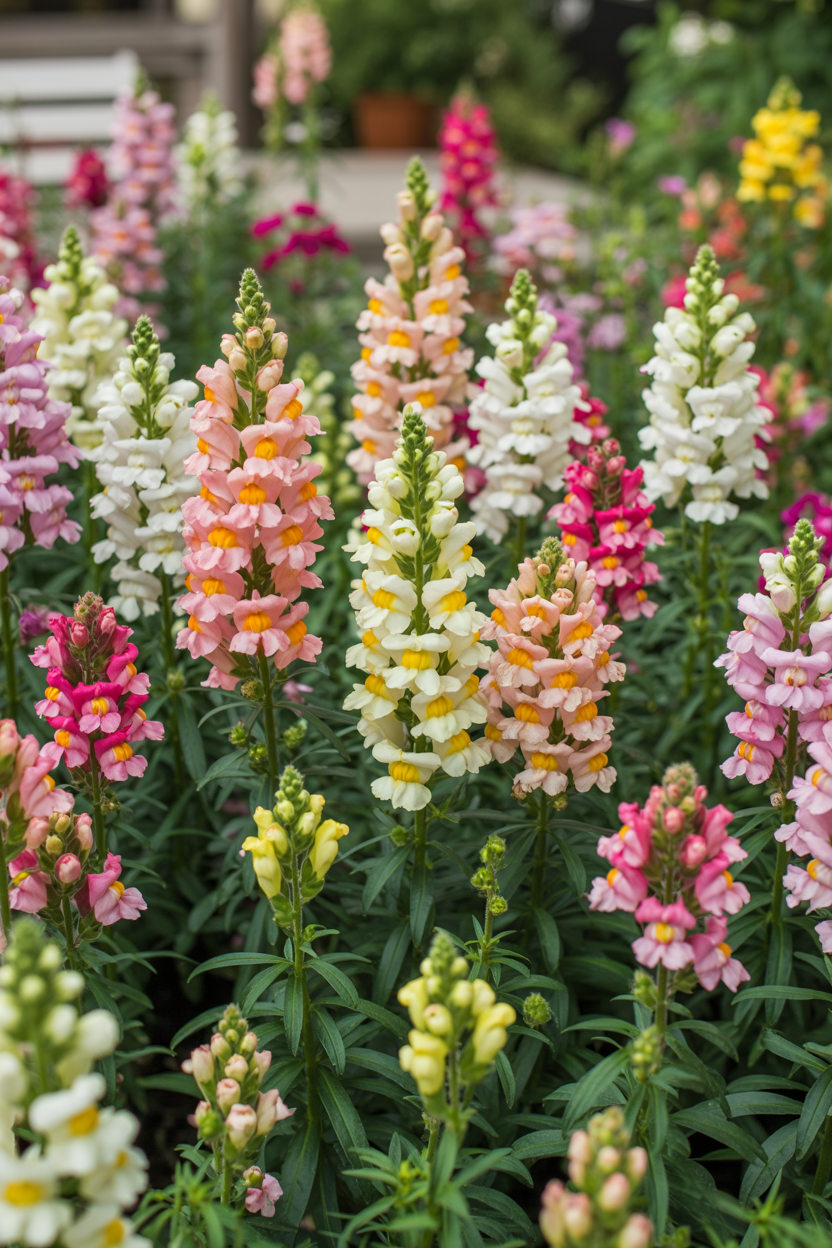
7. Snapdragon — The Flower That Opens Like a Dragon’s Mouth
Snapdragons have a trick every kid (and most adults) loves — squeeze the sides of the bloom and it opens and closes like a little dragon’s mouth. Beyond the novelty, they’re genuinely beautiful: upright spikes covered in densely packed blooms in nearly every color you can imagine. They add cheerful vertical interest and hold up beautifully as cut flowers.
What makes them especially useful is that they bloom well into fall, surviving light frosts when most other annuals have given up. And there’s a quirky bonus — once they go to seed, the dried pods look like tiny skulls, making them surprisingly popular in Halloween arrangements and dried flower displays. They’re stranger and more interesting than they first appear.
If you love whimsical outdoor spaces, these stunning fairy garden ideas will show you how to turn simple pots, patios, and backyard corners into magical little worlds.
8. Columbine — Fairy Bells That Dance in the Breeze
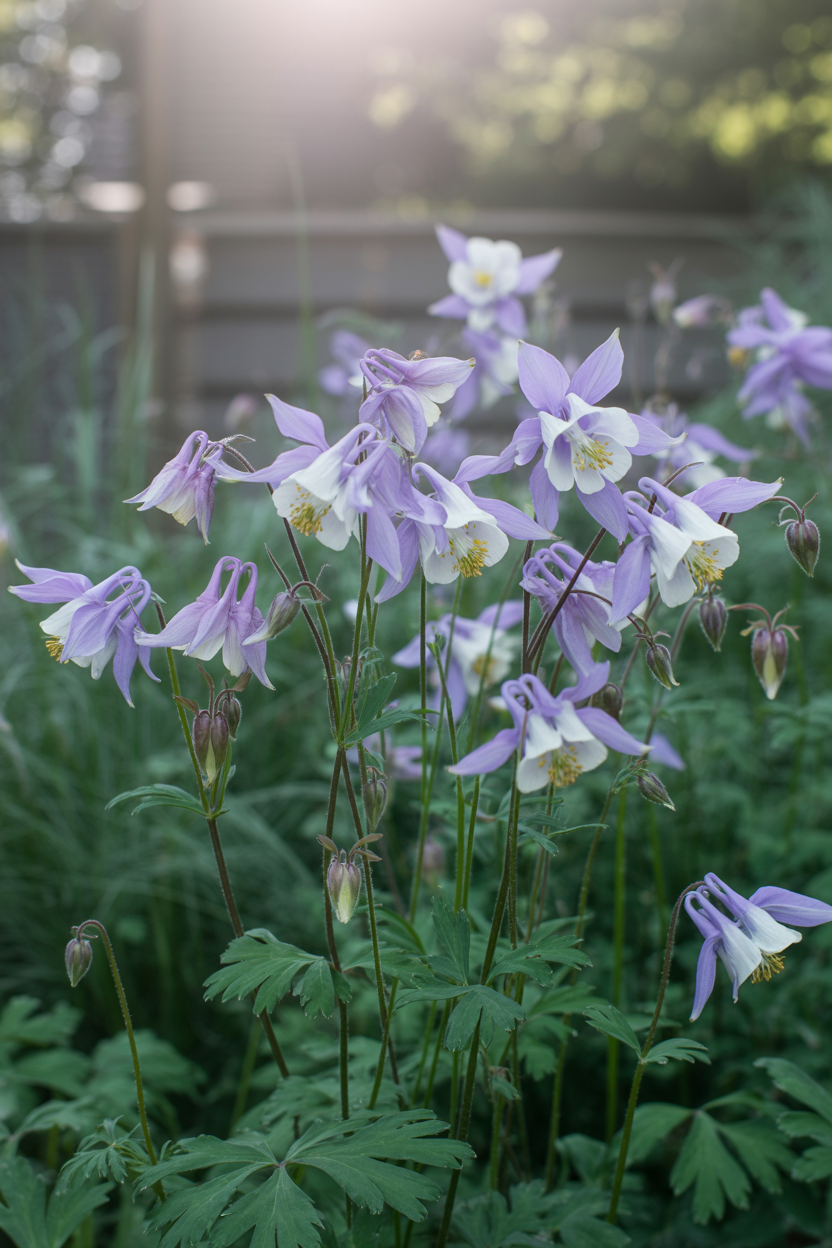
Columbines have an almost otherworldly shape — spurred petals that look like tiny fairy bonnets, in color combinations that feel hand-designed: deep purple and white, red and gold, soft lavenders and creams. When the breeze catches them, they sway and dance, adding real movement to the garden. The delicate, fern-like foliage adds texture even when not in bloom.
They prefer partial shade and self-seed readily, which means they naturally spread and colonize corners of the garden over time — that organic, wildflower meadow feel that’s so hard to fake but so easy with the right plants. They also attract hummingbirds obsessively, adding another layer of life and motion to the space.
Night & Moon Garden Plants
9. Moonflower — Magic That Only Happens After Dark
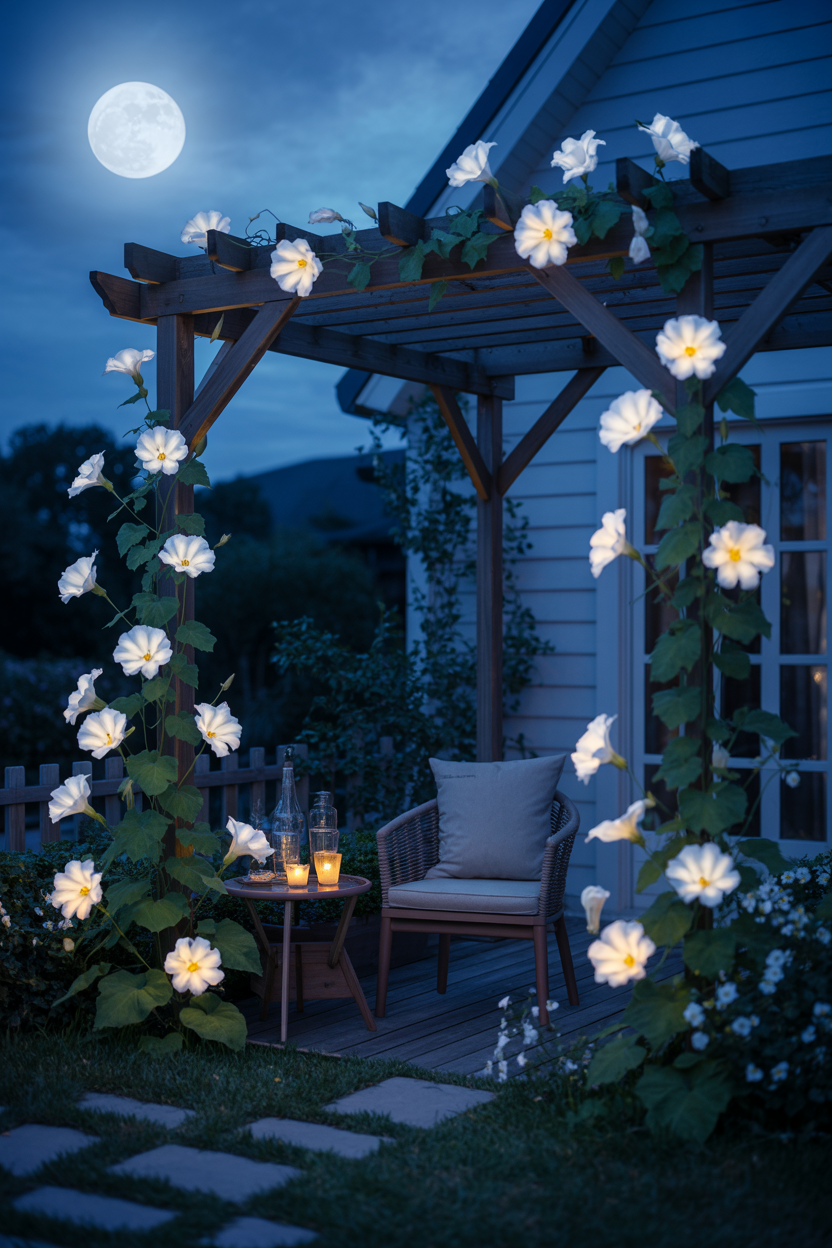
Moonflowers are for people who want their garden to come alive at dusk. These vining plants produce large, pure white trumpet-shaped blooms that open as the sun sets and close again by morning — watching them unfurl in real time is genuinely mesmerizing. Plant them near a patio or seating area, and the evening fragrance drifts through the air like a natural perfume.
They’re related to morning glories and climb just as vigorously, so give them a trellis or fence. Some gardeners plant both together for 24-hour blooming coverage — morning glories by day, moonflowers by night. The white blooms also glow visibly in low evening light and moonlight, creating an ethereal, luminous effect that photographs beautifully.
10. Angel’s Trumpet — Dramatic Evening Elegance
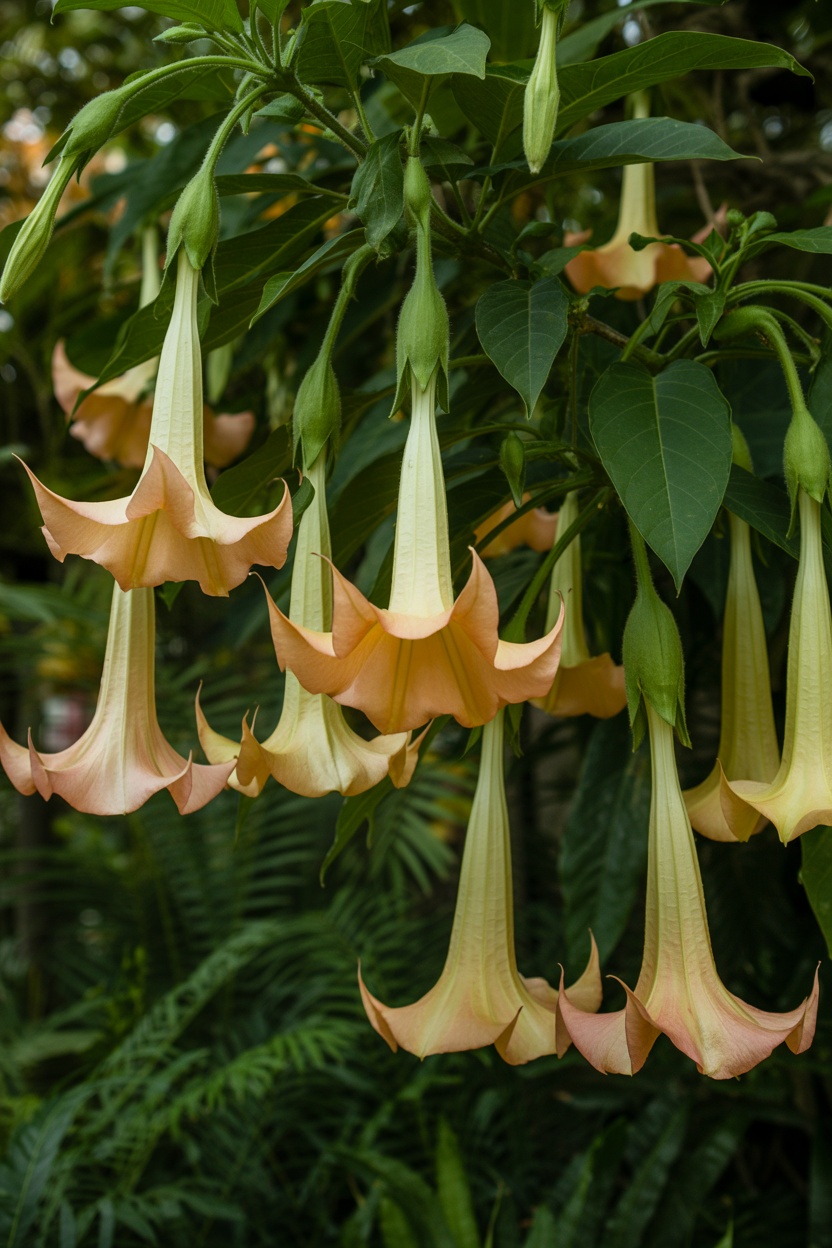
Angel’s trumpet is one of the most theatrical plants you can grow. The blooms are enormous — sometimes 10 inches long — hanging downward in elegant pendulous bells in shades of white, yellow, peach, and soft pink. As evening falls, they release an intense sweet fragrance that fills the entire garden. It’s the definition of tropical fairytale drama.
In cooler climates, it’s often grown in a large container that comes indoors for winter, since the plant needs warmth to thrive. It can get large — almost small-tree size — so plan for space. Like foxglove, all parts are toxic, so it should be planted in spots for admiring rather than touching. The visual impact, especially at dusk, is hard to match.
Cottage Garden Classics
11. Hollyhock — The Quintessential Fairytale Giant
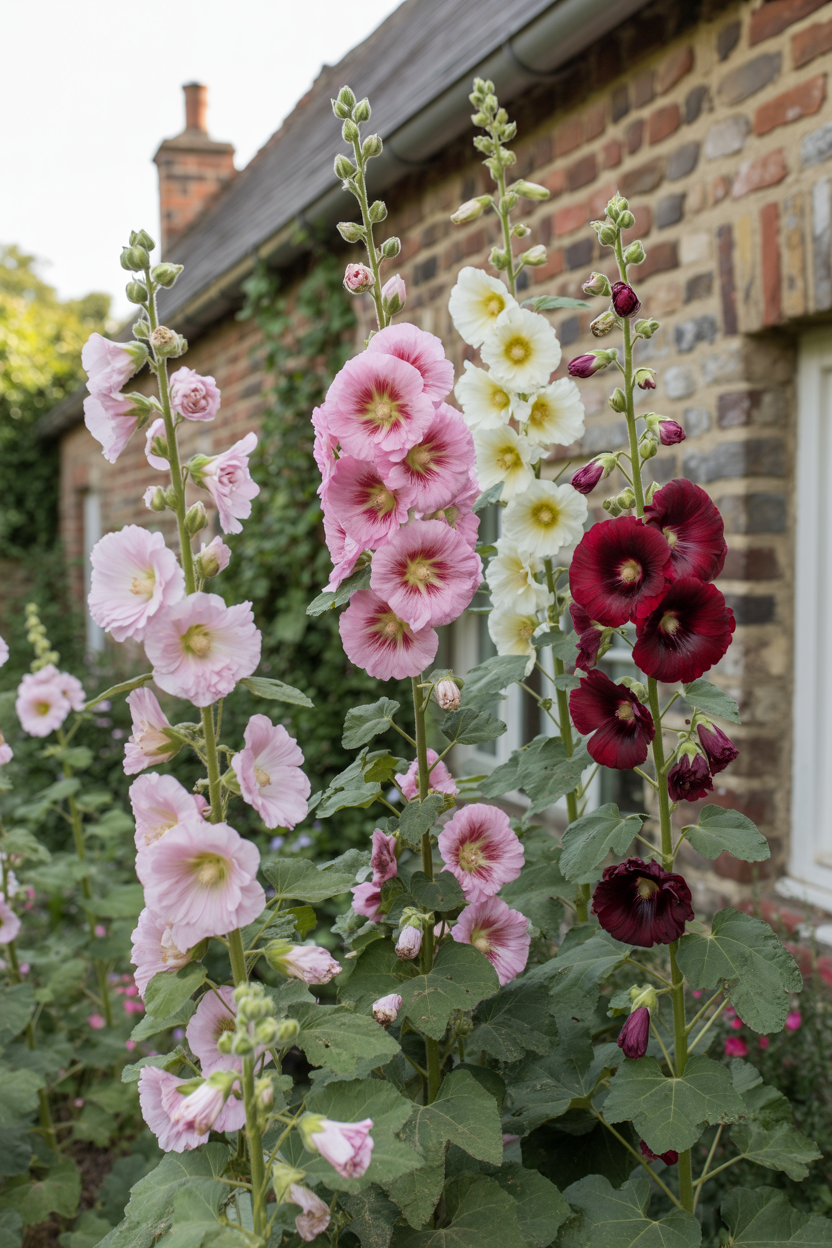
Hollyhocks are what people picture when they imagine old English cottage gardens. Towering up to 6 or 8 feet, with flowers stacked the full length of the stem in soft pinks, deep purples, creamy yellows, and velvety near-blacks — they look like oversized crepe paper flowers, bold and delicate at the same time. Plant them against walls, fences, or house fronts to soften architecture beautifully.
They self-seed so reliably that once you plant them, they essentially maintain themselves — new plants appear naturally every season. Keep an eye out for rust (orange spots on leaves), a common fungal issue, but it rarely kills the plant. A good autumn cleanup goes a long way toward preventing it the following year.
12. Delphinium — True Blue Spires of Pure Enchantment
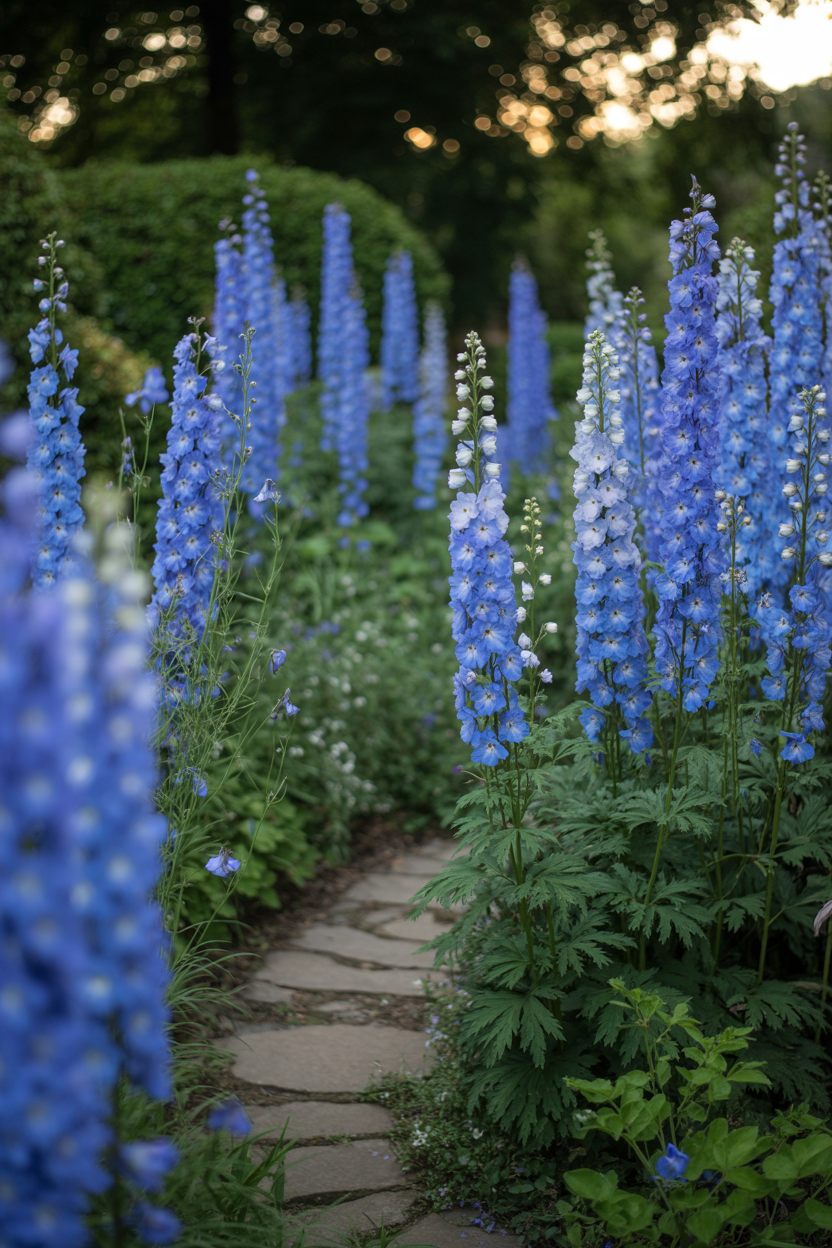
True blue is one of the rarest colors in the garden world, and delphiniums deliver it in breathtaking quantities. The flower spikes can reach 4 to 6 feet tall, densely packed with blooms from base to tip. When a drift of delphiniums is in full bloom, the color is so saturated and rich it looks almost painted — deep sky blue, soft lavender, icy white, and everything in between.
They need staking to keep those tall spikes upright in wind and rain — learn from experience and do this early. They also prefer cooler climates and can struggle in hot, humid summers. But in the right setting, delphiniums are absolute showstoppers that anchor the entire mid-border with vertical drama no other plant quite replicates.
13. Love-in-a-Mist — Ethereal Blooms Wrapped in Lace
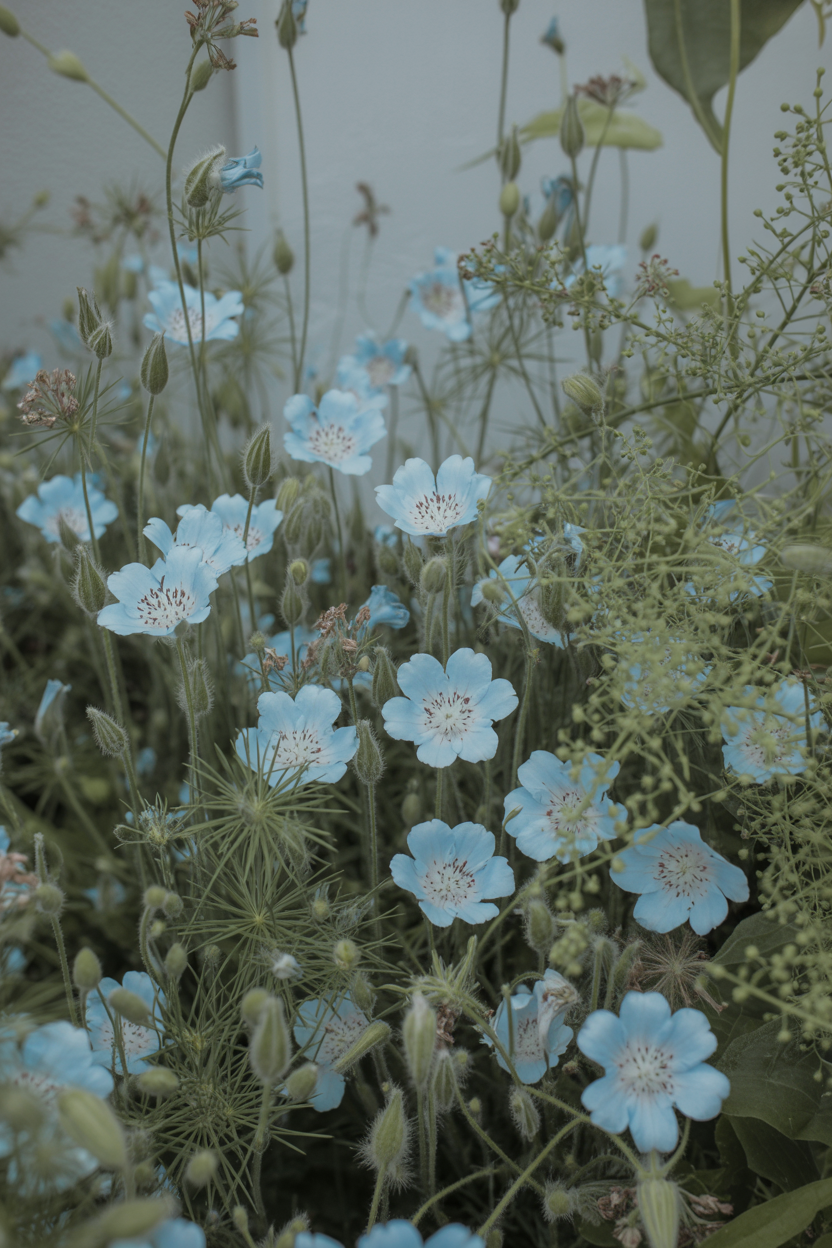
Love-in-a-mist earns its romantic name completely. Each pale blue flower sits nestled inside a cloud of fine, thread-like foliage that looks like delicate green lace — the effect is dreamy and soft in a way that most plants simply can’t achieve. It’s one of those plants that looks more like an illustration than a real garden flower.
After blooming, the seed pods that form are equally gorgeous — architectural little paper lanterns that dry beautifully and are wildly popular in floral arrangements. The plant self-sows freely, popping up in unexpected corners each year, which gives the garden that pleasingly spontaneous, unplanned quality. Pair it with roses and poppies for classic cottage perfection.
Woodland & Shade Plants
14. Japanese Painted Fern — Silver Magic for Shady Spots
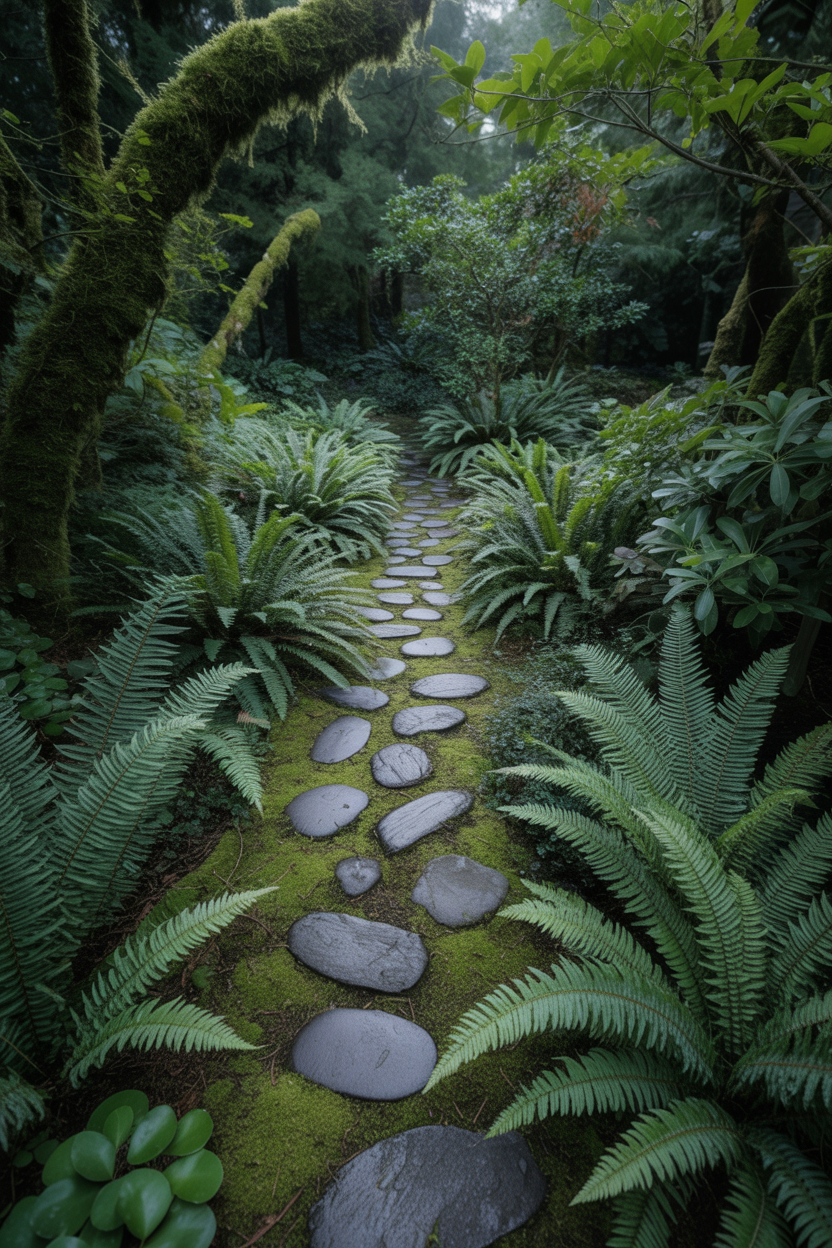
Not every fairytale plant needs flowers. Japanese painted ferns bring their magic through foliage — silvery metallic fronds that shimmer in low light, with burgundy stems fading out to silver-grey edges. They look genuinely hand-painted, which is exactly where the name comes from. Plant them along shady paths, and they create that unmistakable enchanted forest feeling.
They’re low-maintenance once settled in, preferring moist, well-drained soil in shade to part-shade. They pair beautifully with hostas and astilbe, the contrast between metallic silver fronds and darker greens creating real visual depth. Deciduous in winter but reliably returning each spring with fresh, gorgeous fronds.
15. Astilbe — Feathery Plumes That Light Up Shade Gardens
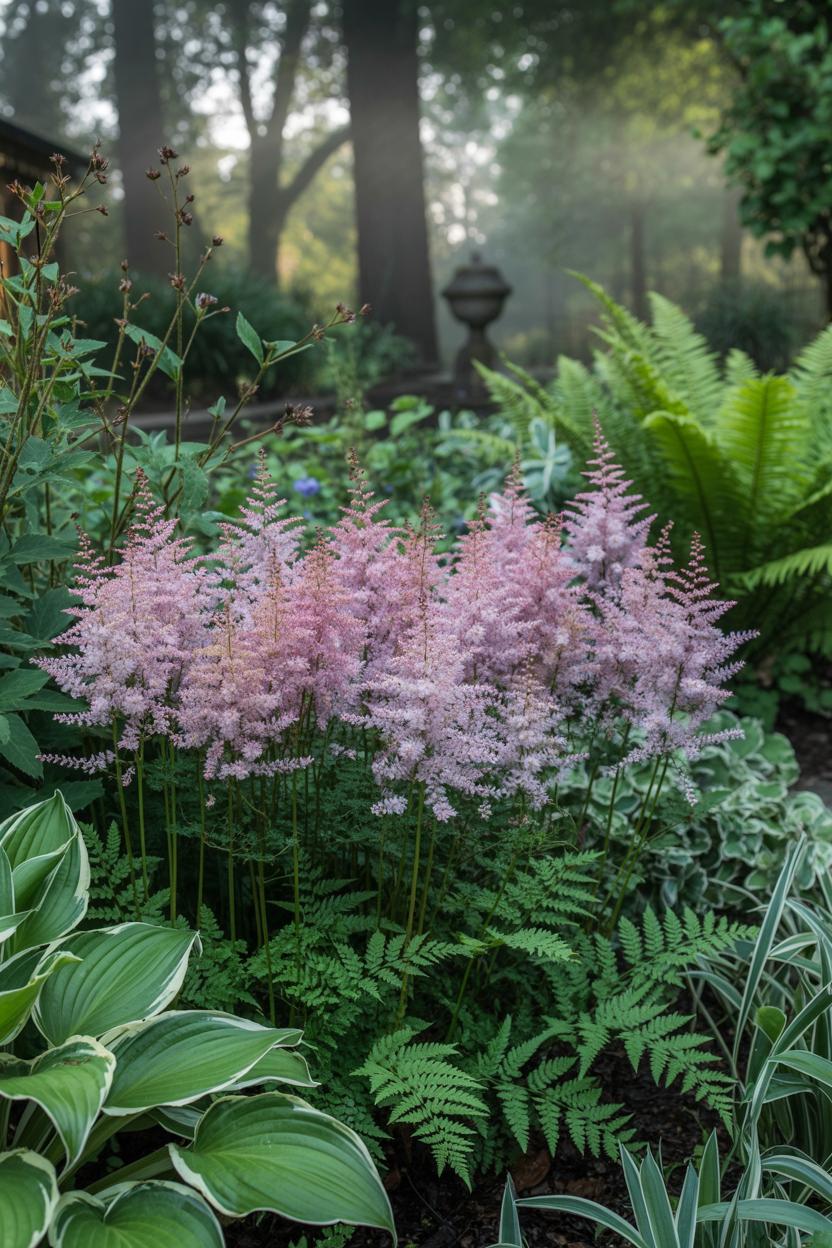
Astilbe is the plant that makes shade gardeners genuinely excited. The flowers are feathery, cloud-like plumes rising above glossy fern-like foliage — soft pinks, coral, white, deep red — blooming in early to midsummer when most shade plants are just sitting there being green. Planted in groups, a drift of pink astilbe is one of the softest, most romantic sights a garden can offer.
They prefer consistently moist soil, making them ideal for those slightly damp, problematic shady spots that nothing else seems to enjoy. The flowers also dry beautifully right on the plant, adding texture and interest well into winter. For a complete woodland garden, combine them with hostas, bleeding hearts, and painted ferns.
16. Forget-Me-Not — Tiny Blue Gems With a Beautiful Story
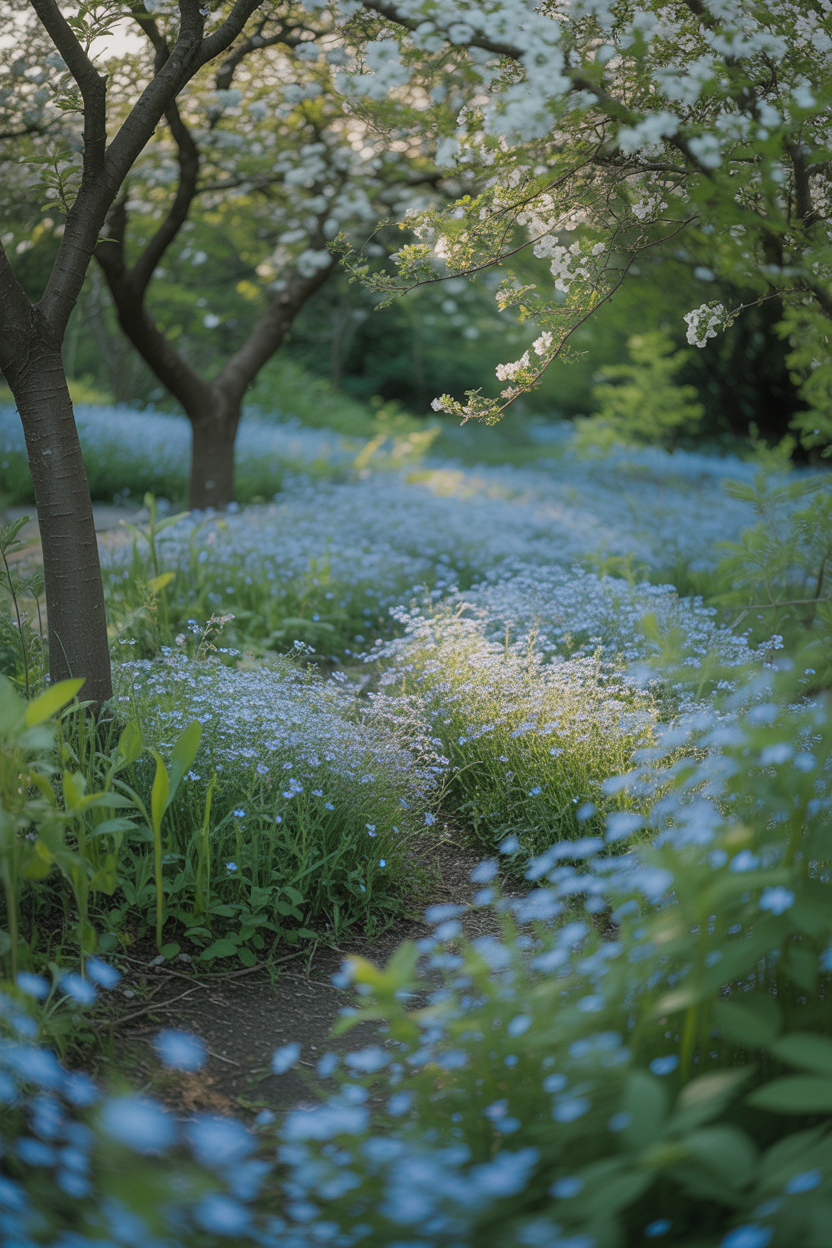
Forget-me-nots create carpets of tiny sky-blue flowers with little yellow centers that are so delicate they almost look drawn. There’s old folklore behind the name — lovers who picked them wanted to ensure they’d never be forgotten — and that romantic symbolism makes them even more special as a garden plant. They naturalize beautifully under trees and along pathways.
They self-seed freely and spread on their own, creating that spontaneous wildflower meadow quality that’s impossible to manufacture artificially. In spring, they pair exquisitely with tulips and daffodils, filling the gaps between bulbs with soft blue clouds. They prefer part shade and moist soil but are genuinely adaptable once established.
Foliage & Statement Plants
17. Hydrangea — Dreamy Mophead Clouds All Summer
Hydrangeas are cottage garden royalty. The mophead varieties produce flower heads so large and fluffy they look like clouds that settled into the garden — and they bloom from summer right into fall, giving months of color. What makes them uniquely magical is their color-changing ability: acidic soil shifts blooms toward blue, alkaline toward pink. Some gardeners adjust soil pH specifically to influence the color.
The ‘Endless Summer’ series blooms on both old and new wood, meaning more consistent flowering even if late frost takes some early growth. ‘Limelight’ offers stunning lime-green flowers that age to blush pink. The blooms also cut and dry beautifully, making them as useful inside as they are outdoors. A well-placed hydrangea shrub anchors an entire garden design.
18. Coral Bells — Year-Round Foliage That Steals the Show
Coral bells give you color all season — not just when they bloom, but through their foliage, which comes in an almost unbelievable range: deep burgundy, lime green, copper, silver, bronze, and hand-painted multicolor varieties. They work in sun or shade, depending on the variety, look gorgeous in containers or borders, and provide visual interest even in the dead of winter.
In early summer, they send up delicate wands of tiny bell-shaped flowers — airy and pretty, and absolute hummingbird magnets. Plant them in groups or drifts for the most impact, mixing different leaf colors for a genuinely striking tapestry effect. ‘Palace Purple’ gives near-black drama; ‘Lime Marmalade’ practically glows. Versatile, beautiful, and completely underrated.
Conclusion
Creating a fairytale garden is less about perfection and more about atmosphere — soft flowers spilling over pathways, climbing vines wrapping around arches, and layers of plants that make the space feel alive and magical. Whether you love romantic cottage blooms, moonlit flowers, or woodland-inspired foliage, these enchanting plants can turn even a small corner into something unforgettable.
Start with a few favorites, mix textures and heights, and let nature do some of the storytelling for you. Over time, your garden will grow into a dreamy retreat filled with color, fragrance, movement, and charm — the kind of place that feels pulled straight from a storybook.