

Walking into a truly cozy coffee shop feels like being handed a warm mug on a cold morning — before you’ve even ordered anything. The best small cafés do something that larger chains rarely manage: they make you feel like you belong there. Like the space was designed with you specifically in mind.
But creating that feeling in a compact space isn’t accidental. It takes intentional design choices — the right colors, the right light, the right textures layered together in a way that feels effortless even though it isn’t. Whether you’re opening your first café or refreshing an existing one, these 17 ideas will help you turn a small footprint into a space customers genuinely never want to leave
1. Warm, Inviting Color Palettes
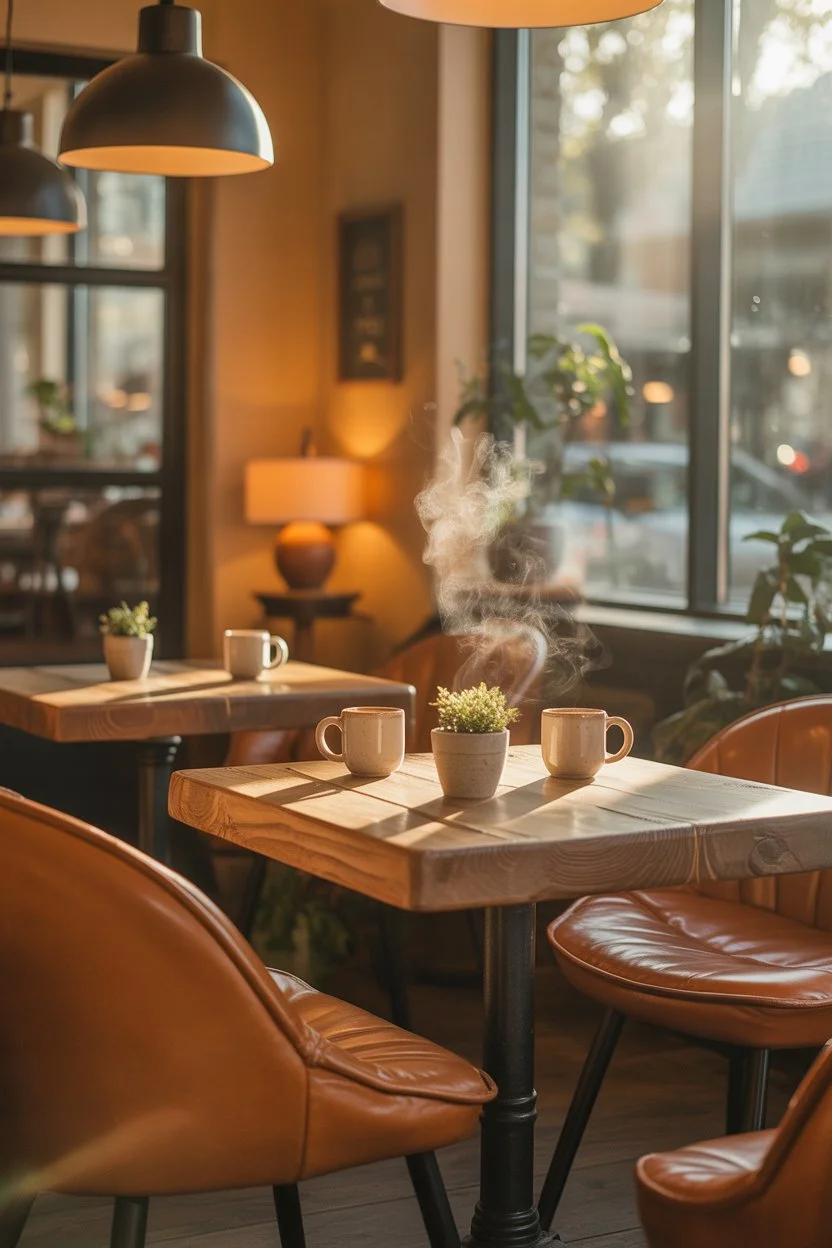
Color is the first thing a customer feels — even before they consciously notice it. Walk into a café painted in cold greys and bright whites and something feels clinical, transactional. Walk into one with warm creams, soft terracotta, and muted caramel tones and your shoulders drop immediately. That’s the power of a well-chosen palette in a small space.
For a compact café, warm neutrals do double duty — they create intimacy while making the space feel larger and more cohesive. The key is layering: a soft beige base on the walls, darker walnut or deep brown tones in the furniture, and one or two earthy accent colors in textiles and plants. Nothing clashes, everything connects, and the result feels considered without feeling designed-to-death.
Avoid the temptation to use too many colors in a small space. Two to three tones maximum — a base, a mid-tone, and one accent — is all you need for a palette that feels rich and intentional rather than busy and overwhelming.
2. Layered Ambient Lighting
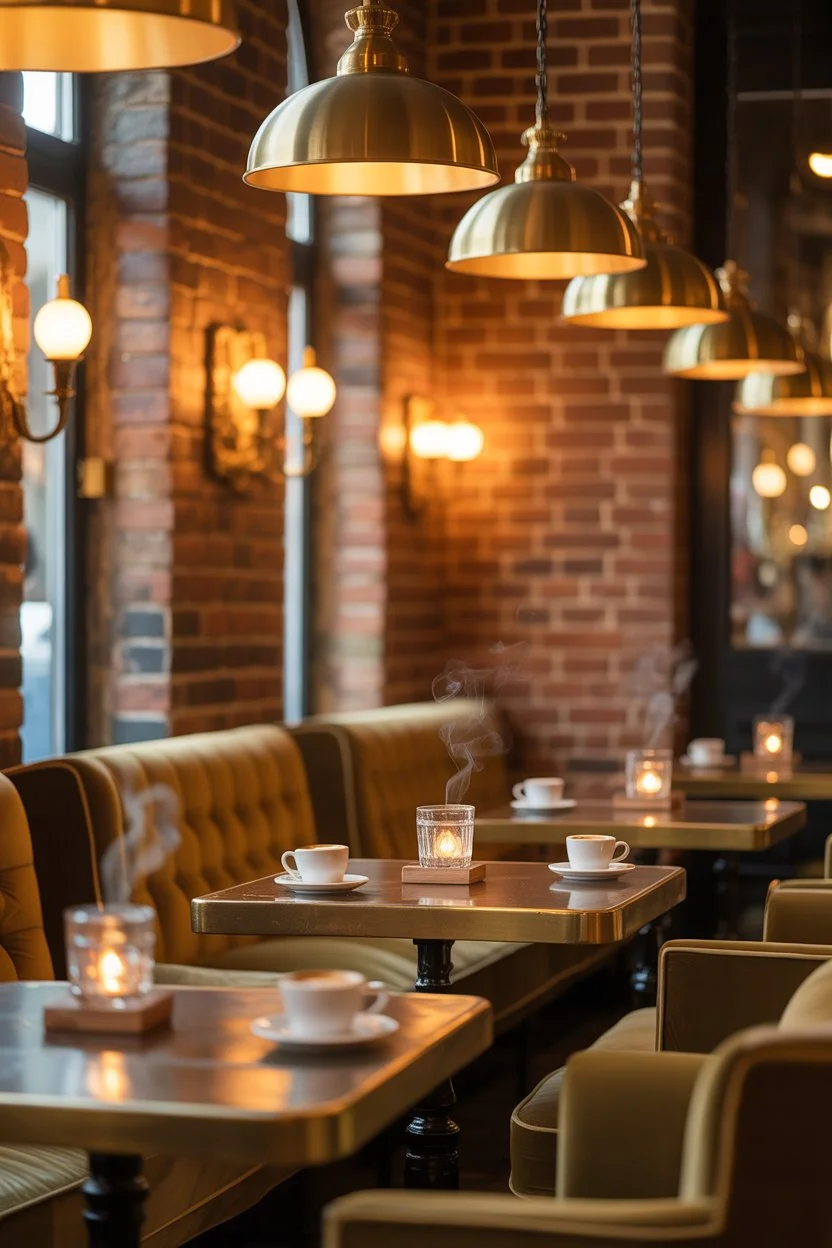
Lighting can make or break the coziness of a café. Soft, layered lighting adds warmth, creates visual interest, and encourages customers to linger longer. Avoid relying solely on overhead fluorescent lights—they can make a space feel sterile and uninviting.
Start by combining ambient, task, and accent lighting. Pendant lights over tables or counters add style and focus, while wall sconces can provide soft illumination around seating areas. Small table lamps or string lights in corners create intimate nooks perfect for reading or chatting.
Consider dimmable LED bulbs to adjust brightness throughout the day, creating a flexible atmosphere that’s bright during busy mornings and softer in the evenings. Reflective surfaces like mirrors or glossy tabletops can enhance the effect of natural light during the day, making your café feel larger and more inviting.
Actionable Tip: Layering lights at different heights and intensities not only adds warmth but also draws attention to key design elements like a textured wall or coffee display.
3. Smart, Space-Saving Seating Layouts
In small cafés, seating must balance comfort with functionality. Crowded tables can make a space feel cramped, while sparse seating reduces the number of paying customers. The key is clever arrangements that maximize floor space while keeping the café inviting.
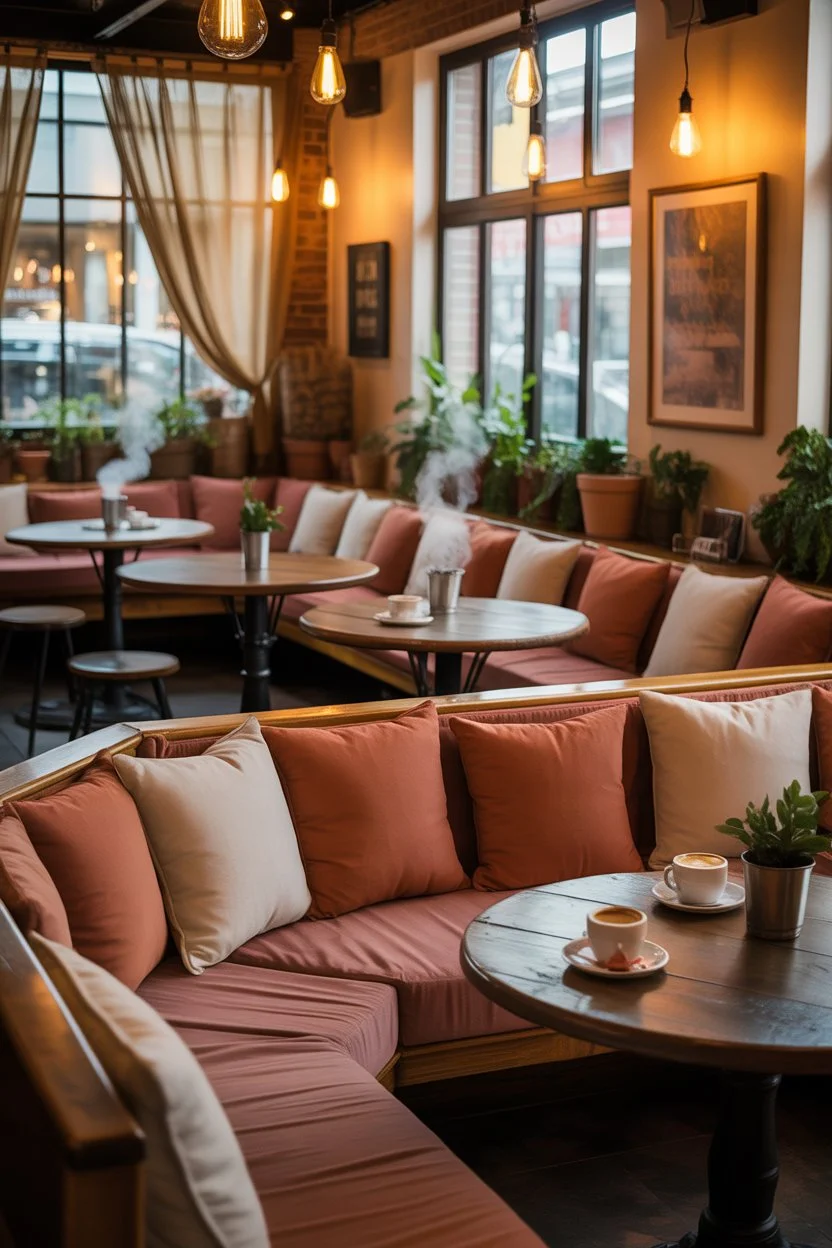
Wall-mounted benches and corner seating are excellent for small areas. They free up the central floor while creating intimate spots for solo visitors or couples. Combine these with small round tables or slim-profile chairs to maintain an open feel. Avoid bulky furniture; instead, choose pieces that are visually light and easy to move.
Mixing seating types can also enhance the café’s charm. For example, pair a few stools along a bar or counter with cushioned benches along walls. Adding cushions, pillows, or throw blankets not only improves comfort but also gives the space a personalized, cozy touch.
Extra Tip: Ensure clear pathways between tables for staff and customers. A smooth layout improves traffic flow and prevents a cluttered appearance.
4. Natural Wood and Textured Materials
There’s a reason almost every successful cozy café uses wood somewhere — usually everywhere. Wood is warm, it ages beautifully, it photographs well, and it instantly signals “handcrafted” and “considered” in a way that laminate and plastic simply cannot. In a small space, natural materials do the heavy lifting that color and furniture alone can’t.
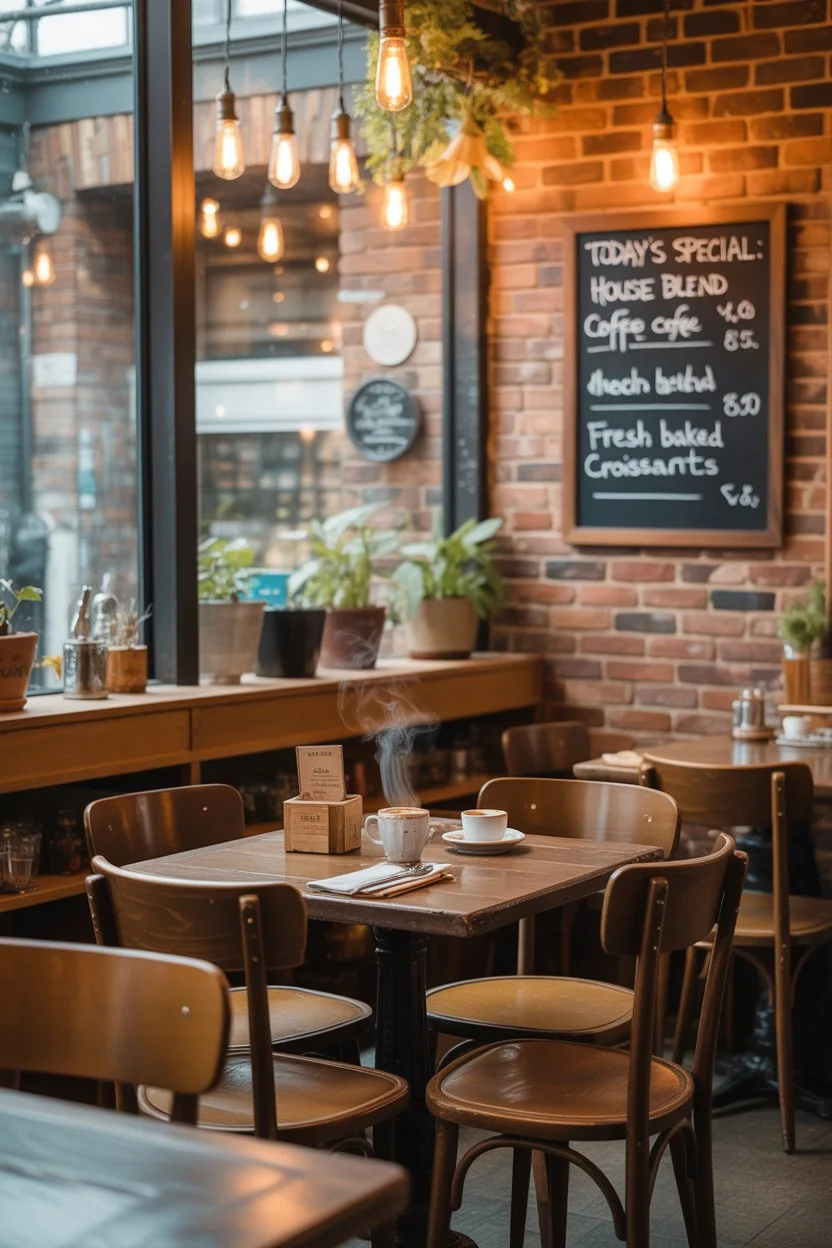
The most effective approach is layering different textures rather than using one material throughout. A wooden counter paired with a rough brick or shiplap accent wall, softened by woven textile cushions and ceramic mugs — that combination of hard and soft, rough and smooth, natural and crafted is what gives a small café genuine character and depth.
Don’t feel like you need to go full rustic. Natural wood works just as well in a modern, minimalist café context as it does in a cottage-style one. The key is using it intentionally — one strong wooden element (the counter, the shelving, the flooring) and letting it anchor the rest of the design.
Tips:
-
Use light wood for floors or furniture to keep the space bright.
-
Add textured walls such as brick, shiplap, or reclaimed wood panels for a cozy, rustic feel.
-
Combine materials—wood, metal, and textiles—for a balanced, modern aesthetic.
Wood works exceptionally well with warm color palettes and layered lighting. For instance, a wooden countertop highlighted with pendant lighting and surrounded by cushioned seating creates a visually appealing focal point that encourages customers to linger.
5. Vertical Space Utilization
When floor space is limited, the answer is almost always to look up. Vertical design is one of the most underused strategies in small café spaces — and one of the most impactful. Drawing the eye upward makes a room feel taller, more spacious, and more thoughtfully designed.
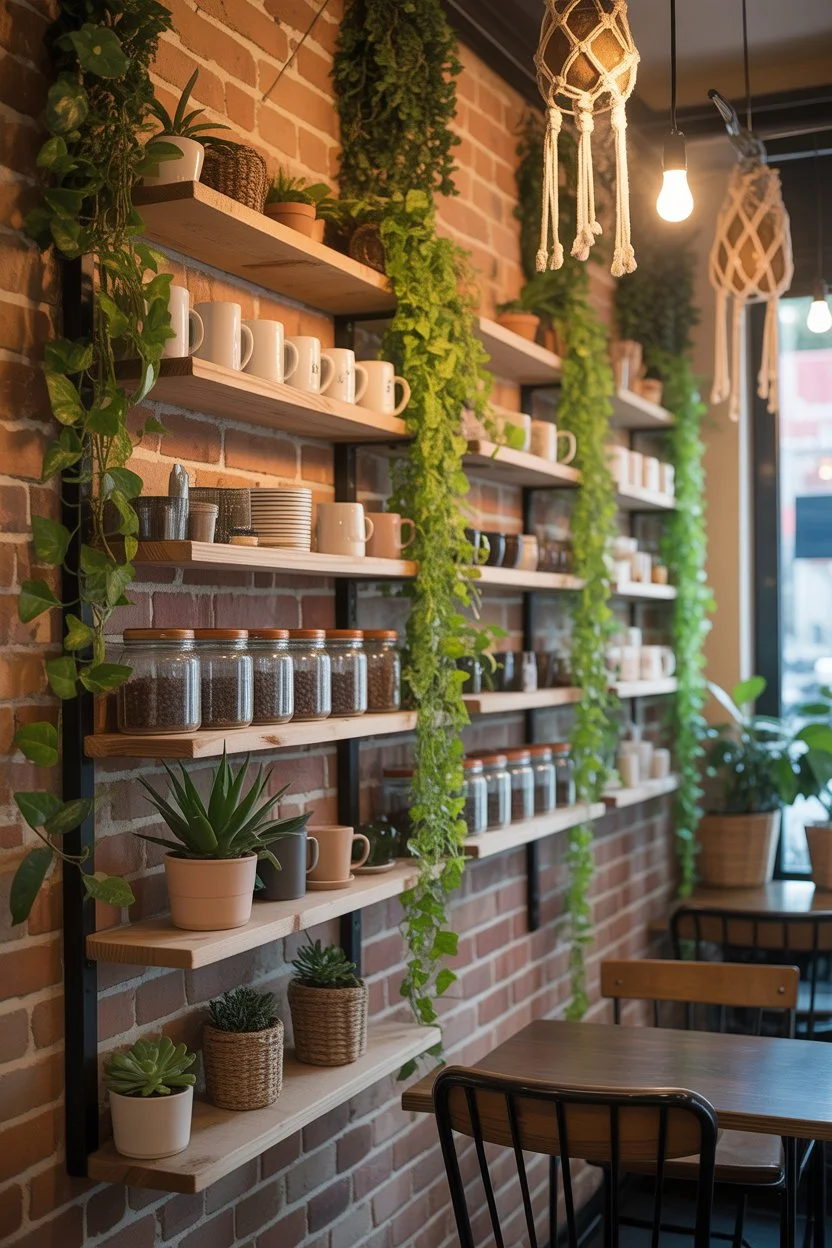
Floating shelves at mid-height and above serve both functional and aesthetic purposes simultaneously. Coffee supplies, glass jars of beans, small trailing plants, and curated books all look genuinely beautiful on open shelving — and they free up the counter and floor space below. A tall, narrow shelving unit used as a room divider between the ordering area and seating creates both visual interest and a subtle sense of separation without a wall.
Vertical menu boards are another underrated tool. A chalkboard or printed menu board mounted high on the wall draws customer attention upward, reinforcing the perception of height and giving the space a more open, airy quality that smaller printed menus on countertops simply don’t achieve.
Practical Examples:
-
Floating shelves for coffee beans, plants, or books.
-
Vertical menu boards or wall art to draw the eye upward.
-
Hanging plants or pendant lighting for visual interest.
Vertical design also makes the café feel taller and less cramped. By drawing attention upwards, you create an impression of openness without sacrificing floor space.
6. Cozy Corners and Intimate Nooks
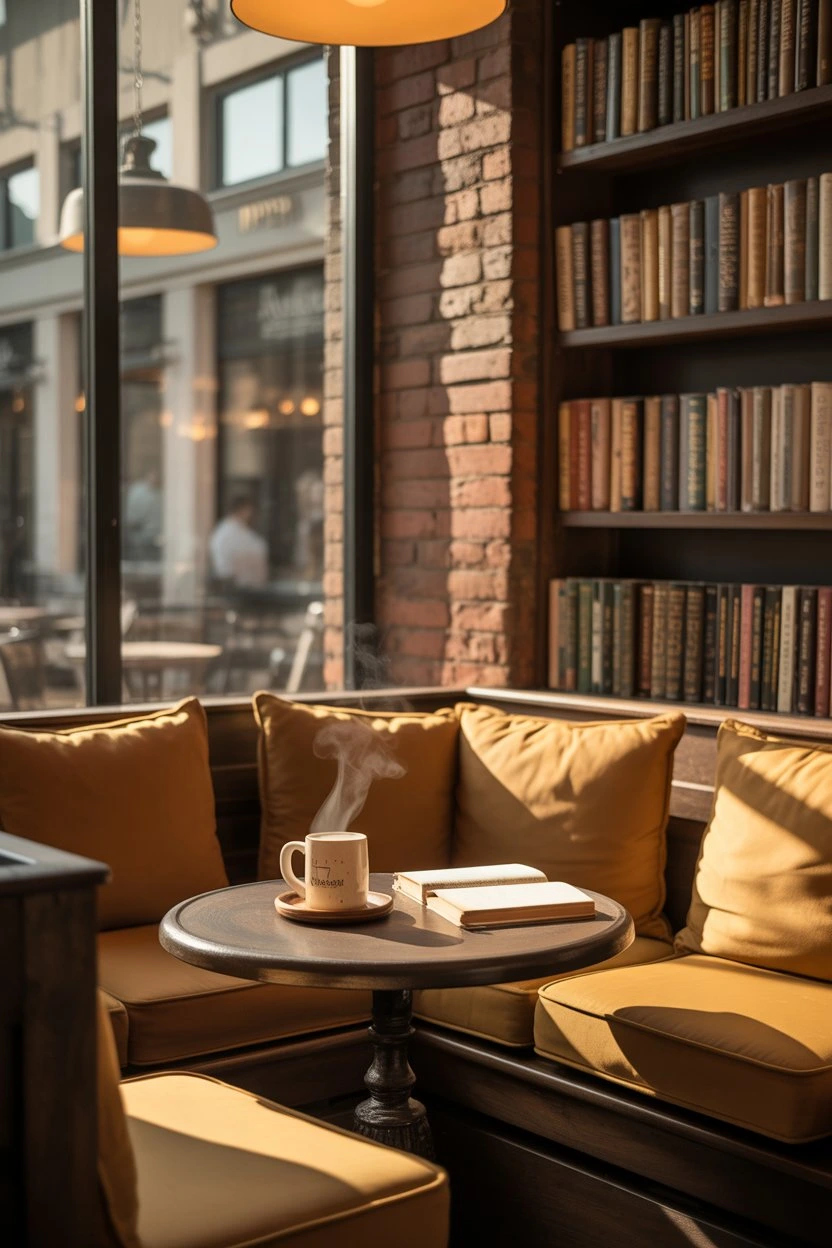
Small cafés benefit greatly from creating dedicated cozy corners. These spots make customers feel comfortable and encourage them to stay longer. Adding soft seating, pillows, rugs, and small tables instantly transforms a corner into a mini retreat.
If you’re designing a compact coffee setup, don’t miss 19 Coffee Bar Ideas for Small Spaces – Compact, Cozy & Stylish Coffee Stations for more inspiration.
Curtains, shelving units, or plants can partially separate these nooks for a sense of privacy without fully closing them off. Lighting is crucial—consider using small lamps or string lights to highlight these areas.
6. Cozy Corner Nooks That Customers Fight Over
Every great small café has that one corner table — the one everyone hopes is free when they walk in. The spot that feels like it was made specifically for you. Creating that feeling deliberately, in one or more spots around your café, is one of the highest-impact design decisions you can make.
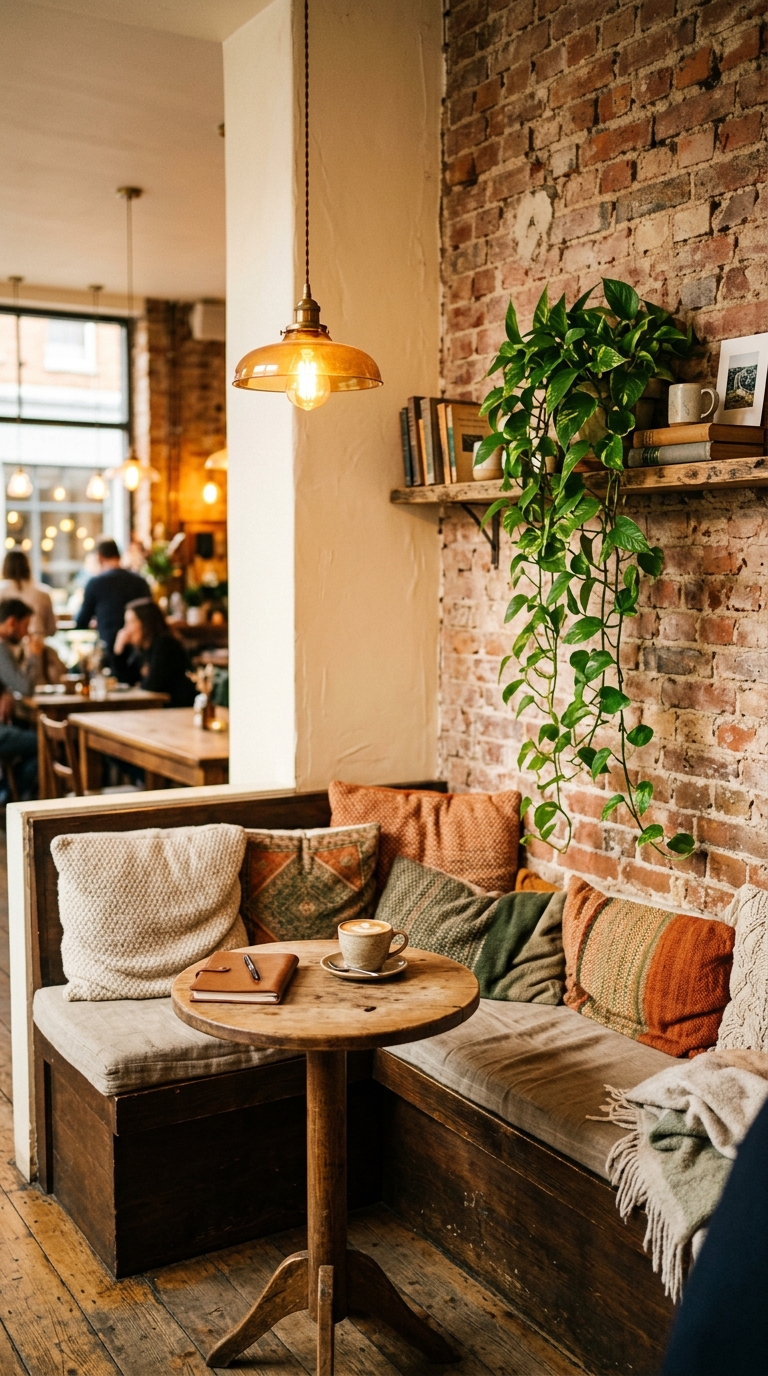
A corner nook needs three things: soft seating, warm focused lighting, and a subtle sense of enclosure. A cushioned bench built into a corner, a small round table, a low pendant or table lamp above, and a shelf or plant on the wall beside it — that’s a complete nook that feels private without being isolated. Customers in a nook feel settled. They order more, stay longer, and come back specifically for that spot.
You don’t need a large café to have multiple nooks. Even two well-designed corner seats in a small space — one by a window, one tucked into a back corner — give customers a sense of choice and agency that generic café seating simply doesn’t provide.
- Use a low pendant light or clip-on reading lamp directly above the nook for focused warm light
- Add a small cushion or throw blanket for tactile comfort — customers will notice and appreciate it
- Use a trailing plant, a curtain panel, or a low shelf to create a subtle sense of enclosure without walls
- Keep a small bud vase or candle on the nook table — tiny details make the difference between nice and memorable
7. Indoor Plants That Make Everything Feel Alive
A café without plants is a café that’s trying harder than it needs to. Plants do something for a space that no amount of furniture or lighting can replicate — they make it feel alive. Breathing, growing, changing slightly with the seasons. In a small café, even five or six well-placed plants can completely transform the energy of the space.
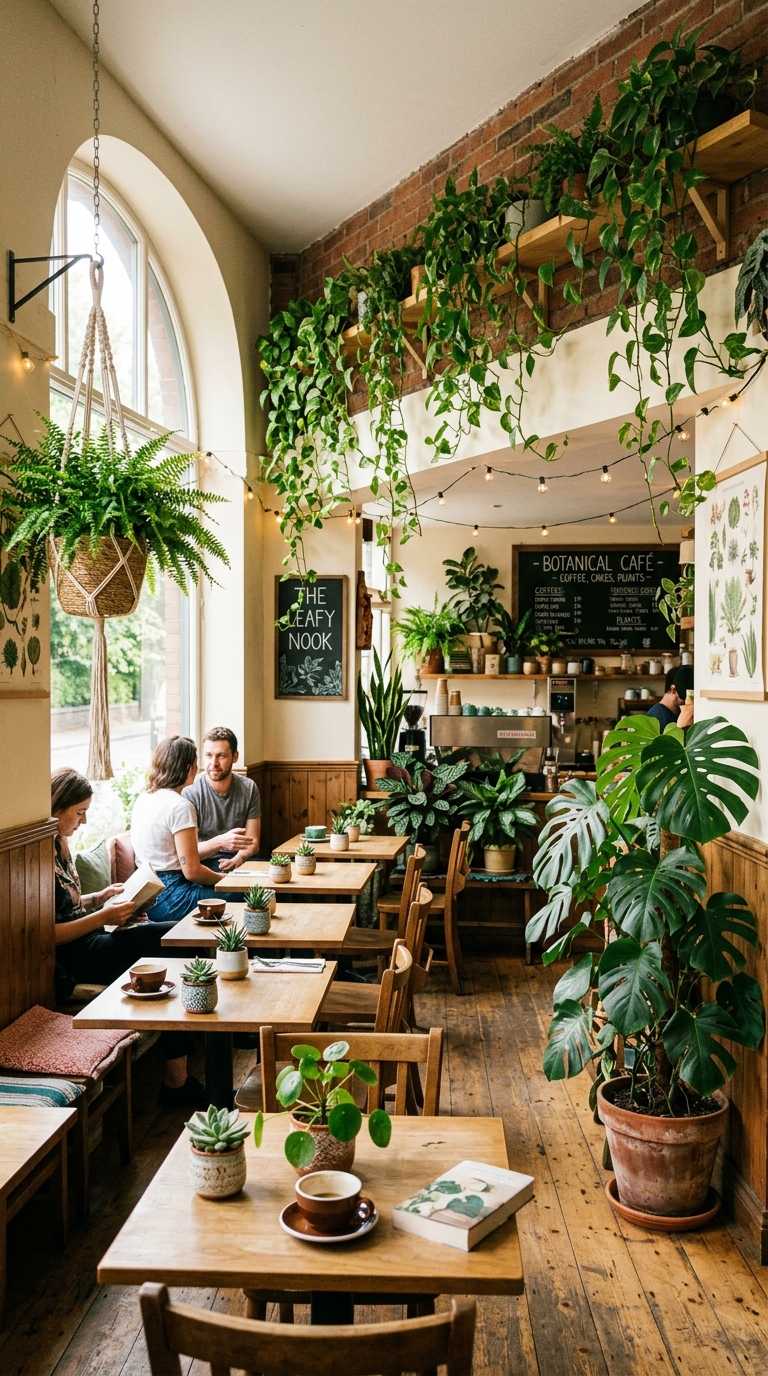
The most effective plant strategy for a small café is to think in layers. Tabletop succulents or small herbs at eye level, medium plants on shelving at chest height, and trailing plants or hanging baskets at ceiling height. This vertical layering of greenery adds visual richness without taking up floor space — and it creates natural Instagram and Pinterest moments at every height.
Choose plants based on your lighting conditions first, aesthetic second. A beautiful fiddle leaf fig that’s dying from lack of light is worse than a thriving pothos that looks lush and healthy. Low-light champions like pothos, ZZ plants, snake plants, and peace lilies will serve a small café far better than high-maintenance statement plants that struggle indoors.
- Choose at least one large statement plant — a fiddle leaf fig, rubber plant, or monstera — as a visual anchor
- Add trailing plants on high shelves or in hanging baskets to soften hard architectural lines
- Group small tabletop plants in odd numbers (three or five) for the most naturally pleasing arrangement
- Replace any struggling plant immediately — a dying plant has the opposite effect of a thriving one
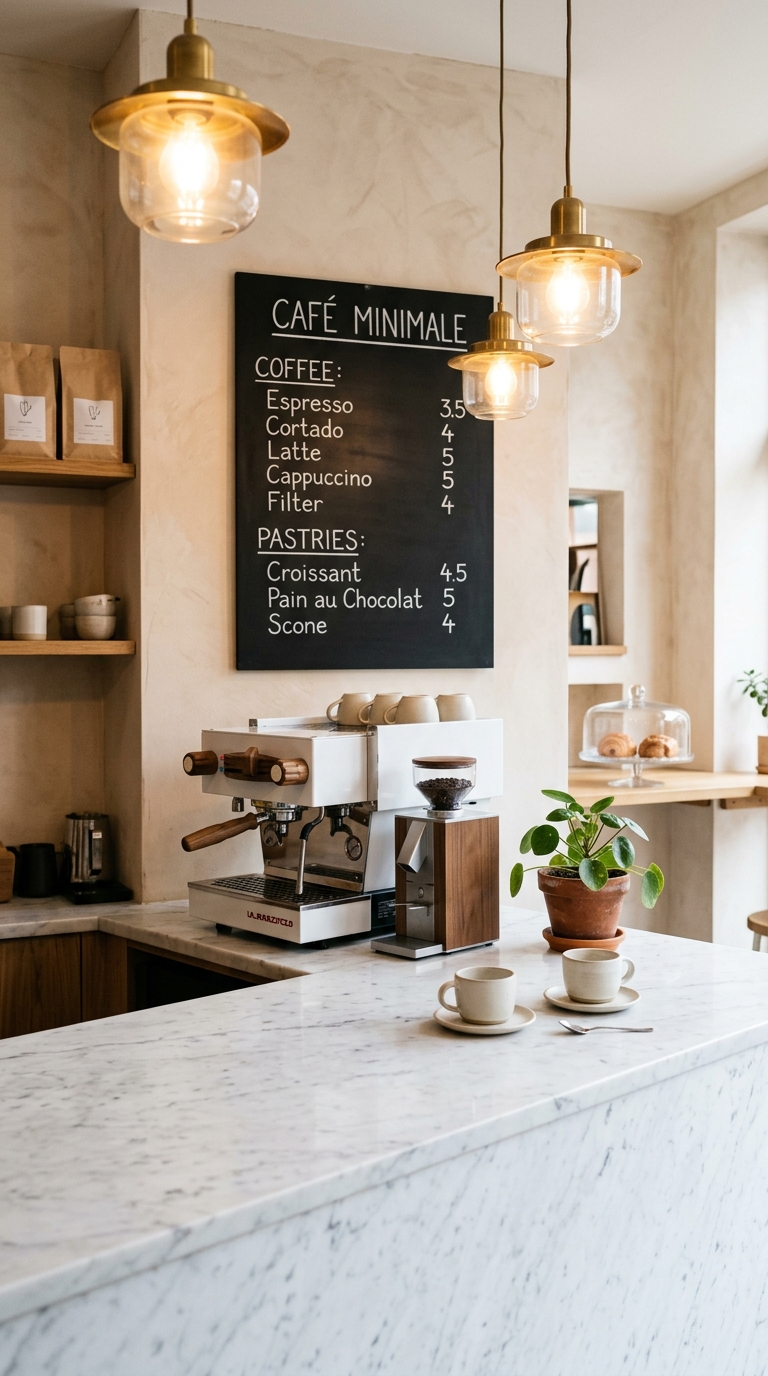
8. Minimalist Counter Design That Lets the Coffee Be the Star
The counter is the heart of any café — it’s where customers make their decision, where the real craft happens, and where first impressions are formed. In a small café, a cluttered counter reads as disorganized and stressful. A clean, minimal counter reads as confident and professional.
The principle is simple: display only what customers need to see (the menu, the pastries, a few beautiful cups) and hide everything else. A countertop that’s 70% clear surface communicates to customers that the team is in control, that the space is well-run, and that their coffee is in good hands. That’s a powerful, largely subconscious message delivered entirely through design.
Material choice matters enormously at the counter. Poured concrete, honed marble, solid wood, or sealed stone all convey quality and craftsmanship. Avoid anything that looks cheap at close range — customers stand at the counter long enough to notice, and the counter surface is one of the most photographed parts of any cafe.
- Keep the counter surface at least 60–70% clear — only essentials on display
- Choose a counter material that looks beautiful up close: concrete, marble, solid wood, or natural stone
- Use a chalkboard or printed board mounted above the counter for the menu — not a cluttered physical menu at counter level
- Install good task lighting directly above the counter so the coffee-making process is clearly visible and visually appealing
9. Window Seating and Natural Light — Free Design That Works Every Time
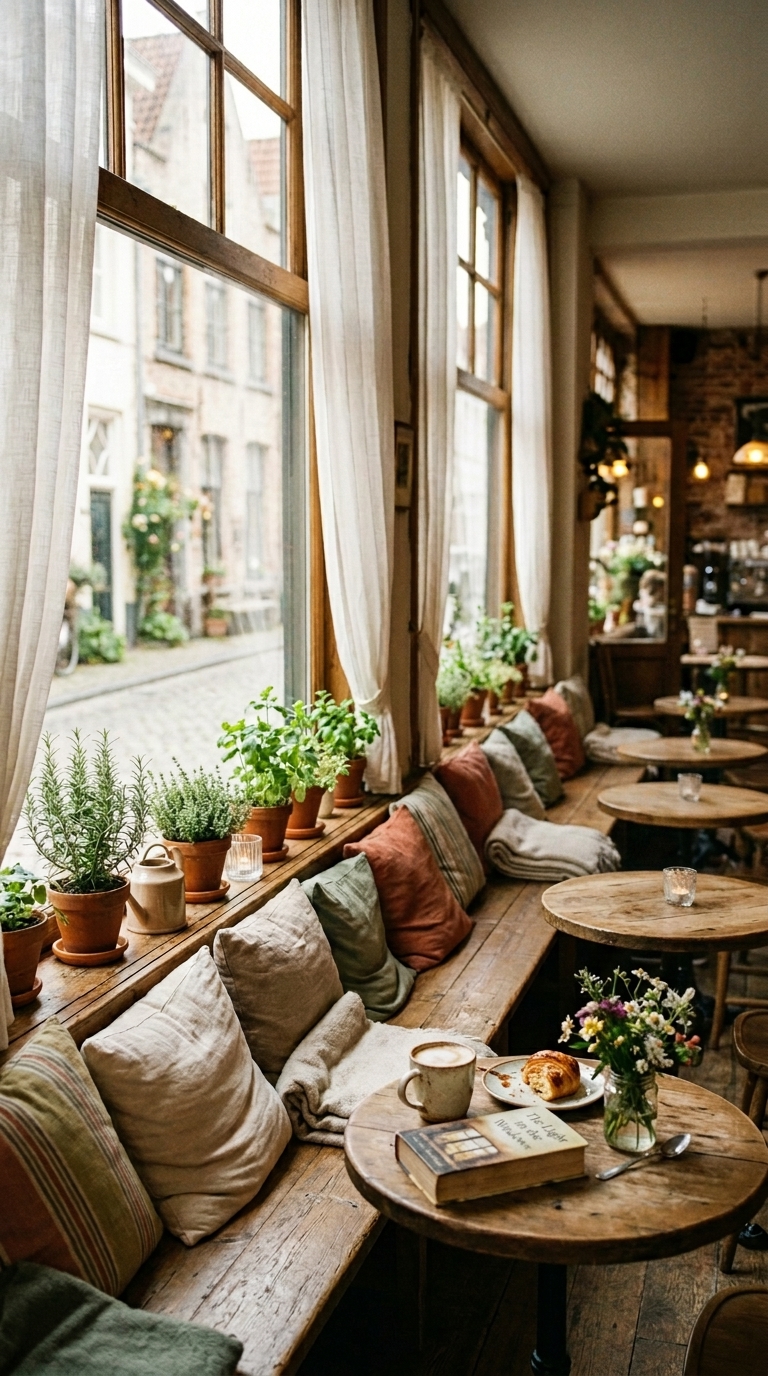
Natural light is the most powerful and affordable design tool available to any café owner — and window seating is how you put it to work. Customers gravitate toward window seats instinctively. The light is better, the view creates something to look at, and there’s a sense of connection to the outside world that café interiors alone can’t provide.
In a small café, maximizing natural light through thoughtful window treatment is essential. Avoid heavy curtains or blinds that block light during the day. Instead, use sheer linen panels that diffuse the light beautifully without blocking it. Keep windowsills clear or add a few small plants that thrive in natural light and look beautiful when backlit by the sun.
Position your most comfortable seating at the windows. Solo visitors with laptops, couples on dates, people-watchers — the window seat serves all of them, and a full window bench can accommodate more customers than individual chairs would in the same footprint.
- Install a continuous window bench seat to maximize seating capacity along any windowed wall
- Use sheer linen or cotton curtains — never blackout — to diffuse light beautifully without blocking it
- Keep window ledges clear or use them for a row of small plants that look stunning backlit
- Angle window seating slightly inward so customers face the room as well as the window — it feels more social and less like staring at a wall
10. Warm Textiles and Tactile Details That Invite Customers to Stay
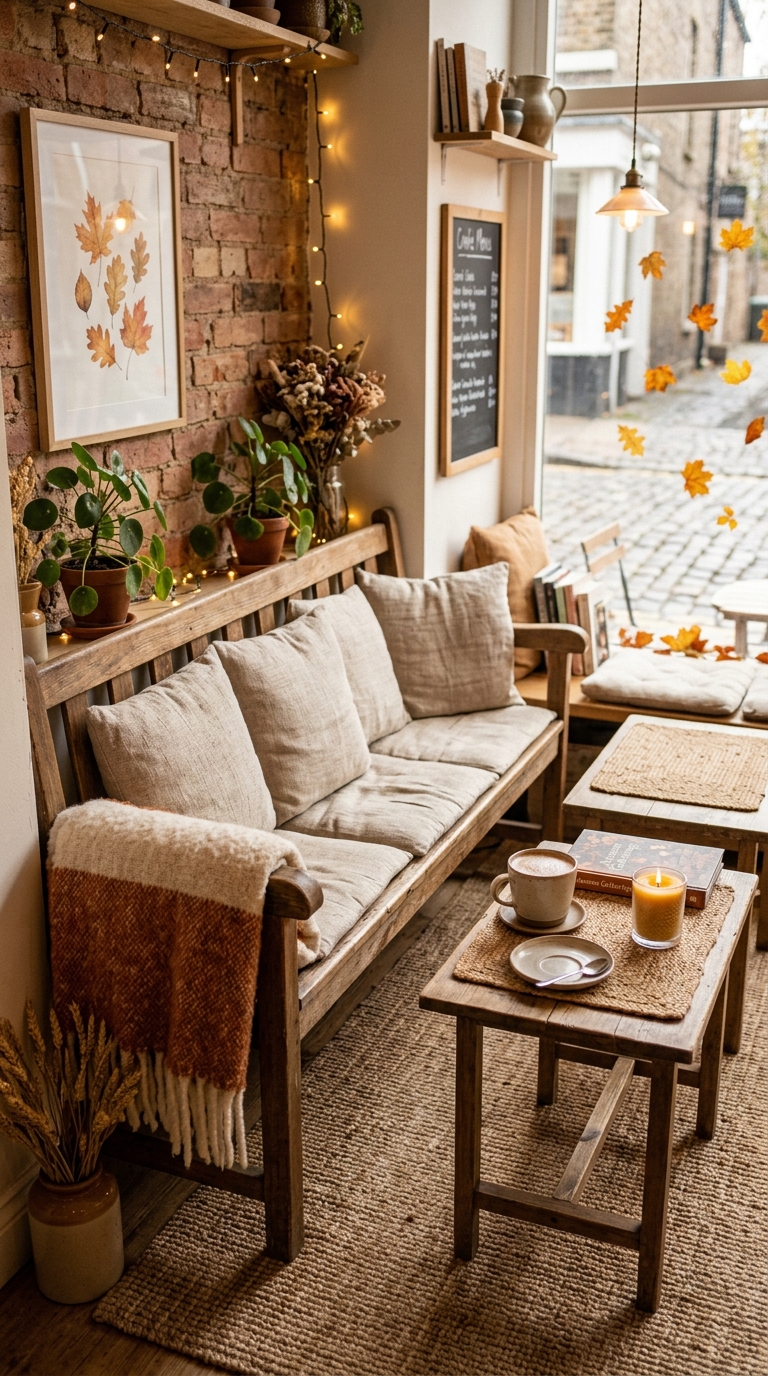
The difference between a café that feels designed and one that feels lived in — truly comfortable in a human, imperfect way — is almost always textiles. Cushions, throws, rugs, woven placemats, linen napkins. These are the details that make a customer reach out and touch something, that make a bench seat feel like somewhere you’d actually want to spend an hour.
In a small café, textiles serve a practical purpose beyond aesthetics — they absorb sound. Hard surfaces (wood, tile, brick) are beautiful but they create echo and noise, which makes a small space feel louder and less intimate than it should. A few well-placed rugs, cushioned seating, and soft furnishings can dramatically improve the acoustic quality of a compact space, making conversations feel private and the overall atmosphere feel calmer.
Rotate textiles seasonally for minimal effort, maximum impact. Linen and light cotton for spring and summer. Thicker woven throws and velvet cushion covers for autumn and winter. The base furniture stays the same; the textiles do all the seasonal work.
- Add cushions to every bench seat — even a thin cushion makes a significant comfort difference
- Use a large area rug under the main seating area to define the space and absorb sound
- Choose natural fibres — linen, cotton, jute, wool — for a quality feel that also photographs beautifully
- Rotate cushion covers and small textiles seasonally — it’s the cheapest and easiest café refresh there is
11. Personalized Branding That Feels Like Storytelling
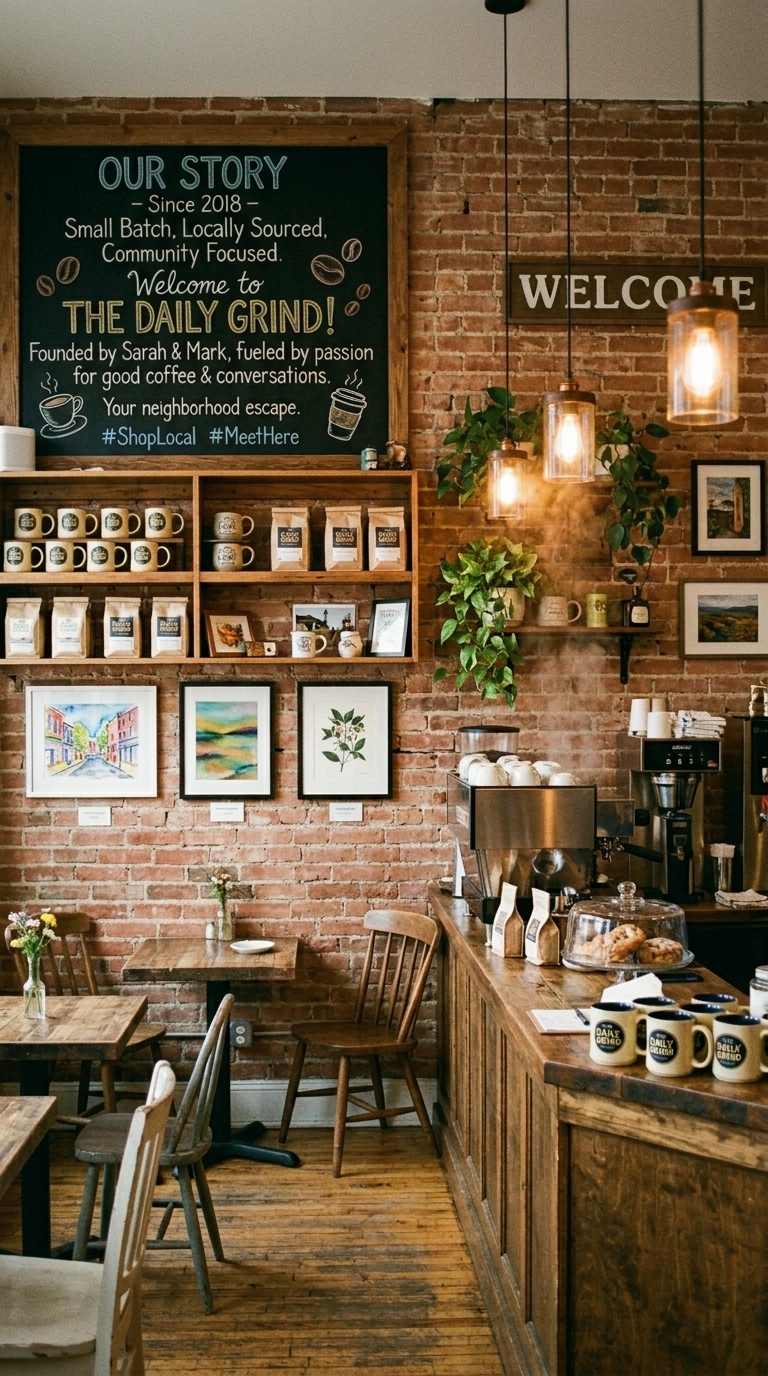
The most memorable small cafés aren’t memorable because of their furniture or their color palette. They’re memorable because they feel like they belong to someone. There’s a story behind them — a place, a philosophy, a person — and that story is woven into every detail of the space. That’s what personalized branding actually means in a café context.
It doesn’t require a large budget. Custom mugs with your logo, a hand-lettered chalkboard with your café’s origin story on the wall, a framed photograph of where you source your beans, a small display of local art — these details cost very little and create an enormous amount of character. They give customers something to read, something to photograph, and something to talk about when they leave.
Personalized branding also builds loyalty in a way that generic design simply cannot. When a customer uses your specific mug or notices a detail they’ve never seen anywhere else, they feel like they’re part of something. And that feeling is what turns a first visit into a regular habit.
- Design a simple, beautiful logo and use it on cups, bags, napkins, and signage consistently
- Tell your story somewhere visible — a framed print, a chalkboard, or a small sign with your café’s origin
- Feature local artists or makers in your space — rotating artwork creates a reason to return
- Choose one completely distinctive detail that’s yours alone — a signature cup design, a unique menu item name, a scent — something customers associate only with you
12. Seasonal and Rotating Décor That Keeps Customers Coming Back
Regular customers notice everything. The mug that’s been in the same spot for six months. The poster that’s been crooked since February. The Christmas decorations were still up in January. A café that stays the same stops feeling cared for — and a café that doesn’t feel cared for stops feeling cozy.
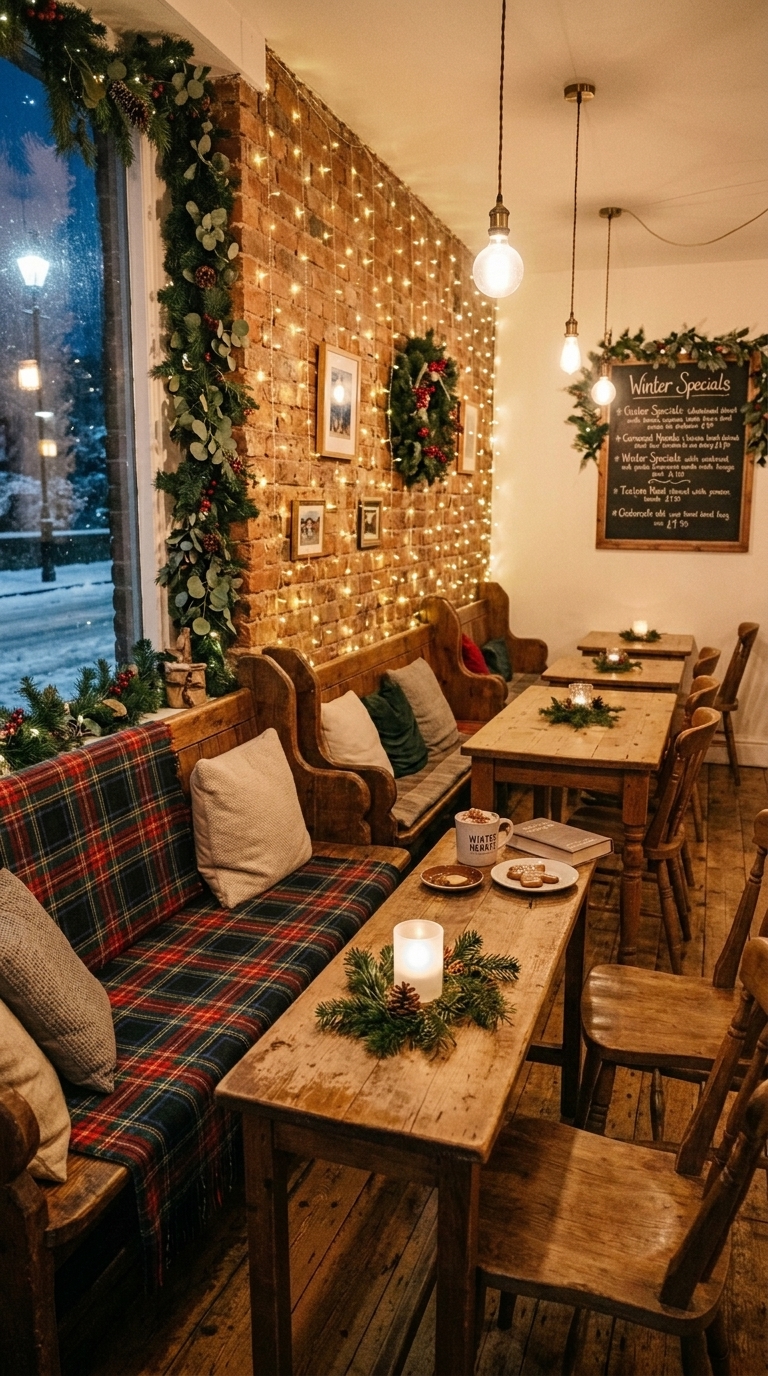
Seasonal and rotating décor solves this at very low cost. A few seasonal flowers in spring. A pumpkin and some dried leaves in autumn. Fairy lights in winter. A citrus candle and linen bunting in summer. None of these things cost much. All of them signal to regular customers that someone is paying attention — that this space is alive and evolving, not just static background.
The rotation also creates natural reasons for customers to share your café on social media. A beautifully styled seasonal moment on a café table is exactly the kind of photograph people post — and every post is free marketing that no advertising budget can fully replicate.
- Plan a simple seasonal décor swap for each quarter — spring, summer, autumn, winter
- Keep seasonal items in one dedicated storage box so swaps take minutes, not hours
- Focus changes on tabletops, the counter, and the window display — the three most photographed areas
- Invest in a few high-quality, reusable seasonal pieces rather than cheap disposable decorations that look exactly like what they cost
FAQS
Q1: How do you make a small coffee shop cozy?
Use warm colors, layered lighting, comfortable seating, natural materials, and small décor accents to create a welcoming and intimate space.
Q2: What seating works best in small cafes?
Wall benches, corner seating, small round tables, and a mix of chairs and stools maximize space and comfort.
Q3: How do plants enhance a coffee shop?
Plants add life, color, and a calming atmosphere, making the cafe feel fresh, inviting, and Pinterest-worthy.
Q4: What colors make a coffee shop feel warm?
Warm neutrals like beige, cream, soft brown, and muted earth tones create a cozy and comfortable environment.
Q5: How do you optimize lighting in a coffee shop?
Combine ambient, accent, and task lighting with warm LED bulbs. Dimmable options and layered lighting enhance mood and comfort.
Conclusion
Even small coffee shops can feel warm, stylish, and inviting with thoughtful and intentional design. By focusing on color palettes, layered lighting, comfortable seating, textures, greenery, and personalized décor, you can create a café that customers enjoy visiting and spending time in.
These 12 cozy coffee shop design ideas provide actionable steps to make your space both functional and aesthetically pleasing. From creating intimate seating nooks and optimizing vertical space to incorporating natural elements and seasonal touches, every design choice helps foster a welcoming atmosphere.
A well-designed café not only enhances the customer experience but also encourages longer visits, repeat customers, and positive word-of-mouth. Implementing these strategies allows you to transform your small space into a comfortable, stylish, and memorable coffee shop that stands out from the rest.