
There’s something absolutely magical about cottage gardens that just makes you stop and stare. You know that feeling when you see a garden that looks like it’s been plucked straight from a countryside fairytale? That’s what we’re creating here.
I’ve always been obsessed with those effortlessly beautiful cottage garden borders—the ones that look like they just “happened” (even though we know better). The truth is, cottage borders are actually easier to pull off than you’d think. Unlike those super formal gardens that stress you out with their perfect lines and symmetry, cottage gardens embrace the beautiful mess. They’re about mixing colors wildly, letting plants mingle and spill over edges, and creating that lived-in, romantic vibe that feels both cozy and sophisticated.
In this guide, I’m sharing 23 cottage garden border ideas that’ll work whether you’ve got a tiny front yard or acres to play with. Each idea is designed to help you create those dreamy, layered borders that bloom from spring through fall. Let’s dive in and turn your yard into the enchanting retreat you’ve been pinning on Pinterest!
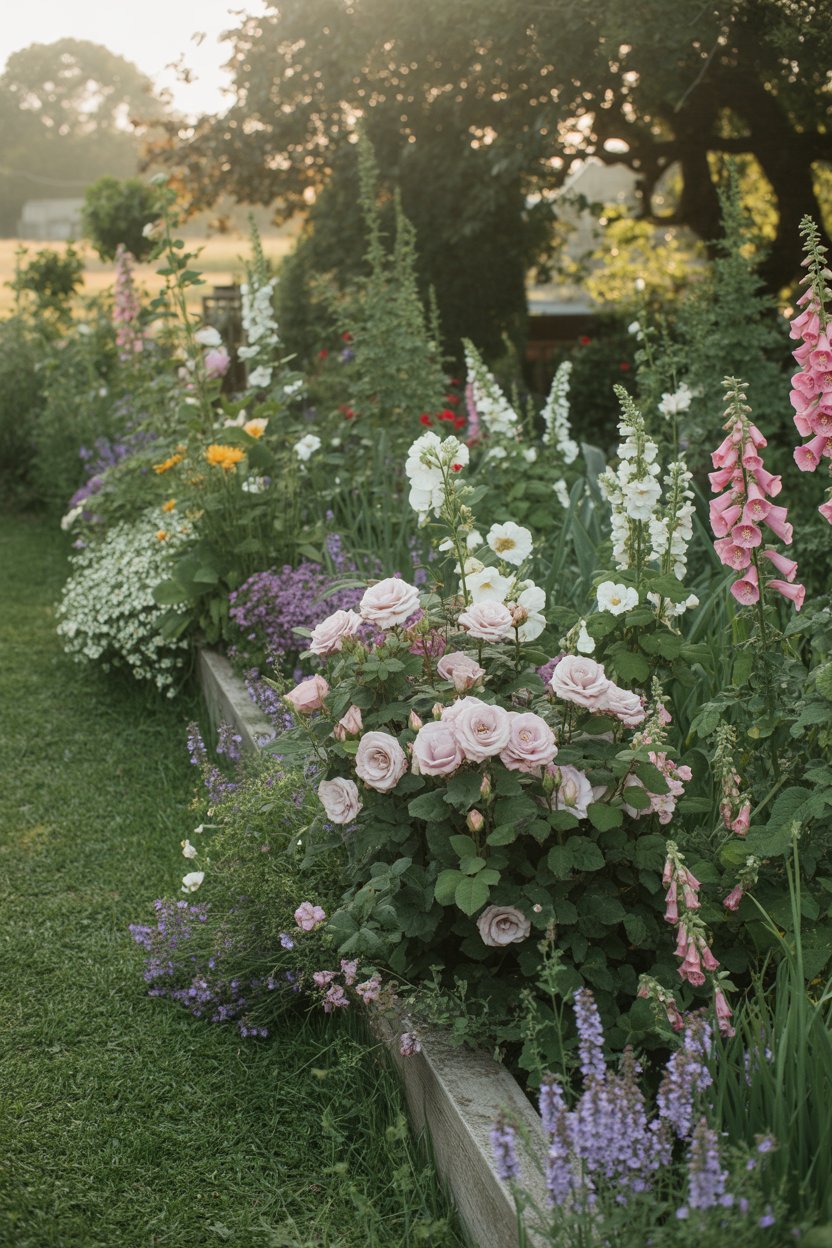
1. Classic Mixed Perennial Border With Layered Heights
This is your foundation cottage garden border—the one that never goes out of style. The secret here is all about creating visual depth by playing with plant heights like you’re arranging a choir. Put your tallest delphiniums and hollyhocks at the back (think 5-6 feet), then layer in mid-height roses, peonies, and salvias around 3-4 feet, and finish with low growers like catmint and sweet alyssum spilling onto the path.
What I love about this approach is how it creates this lush, full look without feeling chaotic. The layering tricks your eye into seeing more garden than you actually have. Mix in some repeat bloomers so you’re not left with bare spots mid-summer, and you’ll have that classic English cottage border that looks professional but feels wonderfully unplanned.
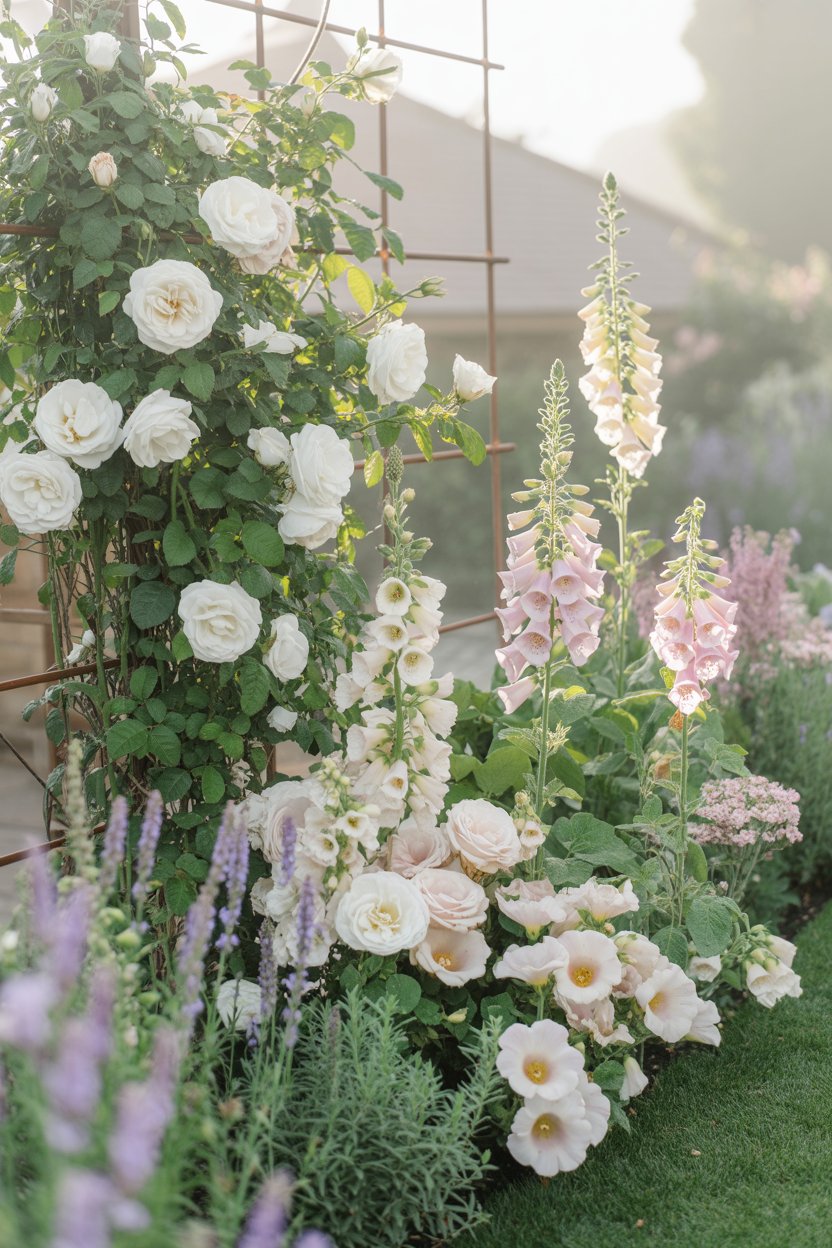
2. Romantic White & Pastel Cottage Border
If you’re going for that soft, dreamy Pinterest aesthetic, an all-white and pastel border is absolutely stunning. Think creamy white roses, the palest pink foxgloves, lavender in soft purple, and those gorgeous hollyhocks in peachy-cream tones. This color scheme creates such a calming, sophisticated vibe that photographs beautifully.
The trick with pastel borders is adding enough variety in texture so it doesn’t feel flat. Mix fluffy blooms with spiky ones, add some silvery foliage plants, and maybe toss in some white flowering shrubs for structure. It’s elegant without being stuffy, and honestly? It glows at dusk most magically.
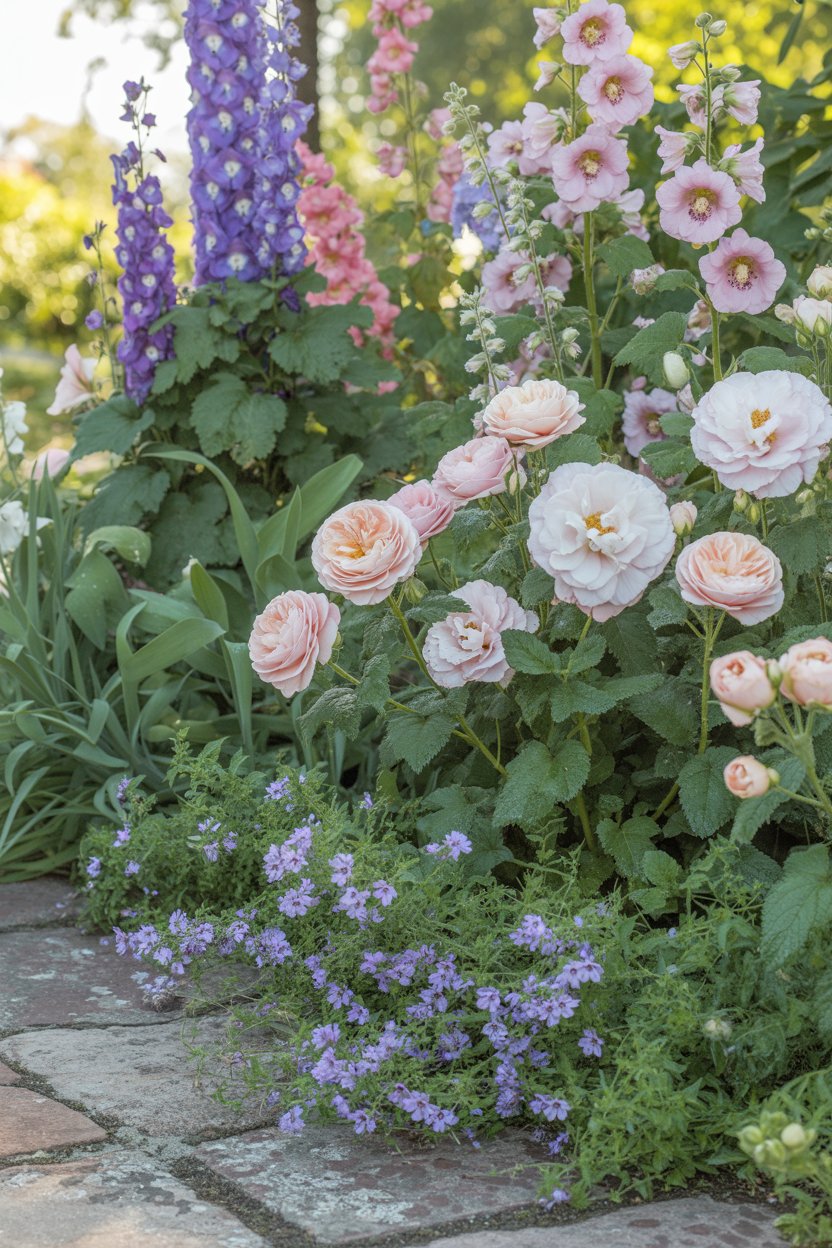
3. Cottage Border With Rustic Stone Edging
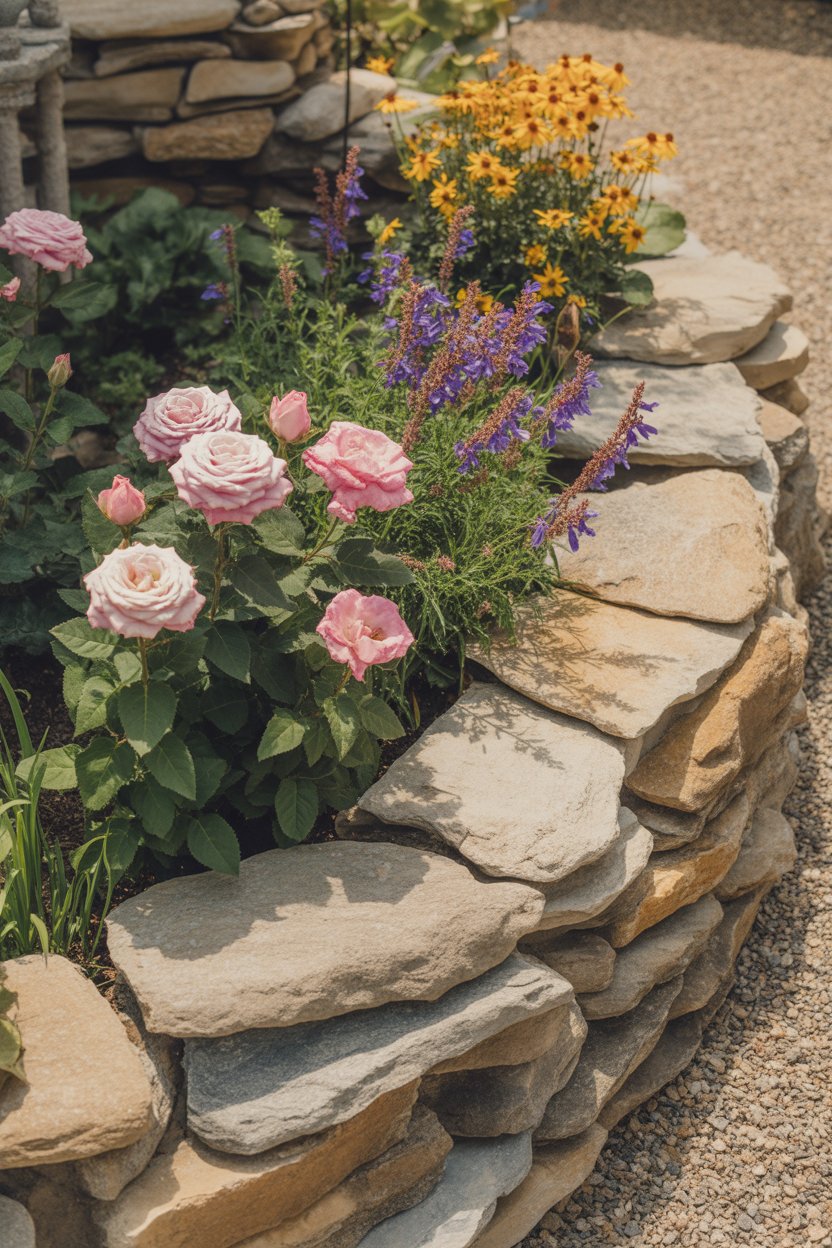
Adding natural stone edging to your cottage border is like giving it the perfect frame. I’m talking stacked limestone, weathered fieldstone, or those gorgeous flat river rocks that look like they’ve been there forever. The stone creates definition without feeling too formal—it just grounds everything beautifully.
What’s great about stone edging is that it’s basically zero maintenance once it’s in, and it lets your plants spill over naturally without looking messy. The contrast between the solid, permanent stone and the soft, billowing flowers creates such a satisfying visual balance. Plus, it keeps mulch where it belongs and gives you a clean edge to mow against.
If you love easy-care gardens, these low-maintenance, low-growing shrubs can help create a tidy, attractive yard.
4. Lavender-Lined Pathway Border
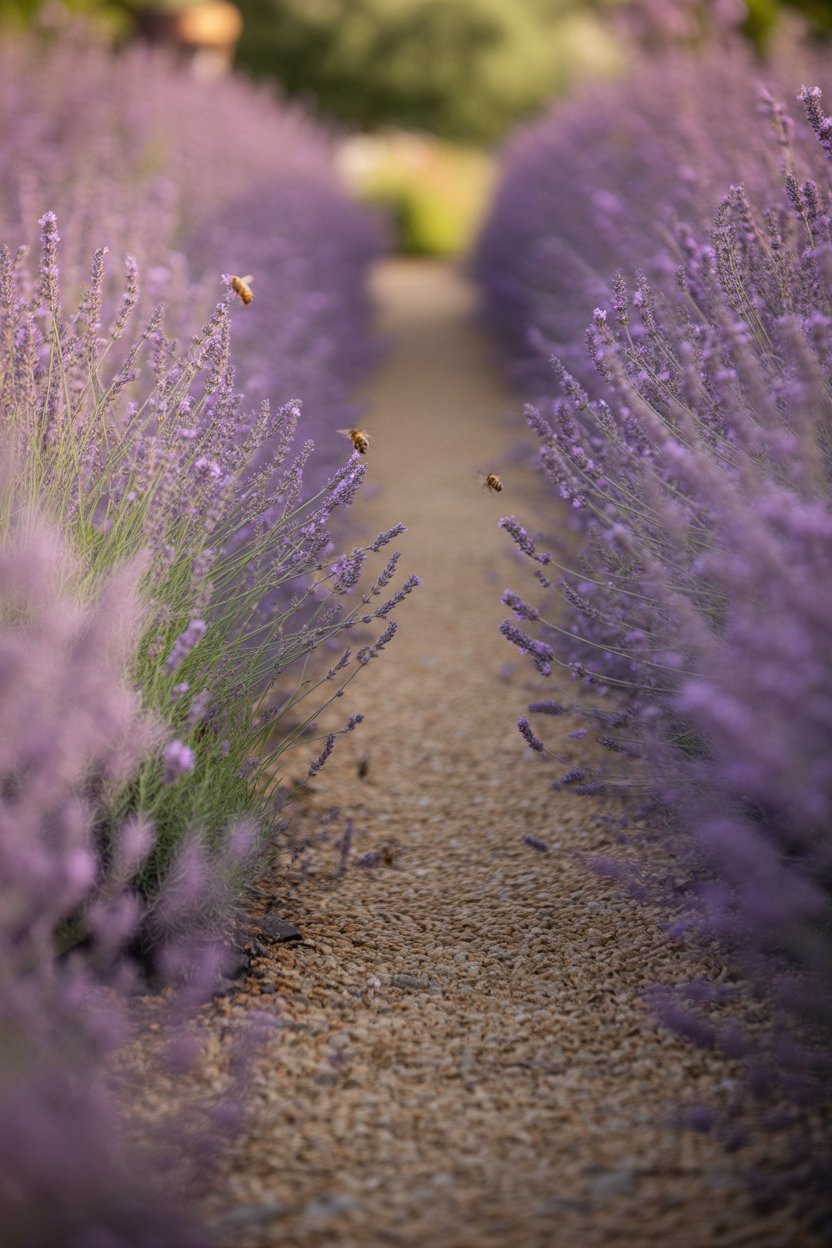
Picture this: walking down a garden path with rows of fragrant lavender brushing against your legs. That’s the magic of lavender-lined borders. Whether you choose English lavender for classic purple spikes or French lavender for those adorable butterfly-wing tops, you’re creating a sensory experience that’s totally Pinterest-worthy.
Lavender borders work beautifully along gravel paths, brick walkways, or even lawn edges. They’re incredibly low-maintenance once established, and the bees absolutely adore them. I love how they create this soft, hazy purple edge that looks intentional but feels effortless—plus your whole garden will smell amazing from June through August.
5. Wildflower Meadow Border for Low Maintenance
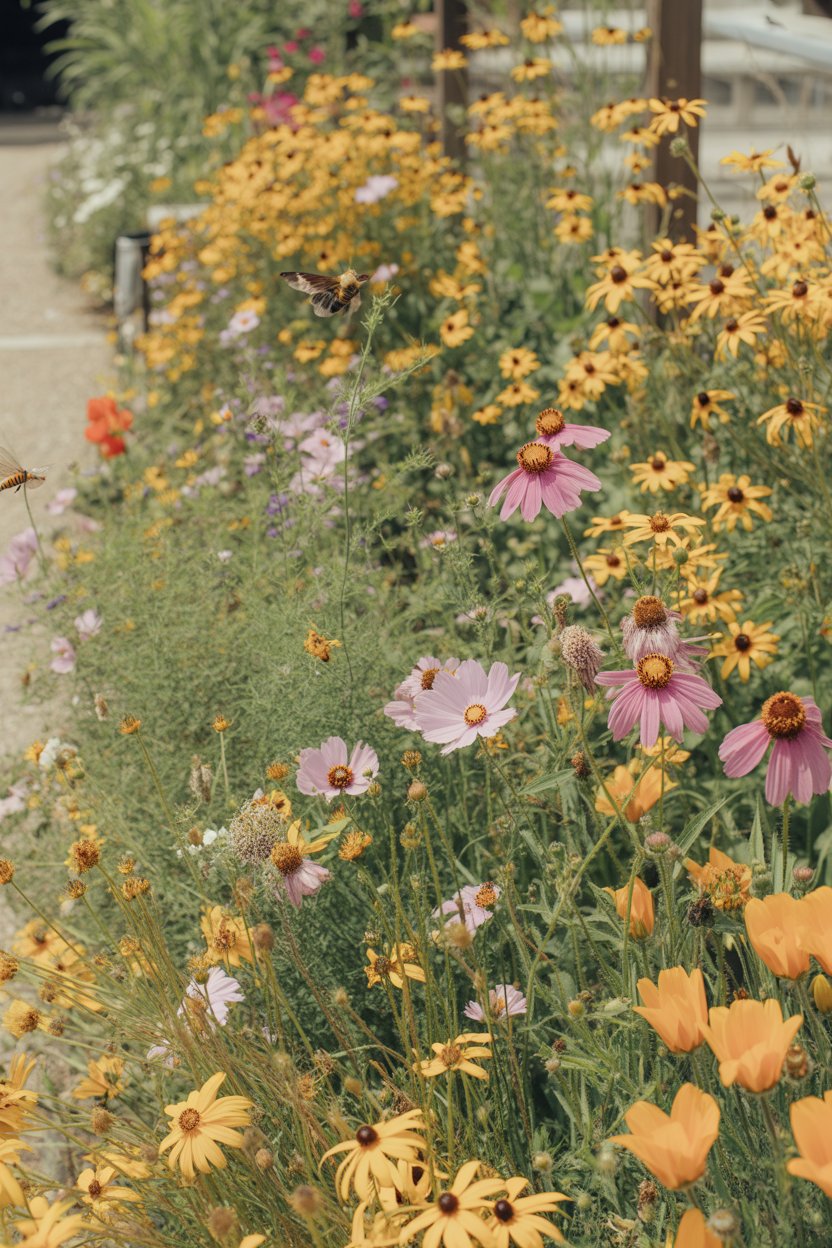
If you’re not into the whole high-maintenance gardening thing, a wildflower meadow border is your answer. Mix native wildflowers like black-eyed Susans, purple coneflowers, and cosmos for a border that basically takes care of itself. This approach gives you that carefree, natural cottage vibe without the constant deadheading and fussing.
The beauty of wildflower borders is that they actually get better over time as plants self-seed and naturalize. You’ll get this ever-changing tapestry of colors throughout the season, and it’s amazing for pollinators. Just mow it down once a year in late fall, and you’re done. It’s cottage gardening for the busy person—and it looks intentionally wild, not neglected.
6. Picket Fence Cottage Border With Climbing Roses
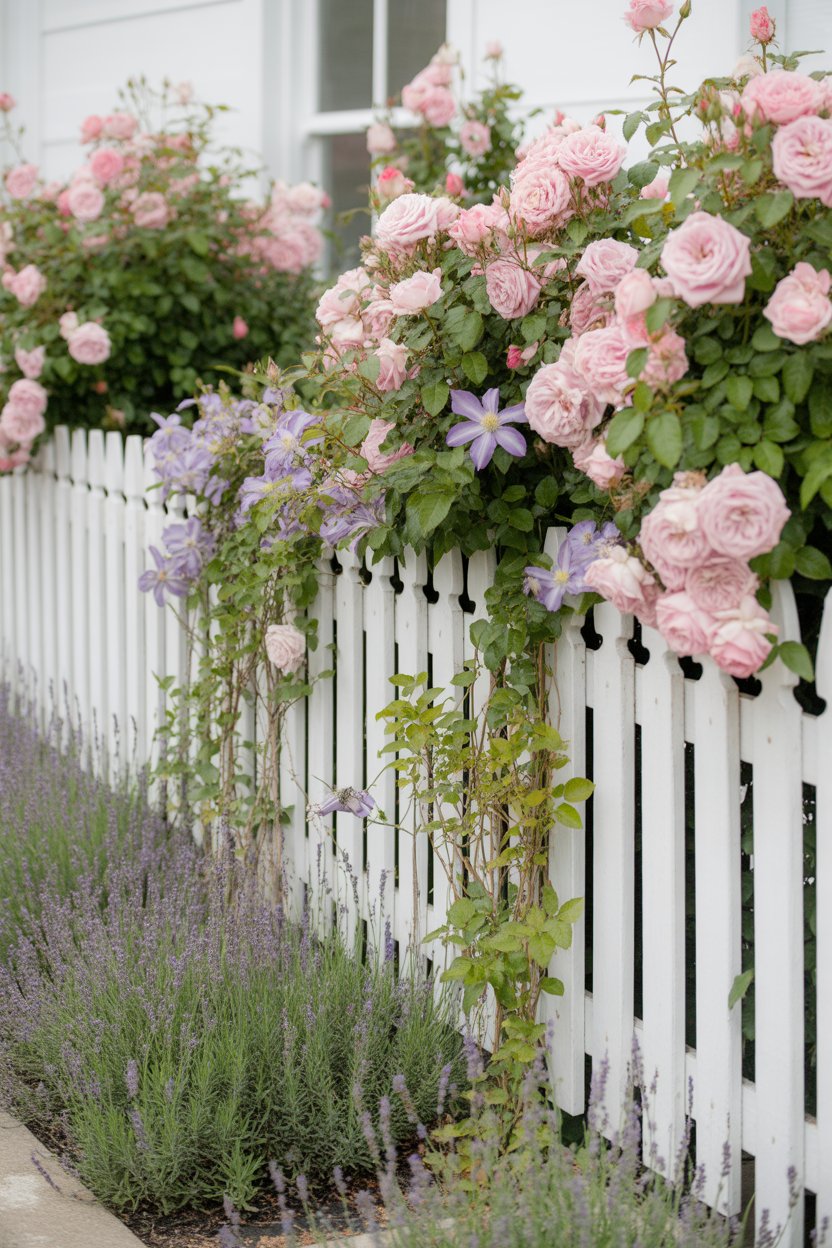
Nothing says “cottage garden” quite like a white picket fence covered in climbing roses. Add some clematis winding through, maybe some morning glories for extra charm, and you’ve got the quintessential cottage border that makes people actually stop their cars to look. I’m not even exaggerating.
The fence gives your border instant structure and vertical interest, while the climbers soften everything with their romantic cascading blooms. Choose repeat-blooming roses so you’re not stuck with one flush of flowers and then nothing. Paint the fence in soft pastels or classic white, plant some low perennials at the base, and honestly—this look never gets old.
7. Herb & Flower Mixed Border
Why choose between pretty and practical when you can have both? A mixed herb and flower border gives you that cottage garden look while actually being useful. Tuck rosemary, thyme, and sage between your roses and delphiniums—the silvery-green herbs create gorgeous texture contrast, and you can snip them for cooking.
I love this approach because it adds an unexpected layer to your cottage border. The herbs often have their own beautiful flowers (have you seen rosemary blooms? Tiny and blue and perfect), plus they’re naturally pest-resistant, which helps protect your other plants. It’s cottage gardening with benefits—beautiful to look at, smells amazing, and dinner-ready.
8. Cottage Border With Billowing Ornamental Grasses
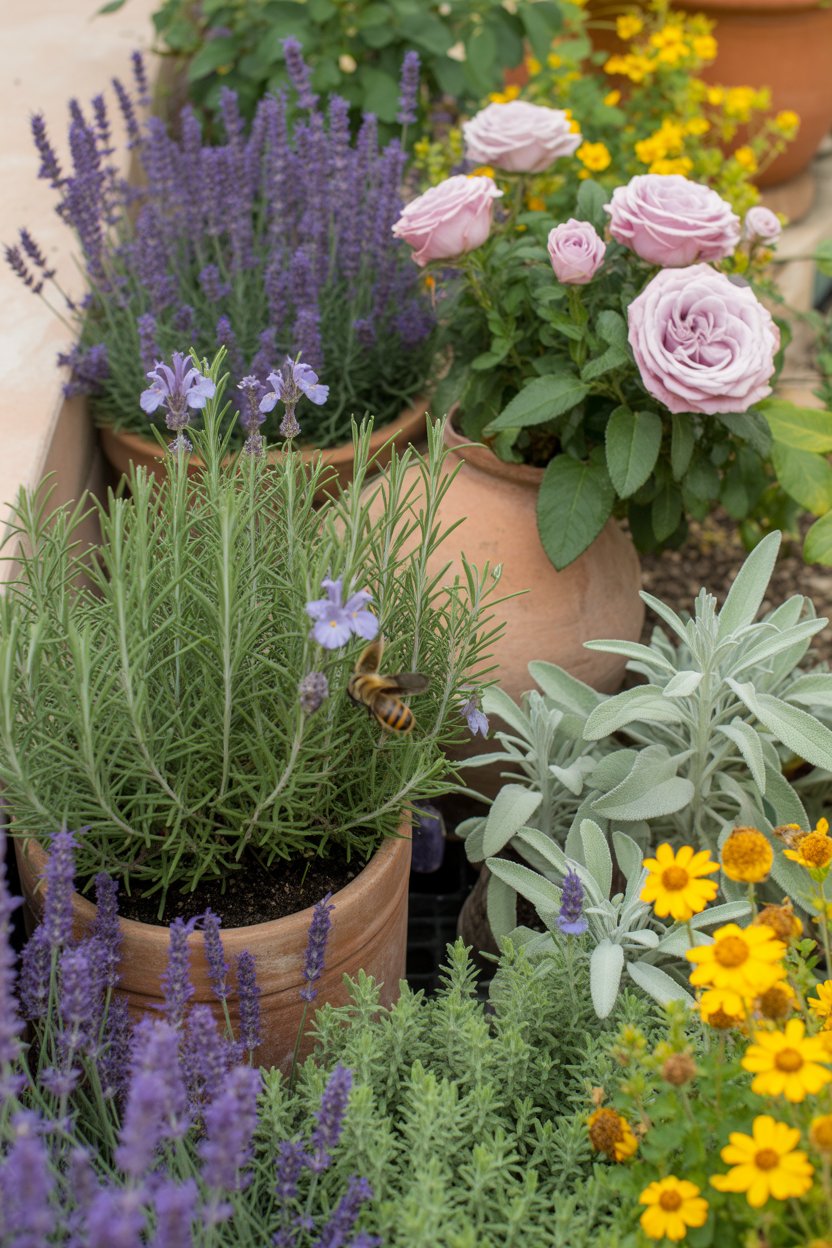
Adding ornamental grasses to your cottage border brings in movement and modern texture that keeps things from feeling too “cottagey-cute.” I’m talking feather reed grass, fountain grass, or those gorgeous blue fescue clumps that sway with every breeze. They create this beautiful contrast against your flowering perennials.
The grasses add year-round interest too—they look amazing even in winter when everything else has died back. Plant them in drifts between your flower groups, and they’ll help tie different color zones together while adding that contemporary cottage twist. It’s traditional meets modern, and it works surprisingly well.
9. Brick or Cobblestone Edged Cottage Border
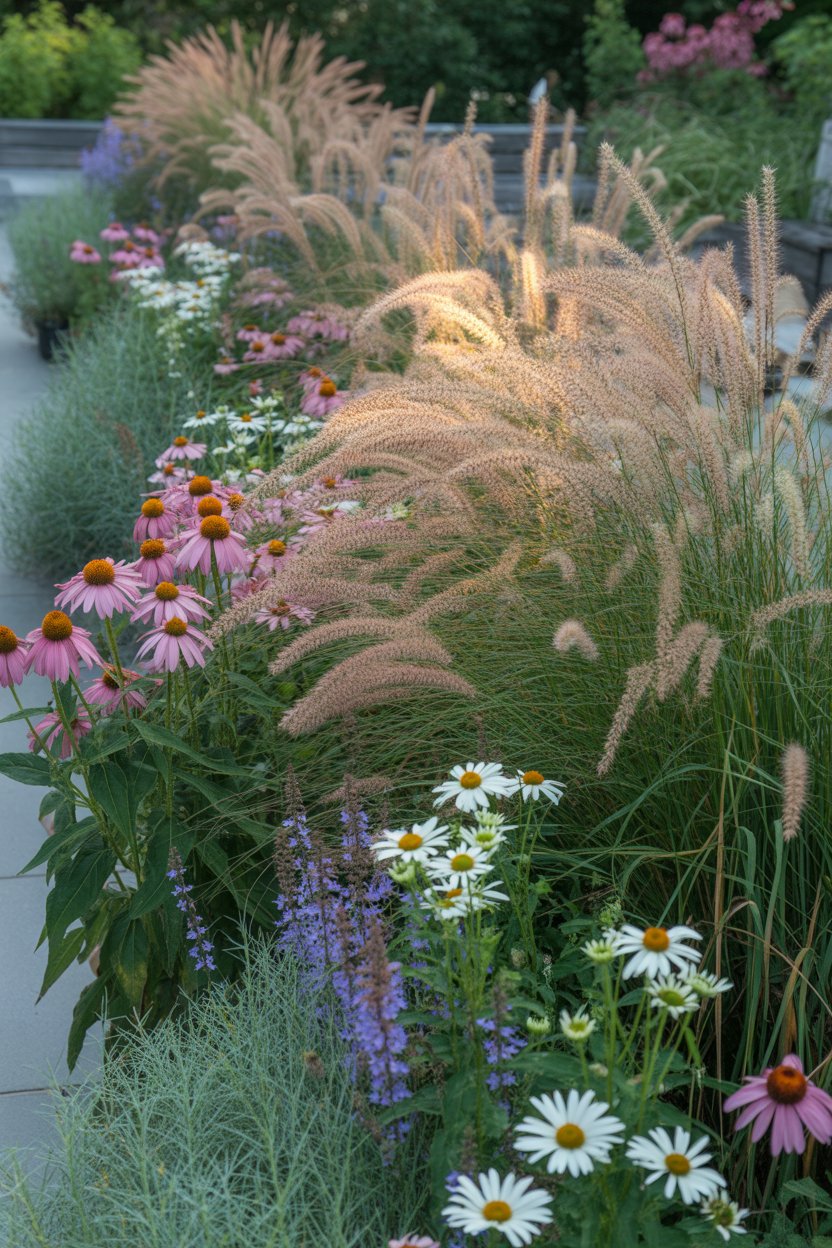
There’s something timelessly beautiful about reclaimed brick or cobblestone edging that just screams “established cottage garden.” The aged patina, the slight irregularities, the way plants naturally spill over—it creates instant character. You can lay them flat for a mowing strip or stand them on edge for a raised border effect.
What I really appreciate about brick or cobblestone is how it gives your cottage border that finished look while keeping the informal vibe intact. It’s structured chaos at its finest. Hunt for reclaimed materials at salvage yards for the most authentic look—new brick just doesn’t have that same weathered charm that makes cottage gardens feel like they’ve been there for generations.
10. Shade-Loving Cottage Border
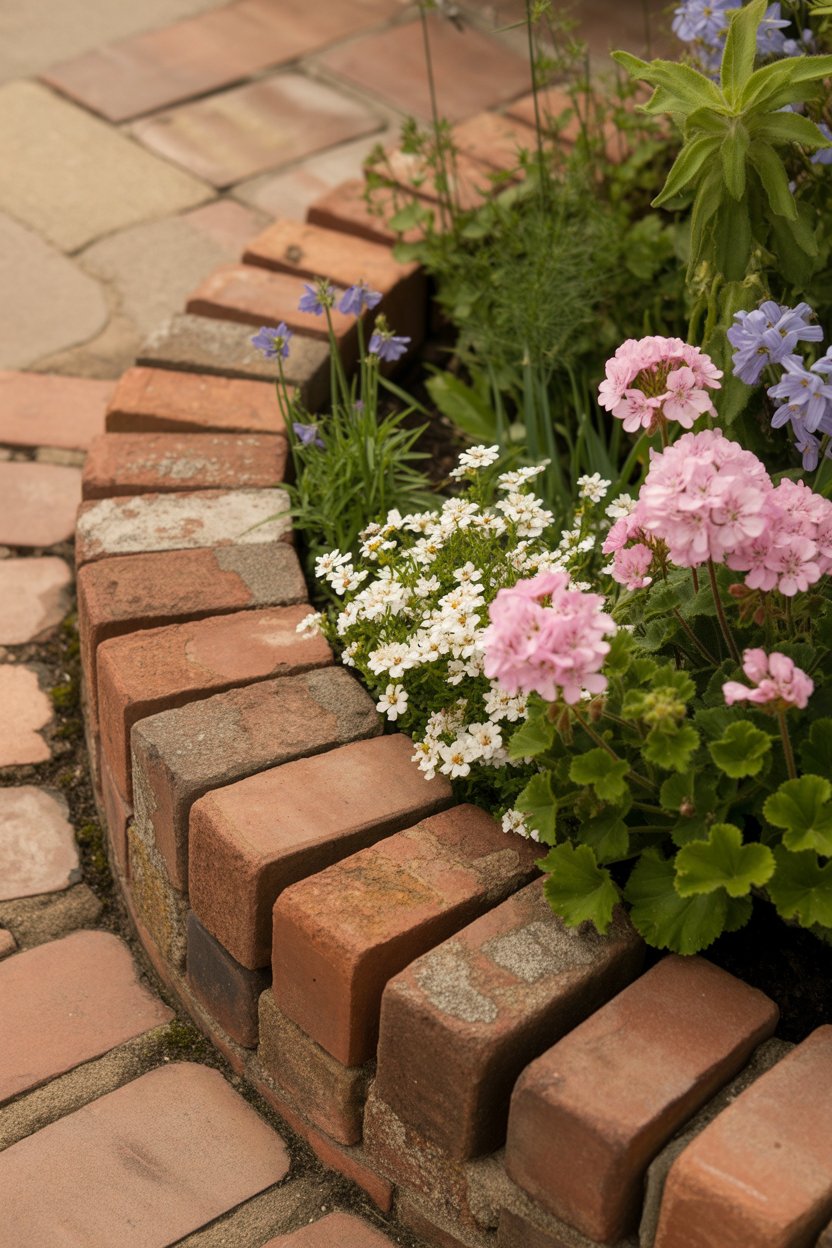
Not everyone has full sun, and that’s totally okay—you can absolutely create a lush cottage border in shade. Think hostas with their gorgeous foliage, delicate astilbe plumes, bleeding hearts, and ferns for that woodland cottage vibe. The key is embracing the softer, more subtle beauty that shade gardens offer.
Shade borders tend to be more about foliage textures and quieter color palettes, which honestly can be just as stunning as their sun-loving cousins. Layer different leaf shapes and sizes, add some white-flowering varieties to brighten dark spots, and you’ll create this cool, serene cottage retreat that feels like a secret garden hideaway.
11. Cottage Border With Self-Seeding Annuals
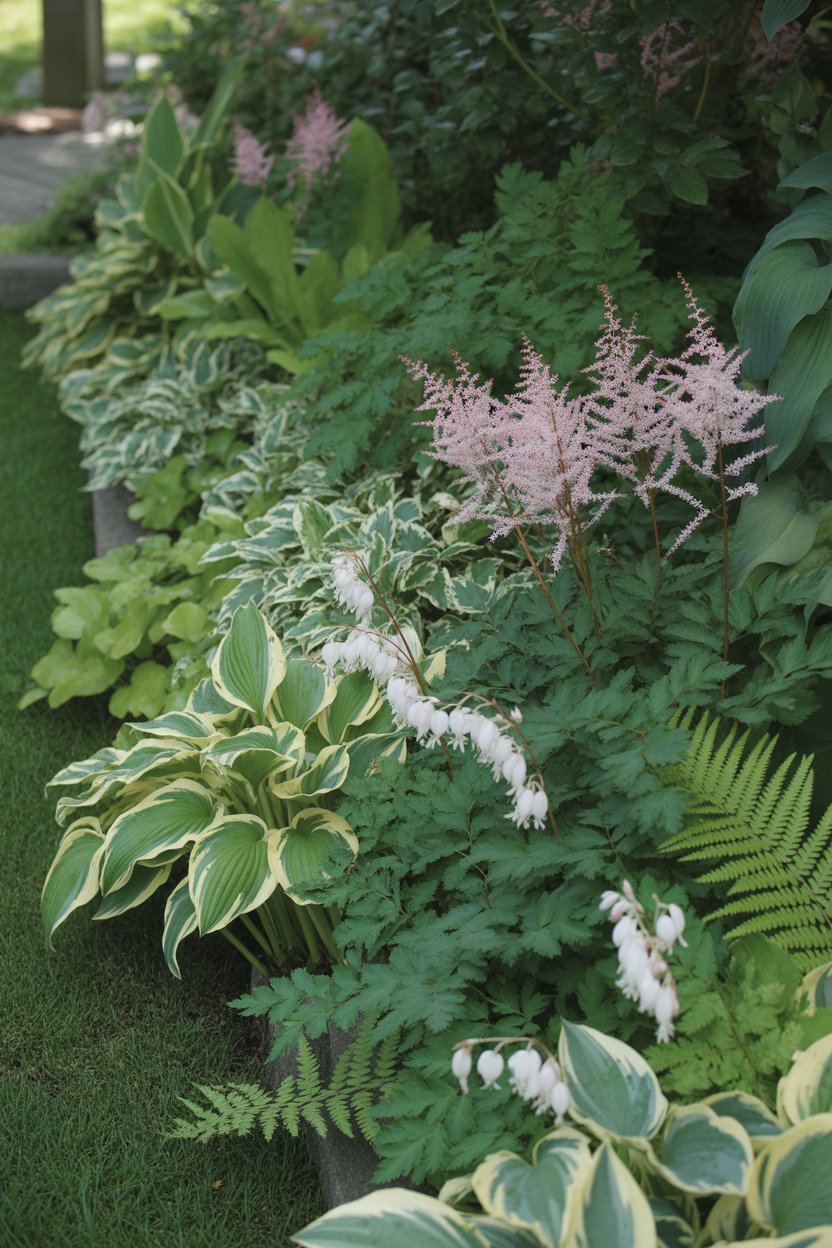
Here’s a lazy gardener’s secret: plant self-seeding annuals once, and they’ll come back year after year in slightly different spots, creating that perfect “unplanned” cottage garden look. Forget-me-nots, sweet William, love-in-a-mist, and poppies are champions at this. They pop up in unexpected places and keep your border feeling fresh and ever-changing.
The magic of self-seeders is how they fill in gaps naturally and create those happy accidents that you could never plan. You might get a stunning color combination you’d never have thought of, or a flower appearing in just the right spot. Just let them do their thing—deadhead if you want control, or let them scatter seeds freely for maximum cottage garden chaos.
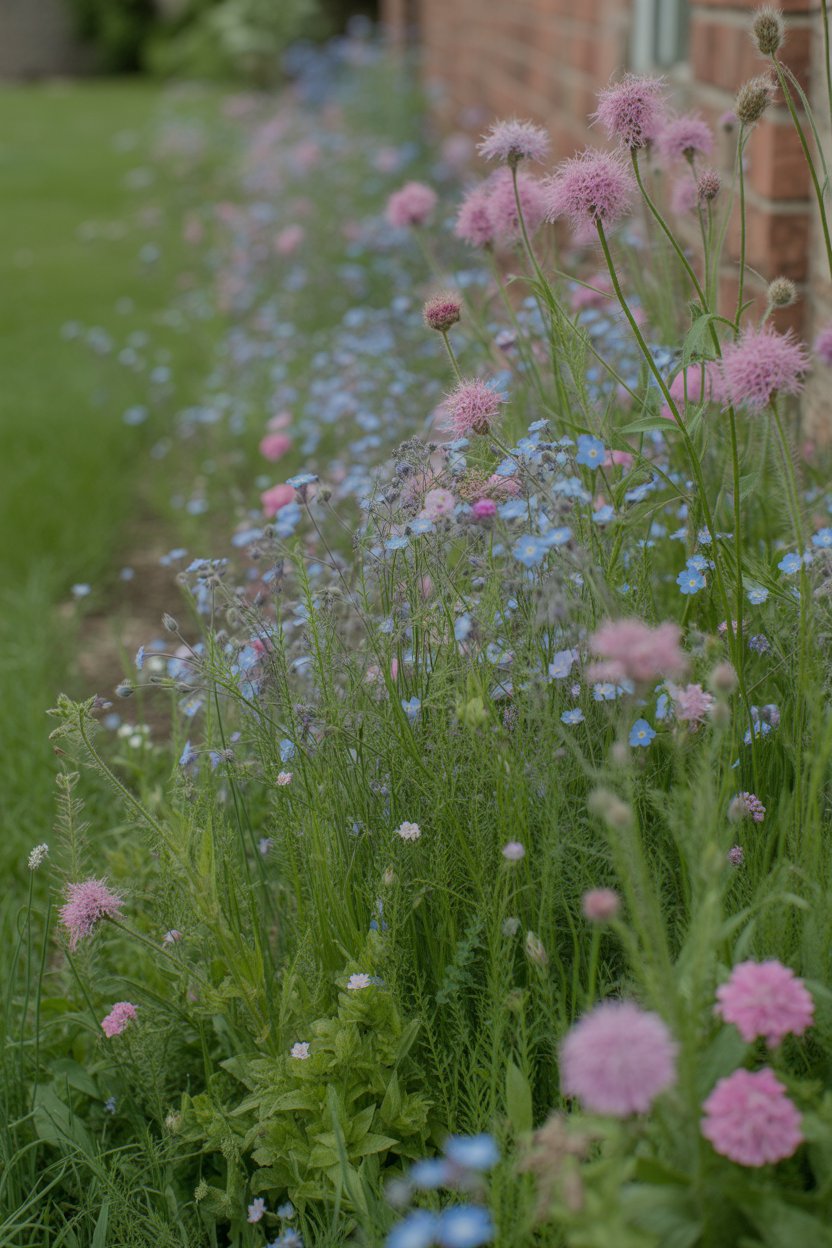
12. Double-Sided Border Along Garden Paths
Want maximum impact? Create cottage borders on both sides of your garden path so you’re basically walking through a flower tunnel. It’s incredibly immersive and makes even a short path feel like a proper garden journey. The trick is keeping the scale right—don’t plant things so tall that the path feels cramped.
I love how double borders frame the path and draw your eye forward, creating this natural invitation to explore. You can mirror the planting on both sides for symmetry, or make each side different for more visual interest. Either way, you’re doubling your flower power and creating that enclosed, secret garden feeling that’s total cottage garden goals.
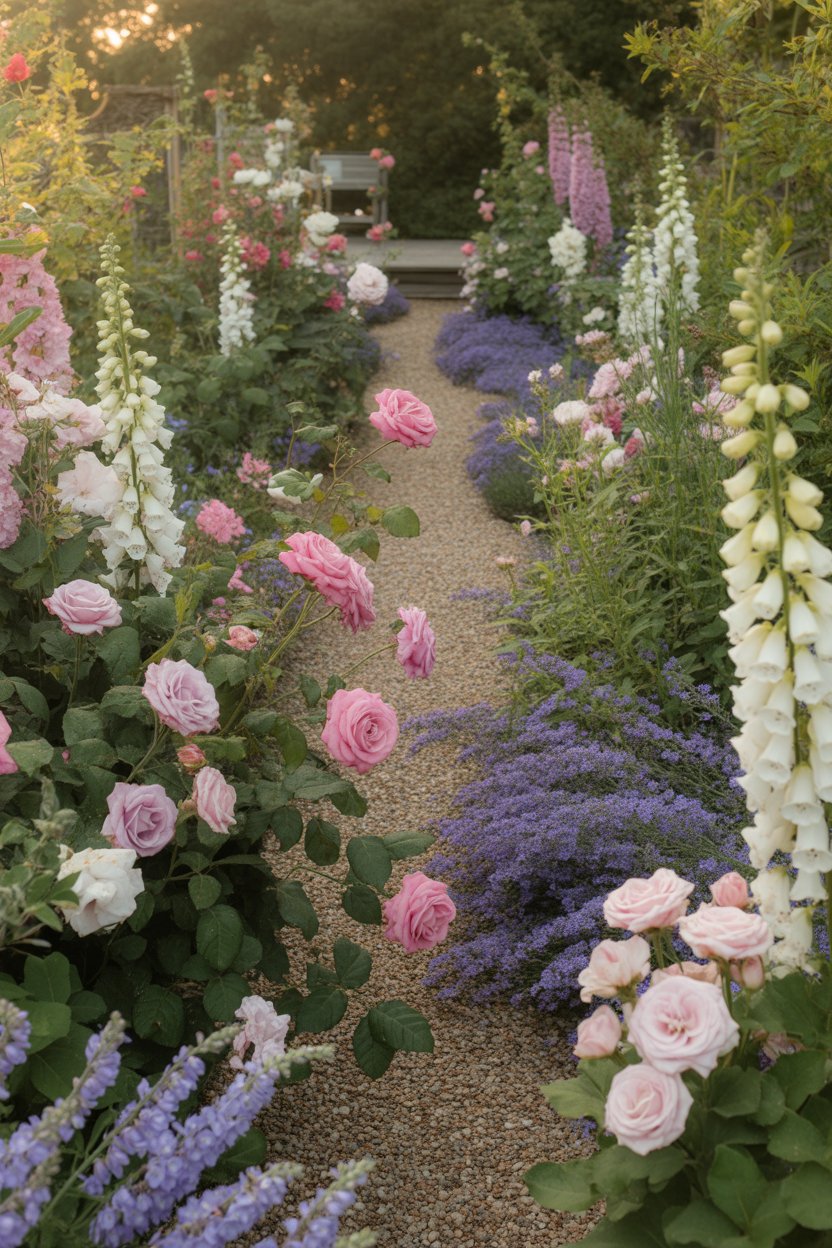
13. Color-Blocked Cottage Border (Hot vs. Cool)
Who says cottage gardens have to be all pastels? Try creating distinct color zones—a hot section with oranges, reds, and yellows, then transition to a cool section with blues, purples, and whites. The contrast creates serious drama while keeping that cottage garden abundance. It’s bold but still totally cottage-appropriate.
The color blocking gives you two completely different moods in one border. The hot section feels energetic and vibrant, perfect for areas you want to draw attention to. The cool section feels calming and serene—ideal near seating areas. The transition zone where they meet? That’s where the magic happens, and it keeps your eye moving through the whole border.
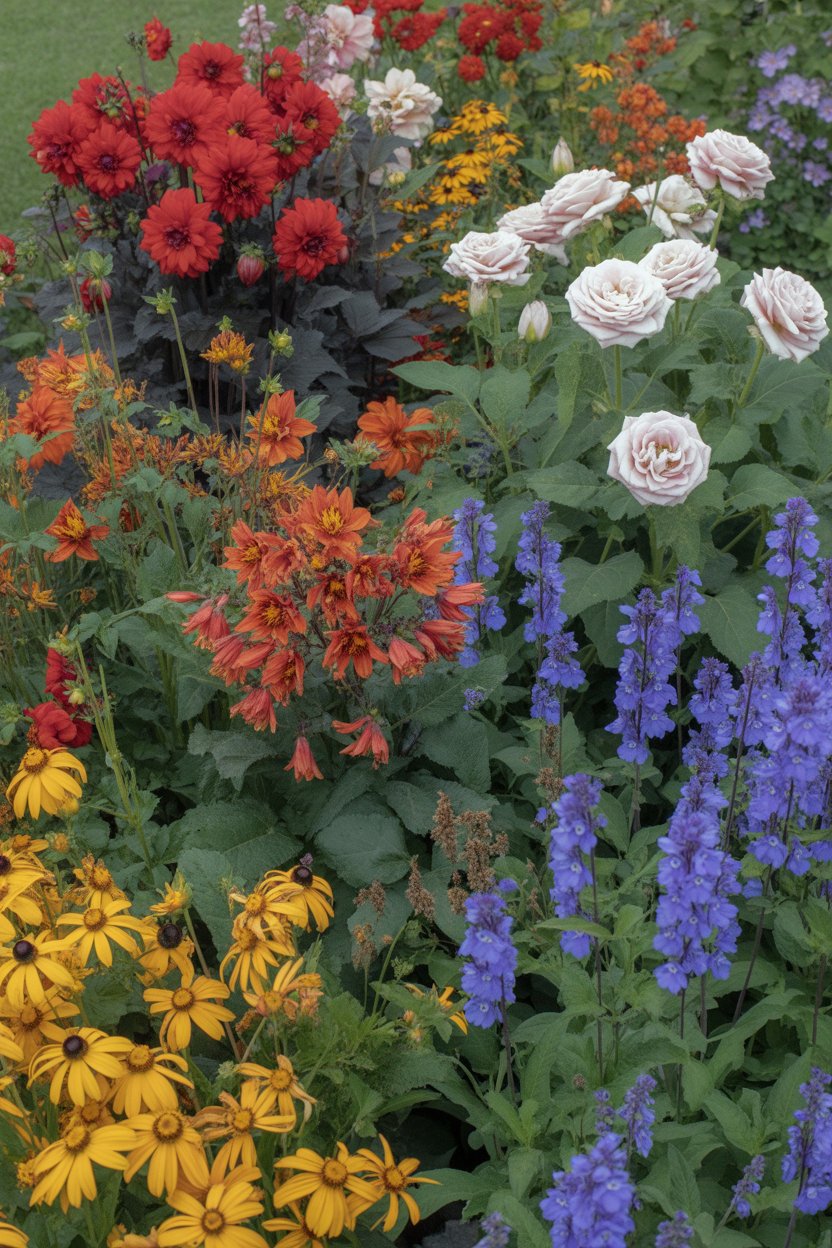
14. Cottage Border With Vintage Container Accents
Adding vintage containers within your border creates instant cottage charm and gives you the flexibility to change things up seasonally. Nestle old galvanized watering cans, weathered terracotta pots, or vintage enamelware buckets between plants and fill them with trailing annuals or herbs. It’s that perfect mix of structure and whimsy.
What I love about this approach is how the containers add vertical interest and focal points without committing to permanent structures. You can move them around, swap out plantings, and create little vignettes that feel collected over time. Hunt flea markets and estate sales for authentic pieces—the rust, chips, and patina make everything look more charming, not less.
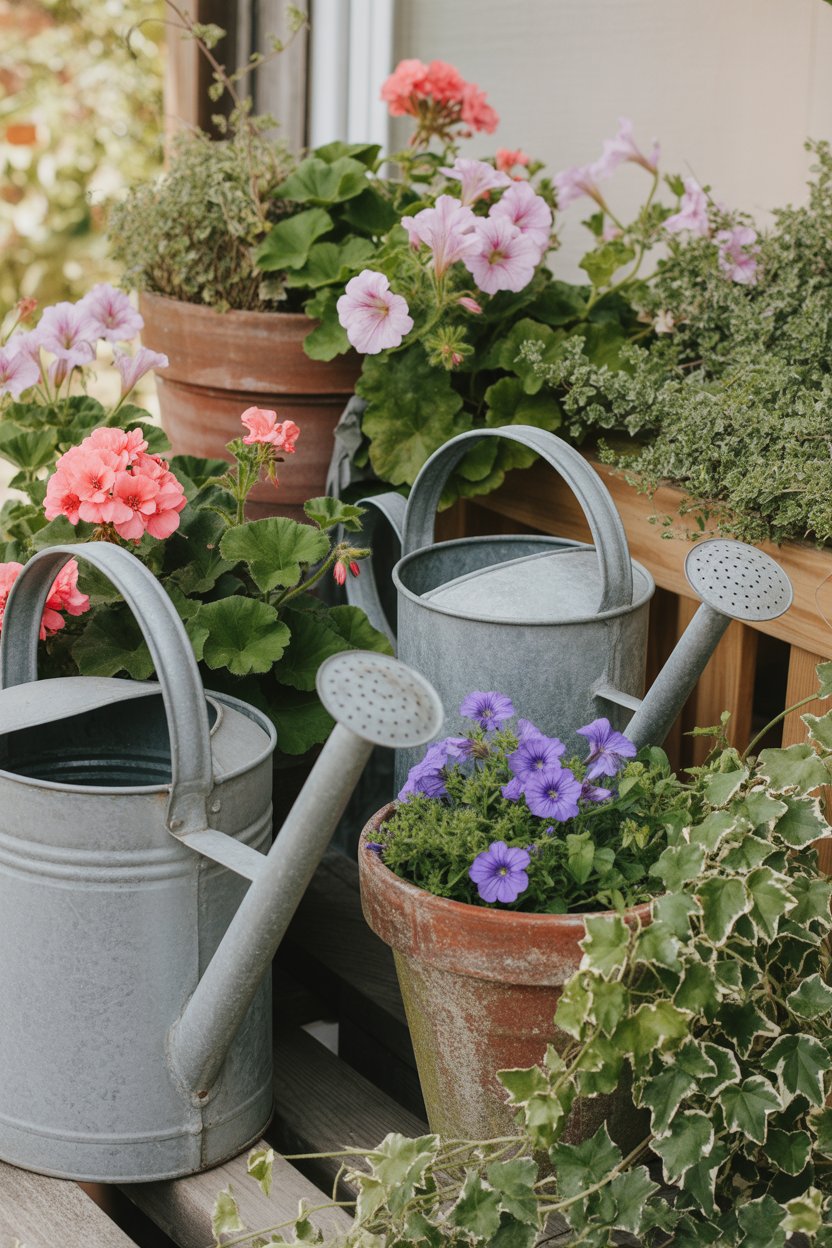
15. Rambling Rose & Perennial Border
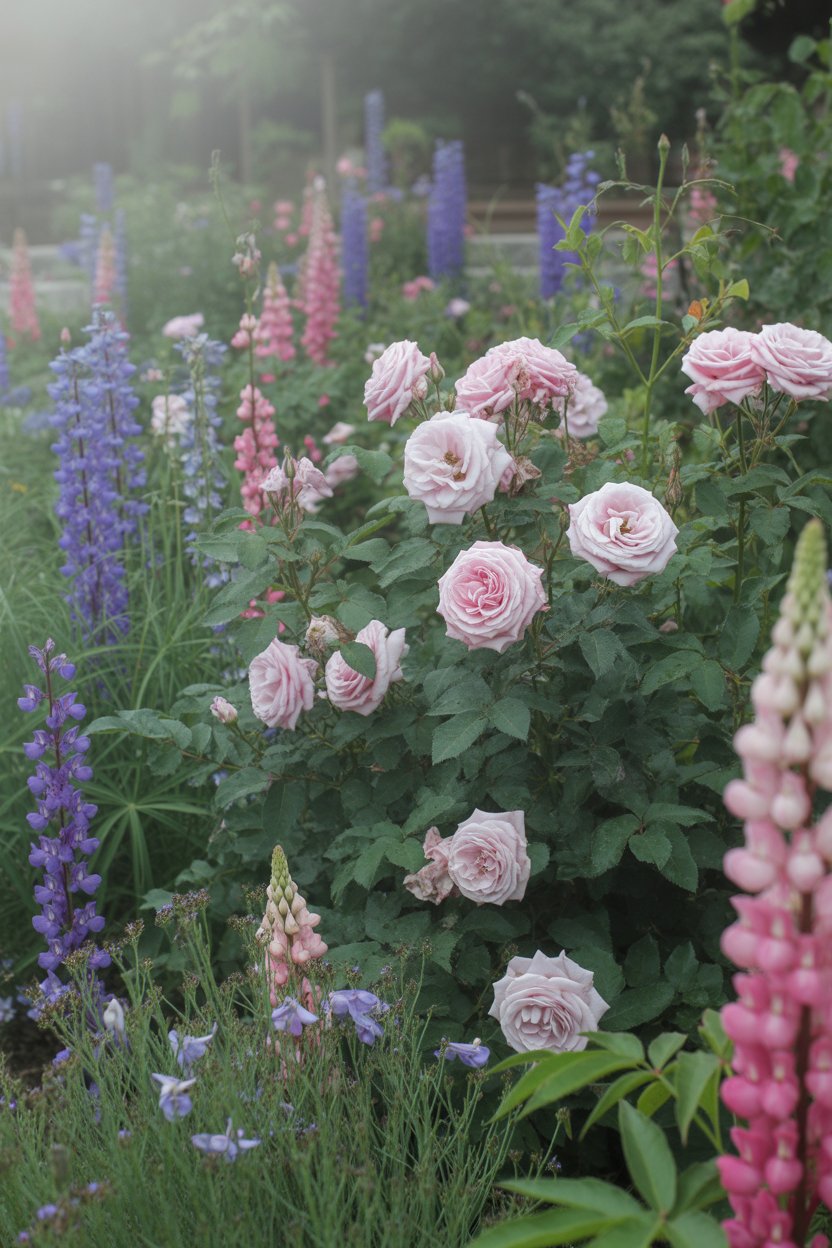
Let old-fashioned rambling roses weave through tall perennials like delphiniums and lupines for that overgrown English cottage romance. Rambling roses want to scramble and sprawl, so give them tall perennials to lean on naturally. The effect is this gorgeous tangled abundance that looks completely effortless.
The key is choosing rambling varieties that bloom once spectacularly rather than repeat bloomers—think ‘American Pillar’ or ‘Veilchenblau’. When they’re in bloom, they create this incredible focal point, and the rest of the season, your perennials carry the show. It’s cottage gardening at its most romantic and slightly wild, like nature took over, but in the best possible way.
16. Cottage Border With Natural Wood Edging
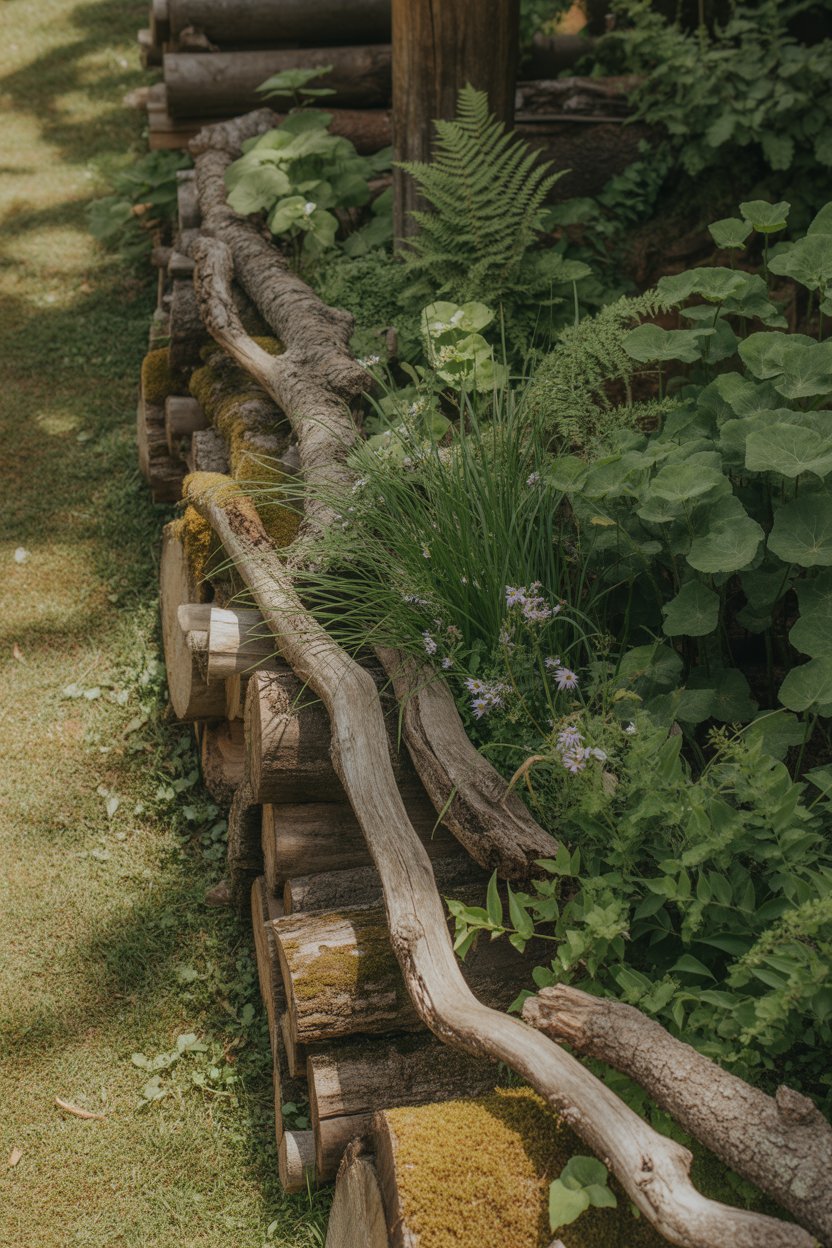
For a more organic, woodland-cottage vibe, edge your borders with weathered logs, thick branches, or rustic timber. It’s perfect if your cottage garden has a more naturalistic, country aesthetic rather than a formal one. The wood defines while feeling completely at home in nature.
What’s great about wood edging is that you can literally forage it from your property or get it free from tree services. It decomposes slowly over time, which actually enriches your soil—bonus! Stack logs for a raised effect, or lay branches in slightly irregular rows for a more rustic look. As it weathers and gets covered in moss, it just gets more charming.
17. Fragrant Cottage Border for Sensory Gardens
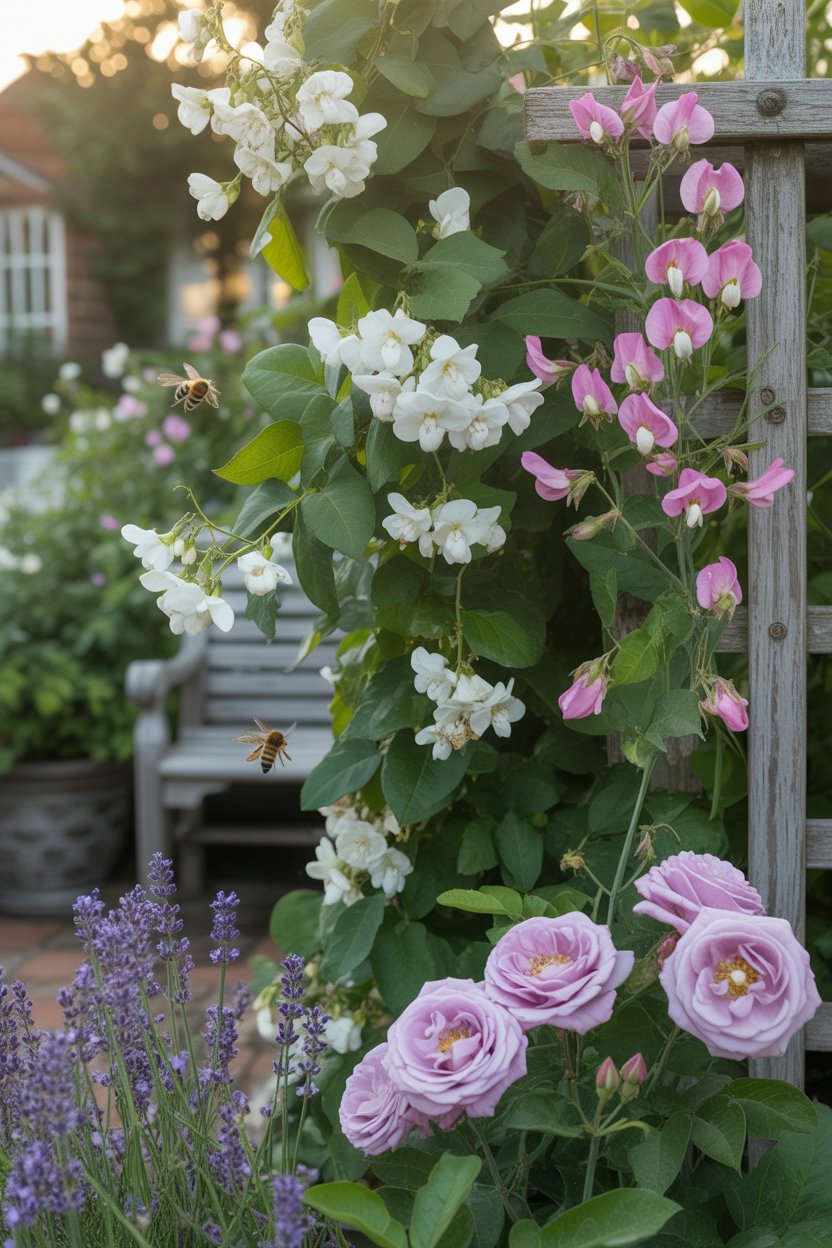
Design your border specifically for fragrance and create a true sensory experience. Layer jasmine, honeysuckle, sweet peas, scented roses, lavender, and dianthus for borders that smell as amazing as they look. Place fragrant borders near seating areas, along paths, or outside windows where you’ll actually enjoy the scent.
The magic of a scent-focused border lies in how it engages you beyond the visual. Different flowers release fragrance at different times—some stronger in the morning, others at dusk—so you get this changing aromatic experience throughout the day. It’s cottage gardening that works for all your senses, and trust me, once you have a fragrant border, you’ll never want to be without one.
Turn a small patio into an enchanting escape with these creative patio fairy garden ideas perfect for any outdoor space.
18. Cottage Border With Spring Bulb Layering
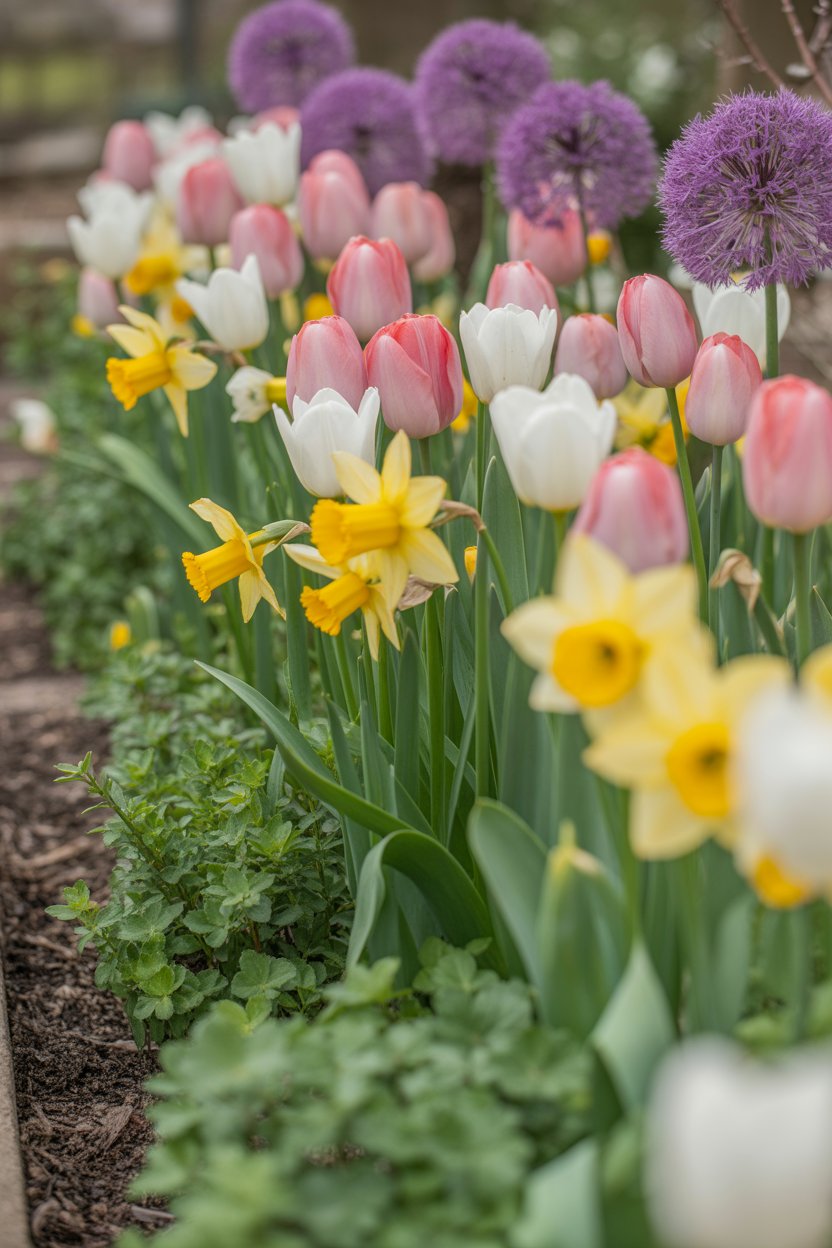
Plant spring bulbs beneath your perennials for early-season color that seamlessly transitions into summer blooms. Tuck tulips, daffodils, and alliums between your hostas and daylilies—the bulbs bloom early before the perennials wake up, then the perennial foliage hides the dying bulb leaves. It’s genius layering.
This approach gives you basically four seasons of interest from one border space. Spring bulbs kick things off with bright color when you’re desperate for it, then fade as your perennials emerge and take over. The key is planting bulbs deep enough that you won’t accidentally dig them up later—mark your bulb spots if your memory is anything like mine!
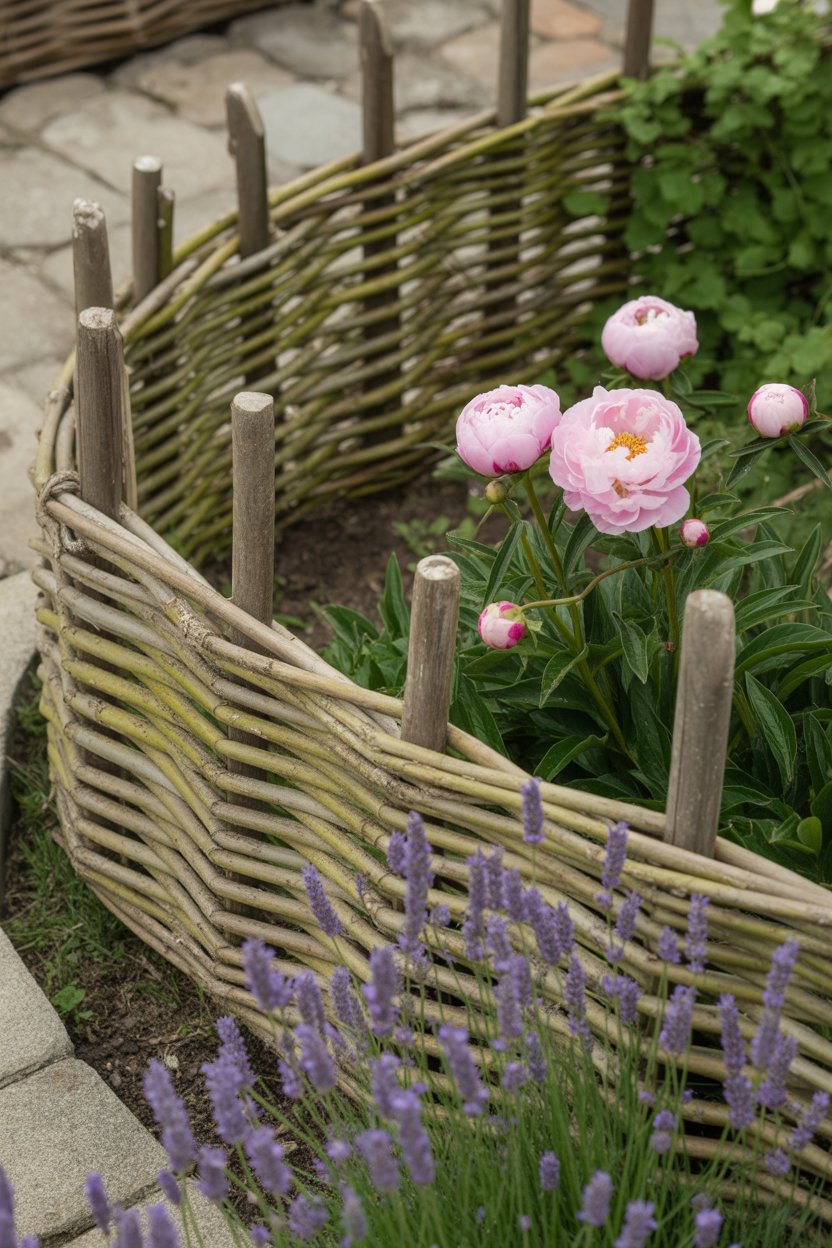
19. Cottage Border With Woven Willow or Wattle Fencing
Create charming low-woven willow fences as both border edging and natural plant supports. Wattle fencing has this handcrafted, Old-World cottage garden charm that you just can’t get with anything else. You can buy ready-made panels or DIY them if you’re feeling crafty—it’s basically just weaving willow branches through stakes.
The beauty of wattle is how it ages beautifully over time, silvering and weathering naturally. It’s perfect for supporting floppy perennials like peonies or tall delphiniums while adding structure and visual interest even in winter. It’s functional art that screams “authentic cottage garden” and gives your border that collected-over-time, European countryside feeling.
Conclusion
Creating your dream cottage garden border doesn’t have to be overwhelming or require expert-level skills. The beauty of cottage gardening is in its forgiveness—there’s no “wrong” way to mix plants, and happy accidents often lead to the most stunning combinations.
Start with one or two ideas that speak to you, choose plants suited to your climate and light conditions, and let your border evolve naturally over time. That’s the real secret to authentic cottage gardens—they grow and change with you, getting better and more established each season.
Whether you go for classic layered perennials, fragrant sensory borders, or low-maintenance wildflower meadows, you’re creating a garden that brings joy not just to you, but to everyone who sees it. So grab your gardening gloves, pick your favorite idea, and start transforming your ordinary yard into that enchanting cottage retreat you’ve been dreaming about. Your perfect cottage border is waiting!