
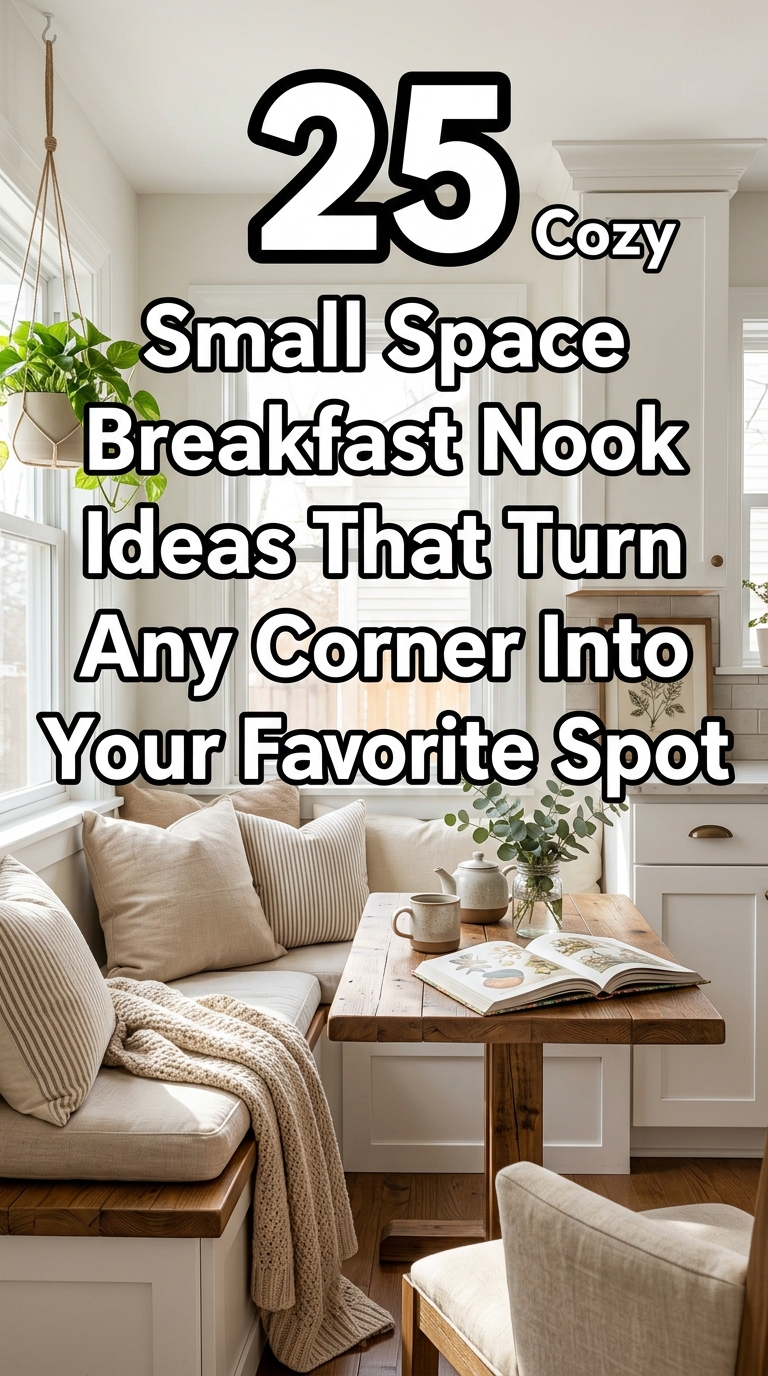
Not every kitchen comes with extra square footage. Most of us are working with tight corners, narrow walls, or that one awkward spot that never quite made sense — until now.
A small space breakfast nook isn’t a compromise. Honestly, it might be the coziest thing you ever add to your home. There’s something about a compact, intentional little dining corner that feels more personal than a big open dining room. It’s yours. It fits your morning. It fits your space.
This list is specifically built for small kitchens, apartments, and tight spaces where every inch counts. You’ll find ideas that are space-smart, budget-friendly, and genuinely beautiful — the kind that make you want to actually sit down and enjoy your morning instead of rushing through it.
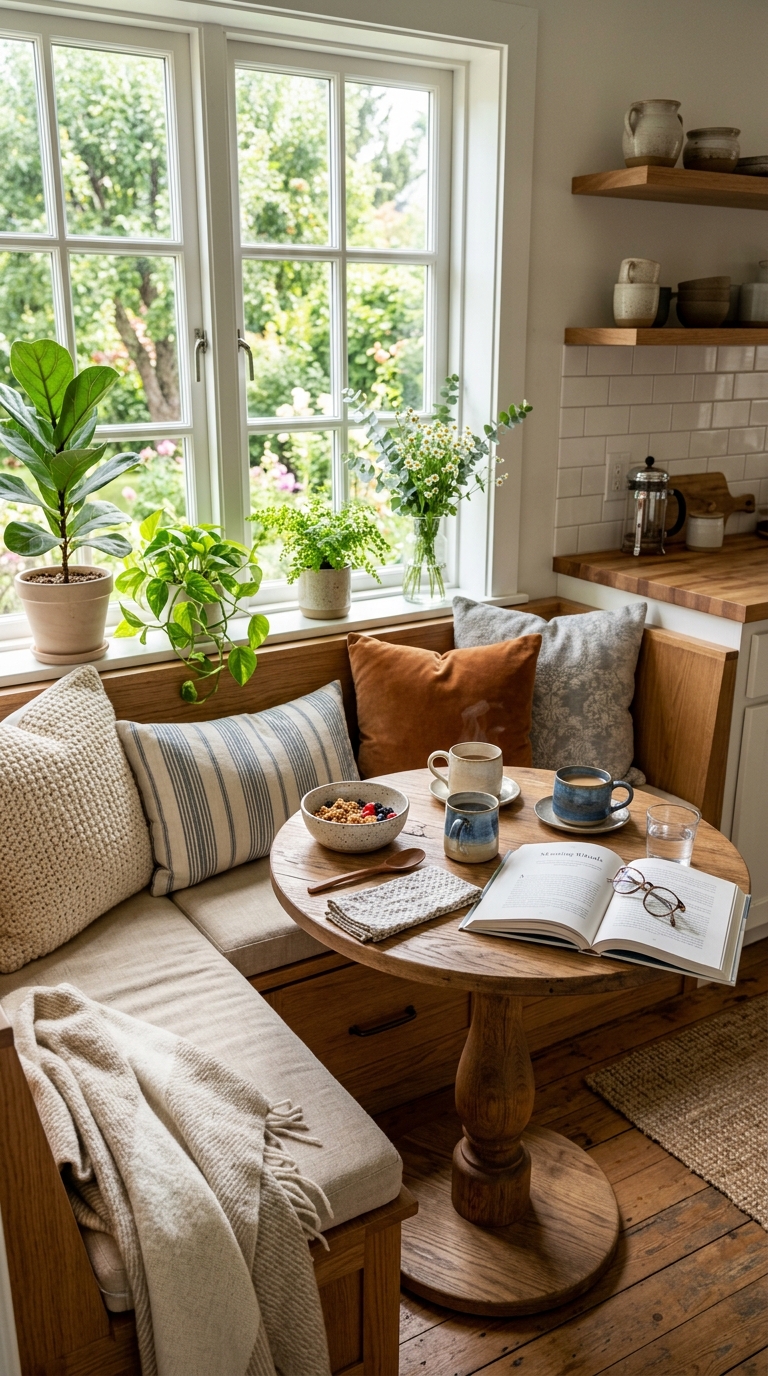
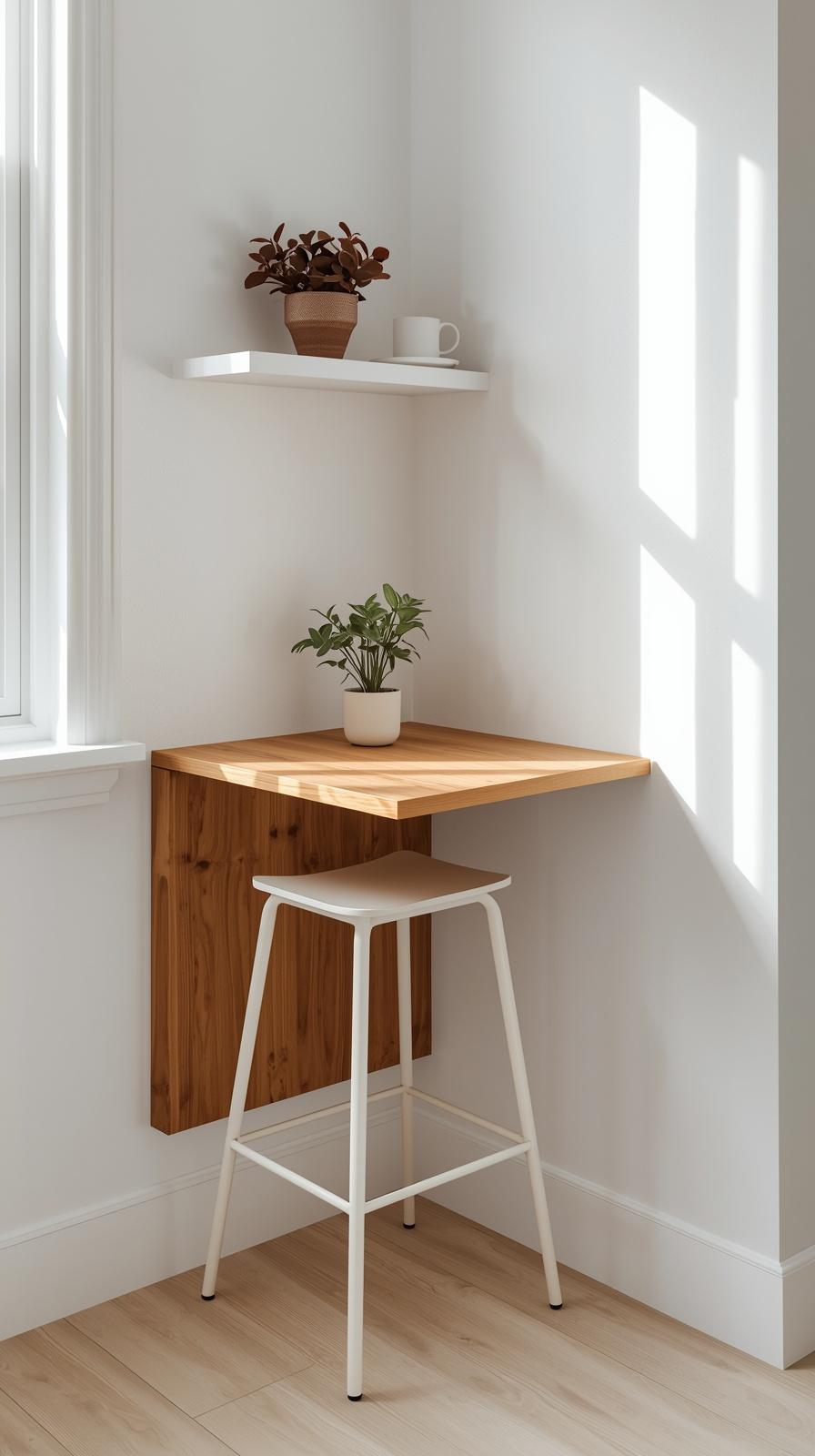
The Fold-Down Wall Table That Disappears When You Need It To
When your kitchen is really small, permanent furniture can feel like it’s constantly in the way. A wall-mounted drop-leaf table solves that completely. Mount it at dining height, fold it up when you need the floor space, and fold it down when it’s time to eat. Pair it with two slim stools that slide flat against the wall underneath.
It sounds minimal — and it is — but styled right, it looks intentional and even a little chic. Add a small floating shelf above for a plant and your coffee setup, and the whole wall becomes a functioning little breakfast station.
Styling Tip: Choose a drop-leaf table in a natural oak or walnut finish. Even a small wood surface adds warmth that a plain white one can’t.
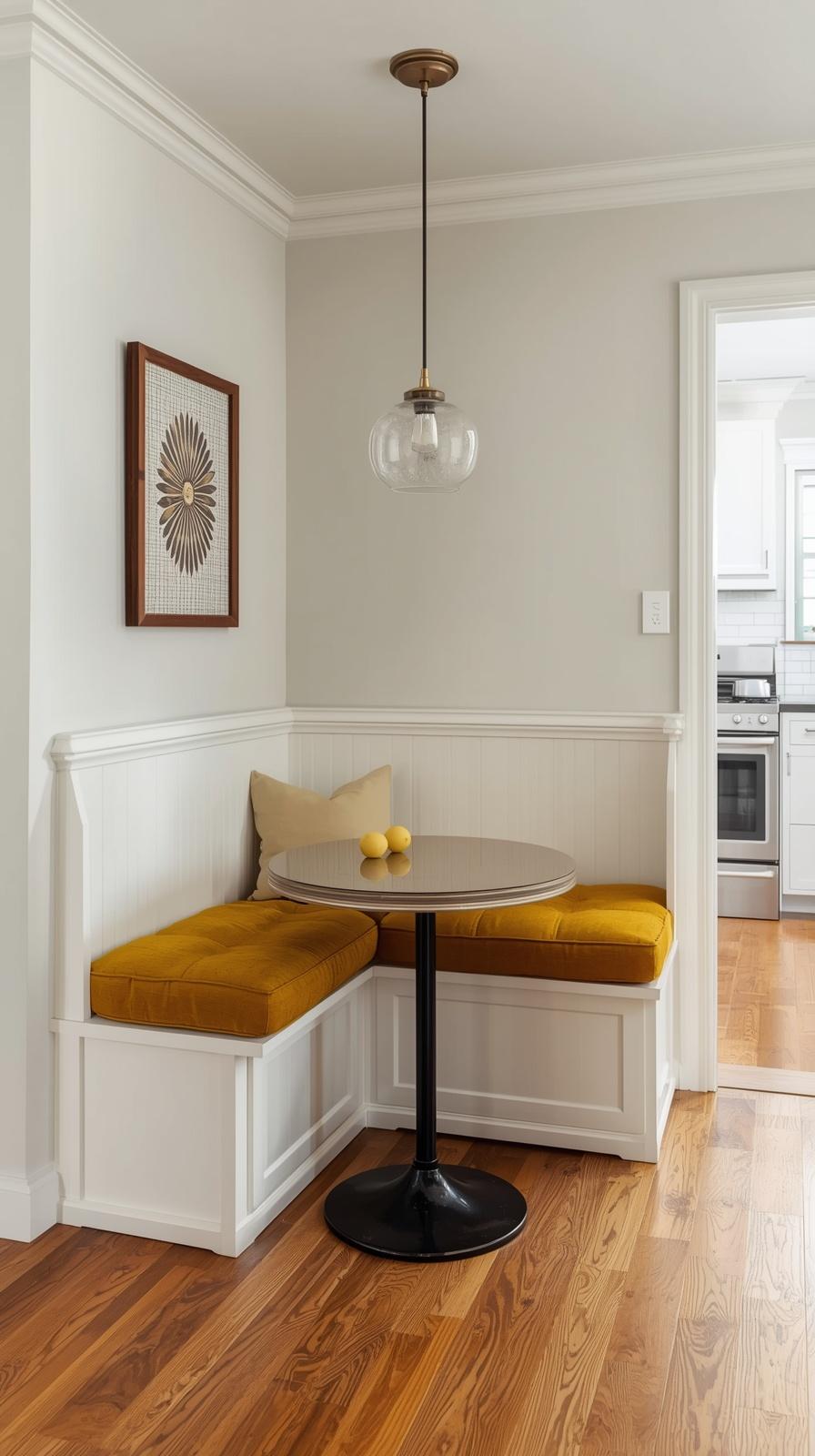
Corner Bench Built Into a 4×4 Foot Kitchen Nook
Four feet by four feet. That’s genuinely all you need. A curved or angled corner bench with a small round bistro table in the center creates a proper breakfast nook in a space most people would write off as dead space. Keep the bench seat low, and the table compact — a 24-inch round table is plenty for two.
The corner placement is the secret here. You’re using space that wasn’t doing anything anyway. Cushion the bench in something washable and cheerful, add a small pendant overhead, and this tiny corner becomes the spot everyone gravitates toward.
Styling Tip: Go for a round table with a pedestal base — no legs in the corners means easier seating for everyone squeezed into a small nook.
IKEA Kallax Bench Hack for a Budget Built-In Look
A real built-in bench can cost thousands. Two IKEA Kallax units stacked sideways, topped with a plywood board and a foam cushion, cost a fraction of that — and honestly look surprisingly good once they’re painted and styled. Face them toward a small table, add shiplap panels on the front, and paint the whole thing one color.
From two feet away, most people genuinely can’t tell the difference. The Kallax cubbies also give you real storage — baskets for table linens, extra cushion covers, or whatever clutter needs a home.
If you love making the most of compact spaces, these cozy breakfast nook ideas pair perfectly with these boho tiny house living room ideas for creating a warm and functional small home.
Styling Tip: Paint the Kallax bench base in Sherwin-Williams “Alabaster” to seamlessly match most white kitchen cabinets. It makes the whole thing look like it was always there.
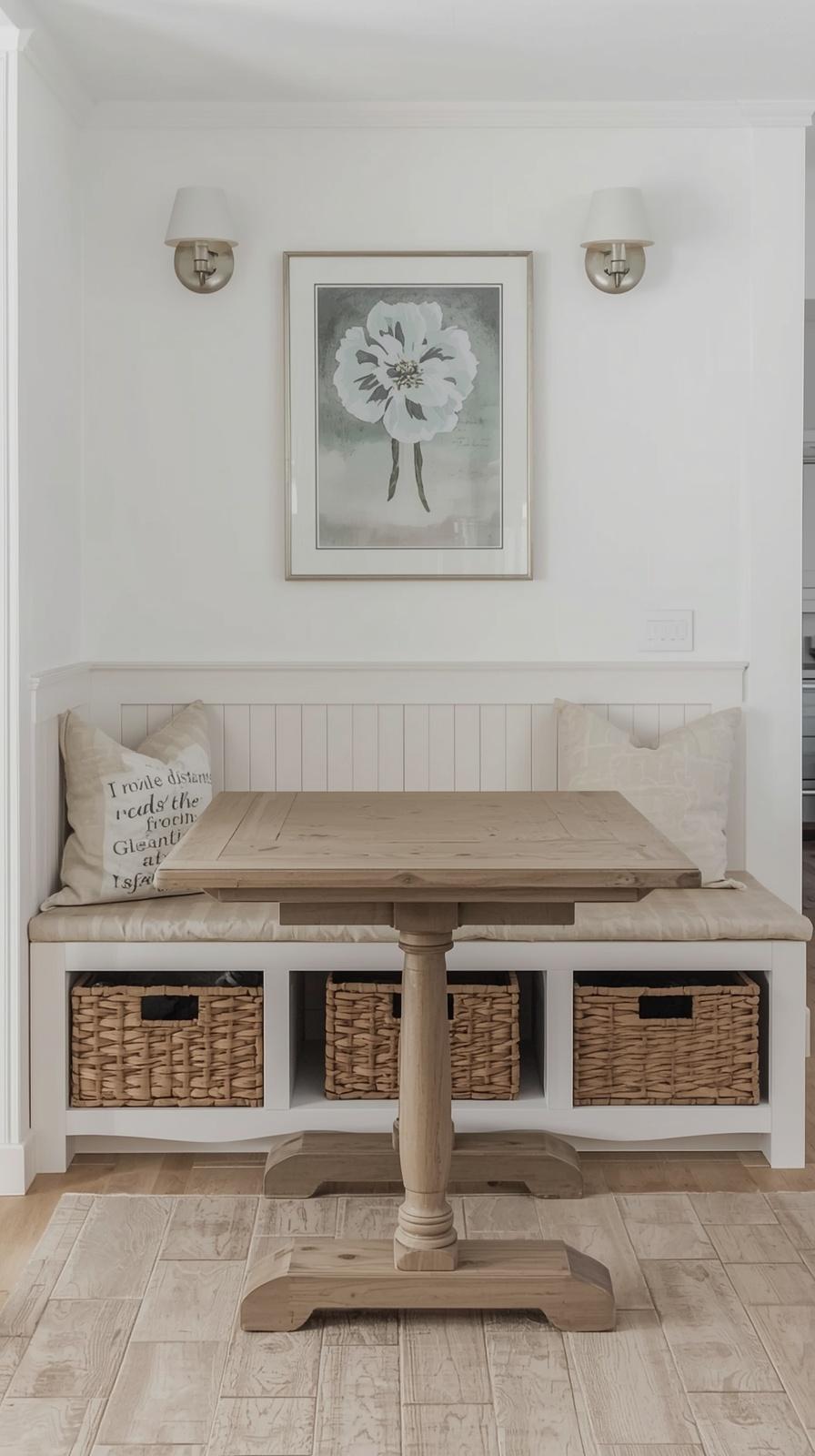
Single-Wall Banquette for a Narrow Galley Kitchen
Galley kitchens don’t have corners — but they absolutely can have a breakfast nook. A straight bench along one end wall, a narrow table (14 to 18 inches deep is enough), and two stools or chairs on the opposite side. It fits neatly without blocking the kitchen walkway and creates a properly defined dining spot in a space that usually has none.
The key is keeping the table depth narrow. You don’t need full dining-table depth here — just enough for a plate, a mug, and maybe a phone. Keep the bench cushion in a light color to avoid visually shrinking the already-slim space.
Styling Tip: Mount a small mirror above the bench in a galley nook. It reflects light into the narrow space and makes the whole kitchen feel less tunnel-like.
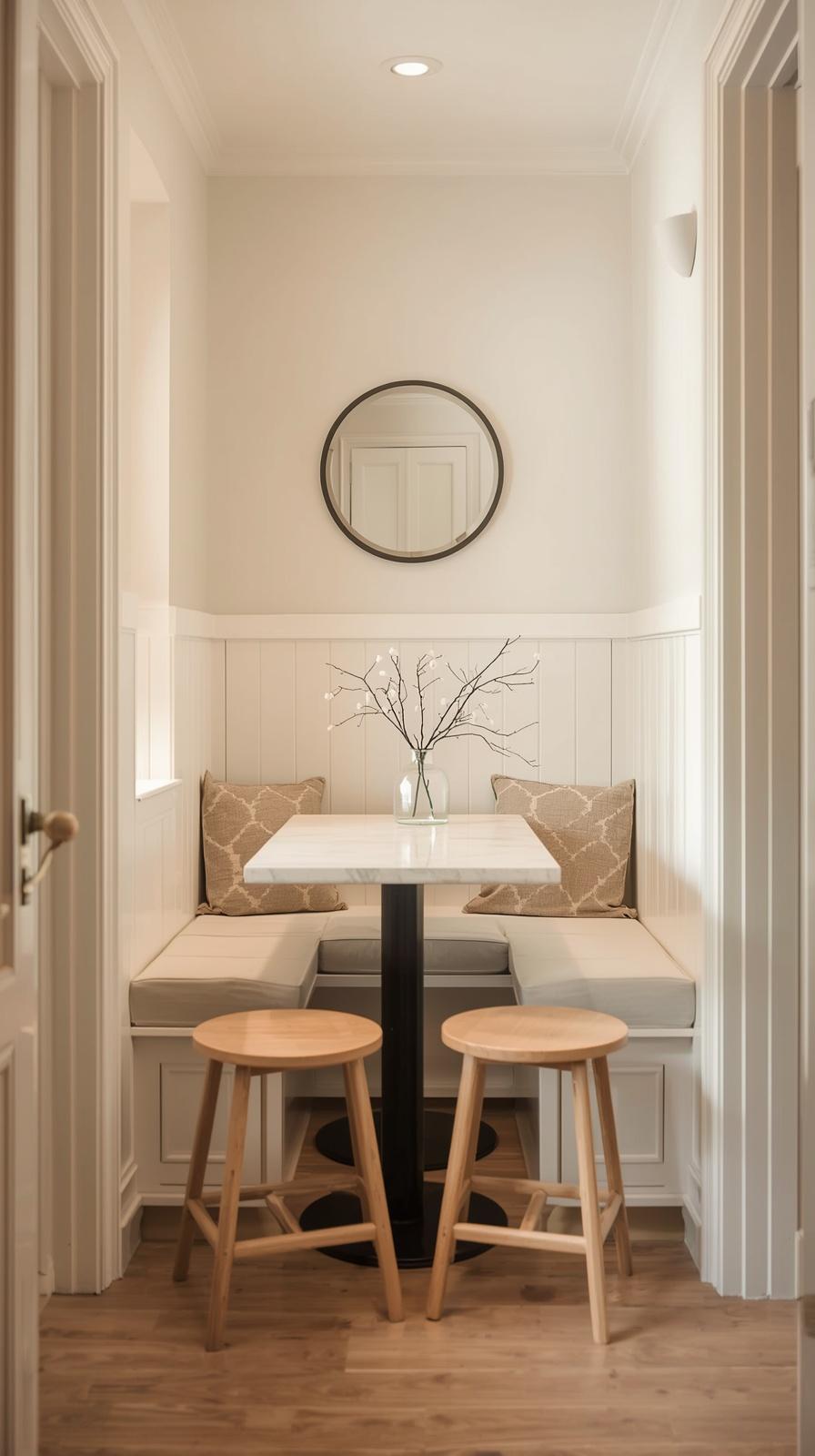
Alcove Breakfast Nook in an Unused Doorway or Recess
Most older homes and apartments have at least one weird little recess — a filled-in doorway, a shallow alcove, a random bump-out that never had a purpose. That space is a breakfast nook waiting to happen. Build a simple bench into the base, add a floating shelf above, tuck in a small round table, and paint the interior a shade deeper than the rest of the kitchen.
That slightly darker paint on the inside walls is the trick. It creates instant depth and makes the alcove feel purposeful and cozy rather than like an afterthought.
Styling Tip: Use peel-and-stick wallpaper inside the alcove instead of paint if you’re renting. A botanical or geometric print makes the recessed space feel totally designed.
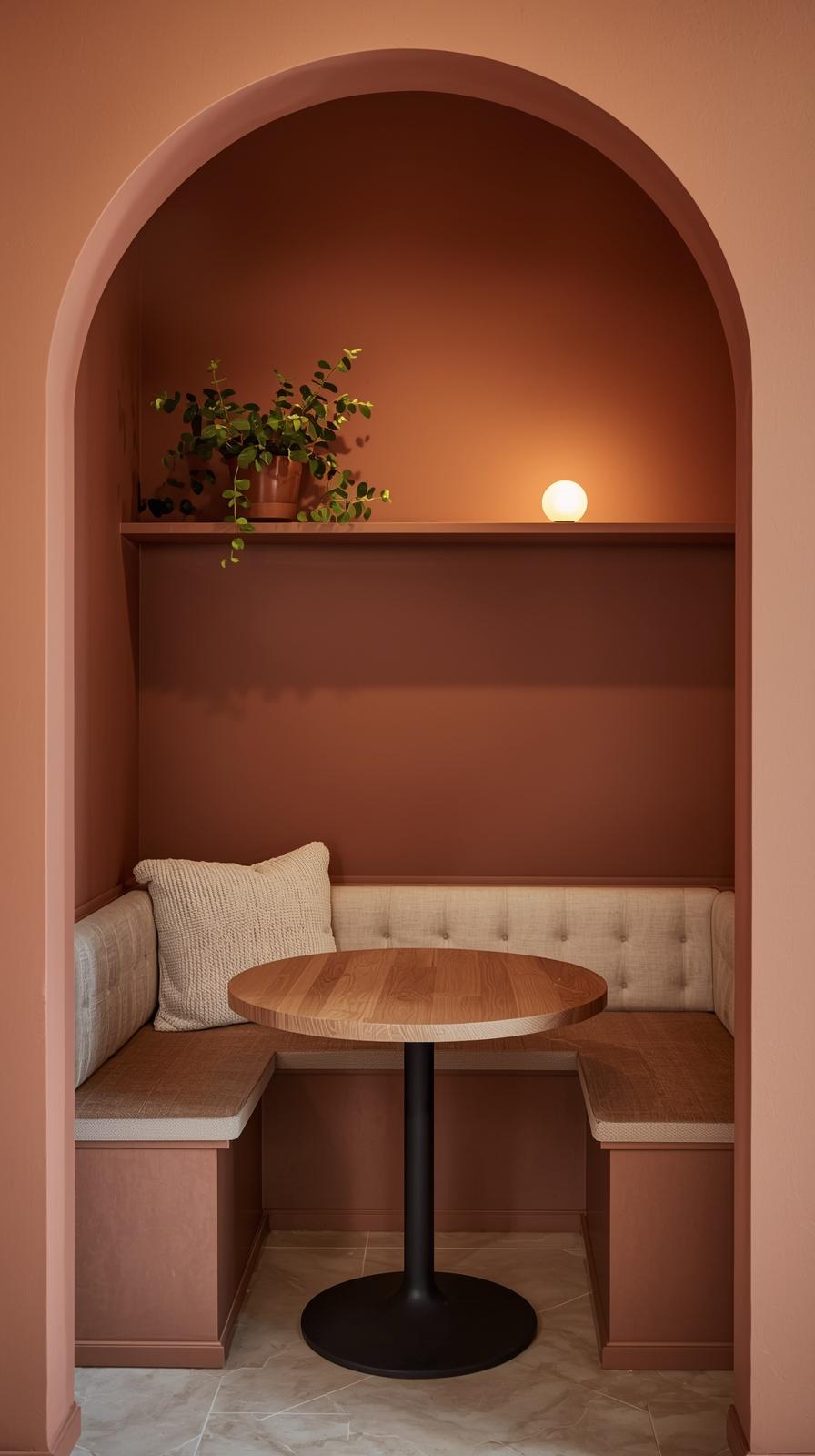
Bay Window Seat Nook That Uses Every Inch of the Alcove
If your kitchen or dining area has a bay window, you’re sitting on the most natural breakfast nook footprint imaginable. Build a three-sided bench across the full width of the bay, use the under-seat space for storage, and add thick cushions in a durable fabric. The window does the rest — natural light, a view, and that feeling of being slightly separate from the rest of the room.
Hang linen curtains on either side of the window (not across it) to frame the seat without losing any light. Two throw pillows in complementary colors and you’re done.
A cozy breakfast nook feels even more inviting when paired with warm finishes — these white oak kitchen cabinet ideas can help create a brighter, more timeless kitchen design.
Styling Tip: Use outdoor-grade fabric on bay window cushions — it handles sunlight and spills far better than regular upholstery fabric, and it lasts years longer.
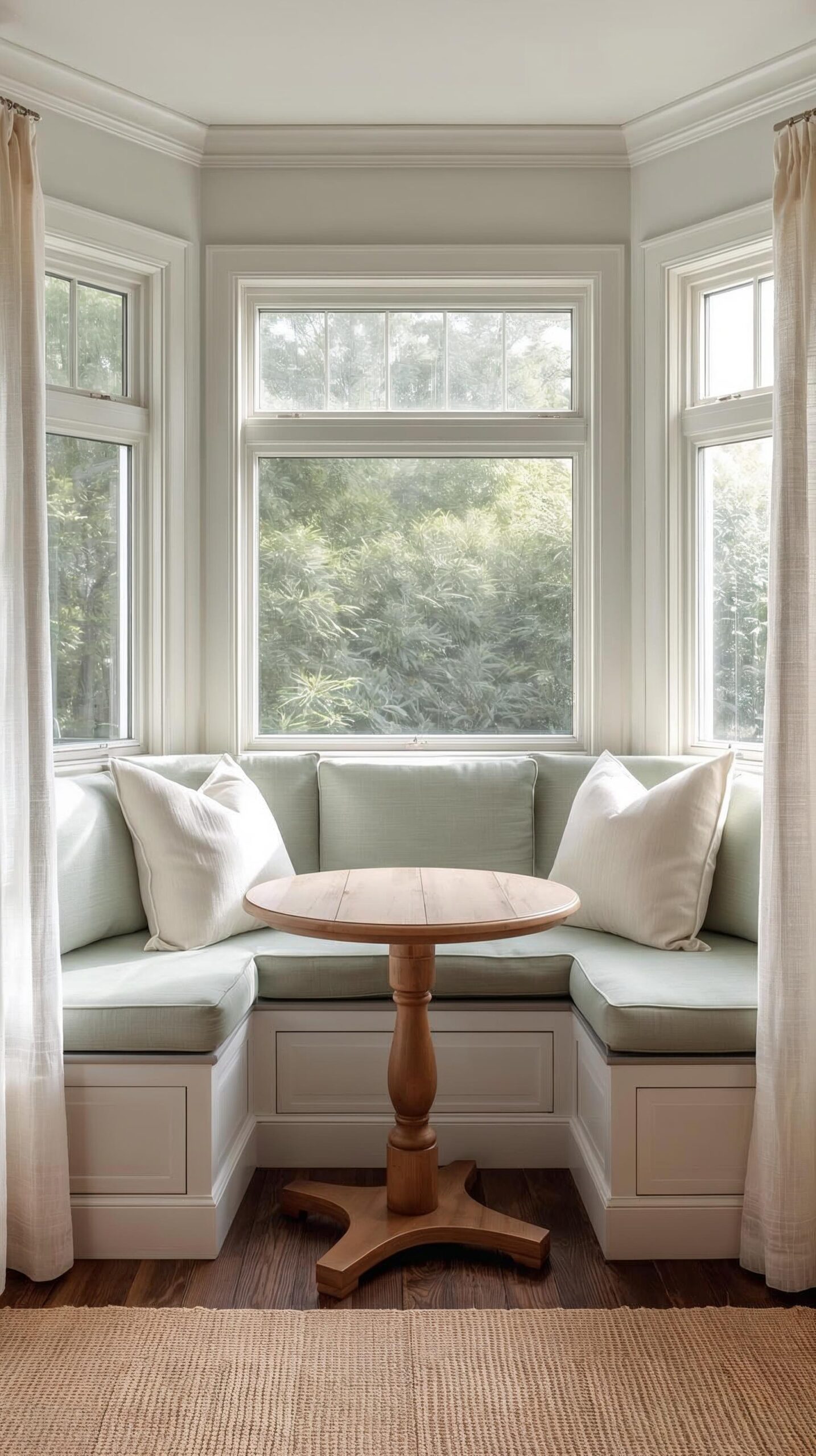
Wainscoting Accent Wall That Makes a Small Nook Feel Custom
You don’t need a renovation to make a breakfast nook corner look like it was professionally designed. Board-and-batten or shiplap paneling on the wall behind your bench instantly gives the space a built-in, intentional quality. Paint it in a soft navy, deep sage, or warm white — and suddenly that plain kitchen corner looks like it belongs in a design magazine.
Add a floating shelf above the wainscoting for a small plant, a couple of mugs, and a little lamp. That shelf is the detail that pulls the whole look together.
Styling Tip: Paint the wainscoting panels two shades deeper than your wall color — not a completely different color. It creates subtle depth without making the small space feel closed in.
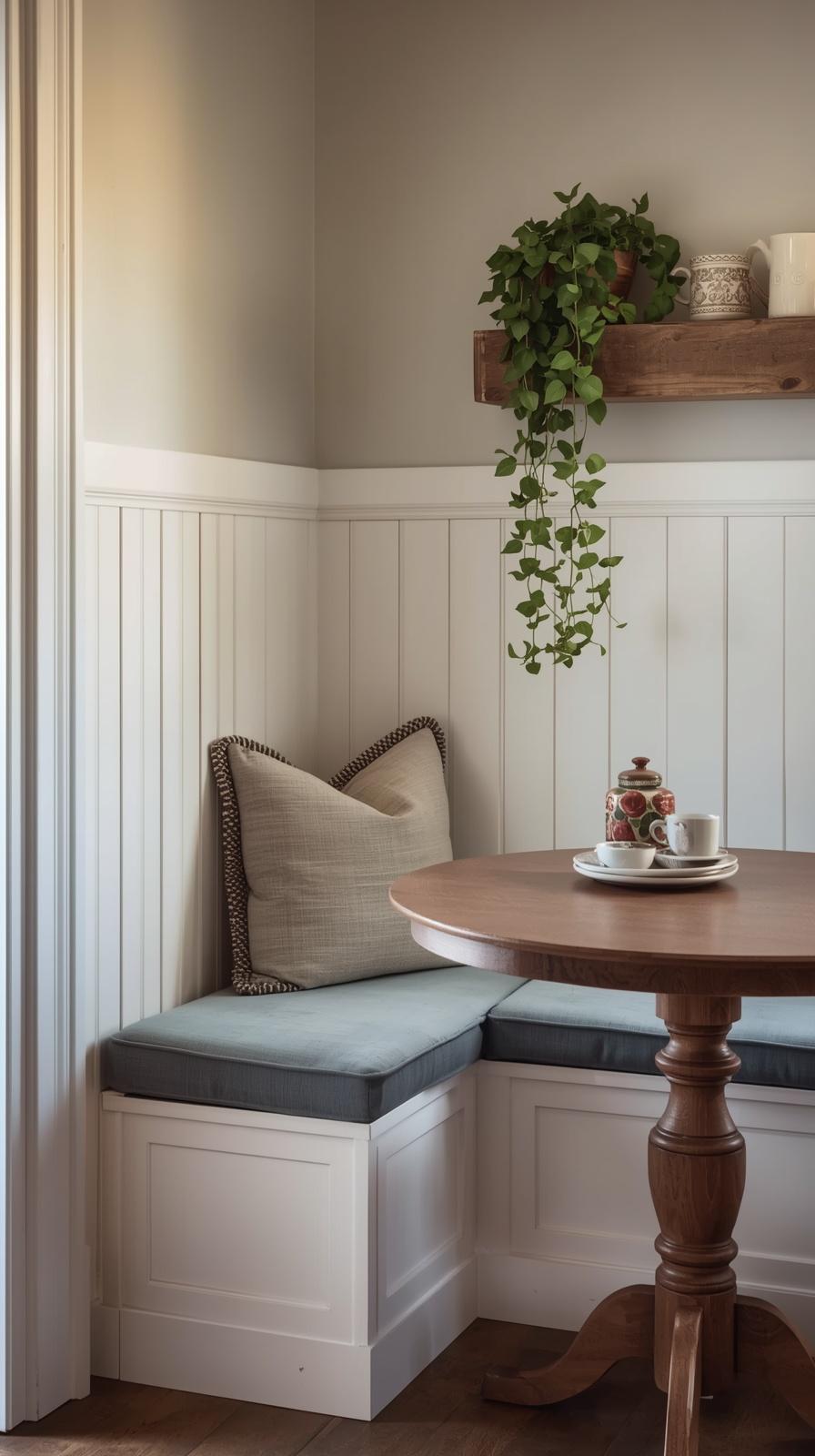
Two-Tone Paint Trick for Defining a Small Nook Area
When you can’t build a real nook, you can paint one. A two-tone wall treatment — deeper color on the lower half, white or cream on top — visually carves out a distinct zone without any construction. Pair it with a freestanding bench and a small table in the same corner, and the “nook” suddenly reads as intentional and complete.
This works especially well in open-plan kitchens where there are no natural walls to create separation. The color does the architectural work for you.
Styling Tip: Use the same deep paint color on a small accent shelf or the seat of your bench. Repeating the color in small doses makes the whole corner feel cohesive and designed.
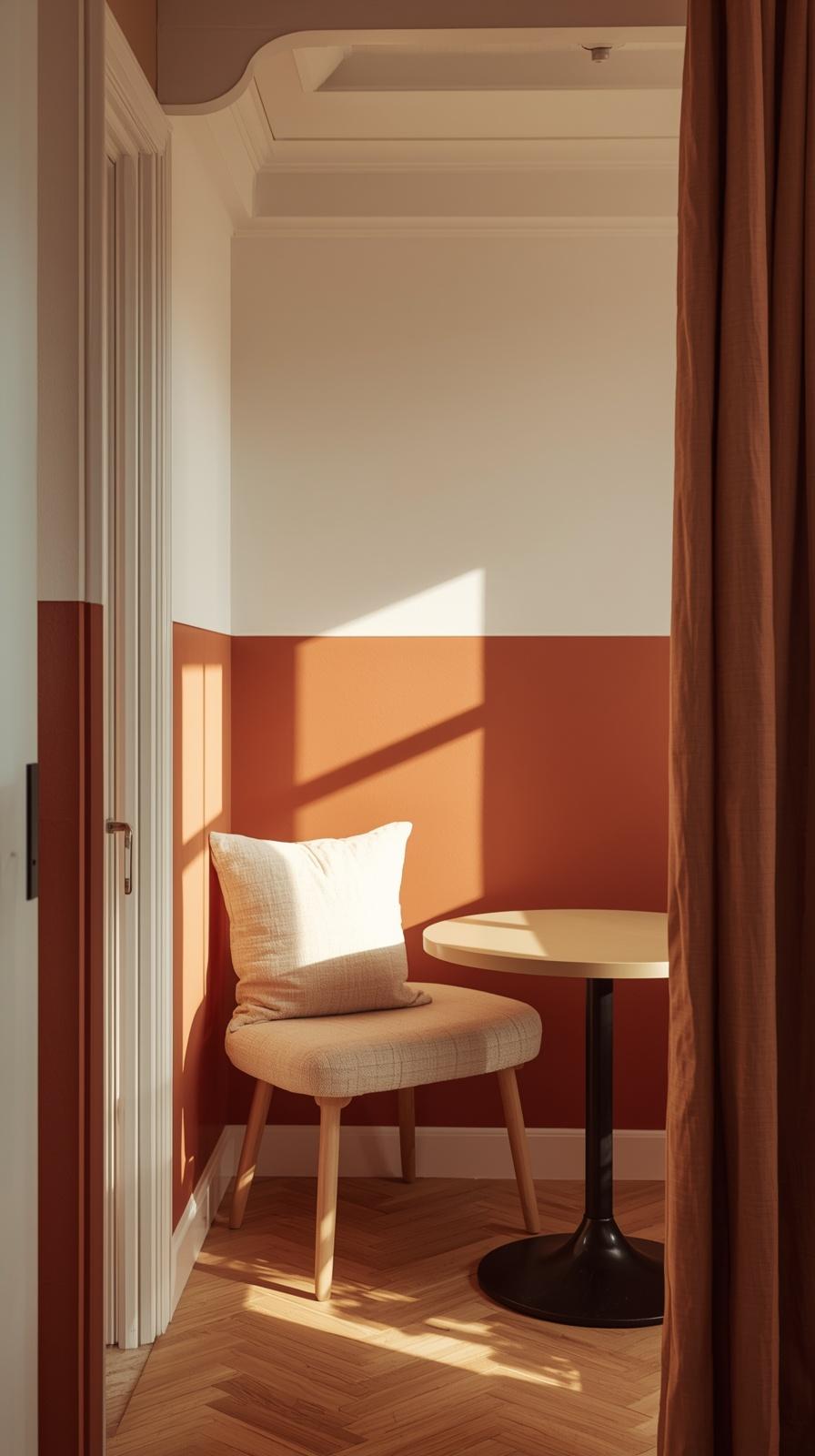
Bench With Storage Underneath for Small Space Organization
In a small kitchen, storage is everything. A breakfast nook bench with lift-top seating or pull-out drawers underneath gives you a hidden home for all the things that usually pile up on counters — table linens, extra mugs, kids’ school stuff, reusable bags. The bench looks clean and simple on top while quietly solving your storage problem underneath.
L-shaped built-in benches in a corner maximize both seating and storage at the same time. Even a freestanding bench with baskets slid underneath works in a rental where you can’t build anything permanent.
Styling Tip: Use matching baskets or bins inside the bench storage — even if nobody sees them, an organized interior makes accessing things so much easier day to day.
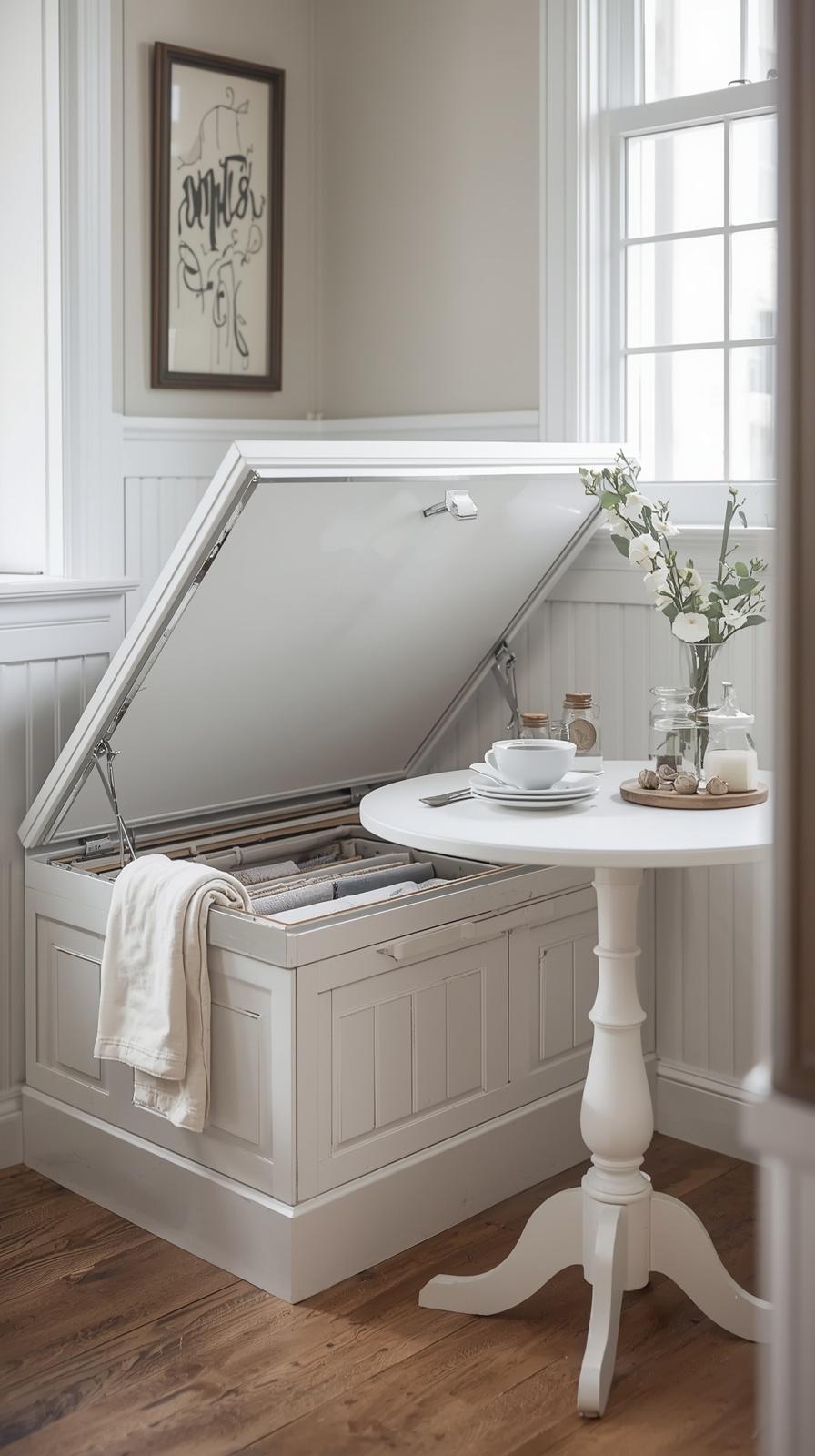
Bistro Table and Two Chairs — The Simplest Small Nook Setup
Sometimes the best solution is also the simplest one. A 24-inch round bistro table and two matching chairs in a sunny kitchen corner are a proper breakfast nook. No built-ins needed, no special carpentry — just two pieces of furniture placed with intention.
The key is choosing the right spot. Near a window is ideal, but even tucked against a wall works. Add a small rug underneath to anchor the setup and make it feel like a defined zone rather than random furniture in a corner.
Styling Tip: Pick bistro chairs with an open, airy frame — wire, rattan, or thin metal legs. Heavy chairs in a small space feel visually crowded even if there’s technically room for them.
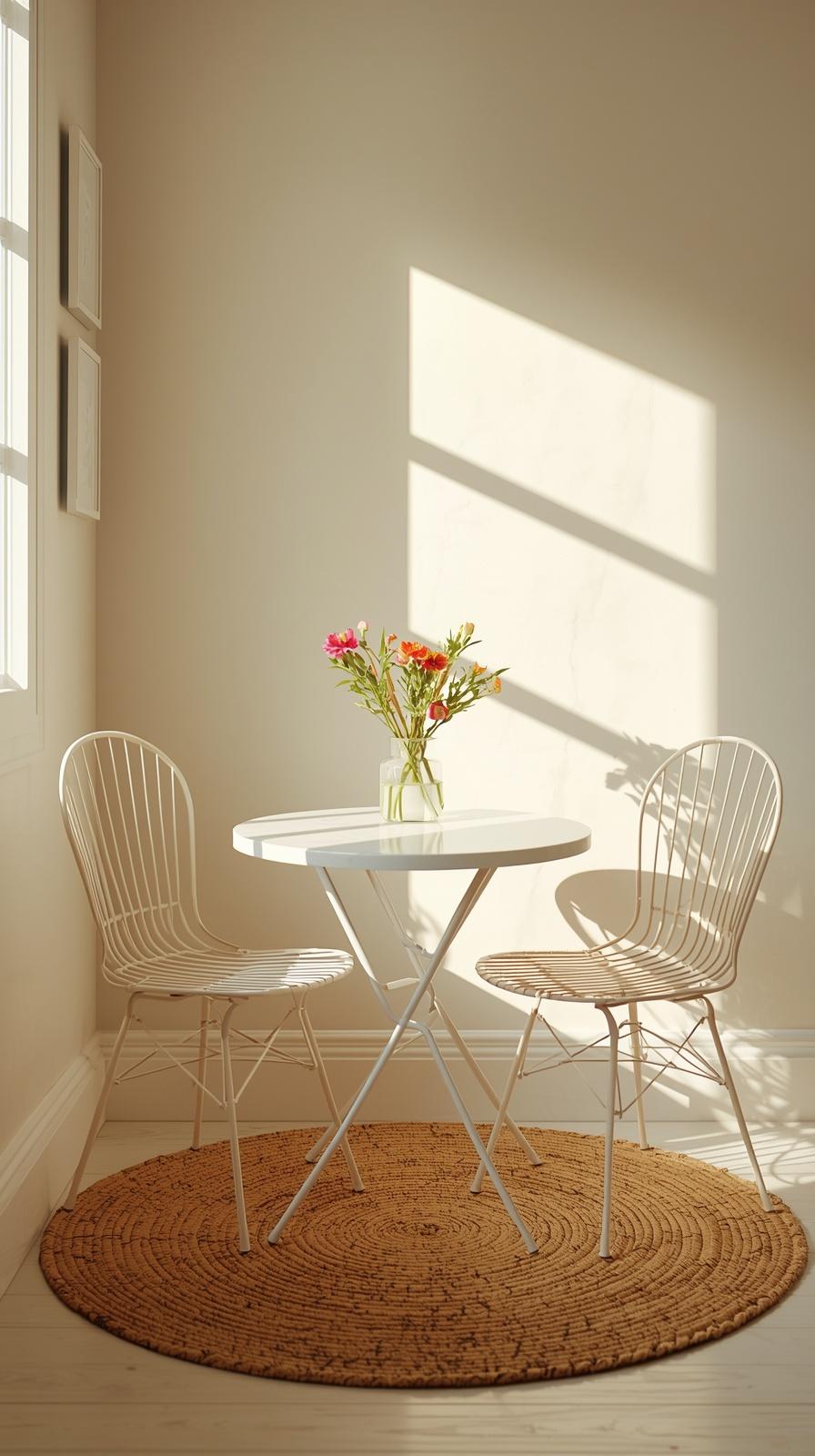
Mixed Seating — Bench One Side, Chairs the Other
This is one of the most versatile small nook layouts, and it works in spaces that feel just slightly too tight for chairs on both sides. A bench runs along one wall (fits two to three people, takes up no extra floor space), and one or two lightweight chairs sit on the opposite side. The chairs pull out when needed and tuck back in when the kitchen needs to breathe.
It’s also the most Pinterest-photographed breakfast nook configuration — and for good reason. The mix of a fixed bench and movable chairs just looks more interesting than matched sets on both sides.
Styling Tip: Choose visually light chairs — open backs, thin legs, natural materials. They won’t compete with the bench visually, and the whole setup feels balanced.
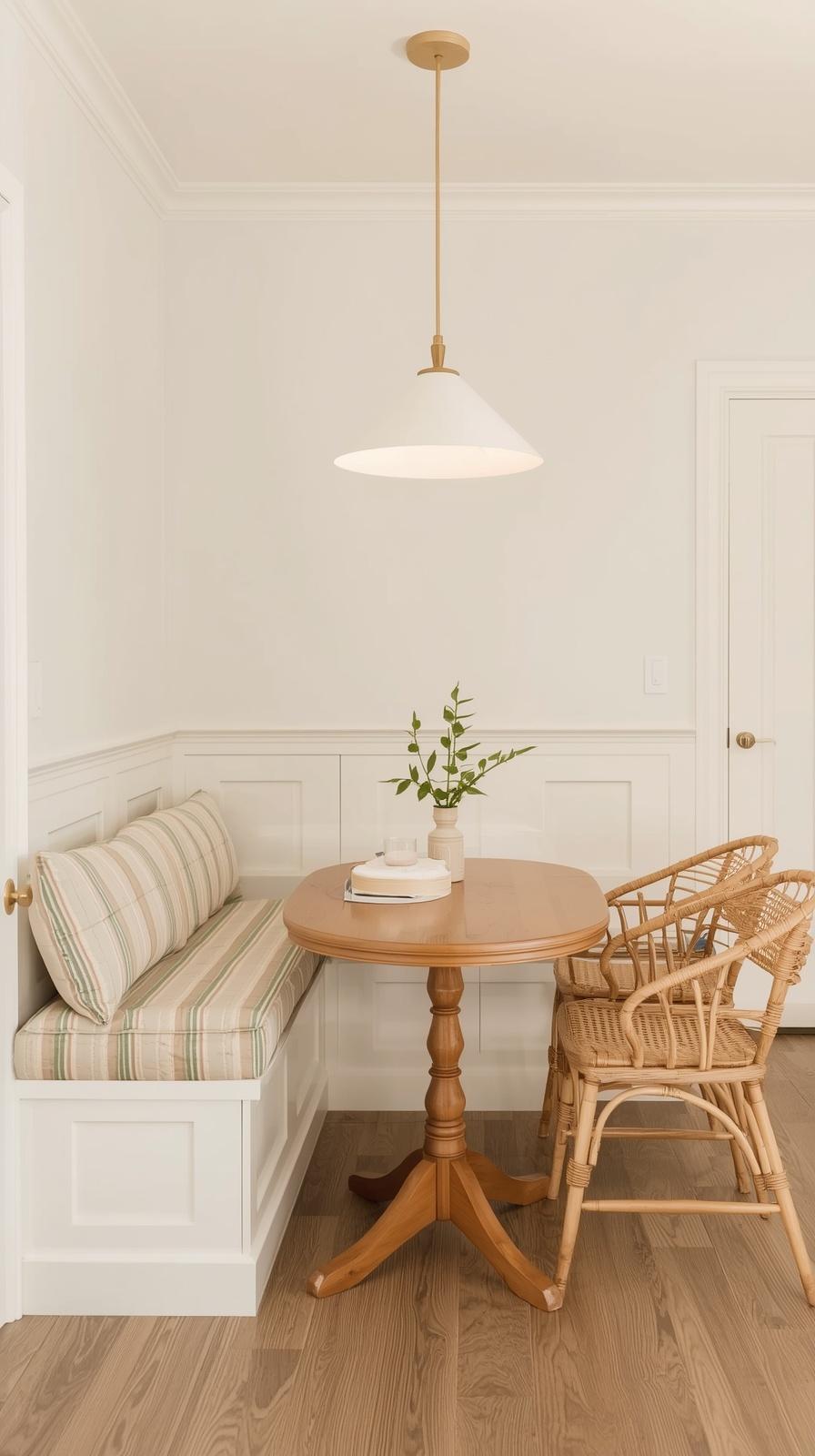
Farmhouse Nook With Shiplap — Small Space Version
The farmhouse breakfast nook works in small spaces when you strip it back to its essentials. White shiplap on the accent wall behind the bench, a simple wood table (go smaller than you think — a 36-inch round is plenty), a woven pendant light overhead, and bench cushions in linen or plaid. That’s the whole formula.
Resist the urge to add too many decorative elements in a small farmhouse nook. One good pendant, one plant, clean cushions. The shiplap does most of the visual work on its own.
Styling Tip: Paint your shiplap in Benjamin Moore “White Dove” rather than pure white — it’s slightly warmer and pairs beautifully with natural wood tones without looking yellow.
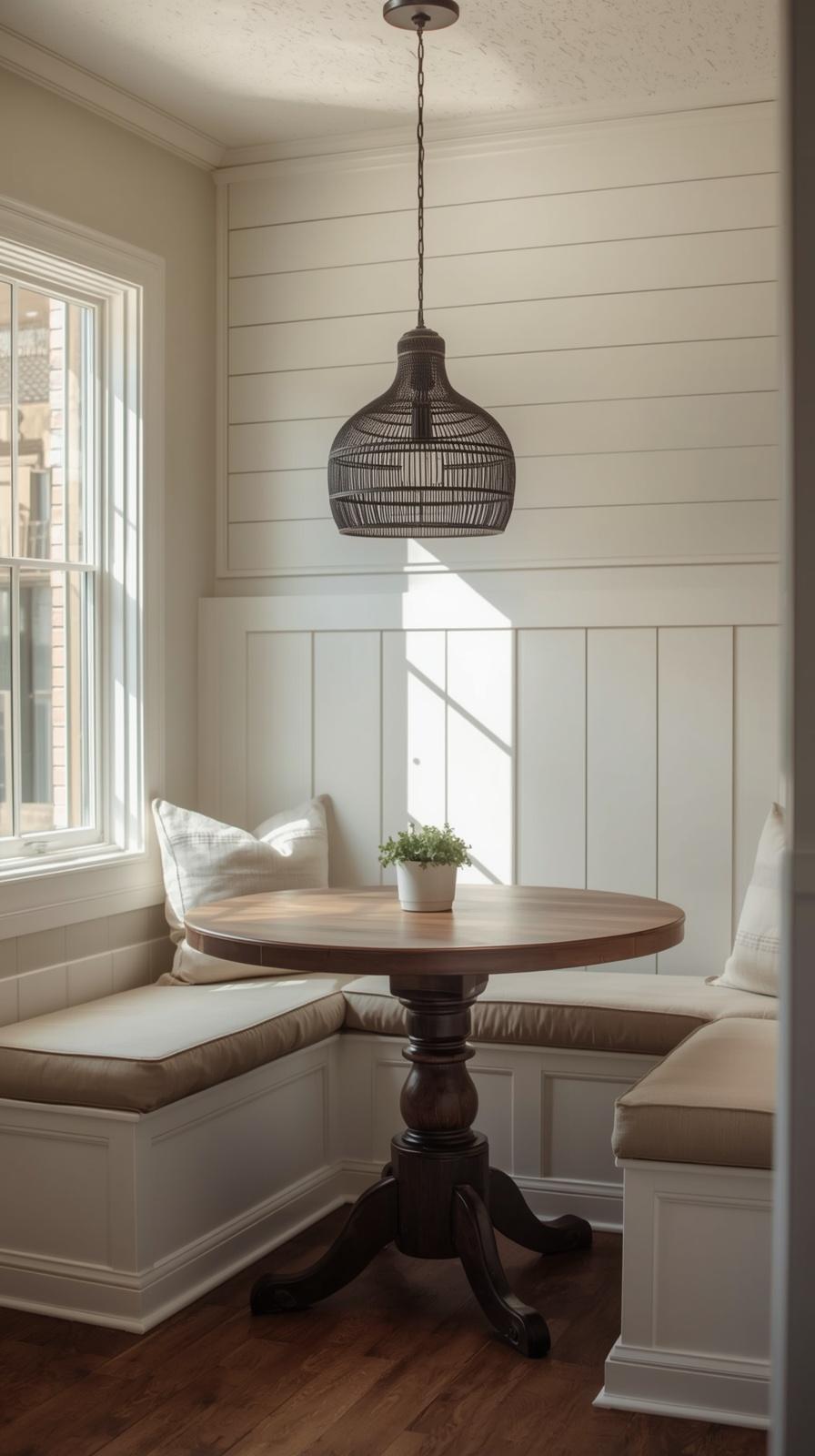
Scandinavian Small Nook — All Calm, No Clutter
The Scandinavian approach is perfectly suited to small spaces because it never over-decorates. Light birch wood, a cream or oatmeal cushion, one simple pendant, a single plant. The palette stays in warm whites and natural wood tones throughout so nothing fights for attention, and the small space feels open rather than cramped.
The real secret of hygge-style nooks in small kitchens is knowing what to leave out. One candle on the table. One plant. One light. That’s it.
Styling Tip: Follow the 60-30-10 rule — 60% warm white, 30% natural wood, 10% one soft accent color like dusty pink or muted sage. It keeps small spaces feeling airy and balanced.
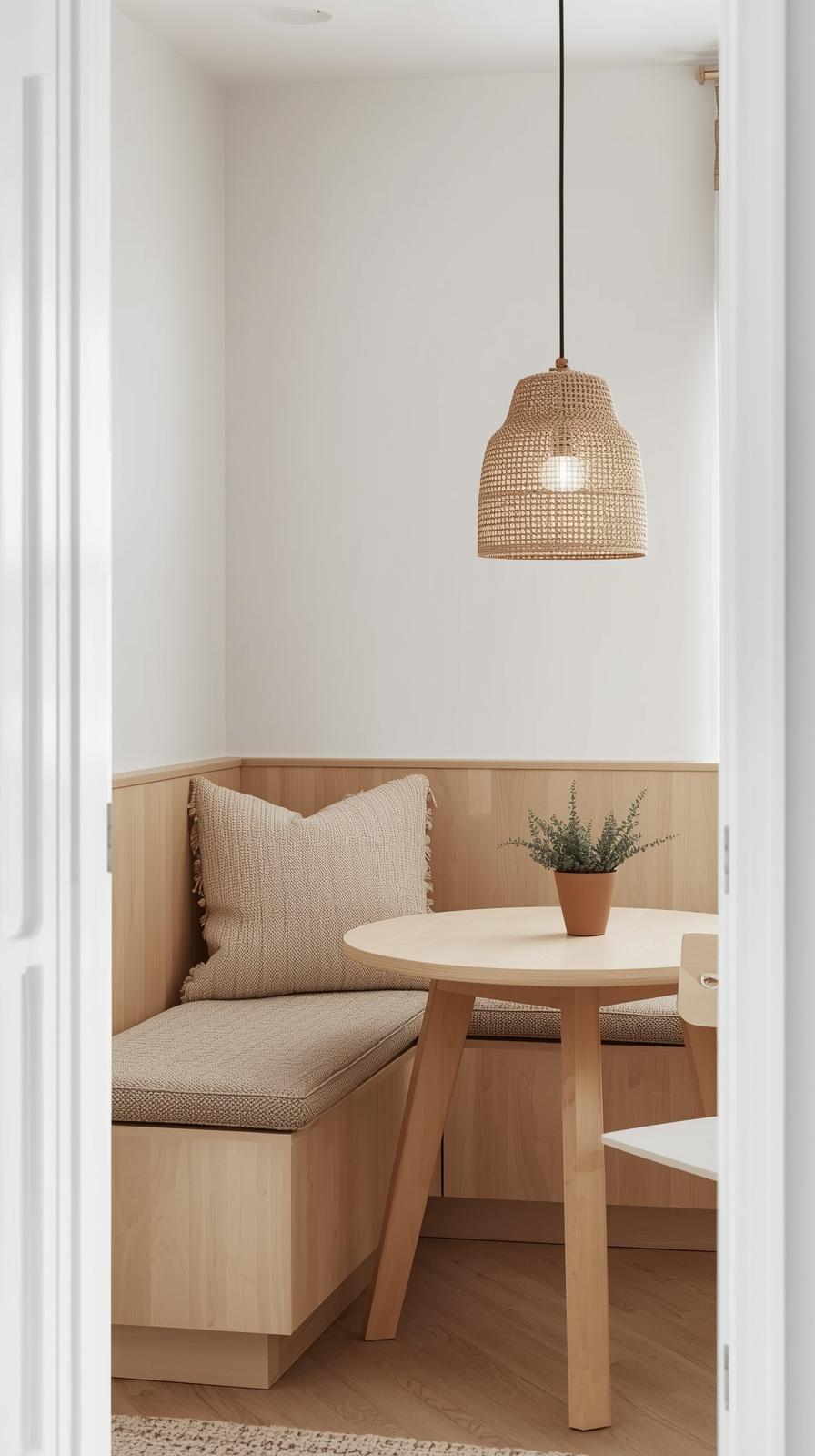
Boho Corner Nook With Rattan and Earthy Textures
Boho style actually works really well in small nooks because the layered textures add depth without needing more square footage. A round mango wood table, two rattan chairs, a jute rug, some patterned cushions in terracotta and cream — and the corner feels full of personality without feeling crowded.
The trick is keeping the furniture scale small and the floor clear. Big chunky boho furniture would overwhelm a small nook, but slim rattan chairs and a compact round table feel just right.
Styling Tip: Hang one piece of macramé or a small rattan mirror above the bench or behind a chair. It fills vertical wall space and adds that boho character without taking any floor space at all.
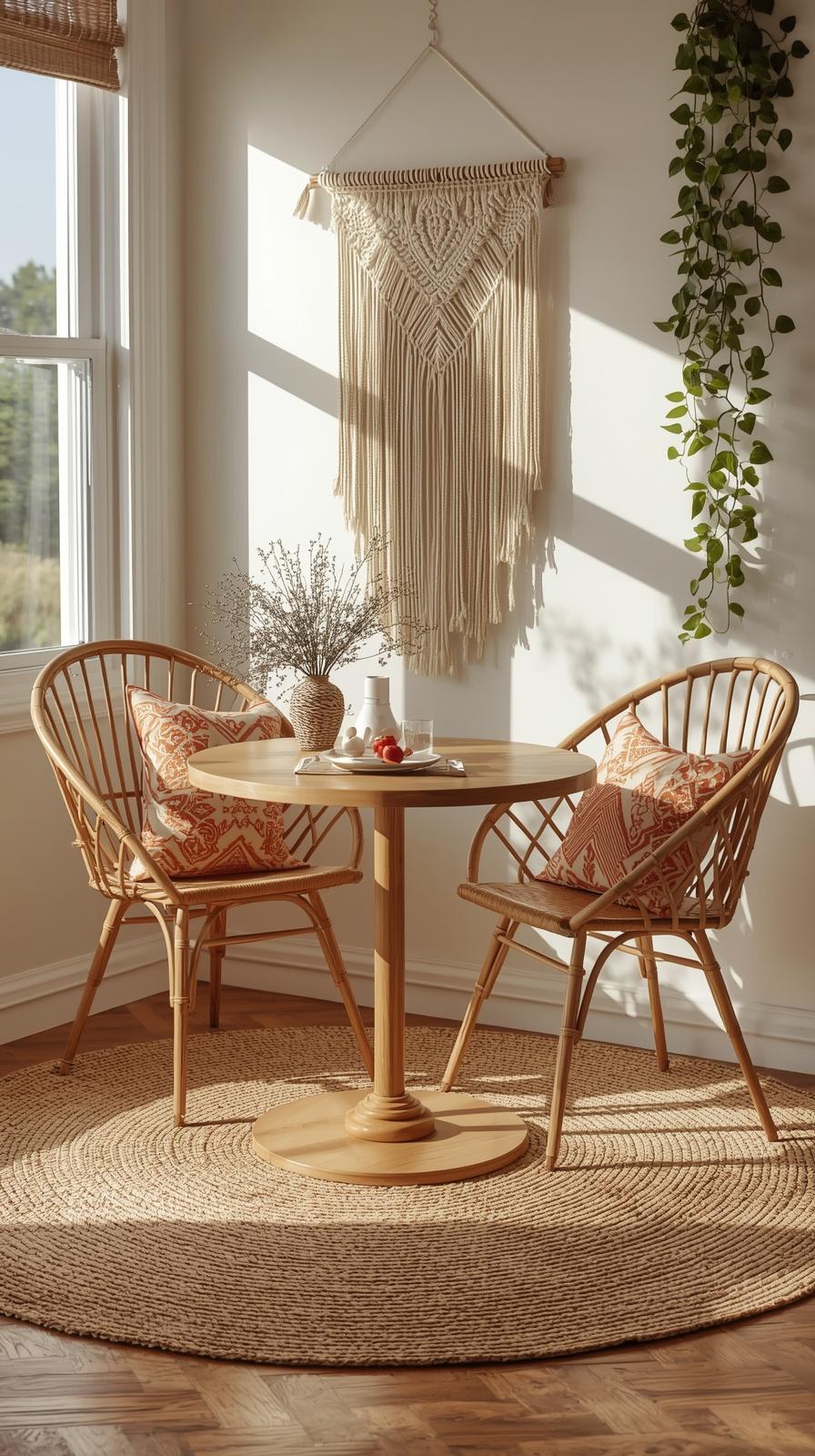
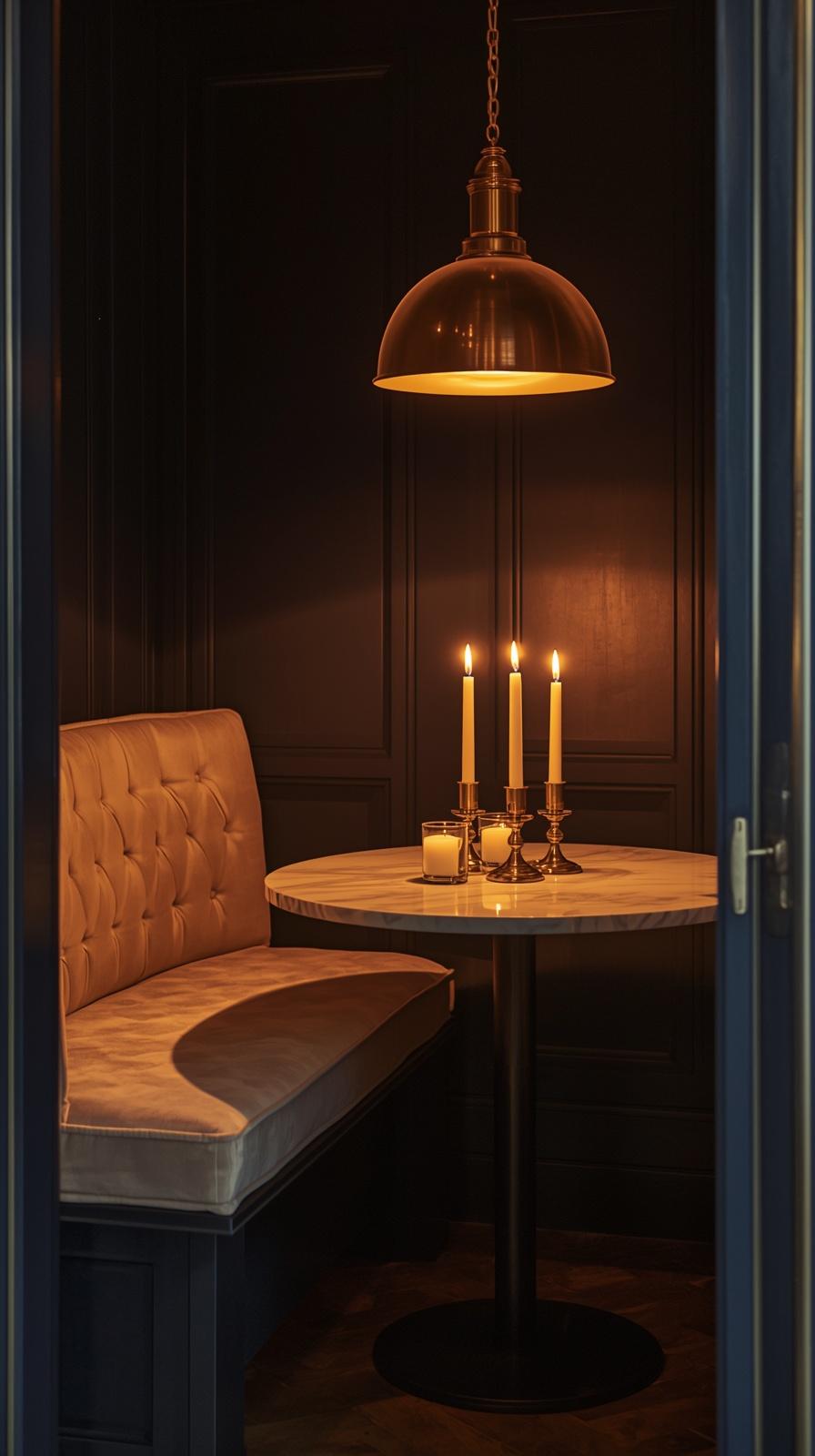
Dark and Moody Small Nook — Deep Color in a Tight Space
Here’s a counterintuitive tip — going dark in a small breakfast nook can actually make it feel more intentional and cozy rather than cramped. A deep jewel tone like forest green, navy, or charcoal on the nook walls creates a cocooning effect that feels warm and intimate rather than closed-in. Layer in velvet cushions, a brass pendant, and a small marble-top table.
The key is getting the lighting right. A warm-toned pendant over the table plus a small candle or table lamp nearby gives the dark space layered light that feels rich rather than gloomy.
Styling Tip: Keep all other elements in the nook warm-toned — brass, cream, warm wood. Cool-toned accessories in a dark space feel stark. Warm tones make it feel like a cozy cave.
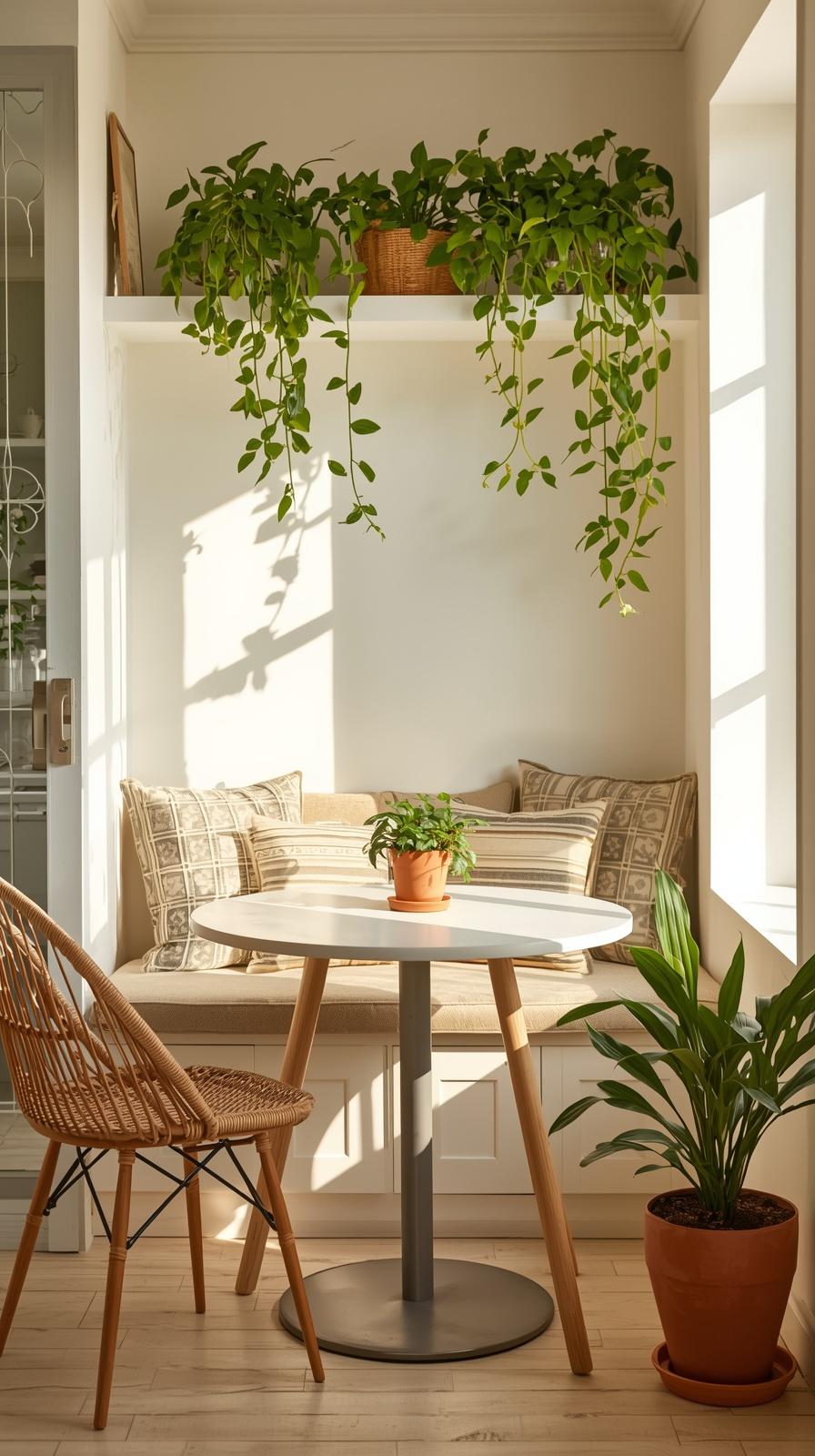
Plant-Filled Small Nook That Feels Like a Garden Corner
Even in the smallest nook, plants make an enormous difference to how the space feels. A trailing pothos on a shelf above, a small herb pot on the table, and one slightly bigger plant in a terracotta pot in the corner — and suddenly a plain kitchen nook feels alive and genuinely refreshing to sit in every morning.
Keep the plant selection manageable for a small space. You don’t need many — three well-placed plants feel lush without overcrowding a compact corner.
Styling Tip: Use terracotta pots in two or three different sizes for a unified look. They work with every color palette and always look intentional.
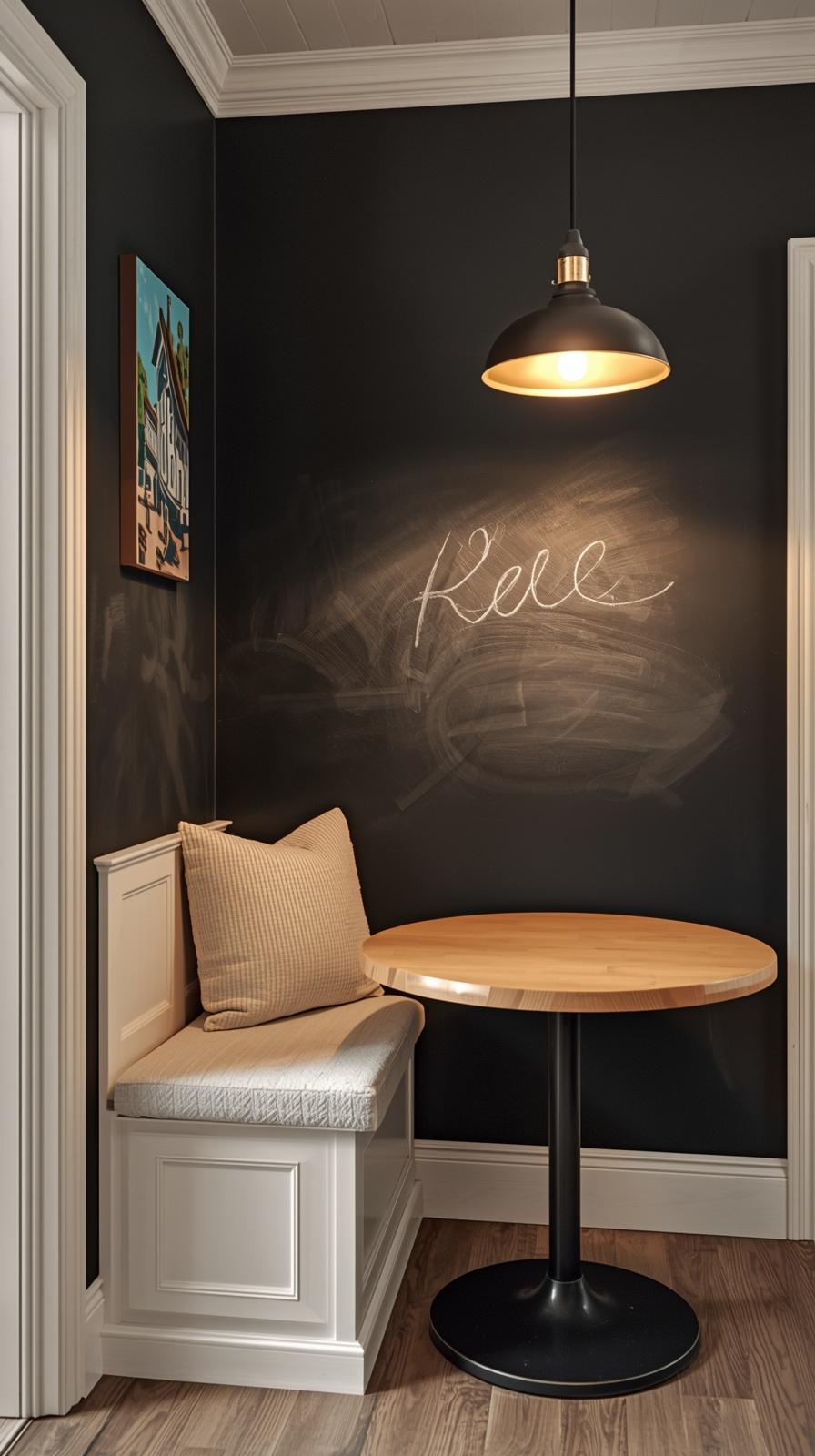
Chalkboard Wall Nook — Big Personality in a Small Space
A chalkboard wall is one of the cheapest ways to give a small breakfast nook a lot of character. Paint one wall (or just a section behind the bench) in chalkboard paint for about $30, and the nook instantly becomes the most personal spot in the kitchen. Weekly menus, grocery lists, little notes, kids’ drawings — it changes constantly and always looks intentional.
Frame the chalkboard section with thin painted wood trim. That small detail is what separates a “painted wall” from a “designed feature.”
Styling Tip: Keep everything else in the nook simple and neutral when you have a chalkboard wall. Let the board be the personality — the rest just supports it quietly.
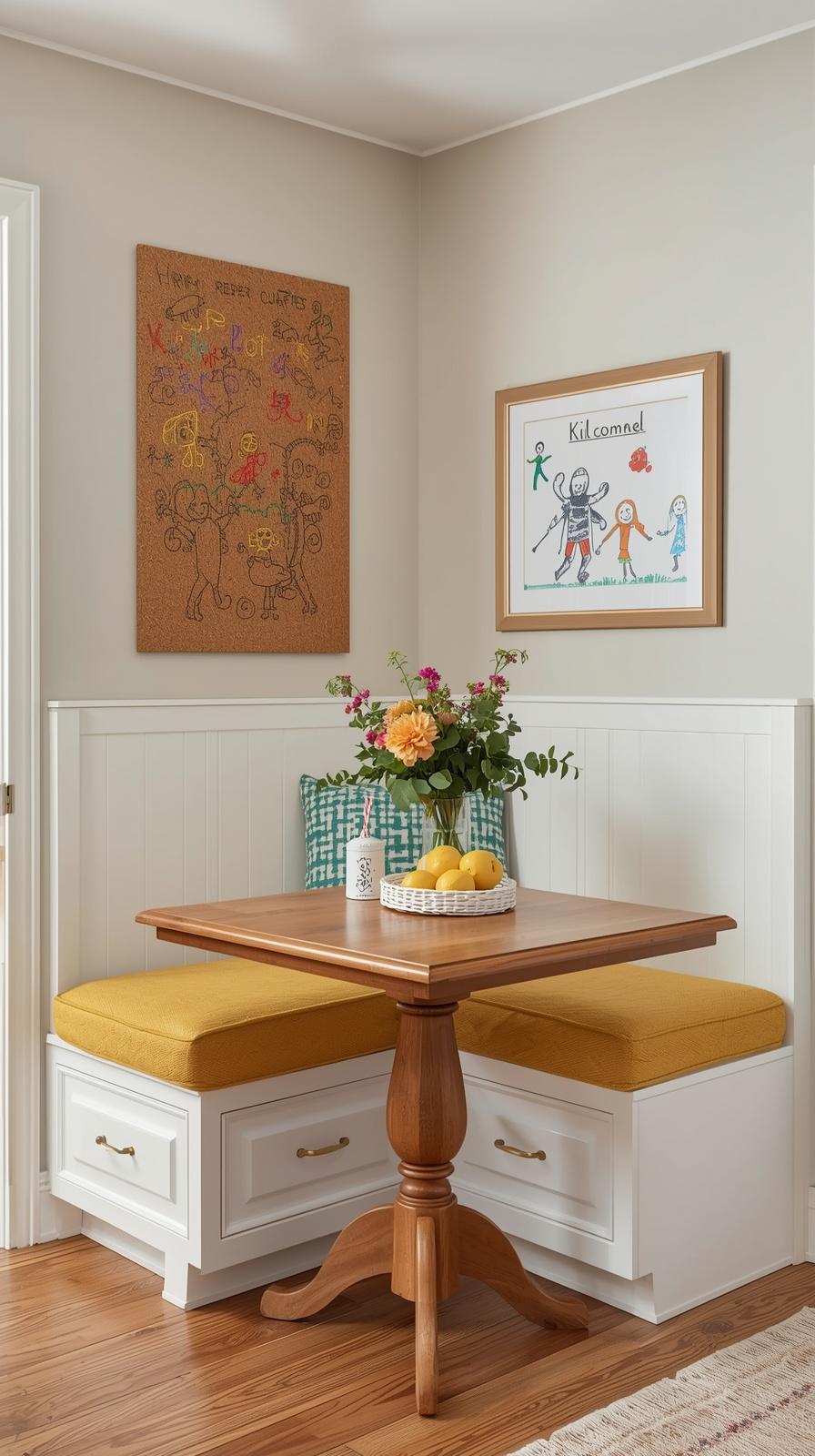
Kid-Friendly Small Nook That Holds Up to Real Family Life
Designing a breakfast nook for a small kitchen with kids means prioritizing durability without sacrificing style. Performance fabric cushions — Sunbrella or Crypton, both clean easily — a solid hardwood table that handles daily use, and built-in bench storage for school bags and art supplies. Add a small corkboard panel on the wall nearby for rotating kids’ artwork.
The result is a nook that genuinely works for a busy family morning — and still looks good in photos, which is always a bonus.
Styling Tip: Pick one bold, happy cushion color like cobalt, burnt orange, or mustard yellow. It feels fun and energetic for kids without looking like a playroom.
Open Shelving Above a Small Nook Bench
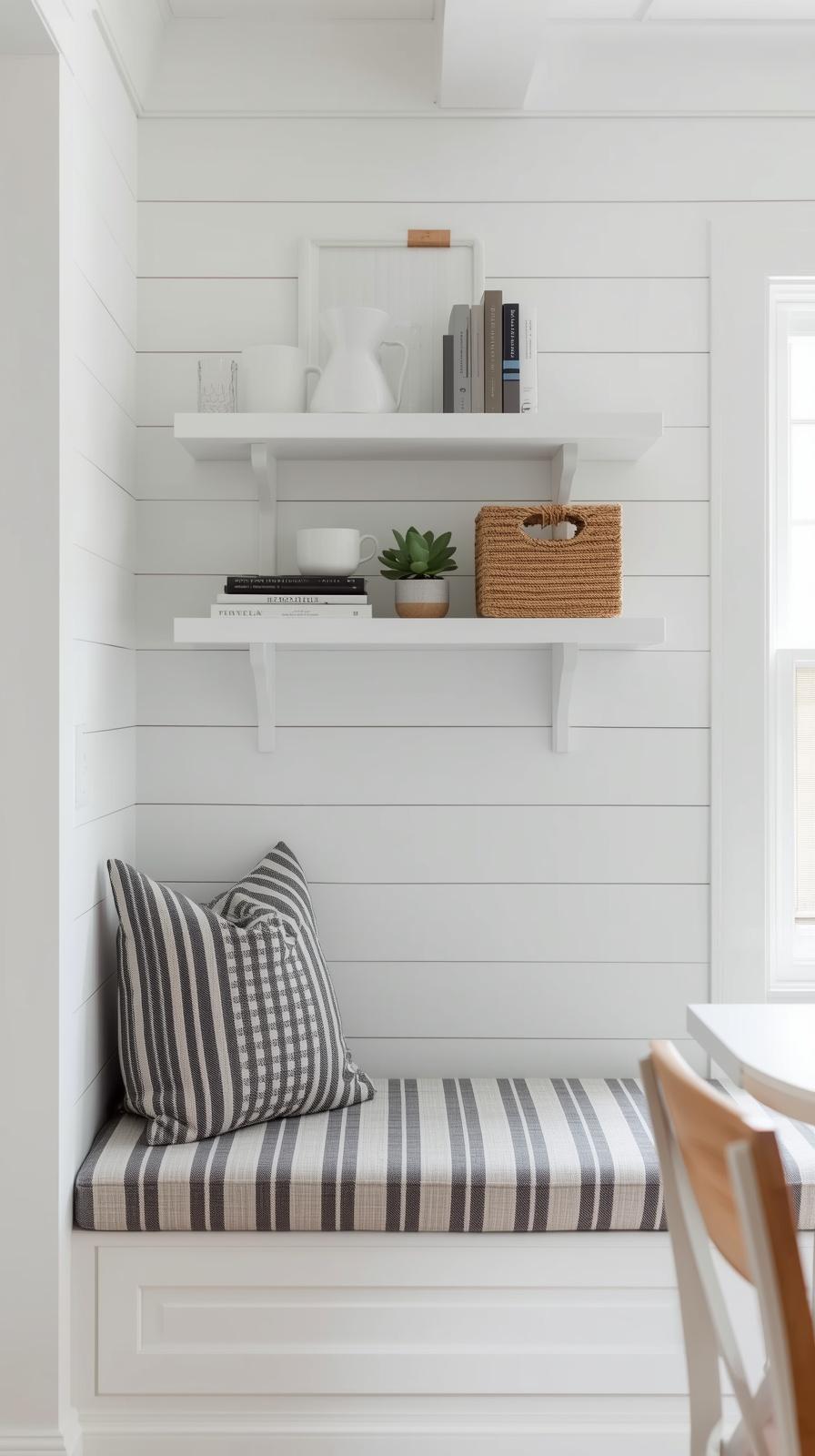
When floor space is limited, go vertical. A couple of floating shelves mounted above your breakfast nook bench give you display space and storage without eating into the footprint of the room at all. Style them with a few mugs, a small plant, a cookbook, and a woven basket — and the whole wall area above the bench becomes part of the nook’s design.
Keep the shelves from looking cluttered by leaving a little breathing room between objects. In a small space, overcrowded shelves make everything feel chaotic rather than cozy.
Styling Tip: Use the same wood tone on your floating shelves as your table or bench base. Repeating one material color throughout a small nook ties everything together visually.
Statement Pendant Light Over a Compact Nook Table
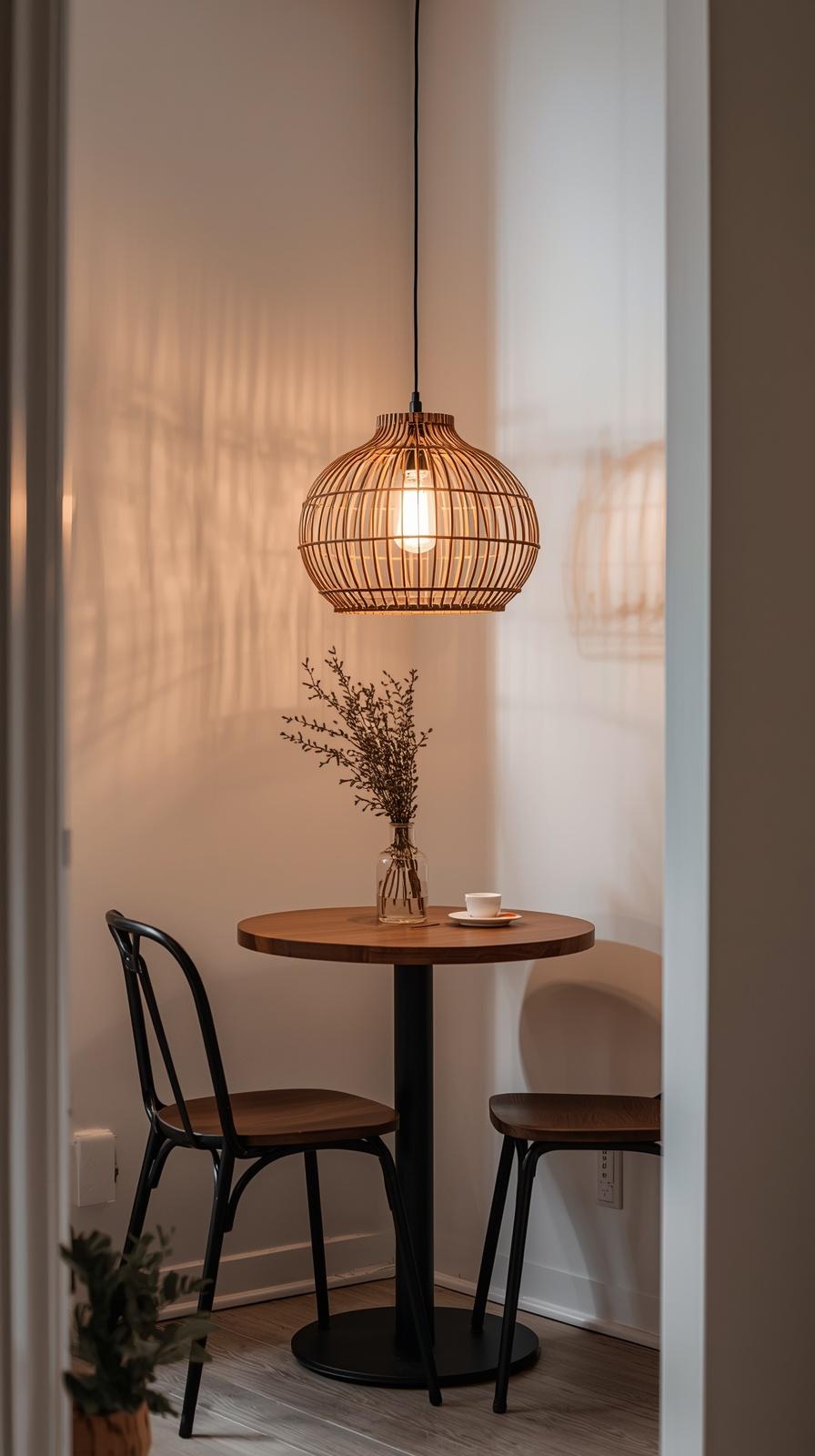
In a small breakfast nook, you don’t always have room for a lot of decor. But you always have room for a great pendant light. One well-chosen fixture centered over your nook table does the work of an entire styled corner — it adds warmth, defines the space, and makes the whole setup feel designed rather than accidental.
Rattan pendants feel warm and casual. Black metal pendants feel modern. A glass globe pendant is timeless. Pick one you love and hang it 30 to 36 inches above the table surface.
Styling Tip: Choose a pendant roughly half to two-thirds the width of your table. Too small and it looks lost. Too large and it overwhelms the small nook. Proportions matter more than style here.
FAQs
Can I create a breakfast nook in a very small kitchen?
Yes — and it’s easier than you think. A fold-down wall table, a 4×4 corner bench, or even just a bistro table and two chairs near a window creates a proper nook. The key is choosing the right scale furniture for your space.
What’s the smallest size a breakfast nook can be?
A 4×4-foot area is workable with a round bistro table and a small bench or two chairs. If space is even tighter, a wall-mounted drop-leaf table with folding stools takes up almost no room when not in use.
Do I need built-ins for a breakfast nook in a small kitchen?
Not at all. An IKEA bench hack, a freestanding bench with baskets, or even just two chairs and a table work perfectly. Built-ins look great, but they’re not the only option — especially in rentals.
What table shape works best in a small breakfast nook?
Round every time. A round pedestal table has no corners cutting into walkways, fits more people than you’d expect, and visually takes up less space than a rectangular table of the same size.
How do I make a small breakfast nook feel cozy without making it feel cramped?
Soft cushions, warm lighting (especially a pendant low over the table), one or two plants, and a small rug underneath the table. Those four things alone turn a plain corner into a genuinely cozy spot.
Conclusion
Small kitchens, tight corners, narrow galley walls — none of that means you can’t have a breakfast nook you genuinely love. The best small space breakfast nook isn’t the biggest one or the most expensive one. It’s the one that actually fits your space and makes your mornings feel a little more human.
Whether you go with a cozy corner built-in bench with hidden storage, a budget-friendly IKEA hack, a fold-down wall table for an ultra-tiny kitchen, or just a bistro table and two chairs by a sunny window — the idea is the same. Carve out a little spot that’s yours. Make it warm, make it functional, and make it something you want to sit in every single day.
The right breakfast nook seating, a small round pedestal table, one good pendant light, a cushion you actually like — that’s genuinely all it takes to turn a forgotten kitchen corner into the coziest spot in your home.
So go back through these small breakfast nook ideas, pick the one that fits your space and your style, and start there. Your perfect morning corner is closer than you think — and it might just be that empty corner you’ve been walking past every day.