
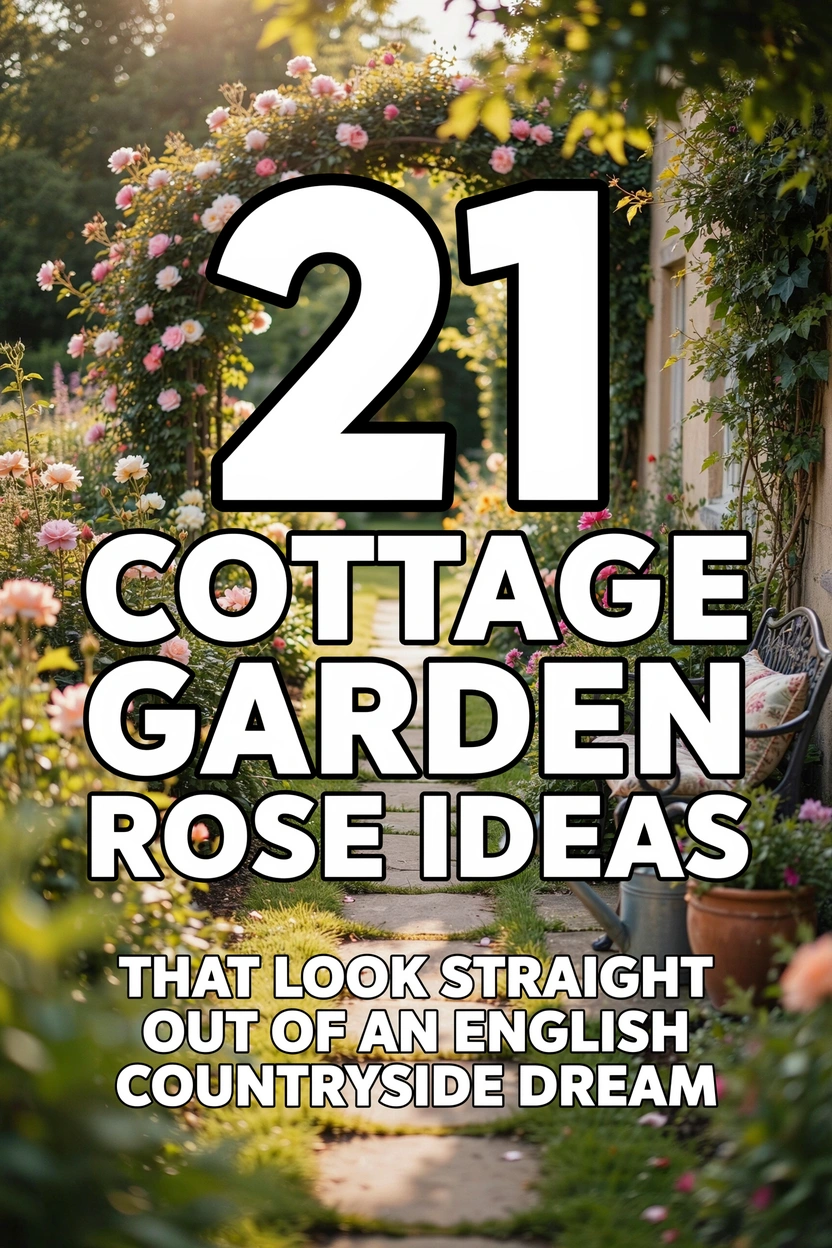
There’s something about a cottage rose garden that just stops you in your tracks. Maybe it’s the way old blush roses tumble over a sun-warmed stone wall. Or the scent that hits you before you even open the garden gate. Whatever it is, cottage garden roses have a magic that no other plant quite matches — and honestly, I think most people assume they’re harder to grow than they actually are.
You don’t need an ancient English manor or acres of land to create that dreamy, abundant look. Whether you have a generous backyard, a narrow side passage, or even just a sunny patio with a few big pots, there’s a cottage rose idea here for you. This post covers 20 specific, visually rich ideas — from classic climbing roses over an arch to wild hedgerow roses that basically look after themselves. Let’s get into it.
Structure & Vertical Drama
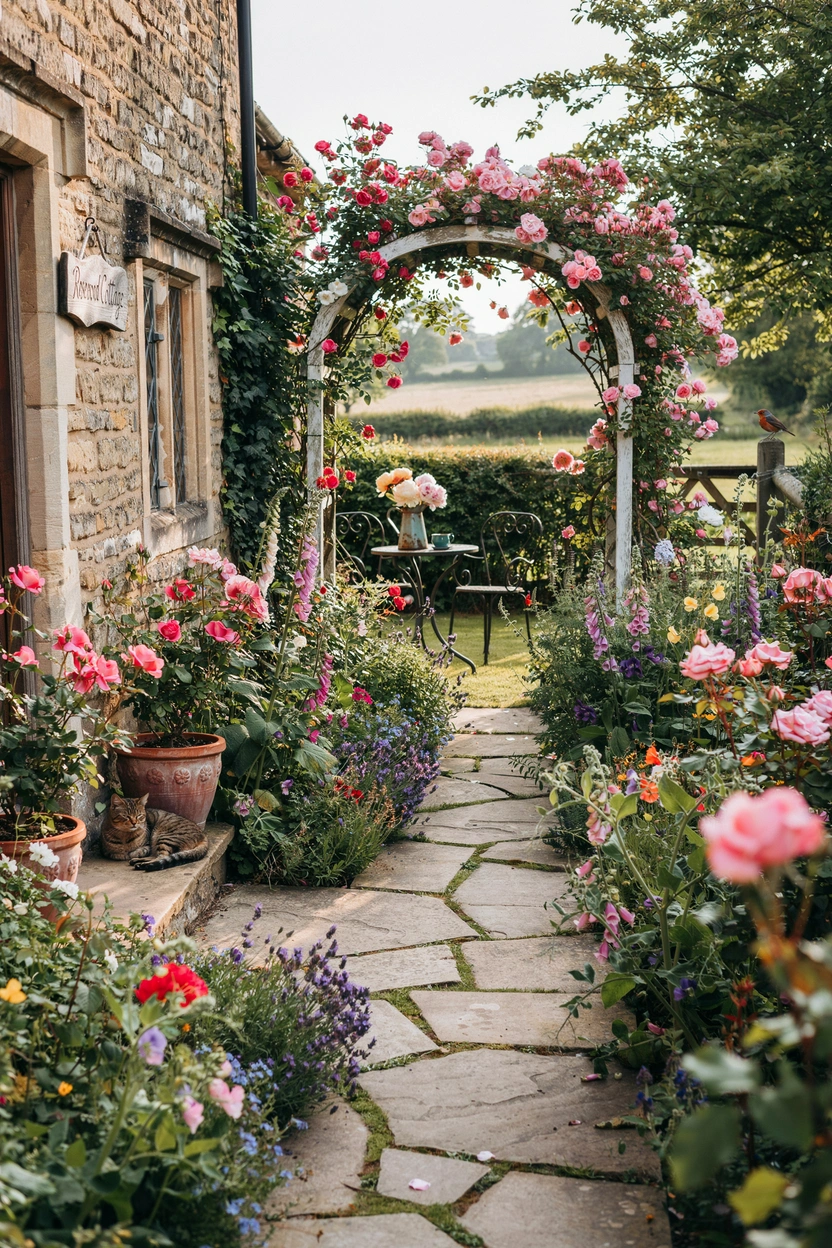
Rose-Covered Garden Arch — The Classic Cottage Entrance
If there’s one image that defines a cottage rose garden, it’s a rose-covered arch. Soft blooms overhead, a winding path beneath, the whole scene framed like something from a watercolour painting. The key is choosing the right variety — Gertrude Jekyll is a favourite for arches because of its rich pink, deeply cupped blooms and strong fragrance. Climbing Iceberg works beautifully if you want something in white, and it repeats all season long.
Give it two to three growing seasons to really fill out, and train the canes horizontally along the arch frame rather than letting them shoot straight up — horizontal training encourages far more flowering. It’s one of those garden features that requires a little patience upfront but rewards you every single summer after.
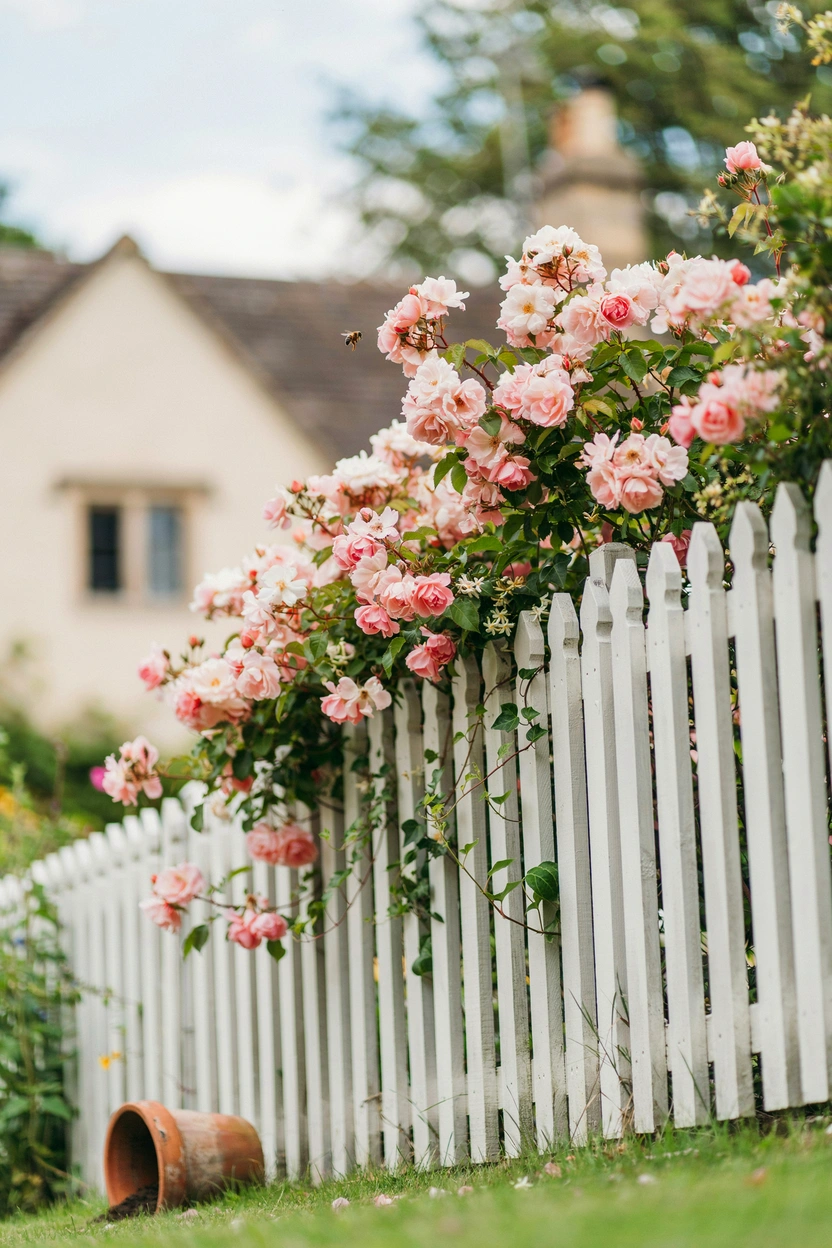
Roses Cascading Over a Picket Fence — Timeless Cottage Charm
A white picket fence draped in soft pink or apricot roses is one of those garden combinations that never goes out of style. It’s relaxed, it’s romantic, and it photographs beautifully in any season — from the first tight buds in spring to the full open blooms of early summer. For a fence planting, you want something manageable rather than a vigorous climber that’ll swallow the whole boundary. Shrub roses like Bonica or Ballerina are ideal — arching canes, clusters of small flowers, and a natural tendency to spill forward.
The trick for maximum coverage is to tie the main canes horizontally along the fence rails. This slows vertical growth and forces the plant to push energy into flowering along the full length of each stem. Within two seasons, you’ll have a fence that looks like it’s been there forever.
Climbing Roses on a Stone Wall — Wild Meets Structured
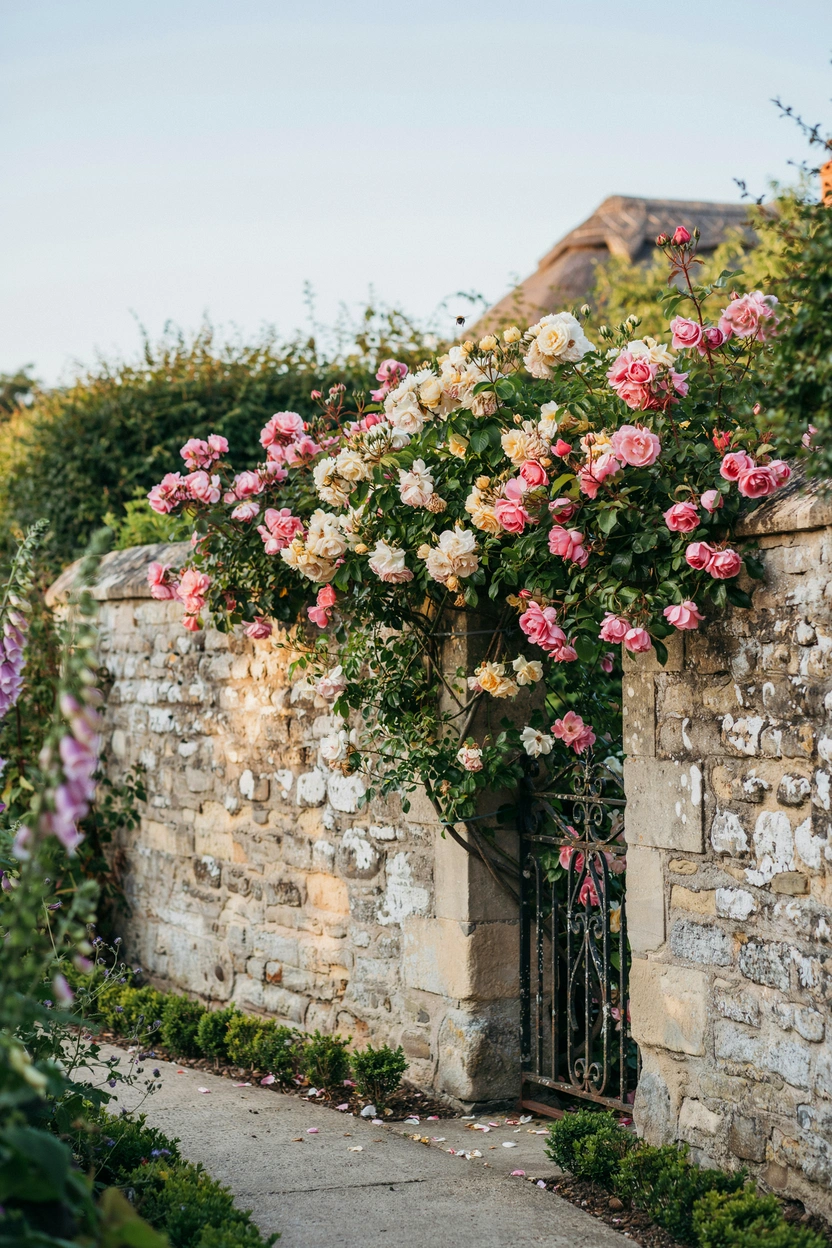
There’s something ancient and deeply romantic about climbing roses growing against old stone or brick. The contrast of soft petals against rough-textured masonry is genuinely one of the most beautiful things a garden can offer. Zephirine Drouhin is an excellent choice for a shadier wall — it’s nearly thornless, wonderfully fragrant, and copes well with north or east-facing aspects. For a sunny wall, Climbing Compassion or Madame Alfred Carrière are hard to beat.
To fix climbing supports to masonry, use vine eyes and horizontally tensioned wires spaced about 12 inches apart — this gives you something to tie canes to as the plant develops. The wall itself actually helps: stone and brick absorb heat during the day and release it slowly at night, creating a slightly warmer microclimate that roses absolutely love.
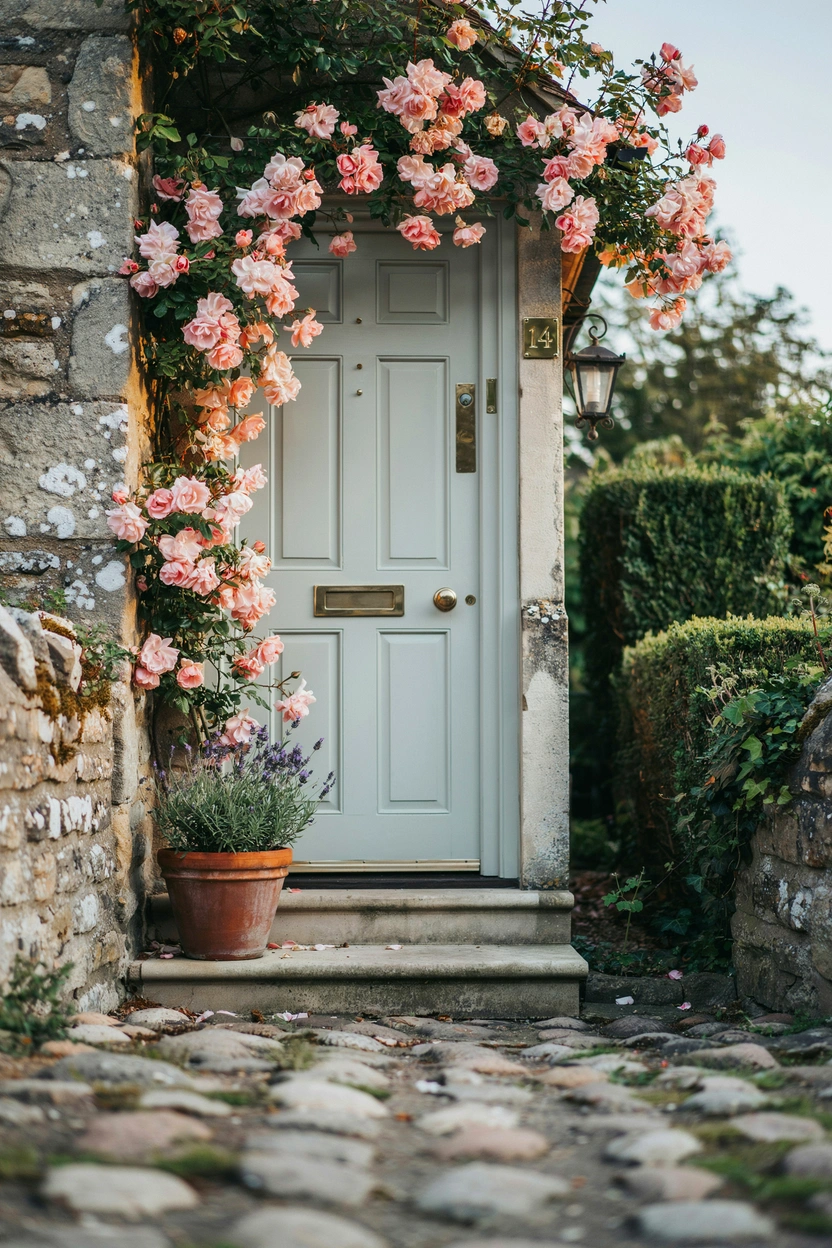
Roses Framing a Cottage Front Door — Curb Appeal at Its Peak
Few things make a house look more welcoming than roses framing the front door. It’s the kind of detail that makes people slow down as they walk past. The variety you choose should match your door colour — apricot or peachy roses like Lady of Shalott look stunning against a blue or navy door; soft blush or white roses like Olivia Rose Austin pair beautifully with sage green or black woodwork.
Plant one rose on each side of the door and train the canes up and across a simple frame of wires or a small trellis panel. Keep on top of deadheading and tying in new growth through summer, and by the third year, you’ll have something that looks like it belongs in a garden design magazine. The scent as you come and go every day is a bonus that never gets old.
If you love layered planting and romantic outdoor spaces, these cottage garden ideas are perfect for creating a softer, more natural look.
Rose Pergola Walk — A Garden Feature Worth the Investment
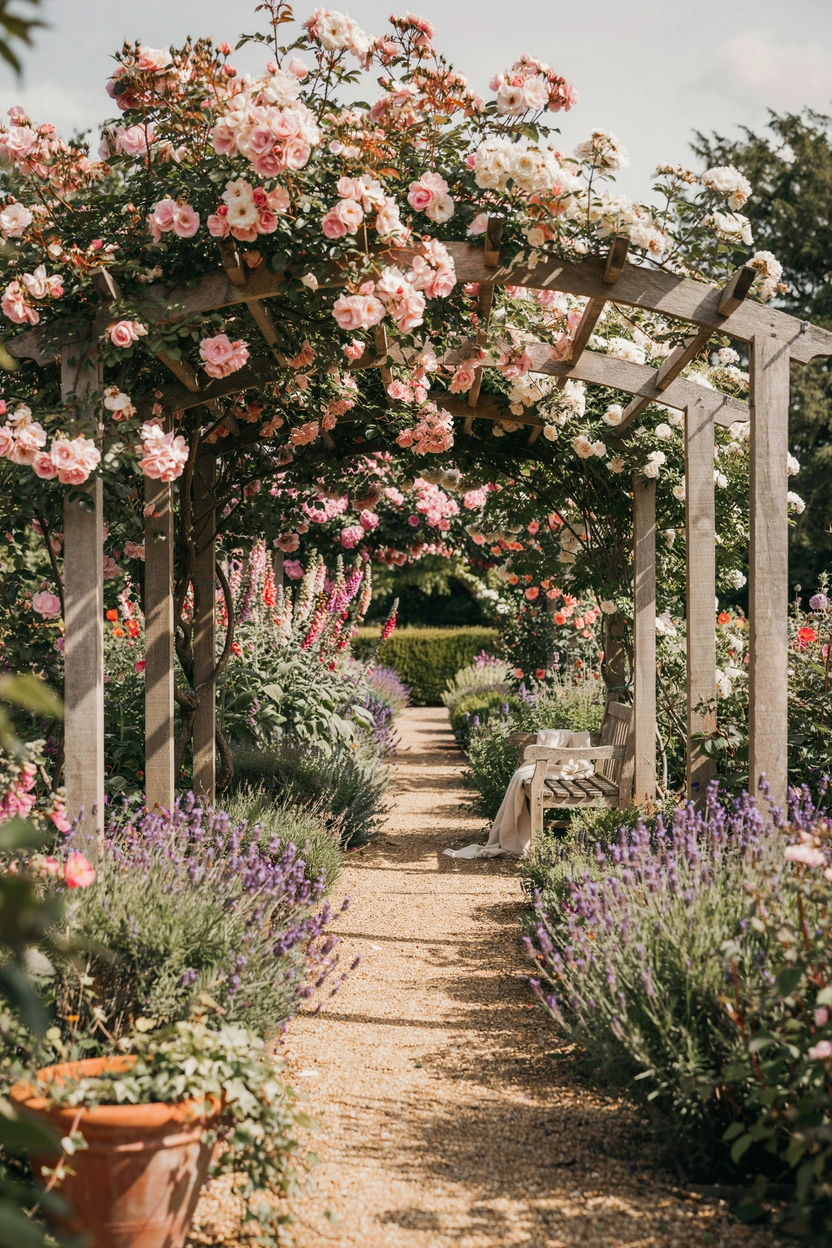
A pergola covered in climbing roses is the kind of garden feature you plan and then spend the rest of your life appreciating. Walking through a rose-covered pergola in June, with the blooms overhead and the scent surrounding you — there’s nothing quite like it. For the longest season of interest, plant a combination of varieties: one early bloomer, one mid-season rose, and one that repeats well into autumn.
Underplant with lavender or catmint along the base of each pergola post. These low, spreading plants soften the structure at ground level and add a second layer of fragrance. Timber pergolas suit a more rustic cottage look; painted metal works beautifully in a more formal cottage garden. Either way, give the roses strong horizontal wires or trellis panels to climb — they need something to grab onto as they grow.
Roses Trained Over a Garden Gate — Romantic Focal Point
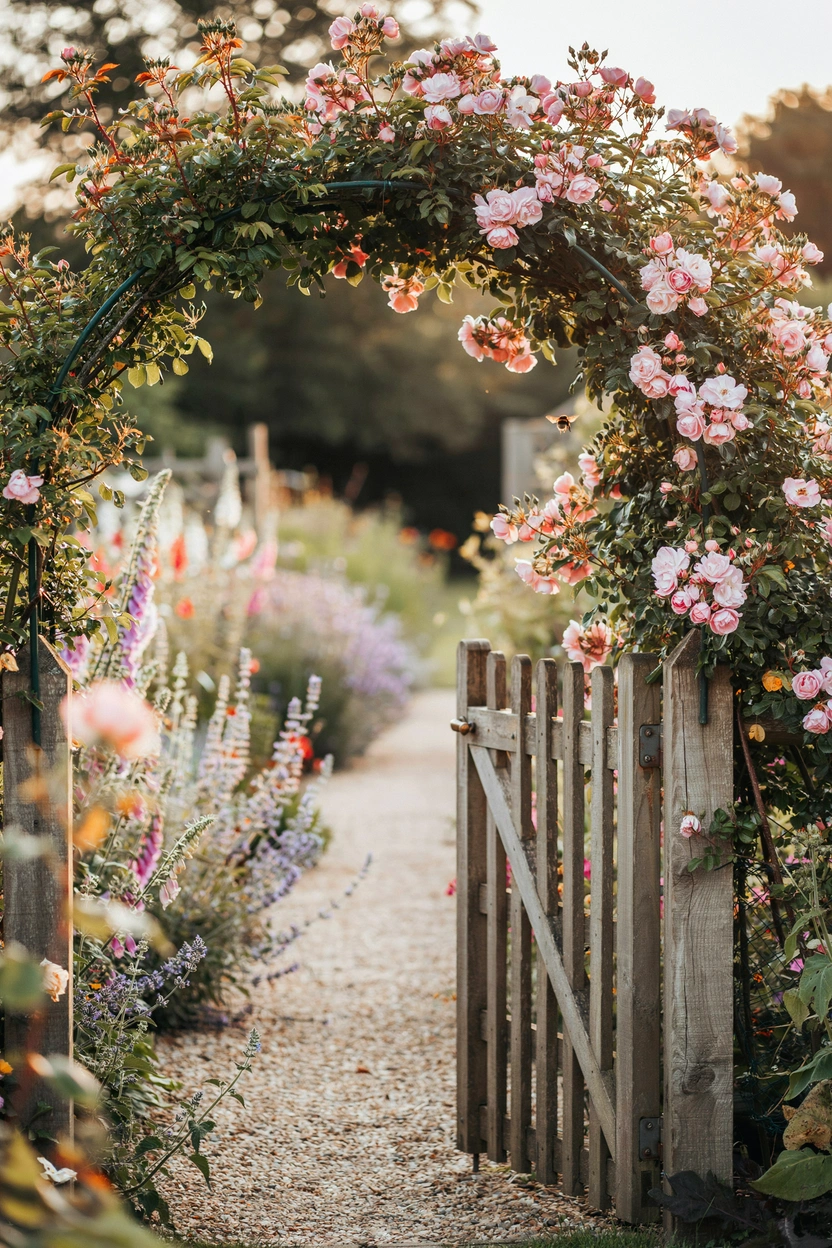
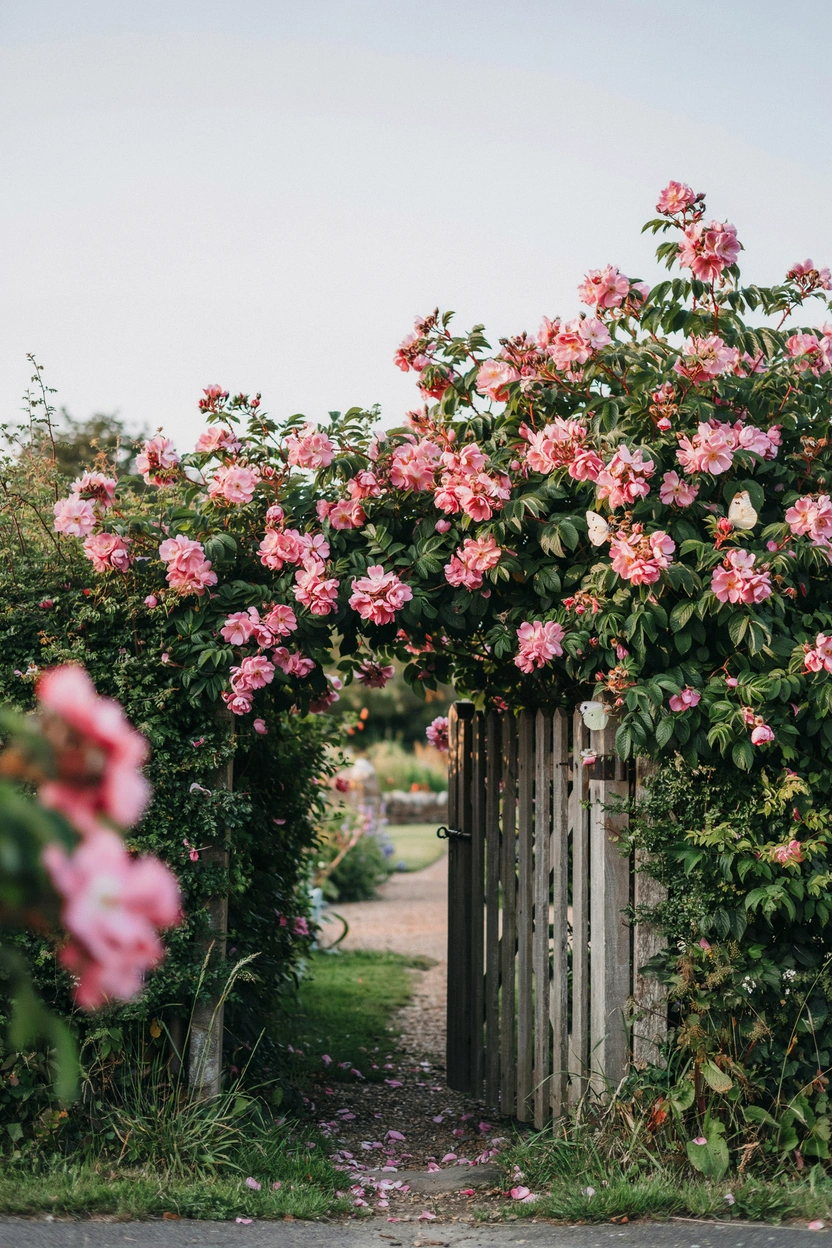
A rose-draped gate is a complete garden moment in one image — probably why it’s one of the most-saved cottage garden photos on Pinterest year after year. It doesn’t require a large garden or a lot of space. Even a narrow front garden with a simple timber gate can pull this off beautifully.
The secret is training one rose stem up each gatepost and letting them meet overhead, rather than planting a big climber and hoping it works itself out. Lightweight varieties are key here — a heavy rambler will strain the gate hardware and make the gate difficult to open by midsummer. Something like New Dawn or The Generous Gardener has long, arching growth but doesn’t get excessively heavy. Tie new growth in regularly during the first two seasons, and the frame will fill naturally.
Beds, Borders & Planting Combinations
The English Rose Border — Layered, Lush, and Full of Colour
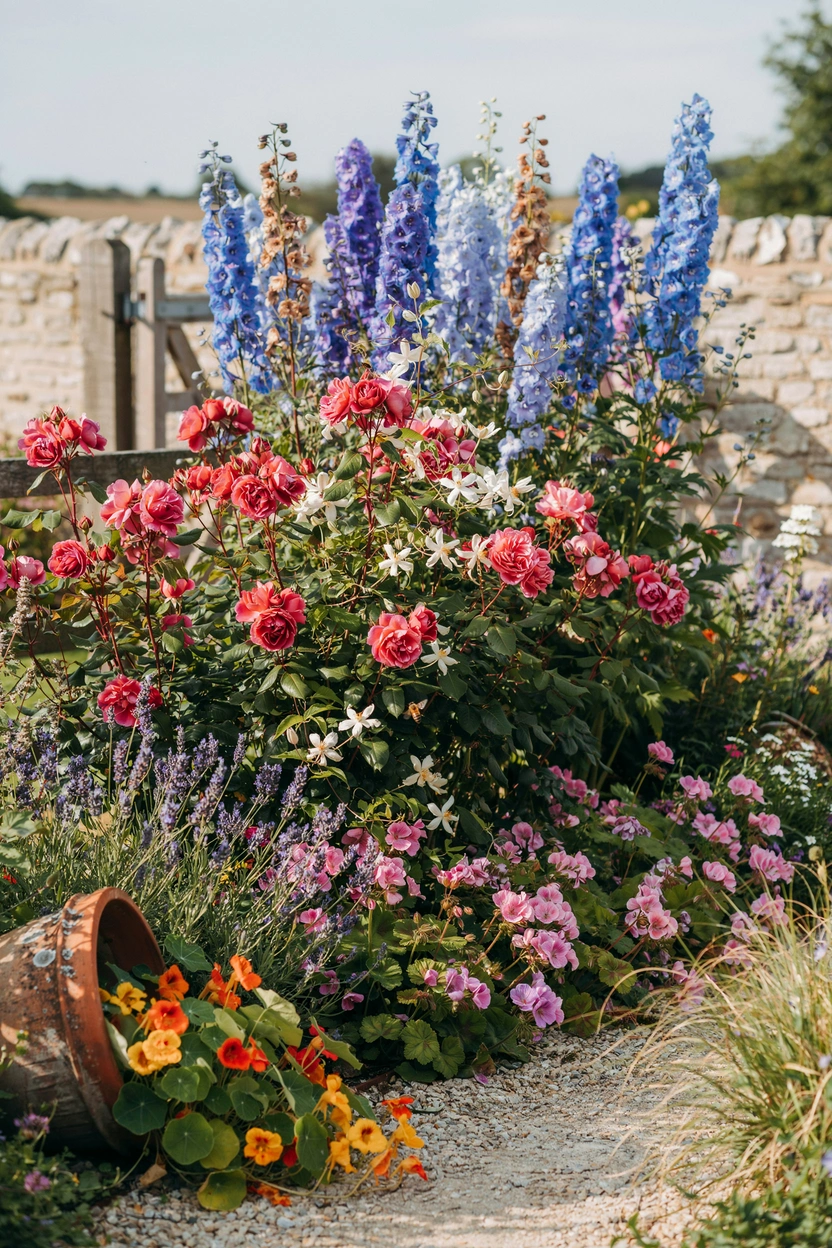
A deep mixed border with roses as the centrepiece is the backbone of the classic English cottage garden. The layering formula is simple but effective: tall foxgloves or delphiniums at the back, mid-height shrub roses in the middle, and low lavender, hardy geraniums, or alchemilla mollis at the front edge. This creates depth and makes the border look full and intentional rather than random.
For the roses themselves, David Austin varieties are the gold standard for a cottage border — deeply cupped blooms, strong fragrance, and a habit that looks natural rather than stiff. Olivia Rose, Darcey Bussell, and The Lark Ascending all work brilliantly in a mixed border. Plant in groups of three for the most impact rather than dotting individual plants across the bed.
Roses and Lavender — The Most Fragrant Cottage Combination
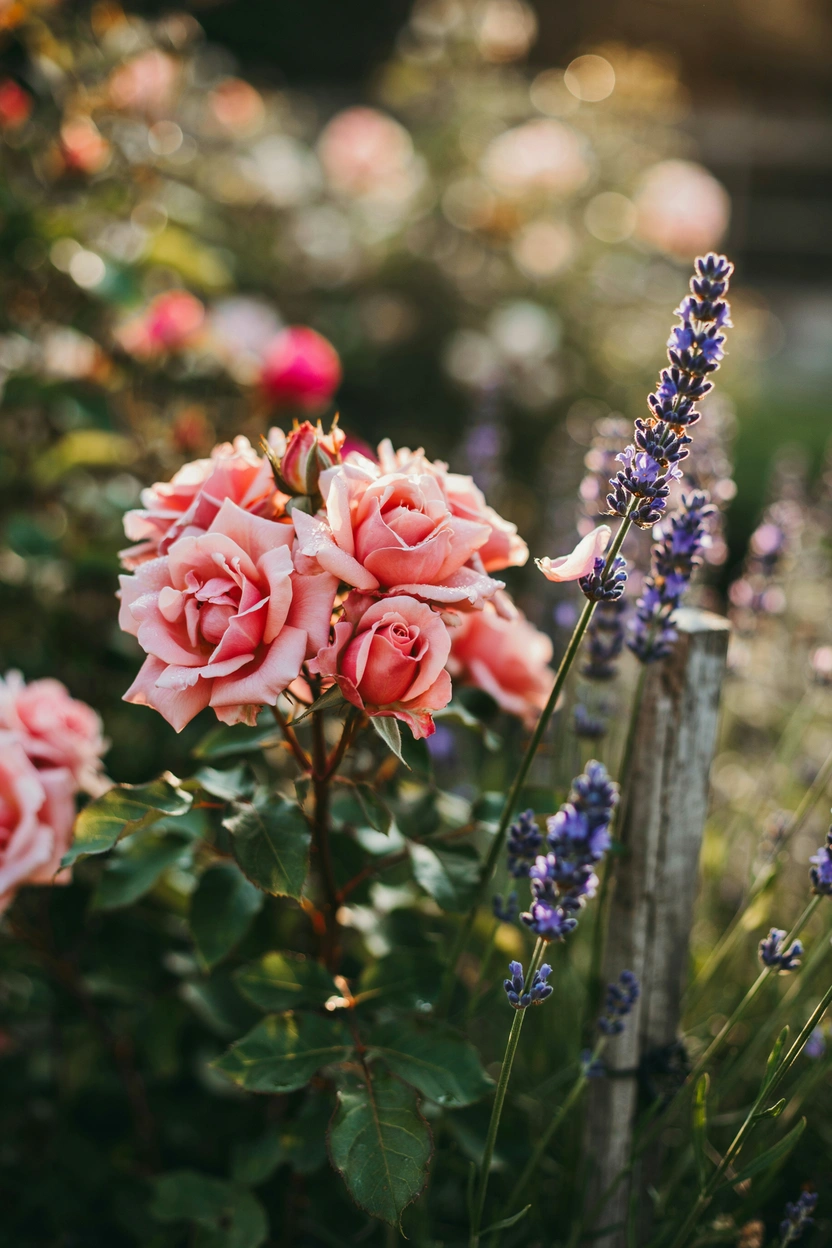
If you’ve ever walked past a garden where roses and lavender are growing side by side, you’ll understand why this combination is so enduring. The fragrance alone is reason enough. But visually it’s equally compelling — the soft purple spikes of lavender contrast perfectly with full, rounded rose blooms, and the silver-grey lavender foliage makes any rose colour look richer.
This pairing works with almost any rose, but the combination really sings with deep pink or apricot varieties — Gertrude Jekyll with Hidcote lavender, or The Lady of Shalott with Munstead. Space the lavender about 18 inches from the rose base to avoid root competition, and cut the lavender back hard each spring to keep it compact and bushy rather than woody and splayed.
Roses and Foxgloves — Vertical Drama Meets Soft Romance
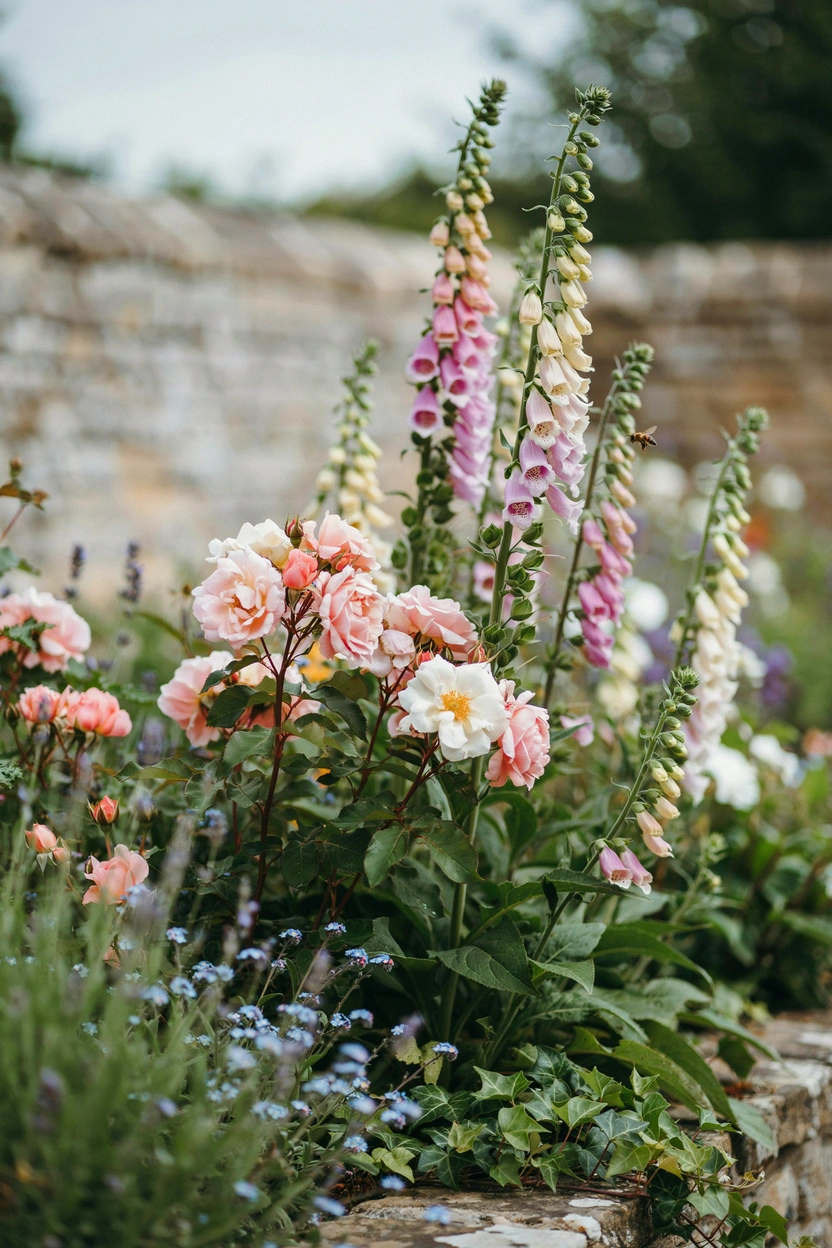
Foxgloves give a cottage garden something roses can’t quite provide on their own — height, movement, and that tall spire shape that makes a border look dramatic and lush. They bloom in early summer, which aligns beautifully with the first flush of many shrub roses, and the combination of foxglove trumpets and rose blooms in the same bed is genuinely breathtaking.
White or cream foxgloves with pink roses are classic and always work. Pink foxgloves with deep red or burgundy roses feel moody and rich. Let some foxgloves self-seed naturally — they’ll pop up in unexpected gaps, and that slightly unplanned look is exactly the cottage garden aesthetic you’re after. Just pull the ones that appear in genuinely wrong spots and let the rest do their thing.
Single-Colour Rose Bed — How One Shade Can Look Extraordinary
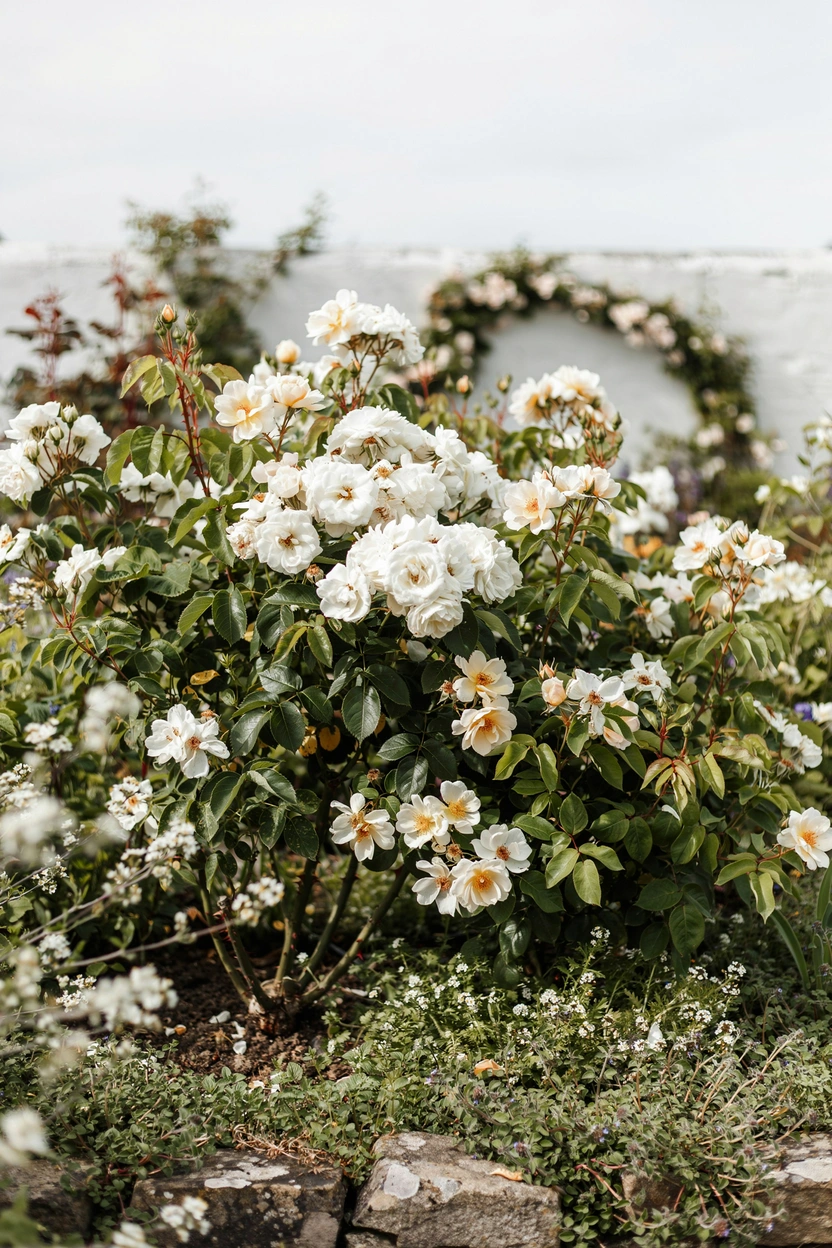
There’s something quietly sophisticated about a bed planted entirely in one colour family. An all-white rose bed, or a range of blush to deep pink, feels more considered than a multicolour mix — and it photographs in a way that a rainbow border simply can’t. The secret is variation within the single colour: mixing full double blooms, semi-double flowers, and single-petal roses in the same hue creates texture and interest without needing multiple colours.
For an all-white cottage rose bed, combine Iceberg (a reliable repeat-bloomer), Winchester Cathedral (David Austin, beautifully cupped), and single-petal Rosa mulliganii or a white species rose for lightness. Underplant with white alchemilla mollis or silver stachys to reinforce the palette at ground level.
Cottage Rose Cutting Patch — Beauty You Can Bring Indoors
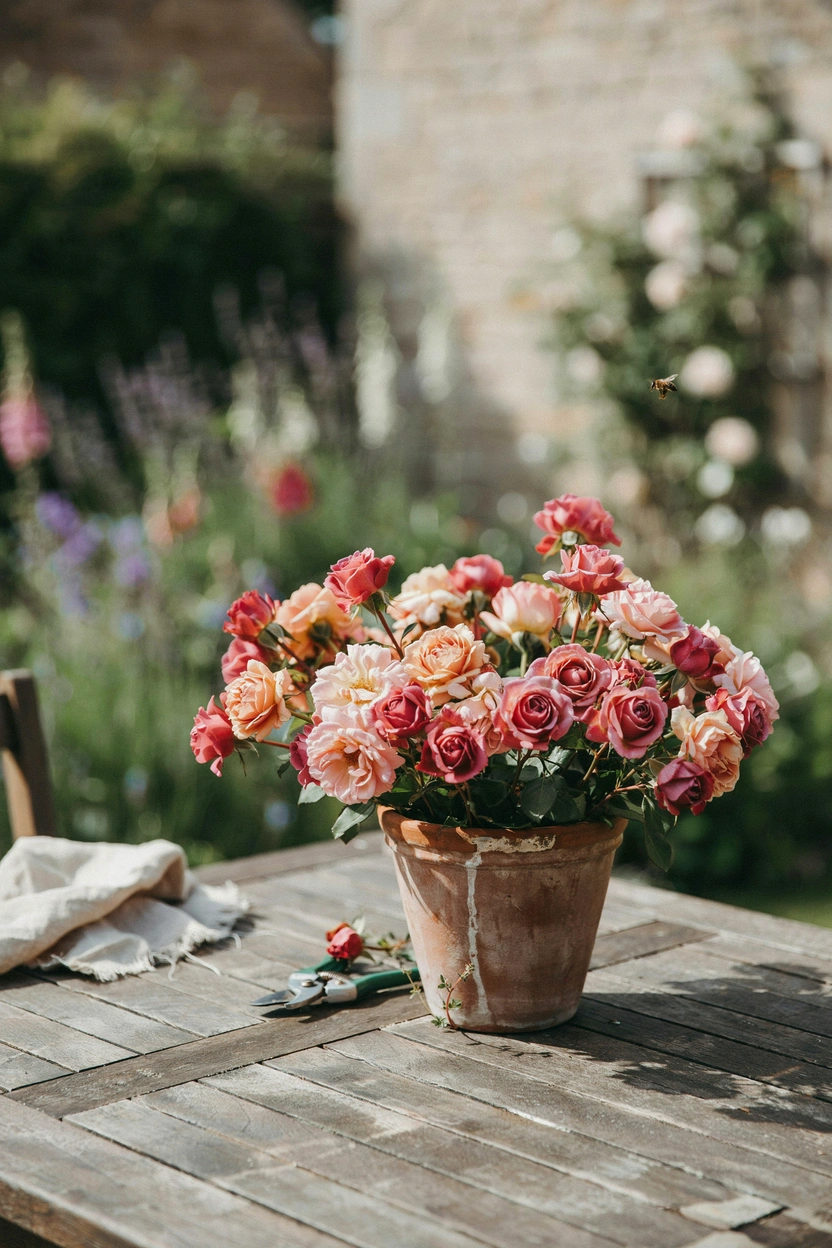
A dedicated cutting patch for roses is one of those ideas that seems like a luxury until you have one, at which point you wonder how you ever gardened without it. The idea is simple: set aside a small area — even just a 6×6-foot patch — and plant 4 to 6 rose varieties chosen specifically for cutting: long stems, good fragrance, and petals that hold well once picked.
The best varieties for cutting in a cottage garden include Olivia Rose Austin, Munstead Wood, and Darcey Bussell. These are all repeat bloomers, so the more you cut, the more flowers you get — which is a wonderful incentive to keep picking. Arrange them loosely in a jug or vintage vase with a few stems of lavender or sprigs of rosemary for fragrance, and you’ve got a cottage posy that looks like it took hours but actually took five minutes.
Roses and Hydrangeas — The Dreamy Summer Garden Duo
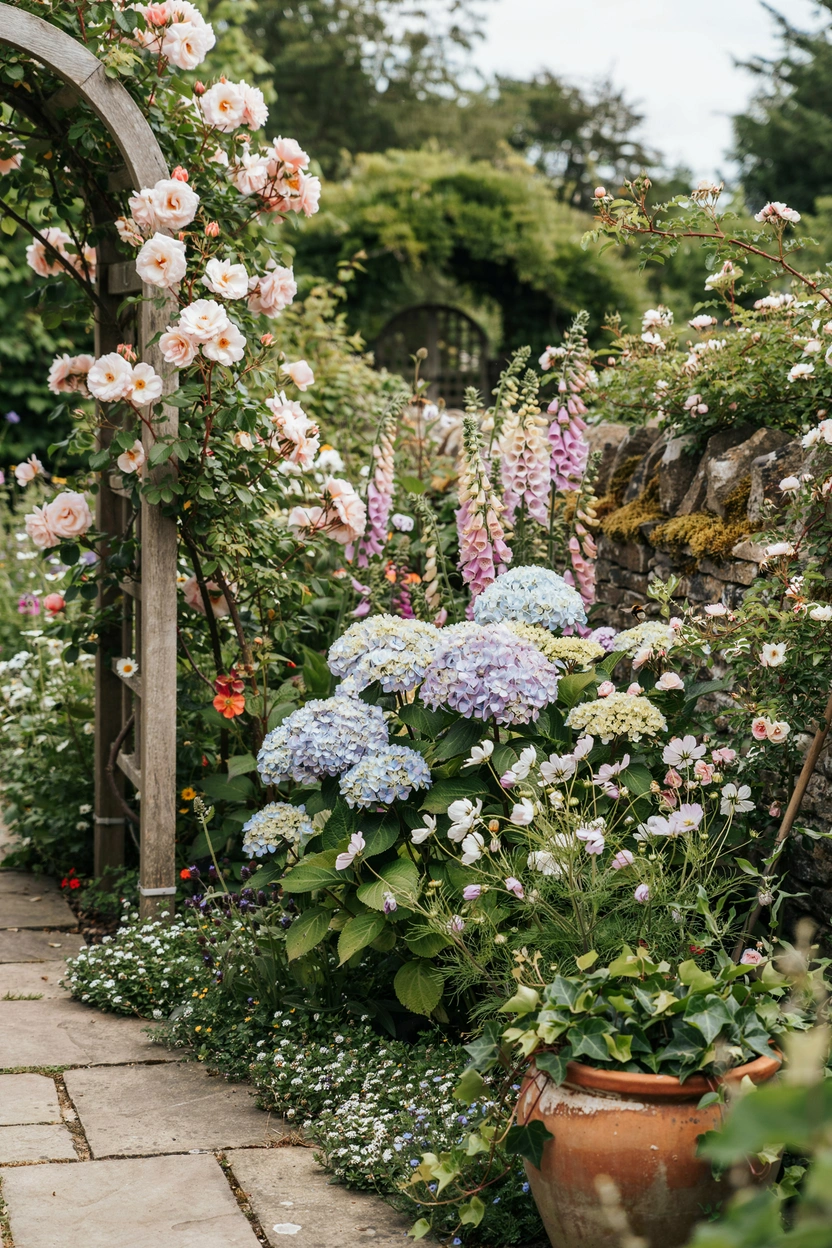
Roses and hydrangeas are one of those plant pairings that work almost too well. Roses peak in June and July; hydrangeas carry the garden through August and September. Between the two, you get a garden that looks full, lush, and gorgeous for the entire summer — which is actually harder to achieve than it sounds.
The best colour pairings: blush or soft pink roses with pale blue hydrangea blooms (like Hydrangea macrophylla ‘Nikko Blue’); hot pink roses with crisp white hydrangeas for high contrast; or apricot roses with pale pink hydrangeas for a softer, more romantic blend. Give each plant enough space — both are greedy rooters and will compete if crowded. A mulch of well-rotted compost around both plants in spring keeps moisture in and the soil in good condition for both.
Small Spaces, Pots & Creative Spots
Roses in Containers — Cottage Style for Patios and Small Gardens
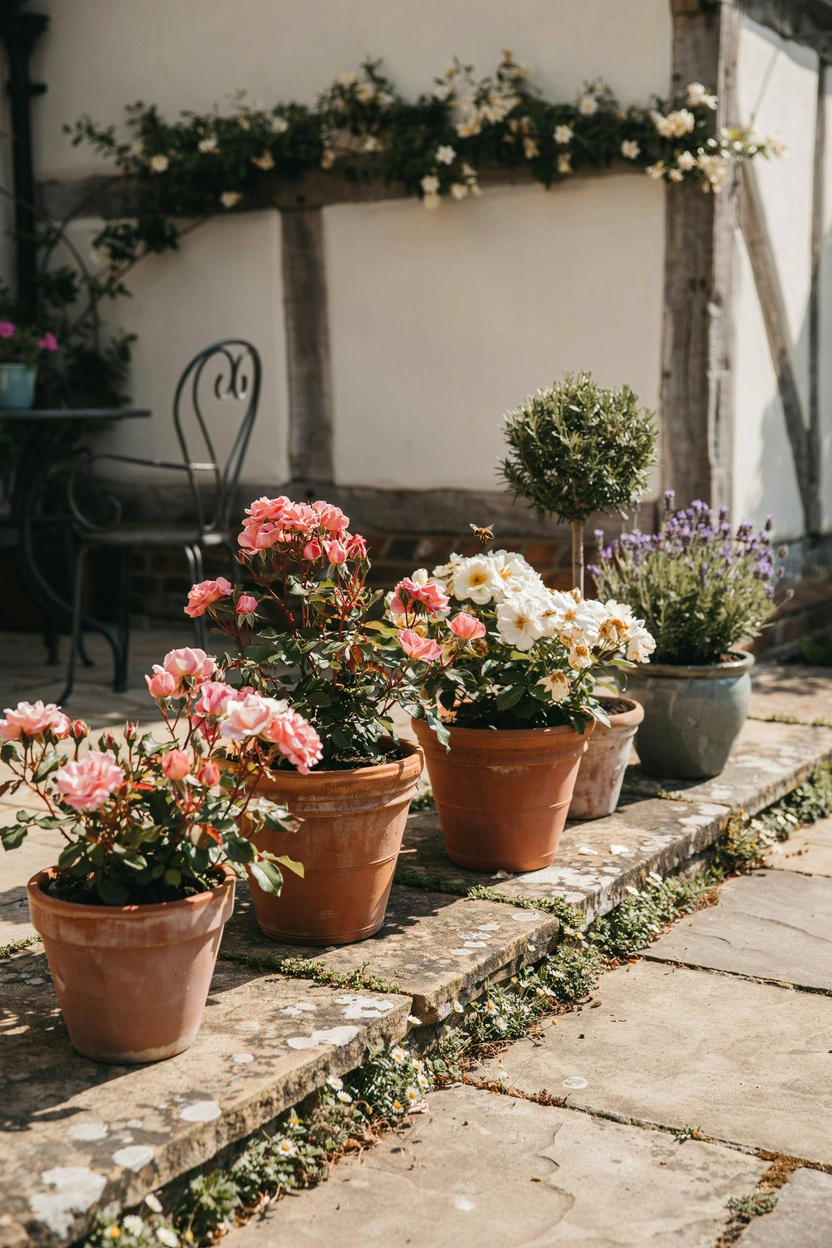
Roses in pots are a genuine option, not just a consolation prize for gardeners without borders. The right variety in the right-sized container can be just as beautiful as anything growing in the ground — and it gives you flexibility to move things around and style your patio like a proper cottage garden vignette.
Choose patio or miniature varieties bred specifically for container life: Cinderella, Flower Carpet Amber, or The Fairy are all brilliant in large pots. The container needs to be bigger than you think — at least 40cm wide and deep for a single rose, or a half-barrel for something more dramatic. Feed generously with a liquid rose fertiliser every two weeks from May to August, and don’t let the pot dry out. Cluster three or four pots together at different heights for the most impact.
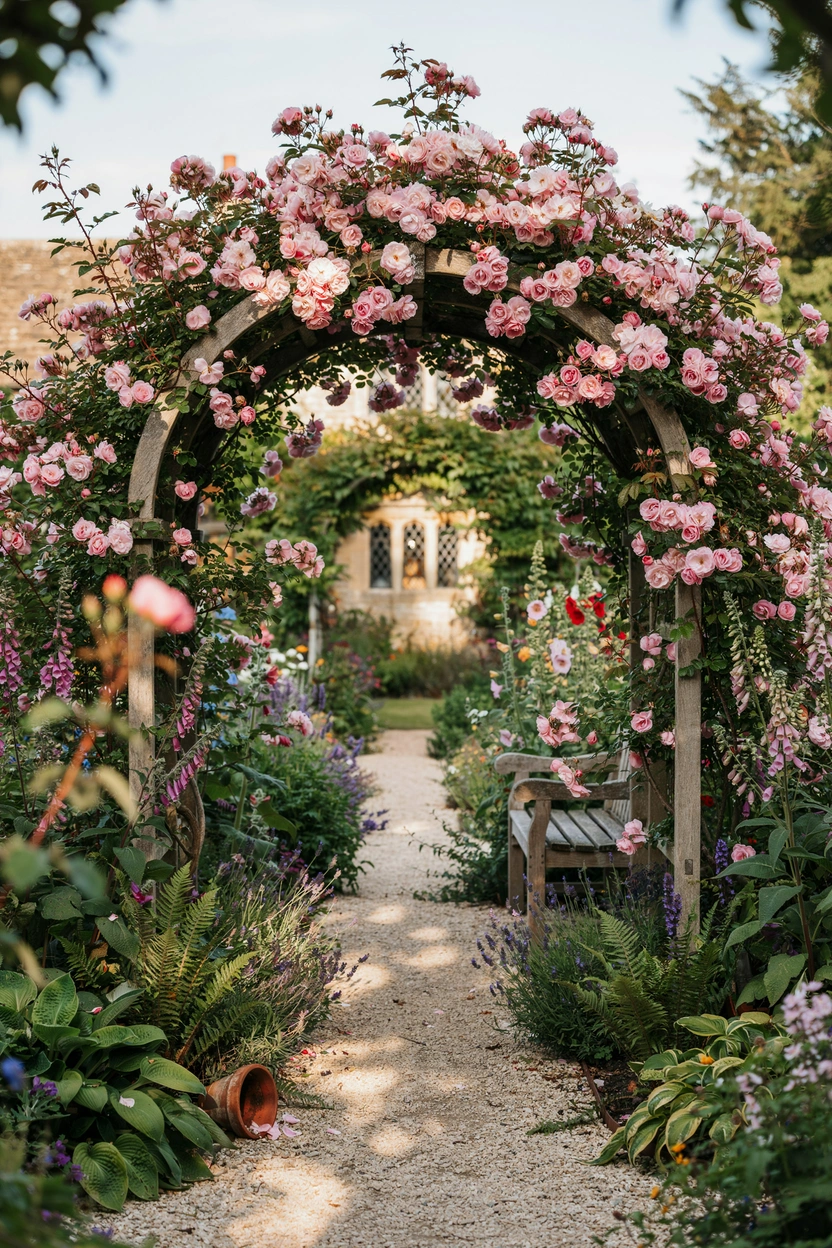
A Rose Garden Path — Soft Blooms Lining the Way
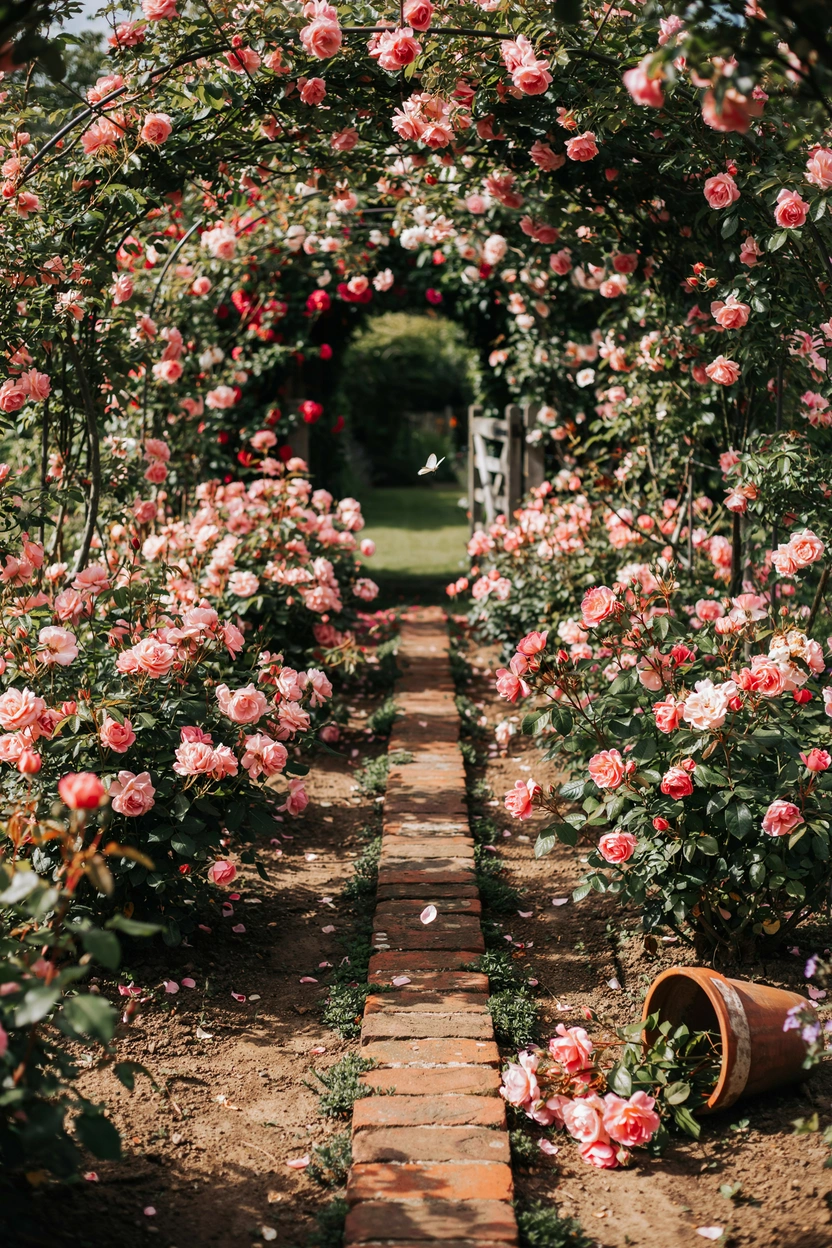
A path lined with roses on both sides is one of the most inviting garden features you can create. Every time you walk down it, you’re surrounded by blooms and fragrance. For the path surface itself, gravel, brick, or irregular stepping stones all suit the cottage aesthetic far better than smooth concrete — the slightly imperfect texture feels right.
For low-growing roses that won’t encroach onto the path, look at varieties with a naturally mounding, compact habit: Bonica, The Fairy, or ground-cover rose varieties all work well, planted 18 inches from the path edge. Underplant with creeping thyme between the stepping stones if you use that style — it releases fragrance when brushed, and the tiny flowers are beautiful.
If you love relaxed outdoor spaces, these boho garden ideas pair beautifully with layered textures and cozy seating setups.
Roses on a Rustic Trellis — DIY Cottage Charm
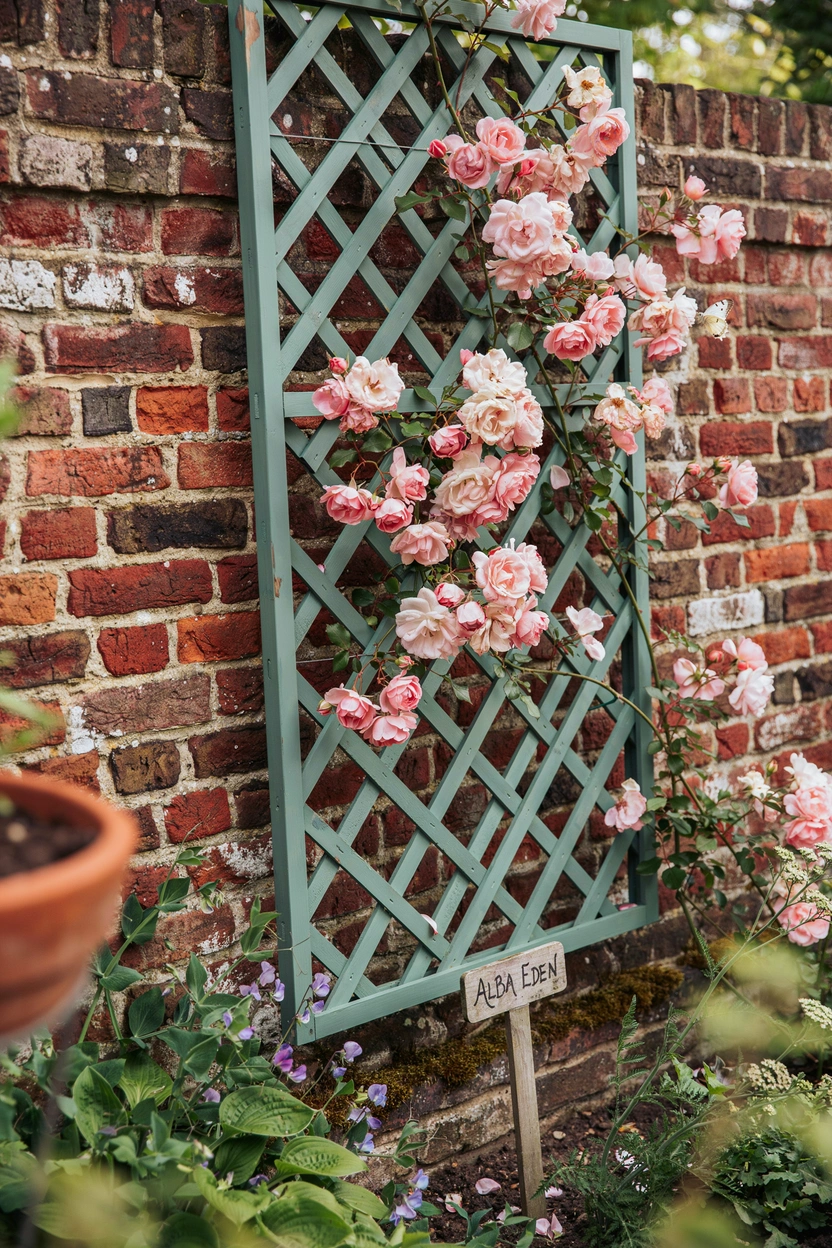
A simple wooden trellis panel fixed against a fence or wall gives you a vertical growing space for roses that costs very little to set up. It’s one of the most achievable cottage garden rose ideas for people who are just starting. Paint the trellis in a soft colour before you plant — sage green, duck egg blue, or off-white all look wonderful behind rose foliage and flowers.
For a trellis planting, choose roses with a manageable growth habit rather than vigorous ramblers that’ll outgrow a small frame quickly. Tall shrub roses like Falstaff or modest climbers like Climbing Little White Pet work beautifully on a single panel. Tie new canes in loosely as they grow using soft garden twine, and you’ll have a picture-perfect cottage rose display within two seasons.
A Cottage Rose Corner — Turning an Awkward Spot Into Something Beautiful
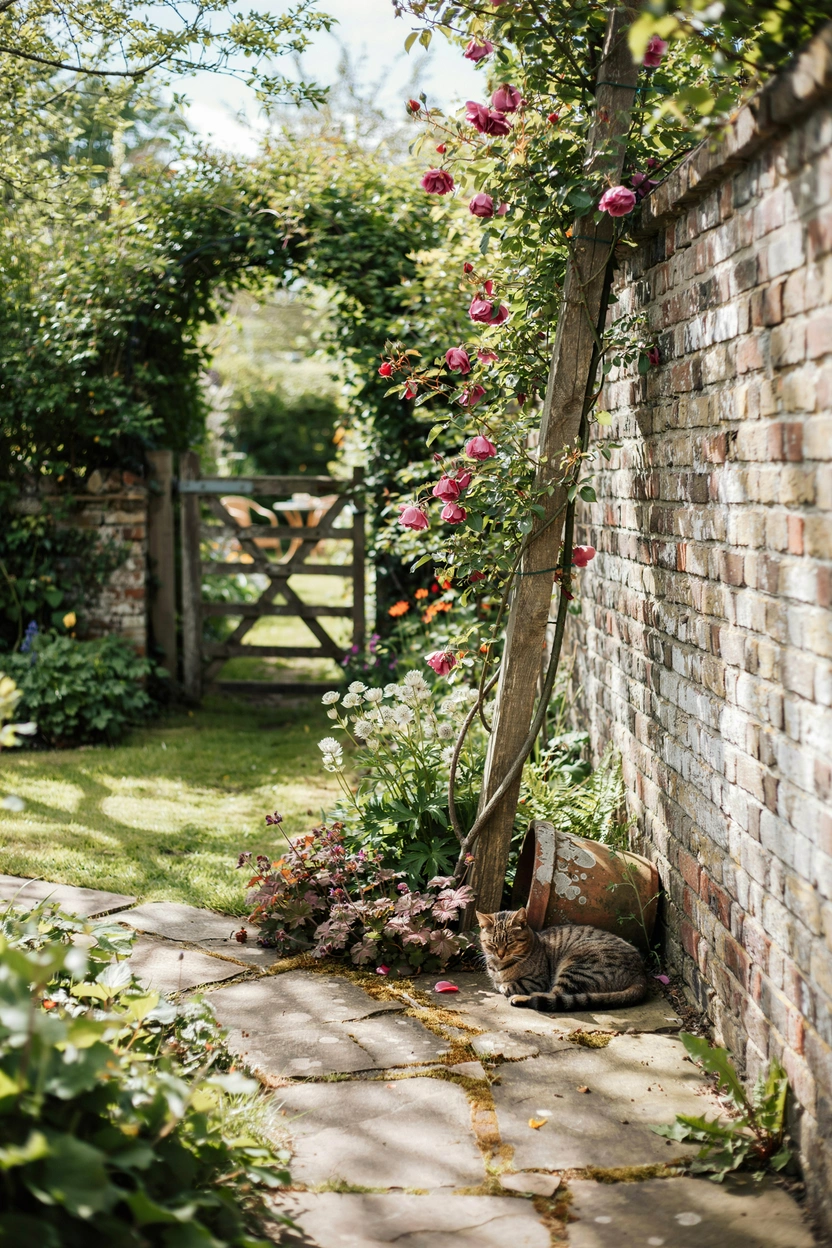
Every garden has one — an odd corner beside the shed, a dark patch behind the bench, an uninspiring stretch of boundary fence. A single statement rose can completely transform these overlooked spots into something you actually want to look at.
Anchor the corner with one strong shrub rose on a post, or a climbing rose trained up the fence behind it. Underplant with shade-tolerant cottage plants: astrantia works beautifully in part shade and blooms for months; hardy geraniums spread naturally and fill gaps without any fuss. Add a simple garden chair or a terracotta pot, and suddenly that awkward corner becomes a destination rather than a blind spot.
Colour, Variety & Long-Season Style
Blush and Cream Roses — The Softest, Most Romantic Cottage Palette
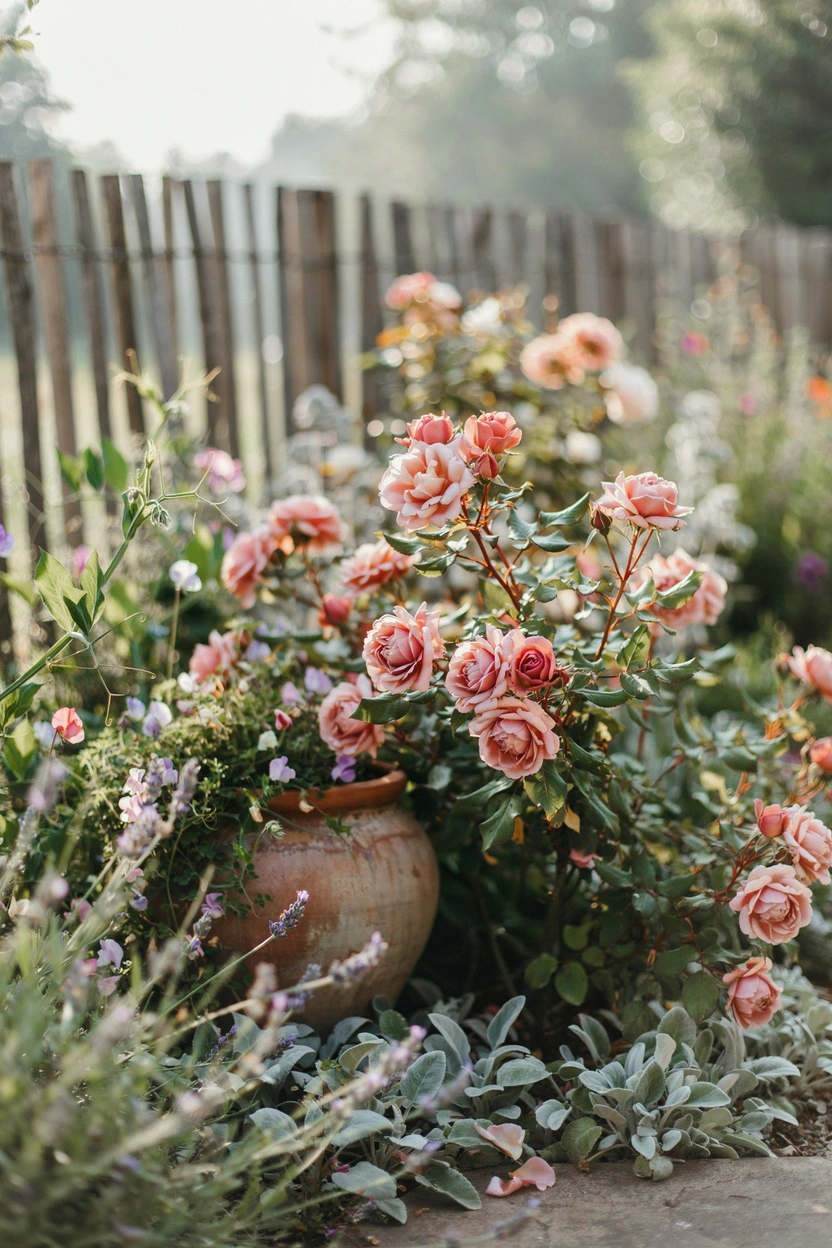
If you scroll through cottage garden Pinterest boards for five minutes, one colour palette dominates: blush, cream, and soft pink. There’s a reason for that. These tones photograph beautifully in every light condition; they look romantic without being showy, and they sit harmoniously with almost every other plant in a cottage garden.
David Austin’s Olivia Rose Austin, Eglantyne, and Claire Austin (a lovely ivory white) are some of the most beautiful roses in this palette. Pair them with silver-leafed plants — Stachys byzantina, Artemisia, or silver santolina — to make the soft rose tones even more luminous. This palette is also much more forgiving in a mixed border than bolder colours, which can clash if you’re not careful.
Wild Rose Hedgerow — The Low-Maintenance Cottage Boundary
Not every cottage garden rose needs to be a named David Austin variety grown in a carefully prepared border. Species roses and rugosa roses make extraordinary garden boundaries — tough, wildlife-friendly, almost entirely self-sufficient, and absolutely beautiful in their own unpretentious way.
Rosa rugosa is the classic choice: wrinkled, disease-resistant leaves, large single flowers in pink or white, and enormous red hips in autumn that last well into winter. Rosa glauca is another favourite — smaller flowers, but extraordinary blue-grey foliage that looks stunning all season. Plant hedgerow roses 3 feet apart and let them form a natural thicket. Prune once a year in late winter to keep the shape. That’s genuinely all the care they need.
FAQ
What are the best roses for a cottage garden?
David Austin English roses are the most popular choice — varieties like Gertrude Jekyll, Olivia Rose Austin, and The Lady of Shalott have the old-fashioned, deeply cupped bloom shape that defines the cottage aesthetic, along with strong fragrance and good disease resistance.
Do cottage garden roses need a lot of maintenance?
Less than most people think. Once established, shrub roses need pruning once a year, feeding twice a season, and regular deadheading for repeat bloomers. Species roses like Rosa rugosa need even less — prune once in late winter and leave them to it.
Can I grow cottage roses in pots?
Absolutely. Choose patio varieties like The Fairy, Cinderella, or Flower Carpet series. Use a large container (minimum 40cm diameter), feed regularly through summer, and water consistently. Container roses can be just as beautiful as border-grown plants.
What grows well with roses in a cottage garden?
Lavender, foxgloves, hardy geraniums, alchemilla mollis, catmint, astrantia, salvias, and echinacea are all excellent companions. They fill the gaps between rose plants, extend the season of interest, and create the full, abundant cottage garden look.
Conclusion
There’s really no wrong way to start a cottage rose garden. You could begin with one climbing rose on a fence post, or a single potted patio rose on your doorstep, and build from there year by year. That’s actually how most beautiful cottage gardens happen — slowly, one plant at a time, shaped by what thrives in your particular spot and what you fall in love with along the way.
The ideas in this post are starting points. Try a few, see what works in your garden, and don’t be afraid to move things around if something isn’t quite right. Roses are more forgiving than their reputation suggests. And the reward — that moment in June when everything is blooming at once, and the whole garden smells incredible — makes every bit of effort worth it.