
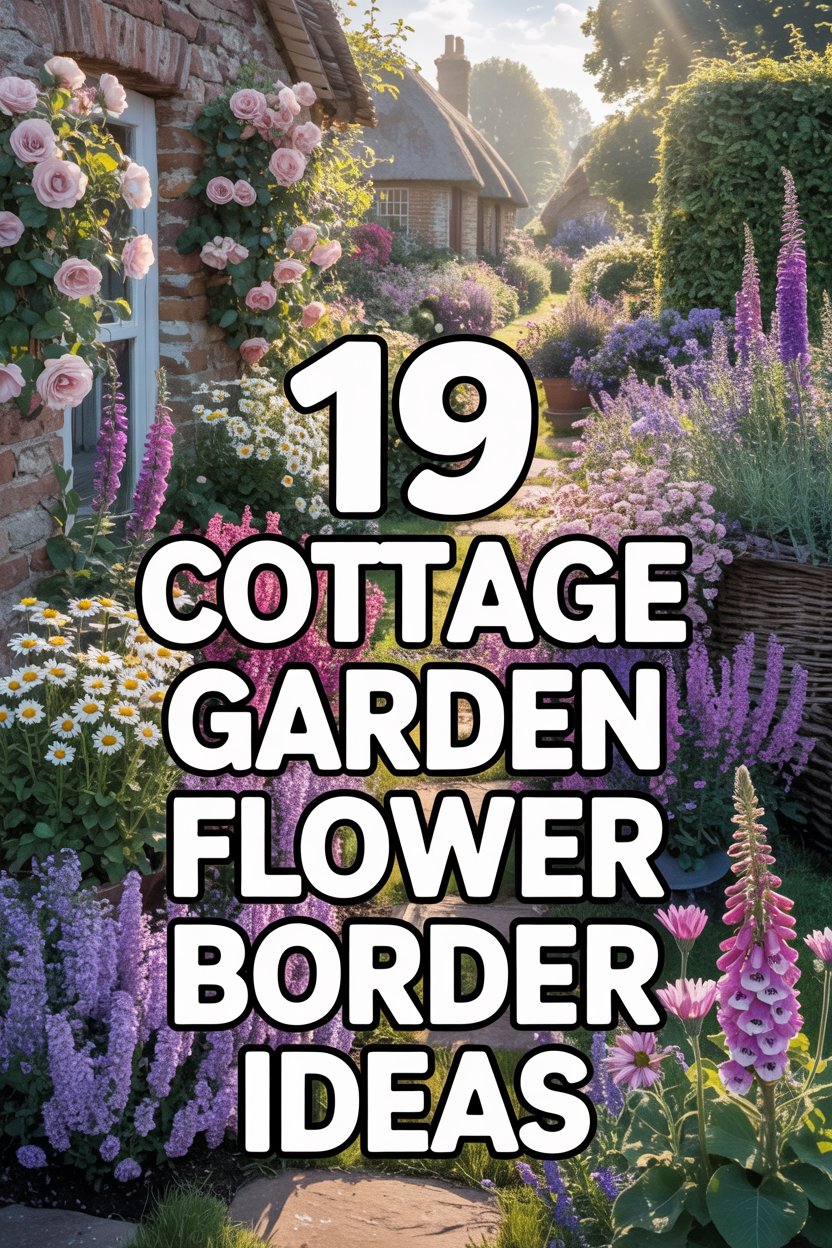
There’s a certain kind of garden that stops you in your tracks. Not because it’s perfectly manicured or symmetrically planted — but because it looks like it just happened. Roses leaning into lavender. Foxgloves swaying behind a weathered fence. A narrow path almost swallowed by billowing catmint. That’s the magic of a cottage garden flower border, and honestly, it’s one of the most beautiful things you can grow.
Whether you’re working with a long, sunny border or a narrow strip beside your front door, cottage-style planting is wonderfully forgiving. It rewards abundance over perfection. In this post, you’ll find 19 real, inspiring ideas — from classic English herbaceous borders to fragrant, bee-friendly mixes — to help you create the romantic, colour-packed garden you’ve been dreaming about.
Let’s dig in.
Classic & Timeless Cottage Border Ideas
1. Go Full English: The Classic Herbaceous Cottage Garden Border
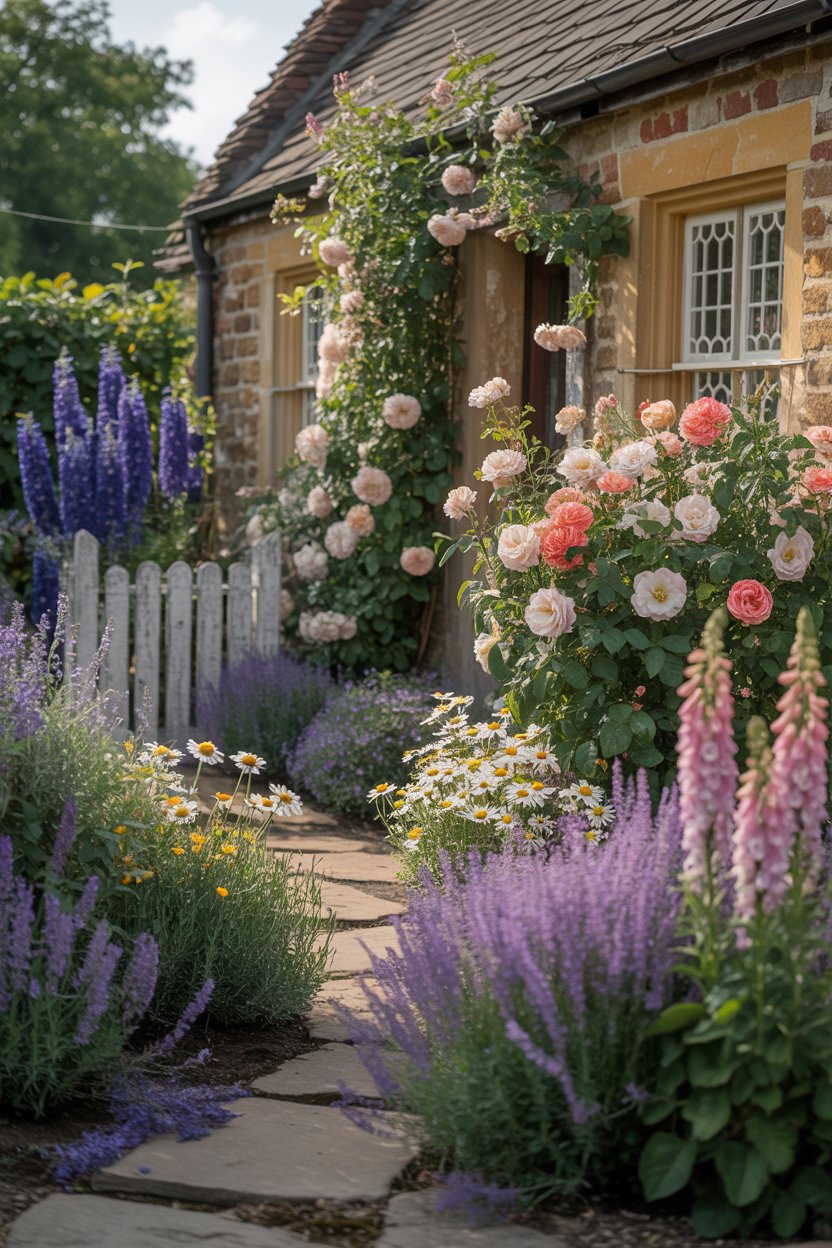
If you want that quintessential cottage look, the traditional herbaceous border is where it starts. Plant tall delphiniums and hollyhocks at the back, medium-height phlox and achillea in the middle, and low-growing hardy geraniums spilling right at the edge. The layered effect creates that gorgeous “wall of flowers” look that feels both planned and wild at the same time.
The key is repetition without rigidity — dot the same plant in two or three spots along the border to create rhythm, then let everything fill in naturally. Stick to a soft palette of blues, pinks, and whites, and you’ve got a classic English garden that photographs beautifully all summer long.
2. The Most Romantic Combo: Roses and Lavender Planted Together
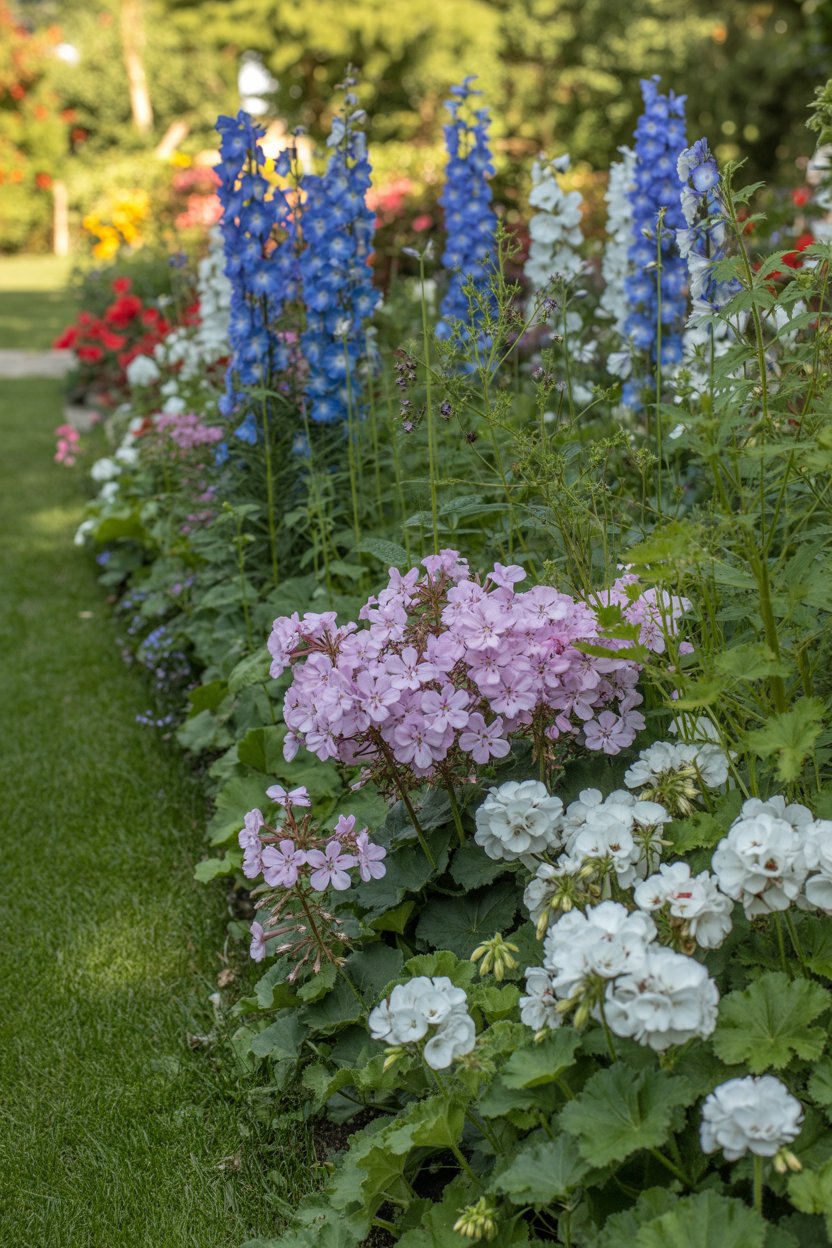
Few plant pairings are as universally loved — or as consistently beautiful — as roses and lavender growing side by side. The purple spikes of lavender contrast perfectly with the soft, blousy heads of shrub roses, and the scent combination is absolutely extraordinary. It works especially well as a front-of-border planting beneath larger shrub roses like David Austin varieties.
Beyond the aesthetics, this pairing is genuinely practical. Lavender deters aphids; pollinators love both plants, and they share similar sun and drainage preferences. Plant lavender in long drifts of 5–7 plants at the border front, with roses planted 18 inches behind. It’s the cottage garden flower border combination that never goes out of style.
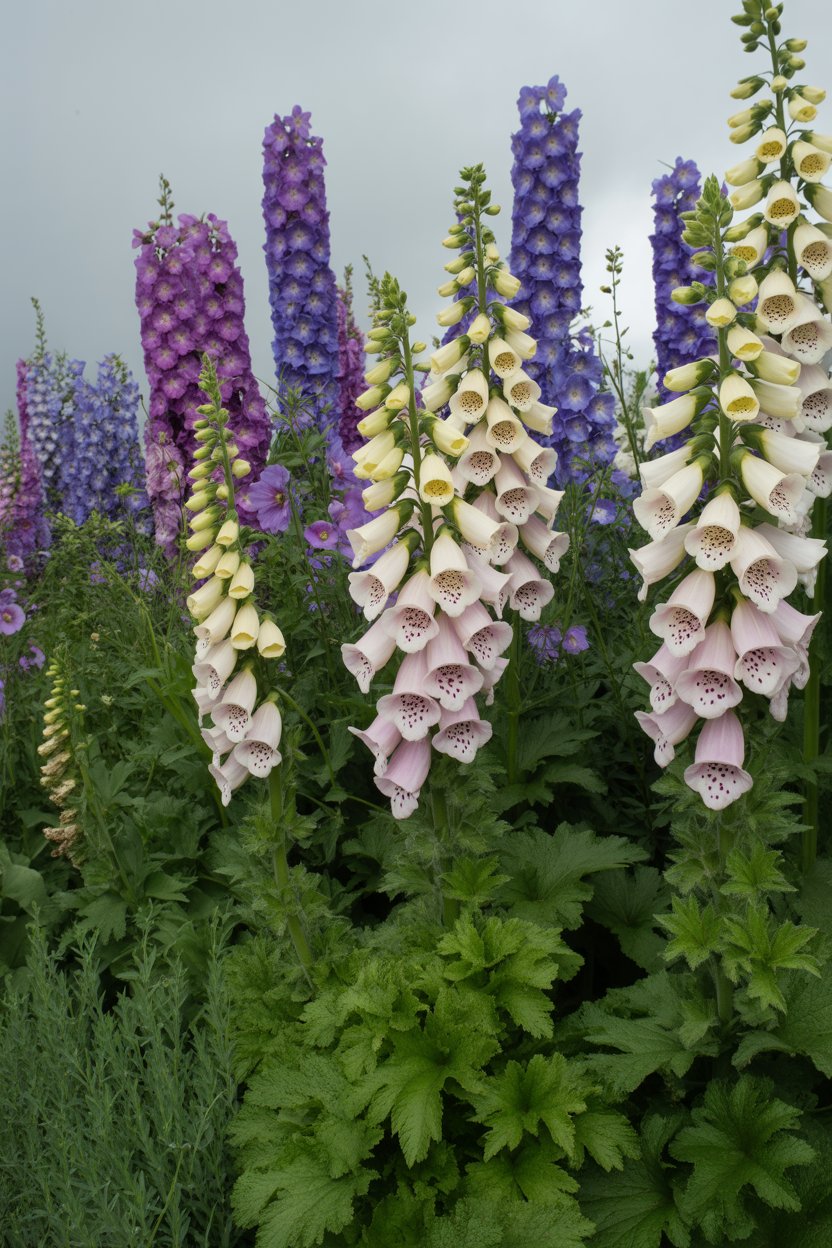
3. Go Tall and Dramatic: Foxgloves and Delphiniums for a Striking Cottage Border
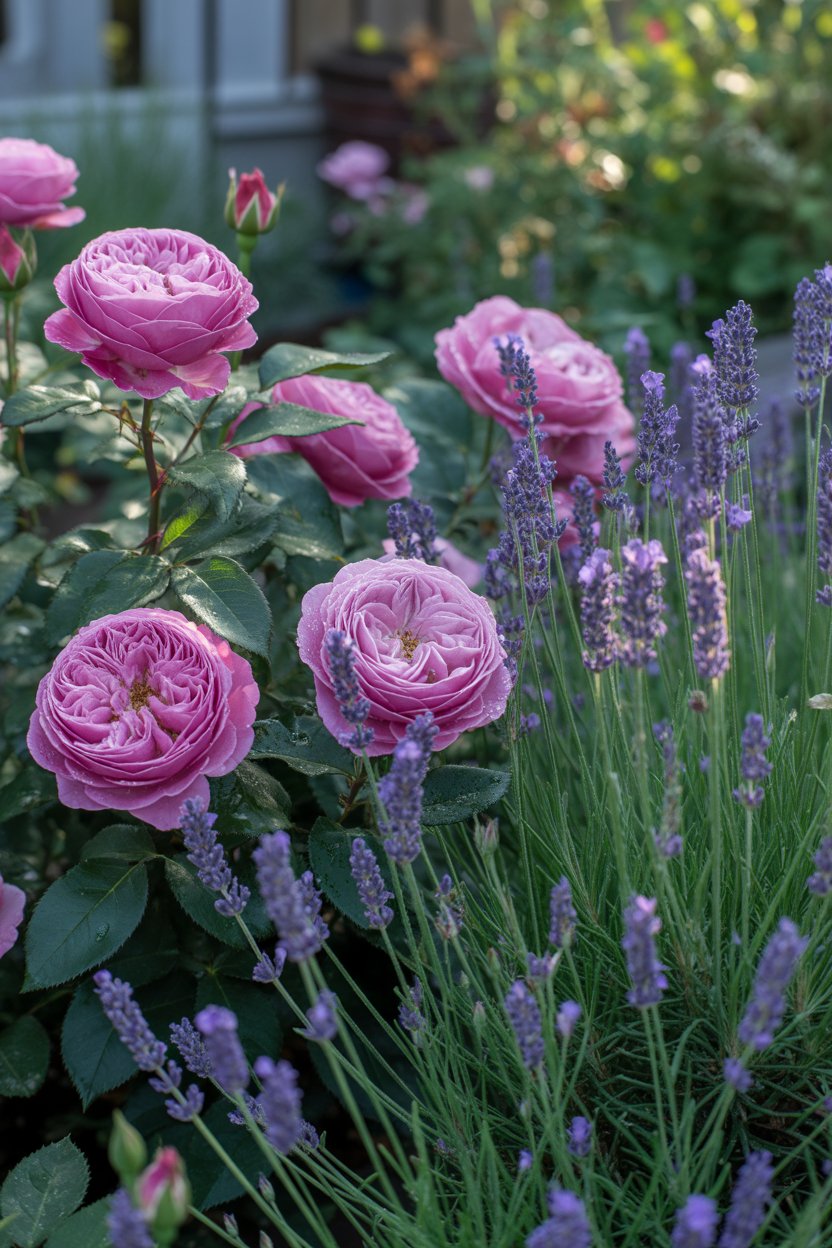
Want your cottage border to have real presence? Tall is the answer. Foxgloves (Digitalis purpurea) and delphiniums together create a vertical backdrop that’s genuinely jaw-dropping — especially in that classic combination of soft purple delphiniums with blush-pink and white-speckled foxgloves. Plant them together at the back of a border and let them tower above everything else.
The best part about foxgloves? They self-seed freely, so once you plant them, you’ll have new plants popping up every year. Delphiniums will reward a mid-summer chop with a second flush in September. This is a border that earns its space.
4. Soft and Dreamy: A Full Pastel Cottage Garden Flower Border
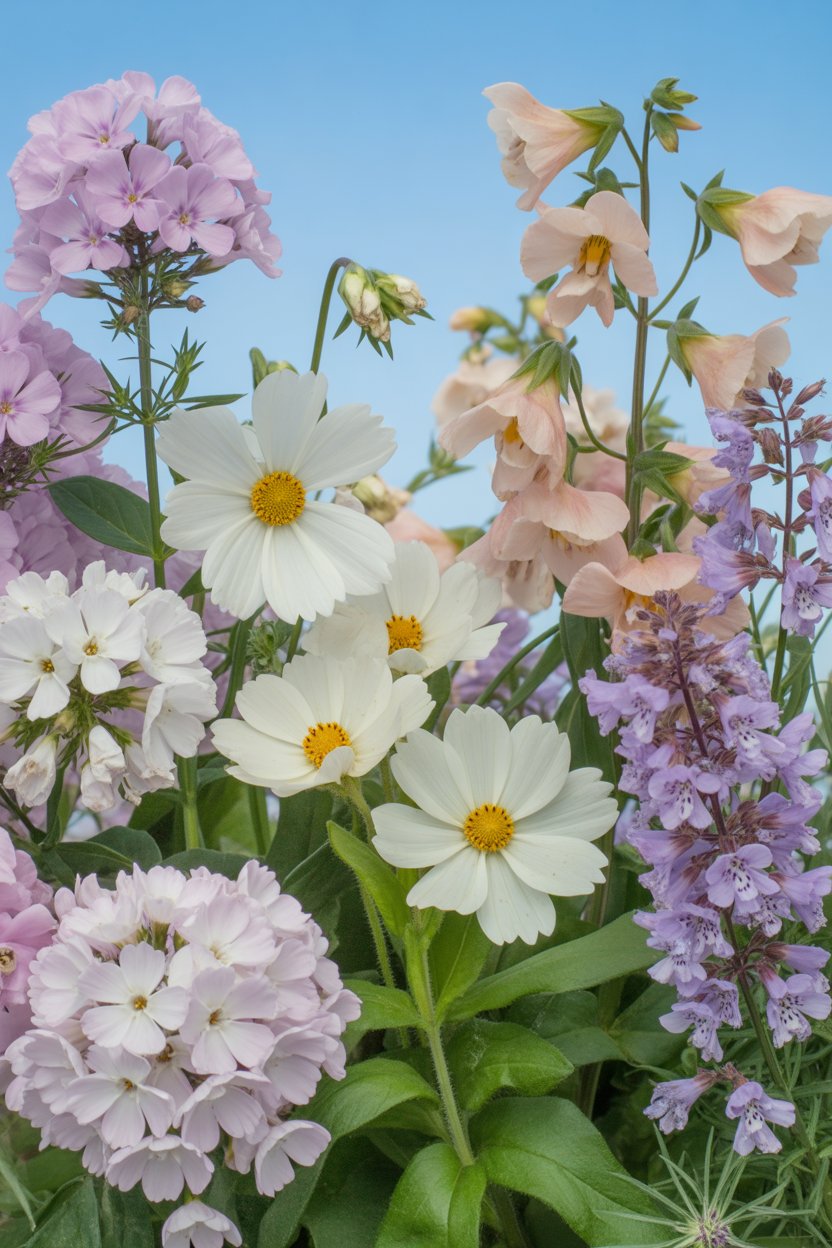
If Instagram has a favourite colour palette, it’s pastel — and for cottage garden borders, soft tones are absolutely timeless. Think pale pink phlox, blush sweet peas, creamy-white cosmos, soft lilac catmint, and the faintest yellow achillea. When these all grow together, the whole border takes on an almost watercolour quality.
The trick to making pastels work without looking washed out is to add one or two slightly stronger anchor tones — a dusty mauve salvia or deeper pink rose — to give the planting some grounding. Add silvery-grey foliage from Stachys or Artemisia, and the whole border shimmers. It’s the kind of garden that makes people stop and photograph it from the street.
5. Where Wild Meets Wonderful: The Wildflower Cottage Border
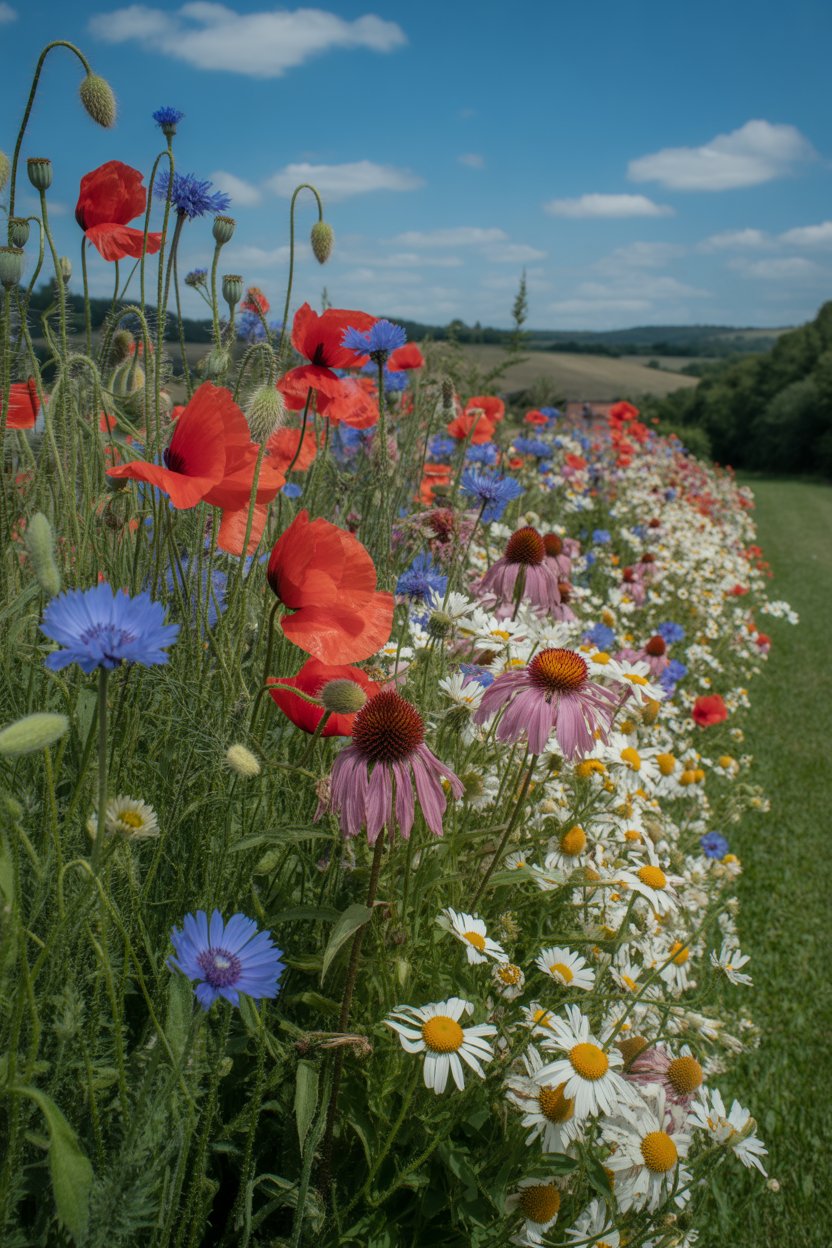
This one’s for the gardeners who love a little chaos. A wildflower-inspired cottage border mixes cultivated favourites — think echinacea, salvia, and scabious — with true wildflowers like cornflowers, red poppies, and ox-eye daisies. The result feels completely natural, like a meadow that wandered into your garden and decided to stay.
It’s also one of the lowest-maintenance approaches to cottage gardening. Many wildflowers are annuals that self-seed freely, so the border essentially plants itself each year. Scatter seed in autumn, add a few perennial anchors, and step back. Butterflies and bees will find it within days.
Space-Specific Cottage Border Ideas
6. Big Impact in a Small Space: Cottage Flower Border Ideas for Narrow Front Gardens
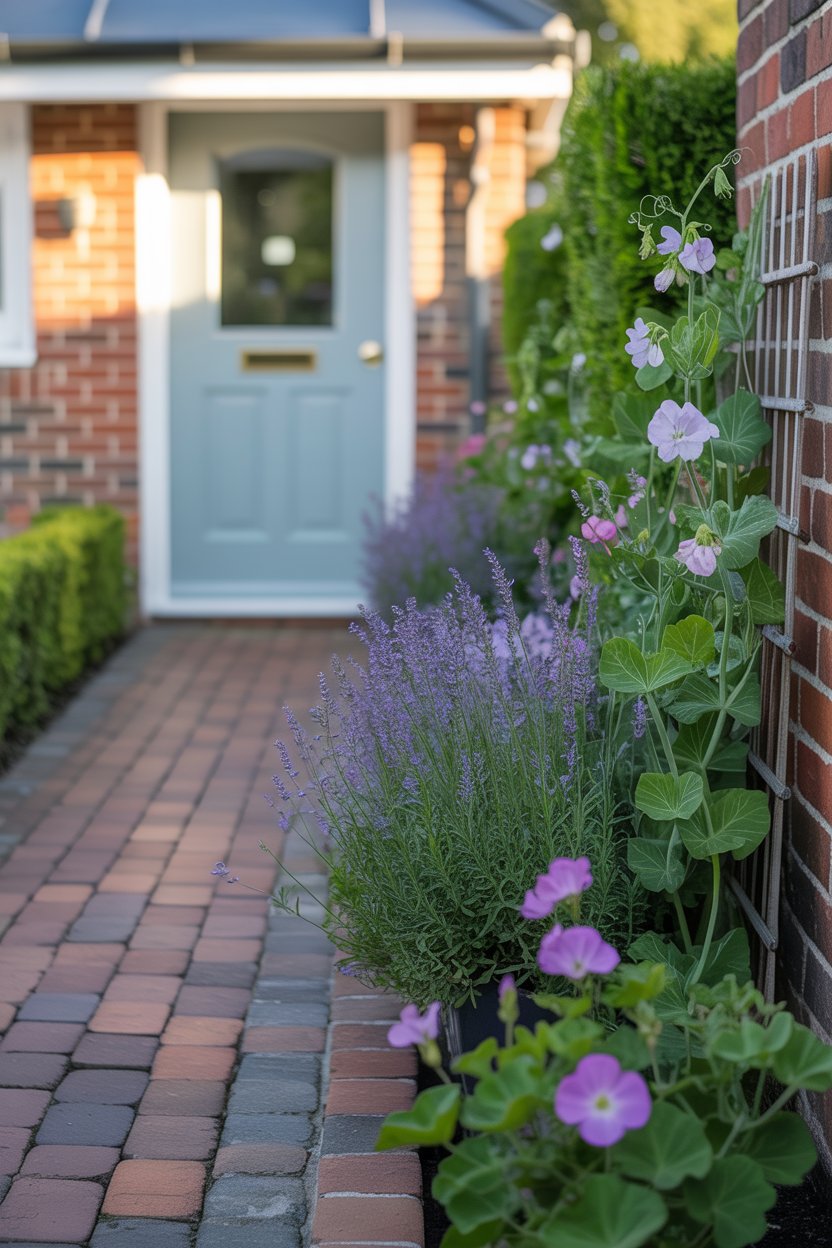
A narrow border — even just 18–24 inches wide — can look absolutely stunning with the right cottage plants. The secret is to choose compact varieties and focus on continuous colour rather than trying to layer as deeply as you would in a wide border. Dwarf delphiniums, compact hardy geraniums, and low lavender varieties all work brilliantly in tight spaces.
Add a few sweet pea climbers on a simple bamboo wigwam, and suddenly your narrow strip becomes a feature rather than a gap. This works especially well along a front garden path, where passersby will enjoy the scent as much as the colour.
7. Pure Storybook Charm: Planting a Cottage Border Along a Picket Fence
There’s nothing more classically cottage than flowers tumbling along a white picket fence. Use the fence as a support for sweet peas, climbing roses, or clematis, then underplant with softer, lower-growing cottage flowers — catmint, cosmos, and hardy geraniums look especially beautiful in this setting.
Mix climbers with self-supporters so the border has different levels of interest. A rose like ‘Cecile Brunner’ with tiny blush flowers trained along the top of the fence, catmint foaming at the base, and tall cosmos swaying in between creates that iconic cottage border image you see all over Pinterest — and it’s surprisingly easy to achieve.
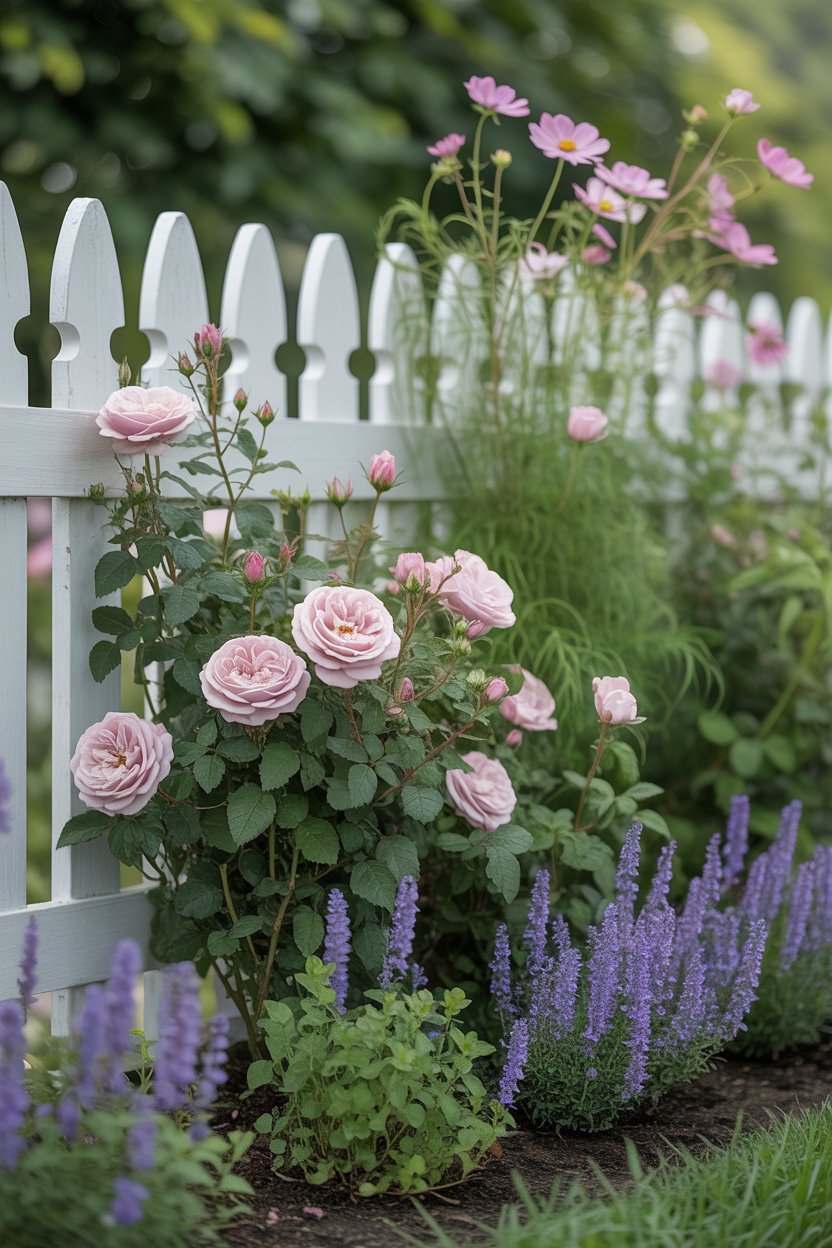
8. Lining the Way: A Beautiful Cottage Flower Border Along a Garden Path
A garden path framed on both sides by cottage flowers is one of the most magical things you can create. Low, frothing plants that spill over the path edges — like alchemilla mollis, hardy geraniums, and creeping thyme — give it that classic “overgrown in the most beautiful way” look. Add lavender or catmint for scent, and every walk through becomes a sensory experience.
Keep the planting lower at the path edges (under 12 inches) and gradually build height as you step back into the border. This not only looks gorgeous but also makes the path feel like it’s cutting through a sea of flowers rather than just passing beside one.
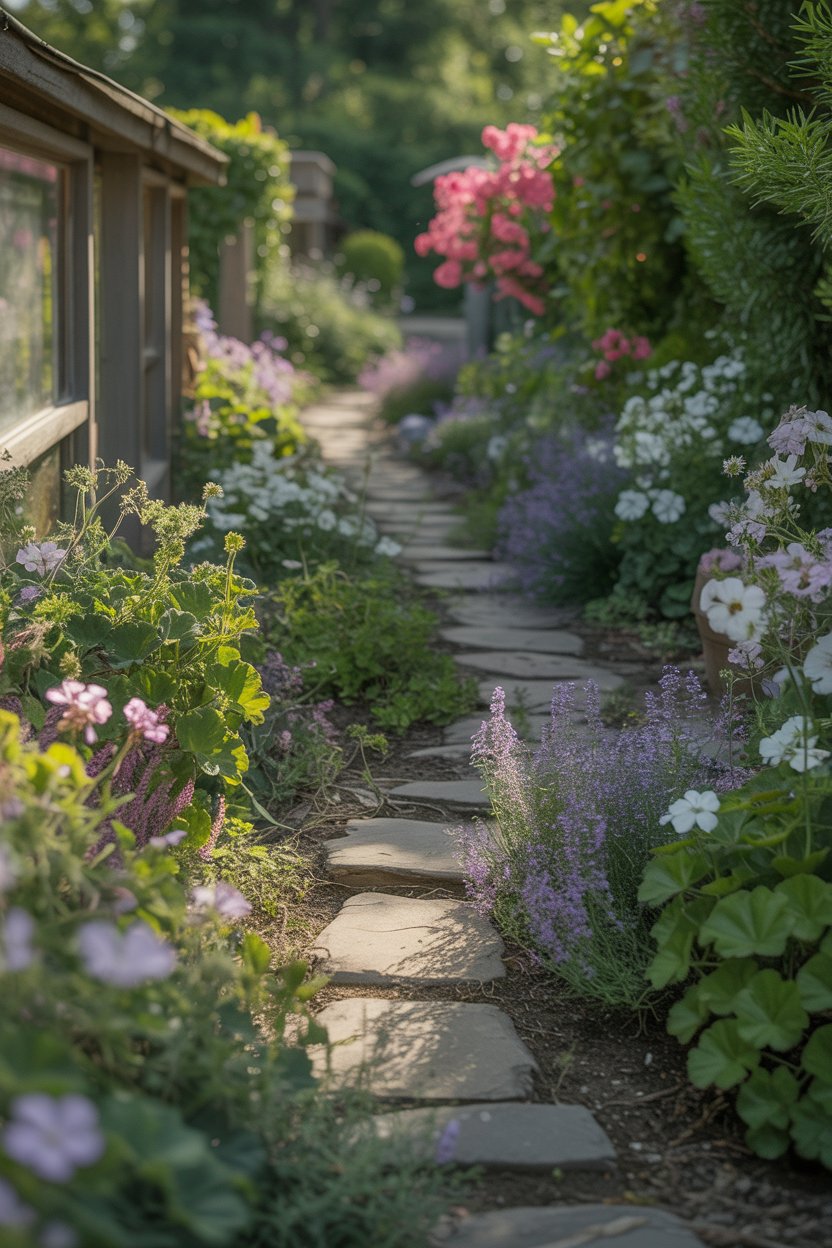
9. Don’t Let Shade Stop You: Romantic Cottage Borders for Shady Spots
A shady border isn’t a problem — it’s a different kind of opportunity. Many of the most atmospheric cottage flowers actually prefer some shelter from harsh sun. Astrantia (with its intricate, papery flowers), aquilegia in every shade from cream to deep violet, hellebores, and of course foxgloves all thrive in dappled shade.
The colour palette naturally shifts in a shady cottage border — more whites, creams, and soft purples that seem to glow in lower light. Add large-leafed hostas for textural contrast, and you’ve got a border that feels lush and romantic even without full sun.
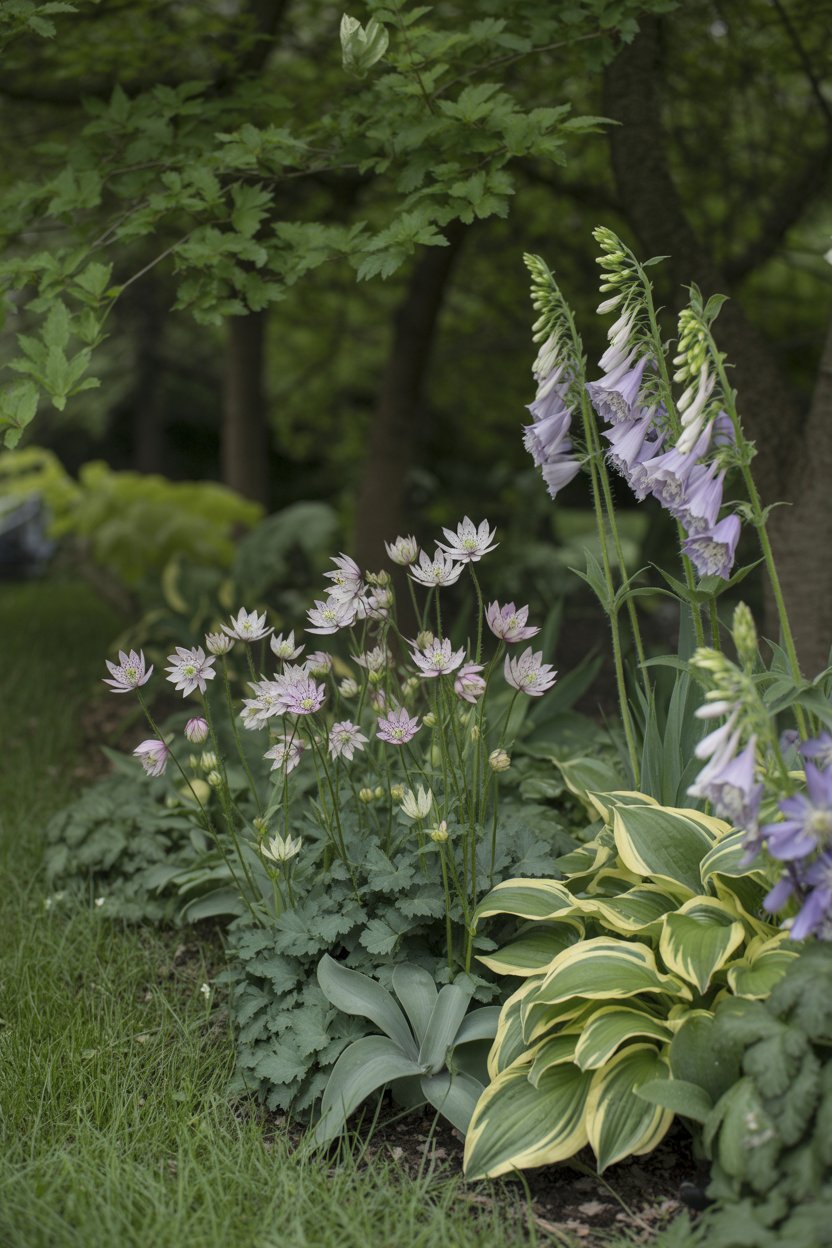
10. Turn a Dead Corner Into a Showpiece: Cottage Flower Border for Garden Corners
Garden corners are often neglected, but they’re actually perfect for a feature cottage border. Anchor the corner with something tall and structural — a shrub rose, a large ornamental grass, or a standard bay — and then plant outward from it in an arc, going from medium to low as you move away from the corner.
This creates a naturally layered, radiating effect that draws the eye. Fill in with cottage favourites like echinacea, phlox, salvia, and alchemilla, and your corner transforms from forgotten space to focal point. It’s one of those simple garden design tricks that makes a huge difference.
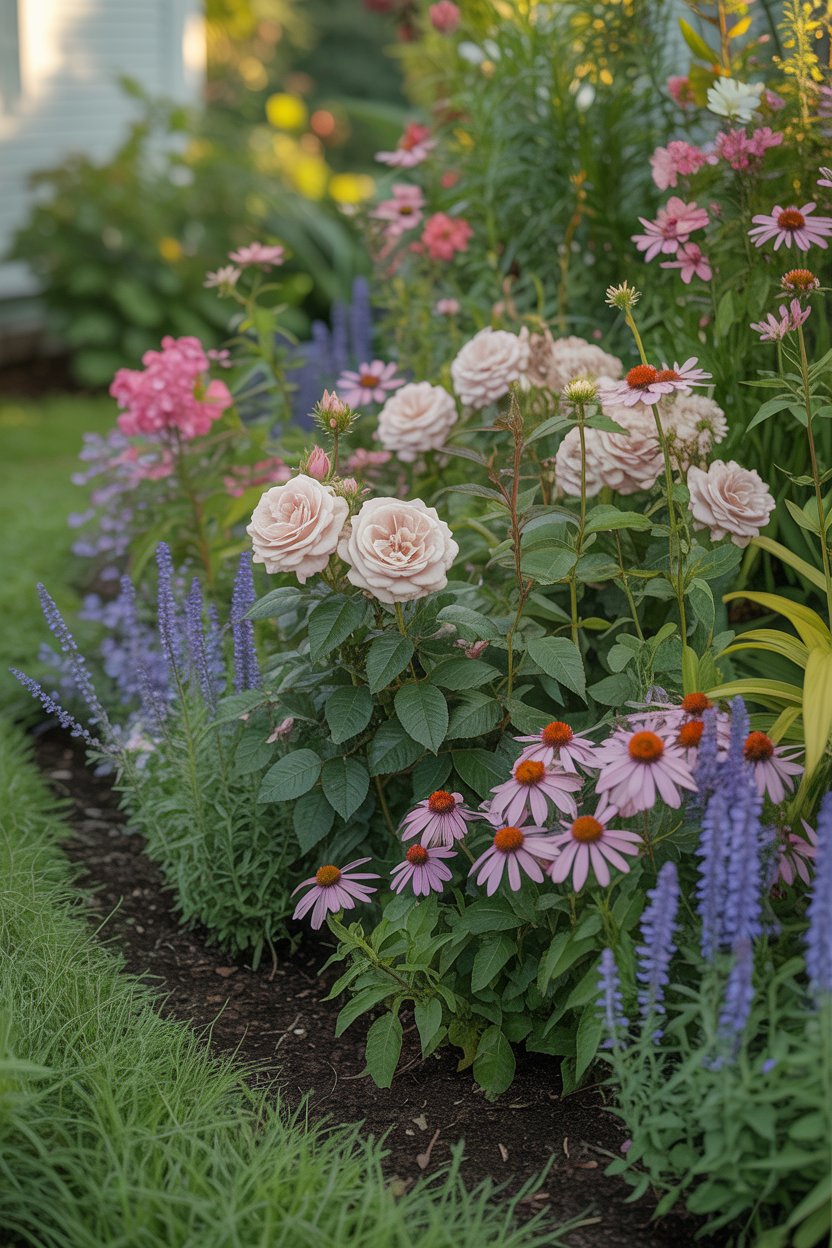
Seasonal & Color-Focused Border Ideas
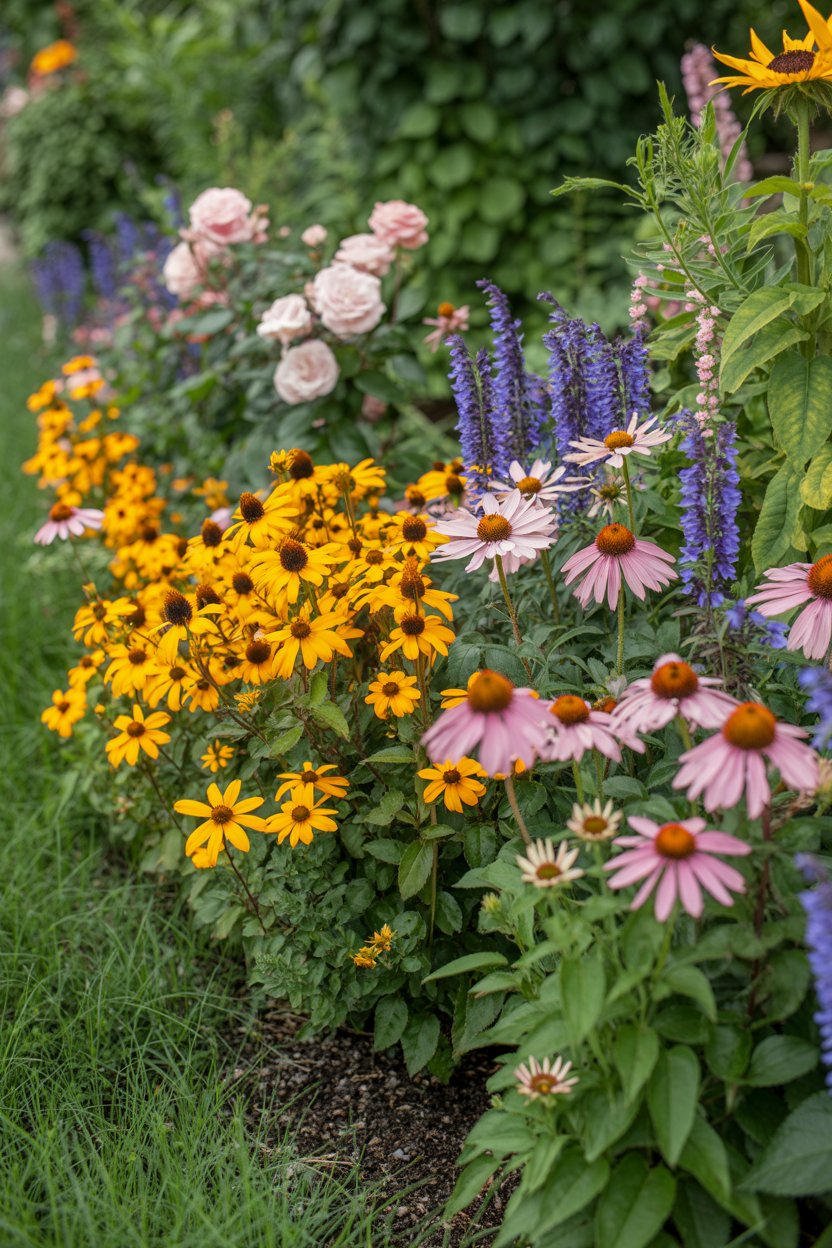
11. Flowers From June to September: A Cottage Border That Blooms All Summer
The secret to a long-blooming cottage border is succession planting — choosing plants whose flowering times overlap so there’s never a gap. Start with early summer roses and catmint, move into mid-summer echinacea, salvia, and phlox, then finish with late-summer rudbeckia and Japanese anemones. Done right, the border stays in colour for four solid months.
Plan it on paper first, noting the bloom time of each plant. You want something coming into flower just as something else starts to fade. This approach takes a little thought upfront but pays off every single week from June through September.
12. Turn Up the Heat: Vibrant Hot-Coloured Cottage Garden Borders
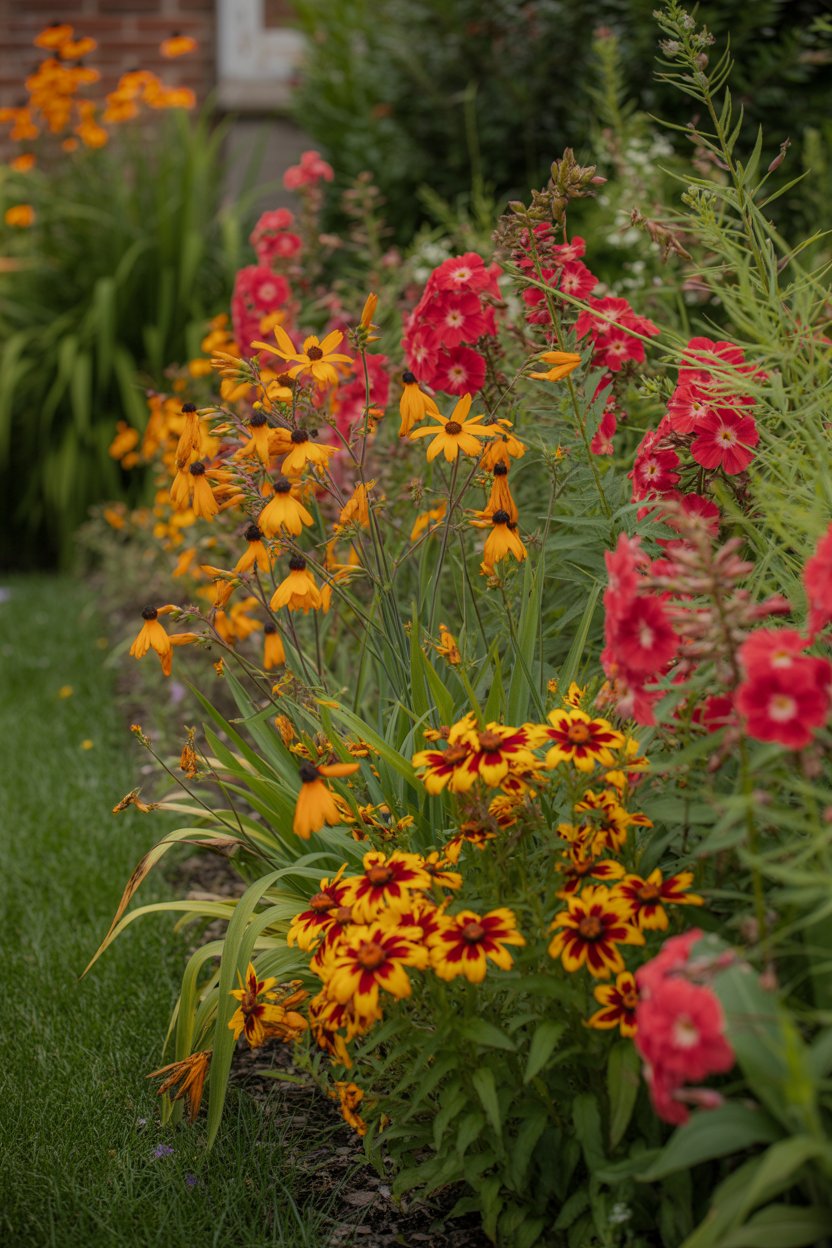
Not every cottage garden has to be pastel and soft. There’s something wonderfully bold about a hot-coloured cottage border — rich reds, burnt oranges, molten golds, and deep burgundies. Crocosmia, helenium, rudbeckia, and red-flowered phlox bring this palette alive, and it looks spectacular from late summer into autumn.
Balance the intensity with dark foliage plants like bronze fennel or purple-leaved cotinus behind the border. These act as deep anchors that make the hot colours sing even louder. This is a border that improves as the season progresses — practically on fire by September.
13. Glowing After Dark: The White and Silver Moonlight Border
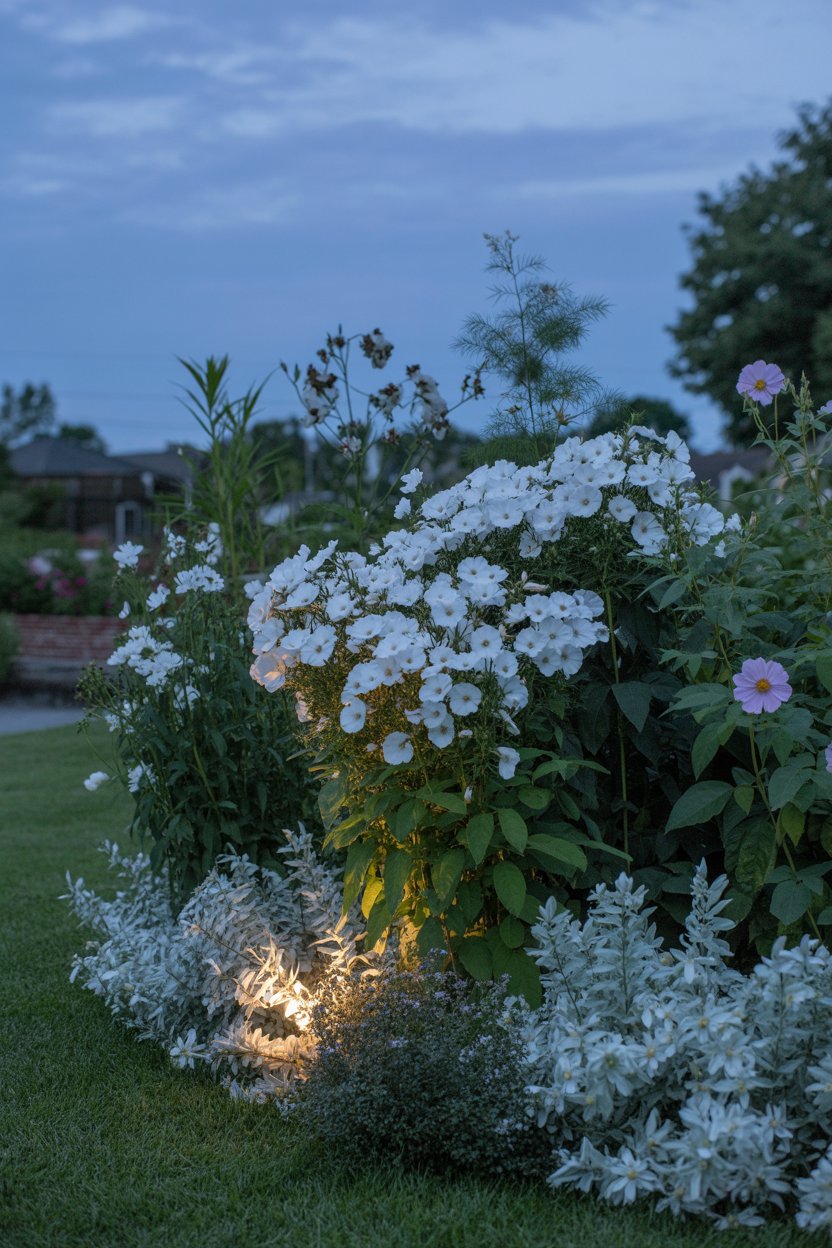
A white cottage flower border does something unusual — it looks its most beautiful in the evening. White phlox, pale cosmos, creamy white roses, and white achillea seem to catch available light and glow gently as the sun goes down. Add silver-leaved plants like Stachys byzantina (lamb’s ear) and Artemisia, and the whole border shimmers.
This is a gorgeous choice for borders near a patio or seating area where you sit outside on summer evenings. Plant white-flowered nicotiana too — it releases its best scent after dark, turning the whole space into something almost intoxicating.
14. Start the Season Strong: Spring Cottage Garden Flower Border Ideas
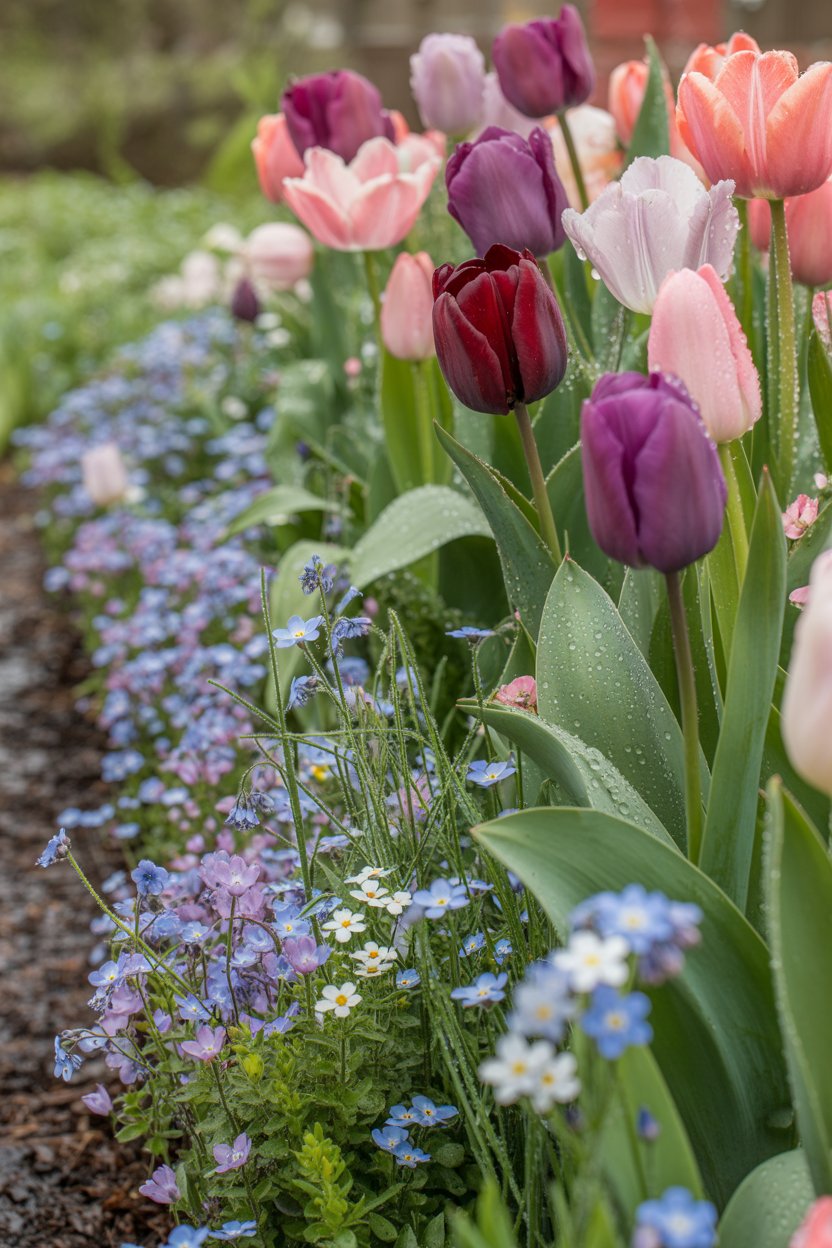
While most people think of cottage gardens as a summer thing, a well-planned spring border is genuinely stunning. Tulips in every shade of blush, purple, and cream, combined with forget-me-nots, honesty, and wallflowers, create a spring display that rivals anything summer produces. Plant the bulbs in autumn, deep beneath where your summer perennials will grow, and they’ll push up through as the season warms.
Alliums are the bridge between spring and early summer — their bold purple spheres rise in May and June just as the tulips finish, keeping the display going seamlessly. It’s one of the best tricks for getting a genuinely long season from a cottage border.
Design Style & Technique Ideas
15. No Experience Needed: The Easiest Cottage Garden Border for Beginners
If you’re new to cottage gardening, start with the five most reliably beautiful and low-fuss plants: hardy geranium, echinacea, catmint (Nepeta), lavender, and salvia. These are practically indestructible, look gorgeous together, bloom for months, and need almost no intervention once established. Plant them in groups of three, and you’re already halfway to a magazine-worthy border.
The beauty of starting here is that these plants will show you what works in your specific soil and light conditions before you invest in anything trickier. After one season, you’ll feel confident enough to add roses, delphiniums, or whatever else you’ve been admiring on Pinterest. Everyone starts somewhere.k
Create a magical outdoor escape with these enchanting patio fairy garden ideas designed to add charm, whimsy, and personality to any space.
16. The Secret Formula: How to Layer a Cottage Flower Border Like a Pro
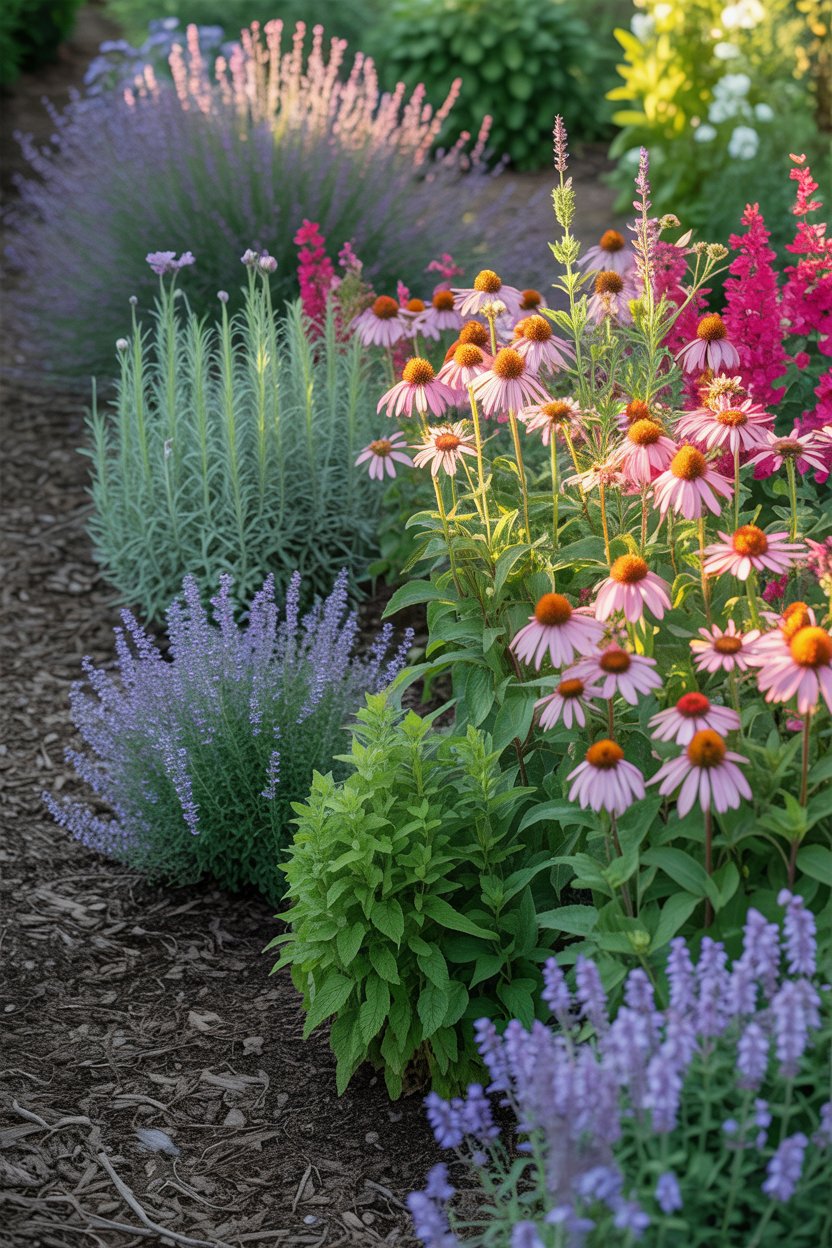
Every beautiful cottage border, regardless of style, follows the same basic rule: tall at the back, medium in the middle, low at the front. It sounds simple because it is. The “secret” is just committing to it and choosing plants that actually fit each tier. Tall: delphiniums, verbena bonariensis, thalictrum. Mid: echinacea, phlox, salvia. Low: hardy geraniums, alchemilla, catmint.
What makes this look natural rather than formulaic is slightly breaking the rules in a few spots — let a tall Verbena bonariensis drift toward the front, or allow some catmint to spread wider than expected. Those little rule-breaks are what make a cottage border feel alive rather than planted by a robot.
17. Good for You, Great for Bees: A Pollinator-Friendly Cottage Flower Border
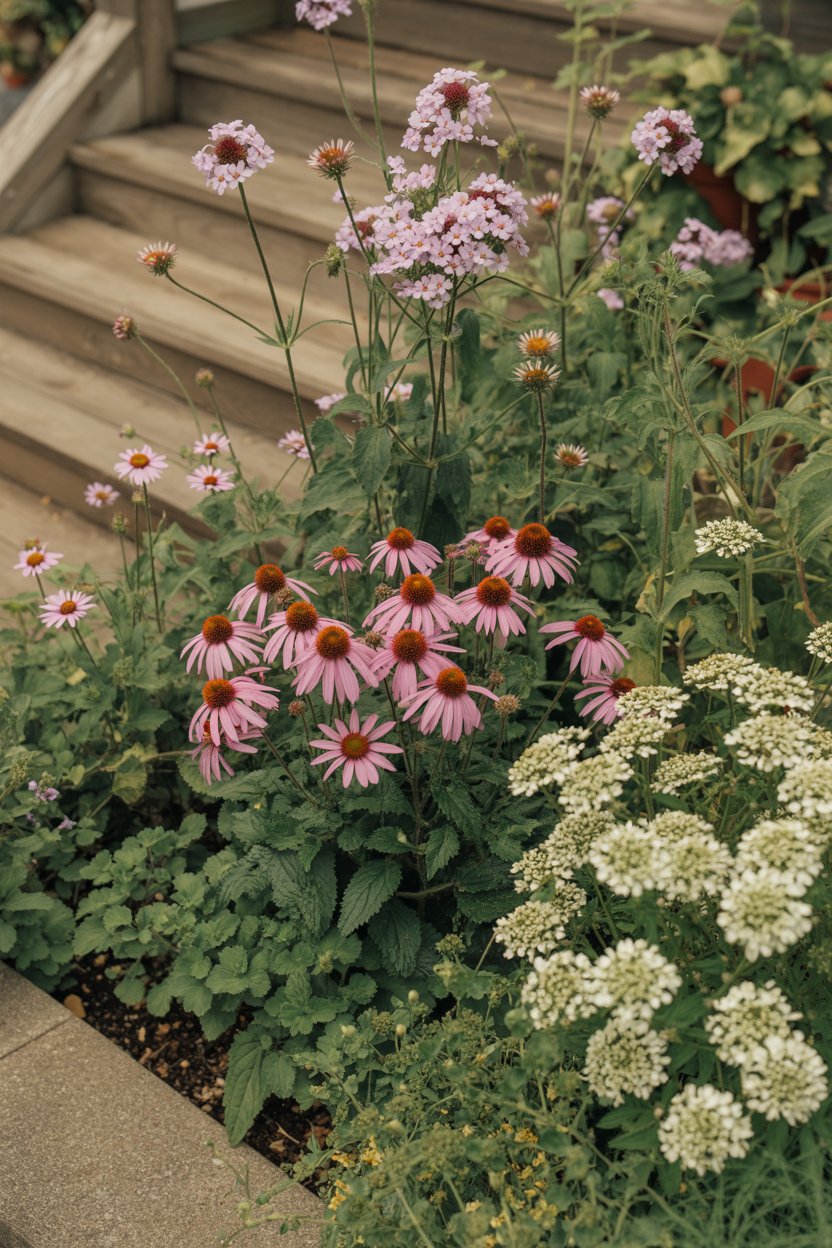
A pollinator-focused cottage border isn’t just generous — it’s genuinely thrilling. Watch it on a warm July afternoon, and it will be buzzing, fluttering, and alive in a way most gardens never are. The best cottage plants for pollinators include echinacea, single-flowered roses, alliums, scabious, catmint, and verbena bonariensis. All beautiful. All loved by bees.
One tip worth knowing: single flowers (those without many layers of petals) are far more accessible to pollinators than fully double varieties. A single-petalled echinacea feeds more insects than its densely-petalled double cousin. You can still grow doubles — just balance them with plenty of open, accessible flowers alongside.
18. The Best of Both Worlds: Mixing Annuals and Perennials in Your Cottage Border
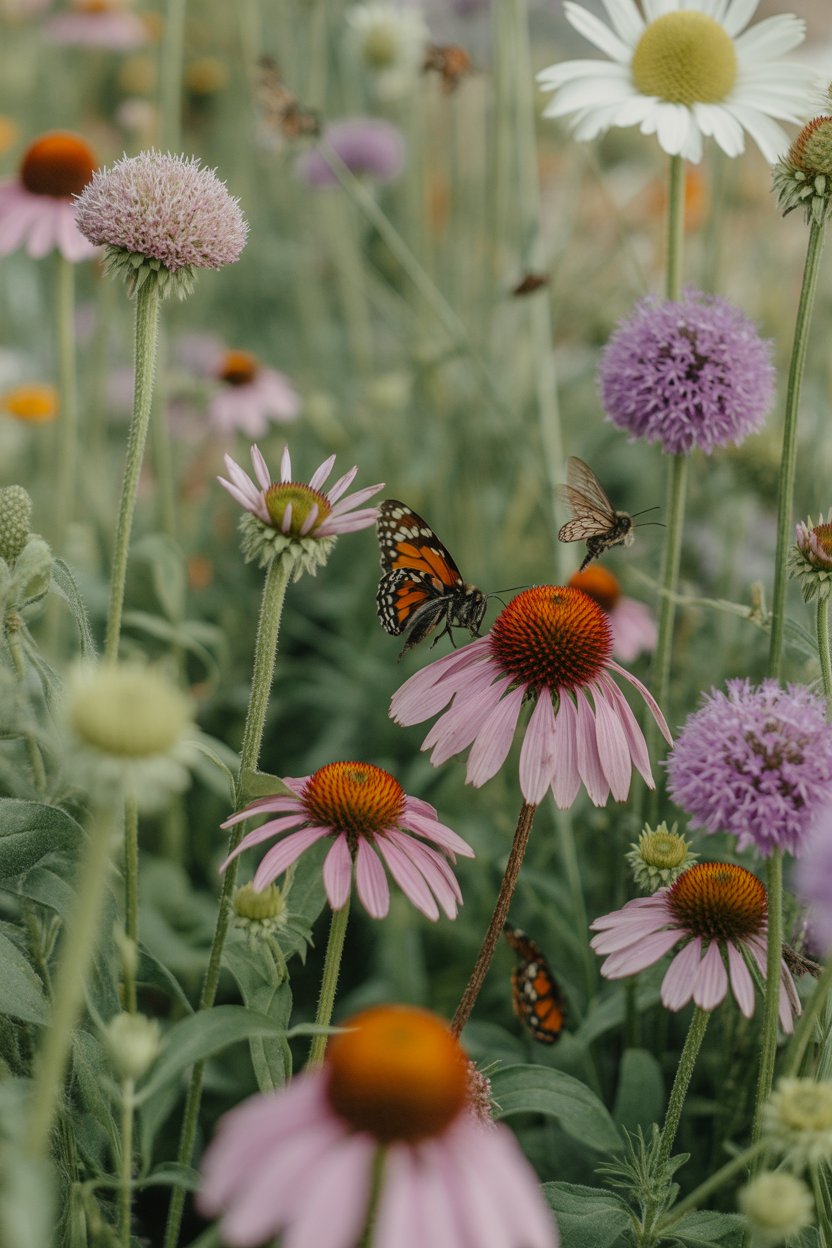
Here’s something that takes new gardeners by surprise: a purely perennial border often has large gaps in its first and second year while everything establishes. The fix is simple — fill those gaps with annuals. Cosmos, zinnias, sweet peas, and annual scabious will cover bare soil beautifully while your perennials grow into themselves.
It also keeps the budget down considerably. Annuals from seed are pennies compared to established perennial plugs, and they’ll bloom their hearts out all season. As the perennials fill in over two or three years, you naturally use fewer annuals. It’s a gradual, organic process that mirrors how real cottage gardens actually evolved.
19. Stop and Smell Everything: Designing a Deeply Fragrant Cottage Garden Border
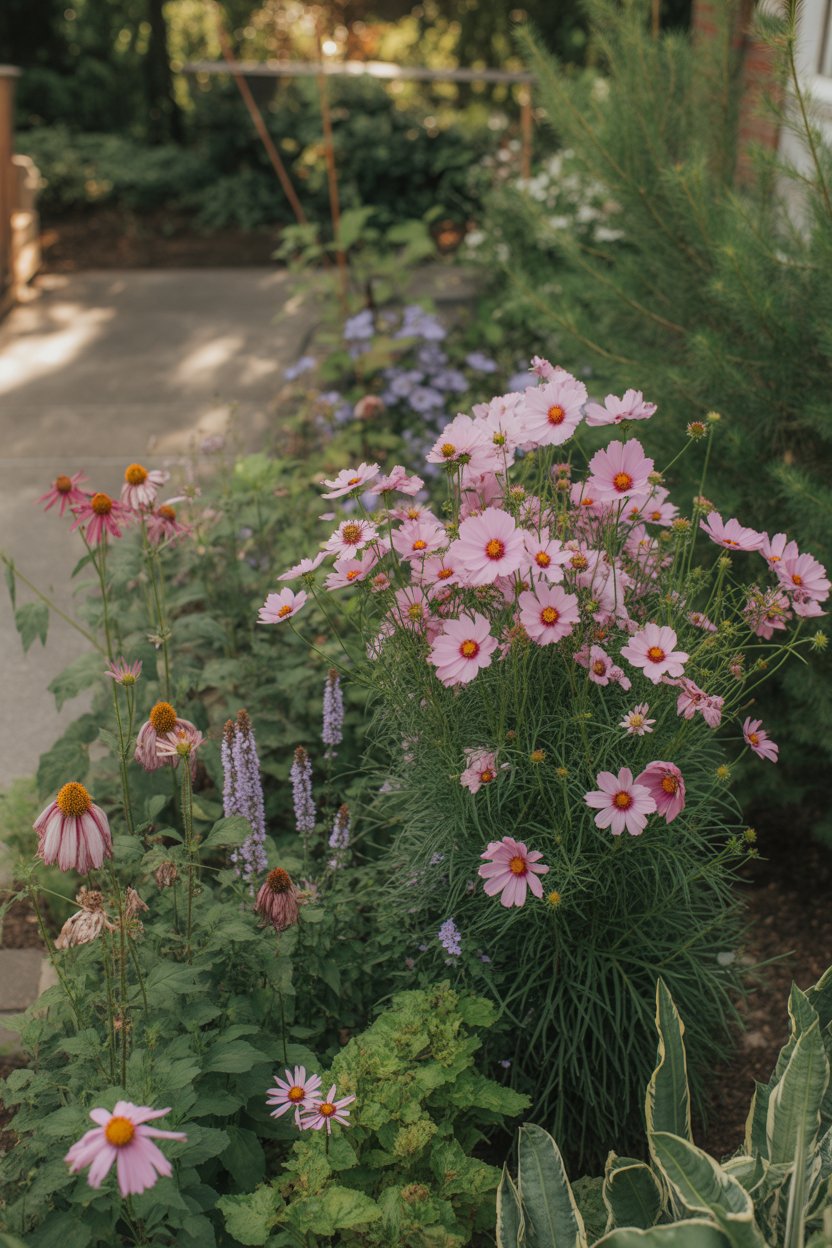
Scent is the most underrated element in garden design, and cottage borders are where fragrance can be genuinely extraordinary. Imagine walking past a border of roses, lavender, sweet rocket, and night-scented phlox on a warm evening — it’s an experience that stays with you. Place your most fragrant plants within two feet of a path, patio, or seating area so you actually get to enjoy them.
A layered scent border would go something like this: roses and sweet peas climbing at the back, lavender and phlox in the middle, and low-growing dianthus (pinks) and creeping thyme at the path edge. Every plant is scented. Every season is covered. It’s the kind of border that makes the whole garden feel like a different world.
Conclusion
Here’s the thing about cottage garden flower borders: they don’t require perfection. They reward enthusiasm, a little planning, and the willingness to let things grow a bit beyond your original intention. Start with one idea from this list — just one — and see what happens. More often than not, you’ll be hooked.
Some of the best cottage gardens in the world started as a single rose beside a fence or a handful of lavender along a path. Plant something you love, watch how it grows, and let the garden tell you what it wants next. That’s really the whole secret.
Which of these cottage garden flower border ideas is calling your name? Save your favourites, pin this post, and start planning your most romantic, colour-packed border yet. Your future garden self will thank you.