
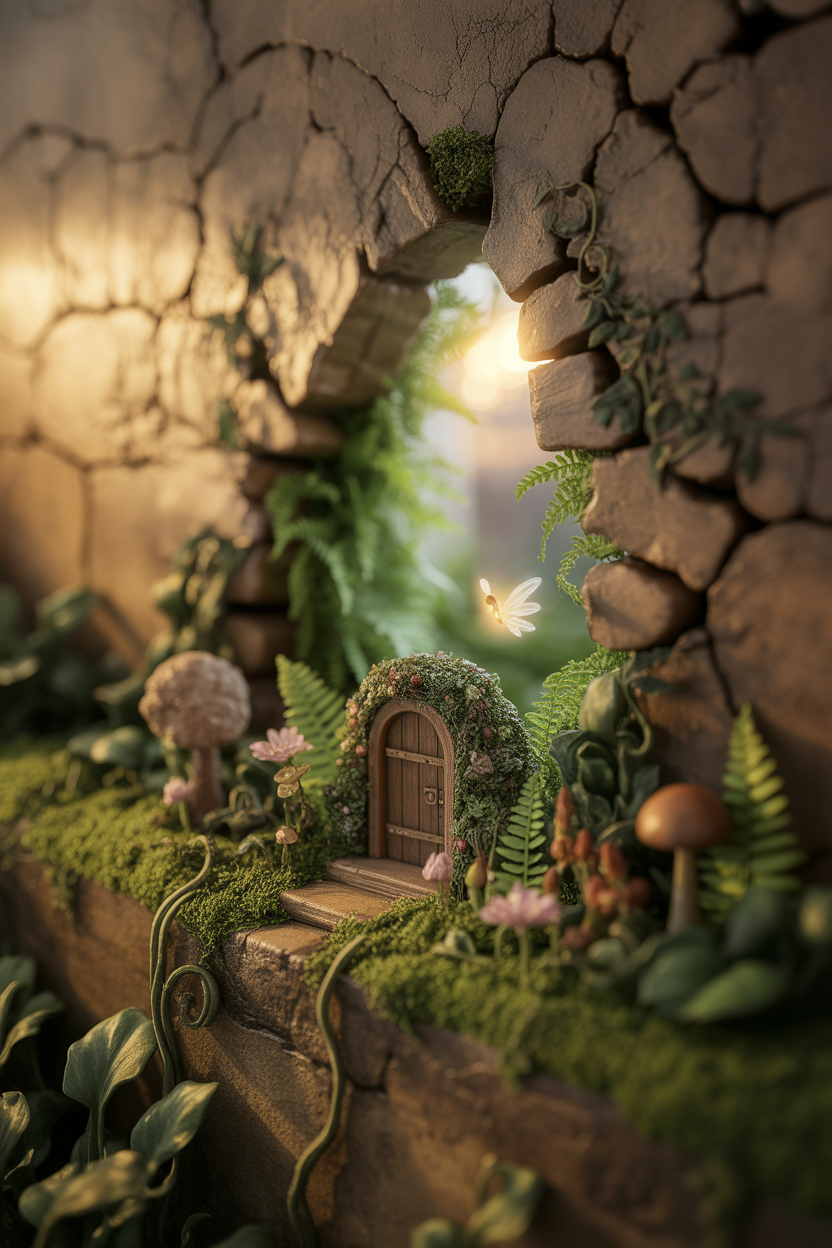
Have you ever noticed a tiny fern growing through a crack in an old stone wall and felt like there should be a hidden world just beyond it? That quiet sense of imagination is exactly what fairy garden ideas are all about — creating a small, magical space that feels alive, calming, and unexpectedly detailed.
Fairy garden ideas aren’t just simple decoration; they’ve become a creative escape for adults who want to turn everyday corners into miniature landscapes full of charm and personality. In this collection, you’ll discover fairy garden ideas for every space and budget, whether it’s a backyard, a small balcony, or even a broken pot, all designed to help you build something truly unique.
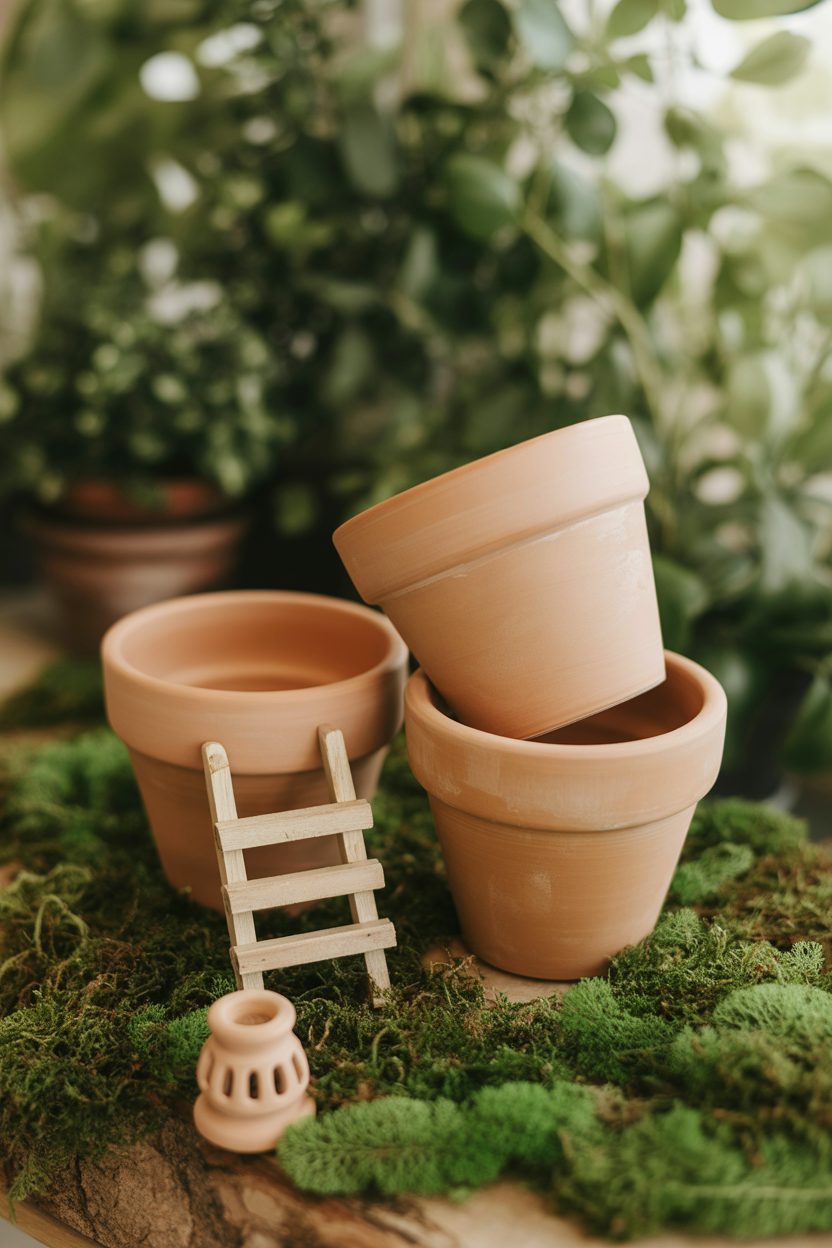
Terracotta Pot Fairy Village — Stack Three Pots for Instant Charm
This one is a game-changer if you’ve only ever seen single-pot ideas. Take three terracotta pots in graduating sizes — say 12″, 8″, and 4″ — and stack them at slight angles so each level spills out like a little hillside village. A tiny wooden ladder between levels, some moss ground cover, and a mini lantern tucked in the corner, and you’ve got something people will stop and stare at.
The best plants for this? Mind-your-own-business (Soleirolia) for that lush, carpet-like ground cover, baby tears for the edges, and creeping thyme for a slightly wild, natural feel. Make sure each pot has drainage holes and use a lightweight potting mix so the structure stays stable.
If you’re planning a full-season garden, don’t miss these stunning cottage garden flowers that bloom all summer (and practically grow themselves) for effortless color.
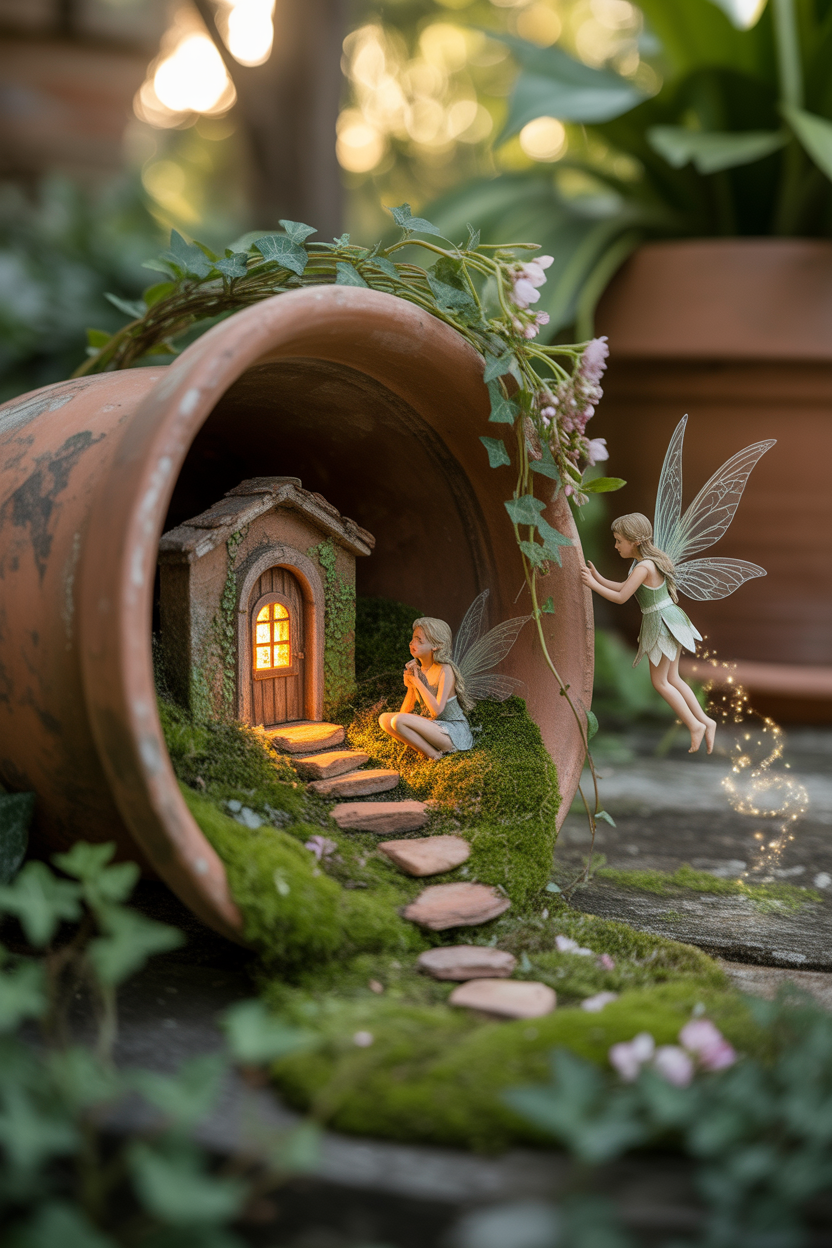
Broken Pot Fairy Garden — Turn a Cracked Pot into a Cascading Fairy Scene
Don’t throw that broken pot away. A cracked terracotta pot placed on its side can easily become one of the most visually appealing fairy garden ideas. The broken edges naturally create stepped levels where small figurines, stones, and plants can be arranged, while trailing greenery like sedum, creeping Jenny, or lobelia flows out to create a soft cascading effect.
To build it, place the pot securely on a flat surface so it stays stable, then fill it with quality potting soil and arrange your plants in layers. You can lightly secure sharp or weak edges with waterproof craft glue to keep it durable over time. This simple setup is budget-friendly, quick to assemble, and perfect for turning unused items into a creative garden feature.
Succulent Fairy Garden in a Shallow Bowl — Drought-Tolerant and Stunningly Aesthetic
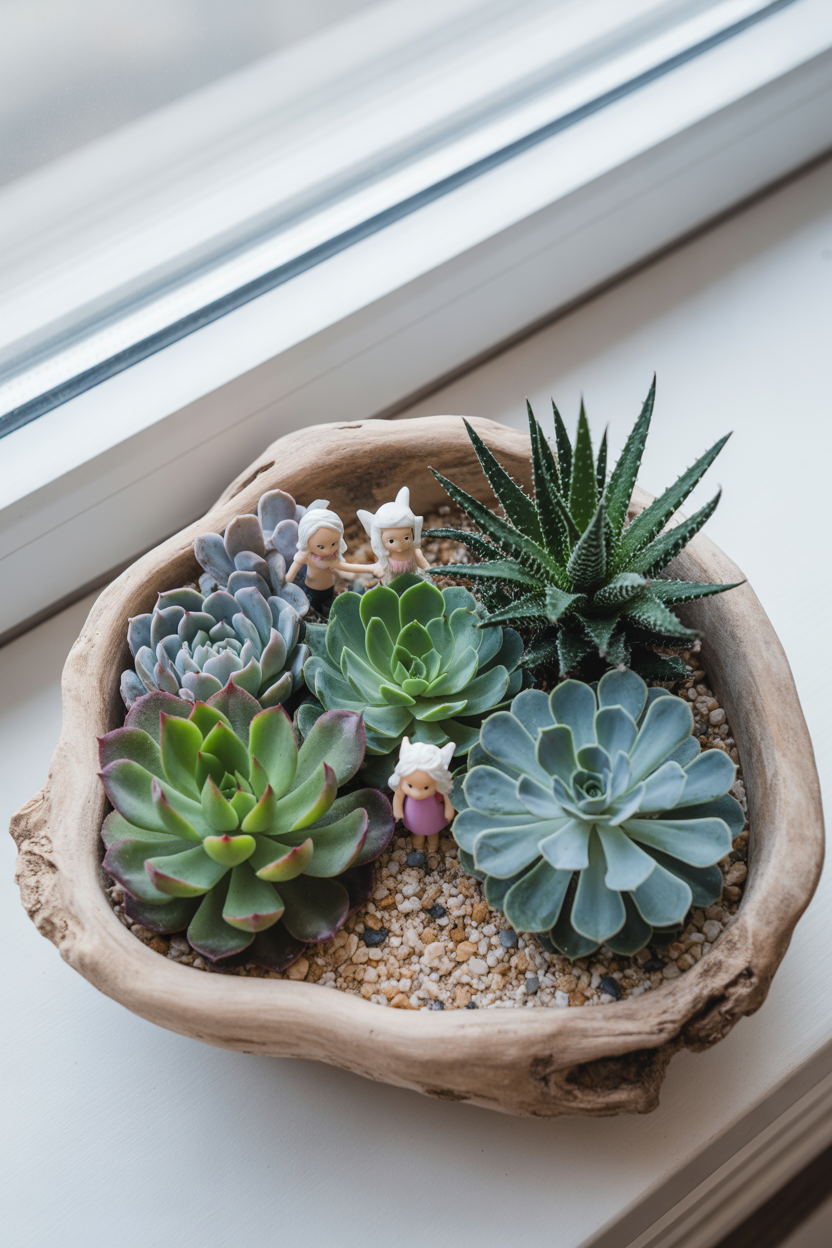
Succulents and fairy gardens are basically made for each other. Echeveria rosettes look exactly like exotic fairy trees, haworthia clumps become little bushes, and spreading sedum acts as ground cover. Put them all together in a wide, shallow bowl — a hypertufa trough or a driftwood bowl works beautifully — and you’ve got a miniature alien landscape that looks like it took hours to design.
The real bonus: succulents need almost no water, so this style works perfectly indoors on a sunny windowsill or outdoors on a patio. Just make sure your container has drainage and use a cactus-specific potting mix. This is one of those fairy garden ideas that stays gorgeous for years with barely any upkeep.
Wheelbarrow Fairy Garden — The Rustic Outdoor Centerpiece Everyone Stops to Look At
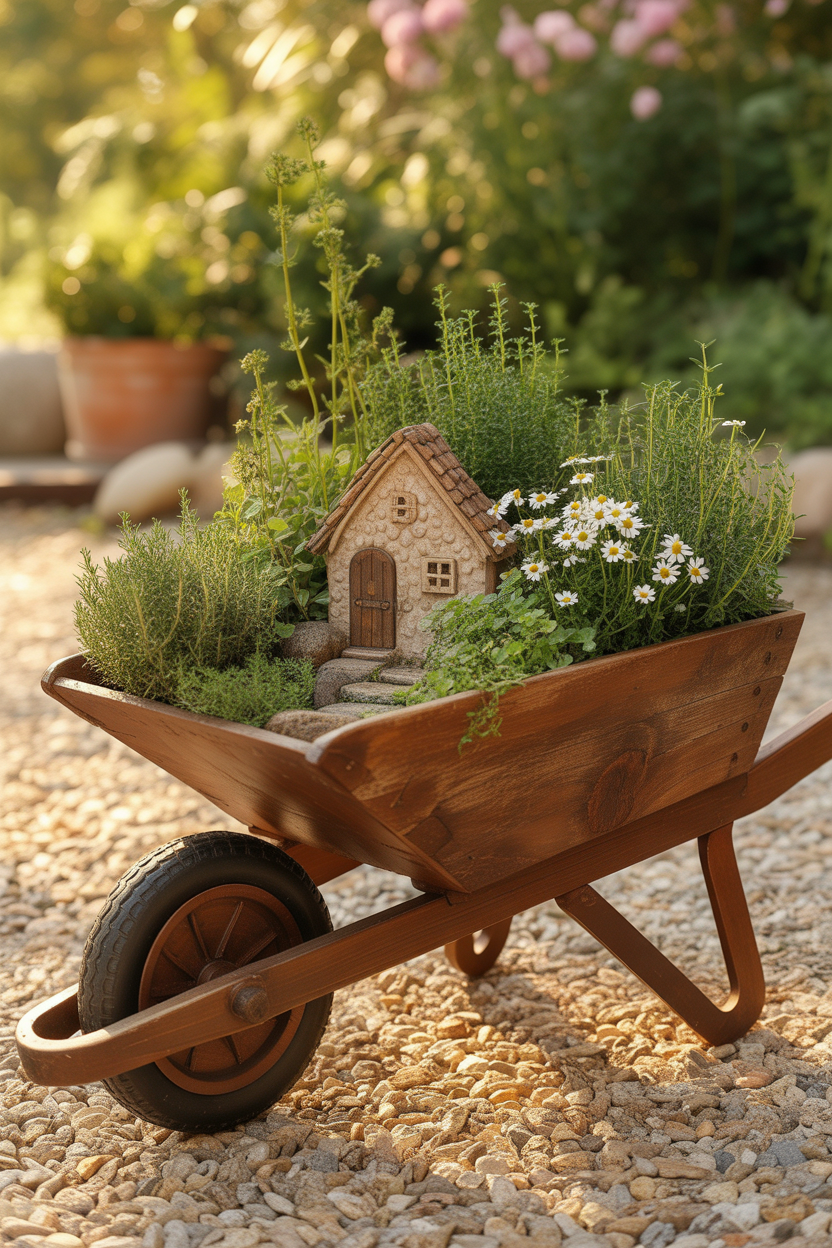
An old wooden or metal wheelbarrow might be the best large-scale container for a fairy garden. It’s got depth, it’s got charm, and it’s just the right size to build a whole miniature meadow scene inside — complete with a tiny cottage, a stone path, and trailing plants spilling over the edges.
Drill a few drainage holes in the bottom if there aren’t any, fill with a mix of lightweight potting compost and perlite, then mound the soil slightly in the center to create natural terrain. Surround the main fairy house focal point with low-growing plants like chamomile, creeping thyme, or mind-your-own-business. Position it near your front gate or on a patio and watch people slow down every time they walk past.
Hanging Basket Fairy Garden — A Floating Magical World for Small Spaces
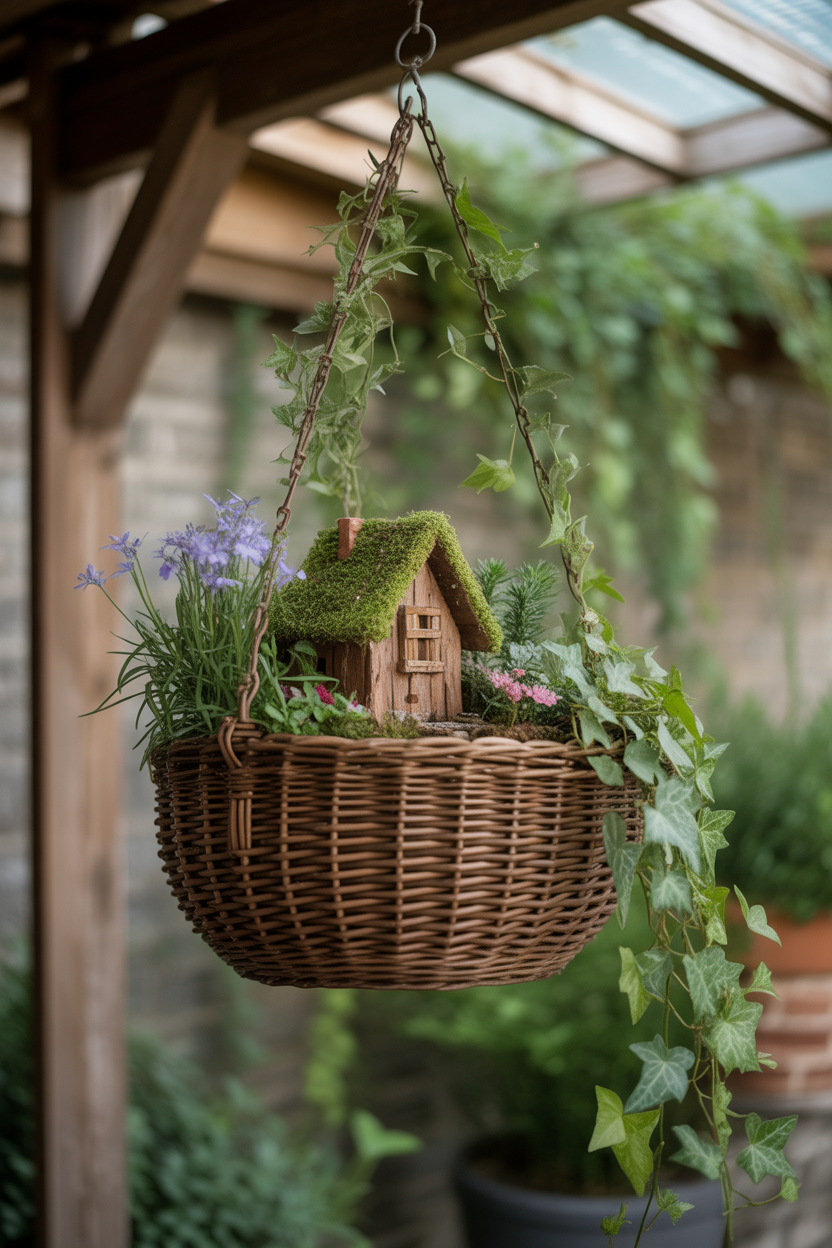
No ground space? No problem. A deep hanging basket lined with coco fiber makes a surprisingly effective fairy garden — one that floats at eye level like a little world suspended in mid-air. Tuck a tiny resin house into the center, let trailing plants like string of pearls, lobelia, or ivy drape over the edges, and add a tiny rope ladder dangling down for effect.
Weight is the main thing to think about here. Go for small, lightweight figurines and avoid heavy ceramic accessories. Water regularly since baskets dry out faster than ground containers. This works especially well on a covered patio or balcony where it’s protected from heavy rain.
Vintage Teacup or Colander Fairy Garden — Tiny, Quirky, and Unbelievably Cute
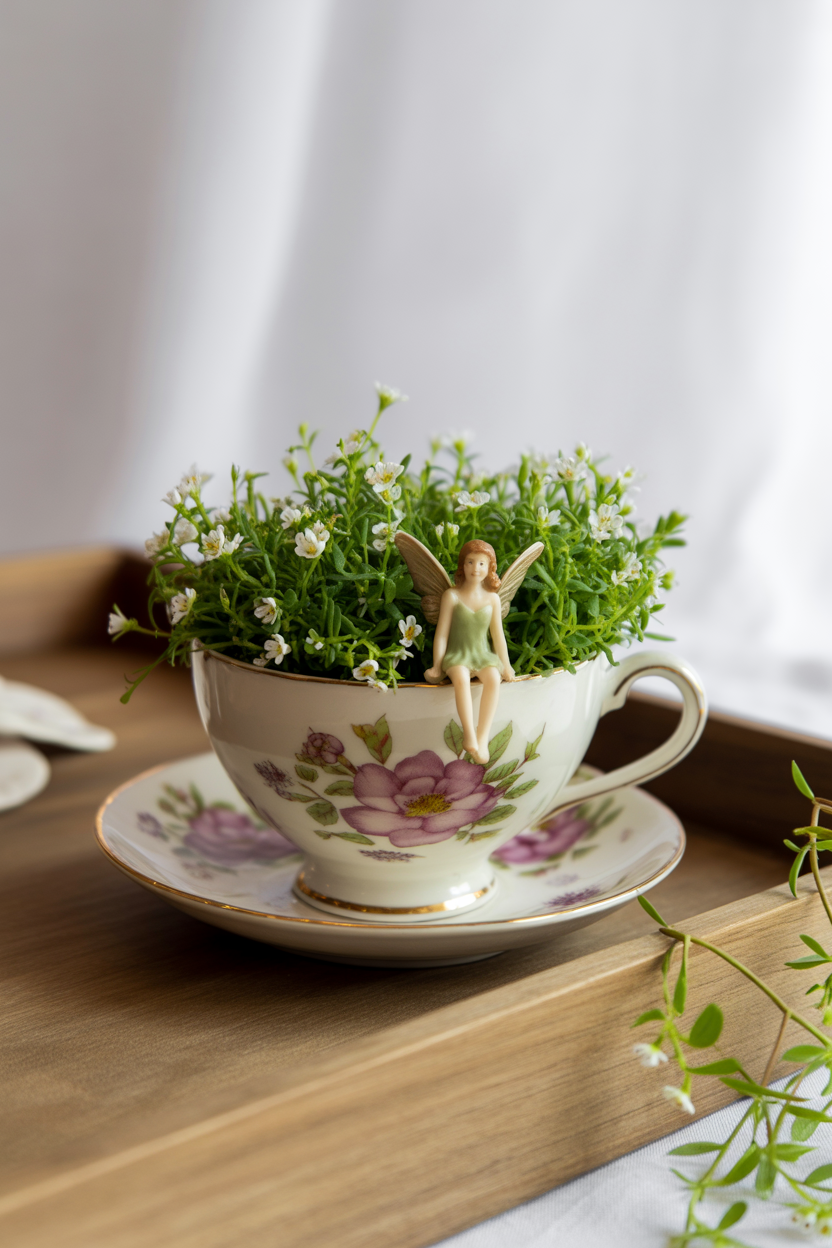
This is one of those ideas that looks absolutely wild on Pinterest and is way easier to pull off than it looks. An oversized vintage teacup, a colander, an old boot — any of these becomes a completely charming fairy garden container with the right tiny plants. Go for really small-leafed varieties here: pearlwort, dwarf mondo grass, or mind-your-own-business are all perfect.
For drainage in containers without holes (like a teacup), add a layer of pebbles at the bottom and use a very light hand with watering. These make amazing tabletop displays or gifts. Set them on a saucer, add a tiny mushroom figurine, and you’ve got something that genuinely looks like it came from a high-end garden boutique.
Tree Stump Fairy House — Let Nature Do Half the Work
A weathered tree stump is basically a fairy house waiting to happen. The hollowed-out center becomes a little home, the rough bark is the perfect textured wall, and the surrounding ground is already primed for a woodland scene. What takes this from “cute” to “magical” is what you do around it — low ferns, cushion mosses, tiny toadstools, and a ring of white pebbles create a full forest floor setting.
For the stump itself, carve out any soft rot, seal the inside with outdoor waterproof paint, and drill a couple of drainage holes in the base. Adding a few micro solar lights inside the hollow so it glows at night is genuinely one of the coolest effects. Waterproof your figurines with a clear sealant so they last through the seasons.

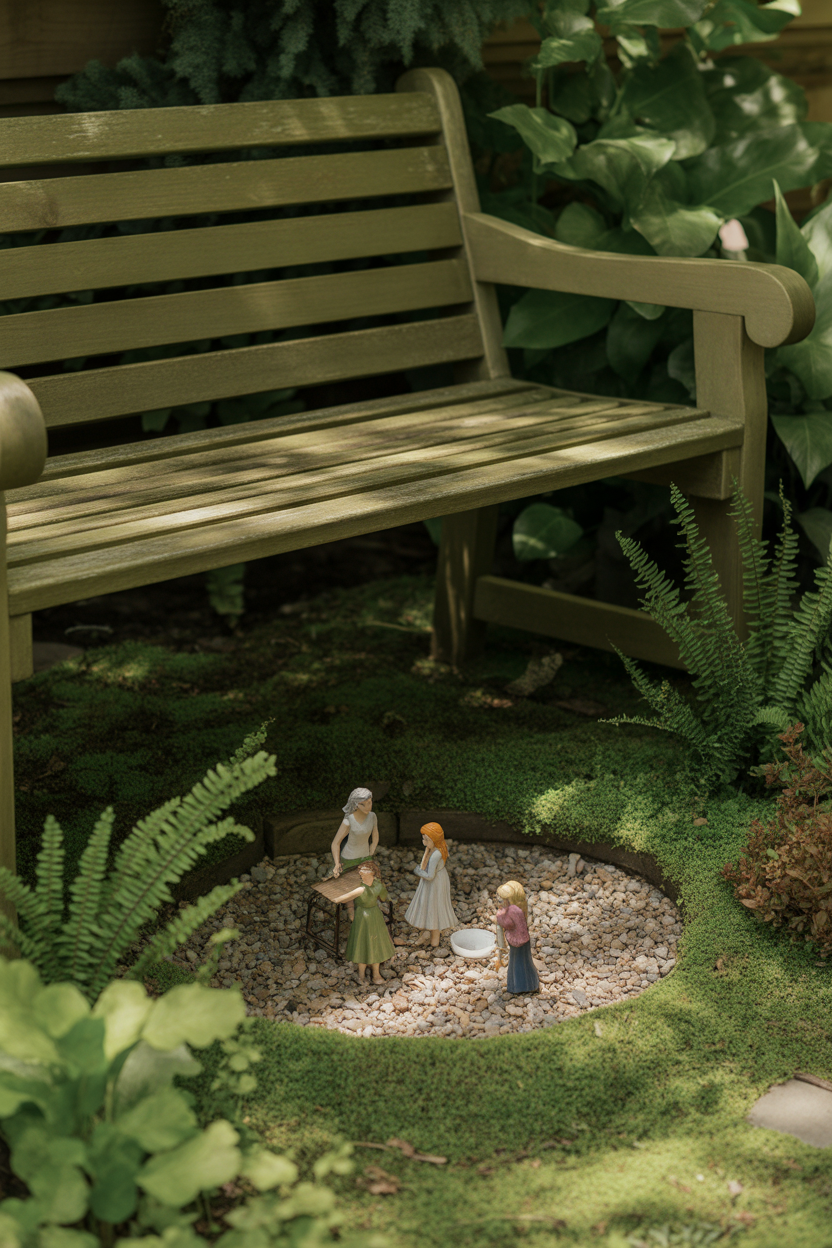
Under-the-Garden-Bench Fairy World — A Secret Scene No One Expects
This is one of my favorite ideas on this whole list. The shaded, often-ignored space under a garden bench is actually perfect for a permanent fairy scene — always protected from direct rain, always at eye level when you’re sitting down, and completely unexpected. You basically stumble upon it, which is exactly the feeling a fairy garden should give.
Fill the space with shade-tolerant plants like ferns, mosses, and mind-your-own-business. Add waterproof figurines (important — they’ll live here permanently), a tiny pebble path, and maybe a small piece of driftwood as a “fallen log.” Since it’s sheltered, your setup will last much longer than an exposed display.
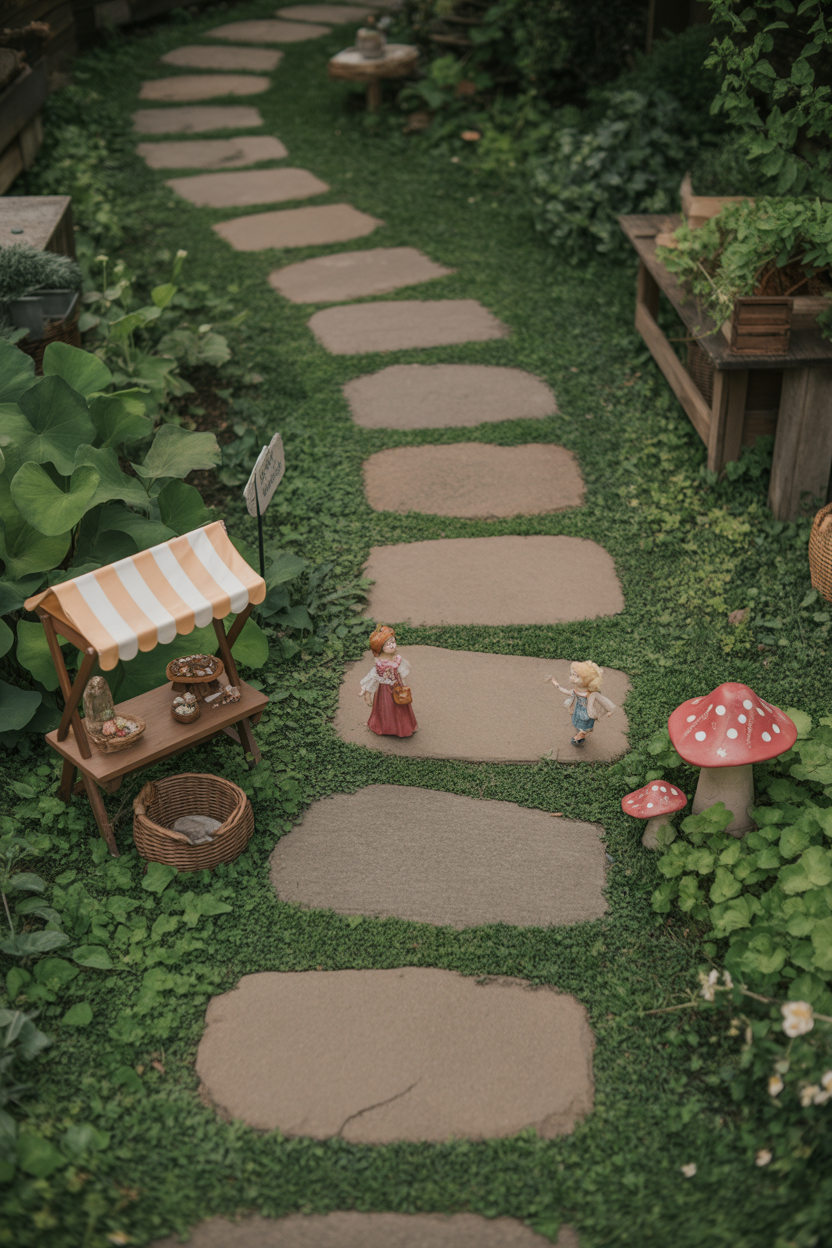
Fairy Garden Along a Garden Path — Line Your Walkway with Tiny Magical Vignettes
Instead of one big fairy garden, what if you created a series of tiny scenes all along both sides of your garden path? A tiny market stall beside a stepping stone, a mushroom ring further along, a little fairy pond near the gate. Each scene is small and simple, but together they tell a story as you walk through.
Space each vignette about 3–5 feet apart so they feel like discoveries rather than clutter. Plant low-growing herbs and ground covers in the pockets between scenes to tie everything together visually. It turns a boring walkway into something people genuinely want to walk slowly through.
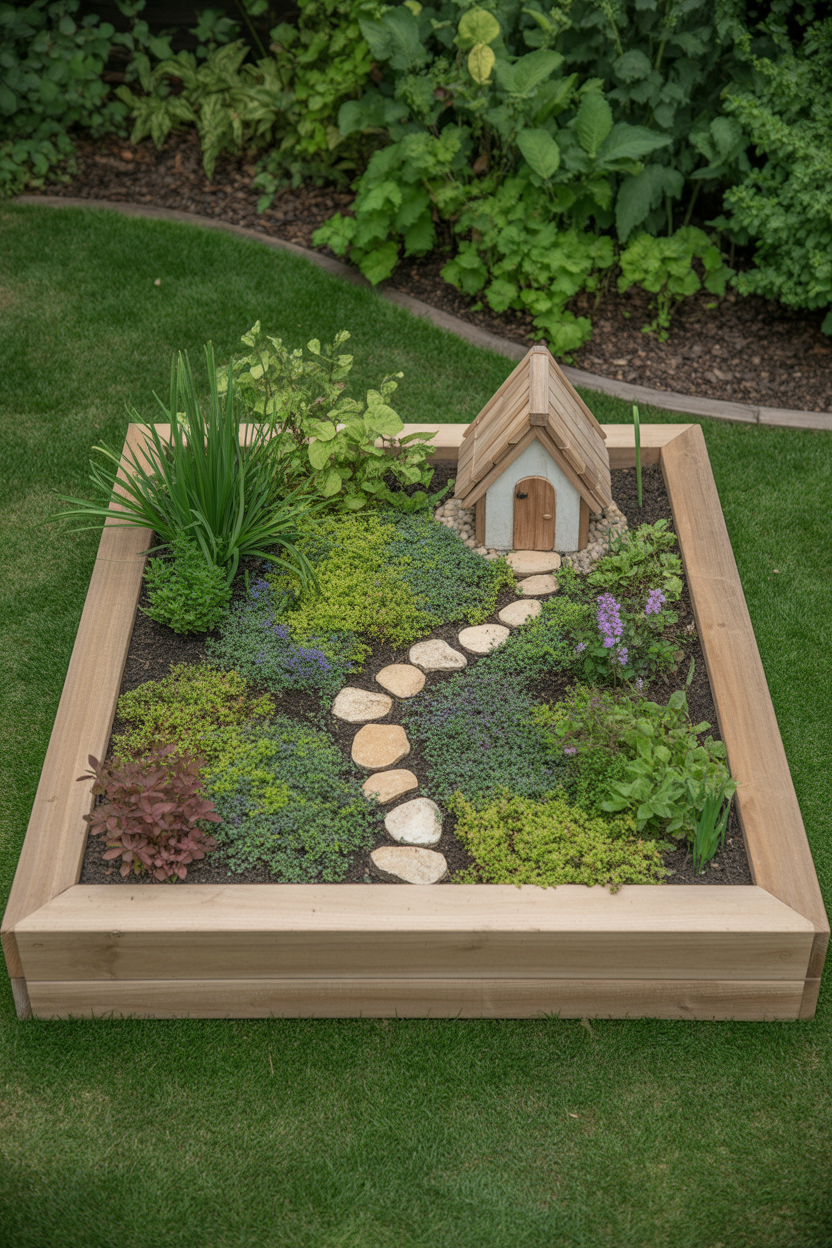
Raised Bed Fairy Garden — A Permanent, Weed-Free Magical Landscape
A shallow raised bed is genuinely one of the best long-term fairy garden solutions that almost nobody talks about. Six to eight inches of depth is plenty, the defined edges keep everything looking intentional, and the excellent drainage means your plants stay happy year-round. Build a simple timber or stone-edged bed, layer with horticultural grit at the base and good topsoil on top, then mound the soil in the center for natural-looking terrain.
Choose structural perennials for the backbone — things like thyme, creeping Jenny, and dwarf conifers that look good in every season — and then rotate seasonal accessories around them. You can also install small garden edging stones inside to divide the bed into different “zones” like the village square and the forest edge.
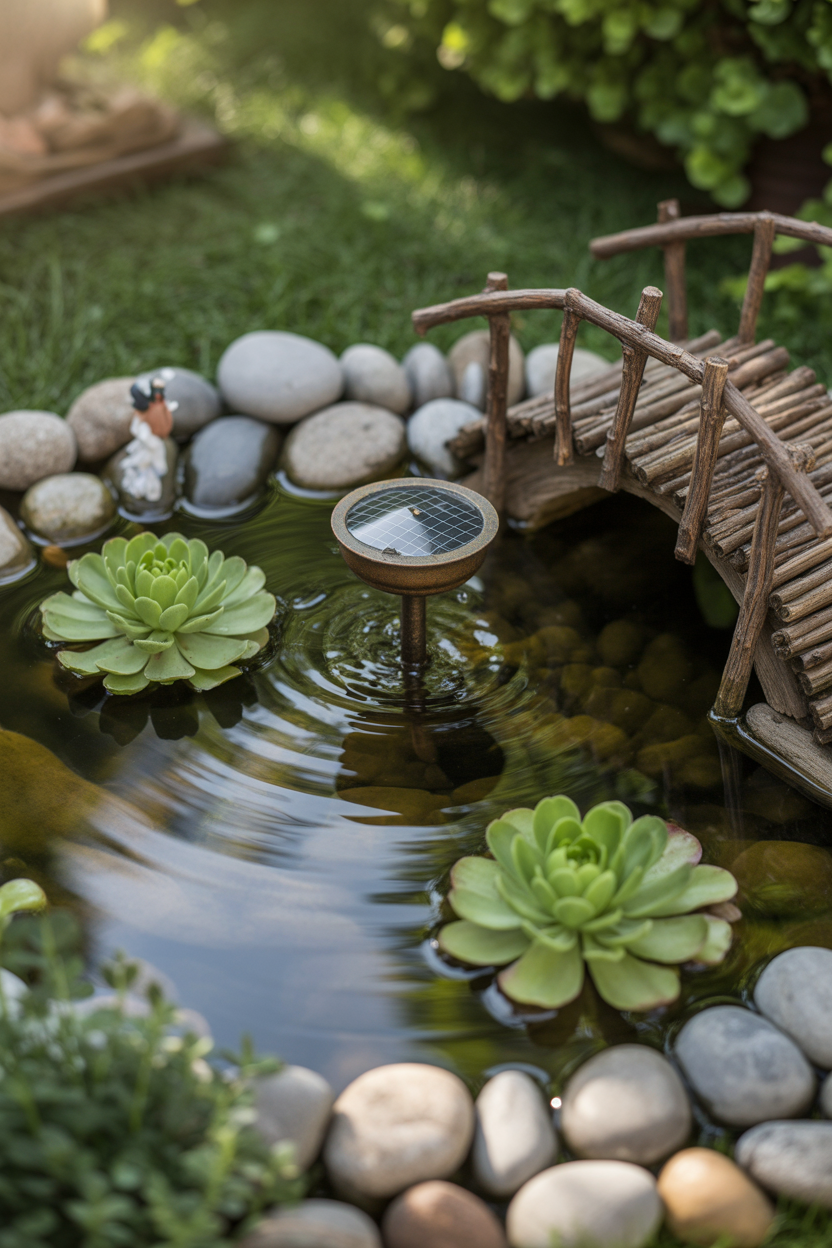
Fairy Garden Pond with a Real Water Feature — The Detail That Makes Everything Feel Alive
A tiny working water feature changes everything. Even the smallest trickle of moving water makes a fairy garden feel genuinely alive in a way that no amount of figurines or accessories can match. You don’t need much — a terracotta bowl buried to soil level, filled with water, and fitted with a tiny solar pump creates a real miniature pond with gentle movement.
Edge it with fine pebbles, add a few aquatic mini plants like water lettuce or duckweed, and build a tiny arched twig bridge across the top. The solar pump runs all day with no wiring required. This is the kind of detail that makes people do a double-take when they spot it in your garden.
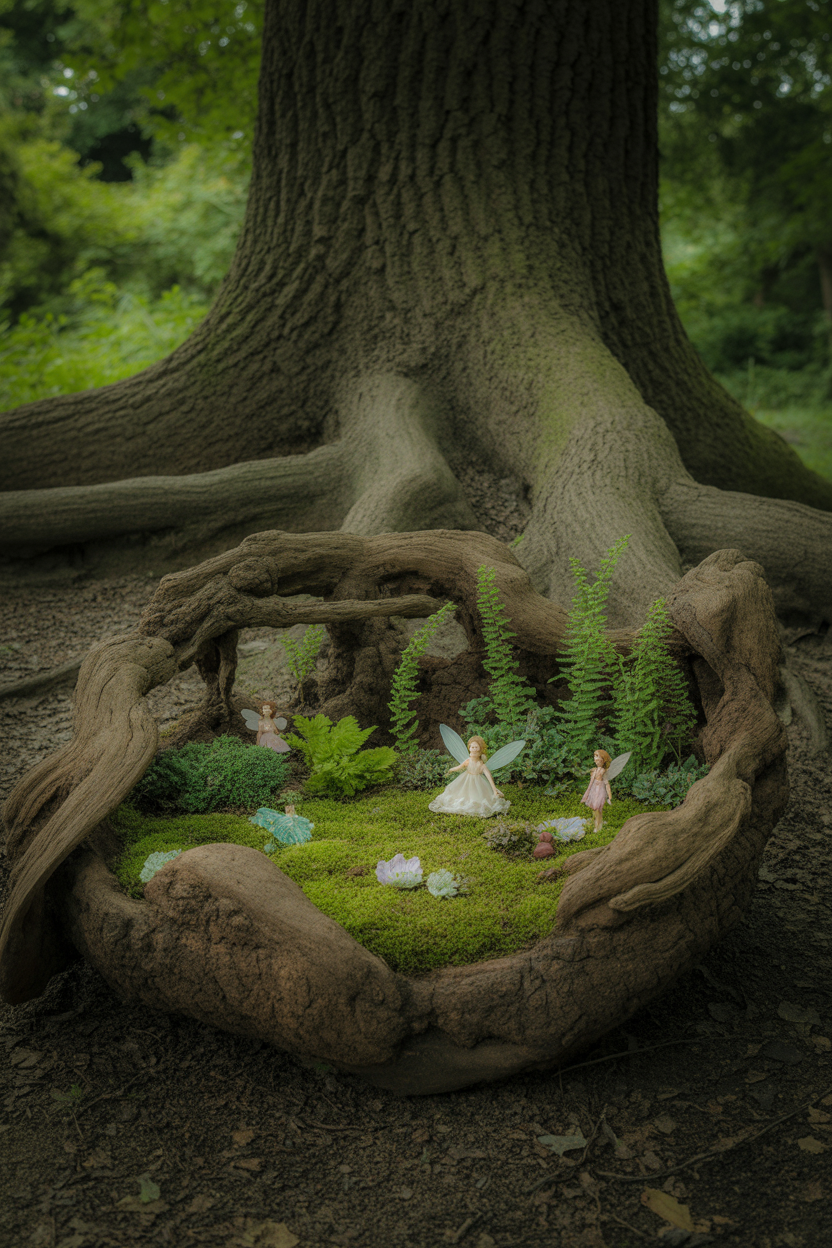
Fairy Garden Around a Tree Base — Turning Bare Roots into an Enchanted Forest Floor
The ground around a large tree base is one of the trickiest spots in any garden — too shady, too root-filled, and too dry for most plants. But it’s actually ideal for a fairy garden. Work with the exposed roots rather than against them: they become the perfect natural walls and pathways for a woodland fairy scene.
Fill pockets between roots with shade-loving moss and miniature ferns, add a ring of white pebbles around the trunk base, and place weather-sealed figurines in the root crevices. Avoid disturbing surface roots when planting — just tuck moss in around them rather than digging. It’s one of those spaces that looks totally transformed with very minimal intervention.
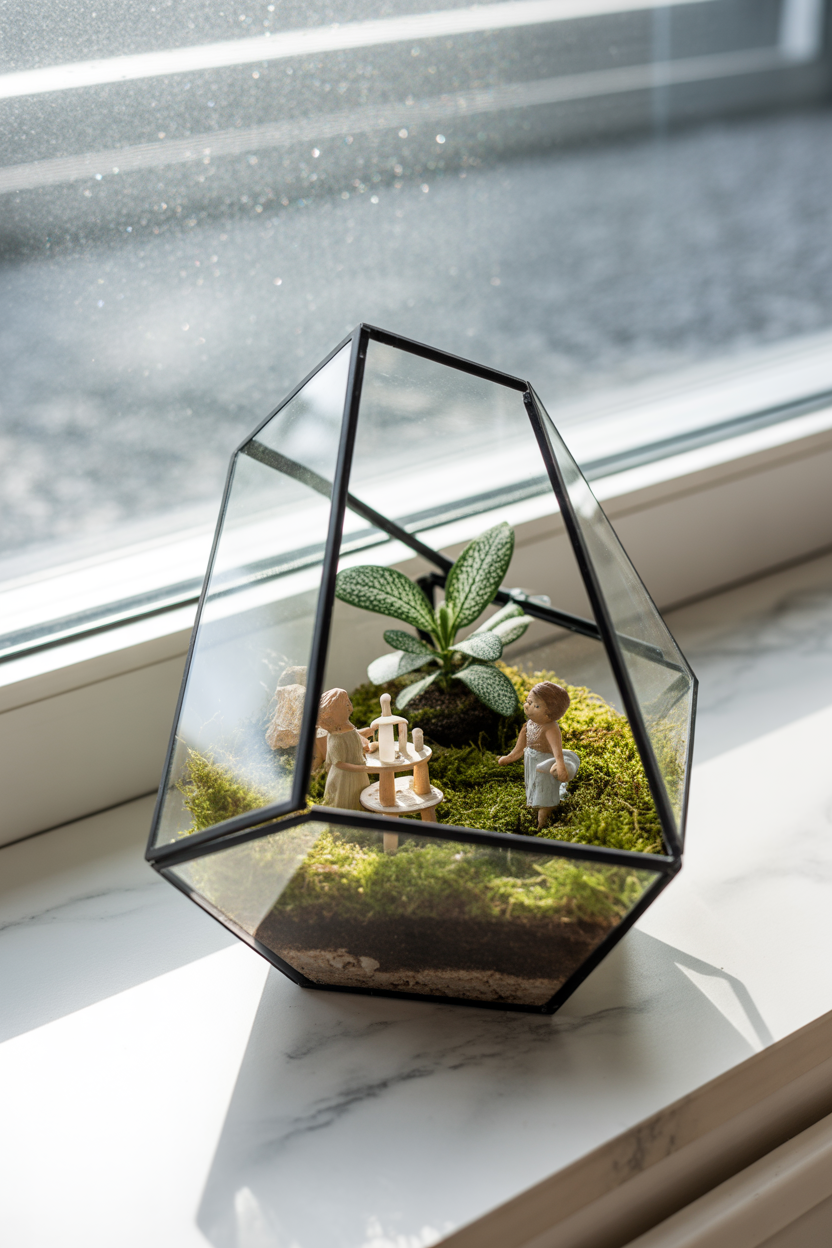
Glass Terrarium Fairy Garden — A Self-Contained Magical World on Your Windowsill
A large glass terrarium — the geometric kind with metal frames — is basically purpose-built for an indoor fairy garden. It’s self-contained, it looks incredible on a windowsill or coffee table, and with the right plant choices, it needs almost no maintenance. For open terrariums, succulents and cacti work best. For closed ones, go with fittonia, moss, and small ferns that love the humidity.
Layer the base with pebbles, then horticultural charcoal, then potting mix, so drainage is sorted from day one. Style it like a real miniature scene — terrain, paths, a tiny house — before you add any plants. The glass frame around it makes everything look like a little museum exhibit of a fairy world.
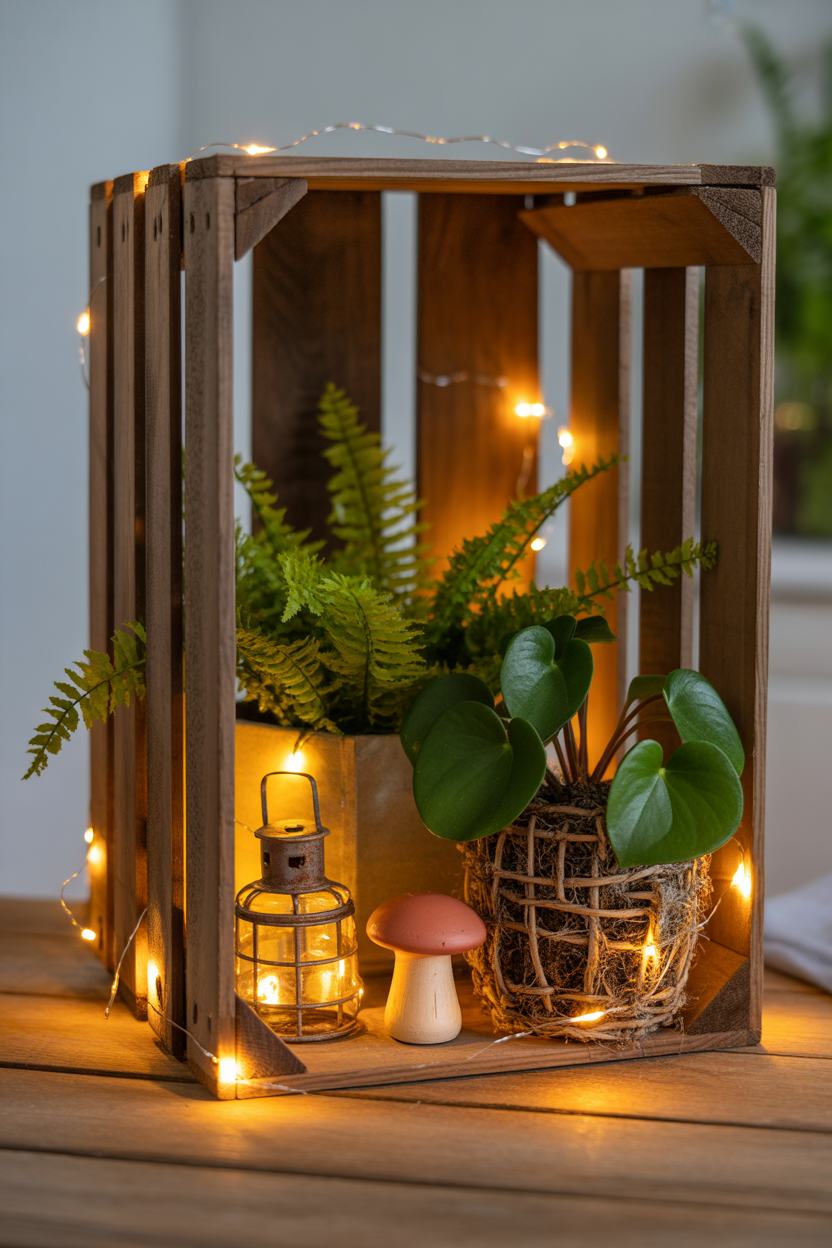
Fairy Garden in a Wooden Crate or Wine Box — Rustic Indoor Decor That Looks Expensive
A shallow wine crate or wooden vegetable box costs almost nothing and makes one of the most beautiful rustic fairy garden containers for indoors. Line it with heavy-duty plastic sheeting (staple it in place), add drainage pebbles at the base, and fill with a good indoor potting mix. The weathered wood grain does so much of the styling work for you.
Best indoor plants for this style: baby ferns, peperomia, or creeping fig — all compact, slow-growing, and comfortable in lower light. Tuck in a string of warm fairy lights along the inside edges and set the whole thing on your kitchen table or sideboard. It genuinely looks like something from a high-end home decor shop.
Fairy Garden on a Bookshelf — A Miniature Living Scene That Doubles as Home Decor
This one genuinely surprised me when I first saw it done well. A small tray or shallow ceramic planter on a bookshelf, planted up with low-light tolerant varieties and styled with tiny books, a little reading chair, and a lantern — it blends right into the shelf decor while also being a living plant display. It works especially well in boho or cottagecore style homes.
For zero-maintenance, use preserved moss (no watering ever) combined with air plants, which just need an occasional mist. Baby tears or nerve plant works if you have decent indirect light nearby. The key is keeping the scale small and the styling personal — little items that look like they belong to the fairy, not just generic accessories.

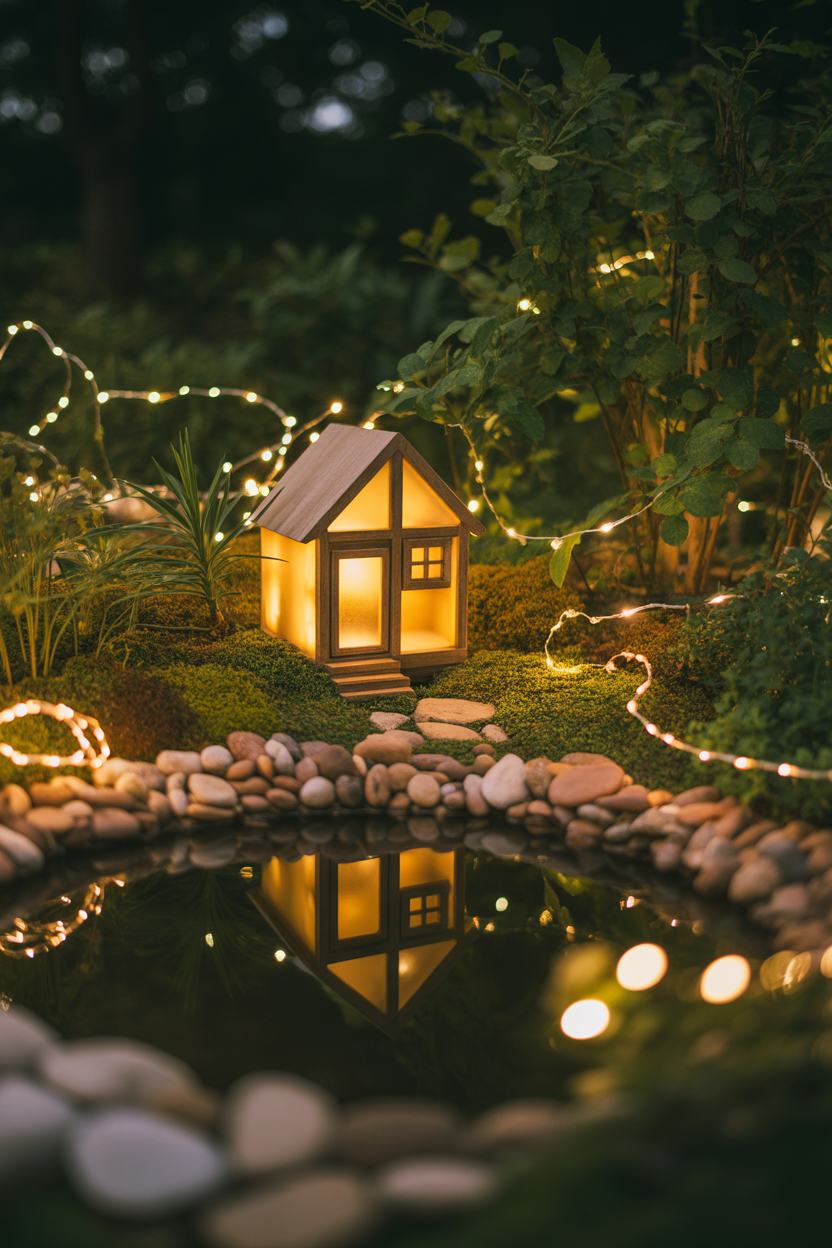
Fairy Garden Night Light — Add Solar or Battery Fairy Lights for After-Dark Magic
During the day, your fairy garden is charming. At night, with the right lights, it becomes genuinely magical. Tiny warm-white LED fairy lights wound through the plants, micro solar stake lights along the path, and LED mushroom lights placed throughout the scene create a whole different atmosphere after dark.
For outdoor gardens, solar-powered options are the easiest — no wiring, stake them in, and they charge all day. Indoors, battery-powered fairy lights with a timer function are ideal. Use reflective white pebbles or a small mirror as a “pond” to double the effect. This is the upgrade that costs almost nothing but transforms how a fairy garden feels.
Kids’ DIY Fairy Garden Kit — Let Them Build and Own Their Own Magical World
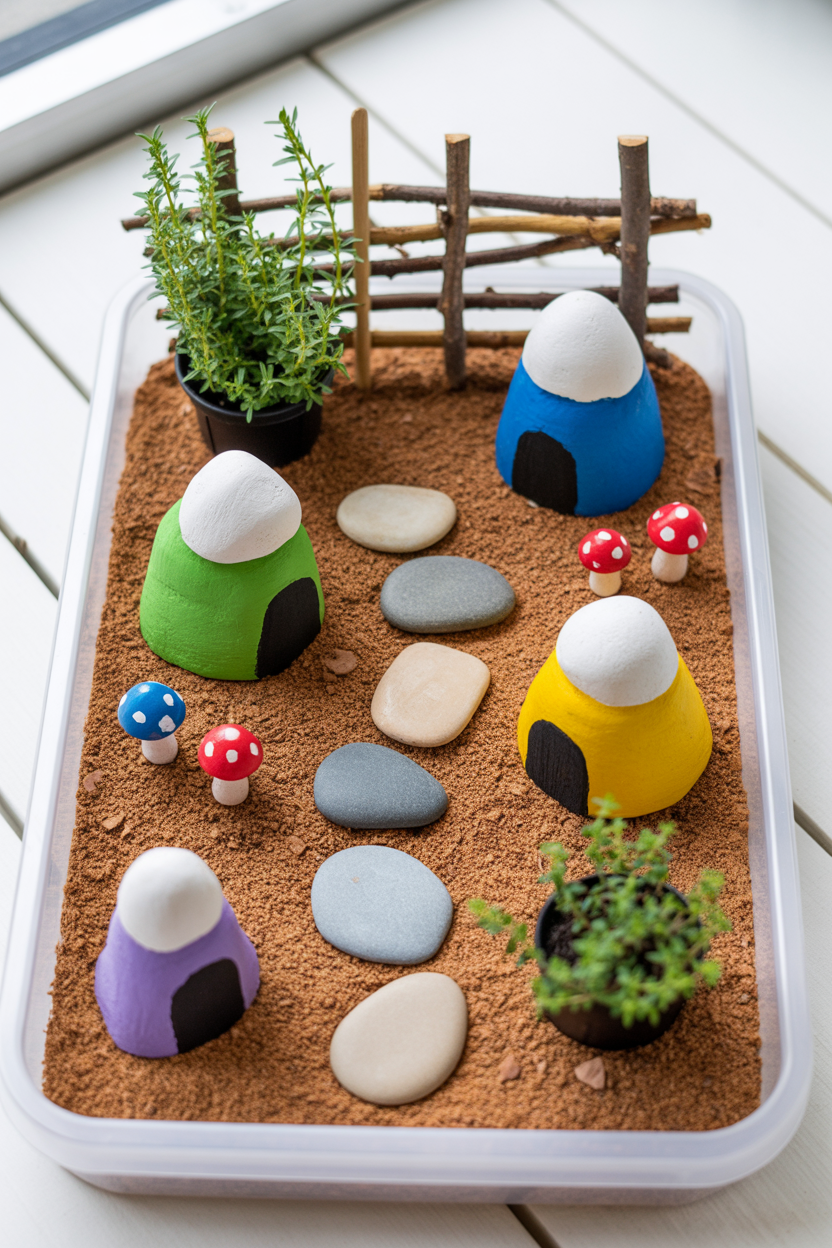
If you want a kids’ project that actually holds their attention (and produces something genuinely lovely), this is it. Start with a wide plastic tray, fill it with coco coir as the base, and let them design their own garden from scratch. Pebble paths, painted rock houses, twig fences, a pinecone tree — all of it made by little hands with no special skills needed.
For ages 3–6, keep it to arranging accessories in the coco coir — no real plants needed. For ages 7–10, let them choose and plant a few hardy, non-toxic plants like thyme or sedums. Avoid figurines with sharp edges or small parts for young kids. The magic isn’t in the finished product — it’s watching them tend their own little world every day.
Fairy Garden Without Plants — Purely Decorative Scenes for Zero-Maintenance Magic
Not everyone has a green thumb, and that’s totally fine. A fairy garden doesn’t actually need live plants to look stunning. Preserved moss, decorative sand, fine gravel, driftwood pieces, and dried botanicals like seed pods and bark create a beautiful, completely low-maintenance fairy scene that works just as well indoors or on a covered patio.
The secret is layering textures. Use preserved sheet moss as your main ground cover, build small mounds with decorative sand, add driftwood as logs and bridges, and fill in with carefully chosen accessories. It stays looking fresh for months (or years) with zero watering. This is also a great option for spaces without natural light.

Seasonal Fairy Garden — Dress It Up for Every Holiday and Season All Year Long
A well-designed base fairy garden can be restyled for every season with just a few swapped accessories — no replanting required. In spring, add tiny flower pots and a fairy market. Summer brings a meadow feel with long grass and a picnic scene. Autumn sees tiny pumpkins and leaf piles. Winter turns it into a fairy Christmas village with snow effect filler and tiny lights.
The key is building a base that works year-round — structural plants like thyme, dwarf conifers, and evergreen mosses give you something to work with in every season. Then keep a small box of seasonal accessories and swap them out as the year changes. It takes ten minutes per season and keeps the display feeling fresh and relevant all year.
If you love low-maintenance blooms, you’ll also enjoy these indoor hydroponic gardening ideas for growing plants without soil in small spaces.

FAQ
1. What are fairy garden ideas?
Fairy garden ideas are creative mini garden setups that use plants, containers, and small decorations to create a tiny themed landscape in indoor or outdoor spaces.
2. How do you start a fairy garden at home?
Start by choosing a container, adding soil and drainage, planting small greenery, and finishing with miniature decorations like paths, houses, or figurines.
3. What can you use to make a fairy garden?
You can use pots, bowls, wooden crates, stones, moss, small plants, and mini accessories like fairy houses, lights, or tiny furniture.
4. Which plants are best for fairy garden ideas?
Best plants include succulents, moss, creeping thyme, baby tears, sedum, and small ferns because they stay compact and low-maintenance.
5. Can you make fairy gardens without real plants?
Yes, you can use preserved moss, sand, pebbles, driftwood, and artificial greenery for a maintenance-free fairy garden.