
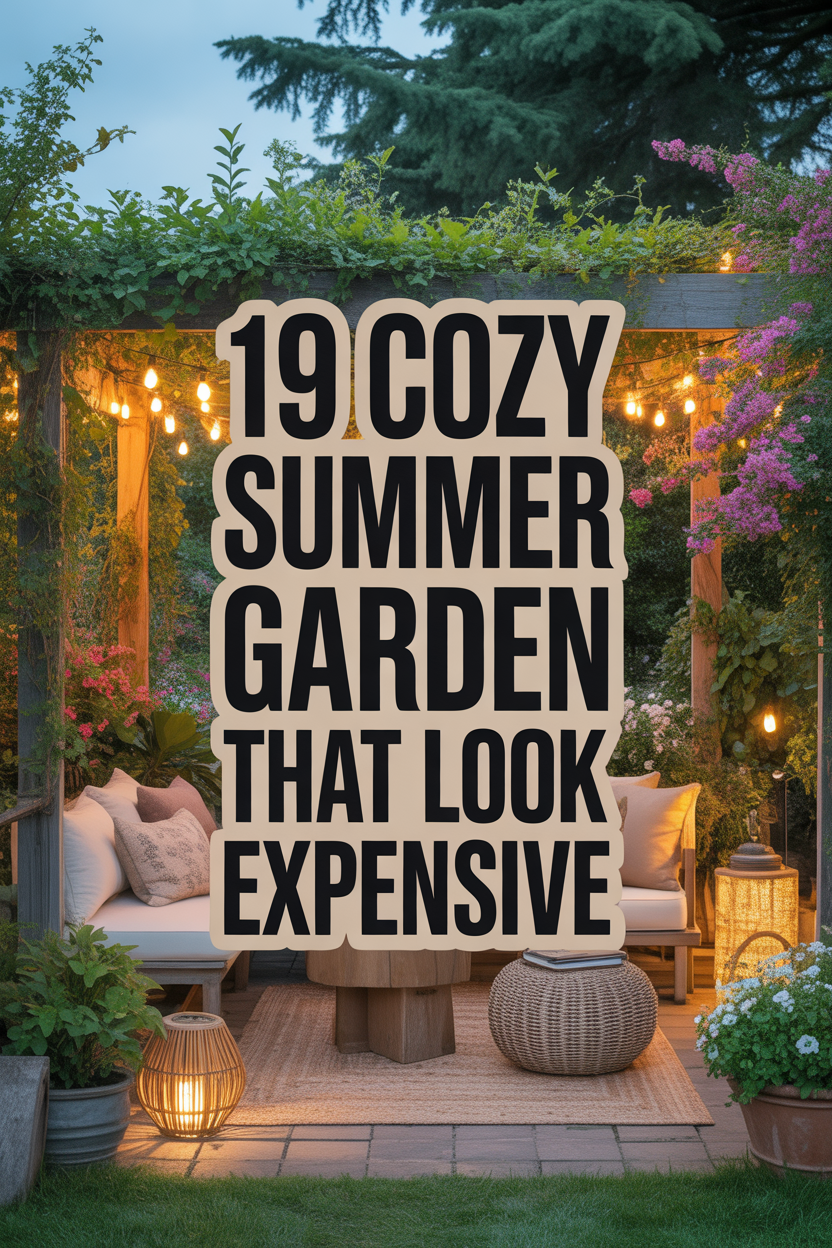
It was a quiet summer evening. I stepped into the garden with my tea, hoping to unwind — but something felt off. The outdoor space wasn’t bad, just empty. No cozy corners, no color, no reason to stay. It was a backyard that existed, but didn’t invite you in. And honestly, I had no idea where to even begin fixing it.
Everything changed when I stopped overthinking and tried a few simple, budget-friendly ideas. A small flower bed, a couple of climbing plants, one cozy sitting spot — nothing fancy, just intentional. Slowly, space came to life. So if your summer garden feels the same right now, these ideas will help you turn it into a place you actually want to spend time in.
If you love this look, don’t miss our whimsical mushroom garden ideas to create an even more magical outdoor space.
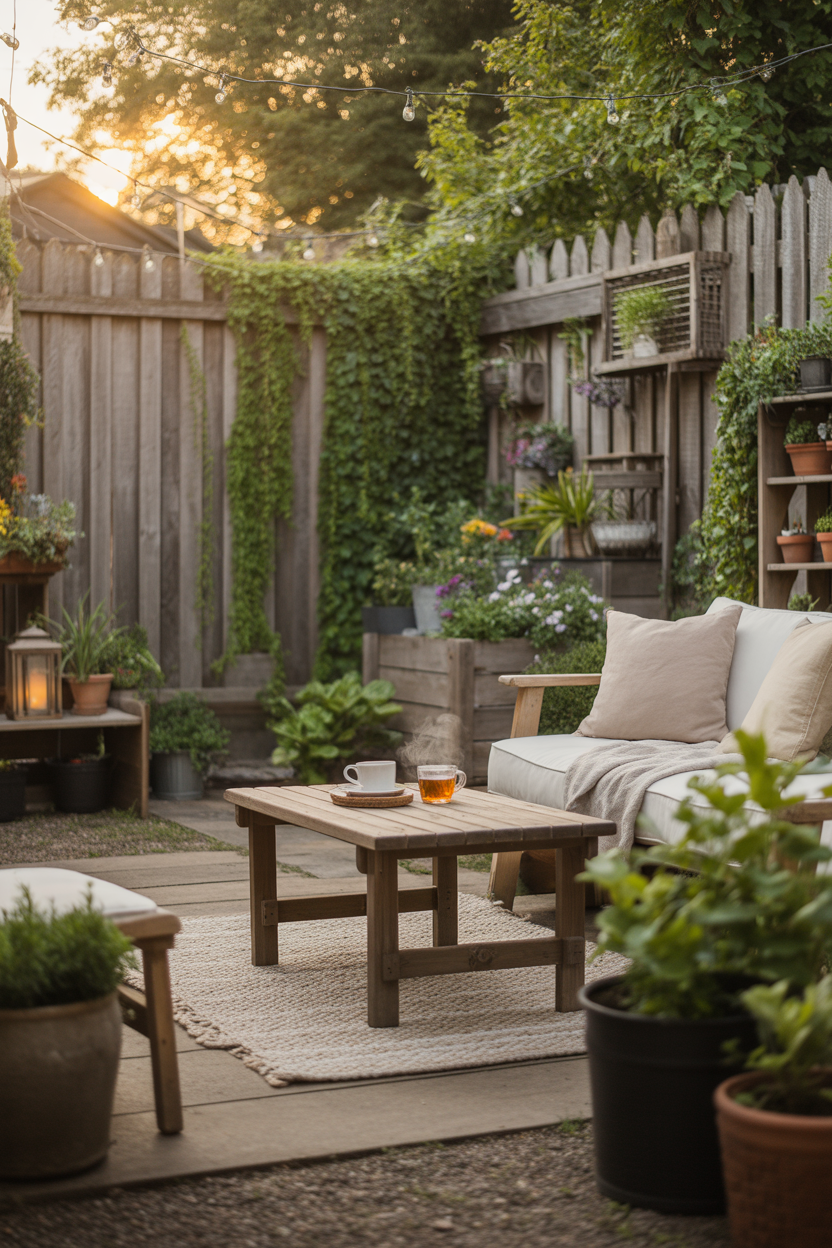
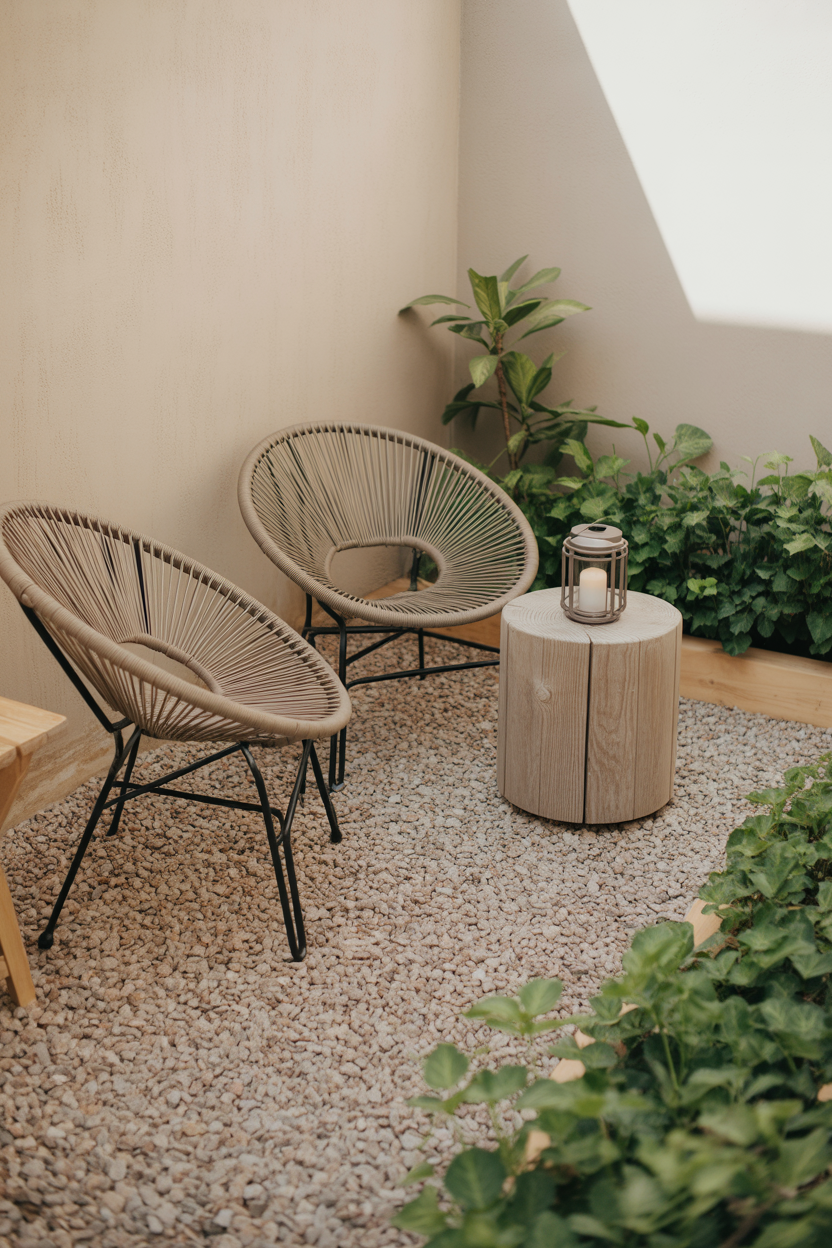
Build a Barefoot-Friendly Gravel Lounge Corner for Under $50
If you want your garden to feel like a proper outdoor room, you need a defined zone. A small gravel lounge corner does exactly that — and it costs almost nothing to set up. Lay down a weed barrier, pour in a bag or two of pea gravel, add two low chairs and a small side table, and you’ve got a space that looks curated and intentional.
The trick is to border it with something soft — lavender, ornamental grass, or even a row of terracotta pots. That contrast between the gravel and the greenery is what makes it look designed rather than just dumped. Keep it small. Even a 6×6 foot area feels like its own little world.
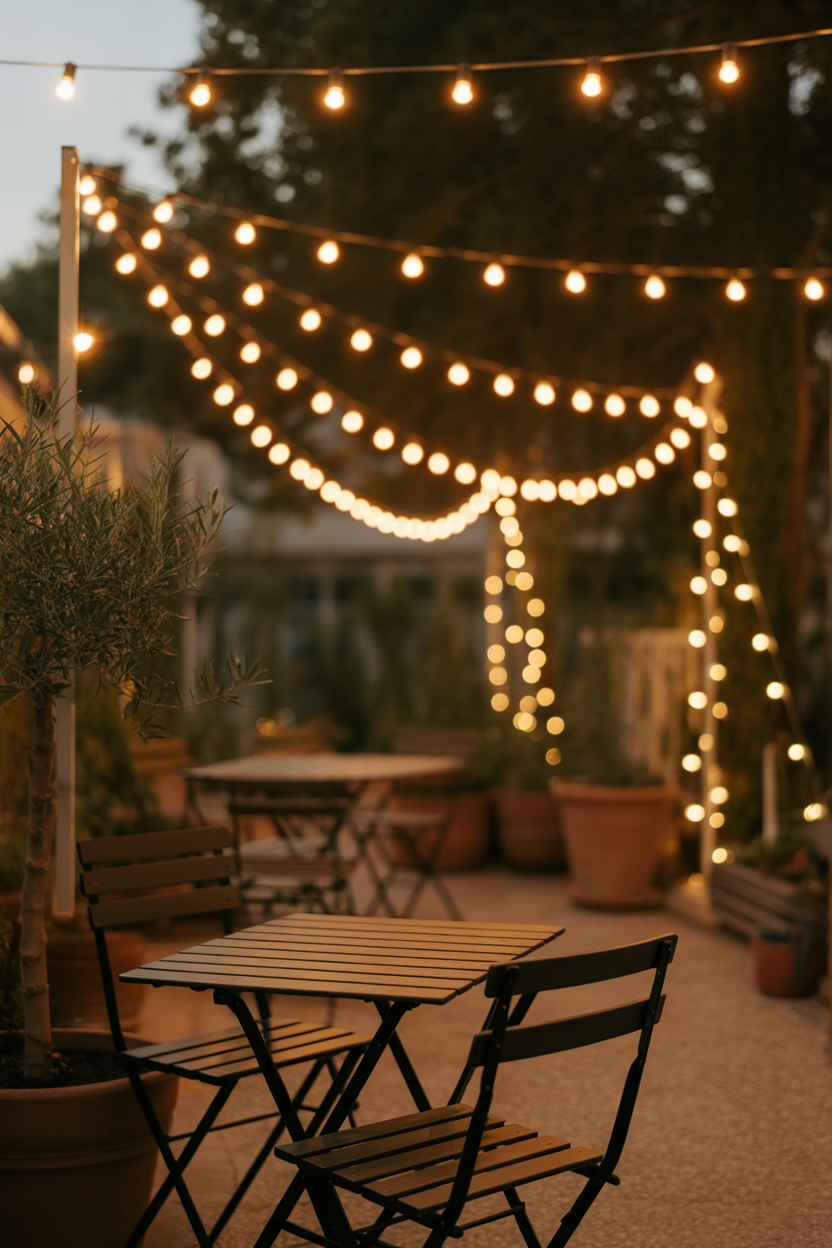
Hang Solar Fairy Lights the Right Way for an All-Night Garden Glow
Most people just drape fairy lights over a fence and call it done. And then wonder why it looks messy instead of magical. The secret is in the pattern. A canopy-style zigzag between anchor points — two posts, a wall, a pergola — gives you that warm, restaurant-patio feel that photographs beautifully.
Go for warm white bulbs, not cool white. Warm light feels cozy and golden; cool light feels clinical. And for solar, make sure the panel is getting at least 6 hours of direct sun. A shaded panel means your lights die at 9 pm — very anticlimactic.
Create a Private Garden Nook Using Fast-Growing Climbing Plants
Want privacy without building a solid fence? Climbing plants are your best friend. Clematis, jasmine, and black-eyed Susan vine all grow quickly, smell amazing, and cost just a few dollars per plant. Train them up a simple trellis or run a fishing line between hooks on a fence — they’ll find their way.
Jasmine is the one I’d pick first. It smells incredible on summer evenings, and it fills in a trellis surprisingly fast. Within one season, you can go from a bare fence to a private green wall. It’s one of those small garden ideas that gives you the biggest return.
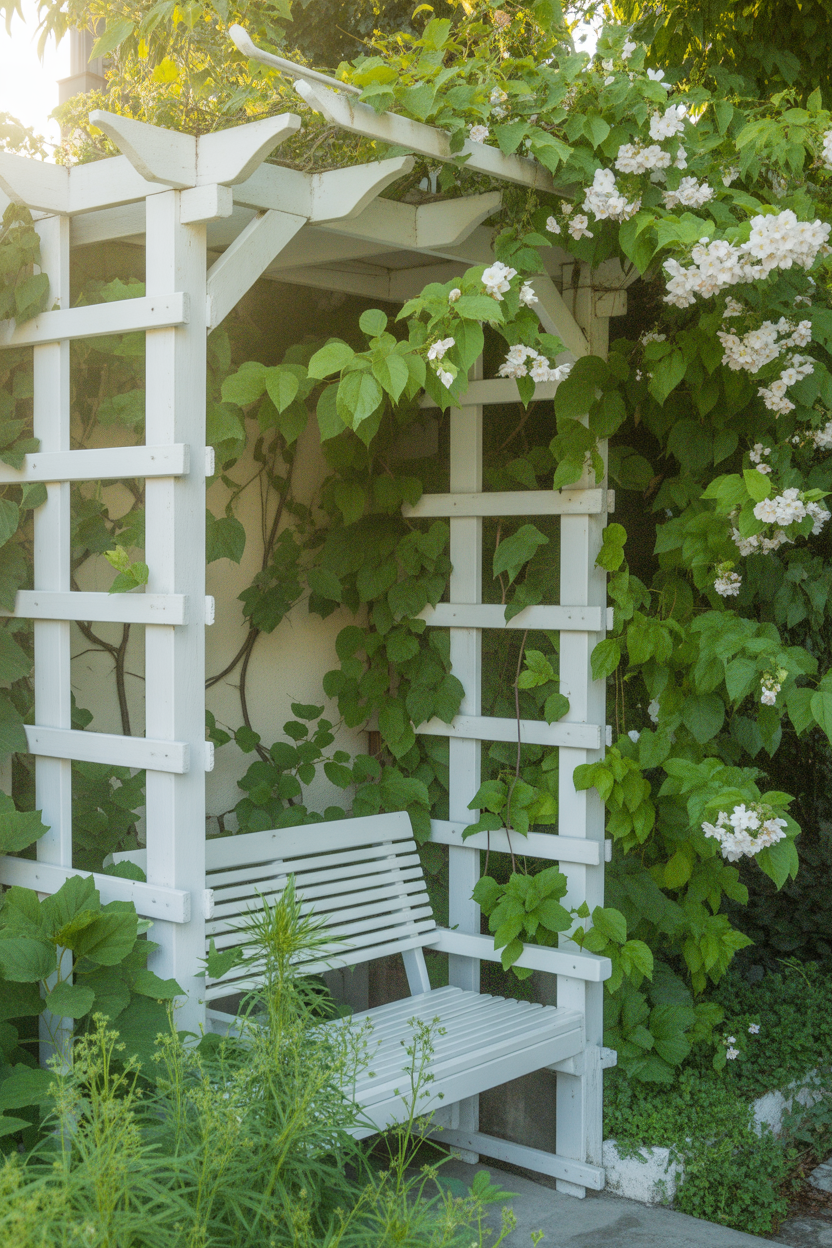
Plant a “Cut-and-Come-Again” Flower Bed That Blooms All Summer Long
Here’s something most beginner gardeners don’t know: the more you cut certain flowers, the more they bloom. Zinnias, cosmos, and rudbeckia are all cut-and-come-again varieties — meaning regular cutting actually encourages new growth rather than stopping it.
Plant a dedicated cutting bed in a sunny spot, and you’ll have fresh flowers for the house all summer long. Mix in some basil at the edges — it’s a great companion plant, keeps pests down, and adds a lovely scent. This kind of bed looks full, colorful, and impossibly lush with very little maintenance.
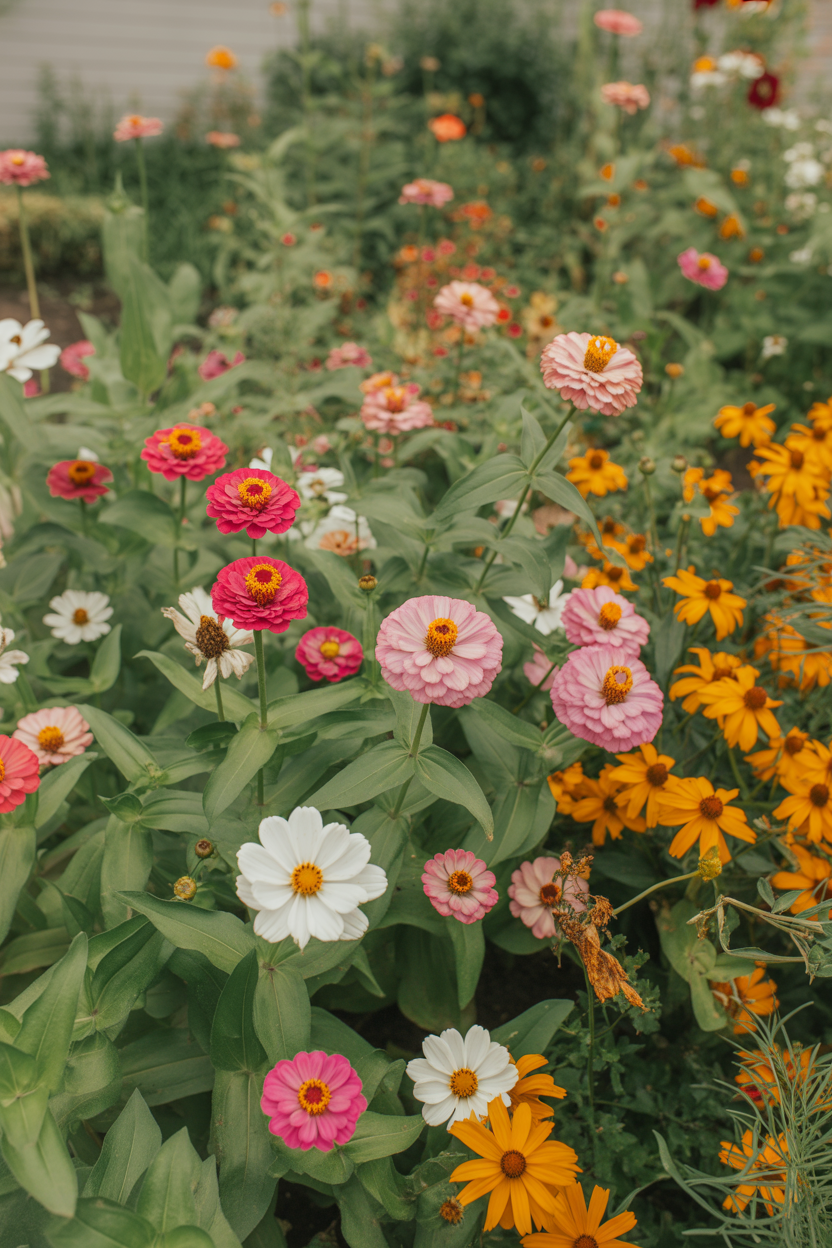
Design a Layered Flower Border That Looks Like a Professional Did It
A border that looks professionally designed almost always follows one simple rule: thriller, filler, spiller. Tall dramatic plants at the back, mid-height bushy ones in the middle, and trailing or low plants at the very front edge. That’s it. That’s the whole secret.
For a sun-facing border, try tall salvias or ornamental grasses at the back, lavender or catmint in the middle, and creeping thyme or alyssum spilling over the edge. The layering creates depth, and depth is what makes a garden border look rich rather than flat.
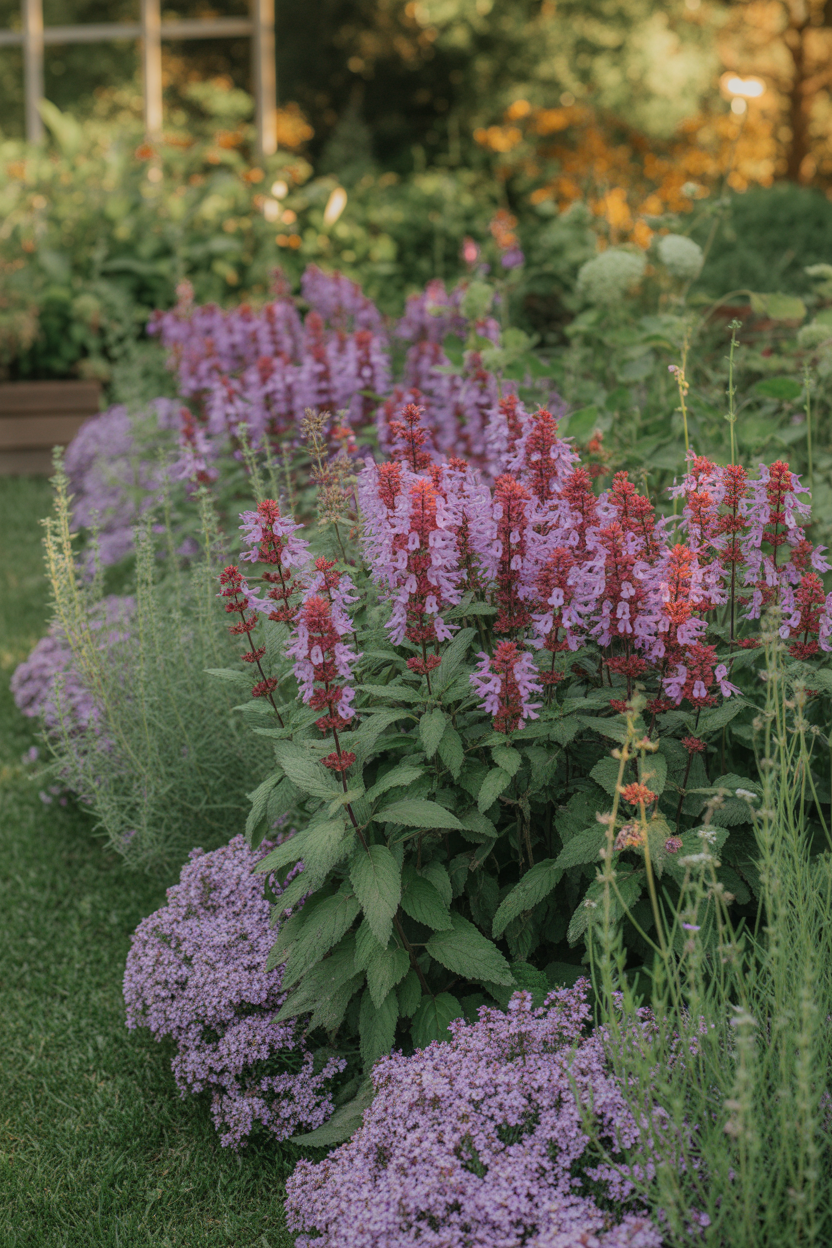
Grow a Mini Wildflower Patch for Pollinators (and Stunning Photos)
A wildflower patch sounds complicated, but it’s genuinely one of the easiest summer garden ideas out there. You prep the soil, scatter a seed mix, water it, and wait. That’s really it. No spacing, no rows, no fussing.
Choose a sunny, open spot — even a 3×4 foot patch will attract bees and butterflies and produce the most incredible photos. The chaos of a wildflower patch is the whole point. It looks effortlessly beautiful in a way that structured beds sometimes don’t. Plus, it’s probably the most Pinterest-worthy thing you can grow.
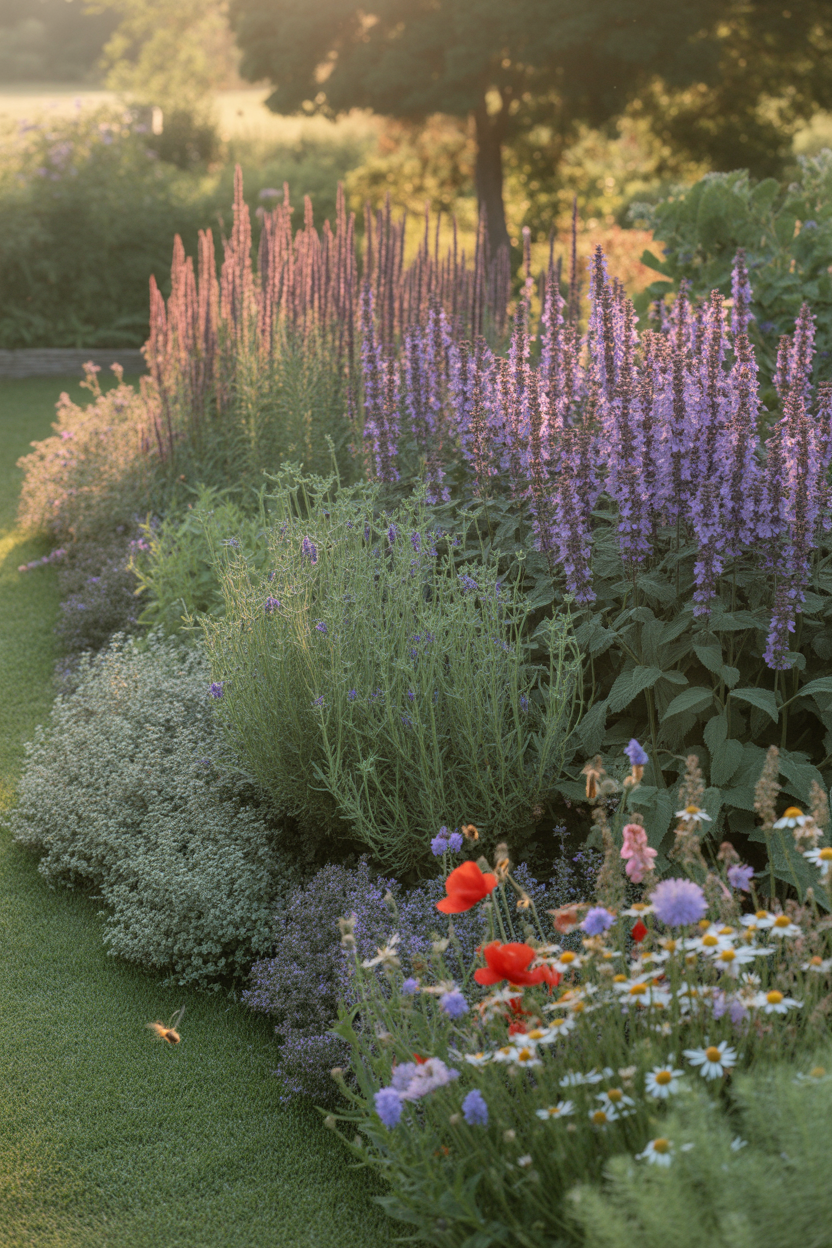
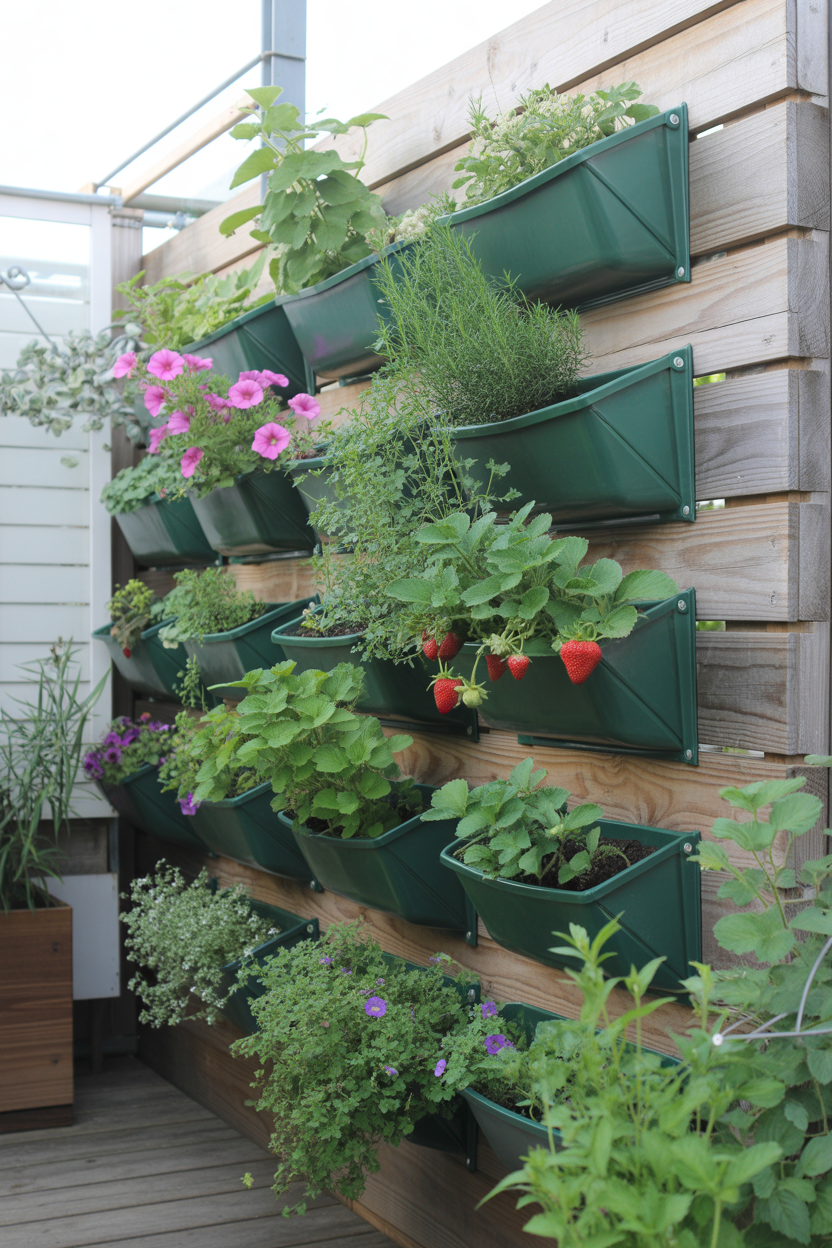
Turn a Blank Fence Into a Lush Vertical Garden Wall (No Drilling)
If you’re renting, this one’s for you. Hanging planter pouches and rail-mounted planters attach to most fence types without a single drill hole. Fill them with trailing petunias, herbs, or strawberries, and a bare fence becomes a living wall within a few weeks.
If you enjoy seasonal styling, these vintage garden decorating ideas will help keep your space fresh and vibrant.
The key to a vertical garden that stays healthy is watering — vertical setups dry out faster than ground-level pots. A daily check in summer is worth it, though. Few summer garden ideas look as impressive in photos, and the space-saving aspect is genuinely game-changing for small patios.
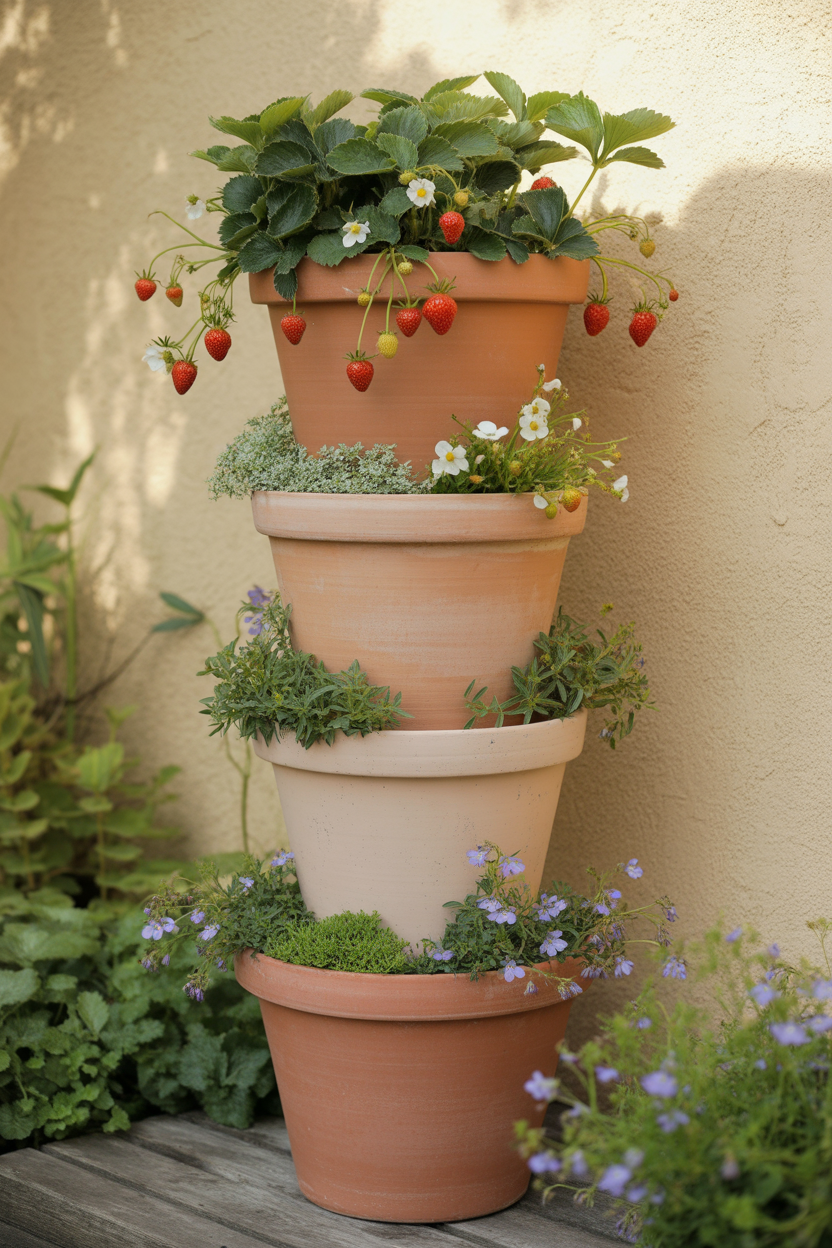
Stack Terracotta Pots Into a Tower Planter That Earns Its Own Pinterest Board
Stacked terracotta pot towers are one of those ideas that look like it requires special skills but genuinely don’t. You fill a large base pot with soil, set a slightly smaller pot on top at an angle, fill that one, and keep going. The angled pots create little planting pockets all the way up.
Plant trailing varieties at the top levels so they cascade down — string of pearls, trailing lobelia, or even strawberries. Paint the pots in a cohesive palette before you stack them, and the result looks incredibly curated. It’s a weekend project that costs under $20 and photographs beautifully.
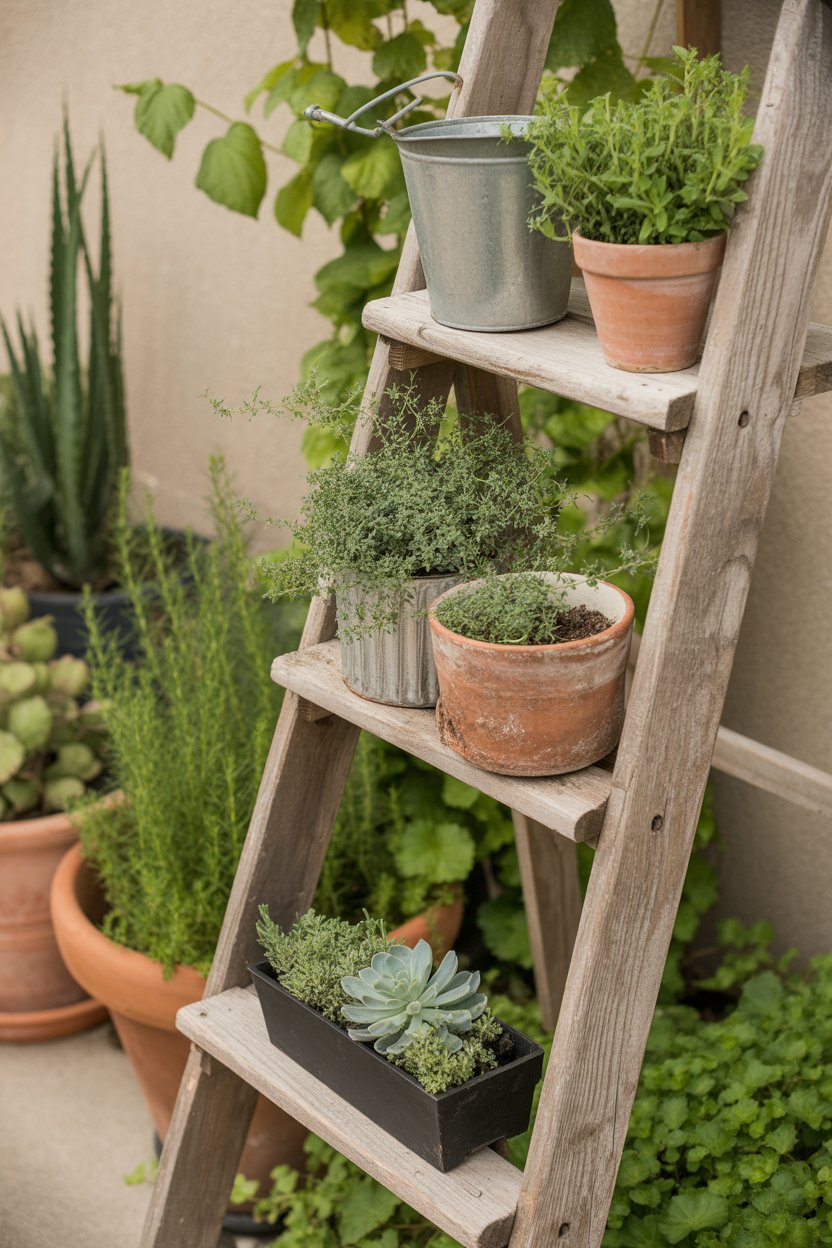
Use a Vintage Ladder as a Plant Stand to Add Height and Character
Height is one of the most underused elements in small garden design. A vintage wooden ladder leaning against a wall or fence adds instant vertical interest — and you can find them at thrift shops or Facebook Marketplace for next to nothing.
Seal the wood with an outdoor varnish so it holds up through summer rain, then style each rung with a potted plant. Mix heights, textures, and pot sizes. A trailing plant on the top rung, herbs in the middle, a chunky succulent at the base. It becomes a focal point without taking up any floor space.
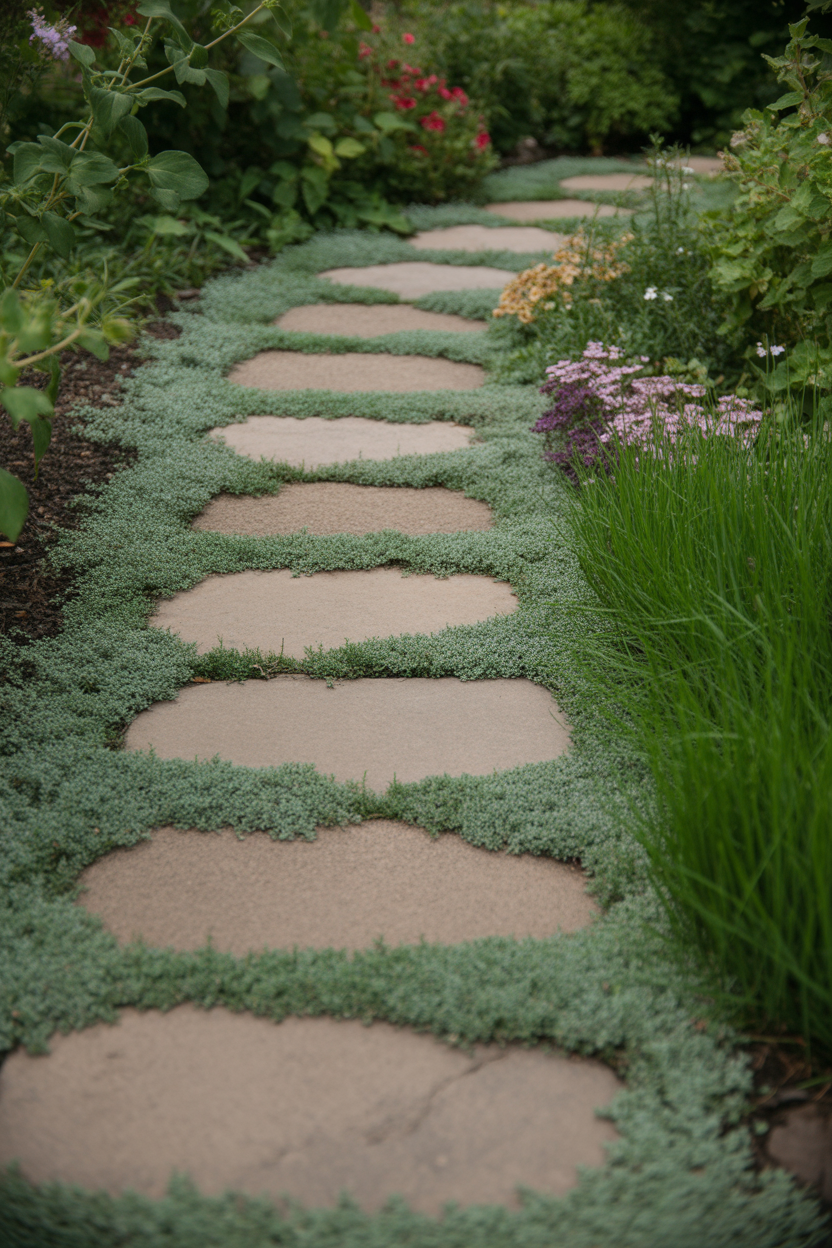
Lay a Simple Stepping Stone Path That Makes Your Garden Feel Twice as Big
A path does something almost magical in a garden — it makes the space feel planned and purposeful. And it creates the impression of more space, because your eye follows the path and reads the garden as larger than it actually is.
You don’t need fancy materials. Reclaimed bricks, flat river stones, or budget concrete pavers all work. Space them slightly irregularly — too uniform and it loses its charm. Let low ground cover or thyme creep between them for a cottage look that gets better every season.
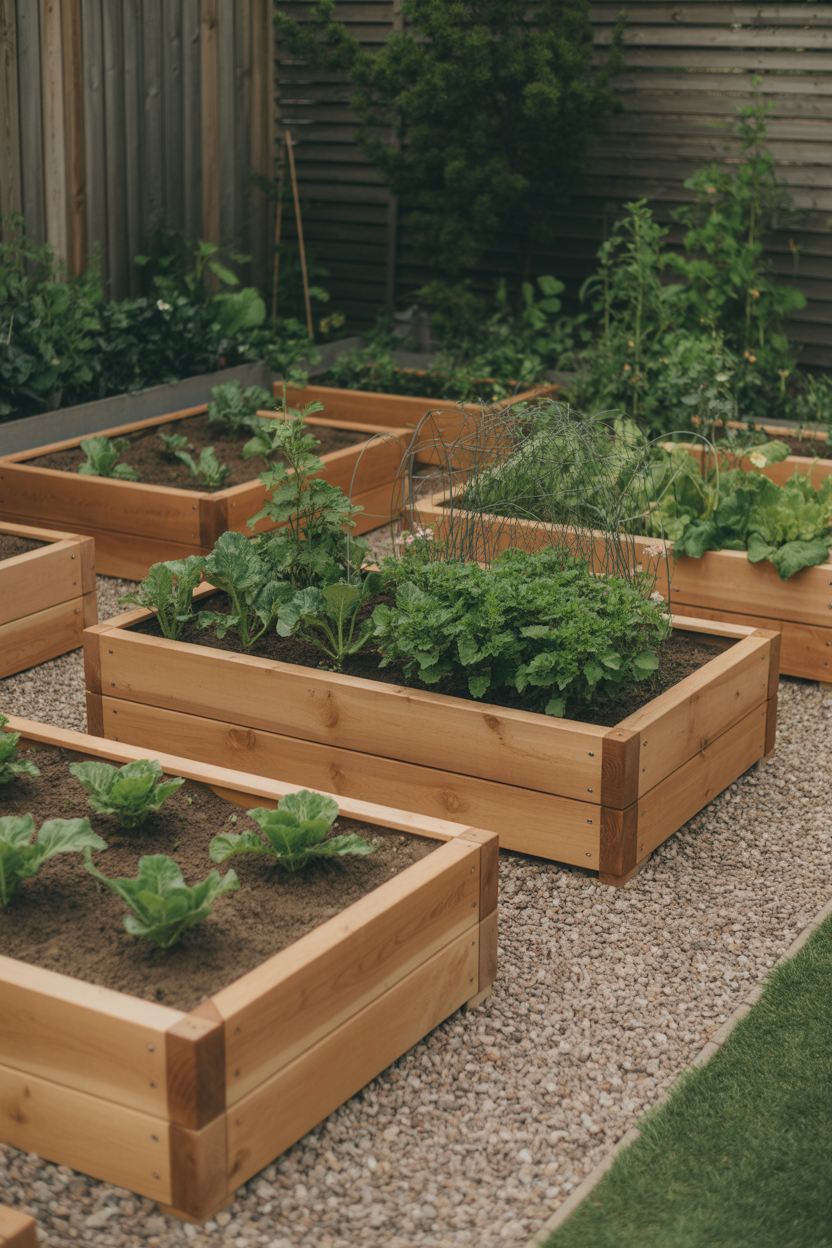
Build Raised Wooden Garden Beds That Actually Last More Than Two Seasons
The reason so many DIY raised beds rot within a year or two comes down to wood choice. Cedar is the gold standard — it’s naturally rot-resistant and doesn’t need treating. Treated pine is cheaper but works fine if you line the inside with a permeable landscape fabric before filling.
For a beginner-friendly build, you don’t even need power tools. Pre-cut timber from any hardware store, some L-brackets, and a handful of screws will get you a solid bed in an afternoon. Fill it using the lasagna method — cardboard at the bottom, then layers of compost, topsoil, and aged manure. Your plants will absolutely love it.
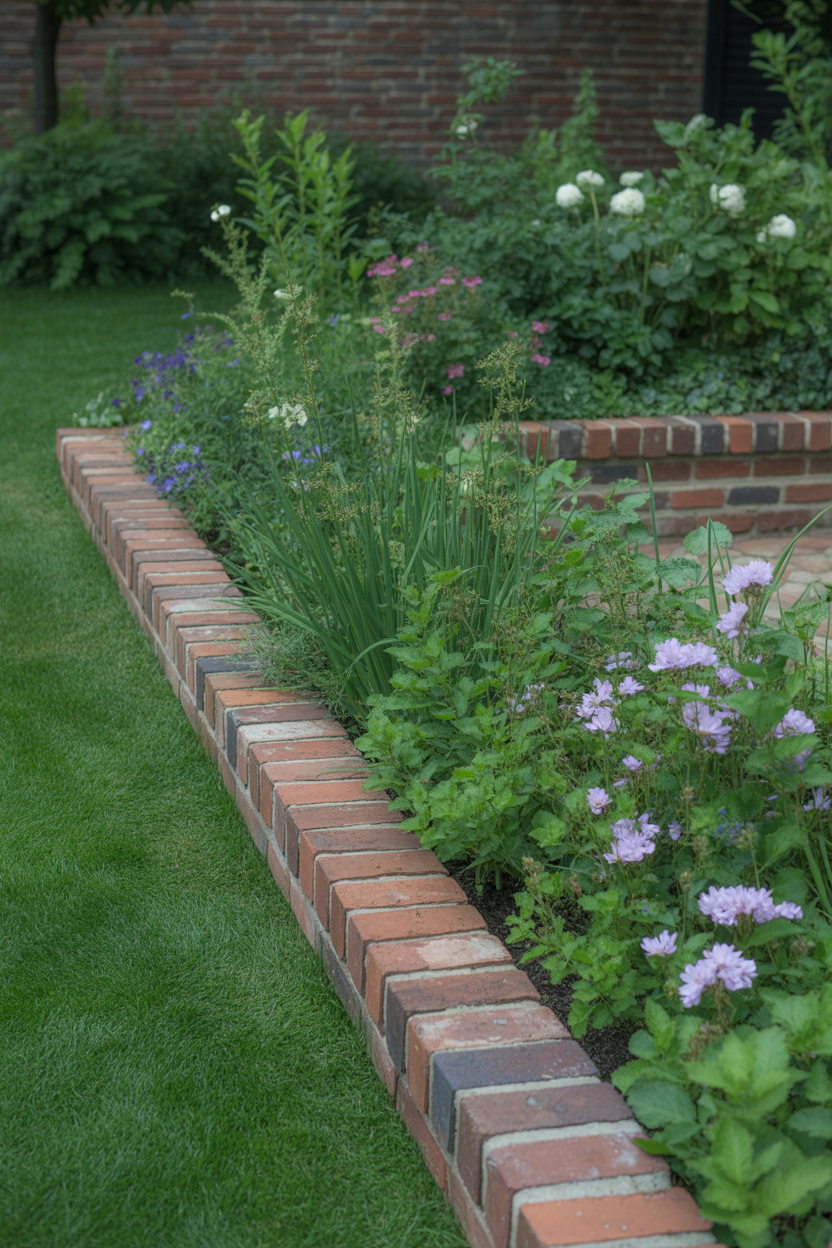
Edge Your Flower Beds Like a Pro Using Materials You Already Have
Clean edges are honestly the single biggest thing that separates a tidy garden from a messy one. You don’t need to buy expensive metal edging — a row of reclaimed bricks laid at an angle, salvaged log rounds, or even empty wine bottles pushed neck-down into the soil all work brilliantly.
Spend 20 minutes each week re-cutting the edge between your lawn and border with a half-moon edger or a sharp spade. It sounds tedious, but the difference it makes is enormous. Sharp edges make the whole garden look intentional and cared for, even when everything else is a bit wild.
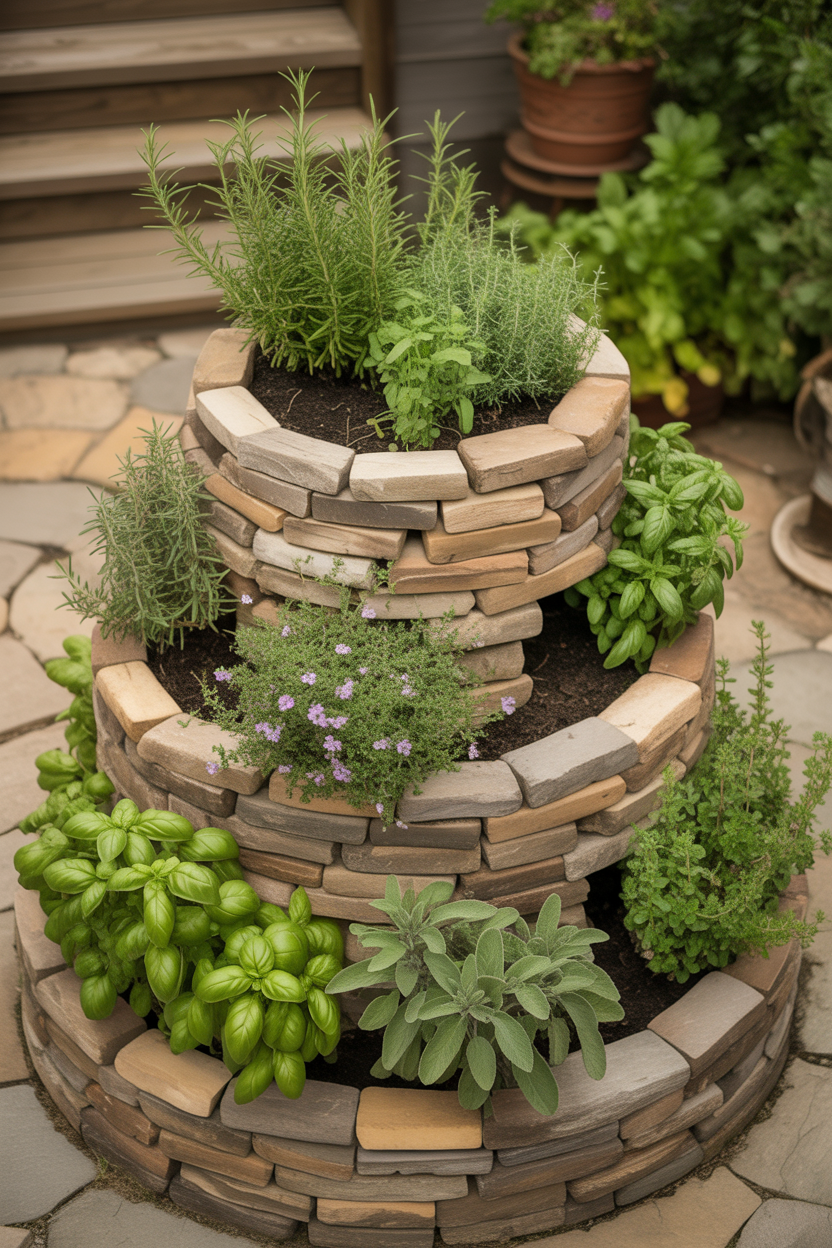
Grow a Kitchen Herb Spiral That’s Both Beautiful and Functional
An herb spiral is a clever bit of garden design that creates several different growing conditions — sunny and dry at the top, shadier and moister at the base — all within about one square meter. That means you can grow sun-loving rosemary and thyme at the top and moisture-preferring mint and parsley further down, all in the same structure.
Build it from bricks, stones, or even broken terracotta pieces stacked in a rising spiral. It’s a genuinely beautiful feature that looks right at home in a cottage garden. And having fresh herbs within arm’s reach of the kitchen genuinely changes how you cook.
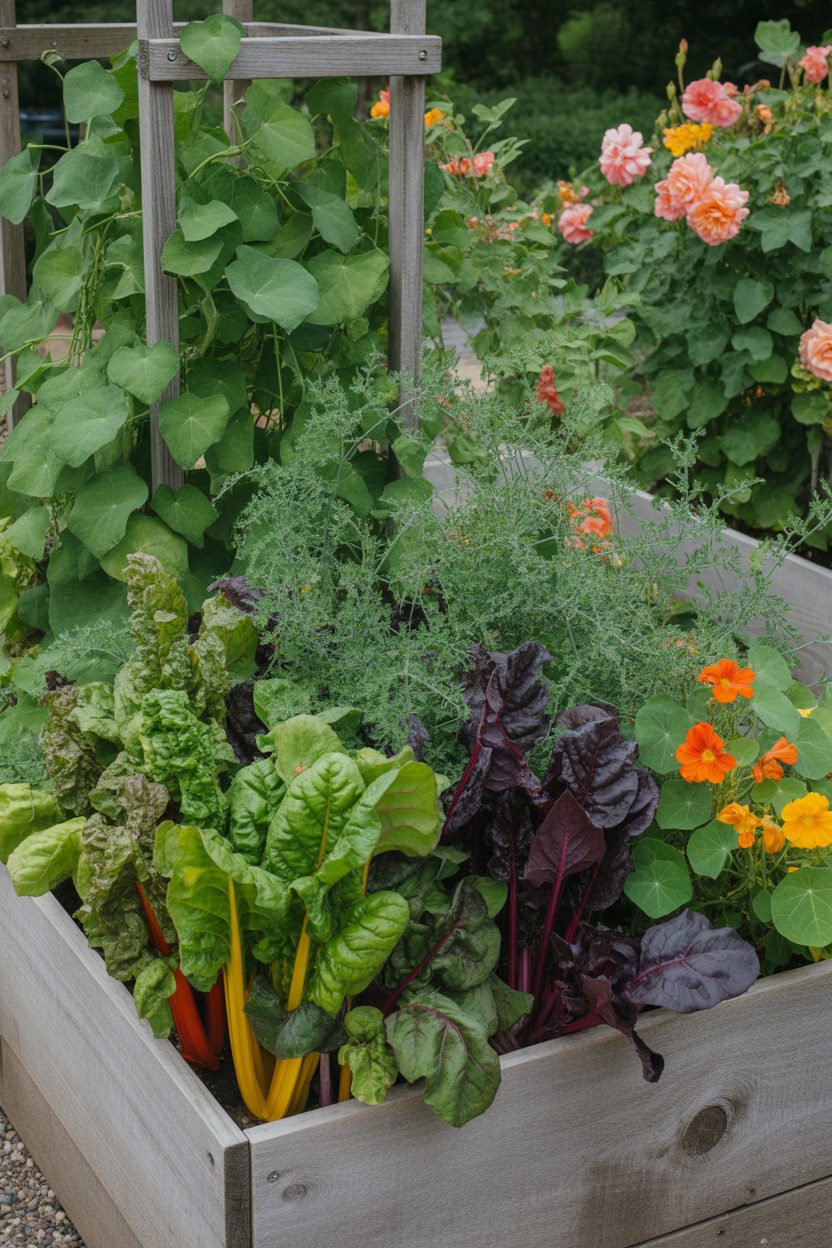
Mix Edible Plants Into Your Flower Beds for a “Potager” Garden Look
The French potager style is basically the most beautiful way to grow food. Instead of separating vegetables into a utilitarian patch, you weave them through flower beds — climbing beans up a wigwam beside roses, rainbow chard as a border plant, nasturtiums tumbling over the edge.
The result is a garden that looks lush and completely intentional, while also feeding you. Rainbow chard alone is stunning — those jewel-bright stems in red, yellow, and orange look better than most ornamental plants. It’s one of those summer garden ideas that genuinely makes you stop and stare.
Paint Your Garden Pots to Match a Color Palette
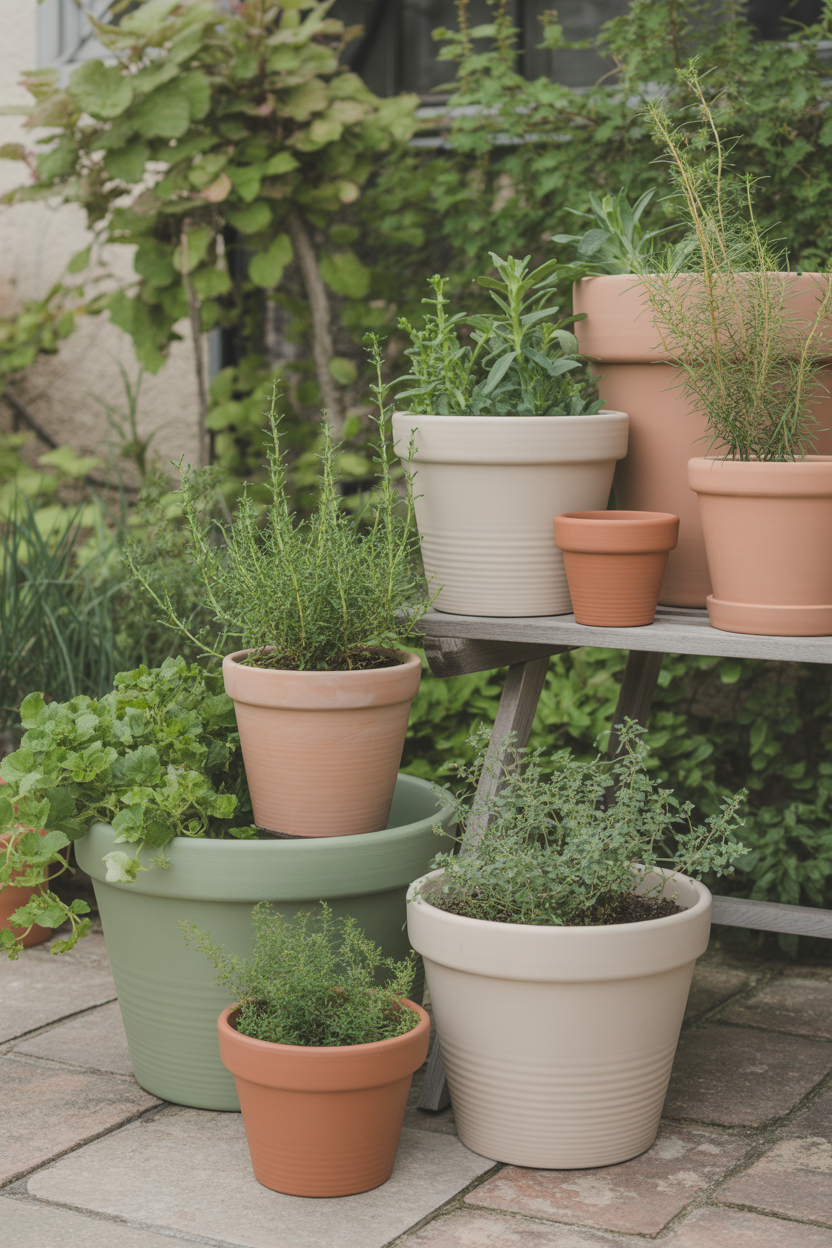
Mismatched pots are one of the most common reasons a patio or garden corner looks chaotic rather than curated. The fix is simple: pick three colors and paint everything to match. A warm terracotta tone, a chalky cream, and a dusty sage green is a combination that works in almost any outdoor space.
Use exterior chalk paint or outdoor acrylic — both hold up well through summer. You can dip the bottom half of a pot for a simple color-block effect, or do a full wash of watered-down paint for an aged, vintage look. It’s a Saturday afternoon project with a genuinely dramatic before-and-after.
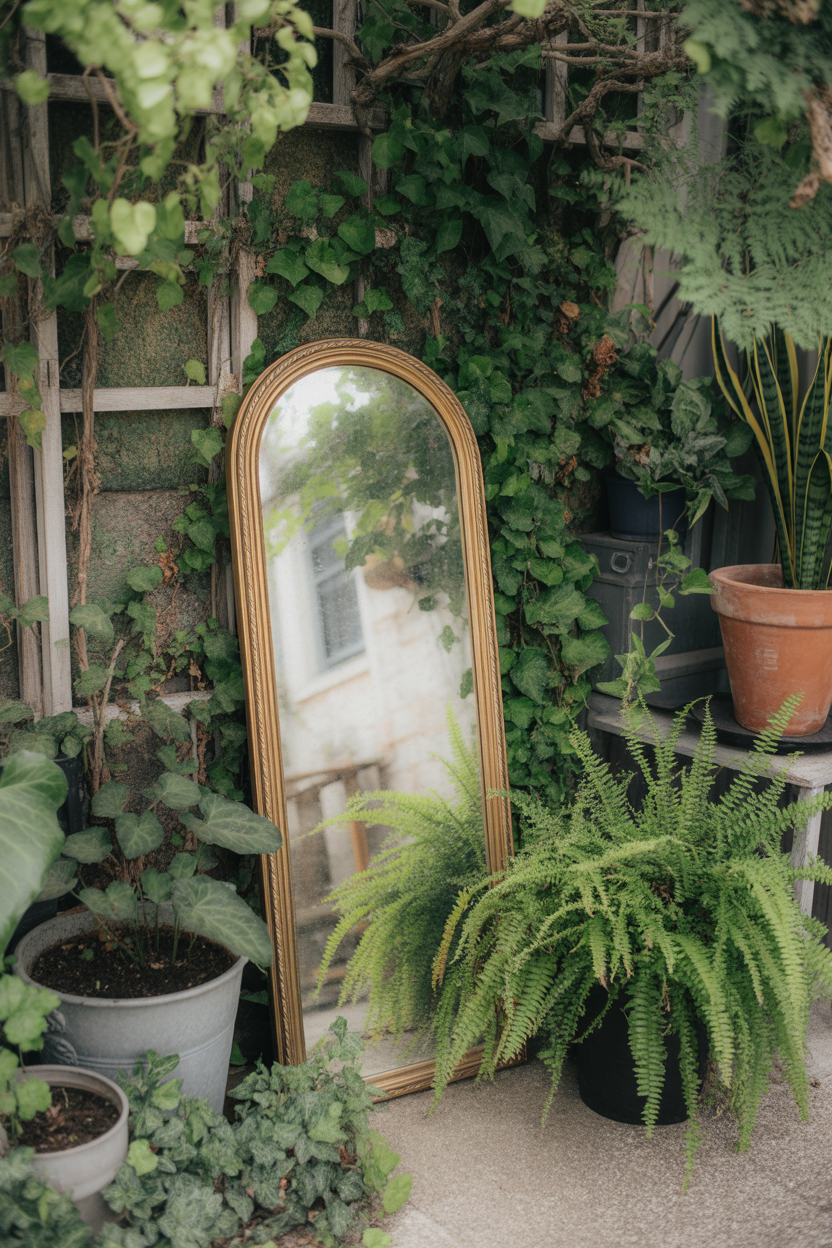
Add a Garden Focal Point Using a Thrifted Mirror
In a small garden, a focal point is everything. It gives the eye somewhere to land and makes the space feel intentional rather than random. A large mirror hung on a garden wall or fence creates the illusion of depth — suddenly your compact patio feels twice the size.
A reclaimed window frame works similarly and can double as a trellis for a small climbing plant. Seal any mirror with an outdoor-safe sealant around the edges to prevent damp getting in. You can find both at salvage yards or charity shops for very little money — and the impact they create is completely disproportionate to the cost.
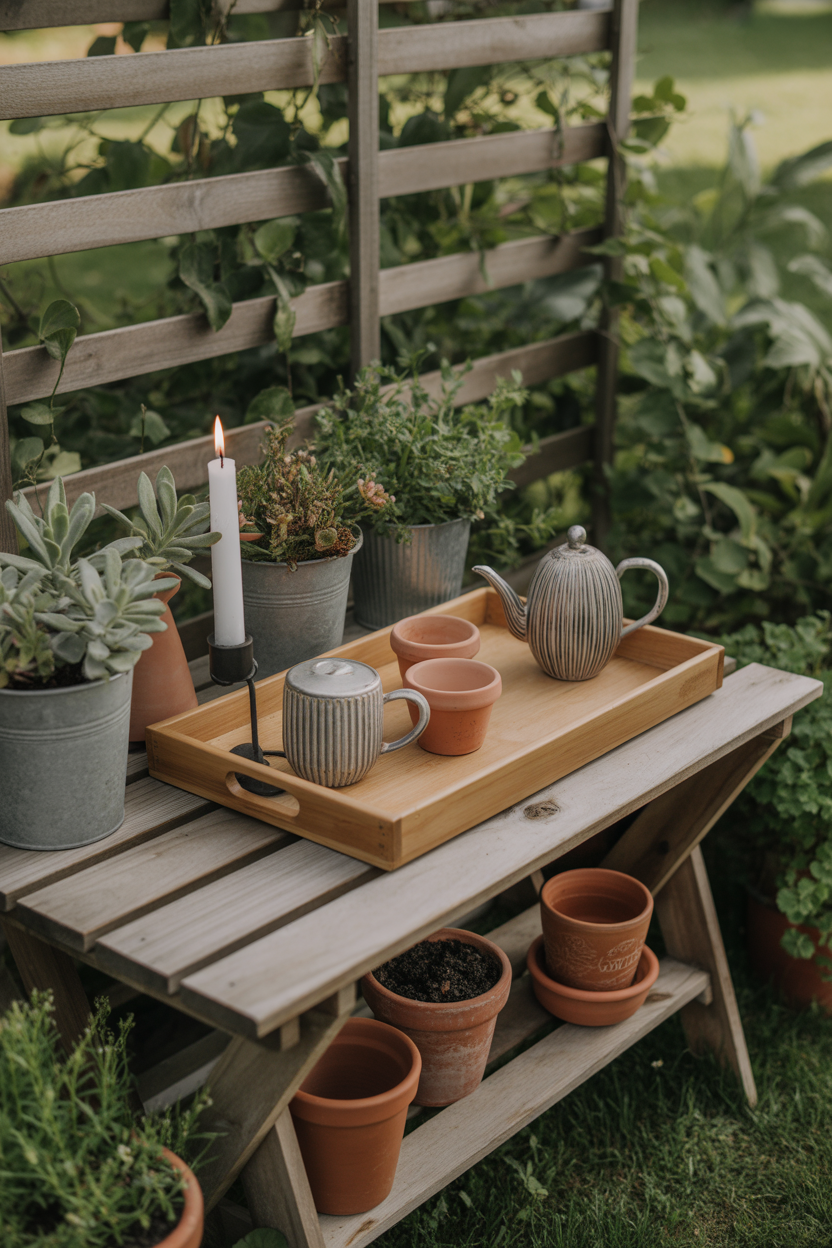
Set Up a Simple Outdoor Tea Station or Potting Bench
A garden that gets used every day feels alive in a way that a purely decorative one doesn’t. A small dedicated bench or table — just for your morning coffee, your seed packets, or your watering routine — gives the garden a sense of purpose and personality.
Style it simply: a wooden tray, a few candles in hurricane holders, a small plant or two, and a basket for tools. Weatherproof the surface with an outdoor wax or varnish. It doesn’t need to be elaborate. It just needs to feel like yours.
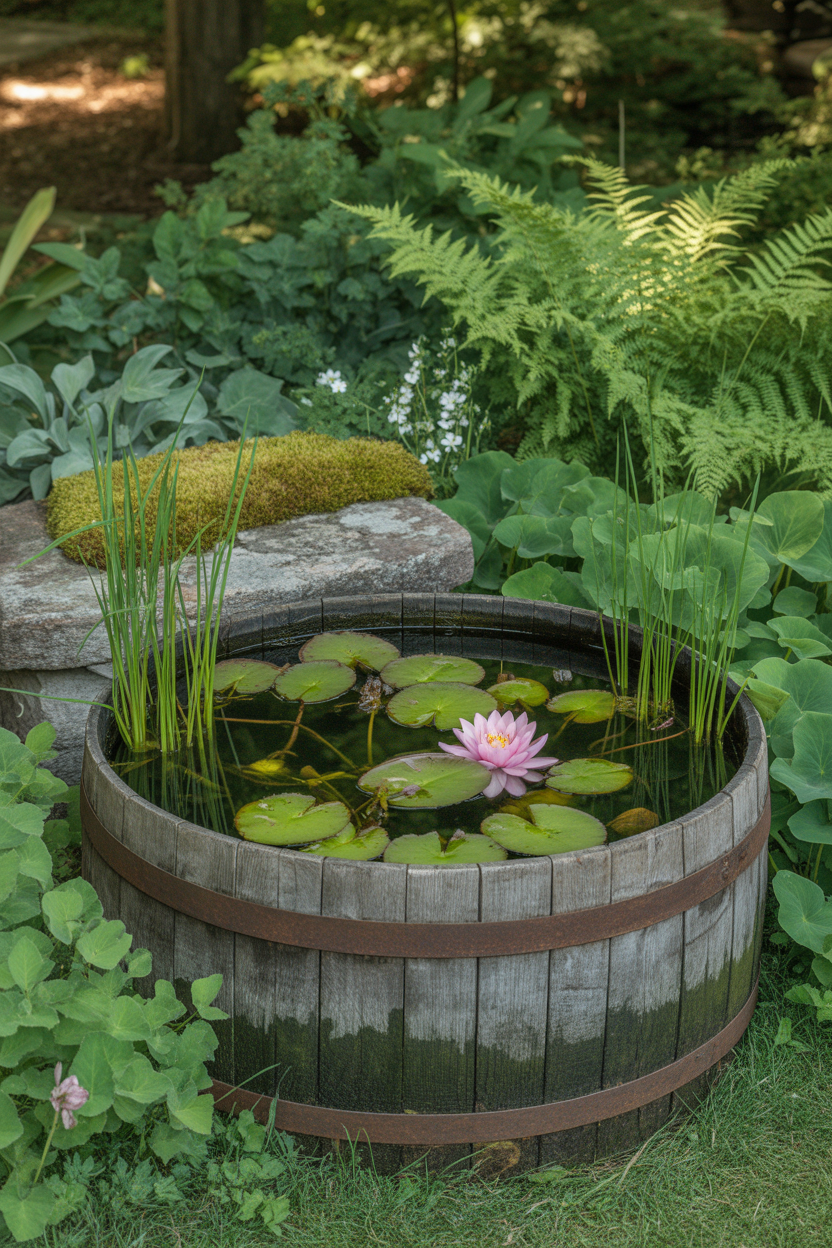
Create a Miniature Pond in a Half Barrel That Attracts Wildlife Overnight
You don’t need a full garden pond to attract frogs, dragonflies, and birds. A half whiskey barrel lined with butyl and filled with water can become a thriving mini-ecosystem in a matter of weeks. Add a dwarf water lily, some oxygenating plants like hornwort, and a few aquatic marginals around the edge.
No pump required — the oxygenating plants keep the water healthy naturally. Place a stone or piece of bark nearby as an exit ramp for small creatures. I set one up last summer and had frogs within three weeks. It’s one of those backyard garden ideas that genuinely feels like magic.
Plant a Butterfly and Bee Garden With Just 5 Key Plants
You don’t need a big space or a complicated plant list to make a real difference for pollinators. Five plants, clustered together in a sunny spot, are genuinely enough. The key is choosing single-petal varieties — bees and butterflies can’t access the nectar in heavily doubled flowers.
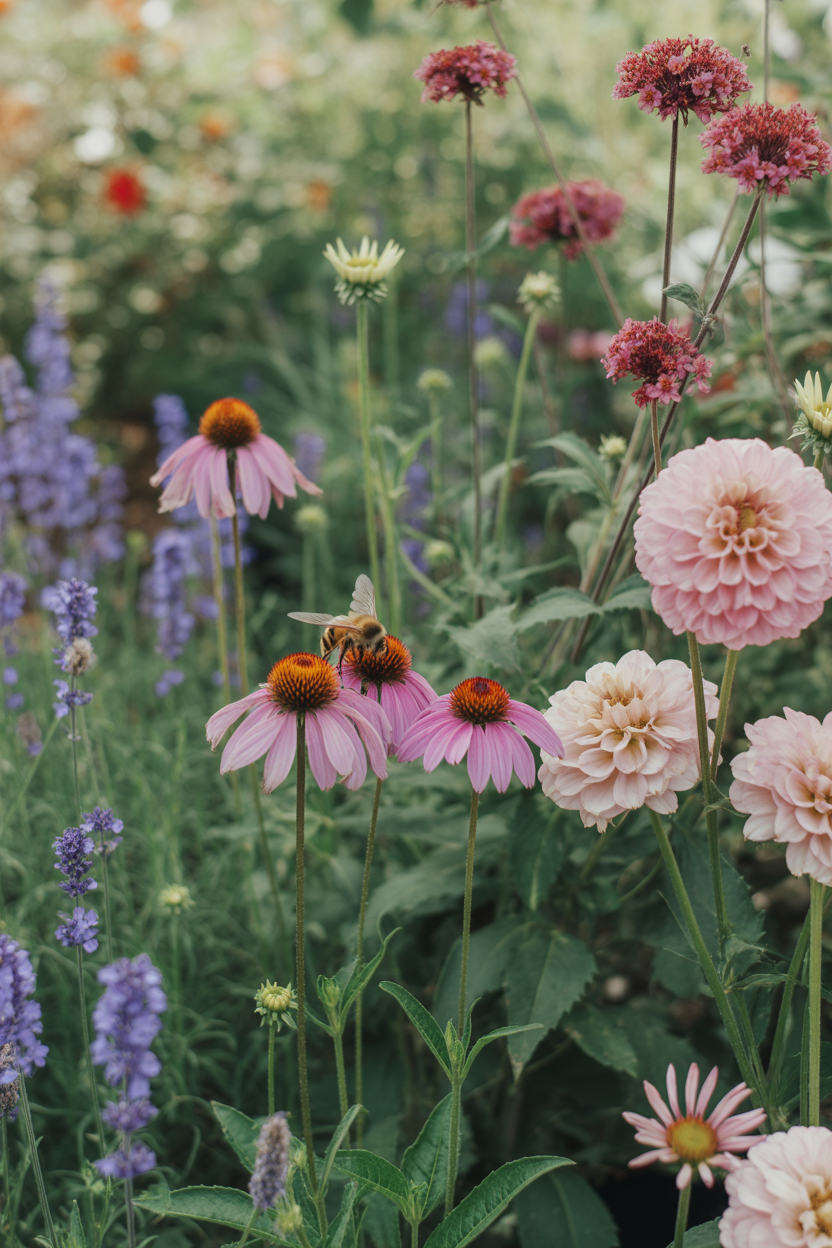
Go with lavender, echinacea, borage, verbena bonariensis, and single-petal dahlias. That combination covers the whole season from late spring through autumn and supports dozens of different pollinator species. It’s also one of the most naturally beautiful summer garden combinations you can plant — no styling required.
FAQS
Q1. What are the best summer garden ideas on a budget?
The best budget summer garden ideas include planting cut-and-come-again flowers like zinnias and cosmos, building a simple gravel lounge corner, using solar fairy lights for atmosphere, and painting mismatched pots in a matching colour palette. Most of these cost under $30 and can be done in a single afternoon.
Q2. How do I make my small backyard look bigger in summer?
Use a stepping stone path to draw the eye across the space, add a mirror or reclaimed window frame to create depth illusion, and build vertical with a ladder plant stand or fence-mounted planters. Height and defined zones make any small outdoor space feel larger and more intentional.
Q3. What are the easiest summer garden ideas for beginners?
Start with a wildflower seed scatter, a stacked terracotta pot tower, or a simple herb spiral. These require no special tools, minimal maintenance, and produce visible results quickly. Cut-and-come-again flower beds are also ideal — the more you pick, the more they grow.
Q4. How can I make my garden look aesthetic without spending much?
Paint your pots in a cohesive three-colour palette, edge your flower beds cleanly, and add a layer of bark mulch to every bed. These three changes alone — costing very little — make a garden look professionally designed and well cared for.
Q5. What climbing plants are best for a summer garden privacy screen?
Jasmine, clematis, and black-eyed Susan vine are the best options. All three grow quickly, cover a trellis or fence within one season, and are inexpensive to buy. Jasmine is especially popular for its strong fragrance during summer evenings.
Final Thoughts
You really don’t need a big budget or a professional landscaper to have a summer garden that looks genuinely beautiful. Most of these ideas cost less than a takeaway meal and take an afternoon, not a week. Start with just one — whichever one excited you most when you read it — and see how quickly the momentum builds.
Gardens have a funny way of becoming addictive once they start looking the way you imagined. Save this post for when you’re ready to start, and let me know in the comments which idea you’re trying first.