
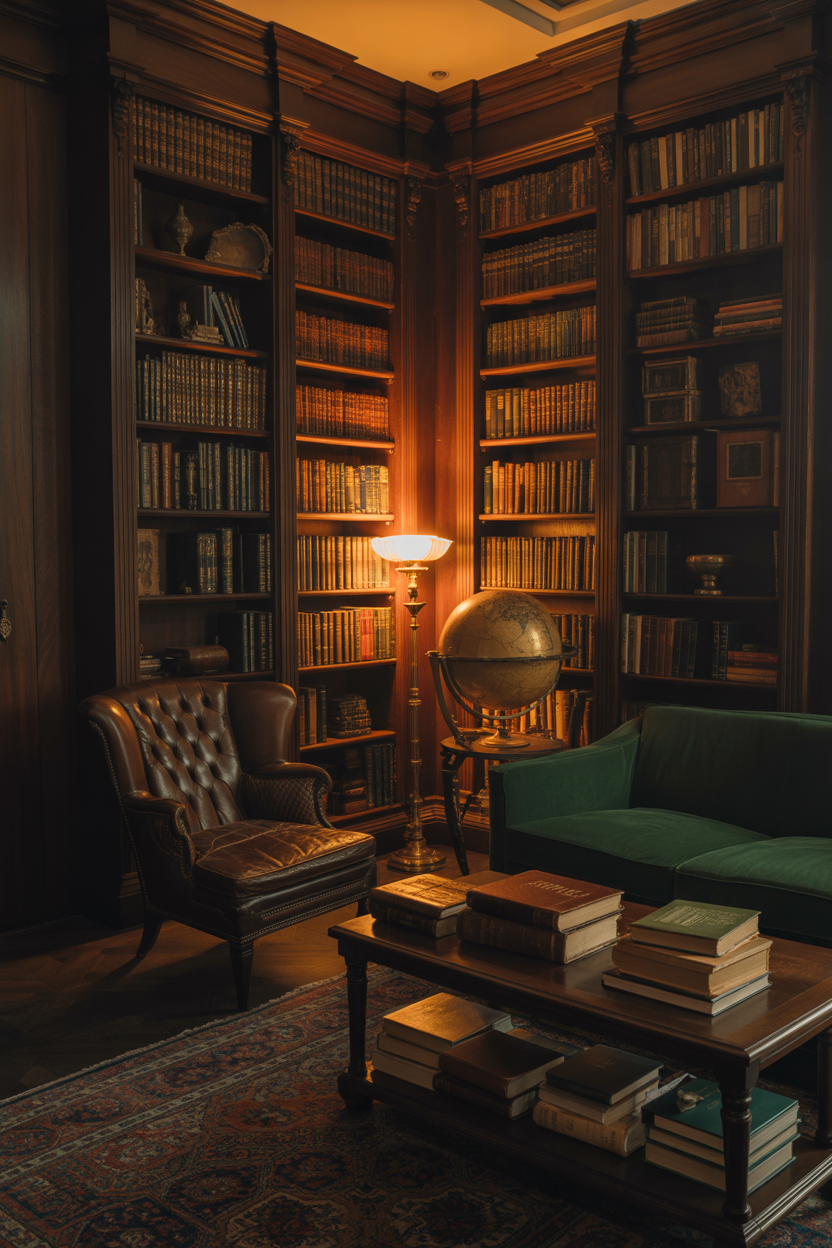
Have you ever walked into a room and just… didn’t want to leave? The kind of room where the light feels warm and soft, with a leather chair next to a lamp, old books stacked everywhere, and the shelves go all the way up to the ceiling. That feeling — that’s exactly what a dark academia living room gives you.
And honestly, it’s not just a design style. It’s a whole vibe. Think cozy libraries, candlelight, velvet sofas, dark-wood furniture, and vintage globes on dusty shelves. It feels intelligent, romantic, and a little mysterious all at once. The best part? You don’t need a mansion to pull it off. Whether you have a small apartment or a big living room, these 20 ideas will help you create that moody, cozy atmosphere you’ve been dreaming about.
Paint Your Walls in Moody Ink
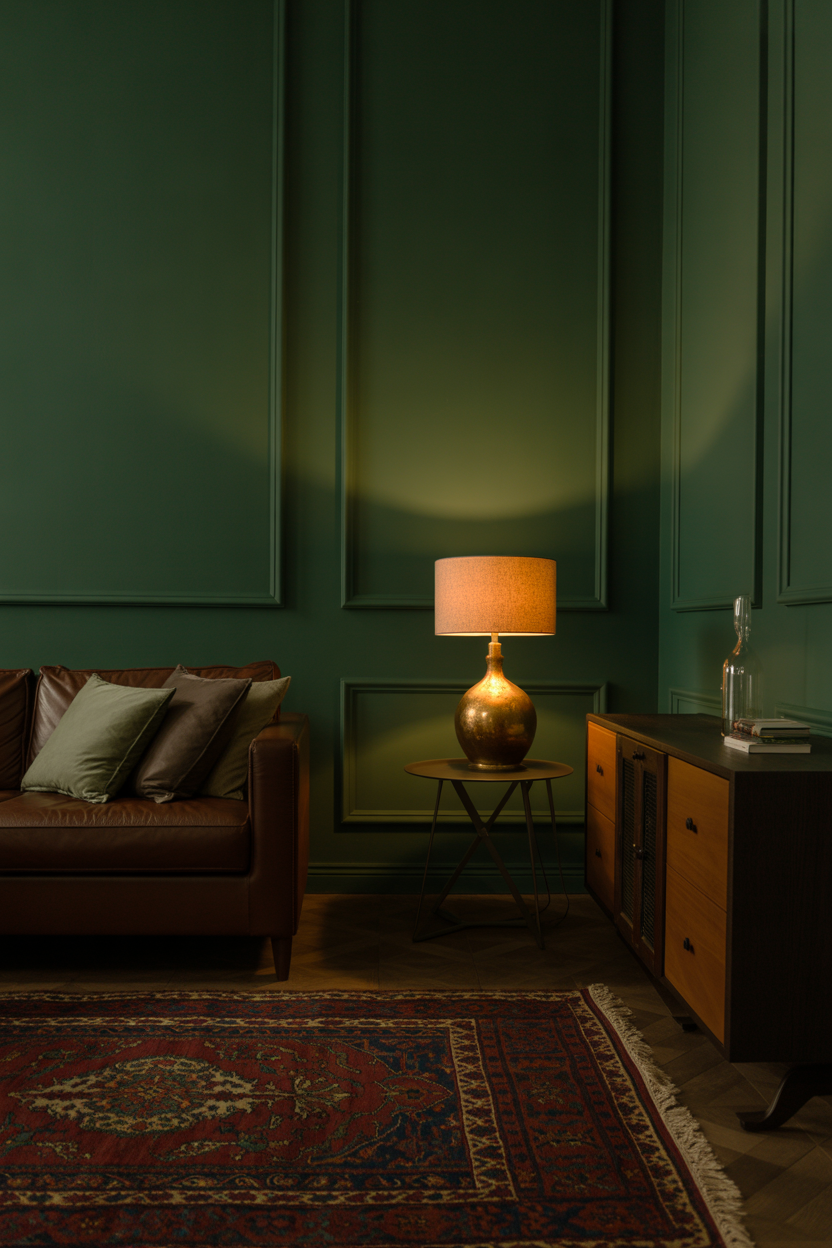
The first thing people get wrong is going too dark too fast. Dark academia isn’t about black walls — it’s about rich, saturated, lived-in color. Think oxblood red, hunter green, deep navy, warm charcoal, and espresso brown. These are colors that feel like they belong in a centuries-old library, not a haunted house.
Finish matters just as much as color. Go with matte or eggshell — never gloss. Glossy paint reflects too much light and kills the moody, velvety atmosphere you’re after. Also, pay attention to how natural light hits your room. A north-facing room with little sun can handle deep forest green beautifully. A bright, sunny room might need a slightly lighter take on the palette to avoid feeling like a cave.
Wainscoting, Crown Molding & Wood Paneling
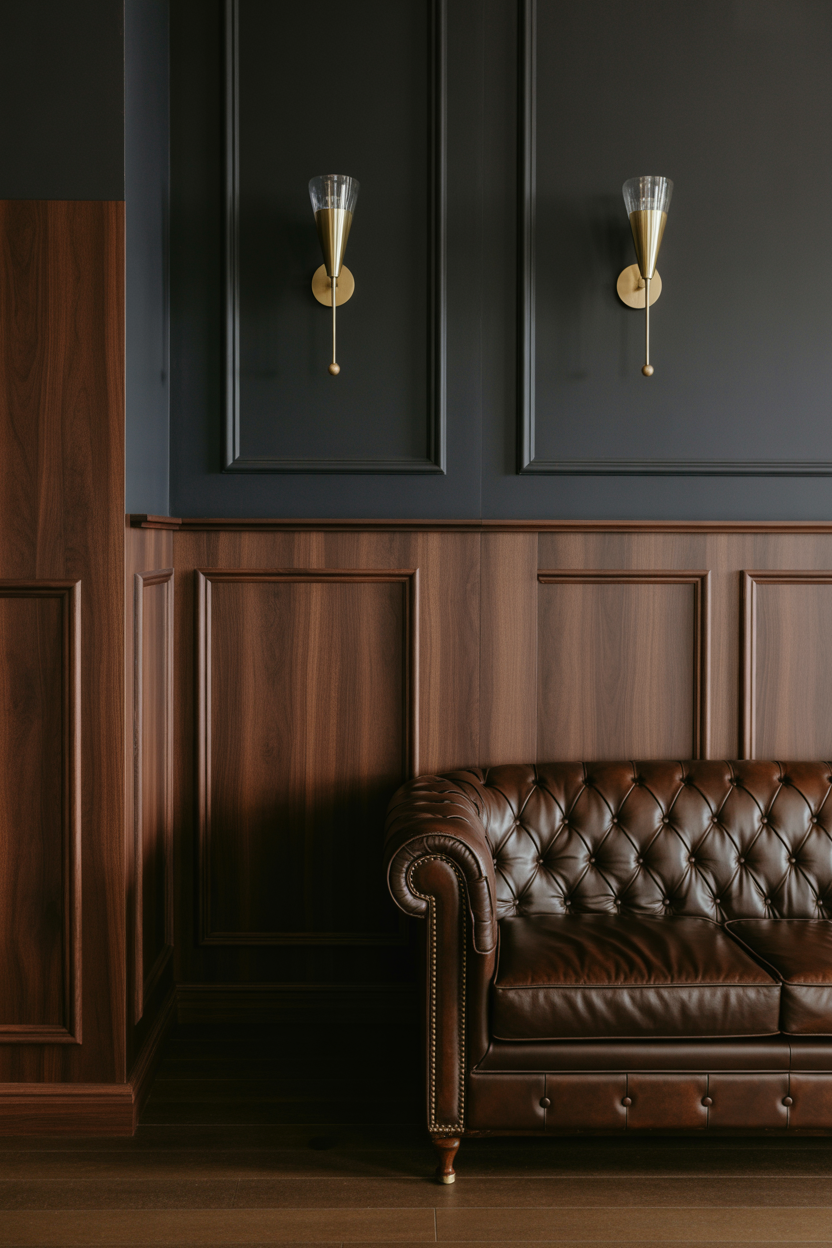
If your home doesn’t have original character — no carved doorways, no built-ins, no architectural details — don’t worry. Wainscoting and wood paneling are your best friends. They instantly add that old-world, scholarly feeling that makes a room look like it’s been there for 200 years.
You don’t have to spend a fortune either. Peel-and-stick wood paneling has come a long way and works especially well in rentals. If you can do it properly, dark walnut or mahogany-toned panels on the lower half of the wall paired with a deep paint color on the upper half creates this incredibly rich two-tone effect that photographs beautifully and feels even better in person.
Exposed Brick Walls as a Dark Academia Canvas
Exposed brick is one of those happy accidents that works perfectly for this aesthetic. The raw texture, the warmth, the sense of age — it does half the work for you. If your apartment has it, treat it like gold. If it doesn’t, brick-effect wallpaper has gotten surprisingly convincing.
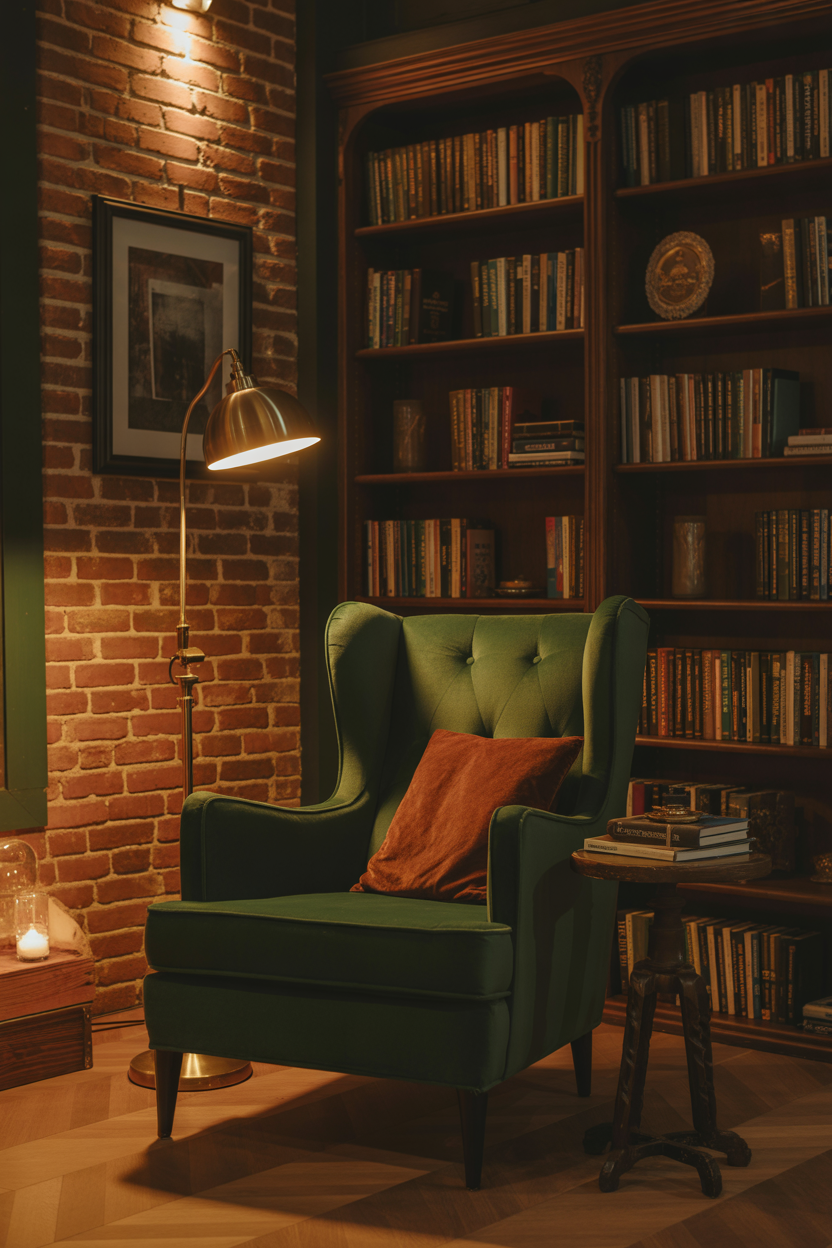
The key is contrast. Pair the brick’s rough, earthy tone against smooth velvet, gleaming brass, and dark polished wood. That tension between raw and refined is exactly what makes dark academia feel layered and interesting rather than just “old.” One forest green velvet armchair against a red brick wall with a brass floor lamp? Genuinely stunning.
Arched Doorways and Gothic Window
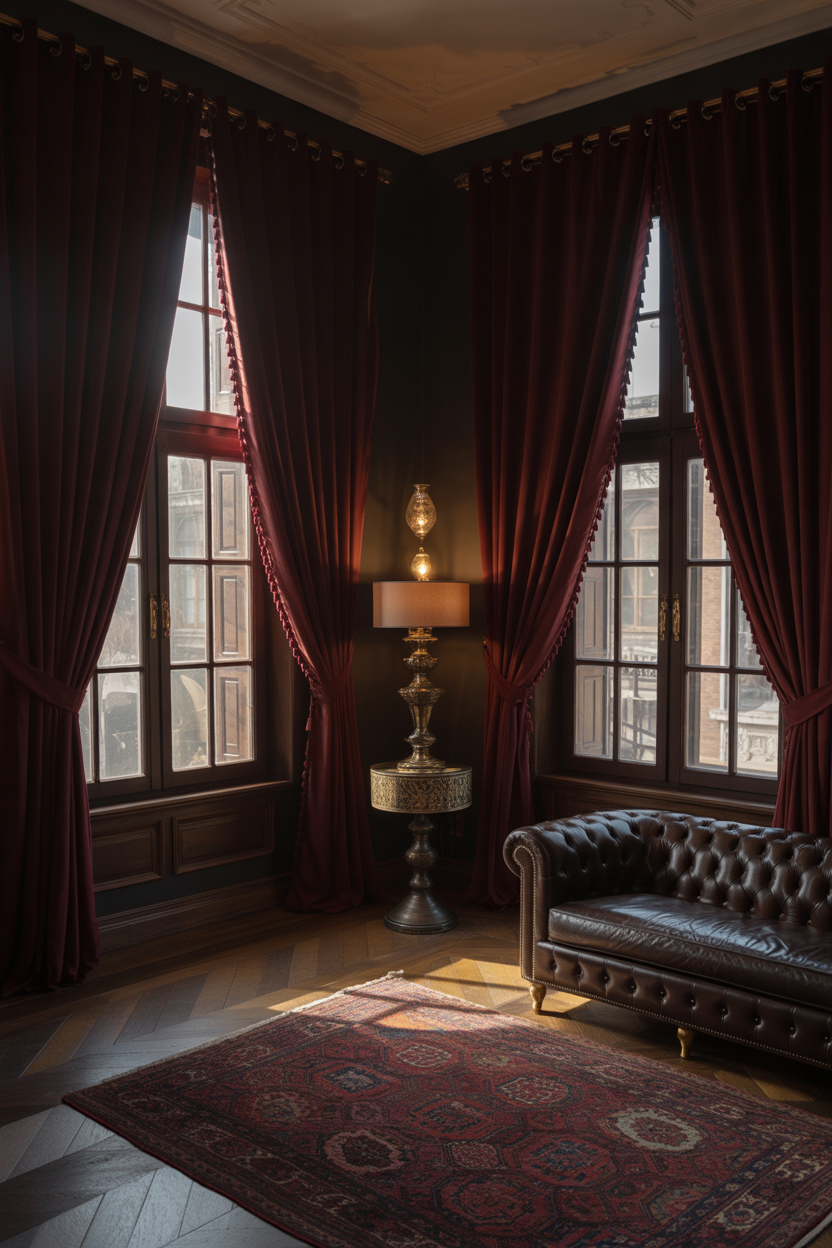
Windows are everything in a dark academia living room. Not because you want lots of light — but because you want to control it. Heavy velvet drapes in burgundy, forest green, or charcoal are the standard for good reason. They filter daylight into something amber and soft, like late afternoon in an old library.
If you’re renting and can’t install heavy curtains, start with sheer linen underneath for a layered look. For arched windows, lean into the shape — arched curtain rods are more accessible than ever. And if your windows are plain rectangles, arched window film overlays can add that Gothic detail for almost nothing. The difference in atmosphere is remarkable.
The Chesterfield Sofa: The Undisputed Throne of Dark Academia
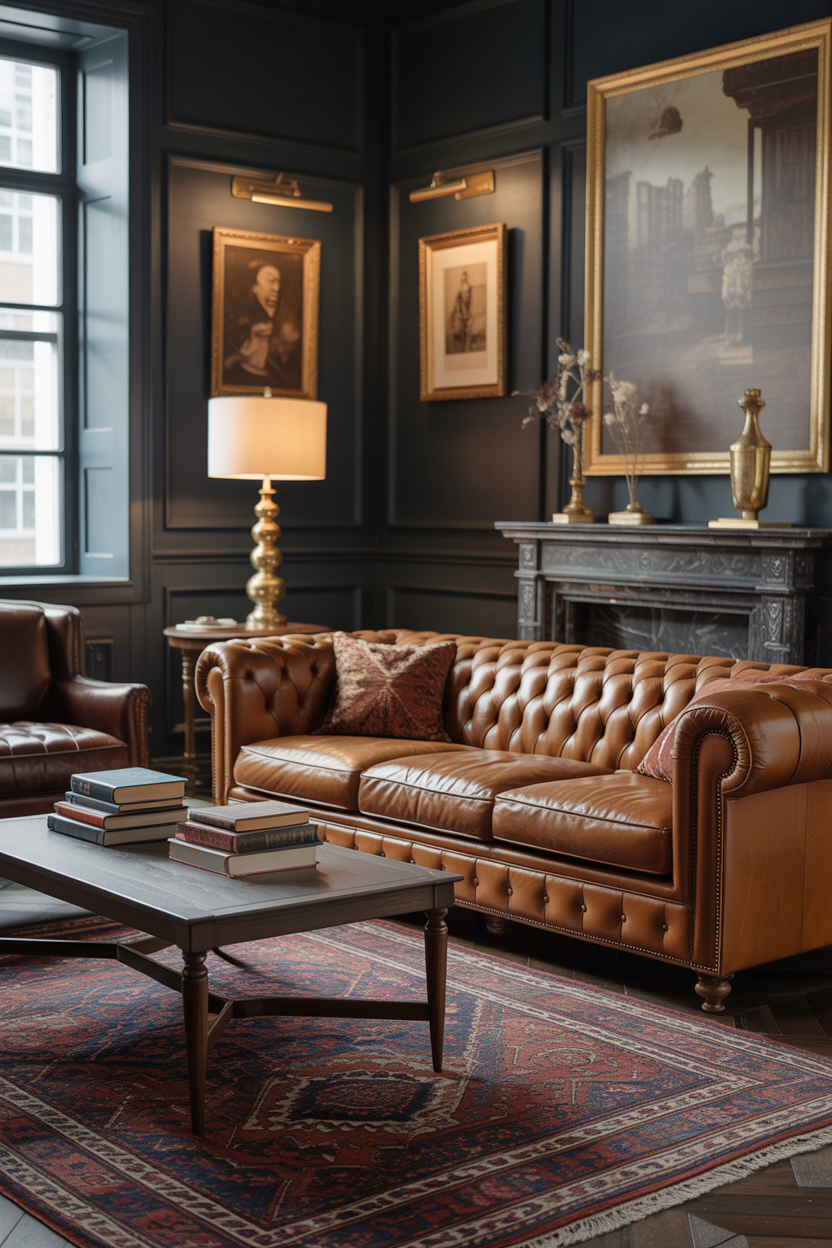
If there’s one piece of furniture that defines this entire aesthetic, it’s the Chesterfield sofa. The deep button tufting, the rolled arms, the sense of dignified comfort — it looks like it belongs in a private club or a professor’s study, which is exactly the point.
For dark academia, the best upholstery choices are cognac leather (it ages beautifully and develops character over time), burgundy leather, forest green velvet, or deep charcoal tweed. Burgundy leather is the classic. Green velvet is the one getting all the Pinterest saves right now. Budget-wise, you don’t have to spend a fortune — there are solid mid-range options that look the part, and a secondhand Chesterfield with a little wear actually looks better in this aesthetic than a pristine new one.
The Writing Desk as a Living Room Feature
Most people relegate the writing desk to a home office, and honestly, that’s a missed opportunity. A beautiful vintage desk in the corner of a dark academia living room becomes an instant focal point. It tells a story about the person who lives there. It signals that this is a space for thinking, reading, and creating.
For more modern decor ideas, explore Transform Your Space: 27 Dark Green Living Room Ideas for a Bold & Cozy Look and discover how to create a cozy yet luxurious space.
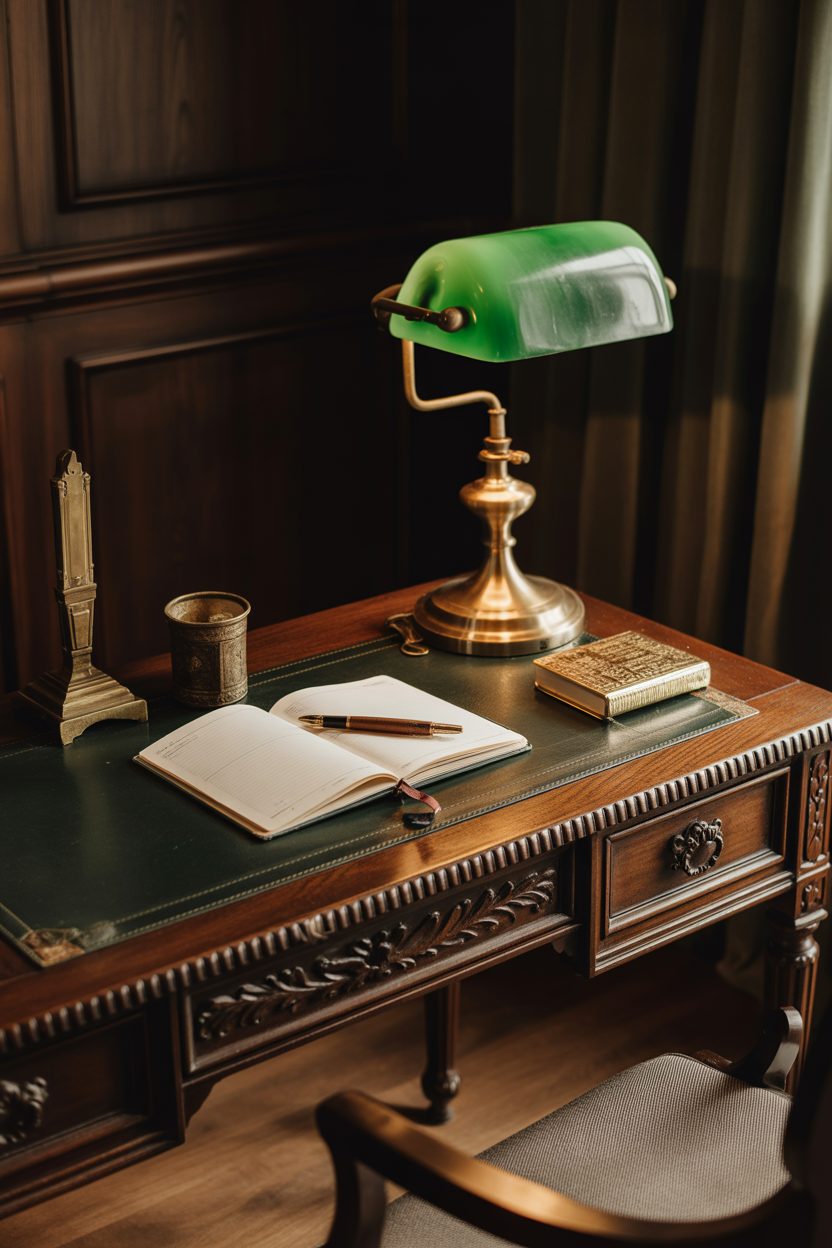
Look for roll-top desks, secretary desks, or carved mahogany styles at antique markets or on secondhand sites. Style the surface intentionally: a brass desk lamp, a fountain pen, an open journal, a wax seal set, a small stack of books. It shouldn’t look like a working office — it should look like someone just stepped away from writing a letter.
Velvet Armchairs in Jewel Tones
A velvet armchair in the right jewel tone is one of those pieces that can single-handedly shift a room’s entire atmosphere. Velvet has this quality of absorbing light rather than reflecting it, which gives the room depth and softness at the same time. It photographs beautifully, which is part of why it dominates dark academia Pinterest boards.
For the reading chair setup to really work, you need three things together: the chair, a lamp positioned just over your shoulder, and a small side table within arm’s reach. Wingback chairs give you that high-drama, literary look. Barrel chairs feel slightly more modern but still very much in the aesthetic. Try emerald green with cognac leather accents, or deep burgundy with brass hardware nearby — both combinations are genuinely perfect.
Marble Coffee Table: Where Victorian Meets Modern Dark Academia
Marble is the secret bridge between old-world dark academia and modern homes. It has natural elegance, a sense of age, and a visual weight that feels substantial without being heavy-handed. In a dark academia living room, the right marble coffee table grounds the whole space.
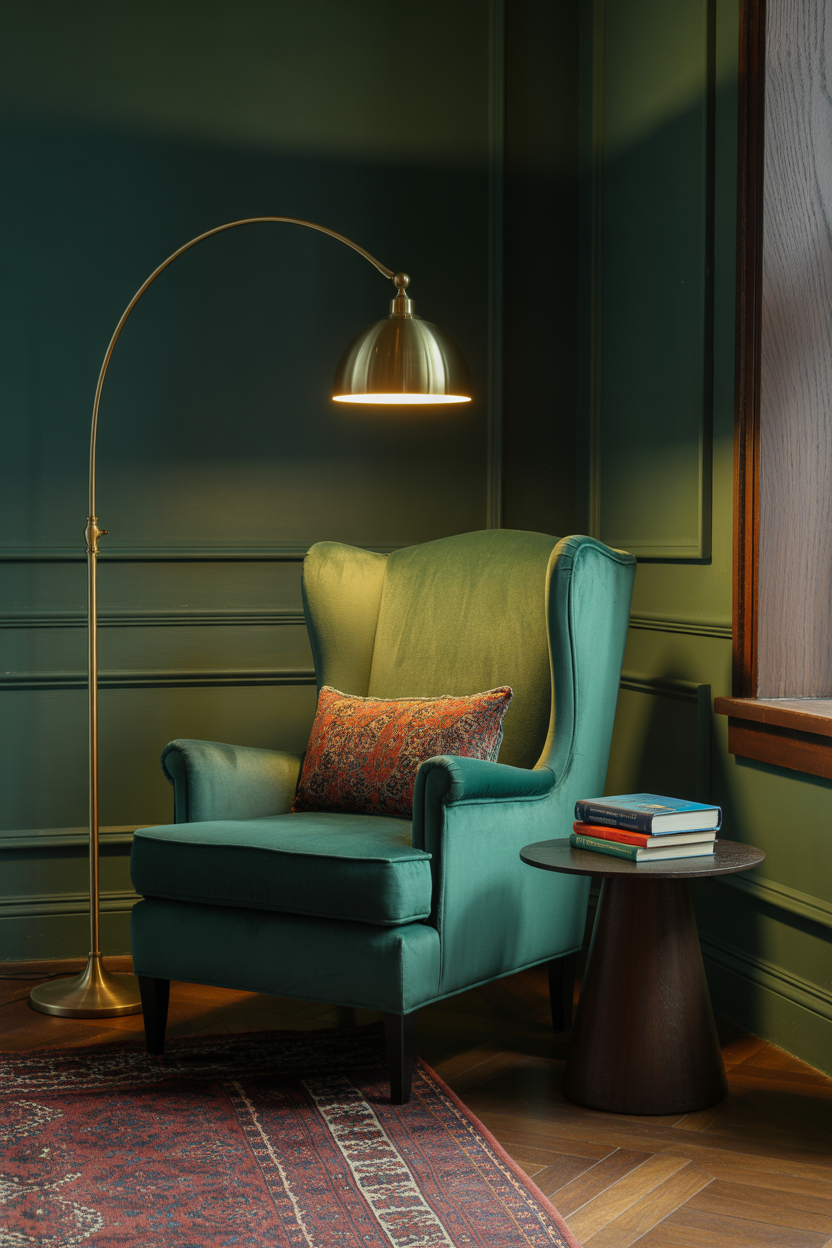
Go for dark marble if you want the full moody effect — Nero Marquina (black with white veining) is stunning and dramatic. Lighter veined marble works if your room is already very dark and needs visual breathing room. Style the surface with intention: a crystal decanter, a small brass object, one or two thick books, and maybe a dried floral arrangement. Keep it edited. Marble speaks for itself.
Floor-to-Ceiling Bookshelves
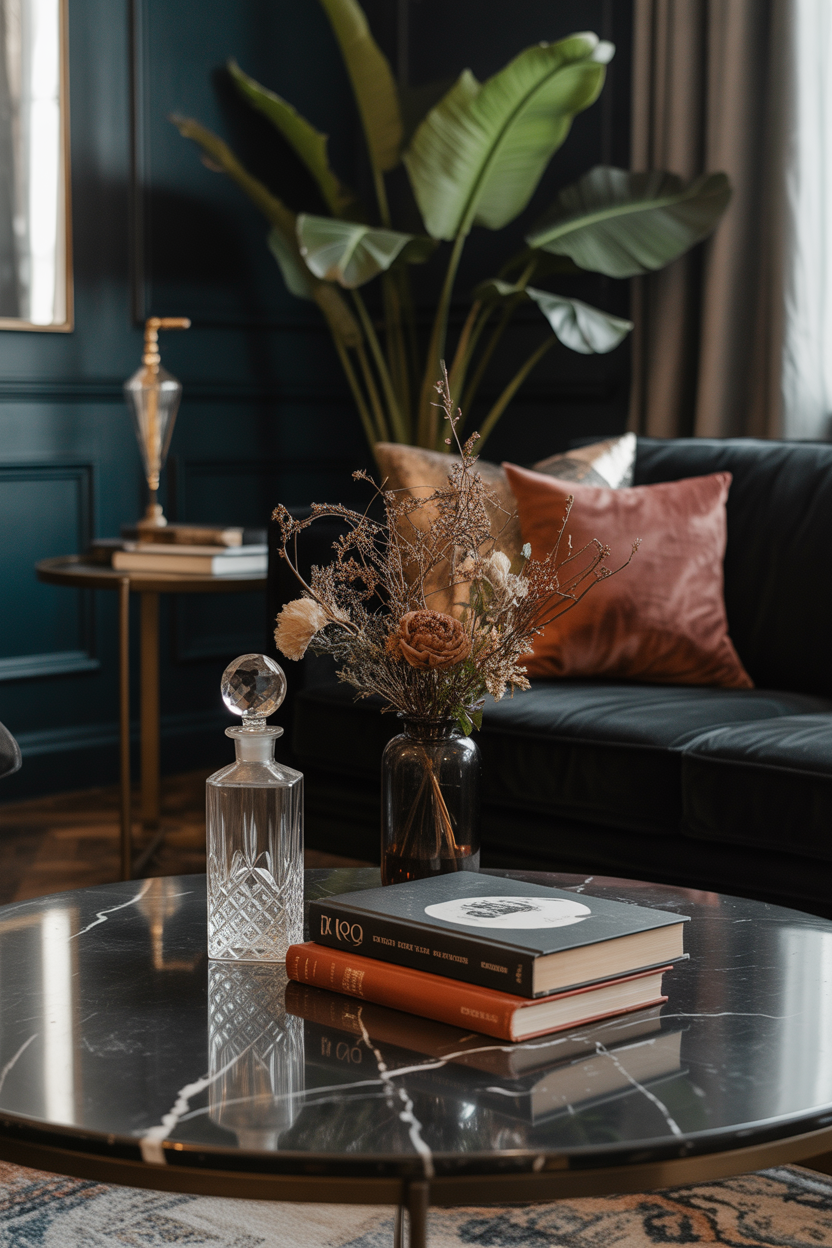
Bookshelves aren’t just storage in a dark academic living room. They’re architecture. Their atmosphere. They’re the single most transformative element you can add to any room, and floor-to-ceiling is always the goal. That vertical drama — the sense that books are literally surrounding you — is irreplaceable.
If you’re renting or on a budget, the IKEA Billy bookcase floor-to-ceiling hack is genuinely excellent and costs a fraction of built-ins. The trick is securing them to the wall properly and adding crown molding at the top to make them look intentional. Arrange books by color grouping for a cohesive look, or mix spine-out and stacked orientations for texture. Leave some deliberate space — a shelf packed wall-to-wall with books looks like storage; a thoughtfully arranged shelf looks like a collection.
The Art of Shelf Styling: Curating Your Dark Academia Vignettes
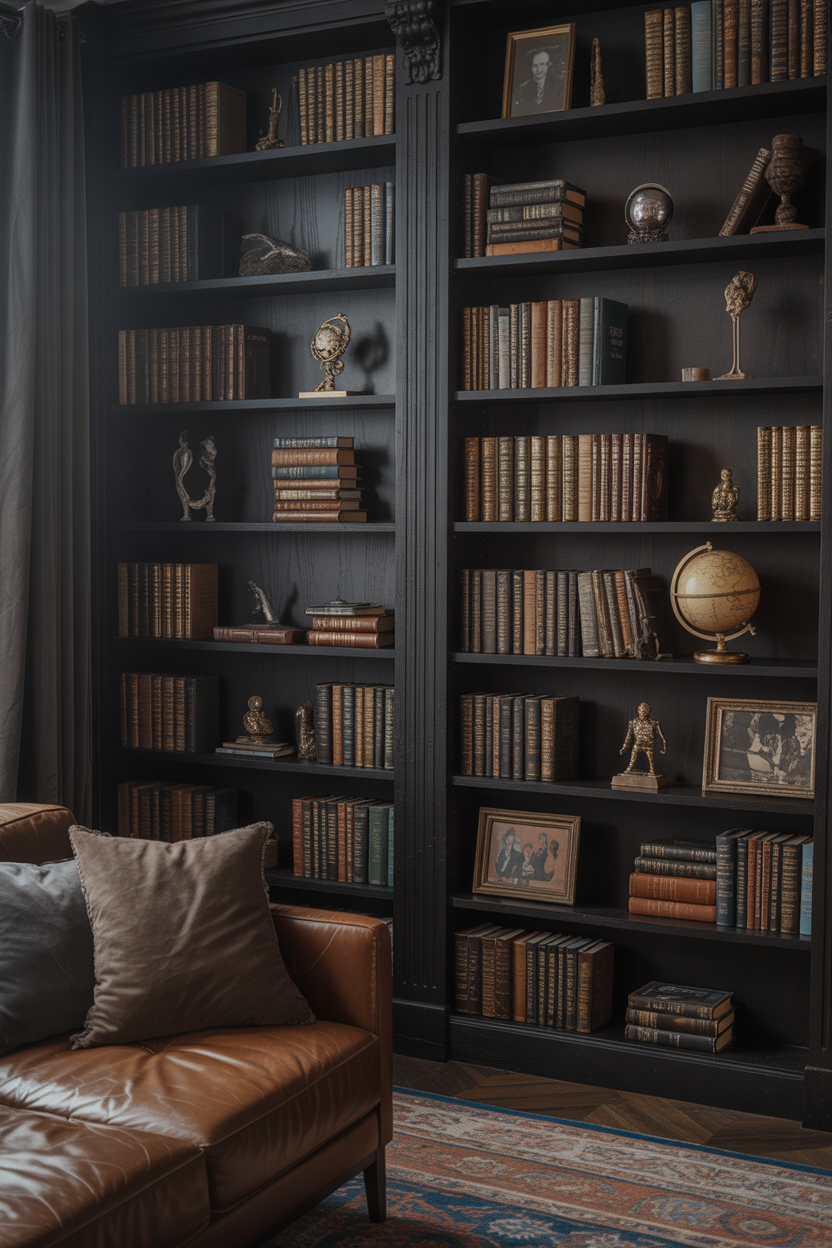
There’s a real difference between a shelf that looks curated and one that just looks like a lot of stuff. The curated shelf tells a story. Every object feels chosen. There’s rhythm and breathing room and little moments of visual surprise.
The rule of threes is your friend here: group objects in sets of three at varying heights. Mix flat books with upright ones, then tuck a small object in front. For dark academia specifically, the objects that work best are antique globes, brass telescopes, hourglasses, magnifying glasses, glass dome terrariums, old candlesticks, and botanical specimens in apothecary jars. Don’t overlook thrift stores — these pieces turn up constantly and cost almost nothing. A tarnished brass candlestick from a secondhand shop looks a thousand times more authentic than a brand-new one.

Layered Lighting
Here’s something most people don’t realize: lighting is probably the single most important element of the dark academia aesthetic — more than furniture, more than color. One overhead light turns any room into a waiting room. Multiple-layered light sources at different heights turn a room into an experience.
The system is simple: ambient light (overall glow), task light (functional, like a reading lamp), and accent light (highlighting objects or architectural details). For dark academia, you want all three, and you want them all warm. Switch every bulb in the room to 2700K–3000K. That slight amber tone is the difference between “moody and atmospheric” and “just dim.” It’s a five-minute change that costs almost nothing and makes an enormous difference.
Brass Lamps, Banker’s Lamps & Candlelight
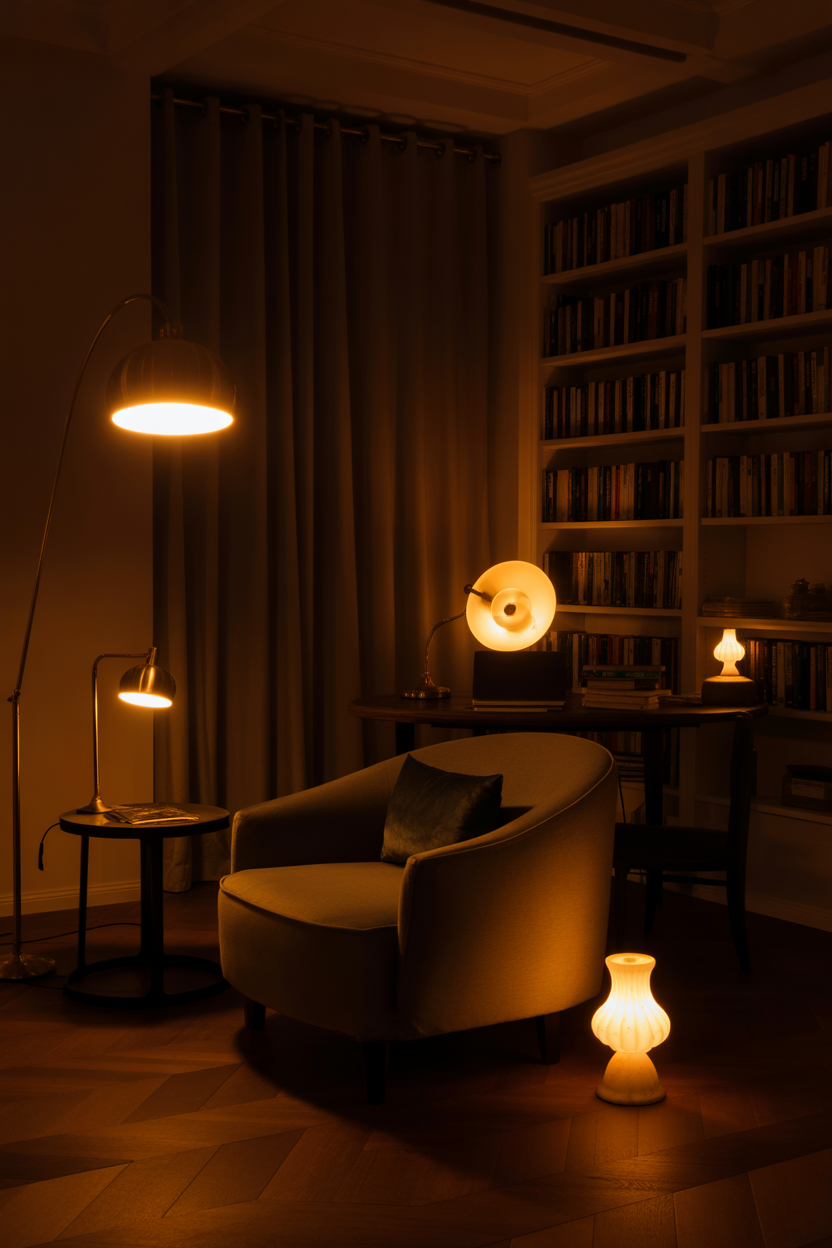
Let’s talk specifics. The brass floor lamp is the workhorse of this aesthetic — tall, warm, positioned to arc over a reading chair or flank a sofa. The banker’s lamp (the one with the green glass shade) is practically a symbol of the aesthetic at this point, and for good reason — it looks like it belongs on a professor’s desk in 1910, which is exactly the energy.
Candles deserve their own mention. Real candles in brass or iron holders add a flicker and warmth that no electric light can replicate. Group them on a mantelpiece, a coffee table, or a bookshelf surface. If fire isn’t practical, high-quality flameless candles with warm-toned flame effects are genuinely convincing. Wall sconces are another underused tool — two flanking a mirror or painting instantly add architectural warmth without taking up any floor space.
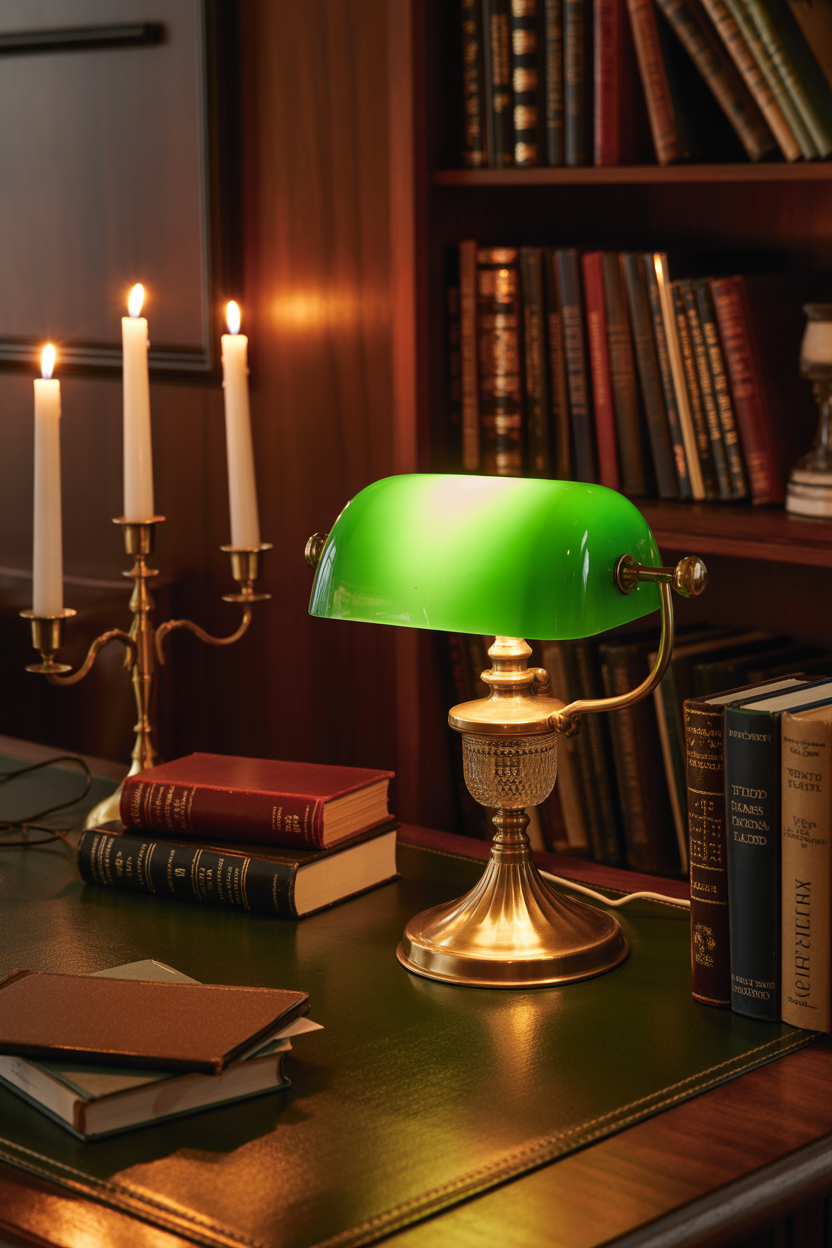
How Shadow and Darkness Become Decorative in a Dark Academia Living Room
This is the idea that most design guides completely skip over, and it’s one of the most interesting parts of the aesthetic. In dark academia, shadow isn’t a problem to solve — it’s a design element to use intentionally. The way a brass lamp casts a warm glow across a bookshelf, leaving the upper shelves in soft darkness. The shadow of a plant against a deep green wall. The way candlelight makes a velvet chair look like it’s glowing.
Think of shadows as your fifth wall. Direct your light sources toward specific objects — a painting, a shelf vignette, a desk surface — and let the rest of the room fall naturally into warmth and darkness. This creates a sense of depth and mystery that no amount of overhead lighting can achieve. It’s the difference between a room that looks like a magazine set and a room that feels like a place someone actually lives and thinks.
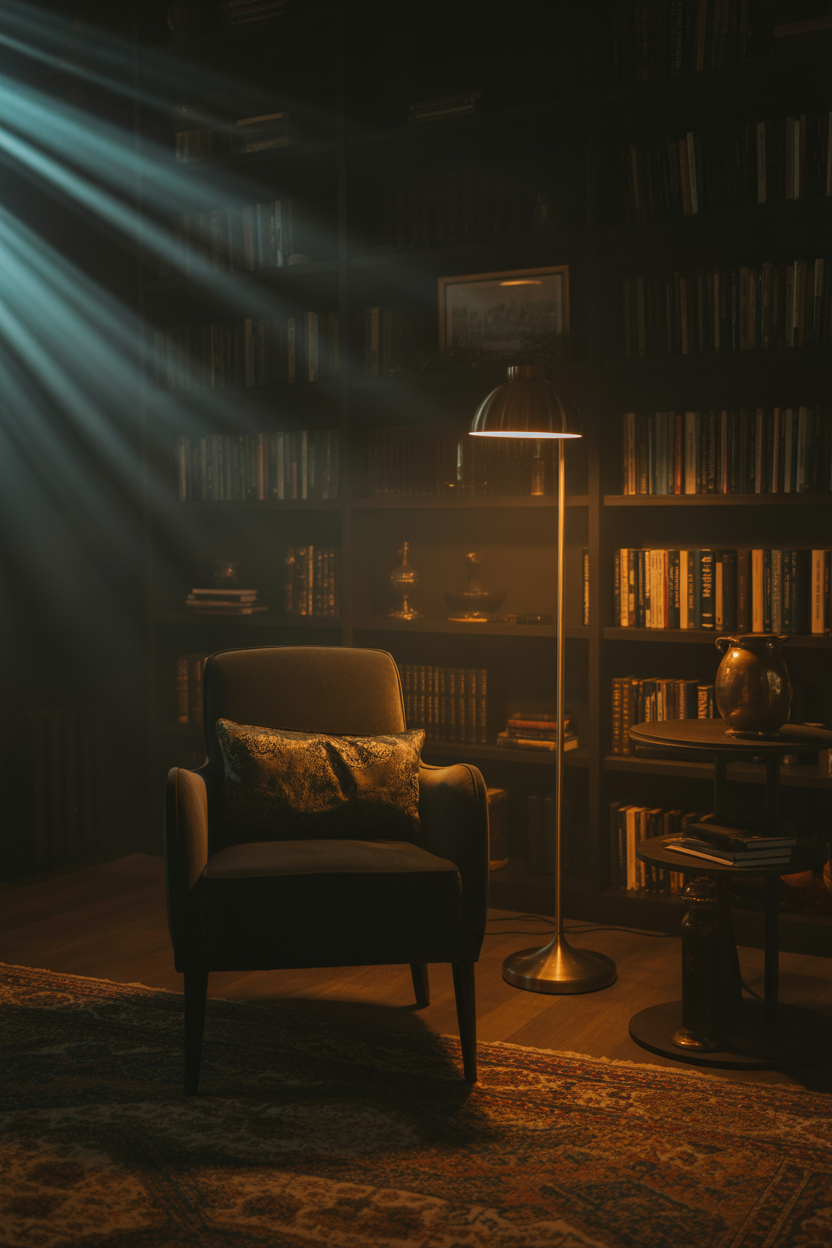
Persian Rugs as the Foundation of Every Dark Academia Living Room
If you’re starting from scratch and can only buy one thing, buy the rug first. A good Persian or Oriental rug sets the entire color palette of the room and instantly grounds the space with warmth and history. It’s genuinely the fastest way to make any room feel intentional.
For dark academia, you want color families in burgundy and navy, forest green and gold, or oxblood and ivory. The pattern itself adds that visual complexity that bare floors can never achieve. Sizing matters enormously — the most common mistake is going too small. In a living room, the rug should sit under the front legs of every piece of furniture at a minimum, or ideally under everything entirely. You can find beautiful vintage Persian rugs at surprisingly reasonable prices on resale platforms, antique markets, and even estate sales. A little wear adds character, not damage.
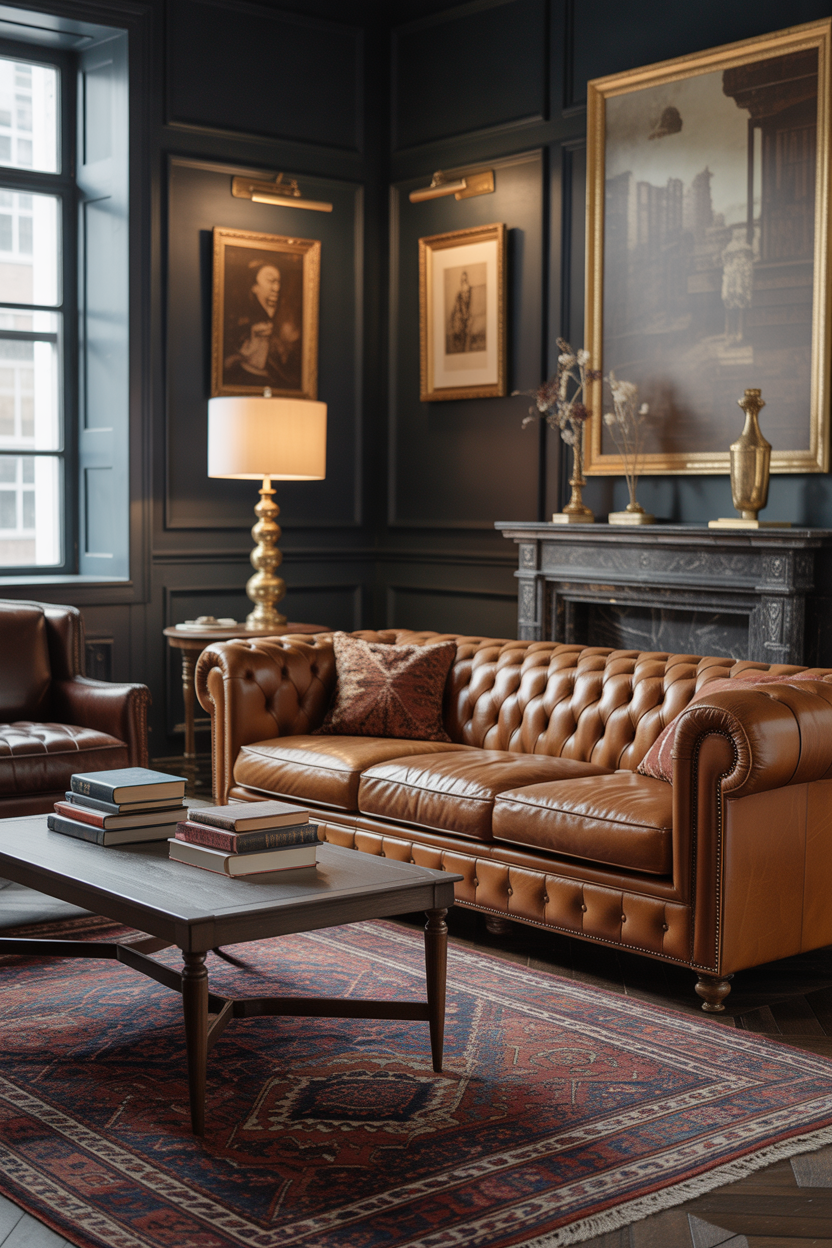
Throw Pillows, Cashmere Blankets & Tweed
Dark academia is a tactile aesthetic as much as a visual one. The fabrics you bring in — and how you layer them — determine whether a room feels genuinely inviting or just looks good in photos. The goal is sensory richness: different textures that reward touch as much as sight.
The textures that work best together are velvet, leather, tweed, aged linen, and wool. Mix them without overthinking it. A velvet sofa with a cashmere throw draped over one arm, two tweed pillows tucked in the corner, a leather-bound book on the cushion beside them — that combination photographs beautifully and feels even better in person. The cashmere blanket draped casually (not folded perfectly) over a chair is one of those small styling details that makes a room feel genuinely lived-in rather than staged for a photoshoot.

Building a Dark Academia Gallery Wall
A gallery wall done right is one of the most powerful things you can do to a dark academia living room. Done wrong, it just looks like a bunch of random frames. The difference is intention — every piece should feel like it was chosen for a reason, even if the reason is just that you love it.
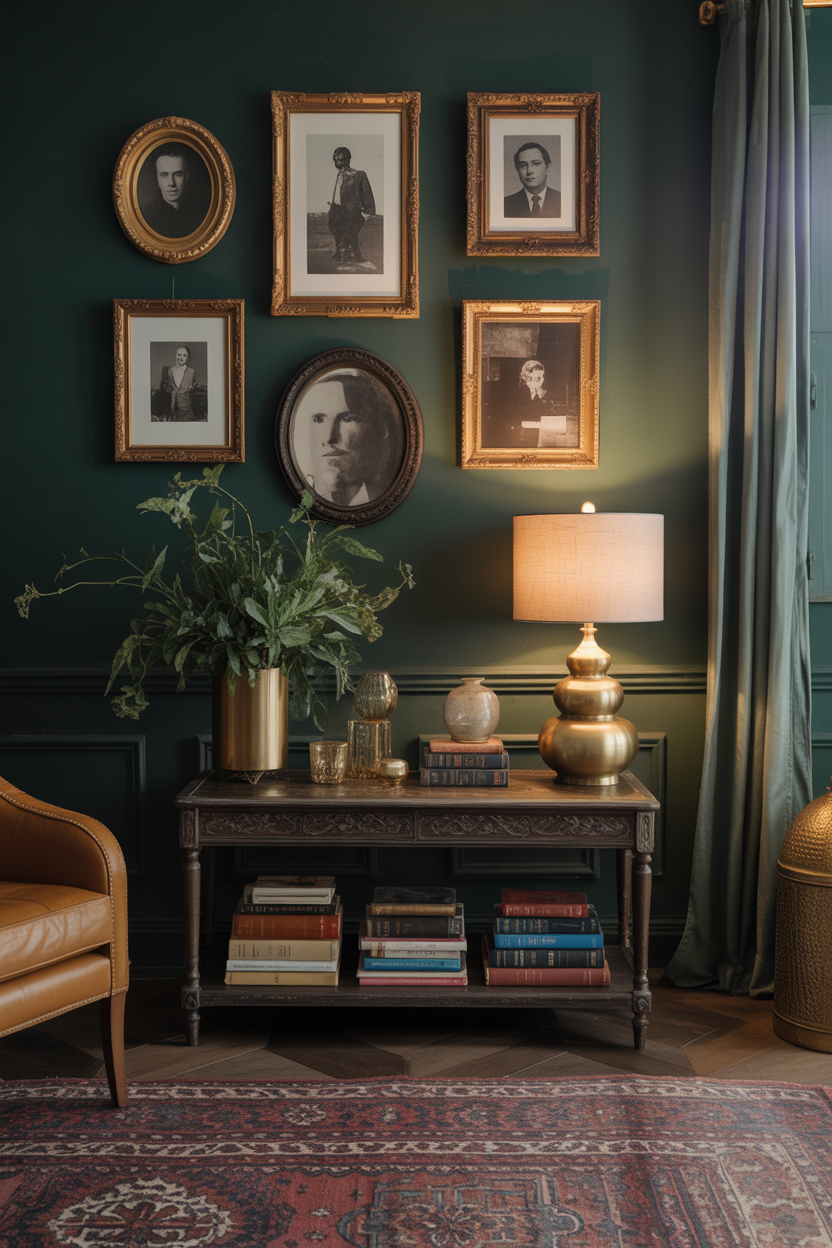
For dark academia, the content matters as much as the frames. Think classical landscape reproductions (you can find beautiful prints online for almost nothing), vintage anatomical drawings, antique botanical illustrations, old world maps, and philosophical quotes in calligraphy. Frames should be ornate, gilded, dark wood, or simple black — don’t mix too many frame styles. Arrange them on the floor first before committing to the wall. Mix portrait and landscape orientations, vary the sizes, and don’t be afraid to go large with one central anchor piece.
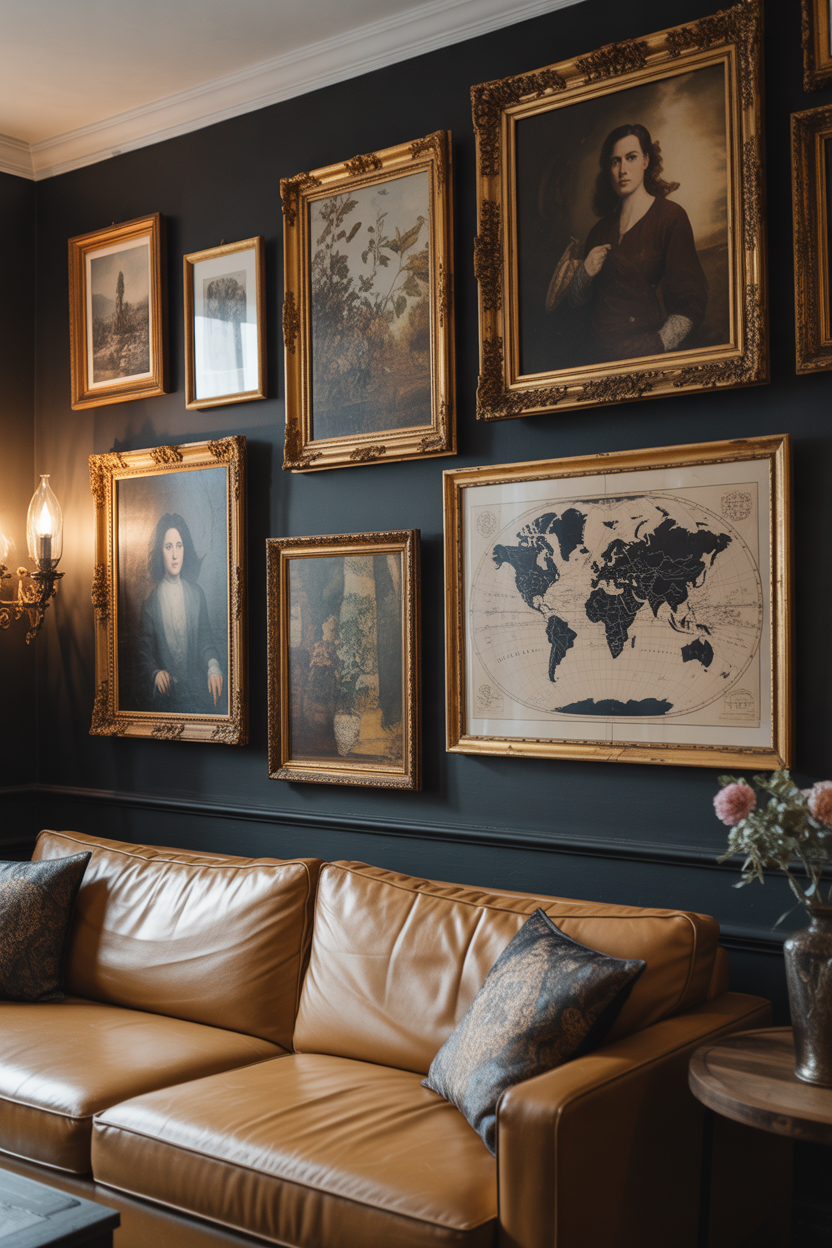
The Collector’s Corner: Globes, Hourglasses & Curiosity Cabinet Objects
There’s an old concept called the Wunderkammer — literally a “cabinet of wonders” — where collectors would display remarkable objects from nature, science, and history. That’s the spirit behind the best dark academia accessory styling. Every object should feel like it has a story.
The specific pieces that nail this aesthetic: antique telescopes, brass compasses, wax seal kits with an aged wax stick, old letters tied with twine, glass specimen jars with botanical contents, ornate candlesticks, crystal inkwells, and antique clocks. Group them by material or theme — all brass objects together, all botanical specimens together — rather than scattering them randomly across the room. The effect is a cohesive collection rather than clutter. Thrift stores, estate sales, and antique markets are genuinely the best sources. Authentic patina and imperfection are features, not flaws.

Botanical and Natural Elements
One thing people sometimes miss about dark academia is that it’s not supposed to feel sterile or purely antique. It should feel alive — like a space where someone actually inhabits it, thinks in it, brings things home from walks, and tucks them into bookshelves. Natural elements do that beautifully.
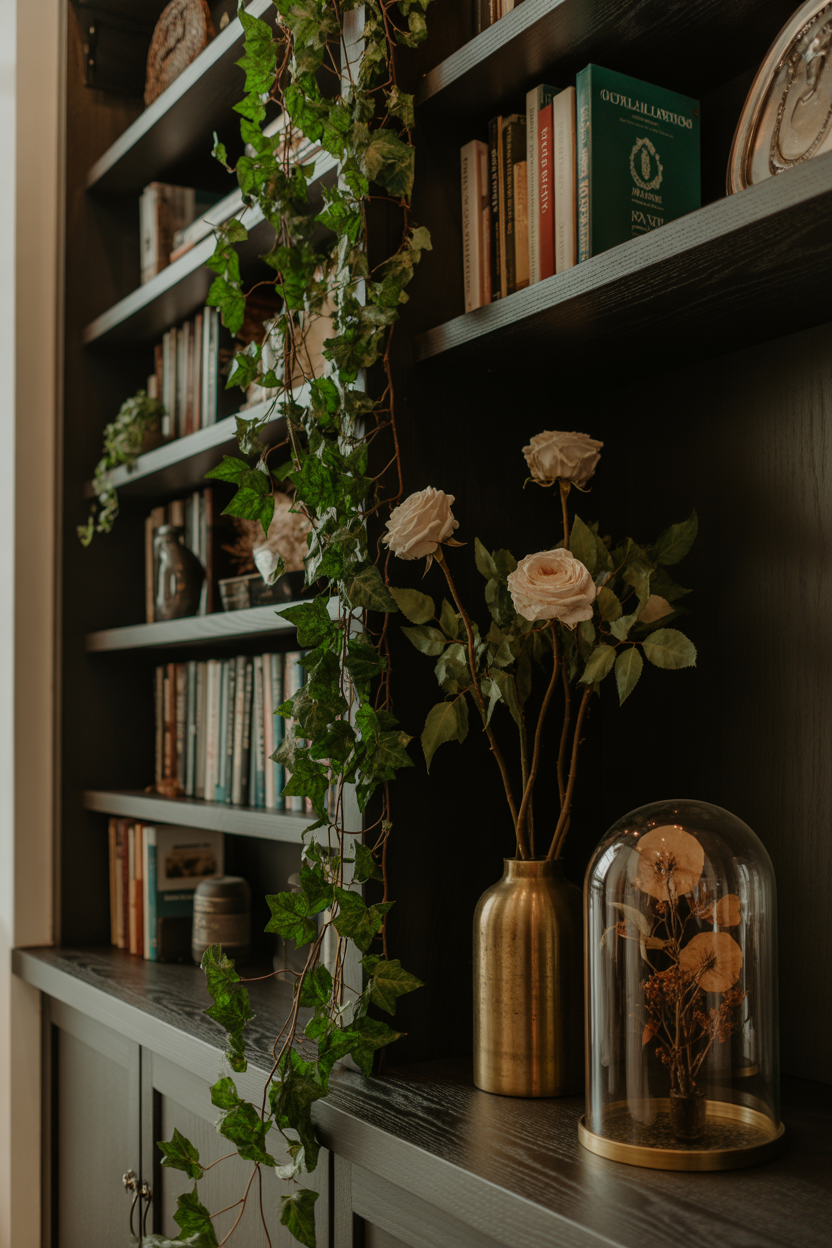
Trailing ivy is probably the most iconic dark academia plant — it softens bookshelves and adds that sense of nature slowly reclaiming a scholarly space. Dark-leafed pothos, ferns, and snake plants all work well and are very forgiving. Dried flowers — roses, pampas grass, eucalyptus — add organic texture without the upkeep of live plants. Pressed flower frames and glass dome terrariums blur the line between natural object and art, which is exactly the right territory for this aesthetic.
Dark Academia Living Room on a Budget
Here’s the truth about this aesthetic: buying everything new is actually the wrong approach. Dark academia is supposed to feel collected over time, layered with history and imperfection. Which means thrift stores aren’t a compromise — they’re the ideal source.
The best categories to hunt: ornate picture frames (repaint them gold or leave them as found), hardcover books with interesting spines (nobody needs to be able to read them), table lamps in brass or bronze, heavy curtains in any deep color, ceramic vases, glass decanters, and candlesticks of any material. The single most impactful low-cost change you can make to any room? Replace every lightbulb with a warm amber 2700K bulb and add one velvet throw. That combination alone can shift a room’s atmosphere to more than a hundred dollars of new accessories.
Dark Academia Living Room for Small Apartments
Small rooms actually have a natural advantage with this aesthetic. Where “cozy” can feel like a limitation in other design styles, dark academia turns it into a feature. A small room with low warm lighting, a velvet chair, a bookshelf, and deep wall color doesn’t feel cramped — it feels intimate. Like a private sanctuary.
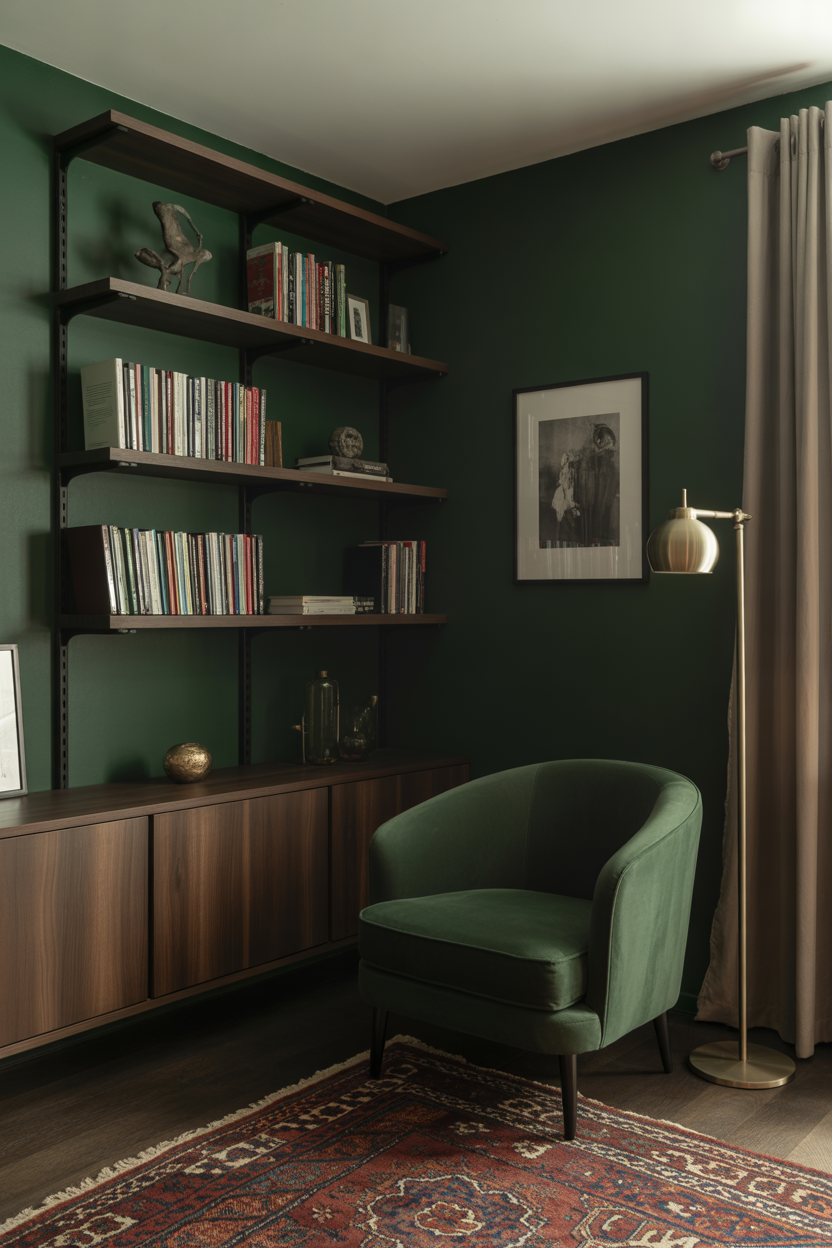
In a compact space, choose one statement chair instead of trying to fit a full sofa. Use floating shelves instead of a full bookcase if floor space is tight — they create that vertical bookshelf energy without eating into your square footage. Think vertically: floor-to-ceiling shelves make small rooms feel dramatically taller. And on the color question — you can actually go quite dark in small rooms with this aesthetic, as long as your lighting is warm and layered. The darkness creates depth rather than claustrophobia when it’s done right.
The Modern Dark Academia Living Room
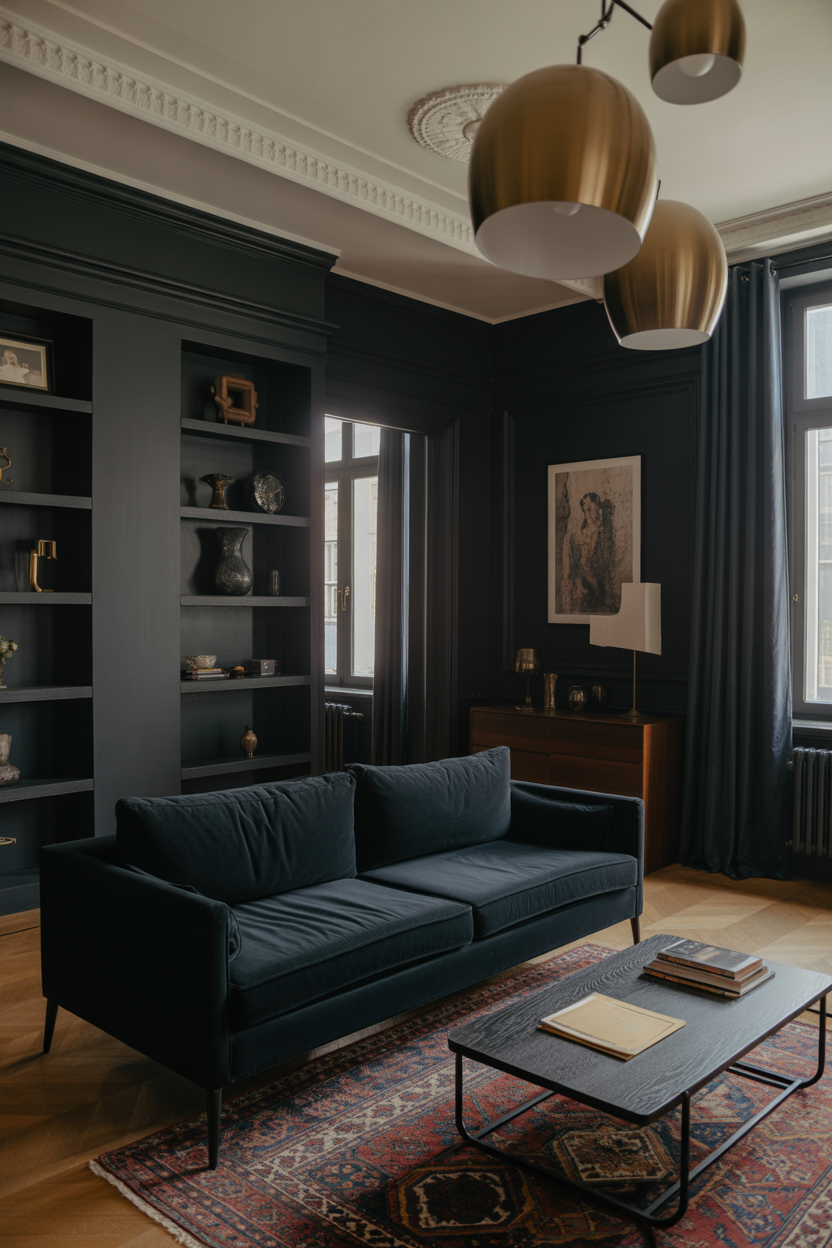
Not everyone lives in a Victorian townhouse with original cornicing and mahogany built-ins. Most of us live in new-build homes with flat walls, neutral carpet, and modern fixtures. And that’s completely fine — because modern dark academia is a real and very workable direction.
The key shift is leaning into black rather than brown as your dark anchor. Clean-lined black furniture, black metal frames, and matte black hardware read as contemporary but still very much within the moody, intellectual aesthetic. Mix these with vintage accessories — brass objects, old books, a Persian rug, velvet cushions — and the contrast between new and old is actually what makes it interesting. Concrete and glass can work too, especially in loft-style spaces. The rule is: keep the soul of the aesthetic (books, warm light, jewel tones, curiosity objects) even when the architecture is modern.
FAQ
What is the dark academia living room aesthetic?
It’s an interior design style inspired by old libraries, universities, and scholarly spaces. It uses rich dark colors, vintage furniture, warm lighting, and curated collections of books and antique objects to create a moody, intellectual atmosphere.
What colors define a dark academia living room?
The core palette includes hunter green, oxblood red, deep navy, charcoal, warm espresso brown, and burgundy. These are typically used on walls, furniture, and textiles together.
Can I do dark academia decor in a small apartment?
Absolutely — small spaces often work better for this aesthetic because the intimacy reads as cozy rather than cramped. Focus on one great chair, vertical bookshelves, warm lighting, and a Persian rug.
What’s the difference between dark academia and gothic decor?
Gothic decor leans into darker, more dramatic, and sometimes supernatural themes. Dark academia is more scholarly and romantic — it’s about libraries and learning, not darkness for its own sake.
Is dark academia decor expensive?
It doesn’t have to be. Thrift stores, estate sales, and secondhand markets are genuinely ideal sources for this aesthetic. The worn, collected quality of secondhand pieces often looks more authentic than buying everything new.