
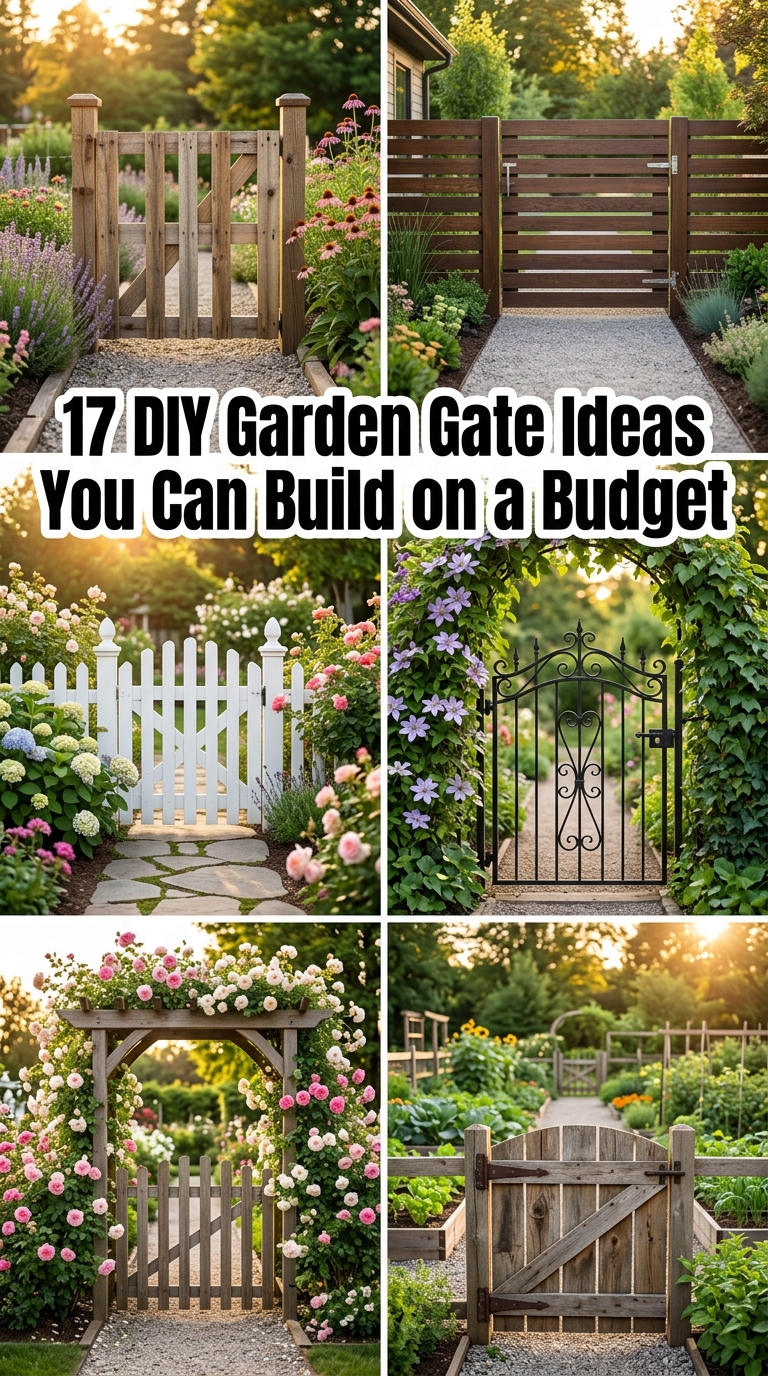
A garden gate does more than open and close — it sets the tone for everything behind it. Before a guest even reaches your front door, your gate has already made a first impression. The good news is that you don’t need a big budget or a carpentry degree to build one that looks custom-made. With a few tools, some reclaimed materials, and a free weekend, you can create a gate that adds charm, security, and curb appeal to your yard.
In this guide, you’ll find 17 budget-friendly DIY garden gate ideas, complete with materials, estimated costs, and practical tips to help you pick — and build — the right one for your space.
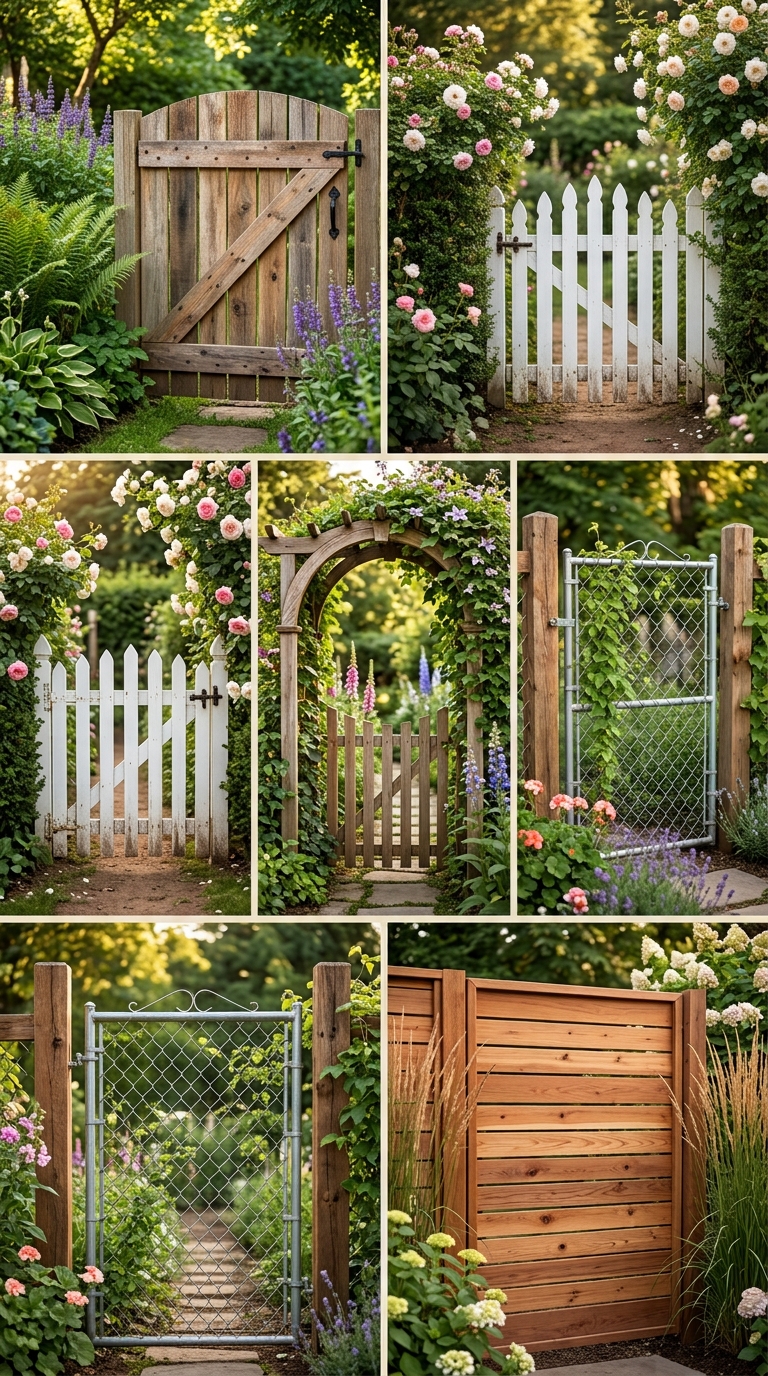
Quick Comparison: 17 Budget Garden Gate Ideas at a Glance
| # | Idea | Material | Est. Cost |
|---|---|---|---|
| 1 | Pallet Wood Gate | Reclaimed pallets | $10–$30 |
| 2 | Classic White Picket Gate | Pine/cedar | $60–$100 |
| 3 | Reclaimed Wood Rustic Gate | Barn/reclaimed wood | $20–$50 |
| 4 | Arched Arbor Gate | Cedar + lattice | $80–$150 |
| 5 | Chain Link Budget Gate | Chain link + frame | $40–$80 |
| 6 | Bamboo Garden Gate | Bamboo poles | $30–$60 |
| 7 | Horizontal Slat Modern Gate | Cedar boards | $90–$140 |
| 8 | Wire Mesh & Wood Frame Gate | Wood + hardware cloth | $40–$70 |
| 9 | Sliding Barn-Style Gate | Wood + steel track | $120–$200 |
| 10 | Cedar Privacy Gate | Solid cedar boards | $100–$160 |
| 11 | Recycled Door Garden Gate | Old door + hinges | $0–$40 |
| 12 | Painted Cottage Gate | Pine + paint | $50–$90 |
| 13 | Willow/Wicker Woven Gate | Willow branches | $15–$35 |
| 14 | Double Gate for Wide Entrances | Wood/metal | $150–$250 |
| 15 | Small Side-Yard Gate | Scrap wood | $25–$50 |
| 16 | Metal Mesh “Wrought Iron Look” Gate | Steel mesh panel | $60–$110 |
| 17 | Self-Closing Hinge Budget Gate | Any wood frame | $70–$120 |
17 DIY Garden Gate Ideas You Can Build on a Budget
1. Pallet Wood Garden Gate
Pallet wood is one of the cheapest ways to build a gate that still looks intentional. Because pallets are often free from local warehouses and shipping centers, your main cost is just the hardware — hinges, screws, and a latch.
Sand the boards well to avoid splinters, then arrange them vertically or in a herringbone pattern for a rustic, farmhouse look that feels far more expensive than it actually is.
Garden gates aren’t the only entry point worth upgrading — check out these side yard gate ideas for a matching DIY solution that closes off the side of your home in style.
A coat of weatherproof stain protects the wood from moisture and gives it a warmer, richer tone that blends beautifully with greenery.
Since pallet boards vary in width and grain, no two gates ever turn out identical, which is part of the charm. This project is ideal if you’re building your very first gate, since the wood is forgiving and mistakes are cheap to fix.
2. Classic White Picket Gate
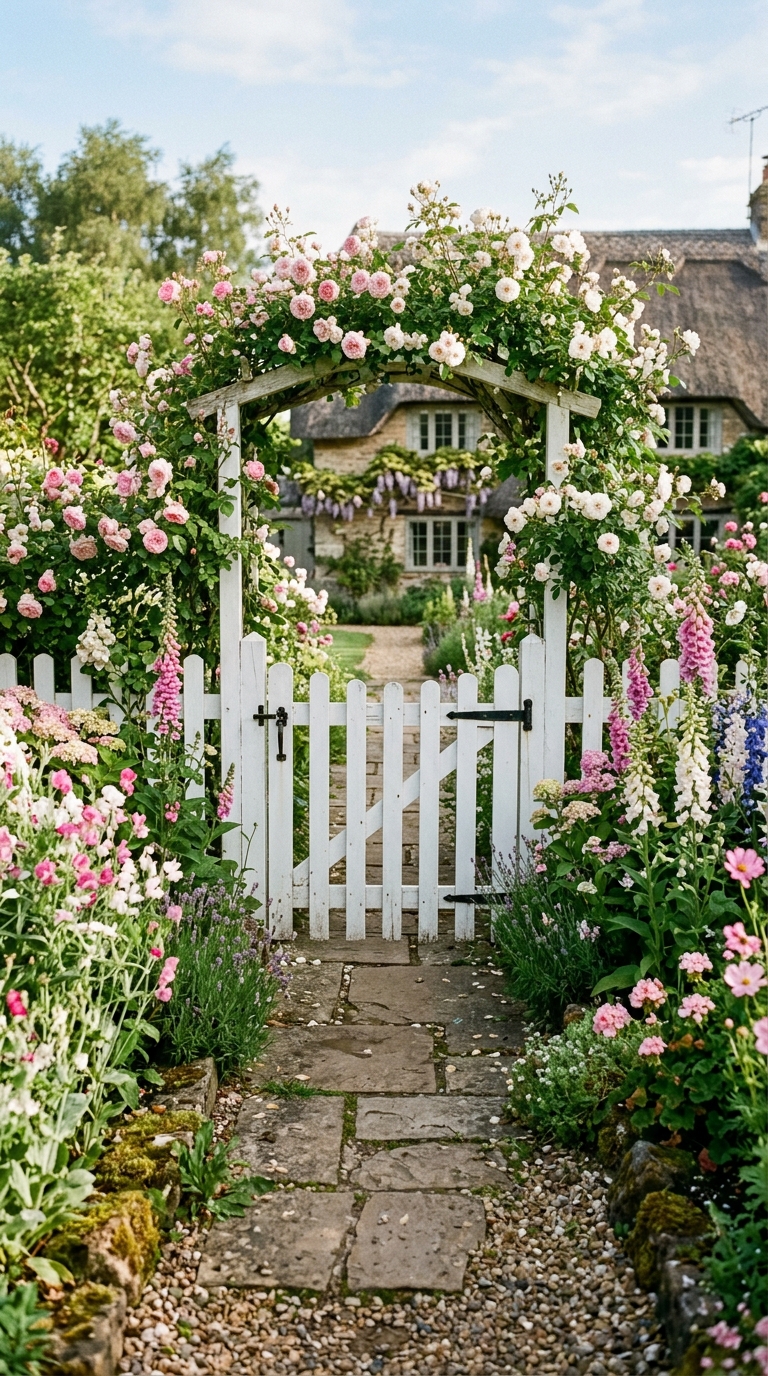
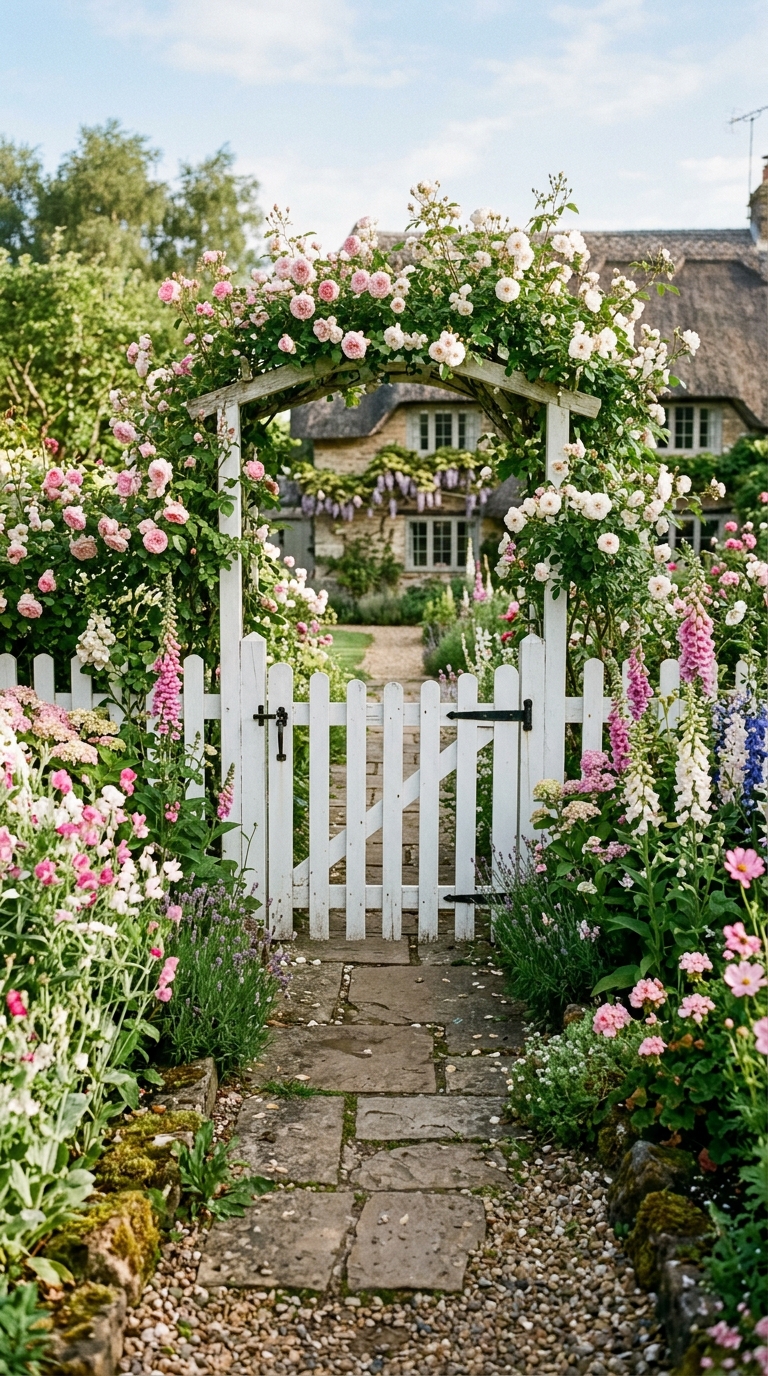
Nothing says “welcome home” like a white picket gate. It’s a beginner-friendly build using standard pickets and pine rails, and it instantly gives a cottage-style feel to any front yard.
The clean, evenly spaced pickets create a sense of order that pairs naturally with flower beds, climbing roses, and manicured lawns, making it one of the most photographed gate styles for a reason.
Paint it a crisp white or match it to your home’s trim for a cohesive, polished look that ties your whole exterior together.
If you’re loving these budget builds, don’t stop at the garden — these driveway gate ideas show how the same DIY approach can add privacy and curb appeal at the front of your property.
Because the design relies on simple straight cuts rather than curves or angles, it’s an approachable project even if this is your first time using a saw. Add decorative post caps or a curved top rail if you want to dress it up further without adding much extra cost.
3. Reclaimed Wood Rustic Gate
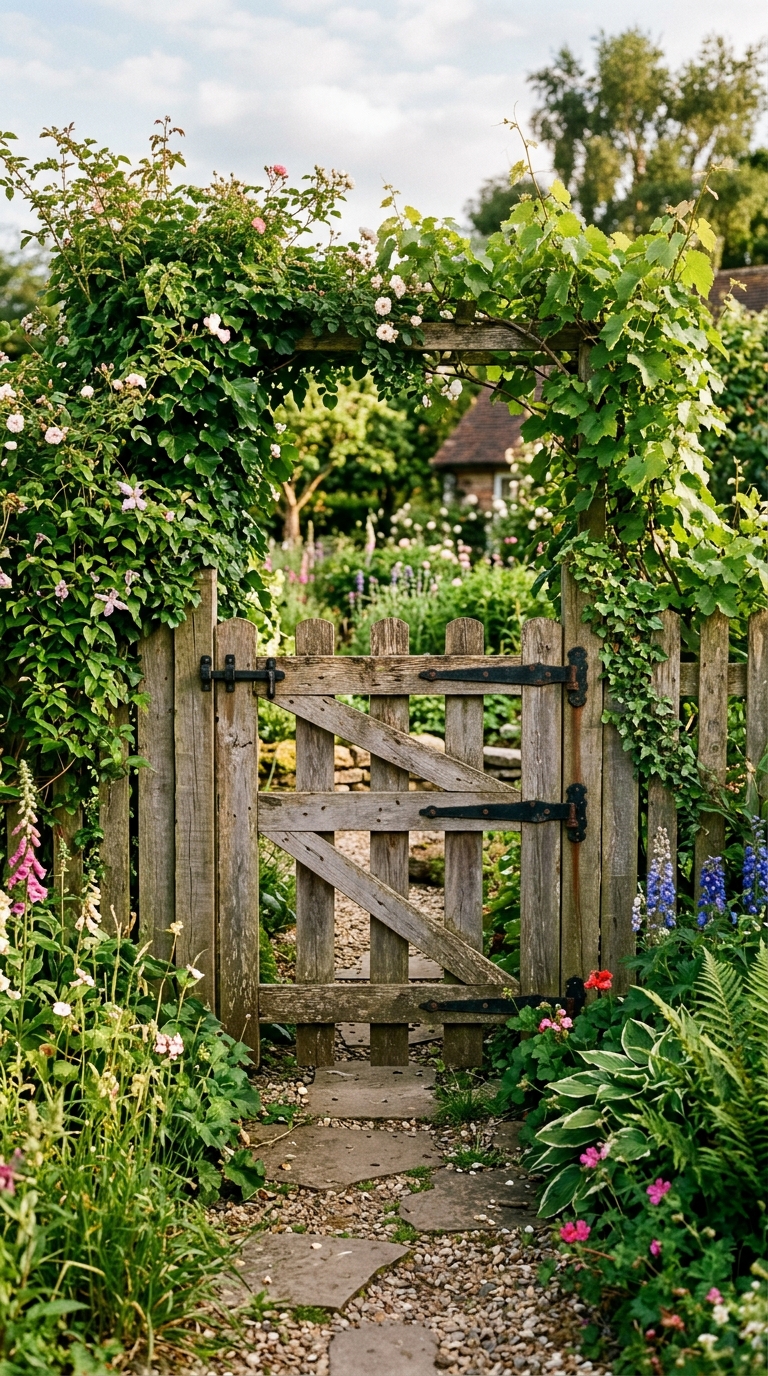
If you have access to old barn wood or leftover fence boards, this gate is essentially free to build. Mixing different wood tones, grain patterns, and even nail holes gives it a character that brand-new lumber simply can’t replicate.
It works especially well for farmhouse, rustic, or cottage-style gardens where a slightly imperfect, lived-in look is exactly what you want.
Because reclaimed wood varies in thickness and condition, plan on spending a little extra time sorting and trimming boards before assembly. Seal the finished gate with a clear exterior varnish to preserve the aged character without masking the natural color underneath.
This project is a great way to repurpose materials you might otherwise throw away, turning scraps into a genuine focal point for your yard.
A DIY gate looks even more polished when it’s matched with the right fencing. Take a look at these black garden fence ideas for a bold, budget-friendly pairing that elevates the whole yard.
4. Arched Arbor Gate
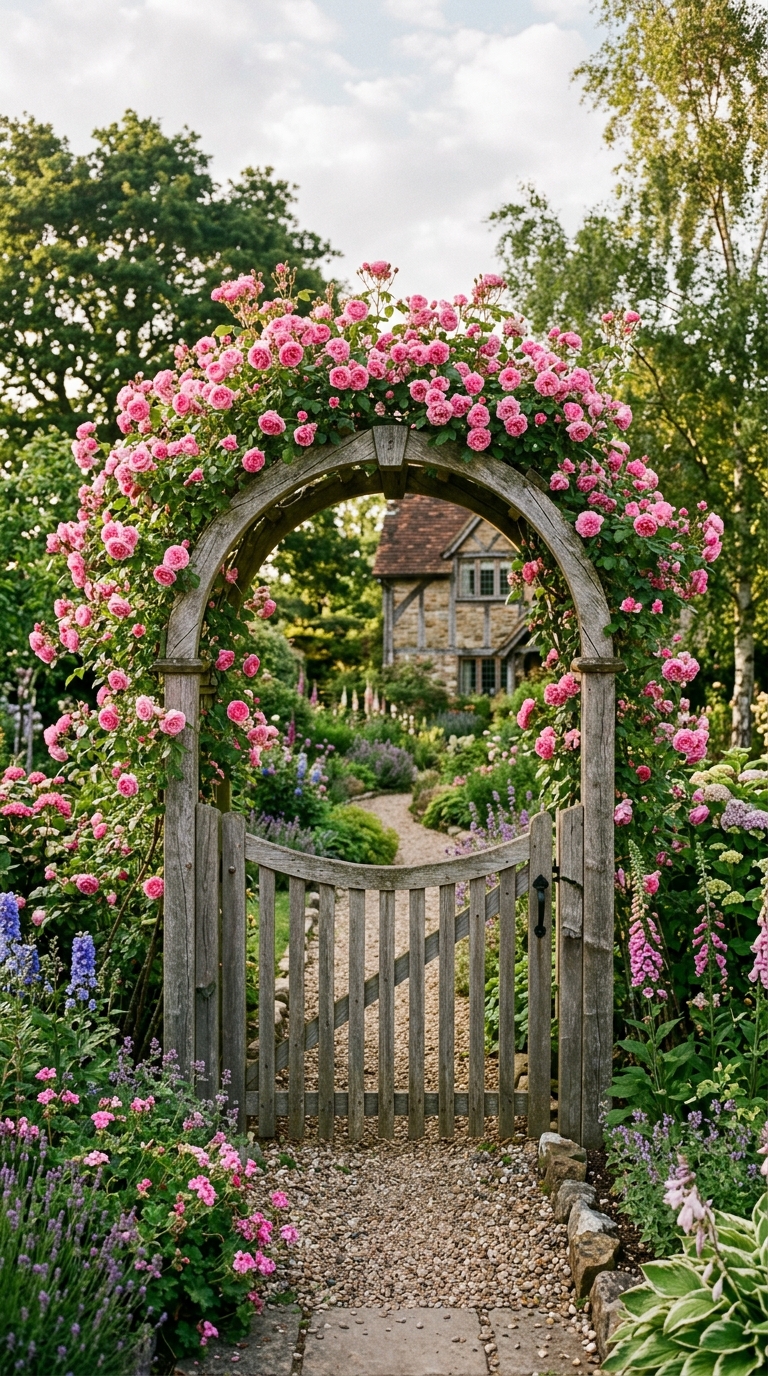
An arched arbor gate turns a simple entry point into a genuine focal feature. Built with a curved top and lattice sides, it’s ideal for climbing plants like roses, clematis, or jasmine, which fill in the frame over a season or two and create a living entrance to your garden.
The height of the arch also draws the eye upward, making even a small yard feel grander.
This build takes more cutting precision than a flat gate, since the curved top requires careful measuring and a steady hand with the saw.
The payoff in visual impact is significant, though, and the lattice sides use less material than solid panels, which helps keep costs down despite the more advanced shape. Once the plants take hold, this gate practically becomes part of the landscape itself.
5. Chain Link Budget Gate
For pure function on a tight budget, a chain link gate is hard to beat. It’s fast to build, requires minimal carpentry skill, and stands up well to years of daily use without warping, rotting, or needing repainting. It works well for side yards, dog runs, or vegetable gardens where practicality matters more than a polished appearance.
If space near your gate or patio is limited, pair your build with a vertical herb garden idea — a great way to add greenery without eating up yard space.
Because chain link is naturally utilitarian, framing it in wood instead of raw metal instantly softens the look and makes it feel more intentional.
This hybrid approach gives you the low-maintenance durability of chain link with a warmer, more garden-friendly frame around the edges. It’s also one of the most budget-friendly options on this list, since chain link mesh is inexpensive and widely available at any hardware store.
6. Bamboo Garden Gate
Bamboo is lightweight, inexpensive, and naturally suited to tropical, coastal, or zen-style gardens. Lash the poles together with outdoor rope or wire for an authentic, handcrafted look that requires no power tools at all — just patience and a good knot-tying technique.
The natural texture and warm tan color of bamboo bring an organic, relaxed feel that manufactured materials rarely achieve.
Because bamboo is hollow and lightweight, the finished gate is easy to hang and won’t strain smaller hinges the way solid wood can. It does need a protective sealant to prevent cracking and splitting in direct sun, especially in drier climates.
Once treated, though, a bamboo gate can last for years while adding a distinctive, resort-like touch to an otherwise ordinary garden entrance.
Once your new garden gate is up, why not extend that DIY energy indoors too? These indoor herb garden ideas are an easy budget-friendly project for anyone who loves growing their own greens.

7. Horizontal Slat Modern Gate
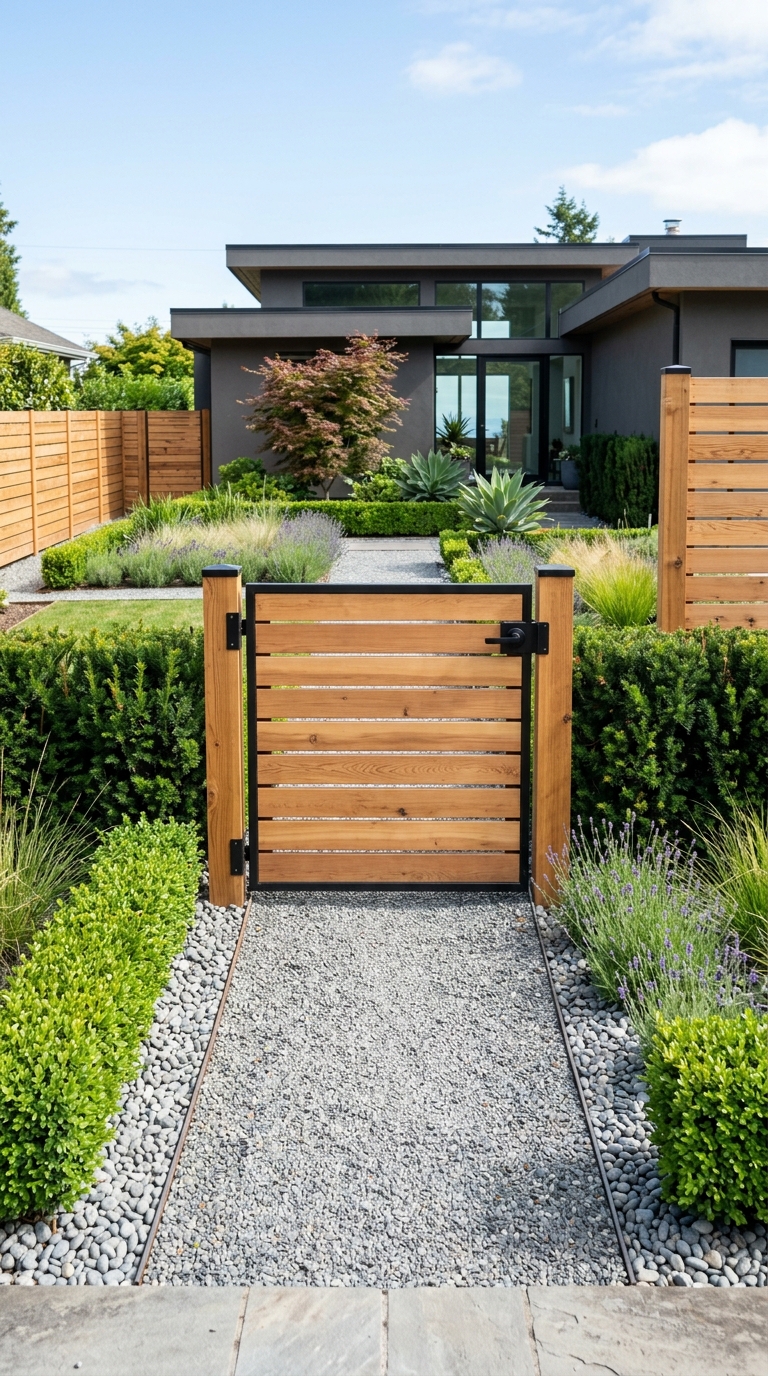
For a clean, contemporary look, horizontal cedar slats create a sleek gate that pairs beautifully with modern landscaping. The horizontal lines make narrow side yards appear wider and give even a simple wood build a designer feel.
This style works especially well alongside gravel paths, structured hedges, and minimalist exteriors where straight lines are already the theme.
Building it requires a bit more precision than a picket gate, since consistent spacing between slats is what makes the design look intentional rather than accidental.
Leaving small, even gaps not only improves airflow but also reduces the amount of wood needed, which helps keep material costs reasonable. Finished with a clear or dark stain, this gate reads as high-end without the high-end price tag.
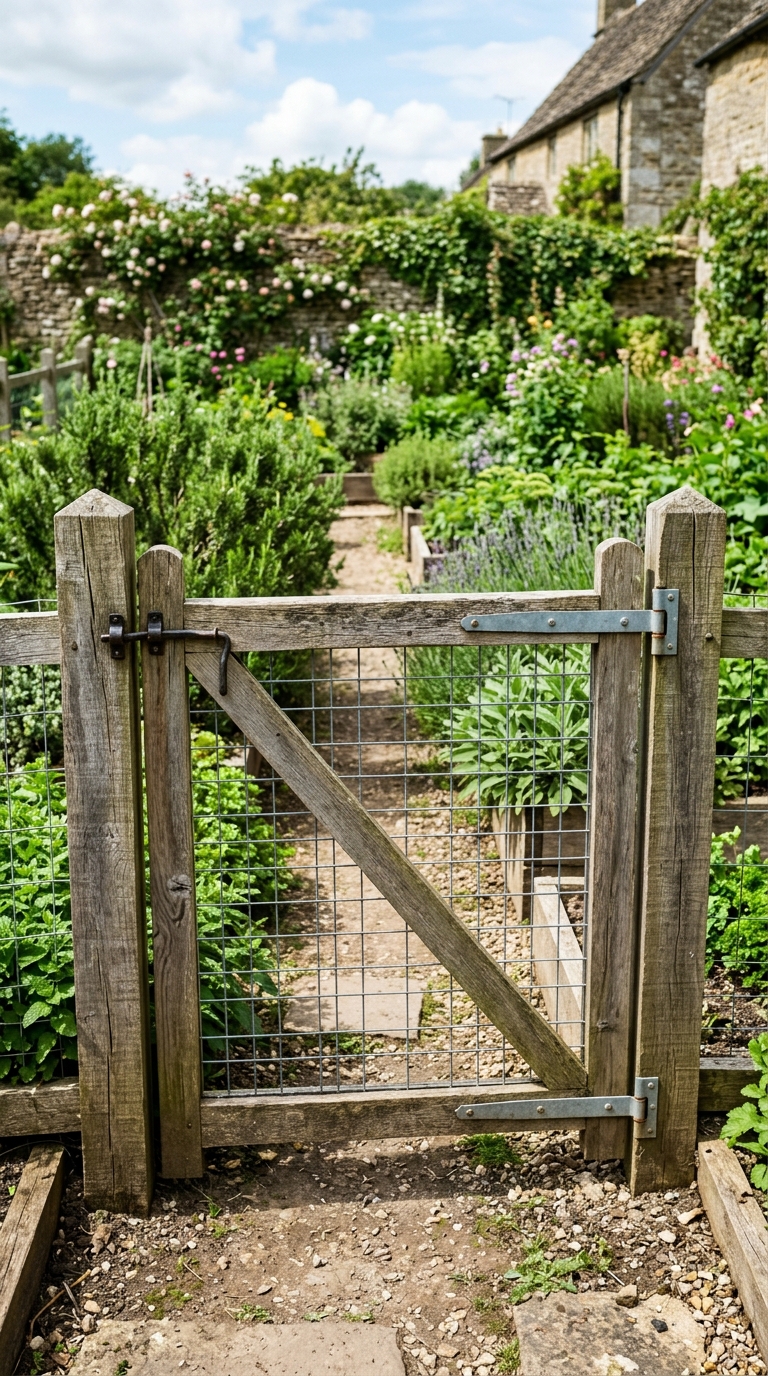
8. Wire Mesh and Wood Frame Gate
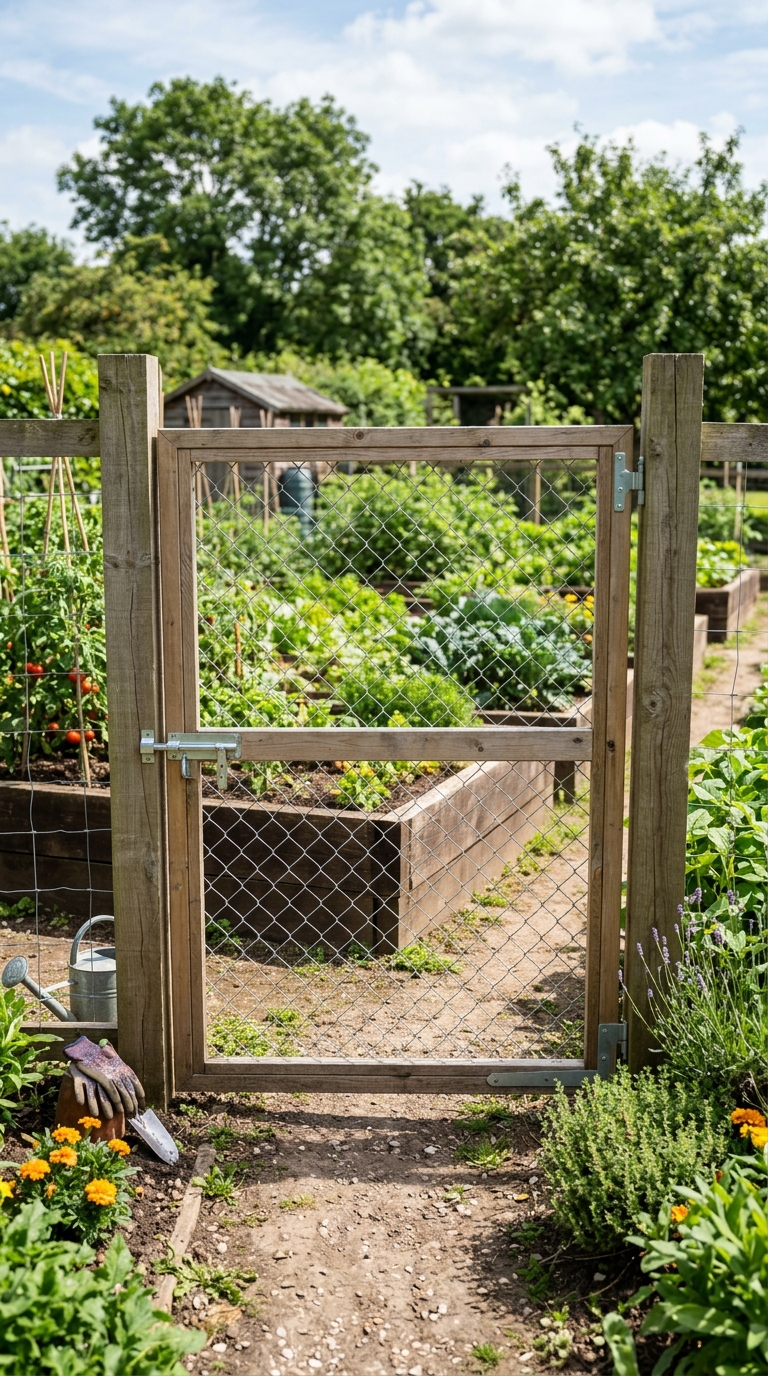
This hybrid design combines a simple wood frame with hardware cloth or wire mesh, offering visibility and airflow while still keeping pets and small critters out.
It’s a practical pick for vegetable and herb gardens, where you want to see inside at a glance without leaving an actual gap for rabbits or chickens to squeeze through.
The wood frame keeps the overall structure sturdy and easy to hang on standard hinges, while the mesh panel does the heavy lifting for security.
Galvanized mesh is worth the small extra cost, since it resists rust and won’t leave unsightly streaks running down the wood over time. This gate is quick to assemble in an afternoon and works just as well as a functional garden entrance or a small enclosure gate.
9. Sliding Barn-Style Gate
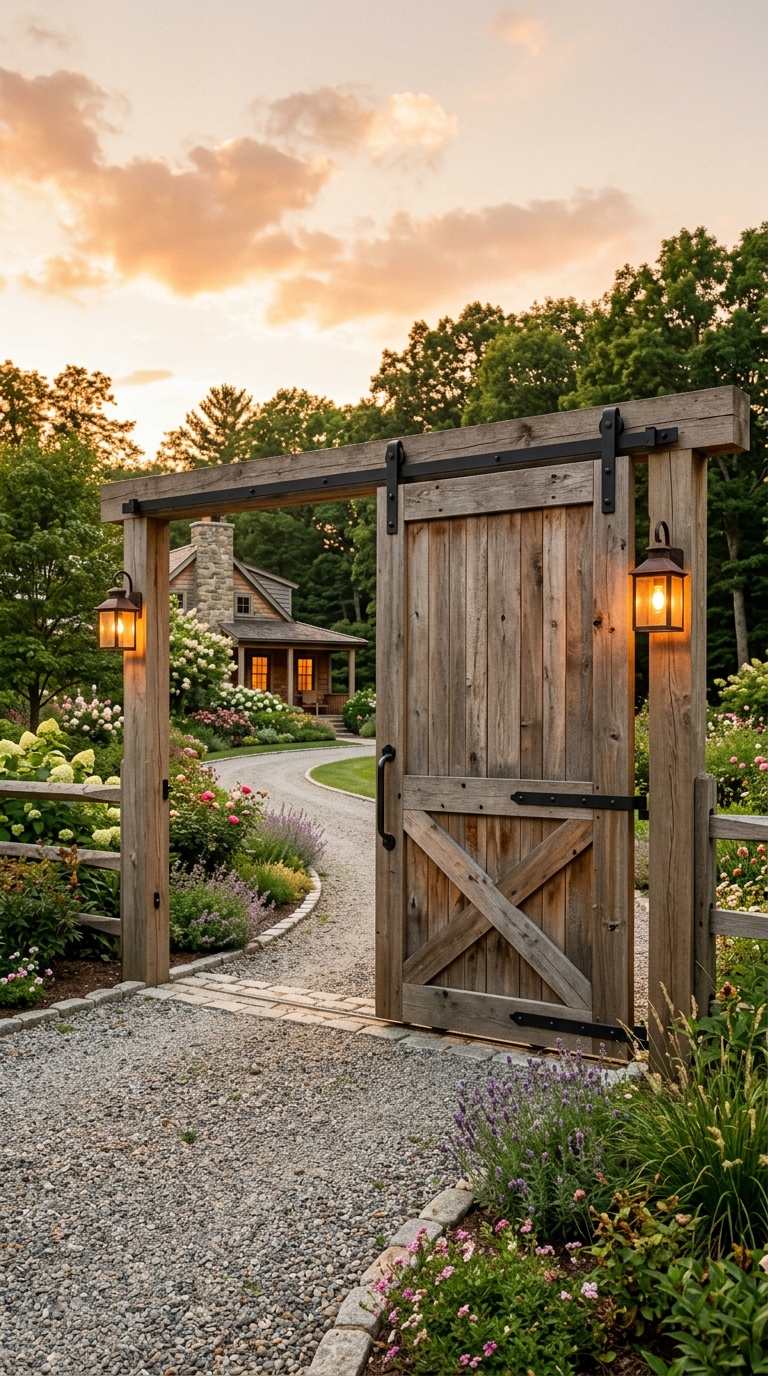
If swing space is limited, a sliding barn-style gate is the answer. It rolls along a track instead of swinging open, making it ideal for driveways, narrow paths, or spots where a traditional hinged gate would bump into a wall or fence post. The sliding motion also feels satisfying and low-effort once it’s installed correctly.
This build requires more hardware and planning than most gates on this list, since the track needs to be securely mounted and rated to support the panel’s full weight.
It’s a rewarding project for anyone comfortable with a bit more DIY complexity, and the farmhouse-inspired result makes a genuine style statement at the entrance to a driveway or courtyard.
10. Cedar Privacy Gate
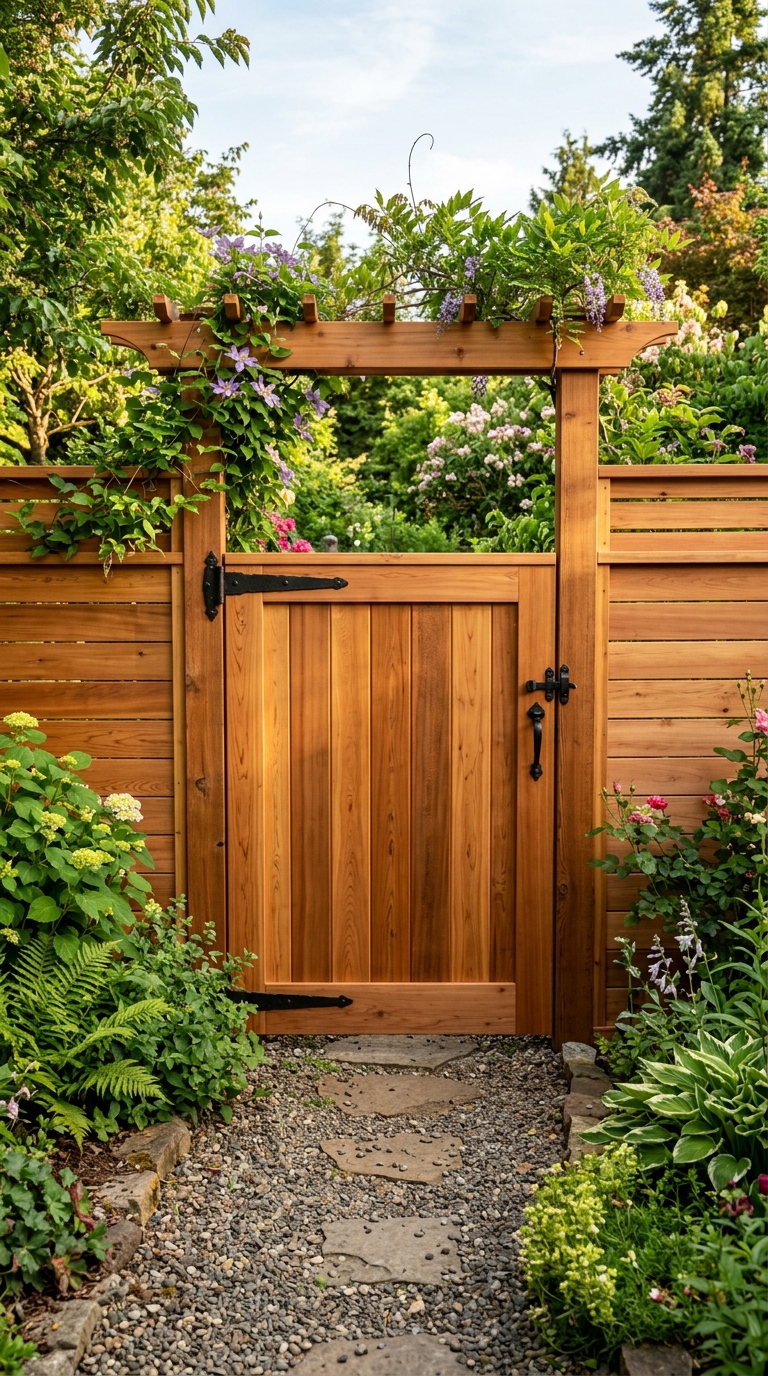
When you want full coverage and zero gaps, a solid cedar privacy gate delivers both security and a polished look.
Cedar naturally resists rot, warping, and insects, making it a smart long-term investment even at a slightly higher upfront cost compared to pine or reclaimed wood options.
Because the boards sit tightly together with no visible gaps, this gate also does double duty as a sound and wind barrier, which is a nice bonus if your garden faces a busy street.
Adding a diagonal brace across the frame is essential here, since a solid panel is heavier than a slatted one and more prone to sagging without proper support. Once sealed, a cedar privacy gate can easily last a decade or more with minimal upkeep.
11. Recycled Door Garden Gate
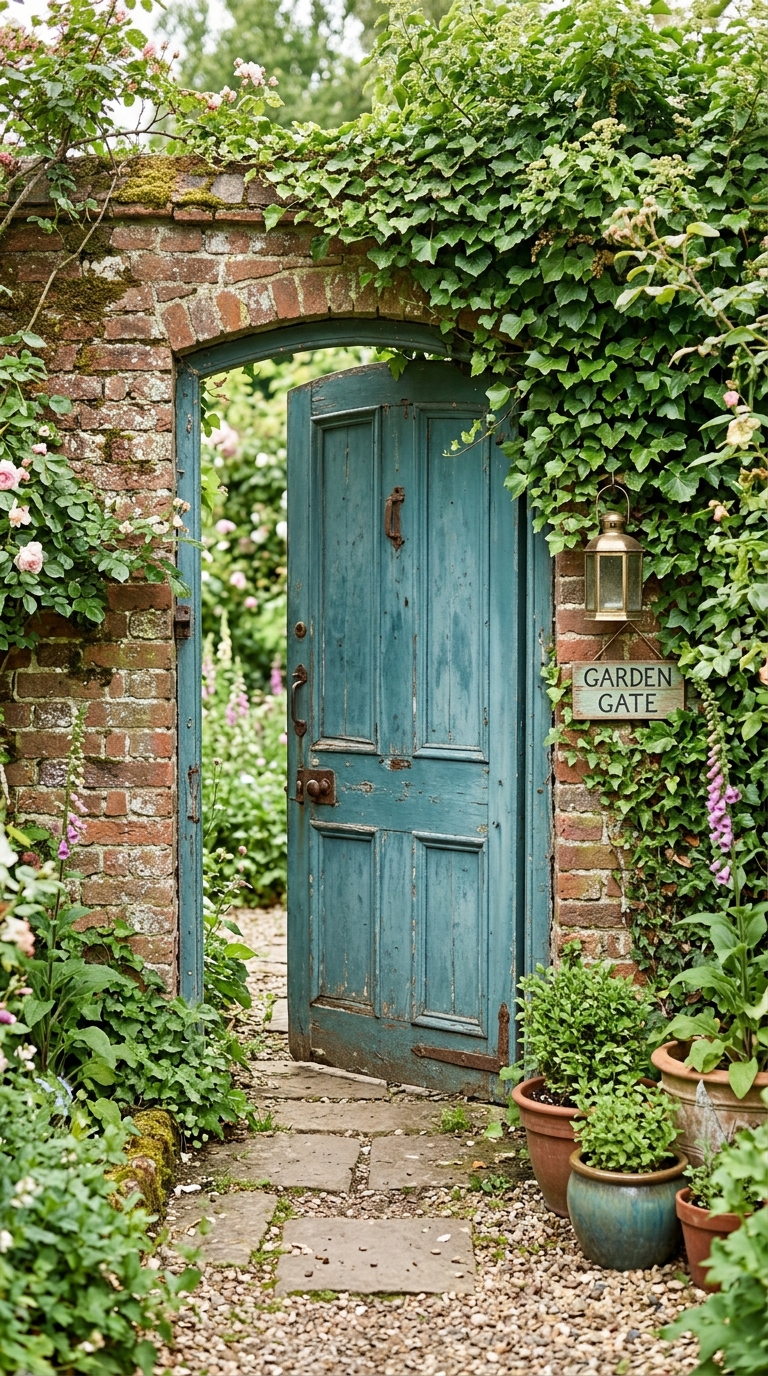
An old interior or exterior door can be repurposed into a one-of-a-kind garden gate — often for free if you already have one sitting in storage or find one at a salvage sale.
Add exterior-grade hinges and a coat of weatherproof paint, and you’ve got a gate full of personality that no store-bought option can match.
Since doors are designed to be solid and structurally sound already, you’re skipping most of the framing and assembly work that other gates require.
The main task is reinforcing it for outdoor use, which means sealing every exposed edge and swapping interior hardware for exterior-rated hinges and a latch. The result is a gate with genuine history and character, whether you leave the original wood grain visible or paint it a bold, eye-catching color.
12. Painted Cottage Gate
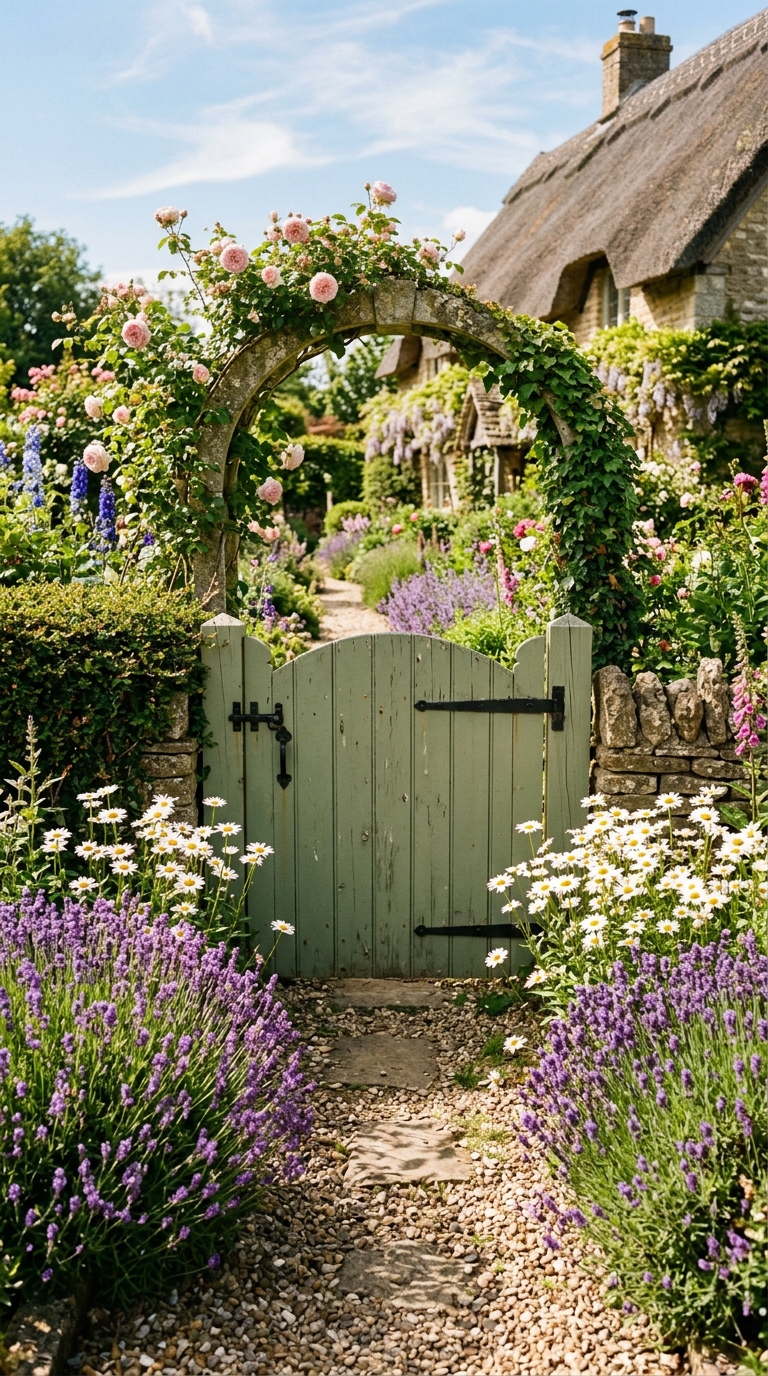
A simple pine gate becomes a showpiece with the right paint color. Soft pastels, sage green, or a bold navy can instantly elevate a basic build into a cottage-style statement that matches your home’s exterior palette rather than looking like an afterthought.
Paint is one of the cheapest ways to add personality to a plain wood structure.
Because the construction itself is straightforward — a simple frame with vertical boards — most of the visual impact here comes from color choice and finishing touches like decorative hardware or a curved top rail. Using exterior-grade paint with UV protection ensures the color stays vibrant for years instead of fading within a single summer. This gate is a great choice if you want maximum charm for minimal building effort.
13. Willow or Wicker Woven Gate
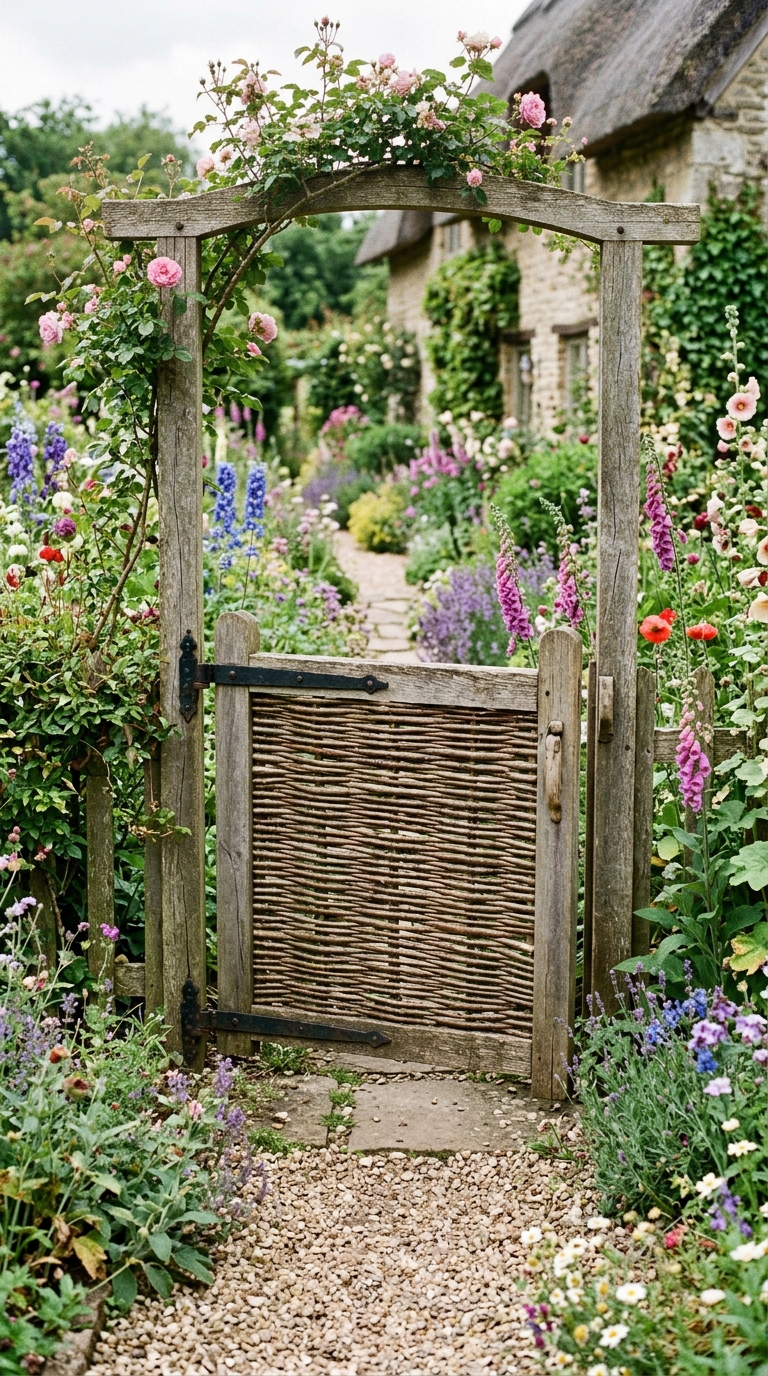
For a truly handcrafted, cottage-core look, woven willow branches create a gate unlike anything you’ll find at a hardware store.
It takes patience rather than power tools, making it a great weekend project for a relaxed pace and a nice change from cutting and drilling wood. The organic, textured surface looks especially at home in wildflower or English-style gardens.
Building one starts with a simple wood frame, which you then fill by weaving flexible willow branches in and out between vertical stakes. Soaking the branches in water beforehand makes them far easier to bend without snapping, so don’t skip this step.
While it won’t offer the same security as a solid wood gate, it excels as a decorative entrance that still marks a clear boundary between spaces.
14. Double Gate for Wide Entrances
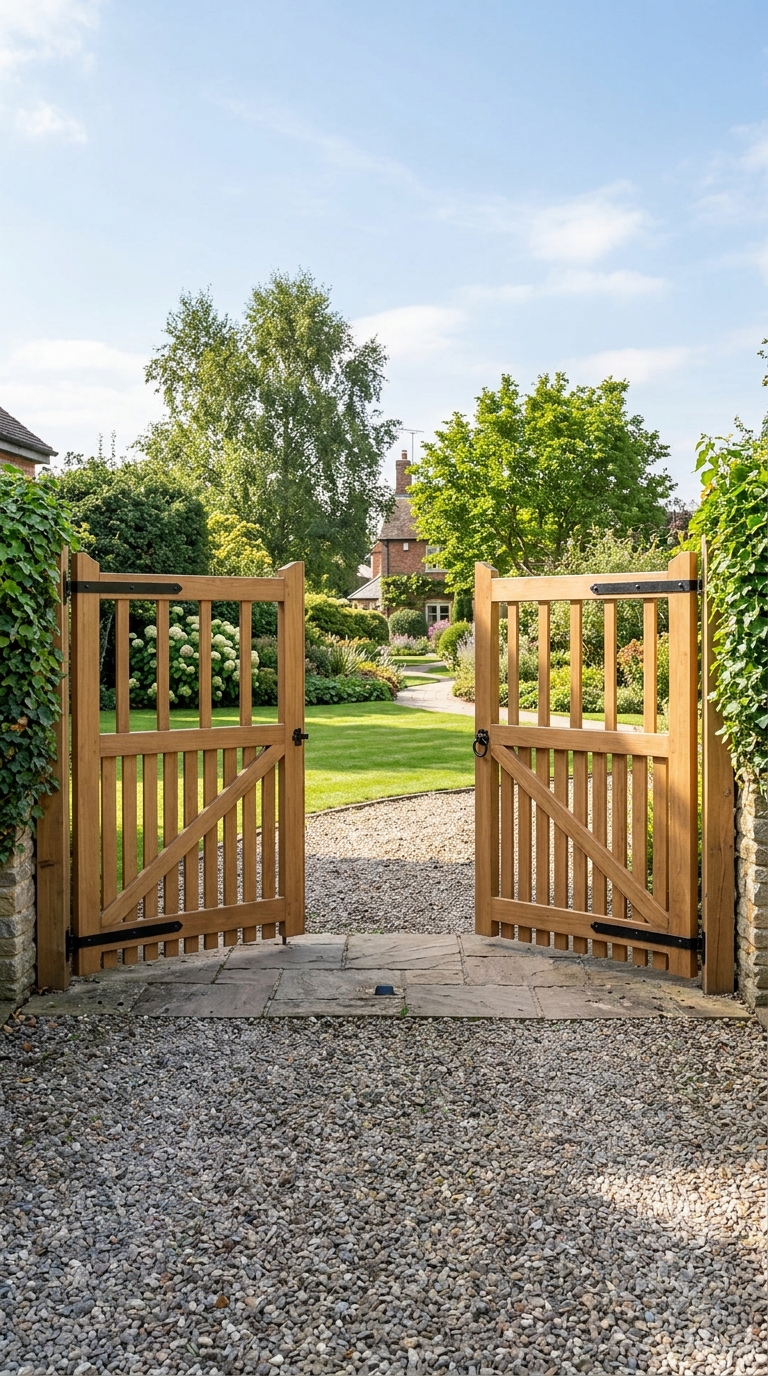
If you need to move a mower, wheelbarrow, or vehicle through, a double gate offers a wide opening without one oversized, heavy panel to wrestle with.
Building it in two symmetrical halves also makes construction, transport, and hanging noticeably easier than trying to manage a single wide gate on your own.
Each half only needs to support its own weight, so the hinges and posts don’t have to be as heavy-duty as they would for one massive panel spanning the same width.
A center latch or drop rod keeps both sides aligned and secure when closed, which matters for wind resistance as much as for looks. This is a bigger project than most on this list, but it solves a real access problem that smaller gates simply can’t.
15. Small Side-Yard Gate
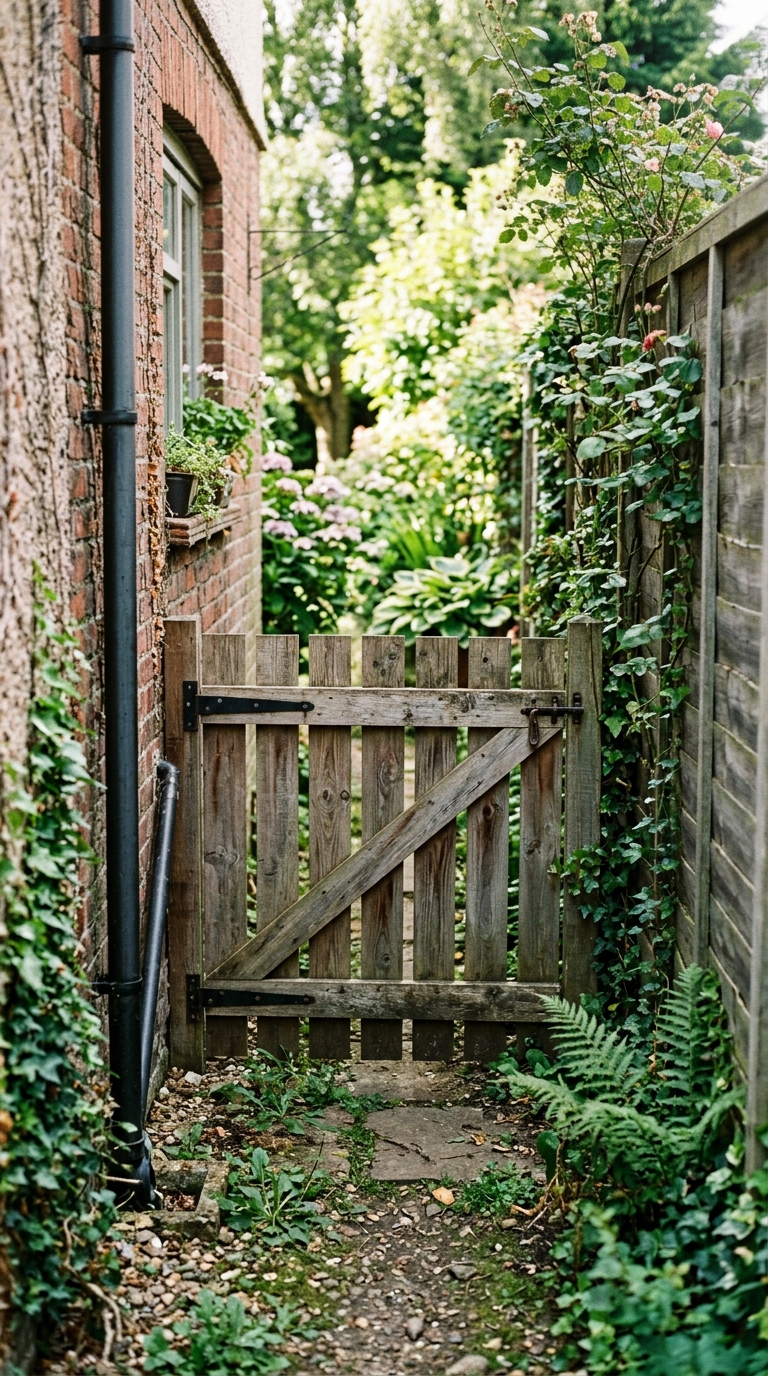
Side-yard gates don’t need to be fancy — they just need to be functional. Built from leftover scrap wood, this compact design is quick to assemble and perfect for tight passageways between the house and fence line where a full-sized gate would look out of place or simply won’t fit.
Because the opening is usually narrow, you can often build the entire gate from offcuts left over from other projects, keeping the cost close to nothing beyond hardware.
Keeping the design lightweight matters here, since smaller hinges aren’t built to handle a heavy panel and will wear out faster under strain. A simple hook latch is usually all the security this type of gate needs.
16. Metal Mesh “Wrought Iron Look” Gate
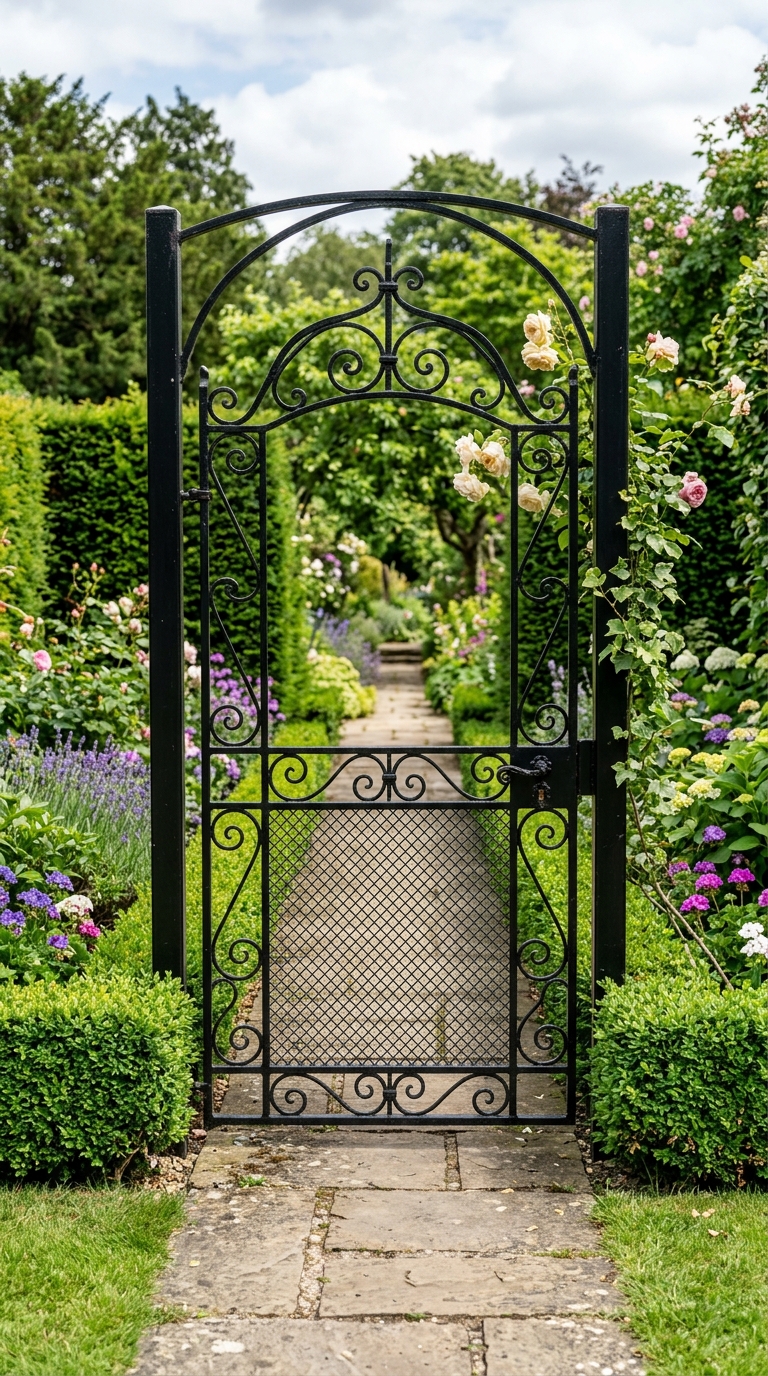
Real wrought iron can be expensive, but a steel mesh panel framed in wood or thin metal tubing mimics the look for a fraction of the cost.
It’s a great option if you want an elegant, airy gate without the ornate ironwork price tag or the specialized welding skills that traditional wrought iron often demands.
The mesh panel provides visibility and a light, open feel, while the frame gives the structure enough rigidity to hang properly on standard hinges. Spray-painting the frame matte black instantly sells the illusion of real wrought iron, especially from a few feet away where the material difference isn’t obvious.
This gate suits formal gardens, courtyards, and any entrance where you want a refined look without the higher cost of custom metalwork.
17. Self-Closing Hinge Budget Gate
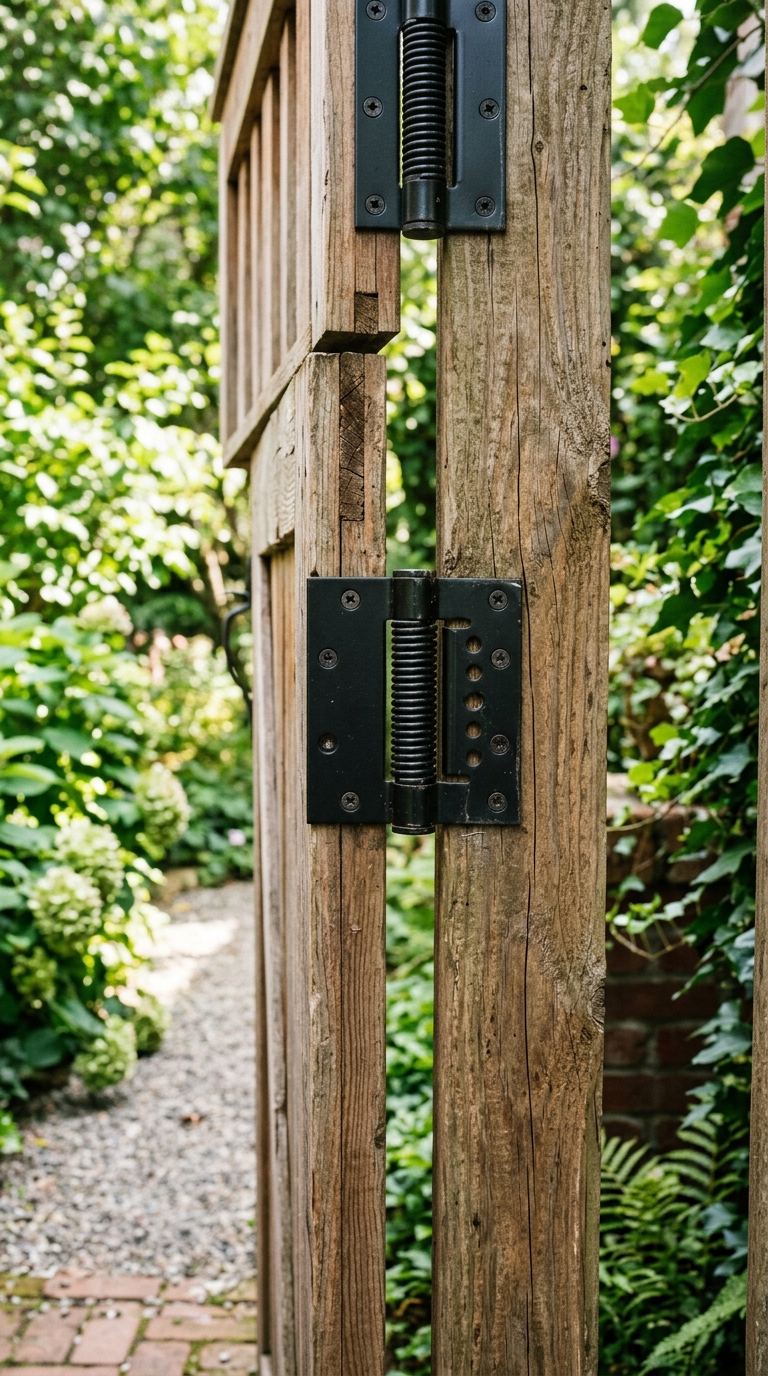
This isn’t a new gate style so much as a smart upgrade — adding spring-loaded, self-closing hinges to any budget gate design you’ve already built or plan to build.
It’s especially useful for pool areas, pet enclosures, or anywhere you need the gate to close automatically for safety rather than relying on someone to remember.
The upgrade itself is simple to install on almost any wood-framed gate, and it pairs well with several other ideas on this list, from the picket gate to the cedar privacy gate.
After installation, it’s worth testing the spring tension carefully, since hinges set too tight can slam the gate hard enough to damage the frame, while ones set too loose won’t close it fully. A small adjustment period gets the balance just right.
How to Build a Basic Budget Garden Gate: Step-by-Step
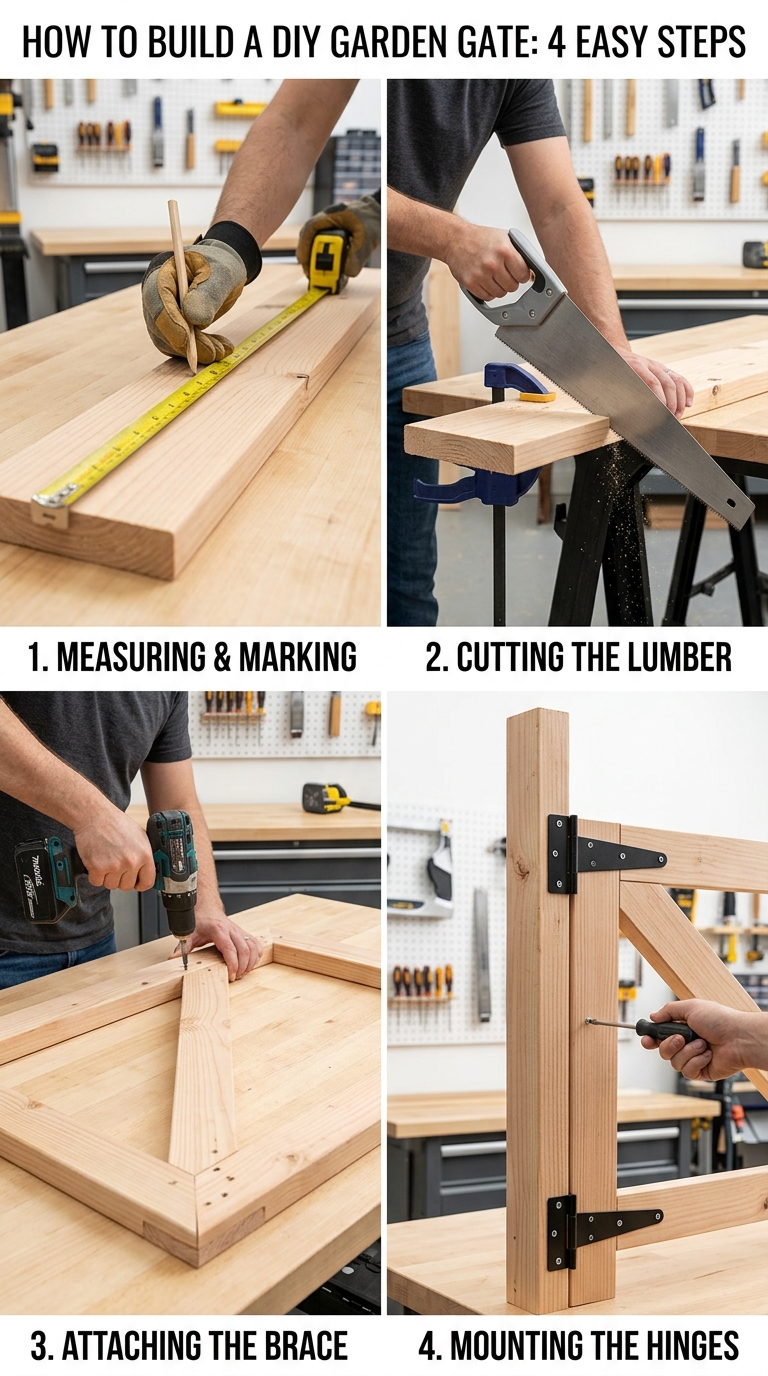
Once you’ve picked a style, most gates follow the same core building process. Start by taking three measurements — the gap between your posts, the height of your existing fence, and the distance between rails — since these numbers guide every cut you’ll make afterward.
Then cut your rails about an inch shorter than the gap you measured, which allows the gate to open and close smoothly without scraping against the posts.
Next, add a diagonal brace running from the bottom hinge side to the top latch side of the frame; this single step is what prevents most gates from sagging within the first year. Attach your pickets or boards starting from the hinge side for added stability, then mount the hinges after pre-drilling holes to avoid splitting the wood.
Finally, hang the gate using shims to adjust the height, secure all the bolts, and install the latch, testing the swing a few times to confirm everything opens and closes smoothly.
Budget-Saving Tips for Your DIY Garden Gate
Sourcing free or discounted materials is the single biggest way to cut costs on any of these builds. Check local classifieds, construction sites, and salvage yards for reclaimed wood and pallets, and buy hinges and latches in bundle packs rather than one at a time, since hardware often costs less per piece when purchased together.
You can also save by using leftover fence paint or stain instead of buying a new can, and by repurposing an old door, headboard, or shutter instead of building a gate from scratch.
If you don’t own power tools, borrowing them from a neighbor or checking out a local tool library is often cheaper than buying equipment you’ll only use once or twice a year.

Maintenance Tips to Keep Your Gate Looking Great
Regular upkeep is what separates a gate that lasts five years from one that lasts twenty. Inspect it periodically for loose hinges, rotting wood, or rust, and clean wood gates with mild soap and water while using a rust-specific cleaner on any metal components.
These small checks catch problems early, before they turn into costly repairs.
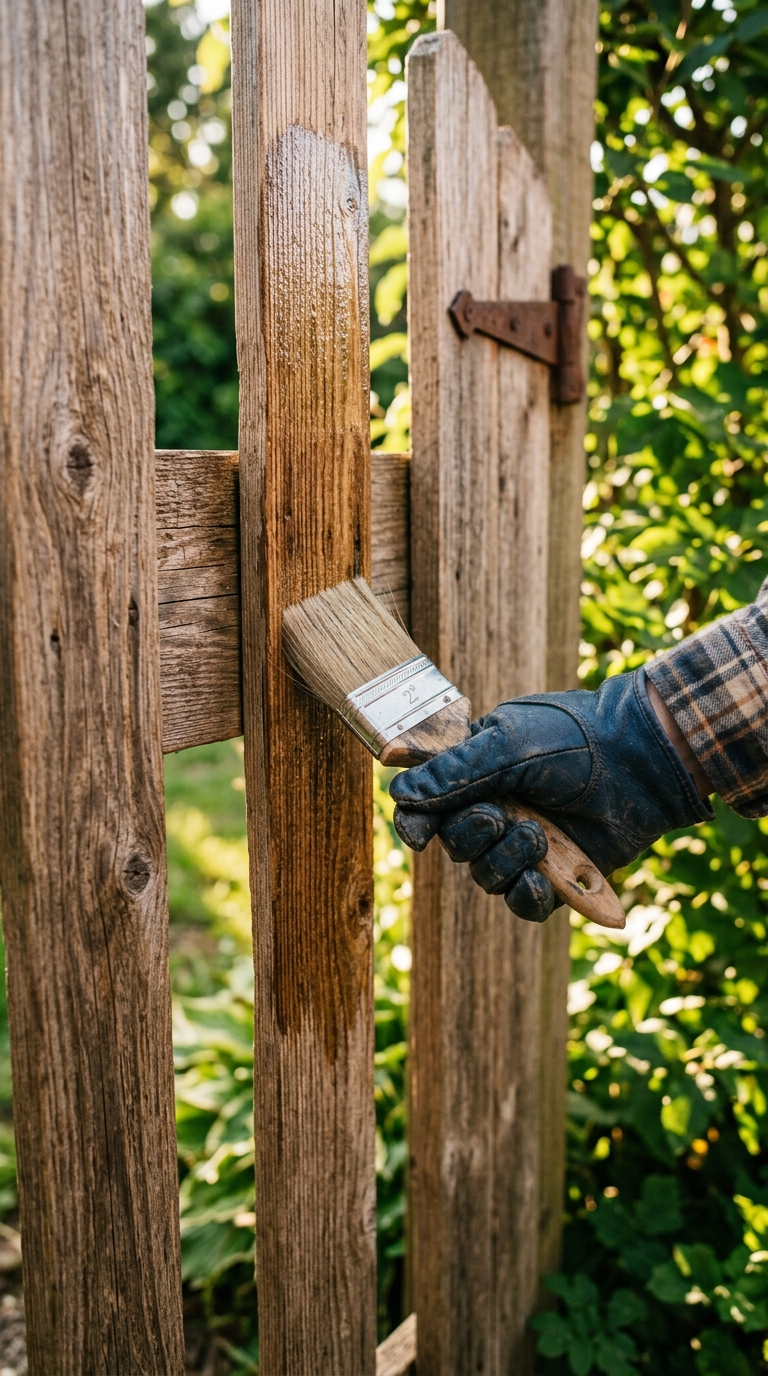
Lubricate hinges and latches every few months with a silicone-based spray to keep them operating smoothly, and reseal or repaint wooden gates every two to three years to protect against sun and moisture damage.
If you notice sagging or sticking at any point, adjust the hinges promptly rather than waiting, since minor misalignments only get worse with time and continued use.
FAQS
How much does a DIY garden gate cost?
Most budget DIY garden gates cost between $20 and $150, depending on the material and size. Reclaimed wood and pallet designs sit at the lower end, while cedar or double gates cost more.
What is the cheapest material for a garden gate?
Reclaimed pallet wood is typically the cheapest option, often costing next to nothing beyond hardware like hinges and a latch.
Can I build a garden gate without an existing fence?
Yes. A standalone garden gate can be mounted between two posts set in concrete, independent of a full fence line.
How do I stop my garden gate from sagging?
Add a diagonal brace running from the bottom hinge side to the top latch side, and use heavy-duty hinges rated for your gate’s weight.
What size should a garden gate be?
A single garden gate is typically 3 to 4 feet wide. For larger equipment or vehicle access, a double gate spanning 10 to 12 feet is a better fit.
Conclusion
Building your own garden gate doesn’t have to drain your budget or your weekend. Whether you choose a rustic pallet wood build or a polished cedar privacy gate, each of these 17 ideas proves that a beautiful, functional entrance is well within reach with basic tools and a bit of creativity. Pick the style that matches your garden, gather your materials, and start building — your new gate is closer than you think.