
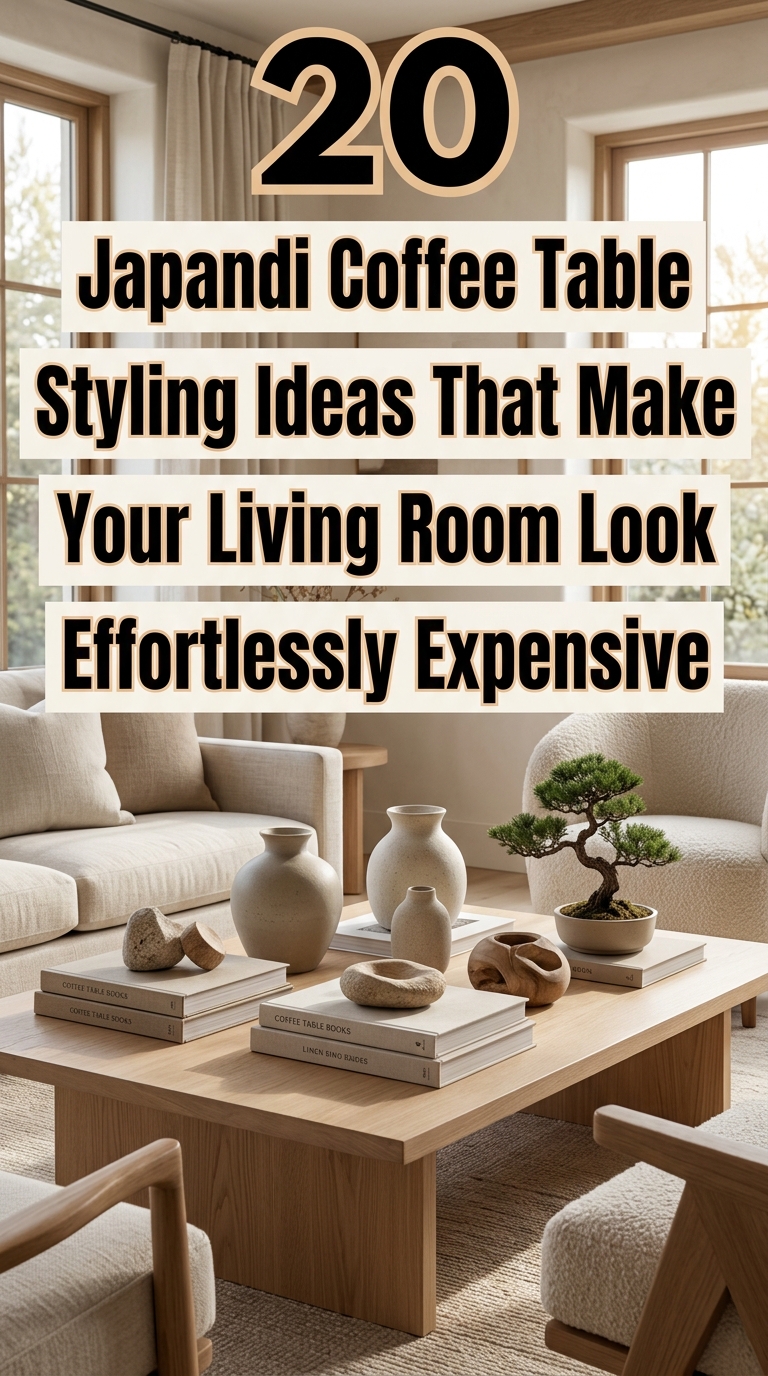
You know that feeling when you walk into a room and just… exhale?
No clutter. No noise. Just calm. Everything in its place, but nothing feels forced. That’s exactly what Japandi style does to a space — and your coffee table is where it all starts.
Japandi is the beautiful blend of Japanese wabi-sabi (finding beauty in imperfection) and Scandinavian minimalism (keeping only what matters). Together, they create something that feels both deeply cozy and quietly luxurious. Not expensive-looking in a showy way. More like… intentionally beautiful.
In this post, I’m sharing 20 Japandi coffee table styling ideas that are easy to try, genuinely inspiring, and — honestly — kind of addictive once you start. Some ideas are super simple. Others will make your guests stop mid-conversation just to look at your table.
Let’s get into it.
The Tray Rule — Anchor Everything with a Wooden Tray
Warm Vibe | Designer Secret Inside
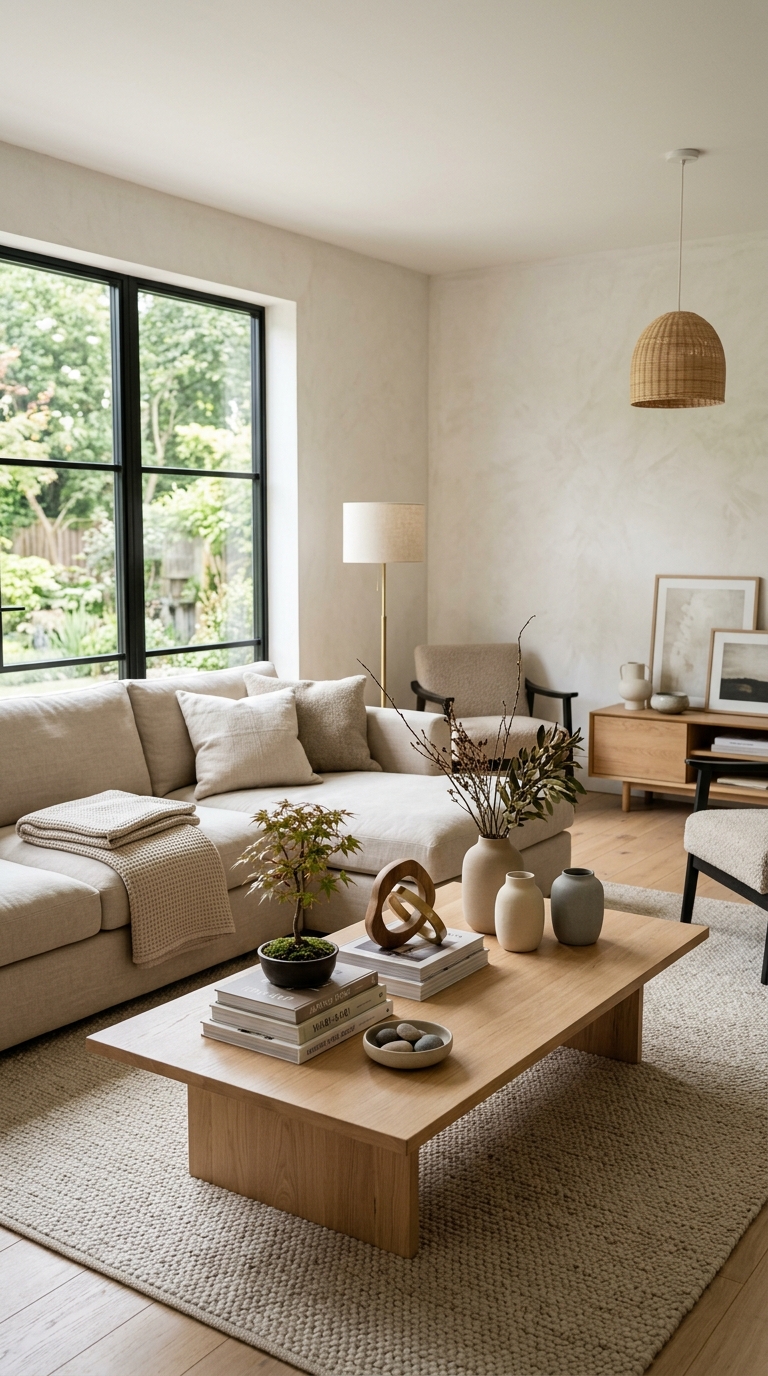
If there’s one Japandi trick every interior designer uses, it’s this one. A flat, low wooden or rattan tray placed at the center of your coffee table immediately transforms the whole look. It creates a visual “home base” for your objects — everything feels intentional, nothing looks scattered.
The tray doesn’t need to be fancy. Raw wood, woven rattan, or even a simple matte black tray works beautifully. What matters is that it anchors your styling and gives everything a place to belong. Designers never skip the tray — and now you know why.
“This one small change makes your coffee table look like it was styled by someone who really knows what they’re doing.”
Stack Two or Three Books with Linen-Covered Spines
Cool Vibe | The Quiet Luxury Move
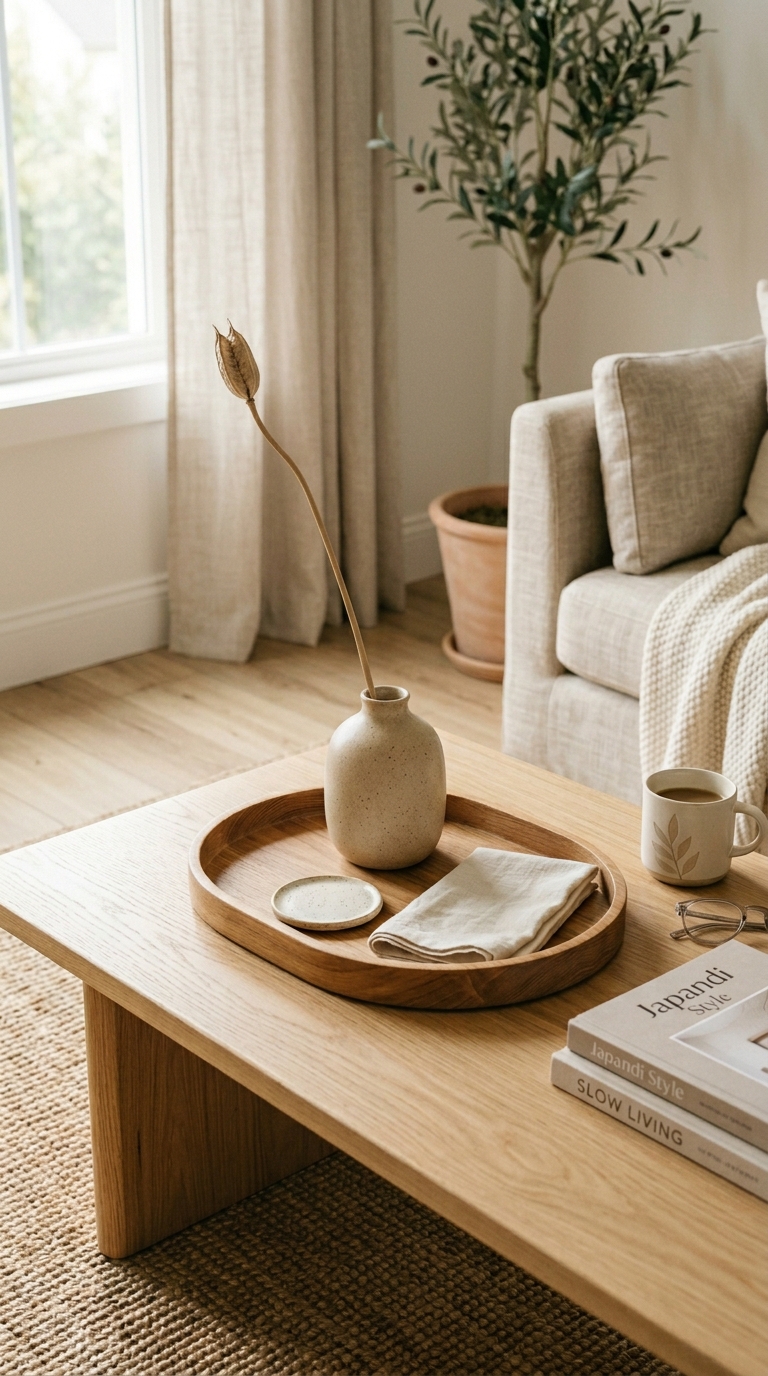
There’s something about a small stack of books on a coffee table that just feels lived-in and cultured at the same time. For Japandi styling, you want books in muted tones — cream, oatmeal, sage, or dusty terracotta. If your books have loud, colorful covers, wrap the spines in a strip of kraft paper or linen fabric. It takes two minutes and completely changes the look.
Stack two or three books at slight angles, not perfectly aligned. Japandi is about natural imperfection — so don’t overthink it. Place a small object on top (a pebble, a candle, a ceramic figure) and suddenly your table has height, texture, and story.
Looking for the perfect table to style? These genius small coffee table ideas feature space-saving designs that work especially well in Japandi-inspired living rooms.
“Think: a quiet Kyoto apartment where books are decor, not just reading material.”
One Bonsai or Moss Ball — Skip the Generic Succulent
Nature-Forward | Wabi-Sabi at Its Best
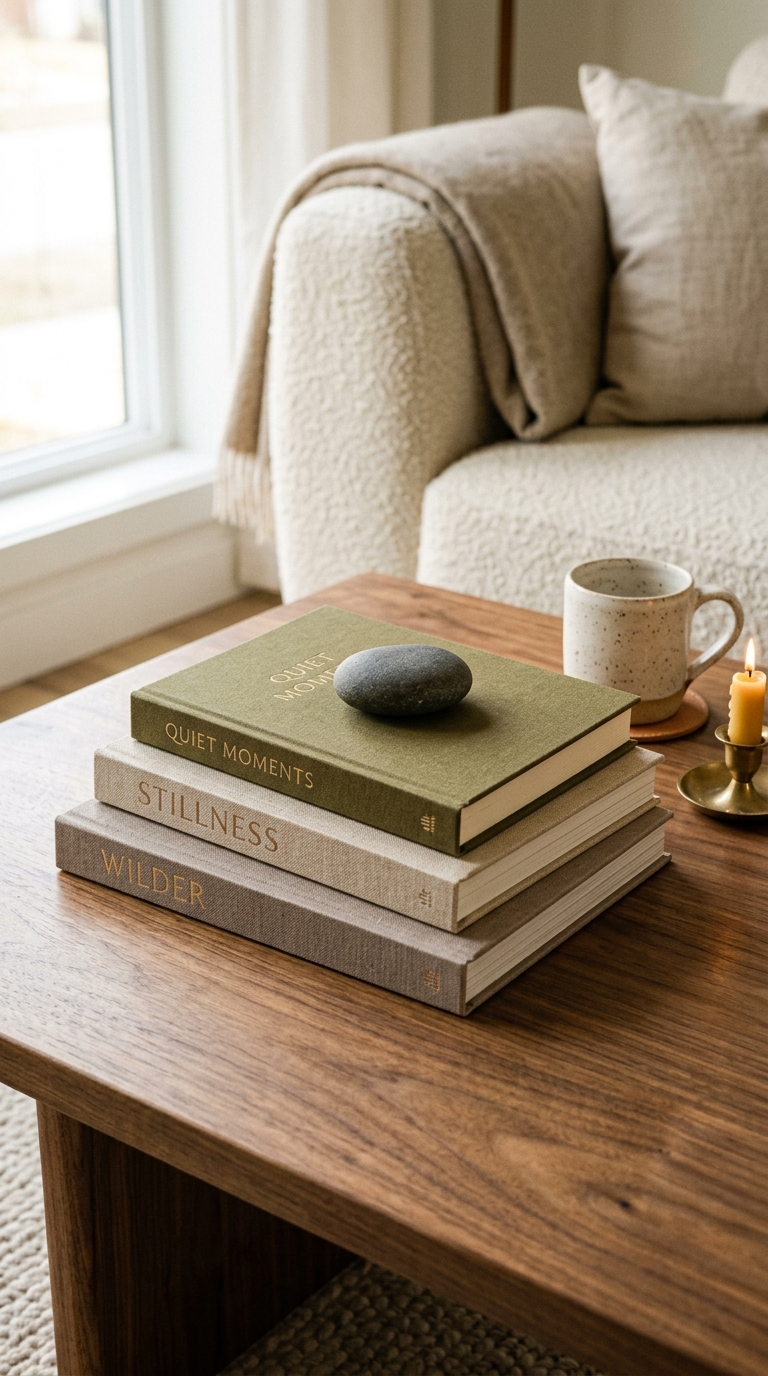
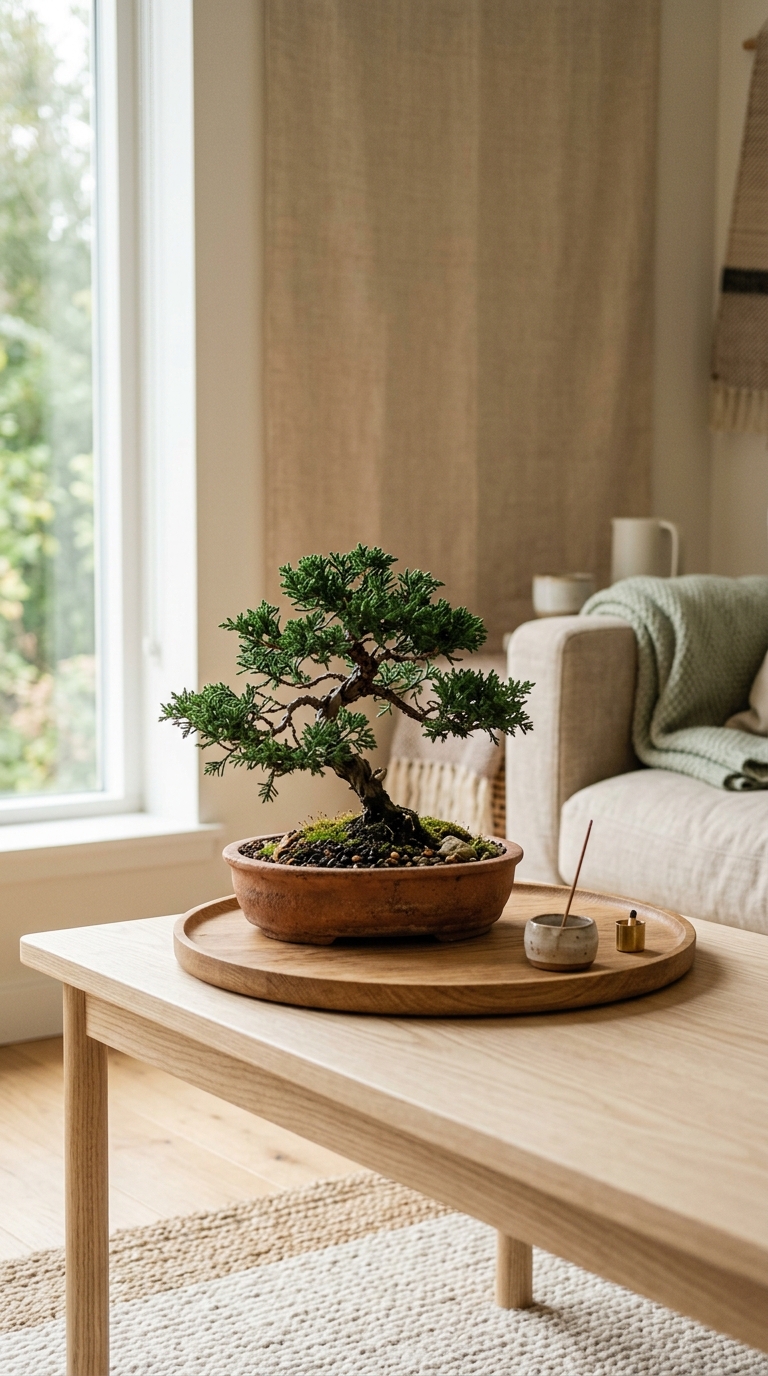
Can we talk about how tired the generic succulent is? For a true Japandi feel, go a level deeper. A small bonsai tree or a kokedama (that’s a Japanese moss ball — basically a plant wrapped in a sphere of moss) brings something completely different to your table. It feels ancient and intentional. Like it belongs in a Japanese tea house — but somehow also in your living room.
You don’t need a green thumb for either of these. A bonsai in a shallow clay pot or a kokedama on a small wooden disc both require minimal care and maximum visual impact. Every guest will ask about it. Every Pinterest user will save it.
“This one makes your room feel like a Sunday morning in Tokyo — calm, curated, alive.”
The Rule of Three — Group Objects in Odd Numbers
Quiet Luxury | The One Rule Designers Always Follow
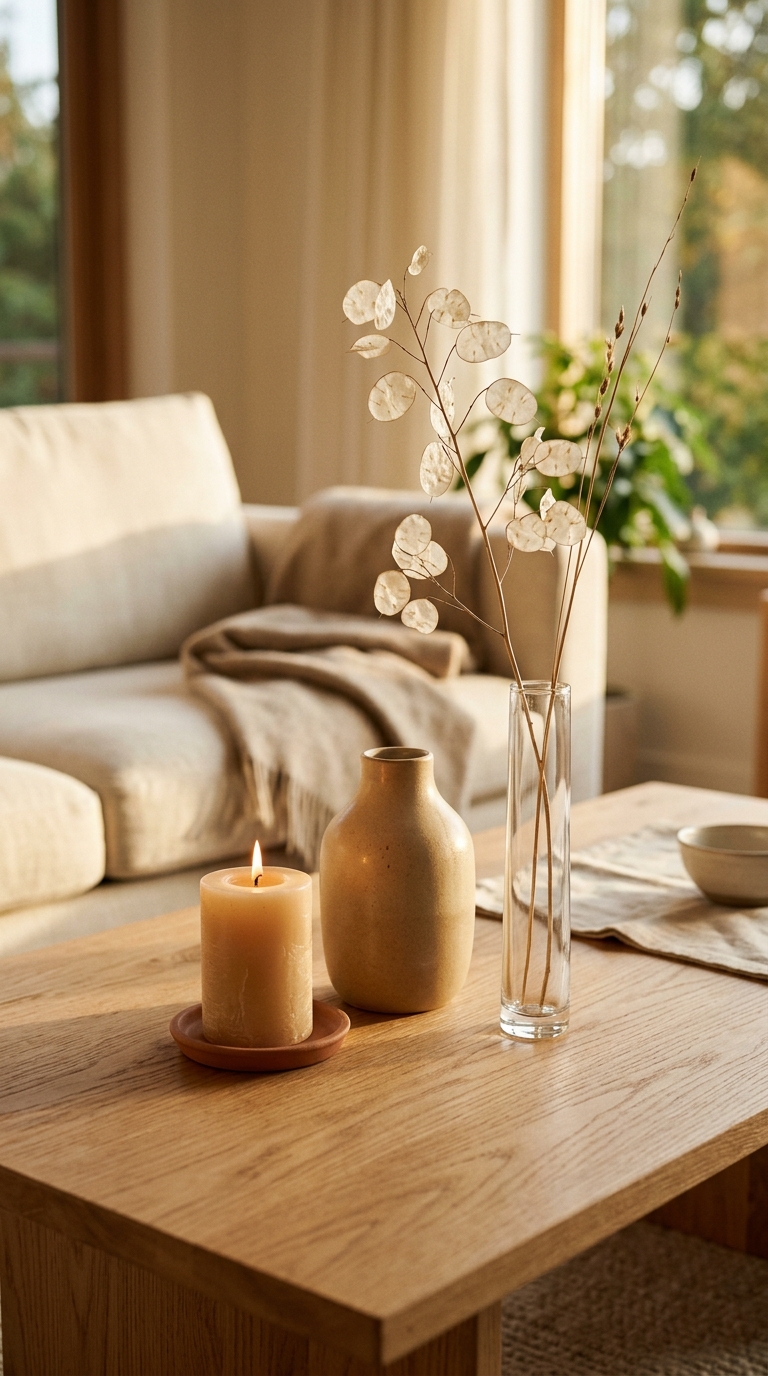
Here’s a styling secret that works every single time: group your objects in threes. One candle. One small plant. One ceramic object. Three things, three different heights, slightly off-center. That’s it. That’s the formula.
Our brains find even numbers rigid and odd numbers natural. It’s why a triangle feels more balanced than a square when it comes to decor. Try placing your three objects at different heights — something low, something medium, something tall — and watch how the whole table suddenly looks professionally styled. It feels effortless. Because it actually is.
“Be honest — does your coffee table spark joy or just collect remotes?”
Handmade Ceramic Objects in Matte Earthy Tones
Warm Vibe | The One That Always Stops the Scroll
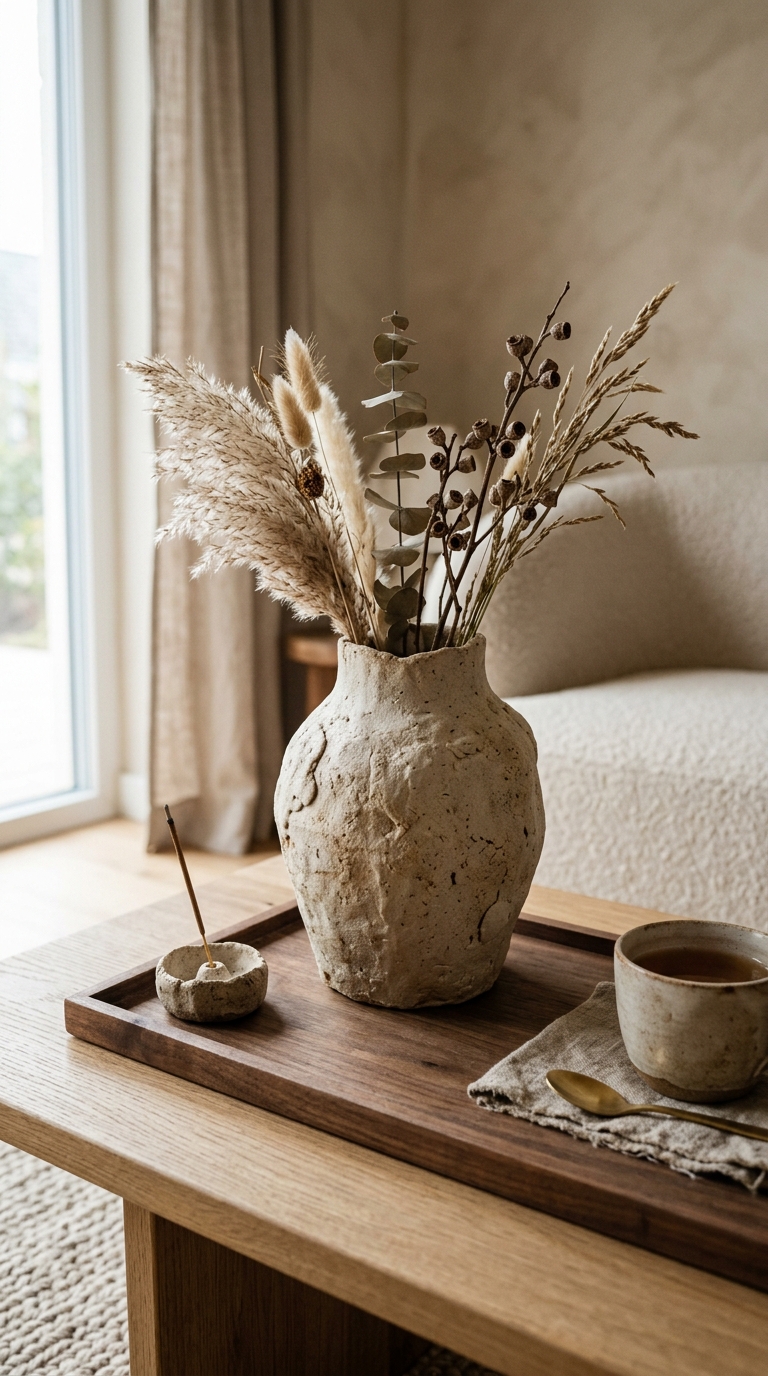
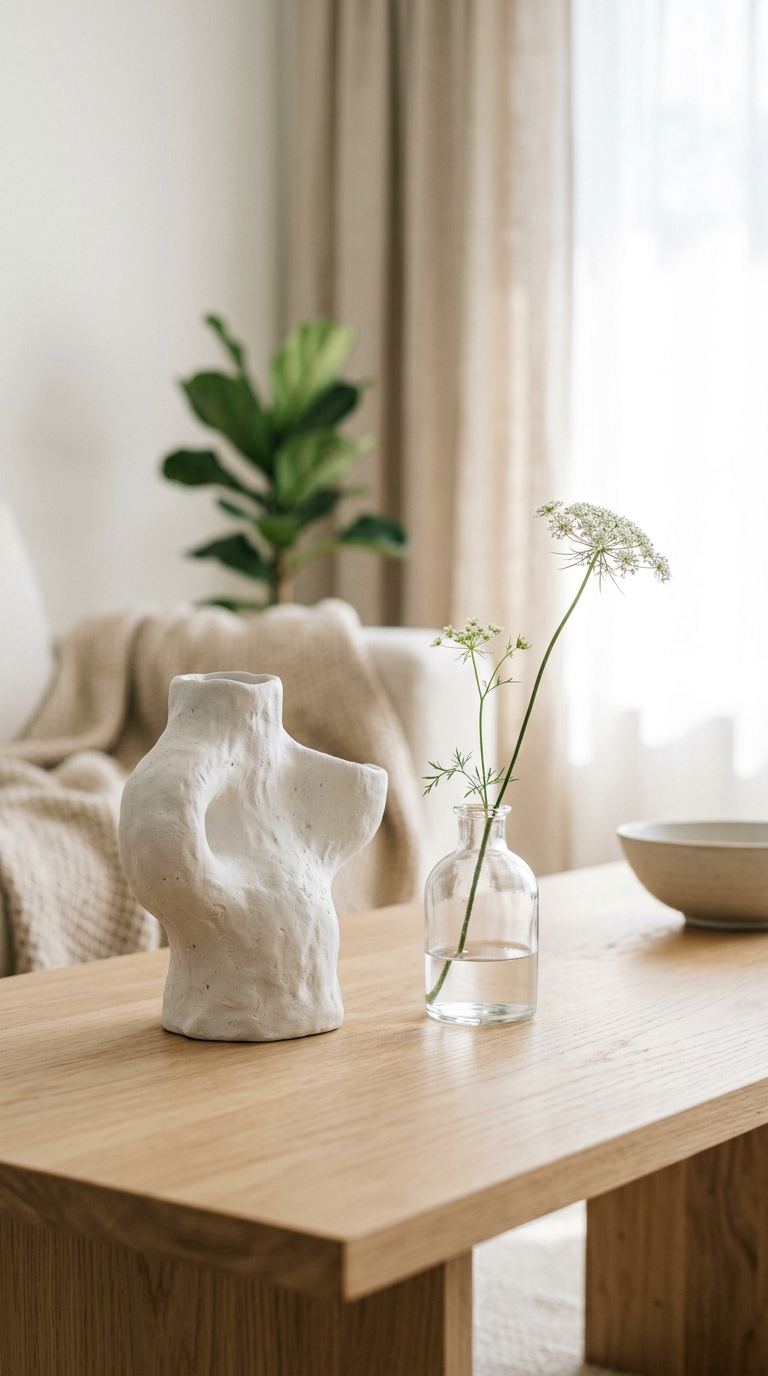
There’s something about a handmade ceramic piece that no mass-produced item can replicate. The slight irregularity. The fingerprint-like texture. The way matte clay catches soft light differently at every angle. On a Japandi coffee table, one good ceramic object does more work than five generic decor items combined.
Look for pieces in stone grey, raw clay, dusty terracotta, or matte black. A small sculptural vase, a wide shallow bowl, or even a simple ceramic sphere — any of these adds that artisanal, wabi-sabi quality that makes a space feel curated rather than decorated.
“This is the kind of corner that makes guests go quiet for a second.”
Dried Botanicals in a Slim Bud Vase
Cool Vibe | Zero Maintenance, Maximum Beauty
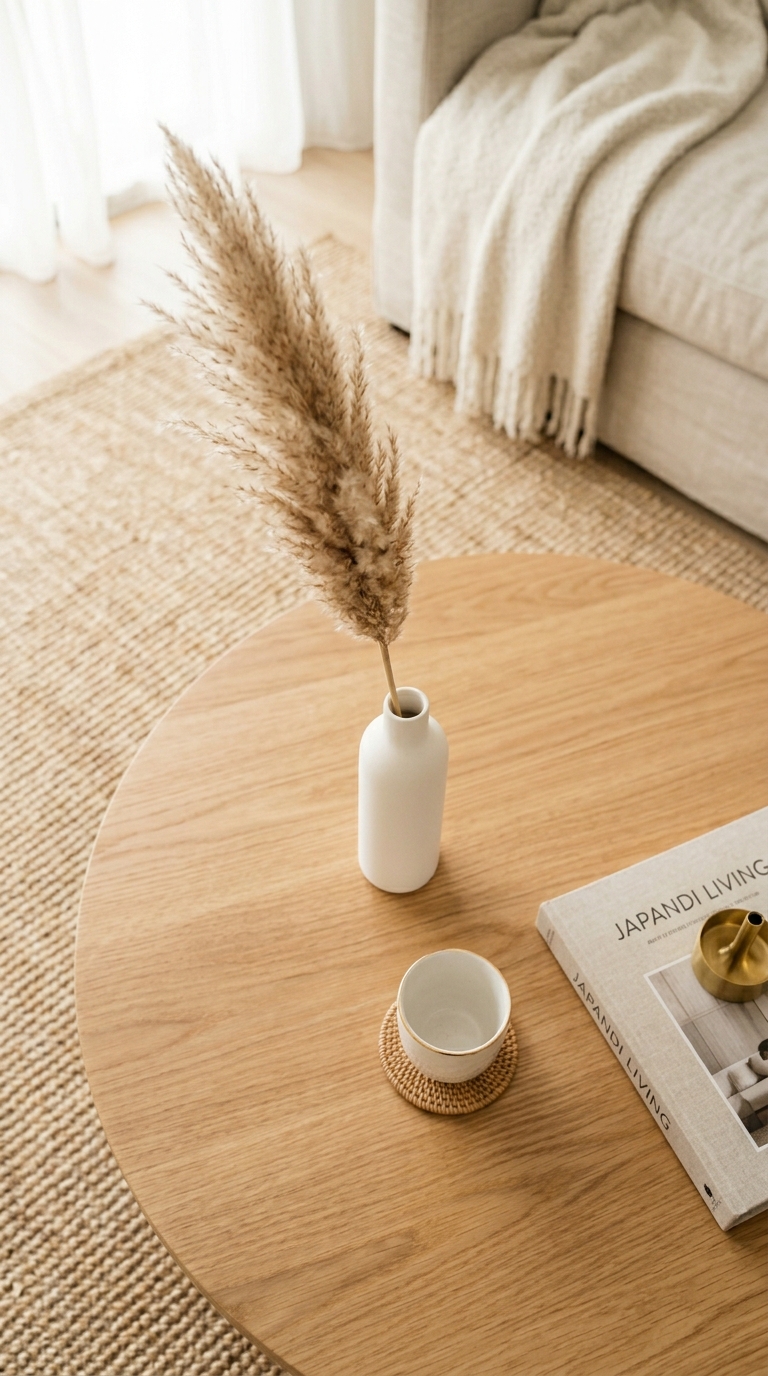
Dried pampas grass, eucalyptus stems, cotton branches, or even a single dried poppy head — these are nature’s gift to Japandi styling. They bring organic texture and soft movement to your table without needing water, sunlight, or any attention at all. A single stem in a slim ceramic or glass bud vase is genuinely all you need.
The key is restraint. One stem. One vase. That’s the whole idea. Japandi doesn’t pile things up — it lets one beautiful thing speak for itself. And honestly? A lone dried stem in the right vase says more than a whole bouquet ever could.
For homeowners who enjoy adding warmth and character, these farmhouse coffee bar ideas offer cozy inspiration that can blend beautifully with Japandi’s natural wood tones and neutral palette.
“It’s the kind of effortless that takes exactly zero effort.”
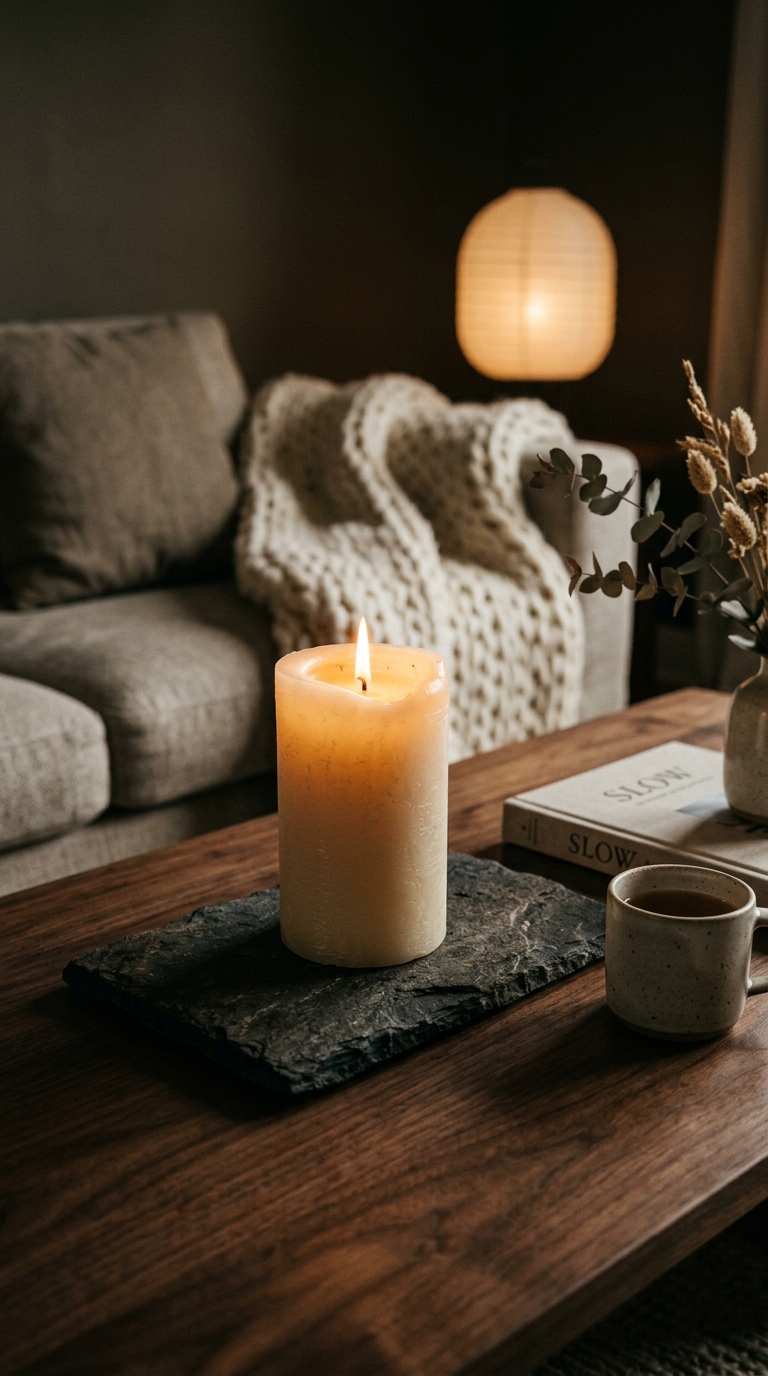
A Pillar Candle on a Stone or Slate Slab
Quiet Luxury | Mood in One Object
There’s a reason every luxury hotel lobby has candles. Flame changes a room. On a Japandi coffee table, a single thick pillar candle — ivory, cream, or matte black — placed on a raw slate tile or smooth river stone slab creates a moment of warmth that no other decor element can.
You don’t even need to light it. The candle itself is the visual — it communicates calm, intention, and quiet luxury just by sitting there. But when you do light it in the evening? The whole room shifts. That’s Japandi magic.
“A lit candle on a Japandi table is basically a whole mood shift in one object.”
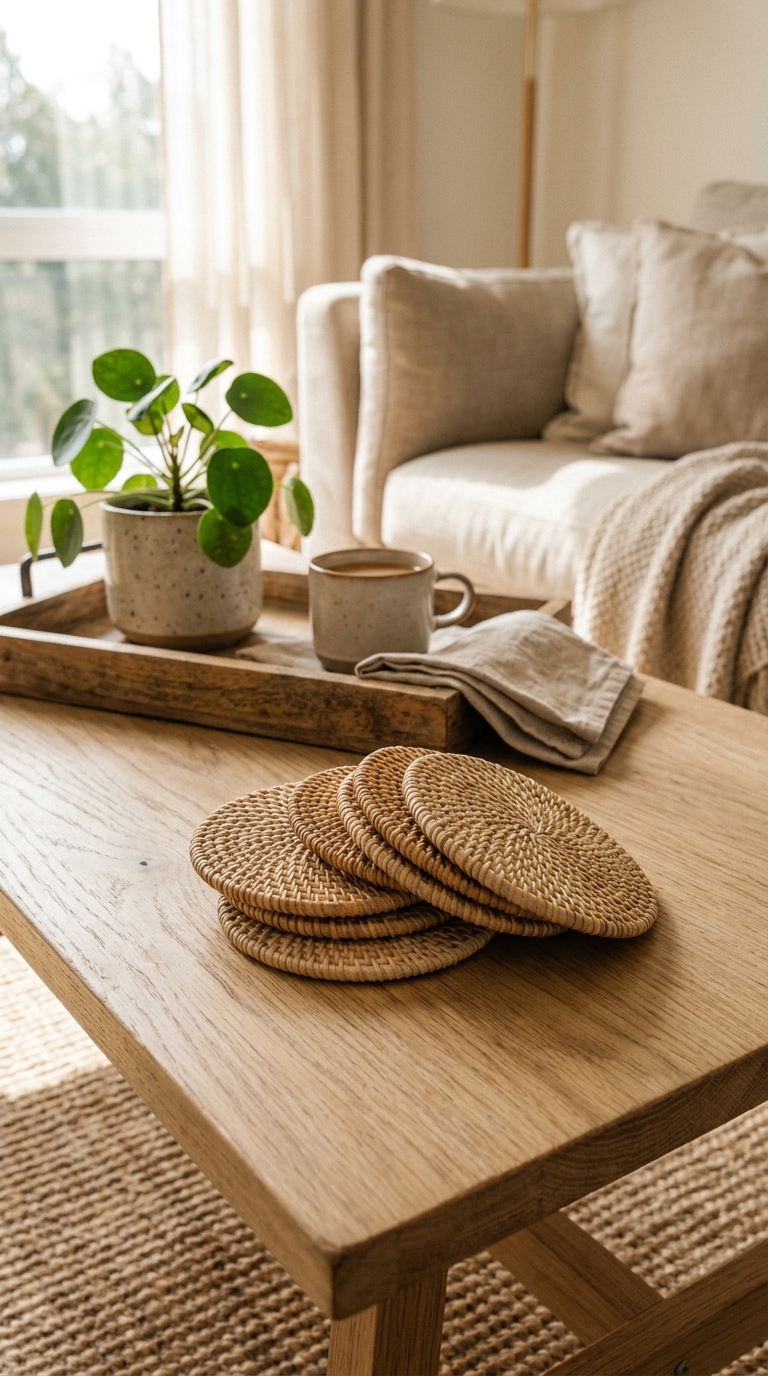
Woven Rattan Coasters as Decorative Layers
Nature-Forward | Function Meets Beauty
Most people hide their coasters. Japandi styling says: display them. A neat stack of woven rattan, seagrass, or bamboo coasters placed casually beside your tray adds natural texture and a relaxed, organic feel to the table. They’re practical and beautiful — which is very much the Japandi way.
Stack four or five loosely (not in a perfect pile) and let them lean slightly. The imperfect stack is the aesthetic. It says, “This home is lived in, and it’s beautiful because of it.”
If you love clutter-free interiors, these coffee bar ideas with hidden storage pair perfectly with Japandi design principles, helping maintain a calm and effortlessly organized living space.
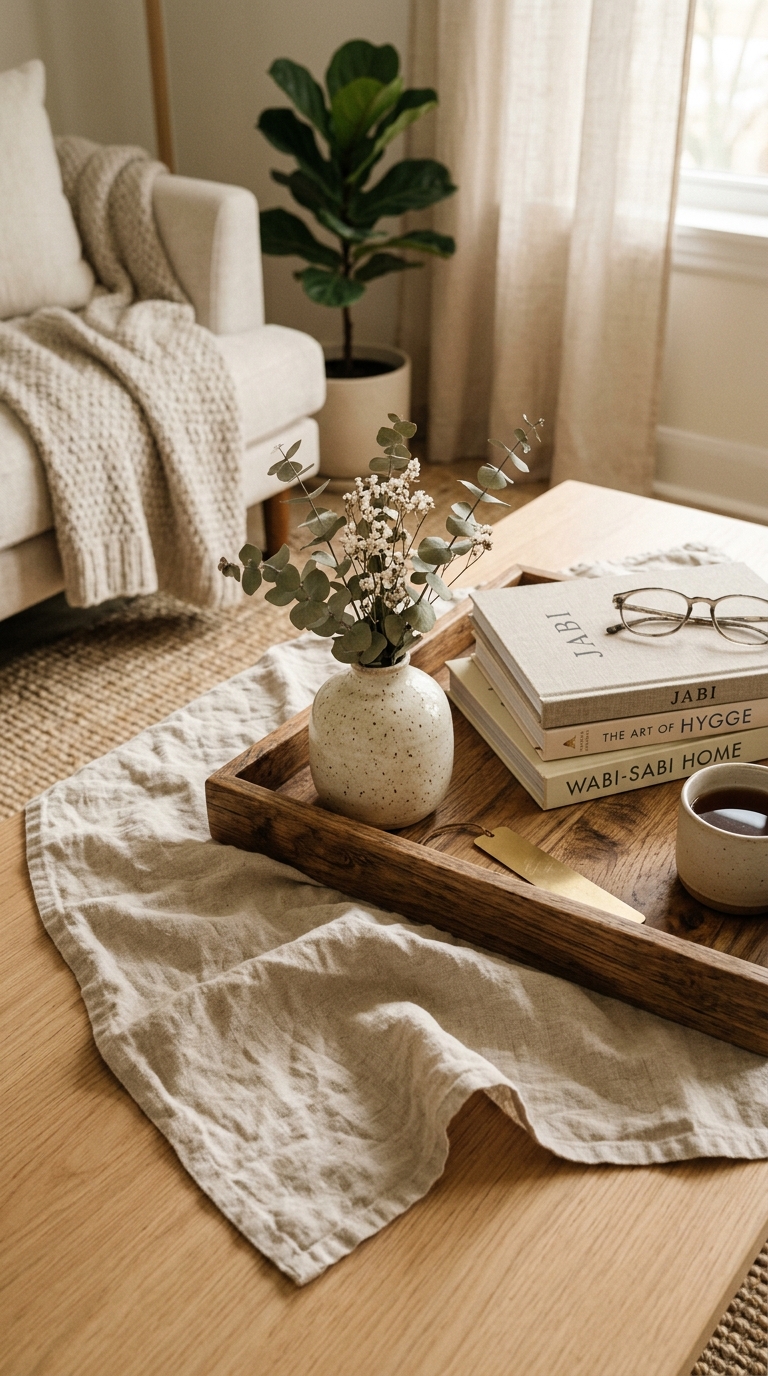
A Linen Cloth or Textured Fabric Layer Underneath
Warm Vibe | The Softening Trick
Hard table surfaces can make a space feel cold — even in a Japandi setup. The fix? A small piece of undyed linen, a raw muslin square, or a loosely woven fabric placed under your tray or objects. It softens the surface, adds warmth, and creates a beautiful layered look that feels very editorial.
Don’t iron it perfectly flat. Let it have natural creases. Japandi celebrates the organic — a slightly rumpled linen cloth looks infinitely more beautiful than a stiff, pressed one.
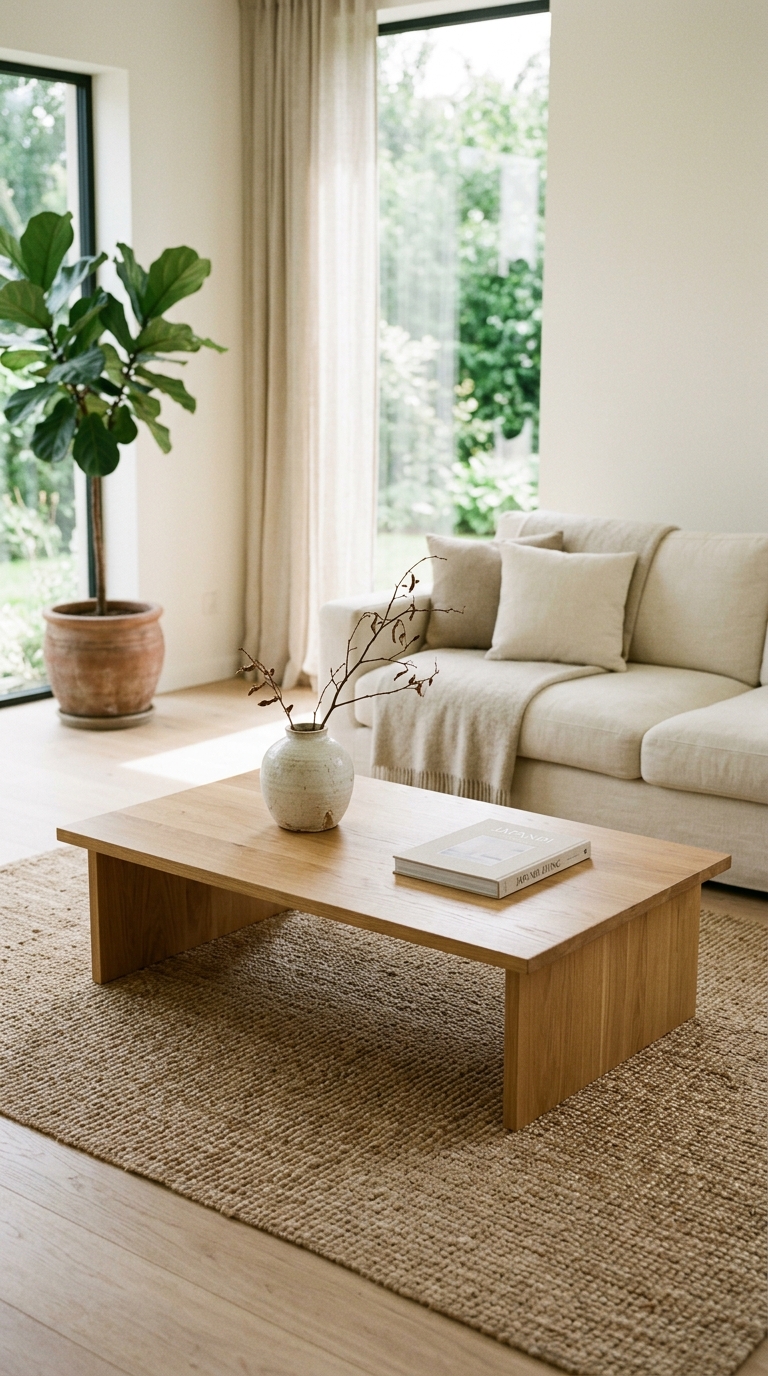
Embrace Negative Space — Don’t Fill Every Inch
Cool Vibe | The Hardest Rule and the Most Important
This one goes against every decorating instinct. Leave space. Intentional, deliberate, beautiful space. In Japandi design, what’s not on the table is just as important as what is. Negative space lets your eye rest. It makes every object you place feel chosen and significant.
Try removing one item from your current table setup. Then another. Keep going until it feels almost too minimal — then add one thing back. That’s your Japandi sweet spot.
“The most stylish coffee tables are the ones that look like nobody tried.”
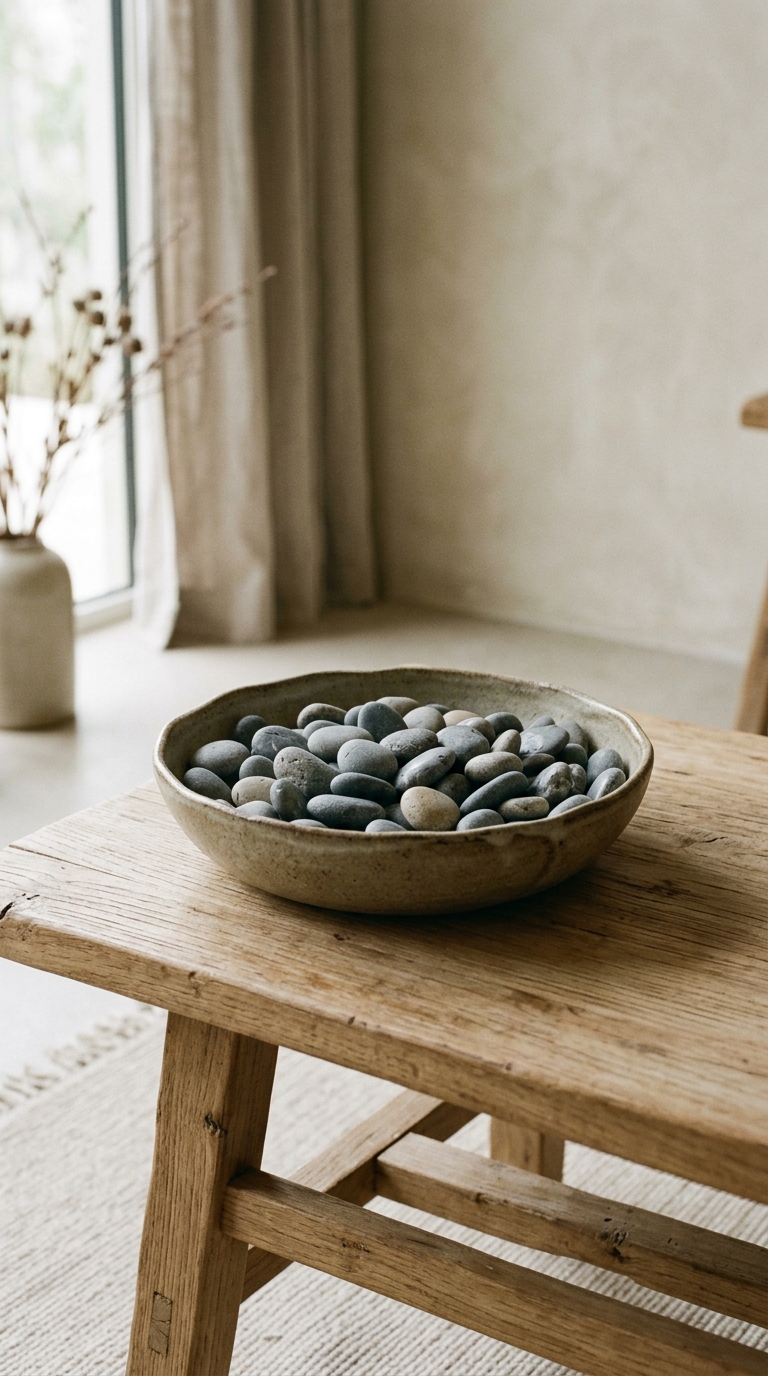
A Zen Sand Tray or Smooth Pebble Bowl
Nature-Forward | Meditation Meets Decor
A small zen sand garden or a wide shallow bowl filled with smooth river pebbles isn’t just decor — it’s an experience. Running your fingers through sand or touching cool, smooth stones is genuinely calming. And on a coffee table, it becomes a beautiful focal point that sparks curiosity in every single guest.
This is one of those ideas that looks incredibly intentional but is actually the simplest thing in the world to put together. A shallow ceramic bowl. A handful of stones from a garden or riverbed. Done.
Even in compact homes, smart coffee station ideas for small spaces can complement a Japandi aesthetic by keeping your coffee essentials organized without sacrificing a clean, minimalist look.
Choose One Wood Tone and Commit to It
Warm Vibe | The Decision That Changes Everything
Mixing wood tones is one of the most common styling mistakes. In Japandi design, you pick one and stay loyal to it. Light oak for a Scandinavian-leaning, airy feel. Dark walnut for a Japanese-inspired, moodier look. The table, the tray, the wooden objects — they should all speak the same wood language.
This single decision — one wood tone throughout — is what gives Japandi spaces that “how did they do that?” quality. It’s not expensive. It’s just consistent.
“Commitment in decor works exactly like commitment in life — it always pays off.”
A Handmade Pottery Dish as a Beautiful Catch-All
Quiet Luxury | Real Life, But Make It Aesthetic
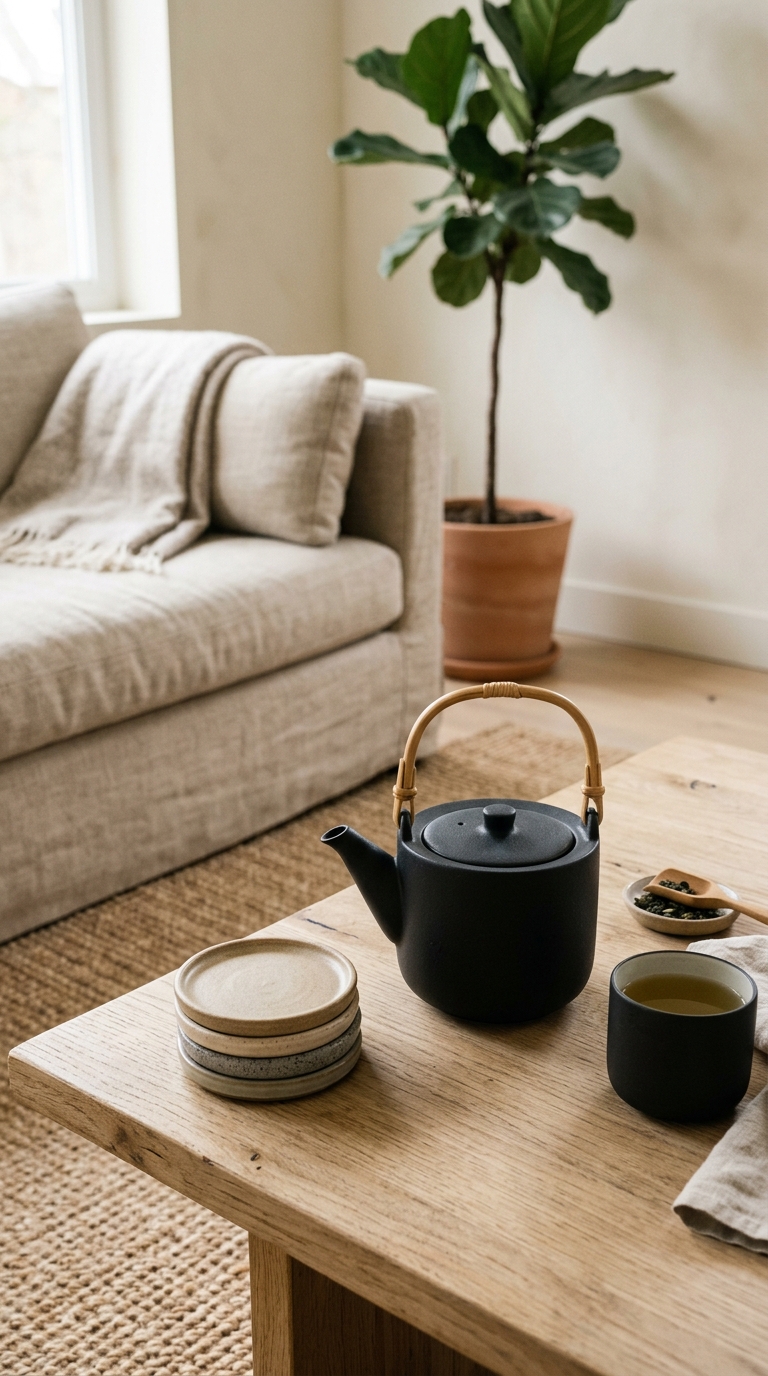
Real talk — your coffee table isn’t a museum exhibit. Remotes happen. Phones happen. Life happens. But instead of letting everyday items make your table look messy, a small handmade pottery dish keeps them contained and actually adds to the aesthetic. It’s the Japandi way of being practical without sacrificing beauty.
A matte black dish, a raw clay tray, or even a kintsugi-inspired piece (the Japanese art of repairing cracks with gold) becomes a design statement in itself. Your remote lives there now. It looks good. Everyone wins.
Image Prompt: A small handmade matte black ceramic catch-all dish on a Japandi coffee table with a few small everyday items inside, warm earthy tones, wooden background, soft natural light, lifestyle Pinterest photography, practical yet beautiful aesthetic.
File Name: japandi-coffee-table-ceramic-catchall-dish
ALT Text: Handmade matte black ceramic dish as a catch-all on a Japandi coffee table minimal lifestyle styling
Monochrome Moment — All Beige or All Charcoal
Cool Vibe | One Color, Infinite Elegance
Pick one color story for your entire coffee table arrangement and let everything speak the same language. All-beige — cream tray, oatmeal linen, sand-toned ceramics — feels ultra-luxurious and very editorial. All-charcoal — dark wood, slate, matte black ceramics — reads sophisticated and moody.
The monochrome approach is one of those ideas that feels simple but looks incredibly considered. You don’t need variety when you have depth. And within one color, the textures (smooth ceramic, rough stone, woven rattan) do all the interesting work.
Layer Heights — Low, Medium, Tall
Warm Vibe | The Formula That Never Fails
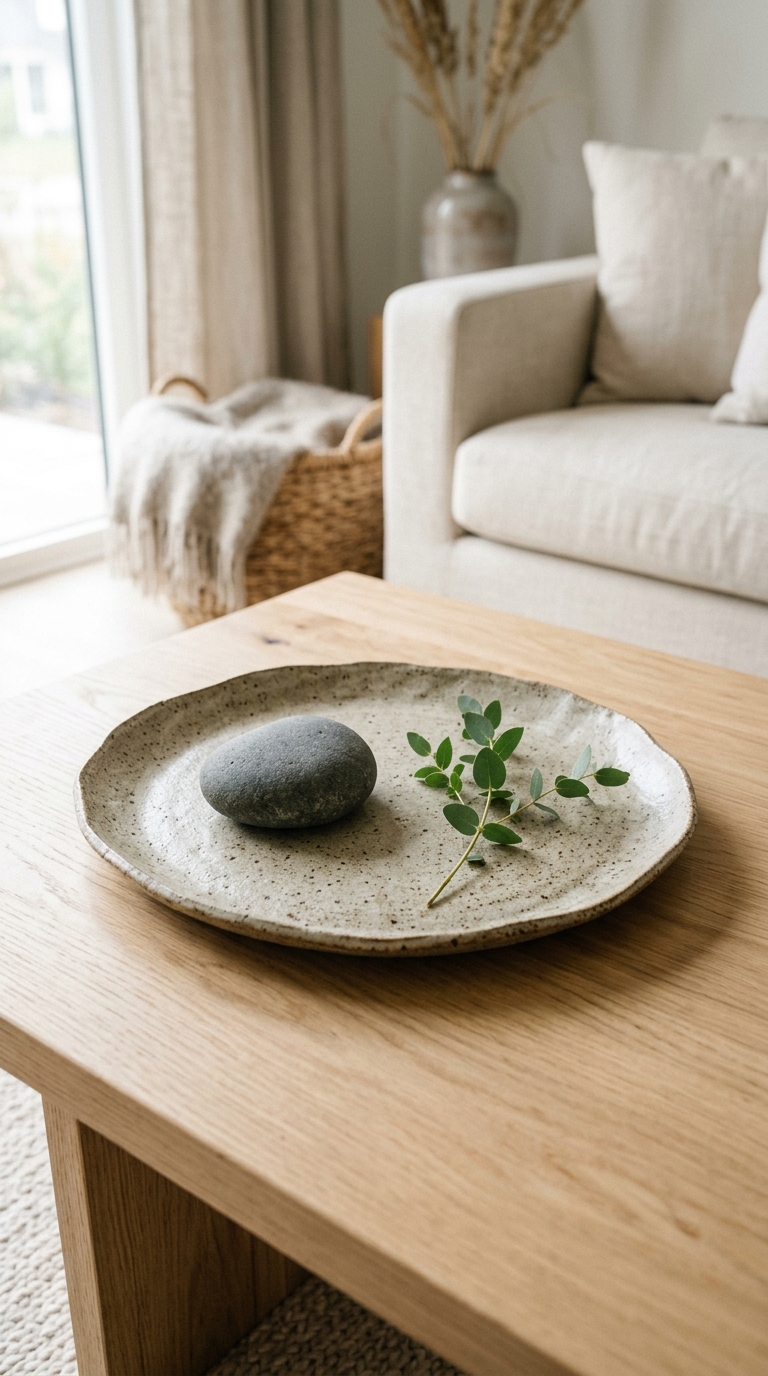
Visual height variation is the single biggest difference between a random collection of objects and a styled coffee table. Low tray at the base. A mid-height book stack or ceramic bowl. One taller element — a bud vase, a dried stem, a small plant. Three levels. That’s the whole formula.
It creates visual movement. Your eye travels up and around, taking in each piece individually before appreciating the whole composition. It’s the same principle fine art photographers use — and it works just as beautifully on a coffee table.
One Imperfect Vintage Object for Wabi-Sabi Character
Nature-Forward | Beautiful Because It’s Not Perfect
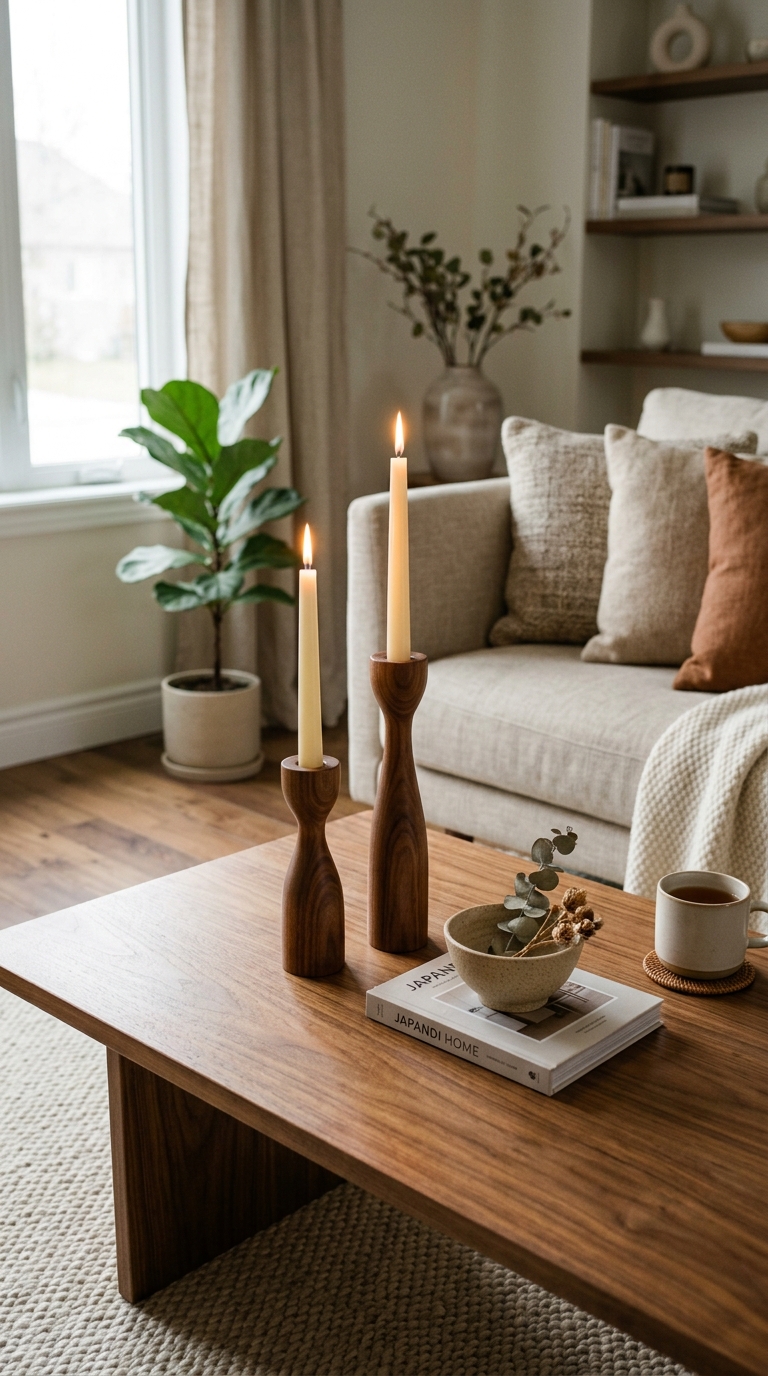
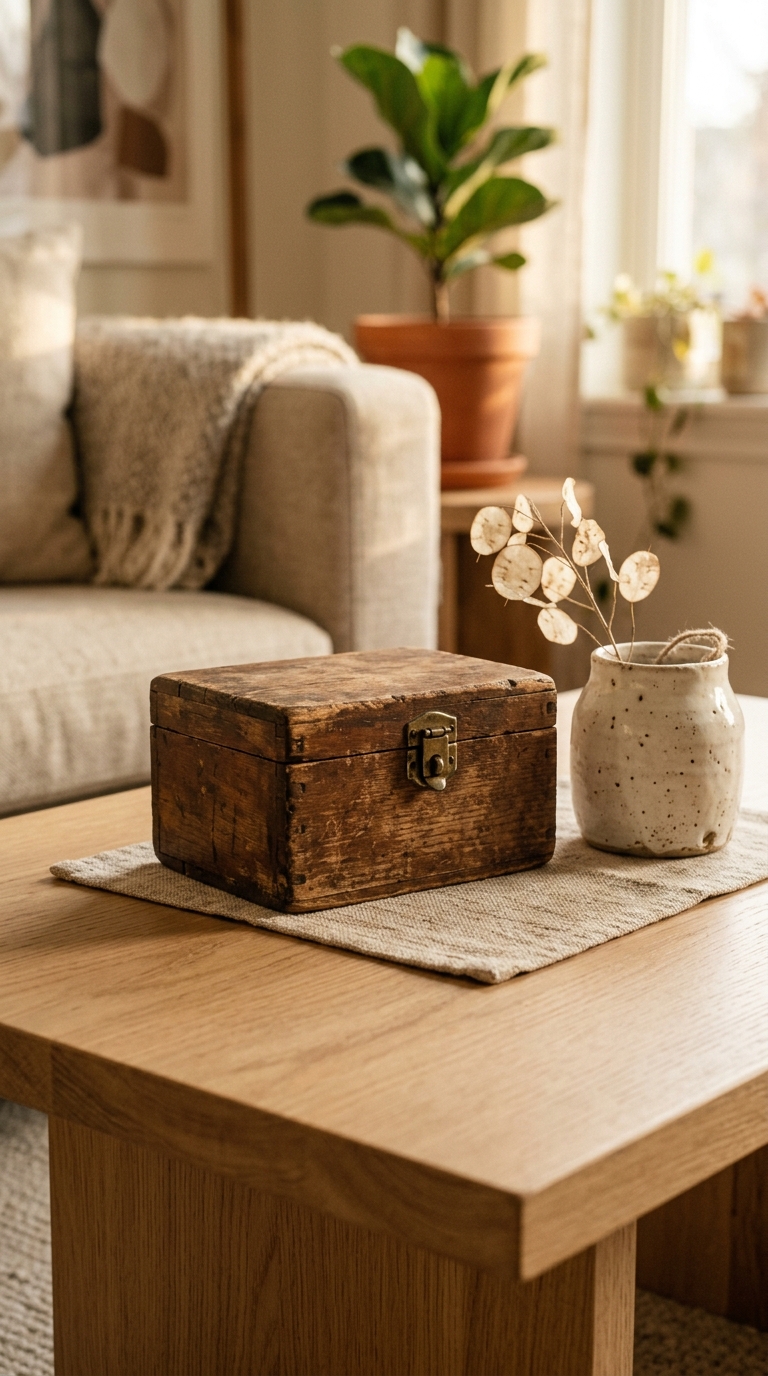
Wabi-sabi, at its heart, is about finding beauty in imperfection. An aged wooden box with a worn edge. An old piece of pottery with a small chip. A vintage brass figurine turned slightly green. One imperfect, well-loved object on your coffee table adds character that no brand-new item ever could.
It also tells a story. And in Japandi design, a coffee table that tells a quiet story is infinitely more interesting than one that looks freshly styled for a catalog shoot.
“The crack in the old bowl is the most beautiful thing on the table. That’s wabi-sabi.”
An Incense Holder — Scent as a Style Element
Quiet Luxury | The Detail Nobody Expects
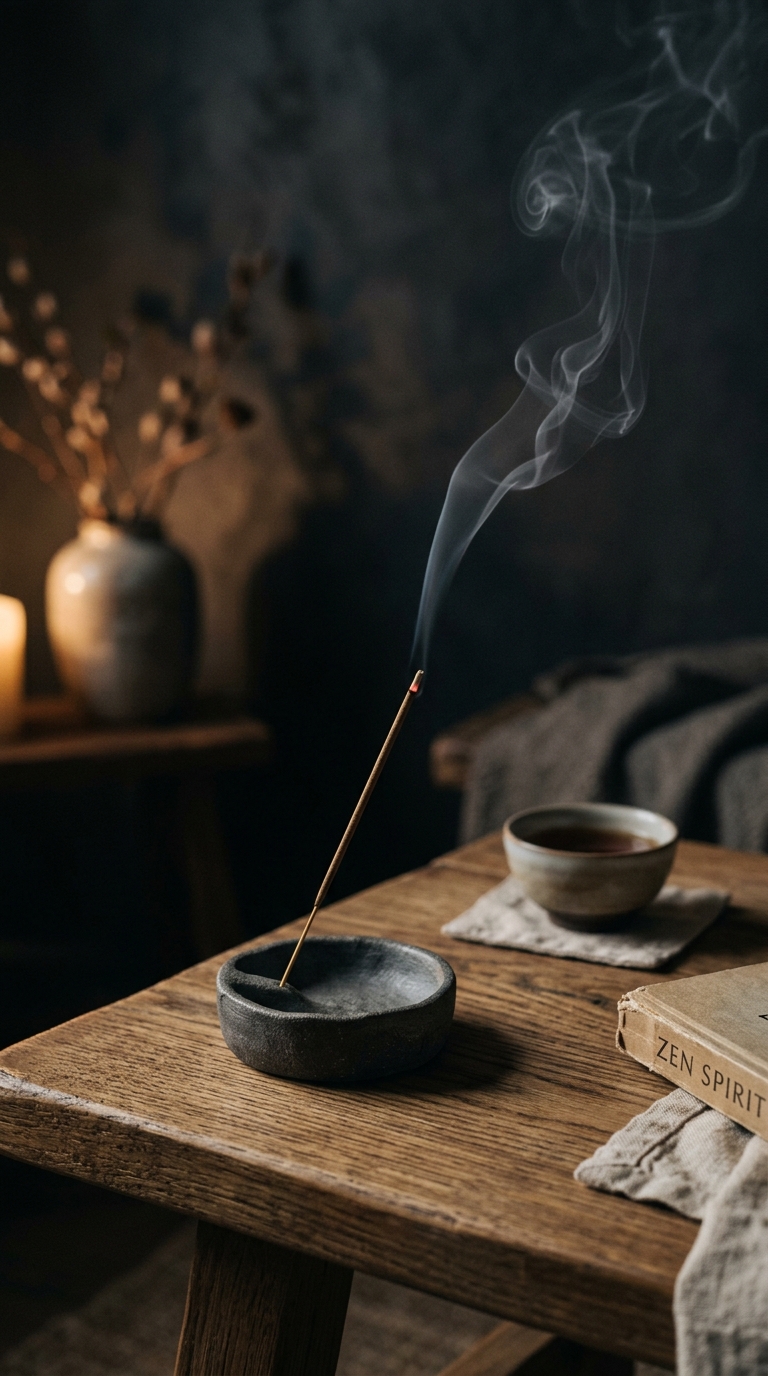
This one is a little unexpected — and that’s exactly why it works. A minimalist incense holder (ceramic, stone, or raw wood) with a single stick propped in it adds a sensory layer to your coffee table that goes beyond just looking good. When you light it, the thin wisp of smoke drifting upward becomes almost a visual element in itself.
Even unlit, an incense holder looks intentional and interesting. It signals a home that cares about atmosphere — not just appearance. Very Japandi. Very zen.
Seasonal Swaps — Refresh Every Three Months
Nature-Forward | A Living Coffee Table
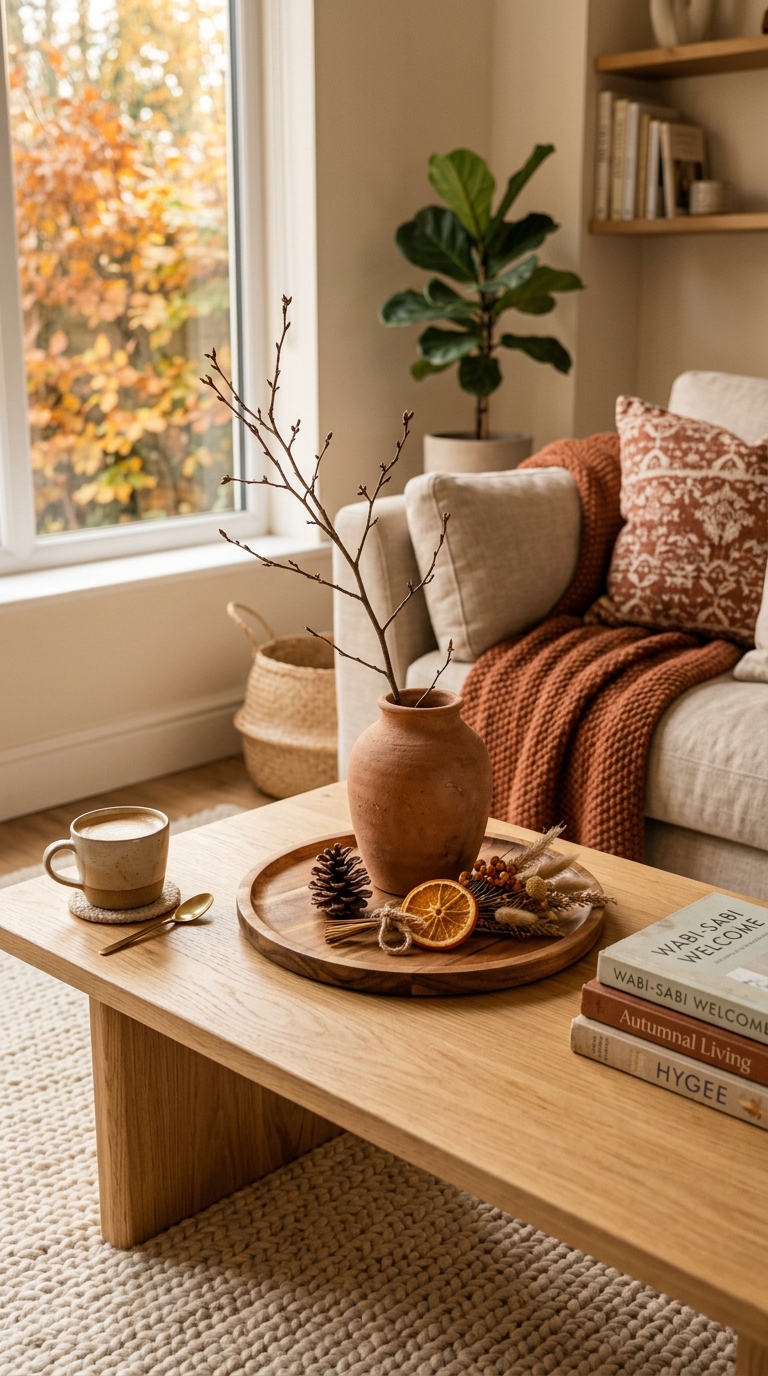
One of the most beautiful things about Japandi styling is that it stays connected to nature — and nature changes. A sprig of cherry blossoms in spring. A pine cone and dried orange slice in autumn. A small bare branch in winter. Fresh eucalyptus in summer. Rotating one or two elements with the season keeps your coffee table feeling alive and intentional all year long.
This doesn’t mean redoing everything. Just swap the botanical, change the candle scent, or shift from light linen to a slightly heavier woven fabric. Small shifts, big impact. And endless reasons to keep coming back to style it again.
A Wide Bowl with Seasonal Fruit or Walnuts
Warm Vibe | Functional Decor at Its Finest
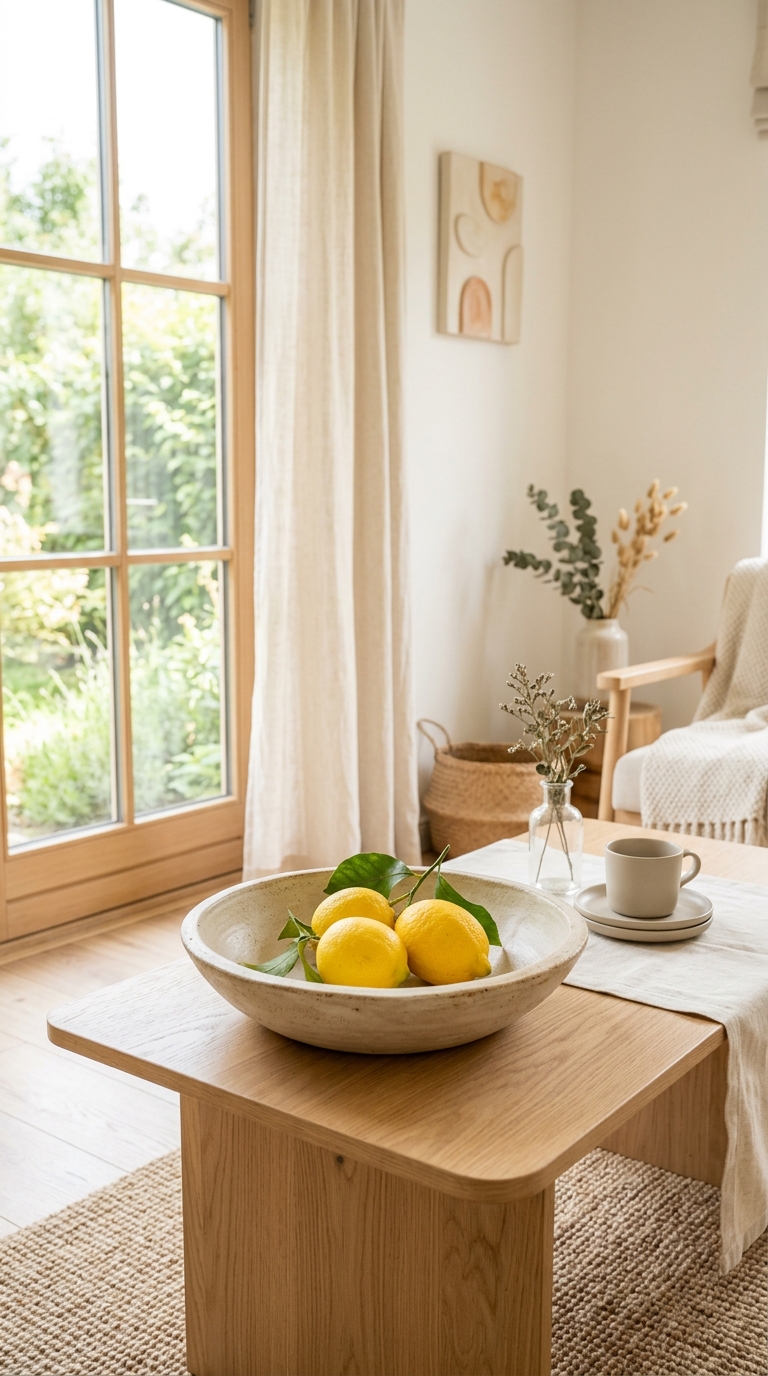
A wide, flat ceramic bowl filled with a small pile of lemons, clementines, or whole walnuts is one of the most underrated Japandi coffee table ideas. It’s organic, purposeful, and genuinely beautiful. The yellow of lemons against a matte clay bowl is a whole color story by itself.
And the best part? It’s actually useful. Guests can grab a walnut. You can move the bowl to the dining table if needed. In Japandi design, everything has a purpose — and this one might be the most honest expression of that principle on this entire list.
“Lemons in a clay bowl. That’s it. That’s the whole idea. And somehow it’s perfect.”
The Final Edit — Remove One Thing
Cool Vibe | The Most Important Step of All
Every Japandi stylist ends the same way. You’ve placed everything. You’ve adjusted the heights and the angles. You’ve added the tray and the plant, and the beautiful ceramic piece. And then — you take one thing away.
Stand back. Look at the table. Find the one item that’s doing the least work. Remove it. What you’re left with is always better. Always cleaner. Always more intentional. This final edit is the step that separates a beautifully styled Japandi table from a pretty-but-slightly-busy one.
Less is the whole point. It always was.
“The space you leave behind is as beautiful as everything you chose to keep.”
FAQs
Q: What is Japandi coffee table styling?
A: Japandi coffee table styling is a decor approach that blends Japanese wabi-sabi and Scandinavian minimalism. It focuses on placing a small number of intentional, natural objects — such as a wooden tray, a handmade ceramic vase, and a single dried stem — on a coffee table to create a calm, uncluttered, and quietly luxurious look.
Q: What should I put on a Japandi coffee table?
A: A Japandi coffee table should have 3 to 5 carefully chosen items: a flat wooden or rattan tray as the base, a handmade ceramic object, one natural element such as a plant or dried stem, and optionally a small stack of neutral-toned books. Every item should serve a visual or practical purpose — nothing is decorative without reason.
Q: How do you style a coffee table in Japandi style on a budget?
A: To style a Japandi coffee table on a budget, start with a simple wooden tray, add a small plant or dried stem from a garden, stack two books with neutral-toned covers, and place one matte ceramic piece. The Japandi aesthetic is based on restraint, not expensive items — quality of choice matters more than price.
Q: What colors work best for Japandi coffee table decor?
A: The best colors for Japandi coffee table decor are earthy neutrals: cream, warm beige, raw clay, stone grey, and matte black. These tones reflect both Japanese wabi-sabi earthiness and Scandinavian simplicity. Avoid bright colors, loud patterns, or high-gloss finishes — the Japandi palette is always muted, warm, and organic.
Q: What is the rule of three in Japandi coffee table styling?
A: The rule of three means grouping objects in sets of odd numbers — typically three items at three different heights. For example: a low candle, a mid-height ceramic vase, and a tall dried stem. Odd-number groupings feel naturally balanced to the human eye and are a core principle in both Japanese and Scandinavian interior design.
Q: What is the difference between Japandi and minimalist coffee table styling?
A: Minimalist styling removes everything purely for simplicity. Japandi styling removes clutter but intentionally keeps objects that carry warmth, texture, or natural beauty — like a handmade ceramic dish or a moss ball. Japandi is minimalism with a soul: it values imperfection, organic materials, and sensory calm, not just visual emptiness.
Q: How many items should be on a Japandi coffee table?
A: A Japandi coffee table should have between 3 and 6 items maximum, grouped intentionally rather than scattered. The most effective approach is to use one tray as the base, place two to three objects inside or beside the tray, and add one taller element for height variation. Leaving negative space — areas of the table left empty — is just as important as what you place on it.
Q: Can you achieve a Japandi coffee table look in a rented apartment?
A: Yes. Japandi coffee table styling requires no permanent changes to a space. All you need is a wooden tray, a small plant or dried botanical, one ceramic object, and a stack of neutral books — all easily movable and renter-friendly. The aesthetic is defined by how objects are chosen and arranged, not by the furniture or apartment itself.
Conclusion
Styling a Japandi coffee table isn’t about spending money or finding the perfect objects. It’s about slowing down, choosing intentionally, and letting beauty come from simplicity.
Start with one idea — maybe just the tray. Or the book stack. Or finally removing three things you never really loved anyway. See how it feels. Then go from there.
Which idea are you trying first? Save this post so you can come back to it every time you feel like refreshing your space.