
Peonies in containers aren’t just a gardening experiment — they’re one of those slow, satisfying rewards that keep getting better every spring. And once you understand how they actually work, they stop feeling difficult and start feeling surprisingly generous.
If you’ve struggled before or only ever seen leaves with no flowers, don’t worry — it usually comes down to a few fixable details. And if you’re starting fresh, you’re already ahead because you can set things up the right way from the beginning.
Start with the right variety, give it a proper deep pot, keep the crown at the correct depth, and don’t rush the process. After that, it’s really just patience and consistency doing the work for you.
Give it a couple of seasons, and those same pots that once looked empty will be overflowing with soft, romantic blooms every spring — the kind you’ll end up cutting for your home and sharing with everyone who visits.
Why Peonies Actually Grow Well in Pots (When You Do It Right)
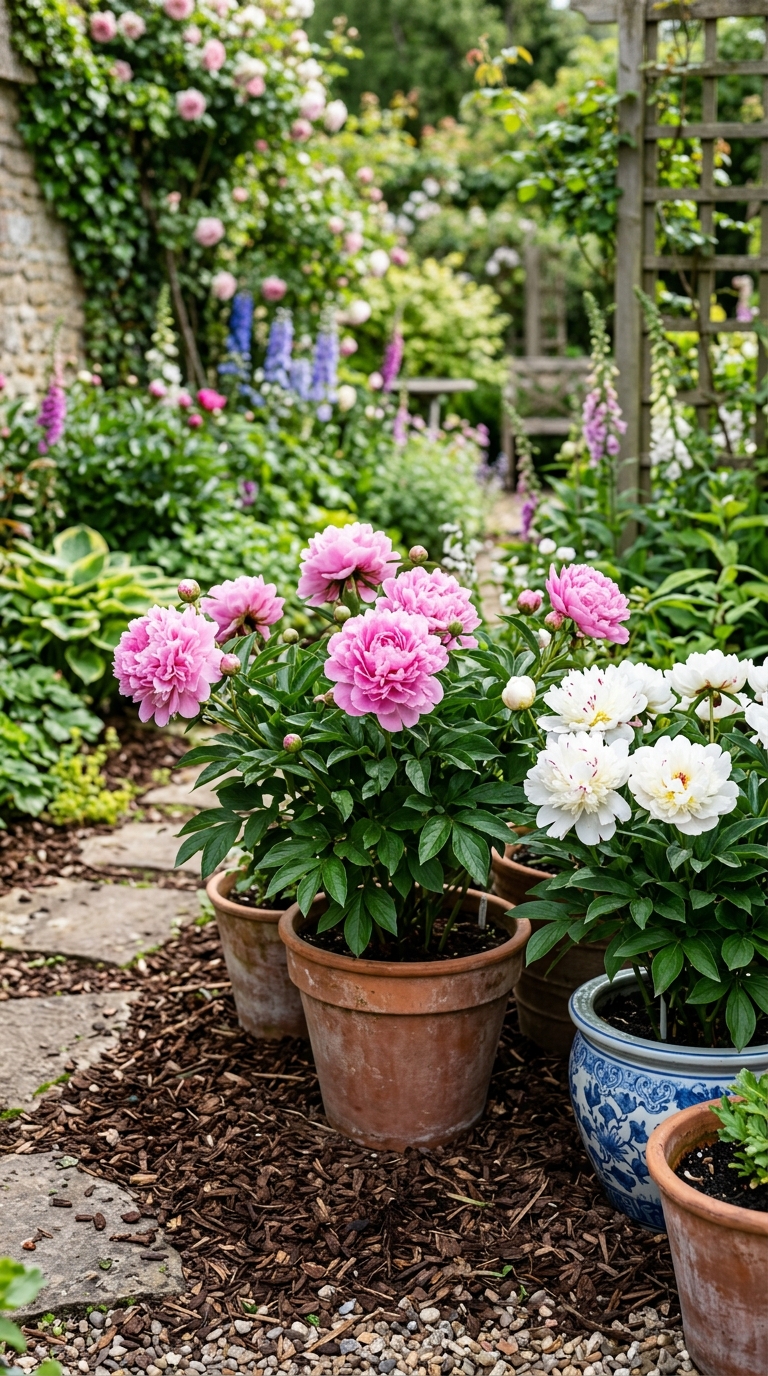
The reputation peonies have for being difficult in containers comes from one thing: most people plant them wrong from the start. But the plant itself isn’t the problem. Peonies actually have some real advantages in pots — you control the drainage, you control the soil quality, and you can move the container to chase sunlight or protect it from late frost. That’s the flexibility a garden bed can’t give you.
The challenges are real, too. Container soil dries faster, roots can overheat in summer, and pots don’t buffer temperature swings the way ground soil does. But every one of those challenges has a straightforward solution, and once you know what you’re dealing with, container peonies become one of the most rewarding things you can grow.
Looking for more ways to enhance your container garden? Explore these creative flower container gardening ideas for stunning seasonal displays and colourful arrangements.
Quick Tips:
- Start with one plant in one pot — learn how it behaves before scaling up
- Choose a sheltered but sunny spot from day one
- Accept that year one will be slow — that’s completely normal
Choosing the Right Peony Type for Container Growing
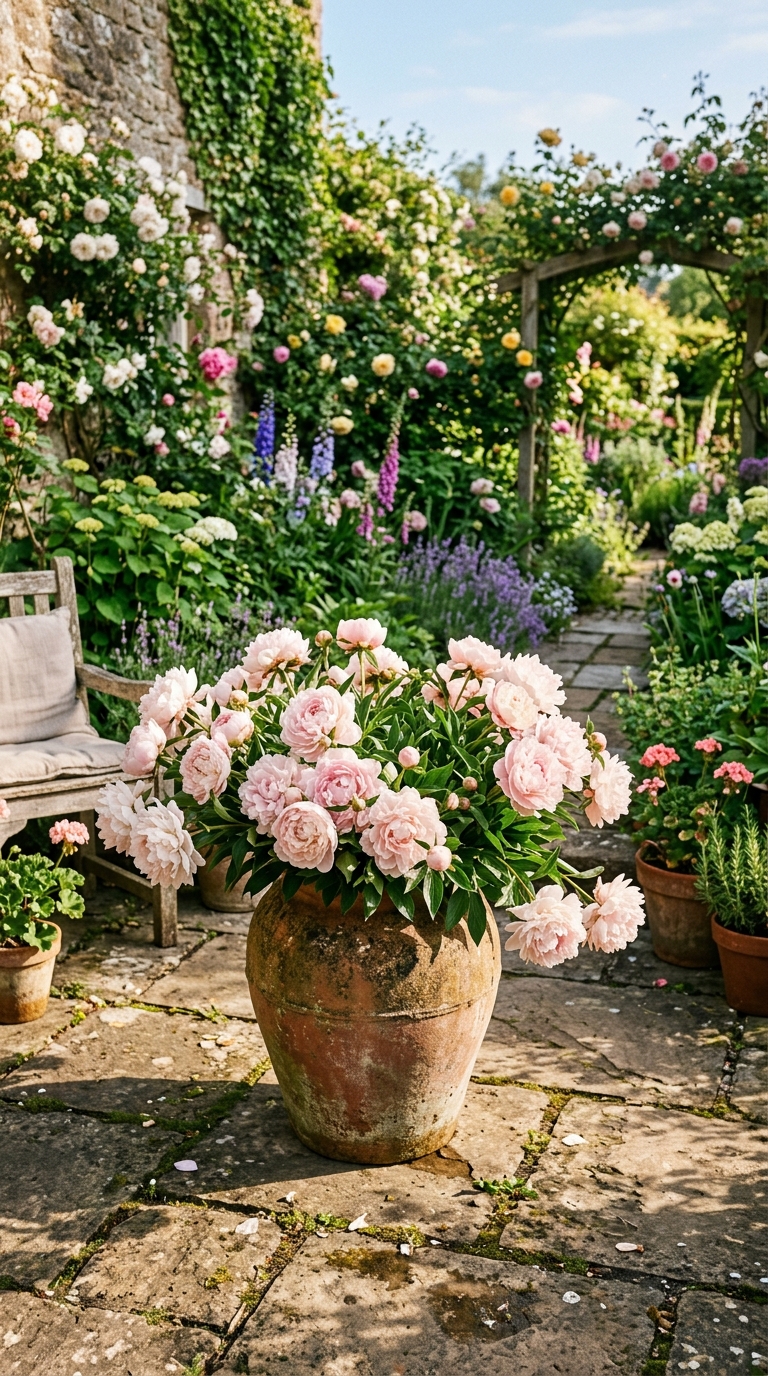
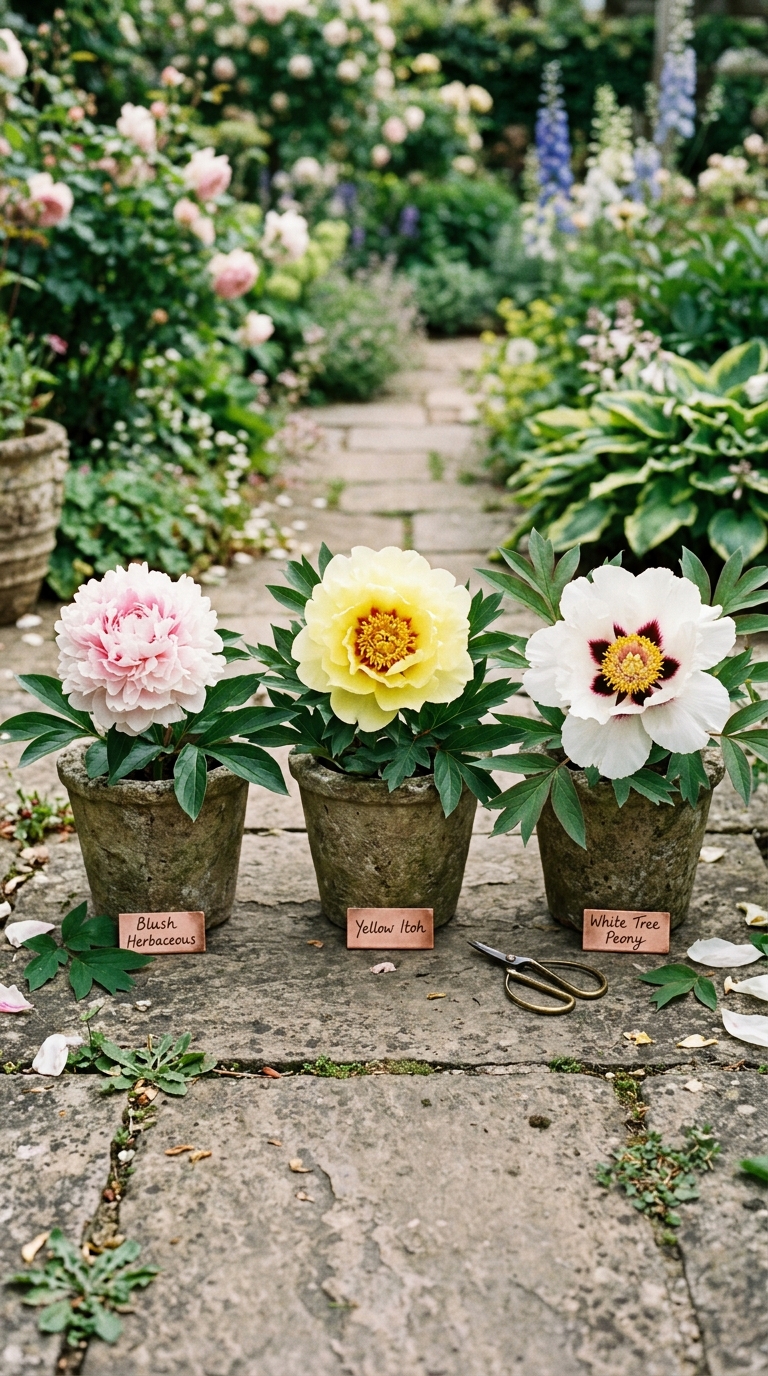
Not all peonies behave the same way in a pot. There are three main types — herbaceous (the classic ones that die back to the ground each winter), tree peonies (woody shrubs that keep their structure year-round), and Itoh or intersectional peonies (a hybrid of the two). For container growing, Itoh peonies are genuinely the best choice. They have more compact root systems, a longer bloom window than most herbaceous types, and they’re naturally more adaptable to container life.
Tree peonies can be grown in large containers, but they grow slowly and will need more space over time. Herbaceous types are the most common and widely available — stick to compact varieties if you go this route. The key is matching the plant’s natural growth habit to what a pot can realistically provide.
Quick Tips:
- Itoh peonies are the top pick for containers — compact, reliable, and spectacular
- Avoid large spreading herbaceous varieties like Coral Charm for small pots
- Tree peonies need minimal pruning and suit slightly larger, heavier containers
The Best Peony Varieties Specifically for Pots and Containers
Variety choice matters more than most people realise. Some peonies are just naturally better suited to container life because of their root structure, stem strength, and height. My personal favourites for pots: Sarah Bernhardt (classic double blush pink, reliable bloomer, widely available), Festiva Maxima (white with crimson flecks, incredible fragrance, very sturdy), Karl Rosenfield (deep magenta-red, strong stems that hold up in wind), and Bartzella — an Itoh variety with the most extraordinary golden-yellow blooms and a long bloom season.
For smaller pots or balconies with weight restrictions, look for varieties labelled “compact” or under 70cm in height. Bowl of Beauty is another excellent option — semi-double in hot pink, with a lower-growing habit and exceptionally floriferous. When buying, check the label for mature height and spread before you commit.
Peonies can attract beneficial garden visitors, but adding pollinator flowers throughout your landscape can help create an even more vibrant and bee-friendly outdoor space.
Quick Tips:
- Sarah Bernhardt and Bartzella are the two most consistently recommended container varieties
- Check final height on the label — anything over 90cm will need staking in a pot
- Buy from a specialist peony nursery if possible — quality of bare root stock matters enormously
What Size and Depth of Pot Does a Peony Actually Need
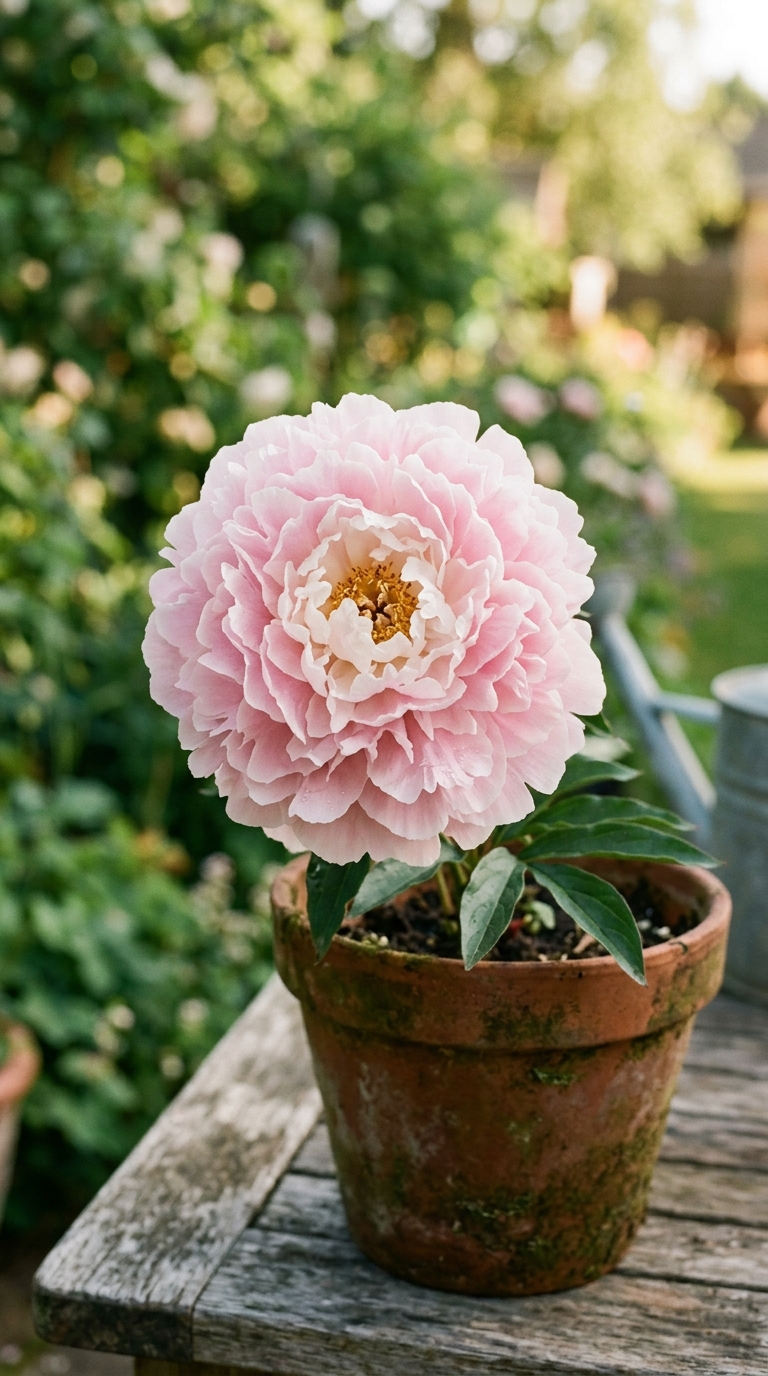
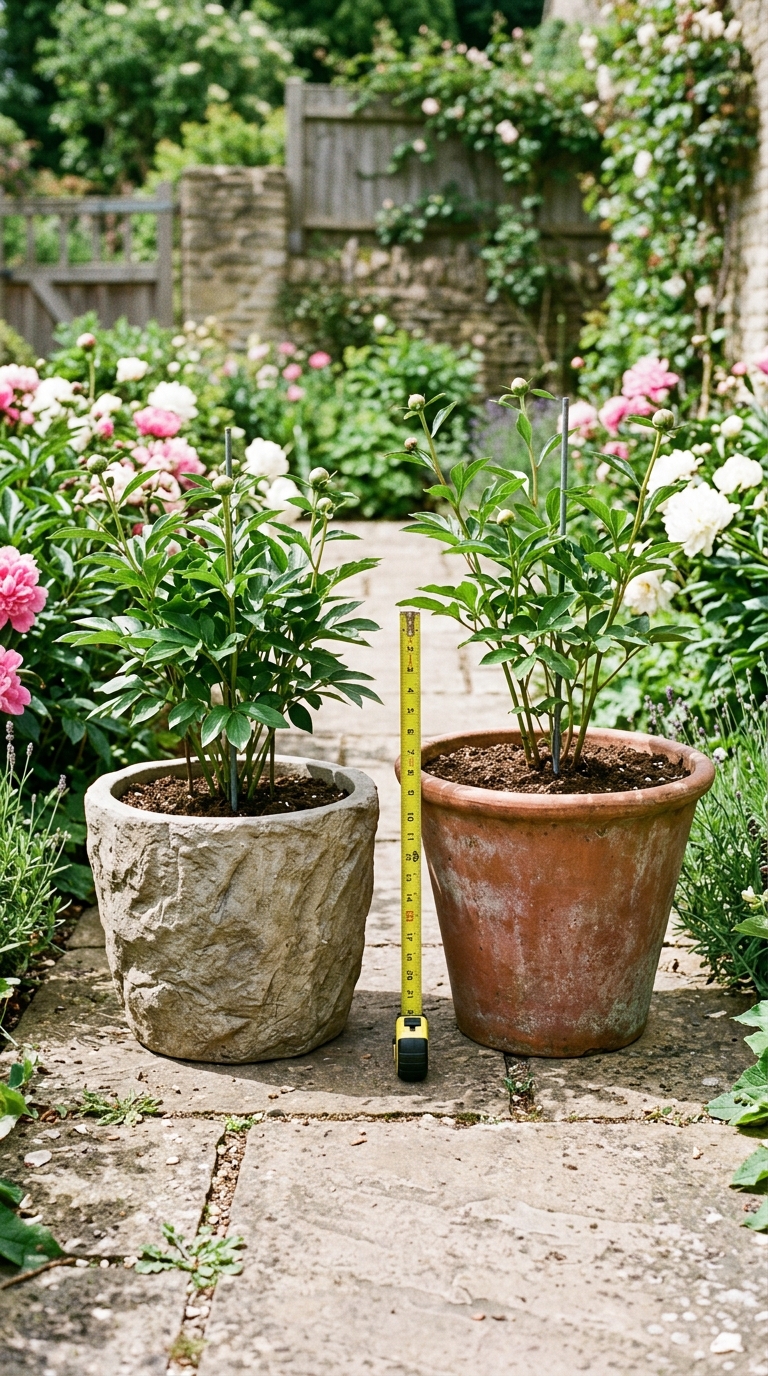
This is where most container peonies fail before they even get started. Peonies have deep, spreading root systems, and they do not like being cramped. The minimum pot size you should consider is 45cm deep and 45cm wide — and honestly, bigger is better. A 60cm deep pot will give you significantly more success, especially from year two onwards when the root system has had a chance to establish.
Material matters too. Terracotta is beautiful but heavy, and it dries out faster in summer heat. Glazed ceramic holds moisture better. Resin or fibreglass pots that mimic stone or terracotta are lightweight, frost-resistant, and genuinely good-looking — ideal for balconies with weight restrictions. Whatever you choose, drainage holes are non-negotiable. No drainage = root rot = dead plant.
Quick Tips:
- 45cm deep minimum, 60cm deep is much better — don’t compromise on this
- Heavy pots need to go in their permanent position before you fill them with soil
- Cover drainage holes with a piece of crockery or mesh, not solid blocking
The Best Potting Mix for Peonies in Containers
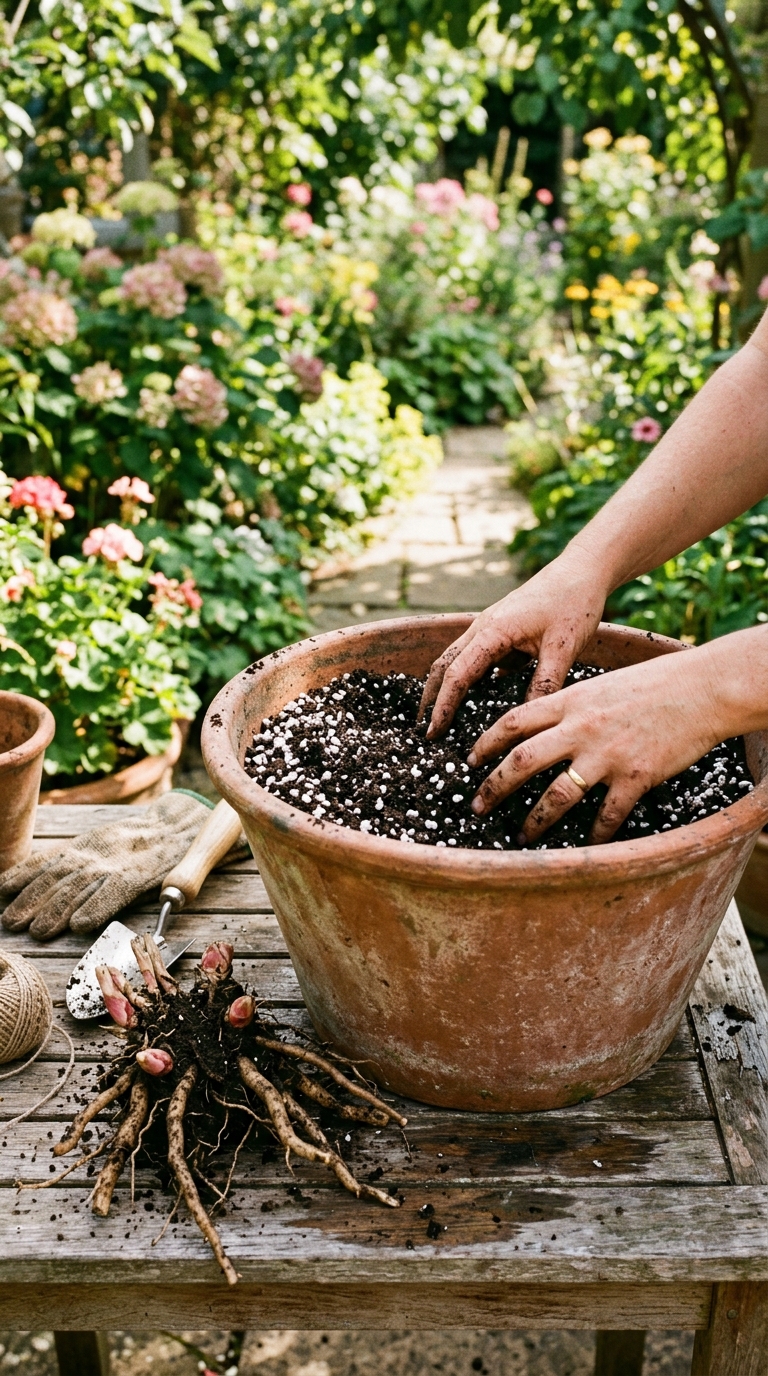
Standard multipurpose compost alone is not enough for peonies in pots — it gets compacted, holds too much water, and runs out of nutrients quickly. The mix that works best is a loam-based compost (like John Innes No. 3) combined with about 20% perlite for drainage and aeration, plus a handful of garden grit. Work a slow-release granular fertiliser into the mix at planting time — this gives the roots a steady, gentle feed through the first growing season without any risk of burning.
Peonies prefer a slightly neutral to slightly alkaline soil — a pH of around 6.5 to 7.0. If you’re using rainwater or soft water in an acidic area, a very occasional light dusting of garden lime on the soil surface once a year keeps the pH where peonies want it. Heavy clay-type soils in containers are a common mistake — they suffocate roots and cause rot.
Quick Tips:
- Mix ratio: 70% loam-based compost + 20% perlite + 10% garden grit
- Add slow-release fertiliser granules at planting — saves you remembering to feed in early spring
- Never use heavy garden soil from the ground in a container — it compacts and kills drainage
How Deep to Plant Peony Roots or Crowns in a Pot
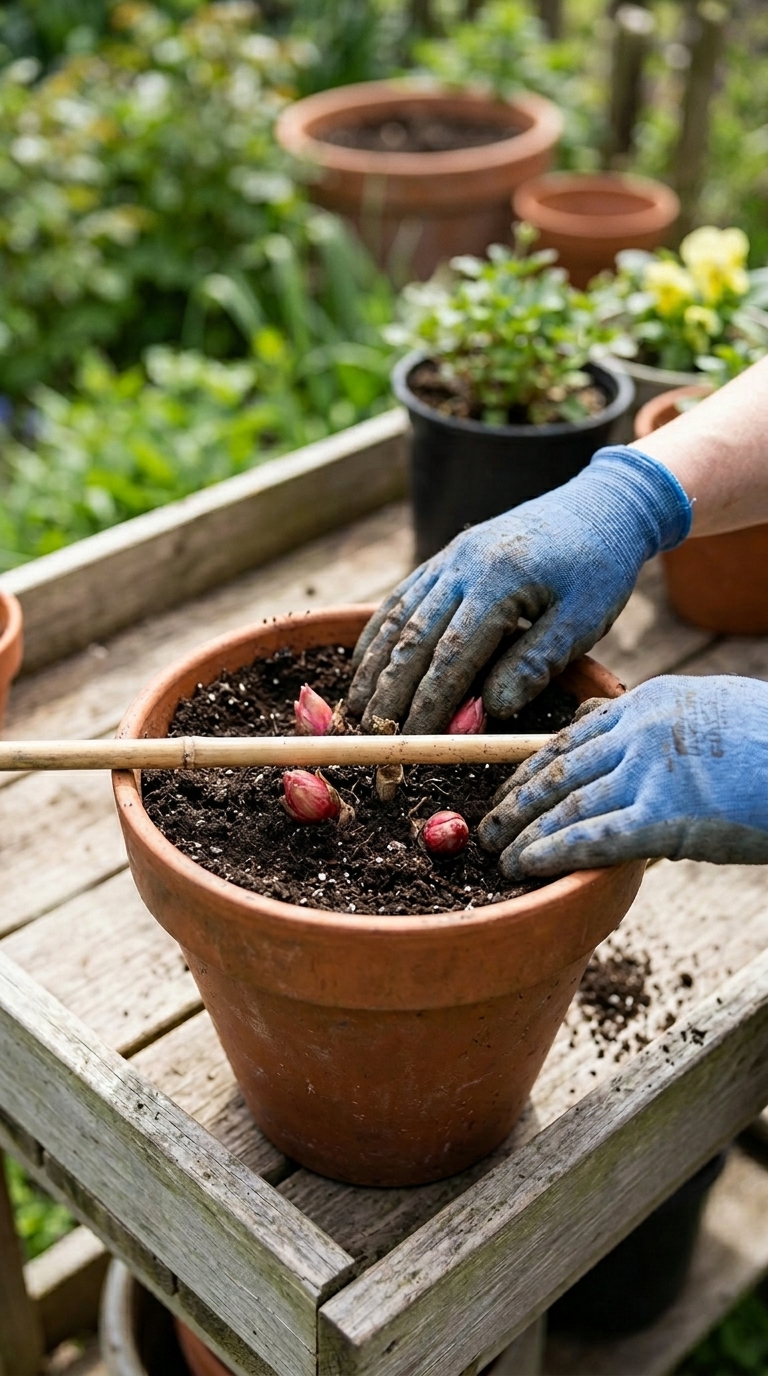
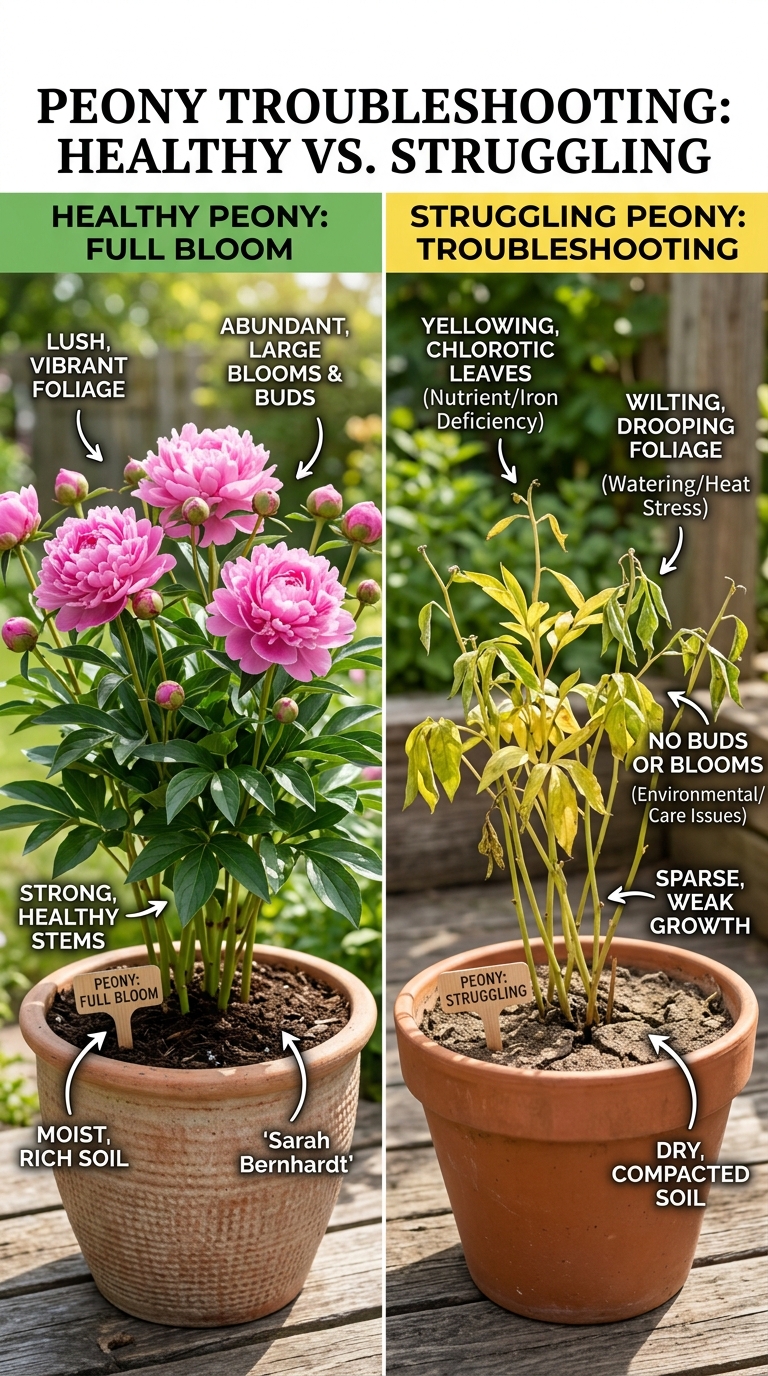
If there’s one single thing that determines whether a potted peony blooms, it’s planting depth. The eyes — those small red or pink buds on the crown of the root — must sit no more than 2.5 to 5 centimetres below the soil surface. Plant them deeper than that, and the plant will grow perfectly healthy foliage every year and produce absolutely no flowers. I’ve heard from so many people who had “healthy peonies that never bloomed”, and this is almost always why.
When planting, position the root in the pot and use a cane or pencil laid across the top of the pot as a guide to your soil level. The eyes should just peek below that imaginary line. Backfill gently, firm the soil without compacting, and water thoroughly. Don’t be tempted to plant deeper for stability — the crown will anchor itself as roots develop.
Quick Tips:
- Eyes should be 2.5–5cm below the final soil surface — no deeper, ever
- Lay a cane across the top of the pot to measure depth before backfilling
- If you’re repotting an established peony, keep the crown at the same depth it was before
Finding the Right Sunlight Position for Potted Peonies
Peonies need a minimum of six hours of direct sunlight every day to bloom reliably — but “six hours” means real, direct sun, not filtered light through a tree canopy. In very hot climates (consistently above 35°C), afternoon shade actually helps protect the blooms and prevents the delicate petals from scorching. But in cooler temperate climates, the more sun, the better — aim for a south or west-facing position if you’re in the northern hemisphere.
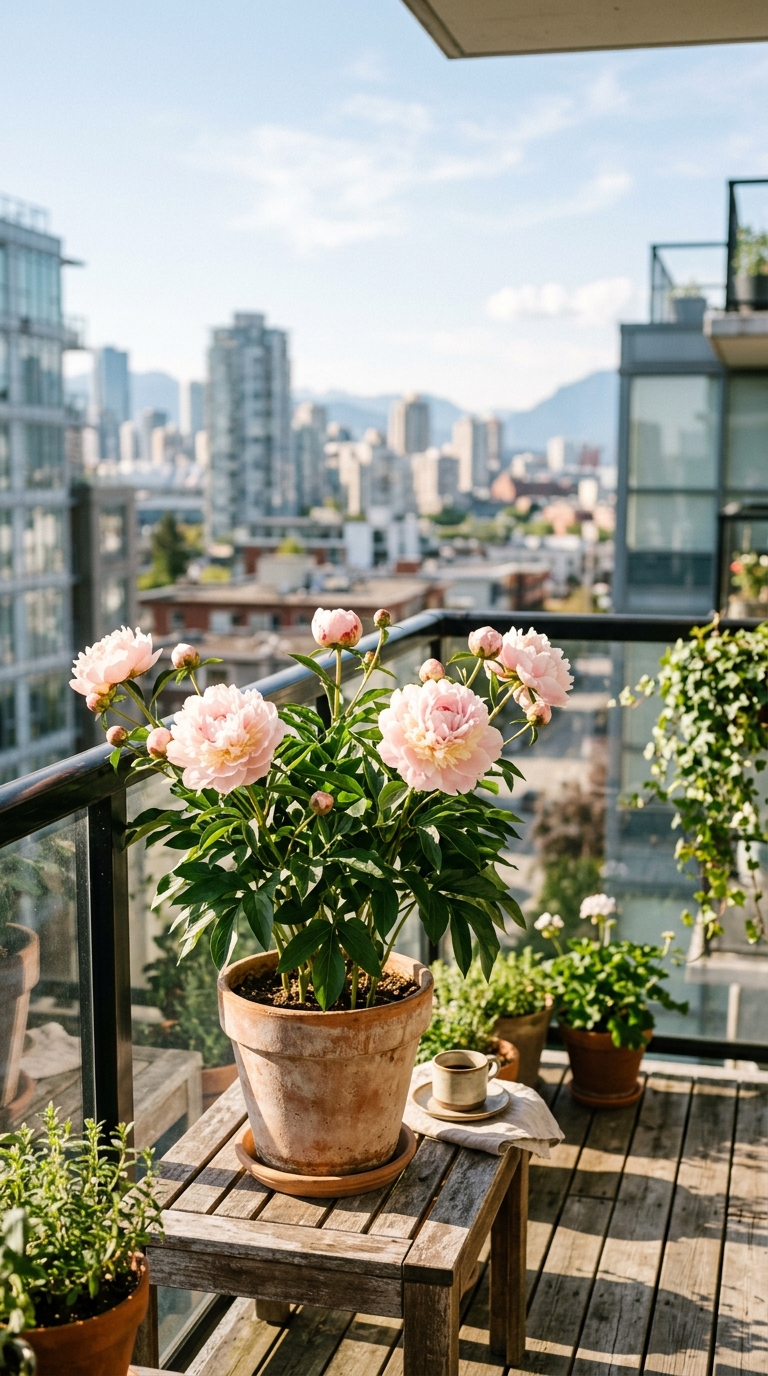
The beautiful advantage of growing peonies in pots is that you can move them. Track the sunlight on your patio or balcony through the day and position the pot in the spot that gets the longest run of direct light. As the plant comes into bud, you can even move it closer to your living space — right outside a French door or at the edge of a table — for maximum enjoyment of those fleeting blooms.
If you’re displaying potted peonies on a patio or backyard, these inspiring garden wall decor ideas can help you create a beautiful focal point around your blooms.
Quick Tips:
- South or west-facing positions are ideal in the northern hemisphere
- In hot climates, morning sun with afternoon shade gives the best bloom quality
- Rotate the pot a quarter turn every two weeks so all sides get equal light exposure
How to Water Peonies in Containers Without Overwatering
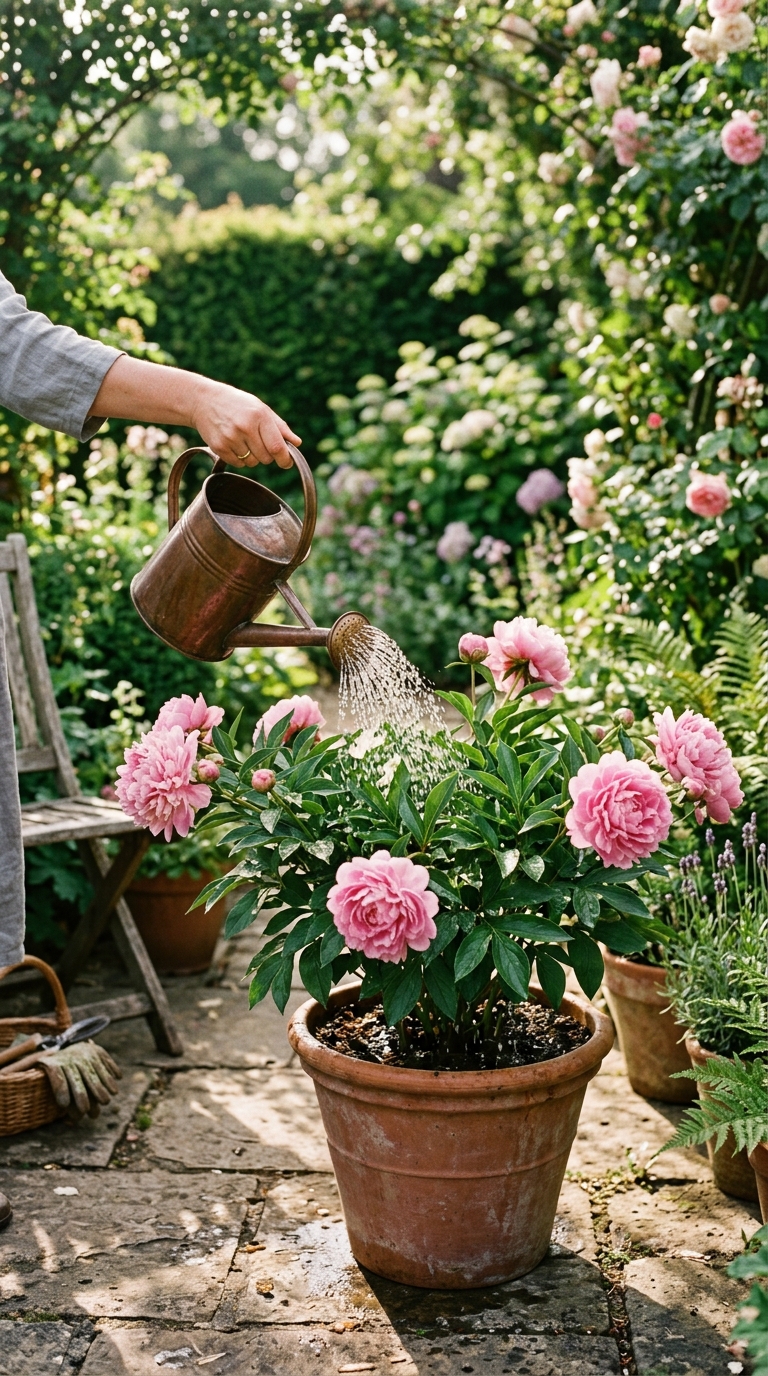
Container soil dries out faster than garden beds — especially in terracotta pots in warm weather. But overwatering is just as dangerous as underwatering for peonies, and root rot from waterlogged soil is one of the most common causes of container peony failure. The simplest check: push your finger 5cm into the soil. If it feels damp, don’t water yet. If it feels dry, water thoroughly until it drains from the bottom.
Water more frequently during active growth in spring and when buds are forming — this is when the plant is most thirsty. After the blooms fade and into summer, reduce watering slightly. In winter dormancy, herbaceous peonies need almost no water at all — just enough to stop the soil from completely desiccating. Never let the pot sit in a saucer of standing water.
Quick Tips:
- Water deeply and less often — shallow, frequent watering encourages shallow roots
- Terracotta pots need watering more frequently than glazed ceramic or resin pots
- Yellow leaves in summer (after bloom) can indicate overwatering, not just natural die-back
When and How to Fertilize Potted Peonies for Maximum Blooms
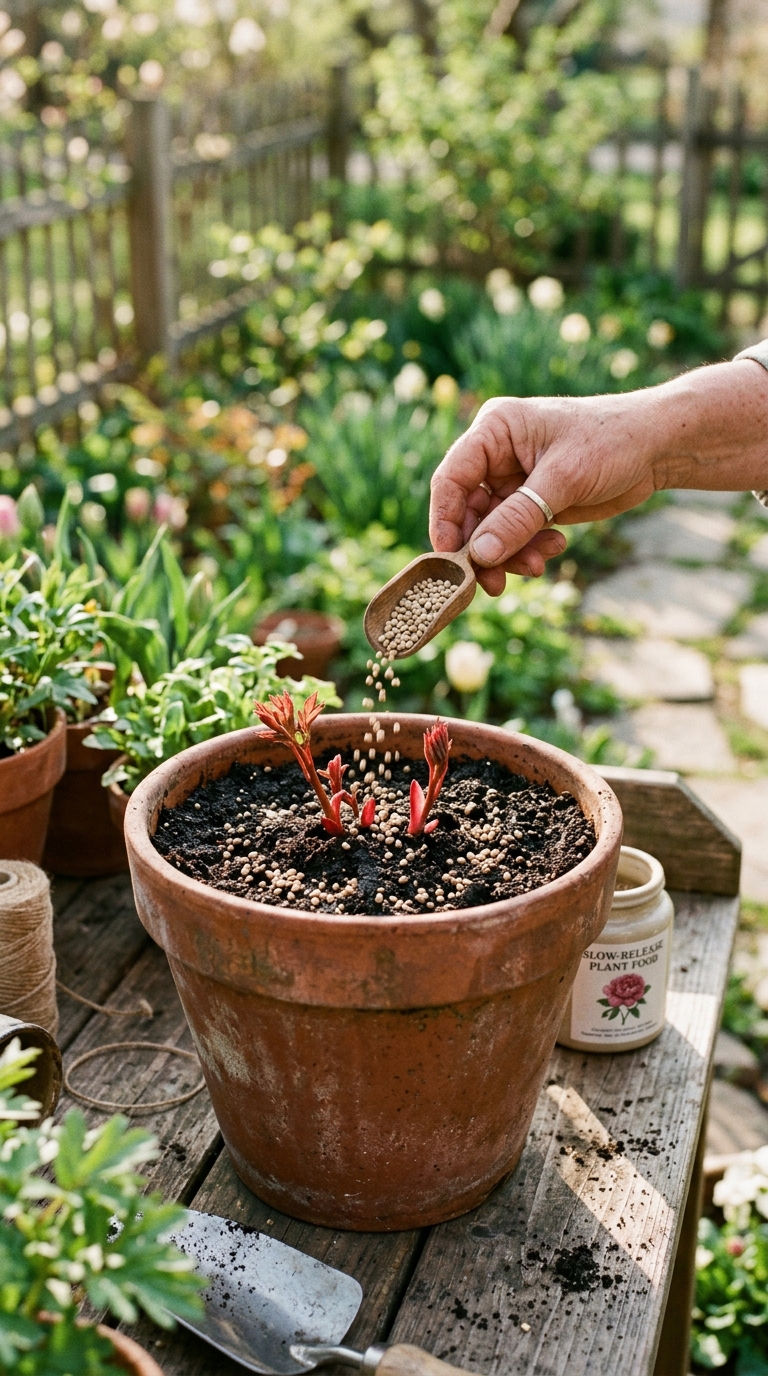
Feeding peonies in containers is straightforward — but getting the timing and type of fertiliser right makes a real difference to bloom size and quantity. In early spring, as the red shoots start to push up through the soil, apply a top-dressing of balanced slow-release fertiliser (10-10-10 or similar) around the base of the plant. Don’t let it touch the crown. This gives the plant a steady, gentle nutrient supply through the growing season.
Once buds form, switch to a liquid feed higher in potassium — the kind used for tomatoes works well. Potassium supports flower development, colour intensity, and stem strength. Stop feeding completely after midsummer — late-season nitrogen pushes soft leafy growth that won’t survive winter and makes the plant more vulnerable to disease. In year one, go lighter on feeding than you think you should — young roots are sensitive.
Quick Tips:
- Apply slow-release fertiliser in early spring when shoots first emerge
- Switch to liquid potassium feed (tomato feed) once buds appear
- Never feed after July — you want the plant to harden off for dormancy, not push new growth
Planting Bare Root Peonies vs. Potted Plants in Containers
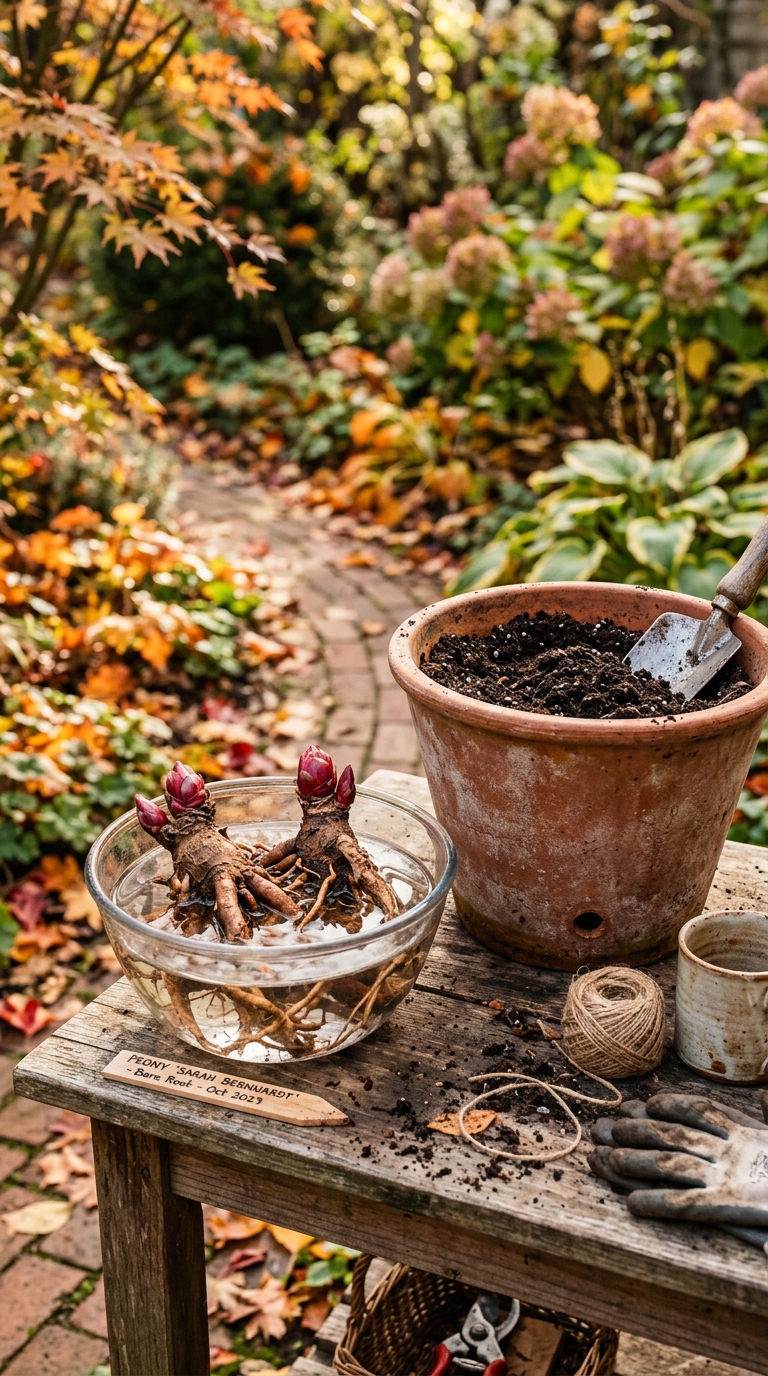
Most garden centres sell peonies either as dormant bare roots in autumn or as actively growing plants in nursery pots in spring. Both work — but they behave differently and have different expectations attached. Bare roots planted in autumn establish more slowly but almost always outperform spring-planted potted specimens by year three, because the roots have a full winter to start settling into their new container before demanding energy for bloom production.
Potted nursery plants give you flowers faster — sometimes even in the first season — but they can be pot-bound before you even bring them home. When buying a potted peony from a nursery, check the drainage holes. If roots are circling out of the bottom, it’s been in that pot too long. When handling bare roots, look for firm, healthy roots with at least three to five clearly visible pink or red eyes. Soak them in water for an hour before planting.
Quick Tips:
- Autumn bare root planting gives better long-term results than spring nursery pot transplanting
- Soak bare roots for one hour in room-temperature water before planting
- Check nursery pots for pot-bound roots before buying — visible roots from drainage holes = avoid
Staking and Supporting Peony Stems in Containers
Double-flowered peony varieties produce blooms so large and heavy they literally bend their own stems to the ground — especially after rain. In a garden bed, surrounding plants help support them. In a container, they’re on their own and much more exposed to wind. Staking isn’t optional for most double varieties in pots — it’s essential.
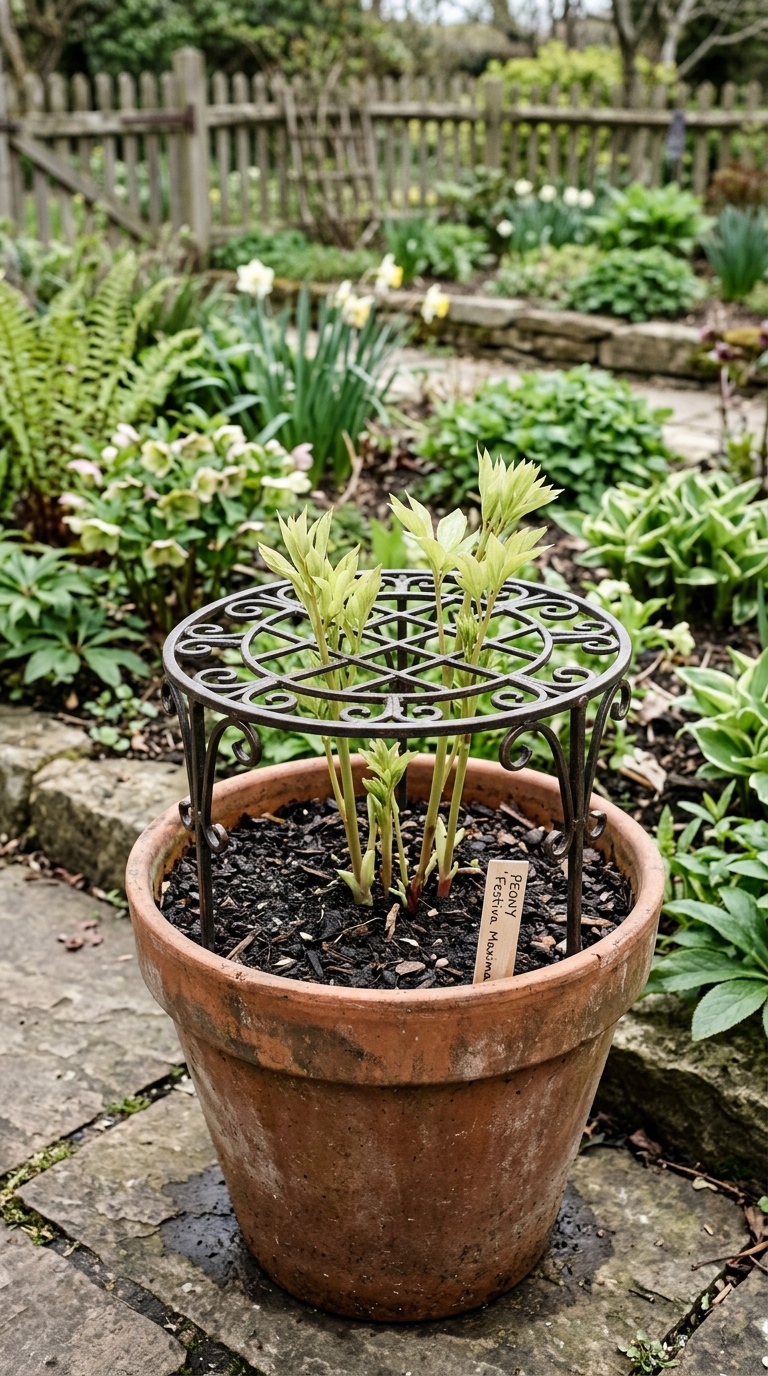
The best approach is to install grow-through rings or a peony cage in early spring, before the stems get tall enough to need them. If you wait until the stems are already leaning, you’ll damage the growth trying to thread it through support. Bamboo canes with soft garden twine work just as well and are easy to find — use three canes arranged in a triangle around the pot and connect them with a loop of twine at mid-height. It looks neat and holds even the heaviest blooms upright.
Quick Tips:
- Install supports in early spring when shoots are only 10–15cm tall — before they need it
- Grow-through rings are the cleanest-looking option and are very easy to use
- Remove supports after foliage dies back in autumn so they don’t rust or rot over winter
Deadheading, Cutting Back, and Post-Bloom Care
Once those gorgeous blooms fade — and they always fade faster than you want them to — what you do next matters for next year’s performance. Deadheads spend flowers as soon as the petals drop. Cut the stem back to the first healthy leaf below the flower head. This redirects the plant’s energy from seed production back into root development, which directly supports next year’s bloom count.
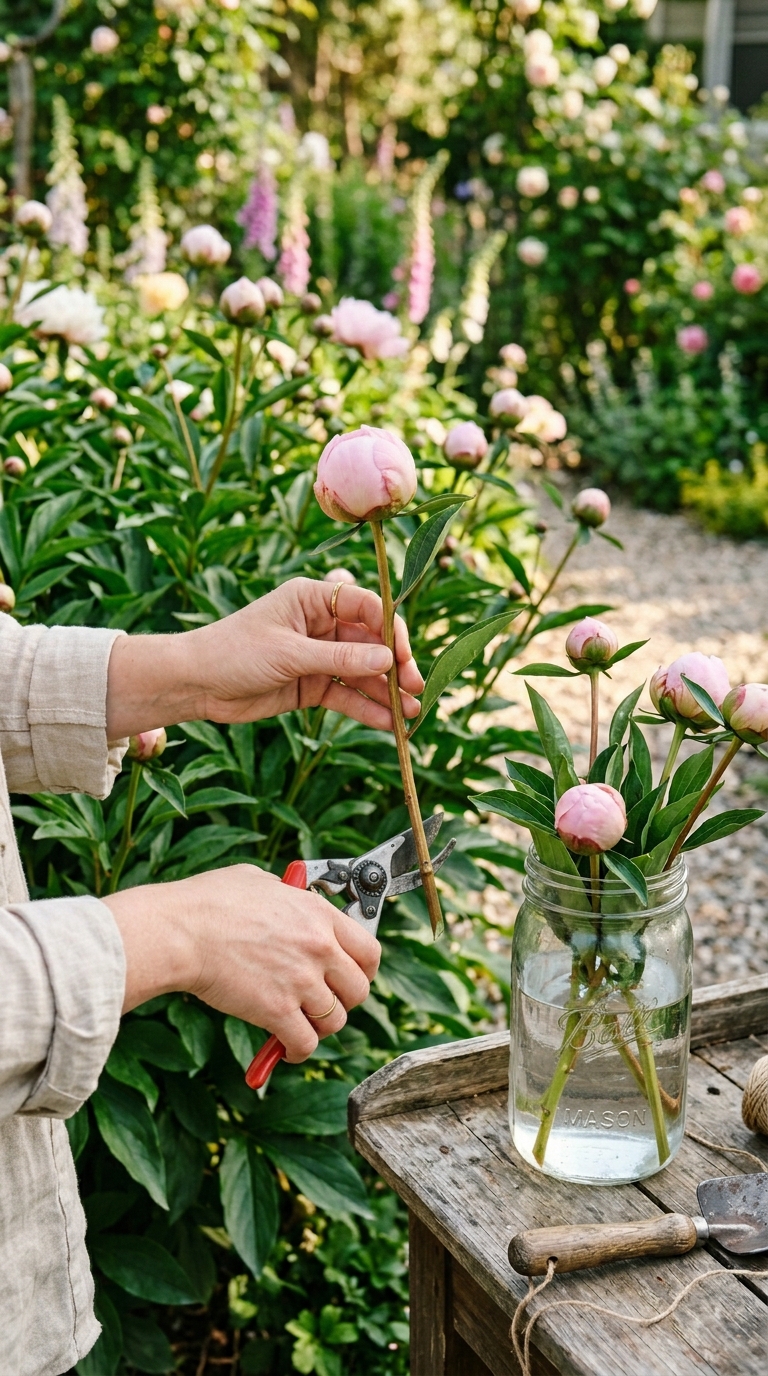
If you want to cut blooms for indoor arrangements — and you absolutely should, peony cut flowers are spectacular — cut them at the marshmallow bud stage, when the bud is soft and squishy but not yet fully open. They’ll open beautifully in a vase over one to two days. Cut in the morning, use sharp, clean scissors, and leave at least two to three sets of leaves on the stem you’ve cut from. The foliage feeds the roots even after blooming ends.
Quick Tips:
- Deadhead spent blooms immediately — don’t let seed heads form
- Cut for arrangements at the marshmallow bud stage for the longest vase life
- Always leave at least two-thirds of the foliage intact after cutting
How to Overwinter Potted Peonies Successfully
This is the tip that separates successful container peony growers from the ones who give up. Herbaceous peonies absolutely need a cold dormancy period — they require a certain number of hours below 5°C to trigger next year’s bloom cycle. This is called vernalization, and without it, you get foliage and no flowers. In a garden bed, the soil temperature does this naturally. In a container, you have to help it happen.
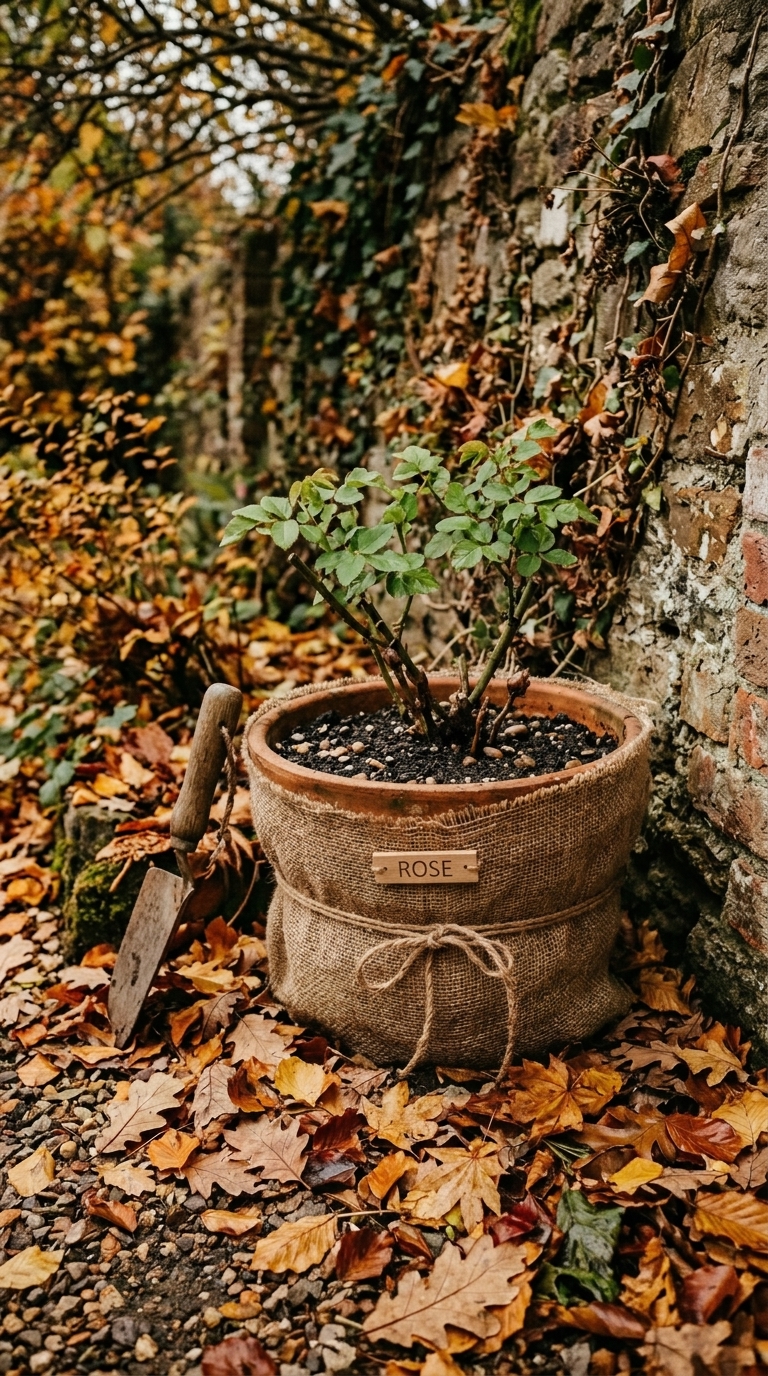
In cold climates (Zone 5 and below), move pots to an unheated shed, garage, or against a north-facing sheltered wall after foliage has died back in autumn. Insulate the pot itself with bubble wrap or hessian — protect the roots from freeze-thaw cycles, which can damage the crown. Don’t insulate the top of the pot; the crown needs the cold air. In milder climates (Zone 8 and above), you may need to move pots to the coldest spot available — even an open north-facing space — and accept that some years the bloom count will be lower.
Quick Tips:
- Cut back foliage to ground level in autumn before moving to winter storage
- Wrap the pot (not the top of the plant) with bubble wrap to protect roots from freeze-thaw
- Don’t bring pots back into warmth too early in spring — wait until the last frost date
Repotting Peonies — When, Why, and How to Do It Without Killing the Plant
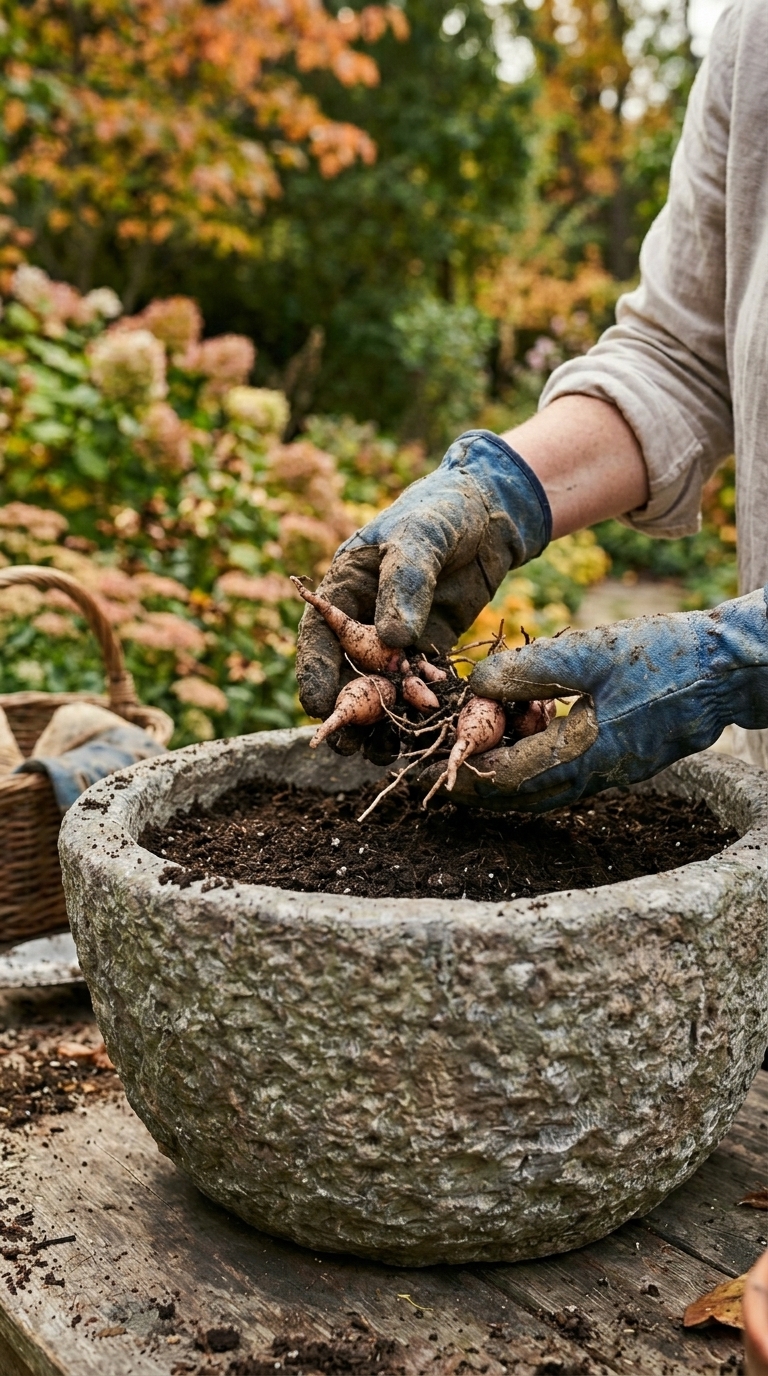
Peonies famously hate being moved and disturbed — but they do eventually need repotting, typically every four to five years when the pot becomes too small or the soil too depleted to support strong flowering. Signs it’s time: roots growing out of the drainage holes, noticeably fewer blooms despite good care, or soil that dries out within a day of watering, even when you water deeply.
The right time to report is in early autumn, after foliage has died back but before the ground freezes. This minimises stress on the plant. Lift the root ball out gently — don’t tug on stems. Refresh the outer third of the soil and add a new loam-based mix and slow-release fertiliser. Only move up one pot size — jumping to a significantly larger container can cause the soil to stay wet too long and cause root issues. The crown must stay at the same depth as it was.
Quick Tips:
- Report in early autumn — never in spring or during active growth
- Go up only one pot size at a time — too much extra soil holds moisture and causes rot
- Keep the crown at the same depth — this is the most critical part of repotting
Common Problems With Potted Peonies and How to Fix Them
No flowers: The most common complaint — and almost always caused by one of three things: crown planted too deep, pot too small, or not cold enough in winter. Check depth first. If the crown is more than 5cm down, carefully lift and replant at the correct level in autumn.
Botrytis blight (grey mould) shows up as grey fuzzy patches on stems and buds in cool, damp spring weather. Remove affected material immediately, improve airflow around the pot, and avoid overhead watering. A copper-based fungicide spray in early spring prevents it in problem years.
Ants on buds: Completely harmless. They’re eating the sweet nectar the buds produce — they’re not damaging the plant. Ignore them or rinse them off before bringing blooms indoors.
Quick Tips:
- No blooms = check depth first, then cold exposure, then pot size — in that order
- Botrytis is prevented by good airflow — don’t crowd your peony pot against walls or other plants
- Powdery mildew in late summer is cosmetic only — the plant is fine, it’s just end-of-season stress
Styling Peony Pots for a Beautiful Patio or Balcony Display
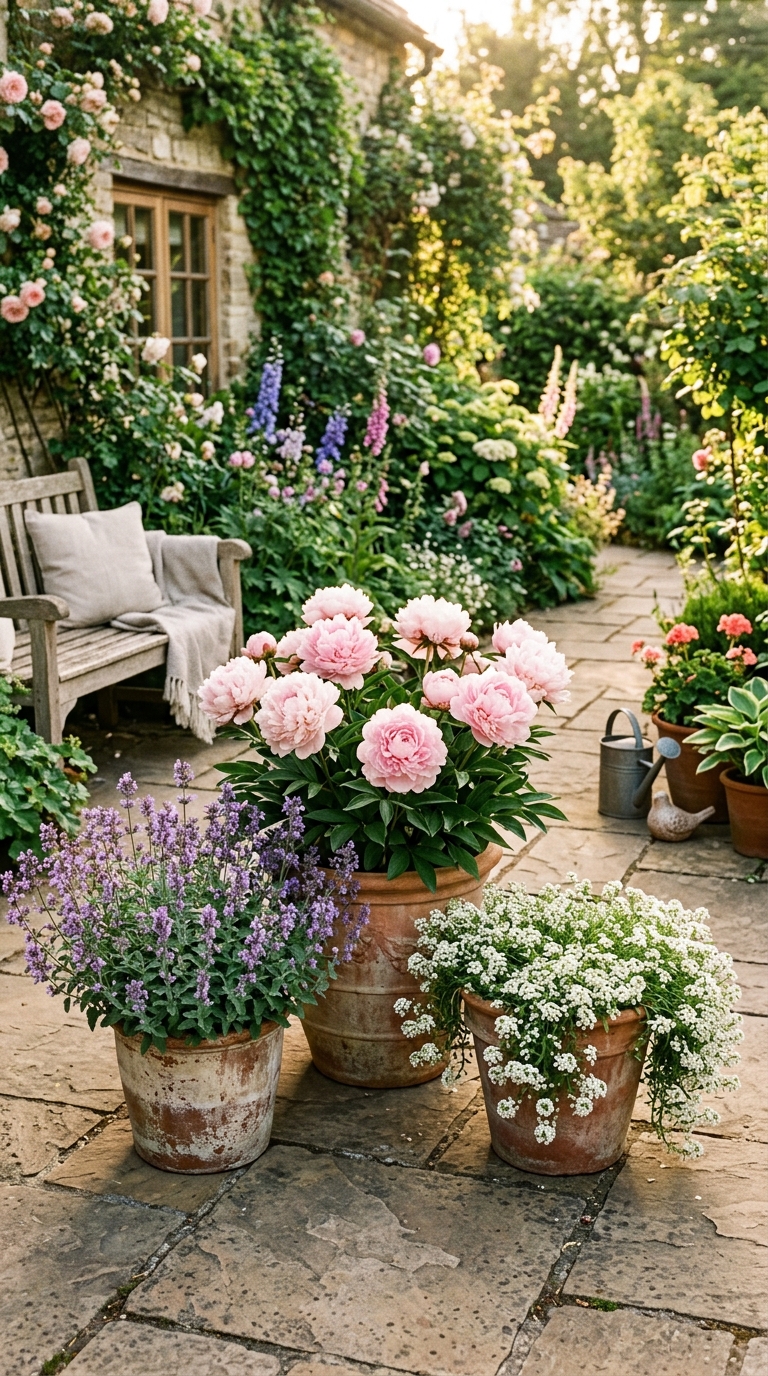
Growing peonies in pots isn’t just about the plant — it’s about the whole display. A single large peony pot is beautiful on its own, but group three containers of different heights — a tall stone-look pot, a medium terracotta, and a low wide bowl — and the arrangement becomes genuinely stunning. Move them into a prominent position as buds start to open, so you get maximum enjoyment from those two or three weeks of bloom.
Pair your peony containers with complementary plants in nearby pots: trailing sweet alyssum in white, soft purple nepeta, or delicate alliums in the same bloom window create a layered cottage garden feel on even the smallest patio. After blooms fade, move the peony pot to a less prominent position and let a summer container take centre stage. The peony’s foliage stays attractive and structural all summer — it doesn’t disappear.
Quick Tips:
- Group containers in odd numbers — three pots always look more natural than two or four
- Move peony pots to a prime display position the moment buds start to show colour
- Pair with nepeta, alliums, or trailing alyssum in adjacent pots for a full cottage garden effect
Growing Peonies in Pots in Small Spaces — Balconies, Courtyards, and Rooftops
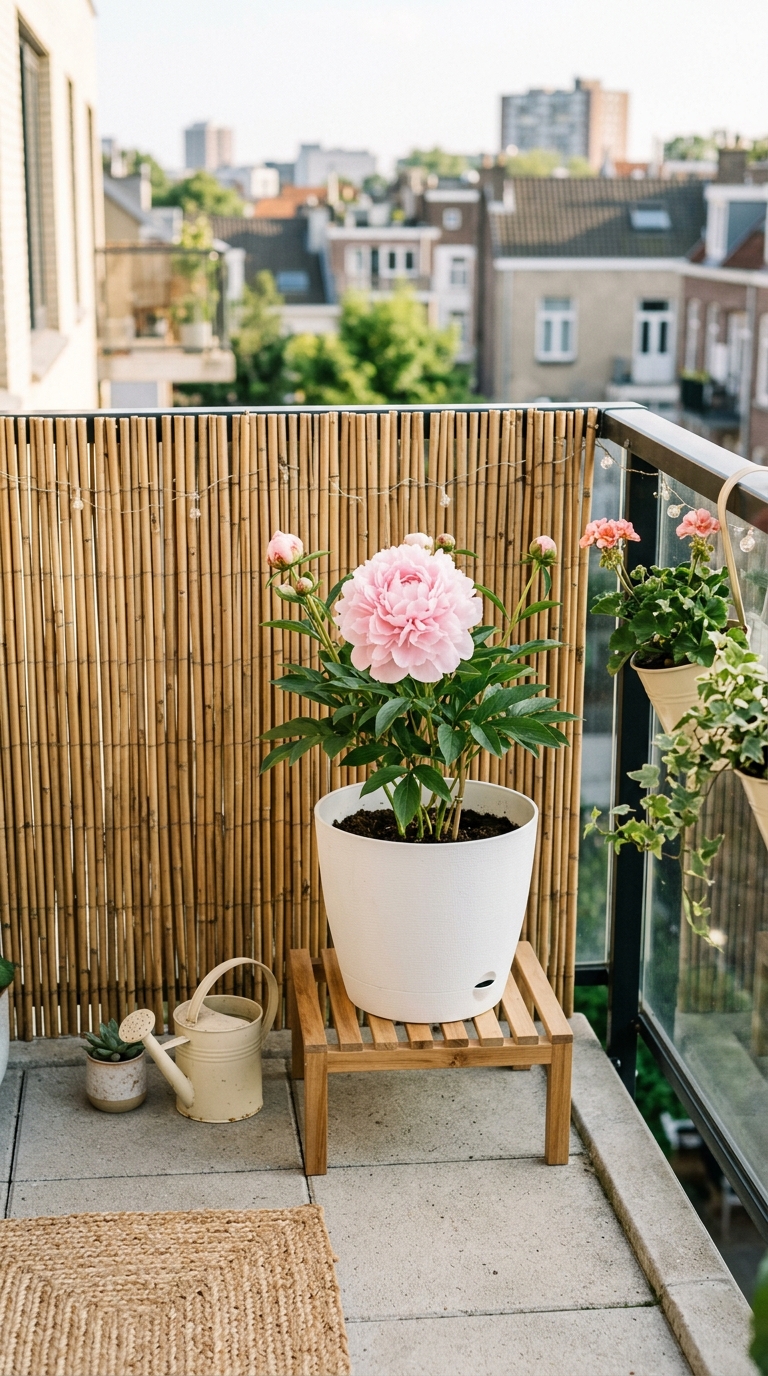
Weight is the first thing to consider for balcony growing — a large terracotta pot filled with wet compost is genuinely heavy. Fibreglass or resin pots that look like stone or terracotta weigh a fraction of the real thing and are frost-resistant. Use a loam-free potting mix (lighter than loam-based) for balcony containers and position them near load-bearing walls or columns, not in the centre of the space.
Wind is the other challenge on exposed balconies and rooftops. It dries soil rapidly and damages fragile peony blooms in seconds. A simple bamboo screen or a nearby trellis with a climbing plant creates enough of a wind buffer to make a real difference. In a small courtyard, peonies in containers can be absolute showstoppers — the enclosed space holds humidity, buffers temperature, and often provides exactly the right light levels.
Quick Tips:
- Use lightweight resin or fibreglass pots for balconies — the visual result is just as beautiful
- Position near load-bearing walls or columns, not in the centre of balcony structures
- A simple bamboo screen on the windward side protects blooms from wind damage beautifully
Peony Container Companions — What to Plant Around Potted Peonies
The plants you place around your peony pot can make the whole display feel either like a random collection of containers or a thoughtfully designed garden. The best companion plants share a similar bloom window and complement without competing, and they should never be planted in the peony’s own pot. Peonies want their container to themselves.
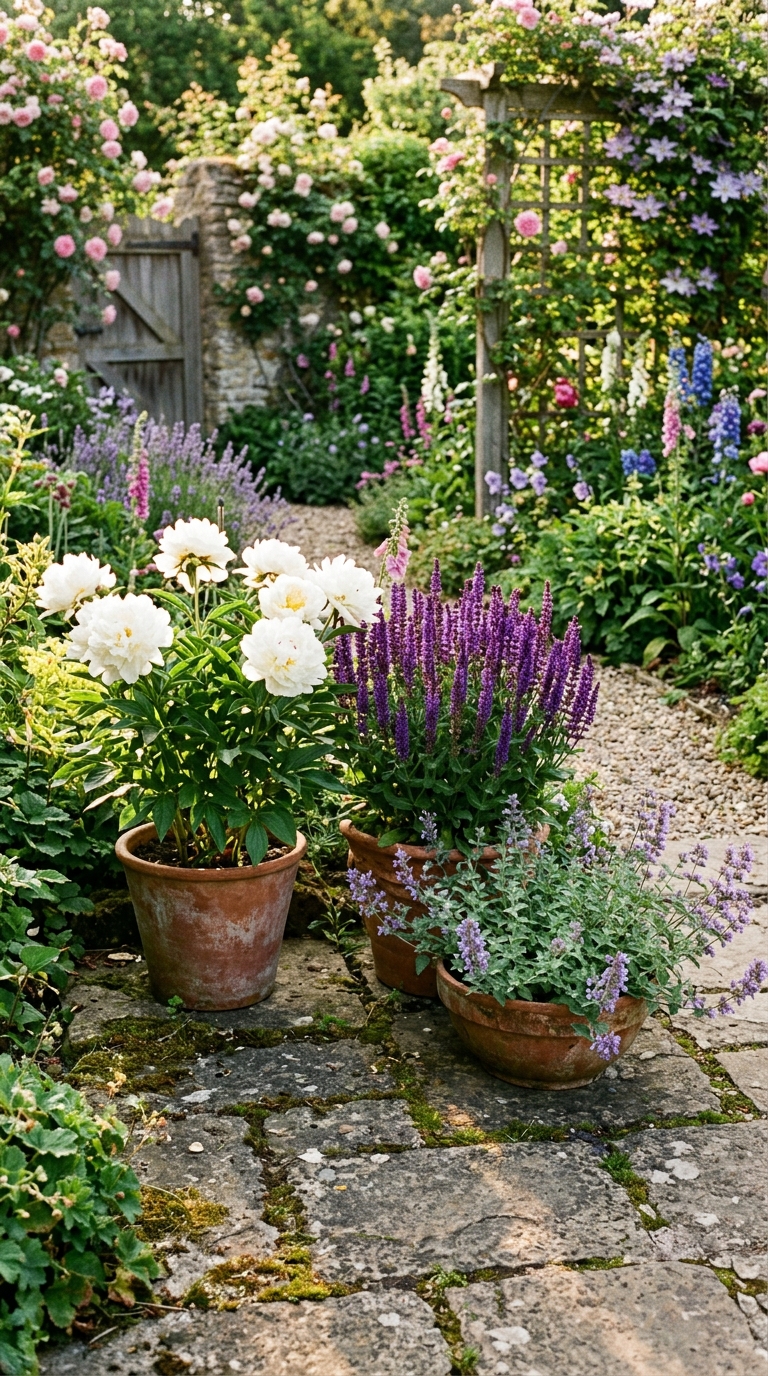
In nearby pots, Salvia nemorosa (deep purple spires) is extraordinary beside blush or white peonies — the colours are completely complementary, and the bees love them. Alliums in soft purple bloom at the same time as most peonies and add height and drama. Catmint softens the base of a large pot grouping with its trailing silver-green habit. After peony blooms are over, sweet William and trailing lobularia keep the display going through summer.
Quick Tips:
- Never plant anything else into the peony’s container — it wants full root space
- Match bloom times: salvia, alliums, and catmint all work perfectly alongside peonies
- After blooms fade, move the peony to a supporting role and bring summer companions forward
Conclusion
Peonies in containers are genuinely one of the most rewarding things you can grow — but they reward patience more than anything else. Get the basics right: deep pot, shallow crown, full sun, cold winter, gentle feeding. After that, step back and let the plant do what it naturally wants to do.
If you’ve tried before and had nothing but leaves, go back to the planting depth. That single detail fixes more problems than anything else in this list. And if you’re just starting out, pick a Bartzella or Sarah Bernhardt, find the sunniest spot on your patio, and give it three years. You’ll have more flowers than you know what to do with — and you’ll be giving bundles of them to anyone who visits.