

Moving into a college room can feel a little overwhelming at first. You walk in, look around, and all you see are plain walls, basic furniture, and a space that doesn’t feel like yours yet. I remember standing in my room thinking, “Where do I even start?”
The problem is that a lot of room decor inspiration online isn’t really aimed at guys. You’ll find plenty of cute decorations, colorful themes, and trendy setups, but not many practical ideas that fit a modern college bedroom.
The good news? Creating a room that looks stylish, comfortable, and personal doesn’t have to be difficult or expensive. You don’t need a huge budget or professional design skills. A few smart changes can completely transform your space.
In this guide, you’ll find college bedroom ideas for guys that actually work — from clean minimalist setups and cozy modern spaces to gaming stations, dark moody designs, and budget-friendly upgrades. Whether you’re decorating a small dorm room or your first apartment near campus, these ideas will help you create a space you’ll genuinely enjoy spending time in.
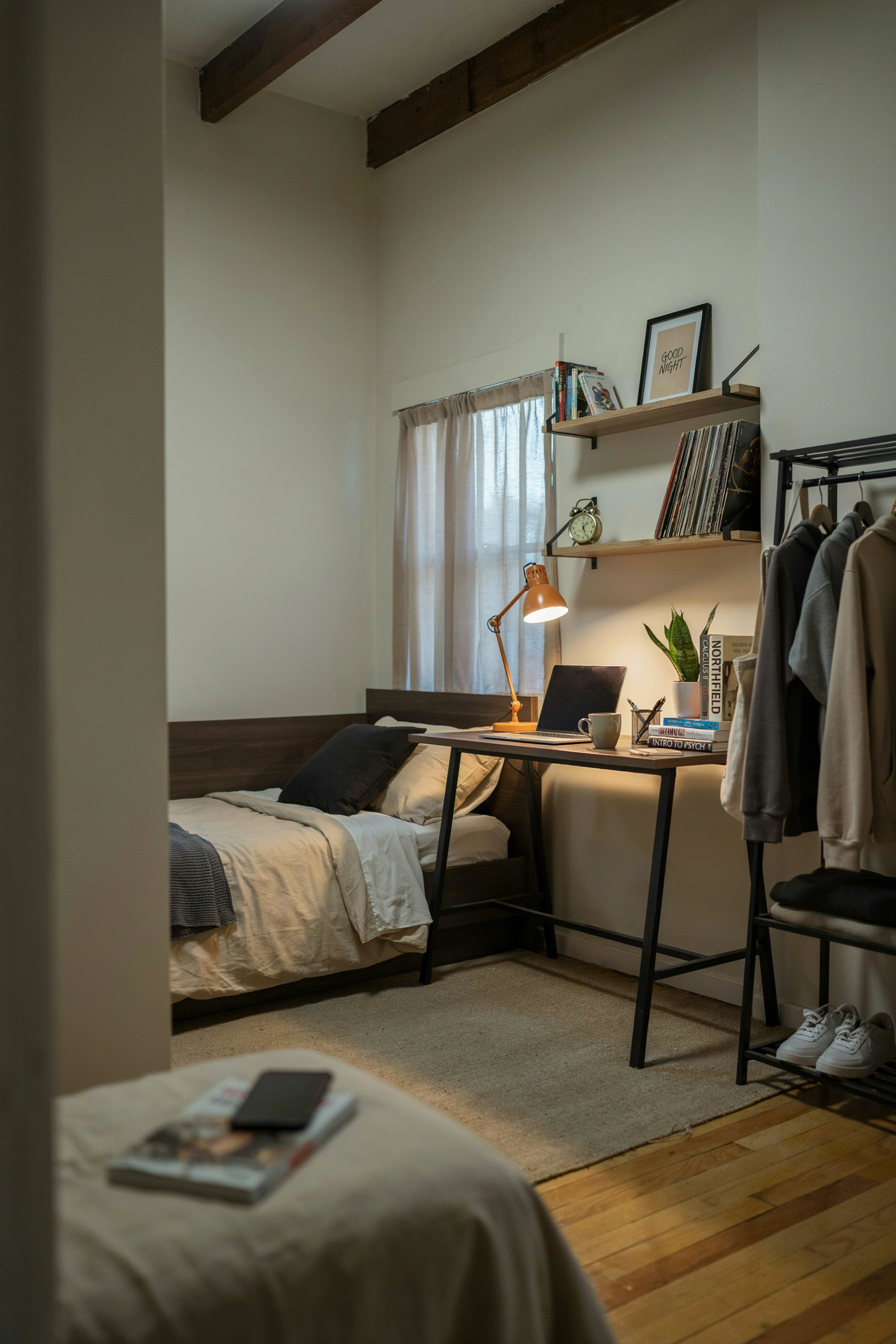
The Charcoal + Warm Wood Formula — The Easiest Masculine Base Palette
If you’re starting from zero and have no idea what colors to use, start here. Charcoal grey bedding paired with warm wood tones is basically a cheat code for a masculine bedroom that looks put-together without trying too hard. Think a grey comforter (you can grab one for under $40 on Amazon), a wood-tone desk lamp, and maybe a peel-and-stick wood shelf above your desk. That’s literally it.
The reason this combination works so well is that it’s warm without being feminine and dark without being depressing. It photographs beautifully too, which matters if you ever want to post it. This palette works in dorms and apartments equally well — no painting required.
Styling Tip: Add one plant (a small pothos or succulent) on your desk shelf. That tiny pop of green against charcoal and wood makes the whole room feel alive.
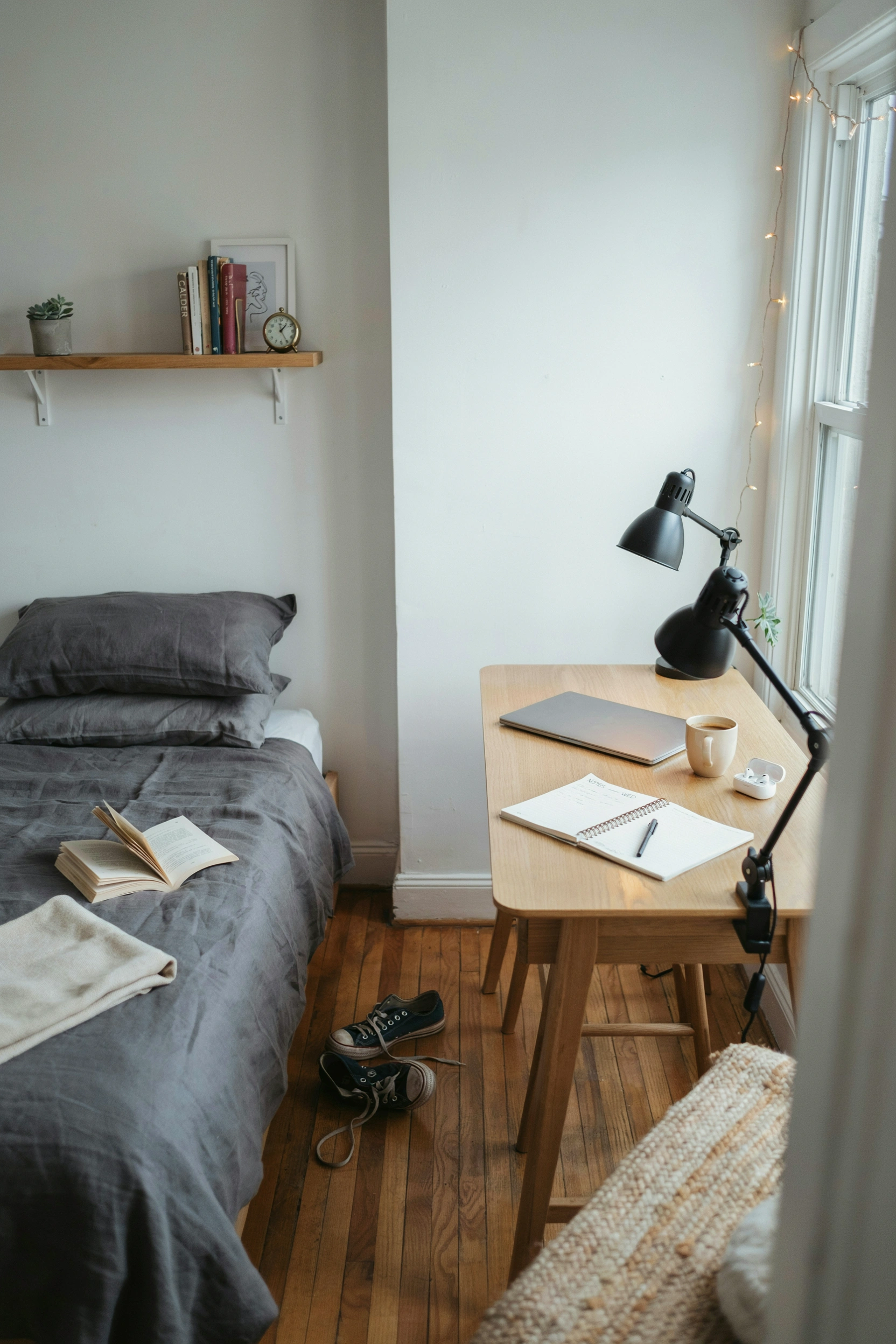
The One-Shelf Rule — How a Single Floating Shelf Transforms a Bare Wall
Bare walls are the number one thing that makes a college room feel unfinished. But you don’t need a whole gallery wall to fix it. One floating shelf, styled properly, can completely change the energy of a room. Put up a command-strip shelf (the IKEA LACK shelf works great with heavy-duty strips), then place just three things on it: a small plant, one book, and a candle or small Bluetooth speaker.
That’s the secret — three items, not ten. When guys try to fill a shelf, they either leave it empty or pile stuff on it randomly. Three deliberately chosen objects look intentional. Minimalism works in your favor here.
Styling Tip: Stick to odd numbers when styling shelves. Three items or five items always look more natural than two or four. It’s a simple rule that interior designers use constantly.
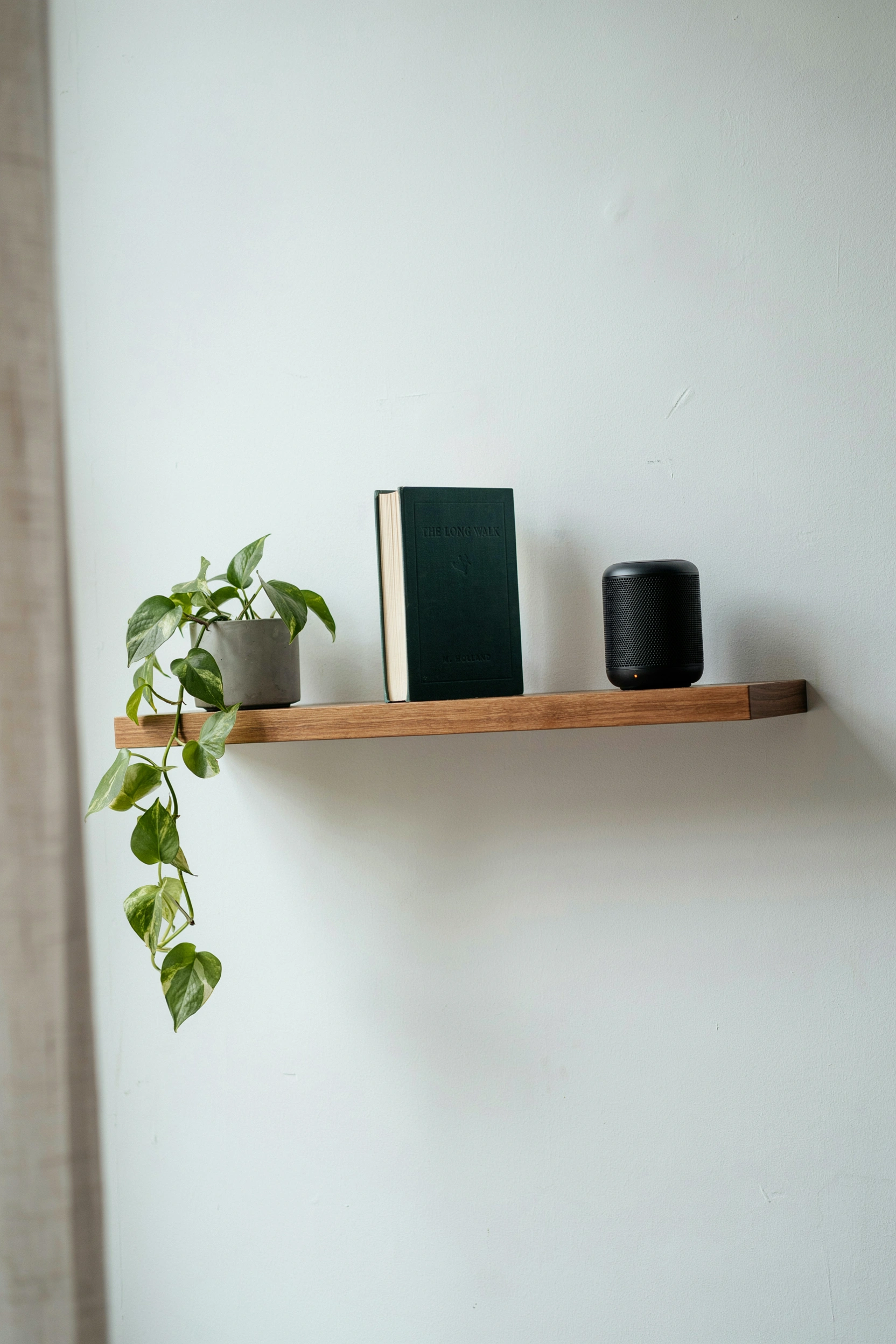
Minimalist Desk Setup That Doubles as a Productivity Zone
Your desk is where you’re going to spend a huge chunk of your time, so it deserves some attention. A clean, organized desk doesn’t just look good — it actually makes you more focused. Start with a monitor riser to get your screen at eye level. Add a cable management box (they’re $12–15 on Amazon and they’re a game changer). Keep only what you actually use on the surface.
A single desk lamp with warm-toned light (not that harsh blue-white fluorescent glow) makes the whole desk feel more like a workspace and less like a classroom. Add a full-surface mouse pad to unify everything visually — it makes even a basic desk look expensive.
Styling Tip: Tuck your charger cables inside the cable box and run one clean cord to your lamp. The “one wire visible” rule immediately makes any desk look more professional.

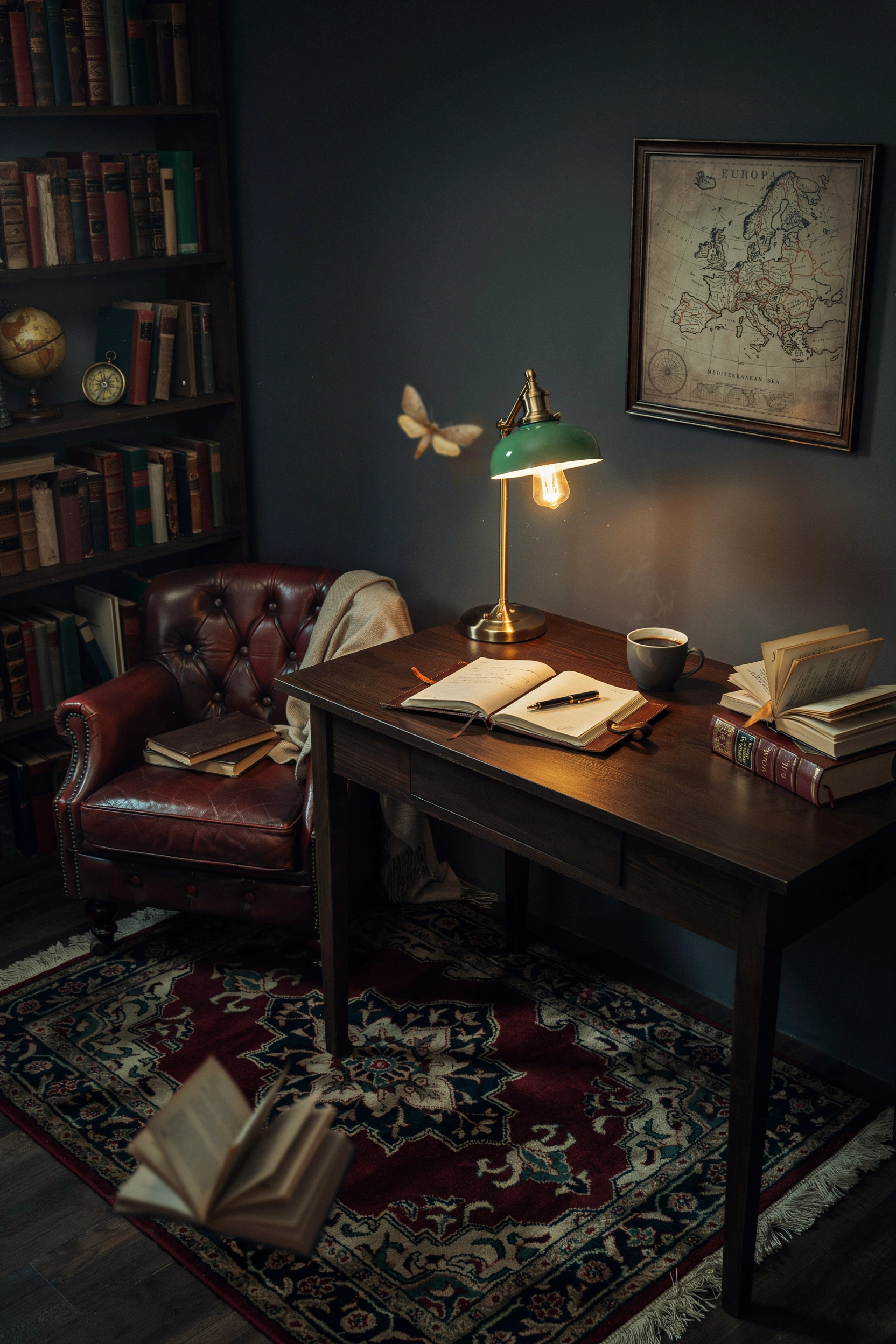
Dark Academia on a Dorm Budget — Books, Warm Light, and One Good Rug
Dark academia is having a massive moment, and honestly, it’s one of the best aesthetics for guys who want their room to feel sophisticated without being over-the-top. The secret is warmth. You’re not going all-black — you’re layering warm tones, textures, and a few carefully chosen objects.
Start with a vintage-style rug (5×7, under $50 on Amazon). Swap the harsh overhead fluorescent bulb for a warm Edison-style LED in your existing lamp. Grab two or three classic hardcovers from a thrift store and stack them on your desk. Add a dark-framed vintage map or architectural print on one wall (command strip mounted). Total cost? Probably around $70–$80. Total vibe? Significant.
Styling Tip: The warm bulb swap alone will transform your room. Go for 2700K color temperature — it’s the soft amber glow you see in coffee shops. Most dorm overhead lights are 5000K+ (bright white/blue), which kills any cozy atmosphere instantly.
How to Make a White Dorm Room Look Dark and Moody Without Painting
This one’s for everyone stuck in a standard white-walled dorm. You can’t paint. You can’t put holes in the walls. But you can still create a dark, moody aesthetic — you just have to be strategic about it.
The approach: dark bedding, blackout curtains in charcoal or deep forest green, and one accent wall using peel-and-stick dark removable wallpaper. Brands like Tempaper and NuWallpaper make great options that come off cleanly. Pair with smart bulbs set to warm amber (2700K), and suddenly your bright white dorm feels completely different. The key insight is that it’s the furniture and textiles doing the heavy lifting, not the walls themselves.
Styling Tip: Don’t try to make every wall dark. Pick one — ideally the wall your bed sits against — and go dark there. One strong focal wall creates the moody effect without making the room feel like a cave.
The Navy Blue + Brass Accent Combo — Classic Masculine Without Being Boring
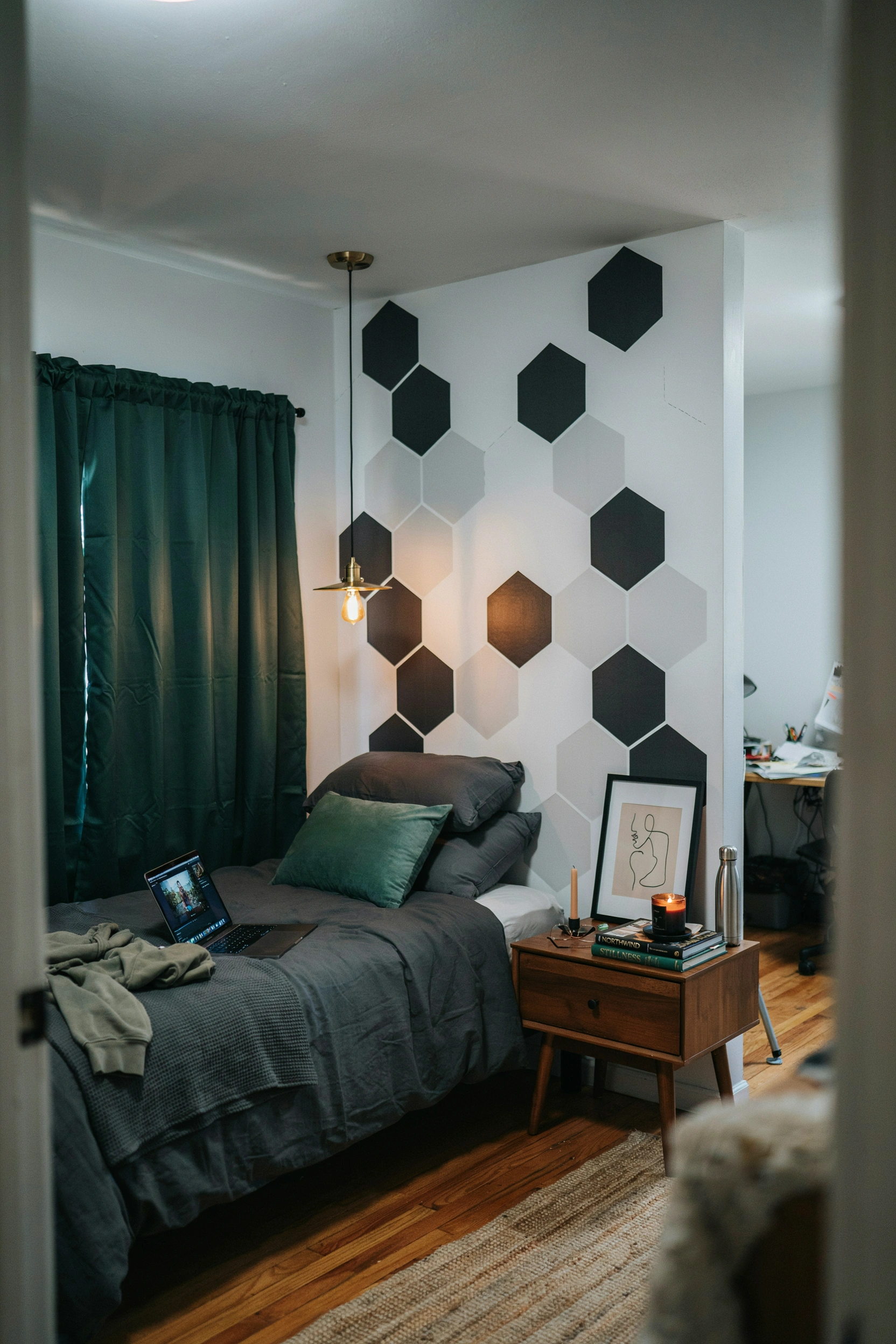
Navy is quietly one of the most versatile and masculine colors you can use in a bedroom. It’s not aggressive like all-black, it’s not cold like grey, and it photographs beautifully. A navy bedding set (look for linen or cotton-feel texture) immediately elevates a basic dorm bed into something that looks intentional.
Add one brass or matte-gold desk lamp, a wooden nightstand or floating side table, and maybe a single cream throw pillow for contrast. That’s the whole palette. Navy + brass + warm wood = a combination that works in every single context, from minimalist to traditional.
Styling Tip: If you can only afford one “nice” item for your room, make it the bedding. It covers the most visual space and creates the most immediate impact. Navy sets from IKEA and Amazon run $35–$60, and they’re well worth it.
Faux Exposed Brick — The Industrial Dorm Hack That Actually Works
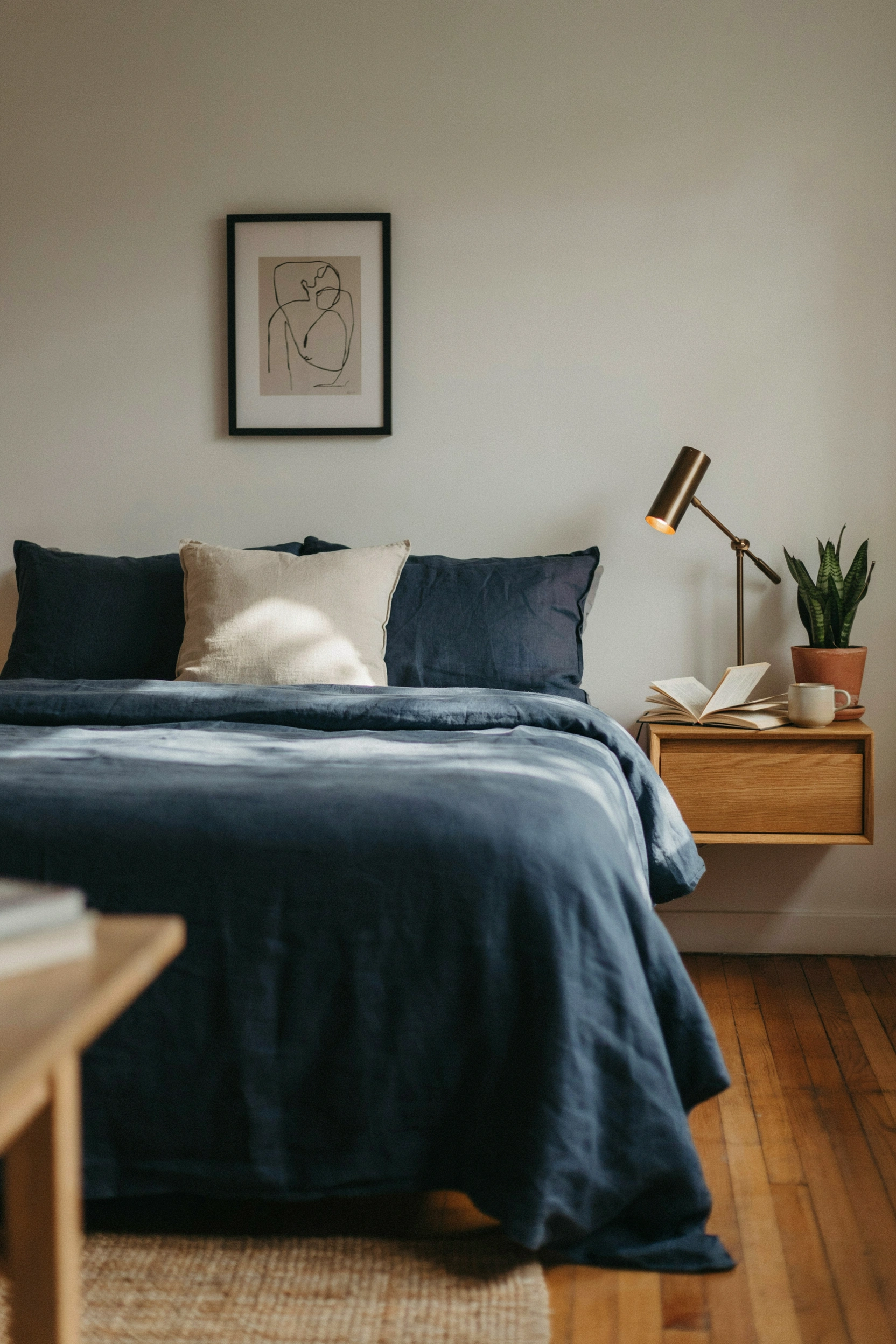
The industrial aesthetic is all about raw textures — exposed metal, concrete, and brick. The problem in most dorms and apartments is that you don’t actually have any of that. Enter: peel-and-stick faux brick panels. They look surprisingly realistic, they’re removable, and they’re a lot more affordable than you’d think ($20–$40 for a feature wall section).
Apply them to the wall behind your desk or bed for an instant industrial feel. Pair with a black metal desk lamp, a concrete-look desk organizer, and dark bedding. This combination creates a bachelor-pad energy that looks expensive but isn’t.
Styling Tip: Apply the brick panels in a staggered horizontal pattern — not perfectly aligned rows. Slight variation in how you lay them makes them look more realistic and textured, less like cheap stick-on tiles.
Black Metal Shelving as Room Divider and Storage
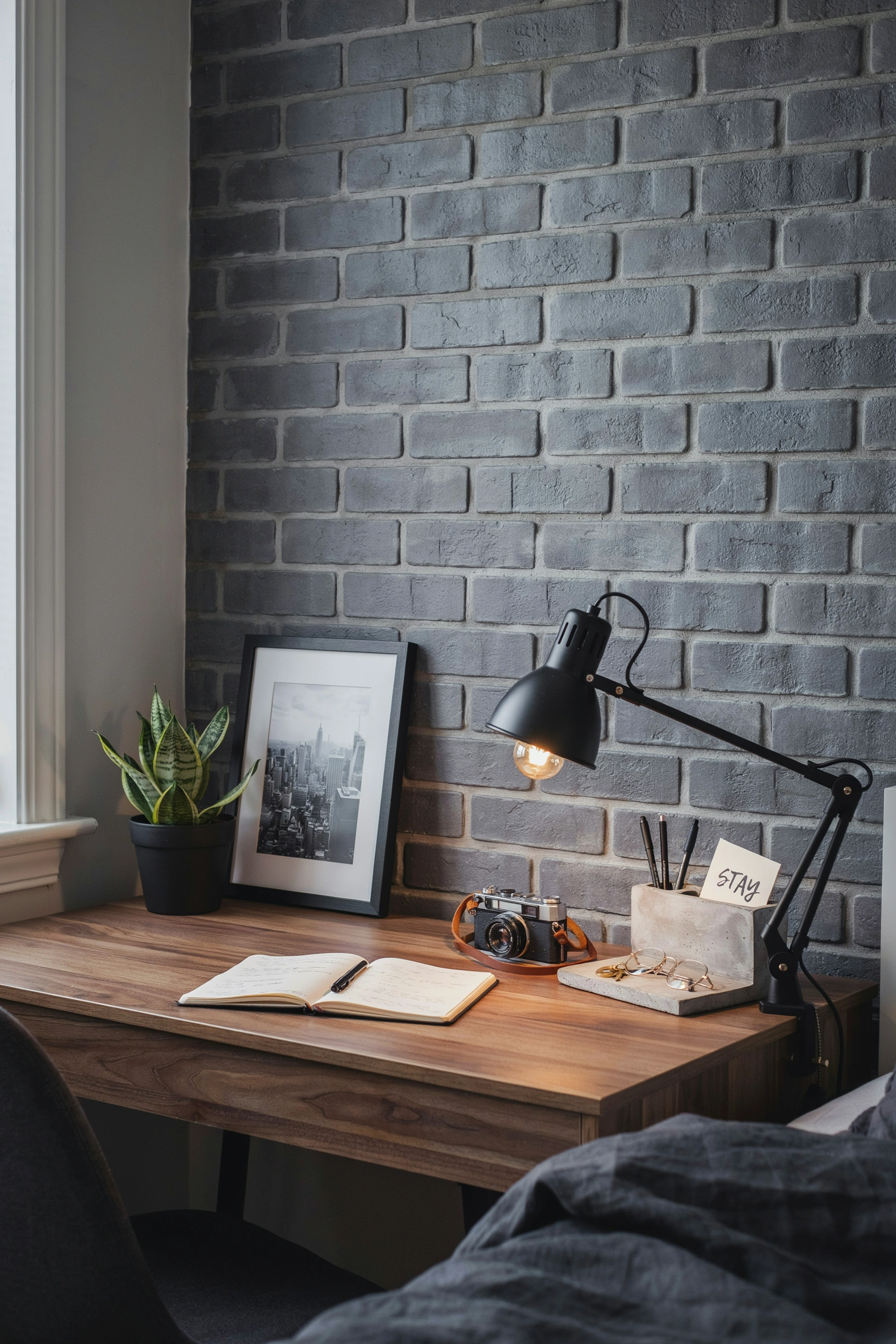
Open black metal shelving is one of the best-kept secrets in college apartment decor. An IKEA HYLLIS shelf (or similar) doesn’t just give you storage — it adds visual structure and that industrial-meets-minimal vibe that’s all over Pinterest right now. Style it with books on one shelf, trailing pothos on another, a small speaker, and a few small objects you actually like.
This works especially well in studio apartments or open dorm layouts where you want to define a “bedroom zone” without building a wall. The open metal frame creates the feeling of separation without blocking light.
Styling Tip: The odd-number rule applies here too. Style each shelf with 1, 3, or 5 objects. Leave some shelves partially empty — negative space is part of the design, not a sign you ran out of things to put there.
The Clean College Gaming Setup — Intentional, Not Chaotic
Let’s talk about gaming setups, because this is where most college guys’ rooms either look amazing or look like a disaster. The difference is cable management and intentional placement. Get your monitor at eye level — use a monitor riser or a solid stack of coffee table books. Route your cables behind the desk or into a cable management box. Use a full-surface mouse pad to unify the whole desk surface visually.
For lighting, a monitor bias light (a small LED bar that attaches to the back of your monitor) creates a soft glow that reduces eye strain and makes the setup look professional. Set it to warm white or soft amber — not RGB rainbow mode. It’s a $15–$20 upgrade that changes everything about how the desk looks in photos.
Styling Tip: Less RGB is more. One warm backlight behind the monitor looks infinitely cleaner and more sophisticated than six different colored LED strips going in every direction. Restraint is what separates a setup that looks “designed” from one that looks “teenage.”

LED Lighting Done Right — The Difference Between Cool and Tacky
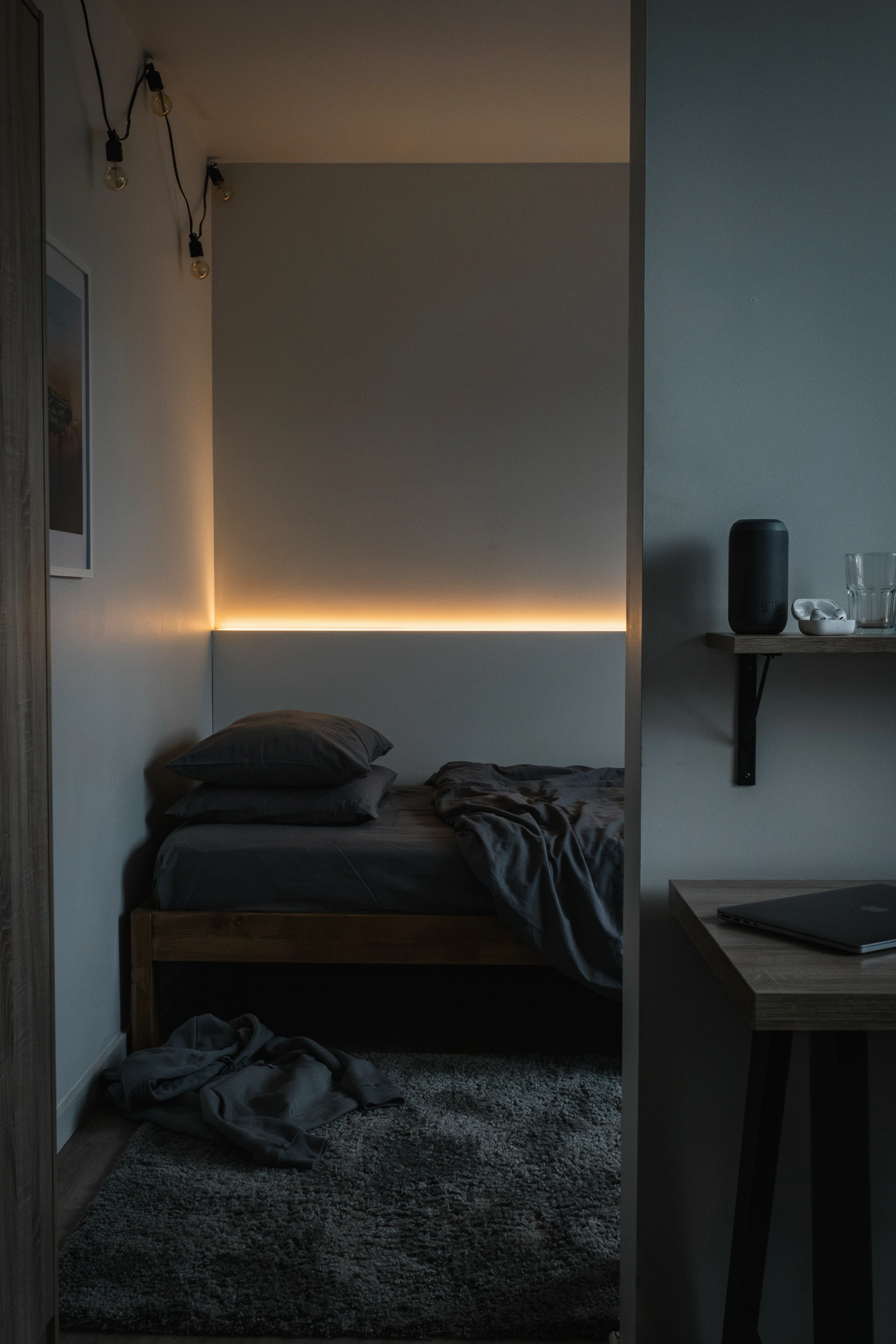
LED strips are one of the most popular college room upgrades, but most guys do them wrong. Neon green at full brightness blasting from every corner of the ceiling? That’s not the vibe. The right way to use LEDs is subtly — behind the bed frame, under the desk, or behind the monitor.
The color temperature matters most: warm white (2700K) or soft amber looks premium. Tunable smart strips from brands like Govee let you dial in the exact warmth you want. A Philips Hue Go lamp on the desk gives off the same cozy glow with zero installation. Think coffee shop at night, not arcade.
Styling Tip: Place LED strips where they create indirect light — meaning you should see the glow they produce on the wall or ceiling, not the LED strip itself. Hidden light sources feel luxurious; visible LED strips feel cheap.
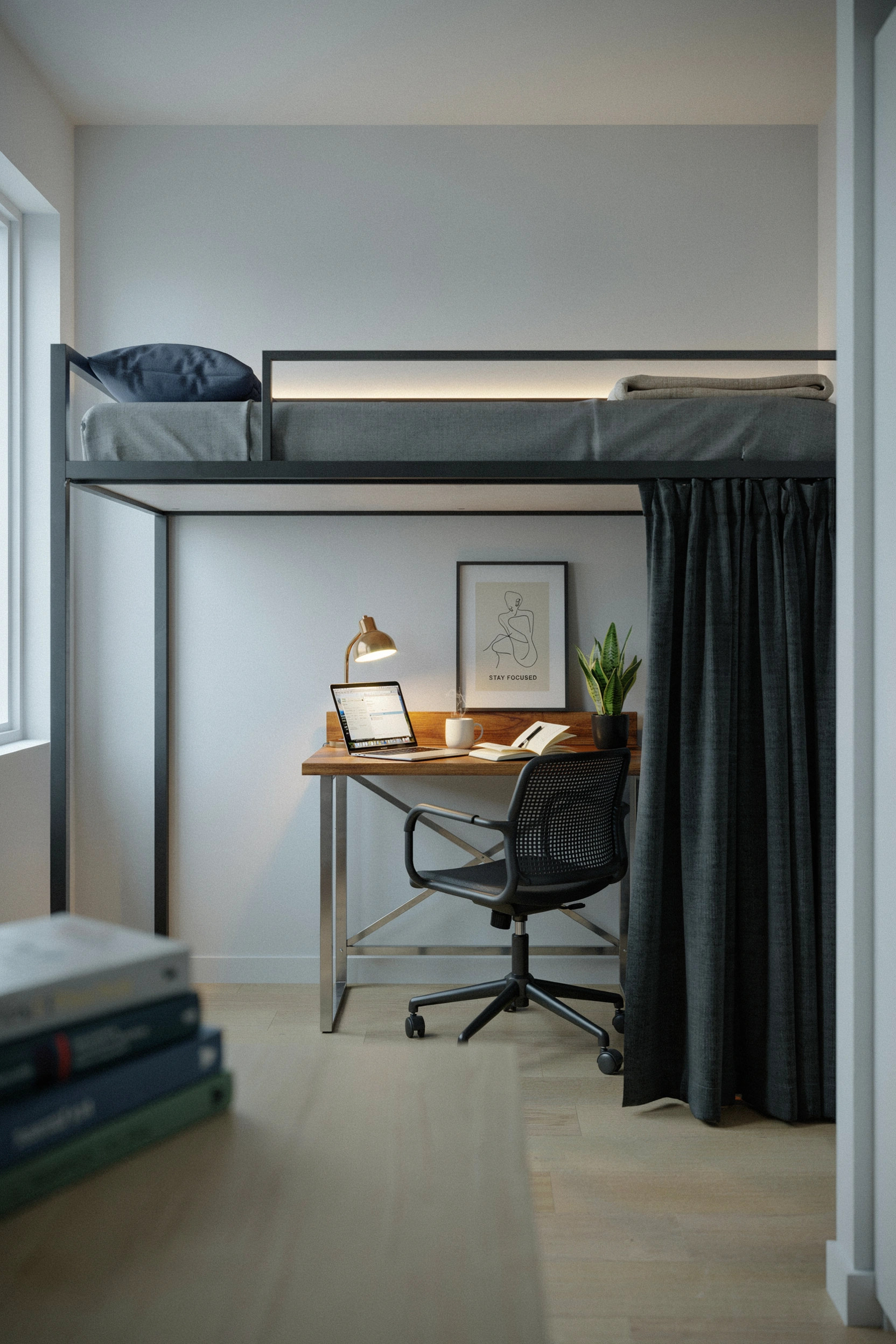
Loft Your Bed and Reclaim Your Floor
If you’re in a dorm, lofting your bed is one of the best decisions you can make. You go from a cramped room to a room with a whole new zone underneath. Most dorm bed frames can be lofted — check with your housing office. Underneath, you can fit a compact desk setup, a mini loveseat or floor cushion, a wardrobe, or a combination of all three.
The lofted bed zone itself can be styled with a small LED strip along the frame and a curtain on one or two sides for privacy. It turns a basic dorm bed into something that looks like it was designed.
Styling Tip: Add a short LED strip along the inside edge of the loft frame (facing the wall, not out into the room). It creates a soft halo effect when you’re lying in bed and makes the whole loft look custom-built.
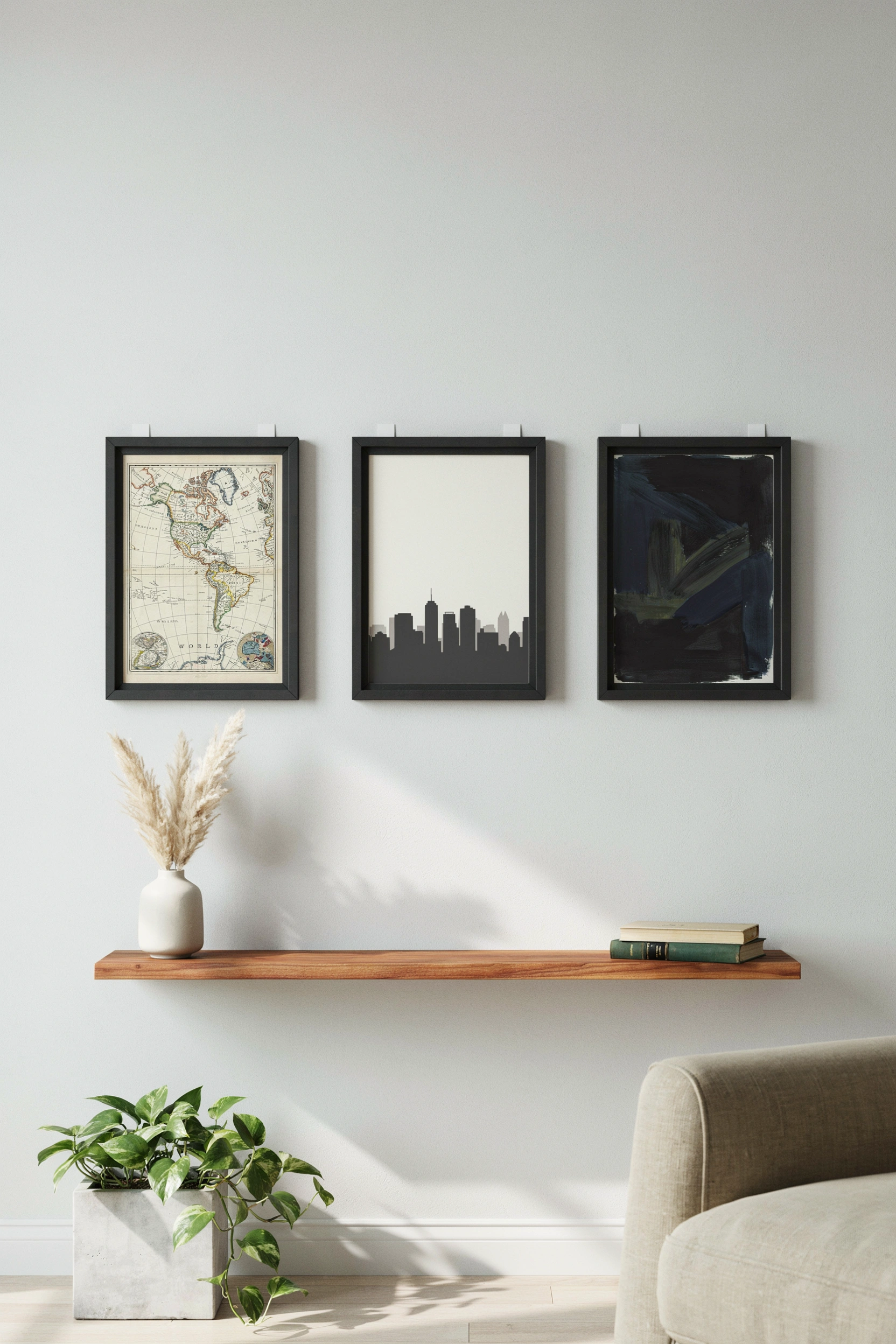
Gallery Wall for Guys — No Holes, No Clutter, Just Cool Art
Most guys dismiss gallery walls as “not for them” because every gallery wall they’ve seen is pastel florals and inspirational quotes. But a masculine gallery wall is a completely different thing. Pick 3–5 prints in the same style — dark-framed, same color palette. Think: vintage maps, minimalist city skylines, black-and-white architectural photography, or abstract geometric prints.
Print shops on Etsy sell beautiful sets of 3 for $10–$25 (digital download, you print locally). Grab matching black frames from IKEA’s RIBBA range. Mount with command strips in a tight grid or a diagonal cluster. No nails, no holes, easy to change.
Styling Tip: Commit to one frame color and stick to it across every print. Mixed frames (silver + black + wood) look accidental. One frame color (black is safest) makes the arrangement look like a conscious design choice.
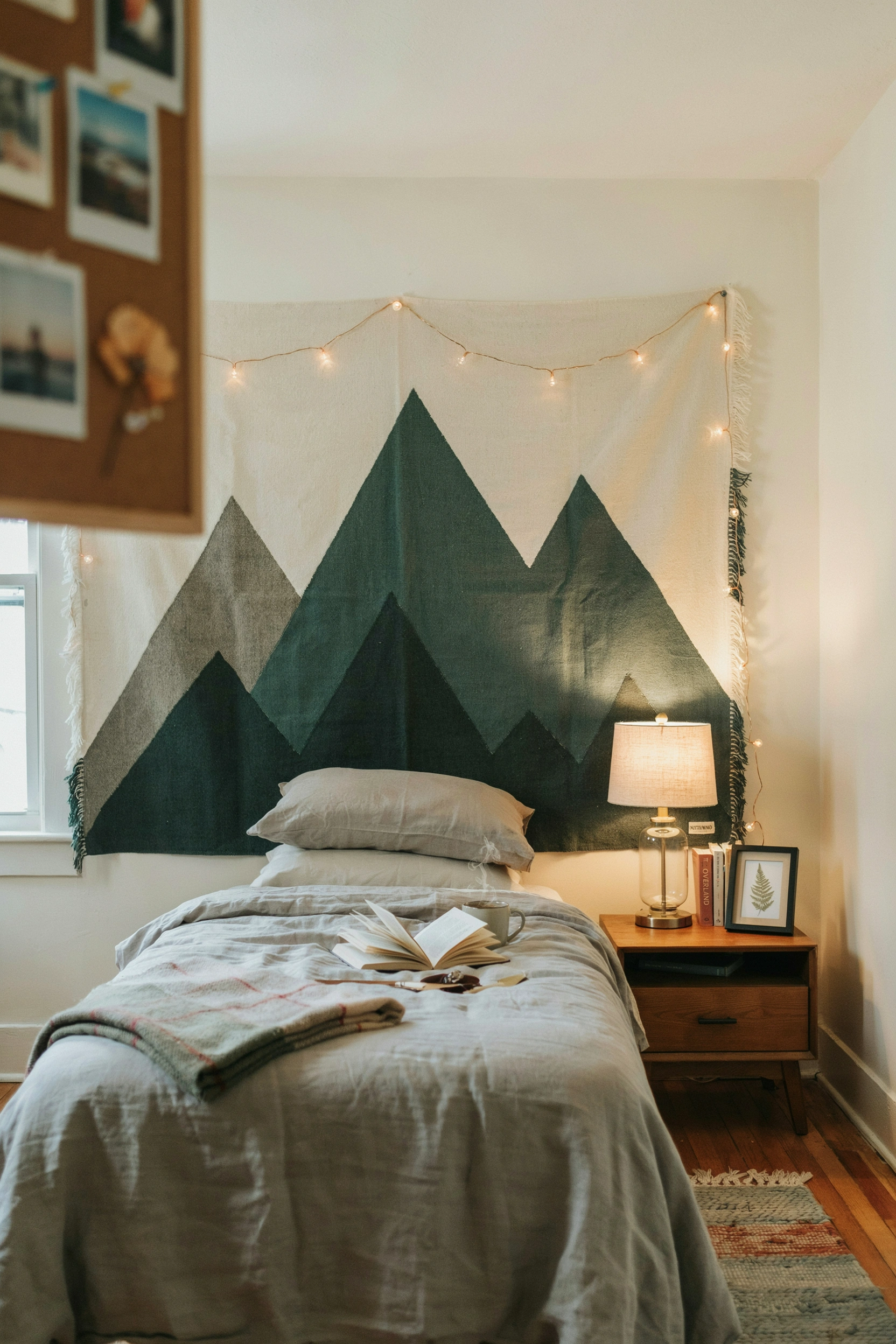
Tapestry as an Accent Wall — The $25 Room Transformation
If a gallery wall feels like too much effort, a tapestry is the shortcut version. One large tapestry covering the wall behind your bed does in ten seconds what it takes a designer an afternoon to achieve. It adds color, texture, and personality instantly.
For guys, the key is choosing the right style. Skip the trippy patterns or low-quality printed fabric. Go for: a large world map, a mountain ridge line print, a dark abstract, or a city skyline in minimal colors. Size up — a 60×80 or larger tapestry looks intentional. Anything smaller looks like a forgotten poster. Hang with command hooks at the top corners.
Styling Tip: Choose a tapestry with colors that complement (not match) your bedding. If you have grey bedding, pick a tapestry with navy, green, or forest tones. Complementary colors create depth — matching colors flatten everything.
Neon Sign Alternative — Glow Without the Frat-House Energy
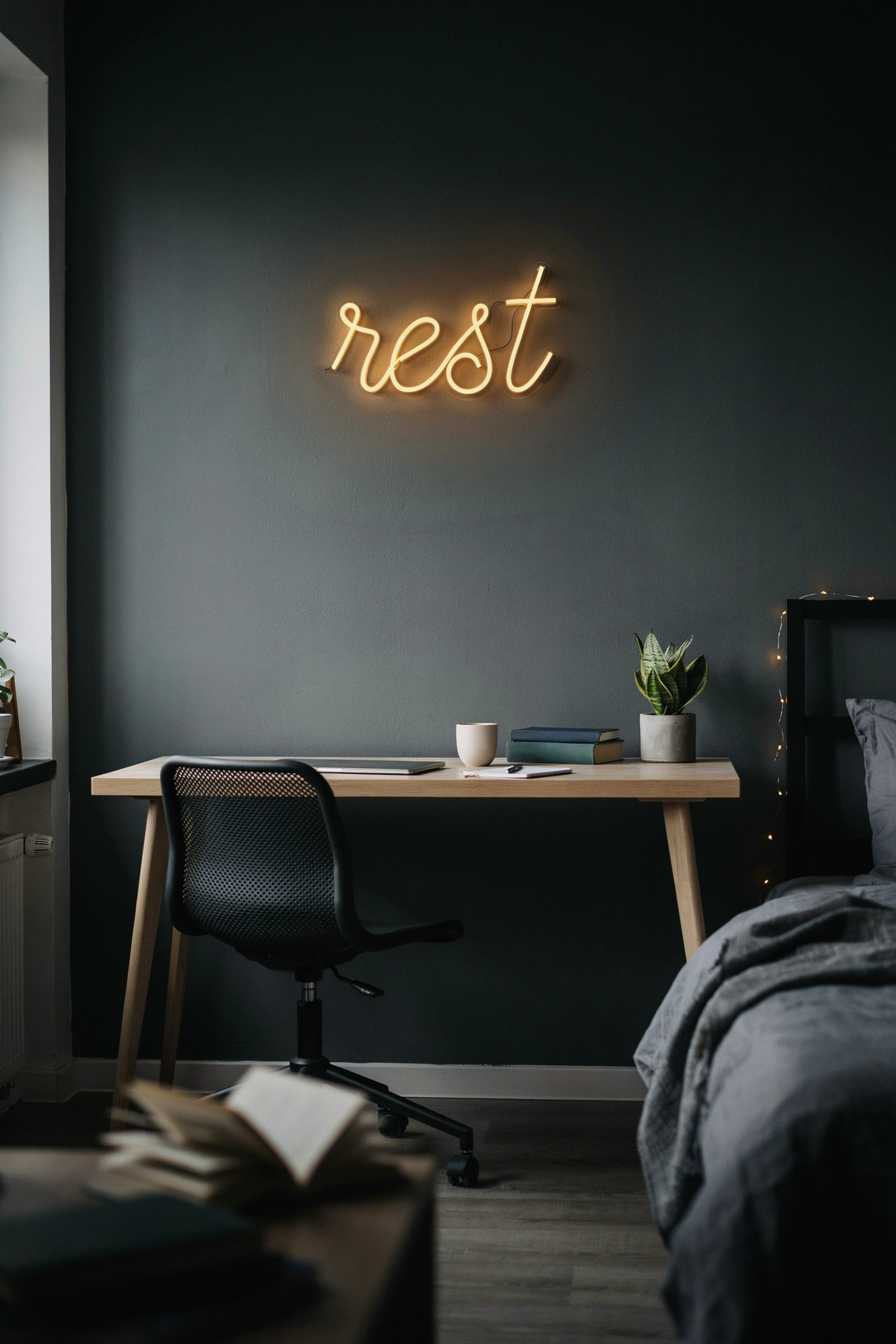
LED neon signs are everywhere right now, and when done right, they actually look great. The problem is most of them look like they belong in a Vegas club. The fix: one word maximum, minimal font, muted color (warm white, amber, or soft ice blue), and smart placement.
A “work,” “focus,” or “stay cool” sign in warm white placed above the desk or behind a shelf adds personality without screaming. Keep it small, keep it simple, and don’t surround it with six other LED strips — let it be the one accent light in an otherwise dark corner.
Styling Tip: Mount the sign at eye level or slightly above on a darker area of the wall. A light sign on a dark background — whether that’s dark paint, a dark tapestry, or just a shaded corner — looks intentional. The same sign on a bright white wall just looks cheap.
Earthy-Neutral College Bedroom — Beige, Terracotta, and Forest Green
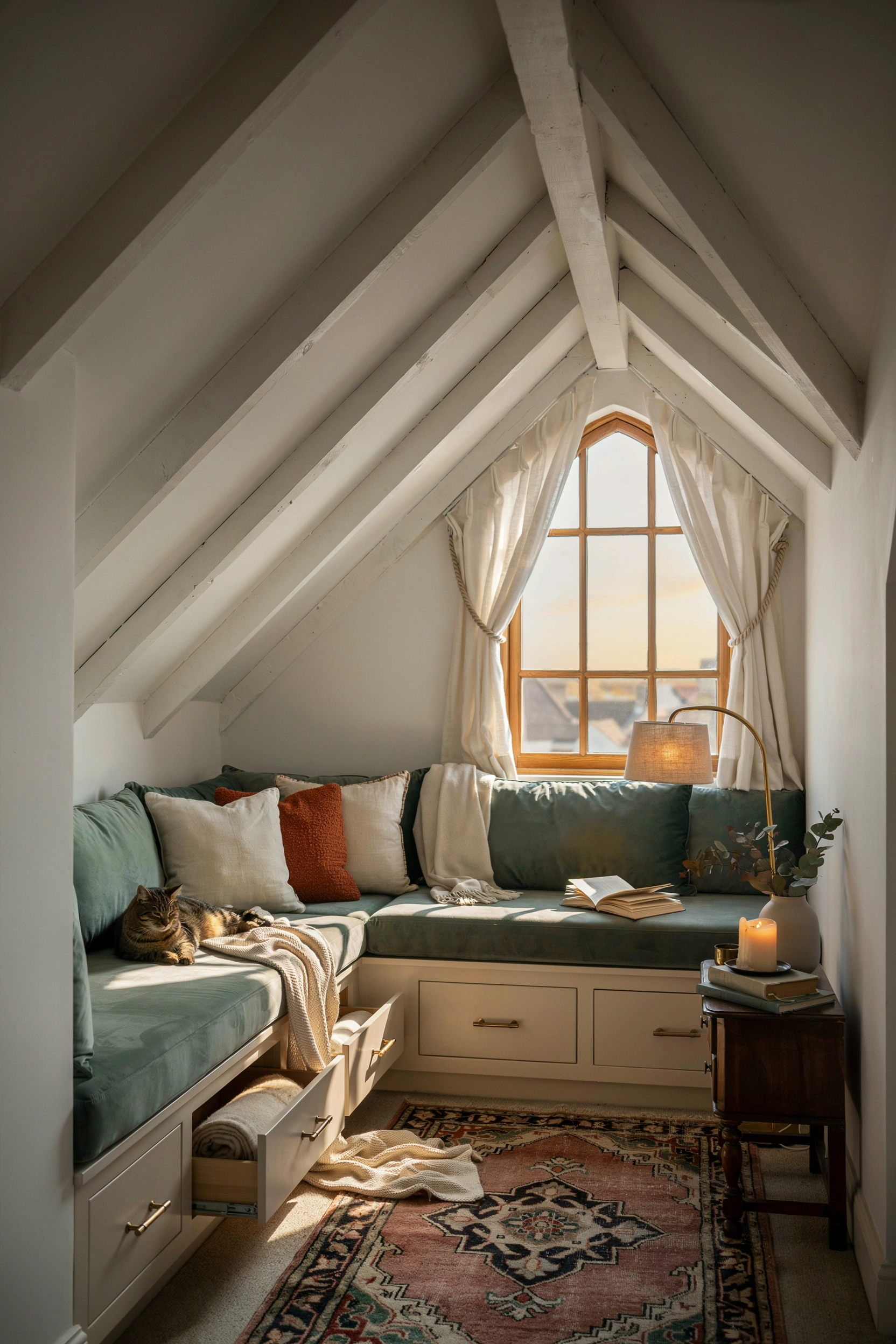
If dark and moody isn’t your thing, earthy neutrals are having a massive moment, and they’re equally masculine when styled right. Think cream, warm beige, forest green, and a touch of terracotta. This palette is everywhere in men’s interior design in 2025–2026 because it’s warm without being dramatic.
Start with an olive green or terracotta throw blanket at the foot of your bed. Add a jute or neutral-toned rug. Put a single potted plant on the desk or windowsill. These three moves shift a plain dorm room into something that feels considered and calm. And it all photographs beautifully in natural light.
Styling Tip: Terracotta and forest green are natural partners — they come from the same earthy palette. Use terracotta as a small accent (a single throw pillow, a planter) and forest green as your larger statement (curtains, throw blanket). Reverse the proportions, and it can feel overwhelming.
Low-Maintenance Plants That Make a Room Look Put-Together
One plant can completely change how a room feels. It adds life, color, and a sense that someone actually cares about their space. The challenge in dorm rooms is low light and irregular watering — which rules out most high-maintenance plants.
The best choices: pothos (nearly impossible to kill, trails beautifully from a shelf), snake plant (thrives in low light, looks architectural), ZZ plant (extremely drought-tolerant, deep green leaves), and small succulents for the desk. Get one medium plant for a shelf and one small plant for your desk. That’s it.
Styling Tip: Put your pothos on the highest shelf and let it trail down naturally. A trailing plant adds visual movement to an otherwise static shelf display and makes the whole room feel more alive. No effort required — it just grows.

The Under-Bed Storage System That Keeps Small Rooms Spacious
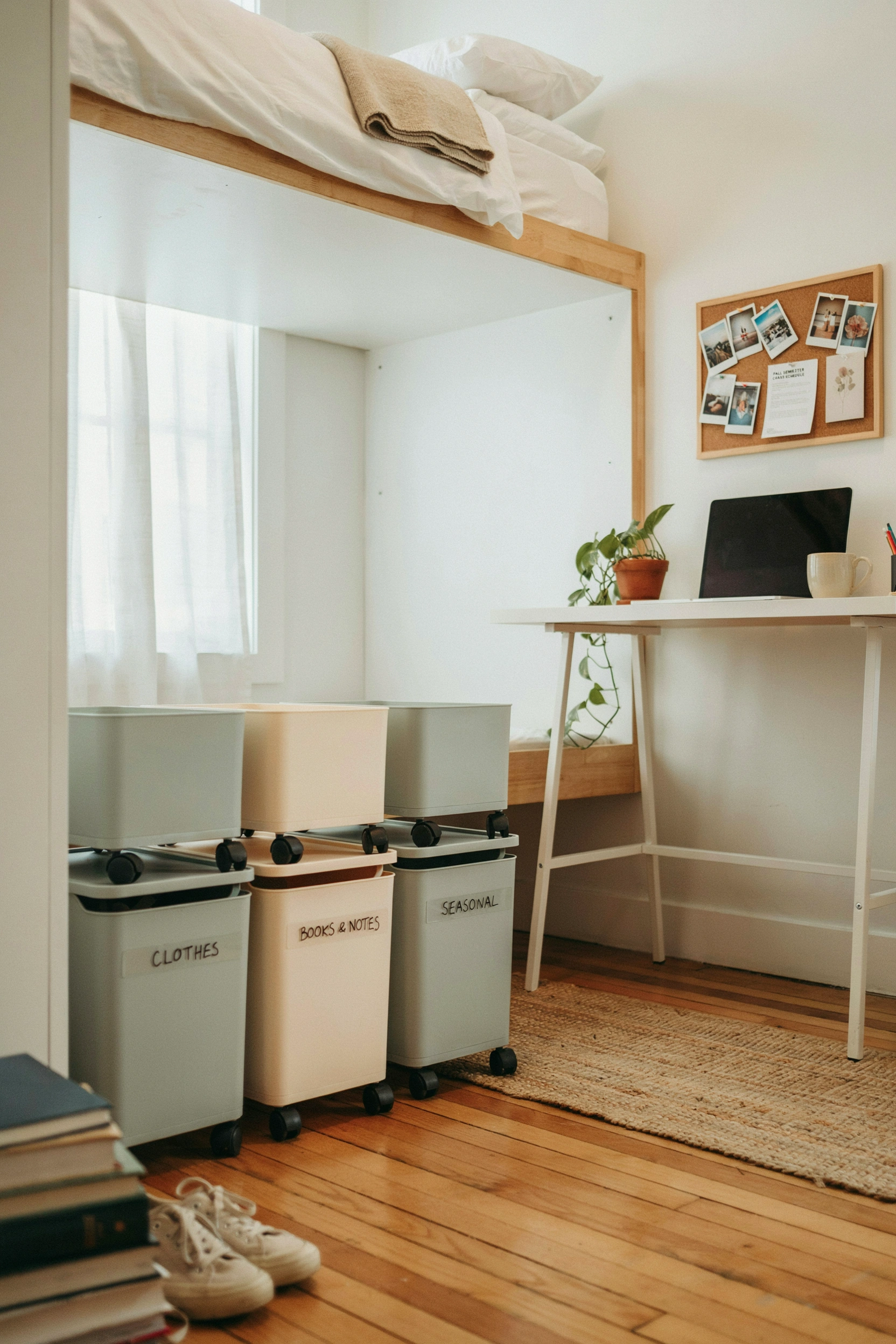
College rooms are small. Using the space under your bed is non-negotiable if you want the rest of your room to feel organized. Low-profile rolling bins (the ones with lids and wheels are the best) slide in and out easily and keep seasonal items hidden.
If your bed frame doesn’t have much clearance, add bed risers — they’re inexpensive and give you 4–6 inches of extra vertical space. Vacuum storage bags are perfect for bulky items like extra bedding or winter coats that you only need a few times a year.
Styling Tip: Label your under-bed bins with a label maker or even just masking tape and a marker. When everything is labeled, you actually use the storage system instead of just shoving things under there randomly and forgetting what’s in each bin.
Want more bedroom inspiration? Try these canopy bed decorating ideas for a soft, cozy, and elevated feel.
FAQ
How do I make my dorm room look cool as a guy?
Start with dark or neutral bedding, one warm light source, and a single shelf with three items on it. Those three changes alone take a dorm from bare to intentional. Then add layer by layer — a rug, some wall art, a plant.
What colors look good in a guy’s bedroom?
Charcoal grey, navy blue, forest green, warm beige, and black are all excellent starting points. Warm wood tones as a secondary accent make any of these palettes feel lived-in and masculine without being aggressive.
What’s the most important thing to buy first for a college room?
A good rug. It anchors the entire room, adds warmth and texture instantly, and makes every other piece of furniture look better just by being there.
Conclusion
Okay, real talk — decorating your college bedroom doesn’t have to be stressful or expensive. You don’t need to nail it all in one weekend. Start small. Maybe it’s just swapping in a warm light bulb tonight. Maybe it’s finally grabbing that rug you’ve been eyeing for two weeks. One change leads to another, and before you know it, your room actually feels like yours.
The ideas in this post aren’t a checklist you have to follow perfectly. They’re just a nudge in the right direction. Your room should show a little bit of who you are — your style, your vibe, your personality. Nobody wants to live in a showroom.
And here’s the thing most guys don’t realize until after: a comfortable, good-looking bedroom actually affects how you study, how you sleep, and how you feel daily. It’s not just about how it looks in photos. It’s about how it feels to come back after a long day.