
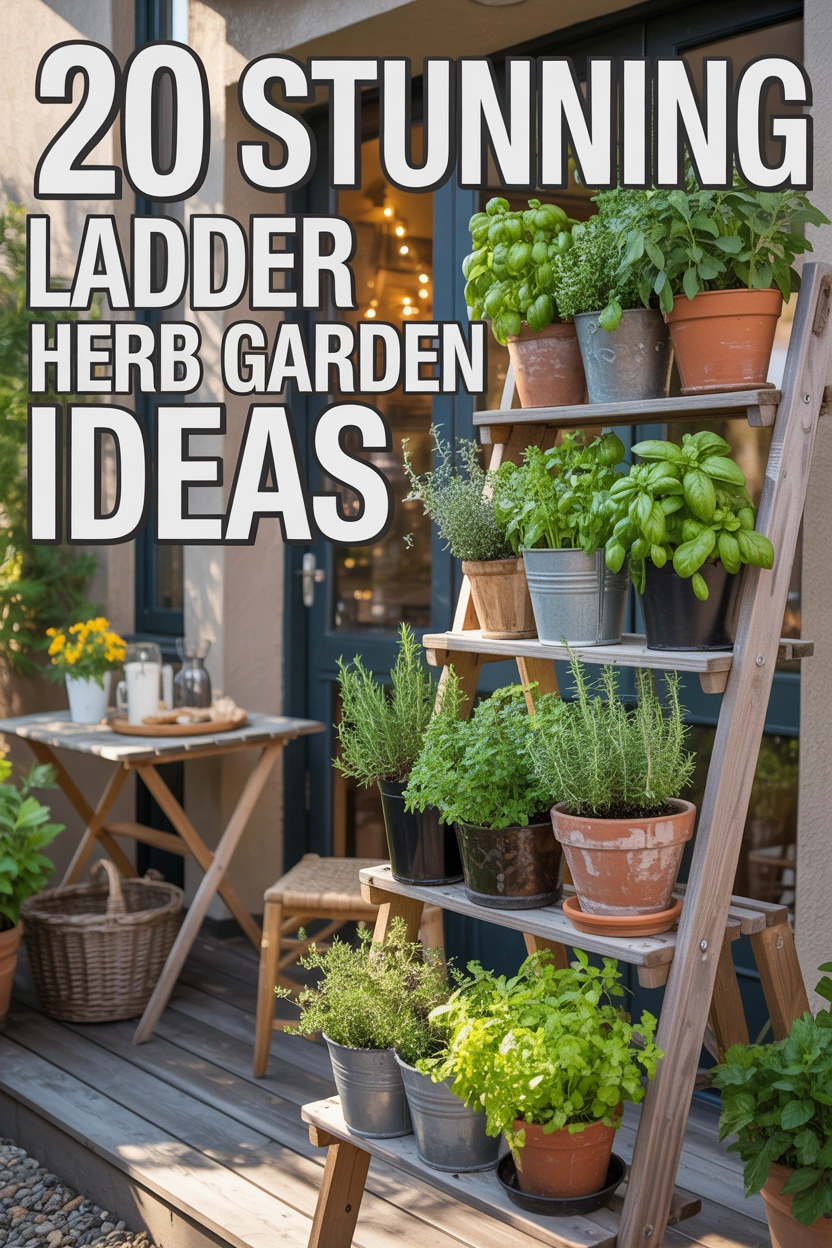
Have an old wooden ladder sitting around? Don’t throw it away just yet. With a little creativity, it can become a beautiful herb garden that adds charm and greenery to any space.
One of the things I love most about ladder herb gardens is how simple they are to create. They don’t take up much room; they work well in small patios and balconies, and they instantly make a space feel more inviting. Plus, there’s something satisfying about stepping outside and picking fresh herbs right from your own garden.
Whether you’re looking for a rustic backyard feature, a space-saving balcony garden, or a creative way to grow herbs near your kitchen, there are so many ways to style a ladder garden. From classic terracotta pots to modern vertical displays, these ideas are both practical and beautiful.
In this collection, you’ll find 20 creative ladder herb garden ideas that can help you grow fresh herbs while adding personality and style to your outdoor or indoor space.
Before You Start: Pick the Right Ladder
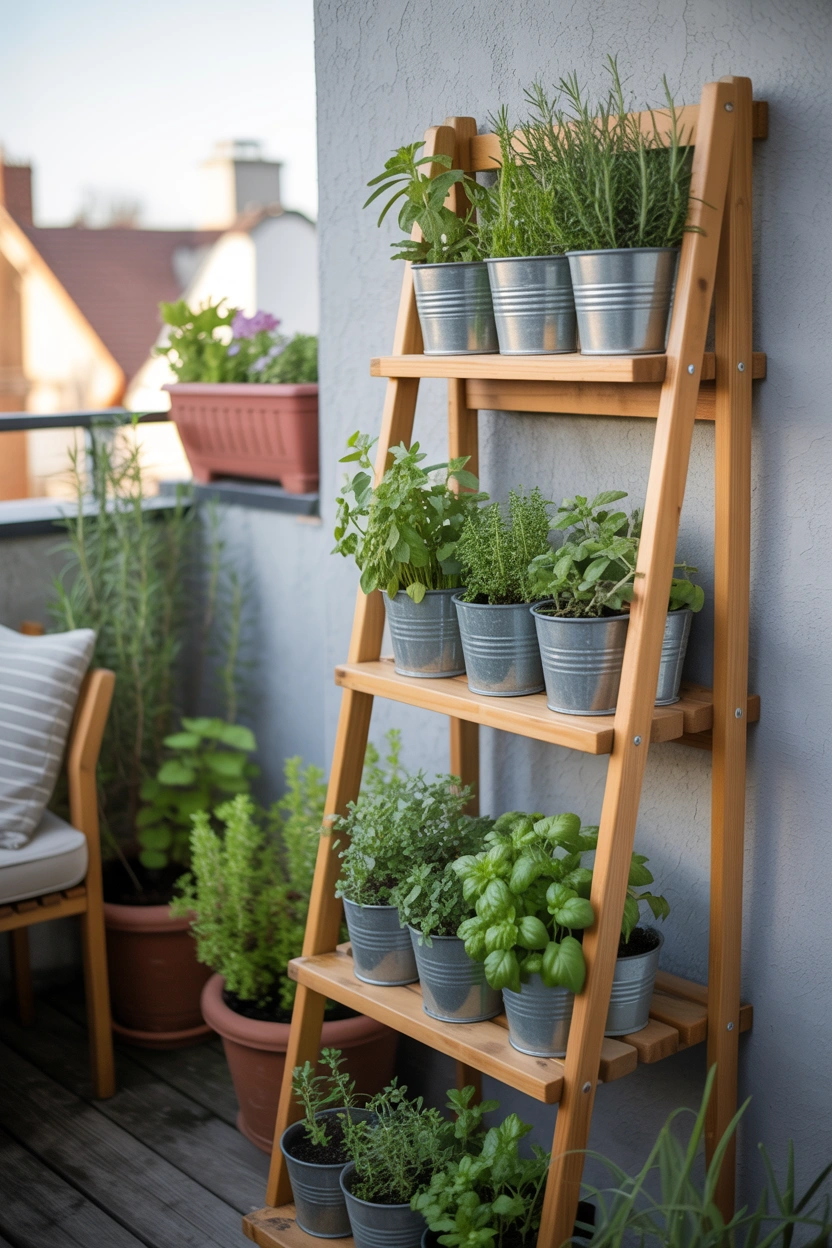
Before you start building your ladder herb garden, it’s worth choosing the right type of ladder. An old wooden stepladder or vintage orchard ladder usually works best because it has plenty of character and provides a sturdy place for pots and planters. Plus, the weathered wood gives the garden that charming rustic look so many people love.
If your ladder will live outdoors, take a few minutes to protect it with a waterproof sealant. This simple step can help prevent moisture damage and keep the wood looking good season after season. For leaning ladders, placing bricks or small pavers under the feet can improve drainage and stop the wood from sitting in damp soil after rain.
A-frame ladders are another great option since they stand on their own and don’t need wall support. They’re especially useful for patios, decks, and open garden spaces. Metal ladders can work too, particularly for modern designs, but if you’re after a warm, cozy garden aesthetic, wooden ladders tend to create the most inviting look.
The Classic Leaning Ladder with Terracotta Pots
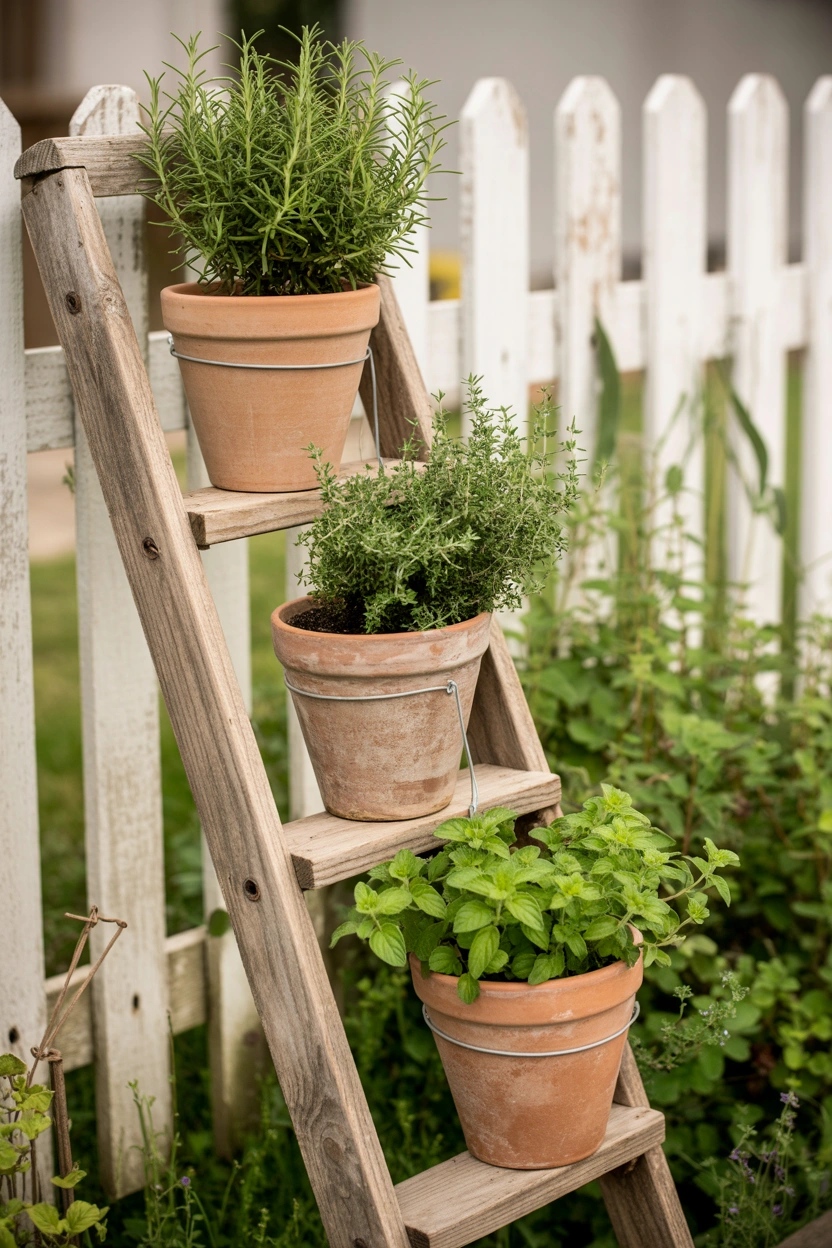
This is the one that started it all for me. Take a reclaimed wooden ladder, lean it against a fence or exterior wall, and wire terracotta pots to the rungs with galvanized wire or metal hose clamps. It’s rustic, it’s charming, and it costs almost nothing if you already have an old ladder around.
The key to making this look polished rather than thrown-together is consistency. Use matching terracotta pot sizes on each rung, and let the herb foliage vary naturally — rosemary’s spiky texture, thyme’s soft draping, oregano’s bushy fullness. These are all drought-tolerant herbs that thrive in terracotta’s breathable clay. Seal the ladder wood before use, and stack a flat brick under each foot for drainage and stability.
Kitchen Window Ladder Shelf — Fresh Herbs Always Within Reach
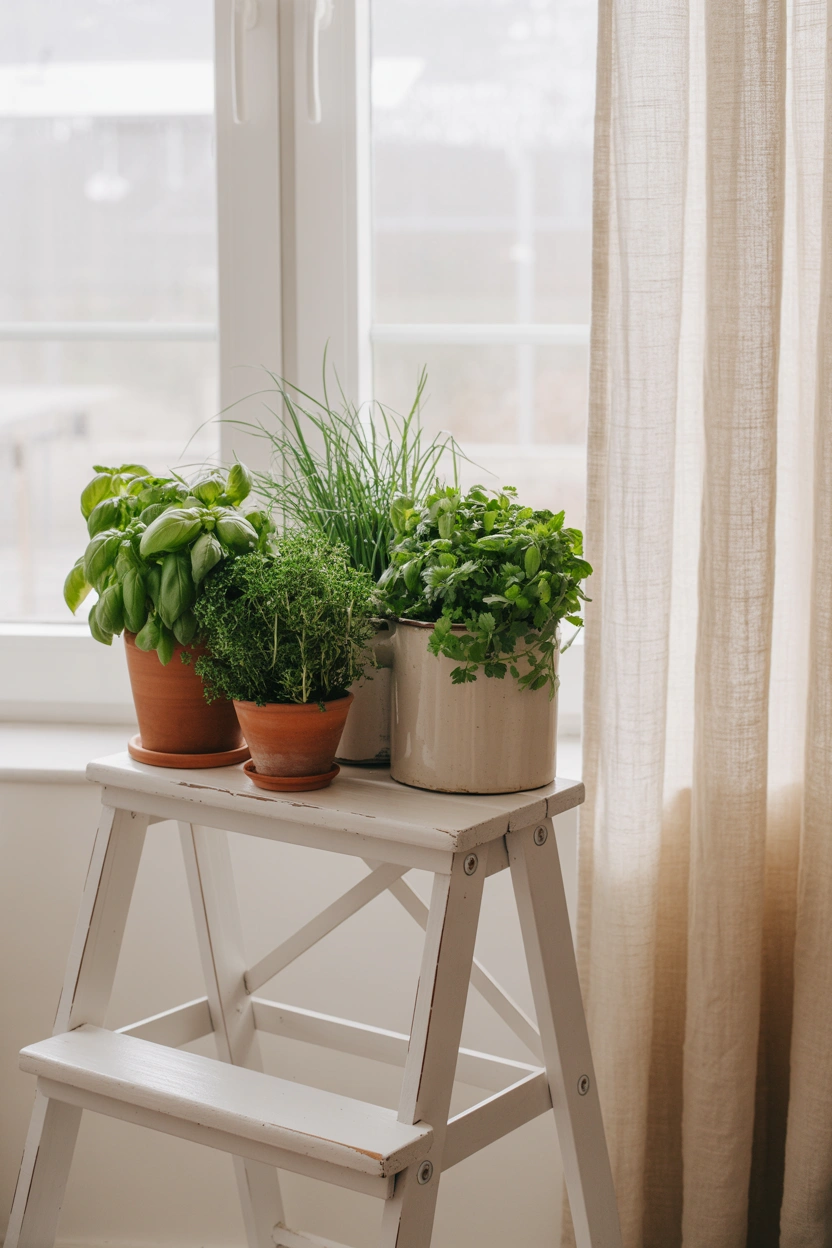
This one is all about convenience. A small three-step ladder placed beside or beneath a sunny kitchen window instantly becomes a herb station you’ll actually use every day. No more running outside mid-recipe to snip some parsley.
Use lightweight ceramic or plastic pots, so you’re not adding too much weight near the window area. Basil, chives, parsley, and mint are perfect for this spot — they’re the herbs you reach for most while cooking, and they all do well with indirect-to-moderate indoor sunlight. Add a small drip tray under each pot to protect your floor, and rotate pots weekly so every plant gets even light exposure.
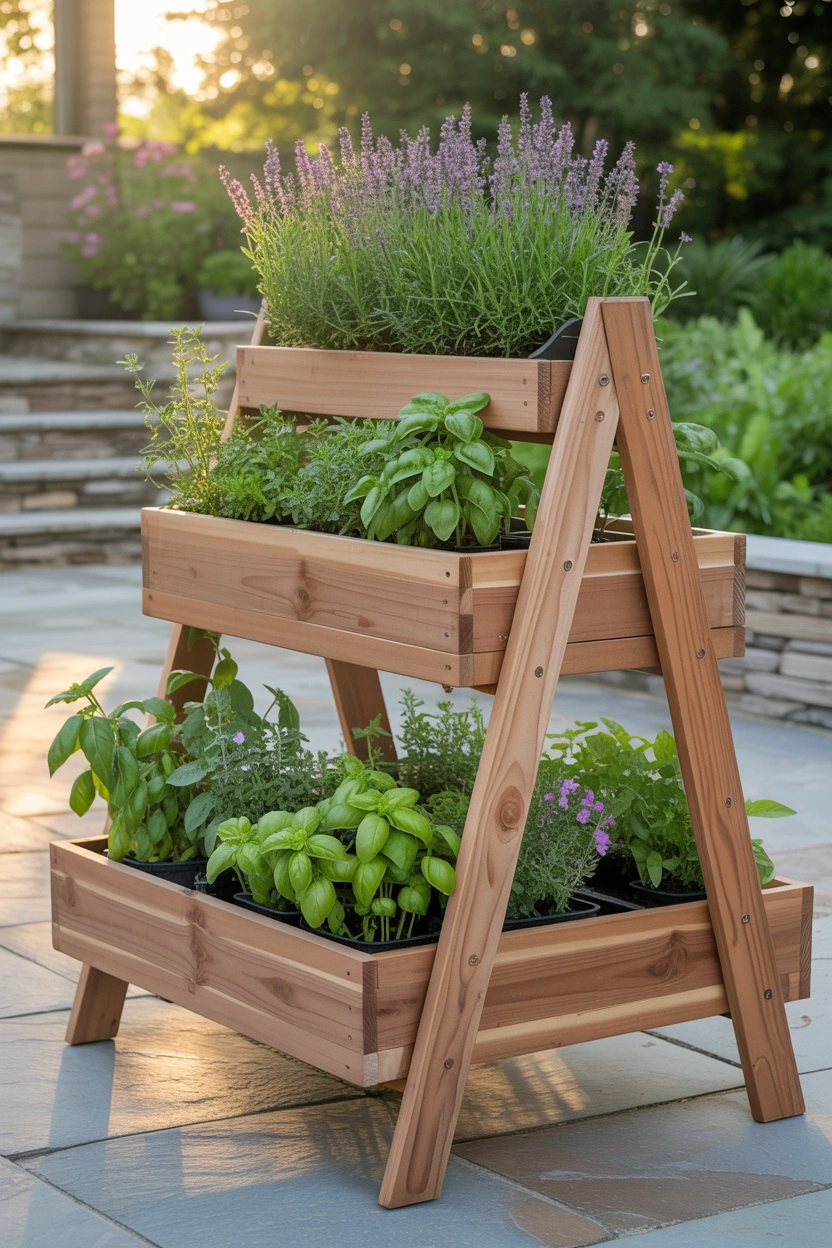
A-Frame Ladder with Built-In Planter Boxes
If you don’t have a wall to lean your ladder against, an A-frame design is your best friend. This version is fully freestanding — you build it like a sawhorse, then attach custom-cut wooden planter boxes to each crossbar. It’s stable, it looks professional, and it gives each herb serious root space.
Use cedar wood for the planter boxes if you can. Cedar is naturally rot-resistant, so you won’t need to replace it every season. Plant larger herbs like lavender, lemon balm, or a full culinary collection across the shelves. This setup is especially beautiful in the center of a patio, where guests can admire it from all sides. Paint it sage green or leave it natural — both look stunning.
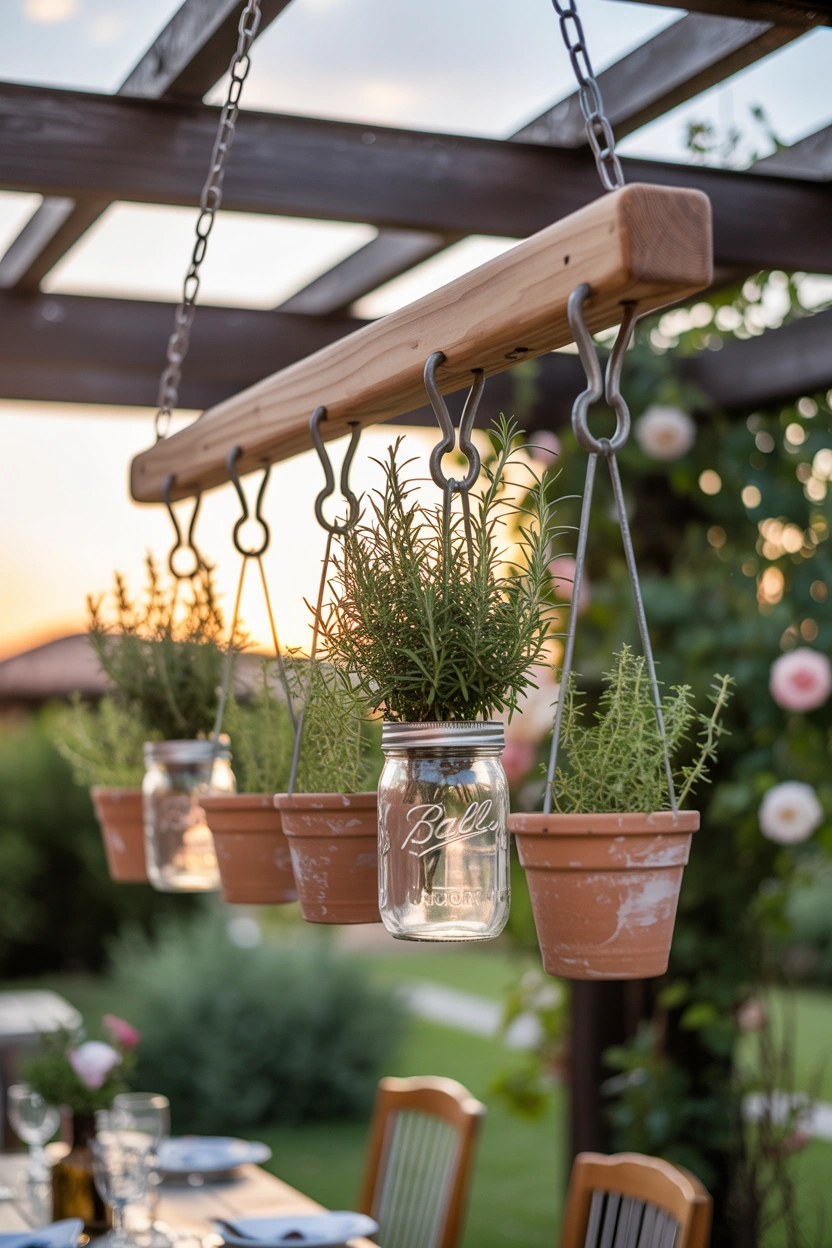
Hanging Ceiling Ladder Garden for Kitchens and Pergolas
This one completely transforms a space. Instead of standing the ladder upright, you suspend it horizontally from ceiling hooks or pergola beams using a sturdy chain. Then hang mason jars or small planters from the rungs with S-hooks. The result looks like something out of a Tuscan kitchen or a dreamy outdoor dining area.
Trailing herbs like creeping rosemary, cascading thyme, or oregano look breathtaking hanging down from the jars. For outdoor pergola use, opt for galvanized chain over rope — it handles weather far better and adds a beautiful industrial contrast to the warm wood. Inside, this works brilliantly over a kitchen island or dining table.
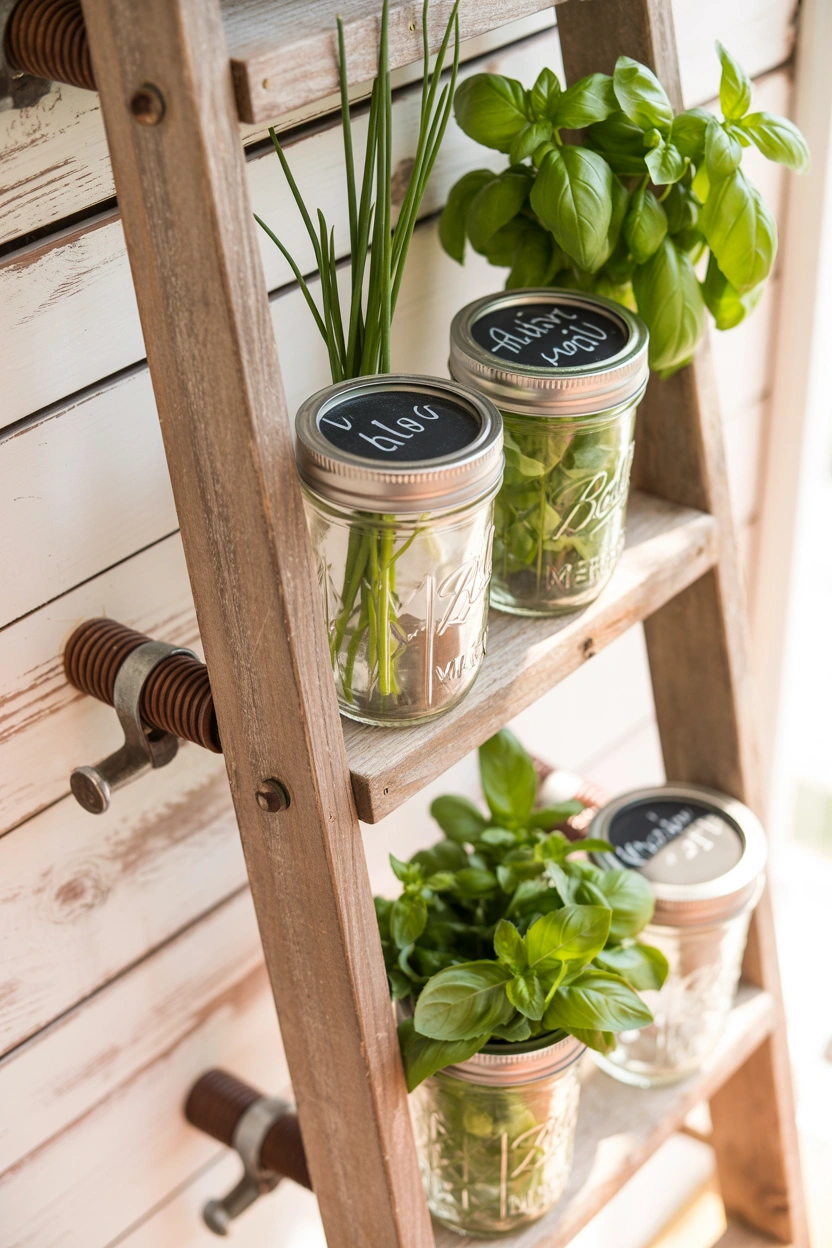
Mason Jar Ladder Garden — Rustic Charm for Under $20
This might be the most budget-friendly version on this entire list. Grab some mason jars, hose clamps from the hardware store, and an old ladder — and you’ve got a herb garden that looks like it belongs in a lifestyle magazine.
Layer small pebbles at the base of each jar before adding soil — this is essential for drainage since mason jars don’t have holes. Chives, basil, and mint are perfect here because their root systems stay compact. For the finishing touch, paint the jar lids with chalk paint and write the herb name on each one. It’s such a small detail, but it makes the whole display look intentional and curated.
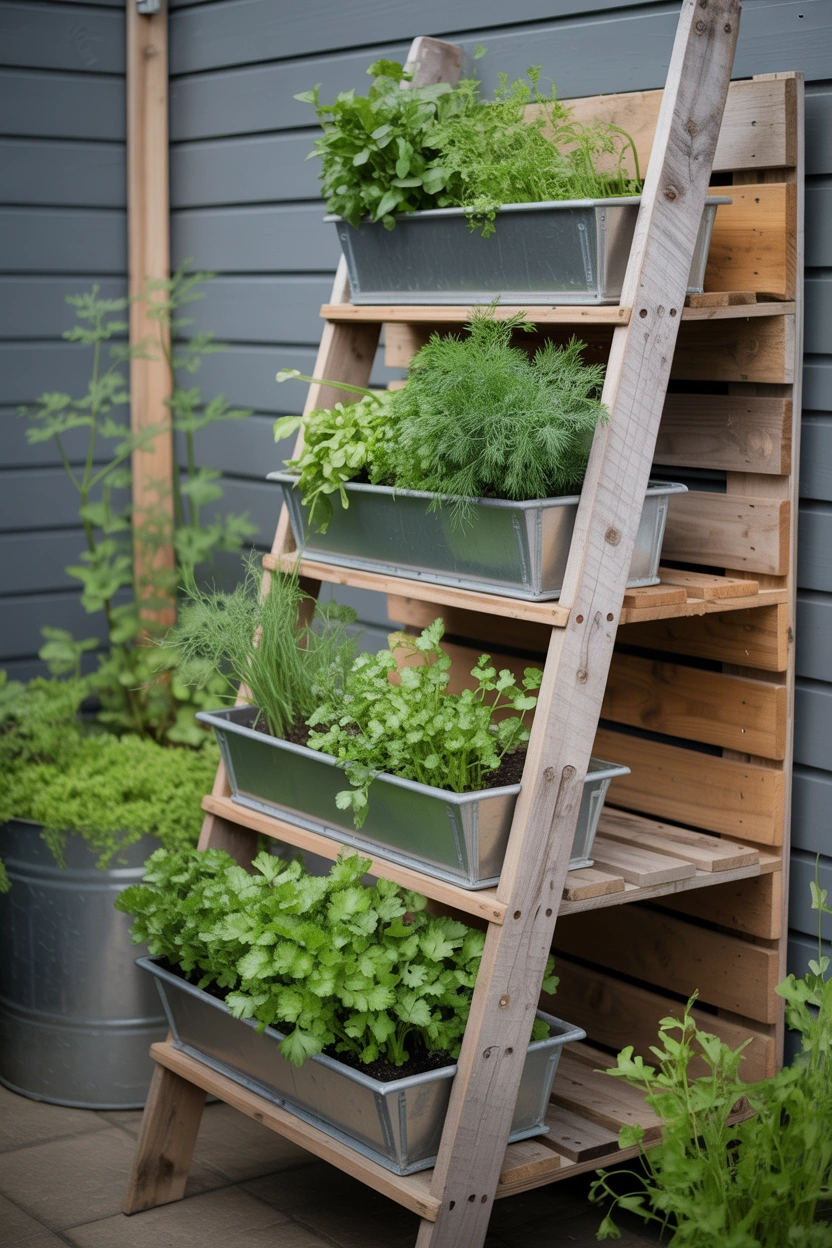
Upcycled Pallet-and-Ladder Combo Garden
This is for the hardcore upcyclers. Take a reclaimed wooden ladder and attach pallet boards horizontally between the rungs to create wide, deep planting shelves. You’re essentially building a raised planting tray at each level. It’s eco-friendly, it’s sturdy, and it gives herbs like parsley, cilantro, and dill the deeper root room they actually need.
Before filling the pallet shelves with soil, line them with landscape fabric — this keeps the soil in place, prevents crumbling, and still allows drainage. This combination of ladder and pallet looks especially striking in an urban backyard garden or on a large balcony. Leave the wood natural or lightly stain it with a grey or walnut finish for a more polished look.
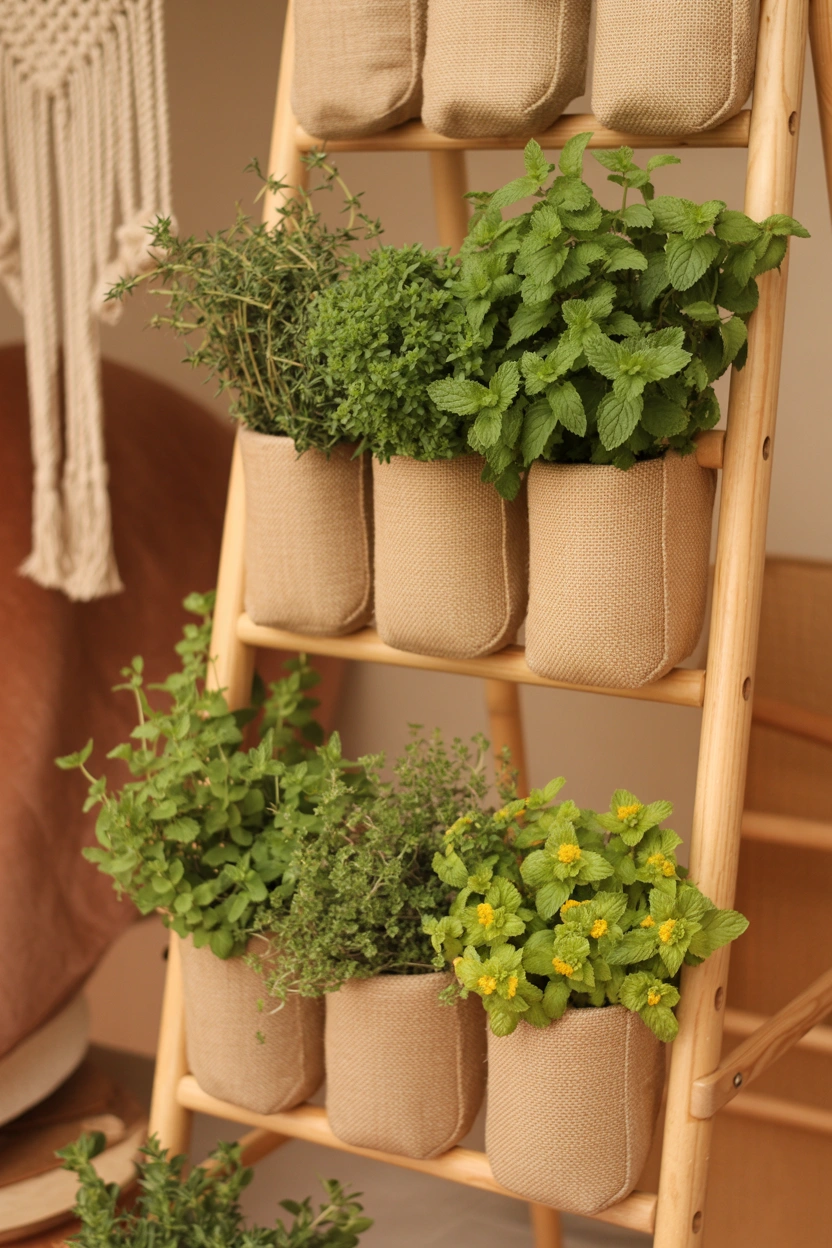
Fabric Pocket Ladder Garden — Soft, Boho, and Budget-Friendly
This one has such a different vibe from all the others — and that’s exactly why I love it. Instead of pots, you sew or buy hanging fabric pockets (burlap, felt, or canvas work well) and tie them directly to the ladder rungs. The result is soft, layered, and distinctly boho.
Mint, thyme, and lemon balm are natural fits here — they spread and fill out the pockets beautifully, giving that lush, overflowing look that does incredibly well on Pinterest. The key material tip: avoid thin fabric. Thick felt or canvas retains moisture longer between waterings and won’t sag under the weight of wet soil. This design works indoors or on a covered patio where it won’t get soaked in heavy rain.
Painted Step Ladder Planter — A Pop of Color for Your Patio
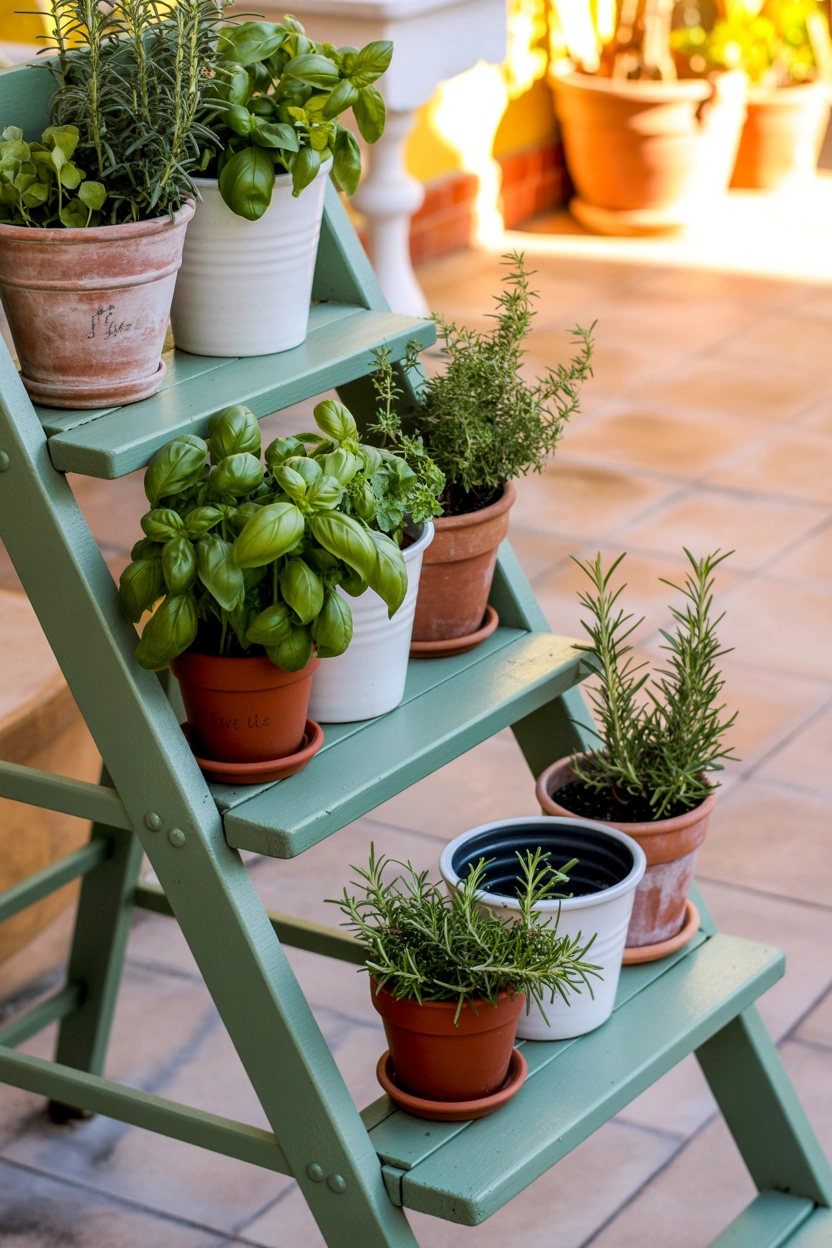
Sometimes the ladder itself is the statement piece. Paint an old stepladder in a bold or soft color — sage green, dusty pink, cobalt blue, or crisp white — and suddenly it becomes a piece of outdoor decor that just happens to grow herbs.
Pair the painted ladder with mismatched colorful pots for a playful, curated market-stall look. Or use all-white pots for a cleaner, more modern feel. Before you paint, prime the wood with a spray primer and seal with exterior matte varnish when you’re done. The paint keeps the wood protected and makes the whole setup look intentional. This is one of those ideas that takes about two hours and completely transforms a corner of your patio.
Tiered Ladder Herb Garden with Chalkboard Labels
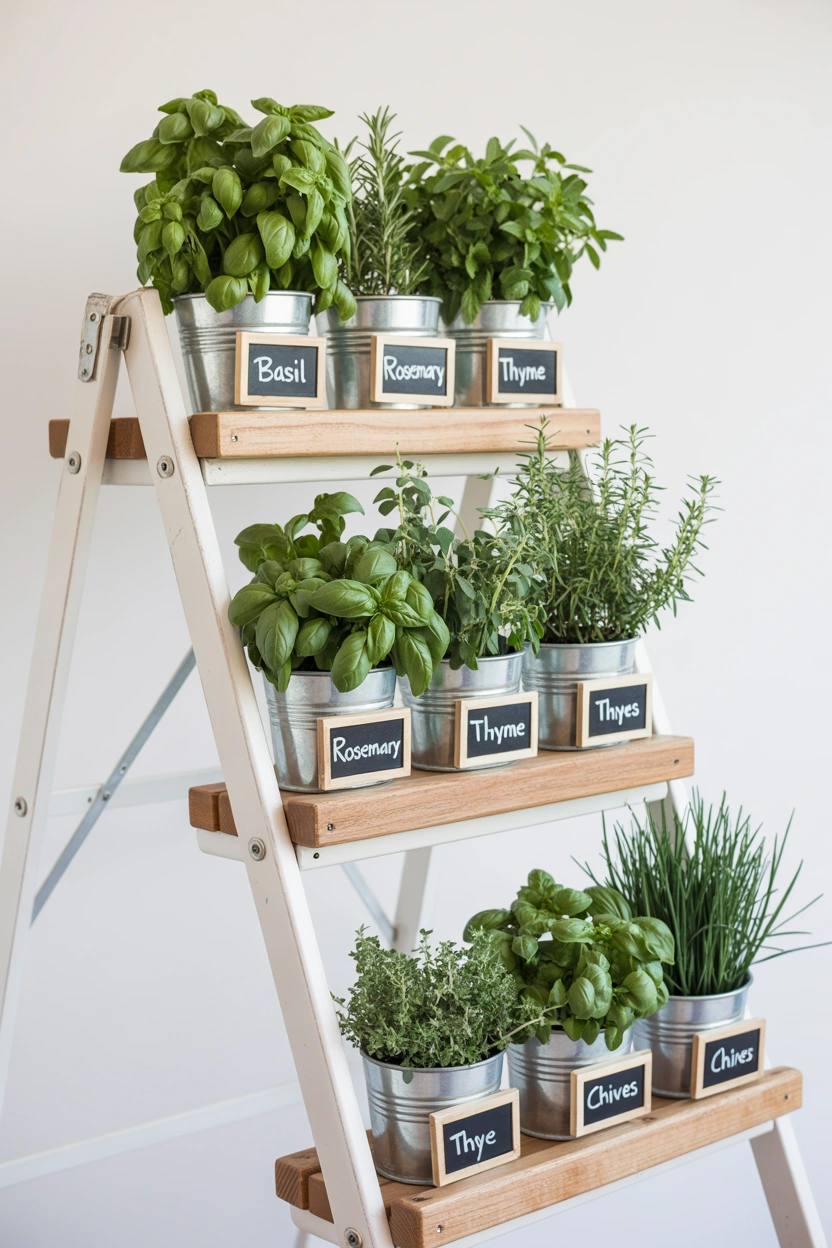
This is the version that looks like it belongs in a boutique garden center. Add flat wooden plank shelves across the rungs of a stepladder to create a clean, tiered display. Then paint the plank edges — or add small wooden sign stakes — with chalkboard paint and label each herb.
The practical benefit beyond aesthetics: chalkboard labels are endlessly updatable. You can replant a shelf with a new herb mid-season and just erase and rewrite. Position the sunniest herbs (basil, rosemary) at the top rungs where they’ll get the most direct light, and shade-tolerant herbs (parsley, mint) lower down. It sounds simple, but this detail makes a real difference in how well your plants thrive.
Galvanized Bucket Ladder Garden — Industrial Farmhouse Aesthetic
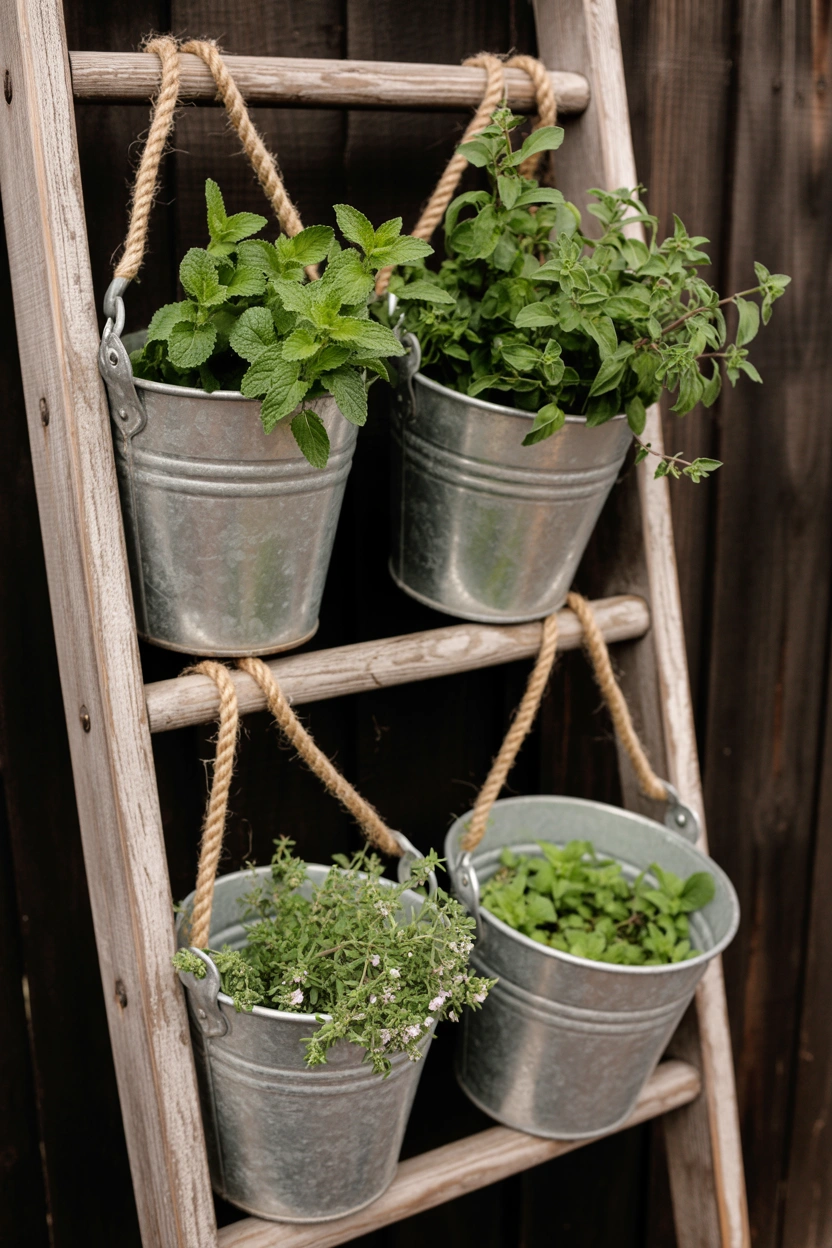
This combo is unexpectedly stunning. Hang galvanized metal buckets from ladder rungs using thick jute rope or heavy S-hooks, and you’ve got a look that’s somewhere between a French market and an American farmhouse. The raw metal against aged wood creates a gorgeous textural contrast.
Before planting, drill drainage holes in the base of each bucket and line the inside with a coconut coir liner. This keeps the soil aerated and prevents root rot. Mint, oregano, and marjoram do especially well in metal containers. This setup looks incredible against a dark fence or brick wall where the silver buckets really pop. Keep the herb labels simple — a bit of twine with a hand-written tag is all you need.
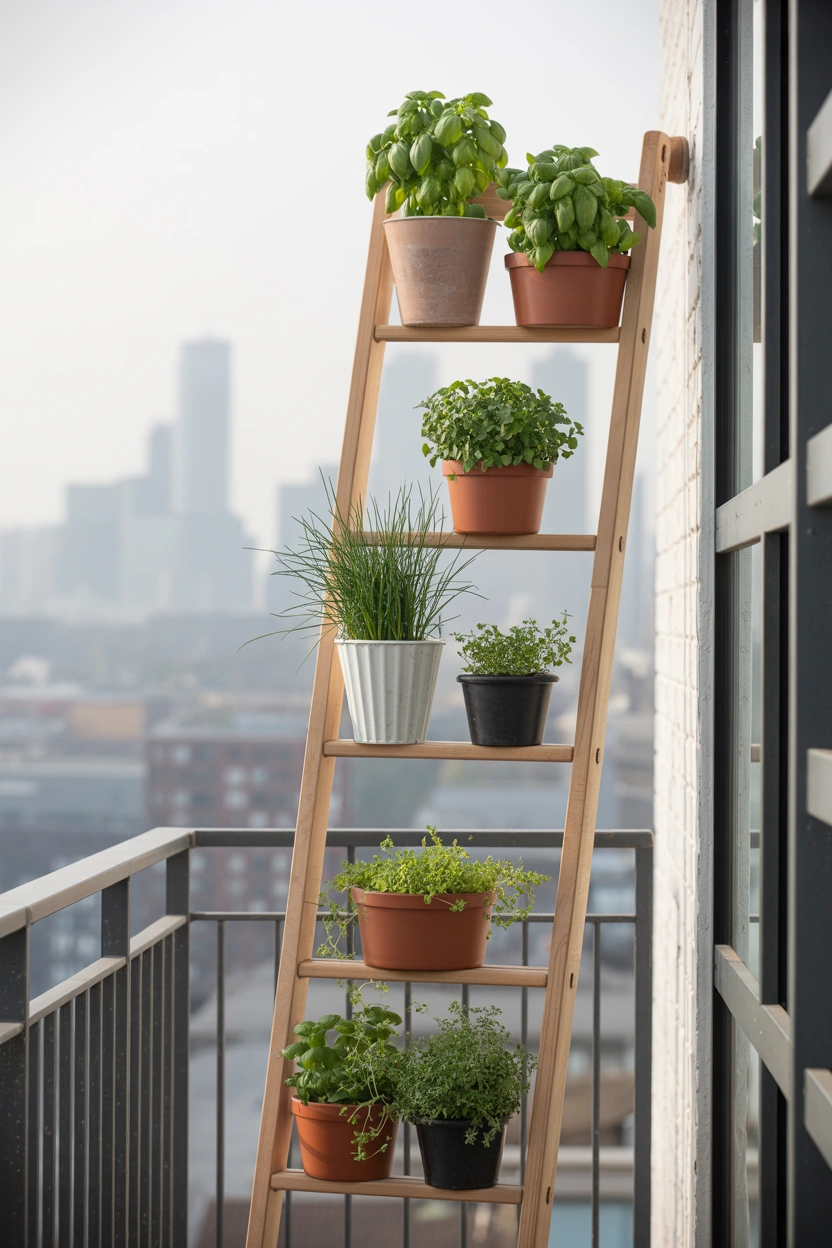
Balcony Ladder Herb Garden for Small Spaces and Renters
Renters, this one’s for you. You don’t need a backyard, a permanent installation, or any tools to make this work. A narrow ladder leaned against a balcony wall takes up almost no floor space and can grow six to eight herb varieties without a problem.
Use lightweight plastic or fabric pots to keep the total weight low — important for balcony weight limits. Stick with compact herb varieties: dwarf basil, Greek oregano, chives, and ‘Spicy Globe’ basil stay tidy and don’t outgrow small containers. One clever trick — place a self-watering pot on the top rung. As it gets watered, any overflow slowly trickles down to benefit the rungs below. It’s not a perfect irrigation system, but it genuinely helps on hot days.
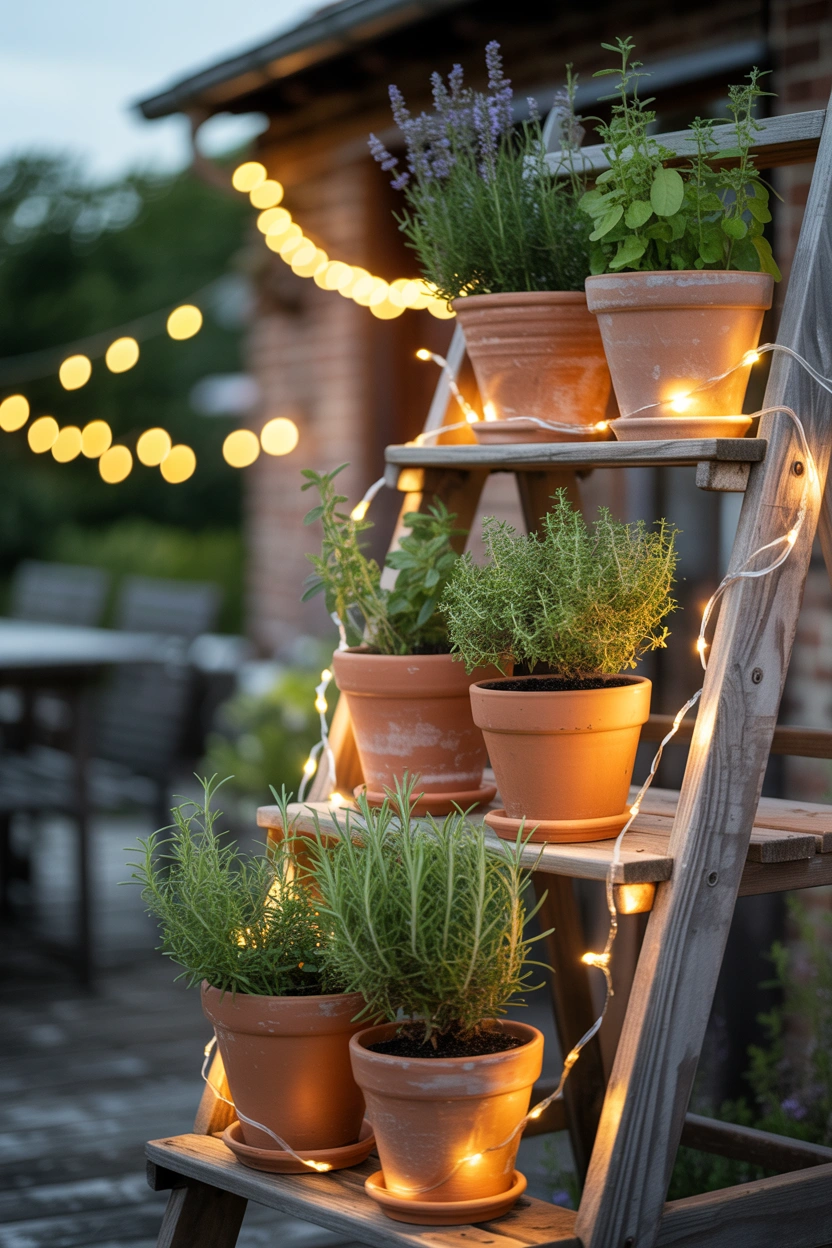
Ladder Herb Garden with Solar String Lights — Beautiful Day and Night
This is the one that takes your herb garden from functional to magical. Weave warm-white solar fairy lights along the ladder frame, and between the pots, and by evening, the whole display glows like something from a countryside restaurant terrace.
Fragrant herbs like lavender, lemon thyme, and rosemary are the perfect choice for this setup — they look beautiful in the day and release their scent in the evening warmth, adding a whole sensory dimension to your outdoor space. Use warm-white LEDs rather than cool-white — the golden tone is much softer and more inviting. This version is especially stunning on a wood deck or patio where the ambient lighting can really be appreciated.
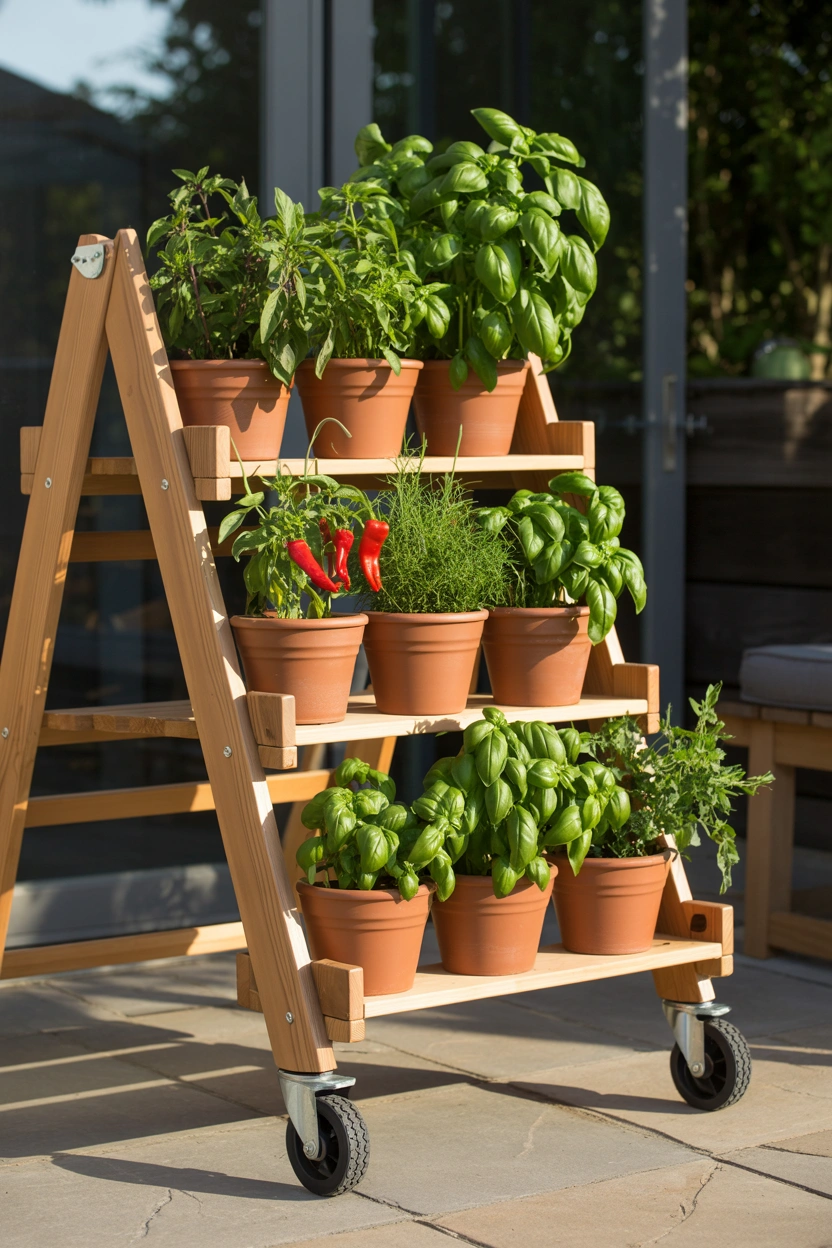
Portable Ladder Herb Stand on Wheels — Follow the Sun All Day
This is one of the most practical ideas on the list, and I think it’s massively underrated. Attach locking caster wheels to the base legs of a sturdy ladder, and suddenly your entire herb garden becomes mobile. Roll it to the sunniest spot in the morning, and move it under shelter if a storm rolls in.
This is especially useful for sun-obsessed herbs like basil, which need at least six to eight hours of direct sunlight daily. Use heavy-duty locking casters — standard furniture wheels won’t handle the weight reliably. Always lock the wheels before you start watering to prevent the whole thing from rolling forward unexpectedly. It’s a small detail, but it matters.
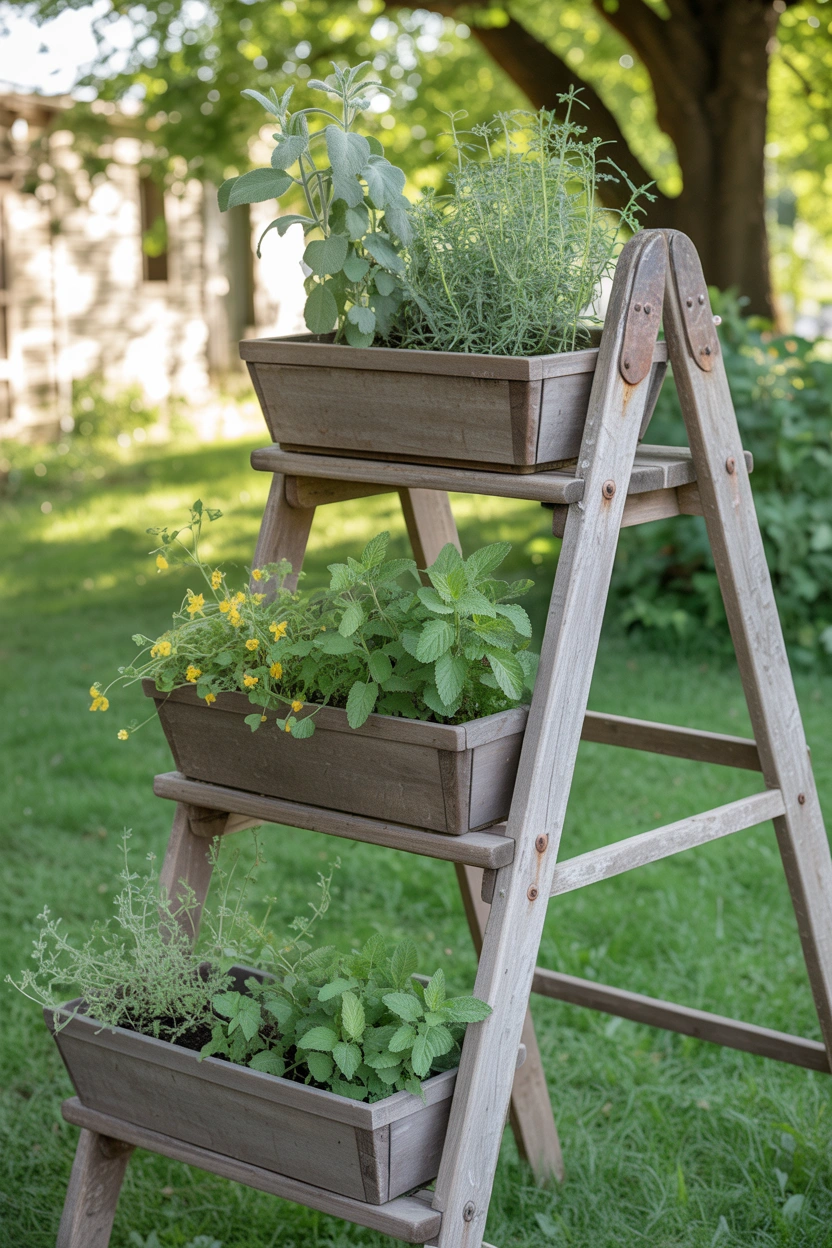
Repurposed Orchard Ladder Herb Garden — Rustic Statement Piece
Old three-legged orchards or fruit-picking ladders are something special. Because of their three-legged design, they’re naturally freestanding and incredibly stable — no wall needed, no bricks required. And they have the most beautiful, weathered charm that no new ladder can replicate.
Place wide, shallow planters across the angled rungs, and plant spreading herbs like lemon balm, sage, or mint (always in contained pots to prevent spreading). These ladders are often found cheaply at estate sales, antique shops, or Facebook Marketplace — sometimes for under $20. Leave them fully natural, or give the wood a light oiling to protect without losing that gorgeous aged look.
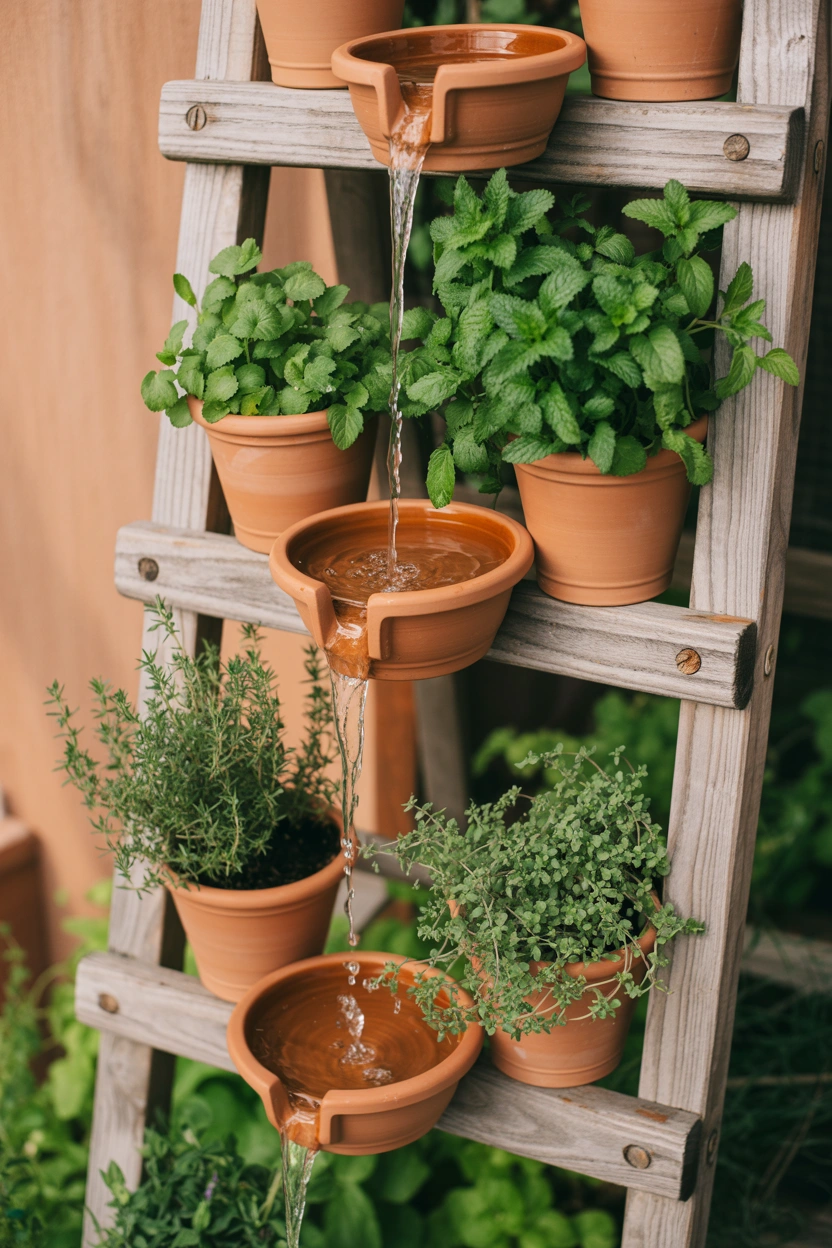
Herb Ladder Garden with Clay Saucer Cascade — Zero-Waste Watering
This idea is clever in a very quiet, practical way. Stack your herb pots so that overflow water from the top rung naturally drips down into the saucer on the next shelf, which then waters the rung below. It’s not a full irrigation system, but it creates a gentle cascade effect that reduces how often you need to water the lower plants.
The setup works best when you think about water needs strategically. Put your thirstiest herbs — mint, cilantro, parsley — at the top rungs where they receive the direct water. Drought-tolerant herbs like thyme and oregano go at the bottom, benefiting from the overflow without getting waterlogged. Test the cascade with plain water before planting to see how the flow works with your specific ladder angle.
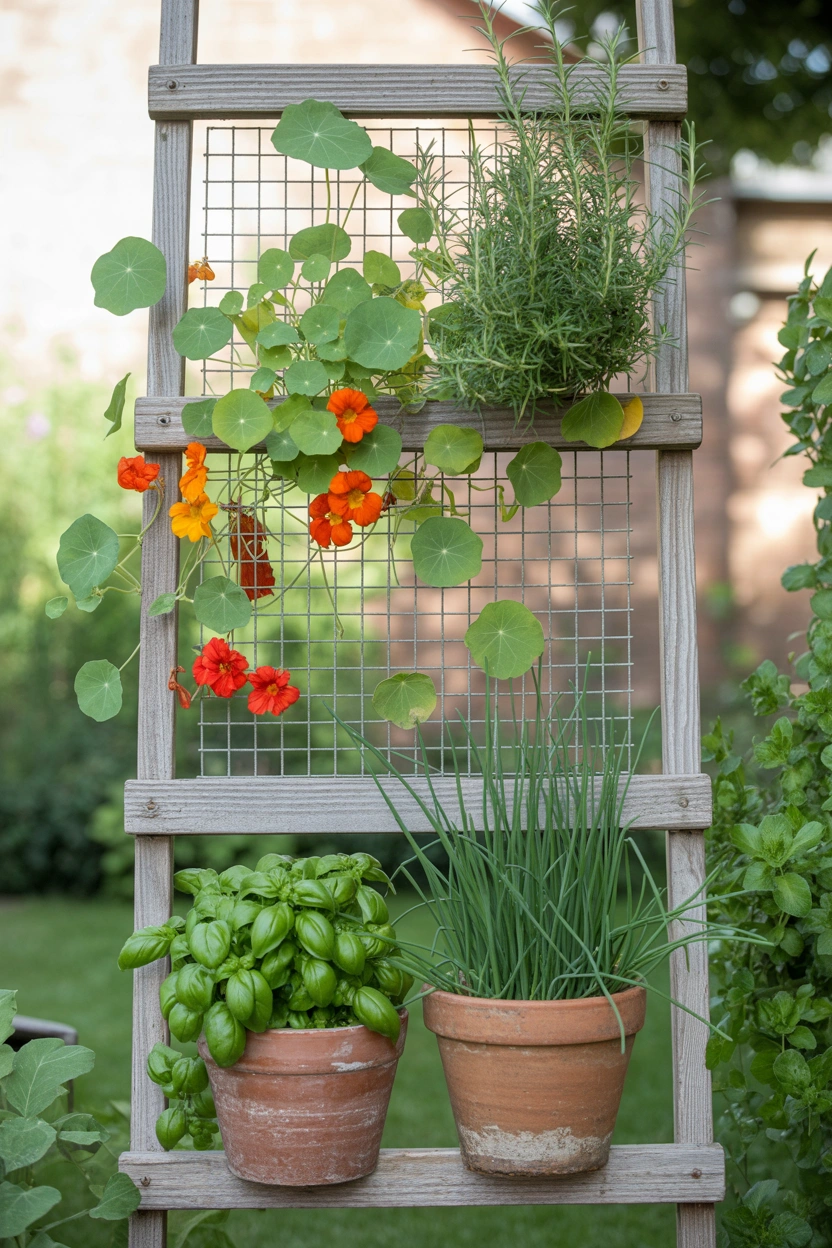
Ladder Trellis Herb and Vine Garden — Double-Duty Vertical Space
Attach a section of garden mesh, chicken wire, or wooden lattice to the back of a leaning ladder, and you’ve doubled the growing potential of your setup. The flat ladder face holds potted herbs; the trellis behind supports climbing plants and trailing vines. Two gardens in one footprint.
For the trellis section, try nasturtiums (edible flowers), climbing rosemary, or lemon verbena — they’re all beautiful and useful. In the pots on the rungs, keep compact herbs like basil, thyme, and chives. One real benefit of this design that most people overlook: interplanting basil near rosemary and chives near mint can actually deter common garden pests naturally. It’s companion planting made easy.
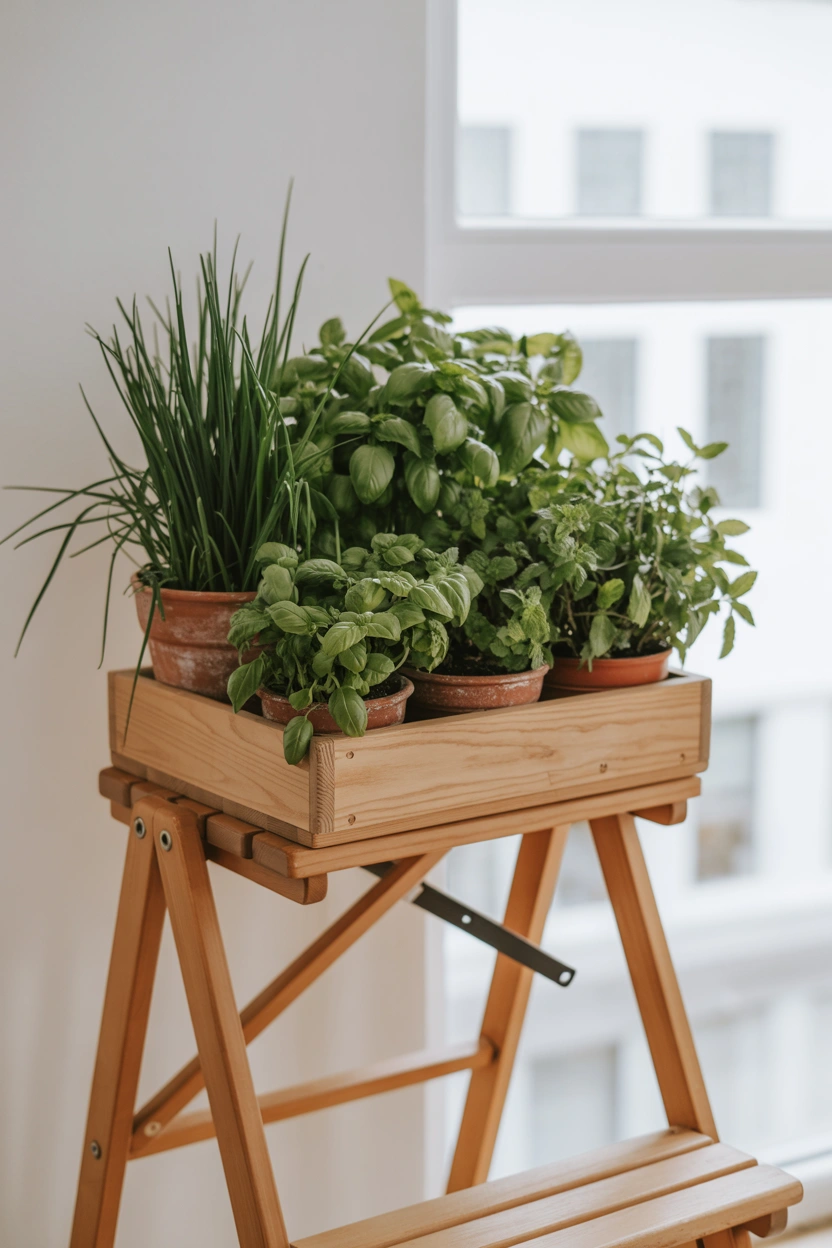
Compact Folding Ladder Herb Stand — Perfect for Renters and Tiny Patios
The smartest thing about a folding step stool or small folding ladder is that it disappears completely when you don’t need it. Unfold it for daily watering, herb snipping, or when guests come over — then fold it flat and slide it behind a door or along a wall.
This version works best with fast-growing herbs you harvest frequently: chives, basil, and mint regrow quickly after cutting and stay manageable in small pots. Add non-slip rubber pads (the kind you’d use under a rug) to each step to keep the pots from sliding when you unfold. It’s a tiny fix that makes the whole system much more stable.
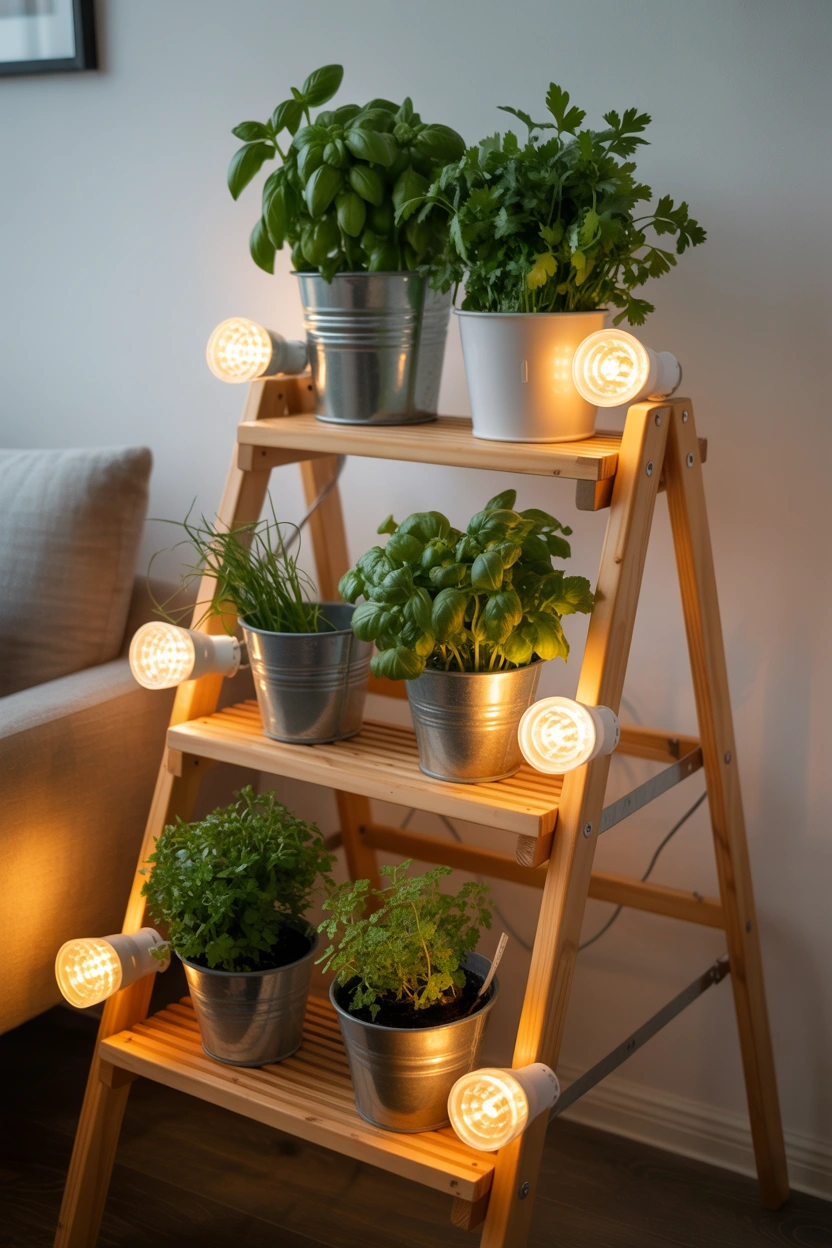
Indoor Ladder Herb Garden with Grow Lights — Grow Year-Round
Dark apartment? North-facing windows? No problem. A small indoor ladder paired with clip-on grow lights changes the game entirely. You can grow a full herb garden year-round, even in the middle of winter when natural light is barely enough.
Set the grow lights on a timer: 14 to 16 hours of light followed by 8 hours of darkness mimics the ideal growing day. Basil, cilantro, and parsley all struggle in low natural light, so they’re the biggest beneficiaries of this setup. Use warm-spectrum LED grow lights for the best results — they’re energy-efficient, low-heat, and they give off a softer, more natural-looking glow than harsh blue-spectrum lights.
Farmhouse Ladder with Linen Pot Covers — Effortlessly Styled
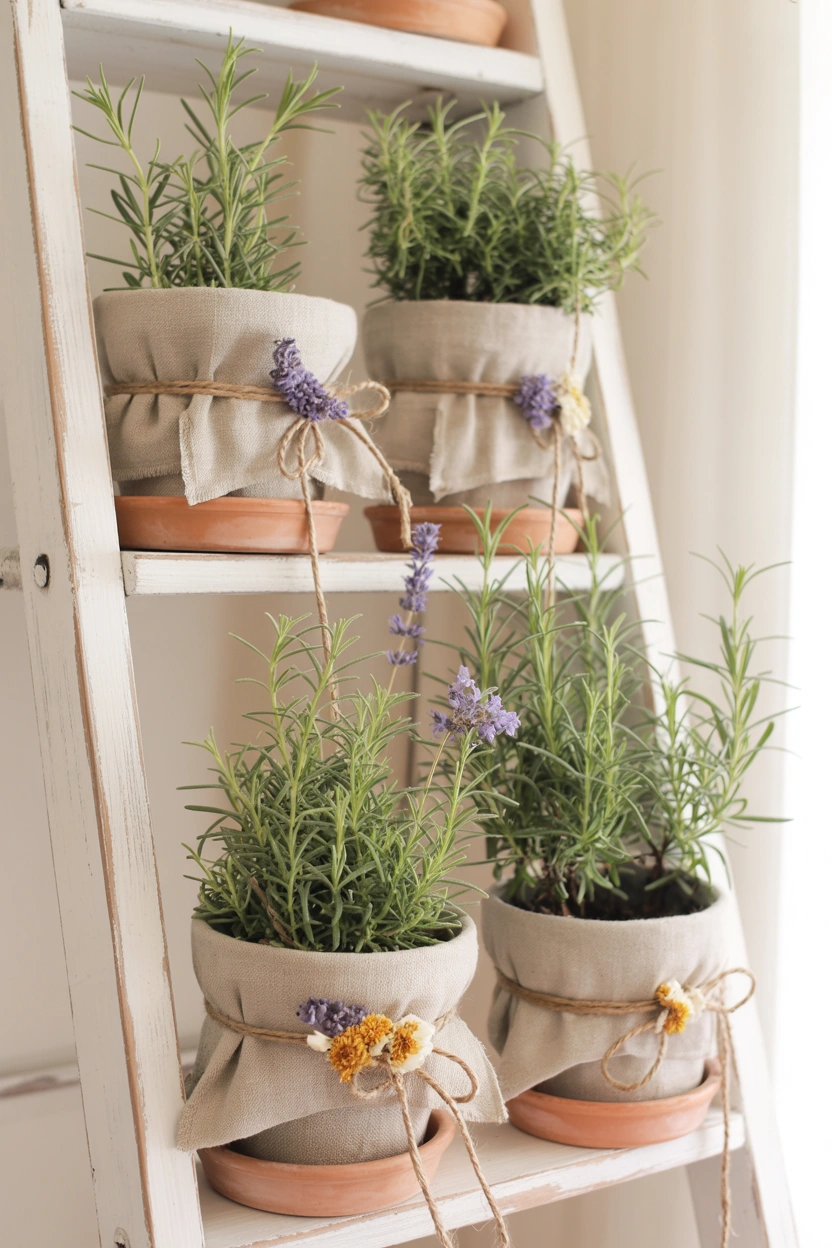
This is pure aesthetic elevation with almost zero effort. Take a whitewashed or natural wood ladder and wrap your terracotta pots in squares of rough linen or burlap, tied at the top with natural jute twine. No sewing required — just fold and tie.
The result is a soft, neutral-toned display that photographs beautifully and fits almost any home style — farmhouse, Scandinavian, coastal, or minimal. Lavender and rosemary look especially stunning in this presentation; their silvery-green foliage against the warm linen texture is just effortlessly elegant. For an extra detail, hot-glue a sprig of dried lavender or a small dried flower to the twine bow on each pot.
Herb + Flower Ladder Garden — Pollinators Welcome
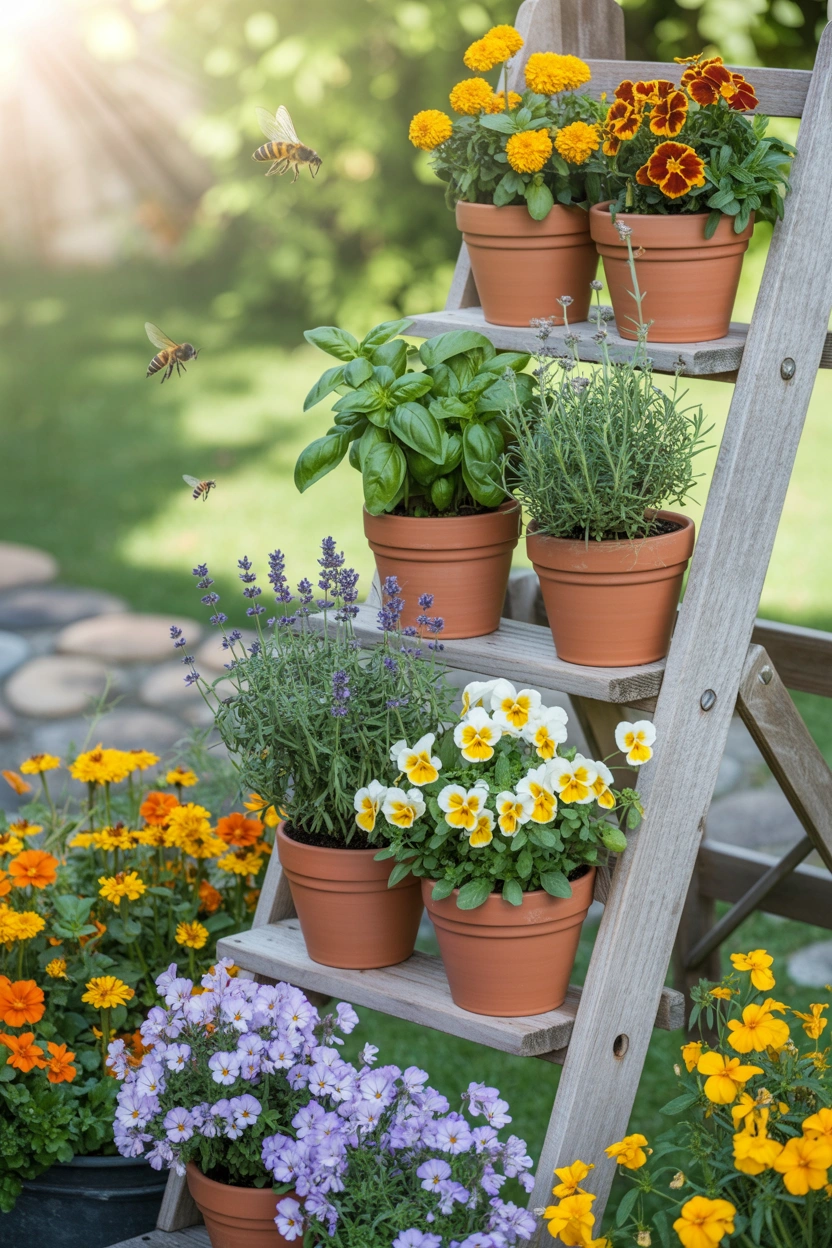
The final idea is the most vibrant. Mix culinary herbs with companion flowers across your ladder rungs — marigolds beside basil, pansies near chives, lavender next to thyme — and you’ll create something that looks less like a herb garden and more like a flower market display.
Beyond the looks, this combination genuinely works. Marigolds repel aphids that love basil. Lavender attracts bees that benefit every plant nearby. Pansies are edible and gorgeous. Position this pollinator ladder near your vegetable beds or raised planters if you have them — the beneficial insects it draws in will improve the health of everything growing around it.
How to Stabilize Your Ladder Herb Garden
A few quick safety tips before you get started. Always place bricks or flat stones under the feet of a leaning ladder to improve drainage and prevent the wood from sitting in wet soil. For A-frame and freestanding ladders, check that all four feet make solid contact with the ground — shim with rubber wedges if needed. Don’t overload the top rungs; heavier pots always go lower for better balance. If you’re on a windy balcony or exposed patio, secure the top of a leaning ladder to the wall using a simple L-bracket and screw. Five minutes of prep can save the whole garden from toppling.
FAQS
What kind of ladder works best for a herb garden?
A wooden stepladder or reclaimed wooden leaning ladder works best. Wood looks warmer, holds paint and sealant well, and is easy to customize. Always weatherproof outdoor wood with polyurethane or exterior varnish.
Can I leave a wooden ladder herb garden outside all year?
With proper sealing, yes — but in very harsh winters or monsoon climates, it’s worth bringing it under cover or into a garage to extend the life of the wood. Untreated wood will rot within one to two seasons if left exposed.
What are the easiest herbs to grow on a ladder?
Chives, thyme, mint, oregano, and rosemary are the most forgiving. They tolerate occasional missed waterings and don’t need perfect conditions to thrive.
Can I make a ladder herb garden indoors?
Absolutely. A small folding step stool or compact stepladder near a south-facing window works beautifully. For darker spaces, add clip-on grow lights.
How do I prevent a ladder herb garden from falling over?
Use the brick-foot method for leaning ladders, choose A-frame designs for freestanding setups, and always distribute the heaviest pots at the lowest rungs. On windy balconies, anchor the top to the wall.
CONCLUSION
So there you have it — 20 ladder herb garden ideas that are simple, budget-friendly, and genuinely beautiful.
You don’t need a big yard. You don’t need to spend a lot. All you really need is an old ladder, a few pots, and the herbs you love most.
Start small. Pick one idea from this list that feels right for your space. Try basil, rosemary, or chives first — they’re easy, forgiving, and you’ll actually use them in your kitchen every week.
The best part about a ladder herb garden? It doesn’t just look good. It works. Fresh herbs right outside your door, grown by you, cost almost nothing.
That’s a win every way you look at it.